New Trains For West Coast Will Be Built By Hitachi
The title of this post, is the same as that of this article on Railnews.
With the new Franchise; Avanti West Coast, starting services in a few days, more detail is starting to be added to their plans.
New Trains
This is said about the new trains to be added to the fleet.
Hitachi is to build 23 new trains for the West Coast Partnership, with the aim of having them in service by 2022.
The fleet will consist of 10 seven-car electric units and 13 five-car bi-mode units, and will be based on Hitachi’s existing Intercity Express models.
These are my thoughts about the trains.
Routes
According to Wikipedia, the bi-mode trains will be used from Euston to Chester, Gobowen, Holyhead, Llandudno and Shrewsbury and the electric trains will be used from Euston to Birmingham New Street, Blackpool North and Liverpool.
In Service Date
The Railnews article and a very similar one in Rail Magazine say that the trains will enter service by or around 2022.
This probably means that they will be built after the Class 804 trains for East Midlands Railway.
Comparison With Class 804 Trains
It has been stated that the Class 804 trains will have the following. characteristics.
- Twenty-four metre long cars, as opposed to twenty-six metres of a Class 802 train.
- Four diesel engines in a five-car train, instead of three in a Class 802 train.
- They will have a reprofiled nose.
They can be considered to be the Mark 2 version of Hitachi’s Intercity Express.
The car length for the Avanti West Coast trains has been specified at twenty-six metres, which is two metres longer than that of the current Class 390 trains on the West Coast Main Line,
So will Avanti West Coast’s trains be based on the Mark 2 version?. It’s logical, that they will.
Performance
The trains for Avanti West Coast will need to keep up with the Class 390 trains, which have the advantage of tilt.
The Railnews article says this about performance.
Although the new trains will not have tilt equipment, their superior acceleration should compensate for slightly slower speeds on some sections of line.
I think that the removal of tilt equipment could be a good thing.
- Removal could reduce the weight of the train, which would result in increased acceleration.
- Does tilting reduce the ride quality?
- Of all the express trains on the UK network, the Class 390 trains, are the ones I avoid because the trains are cramped and so many seats have a bad view.. Is this caused by incorporating tilting or by crap design?
I also wonder if the reprofiled nose will improve the aerodynamics of the new trains for both the East Midlands Railway and Avanti West Coast.
Better aerodynamics would help during a high-speed cruise.
Train Length
Class 390 trains have two car lengths.
- An intermediate car is 23.9 metres
- A driving car is 25.1 metres
This means the following.
- A nine-car Class 390/0 train is 217.5 metres long.
- An eleven-car Class 390/1 train is 265.3 metres long.
If the Hitachi trains have seven twenty-six metre cars, then they are 182 metres long or 35.5 metres shorter.
I find that surprising, but it does mean they fit shorter platforms. Is this needed for new destinations like Walsall?
Seating Capacity
The Railnews says this about seating.
There will more seats, because a seven-car train will have 453 and five-car sets will have 301. First said the seven-car version will have about the same number of seats as a nine-car Pendolino, because each IET vehicle is longer, at 26m
Seating on current trains is as follows.
- A nine-car Class 390 train seats 463 passengers.
- A five-car Class 221 train seats 250 passengers.
It would appear that the bi-mode trains seat another fifty-one passengers, than the trains they are replacing, which must be good for the routes to Chester, Shrewsbury and North Wales.
As the seven car trains are not replacing any other trains, Aventi West Coast will have n increase in capacity.
Adding up the numbers, it appears that the Avanti West Coast fleet will have three more trains and 3443 more seats.
If they should need more cars or trains, Avanti West Coast should be able to buy them easily.
Out of curiosity, how many passengers could be seated in an Hitachi train, that is the same length as an eleven-car Class 390/1 train.
As this train is 265 metres, a ten-car Hitachi train would be almost the same length.
Assuming the same passenger density as the seven-car trains, a ten-car train would have 647 seats. The current Class 390/1 train has 589 seats, so there would be an increase of sixty seats.
Train Finance
The trains are financed by Rock Rail West Coast; a joint venture between Rock Rail and Aberdeen Standard Investments.
If your pension is with Aberdeen Standard, you may ultimately own a seat or a door handle on these trains, as pension funds find trains a good way of turning pension contributions into the long-term pension, we’ll hopefully all need.
Nationalisation of the trains themselves would probably blow a hole in a lot of pension pots.
Food Offering
The Railnews article says this about food.
The details of catering on board have yet to be finalised, but Railnews has learned that there will be a buffet counter as well as trolley services, and that one of the main food suppliers will be Marks and Spencer.
Over the last couple of years, a food war seems to have developed between Virgin and LNER and as a coeliac, I’ve noticed an improvement in gluten-free food.
Marks and Spencer have done a deal with British Airways, so surely a deal with a train company must fit that model.
- M & S already deliver to shops in most of Avanti West Coast’s destinations.
- M & S are one of the best on getting allergies correct.
- M & S are one of the UK’s most trusted brands.
FirstGroup, who are a seventy percent sharewholder in Avanti West Coast, might like to roll this food model out in their other rail franchises; Great Western Railway, Hull Trains, South Western Railway, TransPennine Express and the future East Coast Trains.
Hull
Hull station is an interesting case, although it has nothing to do with Avanti West Coast.
- It is a major terminus for Hull Trains and TransPennine Express.
- Hull Trains market themselves as a quality local train service to and from London.
- Hull station does not have a M & S Simply Food.
- M & S are closing their main store in Hull.
- There are reportedly spare units in the large Hull station.
A well-designed M & S food hub in Hull station could be of great benefit to both FirstGroup and M & S.
Conclusion
Hitachi seem to be able to manipulate the train length to give customers the capacity they want.
But that is good design.
A Massive Increase In Train Capacity In Ten Years
The Class 378 trains, were introduced as three-car trains on the North London Line in July 2009.
The original service was three trains per hour (tph) between Stratford and both Clapham Junction and Richmond stations.
This meant there were six tph between Stratford and Willesden Junction stations.
Or a capacity of eighteen carriages per hour!
This article on Railway Gazette is entitled UK Railway News Round-Up.
This is an extract.
From December 15 services between Willesden Junction and Clapham Junction, and between Willesden Junction and Richmond, will increase from four to five trains/h, giving a 10 trains/h service between Willesden Junction and Stratford.
As the trains are now five-cars, that is a capacity of fifty carriages per hour.
That is an increase of a hundred and eighty percent over ten years.
I suspect, they’ll still be full in the Peak!
Tottenham Court Road Western Entrance – 2nd December 2019
These pictures show the new Western entrance to Tottenham Court Road station.




This Google Map shows the location of the massive double-ended station.
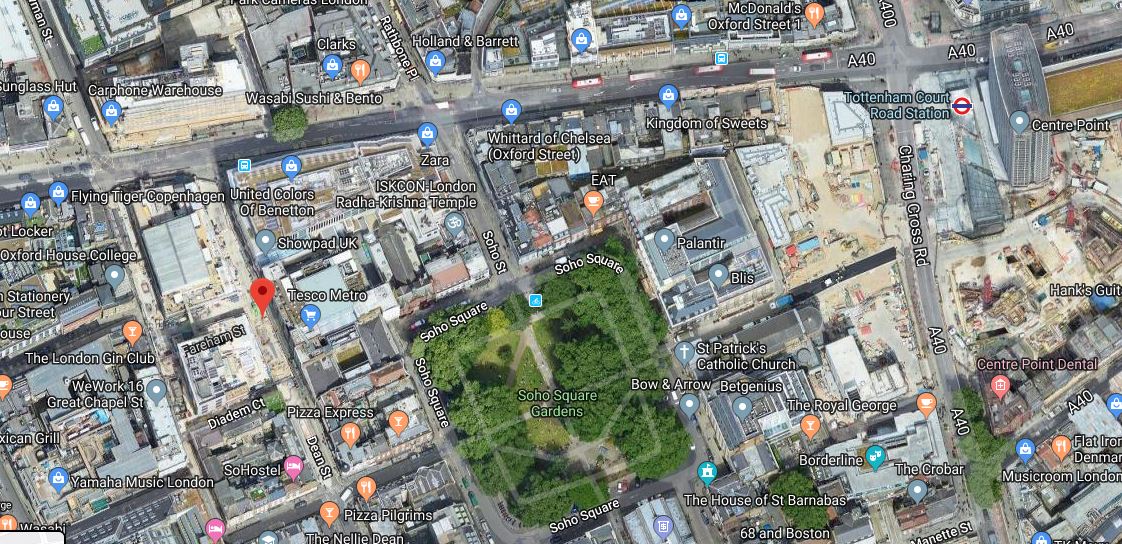
Note.
- Soho Square is the green space in the middle of the map.
- The Eastern entrance to the station is by Centre Point in the North East corner of the map.
- The new Western entrance is to the West of the red arrow.
The size of the station is such, that passengers will have to make sure they get out at the right end of the train.
- For Marks and Spencer at the Pantheon, get out at the Western entrance to the station.
- For Primark and the other shops clustered around the current station entrance, get out at the Eastern entrance to the station.
- For Tottenham Court Road, Charing Cross Road, the Dominion Theatre and Centre Point, get out at the Eastern entrance to the station.
A few years ago, a young Crossrail engineer told me, that the stations are very long underground.
Perhaps they should have a directory of all shops, theatres, hotels, attractions and other sites on the platforms, to ensure that passengers use the best entrabce for their destination.
This image shows a visualisation of the station.
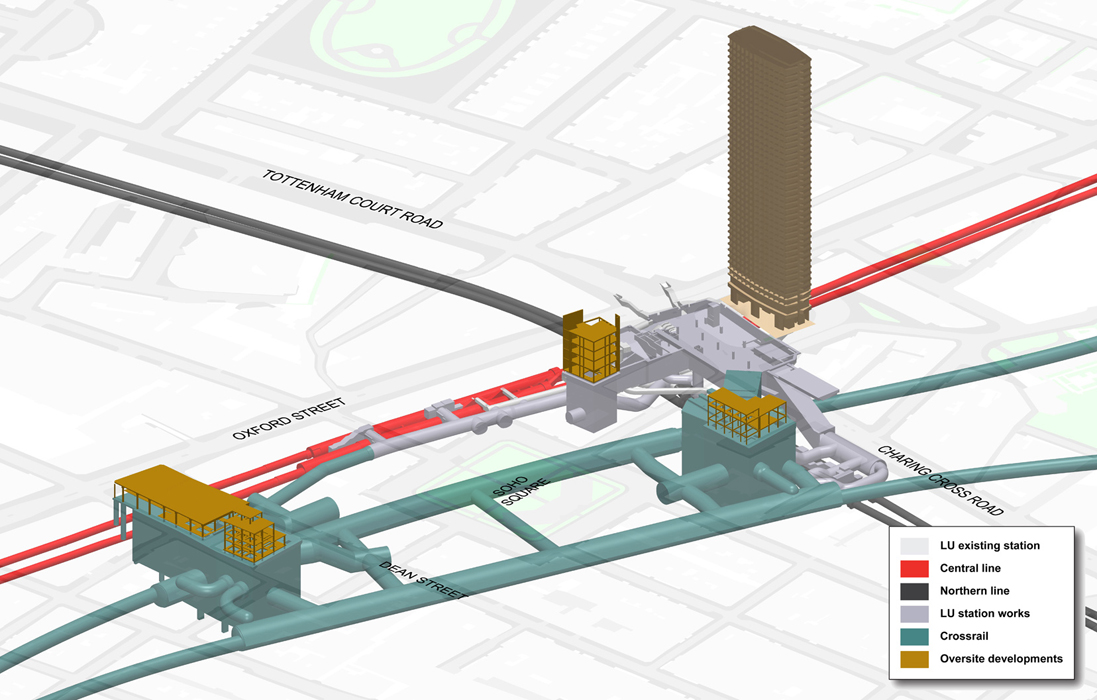
Note.
- The Westerm entrance is the one on the left.
- Centre Point at the Eastern end of the complex, by the Eastern entrance.
The visualisation also shows lots of detail.
The Connecting Tunnel Between The Two Entrances
There appears to be a connecting tunnel between the two entrances.
This pictures show the inside of the Eastern end of the tunnel which has already been built.



Note.
- The relatively cramped Central Line platform.
- The tunnel has good connections to the Central Line.
- It looks like the Western end of the connecting tunnel will be extended towards the Western Entrance.
- Obviously, breaking through between the connecting tunnel and its extension, will be one of the last jobs to do.
The completed tunnel will allow the following.
- Passengers entering the station at either entrance to be able to access the Central Line.
- Passengers needing to access the Northern Line to be able to enter at the Western Entrance and use the connecting tunnel.
Will this tunnel be a good walking route, when it’s raining cats, dogs and hippopotami on the surface?
Access To Crossrail
Both entrances will have their own step-free access to the Crossrail platforms.
Because Crossrail is at a different level to the Central and Northern Lines, it appears that passengers needing to change to and from Crossrail will probably come to the surface by lift or escalator and then go back down again using a second set.
This may seem to make walking distances longer, but I suspect the following.
- It makes the station easier to construct.
- Access to existing lines can be maintained during construction.
- It allows for the installation of multiple escalators for high capacity.
There are also older stations in London, where there are up and down changes of lines. So perhaps it’s an affordable way of building the connection.
Changes Between Crossrail and The Central Line
Crossrail and the Central Line have several interchanges.
- Stratford, where the interchange is cross-platform.
- Liverpool Street
- Tottenham Court Road
- Bond Street
- Ealing Broadway, where the interchange is on the surface. See Crossrail And Ealing Broadway Station for my thoughts on the interchange.
I suspect that there will be a certain amount of ducking and diving by passengers, as they go on their easiest way. Many will probably change at Stratford, as it is a walk across the platform.
Will Tottenham Court Road station see a lot of passengers changing between Crossrail and the Central Line?
I have no idea. But I suspect that Transport for London will be able to make an accurate prediction, based on information from London’s contactless ticketing.
It does look though from the visualisation, that the following can be ascertained.
- There will be an escalator and a walk to change between Crossrail and the Central Line at Tottenham Court Road station.
- The change may be easier at the Western end of the Crossrail station.
- The design of the Central Line with two tunnels close together and not much space for stairs and lifts between them, makes a high-capacity link to the large connecting tunnel difficult to built.
- There appears to be no provision to extend the connecting tunnel to the West. The original plan was to pedestrianise Oxford Street, but that has been abandoned, due to pressure from residents and Westminster Council.
It is an illustration of the difficulty of connecting to London’s older Underground lines.
Changes Between Crossrail and The Northern Line
Crossrail and the Charing Cross branch of the Northern Line only have the single interchange at Tottenham Court Road station.
- Does this mean it is expected to be busy, as the Charing Cross branch of the Northern Line serves Euston, Waterloo and will serve the new Battersea extension?
- From the visualisation, there appear to be lots of connections between Crossrail and the Northern Line at the Eastern entrance.
These pictures show some of the tunnels leading to both Crossrail and the Northern Line at the Eastern entrance.




It looks like Transport for London are expecting a party. But you’ll probably need to be in the Eastern end of the Crossrail trains, to do a fast interchange.
If you get out at the Western end of the train, you’ll have to walk back along the connecting tunnel.
Crossrail 2
Crossrail 2 will complicate and improve things further at Tottenham Court Road station, as it sits between the proposed Crossrail 2 stations of Victoria and the mega-station Euston-St. Pancras-Kings Cross.
Will Cinderella Come To The Rescue?
The Docklands Light Railway (aka Cinderella) was the star of the 2012 Olympics transport system and she now has ambitions to expand to the West, as I wrote about in A Connection Between City Thameslink Station And The Docklands Light Railway.
This map from Transport for London, shows the possible Western extension of the DLR.
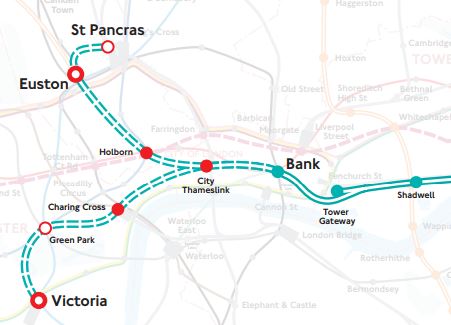
With all the problems of the funding of Crossrail 2, this extension could create a lot of important connections across the City.
It already connects or will soon connect.
- Canary Wharf and Bank
- City Airport and Bank
- Crossrail’s South Eastern Branch and Bank, with a change at Custom House station.
The upgrade at Bank, which should complete in a couple of years will help, with better connections to the Central, Circle, District and Northern Lines.
If the extension to the DLR is built, it would connect Canary Wharf, City Airport and Crossrail’s South Eastern Branch in the East, with Charing Cross, Euston, Kings Cross, St. Pancras, Thameslink and Victoria in the West.
It would also take the pressure off of some of Central London’s most crowded lines.
So get your coal shovel out Cindy and start digging!
Rochdale Still Doesn’t Have A Direct Link To Manchester Airport
The title of this post is the same as that of this article on Richdale Online.
I recently went to Rochdale to see Ipswich play and what surprised me about the town, was how far it was from my hotel close to Manchester Victoria station.
I went on a tram and it took over an hour and it was also very crowded.
I then walked about a mile to the football ground. Luckily a friendly Rochdale supporter showed me the way.
But is Rochdale’s link to Manchester Airport, any worse than say Walthamstow’s link to Heathrow or Gatwick.
- Rochdale Town Centre to Manchester Airport by train – 1:05
- Rochdale Town Centre to Manchester Airport by tram – 2:02
- Rochdale Station to Manchester Airport by train – 0,:55
- Rochdale to Manchester Airport by taxi- 0:27
- Walthamstow Central to Heathrow Airport by Underground and Heathrow Express – 1:05
- Walthamstow Central to Heathrow Airport by Underground – 1:27
- Walthamstow to Heathrow Airport by taxi – 1:27
- Walthamstow Central to Gatwick Airport by train – 1:22
Note.
- All journeys, except the taxis, need at least one change.
- My lawyer son lives in Walthamstow and always flies from Heathrow.
- He gets there by Underground, with one cross-platform change at Finsbury Park.
- Crossrail won’t help the man on the Walthamstow Underground.
- In Manchester the taxi is quicker, but it isn’t in London.
These are my thoughts.
Mancunians Are More Impatient
Not my view, but the view of a Northern station guy, who has worked on Platforms 13 and 14 at Manchester Piccadilly and busy stations on the London Overground.
He thought that they were sometimes in such a hurry to get on a train, that the train is delayed.
He also said, if you ask Londoners to stand behind the yellow line, they do. Mancunians don’t!
Access To Northern And TransPennine Trains Is Bad
Consider.
- There is often a step up into the train in Manchester.
- Manchester Metrolink is generally step-free into the tram.
- Parts of London Underground/Overground are step-free.
- The new TransPennine trains have pathetic and slow end-door access.
The two train companies have bought fleets of trains that are not fit for purpose.
The Manchester Airport Rail Link Is At Full Capacity
Manchester Airport station, does not have the best rail line from the City Centre.
Wikipedia says this.
Any future additional services to the Airport are in doubt without further infrastructure works; unresolved issues surround the lack of new ‘through’ platforms at Manchester Piccadilly which have been shelved by the government and the Styal Line to Manchester Airport operating at full capacity with little resilience to absorb delays.
The Rochdale Online article blames the stations in Manchester, but the Styal Line is equally to blame.
The Long Term Solution Is High Speed Two
In the 2030s, High Speed Two will solve the problem by using a tunnel between Manchester Airport and the City Centre.
It will also do the following.
- Provide direct access between Manchester Airport and the Midlands, the South and London.
- Provide direct access to Liverpool and Warrington in the West.
- Provide direct access to Huddersfield, Bradford, Leeds, Hull and the North East, in the East.
- All services will probably be at least five trains per hour (tph).
But High Speed Two won’t provide a direct link to Richdale.
Passengers between Rochdale and Manchester Airport will still have to change in the City Centre.
Unless of course, some TransPennine services to Manchester Airport are discontinued, as they can be done by High Speed Two.
This would free up paths to add extra services to Manchester Airport.
An Interim Solution
Not only Rochdale, but other towns and cities across the North like Bradford moan about lack of a direct service to and from Manchester Airport.
So what would I do?
Ban Freight Trains Through The Castlefield Corridor
This may not be possible, but it should be a long term objective.
It will cost money, but it would release capacity through the Castlefield Corridor.
Ban Trains Without Level Access At Stations In The Castlefield Corridor
I know that Northern and TransPennine have just bought a load of new trains, but they make matters worse in the stations through the Castlefield Corridor.
All Trains To The Airport Must Be Eight Cars
This makes sense as it increases the capacity, but use the same number of paths.
- Eight-car Class 379 trains – Stansted Express – 160 metres and 418 passengers
- Five-car Class 802 trains – TransPennine Express – 130 metres and 342 passengers
- Eight-car Class 331 trains – Northern – 190 metres and 568 passengers
It does appear that the new trains are also setting new standards for train length.
ERTMS Signalling Should Be Installed Between Manchester Victoria And Manchester Airport
ERTMS signalling would give more flexibility on the route.
Create A Manchester Airport Express
This has been suggested and would have the following characteristics.
- Running between Manchester Airport and Manchester Victoria via Deansgate, Manchester Oxford Road and Manchester Piccadilly.
- Eight cars
- Airport-style interiors
- Step-free access at all stations.
- Four tph
- Running twenty-four hours a day.
- It would have step-free access to the Metrolink at Manchester Victoria, Deansgate and Manchester Piccadilly.
Ideally it would use dedicated platforms at Manchester Airport and Manchester Victoria. The platform at Victoria would hopefully have cross-platform interchange with services going through the station from East to West.
Reduce TransPennine Services To The Airport
TransPennine Express runs the following hourly services to the Airport
- Cleethorpes via a reverse at Manchester Piccadilly.
- Edinburgh or Glasgow via the Castlefield Corridor
- Middlesborough via the Castlefield Corridor
- Newcastle via the Castlefield Corridor
Why not cut-back either the Newcastle or Middlesborough service to Manchester Victoria and make sure it has good cross-platform access to the Manchester Airport Express?
These services are regularly cut-back anyway due to the congestion.
Demolish Manchester Oxford Road Station And Build A Station That’s Fit For Purpose
Manchester Oxford Road is one of ultimate design crimes on the UK Rail network.
- The new or refurbished station would be step-free.
- Platforms would be able to accept two hundred metre long trains.
- A well-designed bay platform would be provided to turn trains from the North efficiently.
- Up to four tph could probably be turned back.
Network Rail do station and track layout design generally very well and I’m sure that a redesigned Oxford Road station could improve capacity through the Castlefield Corridor.
Improve Deansgate And Manchester Piccadilly Stations
If longer trains are to be run through the Castlefield Corridor, then the platforms at these two stations will need lengthening and passenger access will need to be improved.
Is There A Place For Tram-Trains?
Manchester are keen on using tram-trains to improve the Metrolink network.
This map clipped from Wikipedia shows the layout of the Metrolink in the City Centre.
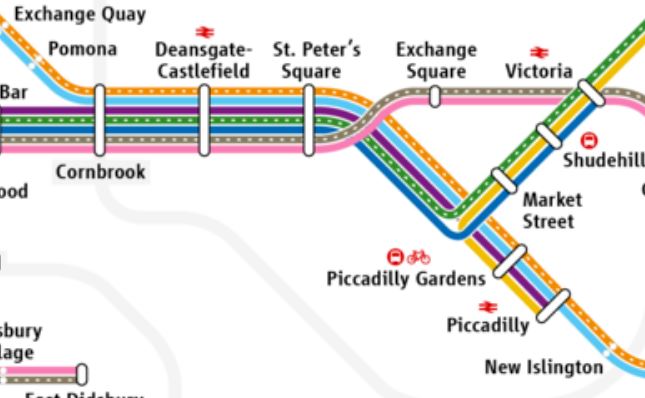
Note.
- Manchester Piccadilly, Deansgate and Manchester Victoria all have step-free connections to the trains to and from Manchester Airport.
- The new Trafford Line will branch off at Pomona.
I think it is likely, that any new lines run by tram-trains will pass through at least one of the connecting stations.
This will increase the list of places that will have good access with a single change to and from Manchester Airport.
Conclusion
There would appear to be a lot of scope to create a high-capacity link between Manchester and the Airport.
But it does appear that the current timetable leaves little or no room to expand the service.
That is why, I believe a simpler but higher capacity service, based on a Manchester Airport Express could be developed.
The Electric Aviation Revolution Will Be Televised … By MagniX And Harbour Air
The title of this post, is the same as that of this article on GeekWire.
These are a few points from the article.
- The target date is December 11th.
- The first flight could be delayed by weather.
- Harbour Air’s CEO, Greg McDougall, will put his money where his mouth is and take the first test flight.
- The first test flight will only be a few minutes.
I wish Greg McDougall all the best!
A Trip On The East Suffolk Line In A New Stadler Class 755 Train
Today, I took a round trip between Ipswich and Lowestoft stations, along the East Suffolk Line, in one of Greater Anglia’s new Class 755 trains.






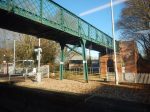
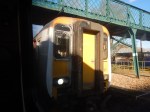
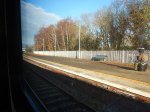





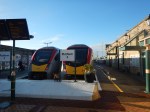
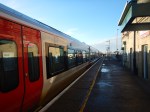




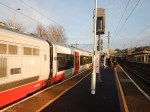
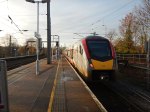
These are my observations and comments.
Stations
The stations vary between the very good and the very basic.
- I don’t think that any station has a step-free bridge to cross the line.
- Many stations are just a single platform.
- Crossing the line often involves a nearby level crossing.
- Westerfield, Woodbridge, Saxmundham, Darsham, Halesworth and Beccles have two platforms.
- Lowestoft and Ipswich are both step-free from the street to the platforms.
- There also appears to be step-free access between the new trains and the platforms.
Overall, from what I could see from the train, each stop was fairly efficient, although I do think that when the drivers and train staff, fully get to grips with the trains, that there is time to be saved on each of the ten stops.
Consider.
- These trains have much better acceleration and deceleration, than the trains for which the timetable was written.
- The trains have level access between train and platform. At Lowestoft, I saw an electric wheelchair roll out of the train at a smart speed.
- These trains set the Gold Standard for step-free access.
I wouldn’t be surprised to see at least a minute and possibly two minutes saved at each station.
That would reduce the current journey time of one hour and thirty minutes between Lowestoft and Ipswich by perhaps ten minutes.
Level Crossings
Consider.
- Over the years, Greater Anglia and its predecessors right back teyond British Rail have been plagued by accidents at level crossings.
- Network Rail would like to close them all,
- But there are always a lot of local objections especially in rural counties like Suffolk.
- Removal is often expensive, as a new toad of several miles needs to be constructed.
I noticed perhaps ten crossings on my trip.
A big problem is that at many stations on the East Suffolk Line, there is a level crossing and it is often the only way to cross the line.
This Google Map shows Saxmundham station.
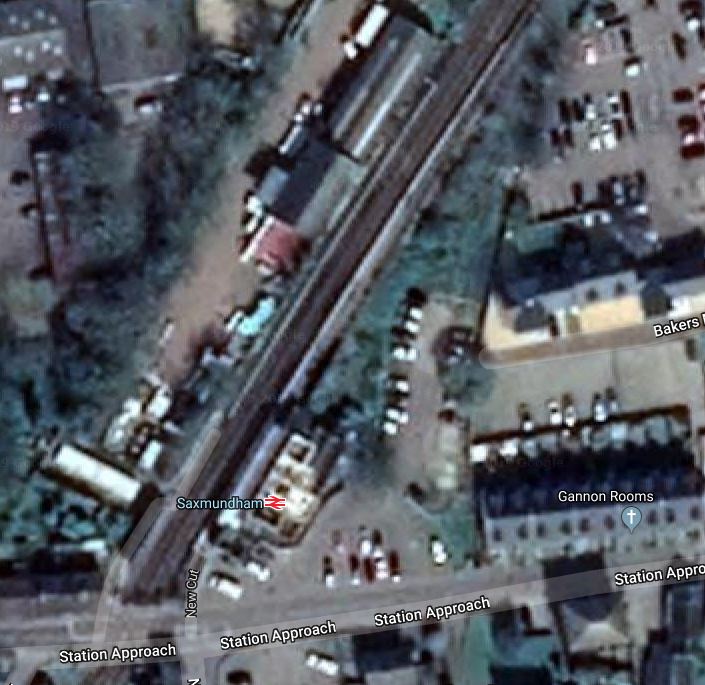
This is typical of the line. But here at Saxmundham, there is probably enough space to squeeze in a step-free bridge like this one, that won the Network Rail/RIBA Footbridge Design Competition.
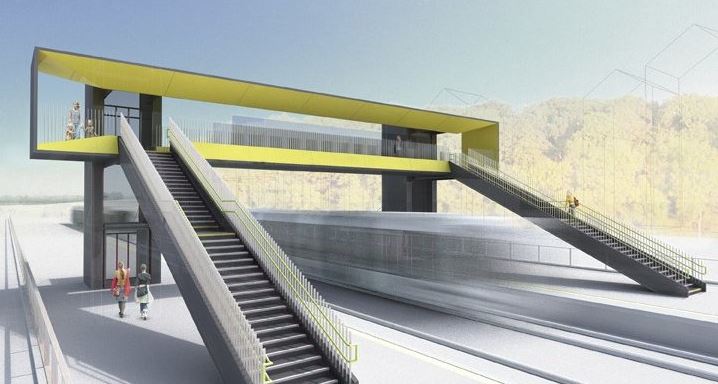
There are lots of rural stations like Saxmundham in the country, so why should suburban stations get all the investment?
How long will it be before one of the new Class 755 trains hits a vehicle on an East Anglian level crossing?
Other Traffic
The only other trains that I saw on the route were Greater Anglia trains going the other way, which we passed in stations like Beccles and Saxmundham.
Checking on realtrimetrains.co.uk, there appears to have been no trains other than the Lowestoft and Ipswich service all day.
It appears that although parts of the route are only single track, that a well-designed timetable operated by well-trained and well-performing staff can provide a reliable hourly service.
Line Speed
I brought my personal dynamometer car with me and the train trundled along at a very easy and leisurely 55-60 mph, which is around the operating speed of the line of 55 mph.
Consider.
- The train gave me the impression, that all those 2,920 kW in the diesel engines could go a bit faster.
- The timetable was probably designed around a Class 156 train, which has just 425 kW per car, as opposed to the 730 kW per car of the Stadler train.
- I estimate that the Stadler train is about sixty percent heavier per car, but it does have a lot of electrical gubbins to carry around.
- The weight of the Stadler train does appear to be lighter per car than a Class 170 train.
I would expect that a well-driven Class 755 train has the power and speed to skip from station to station along the East Suffolk Line at several minutes faster than the timetable.
The line is 49 miles long and trains typically take 90 minutes between Lowestoft and Ipswich. That is an average speed of just under 33 mph.
The leg between Saxmundham and Darsham is just over four miles long and it takes nine minutes. This is an average speed of 27 mph.
Consider
- The acceleration of a Class 755 train is 0.9 m/s², which means to get up to a line speed of 60 mph takes thirty seconds.
- Four miles at 60 mph takes four minutes.
- Driver assistance software can tell the driver exactly where to start slowing for the next station.
It might be possible to do the Saxmundham and Darsham leg in perhaps three or four minutes less than the current timetable.
How much time could be saved on the whole route between Lowestoft and Ipswich?
Trains Needed
Look at a typical Off Peak pattern.
- An Off Peak train is the 1007 from Lowestoft, which arrives at Ipswich at 1136.
- This train returns from Ipswich at 1217, which arrives in Lowestoft at 1343.
- It then leaves Lowestoft for Ipswich at 1407.
The train takes four hours to do a round trip on the route, with forty-one minutes wait at Ipswich and twenty-four minutes wait at Lowestoft.
As trains are scheduled from Lowestoft at 1107, 1207 and 1307, four trains will be needed to provide the service.
This is very inefficient.
I feel that it is totally possible for the new trains to run between Lowestoft and Ipswich in around an hour and fifteen minutes, which would mean a saving of between one-two minutes on each leg of the journey.
Suppose though the trains could achieve this time, with an allowance of fifteen minutes to turn the trains at the two end stations.
This would mean that the round trip is now three hours and only three trains will be needed to provide the service.
The Possibility Of A Half-Hourly Service
The current timetable waits for awkward times in each of the end stations.
But my proposed hour and fifteen minute journey with a fifteen minute turnround could offer the possibility of a half-hourly service.
- Suppose two trains left Ipswich and Lowestoft at identical times on the hour.
- They would arrive at their destination an hour and fifteen minutes later at a quarter past the hour.
- By the half-hour, they would be ready to return to the other station.
- They would arrive back at the start at a quarter to the hour and fifteen minutes they would be ready to repeat the cycle.
The only problem would be to make sure all trains met each other at a place, where they could pass.
The half-hourly service would need six trains. or two more than the current service.
I don’t think that any major engineering works will be needed, although , there might be a need to adjust a passing loop or the signalling.
This is probably only one of many possibilities to provide a half-hourly services.
A Service Between Ipswich And Leiston And Aldeburgh
As I passed this branch the orange army was clearing the track of years of tree and other plant growth.
I’ve always thought that this would be a good idea and I wrote about it in A Station For Leiston.
- A half-hourly service would need two trains.
- It would add extra capacity between Ipswich and Saxmundham.
- It would certainly be needed if Sizewell C is built.
- Much of the route is double-track between Saxmundham and Ipswich.
It should also be noted that Sizewell has a high-capacity electricity grid connection and with the growtyh of offshore wind, Sizewell might be the ideal place for a large energy storage facility,
Cambridge And Lowestoft?
I took a train recently between Cambridge and Norwich and I noticed it went on to Cromer and Sheringham.
This was just Greater Anglia’s way of scheduling the trains for their convenience.
But could the same joining be done between these two services.
- Lowestoft and Ipswich
- Ipswich and Cambridge
It would do the following.
- Make better use of Platform 1 at Ipswich.
- Improve train utilisation.
- It might encourage day trippers to the coast to use the trains.
- It would improve the link from East Suffolk to Stabsted Airport.
- Create a comprehensive service, that connects all the major towns in Suffolk.
- It would connect these Suffolk towns; Lowestoft, Beccles, Saxmundham, Woodbridge, Ipswich, Needham Market, Stowmarket, Bury St. Edmund’s and Newnarket.
- It would serve the proposed A14 Parkway station.
- It would be an excellent feeder sewrvice for the East-West Rail Link.
It would be a true TransSuffolk railway.
Could There Be A Lowestoft And Great Yarmouth Service?
There has been talk of a new service between Lowestoft and Great Yarmouth stations.
There are two options to provide a service.
- Reinstatement of the Reedham Curve that was closed in 1880.
- By reversing the train in Reedham station.
I describe these options in Norfolk Rail Line To Remain Closed As £68m Upgrade Project Overruns.
As the second option does not need any extra infrastructure, I think it is more likely.
This was my conclusion about the route with a reverse.
Typical timings appear to be.
- Between Reedham and Yarmouth – 14-16 minutes
- Between Reedham and Lowestoft – 24-26 minutes
Given that the Class 755 trains have the following characteristics.
- They are 100 mph trains.
- They are optimised for fast stops.
I wouldn’t be surprised to see a sub-forty minute time between Lowestoft and Yarmouth.
It would appear that one train could run an hourly shuttle between Lowestoft and Great Yarmouth.
A Scenic Route Between Norwich And Ipswich
Using the current times between Ipswich and Lowestoft and Norwich and Yarmouth, it also looks like a sub-three hour scenic route is possible between Ipswich and Norwich.
It could be East Anglia’s version of the Cumbrian Coast Line.
Onboard Catering
The East Suffolk Line service currently takes ninety minutes.
I feel that this service is one that could benefit from a coffee service from a trolley.
The service could be provided by Greater Anglia or as on the Settle & Carlisle Line, by the local Community Rail Partnership.
Conclusion
The arrival of Class 755 trains on the East Suffolk Line could be the start of something special!
The 125 mph Bi-Mode Flirt
I am convinced that Stadler’s bi-mode Flirt of which Greater Anglia’s Class 755 trains are the first such fleet to go into service anywhere in the world, are trains that are capable of being developed into a train that can cruise at 125 mph.
Rumours Of 125 mph
When the Flirts were first introduced, I asked a driver, if a 125 mph version was possible and he said yes.
Not that Greater Anglia would have much use for a 125 mph bi-mode.
But it had been reported that several of the drivers had been on trips to Switzerland, as part of the design and training process to smooth the entry of the fleet into service.
And all drivers like to talk about their charges be they freight locomotives, high speed trains, heavy trucks, racing cars (I had a Stig in my kitchen!) or complicated dockside or tower cranes.
Norway’s 120 mph Flirts
Norway runs all-electric Flirts at 200 kph or 120 mph, as described here in Wikipedia.
The basic train design should be capable of running at 125 mph.
Could The PowerPack Run At 125 mph?
This picture shows the PowerPack on a Class 755 train.
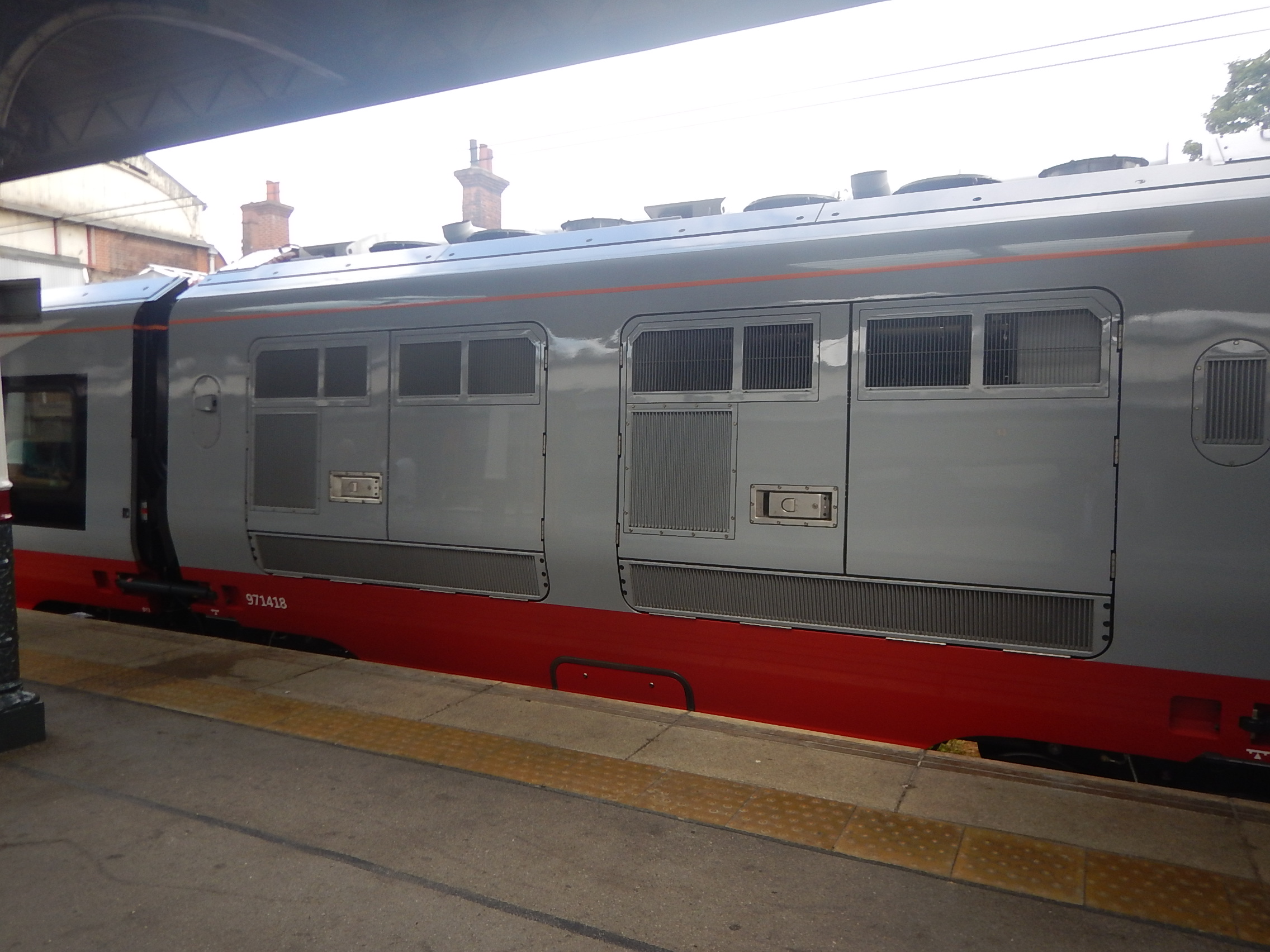
It is only 6.69 metres long and it weighs 27.9 tonnes.
The weight is not out of line with the weight of the 20.81 metre long driver car, which weighs 27.2 tonnes and the 15.22 metre long pantograph car, which weighs 16 tonnes.
But Stadler have put large dampers between the cars.
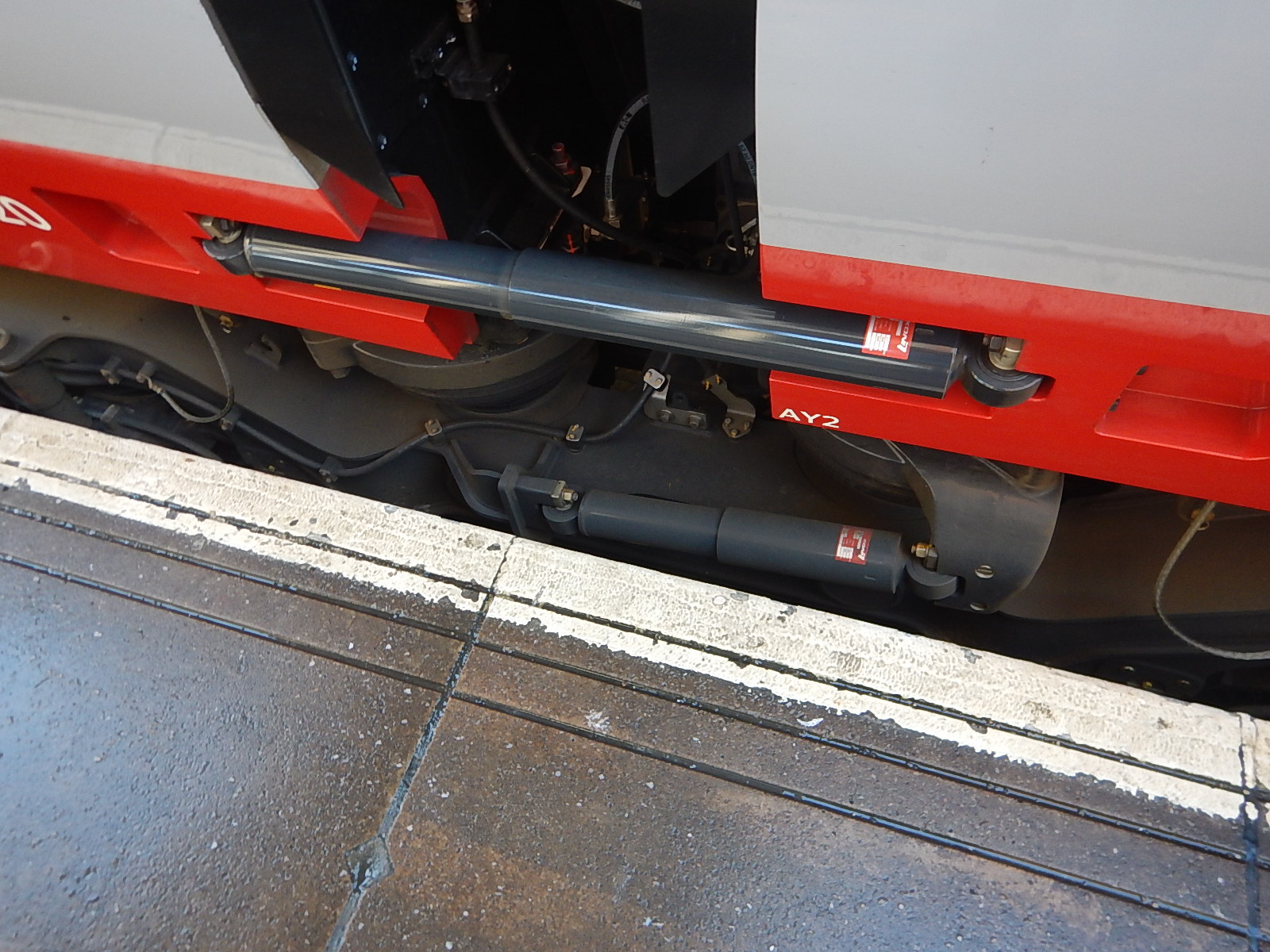
The dampers are the long black cylinders connecting the two cars. There are two on this side of the train and I suspect there are two on the other side.
It looks to me, that Stadler have paid very detailed attention to the dynamics of these trains and seem to hae done the following.
- Carefully balanced the weights.
- Driven the train from the two bogies under the driving cabs.
- Used powerful dampers to calm everything down.
This is probably to enable good performance on both fast and not-so-straight routes.
I also suspect that Swiss railways are a much more challenging environment for running trains, than East Anglia and most of our 125 mph lines.
I wouldn’t be surprised to find out that a Class 755 train could run at or near 125 mph on a straight 125 mph line, whilst running on electric power.
Operating Speed On Diesel
I suspect the power requirements for 125 mph would be too much for the installed power in the PowerPack, but 100 mph would certainly be possible.
Is There A Need For A 125 mph On Electric/100 mph On Diesel Flirt?
If you look at the UK, Hitachi have sold lots of Class 800 and 802 trains, which have a similar performance, but are a few mph faster on diesel.
It would appear that the market is there in the UK.
But the UK is only one of a large number of markets, where Flirts have been sold.
Greater Anglia will be running three services with a large proportion of electrified line.
- Norwich and Stansted Airport
- Lowestoft and Liverpool Street
- Colchester and Peterborough
How the Class 755 trains perform on these services could be crucial to the development and success of Stadler’s unique concept.
Switching From Lorries To Freight Trains Could Cut Air Pollution By 10%
The title of this post is the same as this article on Rail Technology Magazine. This is the first paragraph.
Making the switch from HGVs to trains for freight travel could lead to 10% less air pollution from NOx across the country, says new research from the Campaign for Better Transport (CBT).
The major problem will be to get freight operators to switch from road to rail.
However, I do feel that this may be hastened by external factors and innovative methods and technology.
Shortages Of Train And Truck Drivers
There are regular news items about shortages of train and truck drivers.
I would think, that both careers will attract the same type of person.
Both careers will have their good and bad points.
But after a search of the Internet, it does appear that the train driver will earn more than the truck driver.
So will a shortage of truck drivers, nudge more freight operators to use rail?
Track Improvements For Rail Freight
Over the last decade or so, there have been several improvements in track layouts, that have been driven by the need to increase the amount of freigt carried by rail.
- The development of the Great Northern and Great Eastern Joint Line through Lincolnshire as a freight by-pass for the East Coast Main Line.
- The building of the Bacon Factory Chord to increase capacity to and from the Port of Felixstowe.
- Electrification of the Gospel Oak to Barking Line will create a second electrified freight route across London.
- Several passing loops have been lengthened to allow longer freight trains.
- The Ordsall Chord will help freight through Manchester.
Obviously any general improvements will help freight trains as well as passenger trains.
Air-Pollution Activitists And Politicians
Most long-distance rail-freight is diesel-hauled and increasingly it goes through areas of large cities, where there is electrification. These electrified lines all see diesel-hauled freight trains.
- The North London Line
- The West London Line
- The Gospel Oak to Barking Line
- The Ordsall Chord
- The Great Eastern Main Line
- The West Coast Main Line
- The East Coast Main Line
- The Great Western Main Line
It will not be long before air-quality activists set their sites on removing diesel haulage from lines like these.
Will a local politician in North London say, be more likely to get elected, if they say, they will push for a ban on noisy and polluting diesel-powered locomotives running through their constituency.
The Replacement Of Diesel Locomotives With Electro-Diesel Locomotives
If you take a freight route like say Felixstowe to Trafford Park in Manchester via the Great Eastern Main Line, the North London Line and the West Coast Main Line, all of the route except for the two ends is electrified.
Normally, freight on this route would be hauled by a Class 66 diesel-locomotive, which would probably score 2/10 as a friend of the environment.
A modern electro-diesel locomotive, like a Class 88 locomotive may be able to this and similar routes using electricity in the middle and its onboard diesel engine at both ends of the route.
The various locomotives, used on UK freight trains compare as follows.
- Class 66 – 65/75 mph – 2.4 MW on diesel
- Class 68 – Modern diesel to Stage II A emission standards – 100 mph – 2.8 MW on diesel
- Class 70 – 75 mph – 2.7 MW on diesel
- Class 86 – 75 mph – 0.7 MW on electricity
- Class 88 – 100 mph – 4 MW on electricity – 0.7 MW on diesel
- Class 90 – Electric locomotive – 100 mph – 0.9 MW on electricity
- Class 92 – Electric locomotive – 87 mph – 5 MW on electricity
As the table shows the Class 66 locomotives are slow and less powerful than both the more modern Class 68 or Class 88 locomotives.
Cynically, I would say that the only reason that Class 66 and Class 70 locomotives are still in service is that they are good for the bottom line.
Despite this, I feel we’ll see an increasing number of electro-diesel locomotives like the Class 88 arriving in the UK.
New Electric Locomotives
Judging by some of the strange combinations, I’ve seen on some freight trains, we are short of electric locomotives.
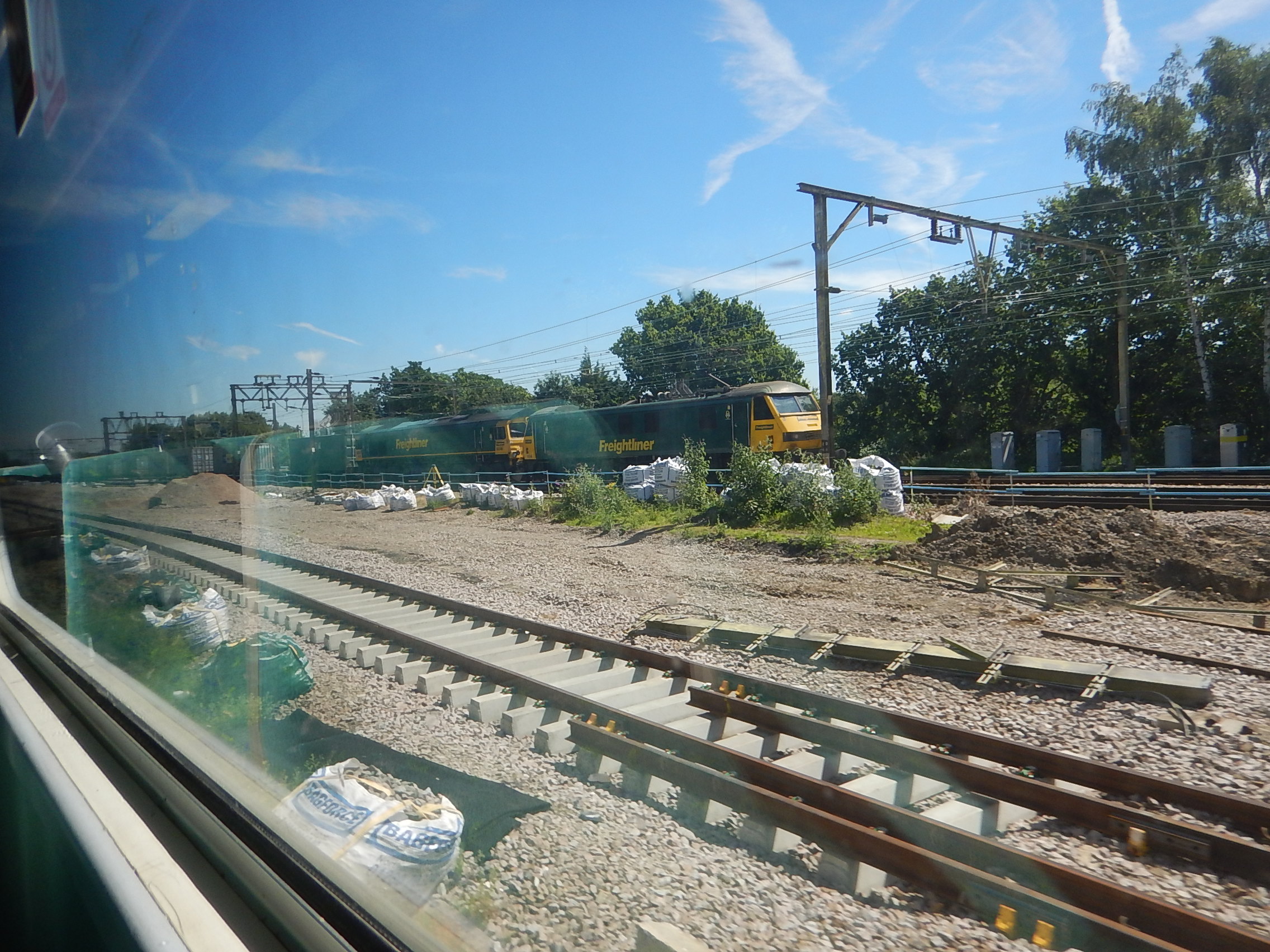
This double-headed train has a Class 90 electric locomotive and a Class 66 diesel locomotive at the front of a long freight train.
Even electric locomotives from the 1960s are being called up for service.
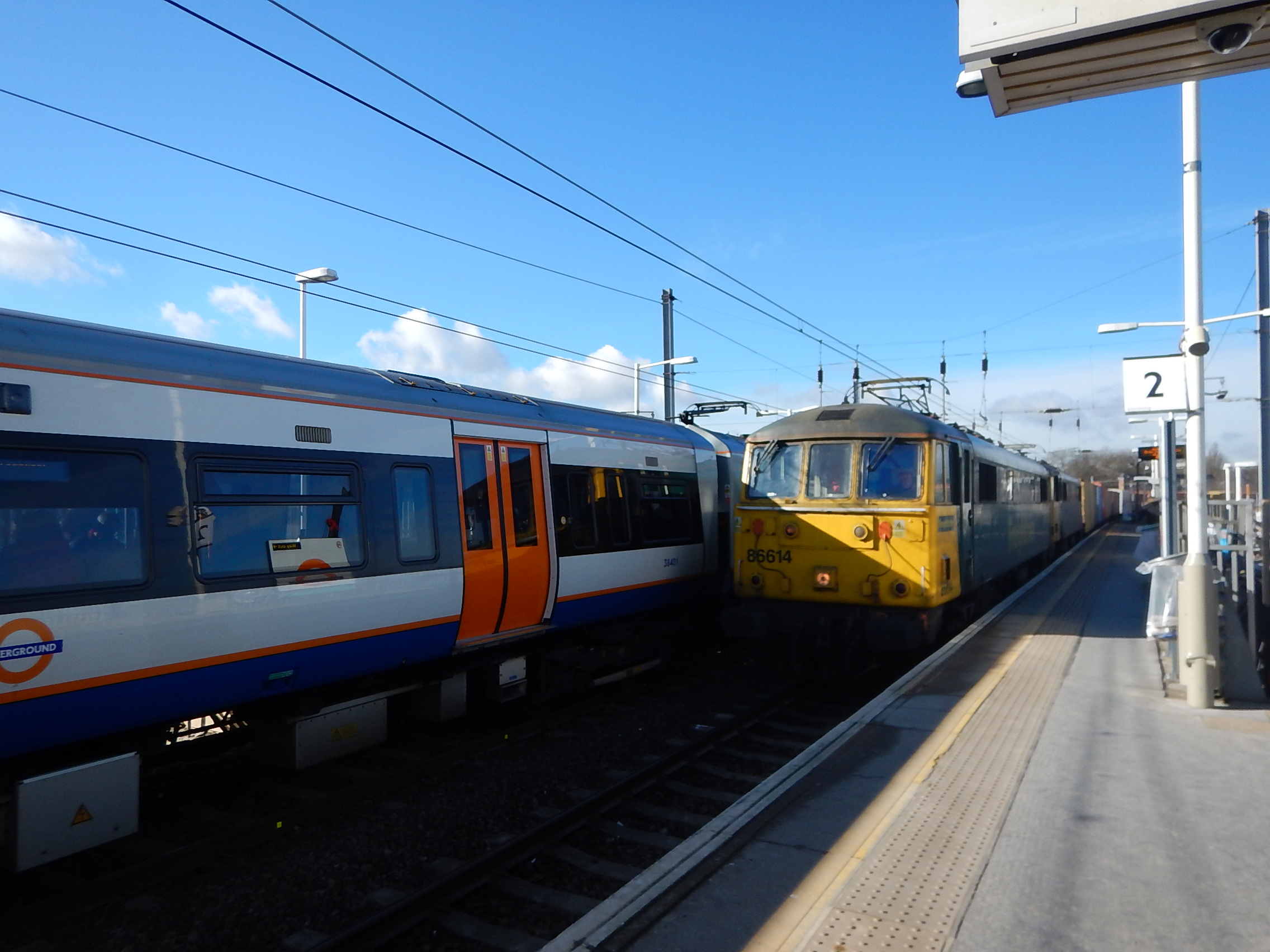
These two Class 86 locomotives were hauling a freight train through Hackney Wick station.
I think we’ll see small numbers of new electric locomotives arriving in the UK.
I suspect too, that freight operators are preparing their bids for the fifteen Class 90 locomotives, that will be released in the next few years by Greater Anglia.
More Electrification
In a couple of years, there will be full electrification from London to Bristol and Cardiff.
Although the Government has put a hold on a lot of electrification, current schemes like electrification of the Great Western Main Line will increase the use of electric or electro-diesel haulage.
Other smaller schemes might be added to increase the use of electric haulage for freight.
As an example, the lines into the important freight ports of London Gateway and Liverpool Two are not electrified. Electrifying both would probably increase the proportion of electrically-hauled freight.
Would It Have Been Better To Scrap HSTs, Abandon Class 769 Trains And Use Stadler Bi-Mode Flirts Instead?
I have ridden for several hours in Greater Anglia'[s new Class 755 trains and they seem to make good trains for scenic rural lines.
From December 16th, we’ll be seeing them work between Stansted and Norwich, which will show their mettle as true bi-modes working a partially-electrified route.
By mid-next year they will be working the following partially-electrified routes.
- Liverpool Street and Lowestoft
- Colchester and Peterborough
- Norwich and Stansted
- Ipswich and Cambridge
- Sudbury and Colchester Town
I think that about forty percent of these routes are electrified and they also include a lot of 100 mph lines.
ScotRail
These Greater Anglia routes are not unlike some of the ScotRail Inter7City routes, which are to be run by shorterned four- and five-car HSTs.
Both trains have been late because of training and other issues, but delivery of the HSTs seems to have got stuck round various remanufacturing problems at Wabtec.
Would ScotRail have done better to follow their sister company Greater Anglia and buy some Class 755 trains to their specification?
Consider the advantages of the Inter7City over the Class 755 train.
- Nostalgia
- Well-known engineering
- Comfortable
They could have been obtained at an affordable price.
But they do come with disadvantages.
- Forty years old
- Two big diesel engines
- They are rather dark and dingy inside.
The Class 755 trains also have the following advantages.
- They would help to remove diesel power from Edinburgh, Glasgow Queen Street and Stirling stations.
- They have large picture windows ideal for looking at lakes and mountains.
- Some seats are raised for a better view.
- They are genuine 100 mph trains, which could be uprated to 125 mph, so would be ideal for incursions on the fast routes to England.
- They’re probably ready to fit ERTMS.
- They come in various lengths.
- They are able to be modified for battery-electric operation.
- I suspect hydrogen operation will be possible in the future.
But the biggest advantage is that they could extend Scotland’s electric network by using the bi-mode capability.
Think.
- Fife Circle
- Borders Railway
- West Kilbride
- Perth
- West Highland Line
I think Scotland could really get to love these trains.
Great Western Railway
I could see a case for running shortened HSTs in the far South West, where GWR call them Castles, mainly on nostalgia and tourism grounds, but Class 755 trains would surely be better running the following partially-electrified services.
- Henley and Paddington
- Oxford and Gatwick via Reading
- Oxford and Paddington
- Cardiff and Taunton
- Cardiff and Portsmouth Harbour
Often, they would be replacing Class 156 or Class 769 trains.
- Some would need to be fitted with third-rail equipment.
- The Gatwick services could be given an airport interior.
- I suspect a 125 mph capability is available.
- The Class 769 trains seem to be late in arriving.
I have no doubt in my mind, that the new Stadler trains are much better than the refurbished British Rail trains.
Transport For Wales
Transport for Wales have ordered a selection of bi-mode and tri-mode Flirts.
They must have good reasons for buying a selection of trains, rather than buying more Flirts.
Probably cost!
All these routes could be run using bi-mode Flirts
- Cardiff and Holyhead
- Birmingham International and Holyhead
- Manchester Airport and Llandudno
- Crewe and Chester
- Chester and Liverpool Lime Street
- Milford Haven and Manchester Piccadilly
- Birmingham International and Aberystwyth via Shrewsbury
- Birmingham International and Pwllheli via Shrewsbury
- Heart of Wales Line
- Conwy Valley Line
Some of these routes are partially electrified and use lines with a 125 mph operating speed.
Answering The Question In The Title
I very much feel that bi-mode Flirts would be better trains than shortened HSTs and Class 769 trains.
- They are new trains.
- They can use electrification, where it is present.
- The appear to be capable of uprating to 125 mph.
- They have good viewing for scenic routes because of large windows and some raised seats.
- They are comfortable with a good ride.
- They are able to be modified for battery-electric operation.
- I suspect hydrogen operation will be possible in the future.
I suspect their one downside is cost.
Conclusion
Bi-mode and tri-mode Flirts and other similar trains will proliferate and within ten years we’ll have seen the last of pure diesel trains in the UK.
I suspect that most of the shortened HSTs will have gone by 2030.
Election 2019: DUP Manifesto At A Glance
The title of this post, is the same as that of this article on the BBC.
This is said under Infrastructure.
The infamous bridge from Northern Ireland to Scotland makes an appearance in the manifesto. It has been mooted on a number of occasions, despite a number of potential barriers to its construction.
Not everyone believes those barriers are insurmountable, though.
I don’t and feel strongly, that the bridge should be built and linked to High Speed Two
- London and Belfast in four hours
- London and Dublin in five hours.
- Belfast and Glasgow in under two hours.
Not forgetting, it would become an important freight route..
 The Anonymous Widower