Price Framework Paves Way For Vast Electricity Storage Scheme
The title of this post, is the same as that of this article on The Times.
This is the sub-heading.
SSE welcomes step forward in plans to build the £1.5bn Coire Glas hydroelectric project
These two paragraphs outline the article.
Ministers have provisionally agreed to a power pricing framework that could pave the way for more pumped storage hydroelectricity projects in Britain, including a gigantic £1.5 billion scheme from SSE that is starting to take shape in the Scottish Highlands.
The Department for Energy Security and Net Zero said it intended to develop a “cap and floor” pricing mechanism that would advance the Coire Glas storage project being developed by SSE, the energy company, and could unlock further pumped storage power stations.
Coire Glas will be one of the largest renewable power projects ever built in the UK.
- It will have a power output of 1.5 GW, which is comparable with some of the large wind farms in the North Sea or four gas-fired power station or Rolls-Royce SMRs.
- It will be able to store 30 GWh of electricity and provide 1.5 GW for twenty hours.
- Coire Glas has a web site.
- Coire Glas will more than double pumped storage hydroelectric capacity in the UK.
Bath County Pumped Storage Station in Virginia, US claims to be the world’s largest battery, but Coire Glas will be able to store more electricity.
You wait decades for one of these monsters to come along in the UK and SSE also have another on the way.
- Loch Sloy hydroelectric power station is the largest conventional hydroelectric power station in the UK.
- It has an output of 152 MW.
- It opened in 1950 and was largely built by German and Italian prisoners-of-war.
SSE plan to convert Loch Sloy power station into a pumped storage hydroelectric power station.
- It will be able to store 25 GWh of electricity.
- Loch Sloy will be the upper lake.
- Loch Lomond will be the lower lake.
- The existing dam, upper lake, pipes and powerhouse will be retained.
- The developments have a web page.
The project is aimed at a commissioning date of 2028.
This paragraph explains how the ‘cap and floor’ mechanism works.
In the scheme, operators would be guaranteed a minimum level of revenue, while consumers would be protected by a price ceiling, above which surplus revenue would be returned to them.
And these two paragraphs give SSE’s reaction.
Finlay McCutcheon, 46, director of onshore Europe at SSE, said the pricing framework was welcome news. He said that a deal for Coire Glas was needed by the end of this year to secure a firm investment decision by early 2026. Planning for the project started in 2007.
“Given the time taken to reach this point, much work is now needed to ensure an effective mechanism is finalised and put in place as early as possible to enable Coire Glas to take final investment decisions and move into construction,” he said.
I believe that the negotiations between the Government and SSE will lead to a monster on Loch Lochy and another one on Loch Lomond.
Conclusion
There are also these pumped storage hydroelectric schemes under development.
- Balliemeanoch Pumped Hydro – 1.5 GW/45 GWh
- Balmacaan Pumped Hydro – 600 MW/15-20 GWh
- Corrievarkie Pumped Hydro – 1.5 GW/14.5 GWh
- Fearna Pumped Hydro – 1.8 GW/37 GWh
- Glenmuckloch Pumped Hydro – 400 MW/1.6 GWh
- Loch Earba Pumped Storage Hydro – 900MW/33 GWh
- Loch Kemp Pumped Storage Hydro – 300MW/9 GWh
- Loch Na Cargeach/Red John Pumped Storage Hydro – 450 MW/2.8 GWh
These total up to 7.4 GW/100+ GWh.
This page on the Strathclyde University web site, gives these GWh figures for the possible amounts of pumped-storage that can be added to existing schemes.
- Errochty – 16
- Glasgarnock – 23
- Luichart – 38
- Clunie – 40
- Fannich – 70
- Rannoch – 41
- Fasnakyle – 78
- Tummel – 38
- Ben Lawers – 12
- Nant – 48
- Invermoriston – 22
- Invergarry – 41
- Quoich – 27
- Sloy – 20
That is a total of 514 GWh.
Scotland will be the Saudi Arabia of energy storage.
An Excursion To Retford And Worksop
Today’s excursion was designed to be simple.
- Take an LNER train or a Hull Train to Retford station.
- Travel to Worksop station, have a look and take a few pictures.
- Travel back to Retford and take the first train back to London.
- In one if my two visits to Retford, have a look and take a few pictures.
- Talk to passengers and railway staff about what they felt about FirstGroup’s Proposed Sheffield Service, that I wrote about in FirstGroup Applies To Run New London To Sheffield Rail Service.
These were my thoughts and observations.
LNER’s Improved Ticketing
These pictures show the tickets that I bought.




Note.
- I bought my ticket to Retford from the Ticket Office at King’s Cross station.
- The ticket seller gave me a well-designed folder for the tickets.
- I was also able to buy my return ticket between Retford and Worksop on the LNER train to Retford. I’ve tried doing that before and it wasn’t allowed.
Making ticketing easier must be a good thing for passengers, staff and LNER.
£24.75 With A Railcard From King’s Cross to Retford
- The second picture shows my ticket to Retford.
- It cost me just £24,75 with my Senior Railcard.
- I also bought it about half-an-hour before the train left.
- I bought the ticket in the Ticket Office.
- I got a forward-facing window seat with an unrestricted view.
How much would the 145 mile and nearly three-hour journey have cost in a car?
I Missed My Connection At Retford Station
These pictures show my train to Worksop station in Platform 3 at Retford station, as I approached from the South.





Note.
The Northern Trains’s Class 195 train arriving on Platform 3 on the Sheffield and Lincoln Line.
- I arrived in Platform 2 at Retford station at 12:50
- There were three lifts or sets of stairs to negotiate between Platform 2 and Platform 3.
- It must take at least five minutes between the two platforms.
- One of the lifts was out of order and was being serviced by an engineer.
- There was no way, I could have caught the connection, which left at 12:51.
- At least one other passenger, had to wait the one hour and fifteen minutes I waited for the next train, which arrived at 14:03.
I feel that there needs to be a timetable adjustment here, so that as many passengers as possible avoid the long wait.
Retford Station
At least the long wait allowed me to take a lot of pictures and have a cup of coffee in the Costa Coffee on Platform 1.
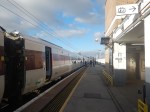
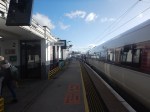


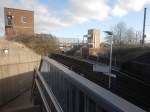



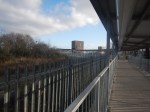

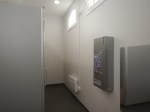



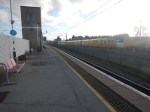
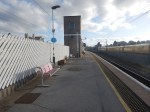

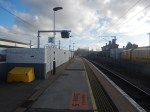
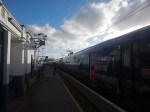
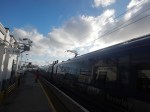
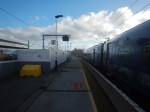

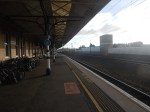





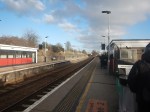
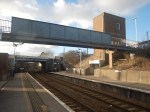
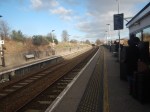
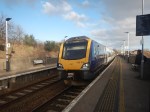
Note.
- The toilets were immaculate.
- The Costa Coffee had friendly and professional staff, but only rudimentary gluten-free options.
- The station is fully step-free with four lifts.
- Platforms 1 and 2 on the East Coast Main Line can take a pair of five-car Class 802 trains, as Hull Train demonstrated.
- The Hull Train in Platform 2 was using the electrification.
- The station is in very good condition.
- The station is Grade II Listed.
This Google Map shows the station.
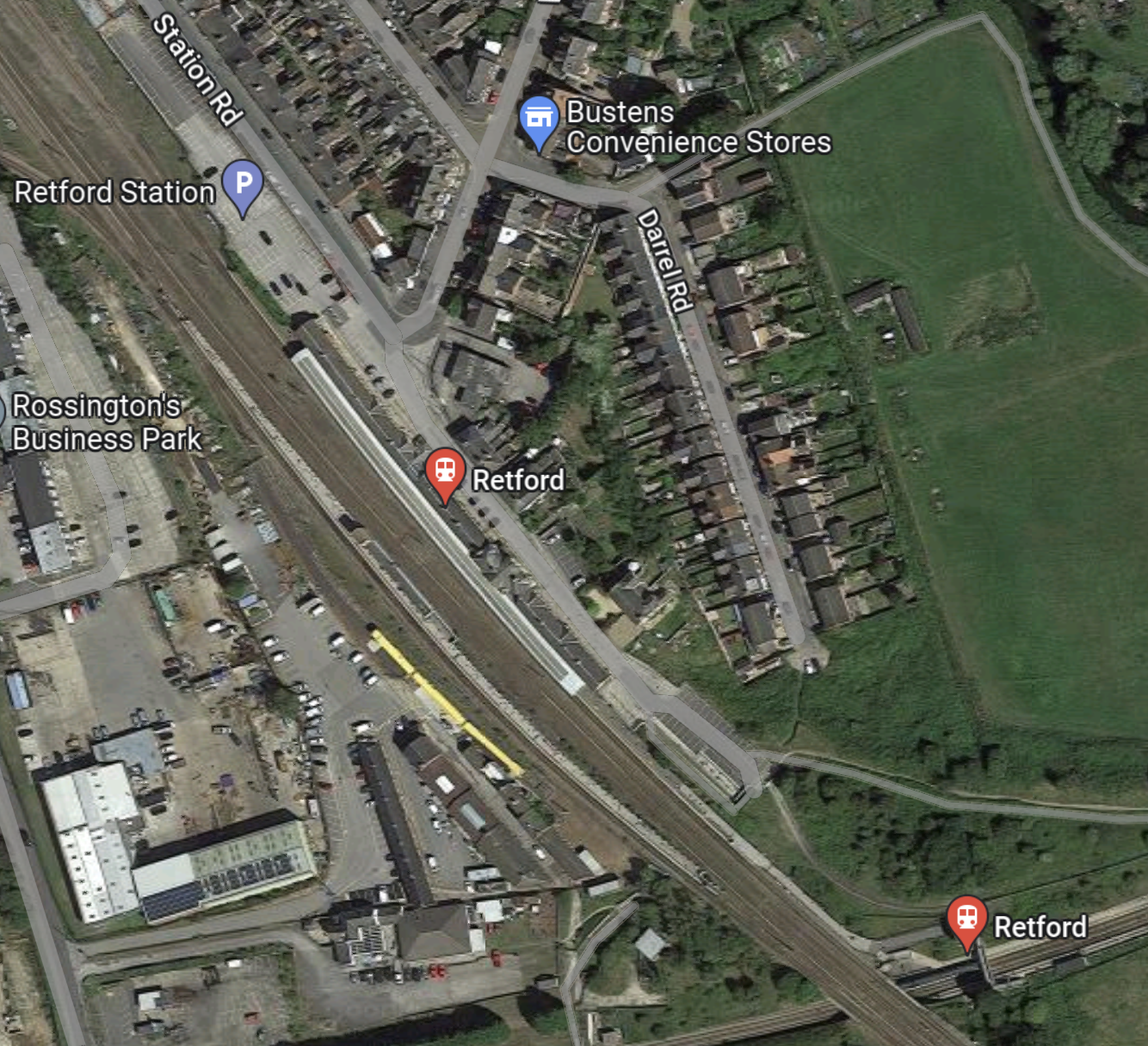
Note.
- The red arrow in the South-East corner are the low-level Platforms 3 and 4.
- The red arrow in the middle marks the low-level Platforms 1 and 2.
- Network Rail’s yellow Mobile Maintenance Train is visible in the siding opposite Platform 2.
- There is space around the platforms.
The station may have development possibilities. Especially, as there are signs of To Let over some of the buildings.
Ambitious Renewable Energy
Retford and Worksop are only eleven minutes away but there were a large wind farm and solar farms between the two stations.








Note.
- I was a bit slow on the uptake and missed the large wind farm.
- The strong sun was reflecting on the windows.
- They weren’t the best of photographs.
I had intended to take more and better pictures on the way back, but circumstances intervened.
This Google Map shows the wind and solar farms.

Note.
- The Sheffield and Lincoln Line going across the map.
- There are solar panels North and South of the railway.
- This is the Walkers Wood Solar Farm, which has a nameplate capacity of 27 MW.
- H M Prison Ranby is at the top of the map.
- The scars of the wind turbines are to the West of Babworth and the crematorium.
- At the moment, I can’t find any reference to the wind farm.
These wind and solar farms are probably a classic place to position a battery.
Prisons And Recycling
Worksop Station
I took these pictures during the time I spent at Worksop station.
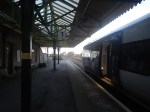
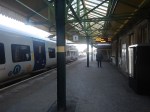
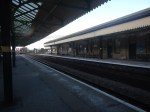
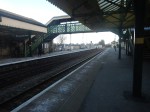




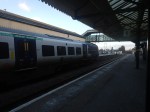
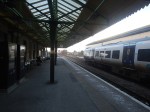













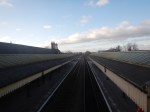



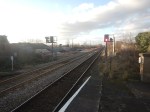



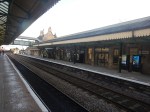
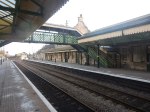



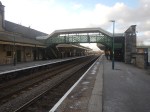



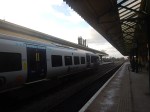
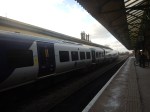
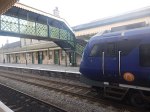

Note.
- The station is not step-free, although you can cross the tracks using the level-crossing.
- The station has a pub and a cafe.
- There are train services to Leeds, Lincoln, Nottingham and Sheffield.
- The station is in very good condition.
- The station is Grade II Listed.
- The platforms are long enough to handle a Class 802 train without any modification.
- Hull Trains could run their Sheffield service to Worksop station without any new infrastructure.
- Lidl are developing a site on the other side of the level crossing.
- There are 100 car parking spaces.
The station may have development possibilities.
Worksop Station Cafe
These pictures show the Worksop station cafe.











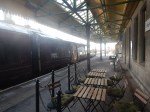
Note.
- It is run by two ladies; Jo and Lyndsey.
- As one is coeliac, there were lots of gluten-free cakes.
- It was cosy and warm on a cold day.
This is definitely one of the better station cafes.
A Double Incident
My journey back to the capital was I suspect untypical.
- I’d arrived at Worksop at 14:14 and finally left at 16:38 on a train for Retford and Lincoln.
- The delay was because someone had been hit by a train between Barnsley and Sheffield, which resulted in cancelled trains.
- When I arrived at Retford at 16:49, there was an LNER train in the platform.
- It was the 15:15 from Leeds and I was told by LNER staff to catch it and get my ticket on the train.
- The train finally left Retford for London 69 minutes late at 17:07.
- We arrived in Peterborough at 19:27, where the train was now 170 minutes late.
- The delay was because someone had been hit by a train at Newark, which results in delays everywhere.
- LNER decided to give up on the train and all passengers were put on other trains.
- I got on the 14:30 from Edinburgh, which arrived in King’s Cross at 20:22, which was 96 minutes late.
Worse things happen at sea.
I am adding this a day after my trip to the North.
This article on the BBC is entitled ‘Major Disruption’ After Person Hit By A Train.
These are the first three paragraphs.
Train services on the East Coast Main Line have been seriously disrupted after a person was hit by a train in North Yorkshire.
Network Rail said the incident happened just before 07:00 GMT between York and Thirsk, with emergency services attending the scene shortly afterwards.
The line was blocked, resulting in delays and cancellations.
Three in two days us three too many.
FirstGroup Applies To Run New London To Sheffield Rail Service
The title of this post, is the same as that of this press release from First Group.
These four paragraphs outline FirstGroup’s initial plans.
FirstGroup plc, the leading private sector transport operator, has today submitted the first phase of an application for a new open access rail service between London and Sheffield to the Office of Rail and Road (ORR).
FirstGroup plans to expand its open access rail operations as part of its award-winning Hull Trains business, building on their successful existing service which has transformed long-distance connectivity between Hull and London.
FirstGroup’s new proposals comprise two return journeys a day from London King’s Cross, calling at Retford, Worksop, Woodhouse and Sheffield, and the company aims to provide a faster link between London and Sheffield than alternative services. Almost three quarters of trips between London and Sheffield are currently made by car, with a further 9% of trips made by coach, and a competitively priced new rail offering will help stimulate a shift in transport mode of choice from road to rail.
The new proposed route will give Sheffield the first regular service from London King’s Cross since 1968 and will also give Worksop in Nottinghamshire the first regular direct London trains in decades. FirstGroup estimates there are 350,000 people in the Worksop and Woodhouse catchment areas who will have direct rail access to London because of these proposals. A sizeable number of rail users in these areas currently drive to Doncaster station to pick up faster services to London rather than travelling via Sheffield, and a convenient rail offering from local stations will also help to reduce the number of these car journeys.
Note.
- The press release says this is only the first phase.
- It appears to be an extension of Hull Trains.
- Comments on a news story based on the press release in The Times, have been generally positive.
These are my thoughts.
The Two Routes Are Similar
Consider.
- Beverley is 44.3 miles from the electrified East Coast Main Line at Temple Hirst Junction.
- Hull is 36.1 miles from the electrified East Coast Main Line at Temple Hirst Junction.
- Sheffield is 23.5 miles from the electrified East Coast Main Line at Retford station.
- There is no electrification at Beverley, Hull or Sheffield.
Note.
- Trains must be capable of having a range sufficient to go from the East Coast Main Line to the destination and back again.
- It is slightly surprising that Sheffield station is closest to the electrification of the East Coast Main Line.
- Hull Train’s electro-diesel Class 802 trains regularly handle the 88.6 miles to Beverley and back.
It does look like an appropriate number of Class 802 trains could handle Hull Trains current and future services to Beverley, Hull and Sheffield.
Hull Trains Need Ten-Car Trains
Consider.
- In Ten-Car Hull Trains, I show some details of Hull Trains using a pair of five-car trains.
- I’ve since seen ten-car Hull Trains regularly.
- There were two ten-car services on the 29th December 2023 between London King’s Cross and Hull.
Hull Trains must procure enough trains for all possible scenarios.
Intermediate Stations Of The Two Routes
Intermediate stations are.
- Going North from London King’s Cross to Hull, trains call at Stevenage (limited), Grantham, Retford, Doncaster, Selby, Howden and Brough.
- Going North from London King’s Cross to Sheffield, trains call at Retford, Worksop and Woodhouse.
There are only a small number of stops on the Sheffield service. Is this to reduce the journey time as much as possible?
What Will Be The Time Of The London King’s Cross And Sheffield Service?
Consider.
- Non-stop trains take 82 minutes between London King’s Cross and Retford, which is 138.6 miles, so it’s an average speed of 101.4 mph.
- Woolmer Green and Retford are 111.7 miles and will in a couple of years, be digitally signalled.
- Non-stop trains take 66 minutes between Woolmer Green and Retford, which is an average speed of 112 mph.
- I have found a direct Retford and Sheffield train, that takes 31 minutes for the 23.5 miles with six stops, which is an average speed of 45 mph.
- The Retford and Sheffield section has a mostly 60 mph maximum speed.
I can now build a table of times between King’s Cross and Retford based on the average speed North of Woolmer Green.
- 125 mph – 72 minutes
- 130 mph – 70 minutes
- 135 mph – 68 minutes
- 140 mph – 66 minutes
Note.
- Getting a high average speed using the power of digital signalling can save several minutes.
- I have measured an InterCity 125 averaging 125 mph on that section.
I can now build a table of times between Retford and Sheffield based on the average speed.
- 45 mph – 31 minutes
- 50 mph – 28 minutes
- 60 mph – 24 minutes
- 70 mph – 20 minutes
- 80 mph – 18 minutes
Note.
- The planned service is expected to stop only twice after Retford, so if we take off two minutes for each of the four stops not taken, this could reduce the time between Retford and Sheffield by 8 minutes.
- There will be a couple of minutes to add for the stop at Retford.
- I feel a typical journey with 125 mph to Retford, 50 mph to Sheffield, could take 94 minutes
- Currently, the fastest London St. Pancras to Sheffield take around 116-118 minutes.
Hull Trains new service could save 22-24 minutes on the current service.
I also feel a fast journey could involve 130 mph to Retford, 60 mph to Sheffield, could take 88 minutes.
Hull Trains new service could save a few minutes over half-an-hour.
Could The Time Of The London King’s Cross And Sheffield Service Be Under 90 Minutes?
I reckon the following is possible.
- After the digital signalling is completed between King’s Cross and Retford, I suspect that a 135 mph average speed can be maintained between Woolmer Green and Retford. This would mean that a King’s Cross and Retford time of 68 minutes would be possible.
- If Network Rail improve the track between Retford and Sheffield, I believe that a 70 mph average could be achieved on the Retford and Sheffield section. This would mean that a Retford and Sheffield time of 20 minutes would be possible.
- I would expect at least six minutes would be saved by missing stops.
This gives a time of 82 minutes between London King’s Cross and Sheffield.
In Anxiety Over HS2 Eastern Leg Future, I said that High Speed Two’s promised London and Sheffield time via a dedicated track would be 87 minutes.
It looks to me that running under full digital signalling on the East Coast Main Line, Hull Trains can beat the HS2 time.
Could Hitachi’s Battery-Electric Trains Handle The Routes?
This page on the Hitachi web site is entitled Intercity Battery Trains.
This is the sub-heading
Accelerate the decarbonisation of intercity rail with batteries.
These paragraphs outline the philosophy of the design of the trains.
A quick and easy application of battery technology is to install it on existing or future Hitachi intercity trains. Hitachi Rail’s modular design means this can be done without the need to re-engineer or rebuild the train and return them to service as quickly as possible for passengers.
Replacing one diesel engine with just one battery reduces emissions by more than 20% and offers cost savings of 20-30%. Our intercity battery powered trains can cover 70km on non-electrified routes, operating at intercity speeds at the same or increased performance.
Wouldn’t it be great, if we could take the diesel engine out of our cars and replace it with an electric power pack?
Paul Daniels would’ve classed it as engineering magic.
But it’s an old engineer’s trick.
As a fifteen year old, I spent time in a rolling mill, building and fitting replacement control systems on large machines. Transistors were used to replace electronic valves and relays.
It’s certainly possible to create a battery pack, that is plug-compatible with an existing diesel generator, that responds to the same control inputs and gives the same outputs.
At the extreme end of this technology, there would be no need to change any of the train’s software.
In The Data Sheet For Hitachi Battery Electric Trains, these were my conclusions for the performance.
- The battery pack has a capacity of 750 kWh.
- A five-car train needs three battery-packs to travel 100 miles.
- A nine-car train needs five battery-packs to travel 100 miles.
- The maximum range of a five-car train with three batteries is 117 miles.
- The maximum range of a nine-car train with five batteries is 121 miles.
As the East Coast Main Line to Beverley is a round trip is 88.6 miles, I suspect that Hull Trains’s five-car Class 802 trains will need to be fitted with a full-complement of three batteries.
Will Hull Trains Have An Identical Fleet Of Trains?
An identical fleet must have advantages for train staff, maintenance staff and above all passengers.
I believe FirstGroup have two choices.
- They buy an appropriately-sized batch of identical Class 802 trains.
- They convert their current fleet to battery-electric operation and buy an appropriately-sized batch of identical new trains.
Note.
- The second option means that they fully-decarbonise Hull Trains.
- Neither option would need any new infrastructure.
- I feel this means that this order is more likely to go to Hitachi.
It’ll probably all come down to the accountants.
Retford Station
This OpenRailwayMap shows the tracks around Retford station.
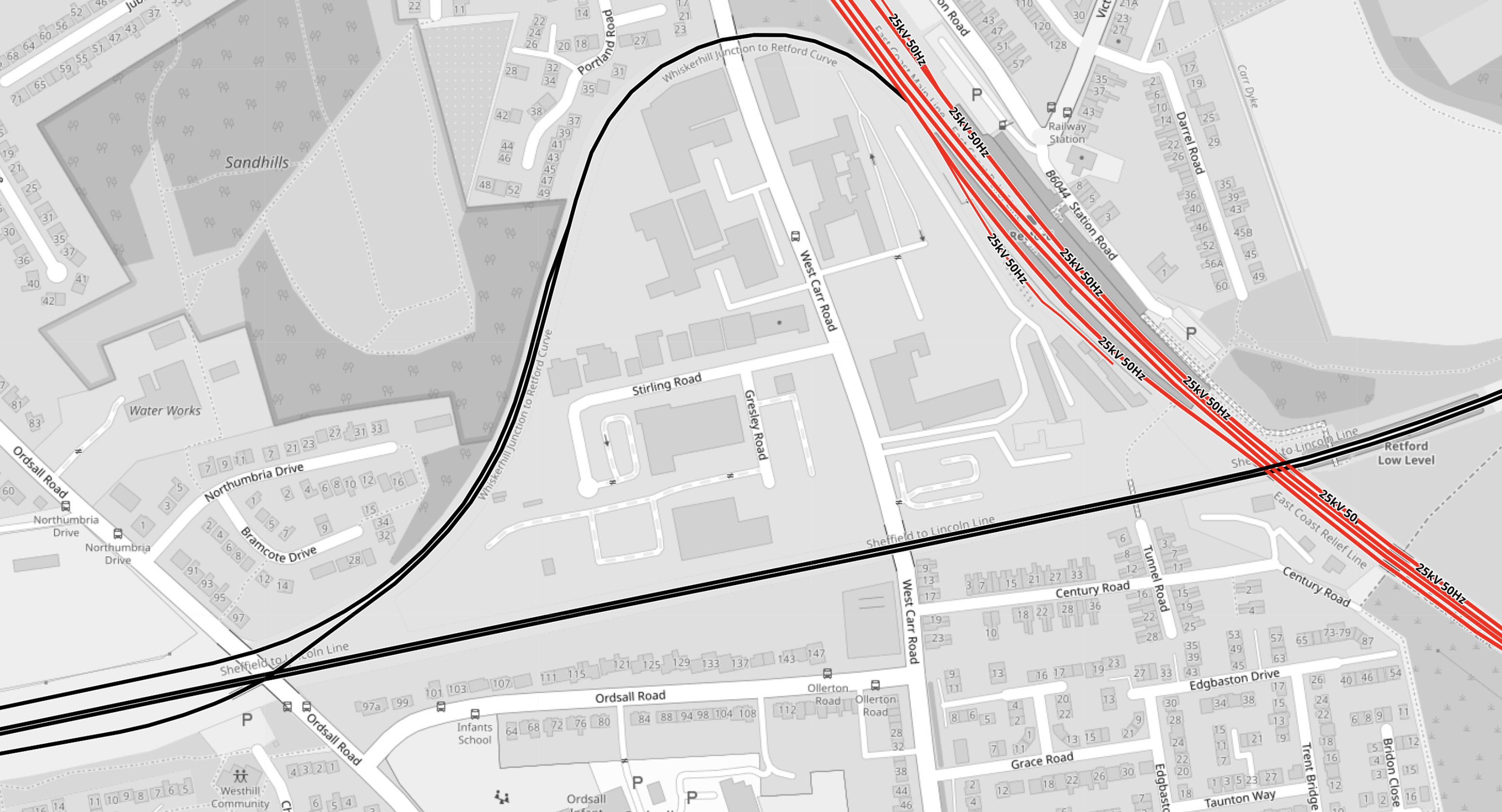
Note.
- The red tracks are electrified and are the East Coast Main Line.
- The black ones aren’t electrified.
- Doncaster is to the North.
- The black line to the East goes to Lincoln
- The black line to the West goes to Sheffield
- The red line going South-East goes to Peterborough and London.
The unusual loop allows trains to connect from one direction to another.
This second OpenRailwayMap shows the tracks in more detail.
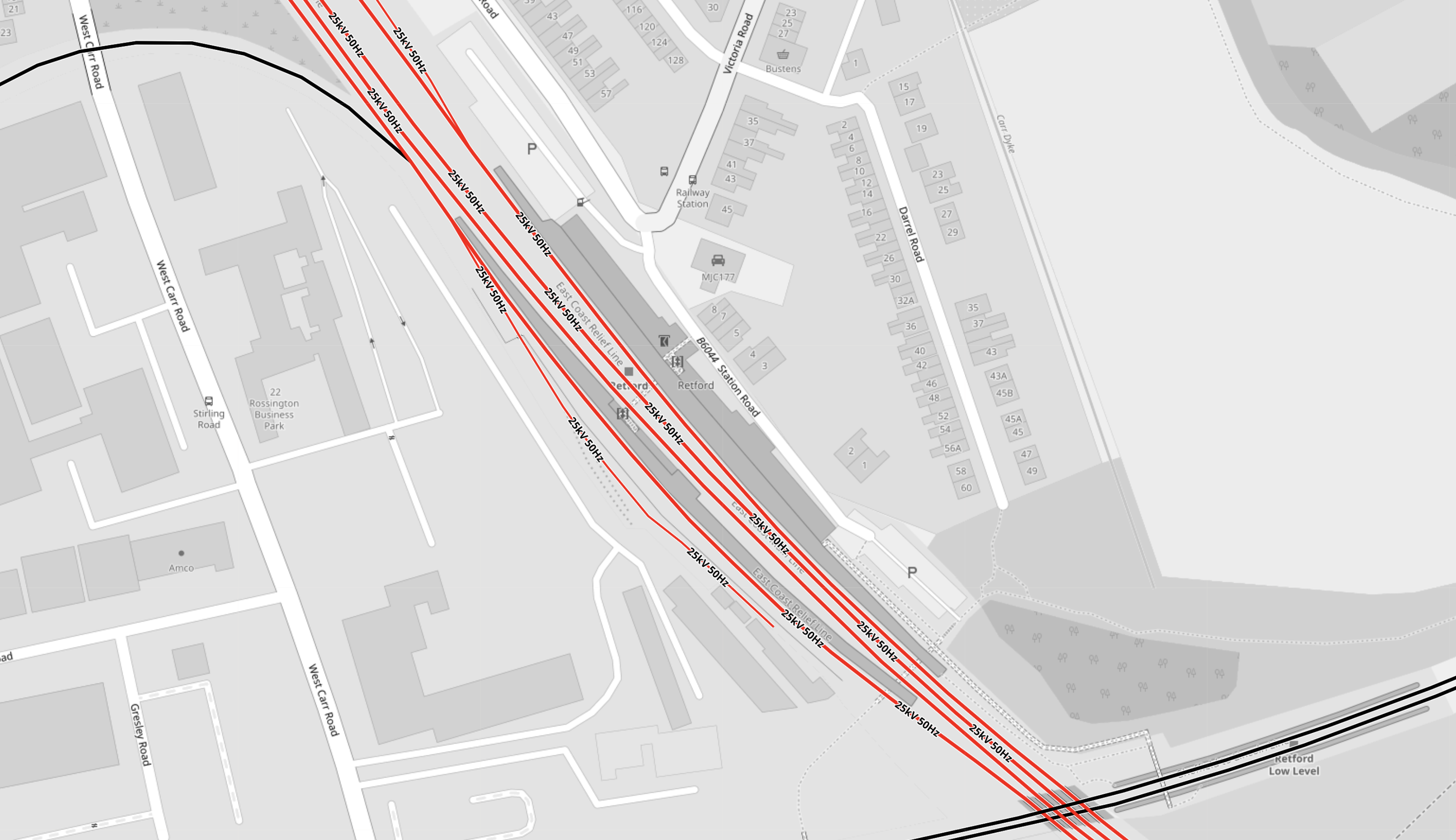
Note.
- As before red lines are electrified and black ones aren’t
- Platforms 1 and 2 are on the East Coast Main Line.
- Platforms 3 and 4 are on the Sheffield and Lincoln Line.
This third OpenRailwayMap shows the platforms in more detail.

Note.
- The yellow tracks are the 125 mph fast lines of the East Coast Main Line.
- The light blue tracks are the 40 mph relief lines of the East Coast Main Line.
- Northbound tracks are to the left of each pair of lines.
- The dark blue track is the 10 mph chord that connects the Northbound relief line of the East Coast Main Line to the Sheffield and Lincoln Line.
- Platform 1 is on the Southbound relief line.
- Platform 2 is on the Northbound relief line.
- Unusually, both platforms are on the same side of the line.
- In The Lengths Of Hitachi Class 800/801/802 Trains, I state that the full length of an InterCity 225 train is 245.2 metres.
- I suspect that both platforms can accommodate a full length InterCity 225, as the trains have been calling at Retford since the 1980s.
I doubt Retford station has any problem accommodating a pair of Class 802 trains, which it does regularly.
How Do Northbound Trains Go To Sheffield From Retford Station?
This OpenRailwayMap shows the tracks to the South of Retford station in detail.
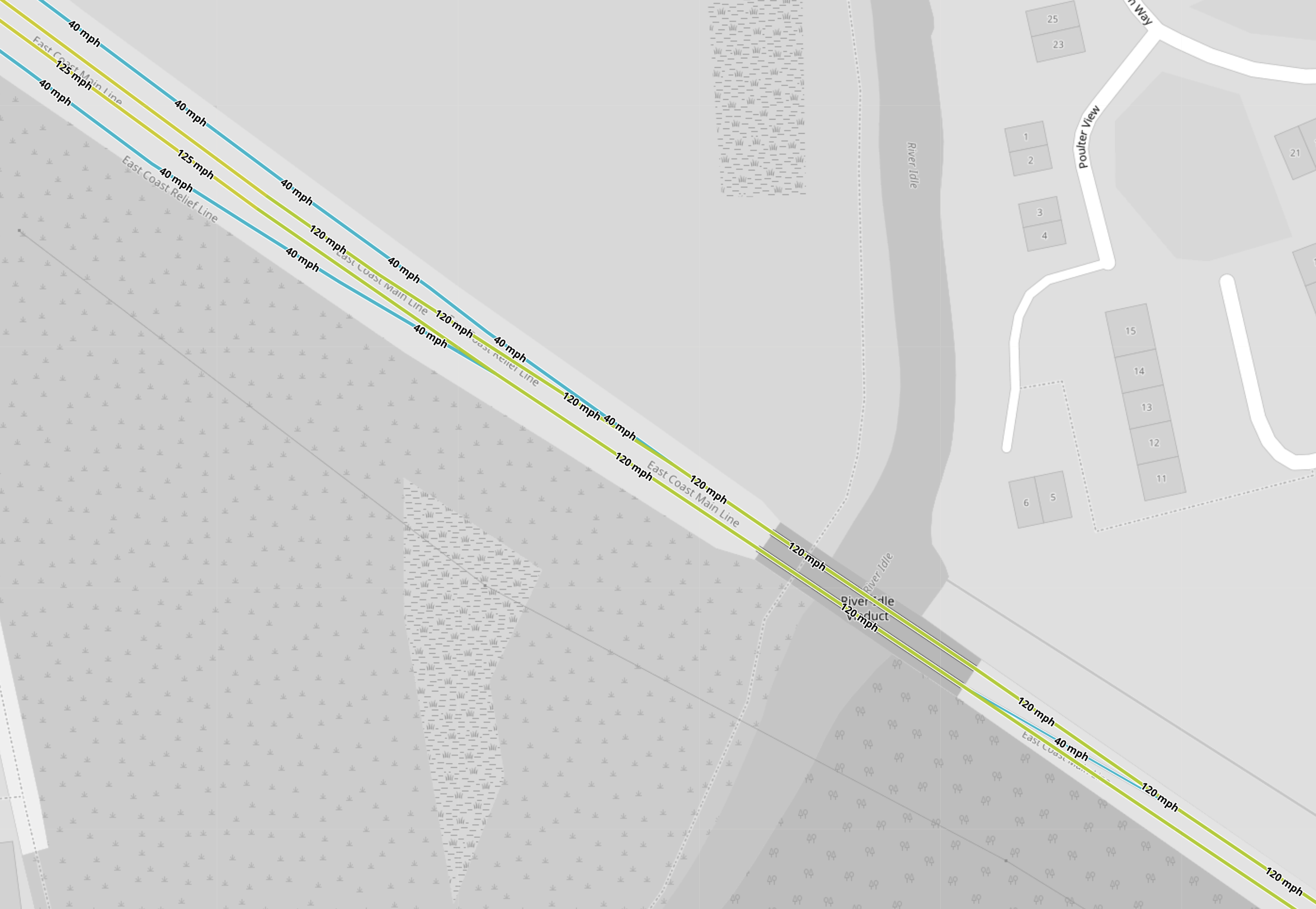
Note.
- The yellow tracks are the 125 mph fast lines of the East Coast Main Line.
- The light blue tracks are the 40 mph relief lines of the East Coast Main Line.
- Northbound tracks are to the left of each pair of lines.
Trains needing to stop in Retford station will need to cross to the Northbound relief line to enter Platform 2 at Retford station.
This OpenRailwayMap shows the curve that connects Platform 2 at Retford station to the Sheffield and Lincoln Line to Sheffield.

Note.
- The green tracks are the 60 mph Sheffield and Lincoln Line.
- Sheffield is to the West.
- The blue tracks are the curve that connects Platform 2 in Retford station to the Sheffield and Lincoln Line.
- There appears to be a grade-separated junction, where the two lines join to the West of Retford station.
A Northbound train to Sheffield will take curve and then join the line to Sheffield.
How Do Southbound Trains Go From Sheffield Through Retford Station?
I suspect trains do the opposite from a train going to Sheffield.
The train takes the curve and then stops in Platform 2 facing South.
This OpenRailwayMap shows the tracks to the South of Retford station in detail.
When the train is cleared by the signals to go South, it will leave Retford station going South on the Northbound relief line.
Note that on the map there are two crossovers, which the train will take to get on the Southbound fast line for Newark and London.
As a Control Engineer, I suspect this is the sort of manoeuvre, that modern digital signalling will make slicker and safer.
How Do Northbound Trains Go To Hull From Retford Station?
On leaving the station, the train will continue along the relief line until it merges with the Northbound fast line for Doncaster.
This is exactly as any Northbound train stopping at Retford does now.
How Do Southbound Trains Go From Hull Through Retford Station?
Currently, trains from Hull stop in Platform 1 on their way to London.
- Trains needing to stop in Retford station will need to cross to the Southbound relief line to enter Platform 1 at Retford station.
- When the train is cleared by the signals to go South, it will leave Retford station going South on the Southbound relief line.
- The Southbound relief line joins the Southbound fast line to the South of the station.
This is exactly as any Southbound train stopping at Retford does now.
Could A Hull And A Sheffield Service Run As A Pair And Split And Join At Retford Station?
Consider.
- Class 802 trains, as used by Hull Trains are designed to be run as a pair of trains, with easy coupling and uncoupling between the two trains.
- Hull Trains regularly run services as a pair of Class 802 trains.
- A pair of trains could leave King’s Cross. They would then split at a convenient station, after which the two trains go to different destinations.
- There are advantages with respect to infrastructure charges.
I feel that Hull Trains two services to Sheffield and Hull/Beverley could work as a pair.
- A pair of trains could leave King’s Cross.
- At Retford station they would split, with one train going to Hull and the other to Sheffield.
Coming South they would join at Retford.
How Would Splitting Of A Hull And Sheffield Service Be Performed At Retford Station?
The procedure would be something like this.
- As the pair of train is stopping in Retford station, it would use the relief line to enter Platform 2.
- It would stop in Platform 2.
- The trains would be uncoupled.
- The front train would go to its destination.
- The rear train would go to its destination.
Note.
- As the track to Doncaster and Hull is faster, the front train should probably be for Hull.
- Platform 2 is electrified, so the Sheffield train could top up its batteries .
- The Sheffield train could lower its pantograph.
Uncoupling takes about two minutes.
How Would Joining Of A Hull And Sheffield Service Be Performed At Retford Station?
Consider.
- Joining would have to be performed in Platform 2, as there is no route for a train from Sheffield to access Platform 1.
- North of Retford station there are two convenient crossovers, to allow a train to cross to the Northbound relief line. There are also a couple of loops, where trains could wait.
- As this is coal-mining country, perhaps, they were part of a freight route between Sheffield and Doncaster?
But this infrastructure would allow, a train from Hull to access Platform 2 at Retford station.
As the Sheffield train can easily access Platform 2, the two trains could meet in Platform 2 and then be joined together for a run to London.
Is There A Problem With Splitting And Joining Of the Hull And Sheffield Services?
Earlier, I said these were the stops of the two services.
- Going North from London King’s Cross to Hull, trains call at Stevenage (limited), Grantham, Retford, Doncaster, Selby, Howden and Brough.
- Going North from London King’s Cross to Sheffield, trains call at Retford, Worksop and Woodhouse.
Surely, if the trains were travelling as a pair, they would need to stop at the same stations to the South of Retford.
But modern digital signalling will allow trains to run closer together, so perhaps this would be the procedure going North.
- The two trains start in the same platform at King’s Cross, with the Sheffield train in front of the Hull train.
- The two trains leave King’s Cross a safe number of minutes apart.
- At its Stevenage and Grantham stops, the Hull train will tend to increase the distance between the two trains.
- The Sheffield train would stop in Platform 2 at Retford station, so that space is left for the Hull train.
- The Hull train will stop behind the Sheffield train in Platform 2 at Retford station.
- The Sheffield train will leave when ready.
- The Hull train will leave when ready.
And this would be the procedure going South.
- The train from Sheffield would line up in Platform 2 at Retford station.
- The train from Hull would line up in Platform 1 at Retford station.
- The train from Sheffield would leave when everything is ready and the train is cleared by the signalling system.
- The train from Hull would leave a safe number of minutes behind the train from Sheffield.
- At its Grantham and Stevenage stops, the Hull train will tend to increase the distance between the two trains.
- The trains could share a platform at King’s Cross.
The digital signalling and the driver’s Mark 1 eyeballs will keep the Hull train, a safe distance behind the faster Sheffield train.
The Capacity Of The Lincoln And Sheffield Line
Looking at the Sheffield and Lincoln Line, it has only an hourly train, that calls at Darnall, Woodhouse, Kiverton Park, Kiverton Bridge, Shireoaks and Worksop between Retford and Sheffield.
- I would suspect that there is enough spare capacity for Hull Trains to run a one train per two hours (tp2h) service between London King’s Cross and Sheffield.
- If LNER feel that a 1 tp2h frequency is viable for Harrogate, Lincoln and other places, surely Hull and East Sheffield could support a similar service from King’s Cross.
If the services could be run by battery-electric trains, capable of running at 140 mph on the East Coast Main Line and giving times of ninety minutes to Sheffield, this could be a success.
Could Woodhouse Station Become A Transport Hub?
This Google Map shows Woodhouse station.
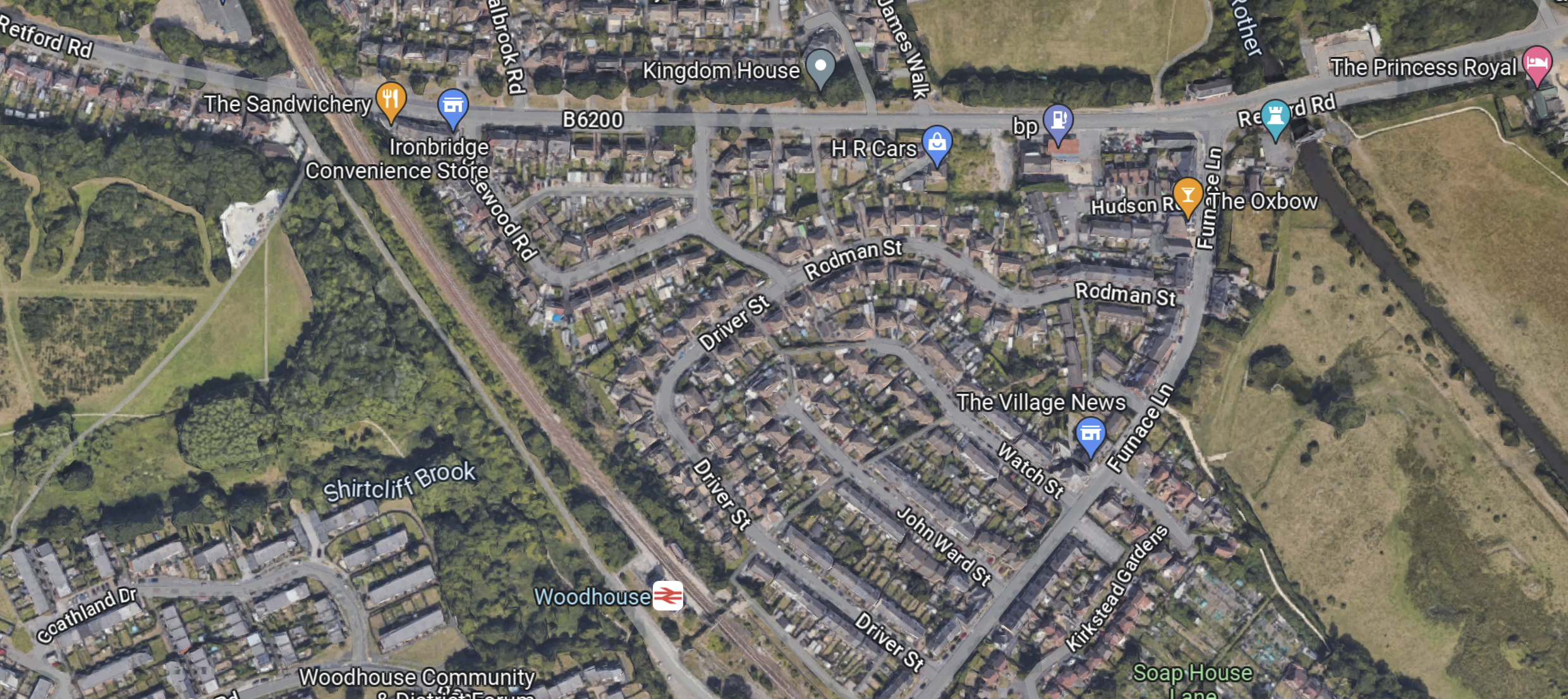
Note.
- It is certainly surrounded by a lot of houses.
- Could it be provided with car-parking?
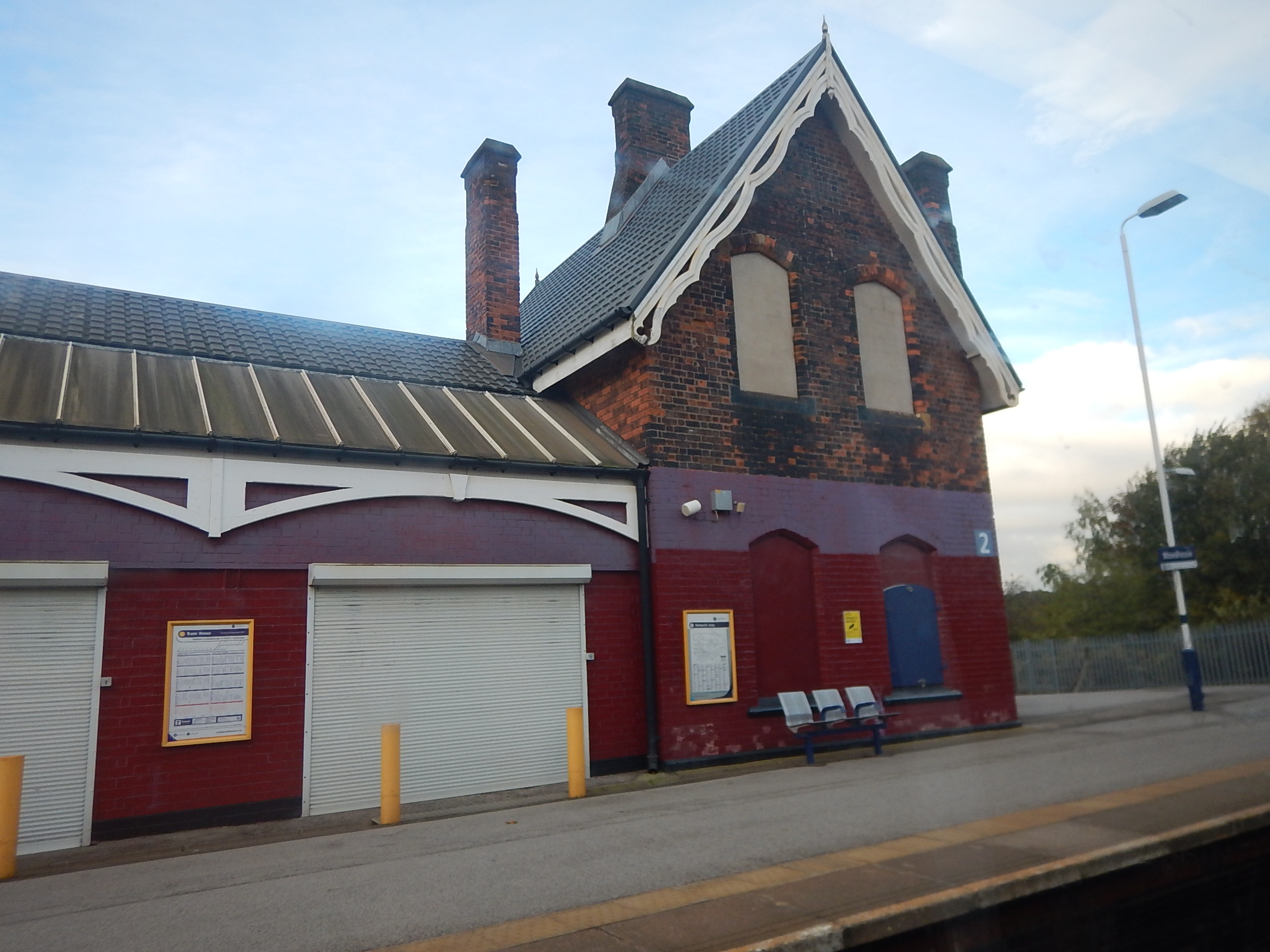
Although, as this picture shows it is not blessed with lots of facilities.
But.
- The station is in an area, which Sheffield want to develop.
- The Advanced Manufacturing Centre is nearby.
- There are aspirations to run a tram-train between Sheffield and Chesterfield via Darnall, Woodhouse and Barrow Hill stations.
- The station could be on the tram-train route to Stocksbridge, that I wrote about in Reopening The Don Valley Section Of The Former Woodhead Line Between Stocksbridge and Sheffield Victoria To Passenger Services.
Woodhouse station could be an interchange or it could become something bigger like a hub station.
How Many Sheffield Services Per Day Could Be Run?
If the Hull and Sheffield trains run as a flight under control of the digital signalling, this will mean that every Hull train can be paired with a Sheffield train.
- There are five trains per day (tpd) to and from Hull and two to and from Beverley.
- It seems a maximum of one tpd in both directions can be a ten-car train.
- Two five-car trains could fit in a platform at King’s Cross.
I suspect that the maximum number of trains per day to and from Sheffield is the same as for Hull. i.e. seven tpd.
But there is no reason, if they have enough trains and paths are available, that Hull Trains couldn’t add extra services to both destinations.
Onward From Sheffield
Several of those, who have commented on the new service have suggested that the service could go further than Sheffield, with Manchester and Leeds being given specific mentions.
This OpenRailwayMap shows the platforms at the Northern end of Sheffield station.
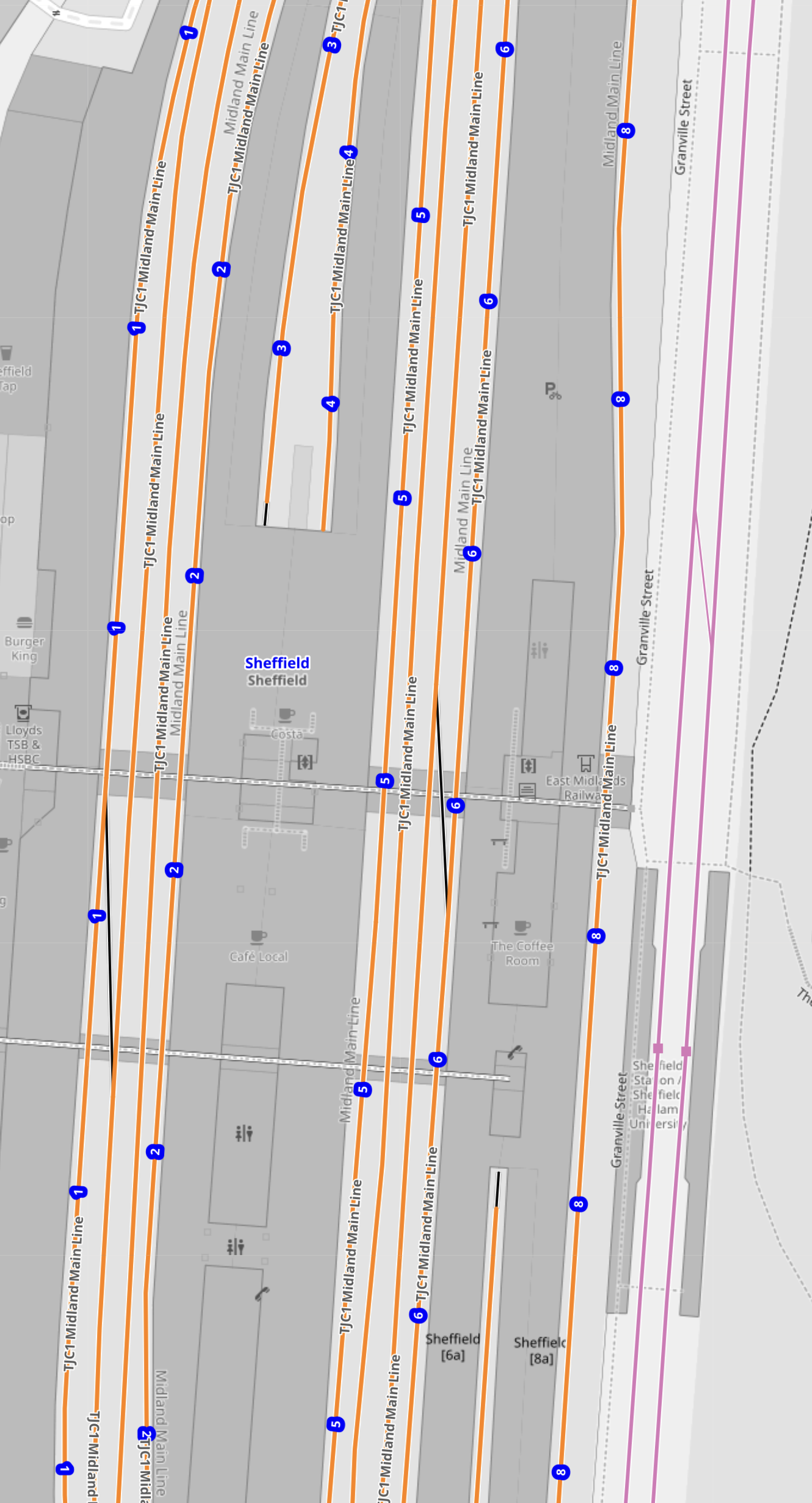
Note.
- The pink tracks at the East are the Sheffield Supertram.
- Trains to and from Barnsley, Huddersfield, Hull, Leeds, Lincoln and Retford access the station from the Northern end.
- Trains to and from Chesterfield, Derby, London, Manchester and Stockport access the station from the Southern end.
- The tracks in Sheffield station are numbered 1 to 8 from the West.
- There are five through platforms. 1, 2, 5, 6 and 8 and two bay platforms at either end.
- An extension of the service to Manchester via the Hope Valley Line, could go straight through the station.
- An extension of the service to Barnsley, Huddersfield or Leeds, would mean the train reversing at Sheffield.
It looks like an extension to Manchester Piccadilly over the recently upgraded Hope Valley Line would be the easiest extension. But would Avanti West Coast, who have FirstGroup as a shareholder want the competition?
Recently, it has been announced that the Penistone Line to Barnsley and Huddersfield will be upgraded to accept two trains per hour (tph) and allow faster running.
Because Sheffield could be around eighty minutes from London, there could be some smart times to and from the capital.
- Meadowhall in 90 minutes
- Barnsley in 112 minutes.
- Huddersfield in 140 minutes.
Huddersfield could be almost twenty minutes faster than the route via Leeds.
Comments From The Times
These are some readers comments from The Times.
- Hope the prices are competitive with LNER. I rarely go to London from Chesterfield with EMR as they’re so expensive. LNER from Newark is much cheaper but a service from Worksop for me would be perfect.
- Excellent News in so many ways. I hope it really takes off which could help ease the congestion on the M1 and also thin out overcrowding on busy LNER services. It really does deserve to succeed.
- This is excellent news. The Lumo service has been a game changer for me and those living in the north east.
The public seem in favour.
Conclusion
I really like this proposal from FirstGroup.
- It has the possibility to provide Sheffield with a fast train link to London.
- It could run about six trains per day.
- It will be faster than High Speed Two was proposed.
It could be the first service of High Speed Yorkshire.
Alaska Airlines Grounds 737 Max 9 Planes After Section Blows Out Mid-Air
The title of this post, is the same as that of this article on the BBC.
This is the sub-heading.
A passenger plane lost a section of its fuselage in mid-air forcing it to make an emergency landing in the US state of Oregon.
Theses three paragraphs outline what happened.
The Alaska Airlines Boeing 737 Max 9 turned back 35 minutes into its flight to California after an outer section, including a window, fell off on Friday.
There were 177 passengers and crew on board and it landed safely in Portland.
The airline said it would temporarily ground all 65 of its 737 Max 9 aircraft to conduct inspections.
I think it is true to say that everybody was very lucky.
When I was a private pilot flying around the UK, Europe and Australia, I used to read the accident reports and I suspect there was a couple of structural failures like this, that had a much worse outcome.
These are two paragraphs from the BBC article.
In an audio clip, the pilot can be heard talking to air traffic control requesting a diversion.
“We are an emergency,” she said. “We are depressurised, we do need to return back.”
Strangely, this is the first airline incident or accident, I can remember, where the pilot was female. But there must have been others.
One of the genuine firsts, I have been involved in, was Air UK’s first flight with an all-female crew.It was probably in the 1980s and my late wife; C and myself flew from Stansted to Paris in a Short 360.
Conclusion
I would fly with a female pilot any time, but I doubt you’ll catch me in a Boeing 737!
Japanese Offshore Wind And Battery Storage Project Begins Commercial Operation
The title of this post, is the same as that of this article on offshoreWIND.biz.
This is the sub-heading.
On 1 January 2024, JERA and Green Power Investment Corporation (GPI) began commercial operations at the 112 MW Ishikari Bay New Port Offshore Wind Farm in Japan, which they own through Green Power Ishikari GK, a special-purpose corporation (SPC).
The most significant thing about this wind farm, is that it has been designed from Day One to operate with a battery, which is detailed in the last paragraph.
The project also features a battery storage component with 100 MW x 180 MWh of capacity.
Note that the output of the battery is 89 % of that of the wind farm. Is that the ideal ratio between battery and wind farm capacities?
Conclusion
Because of my training, as an Electronics and Control Engineer, I belief that most renewable energy can be smoothed with the adding of a battery.
Sadiq Khan ‘Is Waging War On Motorists To Plug The £15 Billion Blackhole In TfL Finances’
The title of this post, is the same as that of this article on London Loves Business.
These are the first three paragraphs.
Sadiq Khan plans to raise at least £123 million per year by charging motorists to drive through the Blackwall and Silvertown tunnels.
In a written response to a question from City Hall Conservatives, the Mayor said tolls would be introduced on both tunnels when the new Silvertown Tunnel opens in 2025.
The Mayor said Transport for London (TfL) would receive revenue from the new tolls and penalty notices, less the cost of annual construction repayments and maintenance fees. The Mayor, who is chairman of TfL, has previously said he expects tolls and penalties to ‘more than cover’ these annual costs.
I don’t drive, so the cost of using the tunnels, has no effect on my finances.
This document from TfL says this about car usage in London.
London residents aged 16+ make 4.6m car driver trips and 1.4m car passenger trips
on an average day, of which 3.7m are within London, with the remainder involving
travel to and from London. Non-residents make around 1 million car journeys a day
to, from or within London.
It does look that London has a lot of car drivers and passengers.
Surely, out of common decency, the toll for using the Blackwall and Silvertown tunnels, should be disclosed by Sadiq Khan before the London Mayor Election later this year.
Or is he frightened, that the size of the toll will lose him votes?
Potato Waste Used In New Hydrogen Production Research In P.E.I.
The title of this post, is the same as that of this article on Hydrogen Fuel News.
This is the sub-heading.
UPEI researchers are looking for new ways to produce hydrogen.
These are the first three paragraphs.
University of Prince Edward Island (UPEI) researchers have cooked up new hydrogen production recipes that include waste products like potato peelings, sawdust and tunicate.
An assistant professor in the Faculty of Sustainable Design Engineering at UPEI, Yulin Hu is one of a group of researchers seeking novel ways to generate hydrogen to replace fossil fuels and combat the effects of climate change.
One hydrogen production research project is focused on extracting H2 from potato peelings. The potato waste idea is especially notable due to Prince Edward Island (P.E.I.) being the Canadian province known for its potatoes.
Note.
Do the Canadians get their King Edwards from Prince Edward Island?
The potato is named after Edward VII according to its Wikipedia entry.
Tunicates are marine invertebrates.
This paragraph summarises some of the research.
The project involving sawdust is looking at utilizing sawdust to capture carbon dioxide. As for the one focused on tunicate, the idea behind that project is to synthesize tunicate waste, taking the waste and converting it into bio fertilizer.
The Canadian government must be impressed as they have given a six-figure grant for the research.
Conclusion
There’s some wacky research out there and some of it might be worth pursuing.
Aker Solutions To Pilot Floating-Wind Power Hub
The title of this post, is the same as that of this press release from Aker Solutions.
This is the sub-heading.
Aker Solutions to pilot world’s first subsea power distribution system for floating offshore wind at Norway´s METCentre
These four paragraphs describe the system and explain how it works.
Note.
Aker Solutions has signed a front-end engineering and design (FEED) contract with the Marine Energy Test Centre (METCentre) in Norway to pilot new subsea power system technology which has the potential to significantly reduce the costs and complexity of offshore wind farms.
The project will see Aker Solutions provide new power transmission technology, Subsea Collector, for the METCentre’s offshore wind test area which today consists of two floating offshore wind turbines located 10 kilometers off the southwestern coast of Karmøy, Norway. The test area will expand to seven floating offshore wind turbines from 2026.
Subsea Collector provides an alternative solution to connect multiple wind turbines electrically in a star configuration instead of the traditional daisy chain pattern, allowing for more flexibility in offshore wind farm architecture and construction. The design also allows for reduced cable length per turbine and park, as well as less vessel time and installation costs. Initial findings support total cost savings on a 1GW floating wind farm of up to 10 percent.
The main component parts of the Subsea Collector comprise a 66kV wet mate connection system provided by Benestad and subsea switchgear with supervisory control and data acquisition by subsea power and automation alliance partner, ABB. Installation will be carried out by Windstaller Alliance, an alliance between Aker Solutions, DeepOcean and Solstad Offshore. Aker Solutions will also provide the static export cable to shore.
Total cost savings of ten percent on any large project are not to be sneezed at.
I also feel that this sort of architecture will be ideal for a test centre, where configurations are probably changed more often.
Offshore Wind Turbines In 2023: 16 MW Model Installed Offshore, 18 MW WTGs Selected For New Project, 22 MW Turbine Announced
The title of this post, is the same as that of this article on offshoreWIND.biz.
This is the sub-heading.
The biggest wind turbines also make for some of the biggest news on offshoreWIND.biz. In 2023, wind turbine OEMs continued making headlines with their models in development and on the path to commercialisation, and by announcing brand new wind turbine generators (WTGs) that further raise the bar in generation capacity and size. Here, we are bringing an overview of the biggest and most powerful wind turbines we reported about in 2023.
This is the first paragraph.
Some of the wind turbines from our lookback article from a year ago, which were announced or launched in 2022, have now advanced to being installed offshore and/or are already being selected for commercial offshore wind projects that are planned to be built in the not-so-distant future.
Offshore wind turbines are certainly getting larger.
- The Chinese seem to be leading the way with turbines that produce over 20 MW, but European and US manufacturers appear to be looking at 16-18 MW.
- This compares with typical farms commissioned in the last few years of about 13-14 MW, which is roughly a 26 % increase in size.
- In Crown Estate Mulls Adding 4 GW Of Capacity From Existing Offshore Wind Projects, I talk about how bigger turbine sizes could be increased in wind farms, that are being planned.
I feel the UK, could benefit from this increase in wind turbine size.
 The Anonymous Widower