Floating Offshore Substation Project Secures EUDP Funding
The title of this post, is the same as that of this article on offshoreWIND.biz.
This is the sub-heading.
Semco Maritime, ISC Consulting Engineers, Aalborg University, Energy Cluster Denmark, and Norway and Sweden-based Inocean have secured funding to further develop a floating offshore substation (FOSS) concept.
This is the first paragraph.
The parties announced their collaboration in 2022 and are now set to further accelerate floating offshore substation development through funding from the Energy Technology and Demonstration Program (EUDP).
These three paragraphs talk about the design.
The substation layout has been developed to fit the shape of a three-column stabilised substructure, according to the partners.
The floating offshore substation is a crucial component in the offshore wind farm industry as deeper ocean sites further from the coastline are to be utilised, the partners said.
Between 60-80 per cent of the world’s offshore wind energy potential is in areas with depths greater than 60+ metres, which presents a need for an alternative solution to bring the power to shore, such as a floating offshore substation, according to the developers.
That all seems sensible.
Apollo to Work On Celtic Sea Multi-Connection Offshore Substations
The title of this post, is the same as that of this article on offshoreWIND.biz.
This is the sub-heading.
Celtic Sea Power has awarded the Aberdeen-based engineering consultants, Apollo, with the pre-FEED contract for the 400 MW Pembrokeshire Demonstration Zone Multi-connection Offshore Substation (PDZ MOS) and 2x 1 GW MOSs targeting The Crown Estate Refined Area of Search (RAoS) A offshore Wales
This is the first paragraph.
Located 19 kilometres off the Pembrokeshire coast, the PDZ MOS project is designed to allow offshore renewable energy technology developers easy access to a consented test site complete with a grid connection to prove their technology in the offshore environment.
Sounds like the sort of infrastructure that is needed, so you can tow up your experimental floating wind turbine, secure it and just plug it in.
£100m Boost For Biggest UK Hydro Scheme In Decades
The title of this post, is the same as that of this article on the BBC.
This is the sub-heading.
A giant hydro scheme which would double the UK’s ability to store energy for long periods is taking a leap forward with a £100m investment by SSE.
These are the first three paragraphs.
The proposed 92m-high dam and two reservoirs at Coire Glas in the Highlands would be Britain’s biggest hydroelectric project for 40 years.
Scottish ministers approved the 1.5 GW pumped storage facility in 2020.
But power giant SSE wants assurances from the UK government before finally signing it off.
There are two major problems with this scheme.
Why The Forty Year Wait?
I am an Electrical and Control Engineer and it is a scandal that we are waiting forty years for another pumped storage scheme like the successful Electric Mountain or Cruachan power stations to arrive.
Petrol or diesel vehicles have batteries for these three main purposes.
- To start the engine.
- To stabilise the output of the generator or alternator.
- To provide emergency power.
As to the latter, I can’t be the only person, who has dragged a car out of a ford on the starter motor. But think of the times, you’ve used the hazard warning lights, after an accident or an engine failure.
The nightmare of any operator of a complicated electricity network like the UK’s is a black start, which is defined by Wikipedia like this.
A black start is the process of restoring an electric power station or a part of an electric grid to operation without relying on the external electric power transmission network to recover from a total or partial shutdown.
Hydro electric power stations and especially those that are part of pumped storage schemes are ideal for providing the initial power, as they are often easy to start and have water available. Cruachan power station has a black start capability, but at 440 MW is it big enough?
Over the last few years, many lithium-ion batteries have been added to the UK power network, which are used to stabilise the grid, when the sun isn’t shining and the wind isn’t blowing.
There are four pumped storage hydro-electric schemes in the UK.
- Cruachan – 440 MW/7 GWh – 1965
- Dinorwig (Electric Mountain) – 1800 MW/9.1 GWh -1984
- Ffestiniog – 360MW/1.44 GWh – 1963
- Foyers – 300 MW/6.3 GWh – 1974
Note.
- I always give the power output and the storage capacity for a battery, if it is known.
- According to Wikipedia, Scotland has a potential for around 500 GWh of pumped storage.
- The largest lithium-ion battery that I know, that is being planned in the UK, is Intergen’s 320 MW/640 MWh battery at Thames Gateway, that I wrote about in Giant Batteries Will Provide Surge Of Electricity Storage. It’s smaller than any of the four current pumped storage schemes.
- The Wikipedia entry for Coire Glas says that it is a 1.5 GW/30 GWh pumped storage hydro-electric power station.
I very much feel that even one 1.5 GW/30 GWh pumped storage hydro-electric power station must make a big difference mathematically.
Why have we had to wait so long? It’s not as though a pumped storage hydro-electric power station of this size has suffered a serious disaster.
Drax Needs Assurances Too?
The BBC article says this.
Scotland’s only other pumped storage scheme, operated by Drax Group, is housed within a giant artificial cavern inside Ben Cruachan on the shores of Loch Awe in Argyll.
The North Yorkshire-based company plans to more than double the generating capacity of its facility, nicknamed Hollow Mountain, to more than 1GW, with the construction of a new underground power station.
But both Drax and SSE have been reluctant to press ahead without assurances from Whitehall.
It looks like the right assurances would open up at least two pumped storage hydro-electric power station projects.
But it could be better than that, as there are other projects under development.
- Balliemeanoch – 1.5GW/45 GWh
- Corrievarkie – 600 MW/14.5 GWh
- Loch Earba – 900 MW/33 GWh
- Loch Kemp – 300 MW/9 GWh
- Red John – 450 MW/2.8 GWh
This totals to 3750 MW/104.3 GWh or 5850 MW/134.3 GWh with the addition of Coire Glas and the extension to Cruachan.
Getting the assurances right could result in large amounts of construction in Scotland!
What Assurances Do Power Giants SSE And Drax Want Before Signing Off?
This news item on SSE Renewables, which is dated 18th March 2022, is entitled Ministerial Roundtable Seeks To Unlock Investment In UK Energy Storage.
These three paragraphs gives details of the meeting.
Business leaders have met with UK Energy Minister the Rt Hon Greg Hands MP to discuss how the government could unlock significant investment in vital energy storage technologies needed to decarbonise the power sector and help ensure greater energy independence.
The meeting was organised by the Long-Duration Electricity Storage Alliance, a new association of companies, progressing plans across a range of technologies to be first of their kind to be developed in the UK for decades.
Representatives from Drax, SSE Renewables, Highview Power and Invinity Energy Systems met with The Rt Hon Greg Hands MP, Minister of State for Business, Energy and Clean Growth [yesterday].
But they still don’t seem to have come up with a funding mechanism.
- In this case, it seems that multiple politicians may not be to blame, as Greg Hands was the Minister of State for Business, Energy and Clean Growth until the 6th of September 2022, when he handed over to Graham Stuart, who is still the incumbent.
- Could it be that civil servants for this problem need to be augmented by a Control Engineer with mathematical modelling skills from a practical university?
It is the sort of problem, I would love to get my teeth into, but unfortunately my three mentors in accountancy and banking; Bob, Brian and David, who could have helped me, have all passed on to another place to help someone else with their problems.
I’ve just had a virtual meeting with all three and they told me to look at it like a warehousing system.
Consider.
- It would be very easy to measure the amount of water stored in the upper reservoir of a pumped storage hydro-electric power station.
- It would also be easy to measure the electricity flows to and from the pumped storage hydro-electric power station.
- A monetary value could be placed on the water in the upper reservoir and the flows, depending on the current price for electricity.
So it should be possible to know that a pumped storage hydro-electric power station, was perhaps storing energy as follows.
- 10 GWh for SSE
- 8 GWh for RWE
- 6 GWh for Scottish Power
- 6 GWh is not being used
And just as in a warehouse, they would pay a fee of so much for storing each GWh for an hour.
- The system would work with any type of storage.
- Would competition between the various storage sites bring down prices for storing electricity?
- Pumped storage operators would get a bonus when it rained heavily.
- Just as they do now, electricity generators would store it when prices are low and retrieve it when prices are high.
A lot of the rules used to decide where electricity goes would still work.
Offshore Drone Challenge Takes Off
The title of this post, is the same as that of this article on offshoreWIND.biz.
This is the sub-heading.
German energy company EnBW and its project partner, the German Aerospace Center (DLR), have published the conditions of entry and the specific flight tasks for the Offshore Drone Challenge (ODC) for the first time.
This is the first paragraph.
As part of the Offshore Drone Challenge, drone manufacturers and service providers are invited to demonstrate their technologies for transporting maintenance equipment to offshore wind farms.
It’s an interesting idea and would make a good television program.
But I suspect, that the winner will be a Ukrainian company, as recently, they’ve had a lot of practice delivering cargoes with a high level of precision into confined and difficult places.
BW Ideol In Talks To Raise EUR 40 Million For Floating Wind Development
The title of this post, is the same as that of this article on offshoreWIND.biz.
This is the sub-heading.
Norway-headquartered BW Ideol and French state-owned investment company ADEME Investissement have agreed to enter into exclusive negotiations for EUR 40 million in funding by ADEME Investissement for BW Ideol’s project development activities.
The rest of the post is all about the clever, but I suspect legal ways, that the € 40 million is raised.
When I needed any advice in that area, I used to consult my late friend the banker; David, who is mentioned in Diversifying A US$200 billion Market: The Alternatives To Li-ion Batteries For Grid-Scale Energy Storage.
When he needed computing advice, that is another story.
RWE Underlines Commitment To Floating Offshore Wind In The Celtic Sea Through New ‘Vision’ Document
The title of this post, is the same as that of this press release from RWE.
These are the three bullet points.
- Offshore floating wind in the Celtic Sea could unlock 3,000 jobs and £682 million in supply chain opportunities by 2030
- RWE is targeting the development at least 1GW of floating wind in the region
- Using experience from demonstrator projects and partnerships with local supply chain to strengthen ambitions
These opening three paragraphs outline more of RWE’s vision.
RWE, the world’s second largest offshore wind player and largest generator of clean power in Wales, has unveiled its vision for the future of floating offshore wind in the Celtic Sea region and the opportunities it presents from new large-scale, commercial projects. Entitled “RWE’s Vision for the Celtic Sea”, the document was unveiled during day one of the Marine Energy Wales conference, in Swansea, where RWE is the Platinum Sponsor.
RWE sees floating wind technology as the next frontier in the development of the offshore wind sector, and which could potentially unlock a multi-billion pound opportunity for the broader Celtic Sea region and the UK.
Studies anticipate the first GW of floating wind to be developed in the Celtic Sea could potentially deliver around 3,000 jobs and £682 million in supply chain opportunities for Wales and the south west of England. Against this backdrop, it’s anticipated the technology could unlock a resurgence in Welsh industry, helping to decarbonise industry and transport, spur on academic innovation, and spearhead the growth of a new, highly skilled workforce.
Reading further down, there are these statements.
- RWE will be bidding in the upcoming Celtic Sea auction with the aim of securing at least 1 gigawatt (GW) of installed capacity, to be developed throughout the 2020’s.
- The Celtic Sea region is pivotal to RWE’s ‘Growing Green’ strategy in the UK, where we expect to invest £15 billion in clean energy infrastructure by 2030.
- A cooperation agreement with Tata SteelUK to understand and explore the production of steel components that could be used in high-tech floating wind foundations and structures for projects in the Celtic Sea.
- The company has also signed agreements with ABP Port Talbot, the Port of Milford Haven and Marine Power Systems of Swansea, to explore opportunities for building the supply chain for floating wind.
- RWE is the largest power producer and renewable energy generator in Wales with more than 3GW of energy across 11 sites.
- If successful in the leasing round, RWE’s Celtic Sea projects will also play a key role in the development of RWE’s Pembroke Net Zero Centre, as well as decarbonizing wider industrial processes and transportation across South Wales.
It looks like RWE are very serious about the Celtic Sea and Pembrokeshire.
Pembroke Net Zero Centre
The Pembroke Net Zero Centre looks to be a powerful beast.
It will be located at the 2200 MW Pembroke power station, which is the largest gas-fired power station in Europe.
These are the first two paragraphs on its web page.
RWE is a world leader in renewables, a market leader in the development of offshore wind and a key driver of the global energy transition. In turn, Pembroke is looking to continue its transformation as part of a decarbonisation hub under the title of the PNZC, linking-up with new innovative technologies needed for a low carbon future, including hydrogen production, Carbon Capture and Storage and floating offshore wind.
The PNZC will bring together all areas of the company’s decarbonisation expertise, including innovation, offshore wind, power engineering, trading and the development/operation of highly technical plants.
The page also talks of burning hydrogen in the power station and an initial 100-300 MW ‘pathfinder’ electrolyser on the Pembroke site.
Conclusion
In some ways, RWE are following a similar philosophy in the area, to that being pursued by SSE at Keadby on Humberside.
As The Crown Estate is talking of 4 GW in the Celtic Sea, it looks like RWE are positioning Pembroke to be the backup, when the wind doesn’t blow.
National Grid Energise World’s First T-Pylons
The title of this post, is the same as that of this press release from National Grid.
These are the four bullet points.
- Electricity is flowing to homes and businesses through the first new pylon design in the UK for nearly 100 years.
- Major milestone in National Grid’s Hinkley Connection project to connect 6 million homes and businesses in the South West to home grown, low carbon energy.
- The T-design, with a single pole and cross shaped arms, is around a third shorter than the traditional design with a smaller ground footprint.
- The T-pylons, along with a new substation and underground cabling, are now incorporated into National Grid’s electricity transmission network delivering electricity in Somerset and across England and Wales.
This is the first paragraph.
National Grid has successfully energised 36 of the world’s first T-pylons between Bridgwater and Loxton in Somerset. The new shaped pylons have been constructed as part of the £900 million Hinkley Connection Project, a new 57 km high-voltage electricity line that will connect six million homes and businesses to new sources of home grown, low carbon energy and help the UK to meet its net zero by 2050 target.
There is a video in the press release, which is well worth a view.
- The size of the pylons certainly reduces their visibility.
- It appears there are seven cables on either side.
These pictures show the transmission lines to the Sizewell power station site.





Note.
- The lower height is very noticeable.
- There seem’s to be a lot more wires.
- I would assume, that the reduced number of components, reduces the cost of installation and maintenance.
The installation proved that even in the most mundane of applications, innovation can bring positive results.
The T-pylons are a design by Danish company; Bystrup.
This is the specification from their comprehensive web-page.
- Power – 2 x 400 kV
- Height – 35 metres / 114 feet
- Units/km – 3 (5 units/mile)
- Material – Hot-dip galvanised steel, painted
- Assembly – On-site and quick – less than 10 parts
- Installation – Simple monopile foundation
- Production possible anywhere in the world
- Developed – 2011-2014
They’ve also won several awards.
- 1st prize in int. competition for RIBA
- Nominated for the IET Innovation Award 2014
- Gold Prize, CIGRE Seoul 2017
- Award winner, UK Steel Awards (SSDA) 2017
I would hope to see more in the UK.
Platform Canopies To Be Renovated For Passengers At Lancaster Station
The title of this post is the same as that of this press release from Network Rail.
These are the first two paragraphs.
Station platform canopies are being renovated at Lancaster to improve passenger journeys on the West Coast Main Line.
Network Rail is investing £9.5m to restore and upgrade the station building for the future.
This picture from Network Rail shows an aerial view of the station.
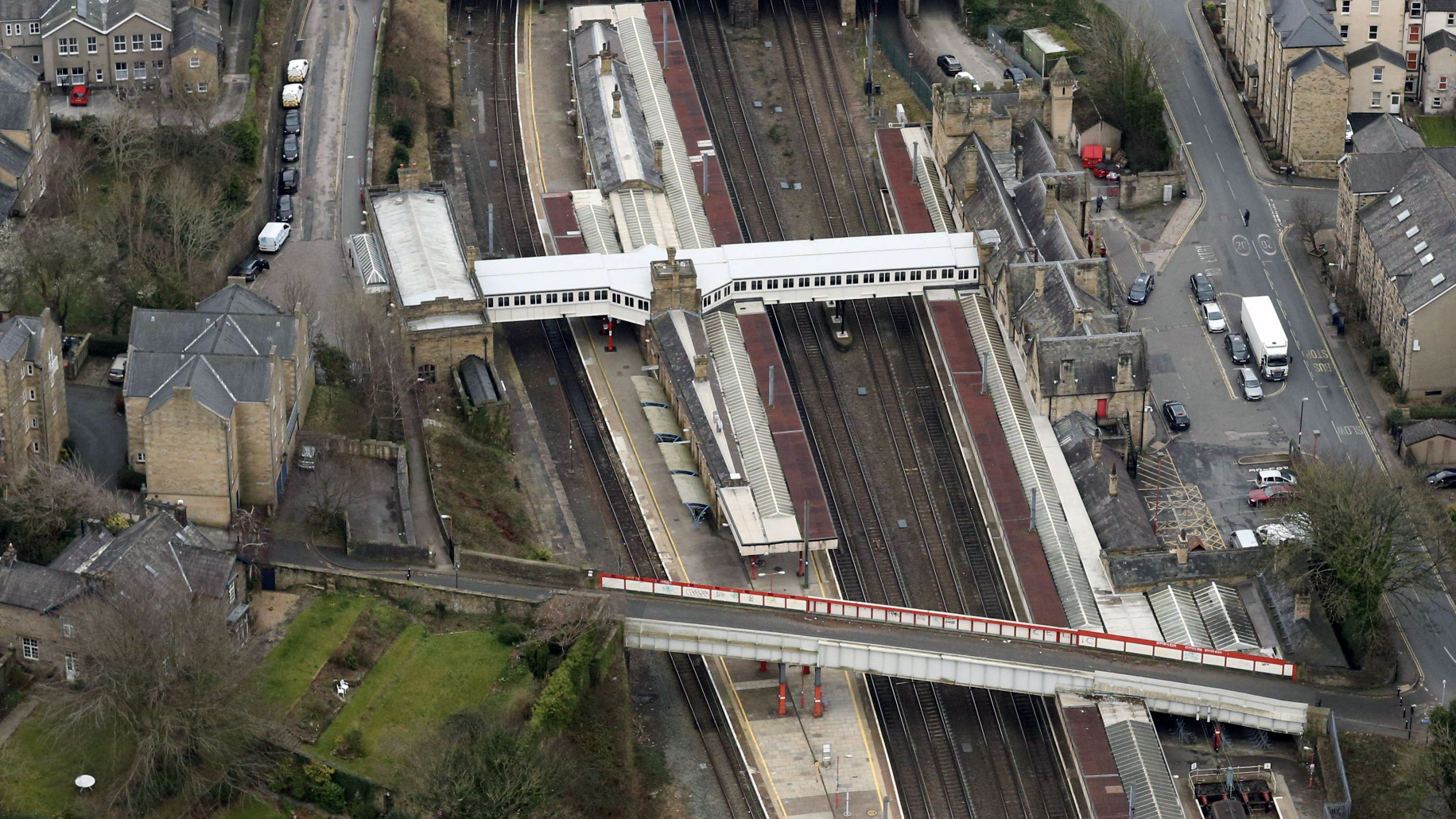
Note that the camera is looking South.
This picture shows the current canopies.
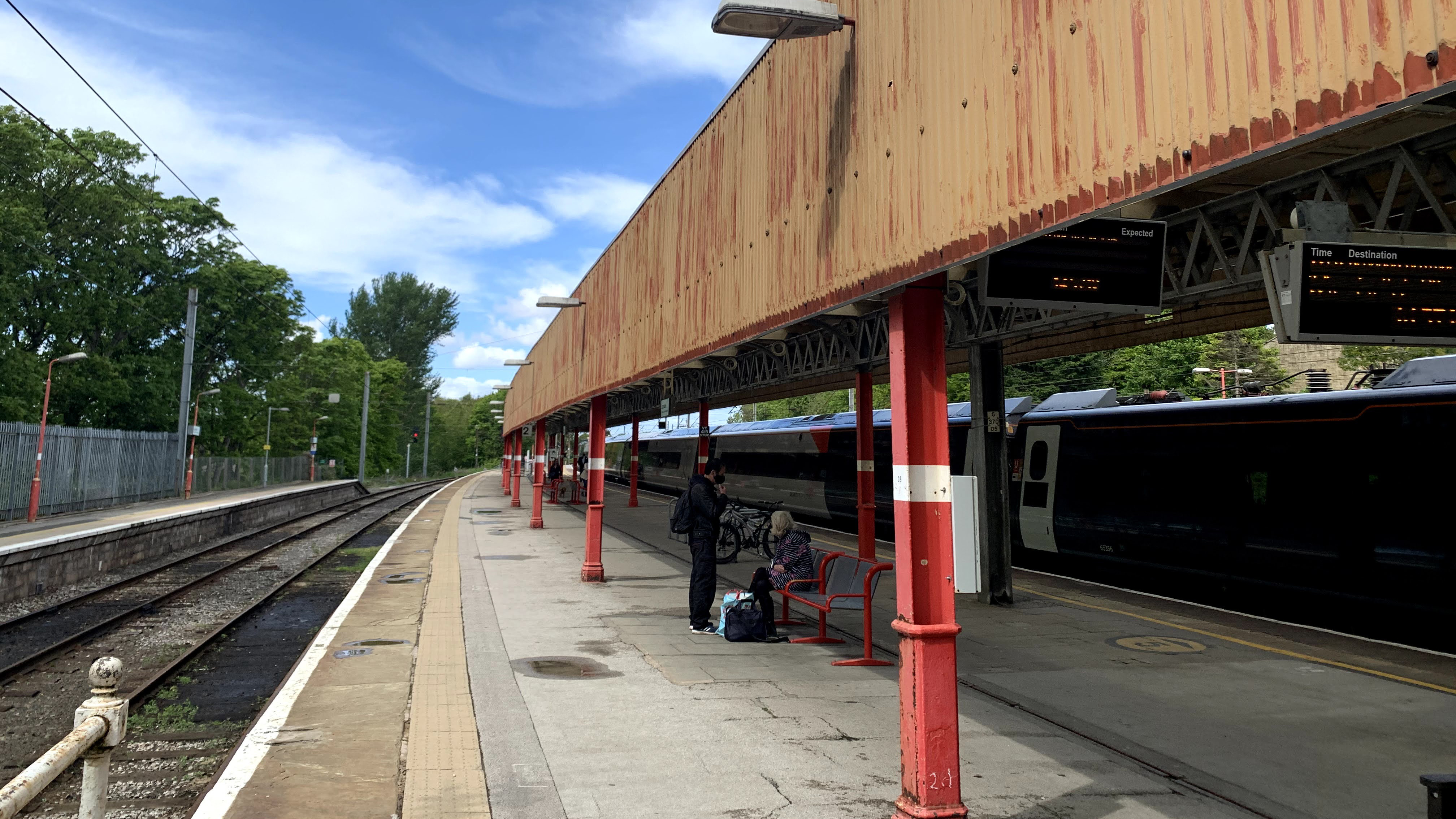
Network Rail can surely do better on a Grade II Listed Building.
The press release lists that this work will be done.
- Replacing all glazing in the platform canopies
- Repairing and strengthening the structure of the canopy structures
- Repainting across the station
The press release says the work won’t affect train services, but will be done when trains aren’t running.
These are my thoughts.
Lancaster Station and High Speed Two
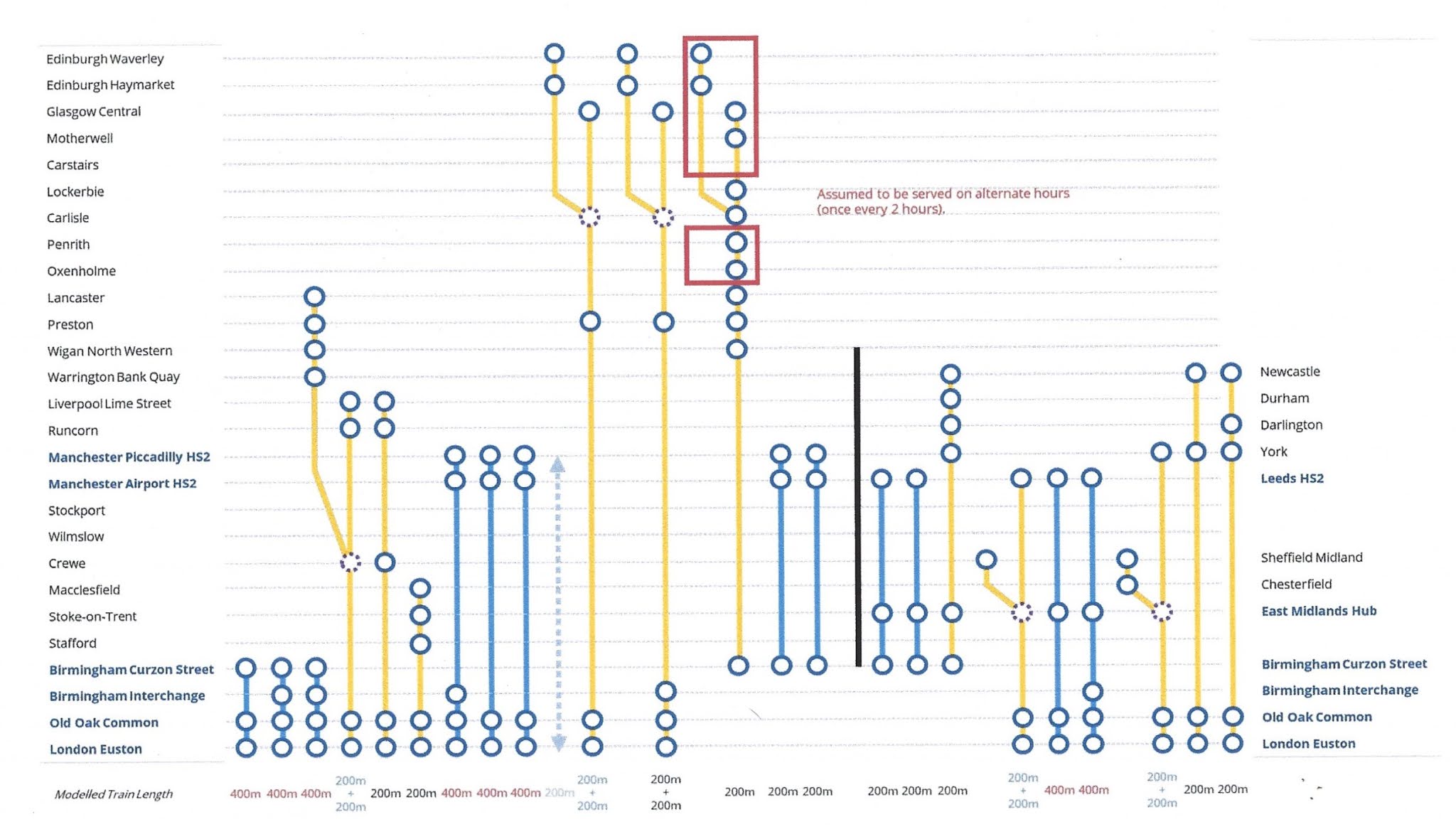
Lancaster station will be a terminus on the High Speed Two Network.
Note.
- Train 4 , which is a pair of 200 metre High Speed Classic Compatible trains, leaves London Euston and splits at Crewe, with one train going to Liverpool Lime Street and the other to Lancaster.
- Train 12, which runs between Birmingham Curzon Street and Scotland, also calls at Lancaster.
Both trains will be single 200 metre High Speed Classic Compatible trains at Lancaster station and platforms 3, 4 and 5 can handle them.
But how will the Lancaster train terminate?
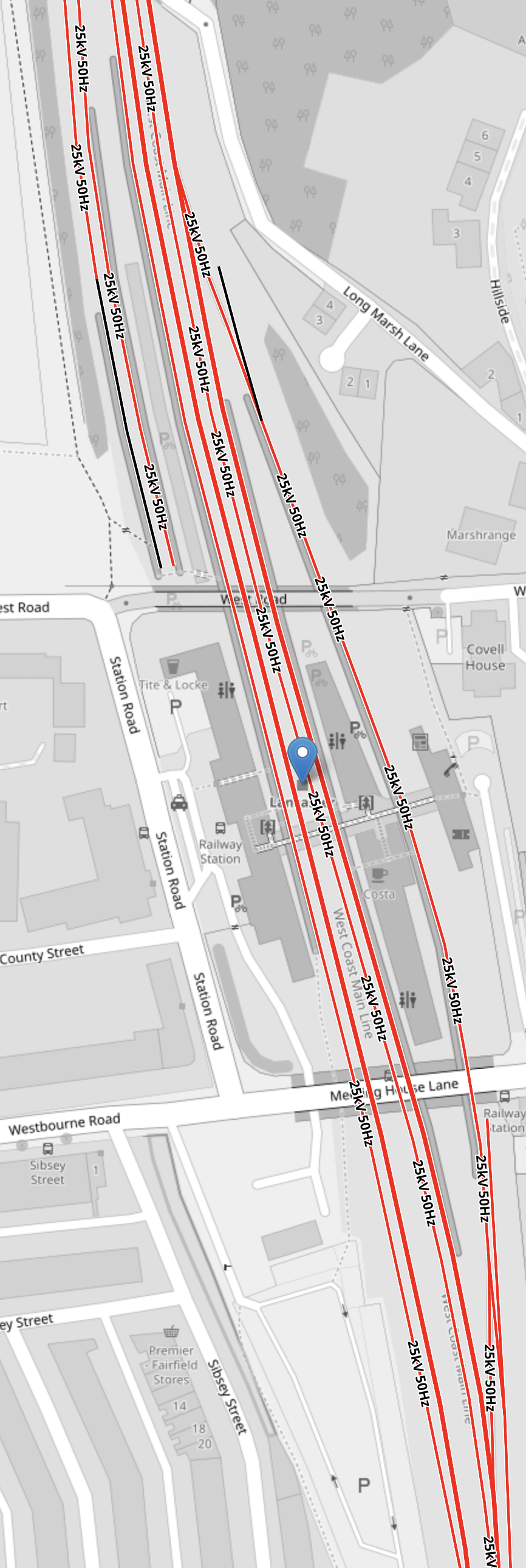
This map from OpenRailwayMap shows the lines through Lancaster station.
Note.
- The red lines are electrified with 25 KVAC overhead wires.
- In the North-West corner of the station are the bay platforms 1 and 2, which handle Morecambe services.
- West Coast Main Line services between London Euston and Scotland, go through platforms 3 and 4 in the middle of the station.
- On the East side of the station is platform 5 which is on a loop off the West Coast Main Line.
I would expect that the London Euston and Lancaster service will generally terminate in platform 5.
Wikipedia says this about platform 5 and the signalling.
Platform 5, which can be used by both northbound and southbound trains or by terminating services.
All platforms are signalled for arrivals and departures in either direction.
That all sounds very convenient.
There may be some minor changes for the longer High Speed Two trains, but I doubt it would be too challenging.
Onward To Morecambe
The Eden Project North at Morecambe could attract a lot of traffic.
- Lancaster will be just two hours and three minutes from London by High Speed Two.
- There are numerous rail connections from Lancaster to all over the North of England and Scotland.
- Would you drive for two hours to the Eden Project North, if there was a convenient and quicker train?
- Train companies may offer combined tickets for the attraction with rail tickets.
Wikipedia says this about the development and opening of the attraction.
Having been granted planning permission in January 2022 and with £50 million of levelling-up funding granted in January 2023, it is due to open in 2024 and predicted to benefit the North West economy by £200 million per year.
I’ve always wanted to go to the Eden Project in Cornwall, but it’s difficult if you don’t drive.
However, I might manage to get to Eden Project North.
Trains between Morecambe and Lancaster are at least hourly.
- I think they can use any platform at Lancaster.
- Morecambe station has two platforms.
- Morecambe and Lancaster stations are four miles apart, with probably half electrified.
- A battery-electric train could work between Morecambe and Lancaster.
I can envisage two main ways to arrange the connection between Morecambe and Lancaster.
- Trains arrive in Lancaster and passengers for Morecambe catch the next Morecambe train for two stops, that take ten minutes.
- When High Speed Two serves Lancaster from Euston, the shuttle train can wait in the Northern end of Platform 5 and when the High Speed Two train arrives passengers can just walk up the platform to the shuttle.
But if the Eden Project North is as successful as the Cornish original, there is going to be a need for more trains between Morecambe and Lancaster.
This Google Map shows Morecambe station.
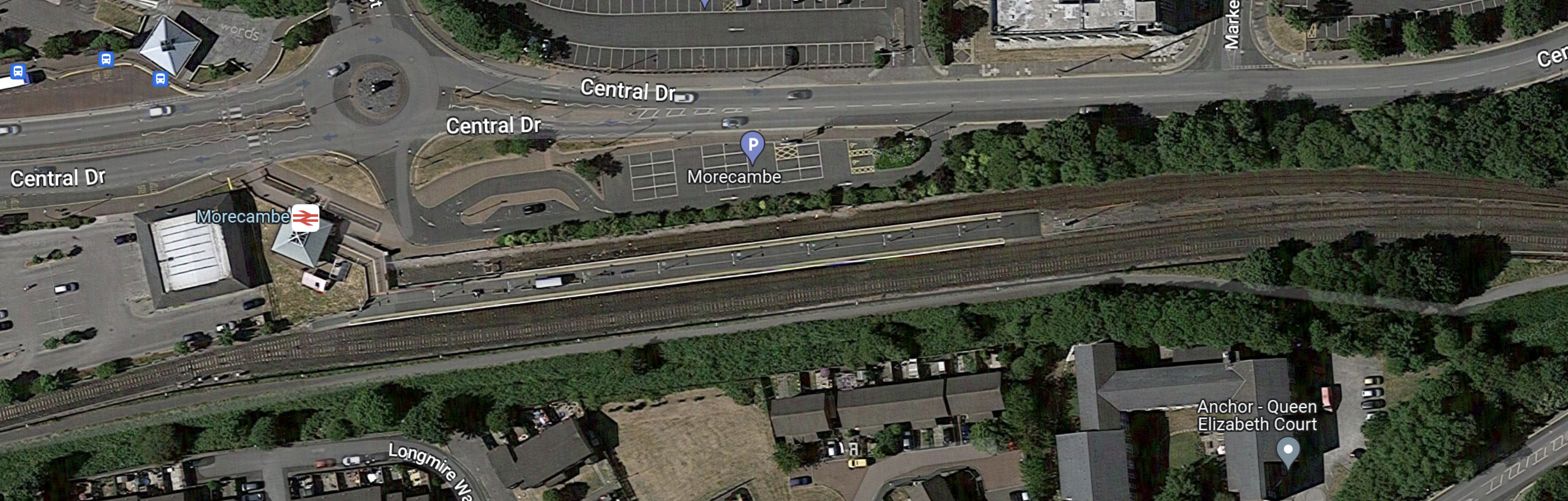
Note that the island platform is probably about 160 metres long.
This would accommodate.
- A five-car Class 802 or Class 805 train.
- A pair of four-car Class 319, Class 321 trains.
- A pair of three-car Class 331 trains.
But why not be bold and lengthen at least one platform to the full two hundred metres, so that it can accommodate a High Speed Classic Compatible train?
This would also accommodate.
- A seven-car Class 807 train.
- A pair of four-car Class 331 trains.
All of these electric trains would need the Morecambe branch line to be electrified to Morecambe station.
But the Eden Project North would get the public transport access it needs.
Electrifying To Morecambe
This map from OpenRailwayMap, shows the Morecambe Branch Line between the West Coast Main Line and Morecambe station.

Note.
- The tracks shown in red on the Eastern side of the map are the West Coast Main Line.
- The black lines are the unelectrified tracks of the Morecambe branch line.
- Morecambe station is marked by the blue arrow.
- Much of the Morecambe branch line is single track, with some sections of double track.
- The distance between the West Coast Main Line and Morecambe station is around 2.1 miles.
I don’t think it would be the most challenging of electrifications.
A Green Route To The Isle Of Man And Ireland
This map from OpenRailwayMap, shows the terminal of the Morecambe Branch Line at Heysham Port.
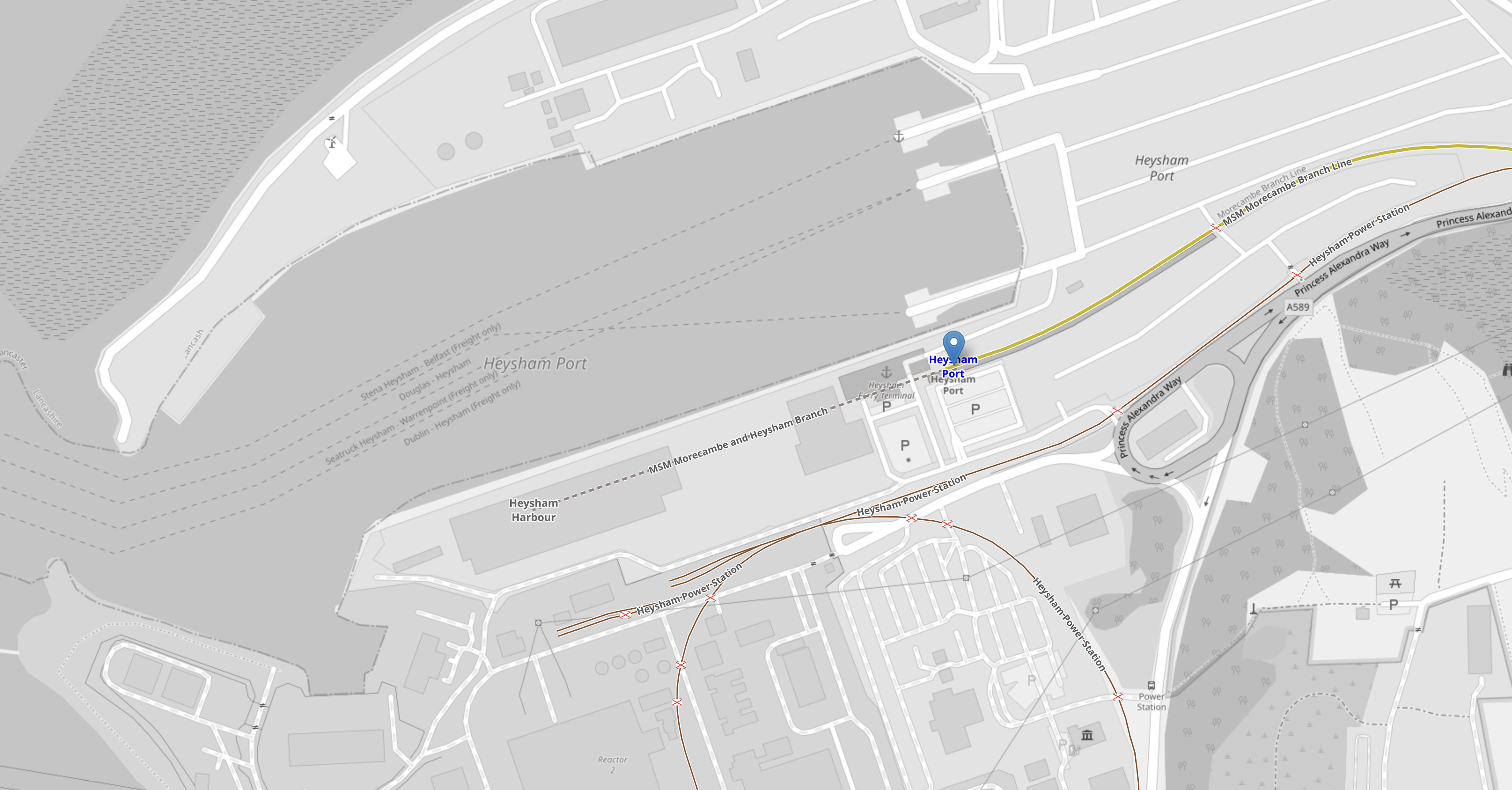
Note.
- There is a rail connection to the West Coast Main Line via Morecambe, which is shown in yellow.
- The port appears to have three berths for ferries.
- There are only a couple of train services per day.
- South of the port is the Heysham nuclear power station, which has a capacity of 2.5 GW.
At a first glance, it would appear, that a rail-served passenger terminal could be built close to the port.
I suspect most passengers using Heysham are travelling with a vehicle.
The problem is also that the ferry crossing to Belfast takes around eight hours and there are faster and more convenient routes.
The ferries could be decarbonised by using ammonia or hydrogen fuel, but I doubt that they would be any faster.
I suspect that getting more passengers to use Heysham for the Isle of Man or Ireland will be a difficult proposition to sell to passengers.
And it is made even more difficult with such an infrequent train service.
Before High Speed Two
Avanti West Coast might like to run a train between Euston and Morecambe for the Eden Project North.
Are National Rail Promoting Theme Parks?
I found this page on the National Rail web site, which is entitled Theme Parks.
It gives a list of most theme parks and their nearest stations.
Does such a page exist for hospitals, cathedrals and other similar groups.
Thistle Wind Partners Rename 2 GW ScotWind Offshore Wind Projects
The title of this post, is the same as that of this article on offshoreWIND.biz.
This is the sub-heading.
Thistle Wind Partners (TWP), a consortium founded by DEME Concession, Qair, and Aspiravi, has announced the final names for its two ScotWind offshore wind projects
This is the first paragraph.
TWP won the seabed leasing rights for two offshore wind projects in the ScotWind auction last year, in which 25 GW of capacity was awarded.
These paragraphs give details of the new names and an update on the sizes of the turbines.
The consortium plans to build the 1 GW Bowdun offshore wind project, originally named Cluaran Deas Ear, located off the coast of Stonehaven and lying 44 kilometres out from the landmark of Bowdun Head.
The site covers an area of 187 square kilometres (in the E3 leasing zone). The project is planned to feature between 50 and 60 wind turbines with an individual capacity of 18-25 MW each, depending upon the final design choice.
The second wind farm, located 33 kilometres from the East Mainland of Orkney in the NE2 leasing zone, is named the Ayre Offshore Wind Farm, originally called Clearan Ear-Thuath. This will be a 1 GW floating wind project following a similar base case for turbine numbers and capacity as Bowdun.
Note.
- They appear to be using 18-25 MW turbines.
- These are the first wind farms, that have talked about using such large turbines.
- 18 MW turbines would need 55 turbines for a GW.
- 25 MW turbines would need 40 turbines for a GW.
- Ayre wind farm has a web page, which says that it will have 56 x 18 MW turbines.
- Bowden wind farm has a web page, which says that it will have 56 x 18 MW turbines.
- The web site does say that the size and number of turbines is provisional.
Construction of both farms should start in 2029, with commissioning in 2033.
A Worthwhile Tailpiece
The article has a good tailpiece in the last paragraph.
TWP is one of the founders of a new initiative from the University of Highlands & Islands to deliver a STEM (Science, Technology, Engineering, and Mathematics) outreach programme for primary schools in Scotland, providing materials and teacher training.
TWP obviously intend to catch the next generation of technologists young.
Conclusion
Thistle Wind Partners have gone for the bold option.
The Netherlands Chooses Site For World’s Largest Offshore Wind-to-Hydrogen Project
The title of this post, is the same as that of this article on offshoreWIND.biz.
This is the sub-heading.
The Dutch government has designated an area for what will become the world’s largest offshore hydrogen production project. That area is Ten noorden van de Waddeneilanden (the North of the Wadden Islands), identified earlier for offshore wind development and deemed most suitable for providing 500 MW of electrolysis capacity and for the transport of hydrogen to land.
This Google Map shows the Wadden Islands.
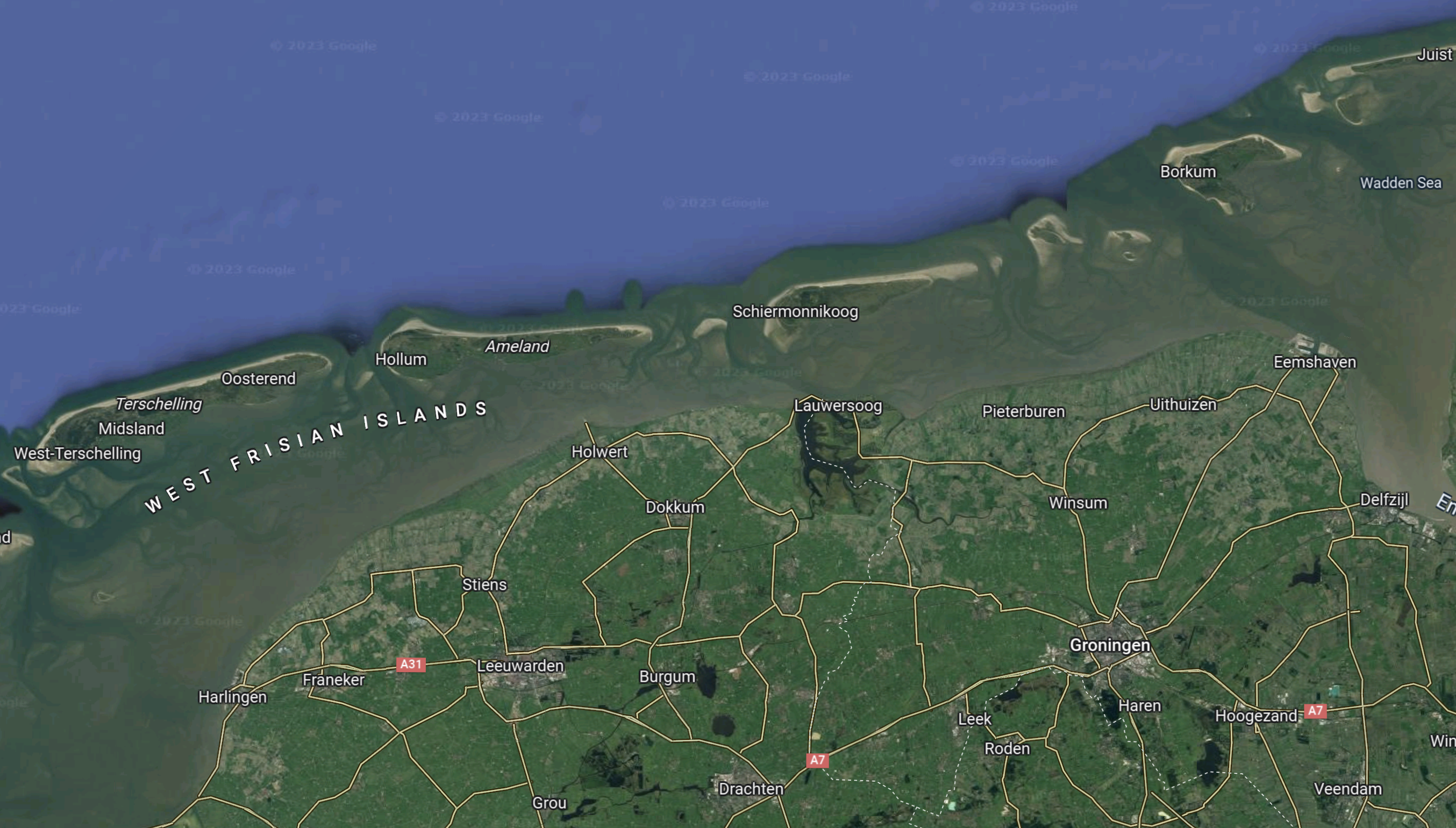
Note.
- Groningen is in the South-East corner of the map.
- I wrote about Eemshaven, which is to the North-East of Groningen in The Train Station At The Northern End Of The Netherlands.
- The Wadden or Frisian Islands are along the coast.
The Wadden Islands of the Netherlands, Germany and Denmark are a World Heritage Site.
In Can The UK Have A Capacity To Create Five GW Of Green Hydrogen?, I said the following.
Ryze Hydrogen are building the Herne Bay electrolyser.
- It will consume 23 MW of solar and wind power.
- It will produce ten tonnes of hydrogen per day.
The electrolyser will consume 552 MWh to produce ten tonnes of hydrogen, so creating one tonne of hydrogen needs 55.2 MWh of electricity.
If the Dutch build a 500 MW electrolyser it will produce 217 tonnes of hydrogen per day.
The Dutch Plan For Hydrogen
This 500 MW electrolyser fits well with the The Dutch Plan For Hydrogen.
 The Anonymous Widower