Lhyfe And Centrica To Develop Offshore Renewable Green Hydrogen In The UK
The title of his post is the same as that of this news item from Centrica.
These are the bullet points.
- Memorandum of Understanding will pave the way for green hydrogen pilot production site at sea
- Energy firms explore large scale partnership in drive to net zero
- Aim for UK to become a global leader in the hydrogen sector
This is the third paragraph, that outlines the objectives of the project.
The pilot will aim to combine Lhyfe’s expertise on green hydrogen production and Centrica’s experience of gas storage and infrastructure to ensure that the hydrogen produced can be safely stored and utilised in the UK. The end result would be proof that an end-to-end hydrogen production, storage, and distribution system is possible in the country.
I have a couple of thoughts.
Offshore Production Of Hydrogen
I remember from the 1960s, when I told friends and my mother, that I worked in a hydrogen factory, some of them asked if it was dangerous.
The Hindenburg and the R 101 had a lot to answer for even forty years later.
But does that fear of hydrogen still exist? If it does, surely building hydrogen electrolysers offshore could be a way of reducing that fear?
There are also other reasons to produce hydrogen offshore.
- The latest electrolysers will work with sea water, which means the water doesn’t need to be desalinated first.
- The hydrogen can be brought ashore and stored using redundant gas infrastructure.
- Using redundant gas infrastructure may be a more affordable way of bringing energy onshore.
- A severe hydrogen leak may be much less dangerous 50 km. offshore. It will quickly disperse and rise into the atmosphere.
The accountants will probably decide.
Do Centrica Have Big Ambitions For Hydrogen?
This is said about Centrica in the news item.
- Centrica is a leading international services and solutions company with ambitious plans across the business to reach net zero by 2045. Centrica have identified hydrogen as playing an essential part in company and UK targets to achieve net zero.
- Centrica Storage are a 100% owned subsidiary of Centrica and own and operate the Rough gas field storage facility, located off the coast of Humberside.
- Centrica has a long-term ambition to turn Rough into the world’s largest hydrogen storage facility in Europe.
Centrica appear to have big ambitions for hydrogen.
The Ways First Group, Hitachi, Hyperdrive Innovation and Turntide Technologies Can Enable Electric Trains To Run Between Basingstoke And Exeter
Who Are Turntide Technologies?
The Wikipedia entry for the company starts with this paragraph.
Turntide Technologies is a US-based business that makes intelligent, sustainable motor systems. Turntide applies its Technology for Sustainable Operations across buildings, agriculture, and transportation segments. It maintains operations in the USA, Canada, the United Kingdom, and India.
These three paragraphs from the Technology section of the Wikipedia entry outline their technology.
Turntide’s core product is its Technology for Sustainable Operations, a cloud-based open platform that monitors and automates building and vehicle systems. The platform is powered by its Smart Motor System, a connected hardware-software machine built around a high rotor pole switched reluctance motor.
Southern California Edison utility certified in 2018 that the V01 Smart Motor System reduced energy consumption by 23%-57% compared with a standard AC induction motor, and 11% compared with an induction motor controlled by a variable frequency drive.
In 2019, National Renewable Energy Laboratory certified that Turntide’s motor reduced energy consumption in refrigerator condenser fans by 29%-71%.
Note.
- Turntide’s efficiencies, which appear to have been verified by reputable organisations, if they can be reproduced in traction systems for battery-powered transport could improve range substantially.
- There are also other more efficient electric motors being developed.
- I wrote about Norfolk-based advanced traction motor company; Equipmake in Equipmake Hybrid To Battery Powered LT11.
- Motors like these, are the engineer’s cure for range anxiety.
I have to ask, if Hitachi (, and Stadler) are using more efficient motors to stretch the range of their battery-electric trains.
Initially, Hitachi asked Hyperdrive Innovation to design battery packs for Class 802 and other similar trains.
These three posts give some details about the battery project involving the two companies.
- Hitachi And Eversholt Rail To Develop GWR Intercity Battery Hybrid Train – Offering Fuel Savings Of More Than 20%
- Hitachi Rail And Angel Trains To Create Intercity Battery Hybrid Train On TransPennine Express
- More On Batteries On Class 802 Trains
Consider.
- In June 2021, Turntide acquired Hyperdrive Innovation.
- So did this effectively invite Turntide to the project?
- According to the Internet, Hitachi are one of the largest manufacturers of electric motors.
- Turntide are very-well funded by the likes of Bill Gates, Robert Downey Junior and some big funds.
Has there been some intense design meetings, which have been beneficial to all parties?
In my experience, these groupings don’t often work out how they should!
But this relationship seems to be doing fine.
One of Hitachi’s managers from the battery-train project even appears in the video on Turntide’s home page.
Electrifying Basingstoke And Exeter
Consider these facts about the route.
- Basingstoke and Salisbury is 35.8 miles.
- Salisbury and Exeter is 88.5 miles.
- Basingstoke and Exeter is 124.3 miles.
- There is no electrification.
- There are 14 stops between Salisbury and Exeter.
- There are 4 stops between Basingstoke and Salisbury.
- Trains are up to nine car Class 159 trains.
- Average speeds are not much better than 50 mph.
- Maximum speeds vary between 75 and 90 mph.
To get an estimate of how much energy, a Basingstoke and Exeter train will use, I’ll start with a figure from How Much Power Is Needed To Run A Train At 125 Or 100 mph?.
At 125 mph, a Class 801 train has a usage figure of 3.42 kWh per vehicle mile.
As drag is proportional to the square of the speed, which gives
- At 100 mph, a Class 801 train has a usage figure of 2.19 kWh per vehicle mile.
- At 80 mph, a Class 801 train has a usage figure of 1.40 kWh per vehicle mile.
For this calculation I’ll take the 80 mph figure of 1.40 kWh per vehicle mile.
Assuming a five-car train travelling between Basingstoke and Exeter, which is 124.3 miles gives a figure of 870 kWh.
But this is only one use of energy on the train.
- Every time, the train accelerates it will need power, but it will charge itself using regenerative braking.
- An all-electric Class 803 train has a mass of 228.5 tonnes and carries 400 passengers.
- If I assume that each passenger is 80 Kg including baggage, bikes and buggies, that gives a mass of 32 tonnes or a total mass of 260.5 tonnes.
- Putting these figures into Omni’s Kinetic Energy calculator gives a figure of 46.3 kWh at 80 mph.
As there are eighteen stops along the route and at each stop it could lose up to twenty percent of its energy, this means that the eighteen stops will cost 166.7 KWh.
Adding this to the 870 KWh it takes to maintain speed, it looks like a trip between Basingstoke and Exeter will take 1036.7 kWh.
Could this be a 200 kWh battery in each coach?
Obviously, this is only a rough calculation and with the better figures Hitachi would have, I would suspect much better answers.
But I do believe that it would be possible to run between Basingstoke and Exeter on battery power, if the train was efficient.
Charging The Train
The train would be charged on the third-rail electrification between Waterloo and Basingstoke.
But what would happen at Exeter?
The trains could be bi-modes like Hitachi’s Class 395 trains for Southeastern,
One of Vivarail’s third-rail charging systems, that First Group, acquired from the Receiver of Vivarail could be used.
Getting The Order Right
Would between Basingstoke and Exeter, be a sensible route to convert to battery-electric trains early, as it would release a useful fleet of diesel trains, that might be able to fill in for a couple of years by replacing the Castles!
‘Lift-off’ – Project To Provide Step-Free Access At Bexley Station In Kent Kicked Off In February
The title of this post is the same as that of this press release from Network Rail.
This is the sub-heading.
Network Rail has kicked off construction of a new footbridge and lifts at Bexley station which will provide passengers with a fully accessible station.
These four paragraphs outline the scheme.
This project, which is funded through the Department of Transport’s (DfT) ‘Access for All’ scheme, is expected to be completed in late spring 2024 and will ensure there is step-free access to all of the station’s platforms.
Network Rail will be working with contractors BAM Nuttall to install two 16-person capacity lifts which will be located behind the existing subway and help passengers with impaired mobility or those travelling with luggage, children, or cycles to access the platforms.
Platform one will be widened to create space for the lifts and allow passengers to navigate through the station a lot easier.
Alongside this, a new footbridge will be built to allow passengers easily get from one side of the platform to the other.
I’m surprised that lifts are being added to the existing subway, rather than being added to the new footbridge.
Looking at the statistics for Bexley and nearby stations, I suspect that Bexley station has more traffic.
This Google Map shows Bexley station.
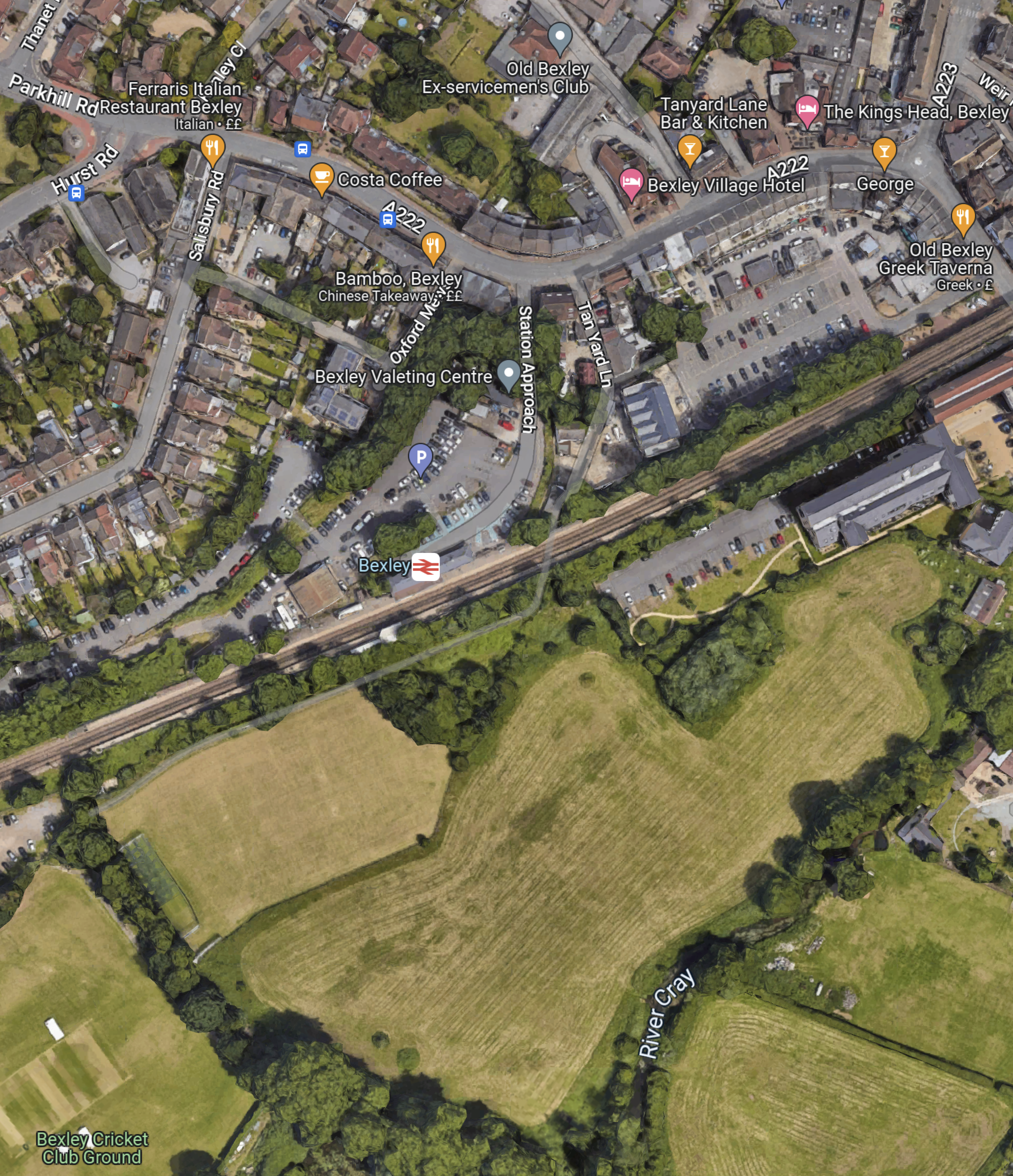
As there appears to be a lot more housing and the car park to the North of the railway, I suspect there’s a lot of crossing of the railway by passengers.
So it does seem that Network Rail have designed scheme for the number of passengers, which is something Transport for London haven’t done with the buses, where I live.
On a visit to the station on the 14th of March, I took these pictures.





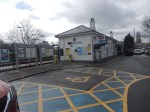





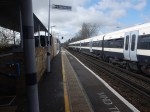

This is a Network Rail visualisation of how it will look.
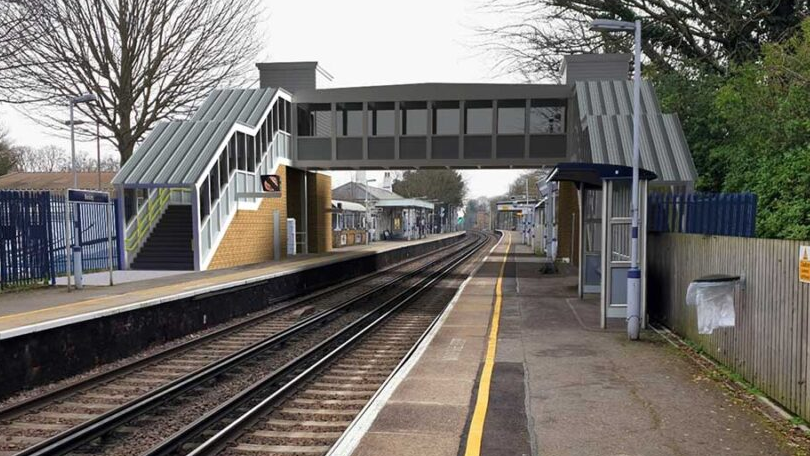
The visualisation is looking towards the East.
Ricardo – The Role Of Hydrogen In The Green Aviation Revolution
The title of this post, is the same as that of this article on Hydrogen Central.
This is the third paragraph.
The introduction of zero-emission aircraft will enable us to re-think our approach to regional connectivity and the way we currently fly. A recent report by Project NAPKIN stated that zero-carbon emission flight is entirely possible from the middle of this decade on sub-regional routes, on aircraft ranging in size from seven to 19 seats.
It makes a bold statement.
The article is a must read.
DHL Express Determinedly On Course To Achieve Net-Zero Emissions
The title if this post is the same as that of this article on The Lodestar.
This was the introductory paragraph.
DHL Express chief executive John Pearson came out with all guns firing when detailing the firm’s efforts to hit net-zero by 2050, during a press junket this week.
The rest of the article is basically in three sections.
The Use Of Sustainable Aviation Fuel (SAF)
Summed up by three sentences.
“When it comes to sustainable aviation fuel (SAF), we know this is expensive, but we have also put a big chunk of change into this,” he said.
By the end of the year, we want 2% of flights fuelled by SAF.
DHL has bought 15% of all globally available SAF
DHL seem to have a comprehensive policy on the use of SAF.
This reinforces my view that SAF will be important.
Alternative Approaches
This paragraph sums up some of the more alternative approaches DHL are looking at.
SAF use forms only one part of the migration to net-zero: fleet renewal; decarbonising ground handling; a fuel optimisation programme; and the use of electric aircraft, following the successful September trial over Seattle of the Alice e-cargo plane, are all critical.
I suspect there are other alternative approaches.
Fleet Renewal
The last two paragraphs talk about fleet renewal.
Fleet renewal comes after a particularly pronounced moment of growth for the company: it added 10 widebody and 70 small- and medium-body planes during the pandemic.
Described by Boeing as one of the most “fuel-efficient” aircraft on the market, thanks to its twin-engine design, the 777 freighter forms a central part of DHL Express’ renewal plans, said Mr Pearson, adding that 28 were on order.
With 28 777 freighters on order, DHL will need a lot of SAF.
A Last Thought
Given the size of DHL’s fleet, which in their Wikipedia entry is given as 197, seventy-three of which are narrow bodies, I am surprised that no dedicated zero-carbon small or medium-sized cargo aircraft, except for the Alice is under development.
Perhaps, in areas like Europe, this niche is being taken by rail or perhaps by Airbus’s proposed hydrogen-powered ZEROe Turbofan.

I wrote in detail about this hydrogen-powered aircraft in Could An A320 neo Be Rebuilt As A ZEROe Turbofan?.
Airbus say that the passenger version of the ZEROe Turbofan could handle up to 200 passengers, despite having a large hydrogen tank in the rear fuselage.
The cargo capacity of a ZEROe Turbofan would probably be a bit smaller than say the latest Airbus A321 or Boeing 737, but if the hydrogen-powered aircraft was built to accept a stretch, I wouldn’t be surprised to find it was a viable aircraft for DHL, with a fuselage stretch!
It would surely help passengers of future hydrogen-powered aircraft, overcome their fear of an aircraft fueled by hydrogen.
The ZEROe Turbofan is quoted as having a range in excess of two thousand nautical miles, so it would have Europe and North America fairly well covered.
I also wouldn’t rule out use of Airbus’s proposed hydrogen-powered ZEROe Turboprop for flying cargo.
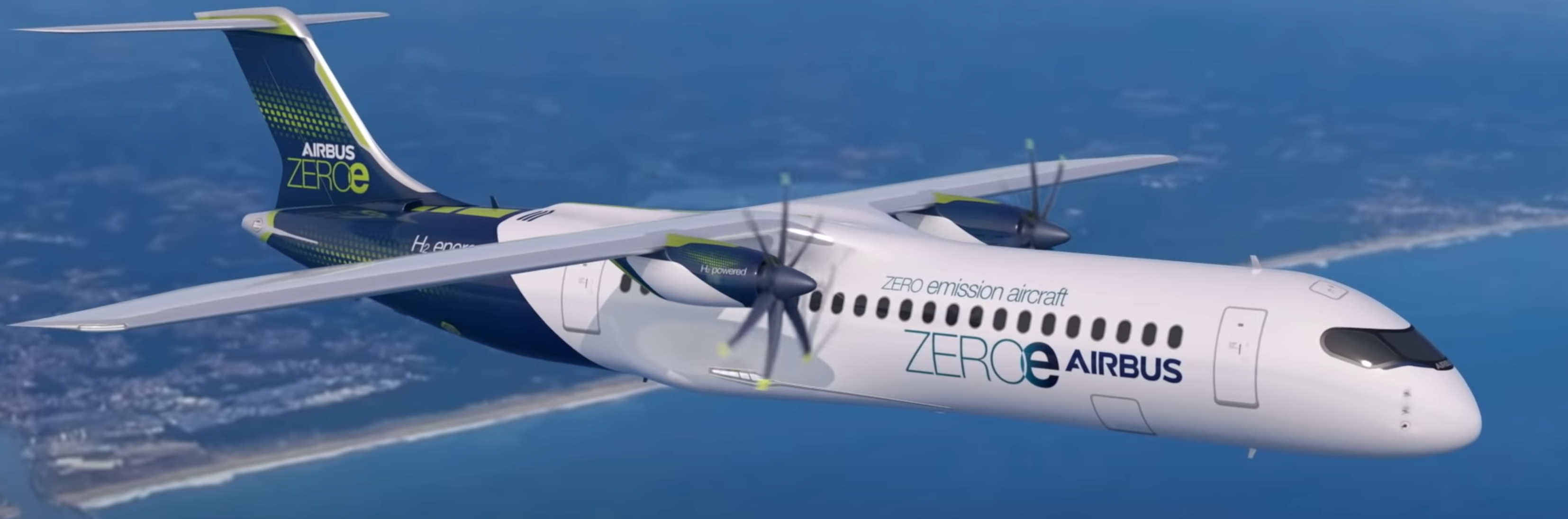
It would have a smaller capacity than the ZEROe Turbofan.
- It would have a useful range of over a thousand nautical miles.
- I feel that both ZEROe aircraft have the same fuselage cross-section, which could ease cargo handling, by using the same equipment for both aircraft.
- I also feel that both ZEROe aircraft will have the same cockpit, which should reduce crew costs.
I feel that smaller cargo aircraft will play a large part in the development of hydrogen-powered aircraft.
If the plans of some companies and individuals work out, hydrogen might be a better alternative financially to SAF.
Budweiser To Convert Second UK Brewery To Hydrogen
The title of this post, is the same as that of this article on The Engineer.
This is the sub-heading.
Samlesbury Brewery in Lancashire is set to be powered by green hydrogen from 2025, according to new plans announced by owner Budweiser Brewing Group.
This paragraph outlines what will be done at Salmesbury.
The Samlesbury Net Zero project will see the brewery paired with a new hydrogen production facility (HPF), delivered by UK hydrogen services company Protium. Situated adjacent to the brewery, the HPF will provide green hydrogen to meet the thermal demand of the brewing processes, as well as the building’s other heating requirements.
Note.
- A refuelling station for hydrogen-ready HGVs will also be developed as part of the project.
- Heat from the HPF will be recovered and used in Budweiser’s bottling process.
- This is the second project involving Budweiser and Protium, after one at Magor in South Wales.
- Beers produced at the facility include Budweiser, Stella Artois and Corona.
I may have had the odd bottle of Corona in the States, but I’ve generally drunk real ale only since, I started having halves of Adnams with my father at the age of thirteen.
Now, because I’m on Warfarin, I more or less exclusively drink zero-alcohol beers, most of which is Adnams, straight from the brewery.
I’ve yet to find any beer which is less than 0.5 % alcohol, has contained enough gluten to have an effect on my gut.
I have discussed this with experienced brewers and they are not surprised, as the brewing process for zero-alcohol beers doesn’t use much barley.
Conclusion
We need more integrated projects like this, that both decarbonise industrial processes and provide filling stations for hydrogen-powered vehicles.
Vattenfall Selects Norfolk Offshore Wind Zone O&M Base
The title of this post, is the same as that of this article on offshoreWIND.biz.
This is the sub-heading.
Vattenfall has selected Peel Ports as the preferred bidder, and its port at Great Yarmouth as the location for the operations and maintenance base of the Norfolk Offshore Wind Zone in the UK.
This was said about the competition to host the facility.
Vattenfall said that the competition was fierce to secure the agreement with an excellent bid from Lowestoft and Associated British Ports. With both ports offering excellent services it is clear that East Anglia’s potential as a superpower of offshore wind is secure.
I have a few thoughts.
Lowestoft In Suffolk And Great Yarmouth In Norfolk Must Work Together
This Google Map shows the coast between the two ports.
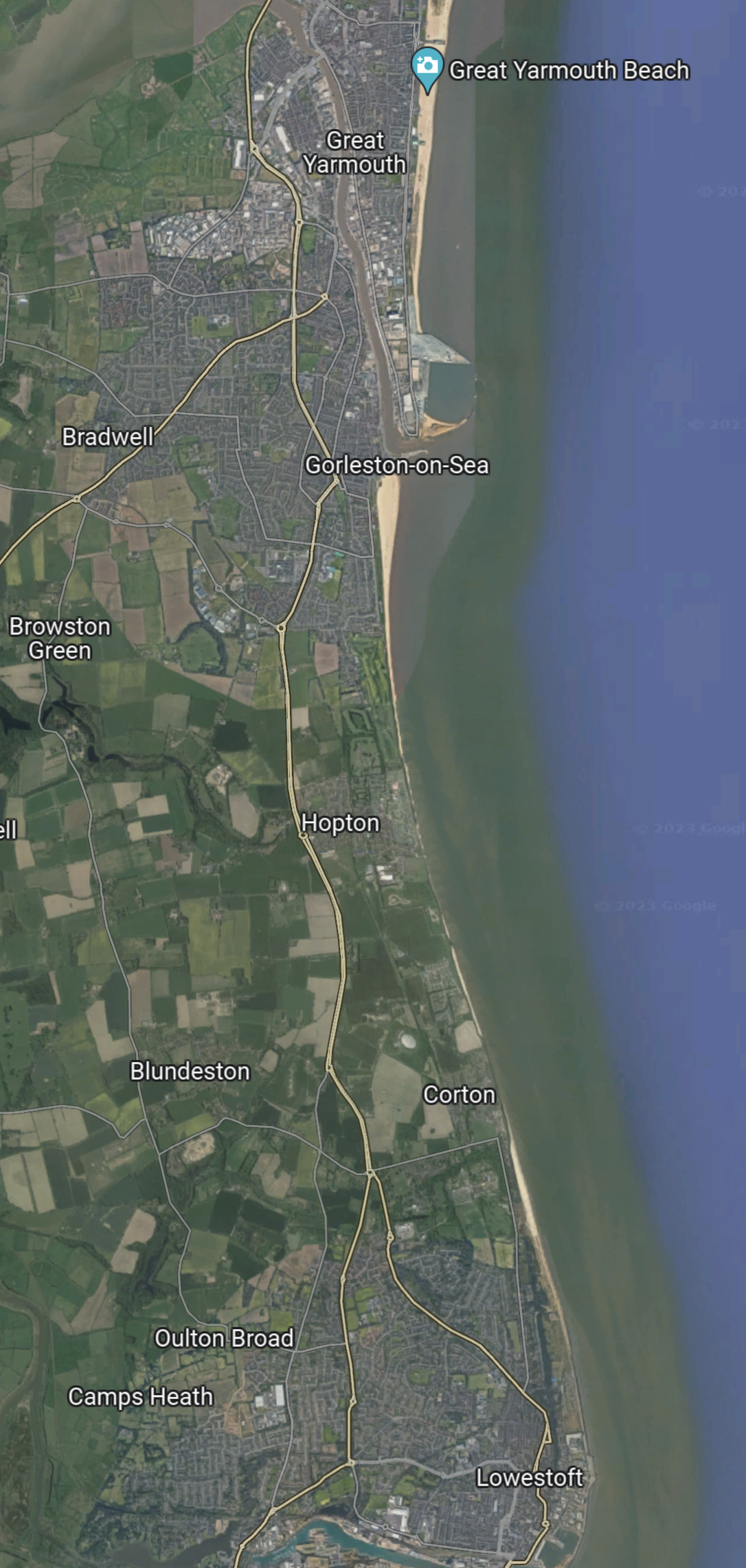
Note.
- Great Yarmouth is at the top of the map.
- Lowestoft is at the bottom of the map.
- The two towns are less than twelve miles apart.
- The Great Yarmouth Outer Harbour, is towards the top of the map.
The Google Map shows the port in more detail.
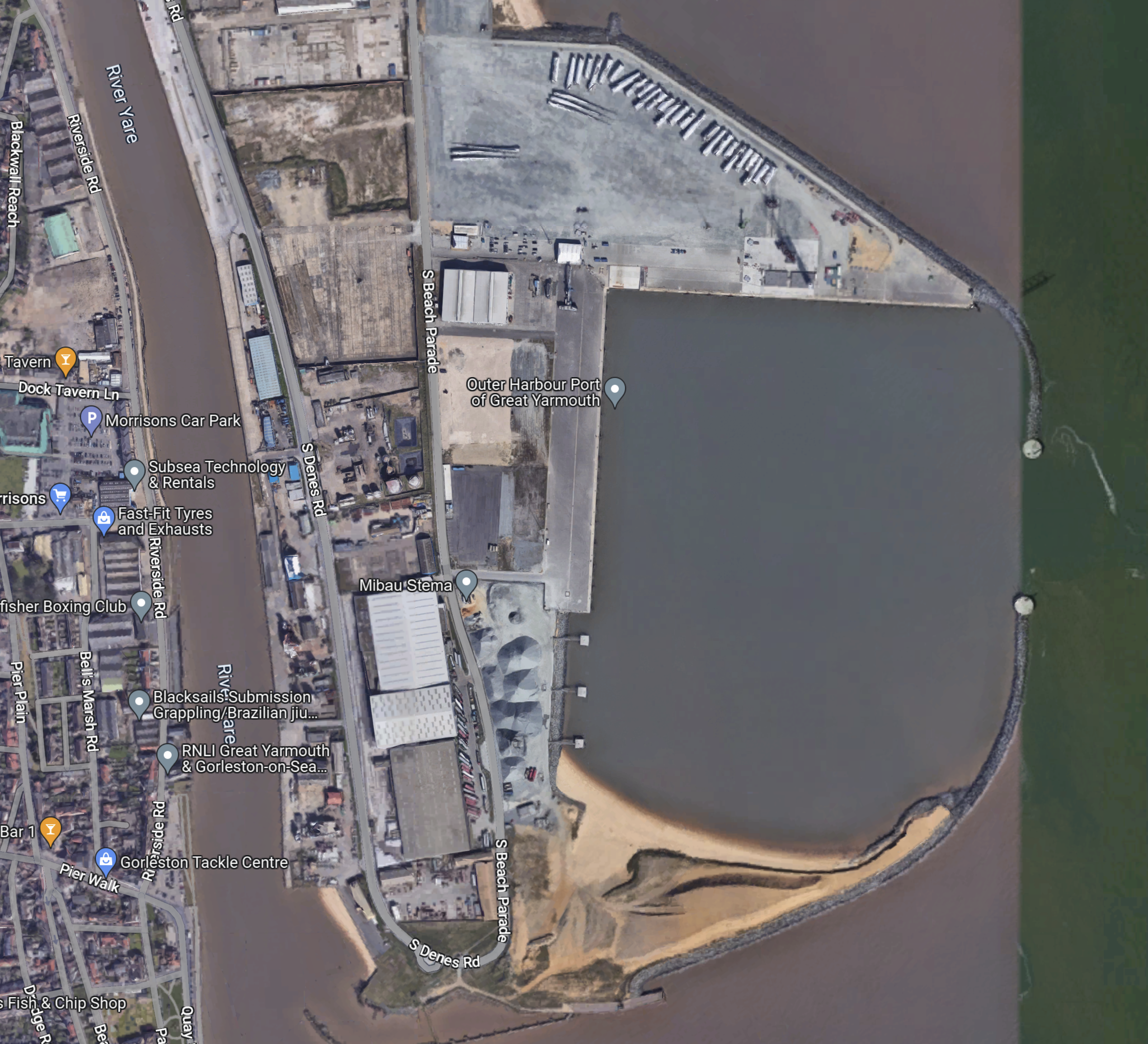
Note.
- Great Yarmouth Outer Harbour only opened in 2009.
- It has an average depth of 10 metres.
- It was planned as a container port, but the ships didn’t materialise.
- Some consider it to be a bit of a white elephant.
Could the Outer Harbour be used to assemble floating wind turbines?
I think it could but at present, there are no plans to use floating wind turbines off the coast of Norfolk.
I suspect though, if someone decided to build floating wind farms to the East of the Vattenfall’s Norfolk Zone fields, that Great Yarmouth Outer Harbour could be used to assemble the floating wind turbines.
This Google Map shows the Port of Lowestoft.
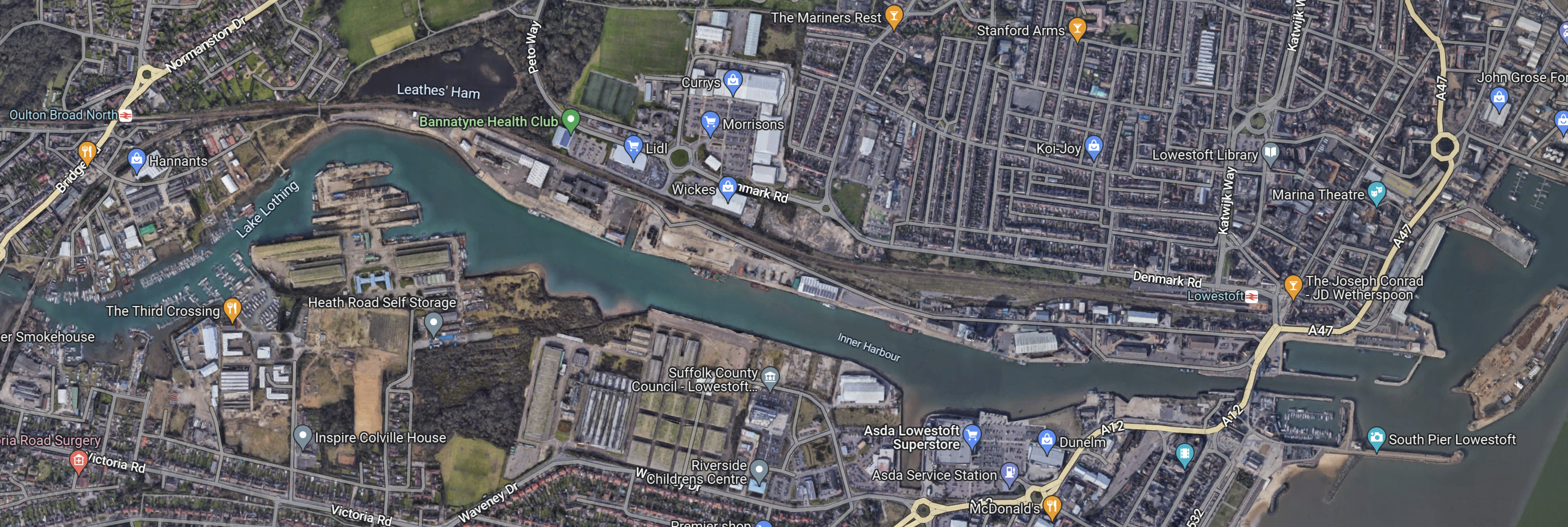
Note.
- There is over a kilometre of quays.
- It doesn’t have the water depth of Great Yarmouth.
- There is a lot of brownfield sites along the River Waveney.
- The East Anglia One wind farm is managed from Lowestoft.
Both harbours have their good and bad points.
- Both have good rail connections to Norwich.
- Lowestoft has a rail connection to Ipswich and has been promised a London service.
- Road connections to Ipswich and Norwich need improvement.
I suspect that it was a close contest, as to the port that got the Vattenfall contract.
A Lowestoft And Great Yarmouth Rail Connection
This map from Open RailwayMap between the two towns.
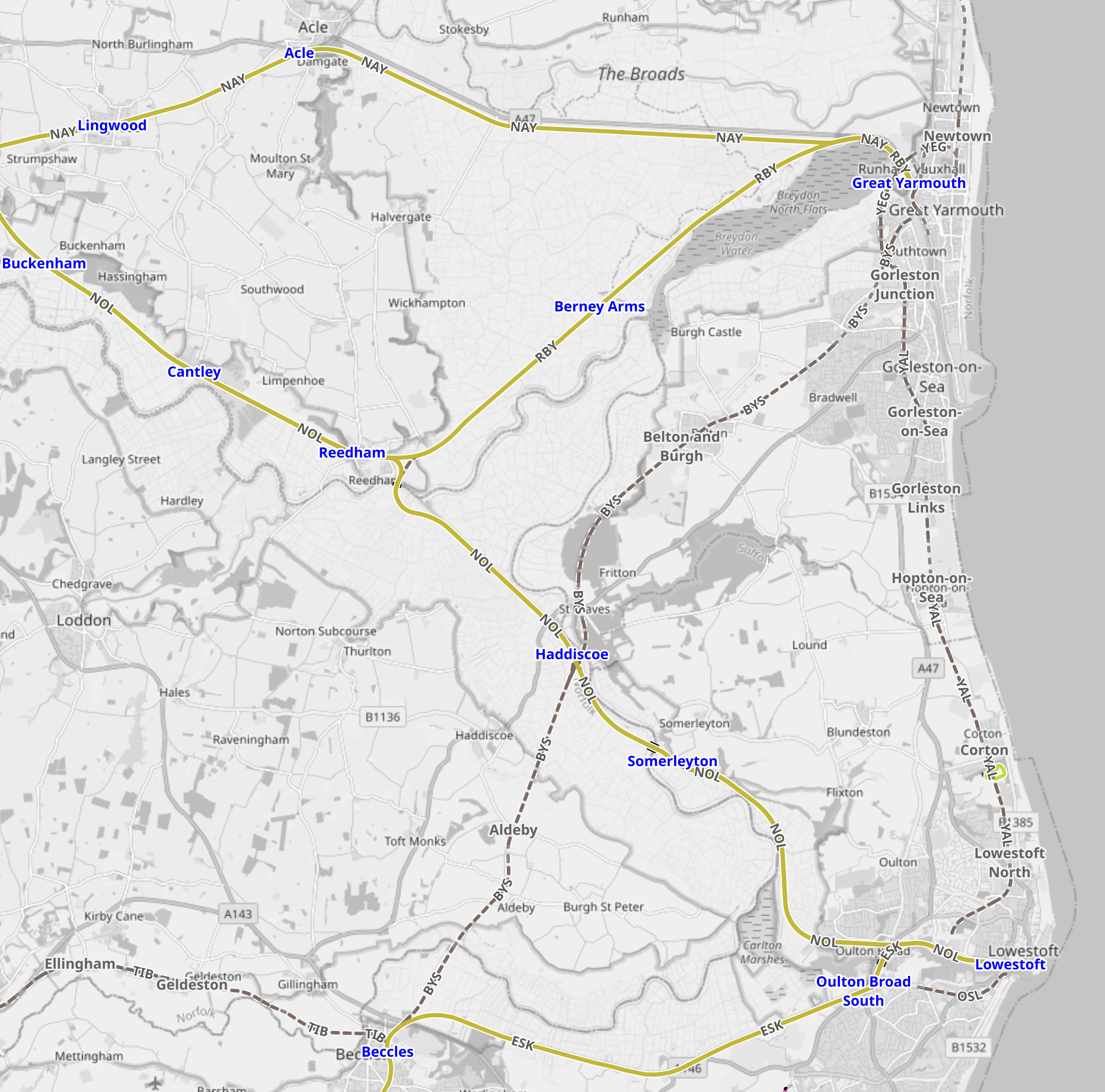
Note.
- The existing railways are shown in yellow.
- Former railways are shown in black dotted lines.
- There was even a railway along the coast.
The only rail connection between the ports is via Reedham, where the track layout is shown on this second OpenRailwayMap.
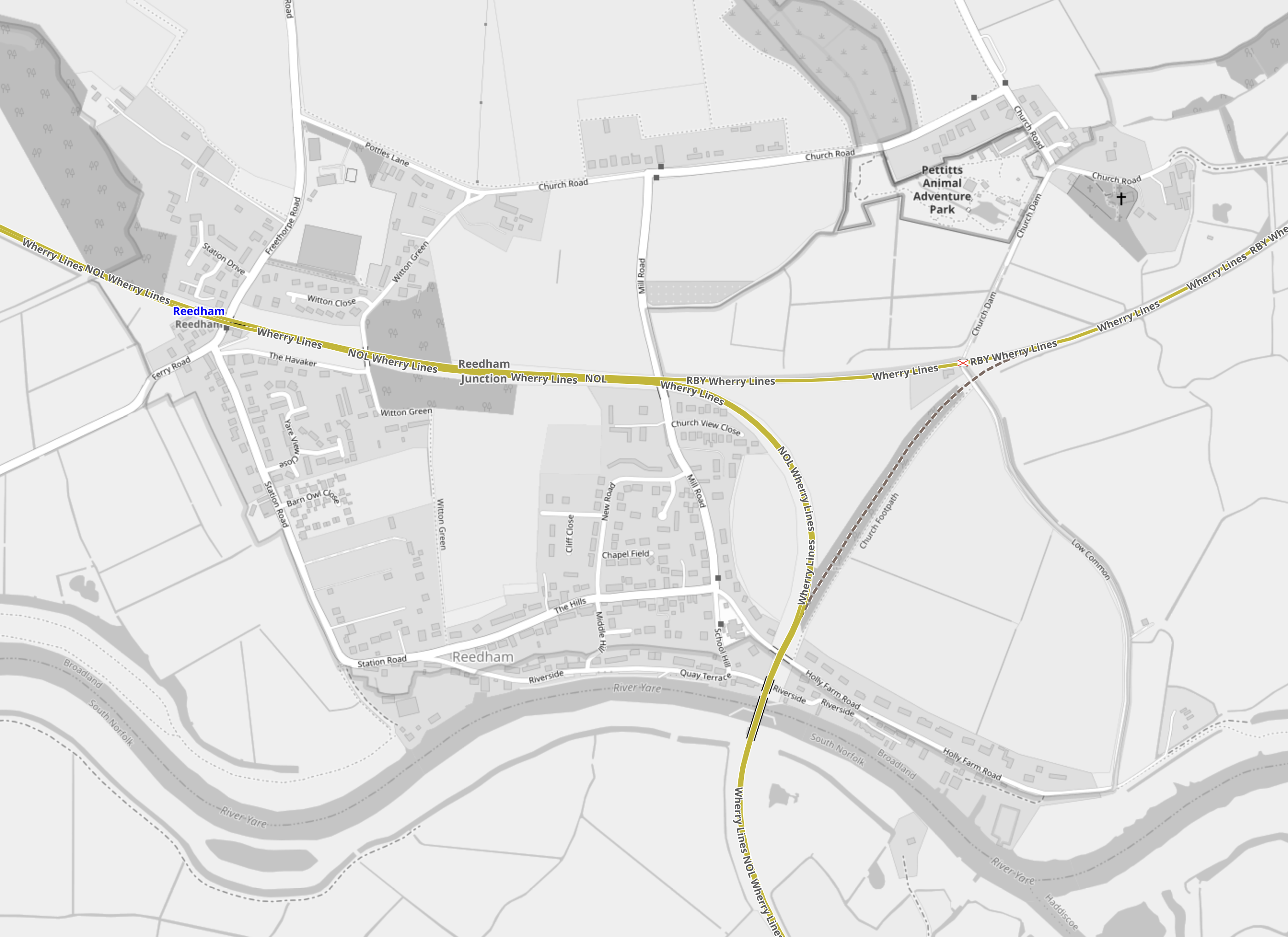
Note.
- Reedham station is in the North West corner on the line to Norwich.
- The line going North-East goes to Great Yarmouth.
- The line going South goes to Lowestoft.
There used to be a chord connecting Great Yarmouth and Lowestoft, but it was cancelled by Beeching’s grandfather.
There is certainly scope to improve the rail connection between the two ports.
- There could be a convenient change at Reedham, if the timetables were adjusted.
- Trains could reverse at Reedham.
- The chord could be reopened to allow direct trains.
It wouldn’t be the most challenging rail project to have an hourly rail service between the two ports.
A Lowestoft And London Rail Service
This was promised with a frequency of something like four trains per day (tpd)
I think it should run between London and Yarmouth with a reverse at Lowestoft.
Hydro-Storage Options To Be Studied For Grängesberg
The title of this post, is the same as that of this news item from Anglesey Mining.
These are the highlights of the news item.
- Anglesey Mining plc, together with its 49.75% owned subsidiary Grängesberg Iron AB (“GIAB”) have entered into an MoU with Mine Storage to investigate the potential for the Grängesberg Mine to be converted into a Pumped Hydro-Storage project at the end of the mine’s producing life.
- Pumped-Hydro Storage is a green-energy storage solution that utilises water and gravity to store electrical energy. An underground mine can provide a closed-loop solution using proven, pumped hydro-power technology. Essentially, the system involves water being gravity fed through pipes down a shaft into the turbines, which produce electricity for supply to the grid and also pump the water back to surface. The mine storage system has a high round-trip efficiency of 75-85% and proven durability.
- The MoU with Mine Storage could lead to numerous future benefits.
I like this project.
Too often, when mines, quarries or other large operations come to the end of their economic lives, they are just abandoned in the hope that something worthwhile will happen.
But here we have a company planning the end of an iron ore mine in a way that will turn it into a source of future revenue.
I have a few thoughts.
Mine Storage
Mine Storage are a Swedish company with an informative web site.
The web site answered most of my questions.
Mines Are Moving From a Liability To A Resource
Consider.
- Gravitricity are using mines to store energy using cables and weights.
- Charlotte Adams and her team at Durham University are developing the use of the heat in abandoned coal mines.
- The Global Centre of Rail Excellence is being developed in a disused opencast mine in Wales.
- RheEnergise are developing their first High Density Hydro system in the Hemerdon Tungsten Mine in Devon.
And now we have this co-operation between Anglesey Mining and Mine Storage working together on pumped storage hydroelectricity.
Where is Grängesberg
This Google Map shows the location of Grängesberg.
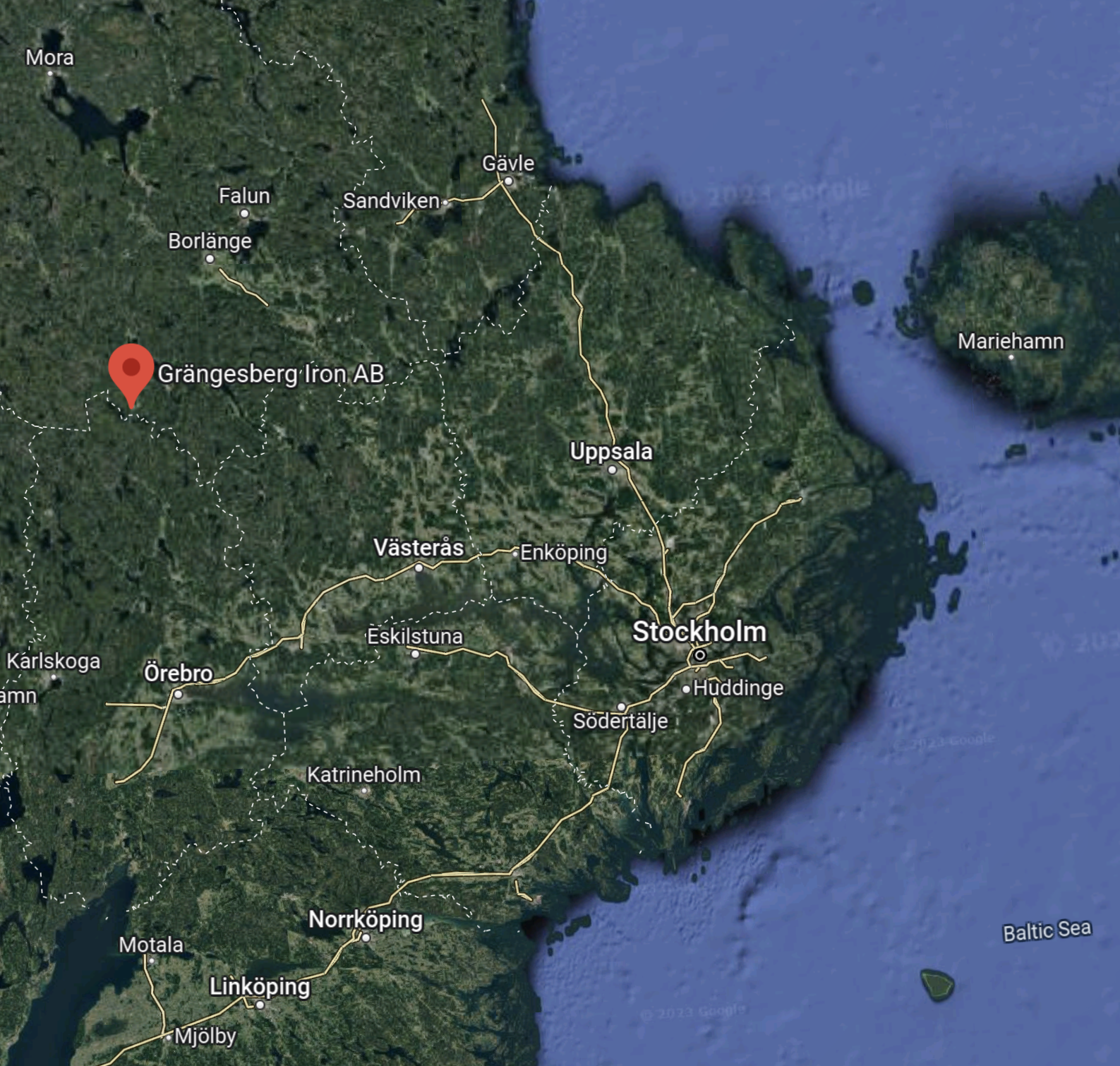
It is convenient for storing energy for Stockholm.
SSE, Marubeni & CIP’s Floating Wind Farm In Scotland Could Have 270 Turbines And 6 Offshore Substations
The title of this post, is the same as that of this article on offshoreWIND.biz.
This is the sub-heading.
SSE Renewables, Marubeni and Copenhagen Infrastructure Partners (CIP) have submitted the Environmental Impact Assessment (EIA) Scoping Report for the array area of their Ossian floating wind farm to Marine Scotland. According to the report, the wind farm could have up to 270 wind turbines and six offshore substations.
Ossian floating wind farm will be one of the world’s largest floating wind farms.
- If it sticks to 3.6 GW, 270 turbines will mean 13 MW turbines.
- 14 MW would be 3.8 GW and 15 MW would be 4 GW, with the same number of turbines.
- If they stick to 3.6 GW, this could be 257 x 14 MW or 240 x 15 MW turbines.
- Knowing ambitious engineers as I do and given that 15 MW turbines are on the way, I wouldn’t be surprised to see 15 MW turbines, to get the full 4 GW.
- According to this press release from Siemens Gamesa, they can make the turbine blades for their 15 MW turbines in Hull.
These two paragraphs outline the design possibilities.
For the floating wind turbine foundations, the consortium is considering either semi-submersible or Tension Leg Platform (TLP) structures and three mooring configurations; catenary, semi taut and taut mooring lines. Anchoring options currently under consideration include driven piles, and a number of different embedded anchor types, including suction piles, Drag Embedment Anchors (DEA) and VLA, with up to nine anchors required per foundation.
Floating foundations might not only be used for the wind turbines, but also for Ossian’s offshore substations.
When I look at a project like this, I also think of the project management possibilities.
- Will the six offshore sub-stations be positioned, so that as turbines are installed, they can be commissioned and start generating electricity?
- Is there software to optimise the order of installation?
- Has a specialist project management system been written for wind farms?
If you need a program to do analyse anything like that, buy me a drink and we’ll talk about it.
It’s about time, some of the algorithms in my brain were put to use.
The article also says this.
The 3.6 GW Ossian floating wind farm is planned to be up and running before the end of the decade.
My experience tells me, that if the right philosophy is used, that estimated date could be beaten.
It’s just that it is a project with so many complexities, that a proper mathematical model of its construction would yield benefits.
Could A Battery-Electric High Speed Two Classic-Compatible Train Be Developed?
A Battery-Electric High Speed Two Classic-Compatible Train, would not be needed for High Speed Two, as it is currently envisaged, as all lines will be electrified.
But Hitachi have already said that they are developing the Hitachi Intercity Battery Hybrid Train, which is described in this infographic.
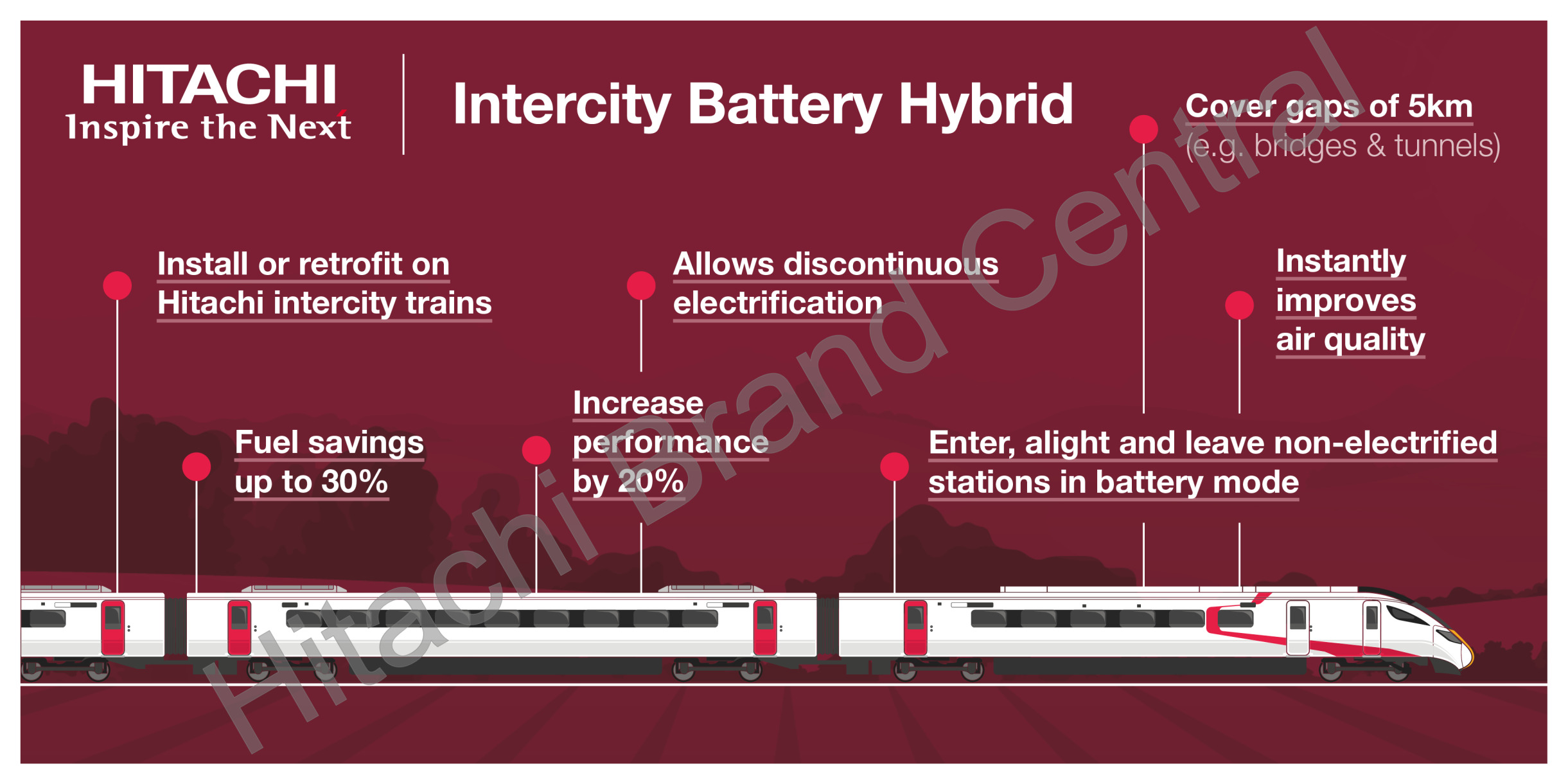
This page on the Hitachi Rail web site gives this description of the Hybrid Battery Train.
A quick and easy application of battery technology is to install it on existing or future Hitachi intercity trains. A retrofit programme would involve removing diesel engines and replace with batteries.
Hitachi Rail’s modular design means this can be done without the need to re-engineer or rebuild the train, this ensures trains can be returned to service as quickly as possible for passengers. Adding a battery reduces fuel costs up to 30% or increase performance.
These trains will be able to enter, alight and leave non–electrified stations in battery mode reducing diesel emissions and minimising noise – helping to improve air quality and make train stations a cleaner environment for passengers.
Our battery solution complements electrification, connecting gaps and minimising potential infrastructure costs and disruption to service.
It looks to me, that Hitachi are playing an old Electrical/Electronic Engineer’s trick.
As a sixteen-year-old, I spent a Summer in a rolling mills, building replacement transistorised control units for the old electronic valve units. They had been designed, so they were plug-compatible and performed identically.
It appears, that Hitachi’s battery supplier; Hyperdrive Innovation of Sunderland has just designed a battery pack, that appears to the train to be a diesel engine.
In the Technical Outline, this is said.
- Train Configuration: 5 – 12 car
- Nominal Vehicle Length: 26m
- Power Supply: Battery
The AT-300 trains generally have twenty-six metre cars.
In How Much Power Is Needed To Run A Train At 125 Or 100 mph?, I calculated that a Class 801 train uses 3.42 kWh per vehicle mile, at 125 mph.
- This means that a five-car train will use 1710 kWh to do 100 miles at 125 mph.
- The train has three diesel engines, so three batteries of 570 kWh would be needed.
- Alternatively, if a battery was put in each car, 342 kWh batteries would be needed.
- In the Wikipedia entry for battery-electric multiple unit, there are two examples of trains with 360 kWh batteries.
I believe building 570 kWh batteries for fitting under the train is possible.
What would be the maximum range for this train at 100 mph?
- I will assume that five batteries are fitted.
- As drag is proportional to the square of the speed, I’ll use a figure of 2.07 kWh per vehicle mile, at 100 mph.
This is a table of ranges with different size batteries in all cars.
- 50 kWh – 24.1 miles
- 100 kWh – 48.3 miles
- 200 kWh – 96.6 miles
- 300 kWh – 145 miles
- 400 kWh – 193.2 miles
- 500 kWh – 241.5 miles
They are certainly useful ranges.
LNER Will Be Ordering Ten New Bi-Mode Trains
In LNER Seeks 10 More Bi-Modes, I discussed LNER’s need for ten new bi-mode trains, which started like this.
The title of this post, is the same as that of an article in the December 2020 Edition of Modern Railways.
This is the opening paragraph.
LNER has launched the procurement of at least 10 new trains to supplement its Azuma fleet on East Coast Main Line services.
Some other points from the article.
- It appears that LNER would like to eliminate diesel traction if possible.
- On-board energy storage is mentioned.
- No form of power appears to be ruled out, including hydrogen.
- LNER have all 65 of their Azumas in service.
I believe that ten trains would be enough to handle LNER’s services on lines without electrification to the North of Scotland.
- London and Aberdeen has 130 miles without wires.
- London and Inverness has 146 miles without wires.
- Electrification plans are progressing North to Perth and to Thornton Junction.
I suspect both routes could be upgraded to under a hundred miles without wires.
I believe, that if Hyperdrive Innovation pull out every trick in the book to save power in their batteries that a five-car Azuma with a 300 kWh battery in each car, will have sufficient range with reserves to go between Edinburgh and Inverness or Aberdeen at 100 mph.
A Battery-Electric High Speed Two Classic-Compatible Train
Consider.
- I am a great believer in regenerative breaking to batteries on the train, as my experience says it the most efficient and also gives advantages, when the catenary fails.
- Stadler’s approach with the Class 777 train, where all trains have a small battery for depot movements, is likely to be increasingly copied by other train manufacturers.
- Hitachi have also designed the Class 803 trains for Lumo with emergency batteries for hotel power.
I could envisage provision for batteries being designed into a High Speed Two Classic-Compatible Train.
Suppose it was wanted to run High Speed Two Classic-Compatible Trains between Crewe and Holyhead.
- The train has eight cars.
- The route is 105.5 miles.
- I will assume an average speed of 100 mph.
- A Class 801 train uses 3.42 kWh per vehicle mile, at 125 mph.
- As drag is proportional to the square of the speed, I’ll use a figure of 2.07 kWh per vehicle mile, at 100 mph.
- This means that an eight-car train will use 1747.08 kWh to do 105.5 miles at 100 mph.
- I would put a traction battery in each car, to distribute the weight easily.
Each battery would need to be 218.4 kWh, which is totally feasible.
How far would the train travel on 300 kWh batteries at 100 mph?
- Total battery capacity is 2400 kWh.
- One mile will use 16.56 kWh.
- I am assuming the train is using regenerative braking to the battery at each stop.
The train will travel 145 miles before needing a recharge.
On the Crewe and Holyhead route, there would be a reserve of around 40 miles or nearly 500 kWh.
Conclusion
I am convinced that Hitachi and their highly regarded partner; Hyperdrive Innovation, have developed a battery pack, that gives enough power to match the performance of Class 800/802/805/810 trains on diesel and give a range of upwards of a hundred miles on battery power at 100 mph, if you put a 300 kWh battery pack in all cars.
- But then Stadler have run an Akku for 115 miles and a Class 777 for 84 miles on battery power alone.
- I think the key is to put a battery in each car and harvest all the electricity you can from braking.
- Remember too that Hitachi can raise and lower their pantographs with all the alacrity of a whore’s drawers, so strategic lengths of overhead electrification can also be erected.
Hitachi and Hyperdrive Innovation appear to have invented the High Speed Battery Train.
We’ll know soon, when the order for the LNER bi-modes is announced.
Whatever works on LNER, should work on High Speed Two.
 The Anonymous Widower