National Grid Goes Carbon-Free With Hydrogen-Powered Substation Trial
The title of this post, is the same as that of this press release from National Grid.
These are the main bullet points.
- Hydrogen powered unit (HPU) quietly provided carbon-free electricity to National Grid’s Deeside Centre for Innovation
- Only emission is water
- HPUs could save an estimated 500,000 kg of carbon across all National Grid substation sites
I am an Electrical Engineer and I had never realised that all those electricity substations around the country need a backup electricity generator.
These four paragraphs describe the trial and the generator used.
A GeoPura 250kW hydrogen power unit (HPU) contained within a transportable shipping container measuring 7.2 m by 2.5 m was installed at DCI and produced the energy to power low-voltage equipment needed for National Grid’s innovation testing projects and site operations. The trial tested the capabilities and feasibility of HPUs as direct replacements for backup diesel generators across more than 250 National Grid substation sites, the data will now be analysed and shared later this year.
National Grid currently use diesel generators alongside batteries to provide backup power to a substation for key activities such as cooling fans, pumps, and lighting, enabling it to continue to perform its crucial role in the electricity transmission system.
These backup generators are rarely used and have less than a 1% chance of operating per year, however, on the rare occasion that backup power is required, changing from diesel to low-carbon emission alternatives have the potential to reduce carbon intensity by 90%* and save over 500,000 kg of carbon emissions.
The HPU at Deeside has power capabilities of up to 100 kW in continuous operation mode and up to 250 kW for 45 minutes and uses 100% green hydrogen. The unit is quieter and the hydrogen cannisters used to fuel the generators can be safely stored on site.
I have some thoughts.
Deeside Centre For Innovation
The Deeside Centre for Innovation (DCI), a state-of-the-art testing facility hosting a 400 kV modified substation, designed as a unique environment for development and trial of innovative technologies and practices.
I think there’s something rather cunning about the DCI, as it means that anybody with a good idea will probably approach National Grid for help with the testing.
Visit Deeside Centre for Innovation for more information.
GeoPura
GeoPura has a totally zero-emissions answer to how we’re going to generate, store and distribute the vast amount of energy required to decarbonise our global economies. Or so their web site says!
This page on GeoPura’s web site, gives several case studies of how they work.
They would appear to provide zero-carbon power in widespread locations for Winterwatch, Springwatch etc. for the BBC.
Tevva Starts First Mass Production Of Electric Lorries In UK
The title of this post, is the same as that of this article on Professional Engineering.
These are the first three paragraphs.
Tevva is building its 7.5 tonne vehicles at Tilbury in Essex after it received European Community Whole Vehicle Type Approval (ECWVTA), meaning it can start producing and selling in volume across the UK and Europe.
The start-up has already started delivering its first mass-produced lorries to customers including Travis Perkins and Royal Mail. It expects to sell up to 1,000 in 2023.
Described as “ideal” for last mile and urban delivery fleets, the electric truck offers up to 227km range from its 105kWh battery on a single charge. It will be followed later in 2023 by a 7.5 tonne hydrogen-electric alternative. The hydrogen range extender will reportedly increase the range up to 570km.
That seems like a good start to me; certification, orders for a thousand and generous ranges with or without a hydrogen extender.
In Equipmake Hybrid To Battery Powered LT11, I described Equipmake’s battery-electric New Routemaster bus.
Both the battery-electric Routemaster and the Tevva truck seem to have generous ranges, so has better battery technology been developed.
The Bowes Park And Bounds Green Out-Of-Station Interchange
After I’d taken the latest pictures in Bowes Park Station – 12th January 2023, I walked to Bounds Green station to go back South to the Angel.
I took these pictures on the way.
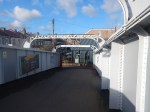











Note.
- The walk is level and could be done easily, if you were pushing a buggy, dragging a case or in a wheel-chair.
- There is a footbridge over the busy Bowes Road, which doesn’t have lifts. But you don’t need it to go between the stations.
- There is a light-controlled crossing outside Bounds Green station to cross Brownlow Road.
- The walk took me about six minutes.
These pictures show the escalators at Bounds Green station.




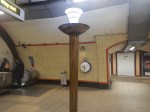

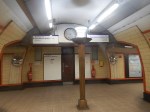

Could the central stairs be replaced by an inclined lift?
Would This Out-Of-Station Interchange Create An Easy Route Between Northern Piccadilly Line Stations And The Elizabeth Line?
Consider.
- Cockfosters, Oakwood and Arnos Grove stations have car parking.
- All stations on the Piccadilly Line from Bounds Green Northwards are well-connected by buses.
- Bounds Green station has escalators.
- Bowes Park station has stairs.
- Bowes Park station has a well-stocked cafe.
- Moorgate station has escalators and lifts to the Elizabeth Line.
For a perfect route, some things must be done.
The Frequency Of Trains On The Northern City Line
At the moment the trains through the station are two trains per hour (tph) between Moorgate and Stevenage.
But the frequency has been as high as four tph.
The frequency needs to be higher to cut waiting for a train.
Step-Free Access
This needs to be installed or improved at Bounds Green, Bowes Park and Moorgate stations.
Signage
The route between Bowes Park And Bounds Green stations needs better signage.
Conclusion
This Out-Of-Station Interchange could be made more use of.
A Road Scheme That Appears To Going Nowhere
This article on the BBC is entitled A57 Link Roads Mottram Bypass: Charity Seeks Judicial Review.
This is the sub-heading.
Environmental campaigners are seeking a judicial review of proposals designed to ease road congestion between Manchester and Sheffield.
And these are the first two paragraphs.
Plans for the A57 Link Roads Mottram Bypass scheme were boosted in November when Transport Minister Huw Merriman granted a development consent order.
But countryside charity the CPRE said there was no evidence building a new road “moves away a traffic problem”.
I remember this area well from the 1960s, when I was studying at Liverpool University and my parents lived in Felixstowe.
- There was no motorway across the Midlands between Coventry and Stafford and the alternative of the A5 was a nose-to-tail crawl.
- The M62 was still in the design phase.
So I took to using this cross-country route.
- A45 between Felixstowe and Huntingdon.
- A1 to Worksop, which was mainly dual-carriageway.
- A57 to Manchester, through Sheffield and Glossop, which was and still is single-track.
- A580 to Liverpool.
I think my best time was about five hours in a 1954 Morris Minor.
I feel, I must have gone through Mottram in Longdendale, judging by the map on the BBC article.
It is interesting to read the Wikipedia entry for the Longdendale Bypass, which starts like this.
The Longdendale Bypass (also known as the A57/A628 Mottram-in-Longdendale, Hollingworth & Tintwistle Bypass) is a long-planned road scheme in England by the Highways Agency. The aim is to alleviate traffic congestion on the A57 road/A628 road/A616 road routes that presently pass through the villages. There is both support and opposition for this long-planned scheme which will pass through the valley of Longdendale and part of the Peak District National Park.
The scheme was approved by the Highways Agency in 2014, so politicians have not exactly been quick off the mark.
These are some choice phrases from the Wikipedia entry.
- It is used by a relatively large number of heavy goods vehicles.
- Supporters of the scheme say that the A628 is one of the most congested A-road routes in the country.
- There is no viable alternative to a bypass.
- A survey in 2010 found that the junction of the A57 and M67 was the most congested in Manchester.
It is a disaster and the intervention by the CPRE will further delay a solution.
Conclusion
It is problems like this, that lead me to one solution.
On the one hand, you improve the railways and on the other you bring in universal road charging.
Hopefully passengers and freight will find a happy equilibrium.
But voters wouldn’t like it and any Government, that brought it in would lose the next election to a yet-to-be-formed Motorists Party.
Wind Generation Sets New Record In UK Surpassing 21 GW
The eye-catching title of this post, is the same as that of this article on Renewables Now.
I regard anything over 20 GW as very good, as the UK’s average daily consumption is typically around 23 GW, so surely we can find a couple of gigawatts of biomass, gas, hydro or nuclear.
The Renewables Now article says this about UK electricity generation.
According to National Grid ESO, on Monday, January 9, wind accounted for 50.2% of British electricity, nuclear for 15.9%, gas for 13.1%, imports for 10%, biomass for 4.8%, hydro for 3.8%, solar for 1.3% and coal for 1.1%. Tuesday’s wind record may undergo slight adjustments in expectation of all data for yesterday.
I shall be following these figures.
- Especially, as Wikipedia says another 3 GW will be installed this year.
But it does seem that we’re getting there with renewable electricity.
A Thought On Energy Storage
I also think that if we are generating large amounts of electricity at times, which are more than we need, then we had better crack on and build lots of energy storage.
If we don’t need the energy and Europe or Ireland doesn’t want it, then we must store it, so that if the wind isn’t blowing we can recover it for a useful purpose, even if it is only selling it to the Germans to make hydrogen, which is used to replenish their stores.
Cockfosters Train Depot – 12th January 2023
In Would A Solar Roof With Added SeaTwirls Work?, I showed this map of Oakwood.
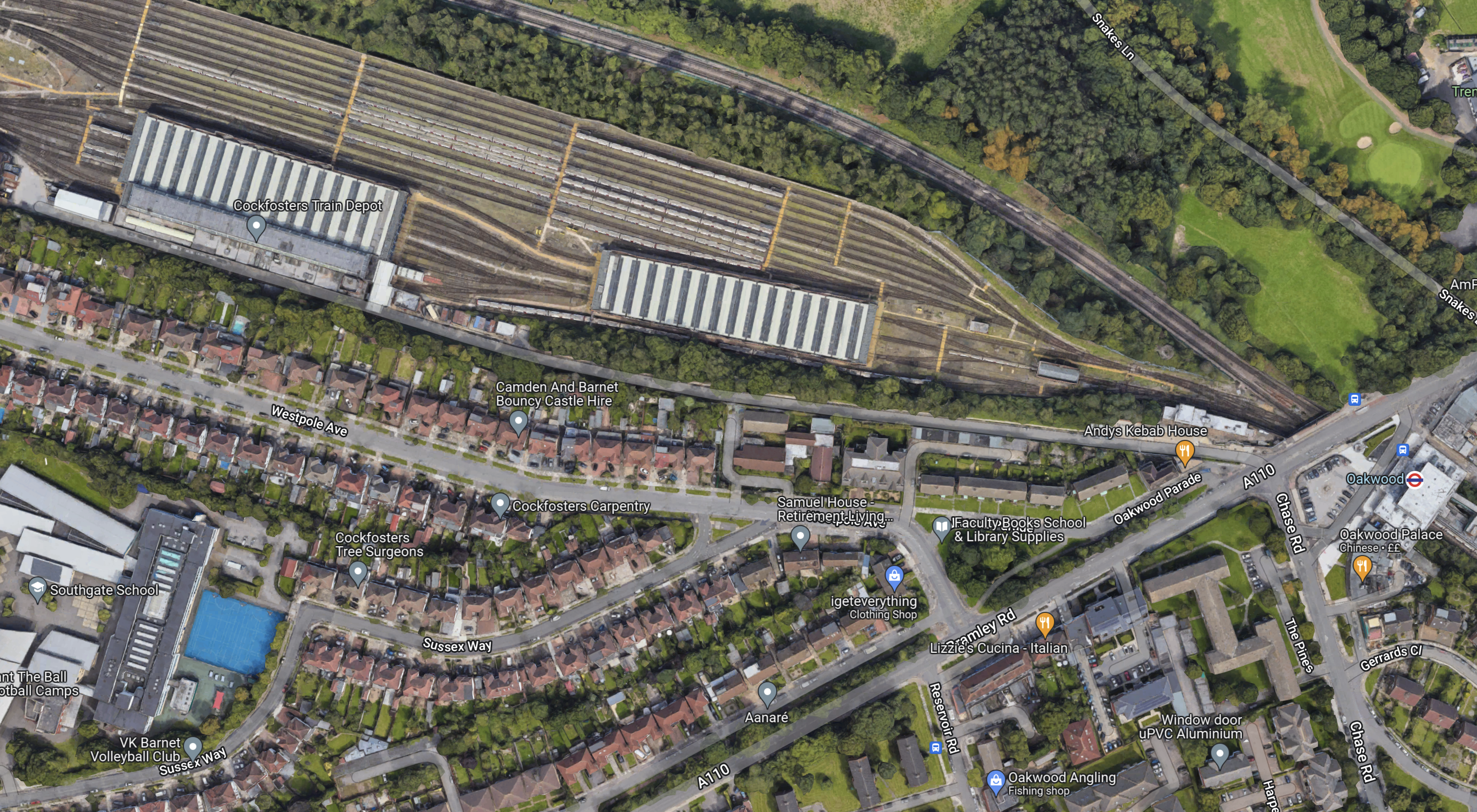
Note.
- The striped roofs at the top of the map, with sidings for trains to the North, is Cockfosters Train Depot for the Piccadilly Line.
- Cockfosters station is off the map on the West side of the map.
- Oakwood station is at the East side of the map and indicated by a London Underground roundel.
- The two tracks of the Piccadilly Line between Oakwood and Cockfosters stations, running across the map to the North of the depot.
I took these pictures of the Cockfosters Train Depot as my train went between Oakwood and Cockfosters.








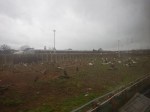















Note.
- The land between the Piccadilly Line and the depot seems to be being cleared.
- Is this to expand the depot for the new trains?
- There are some high lights mounted above the sidings.
- The depot buildings don’t look anything special.
This article on Ian Visits is entitled Depot Upgrade At Cockfosters For The Piccadilly Line’s New Trains.
- Before and after maps show a lot more sidings.
- The new siding layout reaches almost all the way to the Piccadilly Line.
- The old depot has been assessed to be utilitarian with low architectural and historic value.
- The depot will be completely rebuilt over the next two years for the new Siemens trains.
- Nothing is said as to whether the new depot will be fitted with a solar roof.
The new trains will start running in 2025. It seems that the work hasn’t progressed very far.
Bowes Park Station – 12th January 2023
I’d never used Bowes Park station until I moved back to London in 2011, despite the fact I had friends in the 1960s, who lived nearby.
Today, I was wanting to go from the Northern end of the Piccadilly Line to Moorgate station.
There are a number of ways to do this journey.
- Piccadilly Line to Bounds Green tube station and then a Great Northern train from Bowes Park station to Moorgate
- Piccadilly Line to Wood Green tube station and then a 141 bus to Moorgate.
- Piccadilly Line to Manor House tube station and then a 141 bus to Moorgate.
- Take the double cross-platform change route, I outlined in Extending The Elizabeth Line – Improving The Northern City Line.
I decided to take the first route.
I took these pictures at Bowes Park station.

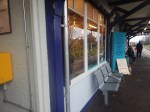

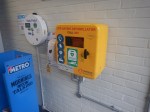
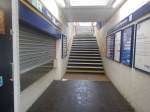
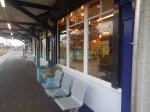

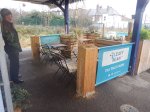
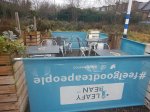

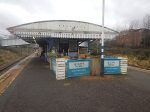

Note.
- The station has a warm well-stocked cafe, that is an asset to the station.
- The station has a defibrillator.
In an ideal world the station would have step-free access, as this would give a step-free route to Moorgate and the Elizabeth Line.
I returned a day later and took these pictures to see if a lift could be fitted.

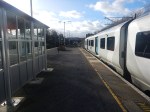
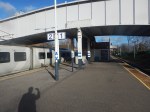
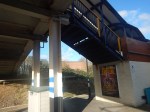



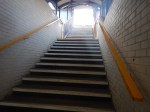
I don’t think it would be one of the most difficult or expensive jobs to fit in a lift, that took passengers between the platform and the bridge.
The existing stairs would be retained and fitted with a decent fully-compliant handrail.
If a single lift were to be placed on the opposite side to the stairs, passenger access to the station would be possible during the installation.
Giant Solar Farm Project In Doubt After Disagreement Between Mike Cannon-Brookes And Andrew Forrest
The title of this post, is the same as that of this article on the Guardian.
This is the sub-heading.
Australian billionaires had backed $30bn Sun Cable venture designed to help power Darwin, Indonesia and Singapore but the company has gone into voluntary administration.
It does look like the administrators will be able to continue the project and look for more funding.
Qatar must be in the frame, as this link will probably cut some of their gas sales.
I wrote about this monster project in Sun Cable’s Australia-Asia PowerLink.
I wonder if this administration will have any effects on the prospects of the other giant intercontinental interconnectors?
- EuroAfrica Interconnector – See The EuroAfrica Interconnector
- EuroAsia Interconnector – See The EuroAsia Interconnector
- Morroco-UK Power Project – See Moroccan Solar-Plus-Wind To Be Linked To GB In ‘Ground-Breaking’ Xlinks Project
- TransPacific Interconnector – See Chile Wants To Export Solar Energy To Asia Via 15,000km Submarine Cable
The economics will decide. But I do think, the last one could be a bit ambitious.
Suffolk Doesn’t Do Easy!
Many parts of the UK consider Suffolk to be rather sleepy.
I was conceived in the county and have spent at least half my life there.
I have a strong affection from my adopted county, which always seem to punch above its apparent weight.
- All thoroughbred horses have bloodlines that can be traced back to Newmarket, which is a town of 17,000 people in West Suffolk.
- The Battle of Landguard Fort is recorded as the last opposed attack on England, where on the 2nd of July 1667, a much larger Dutch force was repelled by Nathaniel Darrell and his marines.
- The exploits of Ipswich Town over the years are on a par with those of many prominent clubs in much bigger towns and cities.
- Since the 1950’s, the Port of Felixstowe has grown to be the United Kingdom’s busiest container port.
This morning I received a marketing e-mail from Adnams; the Suffolk brewer and this is an extract.
Ghost Ship 0.5% is brewed just like our other beers, so you can count on 150 years of brewing heritage. It was crafted to taste like our best-selling brew, so you can also count on its flavour.
It is always our aim to make great-tasting products, but when creating Ghost Ship 0.5%, the brewing team didn’t simply have to make something delicious, it had to taste like a well-loved and well-known beer. They were dealing with great expectations.
Adnams invested in a de-alcoholiser specifically to make this beer. We could brew in the normal way; adding the lovely fruity flavours you get from a full fermentation, before removing the alcohol. This alters the balance and the mouthfeel of a beer, so it still took months of trials and tinkering to get to where we wanted.
We used all our expertise the finest East Anglian malt and bold American hops to create a low-alcohol beer that tastes frighteningly good. It’s now our second most popular brew, and at 0.5% abv, can be enjoyed whenever and wherever the moment takes you. So, you can get out there, travel that little bit further, and taste just a little bit more.
Note in the last paragraph, that it is now their second most popular brew.
- It tastes just like the halves of bitter, I used to drink around 1960, whilst playing snooker with my father in his club in Felixstowe.
- Adnams has been my preferred beer since then.
- Like all zero-alcohol beers, my coeliac gut doesn’t react to it.
As a regular drinker of this beer, it looks like Suffolk has another success on its hands.
I’ll drink to that!
Would A Solar Roof With Added Vertical Turbines Work?
This picture shows Oakwood station on the Piccadilly Line.
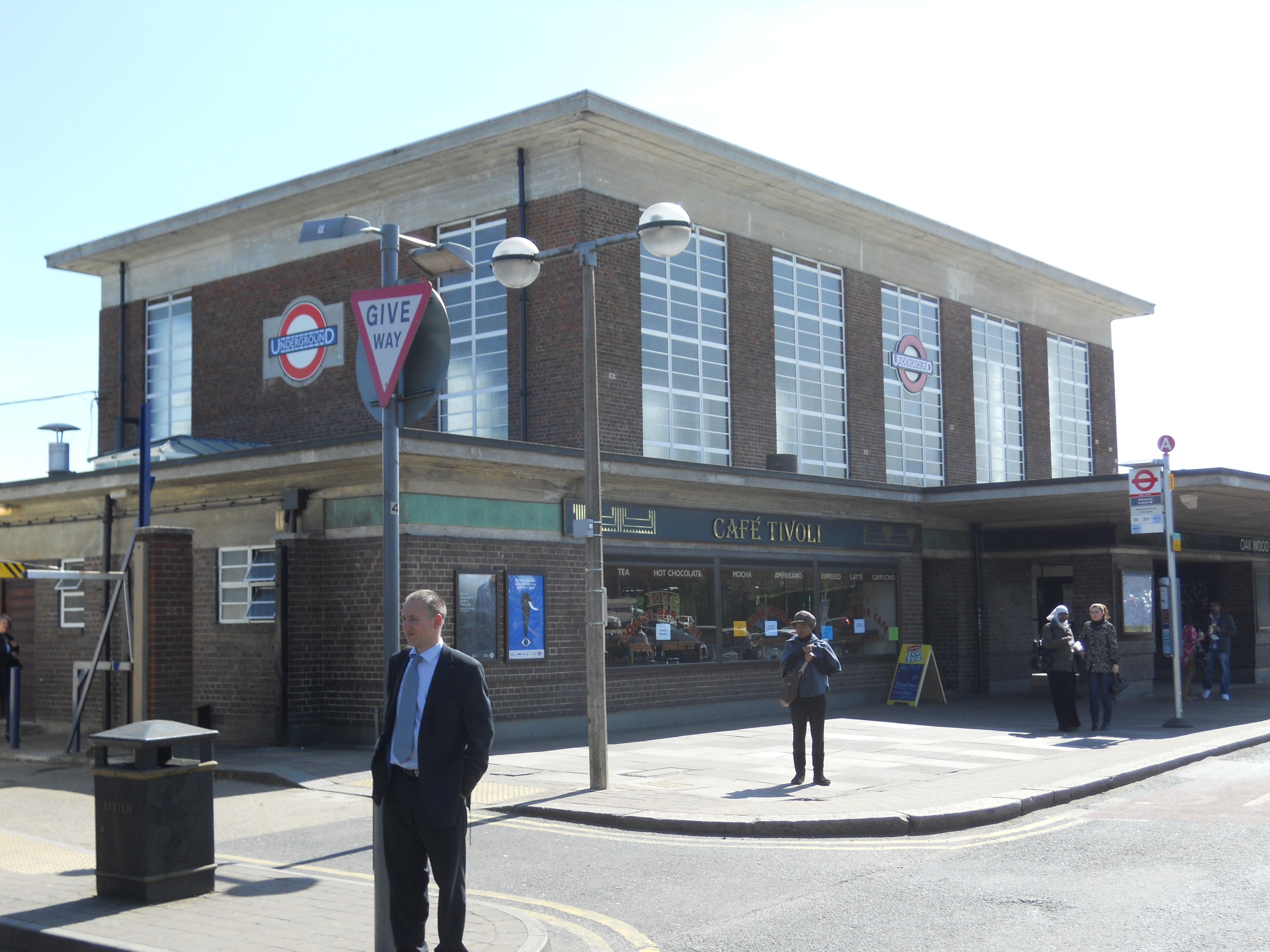
Note.
- The station is the second most Northerly on the line.
- It opened in 1933.
- It is a classic Charles Holden design.
- It is a Grade II* Listed building.
- The station is on top of a hill and has an elevation of 71 metres above sea level.
This Google Map shows a close-up of the roof.

There might be a few aerials on the roof, but no solar panels.
Oakwood’s Location And Weather
I used to live near Oakwood station and it had its disadvantages.
- Cycling home was always up a steep hill.
- It could get very cold at times.
There even used to be a plaque at the station, which said that if you flew East, the first land you would hit would be the Urals.
Oakwood station could be an ideal renewable power station.
- The concrete and brick box of the station is probably exceedingly strong.
- Solar panels could cover the flat roof.
- SeaTwirls or other vertical turbines could be mounted around the solar panels.
- There could still be spaces for the aerials.
- I wonder what the reaction of English Heritage would be.
Should we call this mixed solar and wind power generation, hybrid renewable energy? Or do we overdo, the use of hybrid?
London Underground have other stations of a similar design including Sudbury Town and Acton Town.
The Wider Area To The West Of Oakwood Station
This Google Map shows the area to the West of Oakwood station.
Note.
- The striped roofs at the top of the map, with sidings for trains to the North, is Cockfosters Train Depot for the Piccadilly Line..
- The large building in the South-West corner is Southgate School, which I watched being built in the early 1960s, from my bedroom window in our house opposite. It is a concrete frame building typical of the period.
- Oakwood station is at the East side of the map and indicated by a London Underground roundel.
I think the possibilities for hybrid power generation in this area are good.
Cockfosters Depot
Cockfosters Depot could be an interesting site to develop as a renewable power station.
- There’s no way the site could be developed for housing, as it’s in the Green Belt.
- Road access is bad, but access for trains is good.
- I estimate that the depot is an area of at least five square kilometres.
- It’s still windy in the depot.
But it could have a solar roof and a few vertical wind turbines over the whole depot as designs and panels improve.
Southgate School
Southgate School could have a similar setup to Oakwood station.
Opportunities At Cockfosters Station
This Google Map shows a 3D image of Cockfosters station and the buildings around it.

Note.
- Cockfosters station is indicated by the roundel.
- The station is a Grade II Listed building.
- The station has an elevation of 97 metres.
- Half of the station car park is going to be turned into housing.
- Trent Park lies to the North of the station.
- The road in front of the station is Cockfosters Road, which to the North joins the M25 at Junction 24.
- The building between Cockfosters Road and the railway used to be offices, but it is now being converted into housing.
That high roof of the housing development, must be an ideal candidate for solar panels and vertical wind turbines.
Conclusion
I have tried to show the potential of just one of the small hills that ring London.
 The Anonymous Widower