Back To The Dark Ages In West Virginia?
This article on WBOY is entitled West Virginia Senators Aim To Revitalize Coal Industry.
These are the introductory paragraphs.
If you’re tired of rising utility bills, you are not alone. West Virginia senators say they share the same feelings and believe the answer is right under our feet.
Revitalizing West Virginia’s coal industry and bringing down utility costs for customers is the goal of two pieces of legislation originating in the Senate.
A resolution known as the Coal Renaissance Act aims to keep current coal operations running as well as open up new opportunities for the industry, expanding mining in West Virginia.
According to Senators in support of the act, the optimum capacity factor for coal plants to run at is 69%. Currently, industry leaders say that number is down to around 30% to 40%.
A new bill known as the Reliable and Affordable Electricity Act incentivizes utility companies to rely on West Virginia coal.
There is also going to be a Senate bill, that will abolish tax breaks for wind farms.
In the UK, it is my belief, that coal died with the Aberfan disaster in 1966, which is described in this first paragraph of the disaster’s Wikipedia entry.
The Aberfan disaster (Welsh: Trychineb Aberfan) was the catastrophic collapse of a colliery spoil tip on 21 October 1966. The tip had been created on a mountain slope above the Welsh village of Aberfan, near Merthyr Tydfil, and overlaid a natural spring. Heavy rain led to a build-up of water within the tip which caused it to suddenly slide downhill as a slurry, killing 116 children and 28 adults as it engulfed Pantglas Junior School and a row of houses. The tip was the responsibility of the National Coal Board (NCB), and the subsequent inquiry placed the blame for the disaster on the organisation and nine named employees.
I do have memories of coal mining in my brain.
- As a young child, I can remember being driven past the Kentish collieries and seeing the blackened landscape of the Garden of England.
- Newspapers of the 1950s and 1960s published, their share of mining disasters.
- In the 1980s, I drove through coal mining country in the United States and was appalled at all the fumes and smoke from the coal-fired power stations and the trucks delivering coal. Nothing as civilised as a merry-go-round train was used.
- In 2015, I visited Katowice and wrote An Excursion In Katowice. The air was thick with coal smoke from the coal-fired power stations.
I also remember at the Jobs Fair, when I left Liverpool University in 1968, seeing the recruiter from the National Coal Board sitting there alone, as if he’d got the plague. Graduates had decided, that no way, were they going to work in the coal industry.
The West Virginia senators, should be certified, if they want to bring back coal.
Stowmarket Station – 14th March 2025
tThe one and only time, that I’ve used Stowmarket station, was when I’d taken my Lotus in for a service near Diss and I was getting back to Newmarket, with a change at the station.
So as I was going to Stowmarket station, I felt with the judicious use of a East Anglian Ranger ticket, I could combine the trips to Stowmarket and Saxmundham stations.
I also wanted to look at the progress on the new footbridge that I wrote about in Stowmarket Station To Go Step-Free.
I took these pictures.
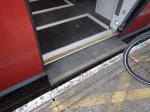
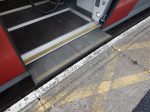
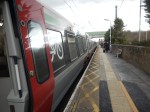
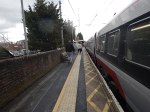
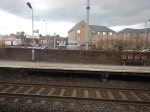
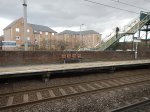
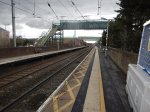
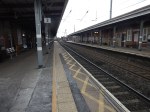
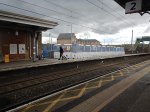
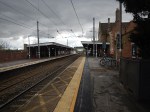
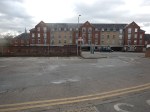
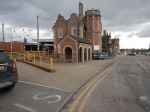
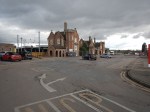
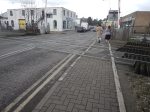
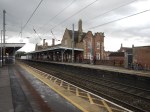
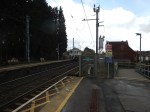
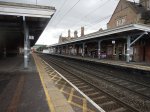
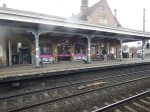
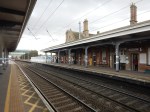
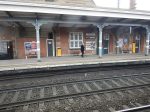
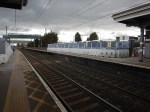
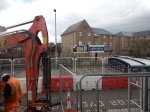
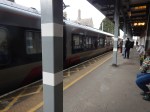
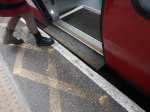
Note.
- I arrived on the Norwich-bound platform, crossed the tracks by the level crossing and then left from the Ipswich-bound platform.
- The station has a cafe.
- The footbridge in the pictures is a temporary one to ease construction.
- The station buildings are Grade II Listed.
There doesn’t appear to have been much progress on the new footbridge.
I do have some other thoughts.
Greater Anglia’s Stadler Trains Are Step-Free Between Train And Platform
The first two and last pictures in the gallery show this feature.
I arrived on a Class 745 train and left on a Class 755 and both train classes have gap fillers, that do their job automatically.
We need more of this technology to protect the elderly, those with restricted movement and the just untrained stupid.
Housing By The Station
It appears that two blocks of flats have been built on railway land or the station car park.
The bridge also appears to give the owners and residents access across the railway.
Is this thoughtful holistic design or just a bribe to get planning permission?
Who Will Use The Footbridge?
Two main lines effectively cross at Stowmarket.
- The Great Eastern Main Line between Ipswich and Norwich goes through Needham Market, Stowmarket and Diss.
- The Ipswich and Ely Line between Ipswich and Cambridge goes through Needham Market, Stowmarket, Elmswell, Thurston, Bury St. Edmunds, Kennett, Newmarket and Dullingham.
So, if you need to go between say Newmarket and Diss, you would change trains at Stowmarket. Hopefully, the bridge will encourage train travel.
New Housing In East Anglia
On the main railway lines between Cambridge, Ipswich and Norwich, there used to be a lot more stations.
- There are eight closed stations between Stowmarket and Cambridge.
- There are three closed stations between Stowmarket and Ely .
- There are two closed stations between Stowmarket and Ipswich.
- There are eight closed stations between Stowmarket and Norwich.
Note.
- A new Soham station was built between Stowmarket and Ely. Passenger numbers are rising with each year.
- I have double-counted Higham and Saxham and Risby stations on both the Ely and Cambridge routes.
- But that still leaves nineteen stations, that might be good sites to build new houses.
- The East-West Railway intend to build a new A14 Parkway station to link the A14 road to the Ipswich and Ely Line.
- When housing is taken into account, some stations will give a better return on investment.
Could the new footbridge at Stowmarket be part of a wide ranging plan to build more housing in towns and villages along the railways of East Anglia?
Was The Old Footbridge Too Low?
This picture was taken of the old bridge.
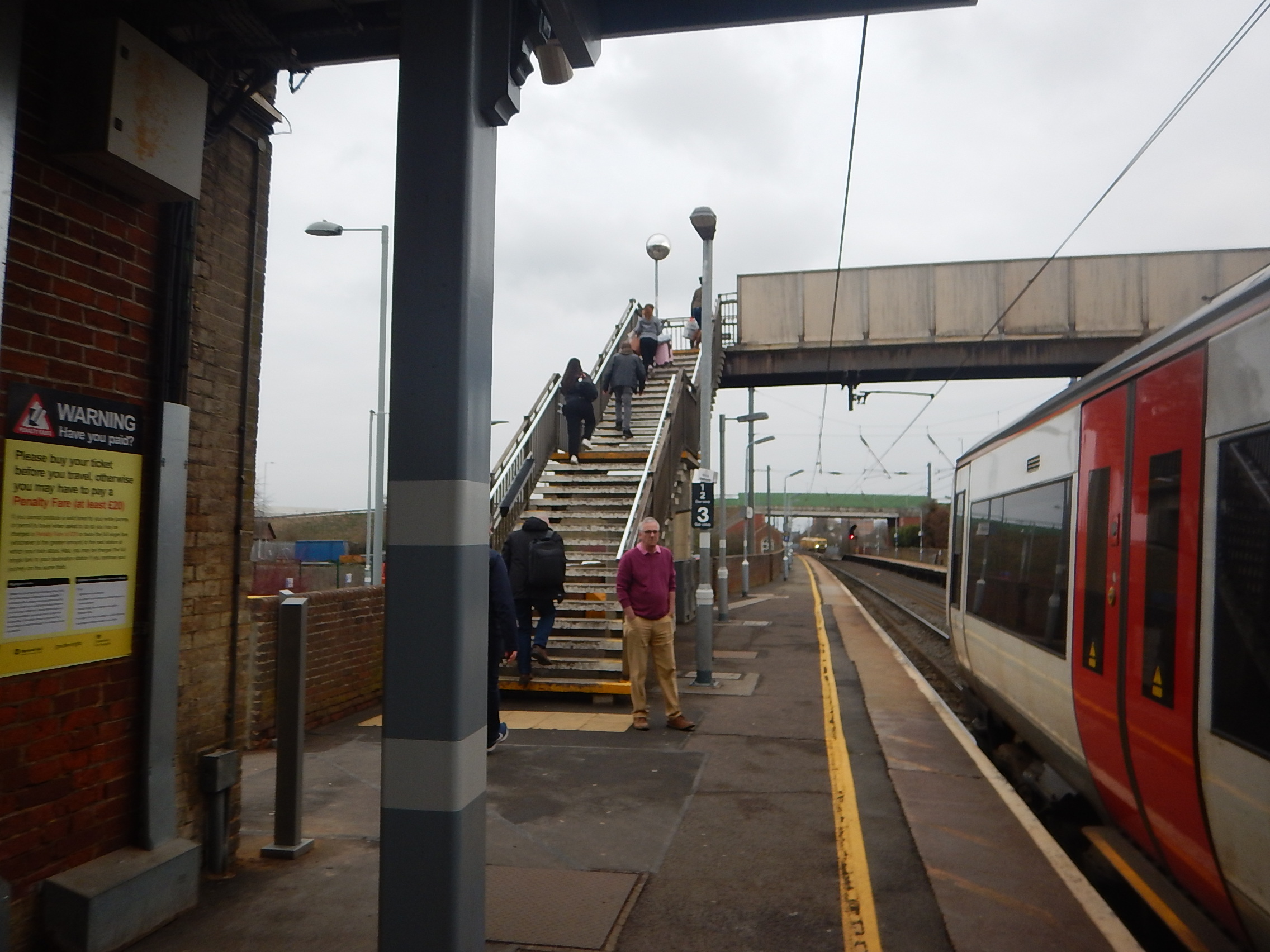
Was the bridge too low for some container trains?
A Pair Of Class 755 Trains At Liverpool Street Station
I traveled back to London Liverpool Street station in an eight-car formation of a pair of four-car Class 755 trains.
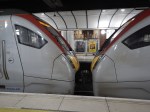
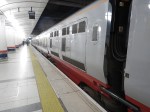
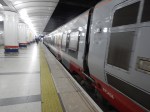
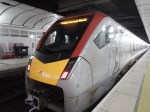
Note.
The train had come from Norwich.
Real Time Trains showed, that the train was fairly close to on time.
Was this an experiment or were Greater Anglia just short of trains?
The train certainly felt to be running well.
I’ve always felt that Two Class 755 trains could split and join at Ipswich to combine a Norwich and Lowestoft service. Were Greater Anglia experimenting?
Swiss Federal Railways Targets London As It Seeks More Cross-Border High Speed Trains
The title of this post is the same as that of this article on the Railway Gazette.
This is the introductory paragraph.
Swiss Federal Railways is looking at ordering up to 40 high speed trainsets for use on international services to Italy and France, and ’potentially for other destinations such as Barcelona and London’.
There also three paragraphs, which talk about Switzerland and London services.
SBB has also examined the possibility of launching a direct service between Switzerland and London, concluding that this would be technically feasible but challenging.
The need to provide security and border controls at all the stations served has long been a barrier to new services through the Channel Tunnel. However, SBB believes this may be possible at Zürich HB, Basel SBB and Genève Cornavin.
SBB would like to offer such a service and is to further develop its plans, but implementation is not seen as possible until the 2030s at the earliest.
These are my thoughts.
The Channel Tunnel Is Being Opened Up For Other Operators
The Channel Tunnel is at last looking to put on other services.
Switzerland could be easy technically, but there is the security and border controls, as the article points out.
But I see sorting security and border controls as an opportunity, not a problem.
Surely, a workable solution would have export potential all round the world.
London And Geneva Is Only Six Hours On The Train
Six hours in comfort on a train, would not bother me!
Switzerland And London Are Both Suitable Destinations For Year-Round, Short-Break Trips
C and myself were always popping off for short breaks, as it suited our work patterns.
She would sometimes say, that a case had come out and we would nip off somewhere for a couple of days.
I think, that more people will work flexibly and will have more gaps, where two days in Geneva or Zurich would fit. Provided, they could just turn up and go.
I also have done several business and leisure trips to Switzerland.
Fast Direct Trains To Switzerland Would Make Italy More Accessible
I have taken trains to Italy and it is a long way.
But breaking the journey in Switzerland could make the journey easier and you could use one city going South and another going North.
When I stayed in Geneva to go to CERN, I got a free day ticket for the buses and trams thrown in, which was very useful.
Will The Swiss Offer A Rail Pass For All Their High Speed Trains?
I wonder, if the Swiss have this in mind, as they already offer passes that include all Swiss public transport including all the cable cars.
A Swiss High Speed Rail Pass might allow me to go London and Florence, Naples or Rome and return all on one ticket.
Americans wanting to get away from Trump could fly to Switzerland and then explore Europe in Swiss trains, with no worries.
Conclusion
The Swiss should take their fingers out and go for it!
When Silvertown Opens, Blackwall Tolls Start Too
The title of this post, is the same as that of this article on the BBC.
This is the sub-heading.
In under a month, tolls will be introduced for drivers at the new Silvertown Tunnel and the existing Blackwall Tunnel in east London.
These four paragraphs add detail to the story.
For car drivers it will cost £8 a day in peak. These are huge changes to London’s transport network and awareness seems to be low.
The new highly controversial Silvertown Tunnel opens on 7 April.
Critics have dubbed the crossing a huge polluting white elephant that will do nothing to cut congestion and pollution with little or no business case.
Supporters say it will reduce congestion on the old, existing Blackwall Tunnel and improve resilience on the crossing that closes between 600-700 times a year. It will also provide more cross river bus routes as well as a bus that can carry bikes.
As a very experienced mathematical modeller, my gut feeling is that four new tolled lanes under the River Thames is not the solution.
These are my thoughts.
Transport for London Are Not Good Mathematical Modellers
As a non-driver, I rely heavily on the 141 bus for transport.
- It stops close to my house.
- It takes me to and from Moorgate, where I also pick up the Elizabeth Line.
- It takes me to and from Bank, where I also pick up the Central Line.
- It takes me to and from River Thames, from where I pick up the Thames Clippers.
- It takes me to and from London Bridge station, where I also pick up theThameslink.
- It takes me to and from Manor House station, where I pick up the Piccadilly Line.
- It takes me to and from Harringay Green Lanes station, where I pick up the Gospel Oak to Barking Line.
I must admit some of the reasons I like the bus route, are that it connects me to my childhood memories of WoodGreen, Southgate, Oakwood and Cockfosters.
When, I moved here, there were two North-South buses that ran within fifty metres of my house.
- The 21 bus ran between Newington Green and Lewisham.
- The 141 bus ran between Palmers Green and London Bridge station.
Then, two years ago the Elizabeth Line and the rebuilt Bank station both opened, followed a year later by an upgraded Old Street station.
These three improvements, added a lot more passengers to the North-South corridor, between London Bridge station and Newington Green roundabout.
I suspect a quality modelling of bus passengers North-South, through the city of London, would have shown, that more buses were needed on the combined 21/141 route.
So what did Sir SadIQ and Transport for London do? They rerouted the 21 bus away from the busiest section through De Beauvoir Town.
In their modelling, I suspect.
- They overestimated how many travellers used the Northern Line.
- They ignored the fact, that the Piccadilly Line doesn’t serve the City of London.
- They ignored the fact, that the Piccadilly Line doesn’t connect to the Elizabeth Line.
- They ignored the fact, that the 141 bus, is the only direct way between Palmers Green, Wood Green, Turnpike Lane and Manor House to the City of London.
- They felt De Beauvoir Town was a posh area and doesn’t need more buses, as residents can use their cars.
Halving the number of buses was a seriously bad decision.
I now have a damaged left knee due to constant standing on overcrowded buses.
It’s also got a lot worse lately due to constant bus diversions and cancellations, due to Islington’s LTNs and constant road works.
I’ve heard similar tales of bad bus planning from all over London.
So why should I trust Transport for London’s traffic modelling on the Silvertown and Blackwall Tunnels?
The Silvertown And Blackwall Tunnel Share Approach Routes
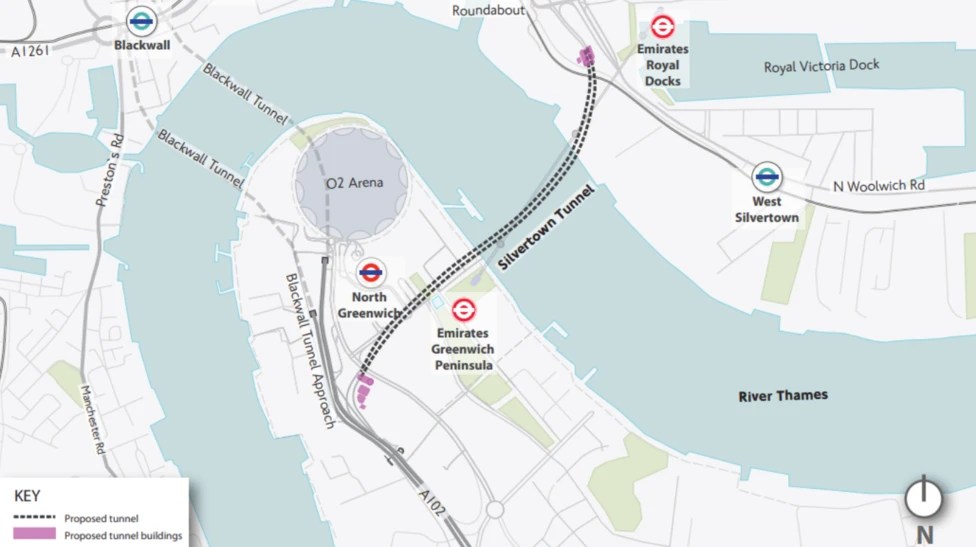
This map from the BBC article shows the layout of the two tunnels and their approach roads.
Note.
- The Blackwall Tunnel is two, two lane tunnels, one in each direction.
- The Silvertown Tunnel is one four lane tunnel, with two lanes in each direction.
- The O2 lies between the two tunnels.
The map shows the shared approach road for both tunnels.
What happens if there is an accident on the approach to the tunnels?
Tolling Problems
I feel that the tolling regime is overly complicated.
Hopefully, any problems this causes will lessen, as drivers know what to do.
The Sat-Nav Route Between The Tunnels And The M1
I’ve just looked one recommended route up, not that I have a Sat-Nav and I’ve never used one and the route is straightforward.
- Blackwall Tunnel Northern Approach to Hackney Wick.
- Wick Lane to Hackney Central.
- Graham Road and Dalston Lane to Dalston Junction
- Balls Pond Road to Southgate Road/Mildmay Park
- St. Paul’s Road to Highbury & Islington station.
- Holloway Road to Archway.
- Archway Road, Aylmer Road and Falloden Way to Henly’s Corner.
- North Circular Road and Great North Way to the M1.
I live just South of the Southgate Road/Mildmay Park junction and often these days it is jammed solid.
But there is another route from Hackney Wick.
- A12 to Redbridge Roundabout on the North Circular Road.
- North Circular Road to the M1.
I dread to see what happens, when the Dartford Crossing is closed and heavy trucks from the Channel Tunnel to the M1, decide to take the Silvertown Tunnel as an alternative route.
More Than Four In Ten New Homes In England Built With Solar Power
The title of this post, is the same as this press release from Solar Energy UK.
These two paragraphs add some more detail.
The introduction of more stringent rules on energy efficiency for new homes in England has driven a surge in solar panel installations.
The proportion of new homes and buildings that come with solar photovoltaic panels included has risen by more than three times in the last twelve months.
It certainly appears that solar is now an essential part of a new house.
The article calls it a dramatic jump.
That is a dramatic jump compared to only 5,731 of 44,310 newbuilds sporting solar panels in the last quarter of 2023 – only 13%.
Will the next product to be installed in houses, be batteries for individual houses?
I’m certainly thinking of one to complement my solar panels.
Drax To Get £24m In Green Subsidies For Pumped Hydro
The title of this post is the same as that of this article in The Times.
These three paragraphs give details of the subsidy.
Drax will bank £24 million in green subsidies from energy bill-payers for its pumped hydro assets, ahead of a revival in the energy storage technology in Britain.
The FTSE 250 constituent, which also operates Britain’s largest power station in North Yorkshire, has secured contracts to provide 434 megawatts of capacity from its pumped storage and hydro assets, the largest of which is the Cruachan power station near Oban in Scotland.
The contracts cover energy to be delivered between October 2028 to September 2029, at a price of £60 a kilowatt a year.
This will arouse the anti-Drax lobby, but it should be born in mind, that according to Wikipedia, Cruachan can provide a black start capability to the UK’s electrical grid.
This is Wikipedia’s definition of a black start.
A black start is the process of restoring an electric power station, a part of an electric grid or an industrial plant, to operation without relying on the external electric power transmission network to recover from a total or partial shutdown.
After the Great Storm of 1987, we were without power in my part of Suffolk for two weeks and I suspect there were several black starts in the South of England.
I suspect that power from interconnectors could now be used.
Drax is expanding Cruachan from 440 MW to 1 GW, which will be a large investment and surely increase its black start capability.
So in this case the future subsidy could be considered something like an insurance policy to make sure black start capability is available.
Walking Down Finchley Road And Frognal Station To The Finchley Road Coach Stop
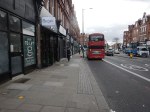
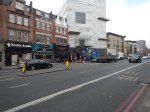
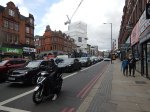
This morning, I walked down Finchley Road from the bus stop at Finchley Road and Frognal station to the Finchley Road coach stop.
I took these pictures as I walked.
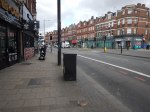
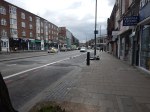
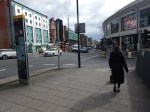
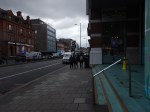
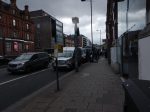
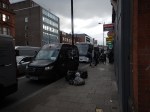
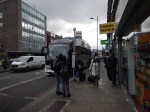
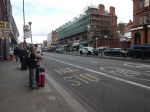
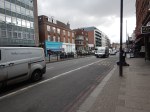
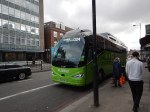
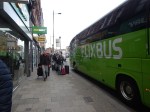
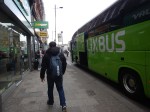
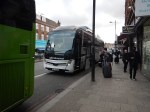
Note.
- I’d arrived on a nearly-new Wrightbus electric bus on route 113 from Edgware station.
- The walk was downhill and fairly easy.
- I crossed Finchley Road using a light-controlled pedestrian crossing.
- The pavement by the coach stop was rather strewn with litter.
- London buses seemed to be stopped just to the North of the coach stop.
The coach stop wasn’t too crowded despite five or six coaches stopping, whilst I was there.
Moorgate Is Getting A Light-Controlled Crossing
Whilst, the building of 101 Moorgate was ongoing, crossing Moorgate has been a bit of a nightmare.
But now, as this picture shows a light-controlled crossing is being installed.
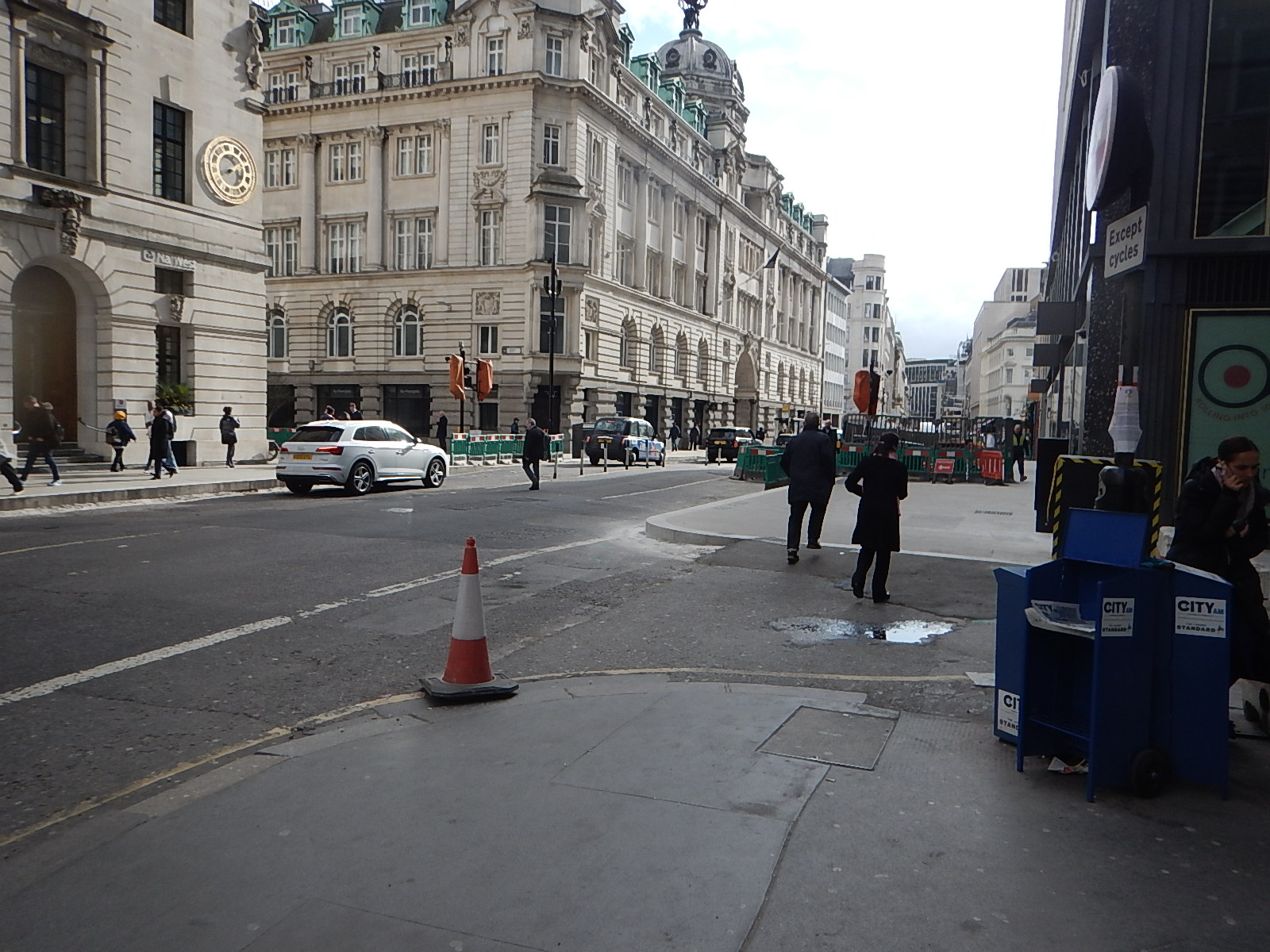
The gap in the building behind the traffic lights on the far side of Moorgate leads through to Finsbury Square.
This Google Map shows the City of London between Moorgate and Liverpool Street stations.
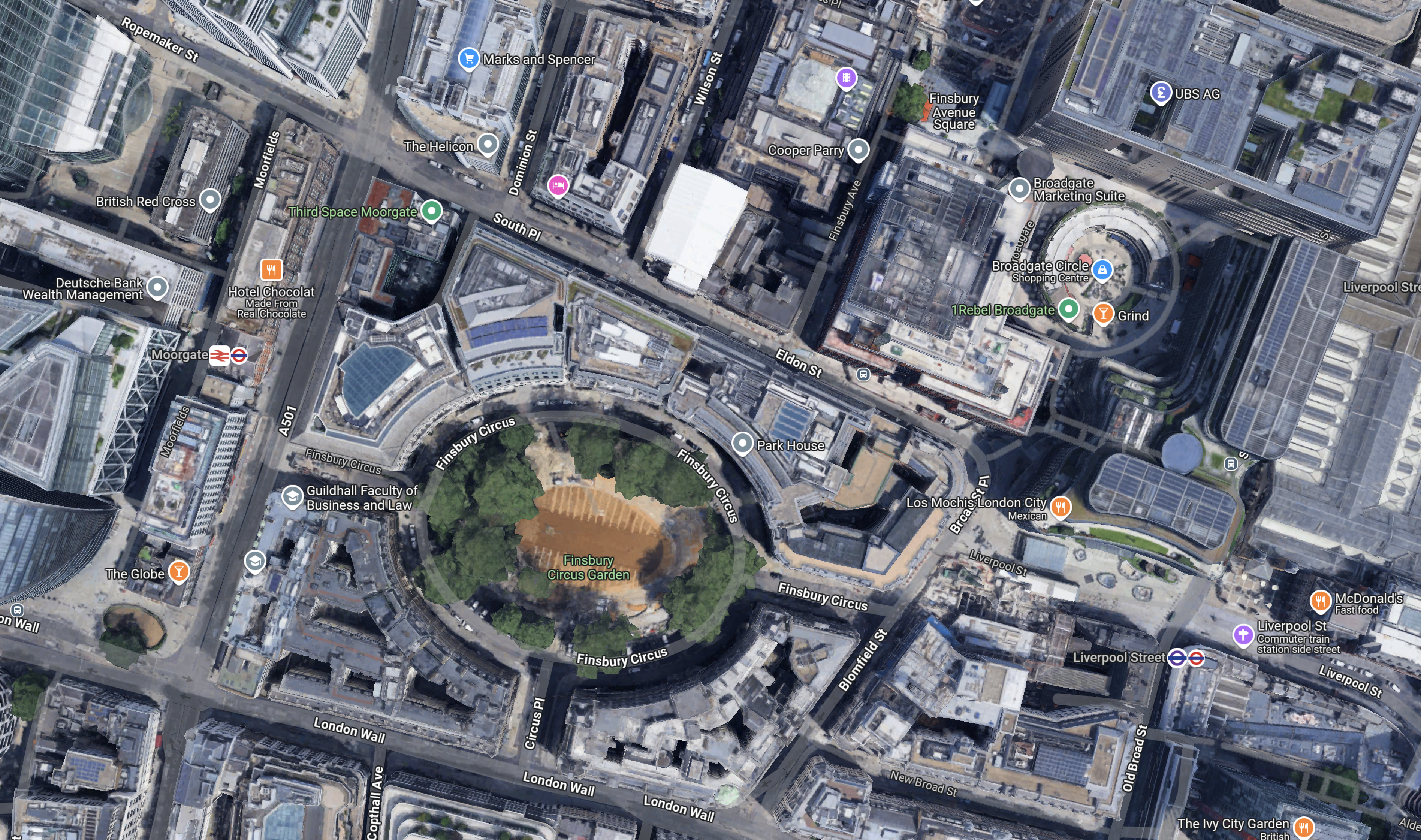
Note.
- Finsbury Square Gardens is in the centre of the map.
- Moorgate station is to the West of the gardens with Moorgate and its North-South buses in between.
- There is a Marks and Spencer department store on Moorgate to the North of the gardens.
- The shops and offices of Broadgate and Liverpool Street station are to the East of the gardens.
Especially, when it is good weather, there is a pleasant East-West walking route across the map.
 The Anonymous Widower