Cleethorpes Station – 16th September 2020
On Wednesday, I took a trip on the South Humberside Main Line from Doncaster to Cleethorpes and back.
Cleethorpes station is a terminal station on the beach, with cafes not far away.



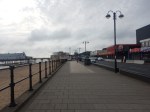

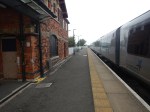
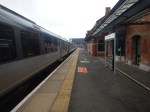
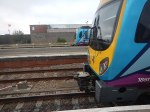
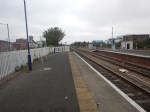
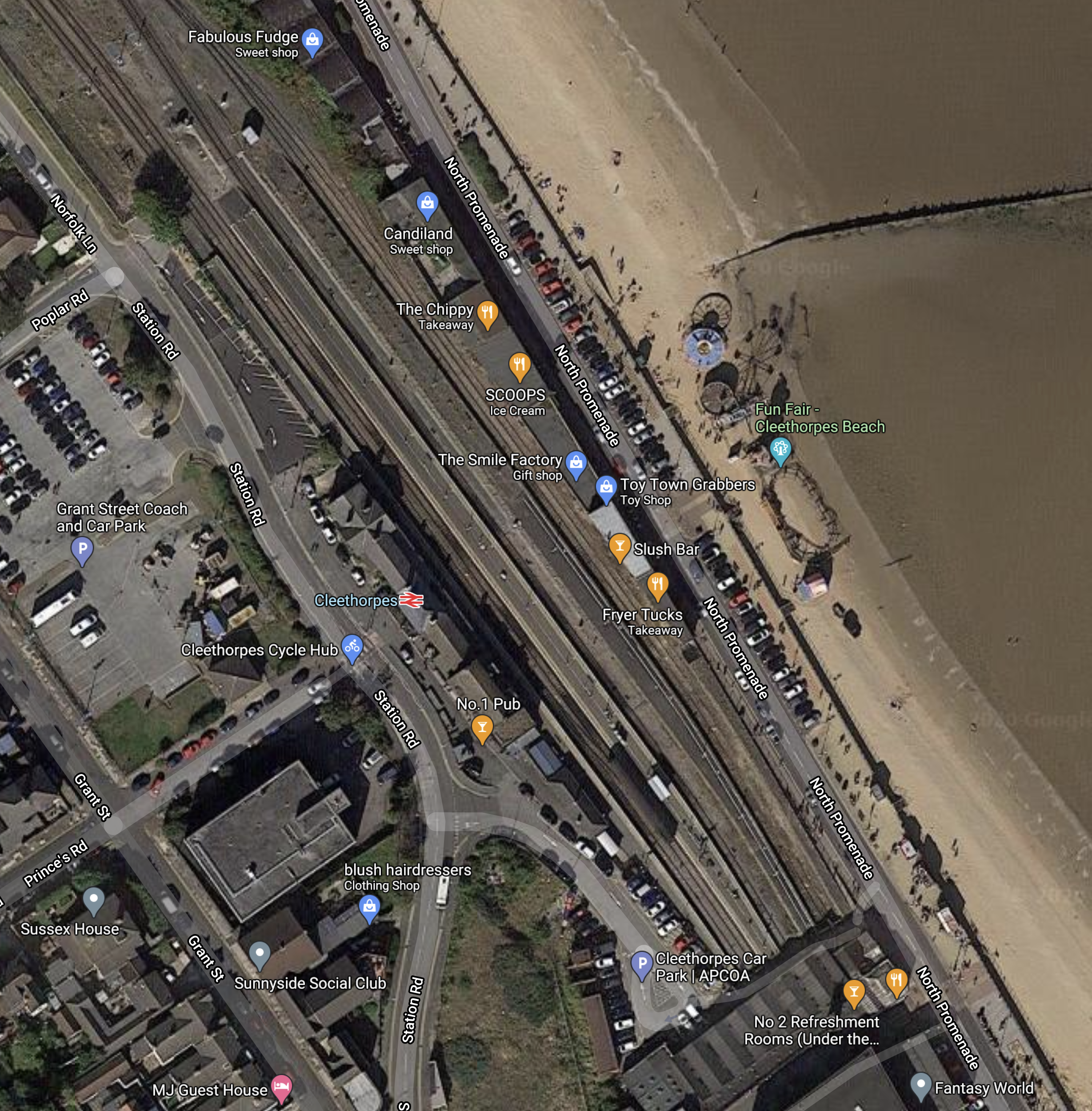
This Google Map shows the station and its position on the sea-front and the beach.
The station organisation was a bit shambolic at present, probably more to do with COVID-19 than anything else, but the station and the train services could be developed into something much better, when the good times return, as they surely will.
Improving The Station Facilities
The original station building is Grade II Listed and although it is only only a three-platform station, there used to be more platforms.
Five platforms or even six would be possible, if there were to be a need.
But as the station has wide platforms, is fully step-free and has most facilities passengers need, most of the improvements would involve restoring the original station building for a productive use.
The Current Train Service
The main train service is an hourly TransPennine Express service between Cleethorpes and Manchester Airport stations via Grimsby Town, Scunthorpe, Doncaster, Sheffield and Manchester Piccadilly.
The trains are Class 185 trains, which are modern diesel multiple units, which entered service in 2006.
There is also a two-hourly service along the Barton Line to Barton-upon-Humber station.
It should be noted that all services to and from Cleethorpes, call at Grimsby Town station.
Could The TransPennine Service Be Run By Battery Electric Trains?
The route between Cleethorpes and Manchester Airport can be split into the following legs.
- Cleethorpes and Grimsby Town – Not Electrified – 3,25 miles – 8 minutes
- Grimsby Town and Habrough – Not Electrified – 8 miles – 12 minutes
- Habrough and Doncaster – Not Electrified – 41 miles – 56 minutes
- Doncaster and Sheffield – Not Electrified – 19 miles – 29 minutes
- Sheffield and Stockport – Not Electrified – 37 miles – 41 minutes
- Stockport and Manchester Piccadilly – Electrified – 6 miles – 10 minutes
- Manchester Piccadilly and Manchester Airport – Electrified – 11 miles – 12 minutes
Note.
- At the Manchester end of the route, trains are connected to the electrification for at least 44 minutes.
- The longest non-electrified leg is the 52 miles between Cleethorpes and Doncaster stations.
- Doncaster is a fully-electrified station.
This infographic shows the specification of a Hitachi Regional Battery Train.

TransPennine Express has a fleet of nineteen Class 802 trains, which can have their diesel engines replaced with battery packs to have a train with the following performance.
- 125 mph operating speed, where electrification exists.
- 56 mile range at up to 100 mph on battery power.
- 15 minute battery charge time.
- Regenerative braking to battery.
- They are a true zero-carbon train.
What infrastructure would be needed, so they could travel between Cleethorpes and Manchester Airport stations?
- If between Cleethorpes and Habrough stations were to be electrified, this would give at least 20 minutes of charging time, plus the time taken to turn the train at Cleethorpes. This would surely mean that a train would leave for Manchester, with a full load of electricity on board and sufficient range to get to Doncaster and full electrification.
- If between Doncaster and Sheffield were to be electrified, this would give at least 25 minutes of charging time, which would be enough time to fully-charge the batteries, so that Grimsby Town in the East or Stockport in the West could be reached.
I suspect that Doncaster and Sheffield could be an early candidate for electrification for other reasons, like the extension of the Sheffield tram-train from Rotherham to Doncaster.
Could The Cleethorpes And Barton-on-Humber Service Be Run By Battery Electric Trains?
Cleethorpes And Barton-on-Humber stations are just 23 miles apart.
This is probably a short enough route to be handled on and out and back basis, with charging at one end by a battery electric train. Vivarail are claiming a sixty mile range for their battery electric Class 230 trains on this page of their web site.
If between Cleethorpes and Grimsby Town stations were to be electrified, this would mean that a range of only forty miles would be needed and the batteries would be charged by the electrification.
A full hourly service, which is surely needed, would need just two trains for the service and probably a spare.
Cleethorpes And London King’s Cross Via Grimsby Town, Market Rasen, Lincoln Central And Newark North Gate
The Wikipedia entry for Cleethorpes station has references to this service.
This is the historical perspective.
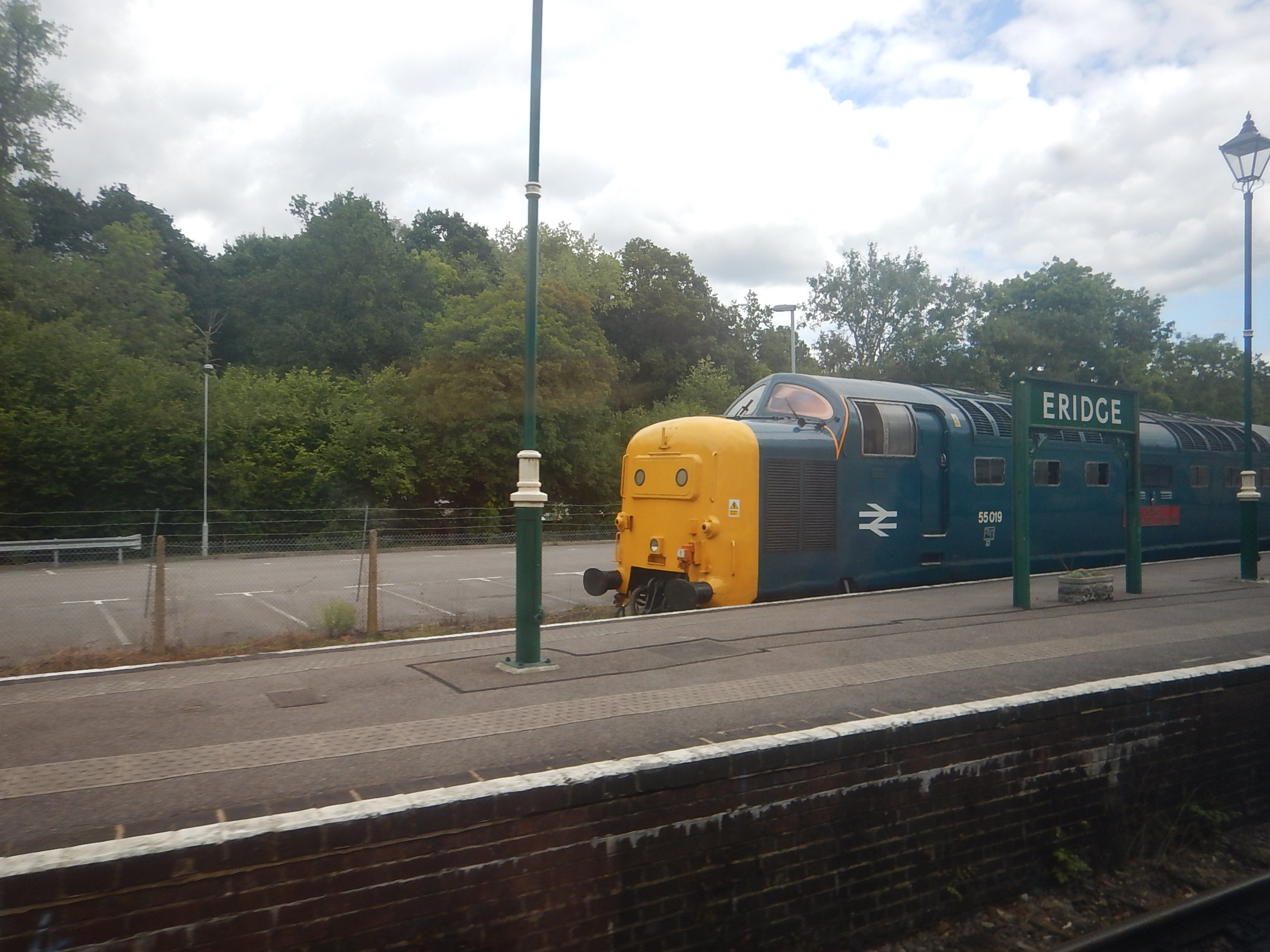
In the 1970s Cleethorpes had a twice daily return service to London King’s Cross, typically hauled by a Class 55 Deltic.
That must have been an impressive sight.
And this was National Express East Coast’s plan.
In August 2007, after National Express East Coast was awarded the InterCity East Coast franchise, it proposed to start services between Lincoln and London King’s Cross from December 2010 with one morning service and one evening service extending from Lincoln to Cleethorpes giving Cleethorpes a link to London and calling at Grimsby Town and Market Rasen. These services were to be operated using the Class 180s but was never introduced. These services were scrapped when East Coast took over the franchise.
It came to nothing, but LNER have been running up to five trains per day (tpd) between London King’s Cross and Lincoln.
I will split the route into legs.
- London King’s Cross and Newark North Gate- Electrified – 120 miles
- Newark North Gate and Lincoln Central – Not Electrified – 16,5 miles
- Lincoln Central and Market Rasen – Not Electrified – 15 miles
- Market Rasen and Habrough – Not Electrified – 21 miles
- Habrough and Grimsby Town – Not Electrified – 8 miles
- Grimsby Town and Cleethorpes – Not Electrified – 3.25 miles
Note that a round trip between Newark North Gate and Lincoln Central is thirty-three miles.
This means it would be possible for one of LNER’s Class 800 trains, that had been fitted with a battery pack and converted into one of Hitachi’s Regional Battery trains, would be able to run a London King’s Cross and Lincoln Central service without using a drop of diesel or needing a charge at Lincoln Central station.
Would it be possible to extend this service to Grimsby Town on battery power?
I suggested earlier that between Cleethorpes and Habrough should be electrified.
As Newark North Gate and Habrough stations are 52.5 miles apart, it would be rather tight for a battery electric train to cover the whole route without an extra charge somewhere.
Possible solutions could be.
- Fit a bigger battery in the trains.
- Extend the electrification at Newark North Gate station.
- Extend the electrification at Habrough station.
I;m sure that there is a solution, that is easy to install.
Conclusion
If between Habrough and Cleethorpes station were to be electrified, these services could be run by battery electric trains.
- Cleethorpes and Manchester Piccadilly
- Cleethorpes and Barton-on-Humber
- Cleethorpes and London King’s Cross
Note.
- The Manchester and London services would be run by Hitachi Regional Battery Trains converted from Class 800 and Class 802 trains.
- The Barton service could be run by a Vivarail Class 230 train or similar.
The first two services would be hourly, with the London service perhaps 1 or 2 tpd.
Cleethorpes would be well and truly on the rail network.
Hull Issues New Plea For Electrification
The title of this post, is the same as that of this article on Rail Magazine.
This is the introductory paragraph.
Residents and businesses in Hull are being urged to support electrification of the railway to Selby and Sheffield.
This paragraph is about the difficulty of electrifying the route.
“Unlike elsewhere on the trans-Pennine routes, work here can start straightaway and would be a quick win. Our plans involve few extra land purchases, no tunnel widening, and no re-routing,” said Daren Hale, Hull City Council and Hull’s representative on the Transport for the North board.
Services to Hull station are as follows.
- Hull Trains – London Kings Cross and Hull via Selby, Howden and Brough.
- Hull Trains – Beverley and Hull via Cuttingham
- LNER – London Kings Cross and Hull via Selby and Brough
- Northern Trains – Halifax and Hull via Bradford Interchange, New Pudsey, Bramley, Leeds, Cross Gates, Garforth, East Garforth, Micklefield, South Milford, Selby and Brough
- Northern Trains – Sheffield and Hull via Meadowhall, Rotherham Central, Swinton, Mexborough, Conisbrough, Doncaster, Kirk Sandall, Hatfield & Stainforth, Thorne North, Goole, Saltmarshe, Gilberdyke, Broomfleet, Brough, Ferriby and Hessle,
- Northern Trains – Bridlington and Hull via Nafferton, Driffield, Hutton Cranswick, Arram, Beverley and Cottingham.
- Northern Trains – Scarborough and Hull via Seamer, Filey, Hunmanby, Bempton, Bridlington, Nafferton, Driffield, Hutton Cranswick, Arram, Beverley and Cottingham.
- Northern Trains – York and Hull via Selby, Howden, Gilberdyke and Brough.
- TransPennine Express – Manchester Piccadilly and Hull via Stalybridge, Huddersfield, Leeds, Selby, Brough
Note.
- Some services are joined back-to-back with a reverse at Hull station.
- I have simplified some of the lists of intermediate stations.
- Services run by Hull Trains, LNER or TransPennine Express use bi-mode Class 800 or Class 802 trains.
- All routes to Hull station and the platforms are not electrified.
Trains approach Hull by three routes.
- Selby and Brough
- Goole and Brough
- Beverley and Cottingham
Could these three routes be electrified?
I have just flown my helicopter along all of them.
I’ve also had a lift in the cab of a Class 185 train between Hull and Leeds, courtesy of Don Coffey.
Hull And Selby via Brough
There is the following infrastructure.
- Several major road overbridges, which all seem to have been built with clearance for overhead wires.
- There are also some lower stone arch bridges, which may need to be given increased clearance.
- No tunnels
- The historic Selby Swing Bridge.
- Four farm crossings.
- Fourteen level crossings.
Hull And Goole via Brough
There is the following infrastructure.
- Several major road overbridges, which all seem to have been built with clearance for overhead wires.
- No tunnels
- A swing bridge over the River Ouse.
- A couple of farm crossings
- Six level crossings
Hull And Beverley via Cottingham
There is the following infrastructure.
- A couple of major road overbridges, which all seem to have been built with clearance for overhead wires.
- No tunnels
- A couple of farm crossings
- Six level crossings
All of the routes would appear to be.
- At least double track.
- Not in deep cuttings.
- Mainly in open countryside.
- Built with lots of level crossings
I feel that compared to some routes, they would be easy to electrify, but could cause a lot of disruption, whilst the level crossings and the two swing bridges were electrified.
Speeding Up Services To And From Hull
What Are The Desired Timings?
The Rail Magazine article says this about the desired timings.
Should the plans be approved, it is expected that Hull-Leeds journey times would be cut from 57 minutes to 38, while Hull-Sheffield would drop from 86 minutes to 50 minutes.
These timings are in line with those given in this report on the Transport for the North web site, which is entitled At A Glance – Northern Powerhouse Rail,
The frequency of both routes is given in the report as two trains per hour (tph)
The Performance Of An Electric Class 802 Train
As Hull Trains, LNER and TransPennine Express will be using these trains or similar to serve Hull, I will use these trains for my calculations.
The maximum speed of a Class 802 train is 125 mph or 140 mph with digital in-cab signalling.
This page on the Eversholt Rail web site, has a data sheet for a Class 802 train.
The data sheet shows the following for a five-car Class 802 train.
It can accelerate to 100 mph and then decelerate to a stop in 200 seconds in electric mode.
The time to 125 mph and back is 350 seconds.
Thoughts On Hull And Leeds
Consider.
- The Hull and Leeds route is 52 miles long, is timed for a 75 mph train and has an average speed of 55 mph
- There are three intermediate stops for fast services, which means that in a Hull and Leeds journey, there are four accelerate-decelerate cycles.
- A 38 minute journey between Hull and Leeds would be an average speed of 82 mph
- A train travelling at 100 mph would take 31 minutes to go between Hull and Leeds.
- A train travelling at 125 mph would take 25 minutes to go between Hull and Leeds.
I also have one question.
What is the speed limit on the Selby Swing Bridge?
I have just been told it’s 25 mph. As it is close to Selby station, it could probably be considered that the stop at Selby is a little bit longer.
These could be rough timings.
- A train travelling at 100 mph would take 31 minutes to go between Hull and Leeds plus what it takes for the four stops. at 200 seconds a stop, which adds up to 43 minutes.
- A train travelling at 125 mph would take 25 minutes to go between Hull and Leeds plus what it takes for the four stops. at 350 seconds a stop, which adds up to 48 minutes.
Note how the longer stopping time of the faster train slows the service.
I think it would be possible to attain the required 38 minute journey, running at 100 mph.
Thoughts On Hull And Sheffield
Consider.
- The Hull and Sheffield route is 61 miles long, is timed for a 90 mph train and has an average speed of 43 mph
- There are five intermediate stops, which means that in a Hull and Sheffield journey, there are six accelerate-decelerate cycles.
- A 50 minute journey between Hull and Leeds would be an average speed of 73 mph.
- A train travelling at 100 mph would take 36 minutes to go between Hull and Sheffield.
- A train travelling at 125 mph would take 29 minutes to go between Hull and Sheffield.
I also have one question.
What is the speed limit on the swing bridge over the River Ouse?
As there is no nearby station, I suspect it counts as another stop, if it only has a 25 mph limit.
These could be rough timings.
- A train travelling at 100 mph would take 36 minutes to go between Hull and Sheffield plus what it takes for the six stops. at 200 seconds a stop, which adds up to 56 minutes.
- A train travelling at 125 mph would take 29 minutes to go between Hull and Sheffield plus what it takes for the six stops. at 350 seconds a stop, which adds up to 64 minutes.
Note how the longer stopping time of the faster train slows the service.
I think it would be possible to attain the required 50 minute journey, running at 100 mph.
Conclusions From My Rough Timings
Looking at my rough timings, I can conclude the following.
- The trains will have to have the ability to make a station stop in a very short time. Trains using electric traction are faster at station stops.
- The trains will need to cruise at a minimum of 100 mph on both routes.
- The operating speed of both routes must be at least 100 mph, with perhaps 125 mph allowed in places.
- I feel the Hull and Leeds route is the more difficult.
I also think, that having a line running at 100 mph or over, with the large number of level crossings, there are at present, would not be a good idea.
What Does Hull Want?
Hull wants what Northern Powerhouse Rail is promising.
- Two tph between Hull and Leeds in 38 minutes and Hull and Sheffield in 50 minutes.
They’d probably also like faster electric services between Hull and Bridlington, London Kings Cross, Manchester, Scarborough and York.
When Do They Want It?
They want it now!
Is There An Alternative Solution, That Can Be Delivered Early?
This may seem to be the impossible, as electrifying between Hull and Leeds and Hull and Sheffield is not an instant project, although full electrification could be an ultimate objective.
Consider.
- Hull and Brough are 10.5 miles apart.
- Brough and Leeds are 41 miles apart.
- Brough and Doncaster are 30 miles apart and Doncaster and Sheffield are 20 miles apart.
- Brough and Temple Hirst Junction are 26 miles apart.
- Brough and York are 42 miles apart.
- Hull and Beverley are 8 miles apart.
- Beverley and Bridlington are 23 miles apart.
- Beverley and Seamer are 42 miles apart.
Note that Doncaster, Leeds and Temple Hirst Junction are all electrified.
Hitachi’s Regional Battery Train
Hitachi have just launched the Regional Battery Train, which is described in this Hitachi infograpic.
It has a range of 56 miles and an operating speed of 100 mph.
Class 800 and Class 802 trains could be converted into Regional Battery Trains.
- The three diesel engines would be exchanged for battery packs.
- The trains would still be capable of 125 mph on fully-electrified routes like the East Coast Main Line.
- They would be capable of 100 mph on routes like the 100 mph routes from Hull.
- The trains would have full regenerative braking to batteries, which saves energy.
- Below 125 mph, their acceleration and deceleration on battery power would probably be the same as when using electrification. It could even be better due to the simplicity and low impedance of batteries.
But they would need some means of charging the batteries at Hull.
A Start To Electrification
If the ultimate aim is to electrify all the lines, then why not start by electrifying.
- Hull station.
- Hull and Brough
- Hull and Beverley
It would only be 18.5 miles of electrification and it doesn’t go anywhere near the swing bridges or about six level crossings.
Battery Electric Services From Hull
I will now look at how the various services could operate.
Note in the following.
- When I say Regional Battery Train, I mean Hitachi’s proposed train or any other battery electric train with a similar performance.
- I have tried to arrange all power changeovers in a station.
- Pantograph operation can happen at line-speed or when the train is stationary.
I have assumed a range of 56 miles on a full battery and an operating speed of 100 mph on a track that allows it.
Hull And London Kings Cross
The legs of the service are as follows.
- Hull and Brough – 10.5 miles – Electrified
- Brough and Temple Hirst Junction – 26 miles – Not Electrified
- Temple Hirst Junction and London Kings Cross – 169 miles – Electrified
Note.
- Hull and Brough takes about 11 minutes, so added to the time spent in Hull station, this must be enough time to fully-charge the batteries.
- Regional Battery Trains will be able to do 56 miles on a full battery so 26 miles should be easy.
- One changeover between power sources will be done in Brough station.
- The other changeover will be done at line speed at Temple Hirst Junction, as it is now!
Hull Trains and LNER would be able to offer an all-electric service to London.
A few minutes might be saved, but they would be small compared to time savings, that will be made because of the introduction of full ERTMS in-cab signalling South of Doncaster, which will allow 140 mph running.
Hull And Leeds
The legs of the service are as follows.
- Hull and Brough – 10.5 miles – Electrified
- Brough and Leeds – 41 miles – Not Electrified.
Note.
- Hull and Brough takes about 11 minutes, so added to the time spent in Hull station, this must be enough time to fully-charge the batteries.
- Regional Battery Trains will be able to do 56 miles on a full battery so 41 miles should be easy.
- One changeover between power sources will be done in Brough station, with the other in Leeds station.
If Leeds and Huddersfield were to be electrified, TransPennine Express will be able to run an all-electric service between Manchester and Hull, using battery power in the gaps.
Hull And Sheffield
The legs of the service are as follows.
- Hull and Brough – 10.5 miles – Electrified
- Brough and Doncaster – 30 miles – Not Electrified
- Doncaster and Sheffield – 20 miles – Not Electrified
Note.
- Hull and Brough takes about 11 minutes, so added to the time spent in Hull station, this must be enough time to fully-charge the battery.
- Regional Battery Trains will be able to do 56 miles on a full battery so 30 miles should be easy.
- Trains would charge using the electrification at Doncaster.
- Doncaster and Sheffield both ways should be possible after a full charge at Doncaster station.
- One changeover between power sources will be done in Brough station, with the others in Doncaster station.
An easier alternative for the Doncaster and Sheffield part of the route, might be to electrify between the two stations.
Hull And York
The legs of the service are as follows.
- Hull and Brough – 10.5 miles – Electrified
- Brough and York- 42 miles – Not electrified
Note.
- Hull and Brough takes about 11 minutes, so added to the time spent in Hull station, this must be enough time to fully-charge the batteries.
- Regional Battery Trains will be able to do 56 miles on a full battery so 42 miles should be easy.
- One changeover between power sources will be done in Brough station, with the other in York station.
- Trains would be fully charged for the return in York station.
This journey will also be effected by the York to Church Fenton Improvement Scheme, which is described on this page on the Network Rail web site. According to the web page this involves.
- Replace old track, sleepers, and ballast (The stones which support the track)
- Install new signalling gantries, lights, and cabling
- Fully electrify the route from York to Church Fenton – extending the already electrified railway from York.
There will be another five miles of electrification., which will mean the legs of the Hull and York service will be as follows.
- Hull and Brough – 10.5 miles – Electrified
- Brough and Church Fenton – 31.5 miles – Not Electrified
- Church Fenton and York – 10.5 miles – Electrified
It is a classic route for a battery electric train.
Note.
- Church Fenton and York takes about 19 minutes, so added to the time spent in York station, this must be enough time to fully-charge the batteries.
- There will be a changeover between power sources in Church Fenton station.
This appears to me to be a very sensible addition to the electrification.
If you look at a Leeds and York, after the electrification it will have two legs.
- Leeds and Church Fenton – 13 miles – Not Electrified
- Church Fenton and York – 10.5 miles – Electrified
It is another classic route for a battery electric train.
Hull And Bridlington
The legs of the service are as follows.
- Hull and Beverley – 13 miles – Electrified
- Beverley and Bridlington – 23 miles – Not Electrified
Note.
- Hull and Beverley takes about 13 minutes, so added to the time spent in Hull station, this must be enough time to fully-charge the batteries.
- Regional Battery Trains will be able to do 56 miles on a full battery so 46 miles to Bridlington and back to Beverley, should be possible.
- The changeovers between power sources would be in Beverley station.
If necessary, there is a bay platform at Bridlington, that could be fitted with simple electrification to charge the trains before returning.
Hull And Scarborough
The legs of the service are as follows.
- Hull and Beverley – 13 miles – Electrified
- Beverley and Seamer- 42 miles – Not Electrified
- Seamer and Scarborough – 3 miles – Not Electrified
Note.
- Hull and Beverley takes about 13 minutes, so added to the time spent in Hull station, this must be enough time to fully-charge the batteries.
- Regional Battery Trains will be able to do 56 miles on a full battery so 45 miles to Scarborough should be easy.
- The changeovers between power sources would be in Beverley station.
There would need to be charging at Scarborough, so why not electrify between Scarborough and Seamer?
- Power changeover would be in Seamer station.
- The electrification could also charge battery electric trains running between York and Scarborough.
- Seamer and York are 39 miles apart.
- All Northern Trains and TransPennine Express services appear to stop in Seamer station.
This could be three very useful miles of electrification.
Could This Plan Based On Battery Trains Be Delivered Early?
The project could be divided into sub-projects.
Necessary Electrification
Only these double-track routes would need to electrified.
- Hull and Brough
- Hull and Beverley
- Seamer and Scarborough
- Doncaster and Sheffield might be sensible but optional.
This also install electrification at Hull and Scarborough stations to charge terminating trains.
In total it would be under twenty-five double-track miles of electrification.
Note.
- There are no swing bridges on the routes to be electrified.
- There are no tunnels
- Many of the overbridges appear to be modern with adequate clearance for electrification.
- I don’t suspect that providing adequate power will be difficult.
- Hull and Scarborough are larger stations and I believe a full service can be provided, whilst the stations are being electrified.
It would not be a large and complicated electrification project.
Conversion Of Class 800 And Class 802 Trains To Regional Battery Trains
Whilst the electrification was being installed, the existing Class 800 and Class 802 trains needed by Hull Trains, LNER and TransPennine Express could be converted to Regional Battery Trains, by the replacement of some or all of the diesel engines with battery power-packs.
I suspect LNER or GWR could be the lead customer for Hitachi’s proposed conversion of existing trains.
- Both train companies have routes, where these trains could be deployed without any electrification or charging systems. Think London Kings Cross and Harrogate for LNER and Paddington and Oxford for GWR.
- Both train companies have large fleets of five-car trains, that would be suitable for conversion.
- Both train companies have lots of experience with Hitachi’s trains.
It should be noted that GWR, Hull Trains and TransPennine Express are all part of the same company.
What About Northern Trains?
Northern Trains will need some battery electric trains, if this plan goes ahead, to run routes like.
- Hull and Bridlington – 46 miles
- Hull and Leeds – 41 miles
- Hull and Scarborough – 42 miles
- Hull and Sheffield – 40 miles
- Hull and York – 42 miles
- Scarborough and York – 31.5 miles
- The distances are the lengths of the route without electrification.
I suspect they will need a train with this specification.
- Four cars
- Ability to use 25 KVAC overhead electrification.
- Battery range of perhaps 50 miles.
- 100 mph operating speed.
There are already some possibilities.
- CAF are talking about a four-car battery electric version of the Class 331 train.
- Hitachi have mentioned a battery electric Class 385 train.
- Porterbrook have talked about converting Class 350 trains to battery electric operation.
- Bombardier have talked about battery electric Aventras.
There are also numerous four-car electric trains, that are coming off lease that could be converted to battery electric operation.
When Could The Project Be Completed?
There are three parts to the project.
- Under twenty-five double-track miles of electrification.
- Adding batteries to Class 800 and Class 802 trains.
- Battery electric trains for Northern.
As the sub-projects can be progressed independently, I can see the project being completely by the end of 2024.
Across The Pennines In A Regional Battery Train
By providing the ability to run Class 802 trains on battery power to Hull and Scarborough, the ability to run Regional Battery Trains from Liverpool in the West to Hull, Middlesbrough and Scarborough in the East under electric power, could become possible.
Looking at Liverpool and Scarborough, there are these legs.
- Liverpool Lime Street and Manchester Victoria – 32 miles – Electrified
- Manchester Victoria and Stalybridge – 8 miles – Not Electrified
- Stalybridge and Huddersfield – 18 miles – Not Electrified
- Huddersfield and Leeds – 17 miles – Not Electrified
- Leeds and York – 26 miles – Not Electrified
- York and Scarborough – 42 miles – Not Electrified
Note.
- East of Manchester Victoria, there is electrification in Leeds and York stations, which could charge the train fully if it were in the station for perhaps ten minutes.
- Currently, stops at Leeds and York are around 4-5 minutes.
- Manchester Victoria and Stalybridge is being electrified.
- In this post, I have suggested that between Seamer and Scarborough should be electrified to charge the trains.
- I have also noted that between Church Fenton and York is being fully electrified.
This could mean power across the Pennines between Liverpool and Scarborough could be as follows.
- Liverpool Lime Street and Manchester Victoria – 32 miles – Electrification Power and Charging Battery
- Manchester Victoria and Stalybridge – 8 miles – Electrification Power and Charging Battery
- Stalybridge and Huddersfield – 18 miles – Battery Power
- Huddersfield and Leeds – 17 miles – Battery Power
- Leeds station – Electrification Power and Charging Battery
- Leeds and Church Fenton – 13 miles – Battery Power
- Church Fenton and York – 10.5 miles – Electrification Power and Charging Battery
- York and Seamer – 39 miles – Battery Power
- Seamer and Scarborough – 3 miles – Electrification Power and Charging Battery
There are three stretches of the route, where the train will be run on battery power.
- Stalybridge and Leeds – 35 miles
- Leeds and Church Fenton – 13 miles
- York and Seamer – 39 miles
There will be charging at these locations.
- West of Stalybridge
- Through Leeds Station
- Through York Station
- East of Seamer Station
I feel it could be arranged that trains left the charging sections and stations with a full battery, which would enable the train to cover the next section on battery power.
To make things even easier, Network Rail are developing the Huddersfield And Westtown Upgrade, which will add extra tracks and eight miles of new electrification between Huddersfield and Dewsbury.
This would change the power schedule across the Pennines between Liverpool and Scarborough to this.
- Liverpool Lime Street and Manchester Victoria – 32 miles – Electrification Power and Charging Battery
- Manchester Victoria and Stalybridge – 8 miles – Electrification Power and Charging Battery
- Stalybridge and Huddersfield – 18 miles – Battery Power
- Huddersfield and Dewsbury – 8 miles – Electrification Power and Charging Battery
- Fewsbury and Leeds – 9 miles – Battery Power
- Leeds station – Electrification Power and Charging Battery
- Leeds and Church Fenton – 13 miles – Battery Power
- Church Fenton and York – 10.5 miles – Electrification Power and Charging Battery
- York and Seamer – 39 miles – Battery Power
- Seamer and Scarborough – 3 miles – Electrification Power and Charging Battery
There are now four stretches of the route, where the train will be run on battery power.
- Stalybridge and Huddersfield – 18 miles
- Dewsbury and Leeds – 9 miles
- Leeds and Church Fenton – 13 miles
- York and Seamer – 39 miles
I can envisage the electrification being extended.
But battery power on this route gives all the advantages of electric trains, with none of the costs and installation problems of electrification.
Conclusion
I believe a limited electrification of lines for a few miles from the coastal terminals at Hull and Scarborough and battery electric trains can deliver zero-carbon and much faster electric trains to the railways of Yorkshire to the East of Leeds, Sheffield and York.
If this approach is used, the electrification will be much less challenging and if skates were to be worn, the scheme could be fully-implemented in around four years.
The scheme would also deliver the following.
- Faster, all-electric TransPennine services.
- An all-electric Hull and London service.
- A substantial move towards decarbonisation of passenger train services in East Yorkshire.
It is also a scheme, that could be extended South into Lincolnshire, across the Pennines to Lancashire and North to Teesside and Tyneside.
Beeching Reversal – To Reinstate The Keswick To Penrith Railway
September 10th – This Beeching Reversal project appears to have been rejected.
Thoughts On The Design Of The Route
Consider.
- Keswick and Penrith are around 17.3 miles apart by road.
- The rail distance should be less than 20 miles.
- There could be perhaps six intermediate stations.
- A battery electric train typically has a range of 55-65 miles.
- A quiet battery electric train would be ideal for this route.
I believe that a battery electric train could handle this route.
- Charging would be mainly in Penrith station, using the existing 25 KVAC overhead electrification in Platform 3.
- A charging station would be provided in Keswick station to be safe.
A battery electric train could go between the two stations, recharge the battery and be ready to return in under an hour.
The route would be single track, except for a short double track station in the middle to allow trains to pass.
The route would not be electrified.
All stations could be single track, except for the passing station.
Two trains would be needed to work an hourly service.
Four trains would be needed to work an two trains per hour (tph) service.
Could the track could be designed to these criteria?
- No level crossings.
- Gentle curves and gradients
- 80 mph operating speed.
I suspect modern computer technology, which was not available to the Victorians, would ease the design of an efficient track.
- If a highly-efficient track could be created, it might be possible for a train to do a round trip from Penrith to Keswick, within an hour.
- This would mean that one train could provide the hourly service.
- Charging would only be at Penrith, using existing electrification.
- The passing loop would not be built, but provision would be made to add it later, if the frequency were to be increased.
We could be seeing several of these highly-efficient branch lines run by 100 mph battery-electric trains, that are charged on existing electrified main lines.
The Effect Of High Speed Two
Consider.
- Currently, there is a roughly hourly service in both directions on the West Coast Main Line at Penrith station.
- High Speed Two will only provide an hourly service between Birmingham Curzon Street and Edinburgh or Glasgow via Wigan North Western, Preston, Lancaster and Carlisle.
- Carlisle will have three tph on High Speed Two, between England and Scotland.
- Carlisle will have scenic services to Edinburgh, Glasgow, Leeds and Newcastle.
- Services between Carlisle and Penrith take thirteen minutes.
But most importantly, High Speed Two could bring lots of extra tourists to the area.
So would it be better for the Keswick and Penrith service to terminate at Carlisle?
- Charging would now be on the West Coast Main Line.
- Trains would only make a typical two-minute stop in Penrith station.
This would probably mean that an hourly service could be provided with only one train on the branch at a time.
Conclusion
I feel the economics of this project could be transformed by using battery electric trains on this proposed route and terminating them at Carlisle.
Beeching Reversal – To Reinstate The Walkden To Bolton Line
September 10th – This Beeching Reversal project appears to have been rejected.
The project appears to be what it says in the title, in that the railway between Walkden Low Level and Bolton Great Moor Street stations would be reinstated.
This Google Map shows the area around the current Walkden station.
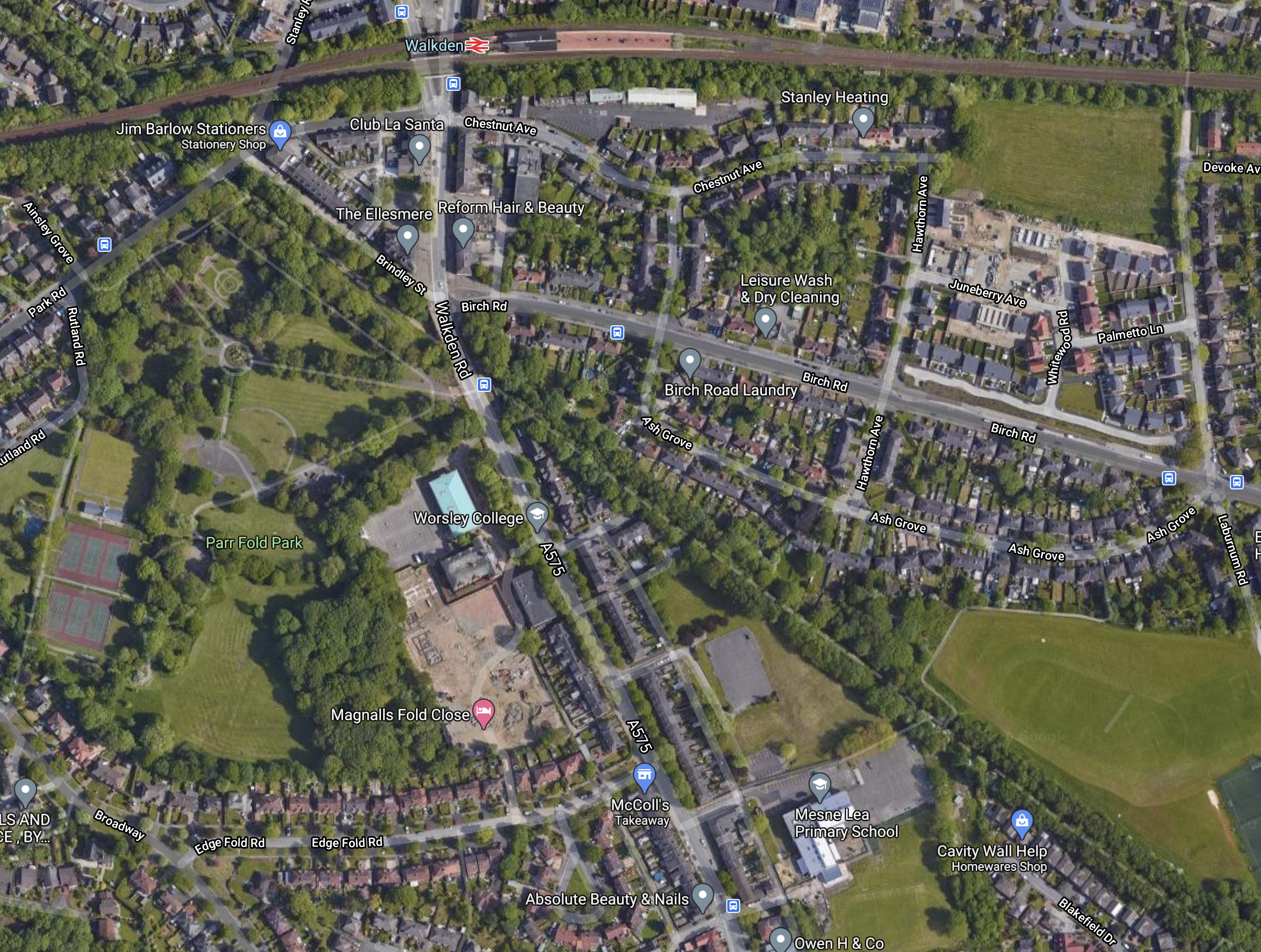
Note.
- Walkden station at the top of the map.
- The former railway between Bolton Great Moor Street and Manchester Exchange stations runs North-West and South-East across the map.
- It looks like this section of the railway is a footpath and cycleway.
Both Bolton Great Moor Street and Manchester Exchange stations have long since been closed, which means that to get between Walkden and Bolton stations, a change of train is needed.
After a quick look at the route, which involves crossing the M61 motorway, I suspect, that it would be both a tricky and expensive railway to reinstate, which probably explains why it appears to have been rejected.
Manchester Metrolink don’t seem to have any plans to use the route to extend trams to Bolton.
But All Is Not Lost!
I believe that very light rail, could be the answer.
- The first system of its kind in the UK, is the Coventry Very Light Rail, which is currently being designed and built for Coventry.
- The vehicles will be lightweight and battery-powered.
- These smaller-sized vehicles could share rights of way with pedestrians and cyclists.
The Coventry system could be running by 2024.
As the route goes past the Royal Bolton Hospital, it could be a useful route.
Electrification Plans For Line Between Fife And Clackmannanshire
The title of this post, is the same as that of this article on Rail Technology News.
This is the introductory paragraph.
The next stage of development work is due to begin for Network Rail engineers between Alloa and Longannet, which could see passenger services return between Clackmannanshire and Fife.
The article also makes these points.
- As part of the Scottish Government’s decarbonisation plan, it is hoped the former freight line will be electrified.
- Engineers will be conducting survey work and site and geological investigations.
- Three new stations are also hoped to be introduced at Clackmannan, Kincardine and Longannet.
- The work is also hoping to bring a two trains per hour (tph) passenger service between Alloa and Longannet.
There will be a lot of surveying and planning before work starts.
Existing Rail Routes And Services In The Area
These are the current routes and services in the area.
Alloa Station
Alloa station was closed in October 1968, when Harold Wilson was Prime Minister and re-opened in 2008.
Wikipedia says this about the re-opening.
Under Scottish Executive funding, the line between Stirling and Alloa was reopened to both passenger and freight traffic, with a key benefit being a reduction in congestion on the Forth Railway Bridge.
The basic train service is an hourly service to Stirling and Glasgow run by a Class 385 train.
Journey times are as follows.
- Alloa and Stirling – 9-15 minutes
- Alloa and Glasgow Queen Street – 45 minutes
Trains seem to take about twelve minutes to turnround at Alloa station.
This Google Map shows Alloa station.
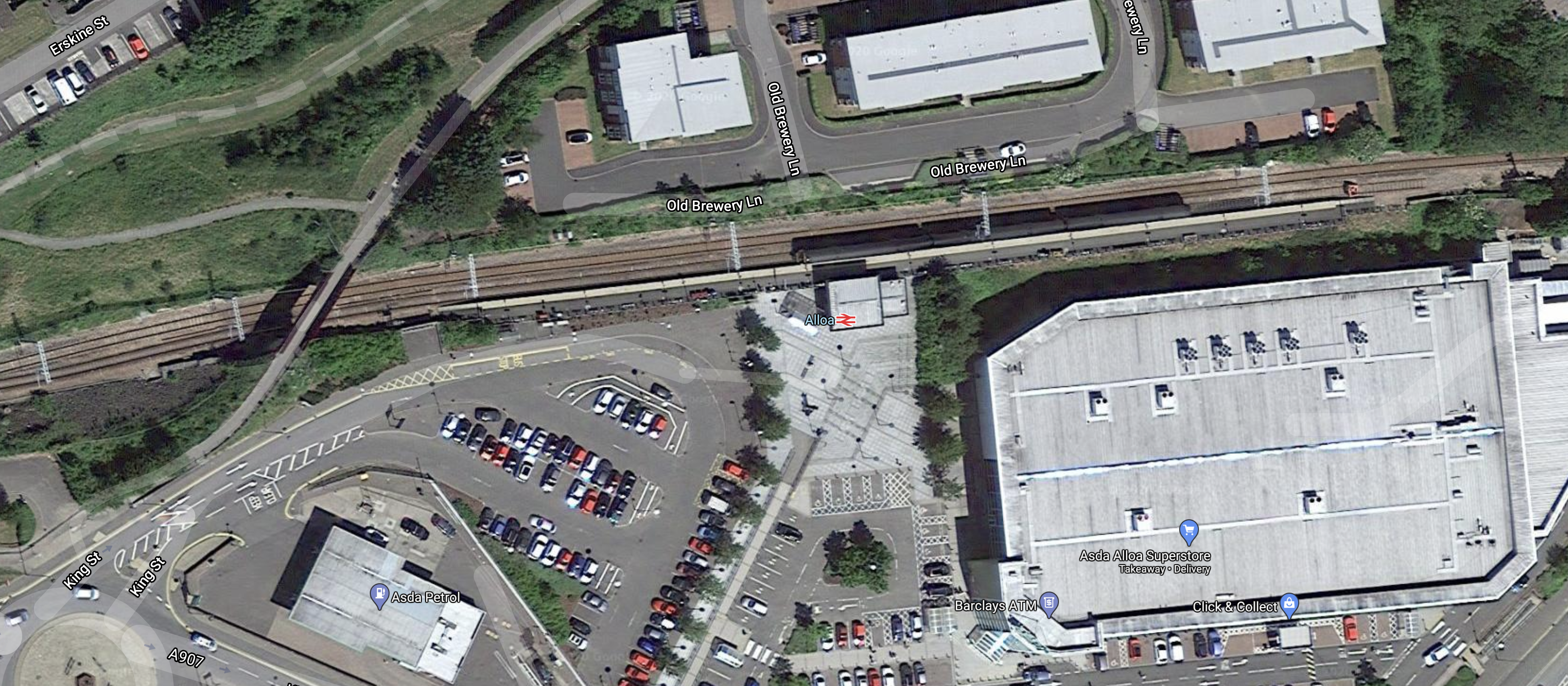
Note.
- The station currently only has one platform.
- A second line is already laid through the station and although, it is not electrified, the gantries are positioned to electrify the second track.
- The two tracks merge into one to the West of the station.
- All passenger trains currently use the Southern platform.
This picture shows the station, just before the electric train services started.
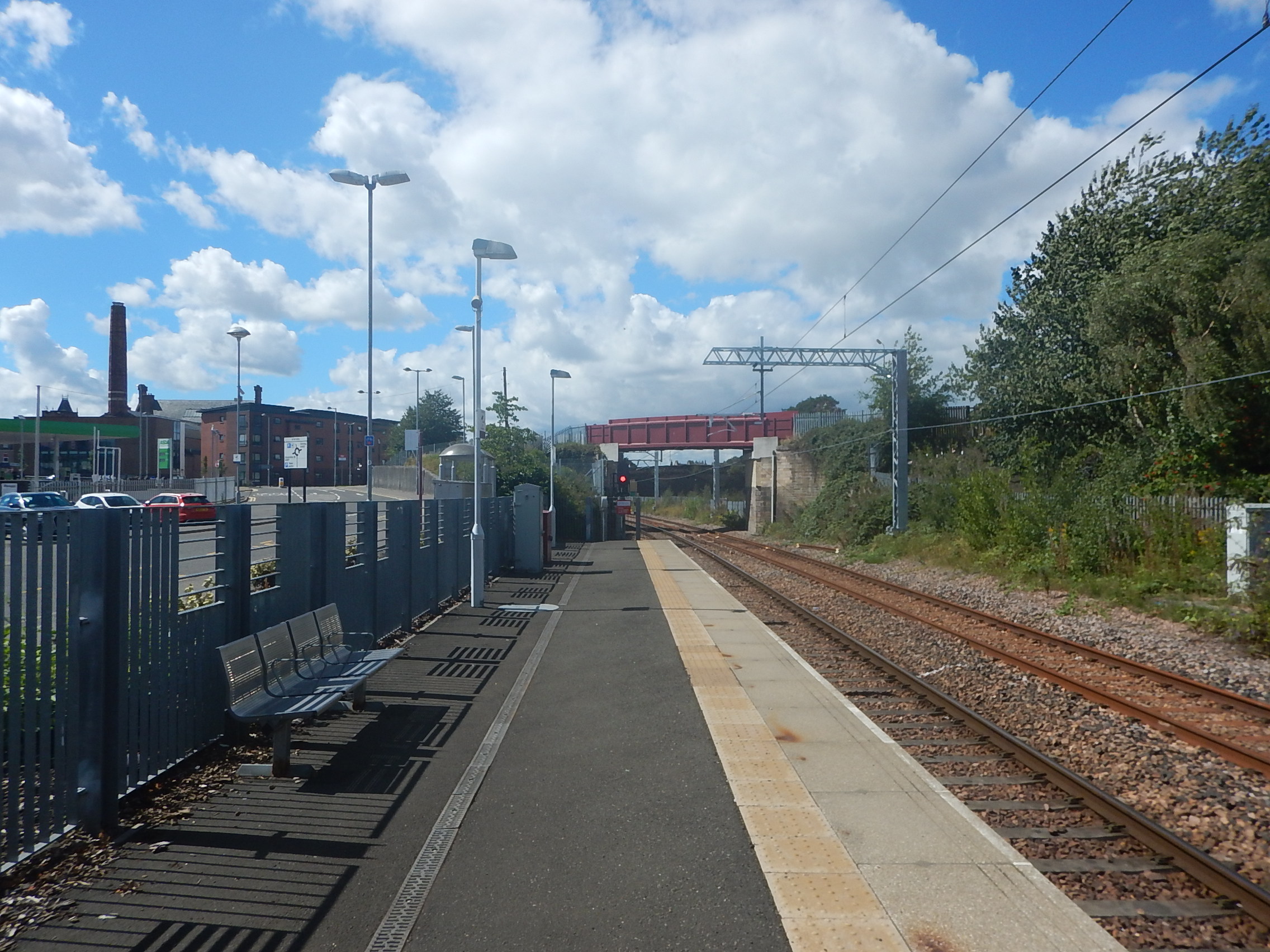
The station also must have one of the largest station shops in the UK, which is an Asda superstore.
The Kincardine Line
The Kincardine Line is the one proposed for electrification.
- It is currently, a freight-only route, that was re-opened to serve Longannet power station.
- At Alloa station, it is an extension of the route from Stirling.
- It may be connected to the new Talgo factory at Longannet, that I wrote about in A Spaniard In The Works!, as the factory will surely need electrified rail access, if any electric trains for the UK are to be built or serviced there.
- The line passes through Clackmannan, Kincardine and Longannet.
As the route used to handle long coal trains, could it handle a 200 metre long classic-compatible high speed train, that Talgo might build for High Speed Two at Longannet?
The Fife Circle Line
According to Wikipedia, the Fife Circle Line is the local service North from Edinburgh, that goes in a long loop through Fife.
This map from Wikipedia shows the stations on the Fife Circle Line.
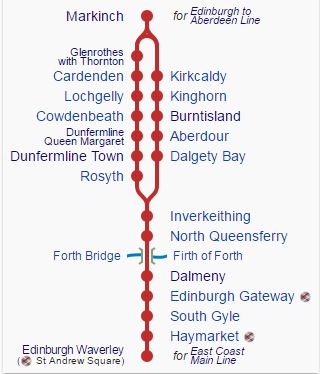
Note.
- The route is double-track.
- The route is not electrified.
- The train service is generally two trains per hour (tph) in both directions.
- The distance from Dalmeny to Glenrothes with Thornton via Cowdenbeath is 22.3 miles
- The distance from Dalmeny to Glenrothes with Thornton via Kirkcaldy is 21.4 miles
- Trains appear to wait between three and seven minutes at Glenrothes with Thornton before returning to Edinburgh by the alternate route.
The map doesn’t show the connection with the Kincardine Line at Dunfermline Town station.
This Google Map shows the Fife Circle Line, through Dunfermline Town station.
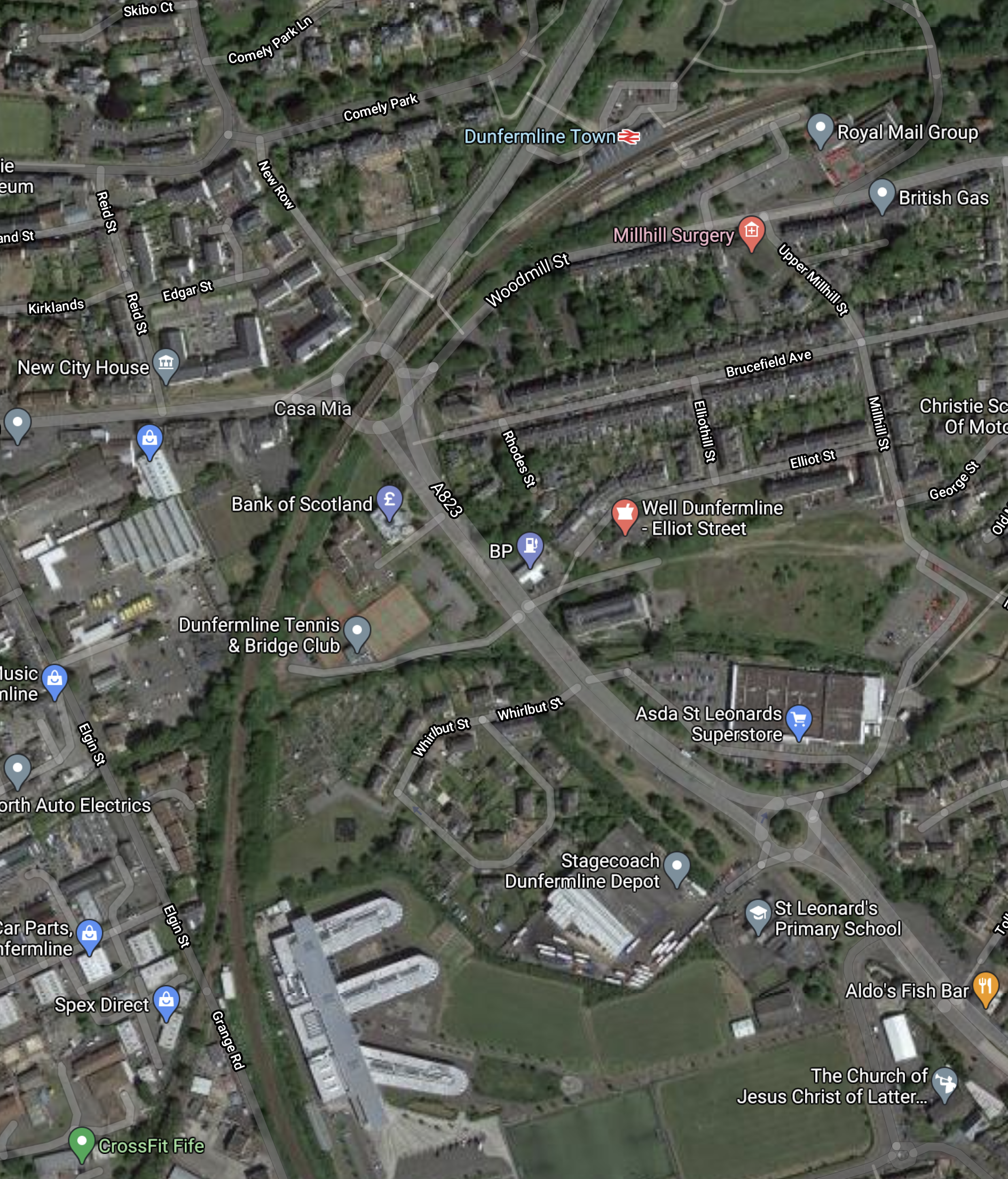
Note.
- Dunfermline Town station at the top of the map, is indicated by a station sign.
- The Northbound Fife Circle Line to Cowdenbeath leaves the map in a North-Easterly direction.
- The Southbound Fife Circle Line to Rosyth and Dalmeny, runs behind the building that looks strangely like a signpost and leaves the map in a Southerly direction
- There is a junction, called Charlestown Junction, where the Kincardine Line joins the Fife Circle Line.
This Google Map shows Charlestown junction.
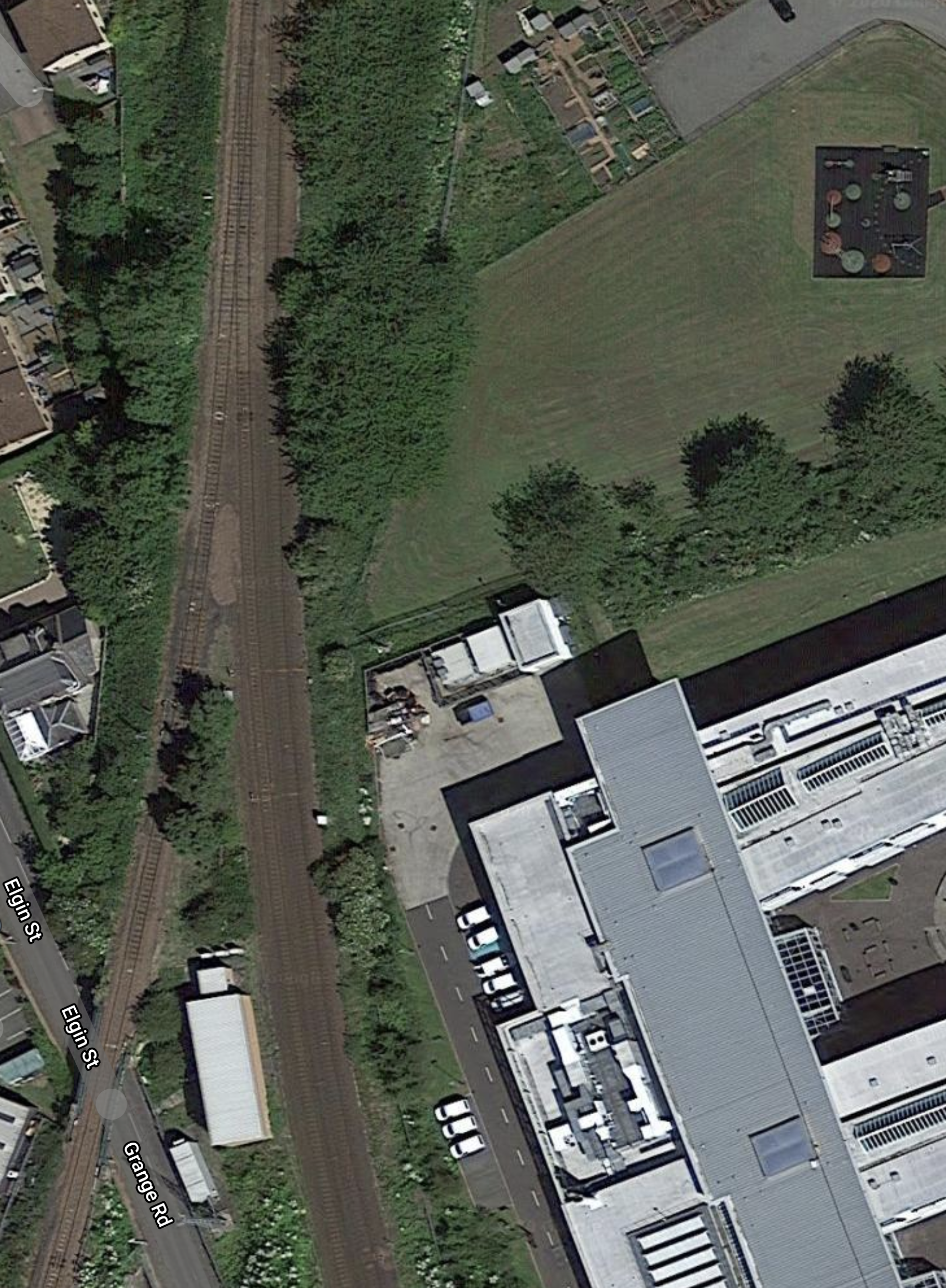
Note.
- The Fife Circle Line is double-track.
- The Kincardine Line is only single-track.
- Trains must enter and leave the Kincardine Line from a Northerly direction.
- There is a cross-over between Charlestown junction and Dunfermline Town station.
The Google Map shows Dunfermline Town station to a larger scale.

It looks like fitting in an additional platform could be difficult.
Hitachi’s Regional Battery Train
I am introducing this train into the discussion, as the train might be an alternative to electrifying the Kincardine Line.
This infographic from Hitachi, describes the train.
Note that 90 kilometres is fifty-six miles.
From what Hitachi have said, it is likely that Class 385 trains, as used by ScotRail could be fitted with batteries and become a version of the Regional Battery Train.
- They could be three or four cars.
- They could work in pairs.
- They would have a 100 mph operating speed.
Even on battery power, they might save time, against the current diesel units working services in Scotland.
Regional Battery Trains And The Fife Circle Line
This map shows the rail system to the West of Edinburgh.
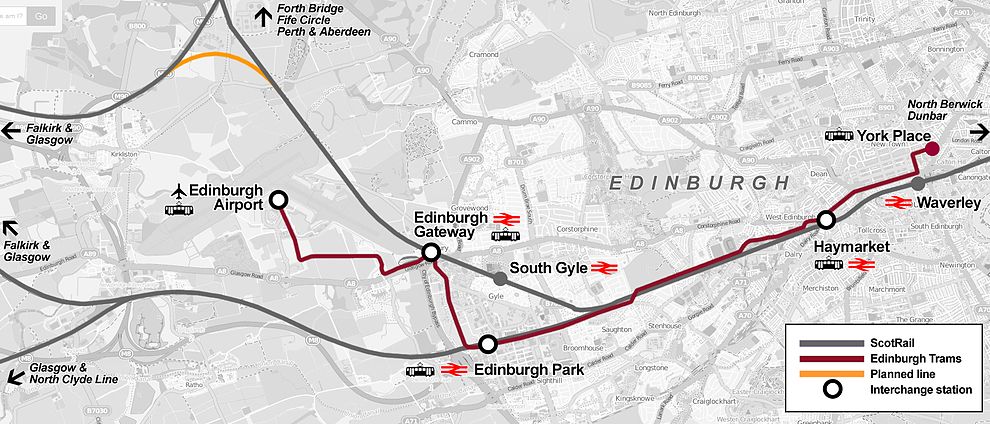
All lines except for the route through South Gyle and Edinburgh Gateway stations are electrified.
A train going round the Fife Circle Route would do the following legs.
- Edinburgh and South Gyle – 4.5 miles – All but one mile electrified.
- South Gyle and Dalmeny – 5 miles – Not electrified.
- Dalmeny and Glenrothes with Thornton via Cowdenbeath – 22.3 miles – Not electrified
- Glenrothes with Thornton and Dalmeny via Kirkaldy – 21.4 miles – Not electrified
- South Gyle and Dalmeny – 5 miles – Not electrified.
- Edinburgh and South Gyle – 4.5 miles – All but one mile electrified.
This gives the following totals
- Not electrified via Cowdenbeath – 28.3 miles
- Not electrified via Kirkcaldy – 27.4 miles
- Round trip – 62.7 miles
- Electrified – 7 miles
It would be very tight for a Regional Battery Train to do a round trip of 62.7 miles consistently with a range of just 56 miles, with only seven miles of electrification at the Edinburgh end.
But if charging at Glenrothes with Thornton were added, this would enable the trains to start out on the near thirty miles without electrification with full batteries from both ends. They would be unlikely to run out of power halfway.
Regional Battery Trains And The Levenmouth Rail Link
In Scottish Government Approve £75m Levenmouth Rail Link, I wrote about the five-mile long Levenmouth Rail Link, and how it could be run by battery trains.
Since I wrote that post, Hitachi have announced their Regional Battery Train.
- If these were used on the route, they would join the Fife Circle at Thornton North Junction.
- I estimate that the track distance that is not electrified between Leven and Edinburgh via Thornton North junction, is about thirty-five miles, whether the trains go via Glenrothes with Thornton and Cowdenbeath or Kirkcaldy,
As with the Glenrothes with Thornton service, if there was charging at at both ends, the route would be within comfortable range of Hitachi’s Regional Battery Trains.
Regional Battery Trains And The Kincardine Line
Rough distances by road along the Kincardine Line are as follows.
- Alloa and Longannet – 8 miles
- Alloa and Dunfermline Town – 15 miles
- Alloa and Glenrothes with Thornton via Dunfermline Town – 30 miles
This would surely mean that Regional Battery Trains could work all these routes.
- Trains would leave Alloa with full batteries after charging on the electrification from Edinburgh, Glasgow and Stirling.
- Longannet and Dunfermline Town could be served by a return trip from Alloa on batteries.
- Charging at the Fife end would only be needed for the Glenrothes with Thornton route.
Some might think, that this would mean the Kincardine Line needn’t be electrified. But I feel Talgo will want an electrified route to their factory, so trains can move in and out under electric power.
The Design Of The Kincardine Route
These are my thoughts on various topics, taken vaguely from West to East.
Alloa Station
Alloa station already has two tracks, but as the plans envisage two tph between Alloa and Longannet, I am fairly certain a second platform will be needed at Alloa.
There is certainly space, but the station would also need a bridge for passengers.
Perhaps, the architects will use something like this bridge design.
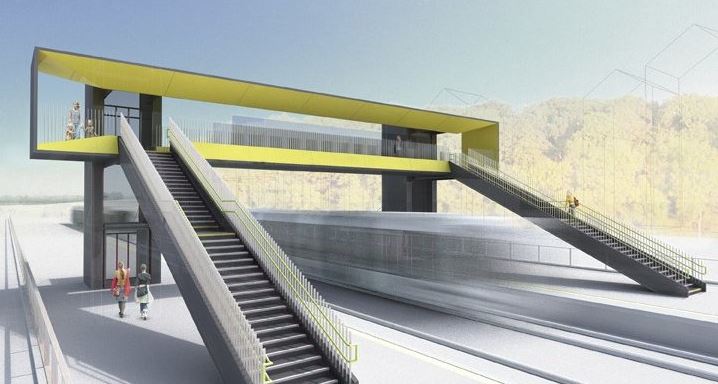
This step-free bridge won the Network Rail/RIBA Footbridge Design Competition, but has yet to be deployed on the UK rail network.
Will the two tph service between Alloa and Longannet continue West to Stirling?
I suspect the track layout with a passing loop at Cambus to add to the one at Alloa station will give sufficient track capacity, so I suspect there will be two tph between Longannet and Stirling.
Would both services terminate at Glasgow or would one go to Glasgow, with the other to Edinburgh?
Clackmannan Station
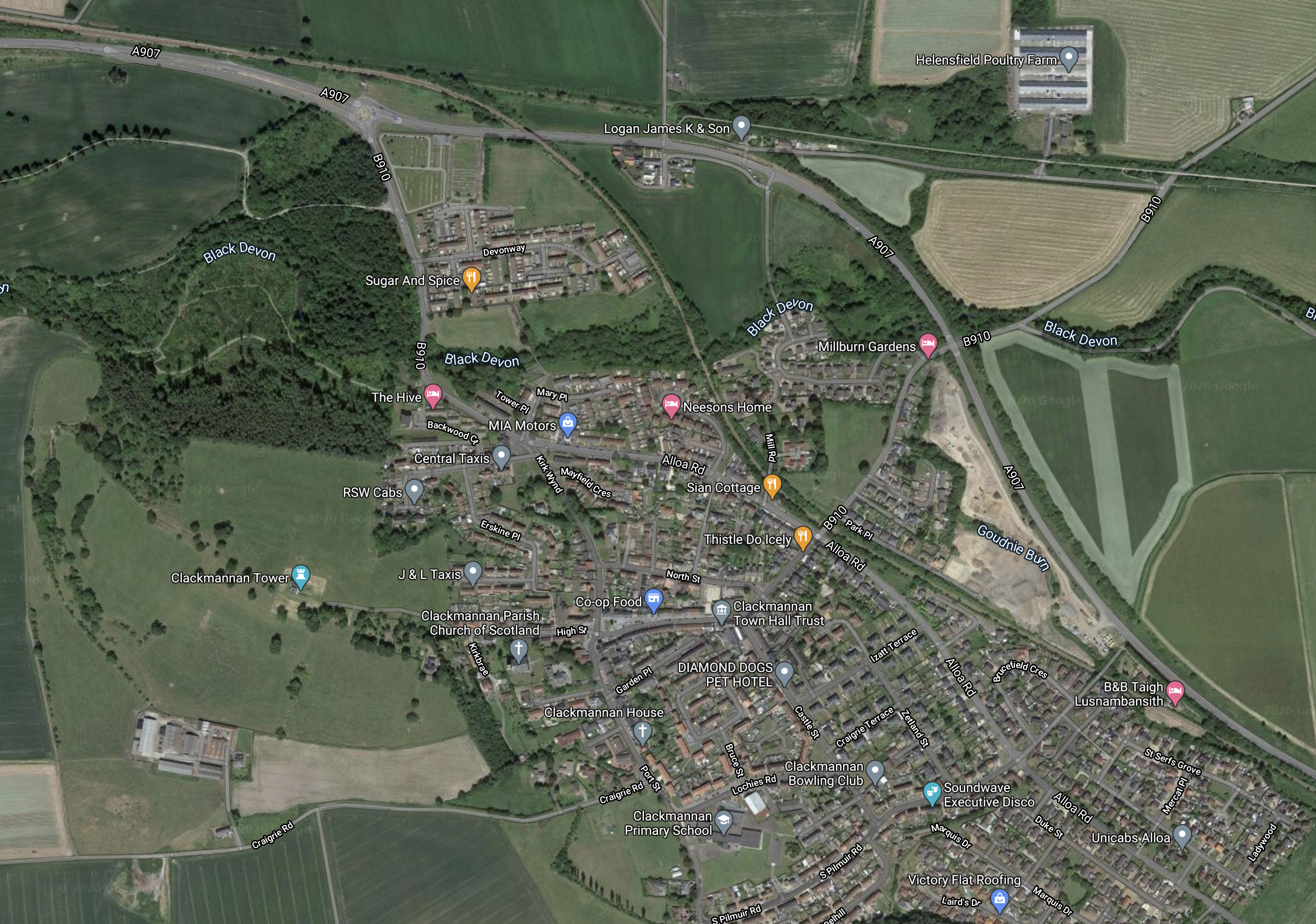
The small town of Clackmannan has a population of about 3,500 and used to be served by Clackmannan and Kennet station, which closed in 1930.
This Google Map shows the town of Clackmannan.
Note.
- The Kincardine Line runs between the North West and South-East corners of the map, through the centre of the town.
- The original Clackmannan and Kennet station was to the South-East of this map.
This second Google map shows an enlargement of part of the town.
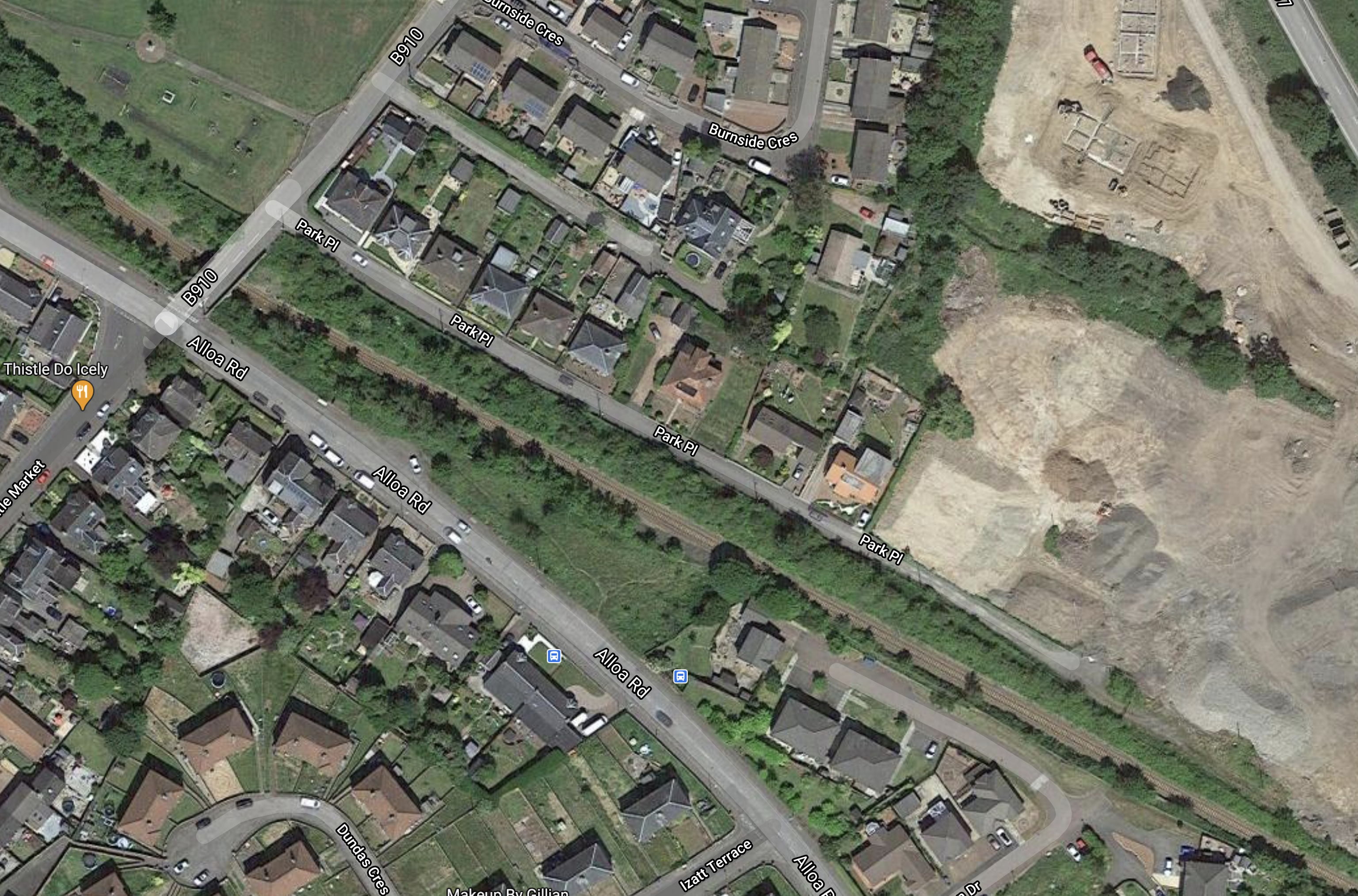
It would appear that there is space for a station.
- Only a single platform would be needed.
- What is the plan for the development site?
It could be designed as a walkway station, as has been proposed for Magor and Undy station in Wales.
Kincardine Station
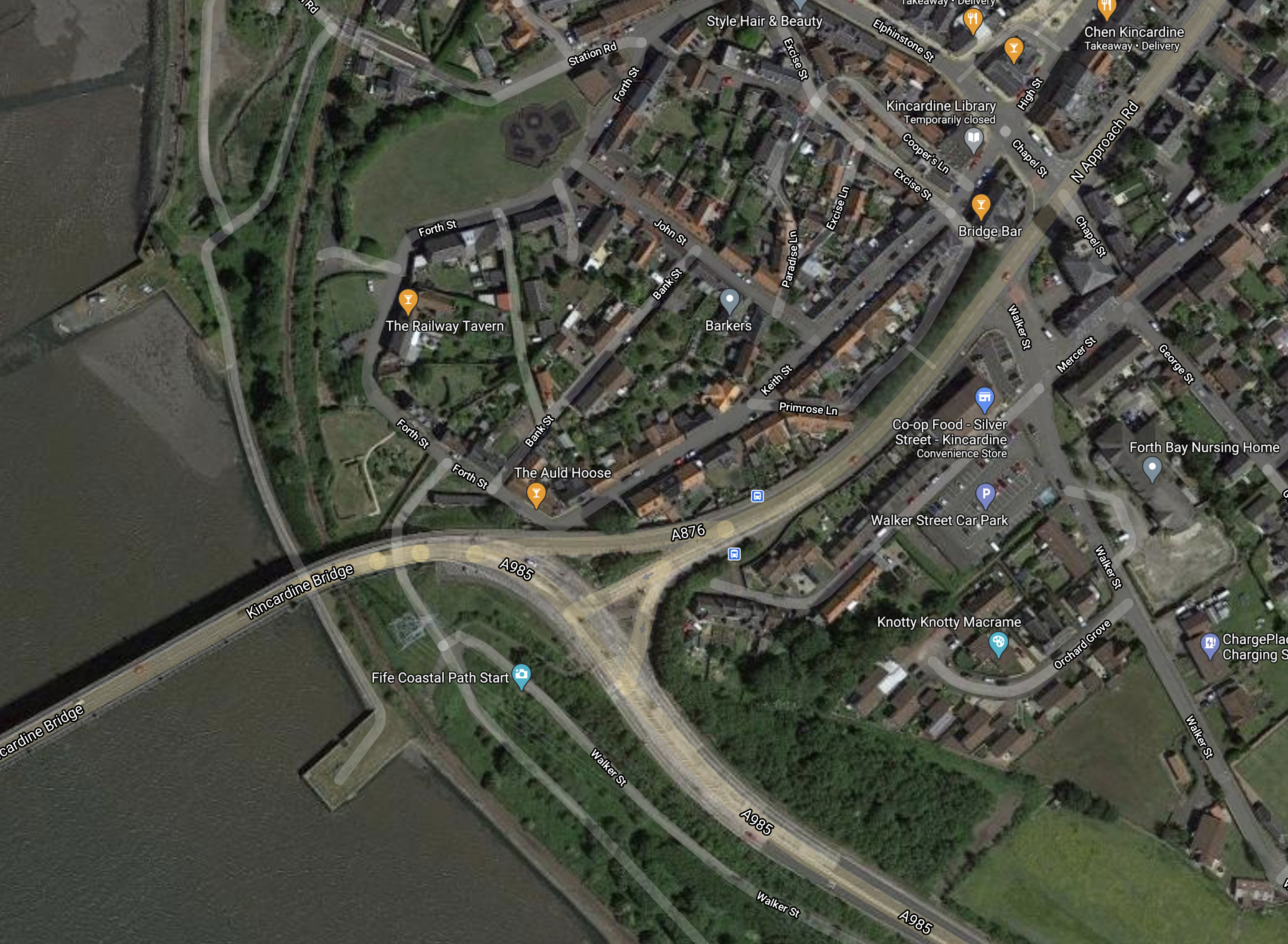
The Kincardine Line runs between the small town of Kincardine and the River Forth and Kincardine station closed in 1930.
This Google Map shows the railway alongside the river.
Note.
- Kincardine Bridge crossing the Firth of Forth.
- The bridge can be used by pedestrians and cyclists.
- The Kincardine Line running along the river.
- It is not a long walk between the town centre and the railway.
- The blue dot to the South of the road junction marks the start of the Fife Coastal Path, which is over a hundred miles long.
Will the station be built in this area?
Longannet Station
Longannet power station was at the time of closure in 2016, the third-largest coal-fired power station in Europe.
This Google Map shows the site.
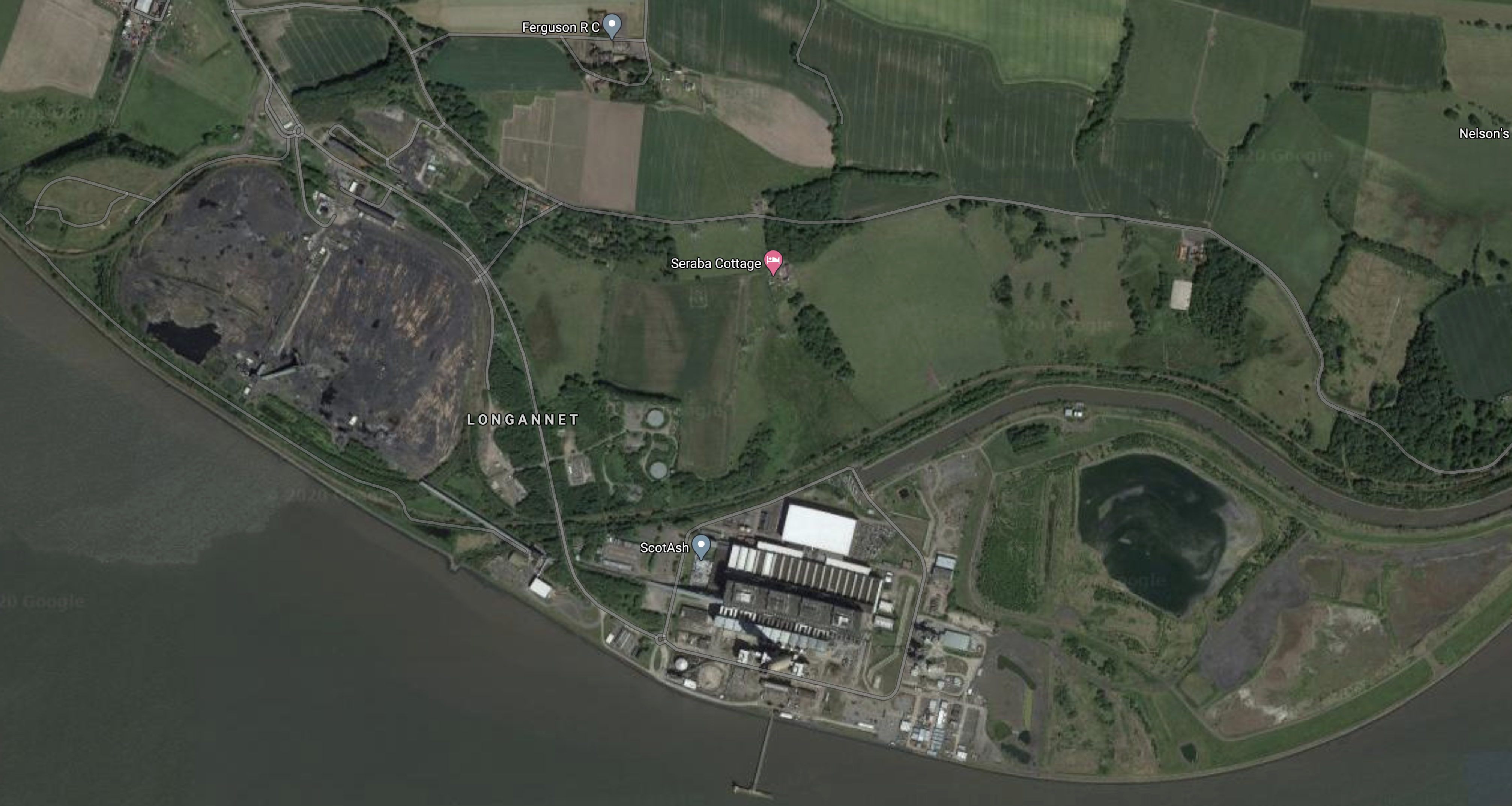
Note.
- The actual power station is in the middle.
- To the West is the coal store.
- The Kincardine Line comes along the river and then loops North of the power station, before curving down to the river to go to the East.
- There appears to be two triangular junctions either side of the coal store with a loop around the store to allow delivery of coal.
This second Google Map shows between the power station and the coal store.
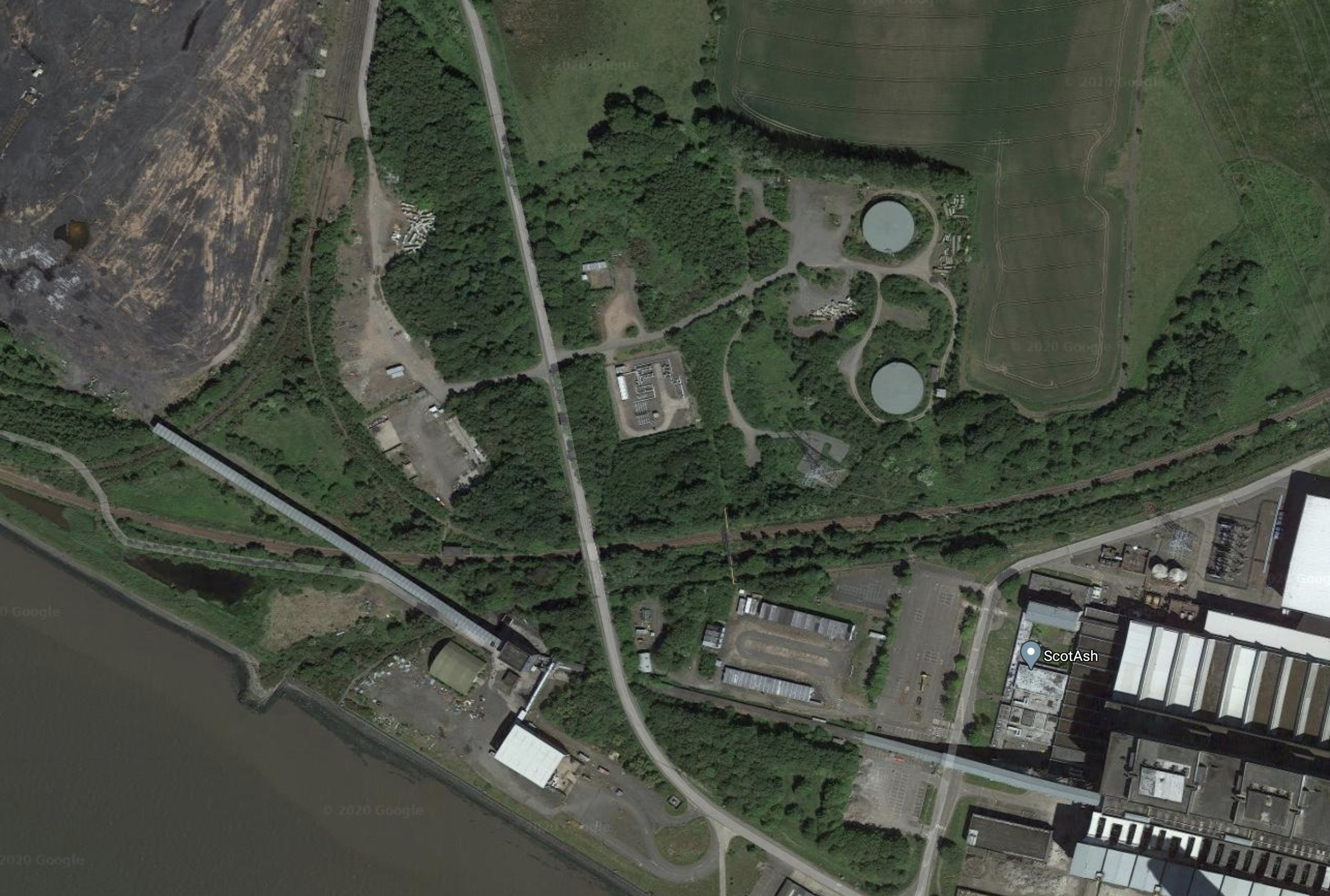
Note.
- The Kincardine Line running West-East across the map.
- The triangular junction connecting it to the loop line around the coal store.
- The coal conveyor that used to move coal from the store to the power station.
I’d certainly like to see the plans for the site, as it is one with a lot of potential.
- There is space for a large rail-connected factory for Talgo.
- The station could be placed at the most convenient place.
- There is space for a two platform station to make sure a two tph service is possible.
- There could be lots of housing and industrial units.
- there could be waterside housing.
- There could be a convenient rail service to Edinburgh, Glasgow and Stirling.
It could be a big development for the Central Belt of Scotland.
Onward To Dunfermline
I have followed the route to Dunfermline Town station in my helicopter and it doesn’t seem the most difficult of lines to reopen.
- Unlike many lines like this, there doesn’t appear to be too many bridges or level crossings.
- The connection to the Fife Circle Line looks to be adequate.
I have these thoughts.
- Cn this section of the line, could more stations be added?
- As the Fife Circle Line is not electrified, would battery electric trains be ideal?
- Would turnround facilities be needed at Dunfermline Town stations.
But at the moment, the plan is only to go as far as Longannet.
Thoughts On The Stations
The stations would generally be very simple.
- Alloa would be a two-platform station.
- Longannet might need provision for a passing loop and a second platform, so extension to Dunfermline wouldn’t be difficult.
- All other stations could be single platforms.
- All stations would be step-free.
Only two-platform stations would need footbridges.
Final Thoughts On Electrification
Consider.
- All services on the Fife Circle Line, Kincardine Line and the Levenmouth Rail Link could be run using Hitachi’s proposed Regional Battery Train, with a few charging facilities at selected stations.
- Talgo will need an electrified line to Longannet
- As Alloa and Dunfermline Town is only about 15 miles, a Regional Battery Train could run a return trip without recharging.
It would appear that only the single-track between Alloa and Longannet needs to be electrified.
Conclusion
This looks to be a good scheme.
Vivarail Targets Overseas Markets
The title of this post, is the same as that of this article on Rail Magazine.
This is an extract from the article.
Shooter told RAIL: “We are at the moment putting together a bid for an operator – not in this country – where the routes would be up to 500 miles long, to be provided totally with battery trains using this device.
“This bid we are putting together contemplates trains that are running for several hours – 60 to 70 miles between charging stations, but possibly going twice that far in emergency if the charging station should go down.”
By this device I suspect they mean their Fast Charge device, which is described in this press release from Vivarail.
This extract describes how it works.
The concept is simple – at the terminus 4 short sections of 3rd and 4th rail are installed and connected to the electronic control unit and the battery bank. Whilst the train is in service the battery bank trickle charges itself from the national grid – the benefit of this is that there is a continuous low-level draw such as an EMU would use rather than a one-off huge demand for power.
The train pulls into the station as normal and the shoegear connects with the sections of charging rail. The driver need do nothing other than stop in the correct place as per normal and the rail is not live until the train is in place.
That’s it!
That sounds simple to me.
Where Would This Possible Order Be From?
I have ridden in a Vivarail battery train, as I wrote in Battery Class 230 Train Demonstration At Bo’ness And Kinneil Railway.
I have also ridden the diesel variant, as I wrote in A First Ride In A Revenue-Earning Class 230 Train.
I very much feel, I can list a few of the good qualities of the trains.
Big Windows
The big windows give a good view, so I wonder if the trains would work well on a railway noted for its scenery.
Quietness
I have ridden in two battery trains.
The other was Bombardier’s Class 379 BEMU, that I wrote about in Is The Battery Electric Multiple Unit (BEMU) A Big Innovation In Train Design?.
Both were extremely quiet.
No Infrastructure Required
Except for the charging stations, no infrastructure is required.
Sturdy Engineering
Although the trains were only originally built for the London Underground, they are sturdily-built trains, as they used to share tracks with full-size trains.
I suspect, they are certified to share tracks with freight trains, as they do on the Marston Vale Line.
A Range Of Interiors And Customer Facilities
Although the trains tend to use the old London Underground seat frames, they have a range of interiors, which seem to be well-designed and comfortable.
I have been on Class 230 trains, with tables, a single toilet, onboard Wi-Fi, and electrical charging points.
Zero-Carbon
The trains are probably as near to zero-carbon, as any! Especially, if all the Fast Charge stations are powered by renewable electricity.
Remote Servicing
The trains have been designed for remote servicing.
Conclusion
All of these qualities lead me to think, that an ideal line in the UK could be the Far North Line, between Inverness and Wick and Thurso.
Although the train ticks a lot of boxes, it could well be too slow, It is also only a 160 mile route and not five-hundred
But there must be quite a few long, scenic lines in countries, where a passenger service needs to be added to a freight line, that perhaps serves a remote mining town.
Sweden and Norway are surely possibilities, but Finland is ruled out because it is Russian gauge.
Could the trains end up in parts of Africa, Canada and the United States?
Who knows?
Beeching Reversal – Magor And Undy Walkway Station
This is one of the Beeching Reversal projects that the Government and Network Rail are proposing to reverse some of the Beeching cuts.
I actually covered this proposal before in ‘Walkway’ Rail Station Plan For Magor As M4 Relief Road Scrapped,
I’ll repeat the start of that post.
The title of this post is the same as that of this article on the BBC.
These are the introductory paragraphs.
A village heavily affected by the decision to scrap the planned M4 relief road is bidding for help to build a £7m railway station there.
Residents of Magor in Monmouthshire have the mainline rail service to London running through the village, but no station.
They want to create a “walkway” station – one with no car parking that travellers will walk or cycle to.
The original Magor station was shut in the Beeching cuts in November 1964.
The Villages Of Magor And Undy
This Google Map shows the villages of Magor and Undy and their relationship to the roads and railway in the area.
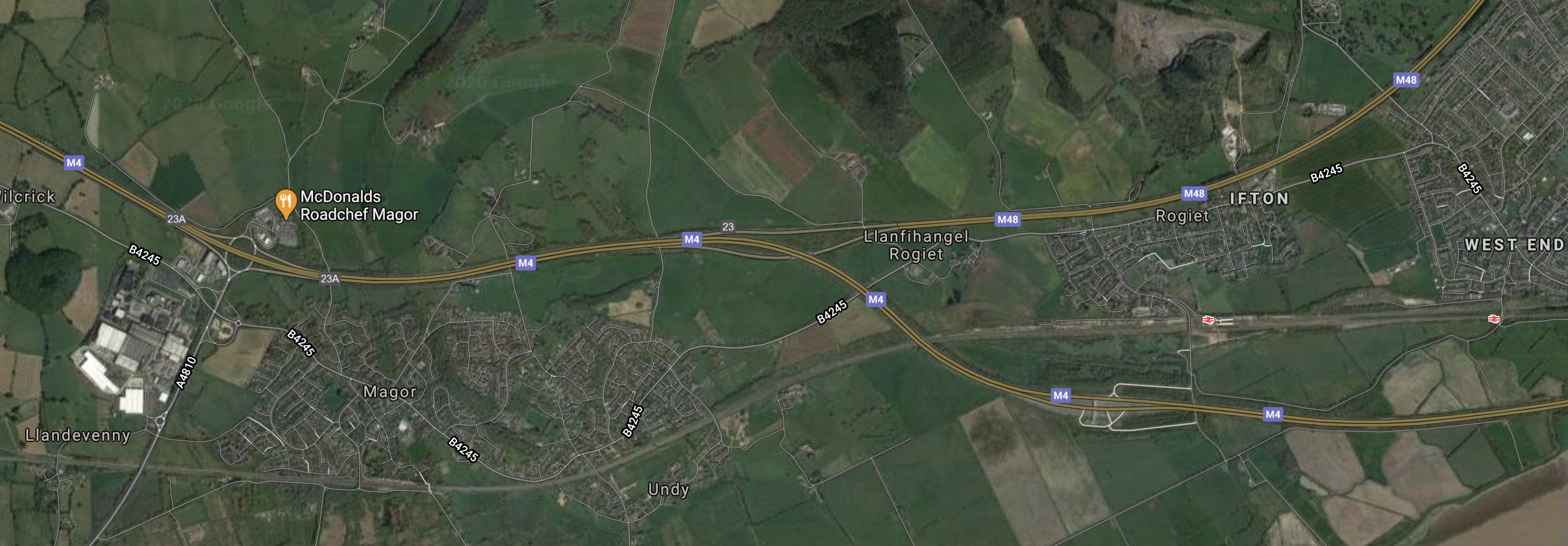
Note.
- The Northern motorway is the M48, which leads to the original Severn Bridge.
- The Southern motorway is the M4, which leads to the newer Second Severn Crossing.
- Between the two lies the South Wales Main Line, with the two stations; Severn Tunnel Junction and Caldicot.
- At the Western end of the map, the railway runs between the two villages of Magor and Undy.
This second Google Map shows the villages.
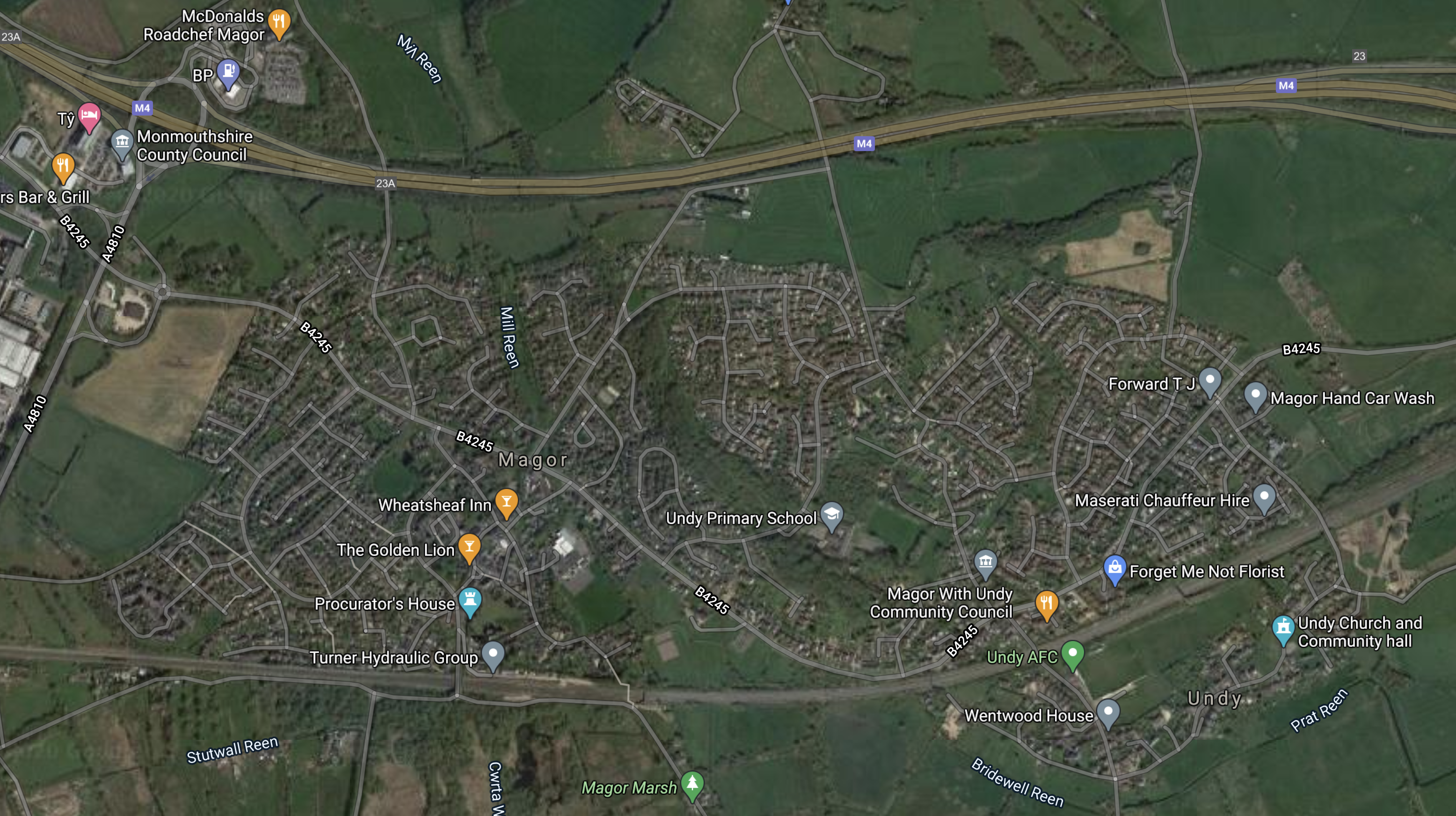
Note.
- The M4 running East-West to the North of Magor.
- Magor services is in the North-West corner of the map.
- The South Wales Main Line running through the villages.
There certainly seems to be a lot of housing to provide passengers for the new station.
The Location Of Magor And Undy Station
On this web page on Rail Future, which is entitled Magor, this is said.
The station site is where the B4245 road passes closest to the railway line. The Monmouthshire County Council traffic survey shows that some 11 – 12,000 cars a day pass along this road through the middle of the villages. The shift from car to train use is primarily aimed at capturing those who at present are not prepared to drive the two and half miles to the east just to catch the train at Severn Tunnel Junction to travel the two and a half miles back passing their homes for the seven and a half mile journey into Newport, and hence at present use their car for the whole journey instead. The site also has the advantage of direct integration with the buses as the bus services pass the entrance to the site of the proposed Station and Community centre every half an hour.
This Google Map shows the B4245 road and the railway.
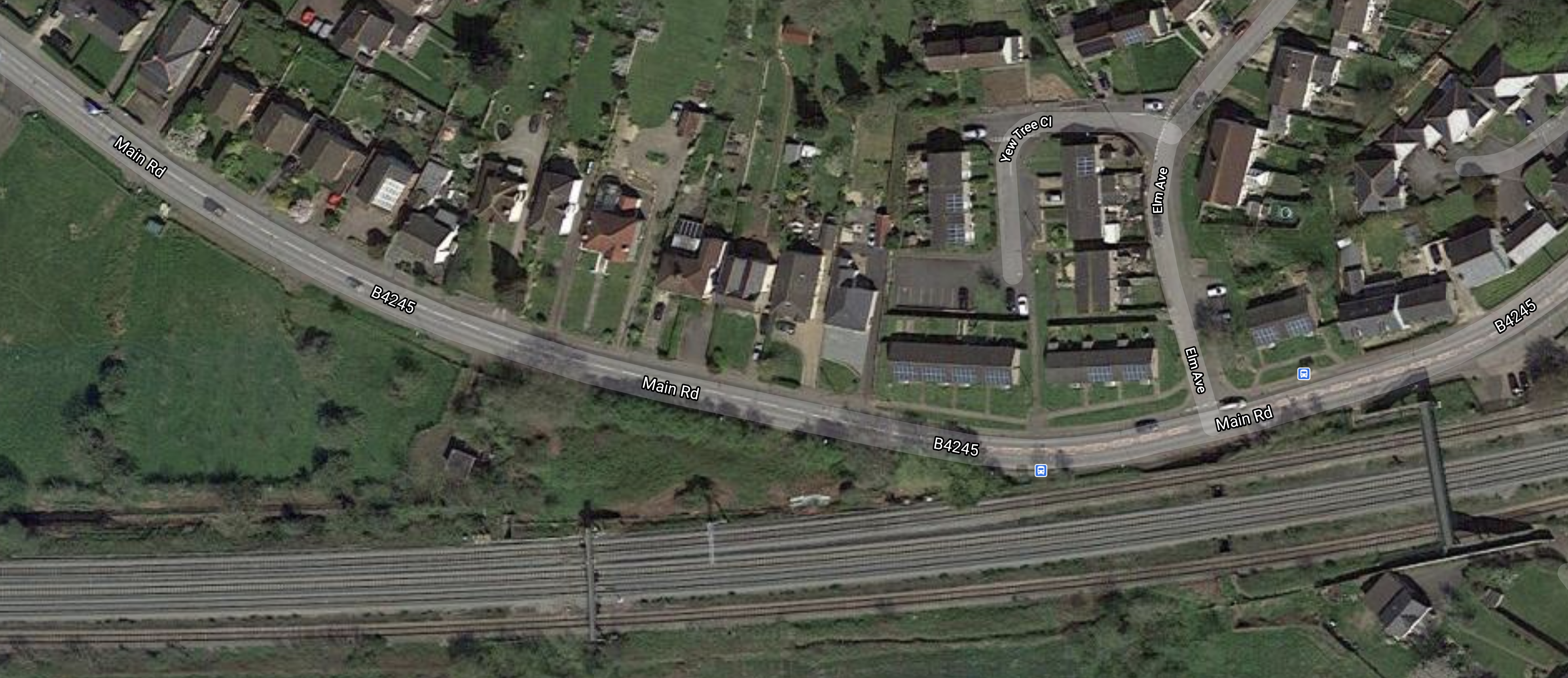
Note.
- The B4245 curving across the map.
- There are already two bus stops, which are marked by blue dots.
- There is a footbridge over the railway, which doesn’t appear to be step-free.
As Rail Future is probably correct, the position of the station is fairly obvious.
Various documents on the Internet talk about the station being built on the Three Field Site, which the local council bought for community purposes some years ago. Could the triangle of land between the B4245 and the railway, be this site?
Thoughts On The Station
Reading the web page on Rail Future, the following seems to be stated.
- The platforms will be on the two outside tracks of the four through the station. These are the Relief Lines.
- The two Fast Lines will be in the centre.
- Existing crossovers will allow trains from the Fast Lines to call in the station.
Unlike at other proposed stations to the West of Newport, the tracks will not need major works to slew them to accommodate the new platforms.
I would also do the following.
Incorporate Wide Platforms
This picture was taken of the new platform at Stevenage station.
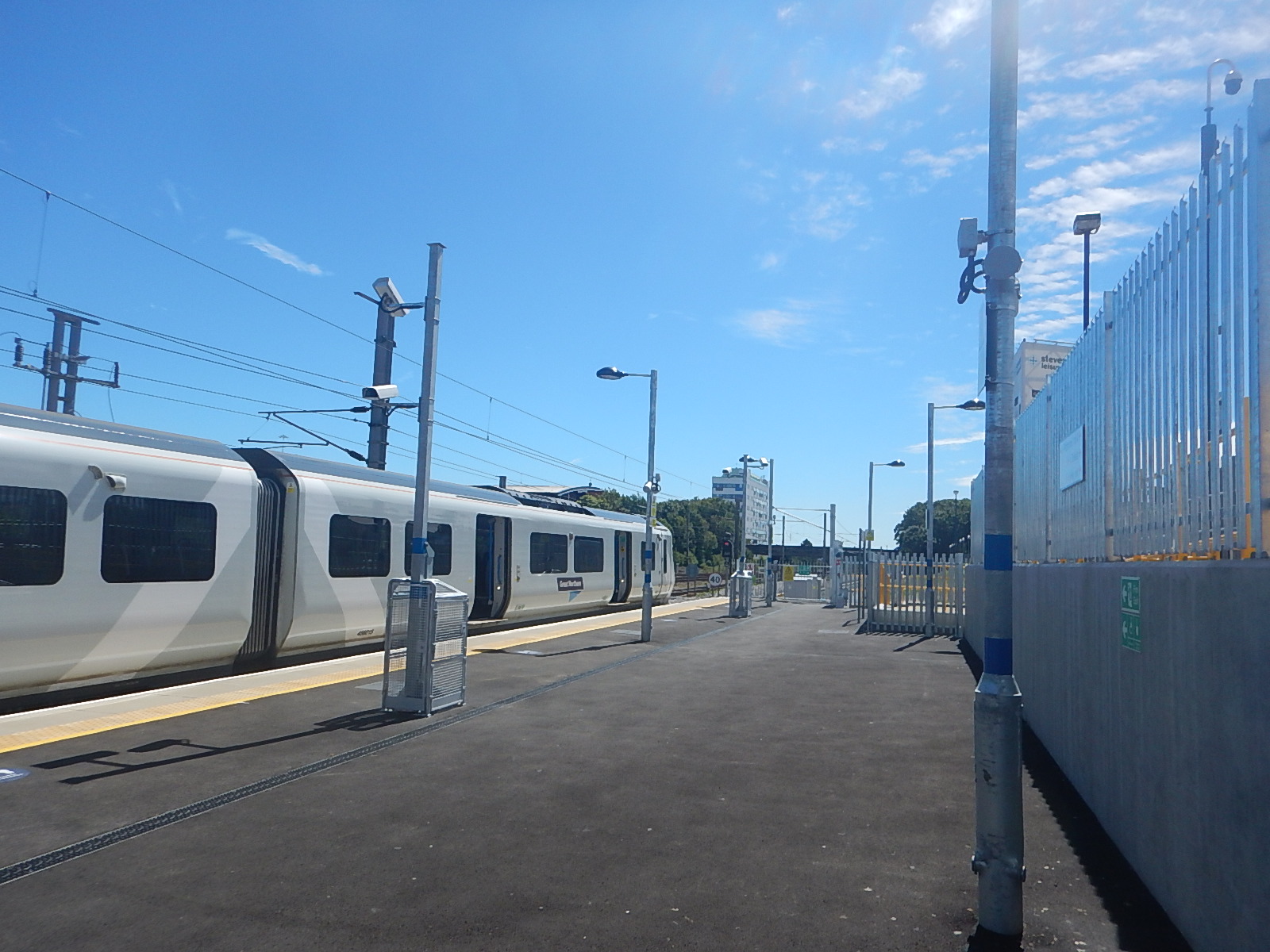
If the station gets busy, a wide platform will ease loading and unloading.
As Magor and Undy station, will be one that encourages passengers to cycle to the station, would a wide platform make it easier for passengers, who are travelling with bicycles?
Step-Free Between Train And Platform
Greater Anglia are using similar trains to South Wales and the Stadler Flirts in East Anglia offer step-free access between train and platform, as this picture shows.
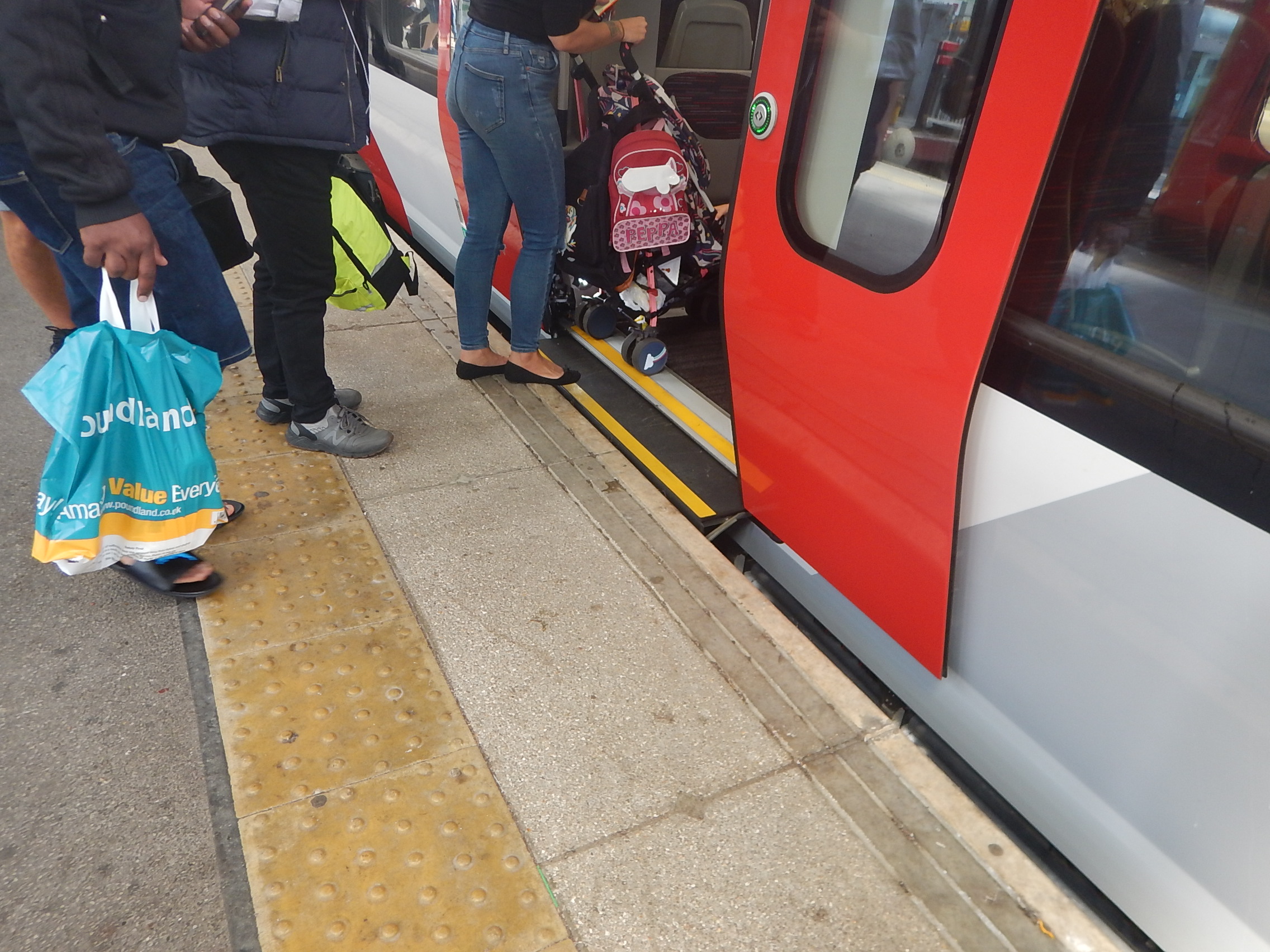
South Wales should offer a similar standard of step-free access. as it eases access and cuts train delays.
A Step-Free Footbridge
In Winner Announced In The Network Rail Footbridge Design Ideas Competition, I wrote how the competition was won by this bridge.
So could a factory-built bridge like this be installed at Magor and Undy station?
- The bridge can be sized to fit any gap.
- If the platforms were wide enough, I think it would be possible.
- It can have lifts that can take bicycles.
- A bridge like this would also reduce the cost.
So the station can have a stylish, affordable, fully step-free footbridge.
A Walkway Along The Railway
It strikes me that a walkway on the Southern side of the railway to connect the communities South of the railway to the station could be very useful.
Electrification
The South Wales Main Line is electrified between London and Cardiff and Great Western Railway’s Class 802 trains between London and Swansea, change between electricity and diesel at Cardiff Central station.
All four lines at Severn Tunnel Junction appear to be electrified, so will all four lines at Magor and Undy station be electrified?
They certainly should be, to improve the reliability of electric services between London and South Wales.
Train Services
I suspect that the calling pattern of train will be similar to that at Severn Tunnel Junction, which is the next station to the East. The Wikipedia entry for Severn Tunnel Junction says this about services at that station.
The station is served by two main routes – Transport for Wales’ Cheltenham Spa to Cardiff Central and Maesteg via Chepstow local service and Great Western Railway’s Cardiff to Taunton via Bristol line. Both run hourly on weekdays & Saturdays, albeit with some two-hour gaps on the Chepstow line. In the weekday peaks, certain Cardiff to Portsmouth Harbour also stop here, whilst there is a daily train to Fishguard Harbour. CrossCountry also provides very limited services to/from Manchester Piccadilly via Bristol and to Nottingham via Gloucester and Birmingham New Street.
On Sundays, the Bristol to Cardiff service is once again hourly (and runs to/from Portsmouth) whist the Cheltenham service is two-hourly.
I think that this could result in these train frequencies in trains per hour (tph), from Magor station.
- Caldicot – 2 tph
- Cardiff Central – 4 tph
- Cjeltenham – 1 tph
- Chepstow – 2 tph
- Gloucester – 1 tph
- Newport – 4 tph
- Severn Tunnel Junction – 4 tph
Note.
- I have assumed that the CrossCountry services don’t stop.
- As there seem to be proposals to add extra stations between Newport and Cardiff Central, these new stations could also get a service with a frequency of between two and four tph.
Working on rules that apply in Liverpool and London, and may apply to the South Wales Metro, I think that a Turn-Up-And-Go service of a train every fifteen minutes is needed between Magor and Undy station and the important Newport and Cardiff stations.
Battery Electric Trains Along The South Wales Main Line
The railways are being decarbonised and plans will have to be made to run all secondary services on the South Wales Main Line without diesel.
Hitachi have already played their cards, with the announcement of a Regional Battery Train, which will be created by replacing some of the numerous diesel engines on a Class 802 train with battery packs.
This is Hitachi’s infographic for the train.
The range of ninety kilometres or fifty-six miles is interesting.
- Cardiff Central and Swansea are 46 miles apart, so with a charging facility at Swansea, Great Western Railway could run diesel-free between London Paddington and Swansea.
- I suspect too, that destinations to the West of Swansea could also be served with intelligent placing of a second charging facility at perhaps Carmarthen.
But it’s not just Hitachi, who have made plans for battery electric trains.
- Transport for Wales have ordered twenty-four Stadler Class 756 trains, which are tri-mode and can run on electrification, diesel or battery power.
- Transport for Wales have also ordered eleven Stadler Class 231 trains, which are only bi-mode.
- Both these fleets seem very similar to Greater Anglia’s Class 755 trains, which Stadler have said can be converted to 100 mph tri-mode operation, with perhaps a forty mile range on battery power.
- I have ridden several times in Class 755 trains and without doubt, they are one of the best diesel-powered trains, I have used in the UK.
So I don’t think it is unreasonable to believe that Transport for Wales have the capability to run battery electric services with the fleet they have ordered given a few simple upgrades, that may already be planned for Greater Anglia.
But will the Welsh train builder; CAF, be happy with Hitachi and Stadler running their battery electric trains at high speed past their factory and onward to England and West Wales?
I doubt it and CAF have already made a response.
In Northern’s Battery Plans, I said this about CAF’s plans to create a battery electric Class 331 train for Northern.
It appears that CAF will convert some three-car Class 331 trains into four-car battery-electric trains.
- A three-car Class 331 train has a formation of DMSOL+PTS+DMSO.
- A fourth car with batteries will be inserted into the train.
- Batteries will also be added to the PTS car.
I suspect that CAF would be happy to convert some of Transport for Wales order for diesel Class 197 trains into one for suitable battery electric trains.
I believe some of the services that are planned to be run by these diesel trains into Birmingham, Liverpool and Manchester, appear to be ideal routes for battery electric trains.
These diesel trains will still be serviceable in 2060, which will be long past the cut-off date for diesel trains in the UK.
So why not replace them before they are built?
- The CAF Civity train is modular, so I doubt it would make much difference to CAF’s manufacturing process.
- The diesel version of the Civity has a noisy transmission compared to the electric version.
It would surely, be better for CAF’s marketing.
Could the various routes through Magor be operated by battery electric trains?
These are my thoughts on the various routes.
Maesteg And Cheltenham Spa
This service is hourly and run by Transport for Wales.
- Currently, the service seems to be running to Gloucester.
- Maesteg and Cardiff Central is not electrified and 28.5 miles long.
- Trains seem to take over 8-9 minutes to turn back at Maesteg.
- Cardiff Central and Severn Tunnel Junction is electrified.
- Severn Tunnel Junction and Gloucester is not electrified and is 35 miles long.
- Trains seem to take over 25 minutes to turn back at Gloucester.
It certainly looks that with charging facilities at Maesteg and Gloucester, this service could be run by a battery electric train with a range of forty miles on battery power.
Fishguard And Gloucester
This service is occasional and run by Transport for Wales.
The problem with this service will be to the West of Swansea.
But if Great Western Railway and Transport for Wales put their heads and services together, I feel there is a cunning plan to run battery electric trains to Fishguard, with perhaps charging facilities at Fishguard, Carmarthen and Swansea.
Cardiff And Bristol Temple Meads
This service is two tph and run by Great Western Railway.
On the Welsh side of the Severn Tunnel, this could be an electric service.
On the English side, there is only ten miles of line without electrification between the South Wales Main Line and Bristol Temple Meads station.
This service in wales can be considered an electric service, as it is only onwards from Bristol Temple Meads to Taunton and Portsmouth Harbour, that charging facilities will be needed.
Conclusion
I like this scheme and as it looks like the trains will be running on electric power, through Magor and Undy station, it could be a very good one.
New MerseyRail ‘Connected’ Trains
The title of this post, is the same as that of this article on Rail Engineer.
It is an article that should be read, by anybody with an interest in either Merseyrail’s trains or modern urban rail networks in general. As Stadler, will be providing a fleet of trains for the Tyne and Wear Metro, I suspect a lot of the points made in the article can be expected to have parallels on that network as well.
What About The Signalling?
The article talks about the management of the signalling, but it says little about signalling in the future, although it does say that Merseyrail will be covered by a very high capacity digital network.
London’s Digital Signalling Revolution
In London, there are four tunnelled routes, that in a few years time will be running under full digital signalling.
- Crossrail
- East London Line
- Northern and City Line
- Thameslink
Note.
- Thameslink is already running upwards of twenty trains per hour (tph) using digital ERTMS signalling.
- Crossrail will be running 24 tph using digital ERTMS signalling.
- The East London Line currently handles 16 tph and will soon be handling 20 tph.
- The Northern and City Line will be going to digital ERTMS signalling, when it is applied to the Southern end of the East Coast Main Line.
- , In addition to the Circle, District, Jubilee, Metropolitan, Northern and Victoria Lines of the London Underground have digital signalling.
- Dear old Vicky is actually running 36 tph between two-platform stations at Brixton and Walthamstow Central.
- I wouldn’t bet against Vicky running the magic 40 tph, to become the most frequency line in the world.
All of these London systems, have one great advantage. In the tunnelled sections of the routes, there is generally only one class of fully digitally-equipped train, which must make system design and implementation easier.
Liverpool’s Digital Signalling Revolution
Consider.
- As the article says, Merseyrail now has a world-class high-capacity digital network, that is accessible by all of its trains.
- It has ordered 52 new Class 777 trains and has options for another sixty.
- There are proposals to extend the Merseyrail network to Manchester, Preston, Skelmersdale, Warrington, Wigan and Wrexham.
- The Northern Line runs at a frequency of 12 tph.
- The Wirral Line runs at a frequency of 14 tph.
- The loop Line has recently been relaid, so is probably high-quality track.
Compared to London’s tunnelled routes, the Northern and Wirral Lines are not handling a large number of trains.
But Liverpool now has a digital network to support the signalling and trains that could be upgraded to use it are arriving.
I wouldn’t be surprised to find that the maximum train frequency on Merseyrail is at least twenty tph or one train every three minutes.
What Would Twenty tph Do For The Wirral Line?
Currently, the following destinations are served by the Wirral Line and the services use the Loop under Liverpool City Centre.
- Chester – Four tph
- Ellesmere Port – Two tph
- New Brighton – Four tph
- West Kirby – Four tph
Note.
- The current frequency around the Loop is 14 tph.
- Merseyrail is proposing to extend the Ellesmere Port service to Helsby, using battery-equipped Class 777 trains
- There is also an hourly service from Bidston to Wrexham Central in the Borderlands Line.
- I can see no technical reason why, the Bidston and Wrexham service could not be run using battery-equipped Class 777 trains and terminating in the Loop.
Surely, the ultimate twenty tph service on the Wirral Line would be as follows.
- Chester – Four tph
- Helsby via Ellesmere Port – Four tph
- New Brighton – Four tph
- West Kirby – Four tph
- Wrexham Central – Four tph
All twenty tph would terminate in the Loop under Liverpool City Centre.
What Would Twenty tph Do For The Northern Line?
Currently, the following Northern destinations are served by the Northern Line.
And these Southern destinations are served.
- Liverpool Central – Eight tph
- Hunts Cross – Four tph
Note.
- The current frequency, through the central section is 12 tph.
- There is a proposal, that I wrote about in Liverpool’s Forgotten Tunnel for the trains terminating at Liverpool Central station to use the Wapping Tunnel to connect to the City Line.
- There is a proposal to extend the Ormskirk service to Preston, using battery-equipped Class 777 trains.
- There is a proposal to extend the Kirkby service to Headbolt Lane and Skelmersdale, using battery-equipped Class 777 trains.
- There must also be a possibility of a service that extends the Kirkby service to Wigan Wallgate, using battery-equipped Class 777 trains.
The service des appear to be biased towards the Northern end, with more possibilities there for extra trains than in the South.
This is why the plan to expand to the East through the Wapping Tunnel has evolved, as it gives the following possible destinations.
- Manchester Oxford Road
- Warrington Bank Quay
- Warrington Central
- Wigan North Western
Note.
- All destinations are currently served from Liverpool Lime Street by Northern.
- There must also be the possibility of a direct service to Liverpool Airport.
- There must also be the possibility of a service on the Canada Dock Branch to Bootle.
I can envisage between 12 and 16 tph through the Wapping Tunnel, which with the four tph to Hunts Cross could mean 16 to 20 tph on the Northern Line.
Conclusion
It would appear that a very frequent system can be developed on Merseyside, if frequencies common in London can be achieved.
Special Train Offers A Strong Case For Reopening Fawley Line
The title of this post is the same as that of an article in Issue 911 of Rail Magazine.
This is the opening paragraph.
On July 28, a South Western Railway train ran along the Fawley Branch Line. to make the case for reopening to passenger services after a 54-year gap.
On board were the Rail Minister; Chris Heaton-Harris, Network Rail Chairman; Sir Peter Hendy, Managing Director of South Western Railway; Mark Hopwood and Lord Montagu of Beulieu.
The article reports the trip and fills in more of the details, that make more sense of my sketchy post called Reintroduction Of Passenger Rail Services On The Waterside Line.
These are some points from the article.
The Infrastructure Needs Updating
This is a quote from the article.
The route has a line speed of 30 mph, with lower speed restrictions at level crossings, some of which are still hand-operated. Semaphore signals operated from by mechanical levers from Marchwood remain in use. A token is given to the driver to allow the train to run towards Fawley. All this would require updating.
Elsewhere the article says there are ten level crossings.
Housing Is The Game Changer
This is another quote from the article.
The big change is urban sprawl. In the half century since passenger services ended, housing estates for thousands of people have been built alongside the line. mostly for commuters into Southampton and the surrounding conurbation.
Up to 5,000 further new homes are planned, including an all-new small town on the site of the former Fawley power station on the southern tip of Southampton Water. Planning permission for at least 1,300 homes was granted the very evening before the Fawley train ran.
This Google Map shows the the town of Hythe and the giant Fawley Refinery.
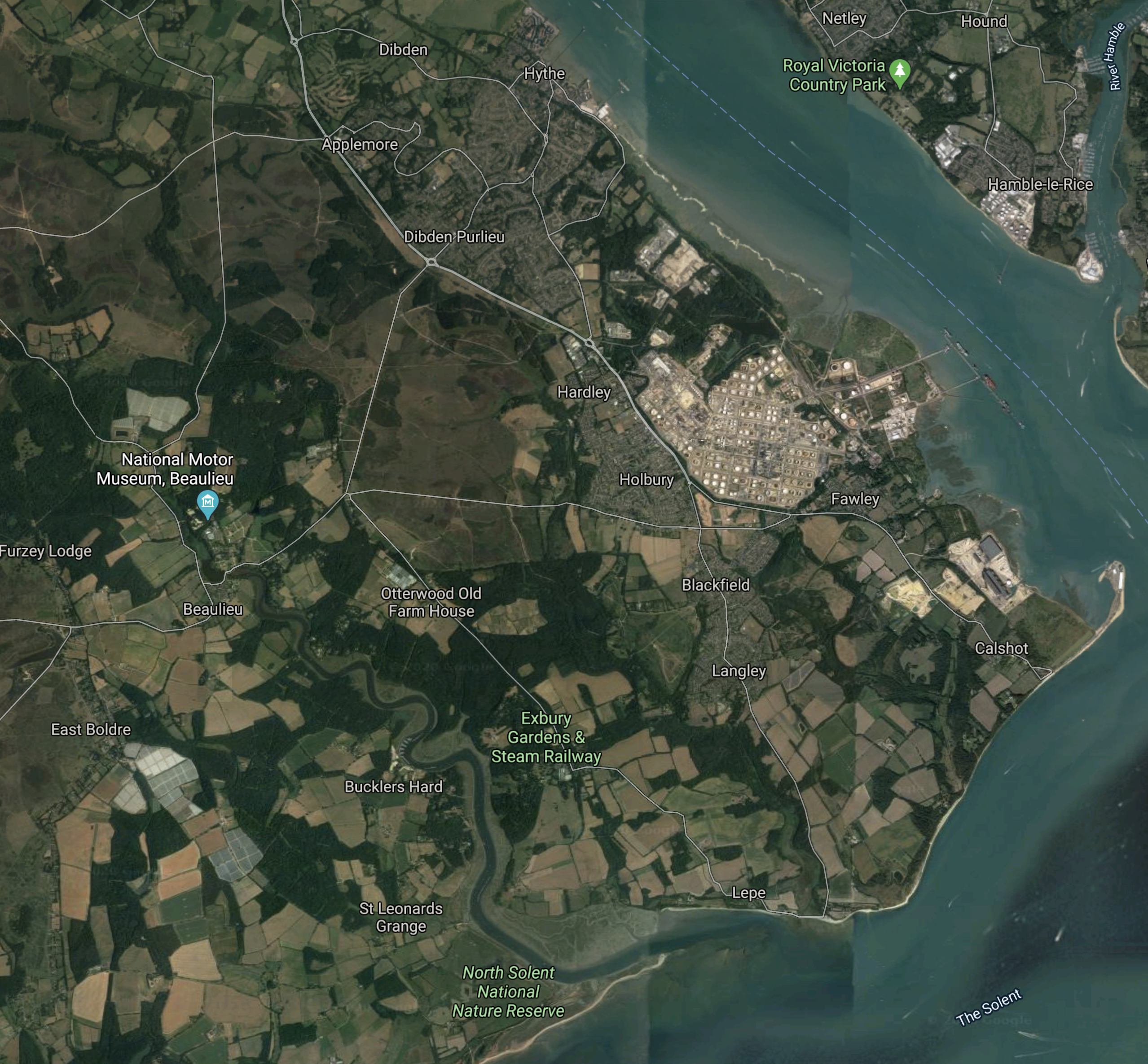
Note.
- Hythe is towards the top of the map on Southampton Water.
- The refinery is the large beige blob in the middle on Southampton Water.
- The Fawley Branch runs close to the water and finishes inside the secure fence of the refinery.
- There will be stations at Marchwood, Hythe Town and Hythe & Fawley Parkway.
- The parkway station will be to the North of the refinery.
- The major housing site is on the former Fawley power station site, which is the Southernmost beige blob.
- The blue dot towards the West indicates the National Motor Museum at Beaulieu.
It looks to me, that an electric shuttle bus between Hythe & Fawley Parkway, Beaulieu and the various housing sites would be a good idea.
The Cost Of The Scheme
This is another quote from the article.
The campaign to open the line has been spearheaded by the Three Rivers Community Rail Partnership.
Chairman Nick Farthing says:
“For £45m, you get the track, signalling and level crossings sorted. You get a 60 mph railway with three stations = upgrading Marchwood, a new station for Hythe, and Fawley park-and-ride (just beyond Holbury, where Hardley Halt used to be).
“Three Rivers commissioned a level crossing study from Network Rail, so we know what has to be done. We’ve used a rail-approved contractor to work out how much the three stations will cost.
Three Rivers have also identified some affordable diesel rolling stock.
South Western Railway’s Innovative Train Plan
This is another quote from the Rail Magazine article.
However, SWR’s Mark Hopwood favours a much bolder plan. “We’d have to take a decision, once we knew the line was going ahead. But my personal belief is that we should be looking for a modern environmentally-friendly train that can use third-rail electricity between Southampton and Totton and maybe operate on batteries down the branch line.”
Pressed on whether that would mean Vivarail-converted former-London Underground stock, Hopwood adds. “It could be. Or it could be a conversion of our own Class 456, which will be replaced by new rolling stock very shortly. But I don’t think this is the time to use old diesels.
Converting Class 456 Trains Into Two-Car Battery Electric Trains discusses this conversion in detail.
Conclusion
This plan seems to be coming together strongly.
All the partners like Three Rivers Community Rail Partnership, Network Rail, South Western Railway and other local interests seem to be acting together and very professionally.
Beeching Reversal – Project Wareham – Complete The Link
This is one of the Beeching Reversal projects that the Government and Network Rail are proposing to reverse some of the Beeching cuts.
A Visit To The Swanage Railway describes an enjoyable visit I made to the Swanage Railway, just after the first part of Project Wareham had been completed.
This was my conclusion in that post.
There is a lot of potential to improve services on the Swanage Railway.
I suspect that if South Western Railway and the Swanage Railway got into serious discussion, there will be a solution, that would be beneficial to both parties and all those who live and work in or visit Swanage and the Isle of Purbeck.
This page on the Swanage Railway web site describes the project.
Completing Project Wareham
I can find very little on the Internet about what is proposed in the completion of this project.
So perhaps, the proposal is to start a project to see what could be developed on the Swanage Railway to the benefit of residents, commuters and visitors.
Hourly Trains
From a railway point of view, I suspect the most important thing, is to make it possible for an hourly train to connect from the Swanage Railway to the South Western Main Line.
This would enable the following.
- Residents along the route to commute to or go shopping in Poole and Bournemouth.
- Better public transport connections to the local councils at Dorchester and Warham.
- Better visitor access to the Isle of Purbreck and especially the Swanage Railway.
- Development of some possible housing and industrial sites.
There could be a lot of beneficiaries.
What Trains Would Be Used?
The Swanage Railway seem to be proposing running heritage diesel multiple units on connecting services. They have a Class 117 train and a Class 121 train, that were built around 1960, that have been fully-refurbished for the service.
These would be fine for the service and I suspect to cut emissions, they could be run on biodiesel.
I also think that if the service was successful, that more trains would be needed.
Consider.
- The South Western Main Line is fully-electrified.
- The Swanage Railway is only 5.5 miles long.
- South Western Railway probably want to go to an all-electric fleet.
- Battery electric train technology is improving rapidly.
- South Western Railway will probably be running battery electric trains on other services in their network.
- The route might be suitable for Vivarail’s ideas, like the Pop-Up-Metro.
I believe that South Western Railway could connect Wareham and Swanage with a battery electric train charged on the main line.
I’m sure that Bombardier, CAF, Hitachi, Siemens or Stadler, would be able to supply a suitable battery electric train to replace the company’s Class 158 and Class 159 diesel multiple units.
Where Would The Trains Run?
Consider.
- The obvious route is between Wareham and Swanage, but as I showed in A Visit To The Swanage Railway, the timings might not be friendly to an hourly shuttle.
- Changing trains is something that discourages regular passengers.
- I believe a service to Poole or Bournemouth may be more attractive to passengers.
- Some passengers might even like the occasional service to London.
I can see an innovative timetable being developed containing elements like these.
- One train per two hours (tp2h) between Swanage and Wareham, run by the Swanage Railway. using a heritage diesel multiple unit.
- One tp2h between Swanage and Poole or Bournemouth via Wareham, run by South Western Railway, using a modern battery electric multiple unit.
- Some services might extend past Bournemouth to Southampton or Salisbury.
- Early morning and late night services between Swanage and Bournemouth.
- At least one train per day in both directions between Swanage and London Waterloo.
- Services would be seven days per week.
I believe that the more comprehensive the service, the more it will be used.
Conclusion
After my visit in November 2018, I said this.
There is a lot of potential to improve services on the Swanage Railway.
I stand by what I said and feel that comprehensive services between Swanage and Wareham can be developed for the benefit of residents, travellers and train companies.
 The Anonymous Widower