Thoughts On Tram-Trains In Manchester
The State Of Public Transport In the North
Over the last few years plans have been put in place to improv the state of the public transport of the major cities of the North and progress has started to happen, with new trains, trams and light rail systems being planned and in some cases coming into service.
Birmingham, Coventry And The West Midlands
A lot of investment has been made and it is continuing.
- Birmingham New Street station has been rebuilt.
- Coventry and Wolverhampton stations have been remodelled.
- Two new stations were built in Birmingham for the Commonwealth Games.
- A large number of new Class 730 local trains are being brought into service.
- Birmingham stations are being updated for High Speed Two.
- The West Midland Metro has been extended at both ends and a second line is under construction.
Transport in the wider West Midlands has been greatly improved.
Derby, Nottingham, Sheffield And The East Midlands
The major investment in this area is the electrification of the Midland Main Line and the provision of new Hitachi electric Class 810 trains.
In addition the following has been done.
- The Hope Valley line between Manchester and Sheffield has been improved.
- Derby station has been improved.
- The local trains have been refurbished.
- The power supply has been improved.
- An application for an Open Access service to Sheffield has been made.
The improvements in the East Midlands, will not be on the same scale as in the West Midlands, but they will make a difference.
Leeds, Bradford And West Yorkshire
For decades, West Yorkshire and especially Bradford has lagged behind the rest of the North.
But at least things are stirring.
- Plans have been laid to create a through station in Bradford.
- Leeds station has been refurbished.
- An extra platform is being added at Bradford Forster Square station.
- The TransPennine Upgrade is underway to electrify between Huddersfield and York.
- Hitachi have developed a battery-electric high speed train for the TransPennine route.
- Bradford is installing a hydrogen electrolyser, so that the city can have hydrogen buses to cope with the hills.
- Plans are now being developed to create a metro for Leeds and Bradford.
West Yorkshire is closing the gap to the rest of the North.
Liverpool And Merseyside
Again, a lot of investment has been made.
- The approaches to Liverpool Lime Street station have finally been sorted, with more tracks and new signalling.
- Liverpool Lime Street station has been improved and is now one of the finest stations in Europe.
- Trains are now approaching High Speed Two times between Crewe and Liverpool.
- More services between London and Liverpool can now be planned, with the arrival of new Class 807 trains.
- Some new stations have been built and more are planned.
- A large number of new Class 777 local trains are being brought into service.
Transport in the wider Merseyside has been greatly improved.
Newcastle, Tyneside And Northumberland
The area is getting investment, but not as much in proportion as others.
- The Metro trains are being replaced and the Metro itself, is getting a major update.
- The East Coast Main Line has received improvements to power supplies, signalling and some bottlenecks.
- The Northumberland Line to Ashington is being brought back into operation.
It’s a start, but if the Northumberland Line is a success, I can see a call for more line re openings.
Manchester And Greater Manchester
If you look at each of the areas, they generally have one or more large projects.
- Birmingham, Coventry And The West Midlands – Birmingham New Street station, Class 730 Trains, High Speed Two, West Midland Metro
- Derby, Nottingham, Sheffield And The East Midlands – Midland Main Line, Class 810 Trains, Hope Valley Line, Open Access To Sheffield
- Leeds, Bradford And West Yorkshire – Leeds station, Bradford improvements, TransPennine Upgrade, Battery-Ekectric Trains, Leeds Metro
- Liverpool And Merseyside – Liverpool Lime Street Improvements, Class 807 Trains, Class 777 Trains
- Newcastle, Tyneside And Northumberland – Metro upgrade with New Trains, Northumberland Line
So what improvements are in the pipeline for Greater Manchester?
This Wikipedia entry is entitled Proposed Developments Of Manchester Metrolink.
The proposed developments include in the Wikipedia order.
- New Metrolink Stop: Stop to serve new housing development proposed at Elton Reservoir on the Bury Line.
- New Metrolink Stop: Stop to serve new housing development proposed at Sandhills on the Bury Line.
- New Metrolink Stop: Stop to serve new housing development proposed at Cop Road on the Oldham and Rochdale Line.
- Airport Line extension to Terminal 2: A short extension of the Airport Line from the current Manchester Airport station to the site of the expanded Terminal 2.
- Airport Line extension to Davenport Green: An extension of the Airport Line from Roundthorn to the site of the proposed Manchester Airport High Speed station on the HS2 high speed network.
- Oldham–Heywood via Rochdale tram-train pathfinder: A tram-train service utilising the heavy rail Calder Valley line to connect Oldham to Heywood through Rochdale railway station.
- Manchester Airport–Wilmslow via Styal tram-train pathfinder: A tram-train service operating on the southern section of the heavy rail Styal Line between Manchester Airport and Wilmslow in Cheshire.
- South Manchester–Hale via Altrincham tram-train pathfinder: An extension of Metrolink’s Altrincham Line using tram-train to reach Hale on the heavy rail Mid-Cheshire line.
- Improved Metrolink frequency between Piccadilly and Victoria stations: Increasing capacity to provide a direct service from Rochdale and Oldham to Manchester Piccadilly.
- Interventions to improve Metrolink capacity and reliability: Includes improvements to turnback facilities and double-tracking currently single-track sections.
- Further interventions to improve Metrolink capacity and reliability: Includes longer vehicles, a third depot and double-tracking currently single-track sections.
- Manchester–Stalybridge extension: An extension of the East Manchester Line from Ashton-under-Lyne to Stalybridge.
- Manchester–Middleton extension: A proposed spur from the Bury Line connecting to the town of Middleton.
- Oldham–Middleton extension: A spur from Oldham to Middleton.
- MediaCityUK–Salford Crescent: A line connecting the MediaCityUK tram stop to the Salford Crescent railway station interchange. Further new Metrolink.
- Connections between Salford Crescent, Inner Salford and the City Centre: Extension of the MediaCityUK–Salford Crescent line into the regional centre.
- Completion of the Airport Line (Wythenshawe Loop): Completion of the Wythenshawe Loop by connecting the Metrolink lines between the Davenport Green and Manchester Airport Terminal 2 extensions.
- Port Salford/Salford Stadium extension: Extending the Trafford Park Line from the Trafford Centre to a proposed container terminal at Port Salford.
- Glossop tram-train: A tram-train service utilising the Glossop line between Manchester and Glossop in Derbyshire.
- Marple tram-train: A tram-train service utilising the Hope Valley line branches north of Marple towards Manchester.
- Manchester–Wigan via Atherton tram-train: A tram-train service utilising the Atherton section of the Manchester–Southport line between Manchester and Wigan.
- Manchester–Warrington tram-train: A tram-train service utilising the southern route of the Liverpool–Manchester lines between Manchester and Warrington.
- Stockport–Hazel Grove tram-train: A tram-train service between Stockport and the suburb of Hazel Grove.
- Stockport–Manchester Airport tram-train: A tram-train service between Stockport and Manchester Airport.
- Rochdale–Bury via Heywood tram-train: Extension of the Oldham–Heywood tram-train pathfinder from Heywood to Bury.
- Manchester Airport–Mid Cheshire tram-train: A tram-train service from Manchester Airport using a proposed Western Link rail line to the Mid-Cheshire line.
- Stockport–Ashton via Denton and Reddish tram-train: A tram-train service utilising the Stockport–Stalybridge line from Stockport to Ashton.
- Cornbrook–Manchester Airport via Timperley tram-train: A tram-train service from Cornbrook using the Altrincham line to Timperley, the Mid Cheshire line to Baguley, then the Wythenshawe Loop to Manchester Airport.
- Regional centre metro tunnel: Providing capacity for more services on the network.
- Oldham–Greenfield via Grotton extension: A Metrolink spur from Oldham town centre to Greenfield railway station on the Huddersfield line.
- Oldham–Royton extension: A Metrolink spur from the Oldham and Rochdale line to the town of Royton.
Note.
- The number of times that tram-trains are mentioned.
- But with its numerous rail and tram lines, Greater Manchester is ideally suited for conversion to tram-trains.
- There are three pathfinder routes for tram-trains, which will be converted first to prove the technology.
These are my detailed thoughts on tram-trains in Greater Manchester,
All Routes Could Be Run By Identical Tram-Trains
If this can be arranged, it is surely preferable from the operator, staff and passengers point-of-view.
Tram-Trains Can Run On Secondary Routes Like The Calder And Hope Valley Lines
In Manchester, this would enable some routes to be swapped from the rail to the tram network.
It would also allow trams to run between networks, so you could have a direct tram service between say Stockport and Sheffield on the Hope Valley Line.
Tram-Trains Can Be Faster
Tram-trains can be faster, when running on rail lines, so they don’t hold up expresses.
What Do Tram-Trains Look Like?
This is one of Sheffield’s Class 399 tram-trains at Rotherham Parkgate.
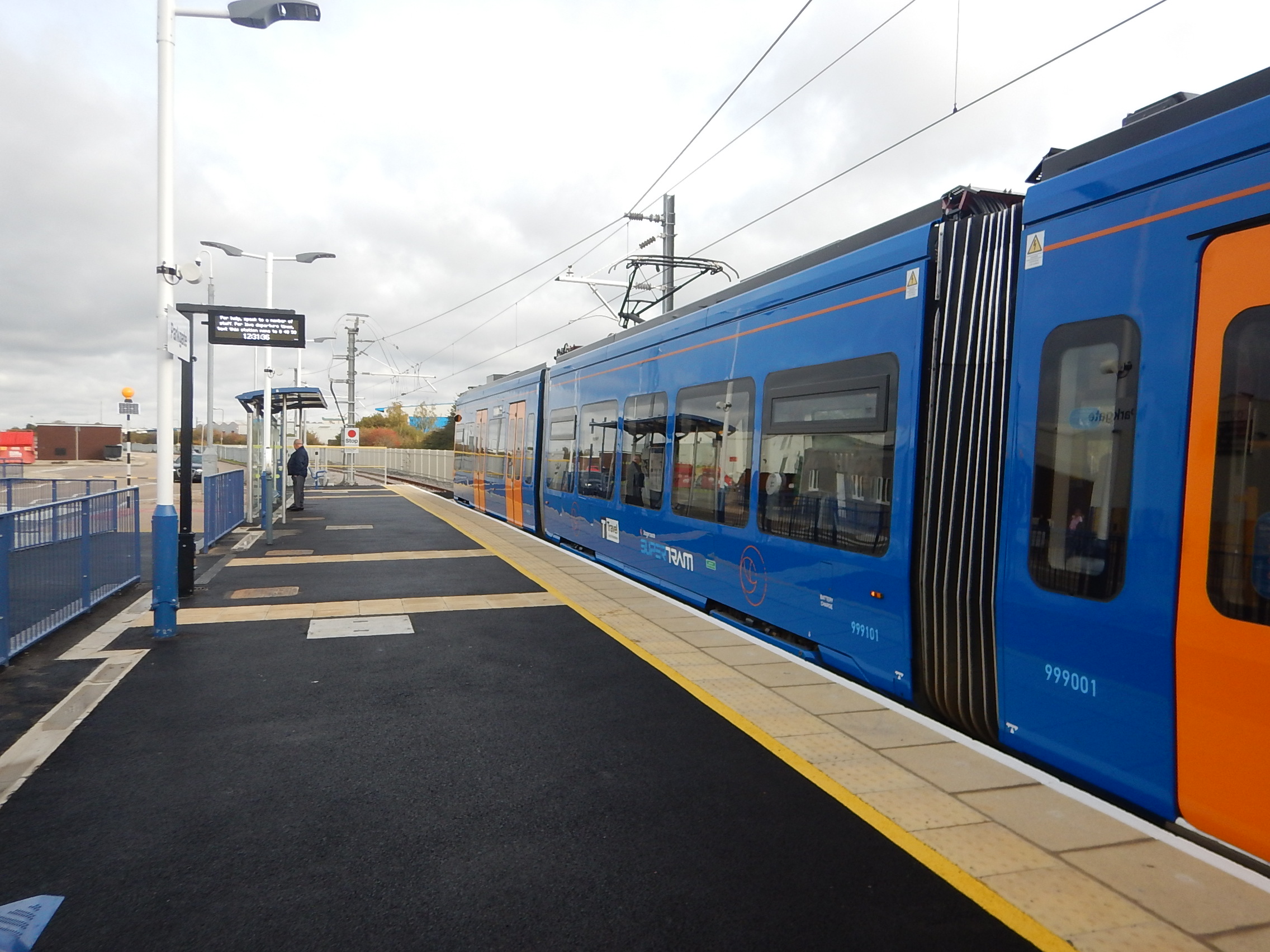
Note.
- This tram-train is a member of the Stadler Citylink family.
- this version can be powered by either 750 VDC or 25 KVAC.
- The Welsh version will also have battery-power.
- It is a three-car tram train.
- There is step-free access.
The Wikipedia entry for the Stadler Citylink has lots more details.
Stadler have just launched a new smaller one- or two-car tram-train.
This image from the press release shows the prototype hydrogen-powered one-car RS ZERO.
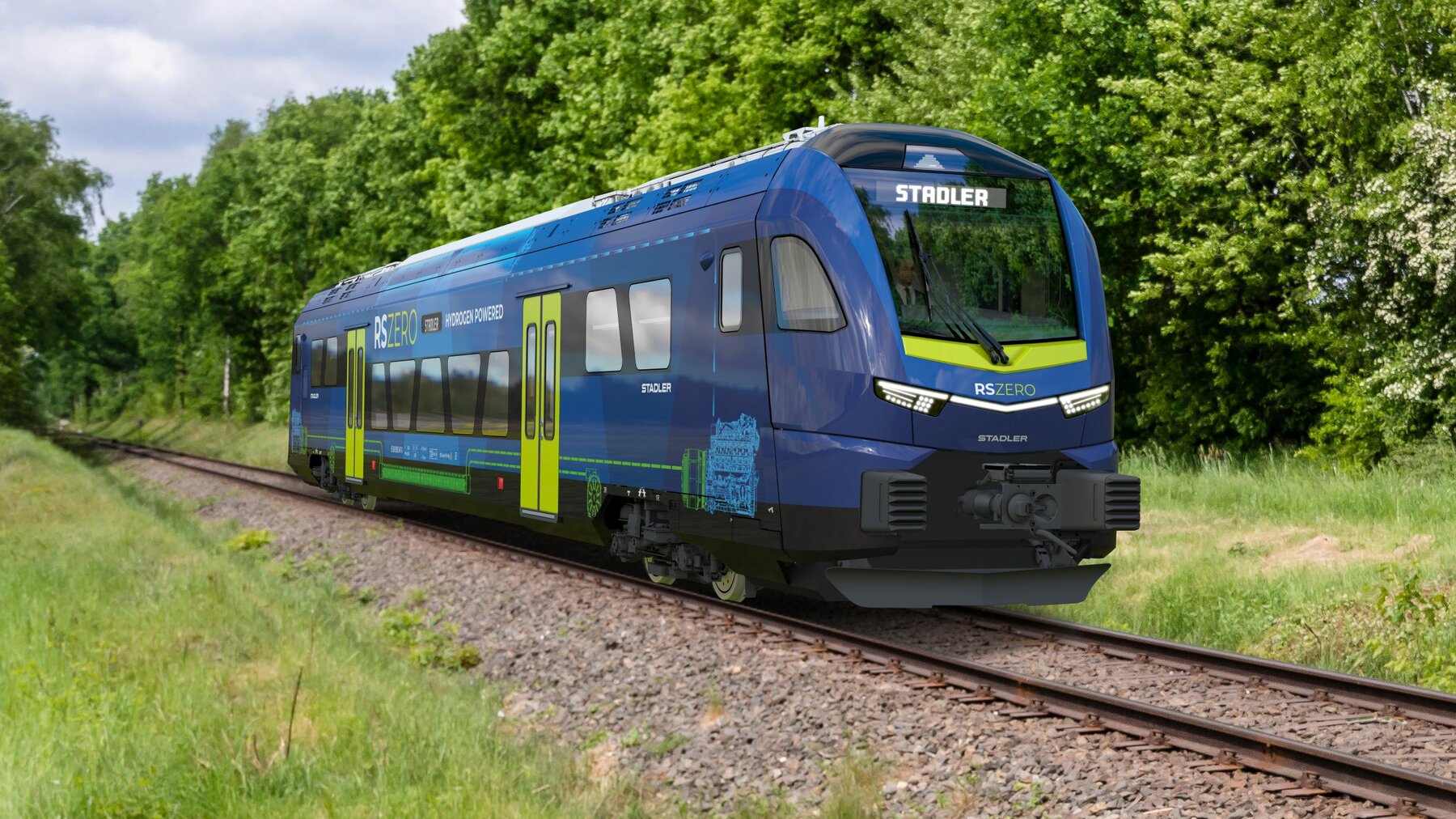
Note.
- The Regio-Shuttles can run as up to seven car trains.
- These RS ZERO are powered by overhead electrification, battery or hydrogen power.
- They can carry 170 passengers at 75 mph.
- They can run as train-trams using the Chemnitz model on compatible tram networks.
- The interiors are very flexible.
- An RS ZERO can be fitted with toilets for the posher parts of Manchester.
- Typically, a one-car RS ZERO handles a similar passenger load to a one-car Metrolink vehicle.
The more I compare the RS ZERO with the Metrolink’s trams, the more it looks like Stadler’s design has a Metrolink order firmly in its sights.
A Simple Tram-Train Example
The Altrincham Line of the Metrolink, runs between Altrincham and Deansgate-Castlefield in Central Manchester.
- Tram-trains would be capable of sharing the tracks with the current trams.
- Initially, they would run an identical service to the same destinations in the North.
- At either Navigation Road or Altrincham stations, they would switch to the heavy rail track.
- They would then travel to Hale or whatever station is determined to be the terminus.
Tram-trains would be a simple way of extending a tram service along a heavy eail line.
The Range Of The RS ZERO
This article on the Railway Gazette is entitled Prototype RS Zero Hydrogen Or Battery Railcar For Secondary Lines Unveiled At InnoTrans, has this paragraph.
The hydrogen powered RS Zero has a range of more than 700 km in the single car version, and a two-car version would offer more than 1 000 km. Battery trains will offer ranges of 80 to 110 km or 90 to 180 km. The maximum speed is 120 km/h.
As Chester and Manchester is only 45 miles or 72.4 kilometres, ways and means of running the battery versions on the route should be possible.
In fact, as Stockport and Manchester Piccadilly is already electrified at 25 KVAC and a return trip to Manchester Piccadilly from Stockport probably takes about twenty-five minutes, I would envisage that an RS ZERO would leave Stockport for Chester with a full battery. As Stockport and Chester is only 39.2 miles or 63 kilometres, the RS ZERO should do the trip if it started with a full battery and had a short length of electrification at Chester to top up the battery, if needed.
Other Possible Tram-Train Routes From Stockport
It is indicated the Metrolink would like to run other tram-train routes from Stockport.
- Ashton – Not sure of the route
- Buxton – 31.8 km
- Hazel Grove – 5 km – Electrified
- Manchester Piccadilly – 9 km – Electrified
- Manchester Airport – Not sure of the route
- Sheffield – 59 km – Will be electrified at Sheffield
Note.
- This would speed up Sheffield services.
- Buxton would be an interesting route and would probably use Newton’s friend to help on the return.
I suspect that nearly all local services from Manchester through Stockport could be run by battery-electric or hydrogen tram-trains.
The Glossop Line Could Be Converted To Tram-Train
It’s already electrified so why not?
Conclusion
It strikes me, that a lot of Manchester’s suburban rail network could be converted to RS ZERO tram-trains.
The RS ZERO tram-trains could also be used on existing tram routes to convert them to tram-train operation and extend them.
As a bonus Manchester’s trains would be substantially decarbonised.
Rochdale Station – 12th November, 2024
Yesterday, I went to Rochdale station, to ascertain, the suitability of running a Lumo service between Euston and Rochdale stations.
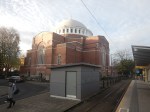
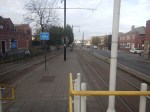
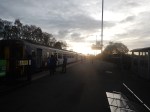
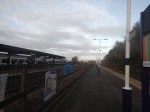
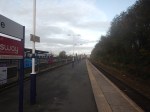

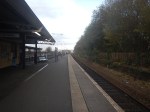

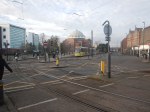
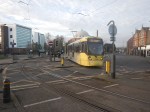
Note.
- The building in the style of a mosque, is actually a Catholic church.
- The island tram platform is at right angles to the railway lines through the station.
- The tram takes you a short distance to the North to the town centre.
This map shows the station and the tram stop.
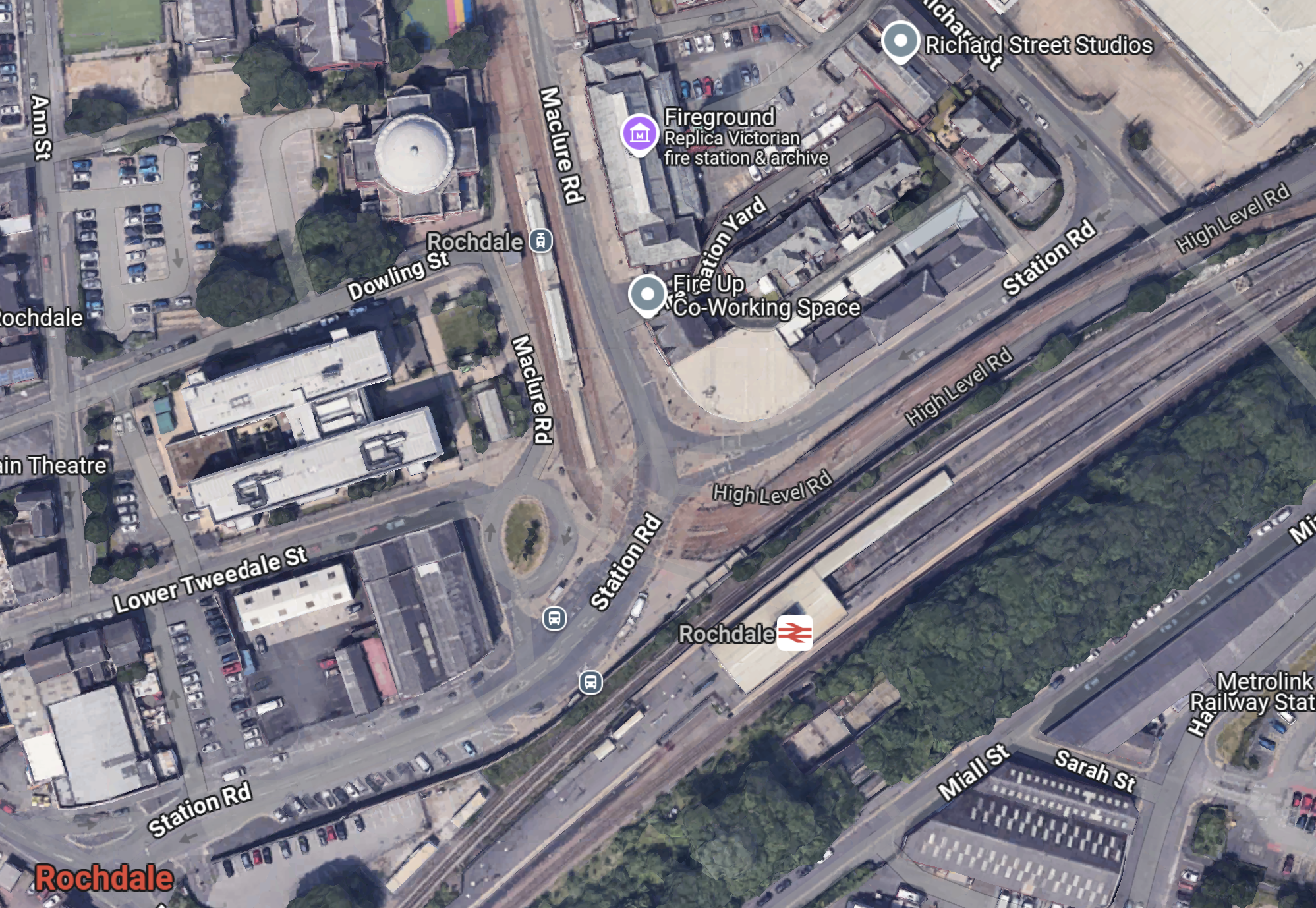
Note.
- The station has four platforms and two tram platforms.
- The two outer train platforms are quite long.
- The West-facing bay platform could probably take a five-car Lumo train.
- The tram platform runs North from the station.
- There is a co-working space by the tram-stop.
- There is a cafe in the station.
- There is a manned ticket office.
- Car parking is free.
- There are sixteen bicycle spaces.
With some tidying up, this could be a neat interchange.
These are my thoughts.
Will Rochdale Station Accommodate One Of Lumo’s Five-Car Trains?
The Wikipedia entry for Rochdale station, says this about the Bay Platform 4, that was used for the Cltheroe train.
In 2015, construction on a fourth railway platform began. The 135m-long bay platform was completed in 2016 and is used to relieve congestion at Manchester Victoria, where terminating trains would otherwise occupy the through platforms; numerous services now continue on to Rochdale as opposed to terminating at Victoria. It is located at the south end of the main island platform, with the southbound through line having been re-aligned slightly further east to accommodate the new terminating line and is used by the half-hourly stopping service from Blackburn/Clitheroe via Bolton and Victoria.
A 135 metre platform should be able to accommodate a five-car train with 27 metre carriages, so it looks like a 5-carriage Lumo train with 26-metre cars would fit in the bay platform 4.
Will Rochdale Station Accommodate A Pair Of Lumo’s Five-Car Trains?
Consider.
- Lumo’s Hitachi trains, like all their siblings can run in pairs. As I reported in Ten-Car Hull Trains, Hull Trains do it regularly.
- Rochdale station may or may not be able to accommodate a pair of five-car trains, but say if one of Manchester’s Premier League clubs was playing in the FA Cup Final, I’m sure they would find a way to run a ten-car train to London.
- It looks like Warrington Bank Quay, Newton-le-Willows, Eccles and Manchester Victoria could all take 10-car trains.
- Euston probably can as well, as 9-car and 11-car Class 390 trains are 217.5 and 265.3 metres respectively long respectively and a 10-car Lumo train would only be 260 metres.
Perhaps, one train can start at Rochdale and the other at Manchester Victoria, before they join at Victoria and go to London as a pair.
Could The Lumo Service Be Extended Across The Pennines?
Distances Along the Calder Valley Line to Leeds are as follows.
- Rochdale 10.4 miles –
- Hebden Bridge – 23.6 miles
- Halifax – 32.7 miles
- Low Moor – 37.5 miles
- Bradford Interchange – 40.4 miles
- Leeds – 49.8 miles
Note.
- The 70 km. rang of a Lumo train will be 43.5 miles.
- The train can be charged at both end stations and will be fully charged, when it leaves Manchester Victoria and Leeds.
- There are short lengths of electrification at Manchester Victoria and Leeds.
- There may be extra electrification between Bradford Interchange and Leeds, in the next few years.
I am fairly certain, that a battery-electric Lumo Class 803 train will be able to provide a London Euston and Leeds service.
How Long Will Services Take?
Timings on the extended route from London Euston to Manchester Victoria, Rochdale, Bradford and Leeds would take.
- London-Euston – Warrington Bank Quay – One hour and forty-four minutes – Current Avanti timings.
- Warrington Bank Quay – Newton-le-Willows -Eleven minutes – Current Northern timings.
- Newton-le-Willows – Eccles -Ten minutes – Current Northern timings.
- Eccles – Manchester Victoria – Ten minutes – Current Northern timings.
- Manchester Victoria – Rochdale – Fourteen minutes – Current Northern timings.
- Rochdale – Hebden Bridge – Sixteen minutes – Current Northern timings.
- Hebden Bridge – Halifax – Fifteen minutes – Current Northern timings.
- Halifax – Low Moor – Six minutes – Current Northern timings.
- Low Moor – Bradford Interchange -Ten minutes – Current Northern timings.
- Bradford Interchange – Leeds – Nineteen minutes – Current Northern timings.
Totals.
- London and Manchester Victoria – Two hours and fifteen minutes.
- London and Rochdale – Two hours and twenty-nine minutes.
- London and Bradford – Three hours and six minutes.
- London and Leeds – Three hours and twenty-five minutes.
I suspect times could be speeded up a bit.
Proposed Developments Of Manchester Metrolink
This sub-title has its own Wikipedia entry.
Developments that would be beneficial to a Lumo service might include.
A station at Cop Road on the Oldham and Rochdale Line, that would support new housing.
Tram-trains between Oldham and Heywood On the Calder Valley Line.
These two developments will directly bring more passengers to the Lumo service, but because the Lumo service has links with the Metrolink at Eccles, Manchester Victoria and Rochdale any Metrolink improvements should benefit the Lumo service.
Network Rail To Rebuild Multi-Million-Pound Bridge Across M62 In Rochdale
The title of this post, is the same as that of this article on RAILUK.
These four paragraphs describe the work.
Network Rail is investing more than £20 million in rebuilding a major railway bridge that takes trains over the M62 in Castleton, near Rochdale.
Passengers and motorists are urged to check before they travel in September 2024 as rail and road closures are required to replace the 42-metre-long, 2,000 tonne bridge.
The work will ensure safe and reliable journeys for passengers and freight over this vital structure for years to come.
To complete the work, engineers need to dismantle the old bridge and take it away on the M62. The new bridge materials will be delivered by road and built on site.
This Google Map shows the location of the bridge.
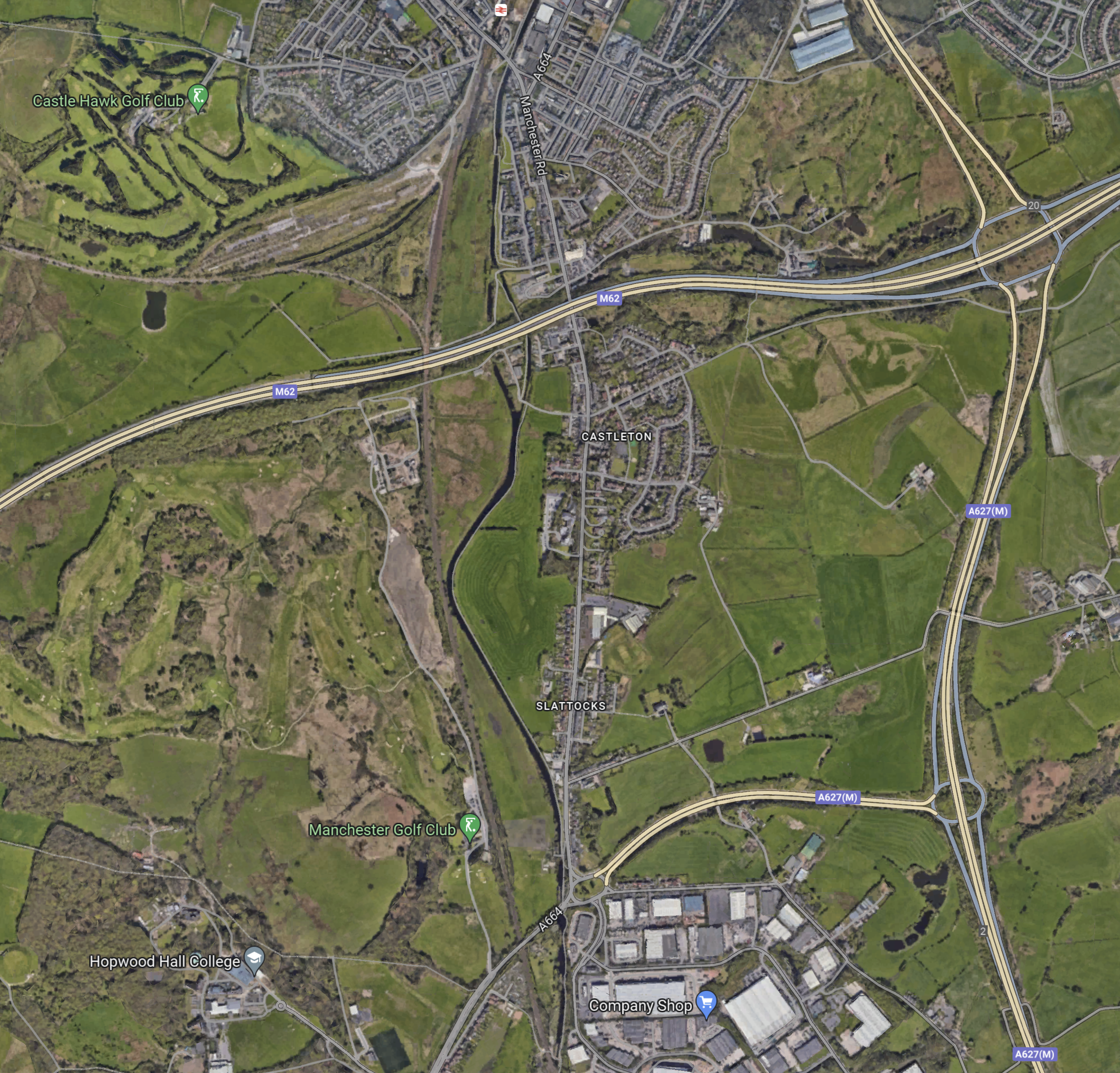
Note.
- Running East-West across the map is the M62, which is the TransPennine motorway with the big Junction 20 in the North-East corner.
- Junction 20 connects the M62 to the North-South A 627 (M).
- Meandering its way North-South up the middle of the map is the Rochdale Canal.
- Where the Canal leaves the map at its Northern edge, there is Castleton station on the Calder Valley Line, that is the picturesque route between Manchester in the West and Leeds and Bradford in the East.
- The Calder Valley Line runs North-South across the map to the West of the Rochdale Canal.
- The bridge to be replaced is where the Calder Valley Line passes over the motorway.
This Google Map shows a close up of the bridge.
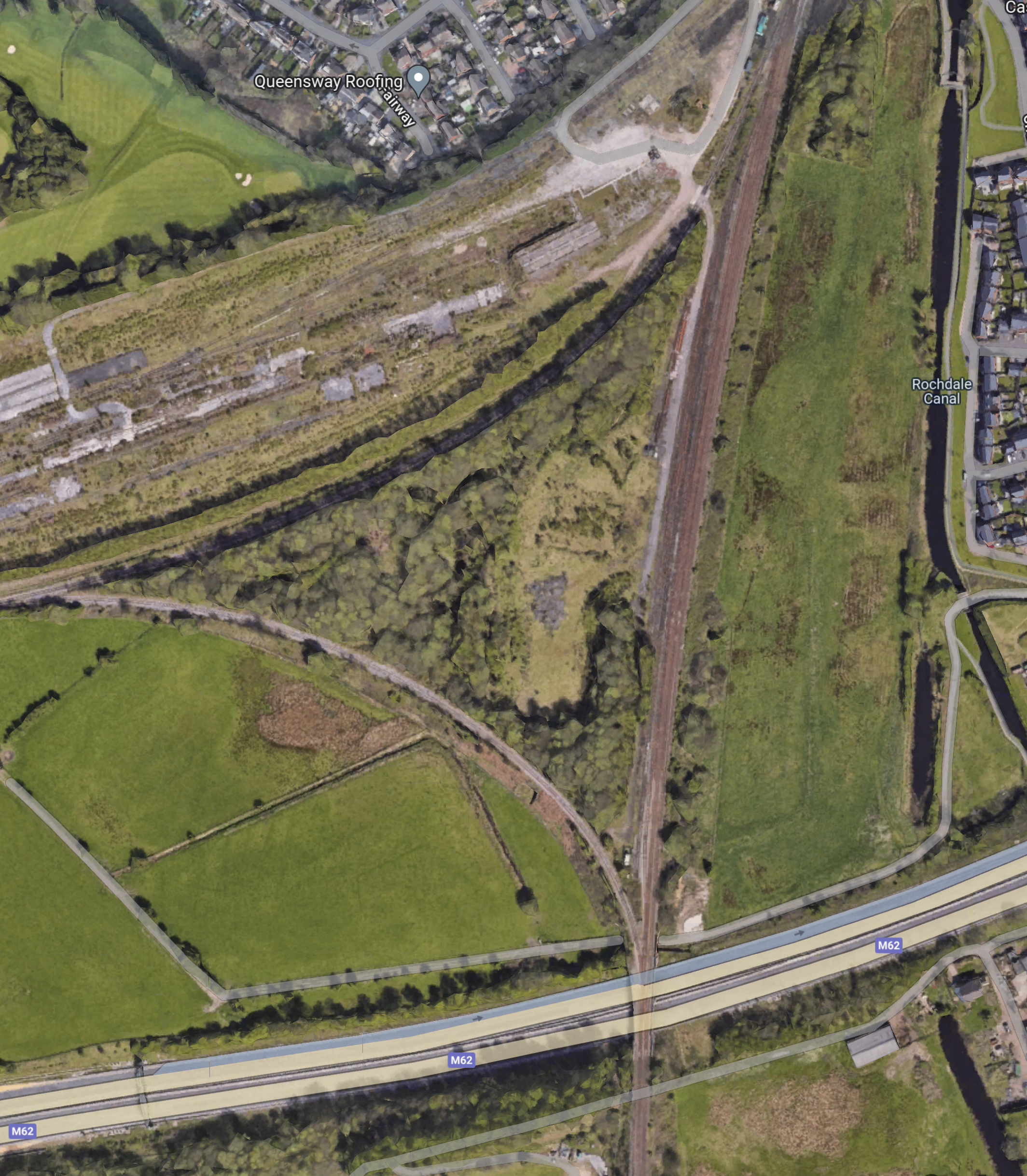
Note.
- The Rochdale Canal running North-South at the Eastern edge of the map.
- The M62 running East-West across the bottom of the map.
- The Calder Valley Line runs North-South and passes over the motorway.
- To the North of the motorway, there is a large triangular junction, that connects the heritage East Lancashire Railway to the Calder Valley Line.
This Google Map shows a 3D image of the bridge from the East.
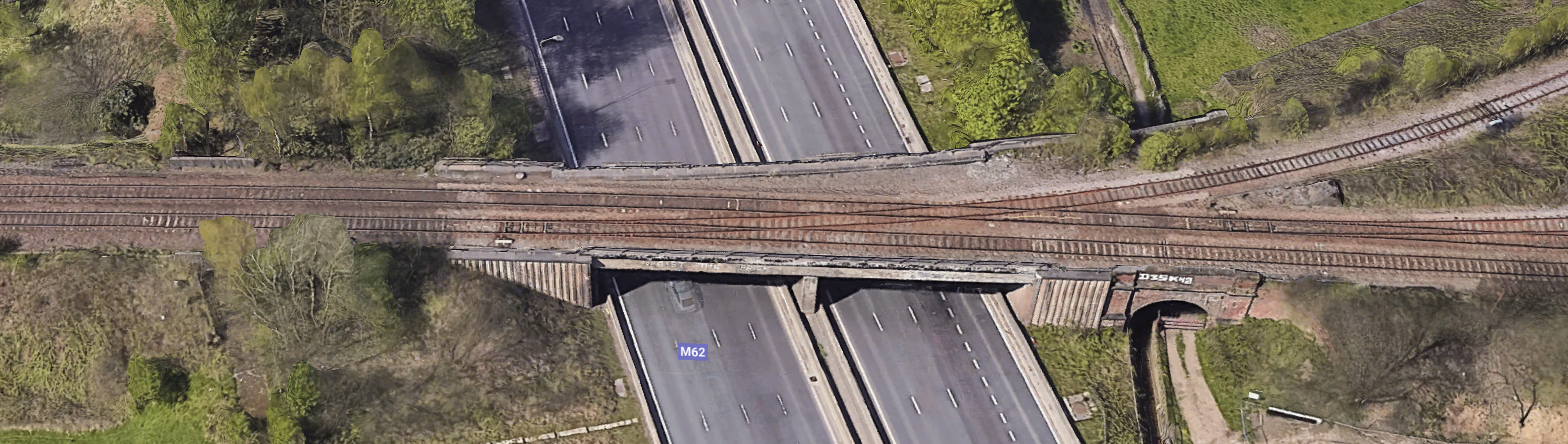
Ot looks to be a modern bridge, so when the M62 was built in the 1970s was some of these dodgy concretes used?
The RAILUK article does have these two paragraphs.
The bridge, known as Castleton bridge, carries 6% of the UK’s energy supply across the country, as freight trains carry material to and from Drax power station in Selby.
Olivia Boland, Network Rail sponsor, said: “The replacement of Castleton bridge is essential for the safe running of our railway, and crucial to the country’s economy as 6% of the UK’s energy supply relies on the bridge for transportation.
So is the £20 million being spent to in part make sure Drax keeps running?
Conclusion
This is going to cause traffic chaos.
Bradford Seeks Support On Rail Project Which Could Deliver £30bn Benefits
The title of this post is the same as that of this article on Rail Technology Magazine.
This is the first paragraph.
Delivery of a new city centre railway station in Bradford is estimated to boost the city’s economy by £30bn over ten years, with Bradford Council now seeking government support to deliver the major rail project.
The article also says that the the station, will be built on the site of St James Market, which is owned by the Council.
This Google Map shows the market and the surrounding roads and railways.
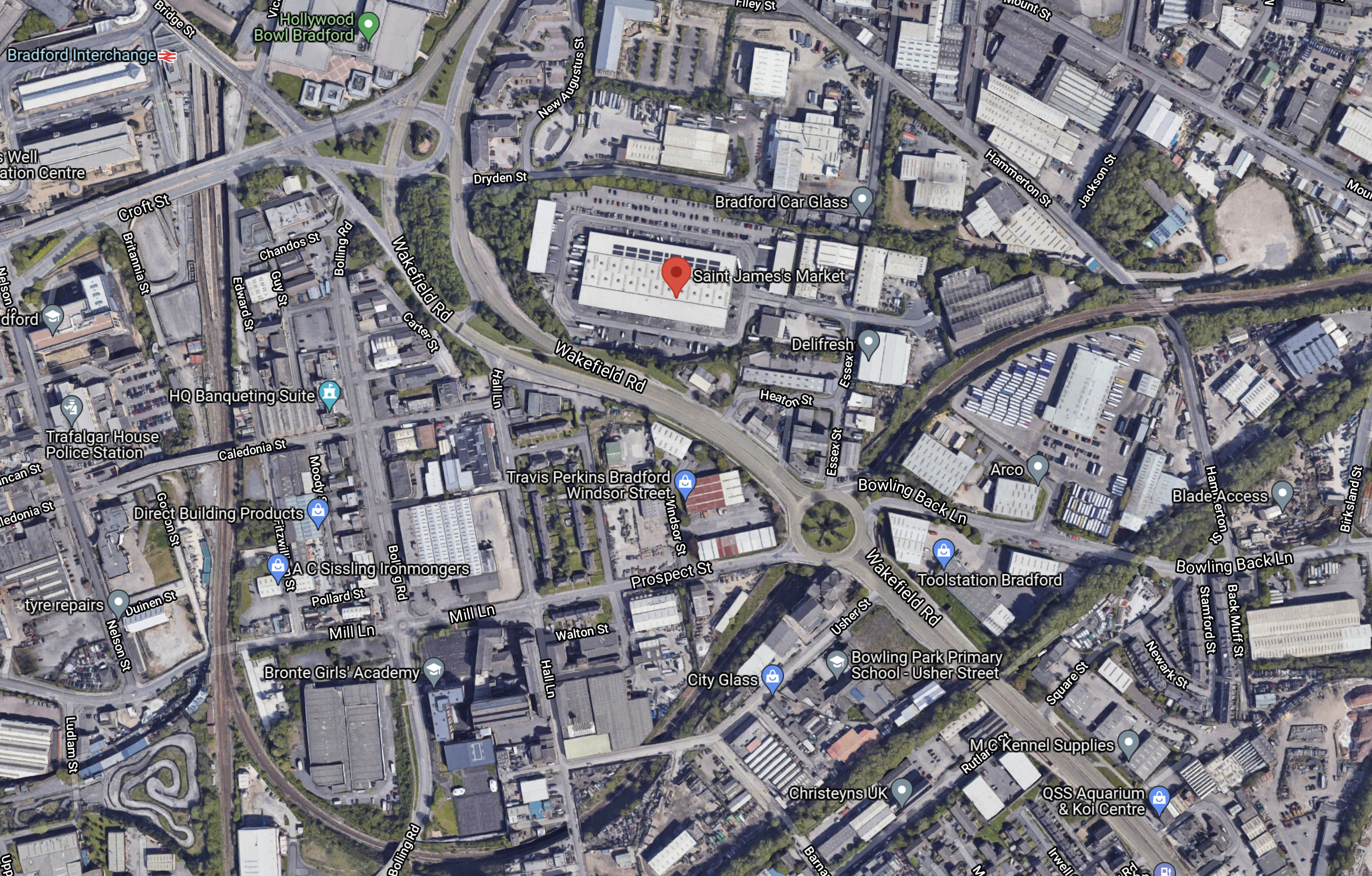
Note.
- Bradford Interchange station is in the North-West corner of the map.
- St. James Market is marked by the red arrow in the middle of the map.
- The railway Between Leeds and Bradford Interchange stations via New Pudsey station curves in a loop South of the market.
- The railway going South from Bradford Interchange goes to Bradford Low Moor and Halifax stations, before taking the Calder Valley Line via Hebden Bridge to Manchester Victoria station.
I think it would be feasible to build the station on the current route between Leeds and Bradford Interchange stations, with perhaps a mixture of through and bay platforms.
This second Google Map, shows Mill Lane Junction, where the lines from New Pudsey and Bradford Low Moor stations join South of Bradford Interchange station.
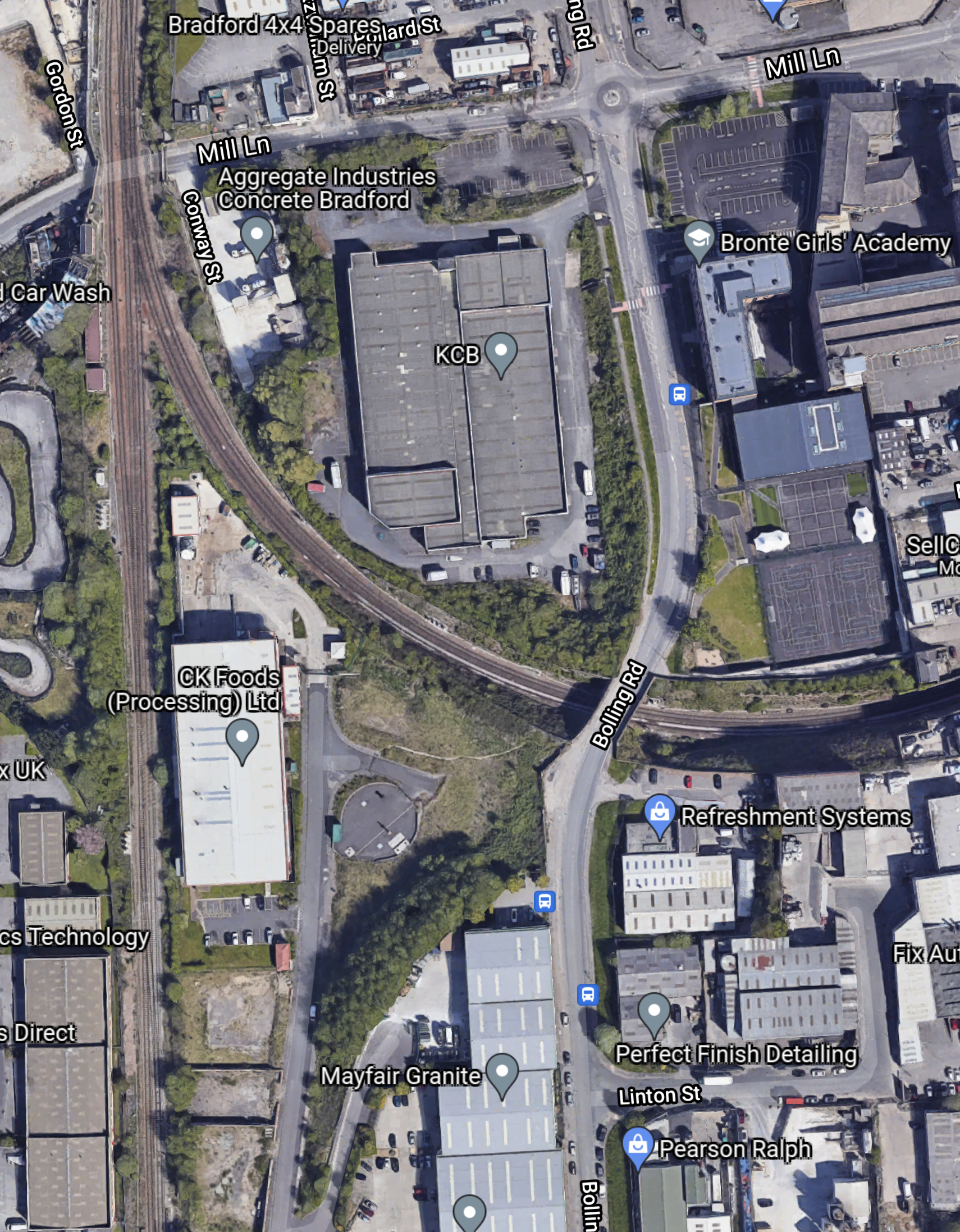
Note.
- Bradford Interchange station is on the rail line to the North.
- The proposed new Bradford station and the existing New Pudsey station are on the rail line to the East.
- Bradford Low Moor station is on the rail line to the South.
It would appear that an extra chord should be added to the junction to allow trains between Manchester Victoria and Leeds via the Calder Valley Line can call at the new station in Bradford.
Current trains between Manchester Victoria and Leeds using this route have to reverse at Bradford Interchange. The new station and the extra chord would avoid this.
Conclusion
I think that this proposal has possibilities.
Could A Class 399 Tram-Train With Batteries Go Between Manchester Victoria And Rochdale/Bury Bolton Street/Rawtenstall Stations?
In Rossendale Reopening Prospect, I looked at a proposal to run a new service between Manchester Victoria and Bury Bolton Street stations.
Could this route be run by a Class 399 tram-train with a battery capability?
These tram-trains would be very similar to the Stadler Citylink Metro Vehicles, that have been specified for the South Wales Metro.
- Wikipedia gives the weight of the vehicle as 66 tonnes.
- Manchester Victoria has an altitude of 44 metres
- Bury has an altitude of 100 metres.
- Rochdale has an altitude of 137 metres.
- Rawtenstall has an altitude of 174 metres.
- I will assume 200 passengers at 90 Kg. each, which gives a weight of 12 tonnes.
Using Omni’s Potential Energy Calculator gives the following.
- Manchester Victoria to Bury Bolton Street has an increase in potential energy of 12 kWh.
- Manchester Victoria to Rochdale has an increase in potential energy of 20 kWh.
- Manchester Victoria to Rawtenstall has an increase in potential energy of 28 kWh.
When you consider that a Class 230 train has 400 kWh of batteries in a two-car train, I don’t think that there will be any problem fitting batteries big enough to take a Class 399 tram-train from Manchester Victoria to Bury Bolton Street, Rochdale or Rawstenstall stations under battery power with a full load of passengers.
- The batteries would be charged in Manchester Victoria station.
- Returning to Manchester Victoria station would use a small amount of battery power, with some assistance from Newton’s friend; gravity.
- The batteries would get a certain amount of charge from the regenerative braking of the tram-trains.
This Google Map shows the Eastern approaches into Manchester Victoria station.
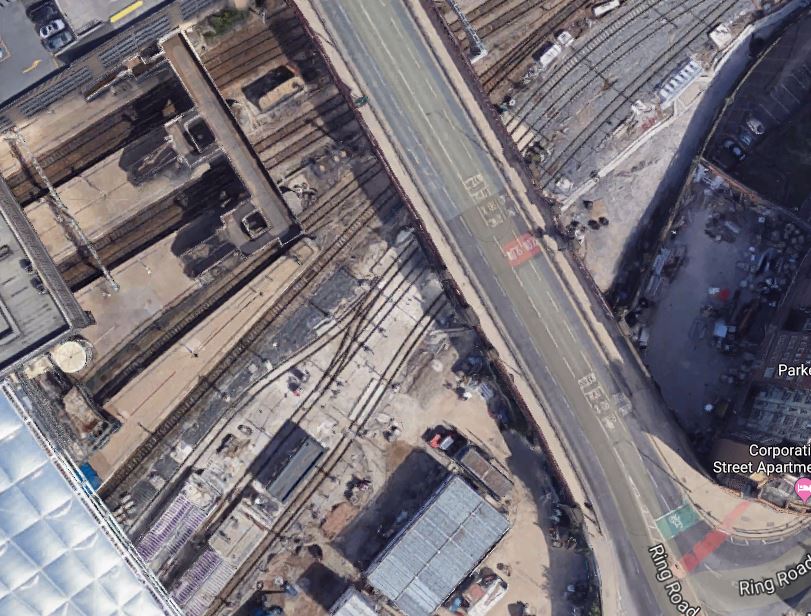
Note.
- The four through platforms numbered 3 to 6.
- The two bay platforms numbered 1 and 2.
- The four platform faces and three tracks of the Metrolink.
Having seen several tram-train systems all over Europe, I believe it would be possible to connect tram-trains running on batteries on the Calder Valley Line to the Manchester Metrolink at Manchester Victoria station.
- Going from Manchester to Bury Bolton Street, Rochdale or Rawtenstall, the tram-train would stop in the Manchester Victoria tram-stop, drop the pantograph and then continue on its way under battery power.
- Returning from the North, the tram-train would stop in the Manchester Victoria tram-stop, raise the pantograph and then continue on its way using power from the overhead wires.
- Batteries would be charged whilst running through Manchester.
There couldn’t be too many tram-train systems that would be easier to build than this?
It is interesting to note that Hebden Bridge station is just twenty-three miles from Manchester Victoria station and has an altitude of 190 metres.
So would it be possible for a Class 399 tram-train to reach Hebden Bridge station on battery power? I very much think it would be!
Class 399 Tram-Trains And Class 156 Trains
Class 156 trains are one of the better workhorses of the railways in the North and despite their age, they scrub up well.
If their performance is compared to that of a Class 399 tram-train, they are not that different.
- Noise and vibration of the electric tram-train is obviously much lower.
- The modern interior of the tram-train is geared to the needs of passengers.
- Passenger capacity of the two vehicles is also about the same.
- In Karlsruhe, tram-trains travel for up to 100 miles from the centre of the city.
Both Karlsruhe and Sheffield use three-car tram-trains, but Valencia uses much longer ones, so on heavily-used routes larger tram-trains could be used.
I doubt there would be many complaints, if a Class 156 service were to be replaced with one run by Class 399 tram-trains.
Electrification Of The Calder Valley Line
Electrifying the Calder Valley Line with 25 KVAC overhead wires as far as Rochdale station, would certainly make running to Hebden Bridge station possible.
- That electrification would also mean that electric trains could be turned-back at Rochdale station, just as diesel trains are now!
- I have flown my helicopter along the route and it looks like of the seven or eight bridges on the route, mostly appear to be modern structures for new roads or motorways.
- As 25 KVAC overhead electrification is currently being erected between Manchester Victoria and Stalybridge, a spur to Rochdale would be very much a simple addition.
It could be a very useful short length of electrification.
Tram-Trains In Manchester
This article on Rail Technology Magazine was puiblished yesterday and is entitled Plans For Tram-Trains In Manchester Unveiled As Grayling And Burnham Mull Expansion Of Metrolink.
Conclusion
Could we see tram-trains running from Bury Bolton Street, Hebden Bridge, Rawtenstall and Rochdale into Manchester Victoria and then taking to the existing tram network?
If you’ve ever been to Karlsruhe, as I have to see the Class 399 tram-trains German cousins, you wouldn’t rule out anything.
That would include tram-train services to Blackburn, Buxton, Chester, Glossop, Hebden Bridge, Sheffield, Southport and Wigan.
Rossendale Reopening Prospect
The title of this post is the same as that of an article in the February 2019 Edition of Modern Railways.
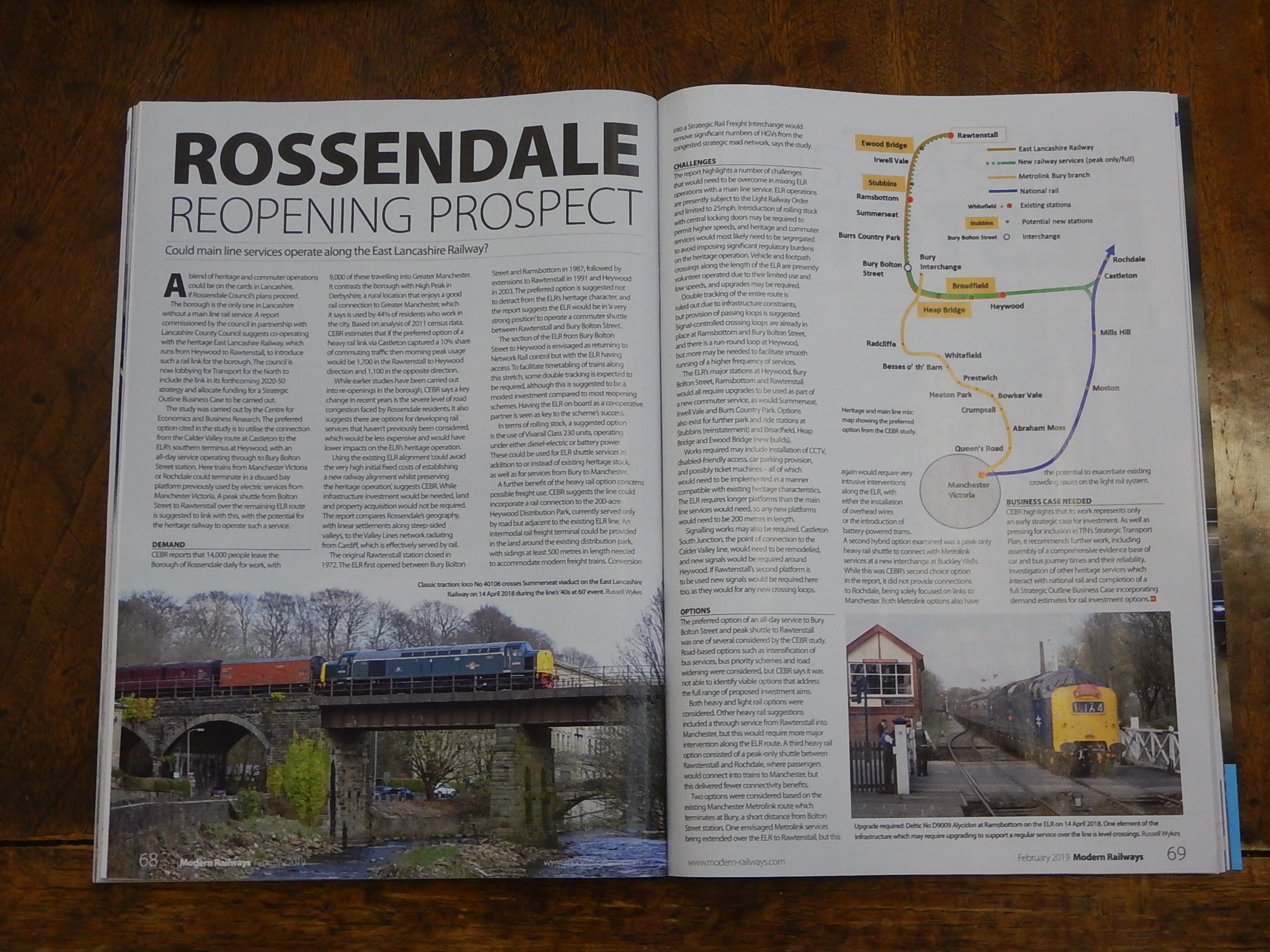
This is the opening two paragraphs.
A blend of heritage and commuter operations could be on the cards in Lancashire, if Rossendale Council’s plans proceed.
The borough is the only one in Lancashire without a main line rail service. A report commissioned by the council in partnership with Lancashire County Council suggests co-operating with the heritage East Lancashire Railway, which runs from Heywood to Rawstenstall, to introduce such a rail link for the borough.
Yesterday, I had a comment read out on the BBC, as I discussed in Wake Up To Money – New Stations.
Wake Up To Money yesterday was broadcast from Darwen, which is only a valley away from Rossendale.
- One of the complaints on the program was about crowded roads and bad transport links to Manchester and Manchester Airport.
- It looks to me, that the proposed Rossendale services will fulfil a similar need.
- The main objective appears to be to create good links to Manchester and Manchester Airport, with a secondary objective of creating a link across the Pennines to Leeds with a change at Rochdale.
The article gives more details of the proposal.
Track
The plan envisages reinstating the route between Rawtenstall and Castleton Junction on the Calder Valley Line.
The section between Rawtenstall and Heywood stations, via Bury Bolton Street station is the heritage line of the East Lancashire Railway (ELR). It is best described as predominately single-track with passing loops.
The article says this about improving the track.
The section of the ELR from Bury Bolton Street to Heywood is envisaged as returning to Network Rail control but with the ELR having access. To facilitate timetabling of trains along the stretch, some double-tracking is expected to be required, although this is suggested to be a modest investment compared to most reopening schemes. Having the ELR on board as a co-operative partner is seen as key to the scheme’s success.
Having flown my virtual helicopter along the line, it looks to me, that it could become another scenic route out of Manchester.
Castleton Junction
This Google Map shows Castleton Junction, where the East Lancashire Line meets the Calder Valley Line.
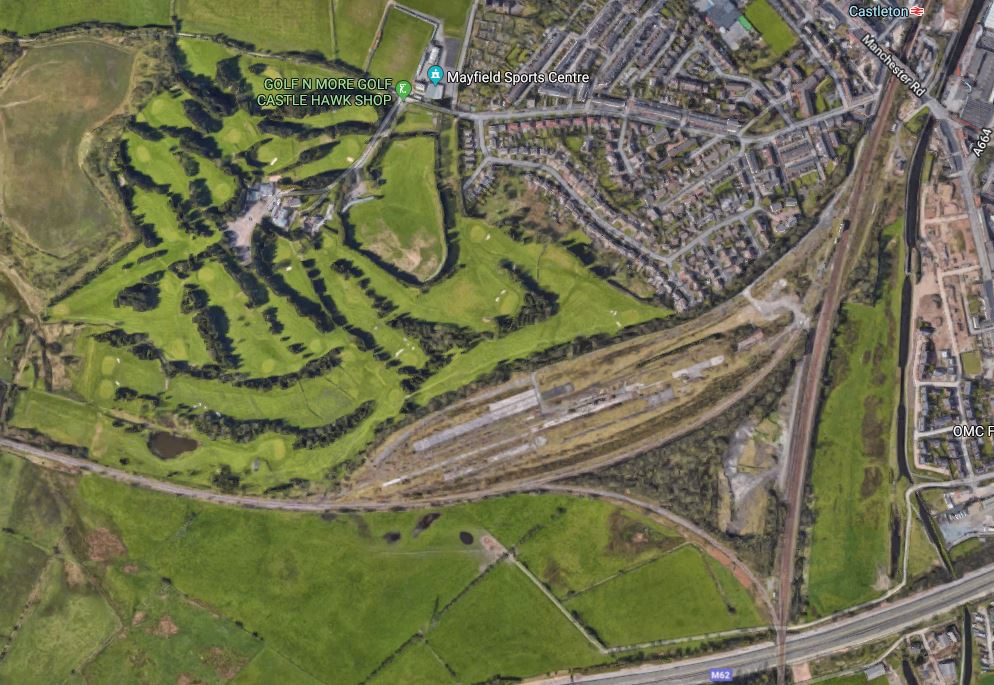
Note.
- The Calder Valley Line runs North-South.
- The ELR goes off to the West.
- Castleton station is in the North-East corner of the map.
What was or is the large site to the North-West of the junction?
The Junction will need to be upgraded and resignalled.
Electrification
It would be very unlikely, that the route will be electrified.
Although, I suppose there is a chance, that the Calder Valley Line might be electrified, to create an electrified route between Leeds and Manchester Victoria.
- If this were to happen, then there would be electrification between Manchester Victoria and Rochdale.
- Castleton Junction, where the new route would join the Calder Valley Line would be electrified.
This would make it easier and more likely for battery-electric trains to work the new route.
Possible Routes
Three routes are suggesting in the article.
- Manchester Victoria and Bury Bolton Street
- Bury Bolton Street and Rochdale
- Bury Bolton Street and Rawtenstall – Peak-Hour shuttle.
It is suggested that the third route would be run by the ELR.
Rolling Stock
The article says this about rolling stock.
In terms of rolling stock, a suggested option is the use of Vivarail Class 230 units, operating under either diesel-electric or battery power. These could be used for ELR shuttle services in addition to or instead of existing heritage stock, as well as for services from Bury to Manchester.
The Class 230 trains are an obvious choice, but I think that other trains could also be suitable.
These are my thoughts.
Class 230 Trains
I described a ride in a Class 230 train in Battery Class 230 Train Demonstration At Bo’ness And Kinneil Railway.
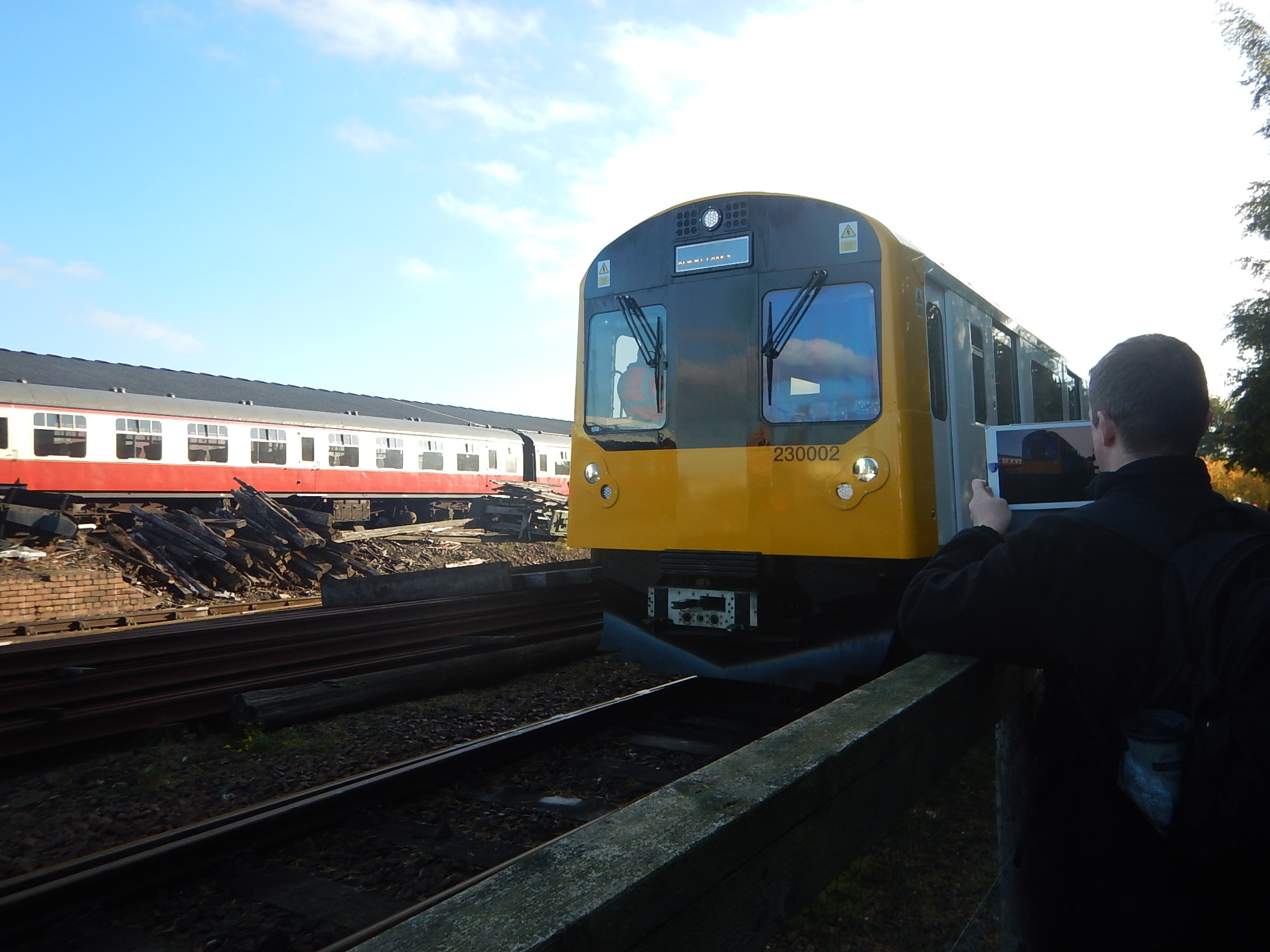
The Class 230 train would have these characteristics.
- The three-car train has a useful capacity of around 300 passengers.
- The range on battery power should enable a service between Bury Bolton Road and Manchester Victoria stations.
- The batteries can be charged in under ten minutes.
- The operating speed is 60 mph.
- The trains have been designed to be easy to service and this can be done on a remote basis.
- The trains are of an age, to fit in well on a heritage railway.
- I suspect the average competent heritage railway could do the servicing.
The trains also have the advantage of large windows for looking at the scenery.
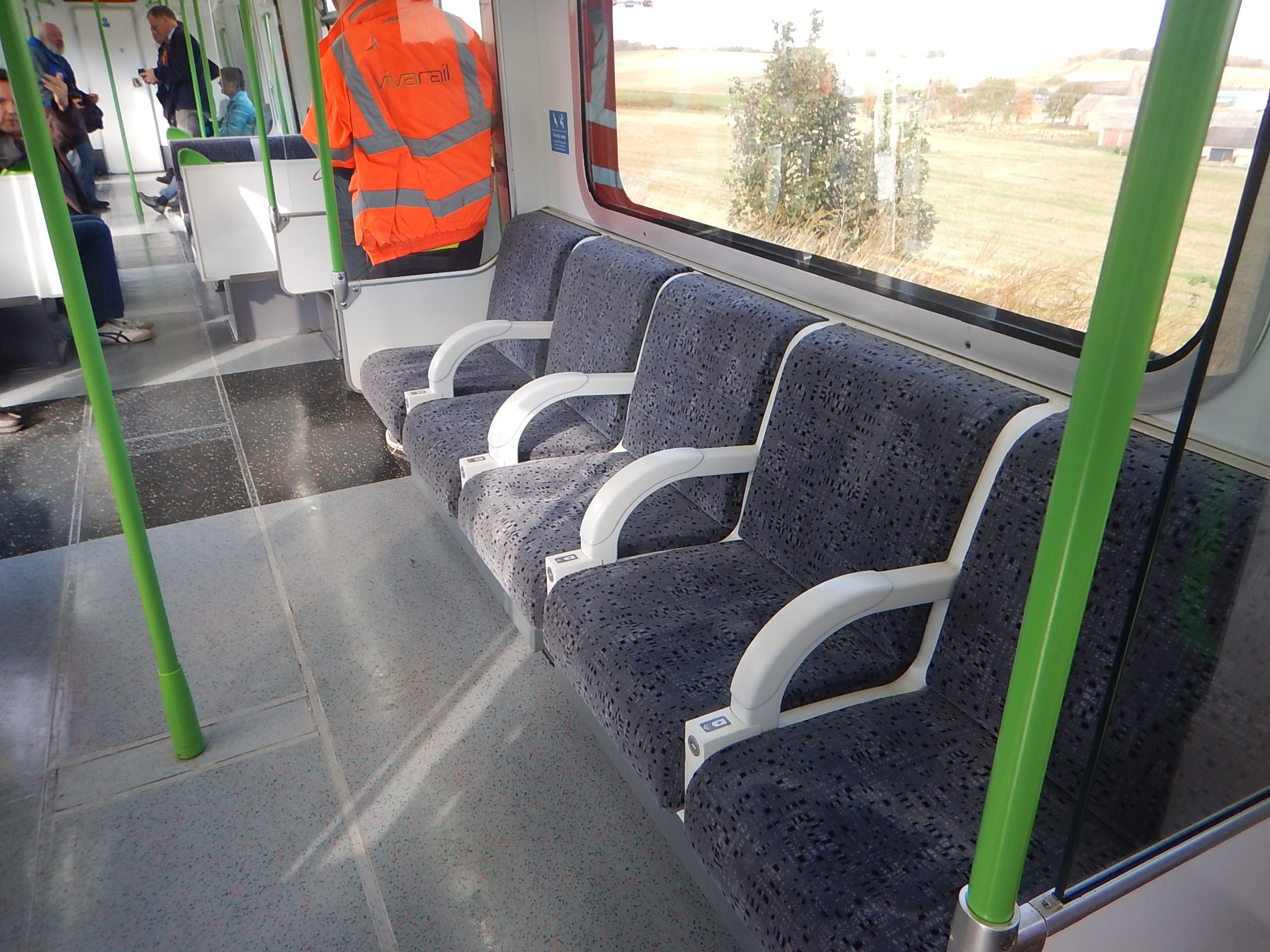
The trains would need to be charged at the end of the route and I suspect that Vivarail’s fast charging system would handle this in the terminal stations.
Class 769 Trains
Class 769 trains are electro-diesel trains, that use their diesel engines, where there is no 25 KVAC overhead electrification.
They are four-car trains with a passenger capacity of over 300 passengers.
They would have a very big advantage for the train operator.
Services across Manchester are often paired to give travellers the chance to do cross-city journeys without changing trains.
Using Class 769 trains would enable more services to be paired up.
Class 399 Tram-Trains
Class 399 tram-trains are under trial in Sheffield and they will also be used on the South Wales Metro.
The terrain in Rossendale involves a hundred metre or so climb from Bury Bolton Street to Rawtenstall. Rochdale is perhaps fifty metres higher than Bury Bolton Street.
Consider a Class 399 tram/train, working between Bury Bolton Street and Rawtenstall stsations.
- Wikipedia gives the weight of the vehicle as 66 tonnes.
- The altitude difference is 120 metres.
- I will assume 200 passengers at 90 Kg. each, which gives a weight of 12 tonnes.
This means that the train has a increase of potential energy of 25 kWh at Rawtenstall station. This would be easily stored in an appropriately-sized traction battery.
It would appear that tram-trains should be able to climb to Rawtenstall, provided they could get to Bury with a full battery.
I look at this in detail in Could A Class 399 Tram-Train With Batteries Go Between Manchester Victoria And Rochdale/Bury Bolton Street/Rawtenstall Stations?
Alstom Breeze Trains
Alston Breeze trains could be a possibility, if hydrogen trains are compatible with steam trains.
The trains would also be able to work across Manchester, as the Class 769 trains will be able to.
Battery-Electric Multiple Units
In Northern’s Battery Plans, I discuss CAF’s proposal to Northern to create battery-electric Class 331 trains.
These could be ideal.
Diesel Multiple Units
Northern have lots of better quality diesel multiple units including Class 156 and Class 170 trains. The company also has around sixty new Class 195 diesel multiple units on order.
These could obviously handle the route, but would it be better to use battery or more capable bi-mode trains on the route?
Diesel Use In Manchester
I suspect too, that train companies, their staff, passengers and all Mancunians would like to see Central Manchester’s railways become a diesel-free zone.
Train Timings
I obviously don’t have accurate figures, but I have a feeling that most of these trains could do a round trip in an hour between Manchester Victoria and Bury Bolton Street stations. The Class 230 trains would probably have time for a fast charge at each end of the route.
My Choice Of Train
It will be Class 230 or Class 769 trains.
Both trains could work the services to Bury Bolton Street station from Manchester Victoria and Rochdale stations.
The Class 769 has two advantages.
- It is the larger train.
- It could use its electric capability to cross Manchester.
Both trains wouldn’t look out of place running a shuttle between Bury Bolton Street and Rawtenstall stations, as they are rebuilt trains from a previous era.
Stations
A few points about the existing stations.
Bury Bolton Street Station
Bury Bolton Street station has four platforms and will be the interchange between the new services and those of the ELR.
The station has a bay platform that faces South East.
With modern signalling, I would expect that it could handle four trains per hour (tph).
Perhaps, these could be two tph from both Manchester Victoria and Rochdale stations.
Heywood Station
This Google Map shows Heywood station.
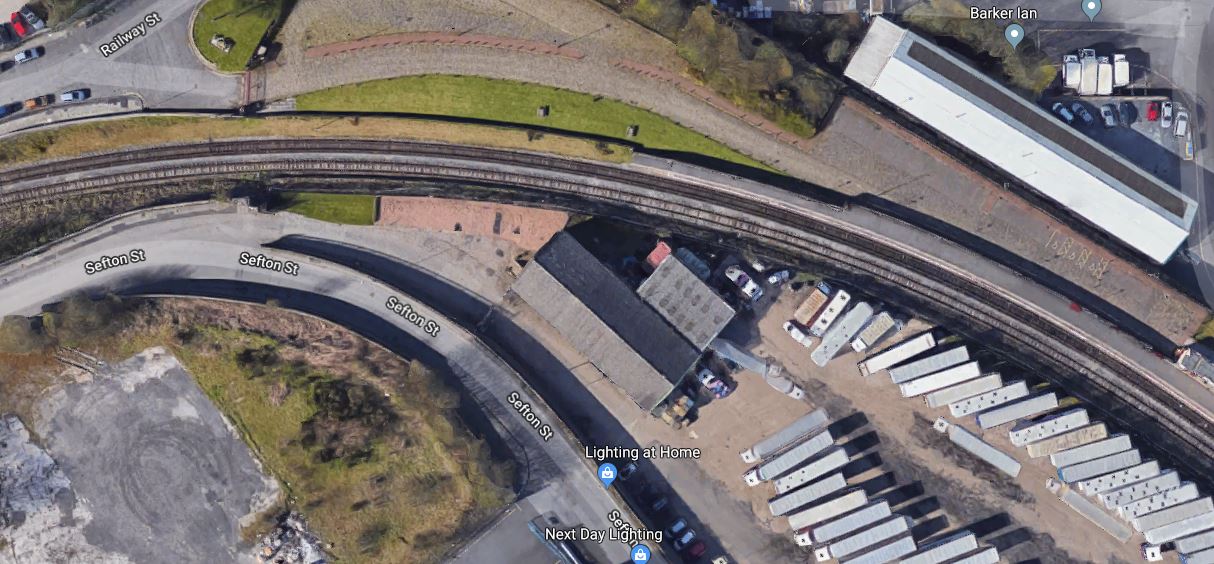
At present it has a long single curved platform.
I suspect to accommodate the new services, which could be four tph in both directions, the station would need a second platform.
Ramsbottom Station
This Google Map shows Ramsbottom station.
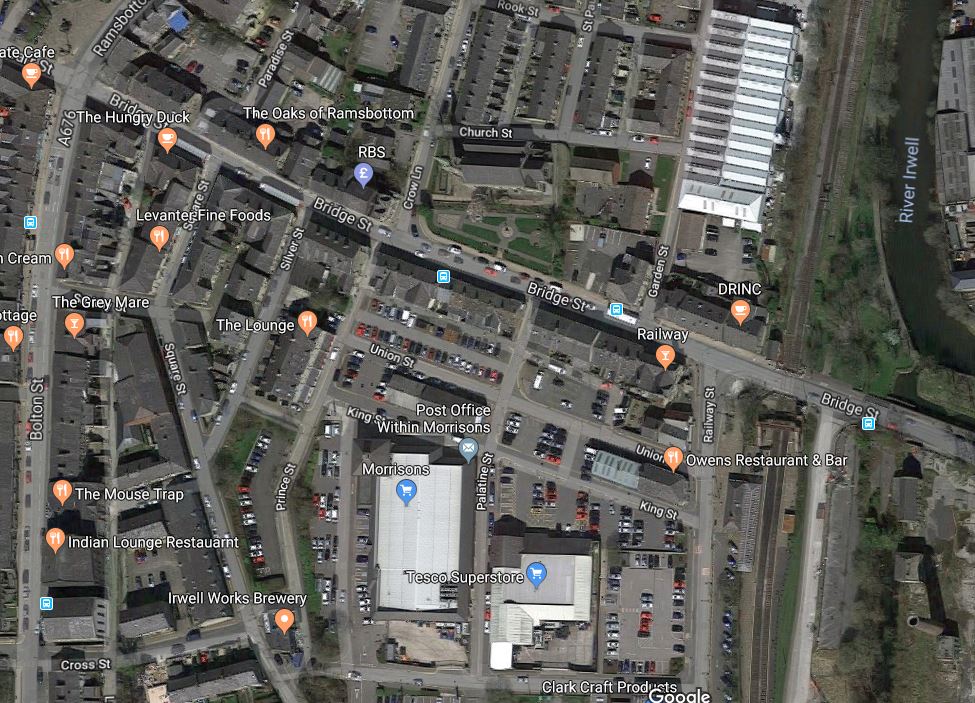
It is a two platform station, which appears to be close to the Town Centre and a Tesco Superstore and a Morrison’s.
Rawtenstall Station
This Google Map shows Rawtenstall station.
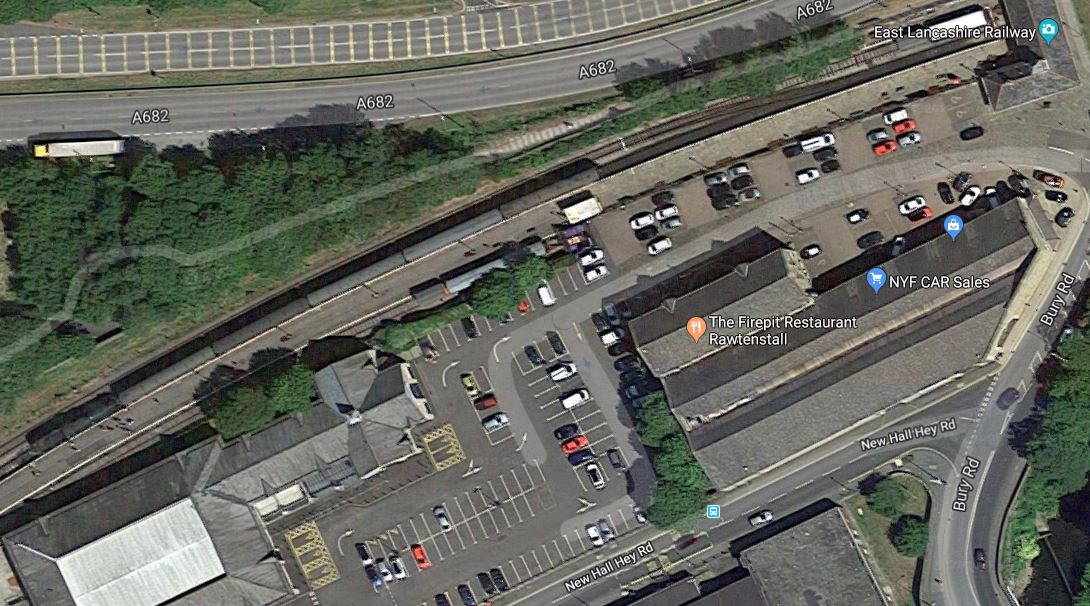
Note, the train in the single platform with a run round loop for a locomotive.
The article says it would be possible to create a second platform at the station.
It would appear that if Class 230 trains were to be used for the proposed.Peak Hour service to Rawtenstall station, then there would be space for installing a fast charger.
Rochdale Station
Rochdale station will be a terminus for services from Bury Bolton Street station.
This paragraph in the Wikipedia entry for Rochdale station describes the new bay platform at the station and how it is used.
In 2015, construction on a fourth railway platform began. It is located at the south end of the main island platform, with the southbound through line having been re-aligned slightly further east to accommodate the new terminating line.
This section of the Calder Valley Line appears to be very busy with a train every four minutes.
I wonder, if by diverting some services to Bury Bolton Street station, this helps ease traffic on the Calder Valley Line.
Could trains do the following triangular route?
- Manchester Victoria
- Heywood
- Bury Bolton Street
- Heywood
- Rochdale
- Manchester Victoria
Train timetablers with much more knowledge than myself, will have fun getting a workable timetable.
New Stations
About half-a-dozen new stations will need to be built.
Most will probably be fairly simple affairs and those North of Bury Bolton Street station could probably by just a single platform.
There is one possibly proposed station, that could be more complicated.
Buckley Wells station could be built where the Bury Line of the Manchester Metrolink and the East Lancashire Line cross by the A56.
Park-and-Ride stations are also suggested in the article at Broadfield, Ewood Bridge, Heap Bridge and Stubbins.
Freight
The article also raises the possibility of running freight trains between the Calder Valley Line and Heywood.
This is said.
,The line could incorporate a rail connection to the 200-acre Heywood Distribution Park, currently served only by road, but adjacent to the existing ELR line. An intermodal rail freight terminal could be provided in the land around the existing distribution park, with sidings at least 500 metres in length needed to accommodate modern freight trains. Conversion into a Strategic Freight Interchange would remove significant numbers of HGVs from the congested strategic road network.
Would the implementation of this plan for freight be popular with the residents of Rossendale?
Conclusion
The proposal is a comprehensive one, which could benefit several groups.
- The residents of Rossendale.
- Vsitors to the area
- Commuters to Manchester
- Travellers across the Pennines
- Travellers to Manchester Airport
- Freight companies.
The proposal needs further investigation to see whether there is a strong business case for implementation.
I also think, that this sort of project model, where a heritage line is integrated with the National Rail network, can be repeated elsewhere in the country.
We have some very well-managed heritage railways in the UK, some of which could be extended to the National Rail network to provide much needed passenger and freight services to new and existing developments and difficult to access towns.
The rules need to be developed, so that these projects can be developed.
Grayling Confirms Electrification Will Form Part Of £3bn TransPennine Upgrade
The title of this post is the same as that of this article on Rail Technology Magazine.
his is a key section of the article.
But now, in a letter to the Railway Industry Association (RIA), Grayling has finally confirmed that the TransPennine upgrade will be a “rolling programme of enhancements,” including both major civil engineering projects and electrification.
He wrote: “The key to delivering improved journey times on what is a very circuitous route through the Pennines involves rebuilding and relaying most of the track bed from Manchester to York.
“We are awaiting Network Rail’s final project plan, but we have instructed them to prioritise those elements which bring the quickest passenger benefits. This will include things like straightening lengths of track to improve line speed.”
If nothing else Chris Grayling’s comments appear to have been measured ones and not a quick response to ht out to shout down the various groups for whom nothing short of full electrification is an acceptable solution.
The Routes Across The Pennines
There are three main routes across the Southern section of the Pennines. From North to South they are.
The Calder Valley Line from Manchester Victoria and Preston in the West to Leeds, Selby and York in the East via Hebden Bridge, Halifax and Bradford.
The Huddersfield Line from Manchester Airport, Piccadilly and Victoria in the West to Leeds, Hull and York in the East via Stalybridge, Huddersfield and Dewsbury.
The Hope Valley Line from Manchester Piccadilly in the West to Sheffield in the East.
Note.
- The three routes are much of a muchness with operating speeds in the region of 70-90 mph.
- There are good connections in the West with Blackpool, Chester, Liverpool and the West Coast Main Line.
- There are good connections in the East with Hull, Newcastle, York and the East Coast Main Line.
- Some connecting routes like the East and West Coast Main Lines are electrified 125 mph routes, but others like the connections to Chester, Hull and Scarborough are slower diesel routes.
- Some electrified routes like Liverpool to Manchester via Chat Moss, although they are electrified need speed improvements.
- The four major cities served by the three cross-Pennine routes; Leeds, Liverpool, Manchester and Sheffield all Have sizeable local tram or rail services.
If all these routes could be improved, they would create a core network of cross-Pennine routes.
There is also two other secondary routes that could be improved or created as diversion routes, whilst work is carried out on the main routes.
- A conductor pointed out to me, that passenger trains can go between Blackburn and Leeds via the Ribble Valley Line and Skipton with a reverse at Hellifield station.
- And then there’s the reopening of the route between Sklipton and Colne, which appears to be top of a lot of politicians and train companies lists.
Surely, these could be used to provide extra capacity if one of the Calder Valley or Huddersfield Lines was closed for improvement.
Some suggestions, I’ve seen about the Skipton to Colne Line, even say it could be used for freight.
I believe that with some measure of careful planning, the number of train paths across the Pennines can be increased, to an extend that would ease the improvement of the three main routes.
The Project Has A High Degree Of Difficulty and Complexity
The biggest upgrades of a UK railway in my time has been the electrification of these three main lines from London.
- West Coast Main Line, which was modernised and electrified by British Rail in the 1960s and 1970s.
- East Coast Main Line, which was electrified by British Rail in the 1980s.
- Great Western Main Line, which has been undergoing a tortuous and expensive upgrade and electrification for several years.
So how did Network Rail mess up on the Great Western, when British Rail completed the other lines without massive amounts of trouble?
Various reasons have been put forward, but I believe it has a lot ot do with the change of attitudes on the public’s behalf and new regulations in the intervening forty years.
As an example consider the electrification of the Grade II* Listed Digswell Viaduct in the 1970s. British Rail just did it and I don’t even know, if there were any objections.
Today, the Heritage lobby and various other pressure groups, would have had a field day. In the 1970s, most people accepted that the Government and Bitish Rail knew best.
Forty years ago, passengers accepted the disruption caused by works on the railways. Now they don’t and there are millions more regular travellers to complain.
Upgrading the main routes across the North have a lot of problems that will rear their ugly heads as the routes are upgraded.
- Many of the routes are double-track lines hemmed in by cuttings, villages and towns.
- There are large numbers of bridges, viaducts and level crossings on the routes.
- Many of the routes have speed limits around 80 mph.
- How good is the documentation of the routes?
- Sitting in the middle of the routes is the Grade I Listed Huddersfield station and the Grade II Listed Hebden Bridge station.
To see the problem of these lines take the following trains.
- Blackburn to Hebden Bridge
- Hebden Bridge to Leeds
- Leeds to Huddersfield
- Huddersfield to Manchester Airport.
Take a break at the three intermediate stations.
- Hebden Bridge station is a gem of a Victorian station.
- Leeds is a modern station overflowing with passengers.
- Huddersfield station is one of the North’s great buildings.
In addition, note the number of arched stone bridges, that are probably not high enough for electrification.
To upgrade and electrify these lines is not the simpler project of say electrifying the Midland Main Line, where much of the route is in flat open country.
Throw Every Possible Proven Technique At The TransPennine Improvement
If ever there was a project, where one method doesn’t fit all, then this is that project.
Every sub-project of the work must be done in the best way for that sub-project.
Decisions must also be taken early, about factors that will influence the overall project.
I believe that Crossrail and the new South Wales Metro were designed using an holistic approach.
- New trains have been designed in conjunction with the route.
- Electrification has been simplified by innovations, like batteries on the trains.
- Trains and platforms will fit each other.
- Station design has evolved for efficient train operation.
- Signalling will be digital to allow higher frequencies.
Because of the complexity and importance of the overall TransPennine project, only the best solutions will do!
Some will definitely not be invented here!
A few of my thoughts follow!
A Rolling Programme Of Improvements
This would be a good idea, as improvements can be done in what is the best order for all the stakeholders.
For instance there might be a bridge that will need to be replaced because it is too low and/or structurally, it is approaching the end of its life.
- But it will cause massive disruption to replace.
- On the other hand once replaced it might cut perhaps ten minutes from journeys passing through, as the track can be straightened.
Perhaps it will be better to bite the bullet and get this project done early? In the past, I feel Network Rail has often delayed tackling difficult projects. But if they did a good on-time job, it might help to convince people, that they mean what they say in future.
Improving The Tracks
I said earlier, that Chris Grayling wrote this.
The key to delivering improved journey times on what is a very circuitous route through the Pennines involves rebuilding and relaying most of the track bed from Manchester to York.
No building, no matter how humble or grand can be built without sound foundations.
What Chris Grayling said would be a good way to start the project.
It would give the following benefits.
- Operating speeds might be raised in places.
- Important loops and crossovers, that have been needed for decades could be added.
- Structures like bridges, past their useful life could be replaced.
- Some level crossings could be removed.
If it were done thoroughly, passengers would see reduced journey times.
The new rolling stock that is already on order for the route would be able to work the various TransPennine routes when they are delivered.
At the end of the work, Network Rail would also have a fully-surveyed railway in tip-top condition.
Electrification
It is my belief that to electrify a new or well-surveyed rebuilt existing railway, is much easier than electrifying an existing route.
If parts of the improved route are to be electrified, it would be like electrifying a new railway.
These points should be noted.
- Old mine workings and other Victorian horrors were found, when trying to electrify through Bolton.
- On the Gospel Oak to Barking Line in North London, they found an undocumented sewer.
- To sort out the electrification between Preston and Blackpool, Network Rail shut the route and rebuilt the railway before electrifying it.
A similar approach to Preston and Blackpool might help on sections of the main TransPennine routes.
It may be a more expensive process with all the surveying and rebuilding, but it would appear to a more safety-first approach.
The Stone Bridges And Discontinuous Electrification
I’d be very interested to know how many of those bridges could be handled using discontinuous electrification.
The wires go through the bridge in the normal way, but the section under the bridge that possibly could be a safety hazard, is earthed so that there is a dead section of wire.
The section is insulated from the 25 KVAC wires on either side by something like a ceramic rod, so that the trains’ pantographs can ride through easily under the bridge.
The disadvantage is the trains need batteries for power, where there is none coming from the overhead wire.
The technique has already been earmarked for the electrification of the South Wales Metro.
Tunnel Electrification
Crossrail and the Severn Tunnel do not use conventional electrification. A rail is fixed in the roof and the pantograph runs on the rail.
The TransPennine routes have numerous tunnels and I believe that many could be electrified in this way.
It might even be possible to automate the process, as it was in the Crossrail tunnels. But they were modern concrete tunnels, not Victorian ones with uneven surfaces.
On the other hand there are a lot of old tunnels in the UK, that need to be electrified.
Viaduct Electrification
This picture shows Bank Top Viaduct in Burnley
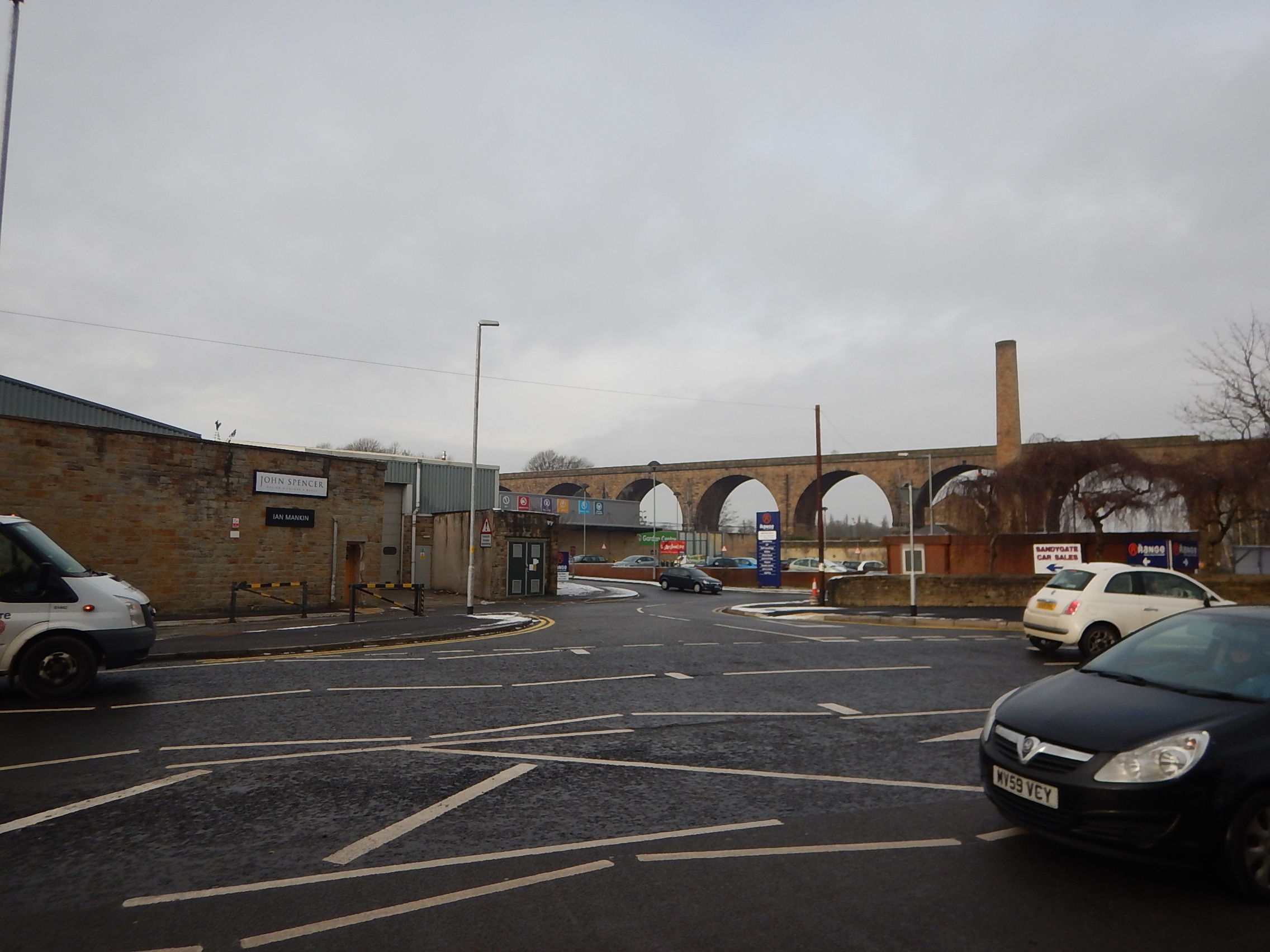
I can’t understand why, viaducts like these aren’t electrified using a third-rail.
- Third rail electrification works for most applications as well as overhead.
- Working on overhead electrification on a viaduct, is not a job for some.
- There is no visual intrusion with third rail.
- The power could only be switched on, when a train is connected.
On the other hand dual-voltage trains, that could switch quickly between systems at line speed would be needed.
Station Electrification
I also think that third-rail electrification can be used in stations where overhead electrification would be difficult or intrusive.
Battery,Bi-Mode And Hydrogen Trains
Train manufacturers are not stupid and want to increase their profits.
- Alstom are developing fleets of hydrogen trains.
- Bombardier are developing 125 mph bi-mode trains with batteries.
- CAF are developing battery and bi-mode trains.
- Stadler are developing trains with batteries and/or diesel power.
I suspect all these companies and others, see more trains can be sold, if innovative trains can run without the necessity of full electrification.
I also suspect many rail operators would prefer to spend money on shiny new trains, than on disruptive and ugly electrification.
Remember too, that batteries will improve.
Conclusion
I can see several techniques that could be applied to make electrification of some parts of the TransPennine routes.
Between Hebden Bridge And Burnley Manchester Road Stations In The Snow
I took these pictures from a train between Hebden Bridge and Burnley Manchester Road stations on the Calder Valley Line.







I believe that the area has some of the most scenic rail lines in the UK.
Electrification
It runs between the hills with lots of bridges and viaducts.
There are four tunnels; Weasel Hall , Castle Hill , Horsfall and Millwood on this section of the route.
It would not be an easy line to electrify with 25 KVAC overhead wires, from an engineering, political or environmental point of view.
This is a route though that needs to be improved.
I travelled on a Class 158 train, which are a 90 mph diesel multiple unit. But it was struggling to do 40 mph in the conditions.
Conclusion
Electrification may be an ideal, but Network Rail should first improve the line, so that the current trains and the future 100 mph Class 195 trains can realise their full potential.
Hebden Bridge Station
Hebden Bridge Station is Grade II Listed and is a busy station in West Yorkshire on the Calder Valley Line.
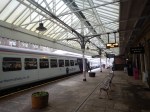
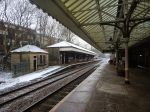
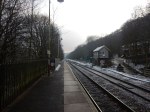
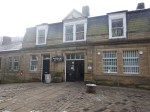
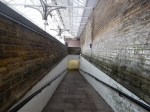
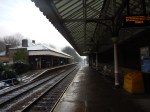
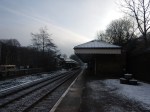
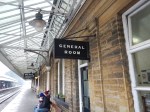
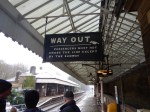
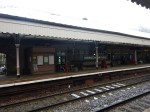
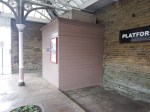
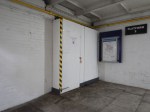
The service through the station is being improved.
The Wikipedia entry for the station has a section called Future Improvements. This is said.
The station will see a variety of improvements to facilities and train services from March 2017 onwards, as part of an investment package for the Calder Valley line as a whole. New lifts are finally to be installed to make both platforms fully accessible, whilst track and signalling upgrades will help reduce journey times in both directions and allow more trains to run to/from Bradford. This will result in the closure of the listed signal box here by October 2018, with control passing over to the Rail Operating Centre at York. New rolling stock and timetable improvements will then follow, with regular through trains to Liverpool Lime Street, Manchester Airport and Chester by late 2019.
Note the parcel lifts in the pictures, which will be converted for passenger use.
Turnback Facility
The pictures also show the turnback facility at the station, which allows trains to arrive from the West in the Westbound platform and then changeover to the Eastbound platform to go back to Manchester or Preston or perhaps other destinations in the future.
Electrification
When I first saw this Victorian station, I came to the conclusion, that it would be difficult to electrify in a sympathetic manner with 25 KVAC overhead wires, without upsetting English Heritage.
Now the Government has decided that there will only be selective electrification, I suspect Network Rail will file Hebden Bridge station in the tray marked Too Difficult.
But I also think that the station could be electrified using innovative methods to improve the passenger service in terms of frequency and times.
Consider.
- Modern bi-mode trains can switch between power sources automatically.
- Modern electric trains can raise and lower the pantograph quickly and automatically.
- Most modern electric trains made for the UK, can be fitted with third-rail contact shoes.
- To the West of the station, there are a succession of tunnels, that might be possible to electrify using overhead rails.
- Zero-carbon power sources for short lengths of electrification exist, as I wrote about in Solar Power Could Make Up “Significant Share” Of Railway’s Energy Demand.
- Although solar power might not be appropriate here, short lengths of third-rail electrification may be suitable.
- The turnback facility could also be electrified with third-rail to charge trains fitted with batteries.
Somewhere in my ramblings, I’m sure a solution exists to make Hebden Bridge an environmentally-friendly power station in the heart of the Pennines.
The Ordsall Effects
There is now a large brown steel elephant in the North, in the shape of the Ordsall Chord in Manchester, that connects most of Central Manchester’s stations together and to the Airport.
- Hebden Bridge is between thirty and forty-five minutes from Manchester Victoria station, depending on if you get a semi-fast or stopping train.
- Northern have plans to extend these Manchester Victoria to Leeds services all the way to the Airport.
- In fact from Monday, some of these services now terminate at Manchester Oxford Road station.
- When I mentioned to the lady in the cafe, that services would go to Manchester Airport within months, she was surprised and very pleased.
I suspect that Hebden Bridge will be one of the tourism centres of the North that will substantially benefit from a direct link to Manchester Airport created by the Ordsall Chord.
But this could only be the start.
To maximise the benefits of the Ordsall Chord, Northern and Network Rail will want to connect services that go North and South of Manchester, back-to-back across the City.
Northern have already said, that they’ll be trains going from Hebden Bridge to Chester and Liverpool by late 2019.
But I suspect these two cities won’t be the only ones getting a quality service from Hebden Bridge.
If the service ran directly over the Ordsall Chord, then historic Buxton and well-connected Crewe must be possibilities.
That turnback facility is starting to look important, as not all services will be needed to cross the Pennines.
Westwards To Preston, Blackpool and Liverpool
Currently, the only Westbound service is an hourly train to Preston and Blackpool North.
It is not enough.
The proposed Liverpool service from Hebden Bridge, that starts in late 2019, can either go via Manchester or Preston.
If it were to be the latter, a second fast train every hour, connecting Burnley, Blackburn and Preston would certainly be welcomed on what can be a very overcrowded line.
As all Calder Valley Line services stop at Hebden Bridge, the Ordsall Chord and Northern’s plans seem to be giving the town, a more than worthwhile economic boost.
Lord Adonis On Crossrail Of The North
There has been a lot of talk recently about HS3, Northern Powerhouse Rail or Crossrail Of The North.
On Radio 5 Live, this morning, Lord Adonis said a lot of sensible things about the high speed line from Liverpool to Hull via Manchester and Leeds.
His plea was for a plan for a start and he suggested that an objective would be to halve the journey time from Manchester to Leeds and have a train every few minutes.
He suggested it could be probably built using a mixture of new track alignments and existing railways.
I agree with what he said, but the problem is that every Tom, Dick and Harriet has their own ideas of what they want.
How Would I Design Crossrail Of The North?
I can at least look at this without favouring any one of the North’s great urban area.
Urban Areas Of The North
I will list those with populations of over 200,000,, from this list in Wikipedia.
- Manchester – 2,553,379
- West Yorkshire – 1,777,934
- Liverpool – 864,122
- Tyneside – 774,891
- Nottingham – 729,977
- Sheffield – 685,368
- Teeside – 376,633
- Stoke-on-Trent – 372,775
- Sunderland – 335,415
- Birkenhead – 325,264
- Hull – 314,018
- Preston – 313,322
- Blackpool – 239,409
- Barnsley – 223,281
Urban areas with populations between 100,000 and 200,000 include Wigan, Mansfield, Warrington, Doncaster, York, Burnley, Blackburn, Grimsby, Accrington, Burton, Lincoln and Chesterfield.
Some of the connections between pairs of these areas are truly dreadful despite being only fifty or so files apart.
Northern Connect
I would think it reasonable that all these centres of population have good, preferably direct, connections between them.
Northern obviously think this way as they are creating a concept called Northern Connect, using new Class 195 trains to connect many of these areas with a quality service.
The North TransPennine Routes
TransPennine operate these North Pennine routes.
- 1 train per hour (tph) – Liverpool Lime Street to Newcastle
- 1 tph – Manchester Airport to Middlesbrough
- 1 tph – Manchester Airport to York
- 1 tph – Liverpool Lime Street – Scarborough
- 1 tph – Manchester Piccadilly to Hull
Note that the opening of the Ordsal Chord iin a few months, might change the routing of some of these services.
All of these services use the Huddersfield Line between Manchester and Leeds, stopping at both Huddersfield and Leeds stations.
Manchester Victoria To Leeds
As Lord Adonis said, the important section is between Manchester Victoria and Leeds stations.
I’ll start with a comparison of a series of rail journeys, all of which are about the same length.
- The fastest trains between Manchester Victoria and Leeds take forty-nine minutes, with a stop at Huddersfield, and are just 1 tph
- Norwich to Ipswich in a couple of years, will take 30 minutes at a frequency of 3 tph.
- Glasgow to Edinburgh currently takes about fifty minutes, at a frequency of 4 tph.
- Cardiff to Swansea currently takes 52-54 minutes, at a frequency of 2 tph.
It does seem that the North has a point if two of East Anglia’s larger cities get a better service than Leeds and Manchester.
The Huddersfield Line And The Great Eastern Main Line Compared
It is also enlightening to compare the Manchester to Leeds Line via Huddersfield to Ipswich To Norwich section of the Great Eastern Main Line.
It should be noted that I’m comparing these two lines, as both have lived on scraps from Central Government for decades. I also know the Great Eastern Main Line well!
- Both lines are double-track.
- Norwich-Ipswich is flat.
- The Huddersfield Line is rather hilly
- Norwich-Ipswich has only two stations and only the occasional slower service.
- The Huddersfield Line has numerous stations and local services.
- Norwich-Ipswich is electrified to a robust standard.
- On the Huddersfield Line, only Manchester to Stalybridge is scheduled for electrification.
- Norwich-Ipswich has a 100 mph speed limit, that could possibly be raised in places.
- I can’t find the speed limit on the Huddersfield Line, but suspect it could be less than 100 mph.
It is truthful to say that the Huddersfield Line is a much more challenging route than the Norwich to Ipswich.
The Effect Of Electrification On The Great Eastern Main Line
It might appear that the electrification of the Great Eastern Main Line makes for the difference in times.
But it should also be remembered that Ipswich to Norwich wasn’t electrified until the mid 1980s and if I remember correctly before that date, the fastest expresses were timed at two hours from Norwich to London with just two stops. The fastest services now are ten minutes under two hours with four stops.
With the introduction of the new Class 745 trains, timings of ninety minutes have been promised to the Department for Transport.
Timings did not drop significantly with the electrification in the mid-1980s, Services just became more reliable with more stops, as electric trains can accelerate better.
The decrease in timings over the next few years will be down to the following.
- Removal of bottlenecks like Trowse Bridge.
- Increase in speed limits.
- Trains with a shorter dwell time at stations.
- Trains with better acceleration and braking.
- Improved track and signalling.
- All passenger trains on the line will have the same performance.
I will be very interested to see what timings, the Class 745 trains eventually achieve!
Electrifying Between Leeds And Manchester Victoria Stations
It looks like the electrification between Manchester Victoria and Stalybridge stations will be complete by the end of this year.
The central section of the route is problematical with the Grade 1 Listed Huddersfield station and large numbers of bridges.
In TransPennine Electrification And Piccadilly Upgrade Now Also In Doubt, I came to these conclusions about electrifying the route.
-
Electrification would not go anywhere near Huddersfield, as the heritage lobby and their lawyers would have a field day.
-
Standedge and Morley tunnels are over 2,000 metres long, double track and Standedge is level. If they needed refurbishment in the future, perhaps they could be electrified with an overhead rail, so that bi-modes could have a couple of miles of electricity.
-
Electrification might be extended at the Manchester and Leeds ends of the line, so that the two cities could improve their local suburban electric networks.
-
An alternative would be that the Leeds and Manchester suburban electric networks were provided with a few Class 769 trains or even some brand new four-car bi-modes.
-
Services between Leeds and Manchester would be run by fast bi-modes.
Is there a more difficult stretch of possible electrification in the UK?
The Ultimate Bi-Mode Train
Currently four bi-mode trains are planned for introduction into the UK.
- Hitachi Class 800 trains and Class 802 trains.
- Stadler Class 755 trains
- Porterbrook Class 769 trains
Note.
- Two hundred and eleven bi-mode trains have been ordered.
- Nineteen Class 802 trains have been ordered for TransPennine routes.
In Do Class 800/801/802 Trains Use Batteries For Regenerative Braking?, I look at the prospect of using energy storage in Hitachi’s bi-mode trains.
The Class 802 train is probably something like the ultimate bi-mode train.
- 125 mph using electrification.
- 100 mph under diesel power
- Regenerative braking at all times using energy storage.
- Automatic pantograph raising and lowering.
- Sophisticated in-cab signalling.
Obviously, interior fitment would be up to the operator.
Class 195 Trains
Northern is acquiring 25 x two-car and 30 x three-car Class 195 trains.
These are 100 mph trains, so it must be a good idea to make sure all Northern services that use the same routes as TransPennine services are run by these faster trains.
Short/Medium Term – A Classic Manchester Victoria To Leeds Route
TransPennine Express are already planning to run Class 802 trains between Liverpool and Newcastle via Manchester and Leeds. It looks to me, that whoever plans their train policy, saw the electrification crisis coming.
I wonder what times they can achieve between Leeds and Manchester Victoria, if the following were to be done.
- Stalybridge to Manchester Victoria electrification is complete.
- Track and signalling is the best it can be.
- The route has a 100 mph operating speed.
- All trains on the route are 100 mph capable.
- Northern replaces their scrapyard specials with Class 195 trains.
The reason for the same operating speed of 100 mph, enables trains to follow each other in a stream. It could be 90 mph, if that was easier for the route.
Station dwell times can also be reduced.
Due to overcrowding, the TransPennine dwell times, must currently be some of the worst in the UK.
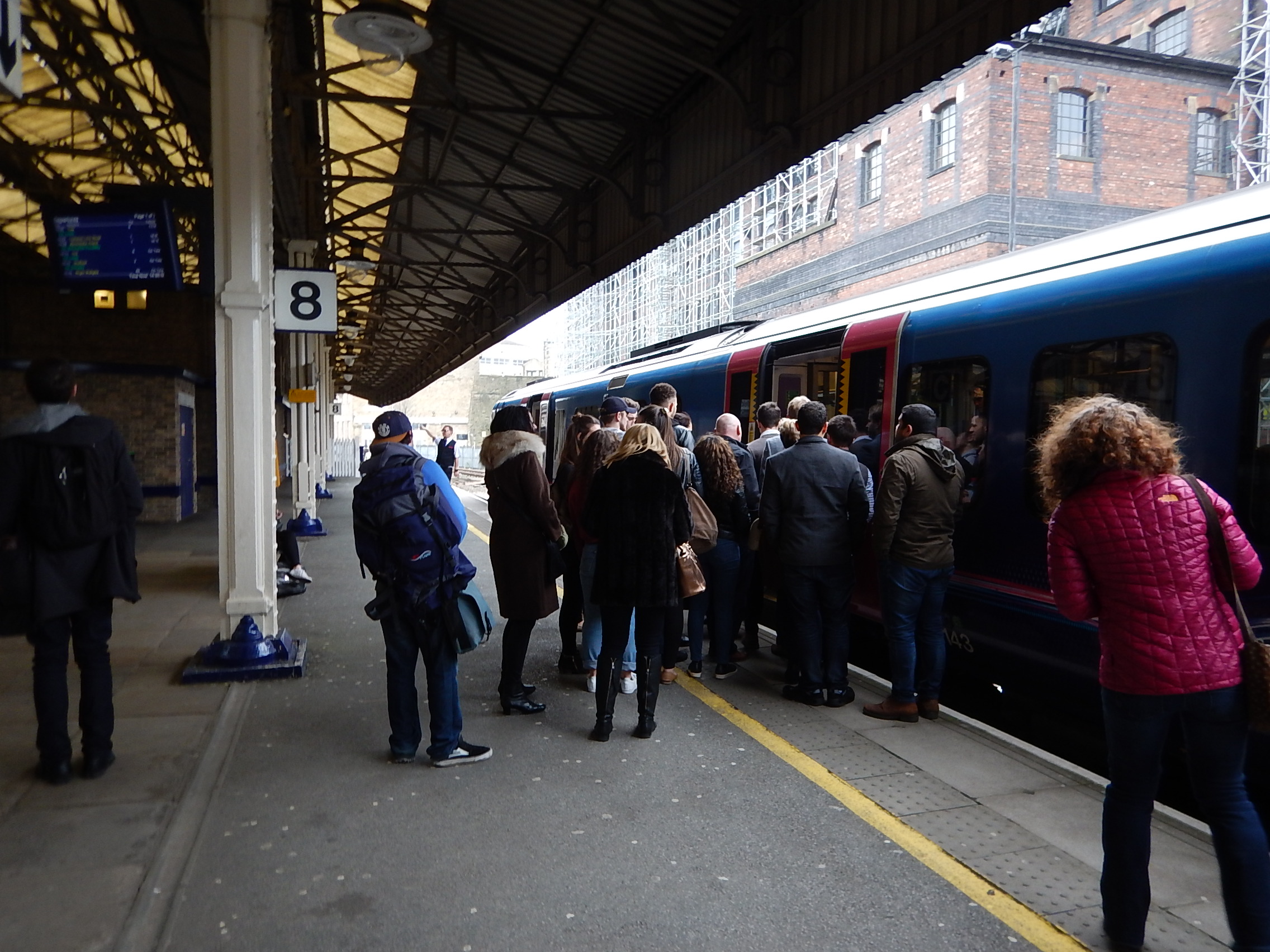
This is typical at Huddersfield.
Not even the Japanese with their pushers could get this to work.
But a modern train like the Class 802 train with wide lobbies and adequate capacity should cope.
So what time could be possible, if everything goes as planned?
If Norwich to Ipswich which is about the same distance as Leeds to Manchester, can be achieved in thirty minutes, I believe it is possible that the Northern route could be achieved in the same time or perhaps thirty-five minutes.
Thirty-five minutes should be adequate for a few years, if say there was a train every ten minutes!
Long Term – A Genuine High Speed Manchester Victoria To Leeds Route
I’ve flown my virtual helicopter between Manchester and Leeds and it is not flat agricultural land like seventy percent of the route of HS2.
I believe that creating a genuine high speed route, with say a 140 mph top speed across the Pennines will be a major engineering challenge that will make Crossrail in London look easy.
It may even be more economic to develop 140 mph hydrogen-powered tilting trains, that can run on the classic route at 125 mph.
Only one thing matters to passengers; a fast reliable and very comfortable and affordable train service across the country.
Manchester Victoria To Manchester Airport
When the Ordsall Chord opens any Leeds to Manchester Victoria service can continue to Deansgate, Oxford Road, Manchester Piccadilly and Manchester Airport stations.
Manchester Victoria To Liverpool
Currently, services between Liverpool Lime Street and Manchester Victoria stations take a few minutes over half-an-hour.
I would suspect that thirty minutes is achievable, if the following is done.
- The four-tracking at Huyton is completed.
- Track and signalling is the best it can be.
- The route has a 100 mph operating speed.
- All trains on the route are 100 mph capable.
- Northern replaces their scrapyard specials with Class 195 trains.
I suspect all of this is in progress.
Note, this is very similar work, to that needed between Manchester and Leeds.
Leeds To Hull
Currently, services between Leeds and Hull stations take a few minutes under an hour.
A few thoughts on the route.
- The Selby Line from Leeds to Hull is double-track and not electrified.
- From my virtual helicopter, it appears to be straight in very flat country, so it is no wonder Hull Trains offered to electrify the line.
- If the Selby swing bridge were to be sorted, it could become a 100 mph line with trains to match.
- Northern replaces their scrapyard specials with Class 195 trains.
- Modern in-cab signalling.
I suspect quite a few minutes could be taken off this route which is about fifty miles.
I suspect this line will eventually be electrified, as it could give sound time savings and it looks relatively easy.
York To Scarborough
Currently, services between York and Scarborough stations take forty-nine minutes, with one tph.
- Similar improvements to the double-track unelectrified line as for the Leeds to Hull route, could be made.
- But if the line has a problem , it is that it has 89 level crossings, although Network Rail intends to close them all before 2025.
I wonder, if the time can be reduced between York and Scarborough, such that two tph can be timetabled.
I doubt York to Scarborough will be electrified.
Northallerton To Middlesbrough
This short line is quite heavily used and is a valuable diversion route, so I suspect nothing urgent needs to be done.
Like Leeds to Hull, I suspect this line will eventually be electrified.
Conclusions
I have come to the following conclusions.
- Manchester Victoria to Leeds is achievable in half-an-hour with the new trains on order and no major infrastructure, other than that already planned.
- Any line where TransPennine Express services run needs to have the highest possible operating speed and no slow trains.
- Northern need to get their Class 195 trains into service as soon as possible.
Improvements are much-needed in the North, which could include.
- A short/medium term plan to deliver the best possible service with the new trains ordered by Northern and TransPennine Express.
- A long term plan to deliver a genuine 140 mph service across the North of England.
- A plan to improve the Calder Valley and Hope Valley Lines across the Pennines.
- A plan to improve some of the poor connections across the North.
- A strategy to make the best use of connections with HS2.
A detailed plan is needed that lays down what should be done in the next ten to twenty years.
The plan is also needed as soon as possible.
 The Anonymous Widower