High Speed Urban Freight Logistics By Rail
The title of this article is the same as that of this article on World Cargo News.
It describes from a freight operator’s point-of-view, Rail Operation’s Group‘s plans to run freight services between London Gateway and Liverpool Street station, which I wrote about in A Freight Shuttle For Liverpool Street Station Planned.
Points include.
- Current operators are struggling to lower their carbon footprint.
- Congestion is affecting delivery times.
- Charges to use London’s ULEZ could add two hundred pounds per round trip to costs.
- To enter London, trucks will need high visibility cabs in a couple of years time.
- Last mile delivery would be by e-vans and cargo bikes.
- This initial service is about proving the concept and identifying the best techniques.
The article also discloses that Rail Operations Group are planning to run a high-speed overnight freight service between London Gateway and the Central Belt in Scotland, using their modified Class 769 trains.
- Journey time will be reduced from eleven-twelve hours by truck to five-and-a-half by rail.
- The deadline for guaranteed overnight delivery will go from 20:00 to 23:00.
- Trains will be running at 100 mph on electricity all the way.
- If it works going North, surely it will work going South.
I can see Rail Operations Group needing a lot more trains, than the two they have ordered.
Pacers To Continue Into 2020, Operators Confirm
The title of this post is the same as that of this article on Railway Gazette.
This is the introductory paragraph.
Operators have confirmed that their Pacer diesel multiple-units will remain in service into early 2020, in spite of previous announcements that the unpopular four-wheeled vehicles dating from the 1980s would be withdrawn before enhanced PRM accessibility requirements come into force on January 1 2020.
The article then summarises the situation in the three operators running Pacers.
Northern
Some Pacers used by Northern will continue in service into 2020, because of late delivery of new Class 195 diesel trains and Class 331 electric trains.
They are also still awaiting delivery of eight Class 769 trains, which are very late into service.
Great Western
Great Western has said, that some Pacers will continue in service around Exeter.
No reason is given, but it does appear that because of non-delivery of electrification to Oxford and the late arrival of Crossrail, Great Western they still need Class 165 and Class 166 trains to work services for London commuters.
They are also still awaiting delivery of nineteen Class 769 trains.
Transport For Wales
Transport for Wales are in the same position as Great Western, in that the Class 769 trains, they ordered have still not been delivered.
The Operator Will Get The Blame!
Obviously, the operator will get the blame, but I would argue that all three have at least tried hard to avoid this crisis, as they knew the Pacers would have to be on their way to the scrapyard at the end of 2019.
- If CAF had delivered their trains for Northern on time, things would be much better in the North.
- If Porterbrook and their engineers had delivered the Class 769 trains on time, all three operators would be in a better position.
Hopefully, in a few months, the new trains will have been delivered and the Class 769 trains will have been created and in service.
A Freight Shuttle For Liverpool Street Station Planned
Edition 889 of Rail Magazine has an article which is entitled London Gateway-Liverpool Street Freight Trial Planned.
Rail Operations Group are planning to run a freight shuttle between London Gateway and Liverpool Street station.
Trains will be Class 769 bi-mode trains.
- The trains will be fitted with roller doors, roller cages and strengthened floors.
- Three aervices will leave Thames Gateway at 0029, 1208 and 1856.
- They will return from Liverpool Street at 0242, 1421 and 2100.
- Services will use Platforms 9 and 10 in Liverpool Street station.
It seems a very detailed plan.
A few of my thoughts.
Journey Time
I would estimate that a time of about 45 minutes to an hour would be possible.
Use Of Platforms 9 and 10
These two platforms are generally used for the London and Norwich expresses via Colchester and Ipswich, but it appears that only one service is timed to arrive in times when the station is really busy.
Platform 10 is near to the old Cab Road and so there is good vehicle access from the back of the station.
Final Delivery
The article says that trucks would be used for the final deliveries, with battery vehicles planned for the future.
Would There Be Sufficient Capacity For Trucks In The Cab Road?
A Class 769 train has four twenty metre long cars, so capacity will be equivalent of four small-to-medium supermarket delivery articulated trucks.
You wouldn’t get artics into the Cab Road, but would you get enough small trucks in to pick up a complete train-load?
- At night or in the evening, this would surely be possible!
- However, in the afternoon, it would surely be too busy, for more than a couple of delivery vans.
I’m sure Karl Watts has a well-laid plan.
What Is The Role Of UPS In This Freight Service?
In the Wikipedia entry for London Gateway, this is said.
Development of the Logistics Park has followed the initial stages of development of the port. UPS is developing a 32,000 square metre package sorting facility on the site – one of the American firm’s largest ever infrastructure investments outside of the USA. Since March 2017,
UPS wouldn’t build a facility the size of thirty two football pitches and then send out a series of trucks to their biggest market in the City of London , only for the packets to get stuck in the traffic.
I suspect that packets will be sorted into small easily-managed loads for delivery by electric vans, cargo bicycles or Shank’s Pony, from Liverpool Street station.
And Could Lidl Be In On The Act?
The Wikipedia entry for London Gateway also says this.
German grocery retailer Lidl has been operating out of the DP World London Gateway Logistics Centre, the first warehouse to be developed on the site.
This article in the Guardian is entitled Lidl In The Middle: Chain To Open First Store In Central London. This is said.
Lidl is to launch its first store in central London as it opens 40 new shops across the capital in the next five years.
Could Lidl be thinking of using such the proposed service to supply Central London stores?
- Last mile delivery could be by electric vehicles.
- Catching the 0029 train from London Gateway could be ideal.
- Goods could be on the shelves by early in the morning.
I think that this could offer interesting possibilities.
Supermarket deliveries were also one of the cargoes proposed in the LaMiLo project that I talked about in The LaMiLo Project.
Why Use Bi-Mode Trains?
Consider.
- Virtually all of the route is electrified, except for the last mile or so into the London Gateway.
- It would be possible to electrify those last few miles and use electric trains.
- Electric trains like unmodified Class 319 trains could be used for the service.
But cranes, containers and 25 KVAC overhead wires are a possible disaster waiting to happen, as a crane driver once told me!
When Will The Service Start?
The article says that the service could start in April or May.
Could There Be Other Services?
This is the last paragraph of the article.
Watts mentioned that other routes were a possibility for the business, suggesting that routes from the West Midlands to the Scottish Central Belt and the West Midlands to the West Country have been investigated. No dates have yet been given for any such trials.
I would also think, that there could be opportunities for moving high-value or perishable cargoes into major city centre stations in the middle of the night.
Suitable stations could be.
- Birmingham New Street
- Bristol
- Edinburgh
- Glasgow
- Leeds
- Liverpool Lime Street
- Manchester Piccadilly
I am not being anti-Geordie, but Newcsastle might be a difficult station to unload cargoes from trains onto trucks!
Conclusion
If seems to me that Rail Operations Group are being innovative with trains.
Warning As Electricity Cables Are Switched On In Manchester
The title of this post is the same as that of this article on Rail Advent.
This is the first paragraph.
Network Rail has warned members of the public to stay off the railway as new high voltage equipment goes live on the line between Stalybridge and Manchester Victoria.
It now looks like electric the current service between Stalybridge and Wigan North Western stations can now be run more efficiently by a Class 769 train, when these enter service.
If Network Rail were to get their skates on and electrify between Bolton and Wigan North Western stations via Lostock Junction, the talybridge and Wigan North Western Route could be run by electric traction.
This electrification of the Lostock Junction route, would also allow the Wigan North Western and Alderley Edge service to be run by electric traction.
Looking at Google Maps of the route, it appears that gantries are being or have been erected.
Is There Nothing A Class 319 Train Can’t Do?
If a train every goes into orbit round the world, it will be highly-likely that it will be a Class 319 train!
Electric Trains In North-West England
The fleet of eighty-six trains entered service in 1987 on Thameslink and now twenty-seven are plying their trade on the electrified routes around the North-West of England.
- You don’t hear many complaints about them being called London’s cast-offs.
- Passengers fill them up in Blackpool, Liverpool, Manchester and Preston.
- They still do 100 mph where possible.
- They seem to be reliable.
- They are not the most attractive of trains.
But handsome is as handsome does!
Drivers have told me, that although the suspension may be a bit soft for the bumpy route across Chat Moss, the trains do have superb brakes.
Bi-Mode Class 769 Trains
Nearly thirty of the trains are being converted into bi-mode Class 769 trains for working partially-electrifired routes and although these are running late, they should be in service this year.
Rail Operations Group
Two Class 769 trains have been ordered to be fast logistics trains by Rail Operations Group.
Wikipedia says the trains will be used to transport mail.
But if you read the history of the Rail Operations Group, they make the assets sweat and I’ve read the trains will still have seats, so they might do some other rail operations.
The Hydrogen-Powered Class 799 Train
And now comes the Class 799 train!
This is a demonstrator to prove the concept of conversion to hydrogen power.
The fact that the train now has it’s own number must be of some significance.
Alstom are converting Class 321 trains into Class 321 Breeze trains.
- The conversion will reduce passenger capacity, due to the large hydrogen tank
- It will have a 1,000 km range.
- It will have regenerative breaking.
- It will have a new AC traction package
- It will probably have the interior of a Class 321 Renatus train.
The conversion will obviously build on Alstom’s experience with the Alstom Coradia iLint train and Eversholt’s experience with the Renatus.
When it comes to the Class 799 train, the following will apply.
- Porterbrook have all the experience of creating the bi-mode and dual-voltage Class 769 train.
- Birmingham University’s Birmingham Centre For Railway Research And Education (BCRRE) are providing the expertise to design and convert the Class 319 train to hydrogen power.
- I also wouldn’t be surprised to find out, that the BCRRE has applied some very extensive mathematical modelling to find out the performance of a hydrogen-powered Class 319 train or HydroFLEX train.
- The conversion could be based closely on Class 769 experience and sub-systems,
Could the main purpose be to demonstrate the technology and ascertain the views of train operators and passengers on hydrogen power?
The most important question, is whether the Class 799 train, will have the same passenger capacity as the original Class 319 train?
If it does, then BCRRE must have found a way to store the hydrogen in the roof or under the floor.
It should be noted, that it was only in September 2018, that the contract to develop the Class 799 train was signed and yet less than a year later BCRRE and Porterbrook will be demonstrating the train at a trade show.
This short development time, must mean that there is not enough time to modify the structure of the train to fit a large hydrphen tank inside, as Alstom are proposing.
A smaller hydrogen tank could be placed in one of three places.
- Underneath the train.
- On the roof.
- Inside the train, if it is small enough to fit through the train’s doors.
Note.
- I doubt that anybody would put the tank inside the train for perceived safety reasons from passengers.
- On the roof, would require substantial structural modifications. Is there enough time?
So how do you reduce the size of the hydrogen tank and still store enough hydrogen in it to give the train a useful range?
In Better Storage Might Give Hydrogen The Edge As Renewable Car Fuel, I indicated technology from Lancaster University, that could store four times as much hydrogen in a given size of tank.
This reduced tank size would make the following possible.
- The hydrogen tank, the fuel cell and the batteries could be located underneath the four-cars of the Class 319 train.
- The seating capacity of the Class 799 train could be the same as that of a Class 319 train.
Clever electronics would link everything together.
If BCRRE succeed in their development and produce a working hydrogen-powered Class 799 train, how would the technology be used?
Personally, I don’t think we’ll see too many hydrogen-powered Class 799 trains, running passengers on the UK network.
- The trains are based on a thirty-year-old train.
- The interiors are rather utilitarian and would need a lot of improvement, to satisfy what passengers expect.
- Their market can probably be filled in the short-term by more Class 769 trains.
But I do believe that the technology could be applied to more modern trains.
A Hydrogen-Powered Electrostar
Porterbrook own at least twenty four-car Electrostar trains, which have been built in recent years.
Six Class 387 trains, currently used by c2c, may come off lease in the next few years.
Could these trains be converted into a train with the following specification?
- Modern train interior, with lots of tables and everything passengers want.
- No reduction in passenger capacity.
- 110 mph operating speed using electrification.
- Useful speed and range on hydrogen power.
- ERTMS capability, which Porterbrook are fitting to the Class 387 trains to be used by Heathrow Express.
It should be born in mind, that a closely-related Class 379 train proved the concept of a UK battery train.
- The train was converted by Bombardier.
- It ran successfully for three months between Manningtree and Harwich.
- The interior of the train was untouched.
But what was impressive was that the train was converted to battery operation and back to normal operation in a very short time.
This leads me to think, that adding new power sources to an Electrostar, is not a complicated rebuild of the train’s electrical system.
If the smaller hydrogen tank, fuel cell and batteries can be fitted under a Class 319 train, I suspect that fitting them under an Electrostar will be no more difficult.
I believe that once the technology is proven with the Class 799 train, then there is no reason, why later Electrostars couldn’t be converted to hydrogen power.
- Class 387 trains from c2c, Great Northern and Great Western Railway.
- Class 379 trains, that will be released from Greater Anglia by new Class 745 trains.
- Class 377 trains from Southeastern could be released by the new franchise holder.
In addition, some Class 378 trains on the London Overground could be converted for service on the proposed West London Orbital Railway.
A Hydrogen-Powered Aventra
If the Electrostar can be converted, I don’t see why an Aventra couldn’t be fitted with a similar system.
Conclusion
A smaller hydrogen tank, holding hydrogen at a high-density would enable trains to be converted without major structural modifications or reducing the passenger capacity.
The development of a more efficient method of hydrogen storage, would open up the possibilities for the conversion of trains to electric-hydrogen hybrid trains.
Chester To Liverpool Via Runcorn
This new service between Chester and Liverpool Lime Street stations via Runcorn station and the Halton Curve, started a couple of weeks ago.
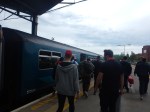
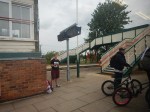
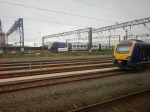
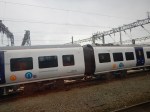
I took these pictures of the journey.









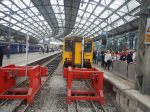
Note.
- The service was busy, as everybody seemed to be going to Liverpool to prepare for the evening’s match.
- The Class 150 train kept up a good speed, which indicates that Network Rail didn’t cut quality on the link.
- Runcorn is about the halfway point of the journey.
- The route is electrified between Runcorn and Liverpool Lime Street stations.
- The Class 150 train was a bit tired.
I wouldn’t be surprised to see a hybrid train working this route.
- Transport for Wales have ordered some electro-diesel Class 769 trains.
- Alstom are converting Class 321 trains into hydrogen-powered Class 321 Breeze trains at nearby Widnes.
- Porterbrook are converting Class 350 trains into Battery/FLEX trains.
- Hitachi are talking to ScotRail about Class 385 trains with batteries.
- I’m also sure Bombardier have a battery-electric Aventra.
Operation would be as follows.
- All these trains work be capable of 100 mph using 25 KVAC overhead electrification between Liverpool Lime Street and Runcorn stations.
- Power changeover would be at Runcorn station.
- Between Runcorn to Chester stations is only about fourteen miles.. This will be well within battery range in a few years.
Transport for Wales will be obtaining trains from a crowded market.
More Halton Curve Services
Under Planned Improvements in the Wikipedia entry for Transport for Wales, this is said.
Introduction of a new hourly Liverpool to Llandudno and Shrewsbury service, and a new two-hourly Liverpool to Cardiff Central service from December 2022.
Adding these to the current hourly service, this would mean that two trains per hour (tph) would normally run between Liverpool Lime Street and Chester stations, with three trains in every alternate hour.
I think that, there would be a marketing advantage in running hybrid trains on these routes. Hydrogen would be ideal, as these would not need recharging like battery trains after a long trip.
To go through the single-track Halton Curve appears to take trains about five minutes, so up to eight tph could probably be feasible, which would mean four tph between Liverpool and Chester via Runcorn in both directions.
If Trains for Wales are going to compete with the Merseyrail electric services, they need a four tph frequency in both directions.
Flexible Ticketing
Currently, if you want to buy a ticket between the Chester and Liverpool Lime Street, you have to buy an appropriate ticket for your chosen route.
Surely, tourists and others might like to do the out and back journeys by a different route.
If London Underground and some train companies can share ticketing, then surely Merseyrail and other train companies can do the same.
Conclusion
This new service will be surprisingly well-used and needs an iconic hybrid train.
- Diesel is not appropriate for the long term, although in Northern Connect Between Chester And Leeds To Start In May, I did report a rumour that Class 769 trains might be running between Chester and Leeds.
- Hydrogen is non-polluting and has a longer range, that could make services between Liverpool and Holyhead possible.
- Battery will probably need a charging infrastructure.
My money is on hydrogen power.
Bedwyn, Didcot Parkway And Oxford Services After Crossrail Opens To Reading
When Crossrail opens to Reading as it is rumoured with happen in December 2019, what will happen to the Great Western Railway (GWR) services to Bedwyn, Dicot Parkway and Oxford?
The Current Services
These services currently run to these destinations from London Paddington station.
- Bedwyn station has an hourly service, that goes non stop between London and Reading and then calls at all stations between Reading and Bedwyn.
- Didcot Parkway station has a two trains per hour (tph) stopping service, that stops at most stations, including those between Reading and Didcot Parkway.
- Oxford station has a two tph fast service.
- Reading station has a two tph stopping service, that stops at most stations.
- The Didcot Parkway and Reading services give London and Reading a four tph electric service.
- Other trains stop at important stations and there are some shuttle trains serving Reading, Didcot Parkway and Oxford.
Recent developments have included
- Oxford and Bedwyn services now generally seem to run from the main station.
- The fast Oxford services now run by Class 802 trains.
GWR are also testing running Class 802 trains to Bedwyn.
Future Services To Bedwyn
The turnback facility at Bedwyn station has been upgraded, so that it can take a five-car Class 802 train.
When some sighting and safety issues are settled, it is likely that Class 802 trains will take over services to Bedwyn.
- Five-car bi-mode Class 802 trains will be used.
- Trains will not stop between London and Reading.
- Trains will stop at all station between Reading and Bedwyn.
- Trains will run on electric power between London and Newbury.
- Trains will run on diesel power between Newbury and Bedwyn.
Will the current seventy minute time be reduced by the faster trains, running at higher speed between London and Reading?
Battery Trains To Bedwyn
In Hitachi Plans To Run ScotRail Class 385 EMUs Beyond The Wires, I wrote about how batteries could be added to Class 385 trains, so they could run services without electrification.
Consider.
- Class 802 and Class 385 trains are both both members of Hitachi’s A-Train family, sharing many features and systems.
- Newbury to Bedwyn and back is about thirty miles.
- Batteries could be charged between London and Newbury.
I very much feel that if Hitachi apply battery technology to the Class 802 trains, that Bedwyn could be an ideal test destination.
Extension Of Bedwyn Services To Marlborough
In A Station For Marlborough, I wrote about a local plan to open a new station in the twon of Marlborough, which would be on a single track branch, that leaves the main line to the West of Bedwyn.
Class 802 trains with a battery capability, would be the ideal trains for this extension.
Future Services To Oxford
GWR have started running bi-mode Class 802 trains to Oxford at a frequency of two tph
- Services stop at Slough and Reading.
- I have seen nine-car trains on this route.
- Trains run on electric power between London and Didcot Parkway
- Trains run on diesel power between Dicot Parkway and Oxford.
The service is augmented with a diesel shuttle between Oxford and Didcot Parkway.
- This service runs at a frequency of two tph
- One train every two hours is extended to Banbury.
- This service is the only way to get to the intermediate stations of Appleford, Culham and Radley.
I very much feel that services between London and Oxford can be improved.
Four tph To Oxford
If train companies feel that Reading is worth four tph on Crossrail between the city and London, surely Oxford needs a four tph GWR service to the capital.
- Two would be fast trains stopping only at Reading and Slough.
- Two would stop at Slough and all stations between Reading and Oxford.
- Bi-mode Class 802 trains would be used.
- Trains run on electric power between London and Didcot Parkway
- Trains run on diesel power between Dicot Parkway and Oxford.
Note.
- All intermediate stations would have a direct two tph service to London, Reading and Oxford.
- Currently, many journeys involve a long wait or a change at Didcot Parkway.
In addition, no station between Reading and Didcot Parkway gets a worse service than they do now, with the Class 387 trains to Didcot Parkway.
Battery Trains To Oxford
If Hitachi develop them, why not?
A Reading And Oxford Shuttle
I very much believe that important commuter routes need a frequency of four tph, as this enables a Turn-Up-And-Go service and encourage passenger numbers. Especially on a route like Reading and Oxford, where there is a lot of new housing being built.
If two tph are run between London and Oxford, stopping at all staions between Reading and Oxford, perhaps the way to give this service would be to run a shuttle between Reading and Oxford using bi-mode Class 769 trains.
- A two tph shuttle would give four tph at all intermediate stations.
- Trains would run on electric power between Reading and Didcot Parkway.
- Trains would run on diesel power between Didcot Parkway and Oxford.
- Some or all trains could be extended to Banbury.
- I estimate that four trains would,d be needed for two tph.
Oxford would only be getting the quality of railway system a city of its size and standing needs.
Conclusion
There is a lot of scope to improve the train services in the Thames Valley, whether or no Crossrail takes over the Reading services.
Liverpool Lime Street And Chester Services Via Halton Curve Start In May
This page on the National Rail web site is entitled Changes to the National Rail Timetable.
Under Transport for Wales, this is said.
New services will run between Liverpool Lime Street and Chester via Runcorn. An hourly service will run, with peak time extensions to Wrexham General.
This sounds like the Halton Curve service to me.
Timing On The Route
Timing on the sections of route are as follows.
- Liverpool Lime Street and Runcorn – 21 minutes – West Midland Class 350 train, with a stop at Liverpool South Parkway.
- Runcorn and Chester – 17 minutes – Parliamentary service as given on Wikipedia.
- Chester and Wrexham General – 14 minutes – Trains for Wales
This gives timings as follows.
- Liverpool Lime Street and Chester – 38 minutes
- Liverpool Lime Street and Wrexham General – 52 minutes
It looks to me that a round trip would be under two hours to both destinations, so two trains would be enough to provide an hourly service.
If Trains for Wales should decide to run a half-hourly service, then four trains would be needed.
Trains On The Route
The Crewe-Liverpool Line has fast services between Liverpool Lime Street and Crewe, so I suspect that it has a speed limit of at least 100 mph.
For this reason along, I suspect that all operators and Network Rail, would hope that Trains for Wales will use a train capable of running at up to 100 mph between Liverpool Lime Street and Runcorn.
The operating speed of trains owned or planned by Trains for Wales are.
- Class 150 train – 75 mph
- Class 158 train – 90 mph
- Class 175 train – 100 mph
- Class 769 train – 100 mph on electricity
It seems to me for various reasons that the Class 769 trains would be ideal for this route.
- They could use the electrification between Liverpool Lime Street and Runcorn.
- They are four-car high-capacity trains, that meet all the regulations.
- They are 100 mph trains on electrification.
- They will be straight from the factory with new interiors.
- Northern will have servicing facilities for these trains at Allerton TMD.
- They would give the service some publicity.
They probably won’t be delivered in time for May 2019, but they could replace whatever is used for the initial service.
Comparing Class 195 And Class 769 Trains
This may seen a strange comparison to do.
- In the blue corner is an upgraded forty-year-old four-car bi-mode Class 769 train from British Rail via Brush at Louthborough.
- In the red corner is a new three-car diesel Class 195 train from CAF.
So how do they compare?
Seats
- The Class 769 train shows 255 Standard Class and 12 First Seats in an example layout in the brochure.
- The Class 195 train has 204 seats according to Wikipedia.
The seats per car in both trains are almost identical.
Diesel Power
- The Class 769 train has two 390 kW diesel engines and electric transmission.
- The Class 195 train has three 390 kW diesel engines and a ZF Ecolife six-speed transmission.
So it would appear that the Class 195 train is more powerful, but Class 769 train has an electric transmission, which doesn’t need to change gear.
I look forward to riding in both trains.
Operating Speed
- The Class 769 train has a 100 mph operating speed on electricity and has been designed for 91 mph on diesel power.
- The Class 195 train has a 100 mph operating speed.
The proof of the pudding will be in the timetables and journey times.
Conclusion
The two trains are fairly evenly matched for a lot of routes.
 The Anonymous Widower