To Sheffield In An East Midlands Railway Class 810 Train
I took these pictures on the journey.
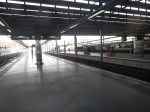
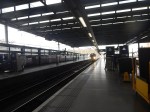
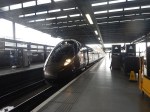
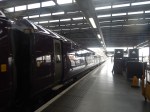
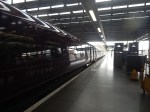
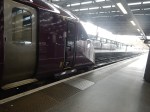
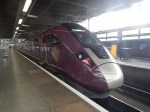
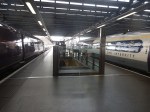
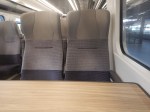
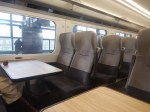
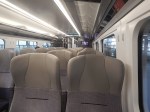






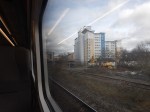
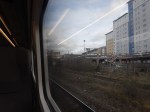

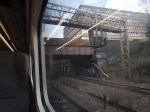
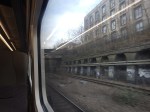
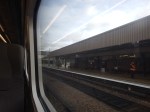
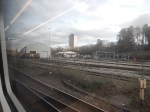
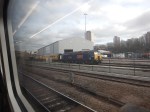
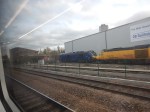
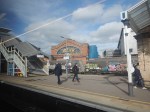
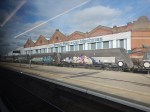
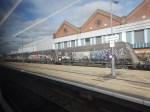
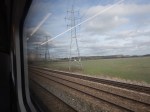
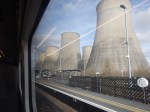
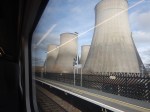
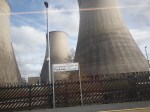
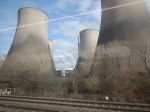
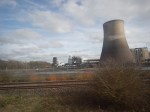

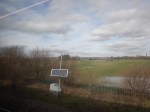

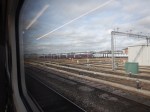
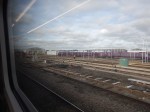

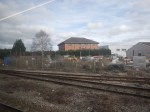










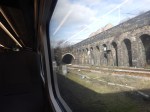
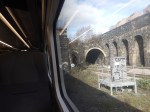
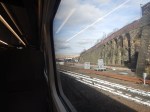


Note.
- Five-car Class 222 And Class 810 trains Have similar lengths, so they can share platforms at St. Pancras – Nice Thinking!
- The Trainspotters will be able to see East Midlands Railway, Eurostar and Southeastern Highspeed.
- The Wymington Deviation was a Victorian fix for a steep gradient. I suspect all trains like it.
- Leicester, Loughborough, East Midlands Parkway and Long Eaton stations are quite close together.
Could Electric Trains Run Between St. Pancras International and Sheffield Stations With No More Electrification?
A reader suggested, that I look at this, so here goes!
- A couple of weeks ago, I took a Class 222 diesel train back from Sheffield to St. Pancras International and it seemed a few minutes quicker.
- Looking at the timetable today, at least one service on the route is now just under two hours and some others are just over.
So the new Class 810 trains may not be fully in service yet, but the trains have already had an effect on the timetable.
How Far North Is The Midland Main Line Being Electrified?
I asked Google AI this question and received this answer.
As of early 2026, the Midland Main Line (MML) is electrified as far north as Wigston, just south of Leicester.
- Northern Limit: The section from Kettering up to Wigston South Junction was energised in July 2024, representing the current northern limit of 25kV overhead line equipment (OLE).
- Pause in Further Electrification: Following a UK government spending review, the further, planned northward extension of electrification to Leicester, Derby, Nottingham, and Sheffield was indefinitely paused in July 2025.
- Current Operations: While electrification has stopped at Wigston, the line is served by new bi-mode (electro-diesel) trains, allowing for electric running from London St Pancras to Wigston before switching to diesel power.
- Previous Work: The line is also fully electrified from London St Pancras to Bedford, including the route to Corby.
Note.
- South Wigston Junction and Sheffield are 69.4 miles apart.
- The Hitachi trains can raise and lower pantographs on the move.
Distances without wires from London St. Pancras International to various destinations are as follows.
- Sheffield – 69.4 miles
- Leicester – 3.7 miles
- Derby – 36.4 miles
- Nottingham – 31.1 miles
As trains will have to go out and back to these destinations distances travelled will be doubled.
- Sheffield – 138.8 miles
- Leicester – 7.4 miles
- Derby – 72.8 miles
- Nottingham – 62.2 miles
It looks to me, that if the new Class 810 trains, can travel 138.8 miles on batteries and diesel engines as a tri-mode train, then the Midland Main Line is electrified.
Could The Sheffield Services Turn Round At Doncaster And Charge Their Batteries There?
Note.
- South Wigston Junction and Doncaster are 79.5 miles apart.
- Doncaster is a fully-electrified station.
- Sheffield and Doncaster would get two extra connecting trains per hour.
- The two services could also call at Meadowhall and/or Rotherham Central.
The Class 810 trains could charge their batteries, whilst passengers to and from Doncaster left and entered the trains.
Could A Simple Cross-Platform Change Be Arranged Between East Coast And Midland Main Line Services?
Doncaster station has two long island platforms, one of which is generally used for Northbound services and one for Southbound services.
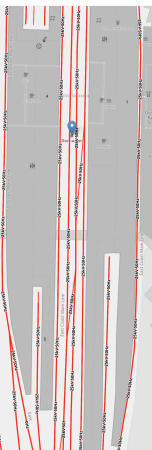
Note.
- All electrified tracks are shown in red.
- The two wide island platforms, with Northbound on the West side and Southbound on the East side.
- Each island platform has an electrified platform face on both sides.
- The four platforms faces on the island platforms can hold pairs of five-car Hitachi trains.
- There are two through tracks or avoiding lines between the two island platforms for trains that aren’t stopping.
- There are bay platforms at the ends of the station for local trains.
- The station is fully step-free with a wide pedestrian underpass.
I know the station well and it looks to me, that East Midland Railway’s five-car services for St. Pancras could charge up in the Southern ends of the four faces of the island platforms and the two South-facing bay platforms.
I also believe that a pair of five-car Class 810 trains could be handled and charged, should it become necessary.
It looks to me, that the engineers updating the East Coast Main Line, know that they were caught out badly by High Speed Two, so the redesign for the next fifty or a hundred years will be completely future-proofed.
Doncaster and London could almost be considered to be twin main lines, with two pairs of high speed lines taking different routes, that serve different towns and cities.
How Many Travellers Go Between East Scotland And The North-East of England And The English Midlands?
It must be quite a few, as in the new East Coast Main Line timetable, more Scottish services stop at places like Doncaster and Newark.
But surely, if you could go between say Perth or Aberdeen and Derby or Nottingham in two battery-electric trains, with a relaxed change at Doncaster, you’d take it?
I certainly would!
East Coast And Midland Main Lines Compared
These are times between London and Doncaster.
- Current times between Doncaster and London are typically between 1 hour and 31-40 minutes going via the East Coast Main Line.
- I estimate times between Doncaster and London will be typically 2 hours and 22-27 minutes going via the Midland Main Line.
Note.
- Doncaster and London King’s Cross is 156 miles
- Doncaster and London St. Pancras International is 183.3 miles
- So the Midland Main Line route would appear to to be about 45 minutes slower.
- I suspect, that for passengers between between London and North of York, it will always be quicker to use an East Coast Main Line service.
These are times between London and Sheffield.
- Current times between Sheffield and London are typically between 2 hours and 4-9 minutes going via the Midland Main Line.
- I estimate times between Sheffield and London will be typically between 2 hours and 2 minutes going via the East Coast Main Line.
Note.
- Sheffield and London King’s Cross is via Retford.
- Sheffield and London King’s Cross is 162.1 miles
- Sheffield and London St. Pancras International is 183.3 miles
- Sheffield and Retford is 23.5 miles
- So the Midland Main Line route would appear to to be a few minutes slower.
I would feel that there is scope that under Great British Railways to optimise services between London and Doncaster and Sheffield.
The Master Cutler
The Master Cutler is a named train, that is described in this Wikipedia entry, that was introduced in 1947.
- Over its life it has run into both King’s Cross and St. Pancras.
- I can remember the train in the 1950s, running into King’s Cross.
- It has also been run to and from Leeds.
- It has been run as a Pullman service.
- There are reports of overcrowding in recent years.
It strikes me that the Master Cutler could do with a revamp.
- As St. Pancras can accept pairs of five-car Class 810 trains, ten-car trains could be run into King’s Cross or St. Pancras.
- An alternative would be to use a nine-car Hitachi Class 800/801 train.
- All trains would be battery electric.
- All trains would use the East Coast Main Line for a faster service.
- Services could terminate in the North at Leeds.
- The service could be run as a Pullman service.
- This article on Ian Visits, writes about East Coast Main Line trains using St. Pancras.
I would create a train service, that would attract passengers from all over the world.
Who knows?
If it was conceived in the right way, it might warrant a second service or similar service on other lines like these possibilities.
London and Blackpool via Crewe, Wigan and Preston.
- London and Aberystwyth via Birmingham and Shrewsbury.
- London and Bristol via Bath
- London and Fishguard via Cardiff and Swansea
- London and Holyhead via Birmingham and Chester
- London and Liverpool
- London and Manchester
- London and Newcastle via York and Durham
- London and Norwich via Colchester and Ipswich
- London and Plymouth via Exeter
Note.
- All routes could be run using electric or battery-electric trains.
- The Fishguard and Holyhead services would be zero-carbon routes to Ireland, connecting to appropriate zero-carbon ferries.
- Could services be arranged so that all parts of the country have at least one service in both directions every day?
- In the days of British Rail, London and Norwich had a very high-class service, that could serve a full English breakfast between Colchester and London, which certainly wasn’t like the regular joke.
Get the offering right and it could level-up the UK.
South Yorkshire Now Has Better North-South Connections
The December 14th 2025 timetable change was a big day for South Yorkshire.
Three big changes will transform, public transport in South Yorkshire.
The Opening Of A New Tram-Stop At Magna Science Adventure Centre On The Tram-Train Route Between Sheffield And Rotherham
The Magna Science Adventure Centre is described like this in the first paragraph of its Wikipedia entry.
Magna Science Adventure Centre is an educational visitor attraction in Rotherham, South Yorkshire, England.
This map shows the site and the tram-train track between Sheffield and Rotherham.
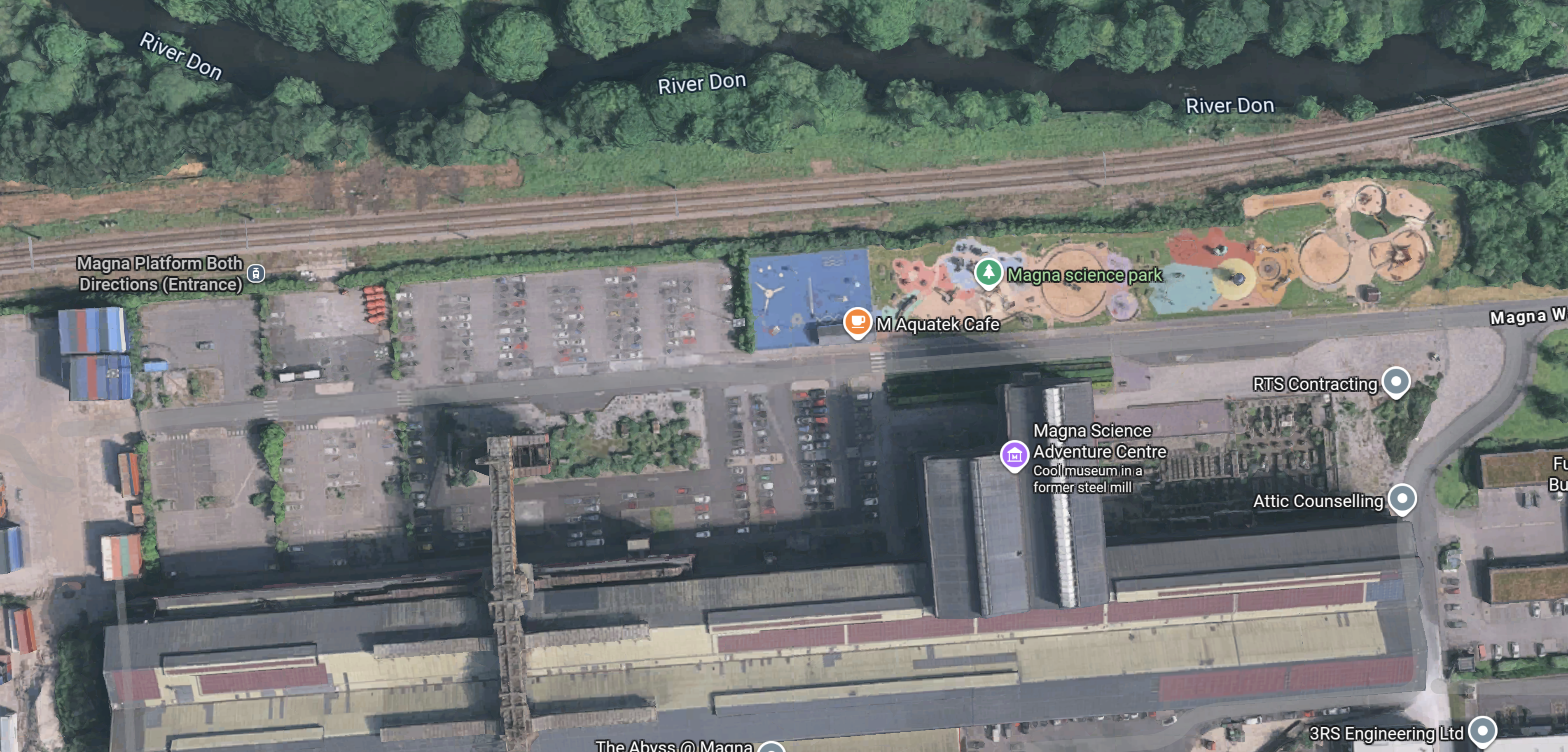
Note.
- The tram-train track runs East-West across the top of the map.
- Sheffield is to the West and Rotherham is to the East.
- At the Western end of the site, a label indicates the position of the Magna Platform.
- The position of the tram-train stop is already marked.
- There will be 29 extra Park-and-Ride spaces.
- The Magna Science Adventure Centre is indicated by the purple arrow in the middle of the map.
- Magna Way runs East-West through the site.
- There are four pavilions: Earth, Air, Fire, and Water.
This article on the BBC is entitled Lifts And Bridge Added As Tram Stop Takes Shape.
This picture from the article shows the bridge with lifts.

Note.
It will be an impressive tram stop.
It doesn’t look like it will be long before it opens.
But as yet no information is available.
Google AI gave this answer.
The new Magna Tram Train stop is scheduled to open in early 2026.
Construction of the new £10 million station and Park & Ride facility in Rotherham, part of a wider investment in the South Yorkshire Supertram network, is currently on track.
The new stop will improve access to the Magna Science Adventure Centre, local businesses, and link up with existing walking and cycling routes, aiming to ease congestion in the Lower Don Valley.
I shall be going next week to take photographs of the tram stop.
The Increase In Frequency Of Express Trains Serving Doncaster On The East Coast Main Line
Since the December 14th 2025 timetable change, the Monday to Friday express trains, that stop at Doncaster on the East Coast Main Line have included.
- CrossCountry – 8 trains per day (tpd) in both directions.
- Grand Central – 4 tpd in both directions.
- Hull Trains – 7 tpd in both directions.
- LNER- 3.5 trains per hour (tph) in both directions.
- TransPennineExpress – 1 tph in both directions.
Note.
- This totals to 173 express trains per day stopping at Doncaster
- Or about 7 tph in both directions or a train every 8.5 minutes.
- This is about a thirty percent increase in frequency.
- Doncaster has become the Crewe of South Yorkshire.
I can see this large number of express trains to Doncaster bringing large numbers of visitors to go to the Magna Science Adventure Centre or its tram stop for onward connection to other destinations on the Sheffield Supertram network.
The trouble is, that at present the Magna tram stop is not connected to Doncaster station.
This OpenRailwayMap shows the rail lines between Doncaster and Sheffield stations.
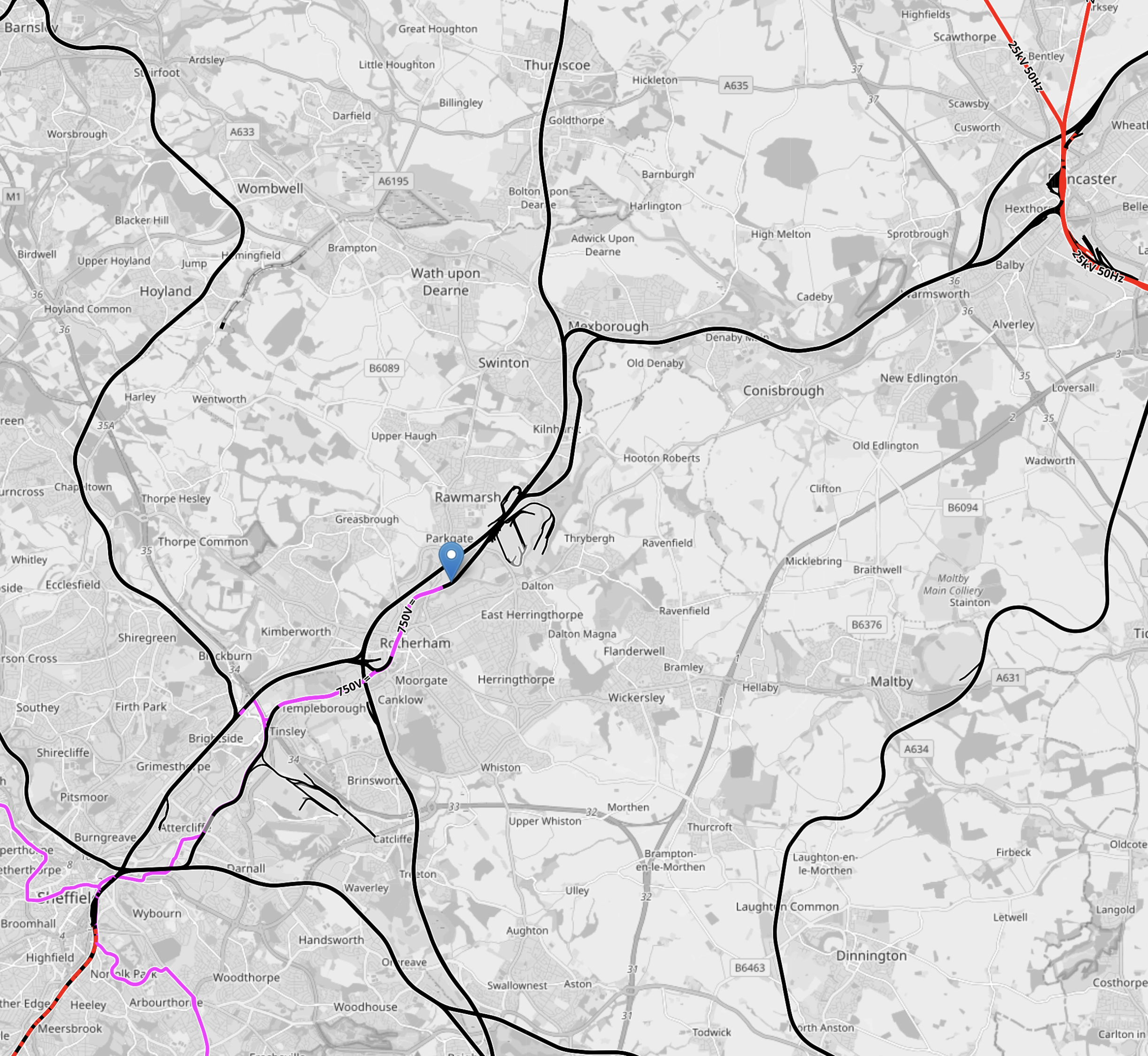
Note.
- The short length of red track in the North-East corner of the map is the East Coast Main Line.
- Doncaster station can be picked out.
- The short length of red track in the South-West corner of the map is the Midland Main Line, which connects Sheffield to London.
- Sheffield station is at the Northern end of the electrification, which will be installed soon.
- The pink tracks are the 750 VDC electrified tracks of the Sheffield Supertram.
- The blue arrow marks Rotherham Parkgate station, which is the limit of the current tram-train route.
The tram-train route needs to be extended so that the tram-trains can go between Rotherham Parkgate tram stop and Doncaster station.
The route seems to have these characteristics.
- It is about 11.8 miles long.
- Stops are Rotherham Central, Swinton (South Yorkshire), Mexborough and Conisborough.
- Diesel trains take about thirty minutes between Rotherham Central and Doncaster.
- All platforms at Doncaster are electrified with 25 KVAC.
- Platform 5 is a convenient bay platform at Doncaster, that could be used by the tram-trains.
- Sheffield’s Class 399 tram-trains can use 25 KVAC for traction.
- South Wales have similar Stadler tram-trains, that are to be fitted with batteries.
I am fairly sure, that a solution can be found so that Sheffield’s tram-trains can be extended to Doncaster station.
This OpenRailwayMap shows the route between Rotherham Parkgate tram stop and Doncaster station.
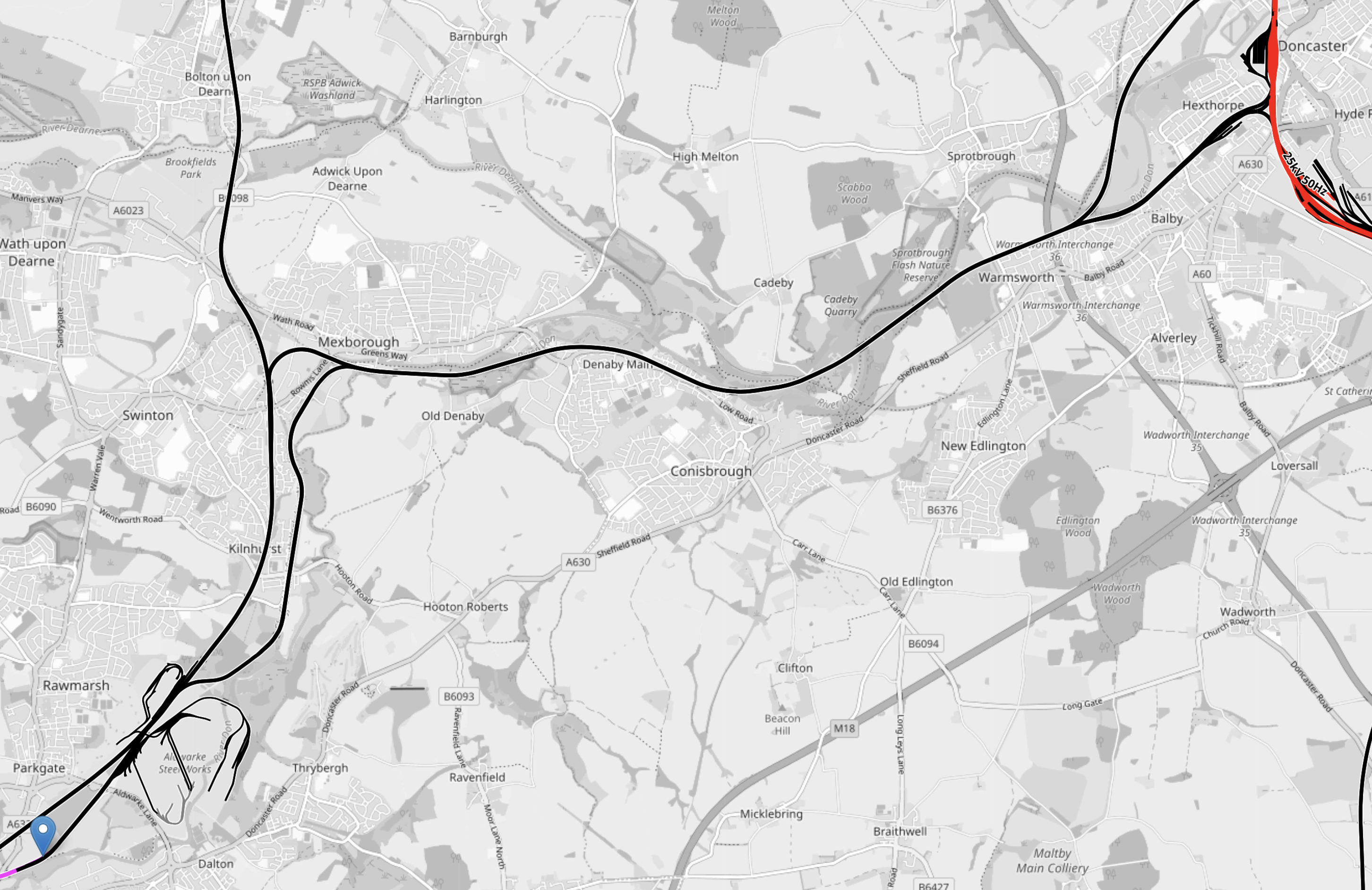
Note.
- The short length of red track in the North-East corner of the map is the East Coast Main Line.
- Doncaster station can be picked out.
- The short length of pink tracks are the 750 VDC electrified tracks of the Sheffield Supertram.
- The blue arrow marks Rotherham Parkgate station, which is the limit of the current tram-train route.
- Most of the route is not electrified.
As there is electrification at both ends, I suspect the easiest way of powering the trams would be to use batteries, as has been done in South Wales.
The New Class 810 trains between London St. Pancras And Sheffield On The Midland Main Line
These new Class 810 trains have started running this month and I suspect soe travellers will use these trains to go to Magna or its tram stop.
his OpenRailwayMap shows the tram routes in Sheffield city centre.
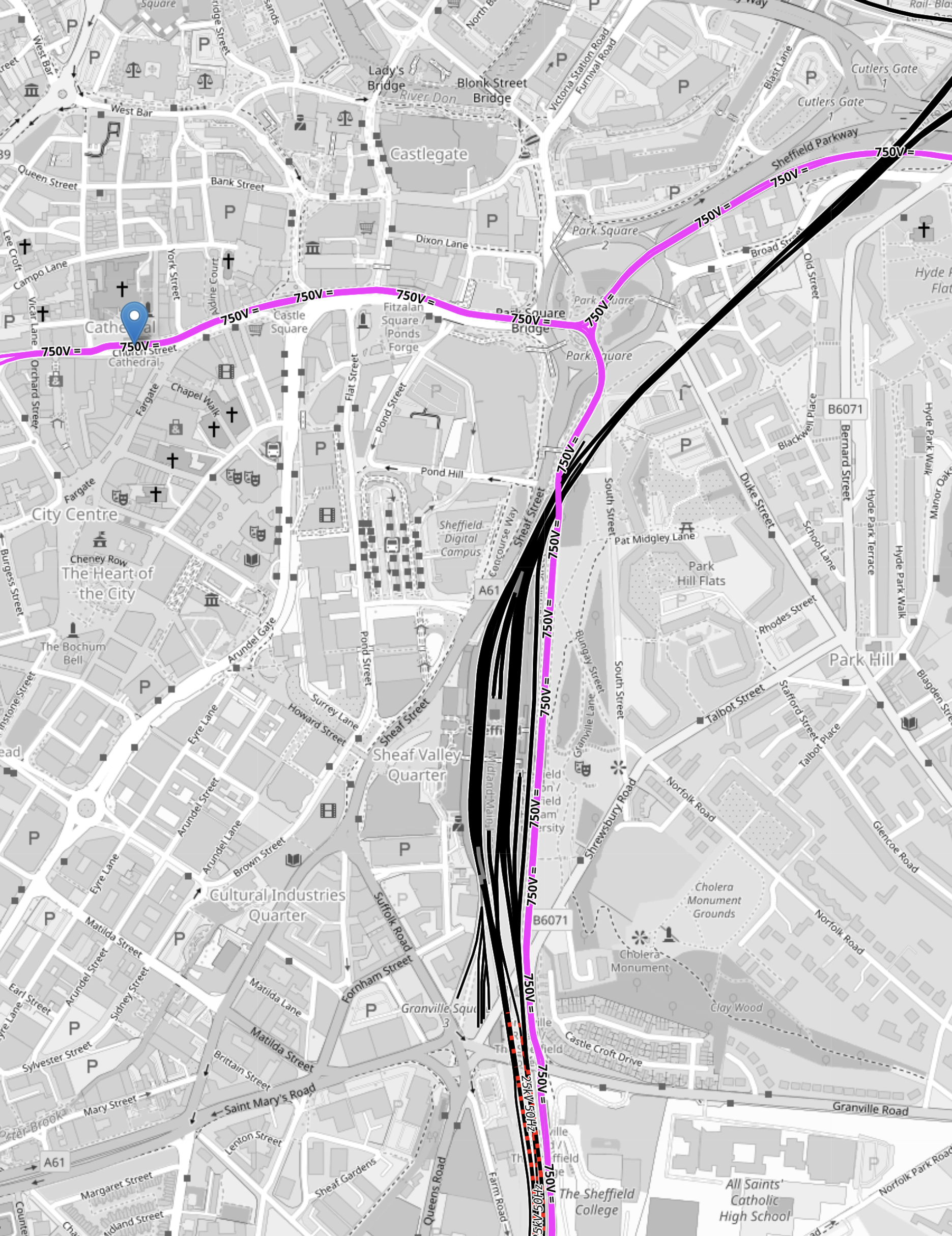
Note.
- The pink tracks are tram-tracks.
- The black tracks are unelectrified train tracks.
- The short lengths of red-and-black tracks are tracks to be electrified with 25 KVAC overhead, for the Class 810 trains.
- The blue error indicated the Cathedral tram-stop, where tram-trains will be caught to Magna.
- The mass of black tracks in the middle of the map is Sheffield station.
- There is a tram stop on the East side of the train station for the trams.
- Trams going South go to Halfway and Herdings Park.
- Trams going North-East go to Rotherham Parkgate and Meadowhall Interchange, and will go to Magna, when it opens.
- Trams going North-West go to Malin Bridge and Middlewood.
It is a difficult interchange between Cathedral and Sheffield station, if you are catching the tram-train, as it is a hard walk up hill, so it might be better if you are goinging between Sheffield station and the tram-train to change trams at Meadowhall South.
Huddersfield Station – 30th September 2025
This press release on the Network Rail Media Centre is entitled Huddersfield Station Set To Reopen Next Week With New Temporary Layout.
As it is now next week, I went to have a look at the progress today.
I made a mistake and got on a Grand Central Train, which meant, I had to change at York.
Speeding past Drax power station on the Selby Diversion, I took these pictures.


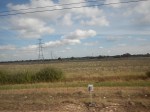
We were only in a 125 mph diesel, so we couldn’t take advantage of the 160 mph running, that the East Coast Main Line’s new signalling might allow on this section. The Wikipedia entry for the Selby Diversion, says this about the possible speeds.
The line was the first purpose-built section of high-speed railway in the UK having a design speed of 125 mph; however, research by British Rail in the 1990s indicated that the route geometry would permit up to 160 mph operation, subject to the necessary overhead line equipment and signalling upgrades. The new line also avoided the speed restriction over the swing bridge at Selby. The former ECML route, the NER’s 1871 York and Doncaster branch line, was closed from Selby northwards.
As the Selby Diversion opened in 1983, I wouldn’t be surprised that the calculations were performed on British Rail Research’s Pace 231-R, which was similar to the one I used at ICI and the pair, that NASA used calculate how to land Apollo on the moon.
When I eventually got to Huddersfield, I took these pictures.
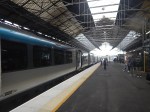
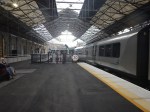
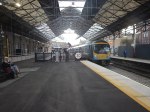
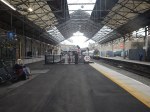
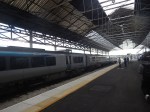
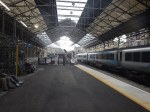






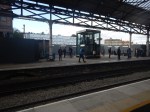
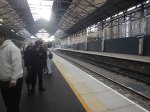
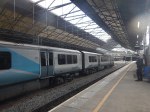
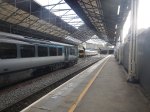
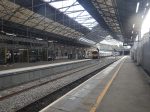
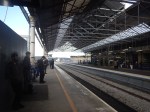
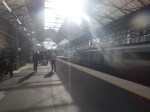
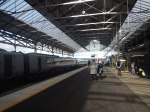
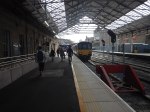
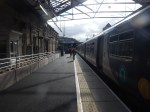
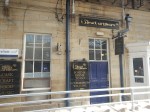
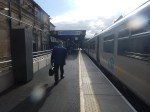
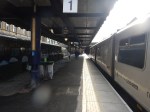
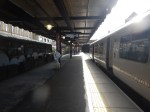
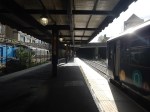
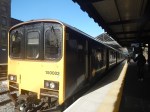
Note.
- In I’ve Just Glimpsed The Future Of Train Travel Across The North Of England And I Like It, there are pictures of Huddersfield station, that were taken on the 21st August, soon after the work started.
- In Huddersfield Station – 15th December 2023, there are pictures of Huddersfield before the work started.
- Much of the work seems to have been done at the Western end of the station to lengthen the platform on the Penistone Line to Sheffield.
- Platform 2 for the Penistone Line has also been renumbered Platform 1.
Work still to be carried out at Huddersfield station, includes refurbishing the roof, installing the electrification and adding a couple of new platforms.
These are my thoughts.
Which Platforms Will Be Electrified?
This OpenRailwayMap shows the proposed electrification in Huddersfield station.
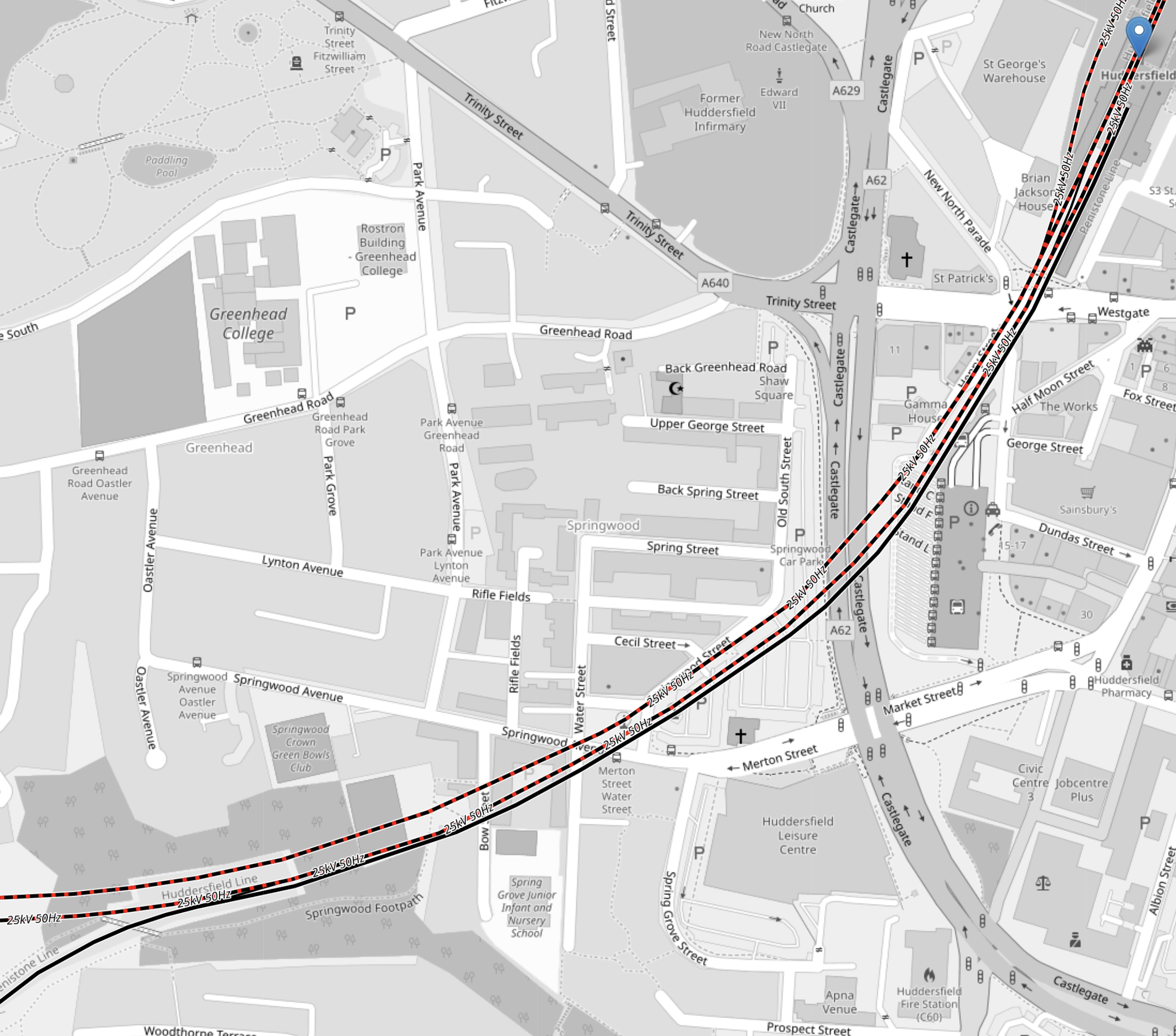
Note.
- The blue arrow in the North-East corner of the map indicates Huddersfield atation.
- The two red-and-black tracks going diagonally across the map are the Hudderfield Line.
- The red-and-black colour, indicates that the two tracks will be electrified.
- South of these two tracks, the Penistone Line sneaks into Platform 1 at Huddersfield station.
- The Penistone Line goes to Sheffield in a South-Westerly direction.
- There appears to be a crossover, so that trains from the Penistone Line can use both Platforms 1 and 2 in Huddersfield station.
- The OpenRailwayMap appears to show planned electrification between Stalybridge and Leeds stations.
- To the East of Leeds planned electrification is shown as far as Micklefield and Church Fenton stations.
Once installed, this electrification will create a complete electrified route across the Pennines from Liverpool Lime Street in the West to the East Coast Main Line in the East.
This OpenRailwayMap shows the planned electrification between Micklefield and Hull stations.
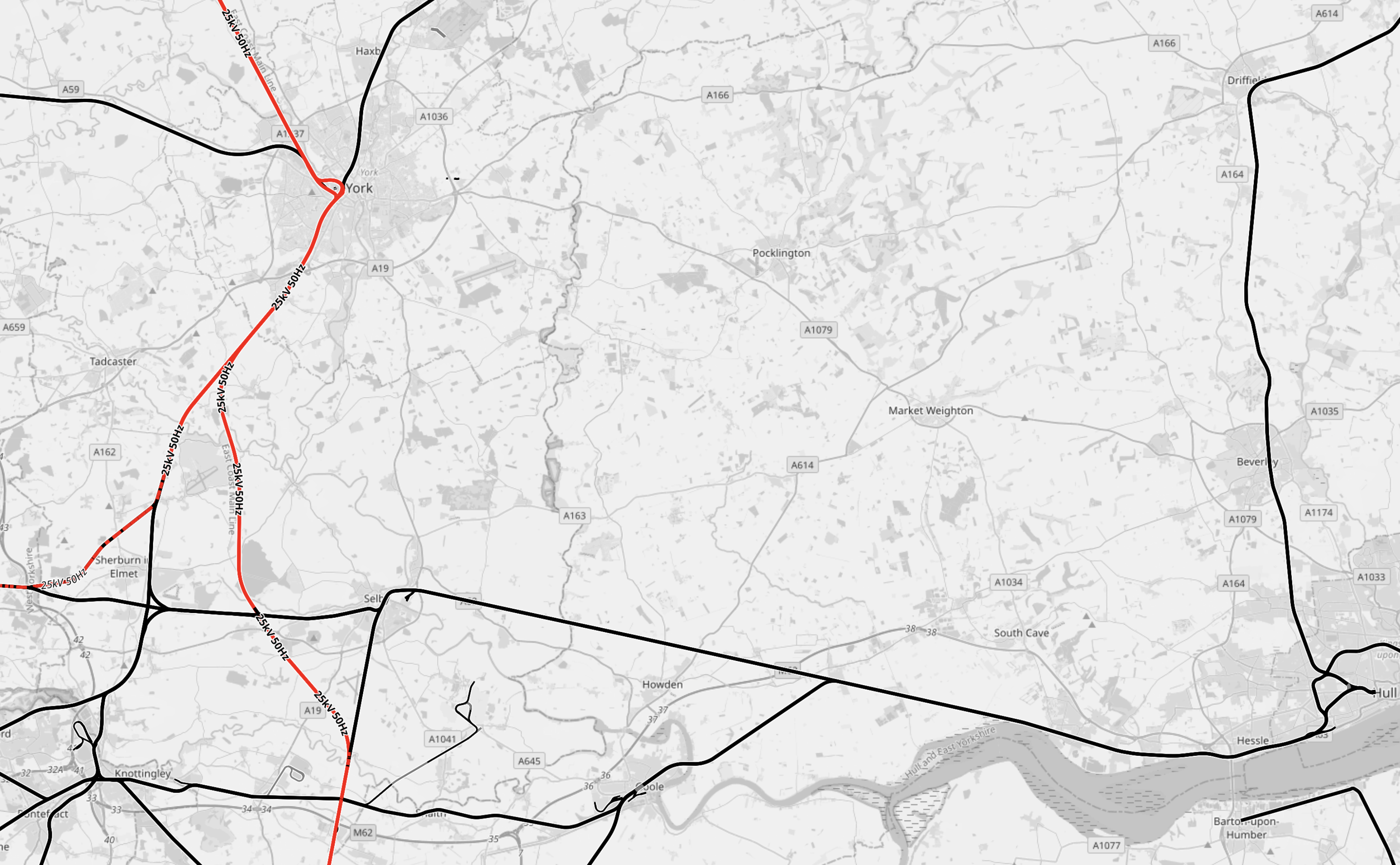
Note.
- Red tracks are electrified.
- Black tracks are not electrified.
- York is in the North-West corner of the map, with the electrified East Coast Main Line going through the station North-South.
- South of York, the East Coast Main Line now splits.
- The Western branch includes an electrified line to Micklefield station, Neville Hill depot and Leeds station.
- The Eastern Branch is the Selby Diversion, which is an electrified 160 mph line, that avoids the Selby coalfield.
- Running West-East across the map is the unlectrified Micklefield and Hull Line, which goes via Selby.
- Hull is in the South-East corner of the map.
- Hull is 42 miles from Micklefield and 36.1 miles from the Temple Hirst junction on the Selby Diversion, so it is within range of battery-electric trains, with charging at Hull station.
- Hitachi’s battery-electric Class 802 trains, used by Hull Trains and TransPennine Express, which are currently on test, should certainly be able to serve Hull.
Hull can become an electrified station, without the expense and disruption of full electrification.
How Long Is Platform 1 At Huddersfield Station?
This OpenRailwayMap shows the new Platform 1 at Huddersfield station.
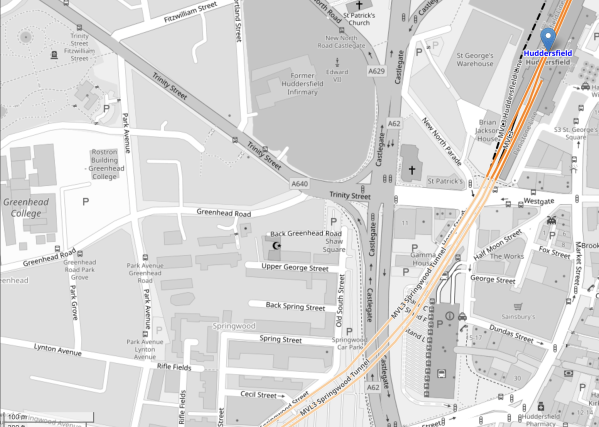
Note.
The blue arrow indicates Huddersfield station.
- The three darker orange lines indicate the two through platforms 2 and 3, and the reconfigured bay platform 1.
- There is a cross-over between platforms 1 and 2, which connects Platform 2 to the Penistone Line.
- In the South-West corner of the map is a hundred metre scale.
- Using the scale, I estimate that the length of the bay platform 1 is around 120 metres.
- In the last two rows of pictures in the gallery of this post, a three car Class 150 train is shown in Platform 1.
- A three car Class 150 train is approximately sixty metres long.
Looking at the pictures, I wouldn’t be surprised if the new platform has been designed to take two three-car Class 150 trains. It would certainly take a pair of two-car Class 150 trains.
Other trains and their lengths that might use the platform include.
- Class 170 – three-car – 70.85 metres
- Class 195 – two-car – 48.05 metres
- Class 195 – three-car – 71.40 metres
- Class 195 – 2 x two-car – 96.10 metres
- Class 810 – five-car – 120 metres
The Class 810 uses 24 metre cars, so that a pair of trains, will fit in St. Pancras. But with perhaps selective door opening could a single Class 810 train run a St. Pancras and Huddersfield service, perhaps with a split and join at Sheffield.
Electrification Across The Pennines
The TransPennine Route will be electrified between Liverpool Lime Street and Micklefield stations, once the current works between Huddersfield and Leeds are complete.
Sections without electrification include.
- Bradford Interchange and Doncaster – 52.1 miles
- Cleethorpes and Doncaster – 52.1 miles
- Harrogate and Leeds – 18.3 miles
- Hazel Grove and Doncaster – 52.6 miles
- Hull and Micklefield – 42 miles
- Hull and Temple Hirst junction – 36.1 miles
- Saltburn and Northallerton – 28.1 miles
- Sunderland and Northallerton – 46.8 miles
- Scarborough and York – 42.1 miles
I expect that Hitachi trains with batteries or CAF’s tri-mode trains will be able to handle these routes in a low-carbon manner.
Electrification Between Stalybridge And Huddersfield
This section is shown as being electrified on OpenRailwayMap.
But as it is only 18 miles and includes the Standedge Tunnels will the route use battery-electric trains?
Do Hitachi Battery Electric InterCity Trains Have Problems?
I asked Google the question in the title of this post and got this answer.
While Hitachi’s battery-powered intercity trains have shown promising results in trials, particularly regarding fuel savings and emissions reduction, there are some potential challenges and considerations. These include safety concerns related to lithium battery fires, especially in the event of a crash or derailment, as well as range limitations for longer journeys. However, the technology is continuously evolving, and Hitachi is actively working to address these issues.
That seems fairly positive.
There is also this article on the BBC, which everybody should read, which is entitled Will New Battery-Powered Trains Replace Diesel, And Are They Safe?.
In The Data Sheet For Hitachi Battery Electric Trains, I look at the data sheet, that Hitachi published in late 2023.
These were my conclusions about the data sheet.
These are my conclusions about Hitachi’s battery packs for Class 80x trains, which were written in November 2023.
- The battery pack has a capacity of 750 kWh.
- A five-car train needs three battery-packs to travel 100 miles.
- A nine-car train needs five battery-packs to travel 100 miles.
- The maximum range of a five-car train with three batteries is 117 miles.
- The maximum range of a nine-car train with five batteries is 121 miles.
As battery technology gets better, these distances will increase.
Hitachi have seen my figures.
They also told me, that they were in line with their figures, but new and better batteries would increase range.
125 mph trains with a 120 mile range on batteries, would revolutionise UK train travel.
LNER’s Class 897 Trains
In the Wikipedia entry for LNER, this is said about LNER’s new ten CAF tri-mode trains.
In November 2023, LNER placed an order for 10 ten-car tri-mode (electric, diesel and battery power) Civity trains from CAF. In August 2024, it was announced that the units will be designated Class 897 under TOPS.
According to their Wikipedia entry, it appears the Class 897 trains will be delivered from 2027.
Can I Build A Schedule For The Introduction Of New Trains, Services and Batteries?
I think that I can from the information that is out there.
- East Coast Main Line – December 2025 – Introduction of Lumo between London King’s Cross and Glasgow
- West Coast Main Line – Spring 2026 – Introduction of Lumo between London Euston and Stirling
- Midland Main Line – 2026-2027 – Introduction of EMR Class 810 trains between London St. Pancras and Leicester, Derby, Nottingham and Sheffield.
- East Coast Main Line – From 2027 – Introduction of LNER Class 897 trains between London King’s Cross and Yorkshire.
Note.
- The two Lumo services use trains already in service.
- The Class 810 trains for EMR are being debugged and introduced at the present time.
- The only new trains are the Class 897 trains for LNER.
- The introduction of the Class 897 trains will allow LNER to withdraw some trains for refurbishment and fitting of batteries.
This would mean that before the next general election, almost the full timetable between London and the North of England and Scotland would have been implemented using diesel-electric technology.
Is it a low-risk start to the full electrification of services to the North?
The second-phase would see battery-electric trains introduced.
I believe that Grand Central’s new trains would be brought into service first.
- The new trains are scheduled to be introduced in 2028.
- Grand Central will still have the diesel trains for backup.
- Their new trains would be similar to the other Hitachi trains.
- It looks like they could be doing some splitting and joining.
After the Grand Central trains had been introduced successfully, the trains for the other Hitachi operators would have batteries fitted.
I suspect short routes like Lincoln would be electrified with battery-electric trains first.
There would also need to be short lengths of electrification erected, so that trains could be charged to send them on their way.
Other routes could also be electrified in the same way.
- Basingstoke and Exeter
- Birmingham and Aberystwyth
- Bristol and Penzance
- Cardiff and Swansea
- Crewe and Holyhead
- Edinburgh and Aberdeen
- Edinburgh and Inverness
- Reading and Taunton
- Swindon and Gloucester
If this technique could work for main lines, surely a scaled down version with smaller trains would work for branch lines.
Conclusion
Consider.
- It looks to me, that someone has planned this thoroughly.
- It all fits together extremely well.
It could be the first phase of a cunning plan to use battery-electric trains to electrify the UK’s railways.
Passengers will also see benefits, from when Lumo runs its first train into Glasgow Queen Street station.
I don’t think Hitachi’s trains have any problems, but there is enough float in this plan to make sure, it can be implemented on time and on budget.
St. Pancras And Leicester Via Corby
This OpenRailwayMap shows the route between Kettering and Leicester via Corby.
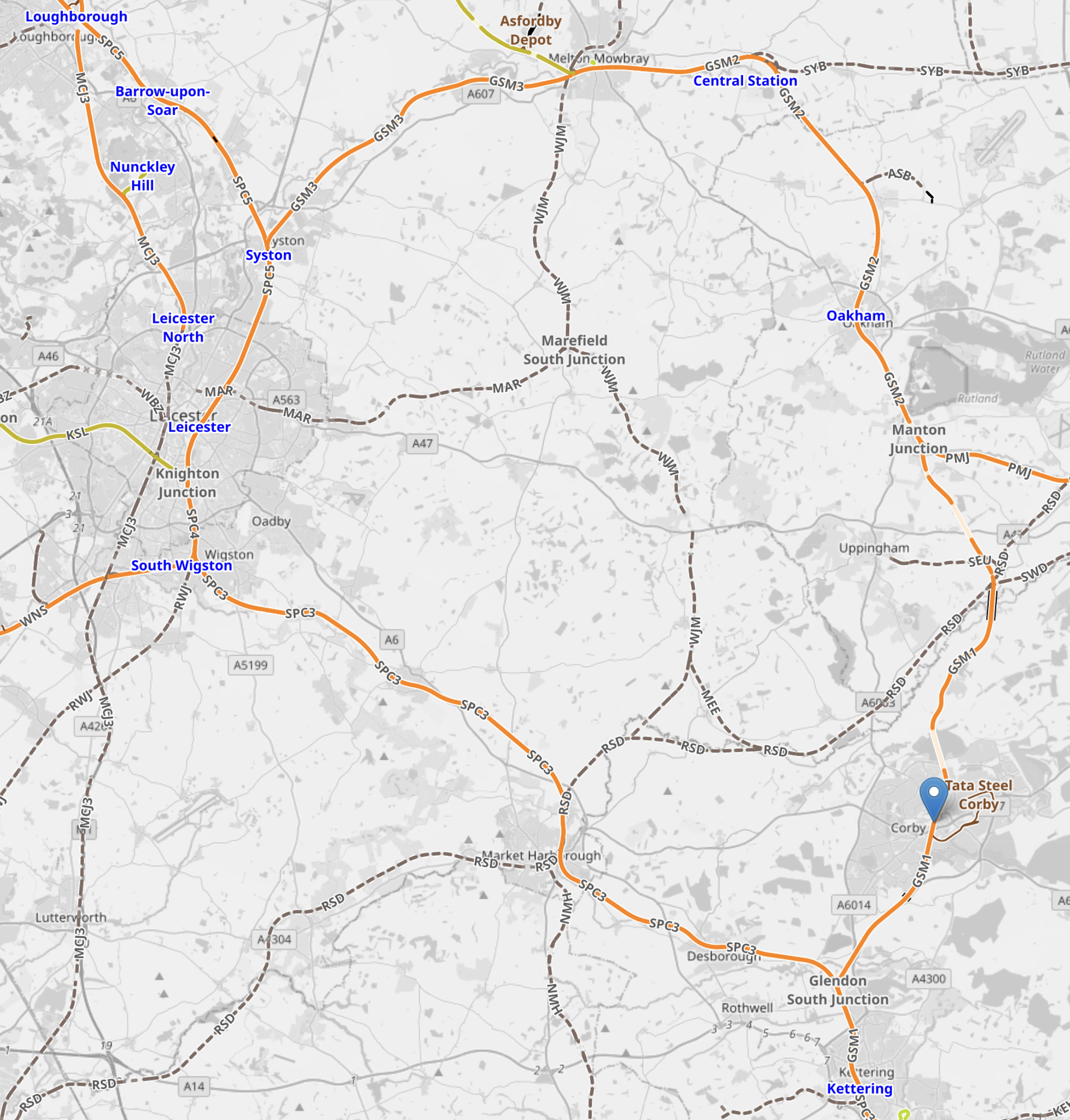
Note.
- Kettering station is in the bottom right corner of the map.
- Kettering is on the Midland Main Line from St. Pancras.
- North of Kettering the route splits into two.
- The Midland Main Line goes North-West through Market Harborough to Wigston junction and Leicester.
- The Midland Main Line is electrified to Wigston junction.
- The Corby branch goes North-East to Corby, which is indicated by a blue arrow.
- The Corby branch is electrified to Corby.
On Saturday, I went to Leicester and because there were engineering works at Market Harborough, the train went via Corby.
Over The Welland Viaduct
After Corby, the train went over the Welland Viaduct and I took these pictures.


It is an impressive viaduct and is the longest viaduct across a valley in the United Kingdom.
I have some further thoughts.
Could The Corby Service Be Extended to Leicester?
Consider.
- Between Corby and Leicester is 40.8 miles of track without electrification.
- Trains could call at Oakham, Melton Mowbray and Syston stations.
- Oakham, Melton Mowbray and Syston stations, could be given an appropriate number of trains every day to Leicester, Corby, Kettering, Wellingborough, Bedford, Luton, Luton Airport Parkway and London St. Pancras International stations.
- No new infrastrructure would be needed.
- I suspect an hourly service would be sufficient.
I am fairly sure that a Class 810 train fitted with batteries could work the route.
Leicester, Oakham, Melton Mowbray And Syston Stations Would Get A Direct Connection To Luton Airport
Some travellers might find this very useful.
Leicester Station Would Have A Neat Passenger Drop-Off For Luton Airport
I wrote about this in Busiest UK Airports Raise Kiss-and-Fly Fees, Says RAC.
Every rail station needs a passenger drop-off as good and affordable as the one at Leicester station.
Could East Midlands Railway Run A St. Pancras And Leeds Service?
East Midlands Railway’s new Class 810 trains have been designed, so that a pair will fit into one platform at St. Pancras.
If we assume one platform at St. Pancras is used for the Corby and Luton Airport Express services, that leaves three platforms for pairs of Class 810 trains to run expresses to the East Midlands.
This could be as many as twelve pairs of five-car trains per hour.
Where wioll they all terminate in the North?
Leeds station must be the obvious new destination.
- Leeds has the largest population and is the largest commercial and finance centre in Yorkshire and the North-East.
- Leeds would have gained three trains per hour (tph) from London, two tph from Birmingham and four tph from the East Midlands Hub at Nottinham.
- Leeds is getting a brand new metro.
- Leeds is a fully-electrified station, so it could charge the trains before they return to Sheffield, Leicester, Wigston junction and St. Pancras.
- Leeds and Wigston junction is 107.8 miles, which should be within the range of a battery-electric Class 810 train. If it is too far, an extended stop could be taken at Sheffield to top up the batteries.
- Note that Stadler hold the Guinness World Record for the greatest distance covered on one charge at 139 miles. Hitachi Rail, who are partnered with JCB’s battery-maker in Sunderland, should be able to smash that.
The Rail Minister; Lord Peter Hendy went to Leeds University.
Which Route Would The Trains Take Between Sheffield And Leeds?
Consider.
- The fastest trains between Sheffield and Leeds, go via Meadowhall, Barnsley and Wakefield Kirkgate stations.
- Trains take about an hour.
- The current frequency is two tph.
- The distance is 41.1 miles with no electrification.
A frequency of two additional tph between St. Pancras and Leeds would give the following.
- A nice round four tph between Yorkshire’s two most important cities.
- Four fast tph between Meadowhall, Barnsley and Wakefield Kirkgate stations, and Leeds and Sheffield.
- Two direct trains between Meadowhall, Barnsley and Wakefield Kirkgate, and Chesterfield, Derby, Long Eaton, East Midlands Parkway, Loughborough, Leicester and St. Pancras.
It would be complimentary to any Leeds Metro.
Could East Midlands Railways Also Serve Huddersfield?
Consider.
- Huddersfield is 36.4 miles further than Sheffield on the Penistone Line, which is not electrified.
- Wigston junctionand Huddersfield station is 105.3 miles.
- Huddersfield is a Grade I Listed station with two pubs in the middle of the town.
- Huddersfield station is being fully-electrified in connection with the TransPennine Upgrade.
- All trains from Sheffield, that use the Penistone Line terminate in Platform 2 at Huddersfield station.
This OpenRailwayMap shows the position of Platform 2 in the station.
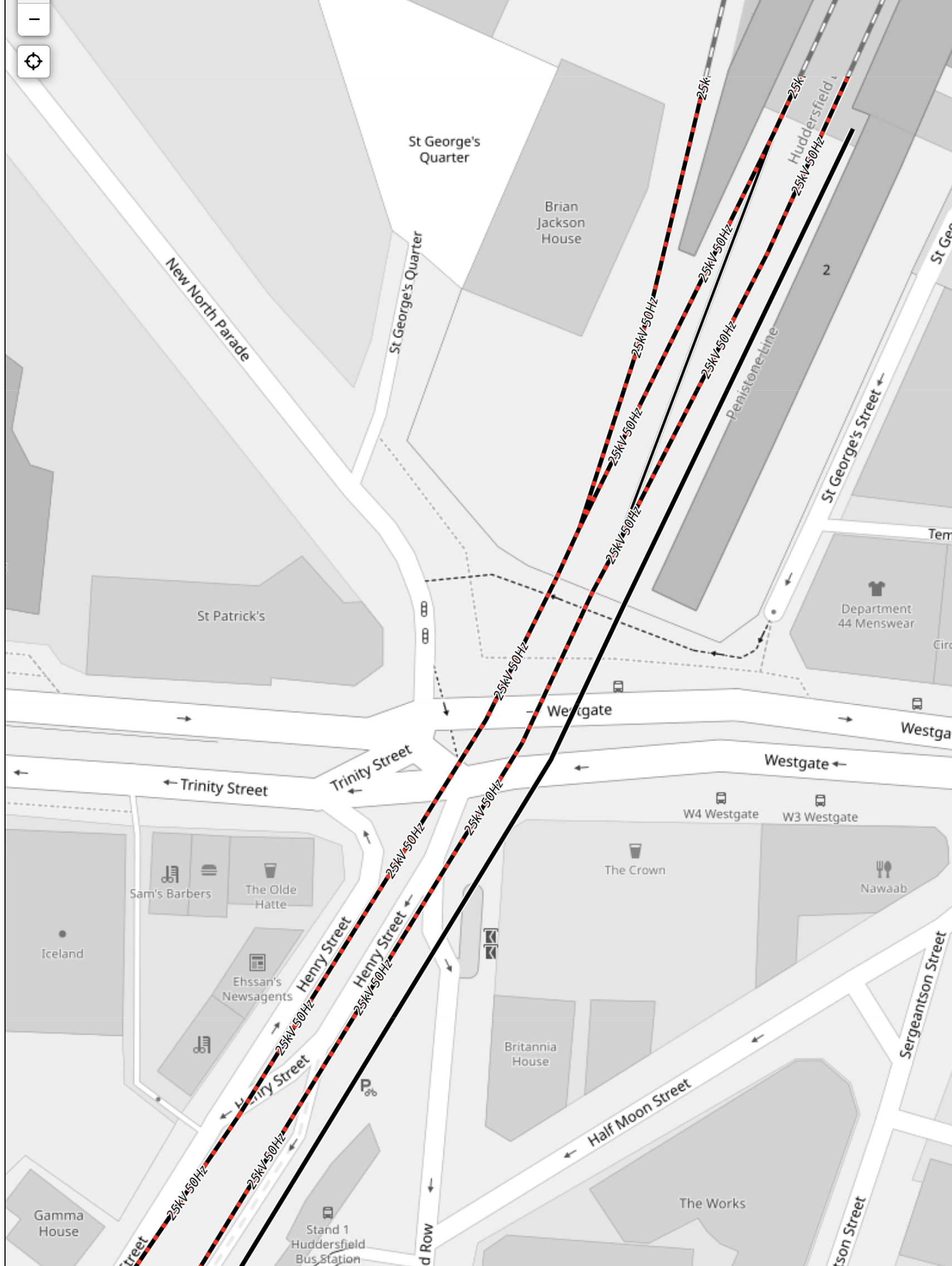
Note.
- The red-and-black dotted tracks are being electrified.
- The black tracks are not going to be electrified.
- Platform 2 is marked 2 in the top-right corner of the map.
- Platform 2 looks to be about 90 metres long.
- Five-car Class 810 trains are 120 metres long.
- From the map, it looks like the platform could be lengthened by the required thirty metres.
I suspect that some form of charger can be squeezed into the available space. After all, you don’t often get the chance to put charging into one of the most grand stations in Europe. Power supply would not be a problem, because of the electrification.
A frequency of twotph between St. Pancras and Huddersfield would give the following.
- Two fast tph between Meadowhall, and Barnsley, and Huddersfield and Sheffield.
- Two extra direct trains between Meadowhall and Barnsley, and Chesterfield, Derby, Long Eaton, East Midlands Parkway, Loughborough, Leicester and St. Pancras.
It would connect many stations to the TransPennine Route at Huddersfield station.
What Could The Sheffield and St. Pancras Look Like?
Consider that currently.
- There are two tph.
- Trains stop at Leicester, Loughborough (1tph), East Midlands Parkway (1tph), Long Eaton (1tph), Derby and Chesterfield.
- Trains are five- or seven-cars.
The simplest solution would probably be.
- A pair of five-car trains run all services.
- Trains split and join at Sheffield with one train going to Leeds and one going to Huddersfield.
I estimate that the Class 810 trains will offer about thirty more seats in every hour.
The Problem Of Electrifying Leicester Station
This post is my attempt to try and explain the problem of electrifying the Midland Main Line through Leicester station.
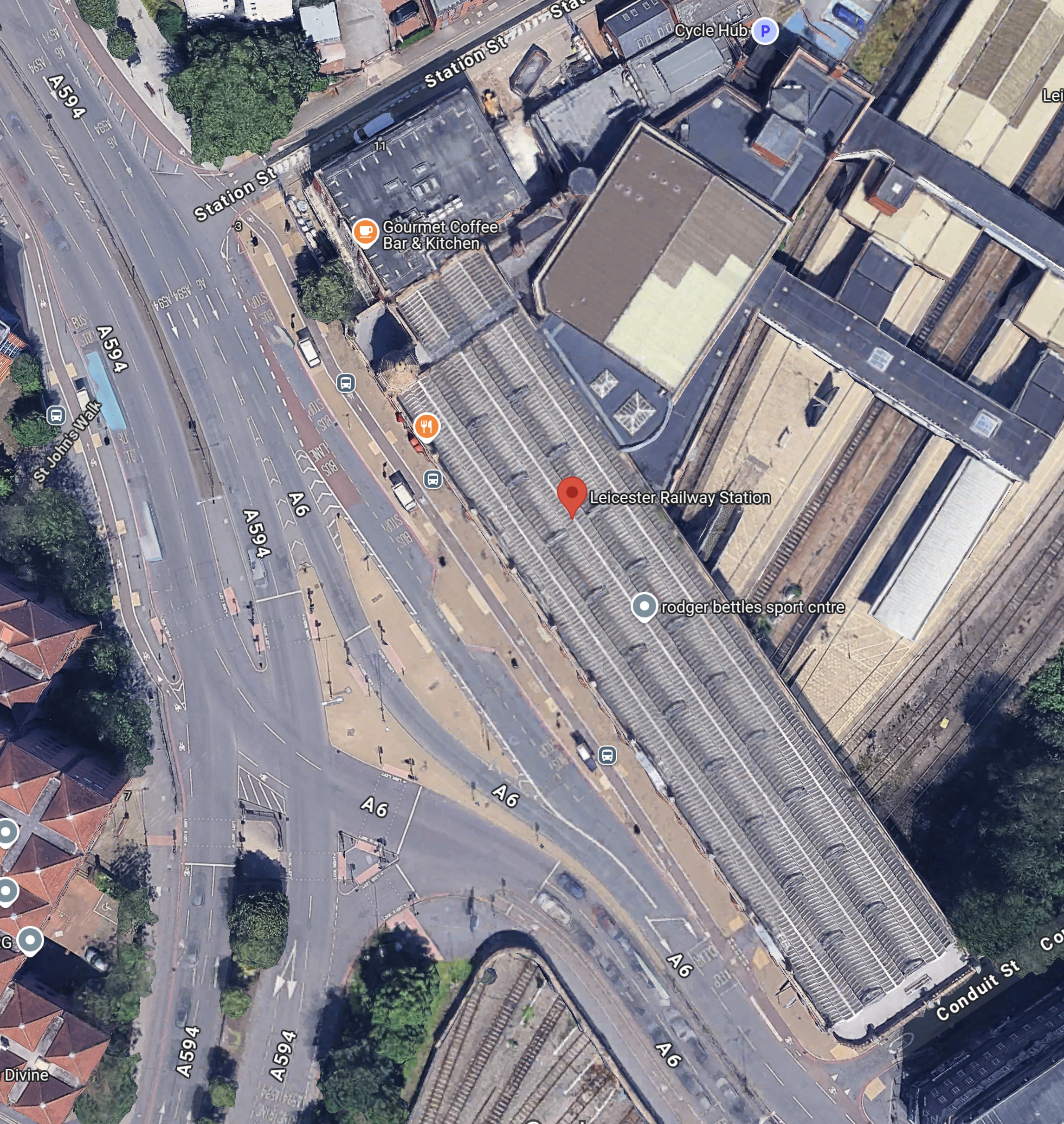
This Google map shows the Southern end of the station.
This OpenRailwayMap shows the station.
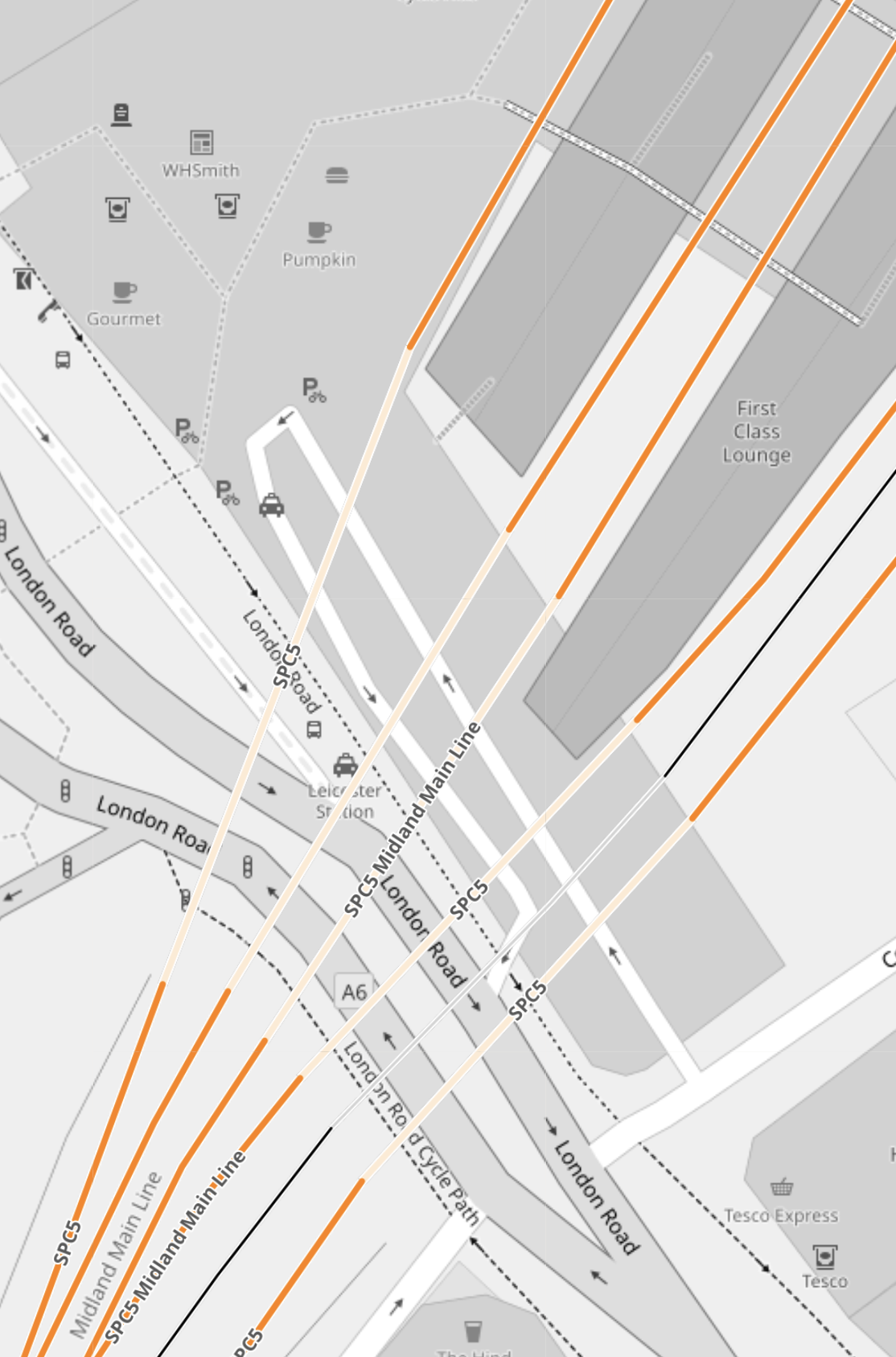
Note.
- There appear to be five tunnels under the station buildings and London Road.
- What is the tunnel going underneath the tracks used for?
Leicester station has a Grade II Listed frontage.








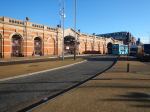

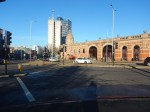
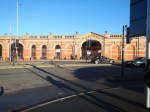
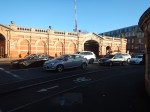

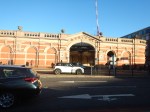

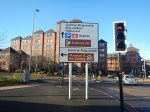

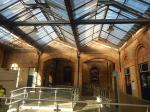

Note.
- It is an impressive Victorian station.
- The station building is on a bridge over the tracks.
- The station is also on one of the main roads through Leicester.
- The road layout is very complicated.
This 3D Google Map, shows an aerial view of the station.
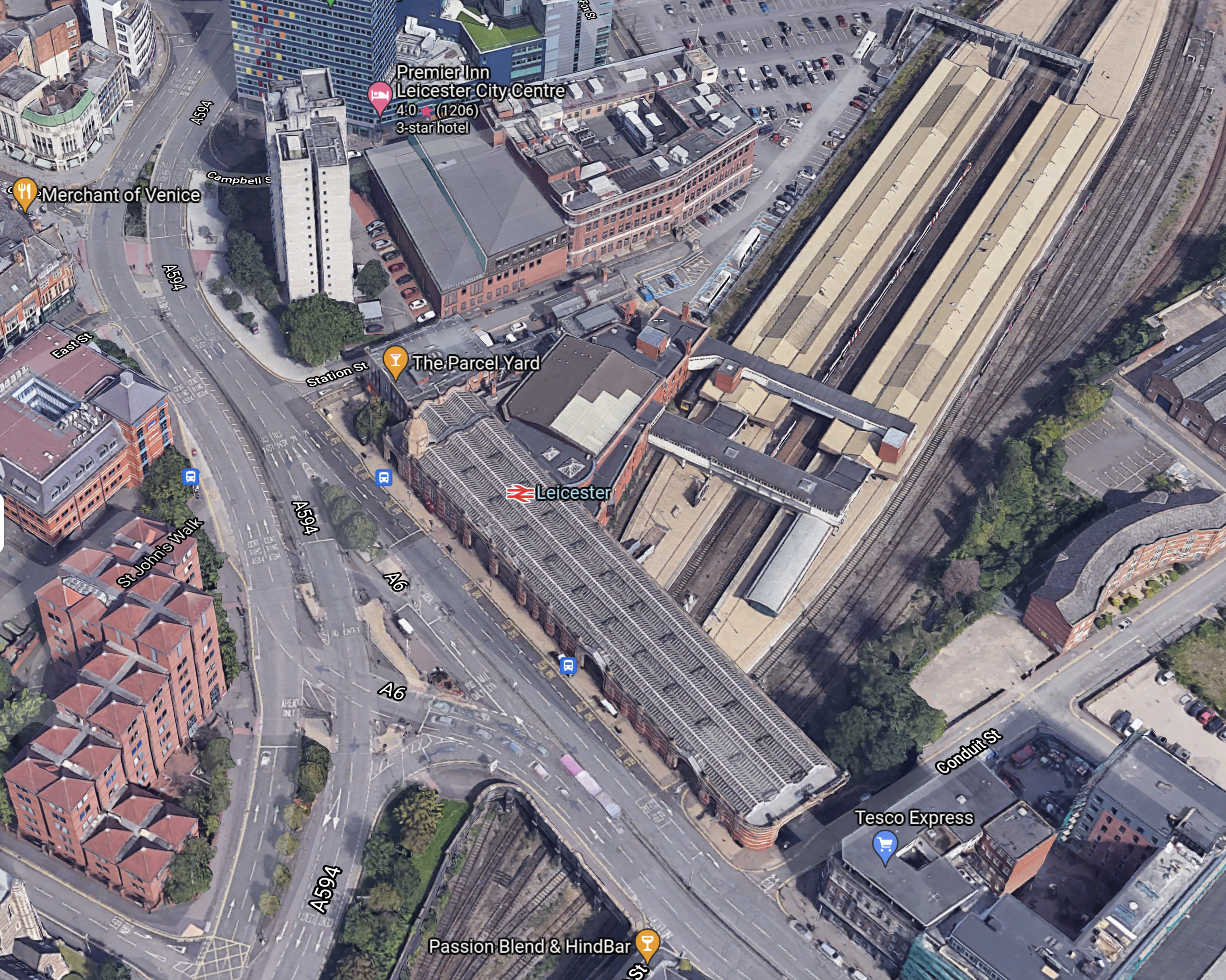
Note.
- There four platforms, which are numbered 1-4 from the left.
- The expresses between London and Derby, Nottingham and Sheffield use the two middle tracks.
- Other main line and East-West services use the outside platforms.
- There is an avoiding line for freight services.
- 5. The step-free footbridge is clearly visible.
This second 3D Google Map, shows an enlargement of the frontage of the station.
These pictures show what is inside the building at the front of the station.




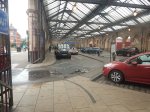

The building would appear to be a Grade II Listed taxi rank and free twenty-minute car park.
There are plans to increase the capacity of the station.
- A fifth platform will be added.
- Three miles of quadruple track will be be built South of the station.
- The Midland Main Line was also to be electrified.
Real Time Trains indicates that the distance between Leicester and Wigston North junction is 3.1 miles.
This OpenRailMap shows that section of track.
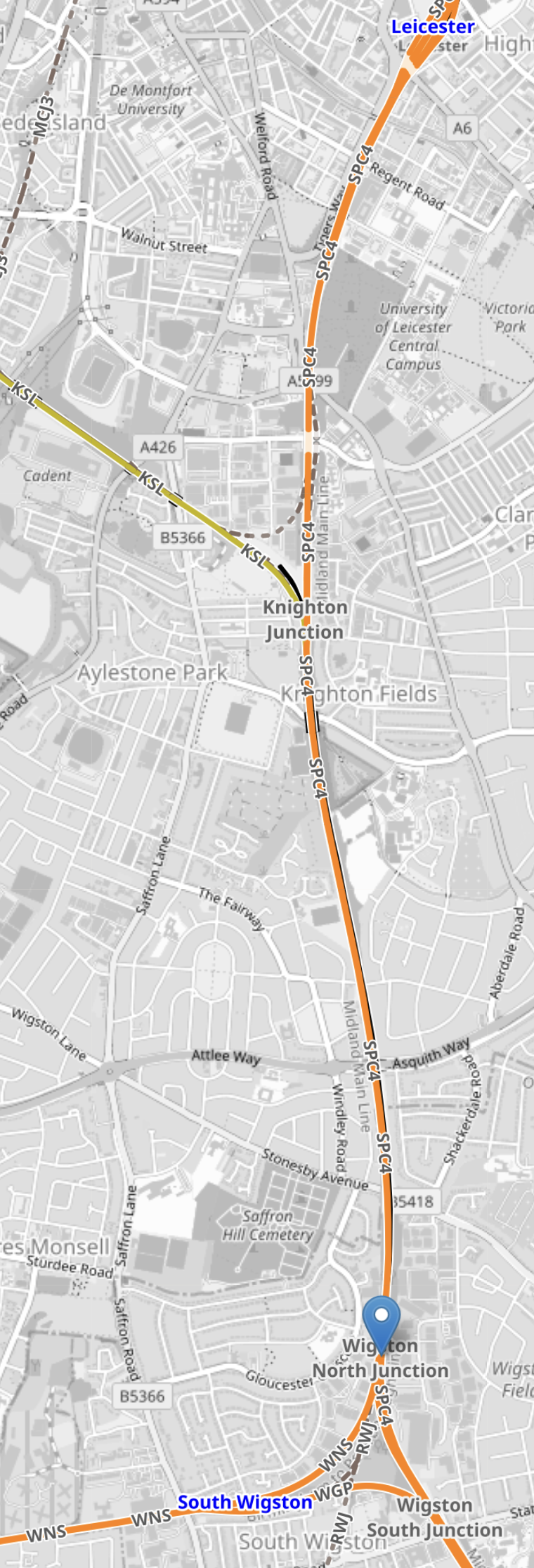
Note.
- Leiester station is at the top of the map.
- Wigston junction is the triangular junction at the bottom of the map.
- Wigston North Junction is indicated by the blue arrow.
- OpenRailwayMap only shows a 100 mph Northbound track and a 90 mph Southbound track on the route.
It looks to me, that four tracks between Leicester and Wigston North junction would mean that trains could expedite arrivals to and departures from Leicester to and from the South.
South From Wigston Junction
Consider.
- London St. Pancras and Kettering is a four-track railway as far as the Corby Branch.
- North of Luton the slowest maximum speed is 100 mph, with much of the line rated at 110 mph plus.
- Wigston North junction and Luton station is 65.8 miles.
- Current Class 222 diesel trains typically take 40 minutes.
- This is an average speed of 98.7 mph.
- An average speed of 110 mph between Wigston North junction and Luton station would take 36 minutes.
- An average speed of 125 mph between Wigston North junction and Luton station would take 31.6 minutes.
- An average speed of 130 mph between Wigston North junction and Luton station would take 30.4 minutes.
I believe with track improvements and digital signalling, there are time savings to be gained between St. Pancras and Leicester stations.
Ultimately, if the 140 mph design speed of the Class 810 trains under digital signalling could be maintained, this would do the following.
- Push the St. Pancras and Leicester times under an hour.
- Push the St. Pancras and Nottingham times under ninety minutes.
- Push the St. Pancras and Sheffield times under two hours.
Batteries would only be used on the three miles between Wigston North junction and Leicester station.
Could Bi-Mode Trains Be Used?
They could be used initially and to prove if the partial electrification works.
But each train has four diesel engines and sometimes they will be working in pairs through the stations between Leicester and Sheffield.
Passengers will take a dim view of being covered in lots of diesel smoke, when they have been promised clean, zero-carbon electric trains.
But the battery-electric trains will be much quieter and pollution-free.
This page on the Hitachi Rail web site is entitled Intercity Battery Trains.
New Infrastructure Needed
The only infrastructure needed will be that which will support the new trains.
The Class 810 trains will be maintained at Etches Park at Derby.
If they are battery-electric trains, there may be some strategically-placed chargers, which typically would be a short length of overhead wire.
Government Pauses Midland Main Line Electrification
This is the first paragraph of this article on Modern Railways.
The Government has paused the third phase of Midland main line electrification to Sheffield and Nottingham, plus the final phase of the South West Rail Resilience Programme (SWRRP), which involves strengthening cliffs at Holcombe.
Currently, the Midland Main Line electrification appears to have been installed between London St. Pancras and Wigston, where there is a triangular junction.
This article on Modern Railways is entitled MML Wires To Wigston energised, says this in the first paragraph.
A major milestones on the Midland Main Line has been achieved with the energisation of the newly installed overhead wires between Kettering and Wigston and the first trip for a new East Midlands Railway Aurora bi-mode unit to St Pancras.
This OpenRailwayMap shows the Midland Main Line between Leicester station and Wigston junction.
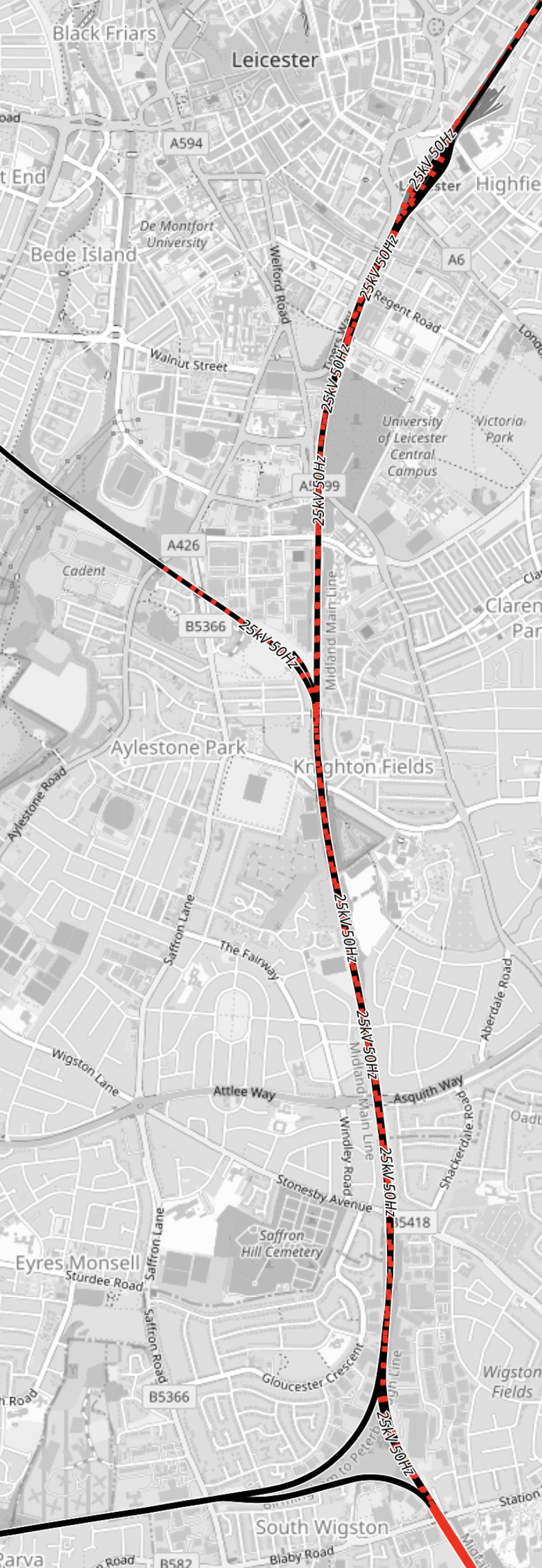
Note.
- Red tracks are electrified.
- Black tracks are not electrified.
- Black/red dashed tracked are being electrified.
- Wigston junction is at the bottom of the map.
- The red track indicates that the South of the junction is electrified.
- The North of the junction is now electrified according to the Modern Railways article.
- The West of the junction is not electrified and leads to the electrified Trent Valley Line at Nuneaton.
- The junction in the middle of the map is Knighton junction, that leads to Burton-on-Trent station.
- In the North-East corner of the map is Leicester station.
Distances from the electrified part of Wigston junction are as follows.
- Derby – 32.5 miles
- Leeds – 107.8 miles
- Leicester – 13.1 miles
- Nottingham – 30.5 miles
- Nuneaton – 15.6 miles
- Sheffield – 68.9 miles
I asked Google AI how far one of Hitachi’s Class 802 trains had gone during tests and got this reply.
A Class 802 train, when operating solely on battery power, can achieve a range of approximately 44 miles (70 km). This was demonstrated in a trial where a five-car Class 802/2 train reached a maximum speed of 87 mph using battery power alone, covering non-electrified sections. Hitachi Rail and Angel Trains are conducting trials to assess the viability of battery technology for longer distances and to reduce reliance on diesel power on non-electrified sections of routes.
Hitachi’s tests were performed with just one diesel engine replaced by a battery pack and it should be born in mind, that the Class 810 trains, that will be used on the Midland Main Line have four diesel engines.
As an electrical engineer, I feel battery range should be additive, so a three-battery train could have a range as much as 120 miles.
- This range would do nicely for a London and Leeds service, as Leeds station is fully-electrified to charge a train for return.
- As London and Sheffield return would be 137.8 miles, a charge at Sheffield would probably be needed to top-up the batteries.
On the other hand a two-battery and two-diesel unit, would have a battery range sufficient for the following services.
- London and Derby and return.
- London and Nottingham and return.
- London and Sheffield with return after a charge.
- London and Leeds with an intermediate charge at Sheffield.
We live in very electrifying times.
I am sure, that Hitachi and their battery-makers will find a solution to run all-electric services to the North of Wigston junction, without full electrification, but with just a charger at Sheffield.
The Electrification Problem At Leicester
Some years ago I came back to London from Leicester with a group of drivers. At one point, the conversation turned to electrification and they said that they had met a Network Rail engineer, who had told them, that the bridge was rather low for electrification and the track couldn’t be lowered because Leicester’s main sewer was underneath the railway.
In Leicester Station – 4th Jan 2022, I show a selection of pictures of Leicester station’s Grade II Listed frontage.
I doubt it would be possible to seriously alter Leicester station to electrify it, as the Heritage Taliban would have a field day.
But if I’m right that all services will be run North of Wigston on batteries, there will be no need to electrify through Leicester station.
Not only would using batter-electric trains probably be more affordable than electrification, but also because of the Leicester problem, it would be less inconvenient for passengers.
Could London and Leicester Be Run In An Hour Or Even Less?
Consider.
- The London and Sheffield services, which go non-stop between London and Leicester take around 64-66 minutes.
- The London and Nottingham services, which stop at Market Harborough take about 5-6 minutes longer.
- London and Leicester is 98.9 miles.
- The fastest trains average 93 mph between London and Leicester.
- Much of the route between London and Leicester has a maximum speed of 100 mph or more, with some sections of 125 mph running.
- Regenerative braking should reduce the time for the Market Harborough stop.
I can certainly see the non-stop Sheffield services being timed at under an hour between London and Leicester.
But I wouldn’t rule out all services between London and Leicester being timed at under an hour.
Could London and Sheffield Be Run In Two Hours Or Even Less?
Given that most services between London and Sheffield take two hours and four minutes and I reckon six minutes could be saved between London and Leicester, I suspect two hours or less is a very attainable target for London and Sheffield services.
Why Not Fit Four Batteries And Be Done With it?
I suspect it will be down to reliability and whether running the diesels on hydrotreated vegeatble oil is acceptable to some politicians.
Would This Be The World’s First Battery-Electric Main Line With 200 kph Running?
Quite possibly!
Conclusion
I can see no disadvantage in not electrifying North of Wigston junction and using battery-electric trains.
It could even be a lot more affordable.
‘UK-First’ Intercity Battery Trial Exceeds Expectations
The title of this post, is the same as that of this press release from Hitachi.
These three bullet points, act as sub-headings.
- Intercity battery train completes testing in the north of England, demonstrating superior performance and cost-effectiveness compared to diesel engines.
- Trial confirms single battery technology can reduce fuels costs between 35%-50% and enter and leave stations in zero-emission mode.
- Ahead of Railway 200 celebration, this new UK rail innovation is ready to reduce cost and emissions on the railways.
These are the first two paragraphs.
Today, Angel Trains, Hitachi Rail and TransPennine Express are celebrating the successful completion of the UK’s first intercity battery trial in the North of England.
The powerful 700kw battery technology met, and in some cases even surpassed, the key objectives of the trial, including:
- Fuel costs savings between 35%-50%, surpassing previous predictions of up to 30%.
- Just one battery has managed to power the train to speeds greater than 75mph, clearly demonstrating this technology can enter, alight and exit stations solely in zero-emission battery-mode to improve air quality and reduce noise pollution.
- Able to achieve all journey times and performance requirements so can meet operators timetable requirements.
- The battery matches the weight of a diesel engine and is installed in the same undercarriage space, ensuring no risk of track degradation and no impact on the passenger environment.
Note.
- I would expect, that most of the fuel cost savings are due to the use of regenerative braking to the battery.
- 75 mph might seem slow, but Hull Trains average slower speeds than this on their diesel sections.
- Running in a non-polluting mode in stations and sensitive areas, is not going to be disliked by anyone.
- The most powerful diesel engines in Class 800 and Class 802 trains are rated at 700 kW. So with the same weight and power, it is not surprising that the performance is the same.
It looks to me, that Hitachi have designed an efficient battery-electric electric train, that can extend services from electrified main lines onto branch lines without electrification.
The One Battery Test Train And Hull Trains
Hull Trains currently run one service to Hull and Beverley and have applied for another service to serve Worksop, Woodhouse and Sheffield, where the trains would leave the East Coast Main Line at Retford.
Hitachi’s current test train has two diesel engines and one battery pack.
An Electric Service Between London and Hull/Beverley
Distances for the Hull and Beverley service are.
- ECML and Hull – 58.1 km. – 3 stops
- Hull and Beverley – 13.2 km or 26.4 km both ways. – 1 stop
Note.
- Trains will be fully-charged, when they leave the ECML.
- Trains could be fully-charged, when they leave Hull station, if the platform they use has a charging system.
- All Hull Trains call in Platform 7 at Hull station.
- The Hitachi press release said “During a trial run, the battery’s impressive power enabled the train to operate solely in battery mode for 70km.” A speed of 75 mph is indicated.
- I would assume the Hitachi train used regenerative braking to help recharge the batteries, at the intermediate stops.
- Trains average around 57 mph between the ECML and Hull and 38 mph between Hull and Beverley.
- Much of the track between the ECML and Hull has a speed limit of 75 mph.
- Much of the track between Beverley and Hull has a speed limit of 70 mph or less.
Because of these figures and what Hitachi have said of the train’s performance on batteries, I am convinced that Hull Trains will use an electrified Platform 7 at Hull station to charge the trains.
These pictures show a Hull Trains’s Class 802 train in Platform 7 at Hull station.

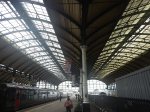


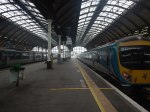
Note.
- The blue Hull Train is in Platform 7 in the pictures.
- Hull station has a classic Victorian cast-iron roof.
- Many other similar platforms have been electrified in the UK.
I believe that this platform can be electrified relatively easily with 25 KVAC overhead wires.
An Electric Service Between London and Worksop/Sheffield
Distances for the Worksop and Sheffield service are.
- ECML and Worksop – 12.2 km. – 1 stop
- Worksop and Sheffield- 25.3 km or 50.6 km both ways. – 1 stop
Note.
1. A train from London will leave Retford with a full battery.
2. Retford and Sheffield is only 37.5 km. So the round trip is only 75 km.
3. A full battery will power the train at 75 mph for 70 km – According to Hitachi.
4. Much of the track between Retford and Sheffield is only 60 mph. So going slower will give an energy saving.
5. Slowing at Worksop, Woodhouse and Sheffield will give the batteries a small charge.
6. There are no bridges in the Workshop station area, so a mile or so of electrification could be easy.
7. It’s an easy level route.
8. I’ve read somewhere that Hitachi have a full route simulator.
I calculate, that a two minute charge at Worksop would probably be all the train would need to travel the 75 km. on batteries.
We don’t know if Hitachi have licenced some of Vivarail’s FastCharge technology from FirstGroup. This could enable them to extract the maximum value from each stop at Worksop.
The One Battery Test Train And Lumo
Hitachi’s current test train has two diesel engines and one battery pack.
It is likely that a train with this configuration could be used on Lumo’s new service to Rochdale.
As London Euston and Manchester Victoria is fully electrified, the only unelectrified section is the 16.7 km. between Manchester Victoria and Rochdale. This would mean, that to complete the trip, Lumo’s train would need the ability to do 33.4 km on battery power.
As Hitachi’s test train can do 70 km on a full charge, Lumo could use trains with the standard two diesel engine and one battery pack configuration. The battery would be charged on the electrified sections of the route, between London Euston and Manchester Victoria stations.
It looks to me, to be a superb demonstration of the capabilities of a battery-electric InterCity train with two diesel engines and one battery pack.
The One Battery Test Train And LNER
Hitachi’s current test train has two diesel engines and one battery pack.
It is likely that a train with this configuration could be used on several LNER services from King’s Cross.
- Bradford Forster Square – 21.9 km. from Leeds
- Cleethorpes – 102.5 km. from Newark
- Grimsby Town – 97.9 km. from Newark
- Harrogate – 29.4 km from Leeds
- Lincoln – 26.9 km. from Newark
- Middlesbrough – 35.2 km. from ECML
- Cleethorpes – 102.5 km. from ECML
- Scarborough – 67.8 km. from York
Note.
- Some services like those to Bradford Forster Square, Harrogate and Lincoln could be run by only charging on the East Coast Main Line.
- Some services like those to Middlesbrough and Scarborough could be run by charging at the destination.
- Other services would need more batteries and/or charging at the destination.
I haven’t put in the Scottish services as running them may be more complicated.
Running Longer Distances On Battery Power
This paragraph is from the original Hitachi press release.
This success demonstrates that Hitachi Rail is ready to deliver the next stage of a full intercity battery-electric train. Based on real-world data, such a train would have a range between 100-150km. These ranges can cover significant sections of non-electrified routes, eliminating the need for wires in tunnels or stations, and potentially saving hundreds of millions of pounds on electrification projects.
Note.
- I would assume that as many diesel engines as possible would be replaced with battery packs.
- On a typical three-battery Class 800 train, 802 train or Class 805 train, this could be up to three batteries.
- But on a four-battery Class 810 train, this could be up to four batteries.
A strategy would need to be developed for all routes and trains would be configured and allocated to the routes accordingly.
 The Anonymous Widower