I’ve Just Glimpsed The Future Of Train Travel Across The North Of England And I Like It
Yesterday, I had an appointment at Liverpool Lime Street station at four o’clock, so as I hadn’t seen the works for the TransPennine Upgrade for some time, I decided to go the long way round with a change of train from LNER to TransPennine Express at Leeds.
These sections document my day.
London King’s Cross To Leeds In An InterCity 225
I took these pictures on the journey.
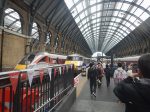
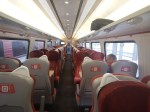
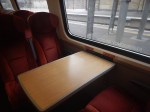
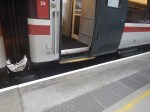
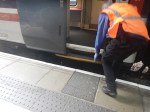
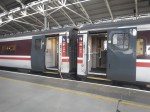
Note.
- The 31 InterCity 225 trains were built around 1990.
- They have a capacity of 535 seats, whereas the newer Hitachi Class 801 trains have a capacity of 611 seats. Both trains are nine cars with both First and Standard seats.
- There is more of a step-up and step-down when entering or leaving the trains, compared to the best of today’s trains.
- They are now being phased out in favour of ten new CAF tri-mode Class 897 trains, which should be entering service in 2027.
- No details are available of the seating capacity of these trains, but they could be between 650 and 700, so they could maximise capacity on any LNER route.
Yesterday, the InterCity 225 performed well, although the windows at the seat where I sat, were rather dirty.
Changing Trains At Leeds Station
I changed to TransPennine Exzpress at Leeds station.
- At least, Leeds station, is one of the few in the UK, with a ticket office behind the barrier. Reading station please note this.
- But, I did have to walk across the bridge from one side of the station to the other.
In the end, I caught the TransPennine Express with about thirty seconds to spare.
Between Leeds And Huddersfield Stations
I took these pictures between Leeds and Huddersfield stations.
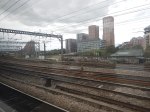
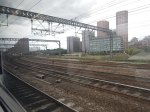
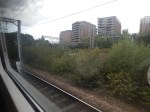
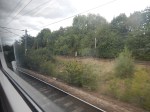
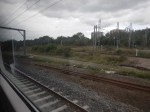
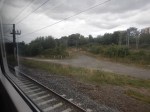
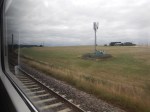

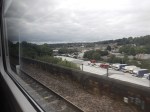
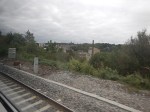
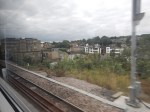
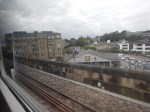
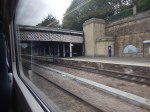
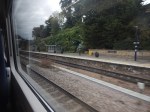
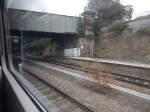
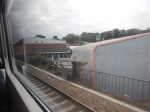
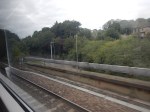
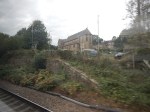
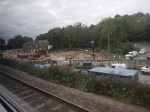
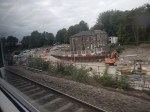
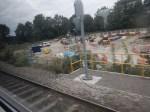
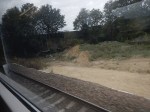
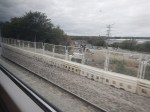
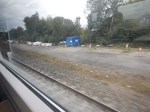
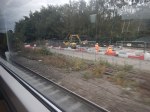
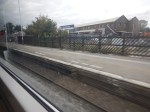
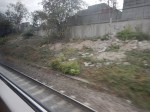
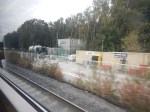
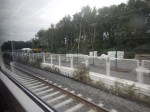
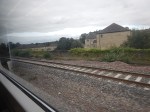
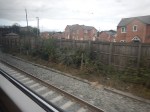
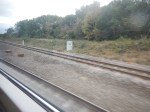
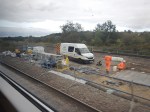
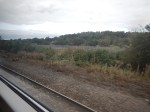
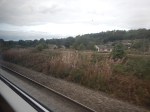
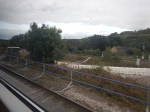
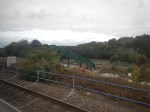
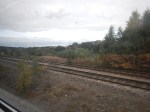

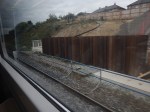
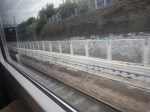
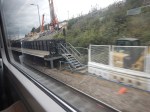
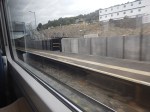
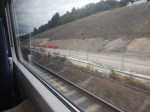
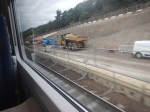
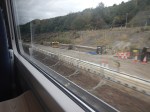
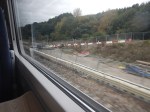
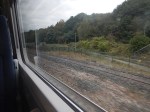
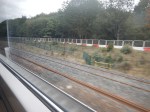
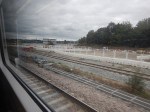
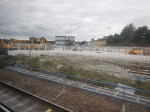
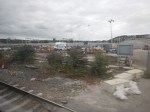
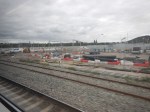
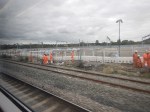
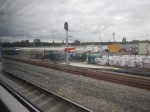
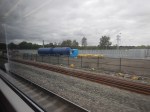
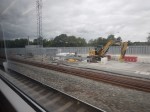
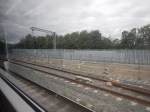
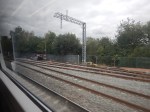
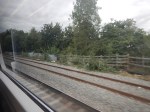
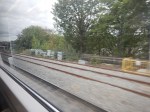
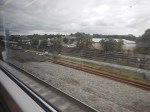

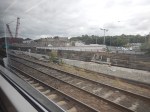
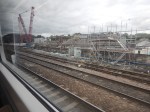
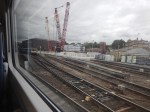
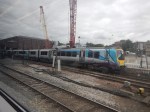
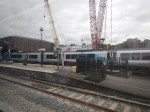
Note.
- Dewsbury and Huddersfield stations is about eight miles and takes about eight minutes.
- It is virtually a continuous building site, where extra tracks are being inserted.
- Three stations are being rebuilt.
- Overhead electrification is being installed. But except for approaching Huddersfield, there’s not much to be seen.
- OpenRailwayMap gives the maximum speed between Dewsbury and Huddersfield stations as between 60-75 mph.
The ride on my Class 803 train was very quiet and smooth. Was it on battery power or was I sitting in a coach without a diesel engine underneath?
Huddersfield Station
I took these pictures at Huddersfield station.
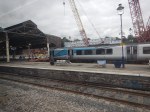
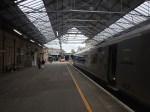
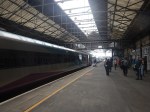
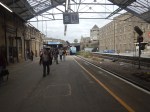
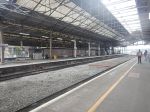
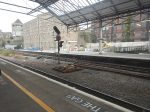
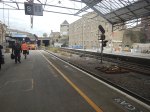

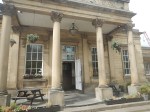

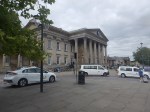






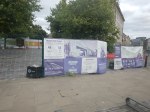

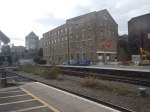
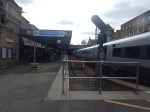
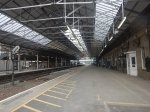
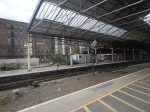
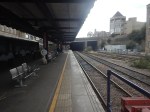
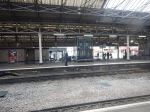
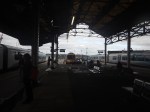
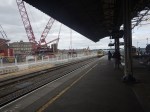
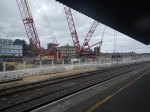
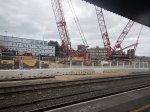
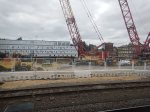
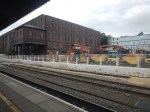
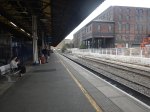
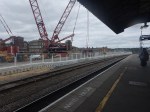
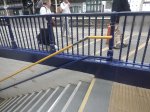
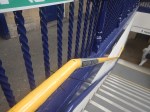
Note.
- Huddersfield station is Grade I Listed.
- There is a pub in each wing.
- I had a beer in the West Wing.
- There are currently three main through platforms and three bay platforms.
- Extensive works, which will be part of the TransPennine Upgrade, will include electrification, a new roof, a new footbridge, and two extra through platforms.
Huddersfield station will be the jewel in the Costa del Yorkshire.
The Platforms At Huddersfield Station
This OpenRailwayMap shows the platforms in Huddersfield station.
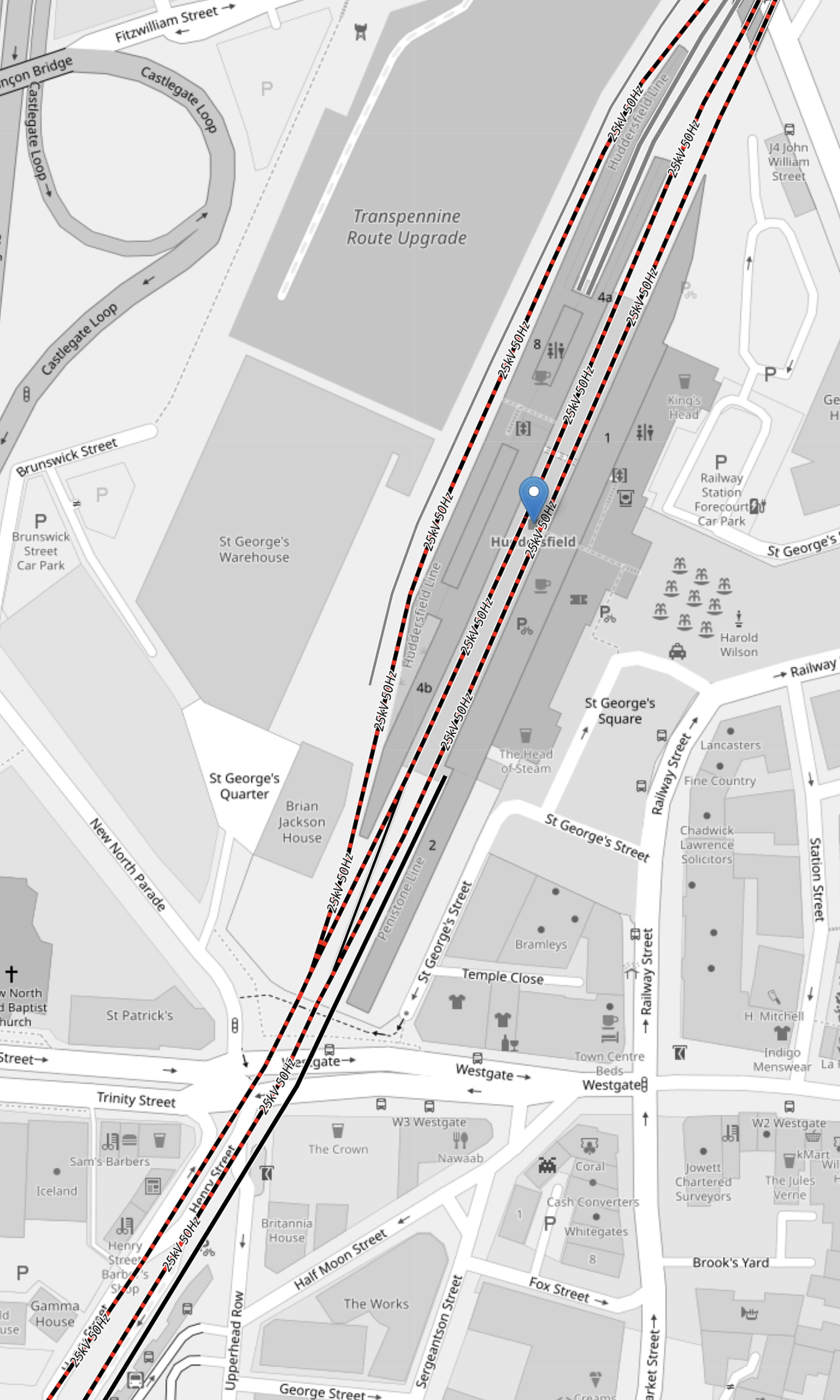
Note.
- The red and black tracks are being electrified.
- Of the current platforms, Platforms 1, 4 and 8 will be electrified.
- The two bay platforms; 5 and 6, will be converted into through platforms.
- Platform 2 is the bay platform in the South-West corner of the map, that is used by the shuttle train from Sheffield.
I am sure extra platforms could be electrified as required, as there must be a good electrical connection at Huddersfield station.
A Tram-Train Service Between Huddersfield And Sheffield Stations
This OpenRailwayMap shows platform 2 at Huddersfield station.
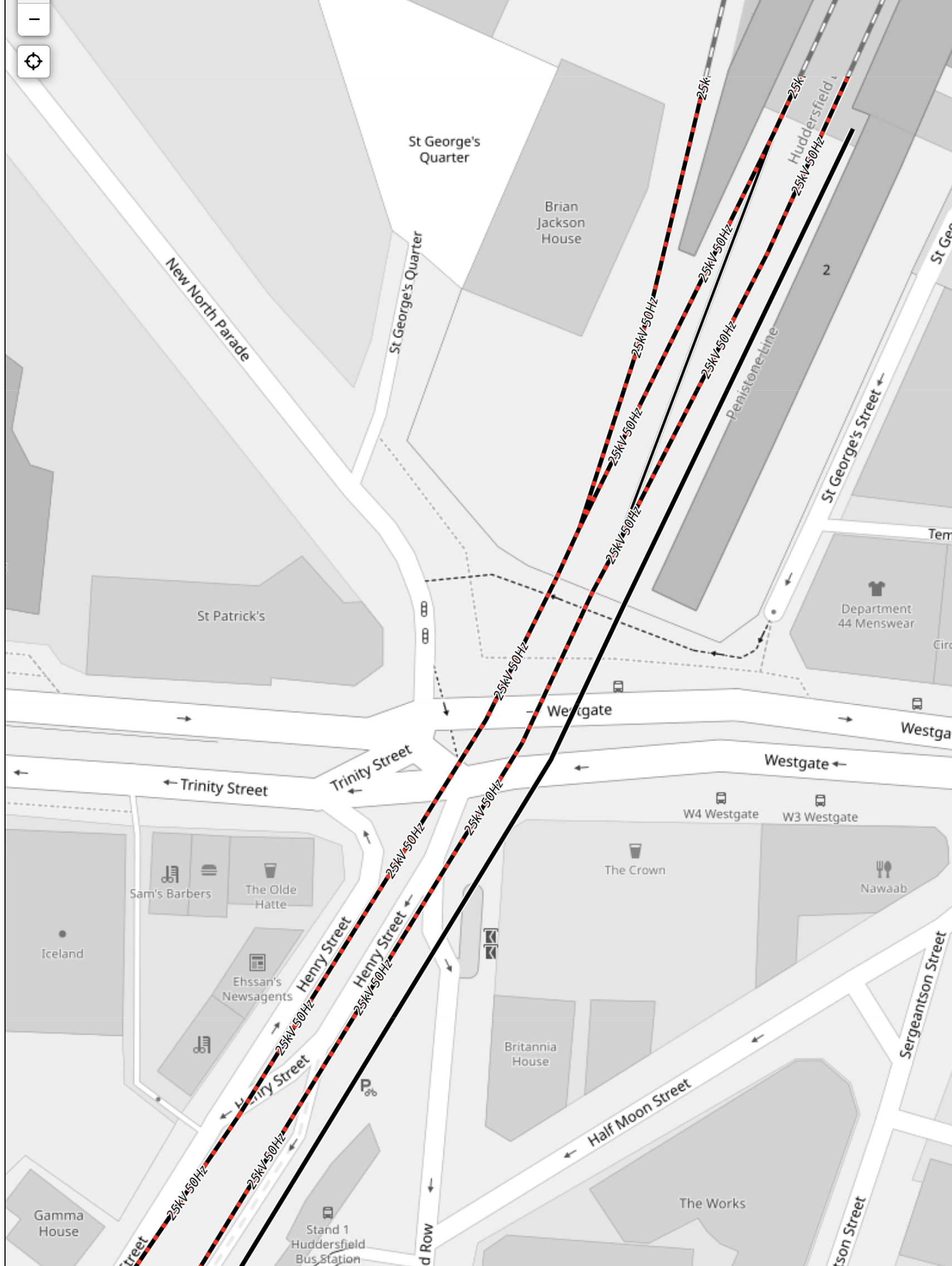
Note.
- Platform 2 is the black track at the right of the two through tracks, that are being electrified.
- Platform 2 is a bay platform close to the Head of Steam pub.
- I estimate that the platform is about 90 metres long.
- I suspect Platform 2 could be lengthened if required.
- Sheffield’s Class 399 tram/trains are 37.2 metres long, so a pair should fit in Platform 2.
- The Class 398 tram/trains can run on battery power and climb hills in South Wales.
- Platform 2 at Huddersfield station could be electrified to charge the tram/trains.
- There could be a significant height difference between Huddersfield and Sheffield stations of about 40 metres, which could be used to charge tram/trains on the way down.
- I feel with some track improvements, that a four trains per hour (tph) service could be run.
The service would call at Meadowhall, Chapeltown, Elsecar, Wombwell, Barnsley, Dodworth, Silkstone Common, Penistone, Denby Dale, Shepley, Stocksmoor, Brockholes, Honley, Berry Brow and Lockwood
The Pair Of Cranes In Huddersfield Station
These can’t be missed in the pictures. But why two massive cranes?
With an old roof to be taken down and a new roof and a footbridge to be lifted into place, I believe Network Rail have decided to bring in two of largest mobile cranes available in the UK, so that all the lifting doesn’t delay the project.
Between Huddersfield And Stalybridge Stations
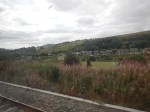
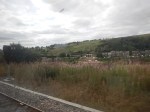
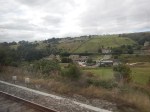
I took these pictures between Huddersfield and Stalybridge stations.
Note.
- The Class 802 train was running freely along a well-laid track.
- There are four stations between Huddersfield and Stalybridge; Slaithwaite, Marsden, Greenfield and Mossley(Manchester).
- The stations were in reasonable condition, but some needed new footbridges and a bit of refurbishment.
- There was virtually no signs of any foundations for electrification.
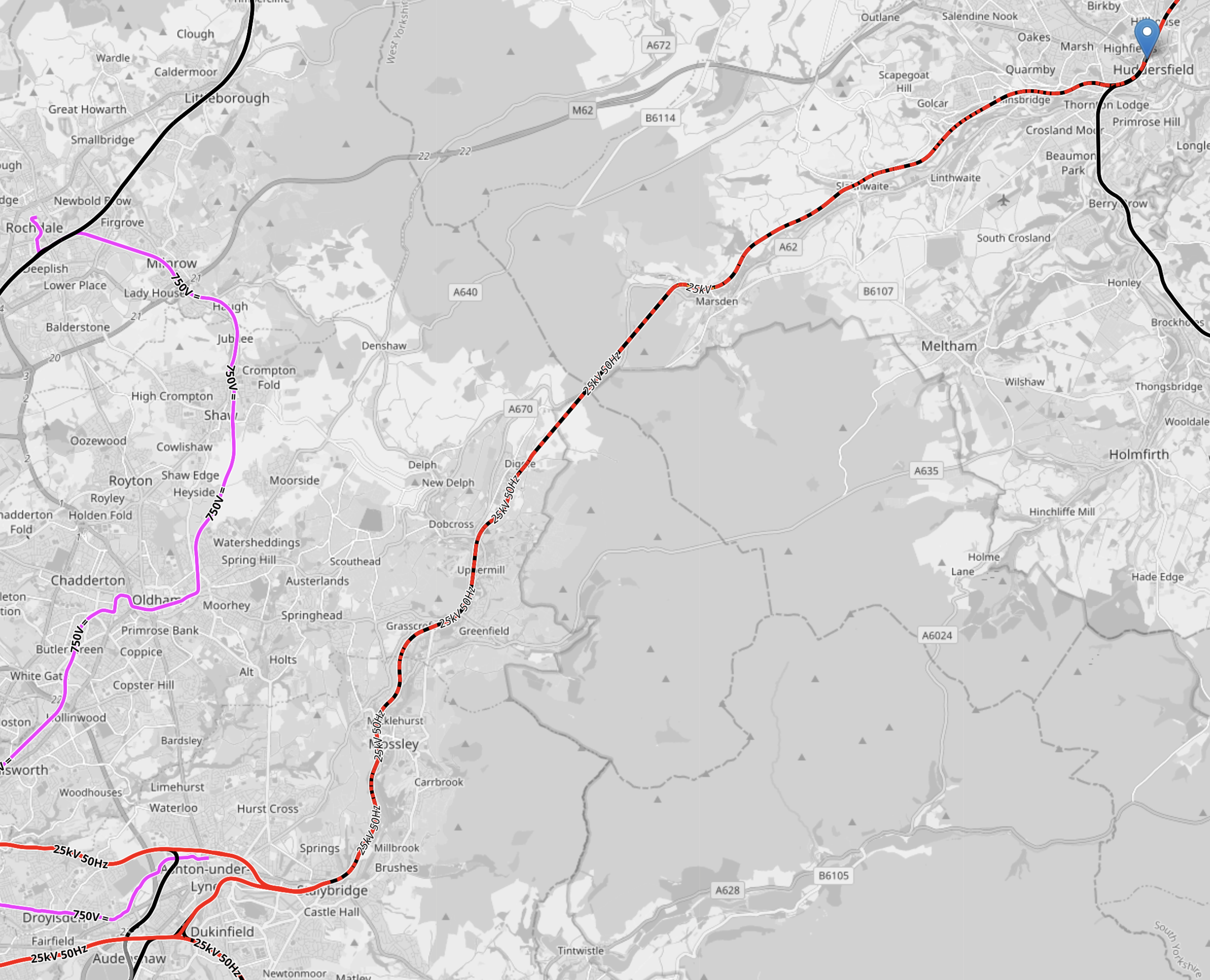
This map shows the route.
Note.
- The pink tracks are the Manchester Metrolink.
- The red tracks are electrified at 25 KVAC overhead.
- The red and black tracks are being electrified.
- Huddersfield is indicated by the blue arrow in the North-East corner of the map.
- Stalybridge station is in the South-West corner of the map.
- The pink track in the South-West corner of the map is the Manchester Metrolink branch to Ashton-under-Lyme.
- The route between Huddersfield and Stalybridge is shown as it will will be fully electrified.
- Huddersfield and Stalybridge is 18 miles.
- There are three short tunnels between Huddersfield and Stalybridge.
I wonder, if it would be more affordable to not put up wires between Huddersfield and Stalybridge and use battery-electric passenger trains and hydrogen freight locomotives?
Stalybridge Station
I took these pictures at Stalybridge station.
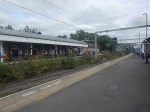
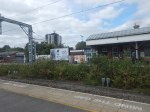
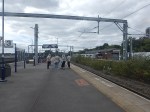
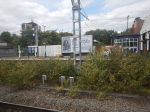
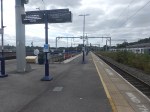
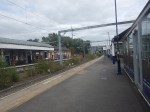
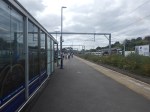
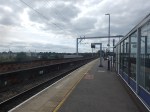
The station is fully-electrified and has direct services to Huddersfield, Hull, Leeds, Liverpool, Manchester Piccadilly, Manchester Victoria, Newcastlle, Wigan and York.
Will Liverpool Lime Street And Newcastle Be Fully Electrified?
Consider.
- Liverpool Lime Street and Newcastle stations is 180.8 miles.
- Newcastle and Church Fenton stations is 91.4 miles and is fully-electrified.
- Liverpool Lime Street and Stalybridge stations is 39.4 miles and is fully-electrified.
This means that the gap between Church Fenton and Stalybridge stations is just fifty miles.
Real Time Trains indicate that the current Class 802 trains on the route run on diesel between Stalybridge and York stations, which is 60.8 miles.
- Changing power in Stalybridge and York stations means if anything goes wrong passengers can be easily rescued.
- From what I saw on Thursday, it looks like electrification will be completed between Neville Hill depot and Huddersfield.
I wouldn’t be surprised, if they just electrified to the West of Stalybridge and the East of Huddersfield.
That would mean that the 18 miles between Stalybridge and Huddersfield would be run on batteries.
- But it would also avoid electrifying three tunnels.
- How much disruption would be saved, by not electrifying the tunnels?
- Freight trains would use something like a bi-mode Class 99 locomotive, but it would only need a range of 18 miles on diesel.
I can also see improvised bi-mode locomotives being used like this combination of a Class 66 and Class 90 locomotives.
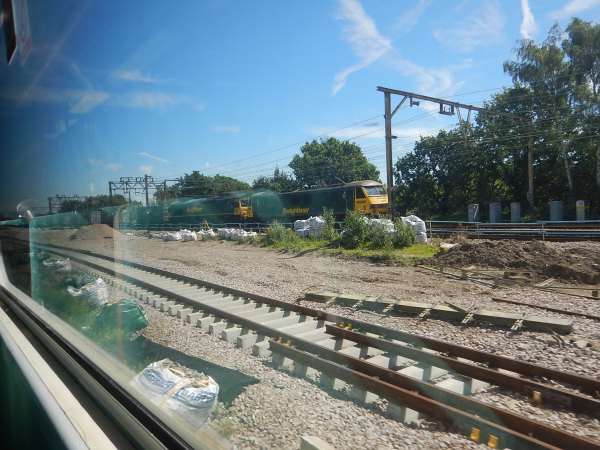
It was certainly doing its job, when I saw the combination at Shenfield.
Wabtec And Roy Hill Unveil The First FLXdrive Battery Locomotive
The title of this post, is the same as that of this press release from Wabtec.
This is the sub-heading.
World’s first 100% battery-powered, heavy-haul freight locomotive for mainline service
This is the first three paragraphs.
Wabtec and its launch customer, Roy Hill, a leading iron ore miner majority owned by Australia’s most successful private company, Hancock Prospecting, have celebrated the debut of the FLXdrive battery locomotive, the world’s first 100% battery-powered, heavy-haul locomotive for mainline service. The ceremony unveiled the unique, striking pink-colored locomotive at Wabtec’s design and development center in Pennsylvania in front of employees, customer executives, and government and community officials.
“This FLXdrive locomotive represents a major step in the journey to a low-to-zero-emission future in the rail industry,” said Rafael Santana, President & CEO of Wabtec. “The FLXdrive is driven from within by our battery technology and the innovative spirit of our employees. Roy Hill is an ideal customer to partner with given their leadership and excellent operational record.”
Roy Hill’s FLXdrive battery-electric locomotive will feature an energy capacity of 7 megawatt hours (MWh). Based on the route and company’s rail operations, the FLXdrive is anticipated to provide a double-digit percentage reduction in fuel costs and emissions per train. Once Wabtec completes the final battery installations and track testing, the locomotive will begin its 17,000-kilometer (10,500-mile) journey in 2024 for delivery to its new home in the Pilbara region of Western Australia, one of the world’s premier mining precincts.
These further two paragraphs outline the operation of the locomotive.
The FLXdrive locomotive represents not only a first for the Pilbara, but a first for the mining industry. The technological smarts that have gone into the development of the loco makes it well suited for our rail network. By using regenerative braking, it will charge its battery on the 344 kilometer (214 mile) downhill run from our mine to port facility and use that stored energy to return to the mine, starting the cycle all over again. This will not only enable us to realise energy efficiencies but also lower operating costs.”
Today, Roy Hill uses four Wabtec ES44ACi “Evolution Series” diesel-electric locomotives in a consist to pull trains that are typically 2,700 meters (1.6 miles) in length carrying more than 33,000 tonnes of iron ore. The addition of the FLXdrive will form a hybrid locomotive consist with Wabtec diesel-electric locomotives, and recharge during the trip through regenerative braking. The FLXdrive manages the overall train energy flow and distribution through its state-of-the-art energy management software. It is also designed with a unique battery thermal management system using liquid cooling to withstand the Pilbara heat, where temperatures can reach 55°C (130°F).
I have some thoughts.
Could Class 66 Locomotives Be Converted Into Battery-Electric Locomotives?
I answered this question fully in Could Class 66 Locomotives Be Converted Into Battery-Electric Locomotives? a couple of years ago and came to this conclusion.
I am not a lover of the smelly, noisy and polluting diesel Class 66 locomotives, but it does look it could be possible to convert some into battery-electric locomotives.
I wouldn’t be surprised to see Wabtec convert some Class 66 locomotives into battery-electric locomotives.
I also believe, that conversion of Class 66 locomotives to battery-electric operation could be the most affordable way to help decarbonise rail freight.
Note.
- Class 68 locomotives could probably also be converted.
- The battery-electric locomotives would either be used singly or in conjunction with diesel-electric locomotives as Roy Hill propose to do.
After the launch of Wabtec’s first production locomotive, I wouldn’t be surprised to find that some of the UK’s freight operators are talking to Wabtec.
Could A Battery-Electric Class 66 locomotive Work With An Electric Locomotive?
This picture shows, what could be an experiment by Freightliner at Shenfield.
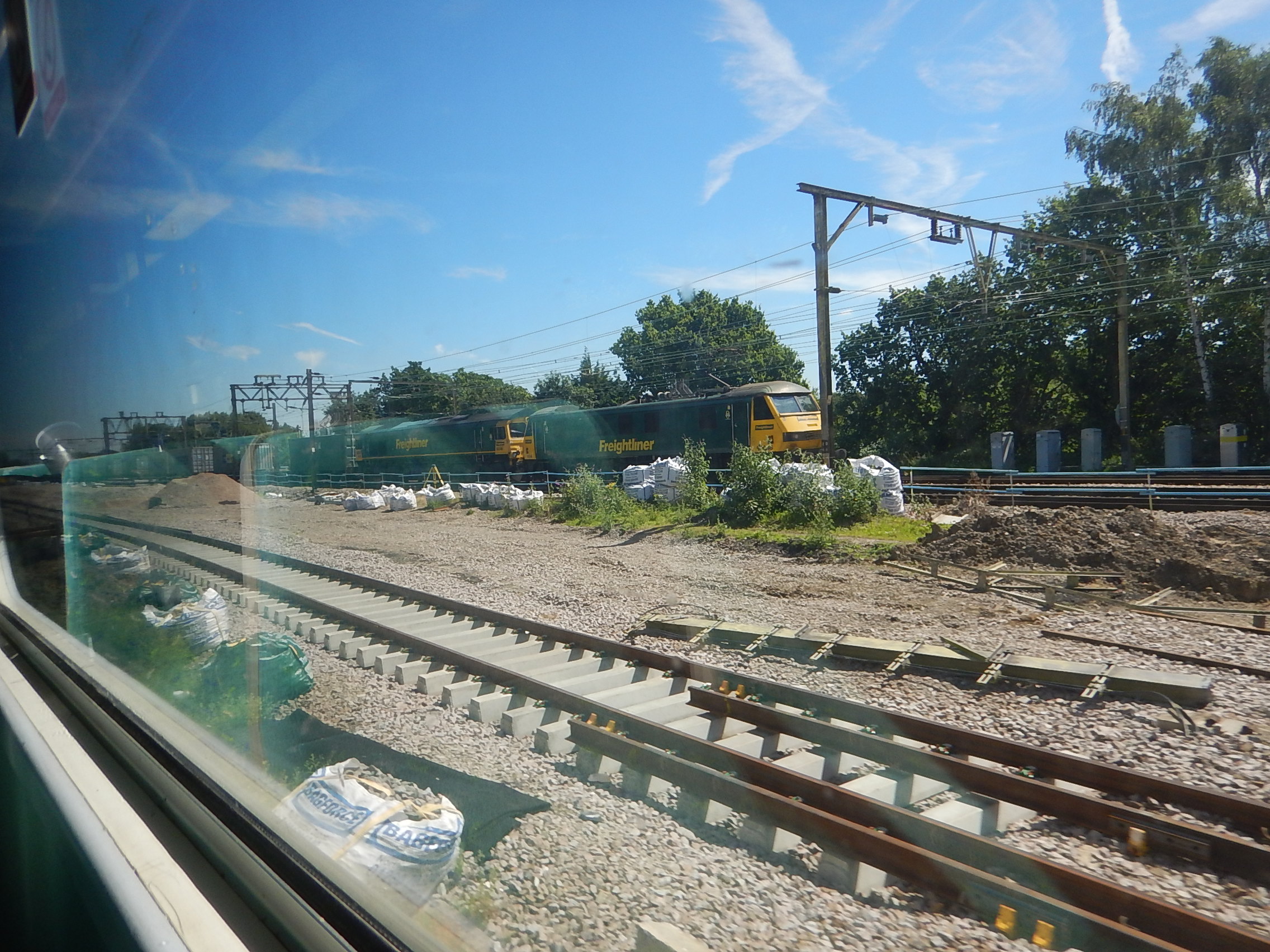
Unfortunately, I didn’t have a chance to ask the driver, if the Class 66 locomotive was running dead-in-train or helping the Class 90 locomotive with a very heavy load.
The picture shows, that the electric and diesel locomotives can work together, at the front of a train.
Consider.
- The battery-electric locomotive would be used, where there is no electrification.
- The battery-electric locomotive could be charged by the electric locomotive or regenerative braking.
It could be an interesting way to handle some freight routes in the UK.
The Ultimate Bi-Mode
This picture shows, what could be an experiment by Freightliner at Shenfield.
Unfortunately, I didn’t have a chance to ask the driver, if the Class 66 locomotive was running dead-in-train or helping the Class 90 locomotive with a very heavy load.
The picture shows, that the electric and diesel locomotives can work together, at the front of a train.
Note.
- The Class 66 locomotive has a power of 1,850 kW and the Class 90 locomotive has 3,730 kW.
- Did the Class 66 locomotive pull the train out of Felixstowe?
Since I took this picture, I’ve never seen a similar pairing again.
Is Liverpool Going To Get High Speed One-Point-Five?
Some of the best train journeys, I’ve ever had were not on high speed trains on specially-built tracks.
- The Thunder of Three-Thousand Three-Hundred Horses is from the early 1970s and describes a trip back from Darlington behind a Class 55 locomotive or Deltic.
- Norwich-In-Ninety Is A Lot More Than Passengers Think! describes a trip from London to Norwich and back, in the early days of the Norwich-in-Ninety timetable behind a Class 90 locomotive.
- I could add a journey on an InterCity 125 from London to Plymouth, which was running nearly thirty minutes late at Newbury, but was on time at Exeter.
The connection between these stories, was that all had a superb biological control system in the cab, who with help from the signallers was able to keep to a difficult schedule or make up time.
Last year, I made several journeys between Euston and Liverpool Lime Street. A couple of the journeys were unusual in that we arrived at our destination around six or more minutes early.
I suspect, that Avanti West Coast were experimenting to make sure that they get the new two trains per hour (tph) for the route perfect.
In Avanti West Coast Looks To Recover, I said this about Euston and Liverpool Lime Street services.
A paragraph talks about the second hourly service between London and Liverpool.
Avanti still has ambitions to introduce a second hourly service between Euston and Liverpool, but when this will come in will depend on demand recovery.
Consider.
- If would be desirable if some or all trains running on the route could achieve a timing of two hours between London and Liverpool.
- It is felt that the second service should stop at Liverpool South Parkway station, where the platforms are too short for eleven-car Class 390 trains.
- Avanti have stated they would like more stops in the Trent Valley, especially at Nuneaton, where they would connect to services to the East Midlands.
- Nuneaton is almost exactly halfway between London and Liverpool.
- Running two tph with Class 807 trains would need nine trains and Avanti have only ordered ten in total.
I believe that a practical timetable like this could work.
- Class 390 train – one tph – Non-stop or perhaps a single stop in the Midlands – Under two hours
- Class 807 train – one tph – Stopping at Nuneaton, Stafford, Crewe, Runcorn and Liverpool South Parkway – Current time or better
An hourly service between London and Liverpool in under two hours would surely be a passenger magnet.
So what is possible?
I found this service on Real Time Trains, which ran on the 16th February 2023.
- Scheduled to leave Liverpool Lime Street at 0943, but left at 1012 or 29 minutes late.
- Train did a ninety second unadvertised stop at Liverpool South Parkway. Now running 26 minutes late.
- There was a two minute stop at Runcorn and a four-minute stop at Crewe. Now running 25 minutes late
- There was a one-minute stop at Milton Keynes. Now running 20 minutes late.
- The train arrived in London Euston at 1220 or 16 minutes late.
Note.
- Liverpool Lime Street and London Euston took 2 hours and 8 minutes.
- As Liverpool Lime Street and London Euston is a distance of 193.6, a 128 minute journey is an average speed of 90.7 mph
- Liverpool Lime Street and Crewe took 32 minutes with two stops.
- Crewe and London Euston took 1 hour and 32 minutes with one stop.
- In West Coast Main Line Electro-Diesels On Test, I found that a Glasgow and London train took 1 hour and 28 minutes between Crewe and London Euston.
- All services last week had the unadvertised stop at Liverpool South Parkway
What can be deduced from these figures?
- If the Crewe stop were to be cut out, two hours and four minutes could certainly be possible between Liverpool Lime Street and London Euston with a Class 390 train.
- I also suspect that if the train were to be run non-stop, that the other four minutes could be saved.
So will Avanti West Coast run the current service using new Class 807 trains, with the extra stop at Liverpool South Parkway and perhaps other stations and the additional hourly train with a non-stop nine-car Class 390 train?
This way of delivering a two tph service would mean.
- Runcorn, Crewe and Milton Keynes would not lose any of their current fast services to and from Liverpool Lime Street and London Euston.
- Liverpool South Parkway station is probably a more convenient location for some passengers going to and from the South. It would gain an hourly service to London Euston.
- There will be an additional 77% of seats between Liverpool Lime Street and London Euston.
- Passengers who don’t like tilting trains could use the Class 807 trains.
- One tph would be timed for two hours or under and would be a marketing man’s dream.
No train would be slower than the current services.
Improvements To The Non-Stop Class 390 Train Service
I earlier said.
As Liverpool Lime Street and London Euston is a distance of 193.6, a 128 minute journey is an average speed of 90.7 mph.
An average speed of 90.7 mph, doesn’t seem fast for a Class 390 train with an operating speed of 125 mph or 140 mph under full ERTMS digital signalling.
These are some times for a selection of average speeds between Liverpool Lime Street and London Euston.
- 90 mph – 2 hours 9 minutes
- 100 mph – 1 hour 56 minutes
- 110 mph – 1 hour 46 minutes
- 120 mph – 1 hour 37 minutes
- 125 mph – 1 hour 33 minutes
- 130 mph – 1 hour 29 minutes
- 135 mph – 1 hour 26 minutes
- 140 mph – 1 hour 23 minutes
Note.
- Average speeds of upwards of 130 mph are unlikely, but I’ve added them to show that the train speed is less important than the speed of the track.
- High Speed Two’s planned time between Liverpool Lime Street and London Euston is 1 hour and 32 minutes.
But I do think times of around 1 hour and 35 minutes should be possible for non-stop Class 390 trains between Liverpool Lime Street and London Euston with an improved track and full ERTMS digital signalling.
Improvements To The Stopping Class 807 Train Service
As the track of the West Coast Main Line is improved with better track and full ERTMS digital signalling, this will also benefit the times of the stopping service run by the new Class 807 trains.
The Class 807 train with its lighter weight will have better acceleration than the current Class 390 trains. This will mean, that they will not be slowed as much, when they stop.
It may be possible to add extra stops at places like Watford Junction, Nuneaton and Stafford and still time the train for a few minutes over two hours.
Avanti West Coast Looks To Recover, is a post, that I wrote based on an interview in Modern Railways with Phil Whittingham, who is MD of Avanti West Coast.
There is a lot of talk in the article about.
- Using Nuneaton to connect the North West and the East Midlands.
- The acceleration of the Class 807 trains.
- Improving the Customer Service.
I think that Liverpool will find it is connected to more of the country on services with just a single change.
Conclusion
Liverpool is getting greater connectivity to the Midlands and the South-East of England, with times, that could be improved to be comparable with High Speed Two.
From 2025, Nestlé Waters France Will Use The First Hydrogen-Powered Freight Train Through An Innovative Solution Developed by Alstom and ENGIE
The title of this post, is the same as that of this press release from Alstom.
These are the main points of the press release.
-
Nestlé Waters will be the first company in Europe to benefit from the hydrogen fuel cell solution developed by Alstom and ENGIE, for rail freight.
-
The purpose is to operate the first hydrogen-powered freight train from the Vosges plant, thanks to a hydrogen generator wagon system developed by Alstom and supplied with renewable hydrogen by ENGIE, from 2025.
-
Ultimately, this project should enable Nestlé Waters to reduce emissions by 10,000 tons of CO2 equivalent per year.
-
This new collaboration is in line with the actions Nestlé Waters has been carried out for several years to decarbonize its supply chain.
In this Alstom visualisation that accompanies the press release, an Alstom Prima locomotive can be seen pulling a tender full of hydrogen, that generates electricity.
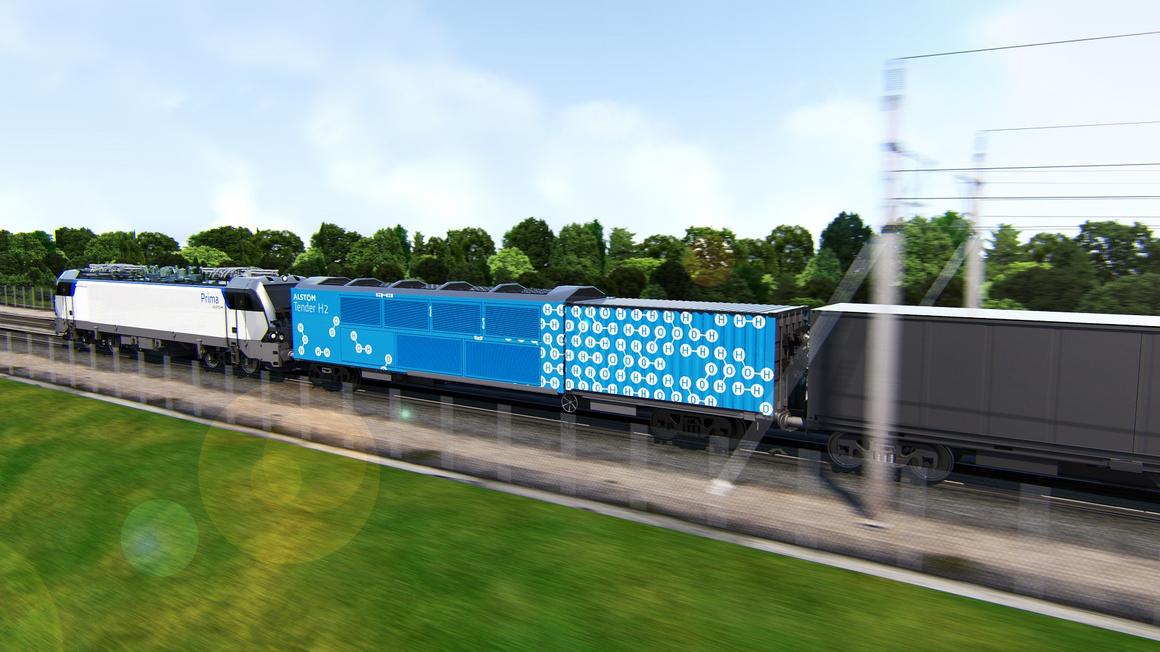
It would appear to be a very simple concept.
- The electric locomotive uses electrification where it is available.
- On lines without electrification, hydrogen is used to generate electricity.
- The locomotive and the tender are connected by a cable.
- I suspect for longer distances, larger generators with a larger hydrogen capacity can be developed.
- It would appear that typical SNCF Prima locomotives have at least 4 MW of power, so the generator must be at least this size.
I could see this concept being used with a 4 MW Class 90 electric locomotive.
Heritage Train Company Launches First Class Service In Competition With Avanti West Coast
The title of this post, is the same as that of this article on Business Live.
These are the two introductory paragraphs.
A heritage train company is launching a charter service between London and the North West to help passengers frustrated by Avanti West Coast’s severe disruption.
Crewe-based Locomotive Services Group will begin operating a first class-only charter service to and from London Euston on Friday.
These are more details of the service.
The train’s air-conditioned carriages are restored British Rail Mark 3 stock with three-abreast seating, tables, power points and large windows.
The service will only operate on Fridays for the next three weeks, and will run at 110mph using electric locomotives.
It will depart from Crewe at 2.29pm, running non-stop to arrive at London Euston at 4.12pm.
The train will set off to return north at 5.27pm, calling at Birmingham International, Birmingham New Street, Wolverhampton, Stafford, Crewe and Wilmslow before arriving at Manchester Piccadilly at 8.45pm.
I have a feeling that the Mark 3 coaches, were acquired from Greater Anglia.
Locomotive Services Group, also owns a couple of main-line registered Class 90 locomotives.
I am seriously, thinking of taking one of their trips.
I can travel in Mark 3 and Mark 4 coaches, all Stadler and Hitachi trains, but if I travel in a Class 390 train, the air-conditioning plays havoc with my body.
Avanti West Coast can’t put Class 807 trains on London Euston and Liverpool Lime Street. too soon for me!
Freightliner’s New Livery
.As I passed through Ipswich yesterday, I took these images of Freightliner’s locomotives in their new livery.


Note.
- Freightliner’s new depot on the town side of the Great Eastern Main Line appears to be fully open.
- Freightliner’s Class 90 locomotives, which they received from Greater Anglia now seem to be in the new livery.
- Freightliner’s Class 08 shunter is also shown in the new livery.
It also looked like up to four Class 90 locomotives were parked by Ipswich station.
This Google Map shows the tracks at the Western end of Ipswich station.
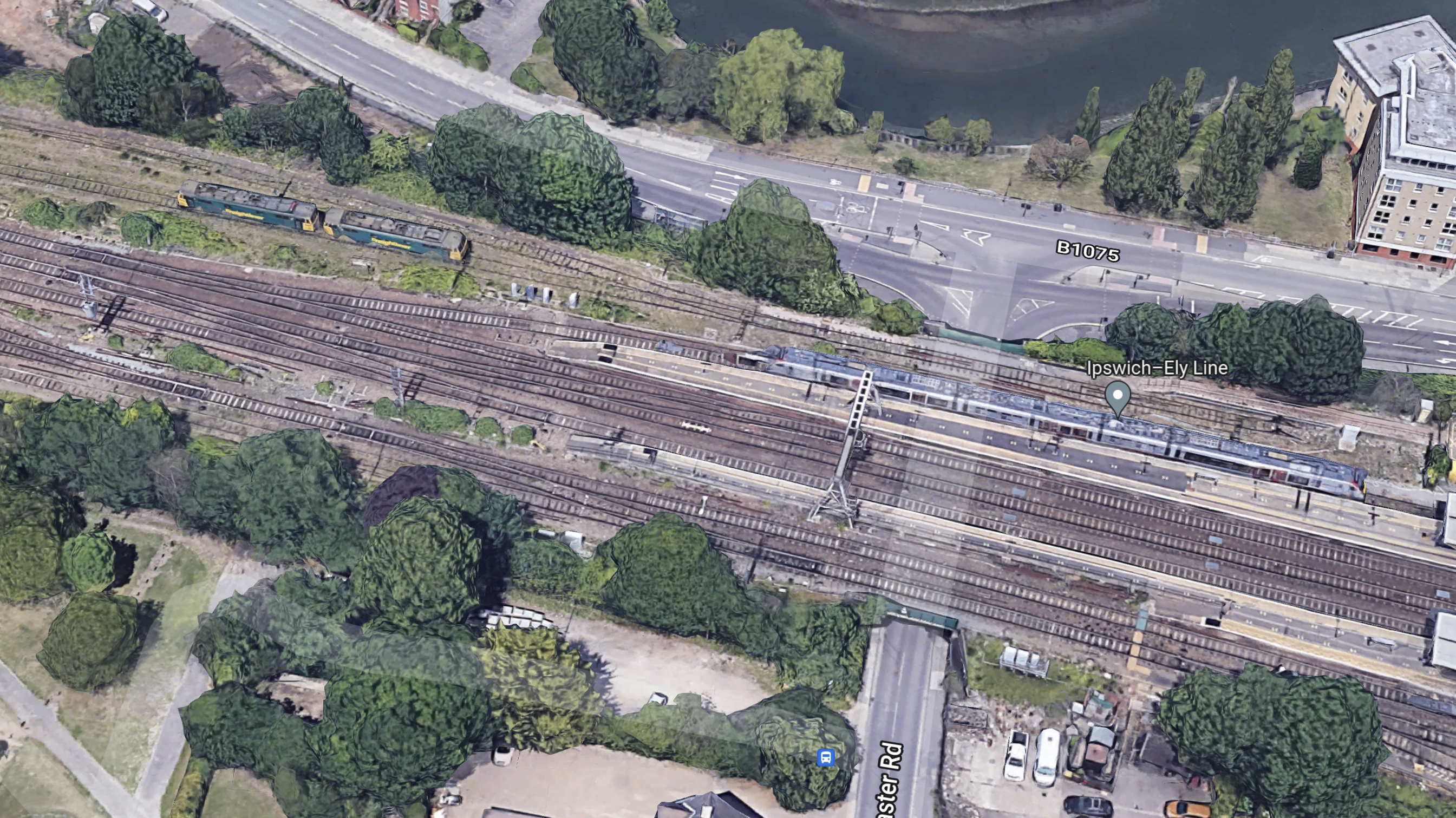
Note.
- The Greater Anglia Class 755 train in Platform 1 of Ipswich station.
- The two Freightliner Class 90 locomotives in the old green livery in the locomotive parking.
- I wonder, if freight trains are now changing to electric haulage after being hauled out of Felixstowe into Ipswich Yard, before continuing their onward journey.
Yesterday, by the use of Real Time Trains, I found these trains changed to electric haulage at Ipswich.
- 0250 – 436K – Felixstowe North to Garston – Changed back to diesel at Crewe.
- 0912 – 496K – Felixstowe North to Trafford Park – Changed back to diesel at Crewe.
- 0932 – 497K – Felixstowe North to Ditton
- 1113 – 412L – Felixstowe North to Trafford Park
- 2046 – 410M – Felixstowe North to Trafford Park
- 2152 – 412M – Felixstowe North to Garston – Changed back to diesel at Crewe.
These are my thoughts.
Changing Locomotives At Ipswich
It seems to take about 25 minutes to change a locomotive from diesel to electric.
At Ipswich, this seems to fairly easy.
- The freight train from Felixstowe stops in Ipswich Yard to the West of the station.
- The diesel locomotive is detached and probably moved to the yard to the South of the station.
- The electric locomotive is moved from by the station and attached to the train.
- The train goes on its way using electric traction.
All locomotive movements don’t seem to be too challenging.
Could More Electric Services Be Run?
I found these paths yesterday, where services left Felixstowe and went South to London.
- Coatbridge – 1
- Ditton – 2
- East Midlands Gateway – 1
- Garston – 2
- Hams Hall – 2
- Lawley Street – 3
- Trafford Park – 5
- Wentloog – 3
This is a total of nineteen trains and currently only six are electrified between Ipswich and London.
Would Bi-Mode Locomotives Be More Efficient?
In GB Railfreight Plans Order For Future-Proofed Bi-Mode Locomotives, I wrote about how GB Railfreight were planning to acquire a fleet of bi-mode locomotives.
In the related post, I said this.
I feel that, as the locomotive must fit current routes and schedules, so I wouldn’t be surprised to see the following specification.
- UK loading gauge.
- Co-Co
- Class 90 locomotive power and operating speed on electricity of 3.7 MW and 110 mph.
- Class 66 locomotive power and operating speed on diesel of 2.5 MW and 75 mph.
- Ability to change between electric and diesel power at speed.
- Ability to haul a heavy freight train out of Felixstowe.
- Ability to haul passenger trains.
Stadler will have one eye on the fact, that if they get this design right, this order for up to fifty locomotives could be just the start.
These locomotives would be ideal for Felixstowe to Ditton, Garston and Trafford Park.
- They would eliminate changing locomotives on these routes.
- They would reduce carbon emissions and fuel usage.
- They would be able to run at at least 100 mph on the Great Eastern and West Coast Main Lines.
They might also open up other partially electrified routes from Felixstowe via London.
Felixstowe And Wentloog
Wentloog freight terminal in South Wales.
In Movable Overhead Electrification To Decarbonise Freight, I used the Ipswich and Wentloog route to show how a long route could be decarbonised by the use of moveable electrification.
Conclusion
It looks like a philosophy is emerging to decarbonise a large proportion of freight services out of the Port of Felixstowe.
Movable Overhead Electrification To Decarbonise Freight
The title of this post is the same as that as this article on Railway Gazette.
This is the first paragraph.
The use of a moveable overhead conductor rail to eliminate the need to use diesel locomotives at freight terminals where traditional fixed electrification equipment would obstruct loading and unloading is being demonstrated in the UK, and a trial in India is planned.
The Railway Gazette article also has two pictures, which show the overhead conductor rail in two positions.
Ipswich And Wentloog
In A Class 93 Locomotive Hauling A Train Between The Port Of Felixstowe And Wentloog, I wrote about running freight trains between Felixstowe and Wentloog using a Class 93 locomotive.
Currently, there appear to be three services a day each way between Felixstowe and Wentloog.
- They are diesel hauled.
- The Class 66 locomotive can’t travel faster than 75 mph.
- The route between Ipswich and Wentloog is fully-electrified.
- Other services that go from Felixstowe to the rest of the UK via London, are sometimes hauled by a Class 90 locomotive from Ipswich.
- Class 90 electric locomotives can haul trains at up to 110 mph.
This Google Map shows the layout of Wentloog freight terminal.
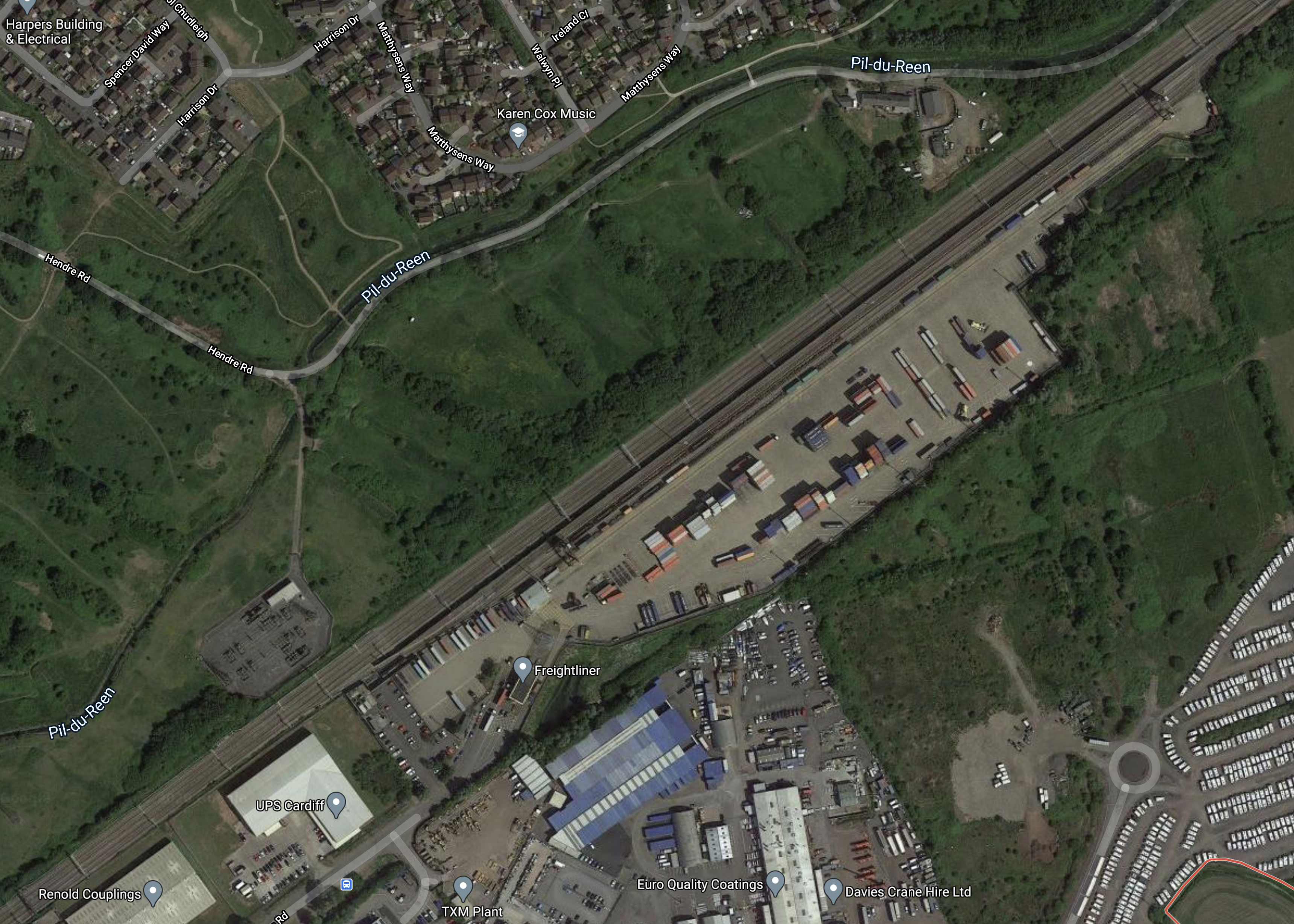
Fitting a moveable overhead conductor rail at Wentloog would surely allow carbon-cutting Class 90 locomotives to haul a train, between Ipswich and Wentloog.
How many other freight terminals can be electrified by installing a moveable overhead conductor rail?
DB Cargo UK Successfully Trials The Use Of ‘Combi-Consists’
The title of this post, is the same as that of this press release on DB Cargo UK.
This is the first paragraph.
DB Cargo UK is trialling the use of ‘combi-consists’ to increase capacity, improve customer service and improve its efficiency.
The next four paragraphs describe the trial.
This month the UK’s largest rail freight operator ran a unique jumbo train from Belmont Yard in Doncaster to Barking, East London, carrying a mix of wagons for two altogether different types of customers.
The train consisted of two sets of empty wagons – 21 x MBA wagons for Ward Recycling and 18 x JNA wagons for FCC Environment – with an isolated DIT (dead-in-train) locomotive – in the middle.
The MBA wagons had previously been discharged at Immingham in North Lincolnshire and the JNA wagons discharged at FCC Environment’s new waste transfer facility at Tinsley in South Yorkshire.
Both sets of wagons were then taken to DB Cargo UK’s Belmont Yard depot in Doncaster where the jumbo train was assembled. The train travelled from Belmont Yard to Barking via Lincoln Central, Spalding, The East Coast Mainline, Hertford North and Canonbury Tunnel.
There is also a video embedded in the press release, which shows the formation of the train in detail.
This train is certainly efficient, as it uses less train paths, crew and fuel.
DB Cargo UK now intend to trial the concept on a greater portion of the East Coast Main Line and the Midland Main Line.
I have a few thoughts.
Could The Concept Work With Loaded Trains?
This trial was with empty trains, but would it be possible to use the concept with two shorter loaded trains?
Would there be advantages in terms of efficiency, if the following were done?
- Two container trains leave Felixstowe as a pair, with one going to Plymouth and the other going to Cardiff.
- They split at say Swindon and then proceed independently.
Obviously, all the weights would have to be in order and the locomotive would need to be able to pull the combined train.
Other possibilities might be.
- Stone trains running from the Mendips and the Peak District to London.
- Biomass trains running from import terminals to power stations in the Midlands.
- Trains delivering new cars.
- Trains delivering goods for supermarkets. Tesco are certainly increasing their use of trains.
I would suspect that DB Cargo UK have several ideas.
Could An Electric Locomotive Go In The Middle?
A Class 90 locomotive weighs 84.5 tonnes, as against the 129.6 tonnes of the Class 66 locomotive used in the trial.
So if the electric locomotive can be run dead-in-train, the weight would be slightly less.
But this might give a big advantage, if they ever wanted to run a pair of trains from Felixstowe to Plymouth and Cardiff, as per my earlier example.
- The trains would split anywhere on the electrified section of the Great Western Main Line.
- The lead train would go to Plymouth.
- The second train would go to Cardiff, which is now fully electrified.
There would appear to be possibilities to save carbon emissions.
Could An Electric Locomotive Go On The Front?
Some routes out of Felixstowe are fully-electrified from the Great Eastern Main Line.
It could be possible for the following.
- Two diesel-hauled trains to leave Felixstowe with ubiquitous Class 66 locomotives and form up as a combi-consist train in Ipswich yard.
- The Class 66 locomotive on the front is replaced by an electric locomotive.
- Both Class 90 and Class 92 electric locomotives have twice the power of a Class 66 locomotive, so both should be able to haul the combi-consist train.
The trains would split en-route with the electric locomotive hauling a train to an electrified destination.
This picture shows, what could be an experiment by Freightliner at Shenfield.
Unfortunately, I didn’t have a chance to ask the driver, if the Class 66 locomotive was running dead-in-train or helping the Class 90 locomotive with a very heavy load.
The picture shows, that the electric and diesel locomotives can work together, at the front of a train.
Since I took this picture, I’ve never seen a similar consist again.
Could A Bi-Mode Locomotive Go On The Front?
In GB Railfreight Plans Order For Future-Proofed Bi-Mode Locomotives, I talked about how GB Railfreight had started negotiations to purchase a fleet of powerful bi-mode locomotives from Stadler.
- Provisionally, they have been called Class 99 locomotives.
- The locomotives will be Co-Co bi-modes.
- The diesel engine will be for heavy main line freight and not just last-mile operations.
- I suspect that on diesel the power will be at least 2.5 MW to match a Class 66 locomotive.
These locomotives could be ideal for hauling combi-consist trains.
Would Combi-Consist Trains Save Energy?
This could be a big driver of the use of combi-consist trains and may push DB Cargo UK to acquire some powerful bi-mode locomotives.
Conclusion
Combi-consist trains seem to be an excellent idea.
GB Railfreight Plans Order For Future-Proofed Bi-Mode Locomotives
The title of this post, is the same as that of this article on Railway Gazette.
This is the introductory paragraph.
GB Railfreight is planning to order a fleet of main line electro-diesel locomotives with a modular design which would facilitate future replacement of the diesel engine with a battery or hydrogen fuel cell module.
The rest of the article gives clues to the deal and the specification of the locomotives.
- Negotiations appear to have started with Stadler for locomotives to be built at their Valencia plant.
- Twenty locomotives could be ordered initially, with options for thirty.
- The locomotive will be Co-Co bi-modes.
- The diesel engine will be for heavy main line freight and not just last-mile operations.
- They would be capable of hauling freight trains between Ipswich and Felixstowe, within two minutes of the times of a Class 66 locomotive.
- They will be of a modular design, so that in the future, the diesel engine might be replaced by a battery or fuel cells as required and possible.
They have provisionally been called Class 99 locomotives.
These are my thoughts.
EuroDual or UKLight?
Stadler make two types of bi-mode locomotives.
But the two types are closely related and open up other possibilities.
This paragraph from the Eurolight wikipedia entry, explains the various versions.
The type has been intentionally developed to support use on secondary lines without limiting power or speed performances, making it suitable for mixed traffic operations. Specific versions of the Eurolight have been developed for the United Kingdom market, and a 6-axle Co’Co’ machine for narrow gauge Asian markets, named UKLight and AsiaLight respectively. Furthermore, an electro-diesel locomotive derivative of the UKLight that shares much of its design, referred to as the Stadler Euro Dual, has also been developed and introduced during the late 2010s.
It looks like the customer can get the locomotive they want.
GB Railfreight would probably need locomotives to this specification.
- Slightly narrower than a EuroDual, to fit the UK loading gauge.
- Three-axle bogies to handle the weight of the larger locomotive.
- A body bigger than the UK Light to be large enough for the diesel engine.
- It would probably help if the locomotive could go anywhere that a Class 92 locomotive could go, so it could handle their duties if required.
This leads me to the conclusion that GB Railfreight will get a slightly narrower EuroDual.
Weight Issues
The weights of various locomotives are as follows.
- Class 66 Locomotive – 129.6 tonnes
- Euro Dual – 126 tonnes
- Class 90 Locomotive – 84.5 tonnes
- Class 92 Locomotive – 126 tonnes
All locomotives have six axles, except for the Class 90 Locomotive which has four.
I don’t think there will be any weight issues.
Power On Electricity
These are the power of the locomotives on electricity.
- Class 66 Locomotive – Not Applicable
- Euro Dual – Up to 7 MW
- Class 90 Locomotive – 3.7 MW
- Class 92 Locomotive – 5 MW
GB Railfreight can probably have what power is best for their routes.
Operating Speed On Electricity
These are the power of the locomotives on electricity.
- Class 66 Locomotive – Not Applicable
- Euro Dual – 100 mph
- Class 90 Locomotive – 110 mph
- Class 92 Locomotive – 87 mph
GB Railfreight can probably have what power is best for their routes, but I suspect they’d want it to be as fast as a Class 90 locomotive.
Power On Diesel
These are the power of the locomotives on diesel.
- Class 66 Locomotive – 2.5 MW
- Euro Dual – Up to 2.8 MW
- Class 90 Locomotive – Not Applicable
- Class 92 Locomotive – Not Applicable
To be able to handle trains, that a Class 66 locomotive is able to, 2.5 MW would probably suffice.
Could The Locomotives Use The Channel Tunnel?
I suspect that diesel locomotives are not liked in the Channel Tunnel because of all that flammable diesel.
But in the future, when there is a battery-electric variant, I would suspect that would be allowed.
In UK To France Automotive Train Service Launched, I talked about Toyota’s new service between Toton in England and Valenciennes in France via the Channel Tunnel. A locomotive with sufficient battery range might be ideal for this service, if it could handle the Market Harborough and Toton section, which is likely to be without electrification for some years.
Will The Locomotives Have Third Rail Shoes?
If their power on electricity is such that they can stand in for Class 92 locomotives, then there may be a need to fit all or some of the locomotives with third rail shoes.
As an example, they might be useful in taking freight trains to and from Southampton or the Channel Tunnel.
Conclusion
I feel that, as the locomotive must fit current routes and schedules, so I wouldn’t be surprised to see the following specification.
- UK loading gauge.
- Co-Co
- Class 90 locomotive power and operating speed on electricity of 3.7 MW and 110 mph.
- Class 66 locomotive power and operating speed on diesel of 2.5 MW and 75 mph.
- Ability to change between electric and diesel power at speed.
- Ability to haul a heavy freight train out of Felixstowe.
- Ability to haul passenger trains.
Stadler will have one eye on the fact, that if they get this design right, this order for up to fifty locomotives could be just the start.
It certainly seems a locomotive designed for the UK’s railway system.
 The Anonymous Widower