Axle Mounted Motor For Retrofit To DMU’s To Enable Zero Emissions In Stations
This project was one of the winners in the First Of A Kind 2022 competition run by Innovate UK.
In this document, this is said about the project.
Project No: 10038683
Project title: Axle Mounted Motor For Retrofit To DMU’s To Enable Zero Emissions In Stations
Lead organisation: WABTEC UK LIMITED
Project grant: £59,450
Public description: This project provides a solution to substantially reduce emissions including NOx and PM when
diesel passenger trains are idling.
There are over 3,500 passenger rail vehicles in the UK currently fitted with a diesel engine, the
large majority of these would significantly benefit from emissions reduction, especially in and
around stations, where diesel engines currently continue to idle, or elevated idle whilst stationary,
sometimes for up to 30 minutes at a terminal station. This is a significant contributor to local air
quality issues from NOx, PM emissions etc.
Furthermore, rail vehicles require large amounts of energy and power to accelerate (and therefore
contributing more emissions), and yet, on the approach to stations significant amounts of energy
are “lost” through “braking”.
This project will address both issues by recovering the braking energy during deceleration and reusing it for auxiliary loads in station and traction to accelerate out of station, this will enable diesel
engines to be isolated in and around stations, whilst also reducing the average emissions such as
PM and NOx over a complete drive cycle by up to 35% and operational costs by up to 30%.
Our objective is to develop and integrate a small, low mass, yet high peak torque and peak power,
axle mounted motor, for retrofit and upgrade for DMU/DEMU passenger vehicle applications. This
motor shall enable kinetic energy recovery during the braking application and also provide power to
the trailer bogie wheels whilst accelerating.
This project will enable several key cost and decarbonisation benefits to the railway.
- It shall enable zero emissions, including NOx and PM, in and around the station, by
enabling a DMU to approach, dwell and depart from a station with the engine switched off. - It shall enable a proportional average reduction in all emissions, through reduced fuel consumption resulting from the electrical energy recovery from regenerative braking and re-deployment through auxiliary and traction use.
- It shall enable less brake wear thus reducing particulate emissions from brake pads especially around stations.
- It shall enable reduced operating costs for the train operator through fuel saving, engine/transmission maintenance savings and brake pad saving.
- It will not require any modification to the existing diesel engines or drivetrain and will compliment any other decarbonisation initiatives.
- It shall provide a substantially lower cost and risk solution when compared to any other previous or current hybrid solutions.
My Thoughts And Conclusions
This is a classic simple solution, that could have big benefits.
I suspect, it can also be paired with Wabtec’s other proposal; Zero Emission Powering of Auxiliary Loads In Stations.
Transforming High-Speed Rail Logistics
This project was one of the winners in the First Of A Kind 2022 competition run by Innovate UK.
In this document, this is said about the project.
Project No: 10038447
Project title: Transforming High-Speed Rail Logistics
Lead organisation: VARAMIS LTD
Project grant: £396,467
Public description:
Our project is to transform high-speed rail logistics combining a repurposed all electric passenger unit and bespoke consignment device technology to support the conveyance of parcels. This technology, offered alongside a new approach to using space at stations to create easily accessible city-centre distribution hubs, will enable the operation of a new high-speed non-letters parcels service.
The project meets the competitions challenge and scope through: Development and application of new technologies and approaches to rail, innovative reuse of existing rail assets (such as passenger rolling stock converted for light freight), repurposing of space at station hubs (which has been released due to changing passenger demand) and engagement with new to rail logistics operators to develop and grow new high-speed rail freight services.
Furthermore, the project is in support of permanent modal shift from road to rail, delivering rail freight growth, meeting future customer needs, and realising significant emissions reductions which supports the UK’s low emissions target of a 68% reduction by 2030, compared to 1990 levels through modal diversion from road.
My Thoughts And Conclusions
Decarbonising Auxiliary Load In Freight Today
This project was one of the winners in the First Of A Kind 2022 competition run by Innovate UK.
In this document, this is said about the project.
Project No: 10039629
Project title: Decarbonising Auxiliary Load In Freight Today
Lead organisation: G-VOLUTION LTD
Project grant: £378,514
Public description: Freight locomotives have auxiliary electric power requirements which account for up to 10-15% of the total power demand, covering engine and traction motor cooling, safety and signalling systems and locomotive control systems.
These loads are currently serviced by an alternator on ubiquitous diesel ICE powertrains. This demand is persistent, requiring the diesel ICEs to remain powered up/idling during the significant periods of dwell time faced by freight services. Up to 20% of freight locomotive fuel consumption and emissions, from CO2 and particulates, therefore arise from non-traction aspects.
Whilst extreme traction requirements for freight operations restricts adoption of full decarbonised powertrains – unless compromises for traction power or range are made – no existing rail technology targets the significant auxiliary power requirements.
In response, G-volution have engaged a team cutting across the full UK supply chain to realise and integrate a first-of-a-kind system for on-board auxiliary power on freight locomotives, based on high energy-density fuel cells and a carbon neutral bio-LPG fuel system.
Whilst initially representing the lowest cost/technical barrier route to catalyse significant CO2, exhaust emission and diesel fuel savings in freight, this approach has potential to also substitute traction power in the long term, and supports the transition to green hydrogen as a rail transport fuel.
Through a live demonstration with a UK freight operator, the project will therefore prove that high efficiency fuel cells, which are able to use a range of cleaner, greener, cheaper zero net carbon renewable fuels, can work in the rail environment and also stimulate significant commercial benefits for all operators, via reduced fuel costs and future environmental levies.
My Thoughts And Conclusions
Note that another G-volution project is described in Grand Central DMU To Be Used For Dual-Fuel Trial.
I also suspect, this auxiliary power unit could have other applications.
First Of A Kind 2022 Winners Announced
The title of this post, is the same as that of this news item from Innovate UK.
This paragraph explains the competition.
The Department for Transport and Innovate UK are delighted to announce the first set of winners for the First of Kind (FOAK) 2022 competition. Winners will receive funding to help develop novel technology which improves rail freight services and lowers carbon emissions from trains.
I shall cover some of the winning ideas in future posts, which I will link to this post.
10039629 – Decarbonising Auxiliary Load In Freight Today
10037240 – Levelling Up Freight
10038447 – Transforming High-Speed Rail Logistics
10039606 – “Freight Skate” A Self-Powered Freight Bogie And Platform
10039559 – A Rapidly Deployable Rail Stress Sensor For Next Generation Freight Monitoring
10037294 – EventGo – Intelligent Rail Service Demand Forecasting for Event-Based Travel
10037862 – NextGen Data-Driven Timetable Performance Optimisation Tool
10039201- Protection and Resilience for OLE using ComputerVision Techniques (PROLECT)
10038989 – FEIDS – FOAS Enabled Intruder Detection System
10038342 – Rail Flood Defender
10039258 – Optimal Prediction of Sand For Adhesion
10038790 – Unauthorised Cable Removal And Fault Triage
10036632 – Trains With Brains(R)
10038228 – SBRI: FOAK 2022 Optimising Railway Possessions
10037542 – Portable Track Geometry Measurement System
10038973 – State Of The Railway Compiler Data Solution (SORClite): Open Access Real-Time Signalling Data
10036245 – ECML Net Zero Traction Decarbonisation
10039100 – UBER – Ultra-High Power Battery For Low Emission Rail
10037562 – ZERRCI – Zero Emissions Repowering Of Railway Construction Infrastructure
10038683 – Axle Mounted Motor For Retrofit To DMU’s To Enable Zero Emissions In Stations
10038972 – Zero Emission Powering of Auxiliary Loads In Stations
10038627 – ERiCS – Emissions Reductions in Closed Stations
10037158 – 25kV Battery Train Charging Station Demonstration
Cummins Is Charging Towards Green
If ten years ago, you’d asked any green activist to name companies, that would be ruined by or fail to adjust to global warming by decarbonising their product line, I’m sure most big diesel engine manufacturers, like Cummins, would have been on their list.
But Cummins have successfully moved on as their latest press releases about their technology show.
- October 13th – Cummins Drives Gigawatt Electrolyzer Manufacturing Plant Forward in Spain, Expanding Its Global Clean Energy Footprint.
- October 10th – Cummins Drives Domestic Green Hydrogen Economy Forward With First U.S. Electrolyzer Manufacturing Facility.
- October 6th – Atura Power Selects Cummins To Design, Manufacture 20 MW Electrolyzer System For Niagara Hydrogen Centre.
- October 5th – Cummins’ Second Largest Solar Farm Goes Live at Rocky Mount Engine Plant.
- September 22nd – Destination IAA: Cummins Unveils New Technology For Zero-Emissions Power Solutions.
- September 20th – Cummins QSK95 Engine Proven Fully Compatible With Renewable Diesel.
- September 15th – Cummins Advocating for Racial Equity (CARE) Supports Mobile Grocery Markets in Communities Across the U.S.
- September 15th – Destination IAA: Cummins Debuting Electrified Meritor Powertrains For The First Time Since Acquisition.
- September 8th – Cummins Advocating for Racial Equity (CARE) Invests in a Sustainable Future Through Private Equity Partnership.
- September 8th – Cummins Scaling Belgium Electrolyzer Manufacturing Capacity To 1 Gigawatt Through IPCEI Support.
- September 7th – Werner Enterprises Signs Letter of Intent Planning to Secure 500 X15H Engines from Cummins.
- August 31st – Transport Enterprise Leasing Planning to Integrate Cummins’ X15H into Heavy Duty Truck Fleets.
These can be summarised as follows.
- Green Solutions – 4
- Electrolysers for green hydrogen – 3
- Decarbonisation of diesel engines – 3
- Community Support – 2
- Electric Powertrains – 1
- Solar Power – 1
According to Google, the Cummins share price has risen thirty percent in the last five years.
They must have done something right!
Making Carbon Dioxide Into Protein For Innovative Animal Feed
The title of this post, is the same as that of this article on Horizon.
These are the first three paragraphs.
It’s common knowledge that proteins, a key component of human nutrition, are also essential for making animal feeds. Less well known is the uncomfortable fact that much of the protein we feed animals in Europe leads to deforestation and overfishing worldwide.
Biotechnology start-up Deep Branch have designed a biochemical transformation process that turns carbon dioxide (CO2) into a protein-rich powder for animals to eat.
The Deep Branch process converts carbon dioxide into a powder, called Proton, which has around 70% protein content. This is much higher than natural soy, which has around 40%.
Note.
- The technology is the brainchild of Peter Rowe, a PhD graduate in molecular biology of Nottingham University in the UK.
- Deep Branch appears to be a well-backed Anglo-Dutch company.
- Their backers are European and British household names and institutions.
- Drax, who have plenty of carbon dioxide, are also backers.
I believe that even if Deep Branch doesn’t succeed, then someone else will, with this technology.
A Thought On Broughton Station
This Google Map shows Hawarden Airport to the West of Chester.
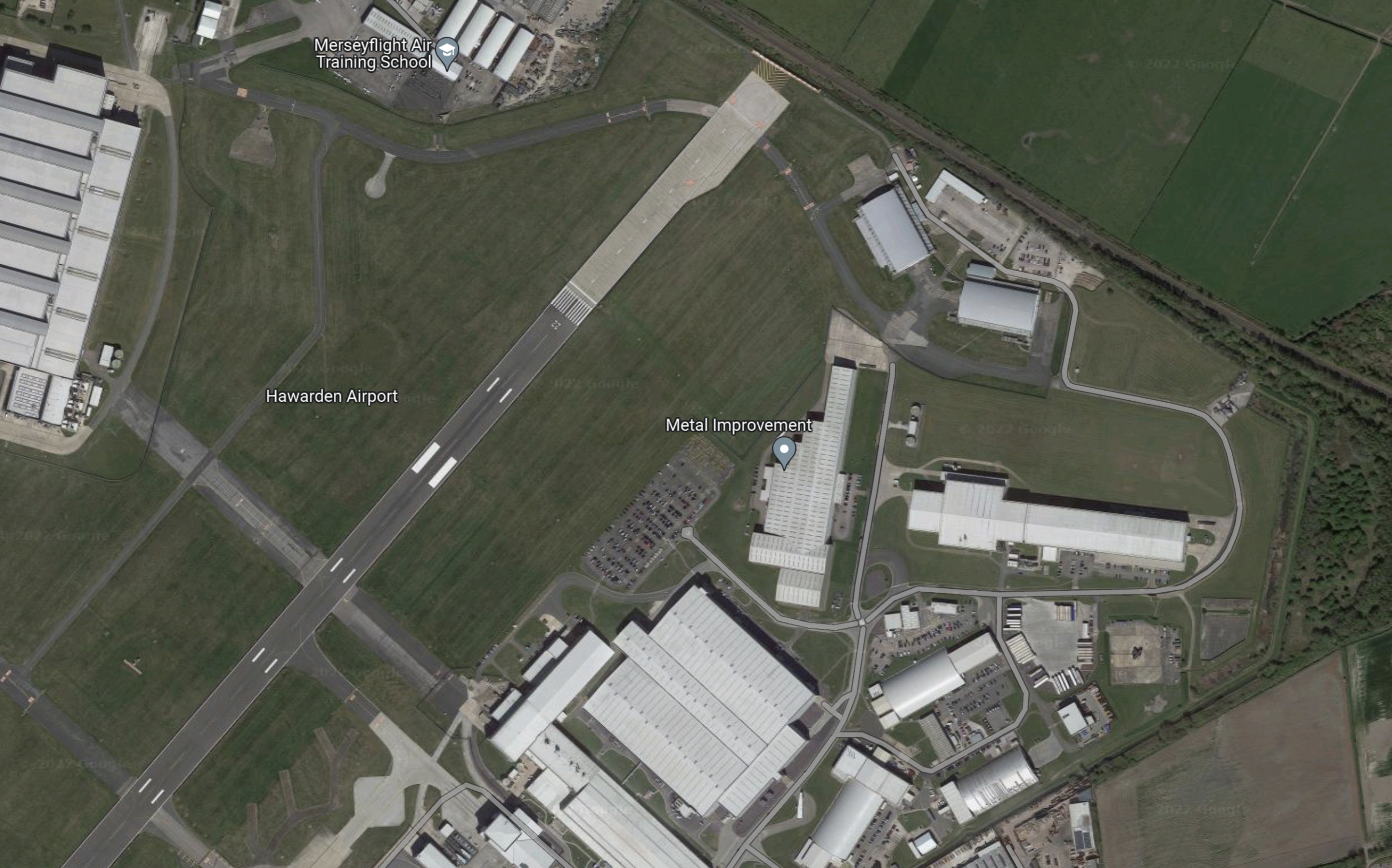
Note.
- Airbus make wings for their aircraft at their Broughton factory on this airport.
- The wings are flown to Europe for final assembly.
- The North Wales Coast Line passes the Northern end of the runway.
When I bought my return ticket between Chester and Holyhead, which was good value at £25.25 with my Senior Railcard, I got chatting with the clerk about Airbus and their Broughton factory.
He felt it needed a station and afterwards I checked and found that the Welsh Government had been trying to build one for some time.
Thinking back, I wonder if he keeps getting asked about getting to the Airbus factory and wishes that the government and Airbus would make his job easier by building a Broughton station.
A station at Broughton might also cut the factory’s carbon footprint, by allowing more staff to go to work by train.
A Merseyrail Extension To Shotton
Shotton is already served by the Borderlands Line which connects Wrexham and Bidston.
This line is shown on the West side of this map, which shows how the Merseyrail network might look in the future.

Note.
- Chester could have services that terminate in the East at Crewe and Runcorn East stations.
- Chester already has electric services from Liverpool, which will receive new Class 777 trains in the next few months.
- The new trains can be fitted with a battery electric capability.
I just wonder, if a Cross-Chester Metro could be built.
- Eastern termini would be Runcorn East or possibly Warrington Bank Quay and Crewe.
- Shotton is only 7.9 miles from Chester.
- Shotton low-level station used to have four tracks.
- I suspect that Shotton or even Flint could be the Western terminus.
- Extra stations could be added as required.
Note.
It would probably be best, if the trains were battery-electric that could use 25 KVAC overhead electrification, as this would allow them to charge at the Eastern termini.
I also feel that Crewe and Chester should be electrified, so that Chester could be reached by the new Class 805 trains running under electric power.
This would also allow Chester to become a High Speed Two destination, that was served by High Speed Two Classic-Compatible trains.
I believe that a Cross-Chester Metro is a possibility.
Carbon-Neutral Concrete Prototype Wins €100k Architecture Prize For UK Scientists
The title of this post, is the same as that of this article on the Architect’s Journal.
Under a picture of two white-coated scientists with their protective boots on concrete samples, the story and their invention is outlined.
A pair of PhD students at Imperial College London have won a global architecture prize for devising a groundbreaking method of creating carbon-neutral concrete
Material scientists Sam Draper and Barney Shanks landed the €100,000 2022 Obel Award with their ‘simple way’ to capture carbon from industrial production processes and create an end product that can eliminate the CO₂ footprint of concrete.
The prototype technology, dubbed Seratech, takes industrial CO₂ emissions directly from flues and produces a carbon-negative cement replacement material (silica). According to the scientists, when this is used in combination with Portland cement, the carbon capture associated with producing the silica means the concrete products can be zero carbon.
One of the products, we will need in the world is concrete and if we can make it in a carbon-neutral manner, then that will surely reduce worldwide carbon emissions.
The Technology Explained
This page on the Seratech website is entitled Our Technology.
It gives this description of the technology.
Seratech has developed a process that consumes olivine and waste CO₂ from flue gases and produces two products which both have significant value in construction.
Silica is produced which can be used as a supplementary cementitious material (SCM) in concrete meaning the amount of Portland cement in the concrete can be reduced by up to 40%. As the silica comes from a process that captures CO₂ it is “carbon negative” and the concrete can become carbon neutral.
Magnesium carbonate is produced that can be used to make a range of zero carbon construction materials and consumer products, including alternatives to building blocks and plasterboard.
The aim is for humanity to be able to continue building robust cities and infrastructure, but without the climate cost of traditional cement mixes and with the Seratech technology this goal is achievable!
Note that olivine in Europe is generally mined in Norway.
Replacement Of Steel By Concrete
Could we also replace steel in some applications with concrete?
In UK Cleantech Consortium Awarded Funding For Energy Storage Technology Integrated With Floating Wind, I talked about some of ground-breaking methods used by a company called RCAM Technologies to create infrastructure using 3D printing of concrete.
If Imperial’s concrete, which is called Seratech can be 3D printed, I can see lots of applications for the technology.
So you could kill two sources of large carbon emissions with one technology.
Conclusion
I have said on this blog before, that we will have to keep or even build more gas-fired power stations, as they can be an efficient source of pure carbon dioxide, that will be needed as a feedstock to create an increasing number of agricultural and building products.
Cerulean Winds Is A Different Type Of Wind Energy Company
I introduced Cerulean Winds in a post called What Is INTOG?, but I have decided it is too important a concept to be buried in another post.
Cerulean sounds like it could be a sea monster, but it is actually a shade of blue.
This article on offshoreWind.biz is entitled Cerulean Reveals 6 GW Floating Offshore Wind Bid Under INTOG Leasing Round.
These are the two introductory paragraphs.
Green energy infrastructure developer Cerulean Winds has revealed it will bid for four seabed lease sites with a combined capacity of 6 GW of floating wind to decarbonise the UK’s oil and gas sector under Crown Estate Scotland’s Innovation and Targeted Oil and Gas (INTOG) leasing round.
This scale will remove more emissions quickly, keep costs lower for platform operators and provide the anchor for large-scale North-South offshore transmission, Cerulean Winds said.
Note.
- It is privately-funded project, that needs no government subsidy and will cost £30 billion.
- It looks like each site will be a hundred turbines.
- If all the sites are the same, they could be 1.5 GW each, with the use of 15 MW turbines.
- Each site will need £7.5 billion of investment. So it looks like Cerulean have access to a similar magic money tree as Kwasi Kwarteng.
This paragraph describes their four hundred floating bases.
The steel floating bases would constitute hundreds of thousands of tonnes of steel, which unlike cement fixtures, can be floated out from shore which is said to be ideal for the UK.
Building those bases, is a very large project.
On their web site, Cerulean Winds have a page entitled Targeted Oil And Gas Decarbonisation.
This the page’s mission statement.
Cerulean Winds, a green energy & infrastructure developer, is leading a pioneering bid to reduce carbon emissions from oil and gas production through floating offshore wind.
These three paragraphs describe the scheme.
Cerulean Winds pioneering bid proposes an integrated floating wind and hydrogen development across four offshore floating wind farms located West and East of the Shetland Islands and in the North and the South of the Central North Sea (CNS). The objective of the project is to generate electricity from floating wind farms located far offshore on otherwise unallocated and uneconomic seabed areas in order to power oil and gas platforms with green energy.
Cerulean Winds’ dedicated power transmission network will offer both green electrons and green molecules to oil & gas production facilities across the UK Continental Shelf (UKCS) with surplus energy used in the production of green hydrogen. This dual approach allows the project to support all ages of oil and gas platforms with constant, reliable power and minimal brownfield modifications.
The optimised scale at which Cerulean Winds’ proposed scheme operates makes it the world’s largest decarbonisation project. It offers green energy to operators for asset power generation, delivered through an affordable Power Purchase Agreement (PPA). Another big advantage is the scheme does not require any public subsidies, but funded entirely through private investment.
That is sensational.
Effectively, they’re building four 1.5 GW power stations in the seas around us to power a large proportion of the oil and gas rigs.
I do have some thoughts.
Who Pays For This Massive Project?
This project overview on the Cerulean web site is entitled The Cerulean Winds INTOG Scheme and it gives many more details of the project.
I will refer to this page as the project overview in the subsequent text.
This is the first sentence of the first paragraph.
Our basin-wide scheme represents more than £30 billion of private investment in a single strategic infrastructure project.
Consider.
- The London Olympics in 2012 cost £9 billion.
- The Elizabeth Line will probably cost around £20 billion.
- The Channel Tunnel in 1994 cost £9 billion.
This project is a lot bigger than these.
Will your spare fifty pounds, still be in your mattress, when Cerulean Winds has put its £30 billion together?
I think so, as this is the last sentence on the page.
The scheme is ‘private wire’ and will not require Government subsidies… being funded entirely through private investment, with no cost to the tax payer.
There will of course, be tax rebates available, as they are for any business from the smallest to the largest.
Green Hydrogen Will Be Produced Offshore
The project overview says this about green hydrogen.
The scheme would use floating offshore wind to power oil and gas assets with surplus energy converted into green hydrogen. Cerulean Winds recognise each brownfield site has a different set of requirements and this would give operators the flexibility to electrify some Brownfield assets without the need to interrupt existing production or shutdown. It would also safeguard oil and gas jobs and create new green energy jobs within the floating wind and hydrogen sectors within the next five years.
The operator will have a choice of energy – electricity or hydrogen.
How Will The Project Earn An Income?
It appears that the project, will have a number of income streams.
The main stream, is described in this sentence from the project overview on the web site.
We have a deep understanding across the energy sector and will partner with the operator to agree the best way to achieve decarbonisation targets at the lowest possible cost. Our approach offers both green electrons and green molecules to the platforms through an affordable Power Purchase Agreement (PPA).
It looks like the oil and gas companies that own the rigs will be significant contributors to Cerulean’s cash flow.
Green electrons (electricity) and green molecules (hydrogen) will also be brought ashore and sold to various operators and the grid.
What Happens To The Gas That Is Currently Used To Power The Oil And Gas Rigs?
I do wonder, the gas, which will no longer be needed to power the rigs will give a boost to the supply to UK consumers.
They’ve thought of that one.
Under a heading of Reducing Gas Imports, this is said.
The project also aims to maximise recovery of energy from offshore platforms. With few exceptions, each platform have their own gas turbines for power generation, burning gas extracted from the reservoirs. Approximately 10% of the gas produced each year is used in offshore power generation. By replacing the need for gas power generation with a supply of clean, green energy, Cerulean Winds’ project frees important volumes of gas produced by platforms for consumption and reduces the UK’s import of gas from overseas.
This project, when it is fully implemented could increase UK gas production by up to ten per cent.
What’s In It For The Rig Operators?
They will have some benefits.
- They will cut their carbon dioxide emissions.
- They will sell about ten percent more of the gas they extract.
- Decarbonisation will not necessarily mean large capital expenditure on the rig.
- I also suspect, that some conveniently-placed rigs will be used to send excess hydrogen from Cerulean Winds’ electrolysers to the shore.
Some rig operators will make money from decarbonisation.
When Will The Project Be Complete?
This is the first paragraph on the project overview.
Our basin-wide scheme represents more than £30 billion of private investment in a single strategic infrastructure project. The locations will be West and East of the Shetland Islands and in the Central North Sea (CNS). They will become operational by 2028.
So we don’t have to wait for ever!
What Happens To Cerulean’s Project, When The Oil And Gas Runs Out Or We Stop Using Oil And Gas?
There would now be four 1.5 GW wind farms in the North Sea, that could be connected to the National Grid.
Conclusion
It looks like Cerulean Winds are a very different energy company.
Chancellor Confirms England Onshore Wind Planning Reform
The title of this post, is the same as that of this article on renews.biz.
These are the first two paragraphs.
UK Chancellor Kwasi Kwarteng has confirmed that onshore wind planning policy is to be brought in line with other infrastructure to allow it to be deployed more easily in England.
The announcement is the strongest sign yet that the Conservative Party could be poised to reverse its 2015 ban on new onshore wind farms being built in England.
I take a scientifically-correct view of onshore wind, in that I am sometimes against it, but on the other hand in certain locations, I would be very much in favour.
These pictures show Keadby Wind Farm in Lincolnshire.
As the wind farm sits next to two gas-fired power stations and is surrounded by high voltage overhead electricity cables, this is probably a more acceptable location, than beside a picturesque village.
In this page on their web site, SSE says this about the construction of the 68 MW wind farm.
After receiving planning permission in 2008, construction began in 2012 and the first turbine foundation was complete in February 2013. The final turbine was assembled on 11 December 2013 and the project was completed in summer 2014.
If this is typical, and I think it is, it would take six years plus the time arguing about planning permission, to get a new onshore wind farm built.
But supposing, you are a farmer who wants to decarbonise. One way might be with a 10 MW wind turbine and a hydrogen electrolyser, so you had your own hydrogen source to power your tractors and other equipment.
On the other hand, solar panels on house, shed and barn roofs might be a more discrete alternative.
 The Anonymous Widower