Anxiety Over HS2 Eastern Leg Future
I did think about giving this post a title of Here We Go Again, as it yet another story about delaying or cancelling the Eastern Leg of High Speed Two.
But in the end I decided to use the title of the article in the September 2021 Edition of Modern Railways.
I wrote about this subject in Is The Eastern Leg Of High Speed Two Under Threat? in December 2020.
In that post, this was my major conclusion.
To achieve the required timings for High Speed Two, major improvements must be made to existing track on the East Coast Main Line and these improvements will mean that existing services will be competitive with High Speed Two on time.
It is backed up by the timings in the following table., which show the direct time by High Speed Two and my best estimate of time on an improved East Coast Main Line.
- Bradford – Will not served by High Speed Two – One hour and fifty-four minutes
- Cleethorpes – Will not served by High Speed Two – Two hours and fifty-one minutes
- Darlington – One hour and forty-nine minutes – One hour and forty-nine minutes
- Doncaster – Will not served by High Speed Two – One hour
- Edinburgh – Three hours and forty minutes via Western Leg – Three hours and thirty minutes.
- Grimsby – Will not served by High Speed Two – Two hours and thirty-six minutes
- Harrogate – Will not served by High Speed Two – One hour and fifty-two minutes
- Huddersfield – Will not served by High Speed Two – Two hours and eight minutes
- Hull – Will not served by High Speed Two – One hour and fifty minutes
- Leeds – One hour and twenty-one minutes – One hour and thirty minutes
- Lincoln – Will not served by High Speed Two – One hour and fifty-one minutes
- Middlesbrough – Will not served by High Speed Two – Two hours and twenty minutes
- Newcastle – Two hours and seventeen minutes – Two hours and sixteen minutes
- Nottingham – One hour and seven minutes – One hour and fifty minutes
- Scarborough – Will not served by High Speed Two – Two hours and fifty-seven minutes
- Sheffield – One hour and twenty-seven minutes – One hour and twenty-seven minutes
- Skipton – Will not served by High Speed Two – Two hours and seven minutes
- Sunderland – Will not served by High Speed Two – Two hours and thirty minutes
- York – One hour and twenty-four minutes – One hour and twenty-four minutes
Note.
- I have included all destinations served by Grand Central, Hull Trains and LNER.
- I have included Nottingham and Sheffield for completeness and in case whilst electrification is installed on the Midland Main Line, LNER run services to the two cities.
- I suspect LNER services to Bradford, Harrogate, Huddersfield and Skipton will split and join at Leeds.
There are a total of nineteen destination in this table.
- Twelve are not served by High Speed Two.
- Six are not more than fifteen minutes slower by the East Coast Main Line.
Only Nottingham is substantially quicker by High Speed Two.
In Is The Eastern Leg Of High Speed Two Under Threat?, I said that if Nottingham services ran at the sort of speed on the East Coast Main Line, that a time of one hour and twenty-one minutes between London St. Pancras and Nottingham could be possible. That would be just fourteen minutes slower than the time on High Speed Two with a change at East Midlands Hub.
Conclusion
I am getting more convinced that we don’t need the Eastern Leg of High Speed Two to East Midlands Hub and Leeds for a few years yet, as by uprating the East Coast and Midland Main Lines we can handle the traffic that we currently are generating with ease.
What Does High Speed Two Mean By Classic Compatible Trains?
The Classic-Compatible trains are described in this section in Wikipedia, by this sentence.
The classic-compatible trains, capable of high speed but built to a British loading gauge, permitting them to leave the high speed track to join conventional routes such as the West Coast Main Line, Midland Main Line and East Coast Main Line. Such trains would allow running of HS2 services to the north of England and Scotland, although these non-tilting trains would run slower than existing tilting trains on conventional track. HS2 Ltd has stated that, because these trains must be specifically designed for the British network and cannot be bought “off-the-shelf”, these conventional trains were expected to be around 50% more expensive, costing around £40 million per train rather than £27 million for the captive stock.
The Classic-Compatible trains will share these characteristics with the Full-Size trains.
- Maximum speed of 225 mph.
- Cruising speed of 205 mph on High Speed Two.
- Length of 200 metres.
- Ability to work in pairs.
- A passenger capacity around 500-600 passengers.
But what characteristics will the Classic-Compatible trains share with other trains on the UK network?
The Classic-Compatible trains will share some tracks with other trains, according to High Speed Two’s latest plans.
- On the East Coast Main Line, the trains will run between York and Newcastle.
- On the Liverpool Branch between Weaver junction and Liverpool Lime Street station.
- On the Midland Main Line between Clay Cross North junction and Sheffield.
- On the Midland main Line between East Midlands Hub and Bedford.
- On the West Coast Main Line, the trains will run between Crewe and Glasgow.
- On the West Coast Main Line, the trains will run between Stafford and Macclesfield.
As High Speed Two develops, the Classic-Compatible trains could venture off the main routes to places like Aberdeen, Barrow-in-Furness, Blackburn, Blackpool, Cleethorpes, Holyhead, Huddersfield, Inverness, Middlesbrough, Redcar, Scarborough, Stirling and Sunderland.
They will need to be able to go anywhere, which is worthwhile to connect to High Speed Two.
The main restriction is the size of the train and so a Classic-Compatible train probably can’t be larger than the largest train on the UK network, with respect to width, height and to a certain extend length.
Widths of typical trains are as follows.
- Class 319 train – 2.82 metres
- Class 321 train – 2.82 metres
- Class 387 train – 2.80 metres
- Class 700 train – 2.80 metres
- Class 710 train – 2.77 metres
- Class 745 train – 2.72 metres
- Class 800 train – 2.70 metres
- Mark 4 coach – 2.73 metres
Heights of typical trains are as follows.
- Class 319 train – 3.58 metres
- Class 321 train – 3.78 metres
- Class 387 train – 3.77 metres
- Class 710 train – 3.76 metres
- Class 745 train – 3.95 metres
- Mark 4 coach – 3.79 metres
Note.
- I find it odd, that the smallest width is one of the newest trains; Hitachi’s Class 800.
- Length is fairly irrelevant as many trains in the UK are almost 240 metres long.
I suspect that Classic-Compatible trains will have width of between 2.70 and 2.80 metres and a height of around 3.80 metres.
Could A High Speed Two Classic-Compatible Train Go Through The Thameslink Tunnel?
I ask this question, as surely in a post-pandemic world, where we are all flying there may be a case to be made for a train service between the North of England and Gatwick Airport.
But when East Midlands Railway has their new Class 810 trains, it might be possible, if they didn’t use the diesel engines.
Signalling would not be a problem, as in a few years time, all trains will be equipped with the latest digital signalling systems.
If running a Class 810 train, through the tunnel is possible, given that a Classic-Compatible train will not be larger than a Class 810 train, will High Speed Two’s trains be able to cross London in the Thameslink Tunnel?
As Midlands Connect are planning to run a Leeds and Bedford service using High Speed Two Classic-Compatible trains, could this service be extended through the Thameslink Tunnel to Gatwick Airport and Brighton?
I have a feeling that this will be physically possible.
- It would be under the control of the signalling.
- There’s no reason, why a high speed train can’t have a precise low speed performance.
- It would stop at all stations.
- It would use one of the Bedford and Brighton paths on Thameslink
Passengers would like catching a train at a station in Central London and like being whisked all the way to East Midlands Hub and Leeds.
Could A High Speed Two Classic-Compatible Train Go Through The Crossrail Tunnel?
Consider.
- It would surely be possible to arrange tracks at Old Oak Common to allow High Speed Two Classic-Compatible trains to go between High Speed Two and Crossrail.
- Crossrail is considering running to Ebbsfleet.
- It might even be possible to connect in East London.
- The High Speed Two Classic-Compatible trains would be digitally-signalled and controlled through Crossrail without stopping.
- Platform edge doors would ensure safety, but also prevent the trains from stopping at the existing stations.
I have just looked at the London railway map on carto metro, there are stretches of Crossrail under London, where there is space for a station with 200 metre, if not a 400 metre platforms, to the West or East of current Crossrail stations.
- To the West of Bond Street
- To the East of Tottenham Court Road
- To the West of Farringdon
- To the East of Liverpool Street
- To the West of Canary Wharf
- To the East of Canary Wharf
Would all appear to have the required space and be possibilities for extra High Speed Two platforms.
Effectively, some stations would have two sets of platforms on the tracks beside each other.
- One pair of platforms would be the existing station, with platform edge doors compatible with Crossrail’s Class 345 trains.
- The other pair of platforms would be the High Speed Two station, with platform edge doors compatible with High Speed Two Classic-Compatible trains.
- The signalling and train control systems would automatically stop trains in the appropriate platform.
- Extra passageways would link the new platforms to the existing station.
I suspect when Crossrail was designed, the possibility of adding extra stations to the underground section was considered and there is a method of adding extra platforms in Crossrail’s book of cunning engineering ideas.
Conclusion
I don’t rule out a High Speed service between Birmingham and stations in the North of Great Britain and major cities on the Continent.
- Crossrail would be used to link High Speed One and High Speed Two.
- High Speed Two Classic-Compatible trains would be used.
- Stops in London could be Old Oak Common, Bond Street, Liverpool Street, Canary Wharf and Ebbsfleet
It may sound to be a fanciful idea, but I believe it is possible.
Should Improvement Needed For High Speed Two On The East And West Coast Main Lines Be Given High Priority?
High Speed Two will bring major improvements in times between London and the North of England and Scotland, with these figures claimed by this page on the High Speed Two web site.
- London Euston and Carlisle – 2 hours and 23 minutes saving 54 minutes
- London Euston and Darlington – 1 hours and 50 minutes saving 32 minutes
- London Euston and Durham – 2 hours and 16 minutes saving 37 minutes
- London Euston and Edinburgh – 3 hours and 48 minutes saving 31 minutes
- London Euston and Glasgow – 3 hours and 40 minutes saving 49 minutes
- London Euston and Lockerbie – 2 hours and 55 minutes saving 43 minutes
- London Euston and Newcastle – 2 hours and 17 minutes saving 32 minutes
Substantial savings would seem to be possible.
The Recent Record Run On The West Coast Main Line
A few weeks ago, Avanti West Coast ran a Class 390 train between London Euston and Glasgow in three hours and 53 minutes and 1 second. They were trying to beat the record set by the \APT-P in 1984 of three hours and 52 minutes and 40 seconds.
In Lessons From The Record Run in the August 2021 Edition of Modern Railways, Roger Ford makes a big hint in a section called Hint.
Roger starts with this paragraph.
In the virtual race with APT-P, the Pendolino was seven minutes ahead approaching the border, but this was not sufficient to overcome APT-P’s advantage of being able to run faster over lines which, unlike the southern end of the WCML, have not enjoyed the increased speeds further south, such as at Stafford and Crewe.
He then talks of a levelling-up of the infrastructure being needed on the Northern section of the West Coast Main Line.
Roger finishes the section with this paragraph.
Thus, the final message of the run is that if HS2 is to realise its full potential, planning for the West Coast Route Modernisation (North) needs to start now, both for journey time reductions and reliability.
The High Speed Two time between Preston and Glasgow of two hours and 26 minutes, given by their journey time calculator is in line with current timings.
I am drawn to the following conclusions about services between Preston and Glasgow.
- I suspect the similar times could be expected, as the trains will have to cope with other trains on the route.
- Most of High Speed Two’s savings must be on the new track to the South of Wigan.
It would appear that any savings made between Preston and Scotland will benefit both classic and high speed services.
I certainly agree with Roger’s hint to start planning the upgrade of the Northern section of the West Coast Main Line.
This would surely enable upgrade of the route to start sooner and places at the North of the route would benefit from faster journey times to the South before High Speed Two is complete.
Reducing The Journey Times On The West Coast Main Line
If you look at the average speed between Preston and Glasgow of a typical train, it is just 84.3 mph.
Various average speeds give the following times between Preston and Glasgow.
- 90 mph – two hours and 8 minutes
- 100 mph – one hour and 55 minutes
- 110 mph – one hour and 45 minutes
It would appear there is scope for reductions in journey times to be made.
I have flown my virtual helicopter along the Scottish part of the route and it doesn’t look to be too terrifying.
- There are tight speed limits at Preston and Carlisle
- The railway is not hemmed in by development until close to Glasgow.
- Most of the modern bridges, where the M74 crosses the railway appear to have space for an extra track.
- Connection of the Borders Railway to the West Coast Main Line could give scope for improvement between Gretna junction and Carlisle.
- The depot at Annandale, that I wrote about in High Speed Two To Build Stabling Facility In Scotland, may give scope for a shorter, straighter and faster route between Grena Green and Kirkpatrick-Fleming, that could run closer to the M74.
- North of Lockerbie, there may be scope to put extra tracks between the railway and the M74.
- The Carstairs area could be ripe for improvement.
I would feel that digital signalling and some well-applied engineering could cut a sensible amount of time from Preston and Glasgow timings.
- I can certainly say, that the route is not a desert, where possible improvements will be difficult to find.
- I also don’t feel there are any obvious improvements, that will be controversial.
There is also the M74, which could be invaluable for camouflaging the railway.
Reducing The Journey Times On The East Coast Main Line
Much of the work to speed up the Northern section of the East Coast Main Line is laid out in Northern Powerhouse Rail – Significant Upgrades Of The East Coast Main Line From Leeds To Newcastle (Via York And Darlington) And Restoration Of The Leamside Line, a post I wrote to explain what Northern Powerhouse Rail feel is urgently needed.
Mentioned in the other post are following projects.
- Full Digital Signalling
- Phase 2 Of The East Coast Main Line Power Supply Upgrade
- York to Church Fenton Improvement Scheme
- Darlington Station Remodelling
- The North Throat Of York Station Including Skelton Bridge Junction
- Use Of The Leamside Line
As with the West Coast Main Line, the improvements would benefit both classic and High Speed services.
Conclusion
Improvements to both the East and West Coast Main Lines will help both classic and High Speed services between London and the North of England and Scotland.
I think that planning and design should be started as soon as possible.
Construction should start as early as possible, so that the benefits of faster trains are felt at the earliest date possible.
Northumberland Railway Line: Test Train Runs On Planned Route
The title of this post, is the same as that of this article on the BBC.
This is the first four paragraphs.
A test train has travelled along part of a new Northumberland line ahead of the reintroduction of passenger services.
Six new stations are to be built and 18 miles (29km) of track upgraded between Newcastle and Morpeth.
The test train contained dignitaries and rail officials, with full services expected to start in 2024.
Northern said it was looking at running two trains an hour six days a week and hourly services on Sundays.
It very much sounds to be a good start.
The article certainly has a good picture of one of the bridges on the line.
Morpeth?
Note that the article says that the first phase goes to Morpeth. I had thought it was going to Ashington.
Or could it be that Network Rail want to open up Newcastle and Morpeth to take some local services off the East Coast Main Line.
A New Timetable For The East Coast
The title of this post, is the same as that of an article in the August 2021 Edition of Modern Railways.
The Modern Railways article describes in detail the thinking behind the proposed timetable for the East Coast Main Line, that will be introduced in May 2022.
The new titletable would appear to be a compromise and judging by the number of complaints that have appeared in the media, the compromise doesn’t suit everyone.
A lot of my programming was concerned with the allocation of resources in large projects and that expertise convinces me, that the East Coast Main Line doesn’t have enough capacity to accommodate all the services that passengers need and train companies want to run.
These are my thoughts.
High Speed Two
When High Speed Two is completed to Leeds, it will add the following services to Leeds.
- Three trains per hour (tph) between London Euston and Leeds in a time of one hour and twenty-one minutes.
- Two tph between Birmingham Curzon Street and Leeds in a time of forty-nine minutes.
- One tph between Bedford and Leeds, run by Midlands Connect, in a time of one hour and thirty-six minutes.
Leeds will benefit from these services from the South on the new High Speed Two.
But the High Speed Two network has been designed to need to run three tph between York and Newcastle, which will have to share with other East Coast Main Line services.
Both High Speed Two and the aspiration of providing more services on the East Coast Main Line mean that more capacity must be provided between York and Newcastle.
High Speed Two is not mentioned in the Modern Railways article.
I know the Eastern Leg of High Speed Two is many years away, but surely, it should have an influence on the design of East Coast Main Line services.
For instance, destinations like Bradford, Cleethorpes, Doncaster, Harrogate, Huddersfield, Hull, Lincoln, Middlesbrough, Peterborough, Redcar, Scarborough, Skegness and Sunderland are unlikely to be served by High Speed Two services, so how does that determine our thinking, when planning train services to these destinations.
Perhaps, there should be lists of secondary destinations, that should be served by the various operators.
London And Leeds In Two Hours
This is mentioned in the Modern Railways article as being an aspiration of Virgin Trains East Coast, when they ran the franchise.
In Thoughts On Digital Signalling On The East Coast Main Line, I did a few rough calculations and said this.
Consider.
-
- The fastest current trains between London Kings Cross and Leeds take between two hours and twelve minutes and two hours and fifteen minutes.
- I suspect that the extra tracks into Kings Cross, that are currently being built will save a few minutes.
- There must be some savings to be made between Doncaster and Leeds
- There must be some savings to be made between London Kings Cross and Woolmer Green.
- There could be a rearrangement of stops.
I think it is highly likely that in the future, there will be at least one train per hour (tph) between London Kings Cross and Leeds, that does the trip in two hours.
It is my view, that any new East Coast Main Line timetable should include services between London Kings Cross and Leeds in a few minutes under two hours.
London And Edinburgh In Four Hours
This must be another objective of the train companies, as it is competitive with the airlines.
But it is not a simple process as cutting stops to save time, often annoys the locals.
So achieving the objective of a four-hour trip between London and Edinburgh probably needs some major upgrades to the East Coast Main Line.
Some of the improvements needed are detailed in Northern Powerhouse Rail – Significant Upgrades Of The East Coast Main Line From Leeds To Newcastle (Via York And Darlington) And Restoration Of The Leamside Line.
Projects in the related article include.
- Phase 2 Of The East Coast Main Line Power Supply Upgrade
- York to Church Fenton Improvement Scheme
- Darlington Station Remodelling
- The North Throat Of York Station Including Skelton Bridge Junction
- Use Of The Leamside Line
- Full Digital ERTMS signalling.
It would appear there’s a lot of work to do, but all of it, will be needed for High Speed Two.
The Modern Railways article does point out, that the new Hitachi trains have superior acceleration to the InterCity 225 trains, that they have replaced. So that will help!
Although it is a worthwhile objective, I think it will be some years before London and Edinburgh times of under four hours are obtained on the East Coast Main Line.
Hitachi’s Intercity Tri-Mode Battery Train
These trains are described in this Hitachi infographic.

Within a couple of years these trains will start to be seen on the East Coast Main Line serving destinations like Cleethorpes, Grimsby, Harrogate, Huddersfield, Hull, Lincoln, Middlesbrough and Sunderland.
Although, it says batteries will replace one engine in the infographic, I believe the standard five-car train for the East Coast Main Line will have two battery packs and an emergency diesel engine. Before the end of the decade, they will be fully-decarbonised with three battery packs.
Splitting And Joining
Although the Hitachi trains can accomplish splitting and joining with ease, it is only mentioned once in the Modern Railways article and that is concerned with a service to Huddersfield, which will split and join at Leeds.
I can see this being used to make sure that each train running into Kings Cross is either a nine-car or a pair of five-car trains, as this would maximise capacity on the route.
Currently, trains to York and Lincoln share a path into Kings Cross, with trains alternating to each destination, so each destination gets one train per two hours (1tp2h).
It would surely be possible for a pair of trains to leave Kings Cross, that split at Newark, with one train going to York and the other to Lincoln.
- The Modern Railways article says that the Middlesbrough service will be an extension of the 1tp2h York service.
- This means Kings Cross and Middlesbrough would call at Stevenage, Peterborough, Grantham, Newark North Gate, Retford, Doncaster and York.
- So at some time in the future could the Middlesbrough and Lincoln services share a path, with a split and join at Newark?
If the Lincoln and Middlesbrough services were to be run at a frequency of 1tp2h, the intervening paths could be used for other destinations.
Theoretically, by using pairs of five-car trains and splitting and joining, four destinations can be given a service of 1tp2h to and from London, that all use the same path.
I think the following splits and joins would be feasible.
- Lincoln/Middlesbrough splitting and joining at Newark North Gate.
- Lincoln/Scarborough splitting and joining at Newark North Gate.
- Nottingham/Sheffield splitting and joining at Newark North Gate.
- Harrogate/Huddersfield splitting and joining at Leeds.
- Bradford/Skipton splitting and joining at Leeds.
- Hull/Leeds splitting and joining at Doncaster.
Note.
- The two Lincoln splits and joins at Newark North Gate could possibly be arranged, so that Middlesbrough got roughly 1tp2h and Scarborough got perhaps two trains per day (tpd).
- Hull would be a very useful destination, as it is a large station to the East of the East Coast Main Line.
- Nottingham and Sheffield could be useful destinations during any disruption on the Midland Main Line, perhaps due to installation of full electrification.
The permutations and combinations are endless.
All Fast Trains Must Have Similar Performance
East Coast Trains, Hull Trains, LNER and TransPennine Express all use trains with similar performance.
But other operators like Great Northern use slower trains on the East Coast Main Line.
As the Hitachi trains will be running at up to 140 mph under the control of full digital signalling, it strikes me that for safe, fast and efficient operation, the other operators will need faster trains, where they run on the fast lines of the East Coast Main Line.
Grand Central
Grand Central‘s fleet of Class 180 trains will need to be replaced to decarbonise the operator and will surely be replaced with more 140 mph trains to take advantage of the digitally-signalled East Coast Main Line.
As their routes are not fully-electrified, I suspect they’ll be using similar Hitachi battery-electric trains.
The Cambridge Effect
Cambridge is becoming one of the most important cities in the world, let alone England and the UK.
It is generating new businesses at a tremendous rate and it needs an expanded rail network to give access to housing and industrial premises in the surrounding cities and towns.
- Peterborough is in the same county and is developing alongside Cambridge.
- Bury St. Edmunds, Norwich and other towns are being drawn into Cambridge.
- East West Rail to Bedford, Milton Keynes and Oxford is coming.
Cambridge is well-connected to London, but needs better connections to the North and Midlands.
King’s Cross And King’s Lynn
Currently, this route is run by 110 mph Class 387 trains.
These trains are just not fast enough for Network Rail’s 140 mph digitally signalled railway between King’s Cross and Hitchin.
In Call For ETCS On King’s Lynn Route, I examine how 125 mph trains and full digital signalling could be used to run between King’s Cross and King’s Lynn via Cambridge.
This would allow the trains to use the fast lines into King’s Cross.
I also feel, that to maximise the use of paths into King’s Cross, that the King’s Lynn service could be paired with a new Norwich service. The two trains would split and join at Cambridge.
Liverpool Lime Street And Norwich
This service is currently run by Class 156 trains and needs decarbonising. It also runs on 125 mph lines between.
- Peterborough and Grantham
- Nottingham and Sheffield
It certainly needs a thorough redesign and modern rolling stock to replace the current rolling road blocks.
East West Rail will certainly increase Cambridge and Norwich services to two tph, so why not terminate this Liverpool service at Cambridge rather than Norwich?
- Cambridge station has a lot of space to add extra platforms.
- The service would not need to reverse at Ely.
- It would add much-needed capacity to the Cambridge and Peterborough route.
- The service could even terminate at the new Cambridge South station.
- There have been plans for some time to split this service at Nottingham.
As between Peterborough and Grantham is a fully-electrified four-track line, I suspect that a Cambridge and Nottingham service could be handled by a 110 mph battery-electric train based on a Class 350 or Class 379 train.
Similar battery-electric trains could probably handle the Northern section between Nottingham and Liverpool Lime Street.
Stansted Airport And Birmingham Via Cambridge
After the work to the North of Peterborough at Werrington, this service has a clear route away from the East Coast Main Line, so it can be ignored.
The service does need decarbonisation and I suspect that it could be run by a 110 mph battery-electric train based on a Class 350 or Class 379 train.
CrossCountry And TransPennine Express Services
CrossCountry and TransPennine Express also run services on the Northern section of the East Coast Main Line.
- CrossCountry – 1 tph – Leeds and Edinburgh via York, Darlington, Durham, Newcastle, Alnmouth, Berwick-upon-Tweed and Dunbar (1tp2h)
- CrossCountry – 1 tph – Sheffield and Newcastle via Doncaster, York, Darlington and Durham.
- TransPennine Express – 1 tph – Liverpool Lime Street and Scarborough via Leeds, Garforth and York
- TransPennine Express – 1 tph – Manchester Airport and Redcar via Leeds, York, Thirsk, Northallerton, Yarm, Thornaby, and Middlesbrough.
- TransPennine Express – 1 tph – Liverpool Lime Street and Edinburgh via Leeds, York, Darlington, Durham, Newcastle and Morpeth.
- TransPennine Express – 1 tph – Manchester Airport and Newcastle via Leeds, York, Northallerton, Darlington, Durham and Chester-le-Street (1t2h)
In addition LNER and East Coast Trains also run these services on the same section.
- LNER – 1 tp2h – London Kings Cross and York
- LNER – 1 tph – London Kings Cross and Edinburgh via York, Darlington, Newcastle, Berwick-upon-Tweed
- LNER – 1 tph – London Kings Cross and Edinburgh via York, Northallerton (1tp2h), Darlington, Durham, Newcastle and Alnmouth (1tp2h)
- East Coast Trains – 5 tpd – London Kings Cross and Edinburgh via Newcastle and Morpeth.
Aggregating the stops gives the following.
- York – 8.5 tph
- Darlington – 6 tph
- Durham – 5 tph
- Chester-le-Street – 0.5 tph
- Newcastle – 6 tph and 5 tpd
- Morpeth – 1 tph and 5 tpd
- Almouth – 1.5 tph
- Berwick-on-Tweed – 2 tph
- Dunbar – 0.5 tph
Note.
- 1 tp2h = 0.5 tph
- Scotland is building two new stations at Reston and East Linton.
- Northern run trains between Newcastle and Morpeth.
It does appear from comments in the Modern Railways article, that the various train companies and passenger groups can’t agree on who calls where to the North of York.
Perhaps the Fat Controller should step in.
Between Newcastle and Berwick-on-Tweed
With the reopening of the Northumberland Line between Newcastle and Ashington, there may be an opportunity to reorganise services between Newcastle and Berwick-on-Tweed.
- Morpeth could be served via the Northumberland Line.
- Britishvolt are building a large gigafactory for batteries at Blyth.
- It would probably be a good idea to remove slow diesel services from the East Coast Main Line.
- Reston station will need a train service.
- Morpeth and Newcastle are under twenty miles apart on the East Coast Main Line and the route via Ashington is perhaps only ten miles longer.
It looks to me that local services on the Northumberland Line and between Newcastle and Reston on the East Coast Main Line could be run by a 110 mph battery-electric train.
Conclusion
There would appear to be a lot of scope to create a very much improved timetable for the East Coast Main Line.
I do think though that the following actions must be taken.
- Ensure, that all the long-distance train companies have trains capable of running at 140 mph under the control of digital signalling.
- Develop a 110 mph battery-electric train to work the local routes, that run on the East Coast Main Line.
- Get agreement between passengers and train companies about stopping patterns to the North of York.
- Use splitting and joining creatively to squeeze more trains into the available paths.
LNER would also need to increase their fleet.
LNER To Serve Cleethorpes
Under the proposed new LNER timetable, which will start in May 2022, there will be a new train service between London Kings Cross and Cleethorpes.
According to this article on the Lincolnite, which is entitled Direct Cleethorpes To London Rail Link ‘Close’ To Getting Go Ahead, there will be one service per day.
It will leave Cleethorpes at 06:24 and Grimsby Town at 06:32 before arriving at King’s Cross at 09:25.
The return will leave King’s Cross at 16:10 and arrive in Grimsby Town at 19:05 and Cleethorpes at 19:20.
The August 2021 Edition of Modern Railways makes these points about the service.
- The larger Azuma fleet makes this extension possible.
- ,A more regular service would require additional trains.
- LNER is examining whether other intermediate stations east of Lincoln could be served.
I would have thought, that Market Rasen station could be a possibility for an intermediate stop.
I have a few thoughts.
Extra Services
This single service is ideal for though living in Lincolnshire, but it doesn’t suit those people, who perhaps need to go to the area from London for business or family reasons.
- Lincoln appears to get around five or six trains per day in each direction to and from King’s Cross.
- Services are roughly one train per two hours.
- I suspect the Lincoln service can be run by a single train, that shuttles between King’s Cross and Lincoln stations.
I believe, that Cleethorpes needs at least a pair of services to and from London, so that travellers can spend a day in North-East Lincolnshire.
- This would probably need more trains.
- Services would go via Lincoln and Lincoln may get extra services to London.
- Selected services could stop at intermediate stations, like Market Rasen.
There are surely possibilities for a integrated timetable between King’s Cross and Lincoln, Market Rasen, Grimsby Town and Cleethorpes.
Battery-Electric Operation
Consider.
- LNER’s Class 800 trains are prime candidates for conversion to Hitachi Intercity Tri-Mode Battery Trains, so they can run away from the overhead wires of the East Coast Main Line to places like Lincoln, by the use of battery power.
- These battery trains could charge using the electrification between King’s Cross and Newark North Gate stations.
- The distance between Lincoln Central station and the East Coast Main Line is 16.6 miles.
- In Plans To Introduce Battery Powered Trains In Scotland, I quote Hitachi, as saying they expect a sixty mile range for battery trains.
I am sure, that these trains would have sufficient range on battery to be able to work King’s Cross and Lincoln services without using diesel.
But could the Hitachi trains reach Cleethorpes with some well-positioned charging?
- The distance between Lincoln and Cleethorpes stations is 47.2 miles.
- In Solving The Electrification Conundrum, I describe Hitachi’s solution to running battery-electric trains, by using well-placed short lengths of 25 KVAC overhead electrification controlled by an intelligent power system.
With a range of sixty miles on batteries and charging at Lincoln and Cleethorpes stations, it would appear that battery electric operation of Class 800 trains between King’s Cross and Cleethorpes is a distinct possibility.
Lincoln Station
Lincoln station has three operational through platforms and I suspect all would need to be electrified, so that trains could be charged as they passed through.
These are distances from Lincoln station.
- Cleethorpes – 47.2 miles
- Doncaster – 36.9 miles
- Nottingham – 33.9 miles
- Peterborough – 56.9 miles
- Sheffield – 48.5 miles
It does appear that if Lincoln station were to be electrified, most services from the city could be run using battery-electric trains.
Cleethorpes Station
This picture shows Cleethorpes station with two TransPennine Express Class 185 trains in the station.
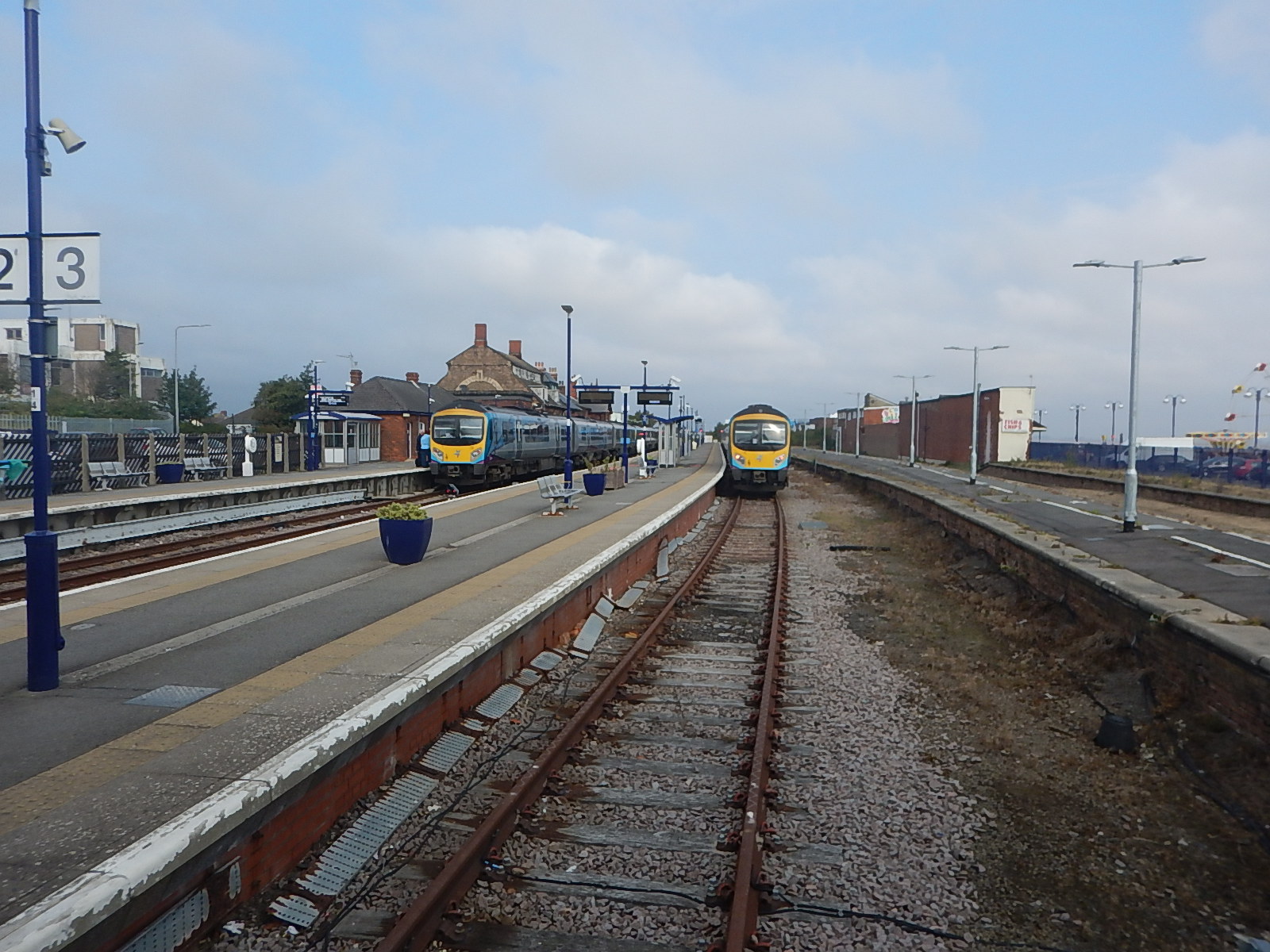
Note.
- The Class 185 trains are diesel, but could be replaced by Hitachi Class 802 trains, which could be converted to battery-electric operation.
- Cleethorpes and Doncaster are 52.1 miles apart, which could be in range of Hitachi’s battery-electric trains.
- It doesn’t look to be too challenging to electrify a couple of platforms to charge the battery-electric trains.
- Cleethorpes station could surely charge both the LNER and the TransPennine Express trains.
- The Cleethorpes and Barton-on-Humber service which is under fifty miles for a round trip could also be replaced with battery-electric trains.
Cleethorpes station could be totally served by battery-electric trains.
Battery-Electric Trains For Lincolnshire
At the present time, there is a surplus of good redundant electrical multiple units and the rolling stock leasing companies are looking for places where they can be used.
Porterbrook are already looking to convert their fleet of Class 350 trains to battery-electric operation and I am certain, that now that Hitachi and others have solved the charging problem, a lot more trains will be converted.
Most would appear to be four-car 100 mph trains, which will be very convenient and should fit most platforms.
Conclusion
Running battery-electric Class 800 trains to Lincoln, Grimsby Town and Cleethorpes could be the start of decarbonisation of Lincolnshire’s railways.
What would battery-electric trains do for the economy of Lincolnshire?
East Coast Main Line South Bi-Directional Capability
London has a rail capacity problem, for both freight and passenger trains.
This report from Network Rail is entitled The London Rail Freight Strategy (LRFS).
One of the secondary recommendations of the report is to use the bi-directional capability of the East Coast Main Line to create another freight route through London.
The report explains it like this.
The southern end of the East Coast Main Line, from Kings Cross to Stoke Tunnel (about five miles south of Grantham), is due to be the first part of a national main line to be fully converted to European Train Control System (ETCS) digital signalling.ETCS, because it does not rely on fixed lineside equipment facing one way or another, is bi-directional by nature.
This presents an opportunity for freight to make use of a new routeing at the southern end of the East Coast Main Line, which current signalling and track layout do not permit.
This strategy therefore proposes installing new track layout features that would facilitate this routeing for freight trains, enabling them to take advantage of the bi-directional capability brought about through ETCS deployment.
The main expected change would be the creation of a facing crossover at Bowes Park, to enable southbound freight trains to run onto the Down Enfield Viaduct in the up direction, before continuing onwards to the terminal at Ferme Park or accessing the Gospel Oak-Barking Line at Harringay.
This example shows an advantage of digital in-cab signalling.
This map from cartometro, shows the lines between Bowes Park and Alexandra Palace stations.
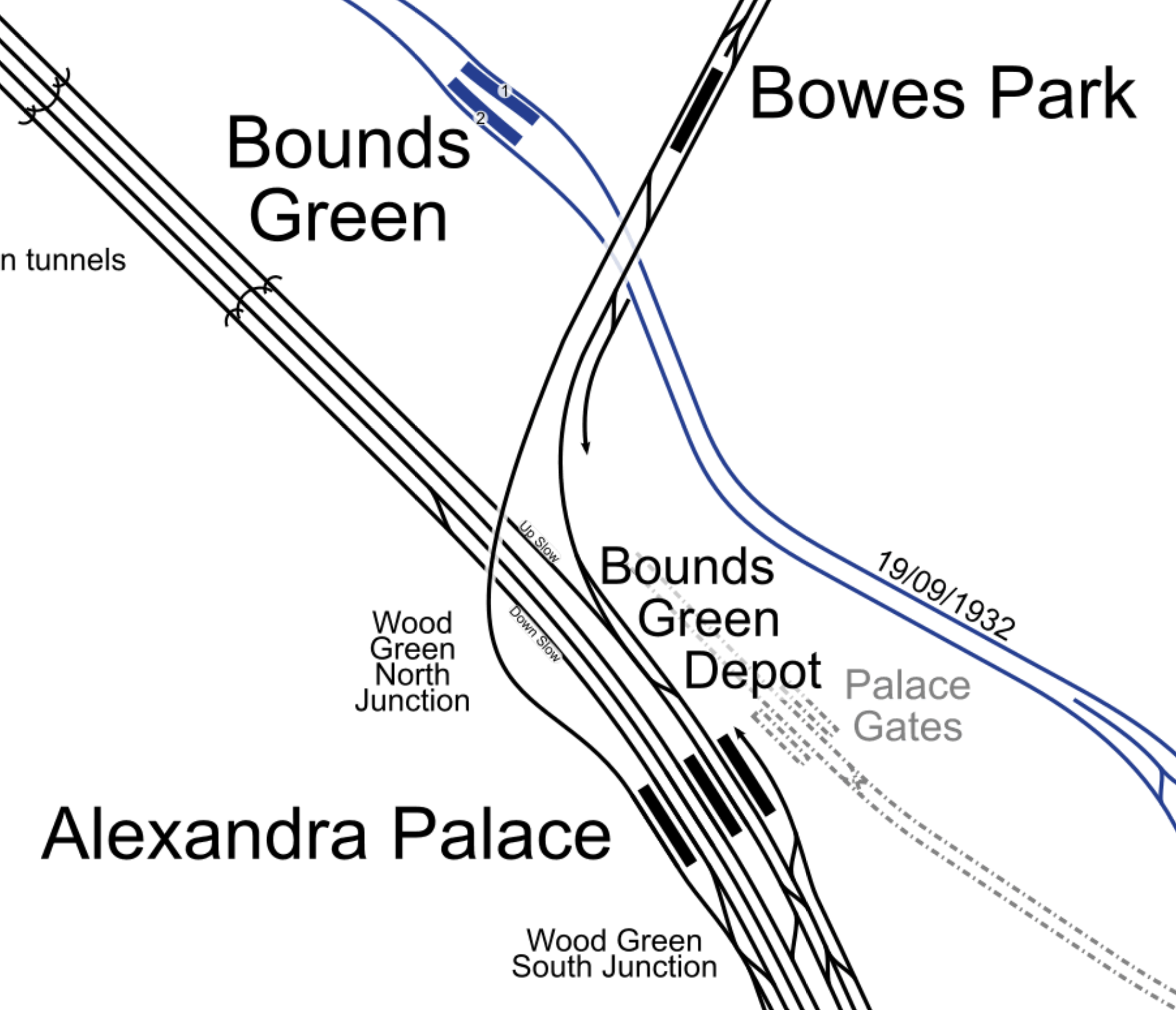
Freight trains coming from the North regularly take the Hertford Loop Line and arrive in North London at Bowes Park
Currently, they sneak down the Eastern side of the East Coast Main Line and then take a route across London, which probably uses the North London Line.
What is proposed is that with an extra crossover just South of Bowes Park station, freight trains will crossover and take Enfield Viaduct the wrong way to the Western side Alexandra Palace station.
The Enfield Viaduct is the track taken from Alexandra Palace station to Bowes Park station, by trains going to Enfield. It takes a bit of a loop to the West.
This second map from cartometro, shows the lines South of Alexandra Palace stations.
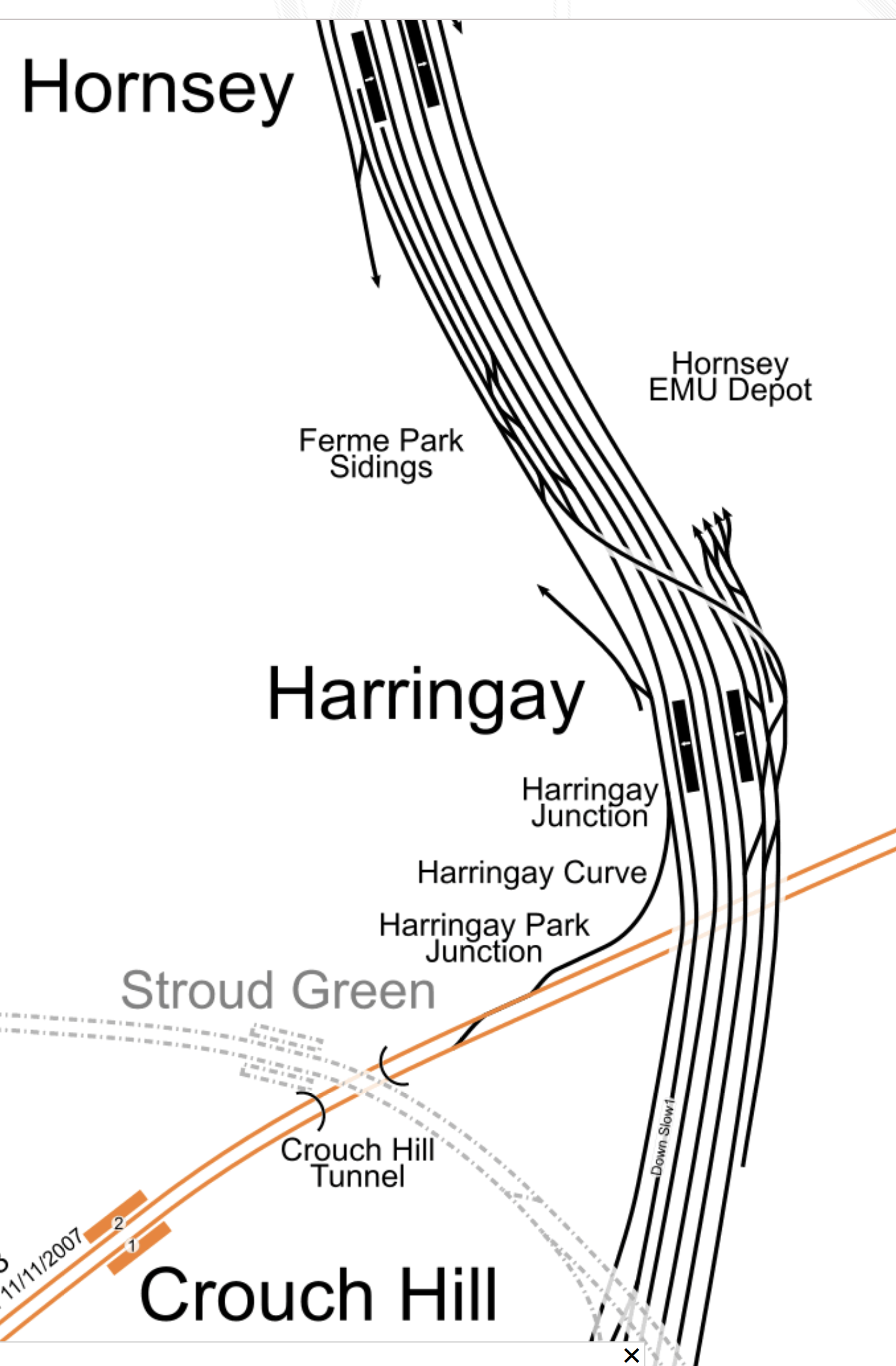
Note.
- Hornsey is the next station to the South of Alexandra Palace.
- The Eastern side of the East Coast Main Line is crowded with maintenance depots for trains.
- The orange line is the Gospel Oak to Barking Line.
By the use of digital signalling a new freight route through North London can been created.
Conclusion
How many other places can this technique be used?
Related Posts
These are related posts about the London Rail Freight Strategy (LRFS).
Decarbonisation Of London’s Freight Routes
Gauge Improvements Across London
Headway Reductions On The Gospel Oak To Barking, North London and West London Lines
Heavy Axle Weight Restrictions
Kensal Green Junction Improvement
Longhedge Junction Speed Increases
Moving The West London Line AC/DC Switchover To Kensington Olympia
Moving The West London Line AC/DC Switchover To Shepherd’s Bush
Stratford Regulating Point Extension
The Cambridge Re-signalling, Relock and Recontrol Project
This project is Network Rail’s big signalling project in the Cambridge area and it is fully described in this document on the Network Rail web site.
The project is called the C3R Project for short and its scope is described in this Network Rail infographic.

Note.
- 125 miles of track are to be resignalled.
- Seventeen stations are likely to be resignalled.
- Eight level-crossings are to be upgraded.
Network Rail’s document splits the project into five sections.
- Cambridge Power Signal Box – This will be upgraded.
- Safety Interlocking Equipment – This will be upgraded with a computer-based system.
- Closure Of Three Signal Boxes – Control will be relocated to Cambridge Power Signal Box.
- Seven Level Crossing Upgrades – These will be upgraded to full barrier crossings.
- Land Acquisition – As necessary to complete the works.
Upon completion the project will have replaced around 690 signalling assets.
Network Rail also say that the outline design contract to Alstom and it is expected to be completed in the last quarter of 2021.
Network Rail also says this about completion.
Subject to obtaining the necessary consents and design approvals, the detailed design and delivery of the signalling upgrade could begin by end of 2021 and be complete around the end of 2024.
My experience of project management and the railways of East Anglia, says that subject to one caveat, that this is a reasonable timescale.
The Level Crossing Problem
The problem could be the level crossings, as local interests are very protective of their supposed right to cross unhindered.
I particularly remember the Little Cornard Derailment, because a solicitor, who regularly instructed my late wife, was seriously injured in the derailment.
This is the first paragraph of the Wikipedia entry.
The Little Cornard derailment occurred on 17 August 2010 when a passenger train collided with a road vehicle on a level crossing on the Gainsborough Line near Little Cornard, Suffolk, and partly derailed. The vehicle, a tanker lorry, had begun crossing over the track when the Class 156 train from Sudbury destined for Marks Tey struck it whilst travelling at a speed of approximately 40 miles per hour (64 km/h)
Note.
Although, my late wife had died in 2007, one of her barrister colleagues told me of the link.
East Anglia and other rural parts of the UK suffer regularly from this type of accident.
This Google Map shows a 3D visualization of the site of the derailment.
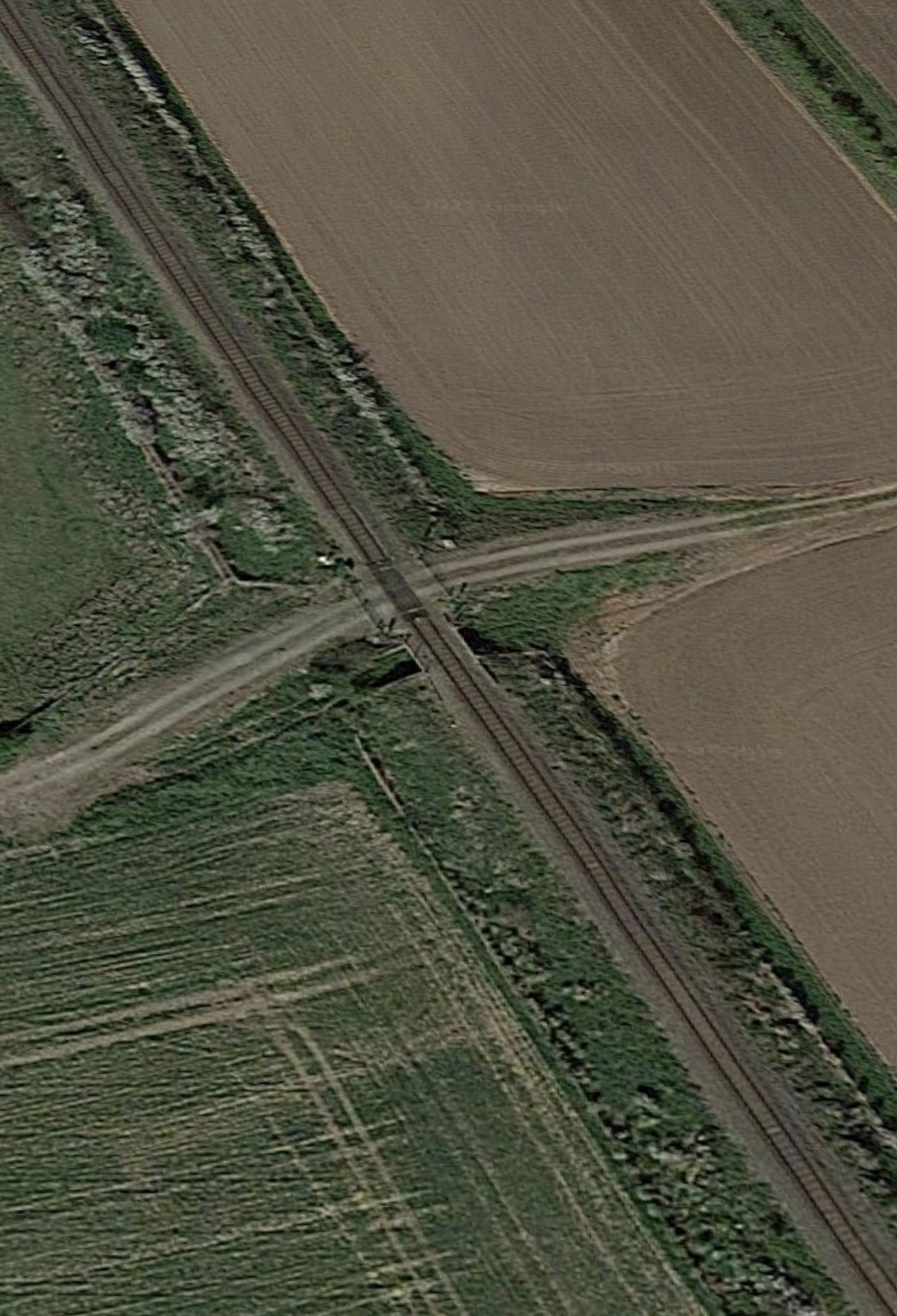
It appears to be rather remote.
I am totally appalled that there was such primitive safety equipment on this crossing.
- I have worked in seriously dangerous chemical plants, where Health and Safety rules forbade anyone entering the plant without full training.
- As a sixteen-year-old in 1963, I was designing and installing systems on industrial guillotines, so that workers didn’t lose their hands.
- A proportion of work, I did whilst working for ICI was about Health and Safety.
- I have travelled extensively in tour buses in Eastern Europe and seen some appealing driving at level crossings.
- According to a Hungarian friend, if you want to see bad driving at level crossings try Russia. He put it down to the local firewater.
This experience leeds me to believe that one of two things should be done with all level crossings on the railway.
- There should be a strong safety system on the crossing.
- The level crossing should be closed.
Will Network Rail be allowed by local interests to upgrade all the crossings they need?
The Level Crossings Network Rail Propose To Upgrade
These are the crossings Network Rail propose to upgrade.
Meldreth Road Level Crossing
This Google Map shows the Meldreth Road level crossing.
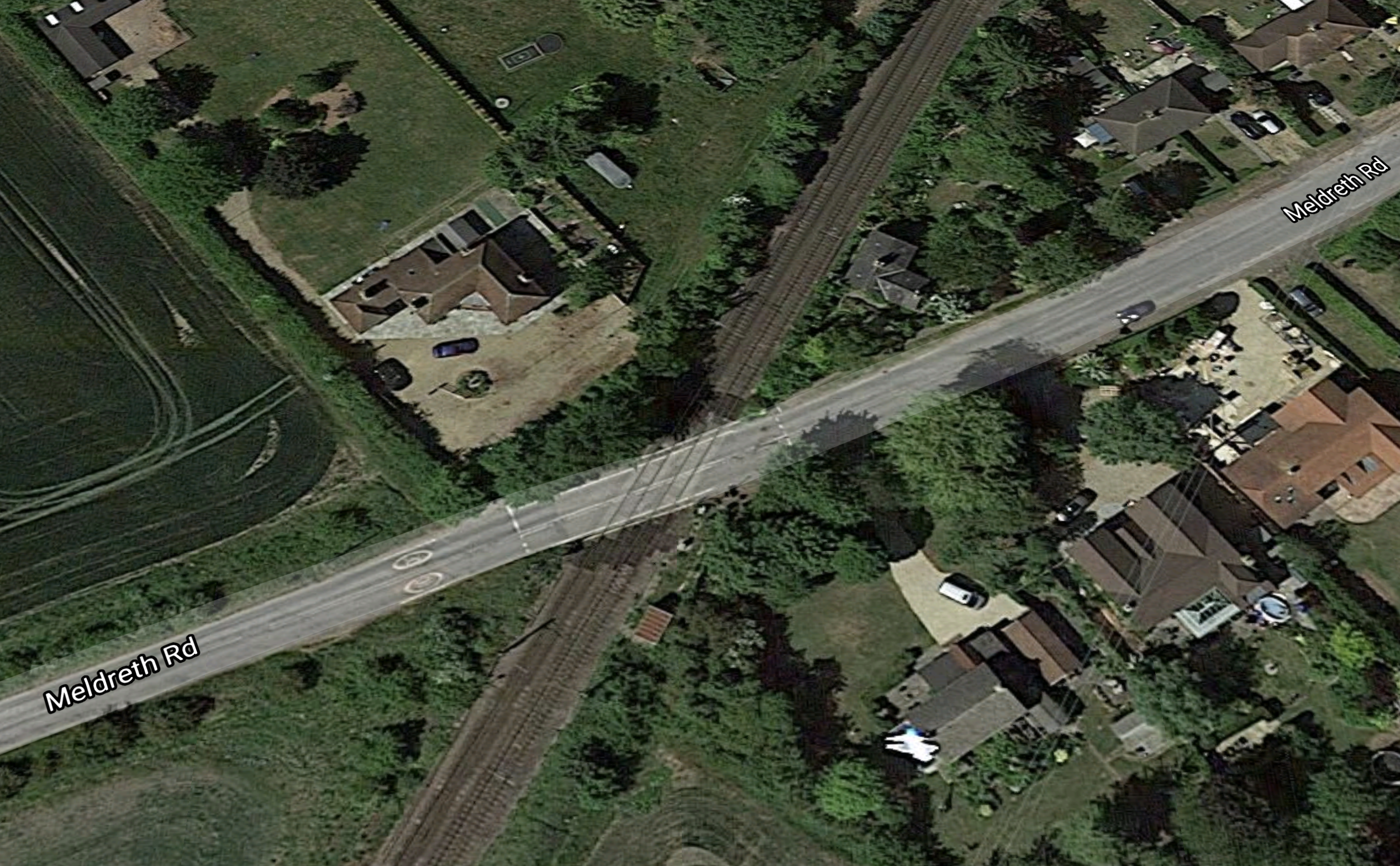
Note.
- Meldreth Road is the A10 between Cambridge and Royston.
- The double-track rail is the Cambridge Line between Cambridge and the East Coast Main Line.
- The line has a maximum speed of 90 mph.
- In every hour there are up to 10-12 passenger trains per hour (tph) through the level crossing.
- There are perhaps ten other trains per day, or less than one tph.
The ABC Railway Guide gives a line speed of 90 mph and adds these risk factors.
- Sun Glare
- Frequent Trains
It is very much a classic case of a busy railway crossing a busy road.
I also think that Network Rail has another problem here.
Pressure from train operators and passengers, could lead to more and faster trains through this level crossing.
In my view, the best solution to that problem would be to drop the railway into a cutting and put the road on a bridge over the top.
But this would be a very expensive and disruptive solution, which might mean that the road and/or railway were to be closed for several months.
The only other solution would be to run all trains between Royston and Cambridge under the control of digital signalling and Automatic Train Operation.
Trains would be timed so, that trains in opposite directions crossed on the level crossing, when the full barriers were down to stop traffic.
If this could be done, it could have various effects.
- This would halve the number of level crossing closures in every hour.
- The timekeeping might even impress drivers.
- It might even train drivers to expect two trains, so if one was a minute or so late, they might be more prepared to wait.
This technique would give whole new meaning to a double cross.
This page on the My Councillor web site, gives details of opposition to the project by Councillor Susan van der Ven.
Six Mile Bottom Level Crossing
This Google Map shows the Six Mile Bottom level crossing.
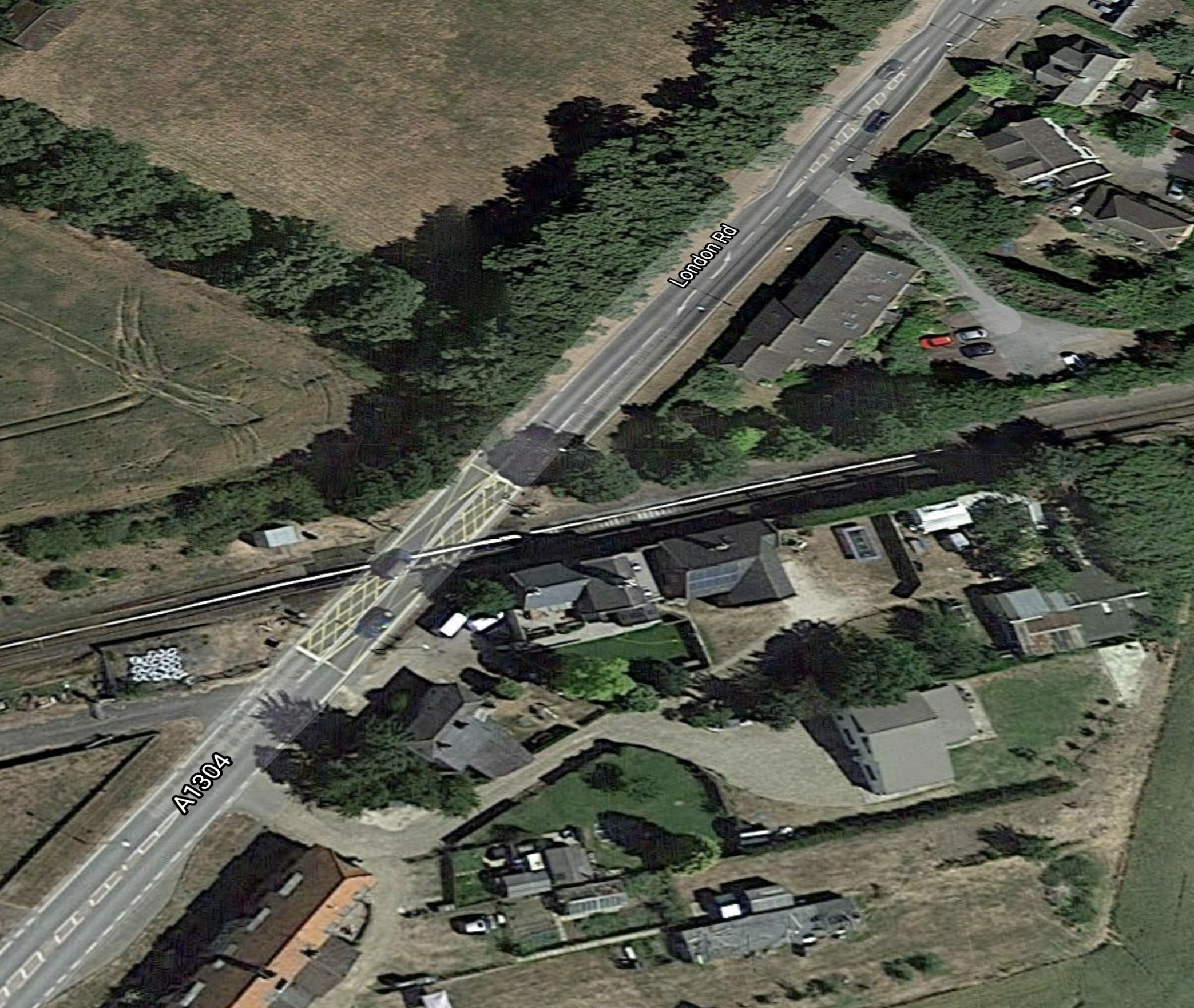
Note.
- The road is the A1304 which is the main link between Newmarket and the South.
- The road can get very busy, when there is a big race meeting.
- The rail track is only single track.
- The line has a maximum speed of up to 75 mph.
- In every hour there are no more than one passenger tph in both directions.
- There are some occasional freight trains over the crossing.
The ABC Railway Guide gives a line speed of 60 mph and adds these risk factors.
- Large Numbers Of Users
- Sun Glare
I used to drive across this level crossing regularly, when I lived in the area and the trouble is that it is on a straight road, that encourages high speed.
Legend has it, that this was one of public roads used by Vincent to test their high performance motorcycles.
In the time I lived near the crossing, I can remember a serious accident between a car and a train, at the crossing.
It would appear that a partial solution has been applied.
This video shows how much brighter LED lights have been fitted to the crossing.
Let’s hope this encourages drivers to slow down, when the crossing is closed.
How many other level crossings would be improved with bright LED lights like these?
Dullingham Level Crossing
This Google Map shows the Dullingham level crossing.
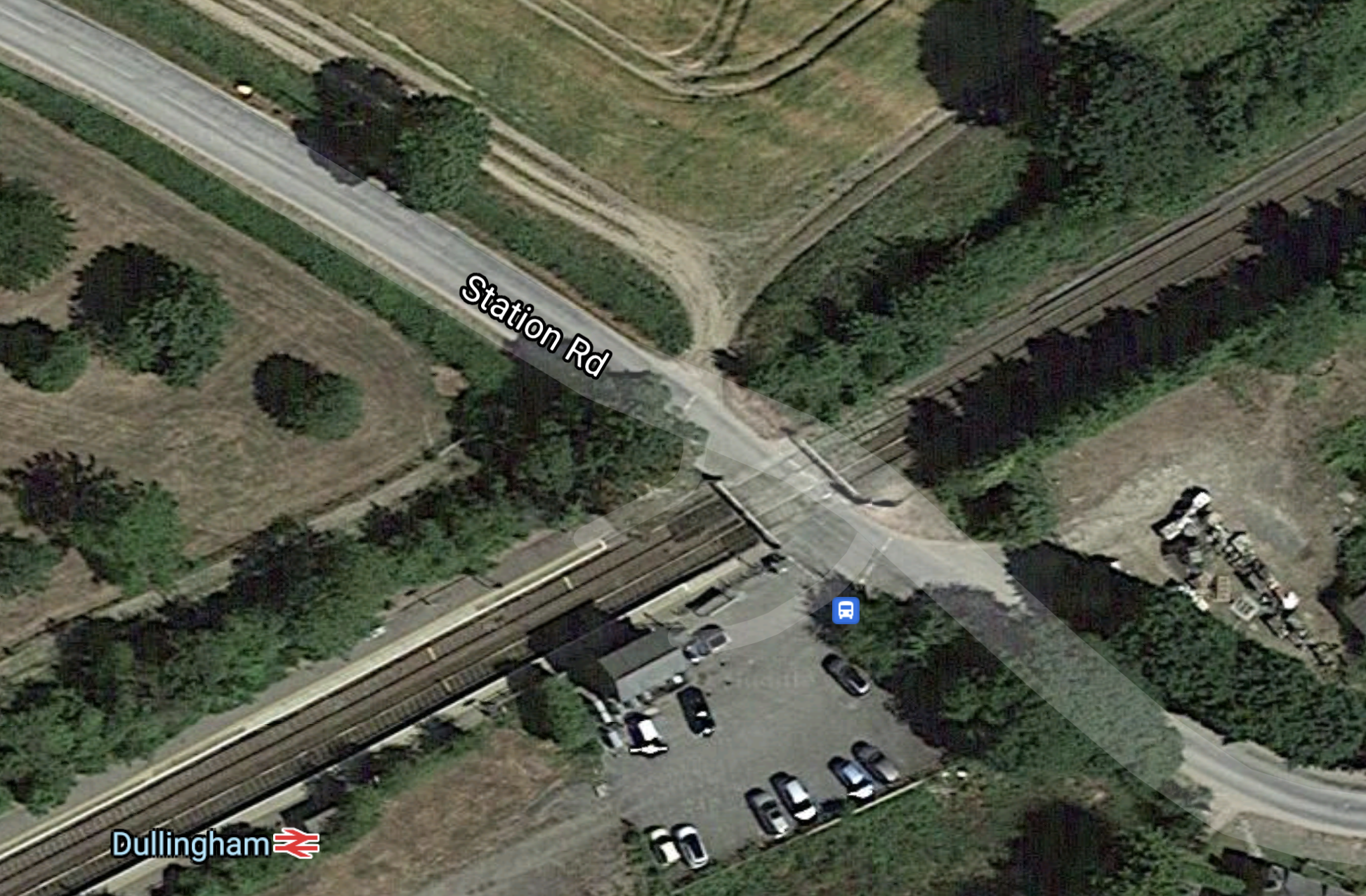
Note.
- The current barriers are operated manually by the signalman in Dullingham signal box.
- The road is a local road and the small amount of traffic could probably be easily handled by an automatic crossing with full barriers.
- The rail line is the same at that at Six Mile Bottom, but is double-track.
The ABC Railway Guide gives a line speed of 60 mph and adds these risk factors.
- Poor Visibility for Approaching Road Vehicles
- Crossing is Near a Station
- Crossing Approach
- Sun Glare
From my local experience, I suspect that an automatic crossing with full barriers might even cause less delay to road traffic.
Milton Fen Level Crossing
This Google Map shows the Milton Fen level crossing.
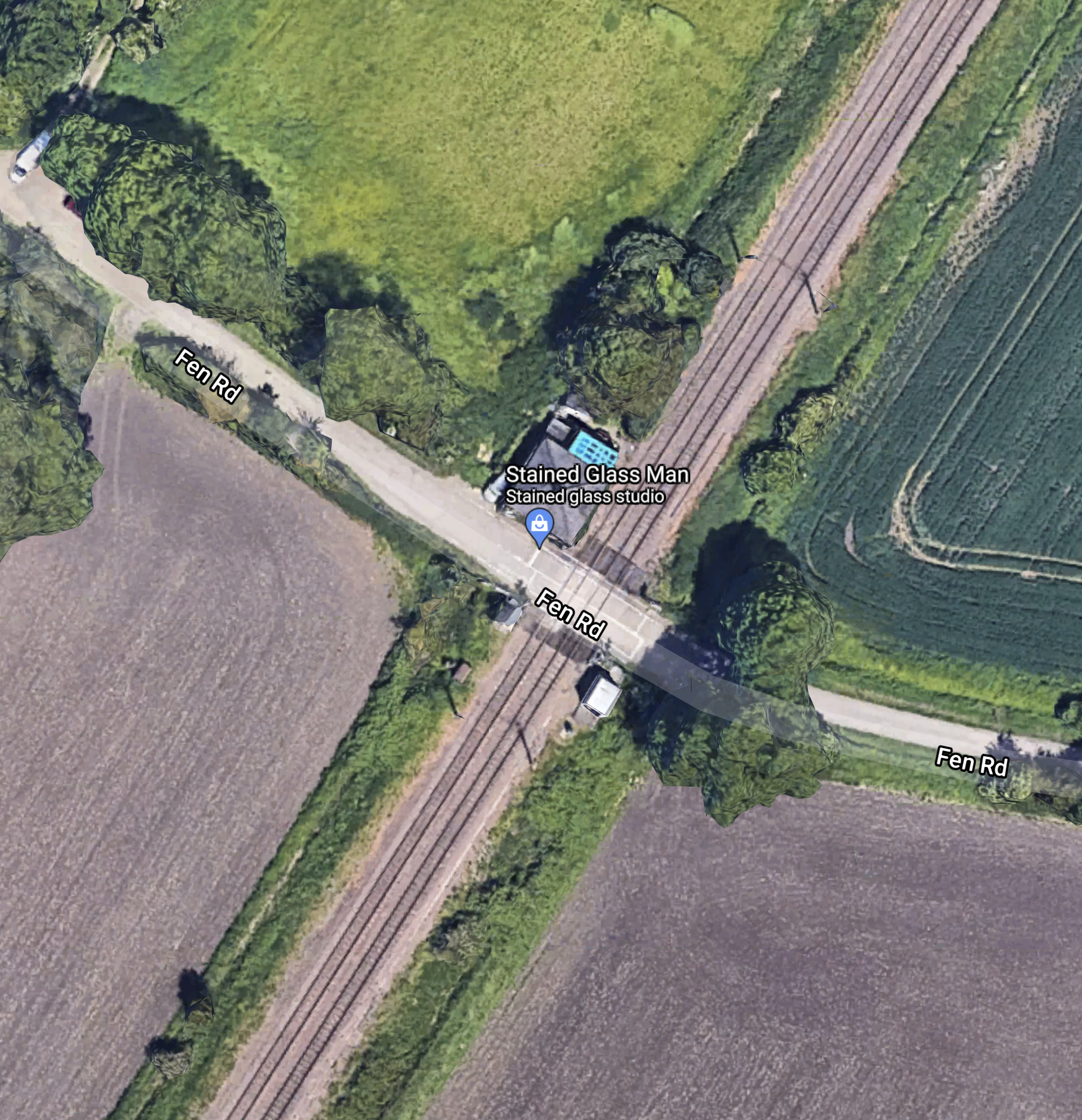
Note.
- The road is a local road and the small amount of traffic could probably be easily handled by an automatic crossing with full barriers.
- The railway is the Fen Line between Cambridge and Ely.
- It looks like there are three passenger tph and the occasional freight trains through this crossing.
- The line speed of the rail line is 75 mph.
The ABC Railway Guide gives a line speed of 75 mph and adds these risk factors.
- Sun Glare
- Frequent Trains
It should also be noted that I can find reports of serious accidents and deaths on this crossing.
It looks to me, that an automatic crossing with full barriers could work well on this level crossing.
Waterbeach Level Crossing
This Google Map shows the Waterbeach level crossing.
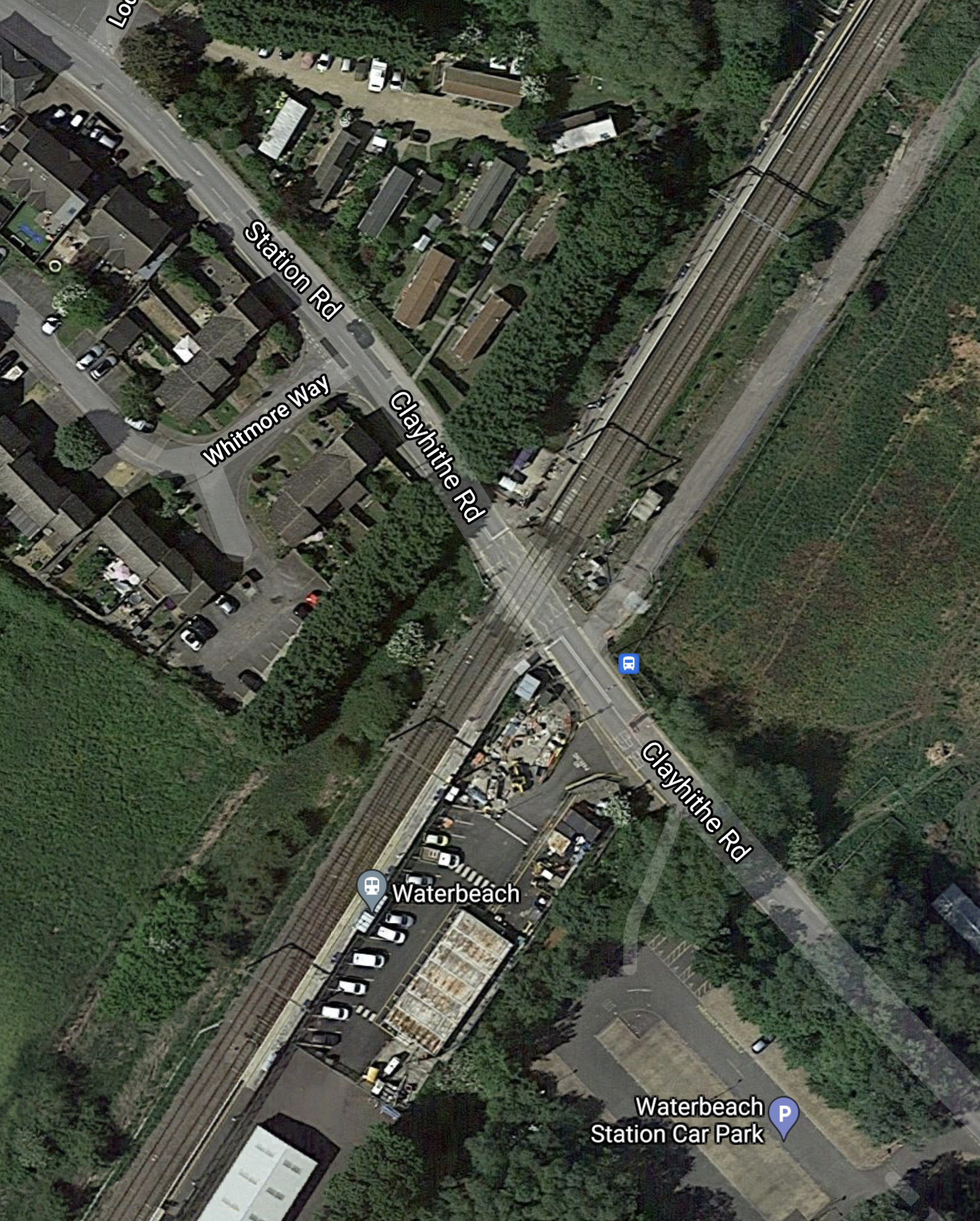
Note.
- The road is a local road, but could the traffic be easily handled by an automatic crossing with full barriers?
- The railway is the Fen Line between Cambridge and Ely.
- It looks like there are three passenger tph and the occasional freight trains through this crossing.
- The line speed of the rail line is 75 mph.
- Waterbeach station is split with one platform either side of the level crossing, which is used by passengers to cross the line.
The ABC Railway Guide gives a line speed of 75 mph and adds these risk factors.
- Poor Visibility for Approaching Road Vehicles
- Crossing is Near a Station
- Crossing Approach
- Large Numbers of Users
- Blocking Back
- Frequent Trains
It should also be noted that Network Rail rate this crossing as high risk.
There is probably a long-term solution for this level crossing
Under Future Plans in the Wikipedia entry for Waterbeach station, this is said.
Plans to develop a New Town of 8,000 to 9,000 homes on the former Waterbeach Barracks site have been outlined by South Cambridgeshire District Council. As part of the proposal, there are plans to relocate the station to a new site and extend the platforms to accommodate 12 car trains.
Surely, a well-designed transport network to serve all these houses would see the level crossing closed and a new station built at a convenient location.
Dimmocks Cote Level Crossing
This Google Map shows the Dimmocks Cote level crossing.

Note.
- The road is the A1123, so could the traffic be easily handled by an automatic crossing with full barriers?
- The railway is the Fen Line between Cambridge and Ely.
- It looks like there are three passenger tph and the occasional freight trains through this crossing.
- The line speed of the rail line is 75 mph.
The ABC Railway Guide gives a line speed of 75 mph and adds these risk factors.
- Infrequent Trains
- Deliberate Misuse or User Error
It should also be noted that Network Rail rate this crossing as high risk.
Croxton Level Crossing
This Google Map shows the Croxton level crossing.
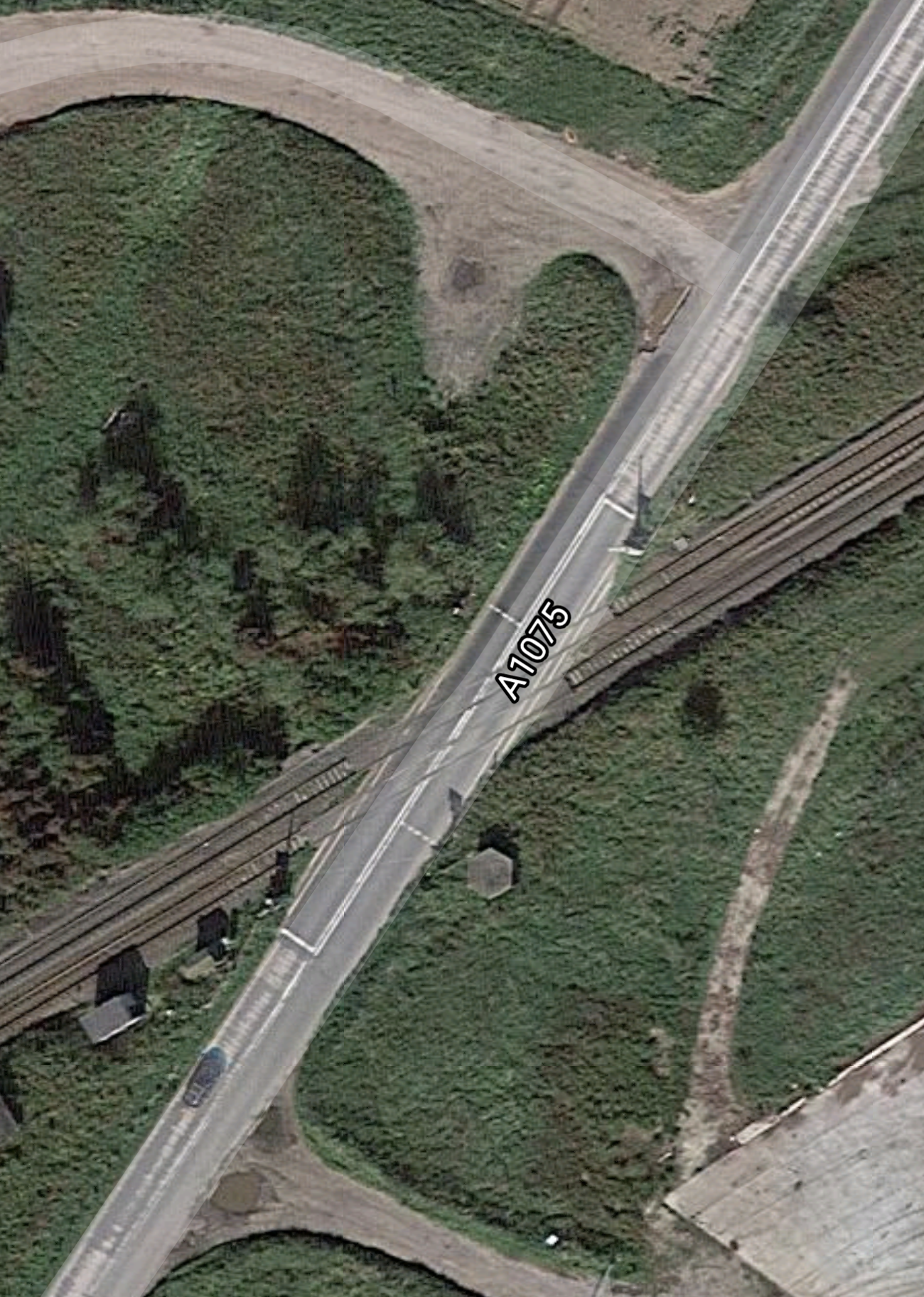
Note.
- The road is the A1075, so could the traffic be easily handled by an automatic crossing with full barriers?
- The railway is the Breckland Line between Norwich and Ely.
- It looks like there are two passenger tph and the occasional freight trains through this crossing.
- The line speed of the rail line is 75-90 mph.
It should also be noted that Network Rail rate this crossing as high risk.
The ABC Railway Guide gives the line speed as 40 mph and adds these risk factors.
- Poor Visibility for Approaching Road Vehicles
- Crossing Approach
- Large Numbers of Users
- Sun Glare
- Deliberate Misuse or User Error
This crossing sounds like it could be an accident waiting to happen.
Although, I would feel that installing similar lights to those at Six Mile Bottom could be a big help!
Summarising The Proposed Level Crossing Upgrades
I can split these by topic.
Full Barrier installation
It would appear that all barriers can probably be replaced with the latest full barrier technology.
Improved Lighting
The video from Six Mile Bottom was impressive and probably shows how fairly simple improvements can increase safety.
Local Opposition
On this brief summary of all the level crossings, that Network Rail propose to upgrade to automatic crossing with full barriers, it would appear that only the Meldreth Road crossing is seeing opposition from local interests. Although, I do have doubts, that the development of all those houses at Waterbeach will ever happen because of local opposition.
Major Construction Works
It would appear that only two upgrades could require major works.
Meldreth Road – But only if it was felt that a substantial solution was needed.
Waterbeach – If a new station were to be built to cater for future housing development.
The others would only need barrier replacement and other appropriate improvements.
I would also feel that most of the work could be carried out without major disruption to train services or road traffic.
Modern Digital Signalling With Automatic Train Operation
Modern digital signalling with in-cab displays and a measure of automatic train operation offers three main gains to train operators and passengers.
- More services can be squeezed safely into the existing network, without building controversial and expensive new lines.
- Trains can run at higher average speeds.
- Trains can run to timetable easier.
It should be noted that South of Doncaster the East Coast Main Line is being converted to this type of signalling and this will allow the Azumas and other trains to run at 140 mph, where the track allows, to speed up services between King’s Cross and the North.
Services Between King’s Cross and Cambridge
South of Hitchin, some services between King’s Cross and Cambridge share the lines with the expresses to and from the North.
For that reason the 100 mph Class 700 trains and the 110 mph Class 387 trains, would be out of their speed range like Morris Minors on the M1.
In 2018, I wrote Call For ETCS On King’s Lynn Route, based on an article in Rail Magazine, which called for 125 mph trains to Cambridge and King’s Lynn, so they wouldn’t slow the expresses.
It does appear to me that the digital signalling part of the C3R Project will enable 125 mph trains to run between King’s Cross and King’s Lynn via Cambridge.
- Oxford has 125 mph non-stop local trains to London, so why not Cambridge?
- A nine-car Class 800 train has a similar seating capacity to a twelve-car Class 700 train, but the seats are better and the train can travel at 125 mph.
- These trains would significantly reduce the fifty minute journey time between King’s Cross and Cambridge.
This would be a real Cambridge Express.
Developing Services Around Cambridge
Just as full digital signalling is helping London to expand its railways with Crossrail and Thameslink. I believe that the C3R Project will help to squeeze more trains through Cambridge.
In a few years time, I believe Cambridge will have a core route consisting of Cambridge North, Cambridge and Cambridge South stations with much expanded services to Bury St. Edmunds, Ely, Ipswich, Kings Lynn, London, Norwich, Peterborough, Stansted Airport, Stevenage and Wisbech.
Ten years ago, I was told by one of Cambridge’s eminent thinkers, that Cambridge needed the connectivity to bring in the people that the economy needs.
The pandemic has changed things, but not Cambridge’s desire to create more businesses expand.
A Connection To Peterborough
Peterborough is the other half of Cambridgeshire’s area and shares the Cambridgeshire & Peterborough Combined Authority with Cambridge.
Peterborough station is well connected to the North and Midlands.
- LNER’s connect the station to most stations on the East Coast Main Line.
- It has hourly services to Birmingham, Leicester, Liverpool, Manchester and Nottingham.
But the connection between Cambridge and Peterborough is not of the quality and frequency that the two cities need.
A Connection To Stevenage
Stevenage is an important manufacturing and technology centre, with a strong presence in aerospace.
Stevenage station is well connected to the North and South.
- LNER and other services connect the station to most stations South of Leeds and York on the East Coast Main Line.
- The new service from East Coast Trains will provide a direct service to Newcastle and Edinburgh with a frequency of seven trains per day (tpd).
- It has a direct suburban line to King’s Cross.
- It has a direct suburban line to Moorgate.
Stevenage seems to be acquiring more long distance services as time progresses.
But the connection between Cambridge and Stevenage is currently poor, at just two tph, which stop everywhere.
Improve the connection between Cambridge and Stevenage and have more calls of services to and from the North at Stevenage and Cambridge and \stevenage would benefit.
Currently, the fast Cambridge services take 27 minutes to do the 30.3 miles between Cambridge and Stevenage, which is an average speed of 67.3 mph.
A Connection To Wisbech
Progress seems to be being made on a service between Cambridge and Wisbech, which I wrote about in Hope For Wisbech Line Revival.
This was the conclusion of that post.
I very much feel that the Cambridgeshire & Peterborough Combined Authority and Network Rail can create a very useful branch line to Wisbech.
There is not much infrastructure to be built and upgraded.
-
- A new station will be built at Wisbech, which I feel is likely to be a Park-and-Ride on the A47.
- A bay platform will probably need to be reopened at March station.
- March station will need to be step-free.
- There may be a station and a passing loop at Coldham.
- Track and signalling will need to be replaced.
But the big project needed is the remodelling at Ely, which will have to be done to increase capacity, through the bottleneck.
Greater Anglia’s Class 755 trains would appear to be ideal for the branch and could operate on battery power.
This connection could be a very valuable connection.
It certainly looks like there are better plans to connect Wisbech to Cambridge, than there are to improve the connections between Cambridge and Peterborough and Stevenage.
Conclusion
The C3R Project will give the Cambridge compatible signalling with the East Coast Main Line and I feel increasingly Cambridge could be treated as a series of stations just off the East Coast Main Line and we might see some services develop, that seem strange to today’s travellers.
A simple example could be a Regional Metro running between Peterborough and Stevenage.
- It would call at March, Ely, Waterbeach, Cambridge North, Cambridge, Cambridge South, Royston and Hitchin.
- It would run at a frequency upwards of two tph.
- It could even connect to Lincoln.
Other North-South services through Cambridge like Thameslink and Norwich and Stansted would combine to give perhaps six tph through the three main Cambridge stations.
The C3R Project will open up lots of possibilities.
Should All High Speed Long Distance Services To Newcastle Extend To Edinburgh?
Look at this Google Map of Newcastle station.
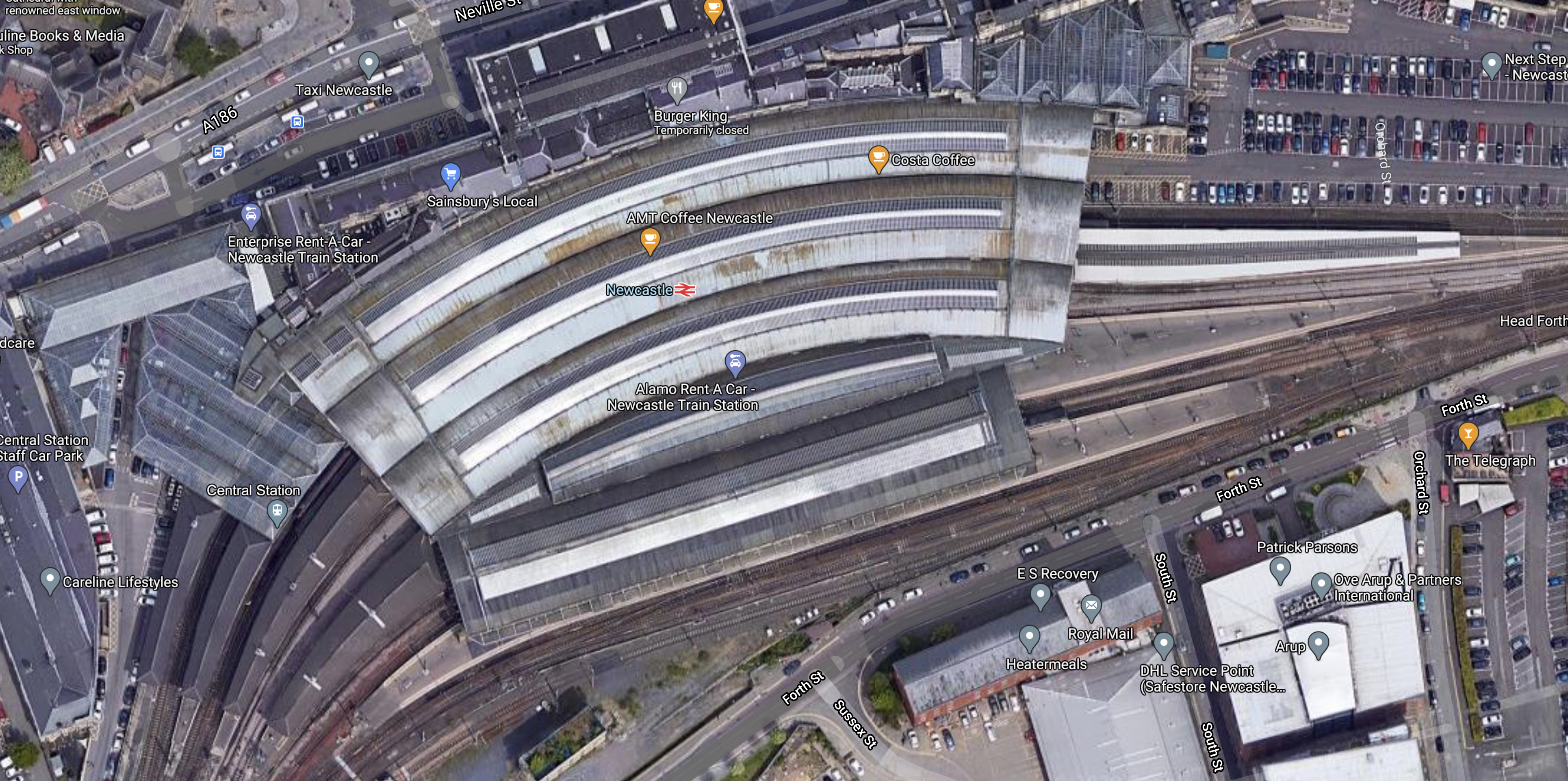
Note.
- It is built on a curve.
- It is on a cramped site.
- Platforms are numbered from 1 at the top to 8 at the bottom.
- Platform 2 seems to be used for all express services going North.
- Platforms 3 and 4 seem to be used for all express services going South.
- Not all platforms would appear to be long enough for nine-car Class 80x trains.
I am certain, that any nation with a sophisticated railway system wouldn’t build a station on a curve with no avoiding lines like Newcastle these days.
Network Rail have a plan to sort out Darlington station and I’m sure they’d like to sort out Newcastle as well!
Current Long Distance Trains Through And To Newcastle
These include.
- CrossCountry – Plymouth and Edinburgh or Glasgow via Alnmouth, Berwick-upon-Tweed and Dunbar.
- CrossCountry – Southampton Central or Reading and Newcastle.
- LNER – King’s Cross and Edinburgh via Berwick-upon-Tweed
- LNER – King’s Cross and Edinburgh via Alnmouth
- TransPennine Express – Liverpool Lime Street and Edinburgh via Morpeth
- TransPennine Express – Manchester Airport and Newcastle.
Note.
- All have a frequency of one train per hour (tph)
- All trains call at Newcastle.
- Two tph terminate at Newcastle and four tph terminate at Edinburgh or beyond.
There is also a new and Edinburgh service from East Coast Trains, that will start this year.
- It will run five trains per day (tpd).
- It will call at Newcastle.
- It will stop at Morpeth between Newcastle and Edinburgh.
There will also be High Speed Two services to Newcastle in a few years.
- There will be two tph between Euston and Newcastle
- There will be one tph between Birmingham Curzon Street and Newcastle.
Note.
- All services will be run by 200 metre long High Speed Two Classic-Compatible trains.
- There is no High Speed Two service to Newcastle, that calls at Leeds.
- Only one High Speed Two service to Newcastle calls at East Midlands Hub.
I suspect High Speed Two services need a dedicated platform at Newcastle, especially, if another High Speed Two service were to be added.
Extra Paths For LNER
In the December 2020 Edition of Modern Railways, there is an article, which is entitled LNER Seeks 10 More Bi-Modes.
This is the last paragraph.
Infrastructure upgrades are due to prompt a timetable recast in May 2022 (delayed from December 2021), from which point LNER will operate 6.5 trains per hour out of King’s Cross, compared to five today. As an interim measure LNER is retaining seven rakes of Mk. 4 coaches hauled by 12 Class 91 locomotives to supplement the Azuma fleet and support its timetable ambitions until new trains are delivered.
There would certainly appear to be a path available if LNER wanted to increase the frequency of trains between King’s Cross and Edinburgh from the current two trains per hour (tph) to three.
I laid out how I would use this third path to Edinburgh in A New Elizabethan.
The Possible Long Distance Trains Through And To Newcastle
These trains can be summed up as follows.
- 1 tph – CrossCountry – Plymouth and Edinburgh or Glasgow via Alnmouth, Berwick-upon-Tweed and Dunbar.
- 1 tph – CrossCountry – Southampton Central or Reading and Newcastle.
- 1 tph – LNER – King’s Cross and Edinburgh via Berwick-upon-Tweed
- 1 tph – LNER – King’s Cross and Edinburgh via Alnmouth
- 1 tph – TransPennine Express – Liverpool Lime Street and Edinburgh via Morpeth
- 1 tph – TransPennine Express – Manchester Airport and Newcastle.
- 5 tpd – East Coast Trains – King’s Cross and Edinburgh via Morpeth
- 2 tph – High Speed Two – Euston and Newcastle
- 1 tph – High Speed Two – Birmingham Curzon Street and Newcastle
- 1 tph – LNER – King’s Cross and Edinburgh – Extra service
This is ten tph and the five tpd of East Coast Trains.
Capacity Between Newcastle And Edinburgh
I wonder what capacity and linespeed would be possible on the East Coast Main Line between Newcastle and Edinburgh.
There are a few freight trains and some suburban electrics at the Northern end, but I suspect that the route could handle ten tph with some upgrades.
Edinburgh As A Terminal
Consider.
- Not all trains terminate at Edinburgh, but several tpd go through to places like Aberdeen, Glasgow, Inverness and Stirling.
- Edinburgh has several shorter East-facing bay platforms, that can take five-car Class 802 trains.
- Edinburgh has undergone a lot of reconstruction in recent years, so that it can turn more trains.
I very much feel that Edinburgh could handle, at least ten tph from the South.
Conclusion
I think it would be possible to extend all trains to Newcastle to at least Edinburgh.
Would it increase passenger capacity between the two capitals?
It would certainly avoid the difficult and expensive rebuilding at Newcastle station.
 The Anonymous Widower