Hull Issues New Plea For Electrification
The title of this post, is the same as that of this article on Rail Magazine.
This is the introductory paragraph.
Residents and businesses in Hull are being urged to support electrification of the railway to Selby and Sheffield.
This paragraph is about the difficulty of electrifying the route.
“Unlike elsewhere on the trans-Pennine routes, work here can start straightaway and would be a quick win. Our plans involve few extra land purchases, no tunnel widening, and no re-routing,” said Daren Hale, Hull City Council and Hull’s representative on the Transport for the North board.
Services to Hull station are as follows.
- Hull Trains – London Kings Cross and Hull via Selby, Howden and Brough.
- Hull Trains – Beverley and Hull via Cuttingham
- LNER – London Kings Cross and Hull via Selby and Brough
- Northern Trains – Halifax and Hull via Bradford Interchange, New Pudsey, Bramley, Leeds, Cross Gates, Garforth, East Garforth, Micklefield, South Milford, Selby and Brough
- Northern Trains – Sheffield and Hull via Meadowhall, Rotherham Central, Swinton, Mexborough, Conisbrough, Doncaster, Kirk Sandall, Hatfield & Stainforth, Thorne North, Goole, Saltmarshe, Gilberdyke, Broomfleet, Brough, Ferriby and Hessle,
- Northern Trains – Bridlington and Hull via Nafferton, Driffield, Hutton Cranswick, Arram, Beverley and Cottingham.
- Northern Trains – Scarborough and Hull via Seamer, Filey, Hunmanby, Bempton, Bridlington, Nafferton, Driffield, Hutton Cranswick, Arram, Beverley and Cottingham.
- Northern Trains – York and Hull via Selby, Howden, Gilberdyke and Brough.
- TransPennine Express – Manchester Piccadilly and Hull via Stalybridge, Huddersfield, Leeds, Selby, Brough
Note.
- Some services are joined back-to-back with a reverse at Hull station.
- I have simplified some of the lists of intermediate stations.
- Services run by Hull Trains, LNER or TransPennine Express use bi-mode Class 800 or Class 802 trains.
- All routes to Hull station and the platforms are not electrified.
Trains approach Hull by three routes.
- Selby and Brough
- Goole and Brough
- Beverley and Cottingham
Could these three routes be electrified?
I have just flown my helicopter along all of them.
I’ve also had a lift in the cab of a Class 185 train between Hull and Leeds, courtesy of Don Coffey.
Hull And Selby via Brough
There is the following infrastructure.
- Several major road overbridges, which all seem to have been built with clearance for overhead wires.
- There are also some lower stone arch bridges, which may need to be given increased clearance.
- No tunnels
- The historic Selby Swing Bridge.
- Four farm crossings.
- Fourteen level crossings.
Hull And Goole via Brough
There is the following infrastructure.
- Several major road overbridges, which all seem to have been built with clearance for overhead wires.
- No tunnels
- A swing bridge over the River Ouse.
- A couple of farm crossings
- Six level crossings
Hull And Beverley via Cottingham
There is the following infrastructure.
- A couple of major road overbridges, which all seem to have been built with clearance for overhead wires.
- No tunnels
- A couple of farm crossings
- Six level crossings
All of the routes would appear to be.
- At least double track.
- Not in deep cuttings.
- Mainly in open countryside.
- Built with lots of level crossings
I feel that compared to some routes, they would be easy to electrify, but could cause a lot of disruption, whilst the level crossings and the two swing bridges were electrified.
Speeding Up Services To And From Hull
What Are The Desired Timings?
The Rail Magazine article says this about the desired timings.
Should the plans be approved, it is expected that Hull-Leeds journey times would be cut from 57 minutes to 38, while Hull-Sheffield would drop from 86 minutes to 50 minutes.
These timings are in line with those given in this report on the Transport for the North web site, which is entitled At A Glance – Northern Powerhouse Rail,
The frequency of both routes is given in the report as two trains per hour (tph)
The Performance Of An Electric Class 802 Train
As Hull Trains, LNER and TransPennine Express will be using these trains or similar to serve Hull, I will use these trains for my calculations.
The maximum speed of a Class 802 train is 125 mph or 140 mph with digital in-cab signalling.
This page on the Eversholt Rail web site, has a data sheet for a Class 802 train.
The data sheet shows the following for a five-car Class 802 train.
It can accelerate to 100 mph and then decelerate to a stop in 200 seconds in electric mode.
The time to 125 mph and back is 350 seconds.
Thoughts On Hull And Leeds
Consider.
- The Hull and Leeds route is 52 miles long, is timed for a 75 mph train and has an average speed of 55 mph
- There are three intermediate stops for fast services, which means that in a Hull and Leeds journey, there are four accelerate-decelerate cycles.
- A 38 minute journey between Hull and Leeds would be an average speed of 82 mph
- A train travelling at 100 mph would take 31 minutes to go between Hull and Leeds.
- A train travelling at 125 mph would take 25 minutes to go between Hull and Leeds.
I also have one question.
What is the speed limit on the Selby Swing Bridge?
I have just been told it’s 25 mph. As it is close to Selby station, it could probably be considered that the stop at Selby is a little bit longer.
These could be rough timings.
- A train travelling at 100 mph would take 31 minutes to go between Hull and Leeds plus what it takes for the four stops. at 200 seconds a stop, which adds up to 43 minutes.
- A train travelling at 125 mph would take 25 minutes to go between Hull and Leeds plus what it takes for the four stops. at 350 seconds a stop, which adds up to 48 minutes.
Note how the longer stopping time of the faster train slows the service.
I think it would be possible to attain the required 38 minute journey, running at 100 mph.
Thoughts On Hull And Sheffield
Consider.
- The Hull and Sheffield route is 61 miles long, is timed for a 90 mph train and has an average speed of 43 mph
- There are five intermediate stops, which means that in a Hull and Sheffield journey, there are six accelerate-decelerate cycles.
- A 50 minute journey between Hull and Leeds would be an average speed of 73 mph.
- A train travelling at 100 mph would take 36 minutes to go between Hull and Sheffield.
- A train travelling at 125 mph would take 29 minutes to go between Hull and Sheffield.
I also have one question.
What is the speed limit on the swing bridge over the River Ouse?
As there is no nearby station, I suspect it counts as another stop, if it only has a 25 mph limit.
These could be rough timings.
- A train travelling at 100 mph would take 36 minutes to go between Hull and Sheffield plus what it takes for the six stops. at 200 seconds a stop, which adds up to 56 minutes.
- A train travelling at 125 mph would take 29 minutes to go between Hull and Sheffield plus what it takes for the six stops. at 350 seconds a stop, which adds up to 64 minutes.
Note how the longer stopping time of the faster train slows the service.
I think it would be possible to attain the required 50 minute journey, running at 100 mph.
Conclusions From My Rough Timings
Looking at my rough timings, I can conclude the following.
- The trains will have to have the ability to make a station stop in a very short time. Trains using electric traction are faster at station stops.
- The trains will need to cruise at a minimum of 100 mph on both routes.
- The operating speed of both routes must be at least 100 mph, with perhaps 125 mph allowed in places.
- I feel the Hull and Leeds route is the more difficult.
I also think, that having a line running at 100 mph or over, with the large number of level crossings, there are at present, would not be a good idea.
What Does Hull Want?
Hull wants what Northern Powerhouse Rail is promising.
- Two tph between Hull and Leeds in 38 minutes and Hull and Sheffield in 50 minutes.
They’d probably also like faster electric services between Hull and Bridlington, London Kings Cross, Manchester, Scarborough and York.
When Do They Want It?
They want it now!
Is There An Alternative Solution, That Can Be Delivered Early?
This may seem to be the impossible, as electrifying between Hull and Leeds and Hull and Sheffield is not an instant project, although full electrification could be an ultimate objective.
Consider.
- Hull and Brough are 10.5 miles apart.
- Brough and Leeds are 41 miles apart.
- Brough and Doncaster are 30 miles apart and Doncaster and Sheffield are 20 miles apart.
- Brough and Temple Hirst Junction are 26 miles apart.
- Brough and York are 42 miles apart.
- Hull and Beverley are 8 miles apart.
- Beverley and Bridlington are 23 miles apart.
- Beverley and Seamer are 42 miles apart.
Note that Doncaster, Leeds and Temple Hirst Junction are all electrified.
Hitachi’s Regional Battery Train
Hitachi have just launched the Regional Battery Train, which is described in this Hitachi infograpic.

It has a range of 56 miles and an operating speed of 100 mph.
Class 800 and Class 802 trains could be converted into Regional Battery Trains.
- The three diesel engines would be exchanged for battery packs.
- The trains would still be capable of 125 mph on fully-electrified routes like the East Coast Main Line.
- They would be capable of 100 mph on routes like the 100 mph routes from Hull.
- The trains would have full regenerative braking to batteries, which saves energy.
- Below 125 mph, their acceleration and deceleration on battery power would probably be the same as when using electrification. It could even be better due to the simplicity and low impedance of batteries.
But they would need some means of charging the batteries at Hull.
A Start To Electrification
If the ultimate aim is to electrify all the lines, then why not start by electrifying.
- Hull station.
- Hull and Brough
- Hull and Beverley
It would only be 18.5 miles of electrification and it doesn’t go anywhere near the swing bridges or about six level crossings.
Battery Electric Services From Hull
I will now look at how the various services could operate.
Note in the following.
- When I say Regional Battery Train, I mean Hitachi’s proposed train or any other battery electric train with a similar performance.
- I have tried to arrange all power changeovers in a station.
- Pantograph operation can happen at line-speed or when the train is stationary.
I have assumed a range of 56 miles on a full battery and an operating speed of 100 mph on a track that allows it.
Hull And London Kings Cross
The legs of the service are as follows.
- Hull and Brough – 10.5 miles – Electrified
- Brough and Temple Hirst Junction – 26 miles – Not Electrified
- Temple Hirst Junction and London Kings Cross – 169 miles – Electrified
Note.
- Hull and Brough takes about 11 minutes, so added to the time spent in Hull station, this must be enough time to fully-charge the batteries.
- Regional Battery Trains will be able to do 56 miles on a full battery so 26 miles should be easy.
- One changeover between power sources will be done in Brough station.
- The other changeover will be done at line speed at Temple Hirst Junction, as it is now!
Hull Trains and LNER would be able to offer an all-electric service to London.
A few minutes might be saved, but they would be small compared to time savings, that will be made because of the introduction of full ERTMS in-cab signalling South of Doncaster, which will allow 140 mph running.
Hull And Leeds
The legs of the service are as follows.
- Hull and Brough – 10.5 miles – Electrified
- Brough and Leeds – 41 miles – Not Electrified.
Note.
- Hull and Brough takes about 11 minutes, so added to the time spent in Hull station, this must be enough time to fully-charge the batteries.
- Regional Battery Trains will be able to do 56 miles on a full battery so 41 miles should be easy.
- One changeover between power sources will be done in Brough station, with the other in Leeds station.
If Leeds and Huddersfield were to be electrified, TransPennine Express will be able to run an all-electric service between Manchester and Hull, using battery power in the gaps.
Hull And Sheffield
The legs of the service are as follows.
- Hull and Brough – 10.5 miles – Electrified
- Brough and Doncaster – 30 miles – Not Electrified
- Doncaster and Sheffield – 20 miles – Not Electrified
Note.
- Hull and Brough takes about 11 minutes, so added to the time spent in Hull station, this must be enough time to fully-charge the battery.
- Regional Battery Trains will be able to do 56 miles on a full battery so 30 miles should be easy.
- Trains would charge using the electrification at Doncaster.
- Doncaster and Sheffield both ways should be possible after a full charge at Doncaster station.
- One changeover between power sources will be done in Brough station, with the others in Doncaster station.
An easier alternative for the Doncaster and Sheffield part of the route, might be to electrify between the two stations.
Hull And York
The legs of the service are as follows.
- Hull and Brough – 10.5 miles – Electrified
- Brough and York- 42 miles – Not electrified
Note.
- Hull and Brough takes about 11 minutes, so added to the time spent in Hull station, this must be enough time to fully-charge the batteries.
- Regional Battery Trains will be able to do 56 miles on a full battery so 42 miles should be easy.
- One changeover between power sources will be done in Brough station, with the other in York station.
- Trains would be fully charged for the return in York station.
This journey will also be effected by the York to Church Fenton Improvement Scheme, which is described on this page on the Network Rail web site. According to the web page this involves.
- Replace old track, sleepers, and ballast (The stones which support the track)
- Install new signalling gantries, lights, and cabling
- Fully electrify the route from York to Church Fenton – extending the already electrified railway from York.
There will be another five miles of electrification., which will mean the legs of the Hull and York service will be as follows.
- Hull and Brough – 10.5 miles – Electrified
- Brough and Church Fenton – 31.5 miles – Not Electrified
- Church Fenton and York – 10.5 miles – Electrified
It is a classic route for a battery electric train.
Note.
- Church Fenton and York takes about 19 minutes, so added to the time spent in York station, this must be enough time to fully-charge the batteries.
- There will be a changeover between power sources in Church Fenton station.
This appears to me to be a very sensible addition to the electrification.
If you look at a Leeds and York, after the electrification it will have two legs.
- Leeds and Church Fenton – 13 miles – Not Electrified
- Church Fenton and York – 10.5 miles – Electrified
It is another classic route for a battery electric train.
Hull And Bridlington
The legs of the service are as follows.
- Hull and Beverley – 13 miles – Electrified
- Beverley and Bridlington – 23 miles – Not Electrified
Note.
- Hull and Beverley takes about 13 minutes, so added to the time spent in Hull station, this must be enough time to fully-charge the batteries.
- Regional Battery Trains will be able to do 56 miles on a full battery so 46 miles to Bridlington and back to Beverley, should be possible.
- The changeovers between power sources would be in Beverley station.
If necessary, there is a bay platform at Bridlington, that could be fitted with simple electrification to charge the trains before returning.
Hull And Scarborough
The legs of the service are as follows.
- Hull and Beverley – 13 miles – Electrified
- Beverley and Seamer- 42 miles – Not Electrified
- Seamer and Scarborough – 3 miles – Not Electrified
Note.
- Hull and Beverley takes about 13 minutes, so added to the time spent in Hull station, this must be enough time to fully-charge the batteries.
- Regional Battery Trains will be able to do 56 miles on a full battery so 45 miles to Scarborough should be easy.
- The changeovers between power sources would be in Beverley station.
There would need to be charging at Scarborough, so why not electrify between Scarborough and Seamer?
- Power changeover would be in Seamer station.
- The electrification could also charge battery electric trains running between York and Scarborough.
- Seamer and York are 39 miles apart.
- All Northern Trains and TransPennine Express services appear to stop in Seamer station.
This could be three very useful miles of electrification.
Could This Plan Based On Battery Trains Be Delivered Early?
The project could be divided into sub-projects.
Necessary Electrification
Only these double-track routes would need to electrified.
- Hull and Brough
- Hull and Beverley
- Seamer and Scarborough
- Doncaster and Sheffield might be sensible but optional.
This also install electrification at Hull and Scarborough stations to charge terminating trains.
In total it would be under twenty-five double-track miles of electrification.
Note.
- There are no swing bridges on the routes to be electrified.
- There are no tunnels
- Many of the overbridges appear to be modern with adequate clearance for electrification.
- I don’t suspect that providing adequate power will be difficult.
- Hull and Scarborough are larger stations and I believe a full service can be provided, whilst the stations are being electrified.
It would not be a large and complicated electrification project.
Conversion Of Class 800 And Class 802 Trains To Regional Battery Trains
Whilst the electrification was being installed, the existing Class 800 and Class 802 trains needed by Hull Trains, LNER and TransPennine Express could be converted to Regional Battery Trains, by the replacement of some or all of the diesel engines with battery power-packs.
I suspect LNER or GWR could be the lead customer for Hitachi’s proposed conversion of existing trains.
- Both train companies have routes, where these trains could be deployed without any electrification or charging systems. Think London Kings Cross and Harrogate for LNER and Paddington and Oxford for GWR.
- Both train companies have large fleets of five-car trains, that would be suitable for conversion.
- Both train companies have lots of experience with Hitachi’s trains.
It should be noted that GWR, Hull Trains and TransPennine Express are all part of the same company.
What About Northern Trains?
Northern Trains will need some battery electric trains, if this plan goes ahead, to run routes like.
- Hull and Bridlington – 46 miles
- Hull and Leeds – 41 miles
- Hull and Scarborough – 42 miles
- Hull and Sheffield – 40 miles
- Hull and York – 42 miles
- Scarborough and York – 31.5 miles
- The distances are the lengths of the route without electrification.
I suspect they will need a train with this specification.
- Four cars
- Ability to use 25 KVAC overhead electrification.
- Battery range of perhaps 50 miles.
- 100 mph operating speed.
There are already some possibilities.
- CAF are talking about a four-car battery electric version of the Class 331 train.
- Hitachi have mentioned a battery electric Class 385 train.
- Porterbrook have talked about converting Class 350 trains to battery electric operation.
- Bombardier have talked about battery electric Aventras.
There are also numerous four-car electric trains, that are coming off lease that could be converted to battery electric operation.
When Could The Project Be Completed?
There are three parts to the project.
- Under twenty-five double-track miles of electrification.
- Adding batteries to Class 800 and Class 802 trains.
- Battery electric trains for Northern.
As the sub-projects can be progressed independently, I can see the project being completely by the end of 2024.
Across The Pennines In A Regional Battery Train
By providing the ability to run Class 802 trains on battery power to Hull and Scarborough, the ability to run Regional Battery Trains from Liverpool in the West to Hull, Middlesbrough and Scarborough in the East under electric power, could become possible.
Looking at Liverpool and Scarborough, there are these legs.
- Liverpool Lime Street and Manchester Victoria – 32 miles – Electrified
- Manchester Victoria and Stalybridge – 8 miles – Not Electrified
- Stalybridge and Huddersfield – 18 miles – Not Electrified
- Huddersfield and Leeds – 17 miles – Not Electrified
- Leeds and York – 26 miles – Not Electrified
- York and Scarborough – 42 miles – Not Electrified
Note.
- East of Manchester Victoria, there is electrification in Leeds and York stations, which could charge the train fully if it were in the station for perhaps ten minutes.
- Currently, stops at Leeds and York are around 4-5 minutes.
- Manchester Victoria and Stalybridge is being electrified.
- In this post, I have suggested that between Seamer and Scarborough should be electrified to charge the trains.
- I have also noted that between Church Fenton and York is being fully electrified.
This could mean power across the Pennines between Liverpool and Scarborough could be as follows.
- Liverpool Lime Street and Manchester Victoria – 32 miles – Electrification Power and Charging Battery
- Manchester Victoria and Stalybridge – 8 miles – Electrification Power and Charging Battery
- Stalybridge and Huddersfield – 18 miles – Battery Power
- Huddersfield and Leeds – 17 miles – Battery Power
- Leeds station – Electrification Power and Charging Battery
- Leeds and Church Fenton – 13 miles – Battery Power
- Church Fenton and York – 10.5 miles – Electrification Power and Charging Battery
- York and Seamer – 39 miles – Battery Power
- Seamer and Scarborough – 3 miles – Electrification Power and Charging Battery
There are three stretches of the route, where the train will be run on battery power.
- Stalybridge and Leeds – 35 miles
- Leeds and Church Fenton – 13 miles
- York and Seamer – 39 miles
There will be charging at these locations.
- West of Stalybridge
- Through Leeds Station
- Through York Station
- East of Seamer Station
I feel it could be arranged that trains left the charging sections and stations with a full battery, which would enable the train to cover the next section on battery power.
To make things even easier, Network Rail are developing the Huddersfield And Westtown Upgrade, which will add extra tracks and eight miles of new electrification between Huddersfield and Dewsbury.
This would change the power schedule across the Pennines between Liverpool and Scarborough to this.
- Liverpool Lime Street and Manchester Victoria – 32 miles – Electrification Power and Charging Battery
- Manchester Victoria and Stalybridge – 8 miles – Electrification Power and Charging Battery
- Stalybridge and Huddersfield – 18 miles – Battery Power
- Huddersfield and Dewsbury – 8 miles – Electrification Power and Charging Battery
- Fewsbury and Leeds – 9 miles – Battery Power
- Leeds station – Electrification Power and Charging Battery
- Leeds and Church Fenton – 13 miles – Battery Power
- Church Fenton and York – 10.5 miles – Electrification Power and Charging Battery
- York and Seamer – 39 miles – Battery Power
- Seamer and Scarborough – 3 miles – Electrification Power and Charging Battery
There are now four stretches of the route, where the train will be run on battery power.
- Stalybridge and Huddersfield – 18 miles
- Dewsbury and Leeds – 9 miles
- Leeds and Church Fenton – 13 miles
- York and Seamer – 39 miles
I can envisage the electrification being extended.
But battery power on this route gives all the advantages of electric trains, with none of the costs and installation problems of electrification.
Conclusion
I believe a limited electrification of lines for a few miles from the coastal terminals at Hull and Scarborough and battery electric trains can deliver zero-carbon and much faster electric trains to the railways of Yorkshire to the East of Leeds, Sheffield and York.
If this approach is used, the electrification will be much less challenging and if skates were to be worn, the scheme could be fully-implemented in around four years.
The scheme would also deliver the following.
- Faster, all-electric TransPennine services.
- An all-electric Hull and London service.
- A substantial move towards decarbonisation of passenger train services in East Yorkshire.
It is also a scheme, that could be extended South into Lincolnshire, across the Pennines to Lancashire and North to Teesside and Tyneside.
Electrification Plans For Line Between Fife And Clackmannanshire
The title of this post, is the same as that of this article on Rail Technology News.
This is the introductory paragraph.
The next stage of development work is due to begin for Network Rail engineers between Alloa and Longannet, which could see passenger services return between Clackmannanshire and Fife.
The article also makes these points.
- As part of the Scottish Government’s decarbonisation plan, it is hoped the former freight line will be electrified.
- Engineers will be conducting survey work and site and geological investigations.
- Three new stations are also hoped to be introduced at Clackmannan, Kincardine and Longannet.
- The work is also hoping to bring a two trains per hour (tph) passenger service between Alloa and Longannet.
There will be a lot of surveying and planning before work starts.
Existing Rail Routes And Services In The Area
These are the current routes and services in the area.
Alloa Station
Alloa station was closed in October 1968, when Harold Wilson was Prime Minister and re-opened in 2008.
Wikipedia says this about the re-opening.
Under Scottish Executive funding, the line between Stirling and Alloa was reopened to both passenger and freight traffic, with a key benefit being a reduction in congestion on the Forth Railway Bridge.
The basic train service is an hourly service to Stirling and Glasgow run by a Class 385 train.
Journey times are as follows.
- Alloa and Stirling – 9-15 minutes
- Alloa and Glasgow Queen Street – 45 minutes
Trains seem to take about twelve minutes to turnround at Alloa station.
This Google Map shows Alloa station.
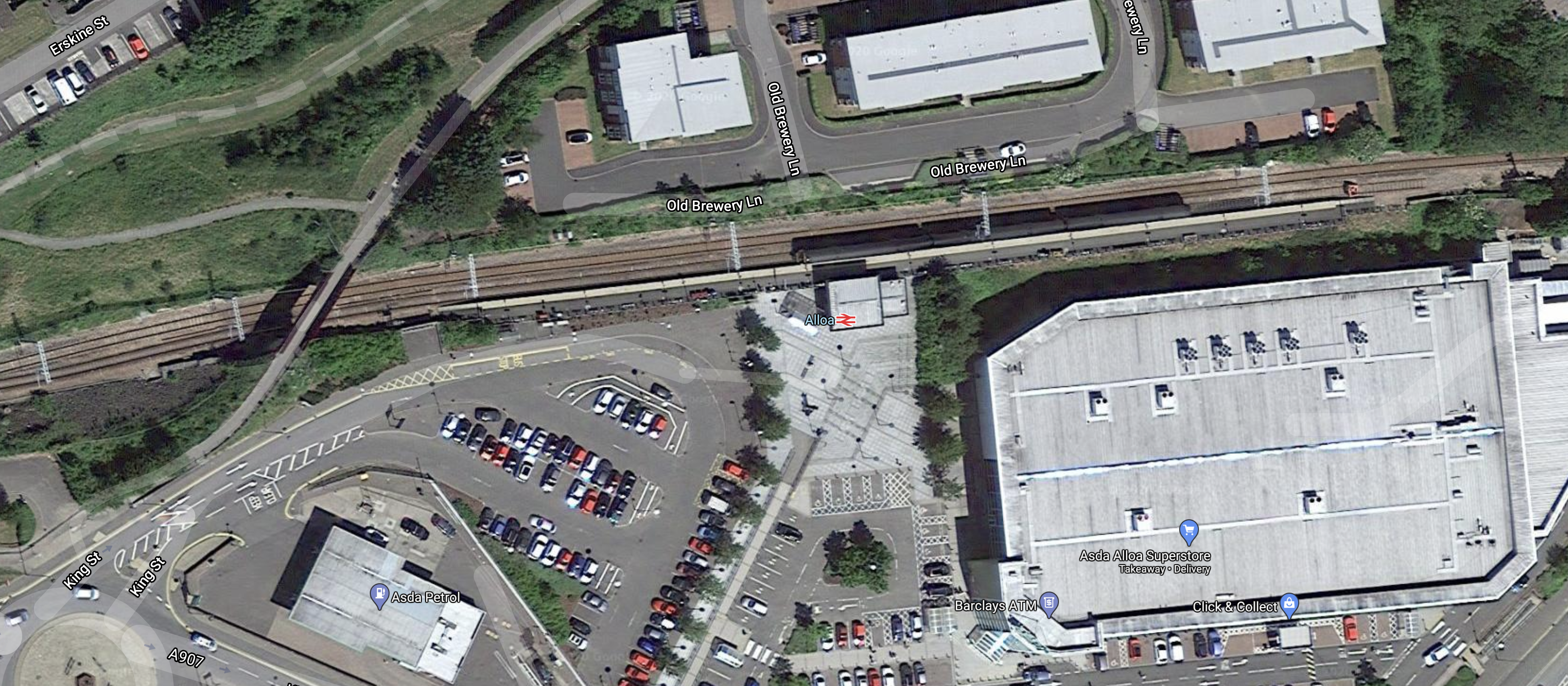
Note.
- The station currently only has one platform.
- A second line is already laid through the station and although, it is not electrified, the gantries are positioned to electrify the second track.
- The two tracks merge into one to the West of the station.
- All passenger trains currently use the Southern platform.
This picture shows the station, just before the electric train services started.
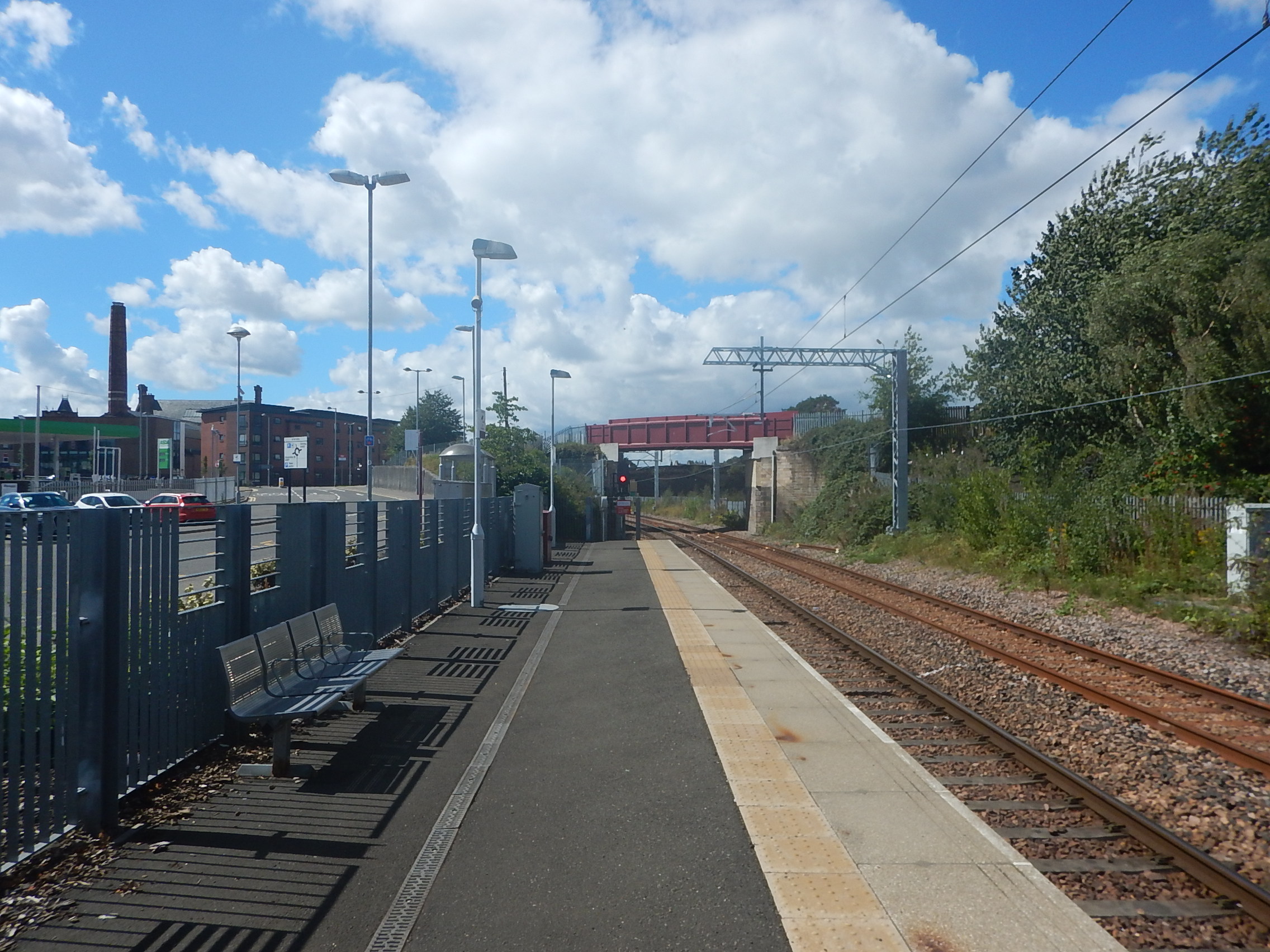
The station also must have one of the largest station shops in the UK, which is an Asda superstore.
The Kincardine Line
The Kincardine Line is the one proposed for electrification.
- It is currently, a freight-only route, that was re-opened to serve Longannet power station.
- At Alloa station, it is an extension of the route from Stirling.
- It may be connected to the new Talgo factory at Longannet, that I wrote about in A Spaniard In The Works!, as the factory will surely need electrified rail access, if any electric trains for the UK are to be built or serviced there.
- The line passes through Clackmannan, Kincardine and Longannet.
As the route used to handle long coal trains, could it handle a 200 metre long classic-compatible high speed train, that Talgo might build for High Speed Two at Longannet?
The Fife Circle Line
According to Wikipedia, the Fife Circle Line is the local service North from Edinburgh, that goes in a long loop through Fife.
This map from Wikipedia shows the stations on the Fife Circle Line.
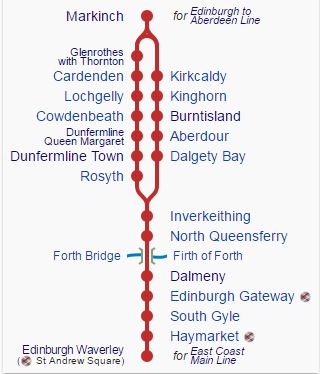
Note.
- The route is double-track.
- The route is not electrified.
- The train service is generally two trains per hour (tph) in both directions.
- The distance from Dalmeny to Glenrothes with Thornton via Cowdenbeath is 22.3 miles
- The distance from Dalmeny to Glenrothes with Thornton via Kirkcaldy is 21.4 miles
- Trains appear to wait between three and seven minutes at Glenrothes with Thornton before returning to Edinburgh by the alternate route.
The map doesn’t show the connection with the Kincardine Line at Dunfermline Town station.
This Google Map shows the Fife Circle Line, through Dunfermline Town station.
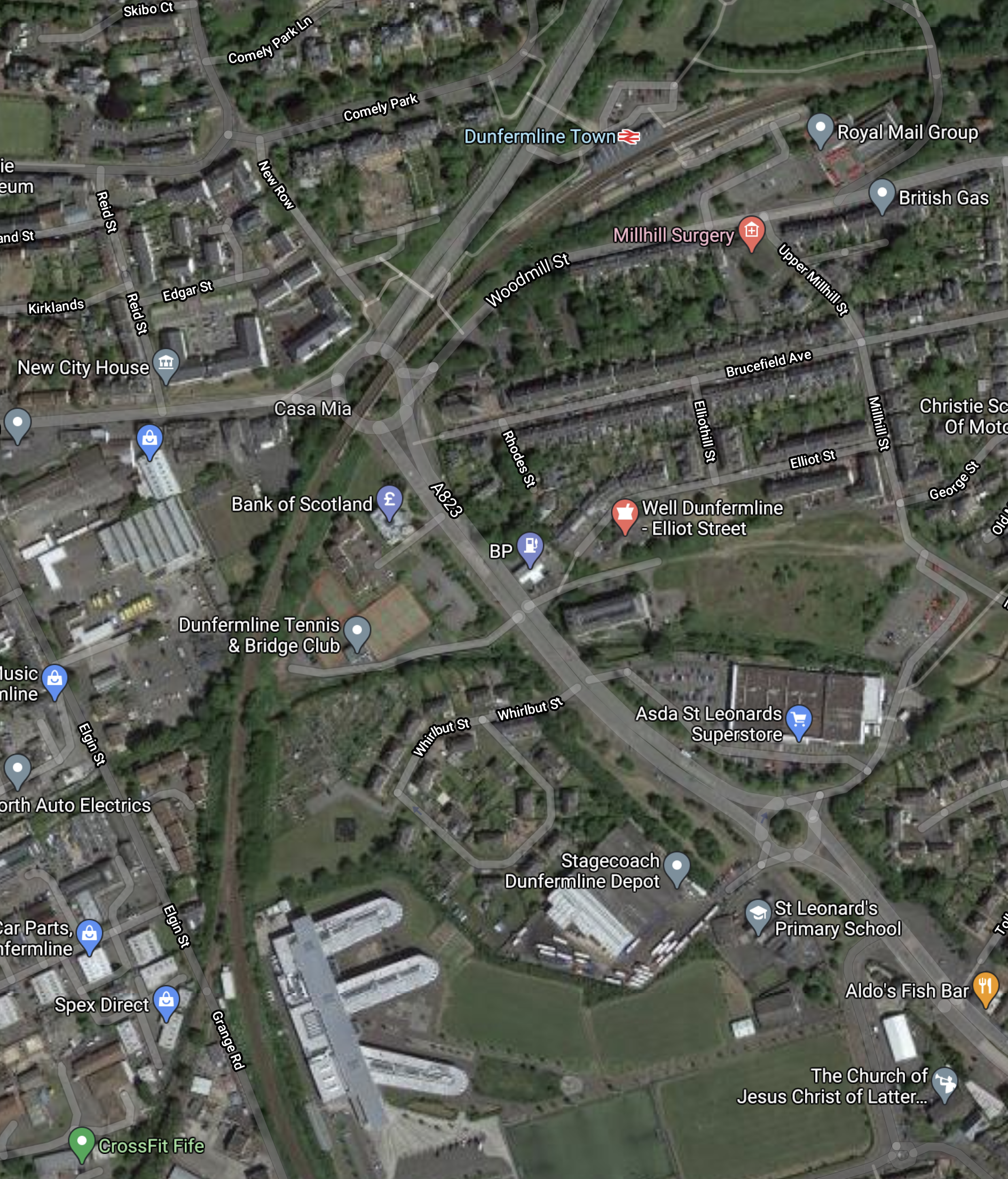
Note.
- Dunfermline Town station at the top of the map, is indicated by a station sign.
- The Northbound Fife Circle Line to Cowdenbeath leaves the map in a North-Easterly direction.
- The Southbound Fife Circle Line to Rosyth and Dalmeny, runs behind the building that looks strangely like a signpost and leaves the map in a Southerly direction
- There is a junction, called Charlestown Junction, where the Kincardine Line joins the Fife Circle Line.
This Google Map shows Charlestown junction.
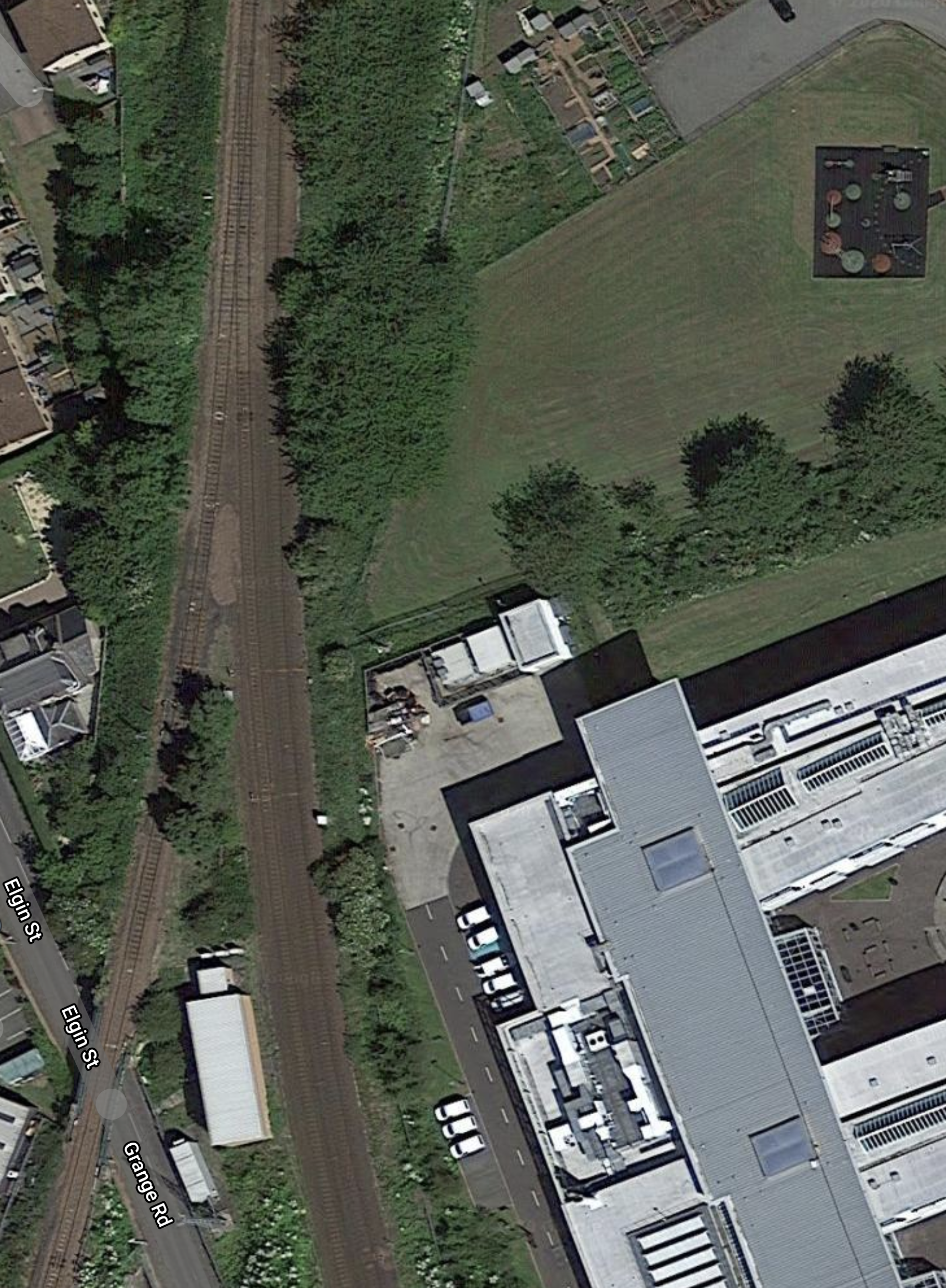
Note.
- The Fife Circle Line is double-track.
- The Kincardine Line is only single-track.
- Trains must enter and leave the Kincardine Line from a Northerly direction.
- There is a cross-over between Charlestown junction and Dunfermline Town station.
The Google Map shows Dunfermline Town station to a larger scale.

It looks like fitting in an additional platform could be difficult.
Hitachi’s Regional Battery Train
I am introducing this train into the discussion, as the train might be an alternative to electrifying the Kincardine Line.
This infographic from Hitachi, describes the train.
Note that 90 kilometres is fifty-six miles.
From what Hitachi have said, it is likely that Class 385 trains, as used by ScotRail could be fitted with batteries and become a version of the Regional Battery Train.
- They could be three or four cars.
- They could work in pairs.
- They would have a 100 mph operating speed.
Even on battery power, they might save time, against the current diesel units working services in Scotland.
Regional Battery Trains And The Fife Circle Line
This map shows the rail system to the West of Edinburgh.
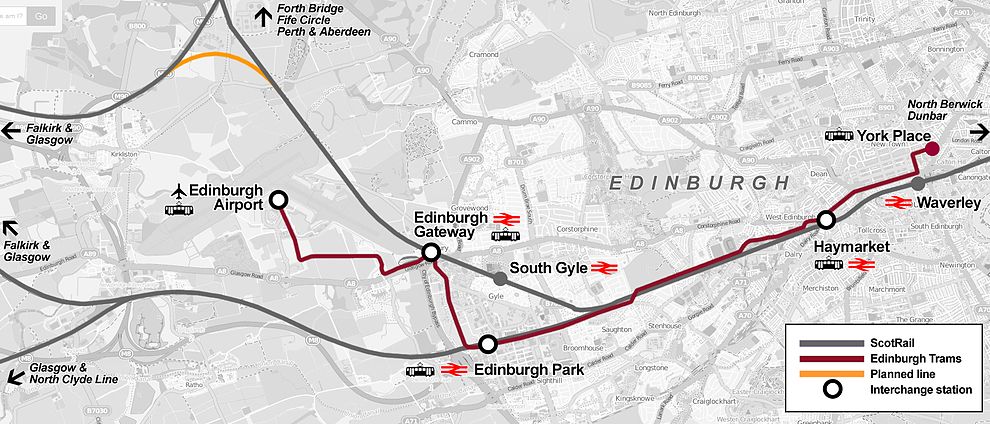
All lines except for the route through South Gyle and Edinburgh Gateway stations are electrified.
A train going round the Fife Circle Route would do the following legs.
- Edinburgh and South Gyle – 4.5 miles – All but one mile electrified.
- South Gyle and Dalmeny – 5 miles – Not electrified.
- Dalmeny and Glenrothes with Thornton via Cowdenbeath – 22.3 miles – Not electrified
- Glenrothes with Thornton and Dalmeny via Kirkaldy – 21.4 miles – Not electrified
- South Gyle and Dalmeny – 5 miles – Not electrified.
- Edinburgh and South Gyle – 4.5 miles – All but one mile electrified.
This gives the following totals
- Not electrified via Cowdenbeath – 28.3 miles
- Not electrified via Kirkcaldy – 27.4 miles
- Round trip – 62.7 miles
- Electrified – 7 miles
It would be very tight for a Regional Battery Train to do a round trip of 62.7 miles consistently with a range of just 56 miles, with only seven miles of electrification at the Edinburgh end.
But if charging at Glenrothes with Thornton were added, this would enable the trains to start out on the near thirty miles without electrification with full batteries from both ends. They would be unlikely to run out of power halfway.
Regional Battery Trains And The Levenmouth Rail Link
In Scottish Government Approve £75m Levenmouth Rail Link, I wrote about the five-mile long Levenmouth Rail Link, and how it could be run by battery trains.
Since I wrote that post, Hitachi have announced their Regional Battery Train.
- If these were used on the route, they would join the Fife Circle at Thornton North Junction.
- I estimate that the track distance that is not electrified between Leven and Edinburgh via Thornton North junction, is about thirty-five miles, whether the trains go via Glenrothes with Thornton and Cowdenbeath or Kirkcaldy,
As with the Glenrothes with Thornton service, if there was charging at at both ends, the route would be within comfortable range of Hitachi’s Regional Battery Trains.
Regional Battery Trains And The Kincardine Line
Rough distances by road along the Kincardine Line are as follows.
- Alloa and Longannet – 8 miles
- Alloa and Dunfermline Town – 15 miles
- Alloa and Glenrothes with Thornton via Dunfermline Town – 30 miles
This would surely mean that Regional Battery Trains could work all these routes.
- Trains would leave Alloa with full batteries after charging on the electrification from Edinburgh, Glasgow and Stirling.
- Longannet and Dunfermline Town could be served by a return trip from Alloa on batteries.
- Charging at the Fife end would only be needed for the Glenrothes with Thornton route.
Some might think, that this would mean the Kincardine Line needn’t be electrified. But I feel Talgo will want an electrified route to their factory, so trains can move in and out under electric power.
The Design Of The Kincardine Route
These are my thoughts on various topics, taken vaguely from West to East.
Alloa Station
Alloa station already has two tracks, but as the plans envisage two tph between Alloa and Longannet, I am fairly certain a second platform will be needed at Alloa.
There is certainly space, but the station would also need a bridge for passengers.
Perhaps, the architects will use something like this bridge design.
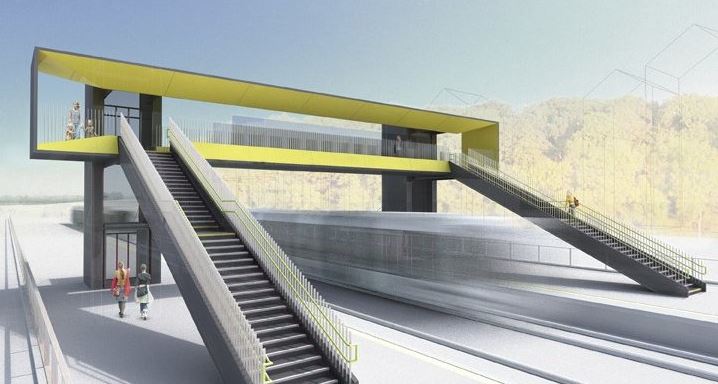
This step-free bridge won the Network Rail/RIBA Footbridge Design Competition, but has yet to be deployed on the UK rail network.
Will the two tph service between Alloa and Longannet continue West to Stirling?
I suspect the track layout with a passing loop at Cambus to add to the one at Alloa station will give sufficient track capacity, so I suspect there will be two tph between Longannet and Stirling.
Would both services terminate at Glasgow or would one go to Glasgow, with the other to Edinburgh?
Clackmannan Station
The small town of Clackmannan has a population of about 3,500 and used to be served by Clackmannan and Kennet station, which closed in 1930.
This Google Map shows the town of Clackmannan.
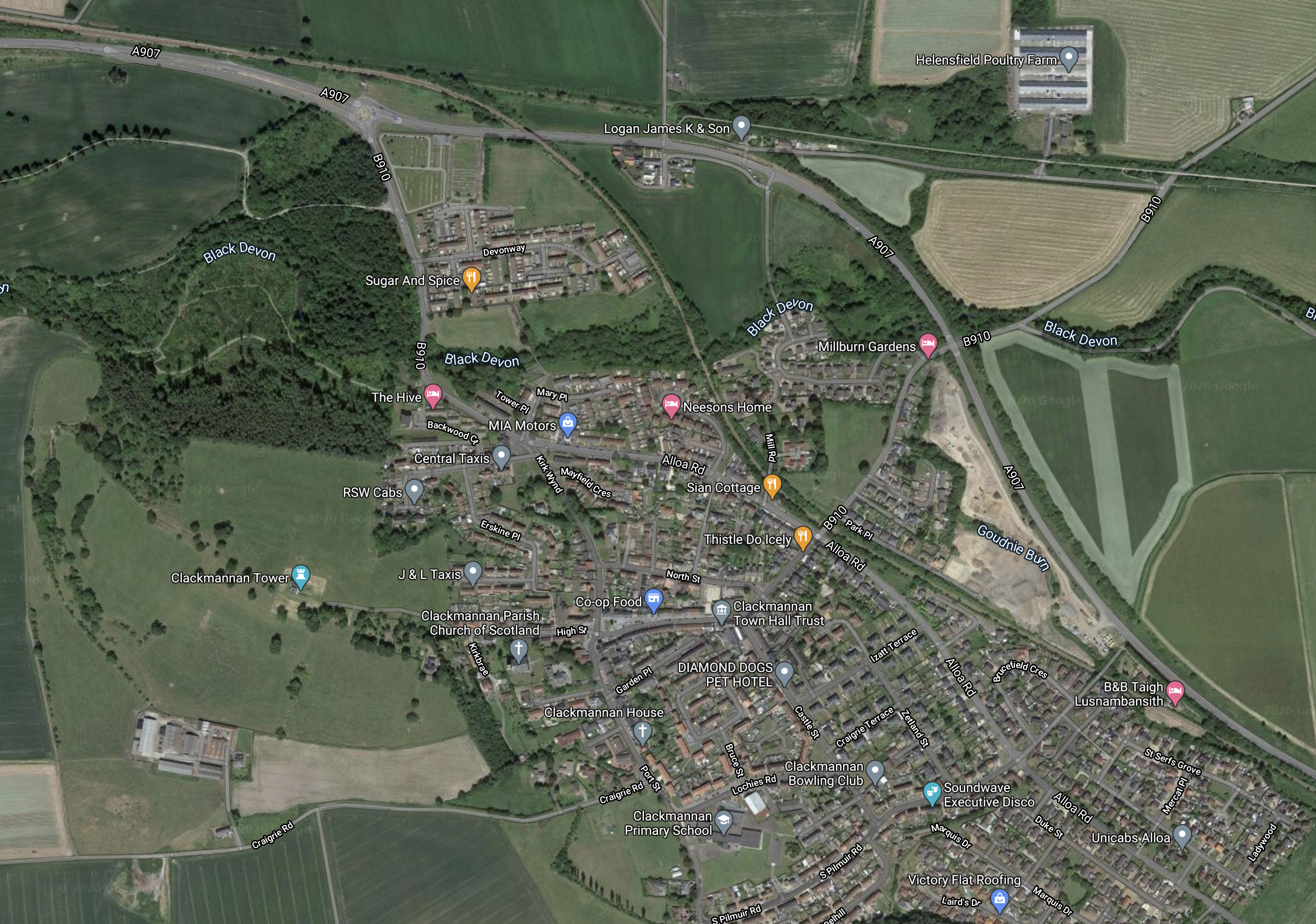
Note.
- The Kincardine Line runs between the North West and South-East corners of the map, through the centre of the town.
- The original Clackmannan and Kennet station was to the South-East of this map.
This second Google map shows an enlargement of part of the town.
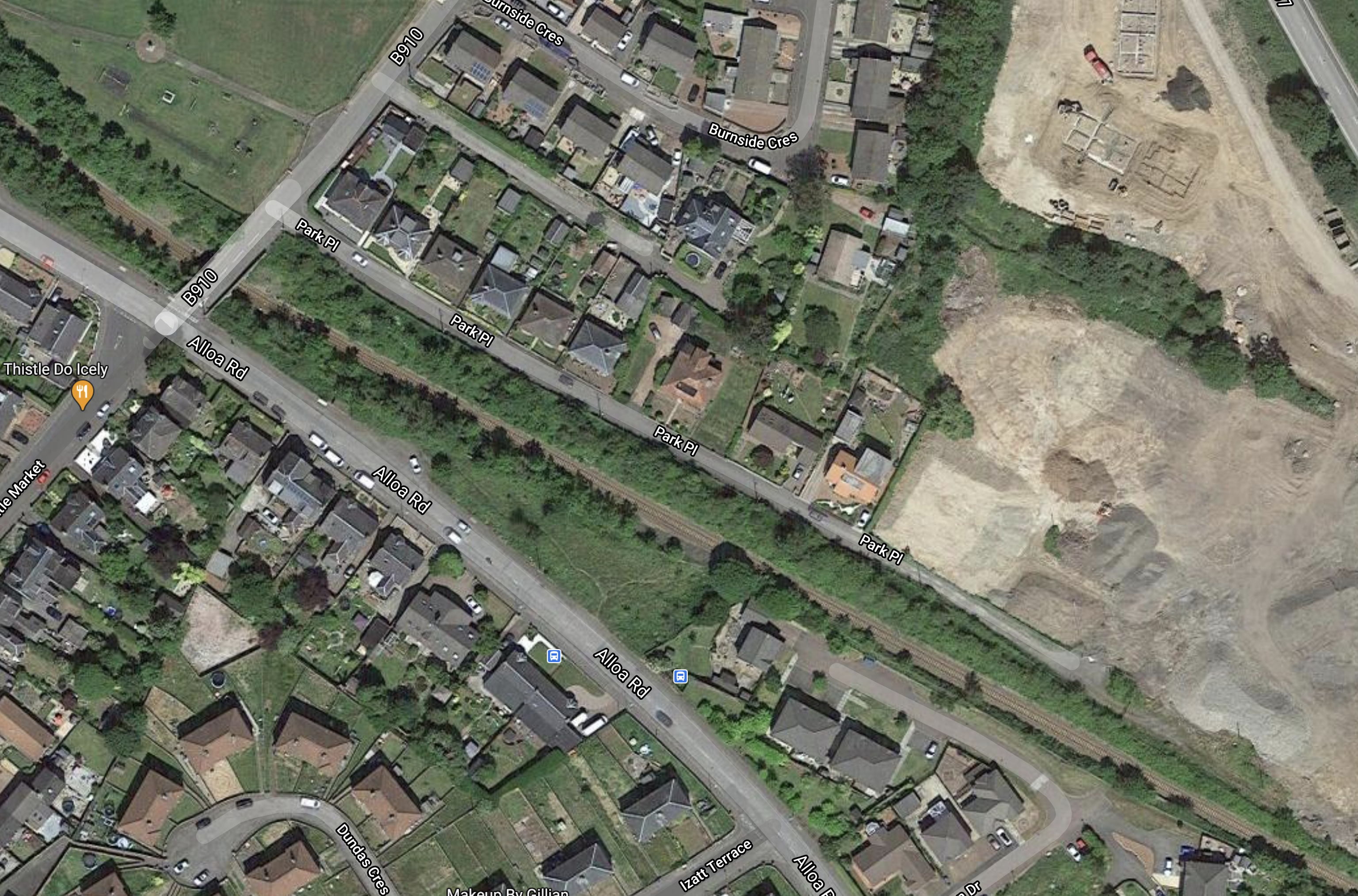
It would appear that there is space for a station.
- Only a single platform would be needed.
- What is the plan for the development site?
It could be designed as a walkway station, as has been proposed for Magor and Undy station in Wales.
Kincardine Station
The Kincardine Line runs between the small town of Kincardine and the River Forth and Kincardine station closed in 1930.
This Google Map shows the railway alongside the river.
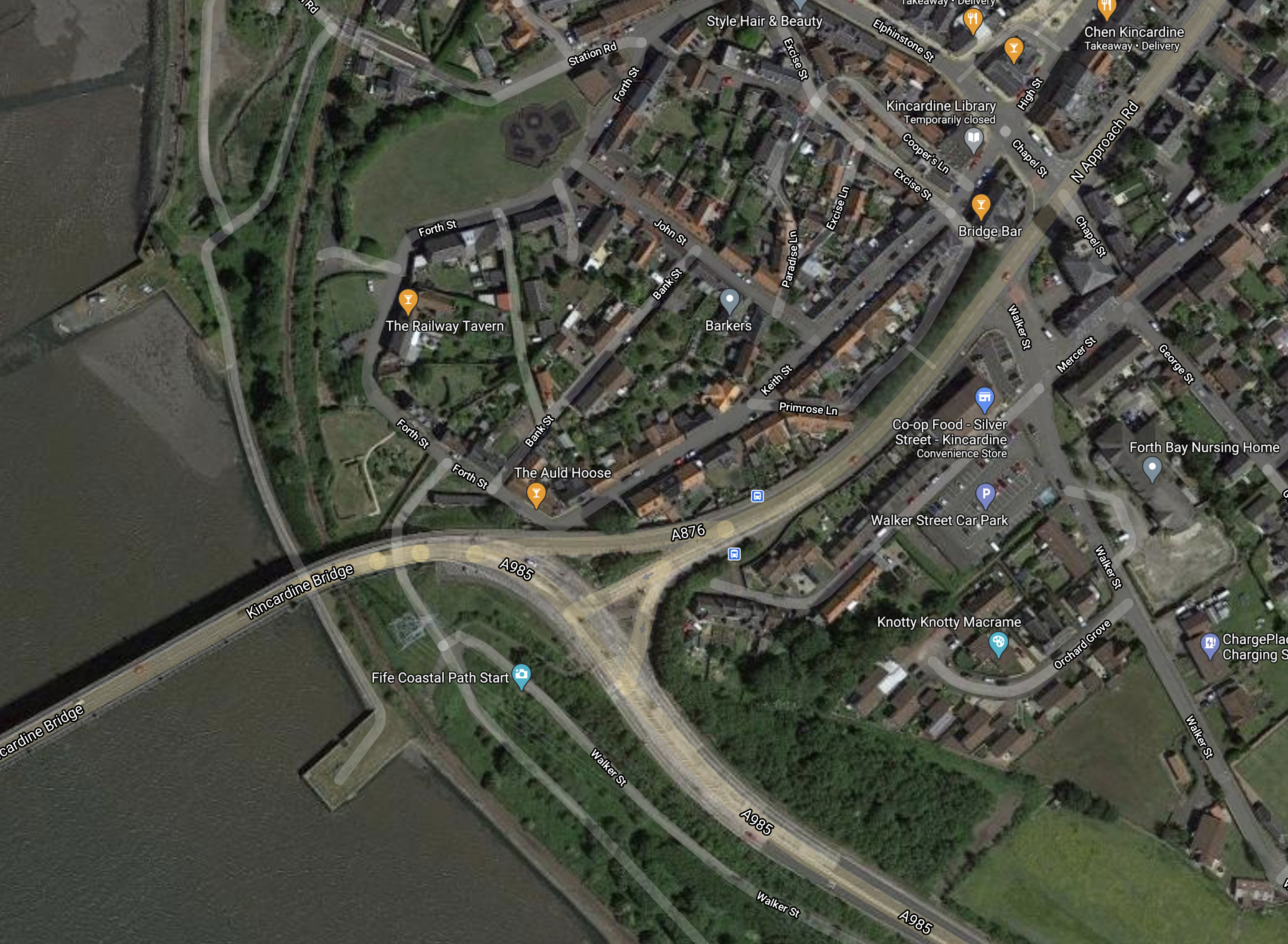
Note.
- Kincardine Bridge crossing the Firth of Forth.
- The bridge can be used by pedestrians and cyclists.
- The Kincardine Line running along the river.
- It is not a long walk between the town centre and the railway.
- The blue dot to the South of the road junction marks the start of the Fife Coastal Path, which is over a hundred miles long.
Will the station be built in this area?
Longannet Station
Longannet power station was at the time of closure in 2016, the third-largest coal-fired power station in Europe.
This Google Map shows the site.
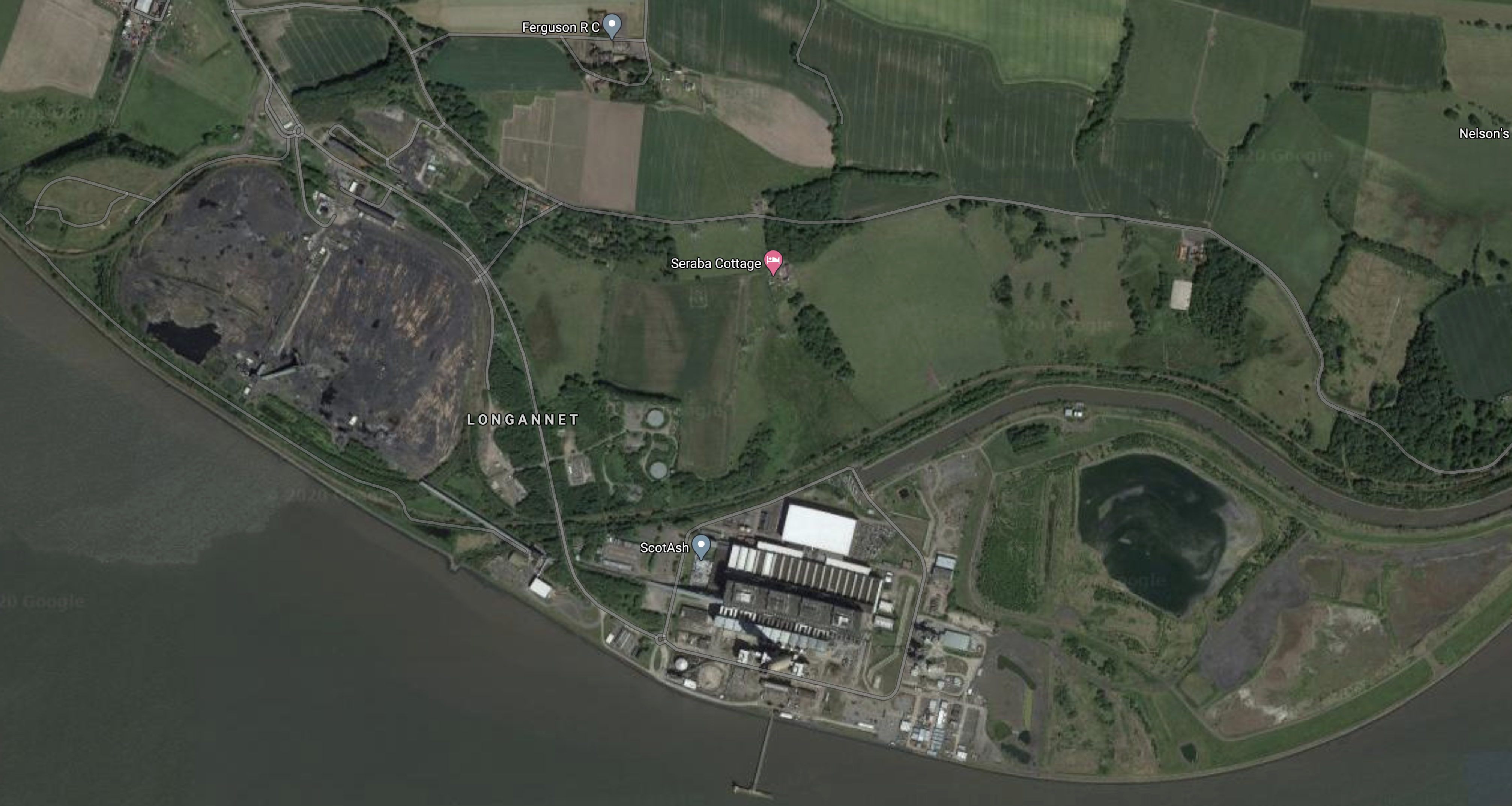
Note.
- The actual power station is in the middle.
- To the West is the coal store.
- The Kincardine Line comes along the river and then loops North of the power station, before curving down to the river to go to the East.
- There appears to be two triangular junctions either side of the coal store with a loop around the store to allow delivery of coal.
This second Google Map shows between the power station and the coal store.
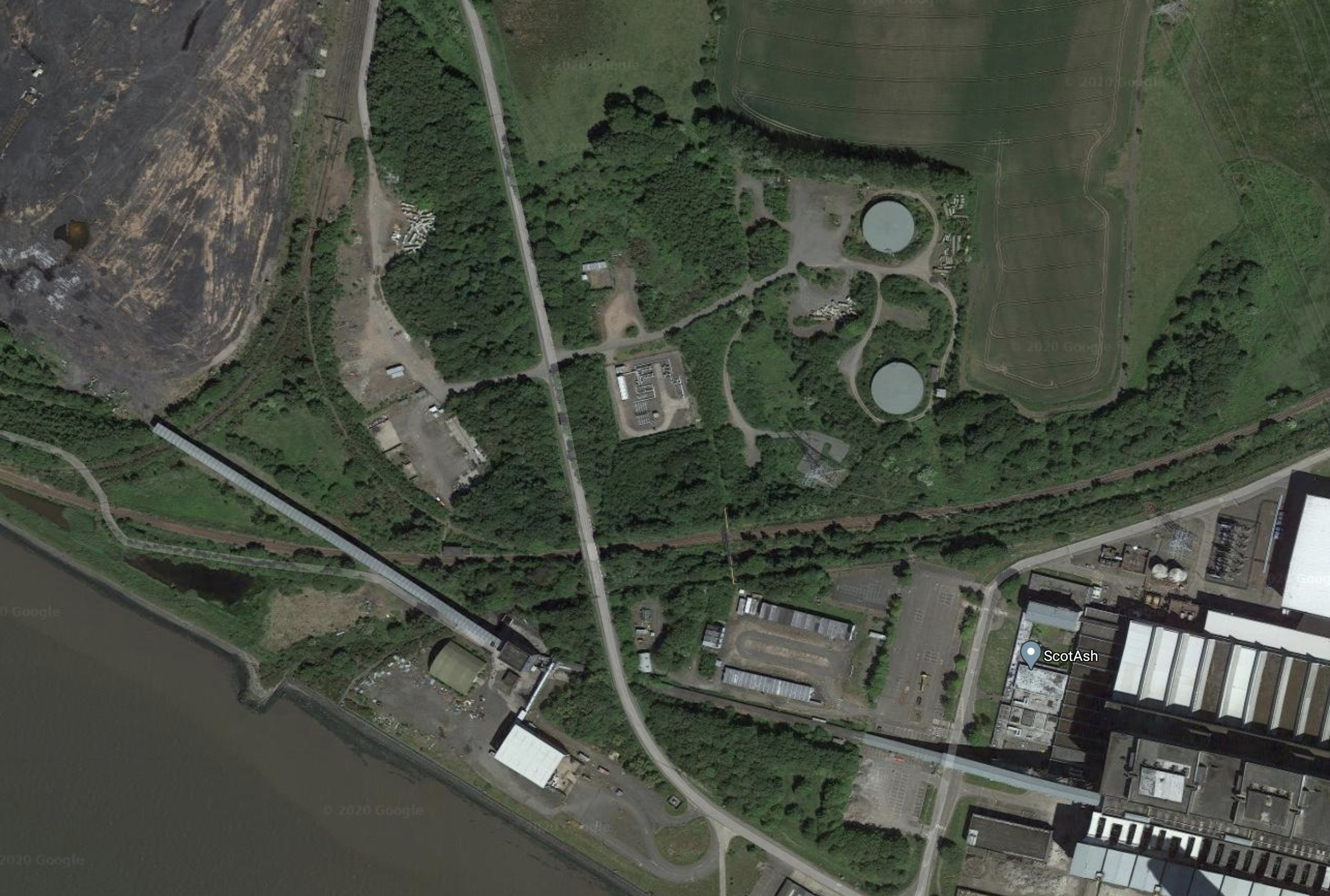
Note.
- The Kincardine Line running West-East across the map.
- The triangular junction connecting it to the loop line around the coal store.
- The coal conveyor that used to move coal from the store to the power station.
I’d certainly like to see the plans for the site, as it is one with a lot of potential.
- There is space for a large rail-connected factory for Talgo.
- The station could be placed at the most convenient place.
- There is space for a two platform station to make sure a two tph service is possible.
- There could be lots of housing and industrial units.
- there could be waterside housing.
- There could be a convenient rail service to Edinburgh, Glasgow and Stirling.
It could be a big development for the Central Belt of Scotland.
Onward To Dunfermline
I have followed the route to Dunfermline Town station in my helicopter and it doesn’t seem the most difficult of lines to reopen.
- Unlike many lines like this, there doesn’t appear to be too many bridges or level crossings.
- The connection to the Fife Circle Line looks to be adequate.
I have these thoughts.
- Cn this section of the line, could more stations be added?
- As the Fife Circle Line is not electrified, would battery electric trains be ideal?
- Would turnround facilities be needed at Dunfermline Town stations.
But at the moment, the plan is only to go as far as Longannet.
Thoughts On The Stations
The stations would generally be very simple.
- Alloa would be a two-platform station.
- Longannet might need provision for a passing loop and a second platform, so extension to Dunfermline wouldn’t be difficult.
- All other stations could be single platforms.
- All stations would be step-free.
Only two-platform stations would need footbridges.
Final Thoughts On Electrification
Consider.
- All services on the Fife Circle Line, Kincardine Line and the Levenmouth Rail Link could be run using Hitachi’s proposed Regional Battery Train, with a few charging facilities at selected stations.
- Talgo will need an electrified line to Longannet
- As Alloa and Dunfermline Town is only about 15 miles, a Regional Battery Train could run a return trip without recharging.
It would appear that only the single-track between Alloa and Longannet needs to be electrified.
Conclusion
This looks to be a good scheme.
Running Battery Electric Trains Between London Marylebone And Aylesbury
This post was suggested by Fenline Scouser in a comment to Vivarail Targets Overseas Markets, where they said.
I have long thought that one UK application that would make sense is the Marylebone – Aylesbury via Harrow on the Hill service, the intermediate electrified section lending itself to full recharge on each trip. ? stabling facility at Aylesbury with overnight charging.
It does look to be an idea worth pursuing.
Current And Future Services
Currently, the services between London Marylebone and Aylesbury are as follows.
- London Marylebone and Aylesbury via High Wycombe
- London Marylebone and Aylesbury via Amersham
- London Marylebone and Aylesbury Vale Parkway via Amersham
All services are one train per hour (tph)
In the future, it is planned to extend the Aylesbury Vale Parkway service to Milton Keynes, according to information I found on the East West Rail web site.
- It looks like the service will go via High Wycombe, Saunderton, Princes Risborough, Monks Risborough, Little Kimble, Aylesbury, Aylesbury Vale Parkway, Winslow and Bletchley.
- The service will have a frequency of 1 tph.
- Time between Milton Keynes and Aylesbury is quoted as 33 minutes.
- Time between High Wycombe and Milton Keynes is quoted as 63 minutes.
Will this leave the Marylebone and Aylesbury are as follows?
- 1 tph – London Marylebone and Aylesbury via High Wycombe.
- 2 tph – London Marylebone and Aylesbury via Amersham
Passengers between London Marylebone and Aylesbury would have the same service.
Distances
These are a few distances, of which some have been estimated.
- London Marylebone and Harrow-on-the-Hill – 9.18 miles.chains
- Amersham and Harrow-on-the-Hill – 14.27 miles.chains – Electrified
- Aylesbury and Amersham – 15.23 miles.chains
- London Marylebone and High Wycombe – 28.11 miles.chains
- Aylesbury and High Wycombe – 15.28 miles.chains
- Aylesbury and Aylesbury Vale Parkway – 2.25 miles.chains
- Aylesbury Vale Parkway and Calvert – 8.19 miles.chains
- Aylesbury and Milton Keynes – 16.40 miles.chains – Estimated
Note that there are eighty chains to the mile.
Hitachi’s Regional Battery Train
Hitachi’s Regional Battery Train, is the only battery electric train intended for the UK network for which a detailed specification has been released.
This infographic from Hitachi gives the specification.
Note that ninety kilometres is fifty-six miles.
I would suspect that battery trains from other manufacturers, like Bombardier, CAF and Stadler, will have a similar specification.
Battery Electric Trains Between London Marylebone And Aylesbury
I’ll take each possible route in turn.
London Marylebone And Aylesbury Via Amersham
The three sections of the route are as follows.
- London Marylebone and Harrow-on-the-Hill – 9.23 miles – Not Electrified
- Harrow-on-the-Hill and Amersham – 14.34 – Electrified
- Amersham and Aylesbury – 15.29 miles – Not Electrified
Note.
- The total distance is 38.85 miles
- A typical service takes just under twenty minutes to travel between Harrow-on-the-Hill and Amersham. This should be enough to fully charge the batteries.
- A train going South from Harrow-on-the-Hill could reach London Marylebone and return.
- A train going North from Amersham could reach Aylesbury and return.
I am fairly confident, that a battery electric train, with the range of a Hitachi Regional Battery Train could work this route.
London Marylebone And Aylesbury Vale Parkway Via Amersham
The four sections of the route are as follows.
- London Marylebone and Harrow-on-the-Hill – 9.23 miles – Not Electrified
- Harrow-on-the-Hill and Amersham – 14.34 – Electrified
- Amersham and Aylesbury – 15.29 miles – Not Electrified
- Aylesbury and Aylesbury Vale Parkway – 2.31 miles – Not Electrified
Note.
- The total distance is 41.16 miles
- A typical service takes just under twenty minutes to travel between Harrow-on-the-Hill and Amersham. This should be enough to fully charge the batteries.
- A train going South from Harrow-on-the-Hill could reach London Marylebone and return.
- A train going North from Amersham could reach Aylesbury Vale Parkway and return.
I am fairly confident, that a battery electric train, with the range of a Hitachi Regional Battery Train could work this route.
London Marylebone And Aylesbury Via High Wycombe
The two sections of the route are as follows.
- London Marylebone and High Wycombe- 28.14 miles – Not Electrified
- High Wycombe and Aylesbury – 15.35 miles – Not Electrified
Note.
- The total distance is 43.50 miles
- There is no electrification to charge the trains.
A battery electric train, with the range of a Hitachi Regional Battery Train will need charging to work this route.
However, with charging at both ends, this would be a route for a battery electric train.
At the London Marylebone end, there are two possible solutions.
- Electrify the station traditionally, together with perhaps the tracks as far as Neasden, where the routes split. Either 750 VDC third-rail or 25 KVAC overhead electrification could be used.
- Fit fast charging systems into all the platforms at the station.
Note.
- Turnround times in Marylebone station are typically nine minutes or more, so using a charging system should be possible.
- Power for the electrification should not be a problem, as the station is close to one of London’s central electricity hubs at Lisson Grove by the Regent’s Canal.
The final decision at Marylebone, would be one for the engineers and accountants.
At the Aylesbury end, it should be noted that much of the under twenty miles of track between Princes Risborough and Aylesbury and on to Aylesbury Vale Parkway and Calvert us single-track.
So why not electrify from Princes Risborough and Calvert, where the route joins the East West Railway?
The electrification in Aylesbury station could also be used to top-up trains going to London via Amersham.
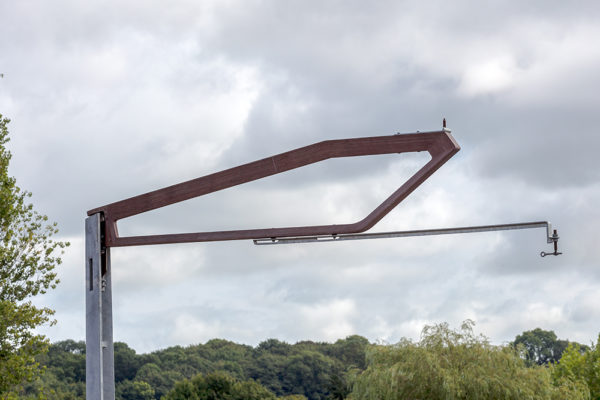
I would use 25 KVAC overhead electrification, using lightweight gantries like these, which use laminated wood for the overhead structure.
There is also a video.
Electrification doesn’t have to be ugly and out-of-character with the surroundings.
London Marylebone And Milton Keynes Via High Wycombe, Aylesbury and Aylesbury Vale Parkway
The three sections of the route are as follows.
- London Marylebone and High Wycombe- 28.14 miles – Not Electrified
- High Wycombe and Aylesbury – 15.35 miles – Not Electrified
- Aylesbury and Milton Keynes – 16.50 miles – Partially Electrified
Note.
- The total distance is sixty miles
- There is some electrification to charge the trains between Bletchley and Milton Keynes.
A battery electric train, with the range of a Hitachi Regional Battery Train should be able to work this route, if they can work London Marylebone and Aylesbury, with charging at Aylesbury.
Milton Keynes Central is a fully-electrified station.
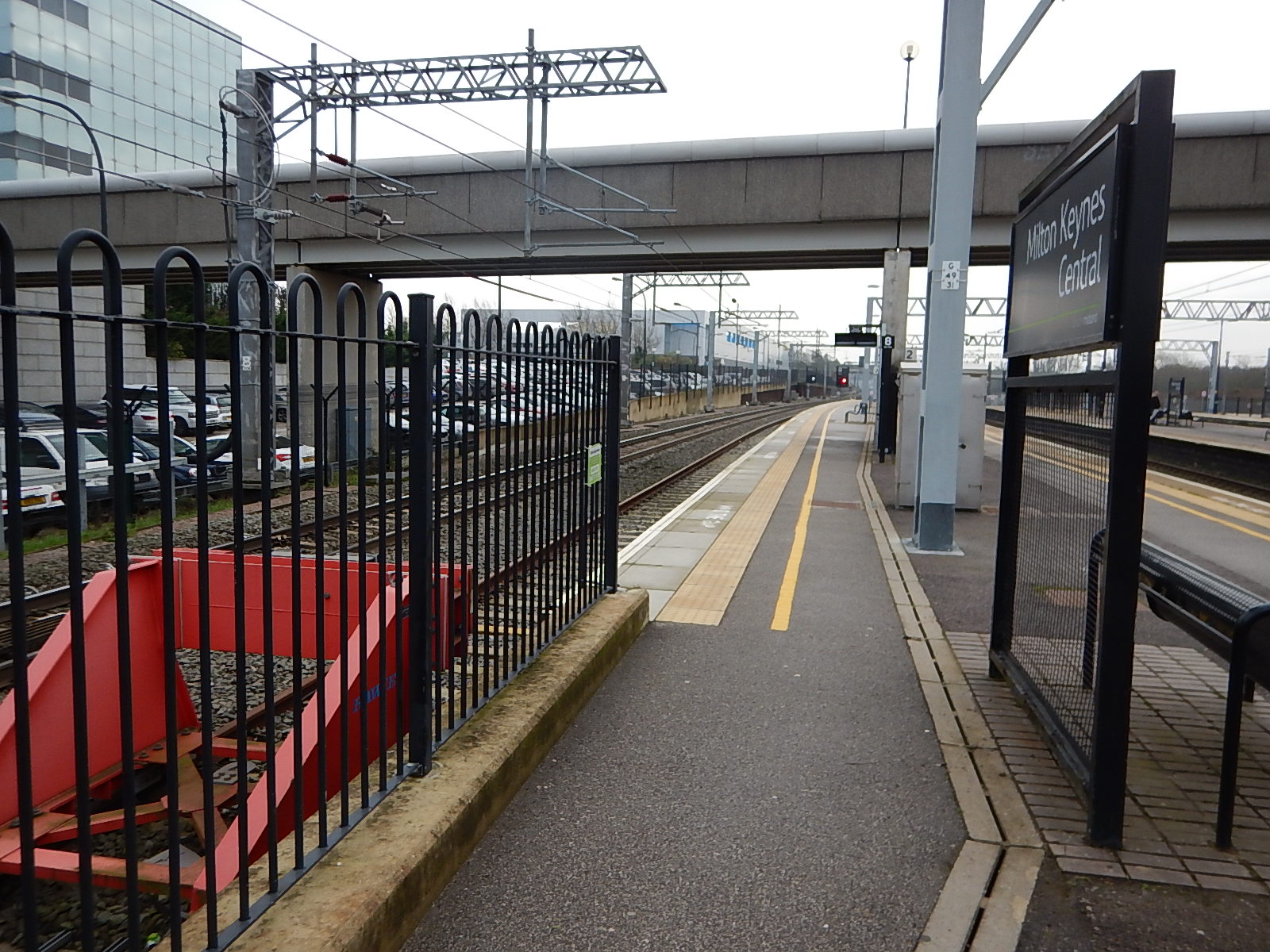
The picture shows Platform 2A, which is South-facing electrified, five-car platform, which could be used by the Chiltern service.
Train Specification
Consider.
- Chiltern Railway’s workhorse is a Class 168 train, which is a diesel multiple unit of up to four cars, with a 100 mph operating speed.
- The longest leg without electrification could be London Marylebone and Aylesbury via High Wycombe, which is 43.5 miles.
- Hitachi’s Regional Battery Train has a range of fifty-six miles.
- As there is a need to work with London Underground electrification, a dual-voltage train will be needed.
So a battery electric train with this specification would probably be ideal.
- Four cars
- Ability to work with both 750 VDC third-rail and 25 KVAC overhead electrification.
- 100 mph operating speed.
- Battery range of perhaps 55 miles.
Could the specification fit a battery-equipped Class 385 train, which will probably be built for Scotland?
Conclusion
I am convinced that battery electric trains can run between London Marylebone and Aylesbury, Aylesbury Vale Parkway and Milton Keynes stations.
The following would be needed.
- A battery electric range of perhaps fifty-five miles.
- Some form of charging at Marylebone and Aylesbury stations.
I would electrify, the single-track route between Princes Risborough and Aylesbury Vale Parkway.
Bi-Modes Offered To Solve Waterloo-Exeter Constraints
The title of this post is the same as an article by Richard Clinnick in Issue 912 of Rail Magazine.
The article is in turn based on this Continuous Modular Strategic Planning document from Network Rail, which is entitled West of England Line Study 2020.
The document is probably best described, as a document, that will need a lot of digestion for a full reading, but it does provide the reasons for what is said by Richard Clinnick.
The Need For Bi-Mode Trains
This is the a slightly edited version of the start of the Rail Magazine article.
Bi-mode trains should be ordered as part of a scheme to improve the service offered on the West of England route between London Waterloo and Exeter St, Davids, according to Network Rail.
In their extensive study, NR explains that additional capacity could be achieved on the route not only through infrastructure improvements, but also through lengthening some services.
The Network Rail report says.
This cannot be achieved using the current rolling stock fleet currently in operation; which are coming to end of life. Therefore, in the medium term, the opportunity to introduce new,
potentially bi-mode, rolling stock capable of achieving faster journey times and providing more capacity should be considered.
The report also suggests that electric, battery and hydrogen are mentioned as possible power.
South Western Railway’s Short Term Solution
In the short term, South Western Railway (SWR) have reorganised the service to meet short term objectives, which are described fully in the Network Rail report, but can be summed up as follows.
- There is a need for a capacity increase between London Waterloo and Basingstoke and Salisbury.
- There is a need for a capacity increase between Axminster and Exeter St. Davids.
SWR’s solution has probably been strongly driven by the needs of COVID-19, which means that a greater amount of space must be provided for each occupied seat. In the last couple of weeks, I’ve made six journeys in SWR’s Class 159 trains and like most other travellers, I’ve had four seats to myself. The trains may be thirty years old, but like most British Rail trains of that era, they keep giving valuable service.
For most of the day, SWR seem to offer the following solution.
- Nine-car formations of Class 159 trains work between London Waterloo and Salisbury stations at a frequency of two trains per hour (tph)
- Six-car formations of Class 159 trains work between Salisbury and Exeter St. Davids stations, at a frequency of one train per two hours (tp2h)
- Passengers use a one-way system at Salisbury to walk between the two trains.
Yesterday, I took SWR’s trains between Clapham Junction and Yeovil Junction stations to observe the working of the route and take a few pictures.
My Observations
These are my observations.
Salisbury Station
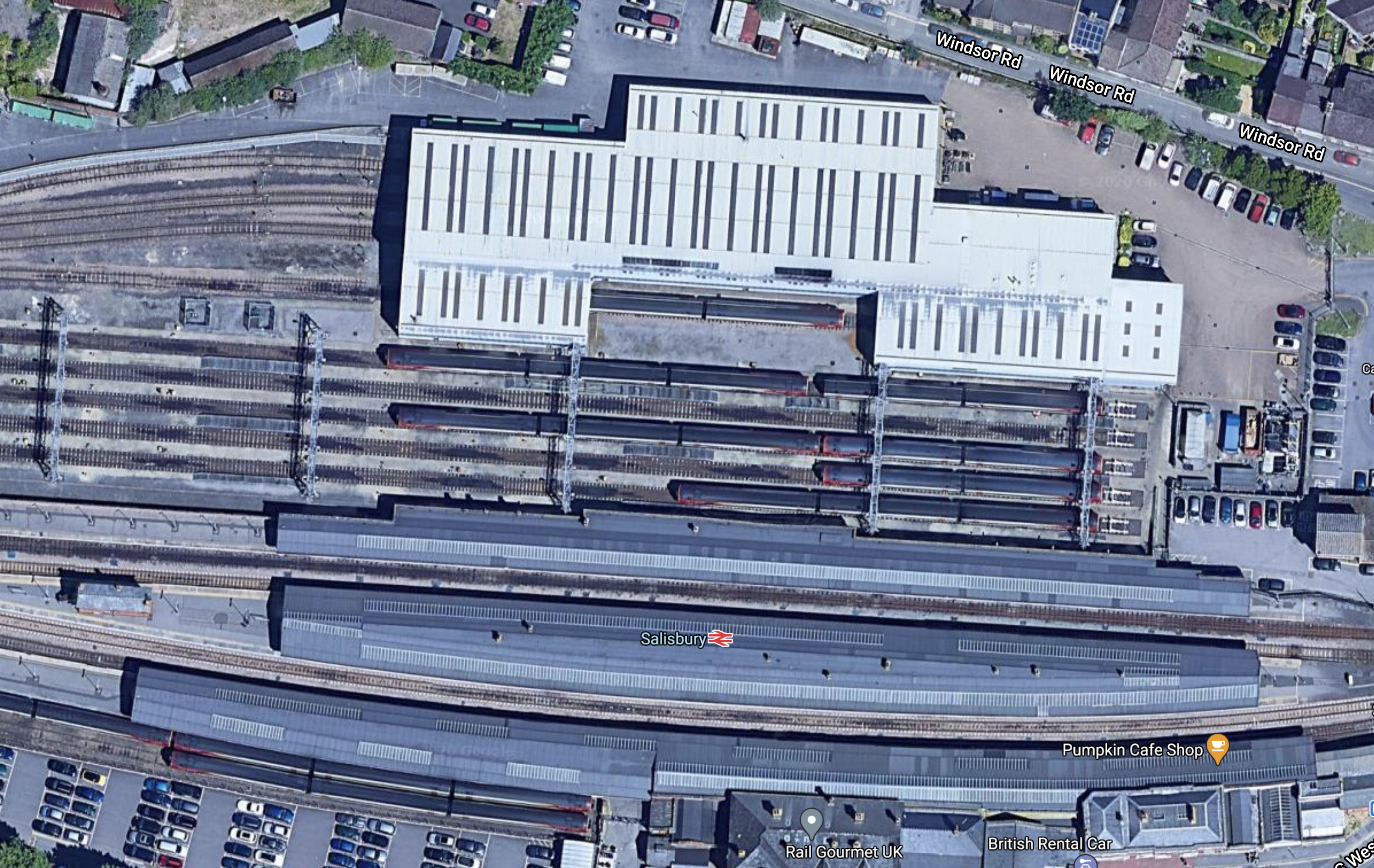
This Google Map shows Salisbury station and the nearby Salisbury Depot.
These are some pictures I took at the station.

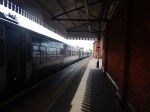
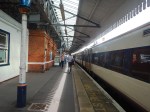
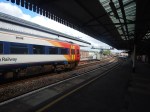

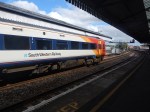
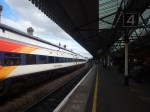
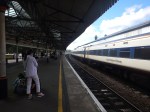
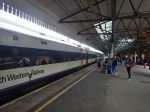
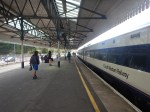
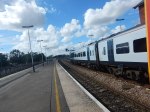
Note that the train in the platform is a nine-car formation which is 207 metres long. I would estimate that the platforms are around 220-240 metres long.
Yeovil Junction Station
This Google Map shows Yeovil Junction station.

These are some pictures I took at the station.

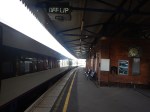
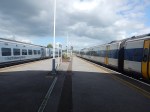
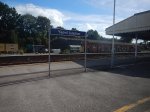
Note that the two trains in the platforms are six-car formations which are 138 metres long. I would estimate that the platforms are around 140-50 metres long.
Replacement Of The Current Class 159 Trains With Bi-Mode Trains
Consider the following train lengths and capacities.
- A nine-car formation of Class 159 trains – 207 metres – 588 seats
- A six-car formation of Class 159 trains – 138 metres – 392 seats
- A nine-car Class 802 train – 234 metres – 647 seats
- A five-car Class 802 train – 130 metres – 326 seats
- A pair of five-car Class 802 trains – 260 metres – 652 seats
The figures for Class 802 trains are taken from the trains that are in service for Great Western Railway (GWR).
The following timings should also be noted.
- London Waterloo and Salisbury – One hour and thirty minutes
- Turnback time at Salisbury – Up to thirty minutes
- Salisbury and Exeter St. Davids – Two hours and six minutes
- Turnback time at Exeter St. Davids – Trains appear to go to Exeter New Yard for refuelling.
- Wait at Yeovil Junction – Fourteen minutes
Note.
- The wait at Yeovil Junction station is so that trains can fit in with the large lengths of single-track on the West of England Main Line.
- The need to refuel the diesel trains would appear to be a major constraint on running more services on the route.
- Both legs of the journey have convenient times of one-and-a-half and two hours respectively.
Overall, I think the timings are helpful.
Hitachi’s Regional Battery Train
Hitachi have recently released details of their new Battery Regional train, which are summarised in this Hitachi infographic.
They have also signed an agreement with Hyperdrive Innovation to develop battery packs for their Class 80x trains, as I wrote about in Hyperdrive Innovation And Hitachi Rail To Develop Battery Tech For Trains.
Looking at the length and capacity table, I displayed earlier, it would appear there are several ways to run the service between London Waterloo and Exeter St. Davids using Regional Battery Trains.
- Run nine-car trains between London Waterloo and Exeter St. Davids
- Run five-car trains between London Waterloo and Exeter St. Davids
- Run nine-car trains between London Waterloo and Salisbury and five-car trains between Salisbury and Exeter St. Davids
- Run a pair of five-car trains between London Waterloo and Salisbury and a single five-car train between Salisbury and Exeter St. Davids, with selective splitting and joining at Salisbury.
Alternatively, the route could be electrified. But that has a few obstacles and disadvantages.
- Would the various jobsworths allow this substantial length of third-rail electrification?
- Would there be serious objections to using overhead electrification?
- Would the travellers on the route, be prepared for all the disruption?
- There is also the excessive cost of electrification.
I also believe, that only limited small infrastructure improvements would be needed to replace the current diesel trains with battery electric bi-mode trains like the Regional Battery Trains.
Regional Battery Trains Between London Waterloo And Salisbury
Consider.
- London Waterloo and Salisbury stations are 83.5 miles apart.
- The fifty miles between London Waterloo and Worting Junction is fully electrified.
- Only the 33.5 miles between Salisbury and Worting Junction are not electrified.
- In the infographic, Hitachi are claiming a 90 kilometre or 56 mile battery range and a static charging time of between 10-15 minutes.
It would certainly appear, that if a train from London passed Worting Junction with full batteries, it would reach Salisbury. Also a train leaving Salisbury with full batteries would certainly reach Worting Junction and the electrification.
There would be three ways of charging the Regional Battery Trains at Salisbury.
- Fit a number of charging stations on the platforms.
- Install 25 KVAC overhead electrification.
- Install 750 VDC third-rail electrification.
I prefer Option 3 in a station like Salisbury.
- It would be easy to install and British Rail probably drew up detailed plans several times, when full third-rail electrification was under consideration.
- The trains will be fitted with third-rail shoes to access the third-rail electrification on the way to London.
- Because of the depot, there’s probably a good power supply.
- For increased safety, modern electrical design, could mean that power was only switched on when a train is connected.
As trains currently wait for some time in Salisbury, it would be likely, that trains would leave the station with a full battery.
Regional Battery Trains Between London Salisbury And Exeter St Davids
Consider.
- Salisbury and Exeter St. Davids stations are 88.5 miles apart.
- There is no electrification.
- Yeovil Junction station is approximately half way and is 49.5 miles from Exeter St. Davids and 39 miles from Salisbury.
- Typically, trains wait at Yeovil Junction station for up to fourteen minutes, to get through the single-track sections.
I believe that a similar method of charging to that at Salisbury could be used at Yeovil Junction.
There would also need to be charging at Exeter St. Davids station.
This Google Map shows Exeter St. Davids station.
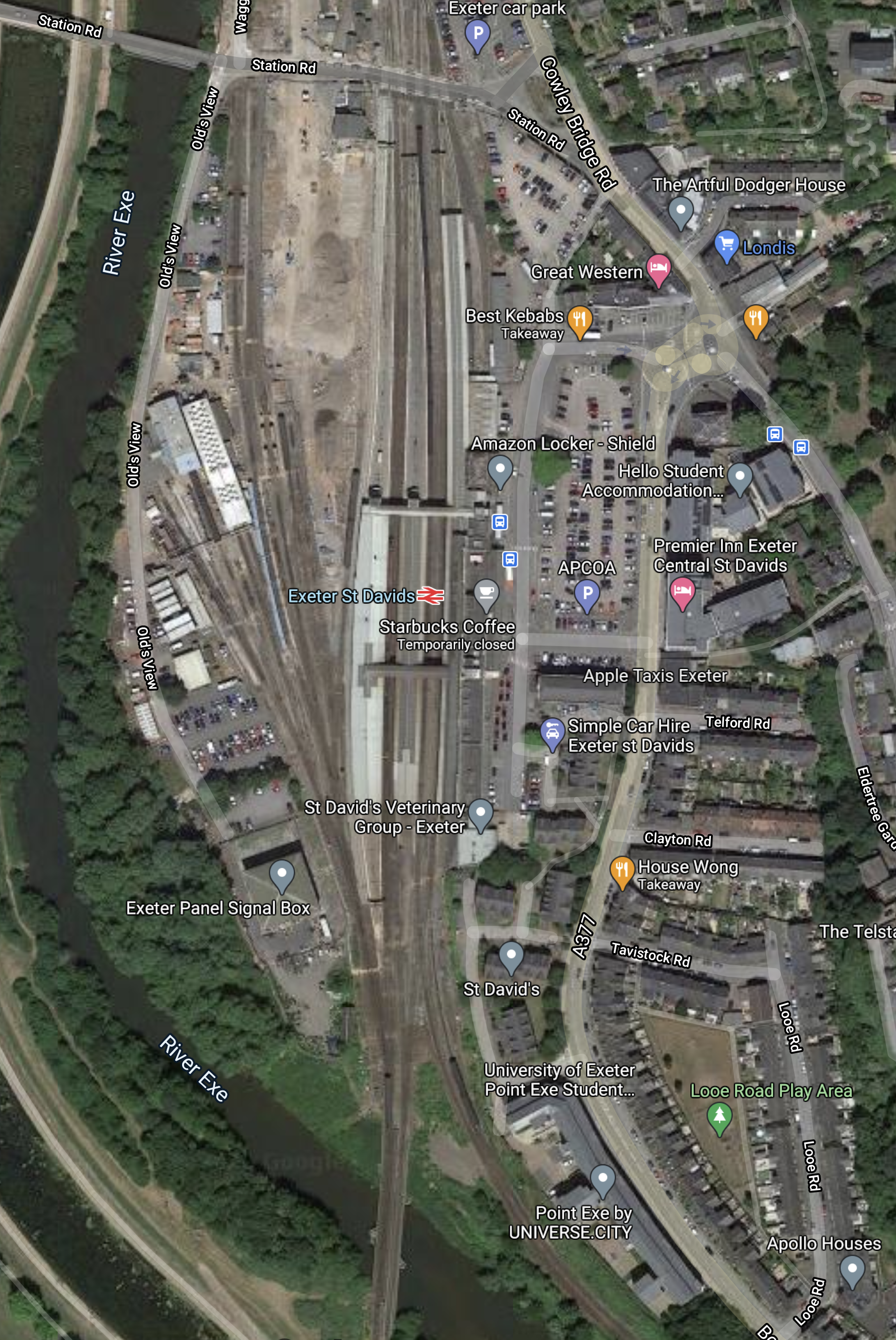
Services from London Waterloo and Salisbury currently turnback at Exeter St. Davids station in the following manner.
- They arrive from the track running to the station from the South East.
- They unload passengers in Platform 1 which is the long platform on the East side of the station.
- It seems that they then continue through the station to New Yard, where they refuel and do other things, that Class 159 trains do after a long journey.
- At the appropriate time, they return to Platform 1, where they load up with passengers and leave by the way they arrived.
If a charging system or electrification, were to be added to Platform 1, the trains would be able to fill up in the station.
- Currently, it appears that the Class 159 trains take over an our to do this complicated manoeuvre.
- Hitachi are quoting a charging time of 10-15 minutes for their Regional Battery Train.
Could valuable minutes be saved, that would enable a more passenger-friendly timetable?
Charging Regional Battery Trains At Yeovil Junction Station
Currently, the timetable is arranged like this.
- The Salisbury to Exeter St. Davids train and the Exeter St. Davids to Salisbury trains pass at Yeovil Junction station.
- Both trains wait in the station for nearly fifteen minutes, which is an adequate time to fully-charge the batteries.
The picture shows the two trains in the platform together.
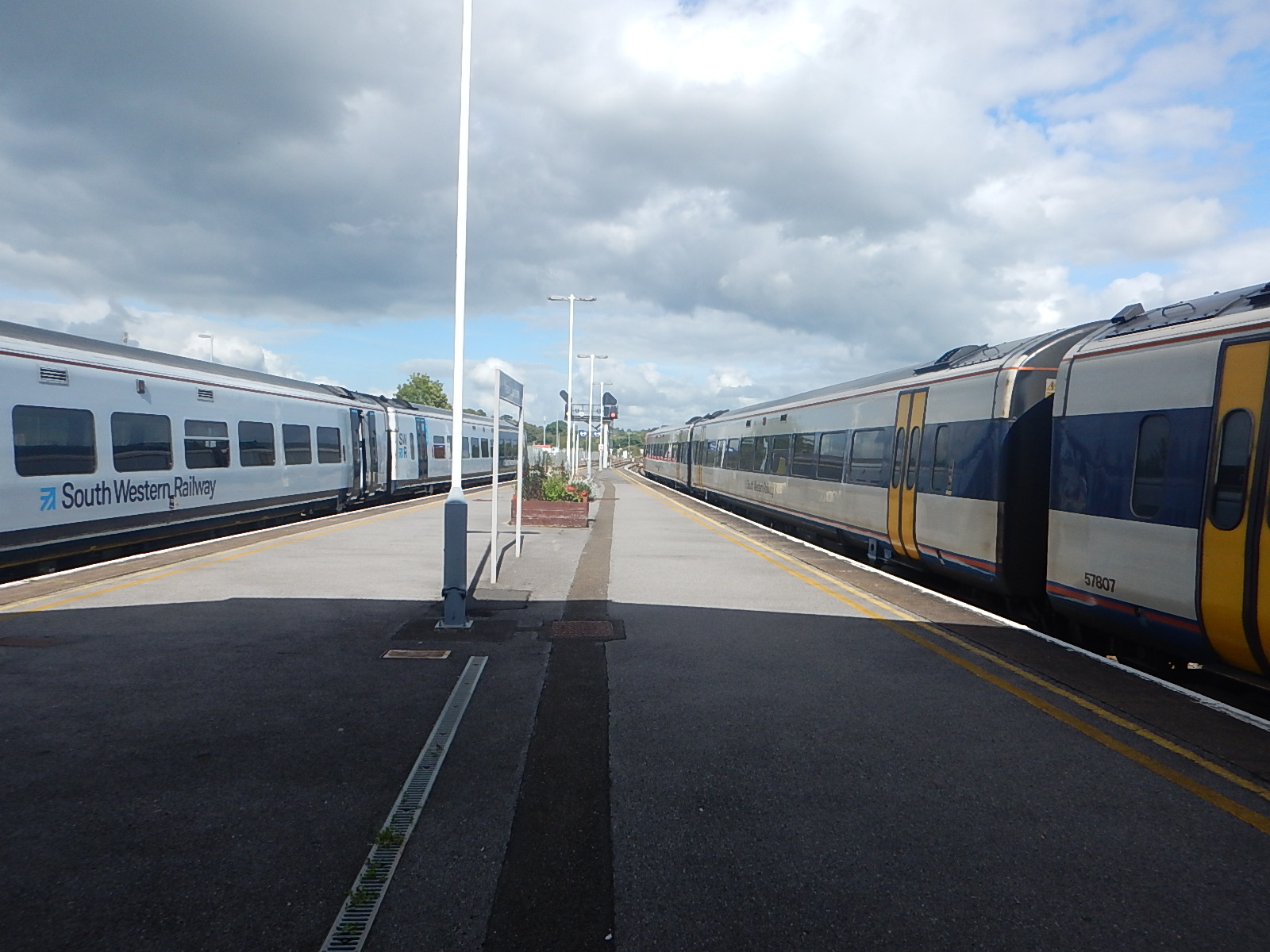
Currently, the timetable would seem to be ideal for battery electric train operation between Salisbury and Exeter St. Davids stations.
A Possible Timetable Between London Waterloo And Exeter St. Davids
It did occur to me, that South Western Railway might be running a timetable, that could possibly be designed for Regional Battery Trains.
- A nine-car formation between London Waterloo and Salisbury could be replaced with a nine-car or a pair of five-car Regional Battery Trains.
- A six-car Salisbury and Exeter St. Davids could be replaced by a five-car Regional Battery Train.
- Trains could pass at Gillingham station between Salisbury and Yeovil Junction, as it is a two-platform station about half-way.
- Trains could pass at Honiton station between Yeovil Junction and Exeter St. Davids, as it is a two-platform station about half-way.
I think if it was needed, that two tph would be possible not only between London Waterloo and Salisbury, but also between London Waterloo and Exeter St. Davids.
I also think that the following detailed service pattern would be possible.
- A pair of five-car Regional Battery Trains would leave London Waterloo at a frequency of two tph.
- The front train would be for passengers for all stations between London Waterloo and Exeter St. Davids.
- The rear train would only be for passengers for all stations between London Waterloo and Salisbury.
- On arrival at Salisbury, both trains would charge their batteries.
- When the batteries were fully-charged, the two trains would split.
- The front train would continue on its journey to Exeter St. Davids, leaving the rear train in the platform.
- The Exeter St. Davids to London Waterloo service would arrive at Salisbury and join to the train in the platform.
- The pair of trains would then run to London Waterloo.
This service pattern has the big advantage that passengers travelling between a station East of Salisbury and one to the West of Salisbury, will not have to change trains
- All stations on the line also get a two tph service.
- Services would be the same or better on the whole route, to the pre-COVID-19 timetable.
- There would be extra capacity between London and Basingstoke.
A First Visualisation Of Headbolt Lane Station
This visualisation of the proposed Headbolt Lane station in Kirkby has appeared on several web sites.
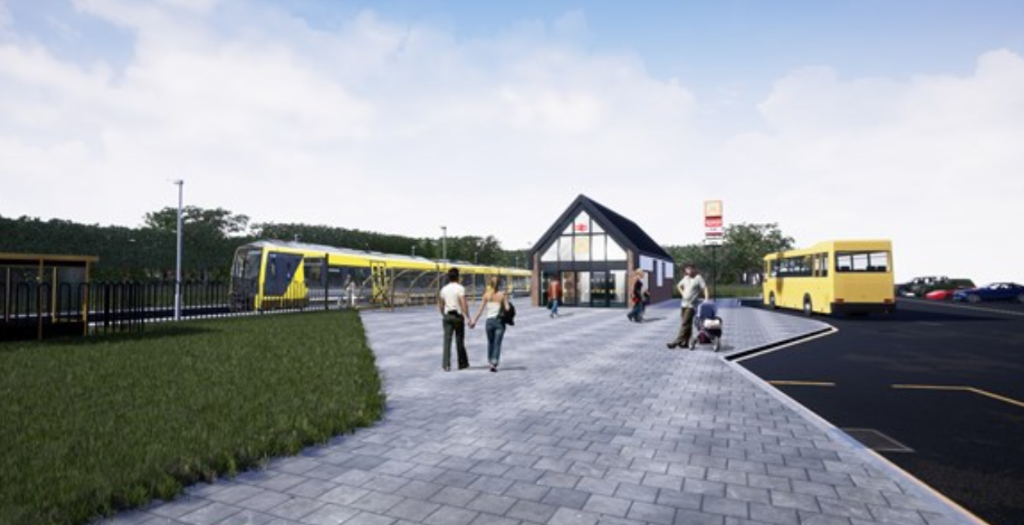
Wikipedia also says that the station will have one platform and as there is a Class 777 train on the left hand side of what I take to be the station building, I would assume that is the platform.
It looks an interesting station layout with a wide concourse with trains on one side and buses on the other.
I can’t work out from the image, if there is a long shelter alongside the train, as one sees on some tram stops. But if it was felt necessary one could surely be fitted to give passengers some covering in inclement weather.
As the station also features five-hundred parking spaces, these must be arranged around the station on this side of the railway, which is currently just a single track.
The Plans On Rail Future
This page on the Rail Future web site is entitled A Station Back In Skelmersdale and it indicates the following.
- A map shows a spur, which is connected to the Kirkby and Wigan Line, by a large triangular junction between Rainford and Upholland stations, running North to Skelmersdale.
- Services of two tph between Liverpool and Skelmersdale and an hourly service between Manchester and Skelmersdale are proposed.
- Rainford station would appear to exchange a direct link to Manchester for a direct link to Liverpool. But then Rainford is in Merseyside and Upholland and Skelmersdale are in Lancashire.
With these proposals the junction and the spur would only need to be single-track, with Skelmersdale station only needing a single-platform.
Could the following simplifications also be done?
- Upholland and Rainford stations become single platform stations
- The track between the two stations is mothballed or even removed.
- There would only be a single track between both stations and Skelmersdale station.
There’s certainly scope to save money on construction and maintenance.
Could this single track and platform design be the reason, why Headbolt Lane station only has a single platform?
Consider.
- The current Kirkby station, handles four tph to and from Liverpool City Centre on a single platform.
- The line becomes double-track to the East of Fazakerley station.
- I suspect double-track is needed to allow 4 tph
I suspect Headbolt Lane station could handle four tph to and from Liverpool, but there may need to be some double-track between Kirkby and Headbolt Lane stations.
I also estimate that to travel the return journey on the approximately eight miles between Headbolt Land and Skelmersdale station will take about thirty minutes.
Would this mean that it were possible to create a timetable, which allowed four tph between Liverpool and Headbolt Lane stations and two tph between Headbolt Lane and Skelmersdale stations?
- The single platform would be bi-directional.
- Two tph out of four arriving at Headbolt Lane station would reverse and go back to Liverpool.
- The other two tph would continue to Skelmersdale.
- The two tph returning from Skelmersdale would continue to Liverpool.
It would be one for the Busby Berkeley of train time-tabling.
The alternative of running four tph between Liverpool and Skelmersdale would need the following.
- Full double-tracking between Fazakerley and Skelmersdale stations.
- Two platform stations at Kirkby, Headbolt Lane and Rainford, which would need step-free bridges.
It would be a much more expensive scheme.
How Much New Electrification Would Be Needed?
Given the politics of third-rail electrification, I suspect the scheme will use as little as possible.
If the battery-equipped Class 777 trains can run the return journey between Kirkby and Skelmersdale stations, then all track to the East of Kirkby station could be without electrification.
This would probably also mean that the current power supply wouldn’t need to be upgraded to cope with additional electrification.
Could There Be A Two tph Service Between Skelmersdale And Manchester?
I don’t think a single-track line between Upholland and Skelmersdale would rule this out, but having two two tph services might need a second platform at Skelmersdale station.
On the other hand, the Manchester and Liverpool services could be timed to allow a cross-platform interchange at Skelmersdale.
This would mean that someone wanting to go between say Sandhills and Bolton would go direct with a quick change at Skelmersdale.
Could There Be Through Running Between Manchester And Kirkby?
Four tph between Liverpool and Headbolt Lane station with two tph extending to Skelmersdale, running through the single-platform stations at Kirkby, Headbolt Lane and Rainford, would probably make the current Manchester and Kirkby service difficult, if not impossible.
But as the change at Kirkby will be replaced with one at Skelmersdale, it would be more of an inconvenience than a disaster.
In addition, if two tph were to be run between Manchester and Skelmersdale and the trains were timetabled to meet at Skelmersdale, this would effectively be a pseudo-through service.
A single track could be left between Upholland and Rainford for engineering trains and possibly the occasional freight train.
Strategic Car Parking
Consider.
- The new Headbolt Lane station, is going to be provided with five hundred car-parking spaces.
- The new Skelmersdale station will probably have adequate provision.
- At the present time, Rainford and Upholland stations don’t appear to have any parking.
I would suggest, that a good look is taken at car and bicycle parking at all stations to the East of Headbolt Lane station.
Conclusion
It appears to be a scheme, that has been designed to keep costs to a minimum.
But that probably means, it is more likely to get built!
I also like the concept of a large station concourse alongside a single platform and track, which will probably be without electrification. It should be very safe too!
It is strange, that I’ve not seen that layout before either in the UK or on the many railways, that I’ve used abroad.
Beeching Reversal – Increased Services To Nottingham And Leicester, via Syston And Loughborough From Melton Mowbray
This is one of the Beeching Reversal projects that the Government and Network Rail are proposing to reverse some of the Beeching cuts.
It is one of a pair of submissions from the local MP; Alicia Kearns. The other is More Stopping Services At Radcliffe-on-Trent And Bottesford Stations On The Poacher Line Between Grantham And Nottingham.
When I heard of the MP’s submissions, I wrote MP Campaigns To Extend Train Services For Melton Borough and the following uses that post as a starting point.
Wikipedia says this about services at Melton Mowbray station.
- There is an hourly off-peak service in both directions between Stansted Airport and Birmingham, that calls at Cambridge, Peterborough, Oakham and Leicester.
- East Midlands Railway and their predescessor have added services to London via Corby and to Derby and East Midlands Parkway.
When you consider, that both Bottesford and Melton Mowbray are the same Council and Parliamentary constituency, it does seem that a more direct train service is needed between Bottesford and Melton Mowbray stations.
It does seem to me that some innovative thinking is needed.
If the current plans to fulfil British Rail’s ambition of an Ivanhoe Line running from Lincoln to Burton-on-Trent via Nottingham, East Midlands Parkway, Loughborough and Leicester, are carried out, that will give important towns to the West of Leicester much better rail connections.
Given that High Speed Two is coming to East Midlands Hub station at Toton and there will be a Bedford and Leeds service run by Midlands Connect using High Speed Two classic-compatible trains, that I wrote about in Classic-Compatible High Speed Two Trains At East Midlands Hub Station, I wonder if in the interim, there should be more trains between Derby and Melton.
- Intermediate stations would be Syston, Sileby, Barrow-upon-Soar, Loughborough, East Midlands Parkway Long Eaton and Spondon.
- An hourly frequency would double the service frequency at smaller stations like Sileby and Barrow-upon-Soar.
- The Southern terminal could be Melton station, but I feel Corby or Peterborough stations would be better, as this would improve services at Oakham station. We should not forget Rutland!
- As Corby will be an electrified two-platform station with a two trains per hour (tph) service to London, this could work quite well as a Southern terminus.
- Peterborough would have advantages and give a good connection to Cambridge, London and Scotland, but improvements to the current Birmingham and Stansted Airport service would have similar effects.
This route would be just as valuable after High Speed Two opens through the East Midlands Hub station, as it will give fast ongoing connections to Birmingham, Leeds, Newcastle and York.
Electrification Of The Midland Main Line
I feel strongly, that full electrification of the Midland Main Line could be a step to far.
- Electrification, through Leicester station will mean a complete closure of the station for a couple of years.
- Electrification of the route North of Derby, through the Derwent Valley Mills, which is a World Heritage Site, will be opposed by the Heritage Taliban with all their might.
But.
- Electrification of the route between Clay Cross North Junction and Sheffield via Chesterfield will take place in conjunction with High Speed Two
- Electrification to Market Harborough, which is sixteen miles South of Leicester will happen.
- East Midlands Railway’s new Class 810 trains could be fitted with a battery option giving a range of between 55 and 65 miles.
- Pantographs on these trains can go up and down with all the alacrity of a whore’s drawers.
If the easier section of electrification between Leicester and Derby stations, were to be installed, this would enable the following routes to be run using battery-equipped Class 810 trains.
- London and Derby, where battery power would be used through Leicester.
- London and Nottingham, where battery power would be used through Leicester and between East Midlands Parkway and Nottingham.
- London and Sheffield, where battery power would be used through Leicester and between Derby and Clay Cross Junction.
- Lincoln and Burton-on-Trent, where battery power would be used South of Leicester and North of East Midlands Parkway.
- Derby and Corby, where battery power would be used between Syston and Corby.
There would also be the service between Derby and Norwich, which might be able to be run by a similar train.
Conclusion
I think the ideal way to achieve the MP’s objective would be to extend a proportion of London St. Pancras and Corby services to the Midland Main Line.
But the problem with this, is that the Corby trains will be Class 360 trains, which are electric, so the thirty-six mile route between Corby and the Midland Main Line would need to be electrified.
On the other hand, a shuttle train could be used between Corby and Leicester.
They would call at Oakham, Melton Mowbray and Syston stations.
If the Midland Main Line to the North of Leicester were to be electrified, Battery electric trains could be used on the route, with charging at Leicester and Corby.
Westbury Station – 30th July 2020
I went to Westbury station today and took these pictures.
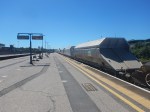
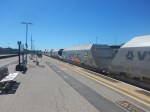
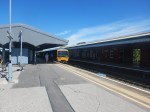


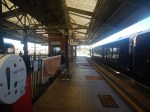
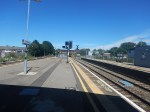
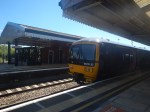
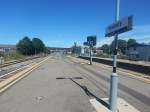
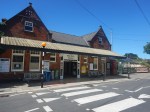
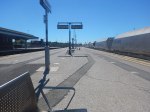
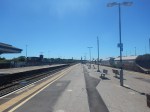
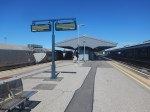
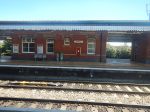
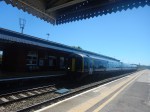
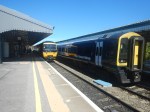
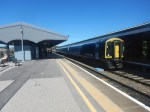

I found Westbury station to be a station in extremely good condition.
It also had a buffet, where I was able to purchase a delicious ice cream.
Passenger Services Through Westbury Station
I was at the station for about an hour and several trains passed through.
Great Western Railway services through the station include.
- One train per two hour (tp2h) – London Paddington and Exeter St. Davids – Stops
- One tp2h – London Paddington and Penzance – Passes through
- One tp2h – London Paddington and Plymouth – Passes through
- One train per hour (tph) – Cardiff Central and Portsmouth Harbour – Stops
- One tp2h – Great Malvern and Westbury
- One tp2h – Gloucester and Weymouth – Stops
- One tp2h – Swindon and Westbury
Train classes included Class 800 trains and Class 166 trains.
South Western Railway services through the station include.
- Five trains per day – Salisbury and Bristol Temple Meads – Stops
Train classes include Class 159 trains.
Battery Trains Through Westbury
Hitachi’s Class 800 train with a battery electric capability or Regional Battery Train, is described in this infographic from the company.
The proposed 90 km or 56 mile range could even be sufficient take a train between Westbury and Bristol Temple Meads stations on a return trip.
Many of the trains through Westbury go to the same stations.
Distances are as follows.
- Bristol Temple Meads – 28 miles
- Newbury – 42 miles
- Salisbury – 24 miles
- Swindon – 32.5 miles
- Taunton – 47 miles
It looks like all of these places should be in range of an electric train with a battery capability, providing there is a charging facility at the other end.
An Electrification Island At Westbury Station
I have been advocating an island of electrification around Westbury station for some time and feel about a dozen miles of electrification through the station would be sufficient for Class 800 trains with a battery capability to bridge the gap.
- At Newbury, trains would access the current electrification into London Paddington.
- Between Exeter and Taunton, the rail route runs alongside the M5, so why not electrify this stretch, as the wires will not be so noticeable?
Looking at Westbury, to my untrained eye, it would appear that a short section of electrification around the station, would not be the most challenging of projects.
I believe that discontinuous electrification between Newbury and Exeter would be possible and could gradually be extended across Devon and Cornwall.
It should also be noted that one of Hitachi’s Regional Battery Trains has a range of 56 miles, so that these places from Westbury could be an return trip on batteries, with a well-driven train with excellent energy management.
- Bath Spa – 17 miles
- Bradford-on-Avon – 7 miles
- Bristol Temple Meads – 28 miles
- Chippenham – 16 miles
- Frome – 6 miles
- Salisbury – 24 miles
- Trowbridge – 4 miles
- Warminster – 9 miles
Obviously, the number of stops and the terrain will play a part.
Freight Might Drive Full Electrification Through Westbury Station
As the pictures show, there are heavy freight trains going through the area, which bring long and weighty loads of stone from the Mendips to London.
- There are regularly two or three stone trains in an average hour of the day.
- Like in the picture, I suspect they are usually hauled by a noisy, smelly, polluting and carbon-dioxide emitting Class 66 Locomotive. Not all of these, are as clean and well-maintained, as the one in the picture.
- Some trains start at Merehead Quarry, which is about fifteen miles from Westbury station.
I believe that we must decarbonise freight trains.
But freight and electric haulage is not a simple subject.
- I once had extensive talks with a Senior Crane Driver at the Port of Felixstowe during an Ipswich Town Away match. Ports don’t like overhead wires, as containers do get dropped and fall off rail wagons.
- Suppose a historic line without electrification, like the Settle and Carlisle has a serious land-slip, which it did a couple of years ago. How do you haul in the materials for repair?
- Because freight can be of a random and unpredictable nature, to electrify freight, you probably need to electrify the whole rail network.
For these and other reasons, we need independently-powered freight locomotives and I feel that a new freight locomotive will develop, that will be needed by the rail industry all over the world.
There are several solutions.
Biodiesel
Biodiesel is the simplest solution and would mean that the current diesel locomotives could be used.
In Grant Shapps Announcement On Friday, I talked about Government support for an industrial process, that has been developed by Oxford University and their spin-off company; Velocys, from the the Fischer-Tropsch Process, which can produce, the following fuels from household and industrial waste.
- Aviation biofuel.
- Biodiesel.
A plant to process 500,000 tonnes per year of Lincolnshire finest waste is now being built at Immingham to create 50,000,000 litres of fuel, by Altalto, which is a partnership between Velocys, British Airways and Shell.
If nothing else, waste-to-fuel is the interim solution to the decarbonisation of tricky sectors like heavy rail freight, rail construction, large diesel-powered machines, ships or long-distance aviation.
This fuel could be ideal to haul the heavy stone trains from the Mendips.
Hydrogen
I did think, it would be hydrogen powered, but I’m not so sure now, as hydrogen trains and locomotives seem to have a slow development cycle.
Although, there is one factor, that might influence the use of hydrogen as a fuel, which I wrote about in Thirsty High-Rollers … Mining’s Heavy Haulers Prime Candidates For Hydrogen Conversion.
Mining and quarrying don’t have a good green image, but converting mines and quarries to hydrogen power, would surely have operational and good public relational advantages.
It would also ensure a plentiful and convenient supply of hydrogen, for any hydrogen-powered locomotives.
Hydrogen-powered locomotives, with their electric transmissions, would probably be able to use electrification for traction power, so they would put pressure on the Government to electrify between Westbury and Newbury stations, so that there was a fully-electrified route between the Mendips and London.
Rolls-Royce’s Staggering Development
Staggering is not my word, but that of Paul Stein, who is Rolls-Royce’s Chief Technology Officer.
He used the word in a press release, which I discuss in Our Sustainability Journey.
To electrify aviation, Rolls-Royce has developed a 2.5 MW generator, based on a small gas-turbine engine, which Paul Stein describes like this.
Amongst the many great achievements from E-Fan X has been the generator – about the same size as a beer keg – but producing a staggering 2.5 MW. That’s enough power to supply 2,500 homes and fully represents the pioneering spirit on this project.
This generator is designed for flight and the data sheet for the gas-turbine engine is available on the Internet.
- It has a weight of under a couple of tonnes compared to the thirteen tonnes of the diesel engine and generator in a Class 68 locomotive.
- It is also more powerful than the diesel.
- It looks to be as frugal, if not more so!
- Rolls-Royce haven’t said if this gas-turbine can run on aviation biofuel, but as many of Rolls-Royce’s large engines can, I would be very surprised if it couldn’t!
Rolls-Royce’s German subsidiary is a large producer of rail and maritime diesel engines, so the company has the expertise to customise the generator for rail applications.
I can see this generator ending up in a high-powered heavy independently-powered electric locomotive for hauling stone and inter-modal container trains.
As with hydrogen-powered locomotives, this new breed of gas-turbine locomotive with its electric transmission, will be able to use electrification, where it exists.
So would locomotive developments drive the electrification through Westbury and especially between Westbury and Newbury?
I would rate is likely, that in the future, increasingly rail locomotives will have sophisticated electric transmissions, between their prime motive power of diesel, hydrogen, gas-turbine or whatever and their traction system. All of these locomotives will have pantographs and/or third-rail shoes to access electrification, where it exists.
These locomotives will surely add to pressure to electrify between Westbury and Newbury.
Biodiesel is surely the interim freight solution, if one is needed.
Future Zero-Carbon Passenger Services
Passenger services through Westbury can be divided into three groups.
Great Western Railway’s Services Between London Paddington And Devon And Cornwall
From Beeching Reversal projects put forward over the last few months, it looks like these services will increase and stop at several new and refurbished stations.
I can see discontinuous electrification being used to create a series of electrification islands to allow Class 800 trains, with a battery capability reach the Far South West of Cornwall.
Electrification islands could be at places like
- Around Westbury station.
- Between Taunton and Exeter St. Davids stations alongside the M5.
- Between Plymouth station and the Royal Albert bridge.
- Around Bodmin Parkway station
- Around Truro station
- At Newquay station
- At Penzance station
Obviously, the number and type of the various installations will depend on the methods used and the engineering required.
I do believe that with Hitachi trains, that meet their specification, that trains will be able to travel between Paddington and Penzance without touching a drop of diesel.
Great Western Railway’s Cardiff Central And Portsmouth Harbour Service
The service can be split into the following legs.
- Cardiff Central and Filton Junction – 33 miles – Electrified
- Filton Junction and Bristol Temple Meads – 5 miles – Not Electrified
- Bristol Temple Meads and Westbury – 28 miles – Not Electrified
- Westbury and Salisbury – 24 miles – Not Electrified
- Salisbury and Southampton Central – 15 miles – Not Electrified
- Southampton Central and Portsmouth Harbour – 26 miles – Electrified
It would appear that a train with the performance and range on batteries of Hitachi’s Regional Battery Train should be able to handle the route, provided the following conditions are met.
- It can leave the Great Western Main Line at Filton Junction with a full battery.
- It can leave the electrification at Westbury station with a full battery.
- It can leave Southampton Central station with a full battery.
- Third-rail shoes are fitted for working between Southampton Central and Portsmouth Harbour stations.
Recharging batteries at Bristol Temple Meads and Salisbury stations, although probably welcome, are not necessary.
I can envisage Hitachi Class 800 and Class 385 trains being able to fulfil this role, along with Bombardier Electrostars and Aventras and Siemens Desiros.
As Great Western Railway have forty-five Class 387 trains, conversion of some of these to battery electric operation must be a possibility.
Great Western Railway’s Gloucester and Weymouth Service
The service can be split into the following legs.
- Gloucester and Bristol Temple Meads – 39 miles – Not Electrified
- Bristol Temple Meads and Westbury – 28 miles – Not Electrifield
- Westbury and Dorchester Junction – 52 miles – Not Electrified
- Dorchester Junction and Weymouth – 4 miles – Electrified
It would appear that a train with the performance and range on batteries of Hitachi’s Regional Battery Train should be able to handle the route, provided the following conditions are met.
- It can leave Gloucester station with a full battery.
- It can leave Bristol Temple Meads with a full battery.
- It can leave Westbury with a full battery.
- It can leave the South Western Main Line at Dorchester Junction with a full battery.
It would be a tight trip for a battery electric train and I suspect, that there would be some extra electrification between Westbury and Dorchester Junction or perhaps charging facilities at Frome or Yeovil Pen Mill stations.
The alternative would be to fit larger batteries on the train.
As to the train to be used, a Class 387 train with a battery capability would surely be ideal.
Great Western Railway’s Swindon and Westbury Service
The service can be split into the following legs.
- Swindon and Chippenham – 16 miles – Electrified
- Chippenham and Westbury- 16 miles – Not Electrified
It would appear that a train with the performance and range on batteries of Hitachi’s Regional Battery Train should be able to handle the route, provided the following conditions are met.
- It can leave Chippenham station with a full battery.
This would have sufficient charge to do the thirty-two mile round trip from Chippenham to Westbury and back.
As to the train to be used, a Class 387 train with a battery capability would surely be ideal.
South Western Railway’s Bristol Temple Meads and Salisbury Service
The service can be split into the following legs.
- Bristol Temple Meads and Westbury – 28 miles – Not Electrified
- Westbury and Salisbury- 24 miles – Not Electrified
t would appear that a train with the performance and range on batteries of Hitachi’s Regional Battery Train should be able to handle the route, provided the following conditions are met.
- It can leave Bristol Temple Meads station with a full battery.
- It can leave Westbury with a full battery.
- It can leave Salisbury with a full battery.
But, I do wonder, if with a slightly larger battery, a well-driven train could work the route with only charging the battery at Westbury station?
Conclusion
Could Westbury station develop into a zero-carbon rail transport hub for Wiltshire?
- It has an hourly train service between London Paddington and Exeter St. Davids.
- It has an hourly service between Bristol Temple Meads and Weymouth.
- There are hourly services to stations like Bath Spa, Bradford-on-Avon, Bristol Temple Meads, Chippenham, Dorchester, Frome, Swindon, Taunton, Trowbridge and Yeovil
It could be electrified to charge battery electric trains as they pass through.
Speeding Down To Bristol By Train
On Wednesday, I went to Bristol to take a few photographs.
I took these pictures, where the electrification ran out at Chippenham station.
There is some half-hearted erection of electrification going on between Chippenham station and Box Tunnel, but despite the fact, that the iconic tunnel is ready for wires, construction work seemed noticeable by its absence.
Line Speed Observations
I had my personal dynamometer car connected for much of the journey.
- Between Southall and Slough we were at times running at only a few miles short of 130 mph. Are Great Western Railway starting to wind up the speed.
- Most of the journey, when well clear of stations, we were at around 125 mph until Chippenham station.
- At Chippenham, it was noticeable that the diesel engine under my seat kicked in.
- Onwards from Chippenham, we were at around 100 mph on diesel.
I suspect that London and Bristol services could be improved and/or speeded up.
- Timings could be reduced between London Paddington and Reading by running at faster speeds under digital ERTMS signalling. The train certainly felt comfortable at 128 mph.
- Any increase in electrification past Chippenham station will increase the the reach of a Class 800 train with a battery capability on a mile-for-mile basis.
- Trains should be able to increase speed towards 125 mph for some of the twelve miles between Chippenham and Bath Spa stations.
- As trains would not be swapping between diesel and electricity in Chippenham station, would panning up and down happen automatically further West?
- It might be possible to fit in a third London Paddington and Bristol service, that doesn’t stop at Chippenham station.
None of these improvements would need the line through Bath Spa station to be electrified.
Bristol Temple Meads Station – 28th July 2020
I took these pictures of Bristol Temple Meads station, when I visited.
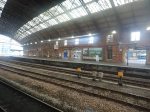
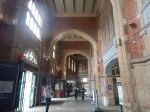
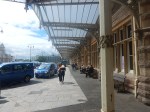
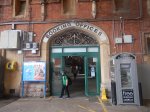
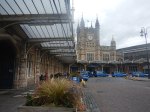
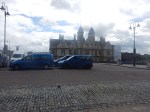
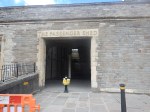



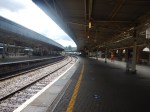

Note.
- The station is Listed to the highest level of Grade 1.
- London services seem to use Platforms 15 and 16.
- There is quite a fair bit of space between the tracks.
.Do Network Rail need all the hassle of full electrification of one of Brunel’s most famous creations?
Bristol Temple Meads Station And Trains With a Battery Capability
Hitachi’s Class 800 train with a battery electric capability or Regional Battery Train, is described in this infographic from the company.
The proposed 90 km or 56 mile range would even be sufficient take a train between Chippenham and Bristol Temple Meads stations on a return trip. So this means that one of these trains could work the London Paddington and Bristol Temple Meads stations service via Bath Spa using the electrification between London Paddington and Chippenham stations.
But where could trains reach, if they were able to leave Bristol Temple Meads station with a fully-charged battery?
- Bristol Parkway – 6 miles
- Cardiff Central – 5 miles to the electrified Great Western Main Line.
- Cheltenham Spa – 41 miles
- Filton Abbey Wood – 4 miles
- Gloucester – 39 miles
- Newport – 5 miles to the electrified Great Western Main Line.
- Severn Beach – 13.5 miles
- Taunton – 45 miles
- Westbury – 28.5 miles
- Weston-super-Mare – 19 miles
Note.
- Return trips to Bristol Parkway, Filton Abbey Wood, Severn Beach and Western-super-Mare would be possible.
- The other destinations will need charging facilities.
Other local destinations could be added as the Bristol Metro develops.
This Google Map shows the station.
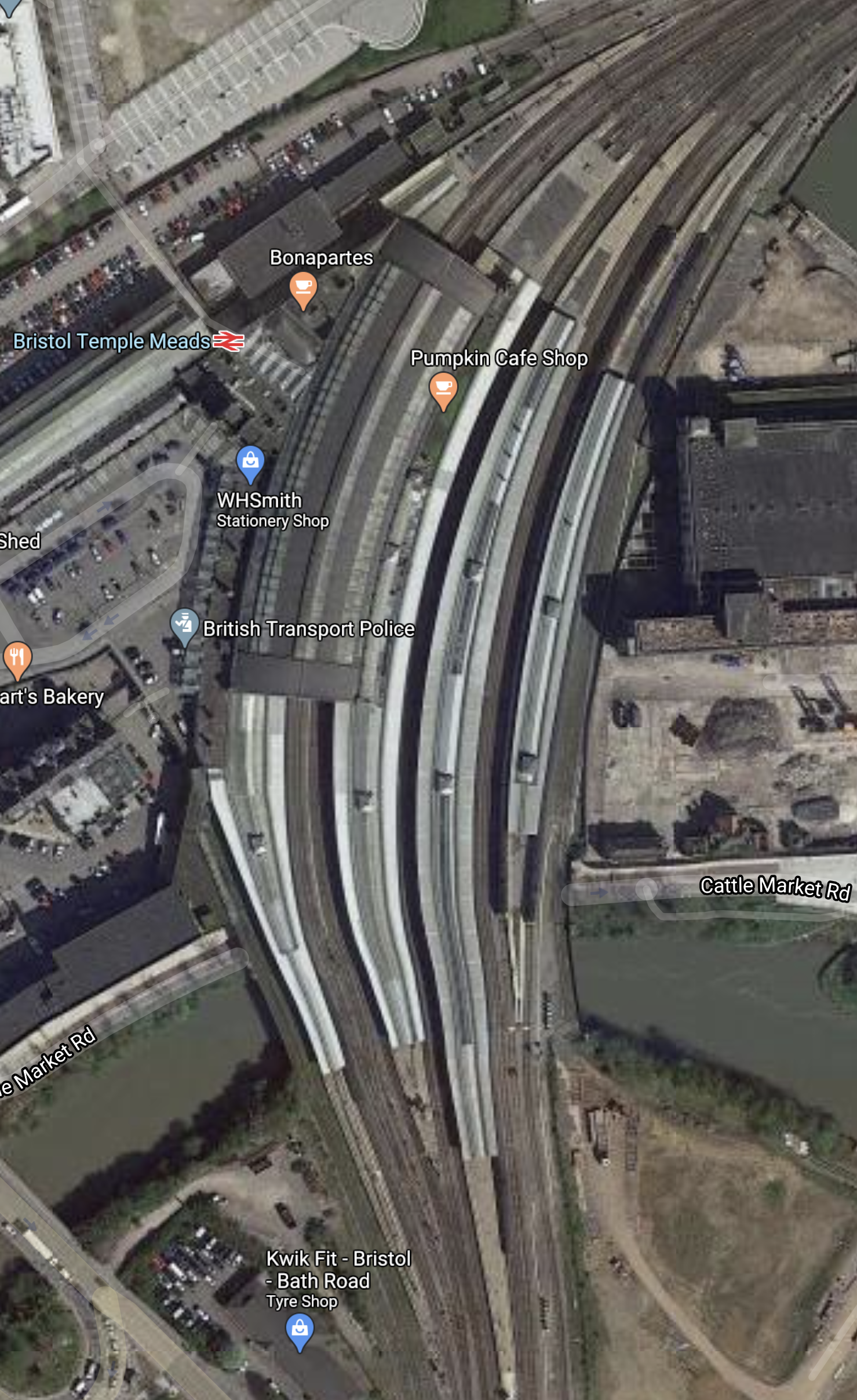
Note.
- The curving nature of the platforms doesn’t make 25 KVAC overhead electrification easy.
- Trains to and from London appear to use the two Eastern platforms 13 and 15.
- It might be possible to increase platform lengths to run longer trains to and from places like London.
I believe that there are three possible ways of charging the trains in Bristol Temple Meads station.
25 KVAC Overhead Electrification
This could be short length of standard 25 KVAC overhead electrification in platforms, that would be served by trains with pantographs like the Class 800 trains.
The driver would stop in the correct place in the platform and connect the pantograph, whilst waiting in the station.
Note that the Class 800 trains to and from London typically take 35-20 minutes to turn round, which is time enough for a full charge.
750 VDC Third-Rail Electrification
This could be short lengths of standard 750 VDC third-rail electrification in platforms, that would be used by standard third-rail shoes on trains.
The train would connect automatically and charging would take place, whilst waiting in the station.
A Specialist Charging Facility Like Vivarail’s Fast Charge System
Vivarail’s Fast Charge system is described in Vivarail Unveils Fast Charging System For Class 230 Battery Trains.
This extract from this Vivarail press release explains how the system works.
he concept is simple – at the terminus 4 short sections of 3rd and 4th rail are installed and connected to the electronic control unit and the battery bank. Whilst the train is in service the battery bank trickle charges itself from the national grid – the benefit of this is that there is a continuous low-level draw such as an EMU would use rather than a one-off huge demand for power.
The train pulls into the station as normal and the shoe-gear connects with the sections of charging rail. The driver need do nothing other than stop in the correct place as per normal and the rail is not live until the train is in place.
That’s it!
I believe that this system or something like it could be adapted to work with all trains with a battery capability in the UK.
I also believe that this system can be designed so that it is ultra-safe and doesn’t disrupt, the visual impact of the station.
Conclusion
Bristol Temple Meads station could be converted into a station, where a high proportion of trains ran solely on electricity.
Bath Spa Station – 28th July 2020
I took these pictures as I twice passed through Bath Spa station.


These are my thoughts.
Electrification Gantries On The Platforms
As somebody, whose eyesight is on the wane, I am not a lover of electrification, where the gantries are bolted to the platforms. These pictures show some installations of this type at Crouch Hill station.
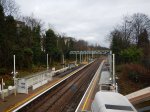
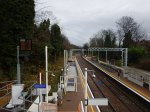
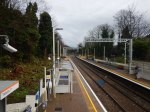
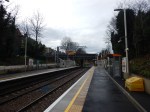
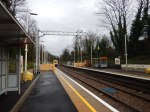
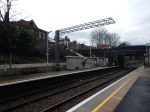
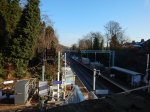
Would electrification gantries like these, be appropriate in Bath Spa station?
Could Lightweight Electrification Gantries Be Placed Between The Tracks?
These pictures show the wide gap between the two tracks in Bath Spa station.
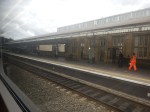
Could double-track lightweight structures, based on a design like this be placed between the tracks?
These structures are made out of laminated wood and are surely a possibility.
A Makeover For Bath Spa Station
If you look at much of the woodwork and paint in the fabric of the station, it appears tired and in need of refurbishment.
Whether the station is electrified or not, the station will need a high-class makeover.
Services Through Bath Spa Station
Three train companies run services through Bath Spa station.
- CrossCountry which only operates diesel trains.
- Great Western Railway operates Class 800 electro-diesel trains and some assorted diesel trains.
- South Western Railway only operates Class 159 diesel trains.
There are also some freight services hauled by diesel locomotives.
Trains leave Bath Spa station using one of three routes via either.
- Bristol Temple Meads station, which is 11.5 miles away without electrification.
- Chippenham station, which is where the electrification to London starts and is 13 miles away.
- Westbury station, which is on the Reading and Taunton Line and 17 miles away without electrification.
Most trains seem to go via Bristol Temple Meads station.
- The distance between Bristol Temple Meads and Chippenham stations are 24.5 miles.
- The distance between Bristol Temple Meads and Westbury stations are 28.5 miles.
Neither distance is that long.
An Alternative To Full Electrification
When I look at the distances between Bristol Temple Meads, Chippenham and Westbury stations, they tell me that they are within the range of Hitachi’s Class 800 train with a battery electric capability or Regional Battery Train, which is described in this infographic from the company.
The proposed 90 km or 56 mile range would even be sufficient take a train between Chippenham and Bristol Temple Meads stations on a return trip.
Notes for each station follow.
Bristol Temple Meads
Charging facilities would be needed.
Destinations in battery range would include.
- Bristol Parkway – 6 miles
- Cardiff Central – 5 miles to the electrified Great Western Main Line.
- Cheltenham Spa – 41 miles
- Gloucester – 39 miles
- Taunton – 45 miles
- Weston-super-Mare – 19 miles
Note.
- Return trips to Bristol Parkway and Western-super-Mare would be possible.
- The other destinations will need charging facilities.
Bristol Temple Meads station could become a major hub for battery trains.
All local services and all passing longer distance services could be trains with a battery capability.
I write more about Britol Temnple Meads station as a battery train hub in Bristol Temple Meads Station – 28th July 2020.
Chippenham
A train would leave Chippenham station with a full battery after charging on the fully-electrified route from London.
Chippenham and Weston-super-Mare would be in battery range with a charging facility at Weston-super-Mare station.
It should be noted that every extra mile of electrification past Chippenham, can be added to the distance electric trains with a battery capability can reach.
Westbury
Charging facilities would be needed.
Destinations in battery range would include.
- Salisbury – 24 miles.
- Southampton – 49 miles to the electrified South Western Main Line, at Southampton Central station.
- Weymouth – 53 miles to the electrified South Western Main Line at Dorchester Junction.
Note.
- A return trip to Salisbury would be possible.
- Trains would need to have the capability to access 750 VDC third-rail electrification.
- A few extra miles of electrification may make operation South from Westbury station easier, more reliable and allow more destinations to be included.
Westbury station could be a major hub for battery trains.
This Google Map shows Westbury station and the lines around it.
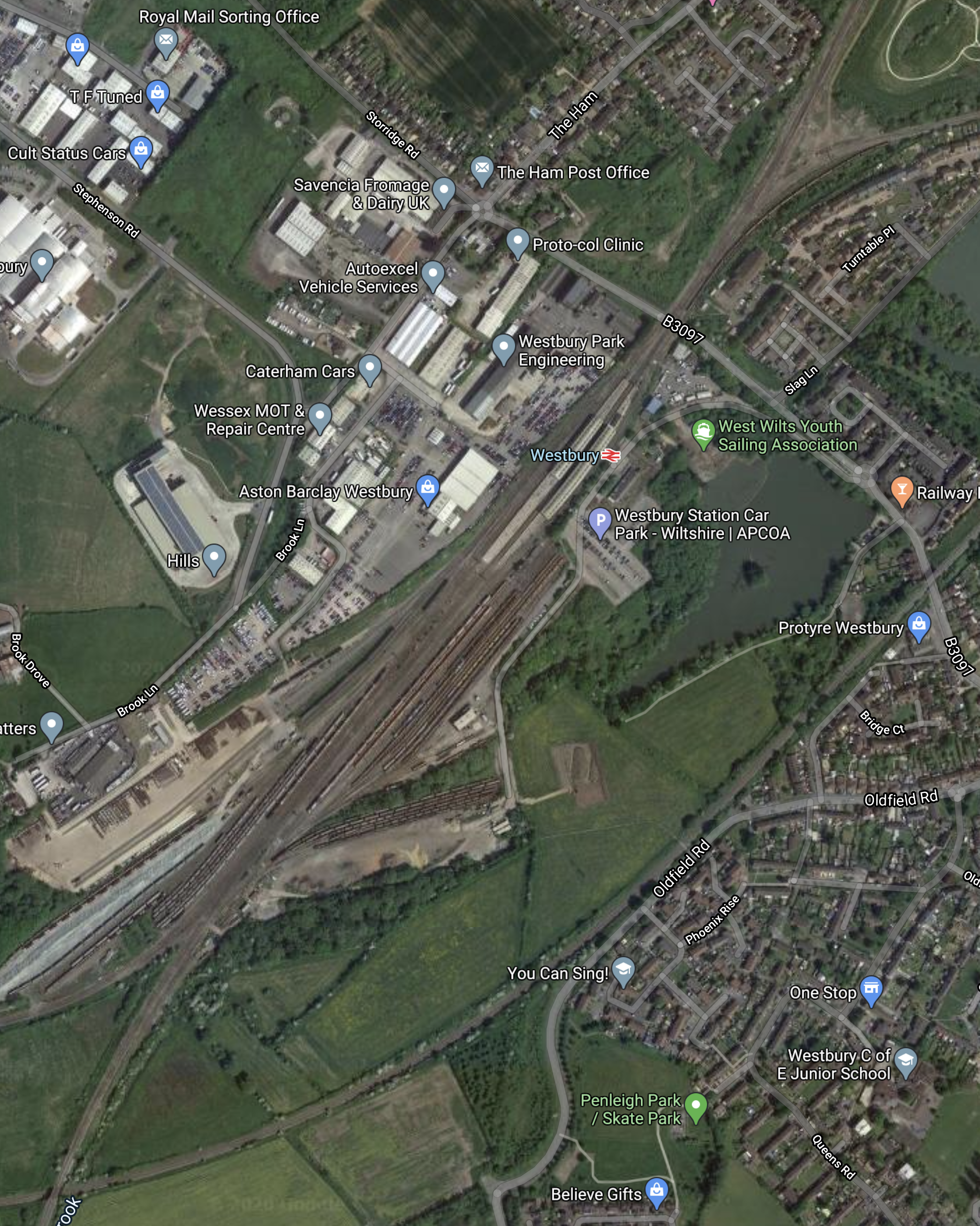
I would probably electrify a few miles either side of Westbury, so that passing trains could be in contact with the overhead wires for perhaps five to ten minutes and take a good long drink.
- Electrification could be either 25 KVAC overhead or 750 VDC overhead.
- Newbury, where the electrification to London starts is 42 miles away and trains can pick it up at speed.
- Taunton is 47 miles away and could be electrified to Exeter St. Davids.
Great Western Railway could run all their services between London Paddington and the South-West using Class 800 trains with a battery capability.
Conclusion
The prolitical, heritage and engineering problems of electrifying through Bath Spa station can be voided, by electrification and charging facilities at stations like Bristol Temple Meads, Taunton, Westbury and Weston-super-Mare.

