Battery Train Fast Charging Station Tested
The title of this post, is the same as that of this article on Railway Gazette.
This is the first paragraph.
A prototype Voltap rapid charging station for battery trains has been tested under real-world conditions for the first time.
The Voltap system is from Furrer + Frey and this is the data sheet on their web site, which is entitled Voltap Charging Station For Battery Trains.
Looking at the pictures in the article, the system seems to consist of two components.
- An overhead conductor rail suspended from pantries on the platform.
- A container that contains all the power supplies and control systems.
It certainly looks to be a simple system to install and operate.
- Charging would appear to take place through the pantograph, with no cables to handle.
- It is claimed to be able to charge a train in an extremely short time.
- The system is designed for areas, where the electricity network is perhaps a bit weaker.
- It is available in 15 KVAC and 25 KVAC.
- The system is future-proofed.
I can see these being suitable for several stations in the UK.
Norfolk And Suffolk
As an example, it looks like all the branch lines in Norfolk and Suffolk could be made suitable for battery-electric trains with Voltap systems at Cromer, Felixstowe, Lowestoft, Sheringham, Sudbury and Yarmouth.
Note.
- The Class 755 trains would be converted to battery-electric trains.
- Some stations would need more than one platform to have a charger.
- There may be other chargers to ensure that services like Norwich and Stansted Airport could be run electrically.
These pictures show Class 755 trains in various East Anglian stations.
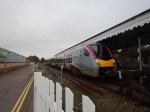

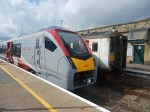
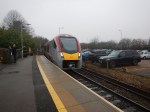
Felixstowe and some other stations may need a slightly different installation due to the narrow platforms, but I’m sure Furrer + Frey have installations for all platforms.
I think Great British Railways are going to need a lot of these chargers and the battery-electric trains to go with them.
The Uckfield Branch
The Uckfield Branch probably needs to have some form of charging at Uckfield station.

The picture shows the single long platform at Uckfield station.
Consider.
- Trains to work the branch will need to be able to use third-rail electrification between London Bridge station and Hurst Green junction.
- Hurst Green junction to Uckfield station and back is probably too far for a battery-electric train, so charging will be needed at Uckfield station.
- Third-rail charging could be used, but I suspect that Health and Safety will say no!
But using a dual-voltage train and a Voltap system at Uckfield station would probably be ideal.
Middlesbrough
From December the 13th, LNER will be running a new daily service between Middlesbrough and London, which I described in LNER’s Middlesbrough And London Service Starts On December 13th.
The route is fully electrified except for between Middlesbrough and Longlands Junction, where it joins the electrification of the East Coast Main Line, which is a distance of twenty-two miles.
Hitachi are developing a battery-train, which they call the Hitachi Intercity Tri-Mode Battery Train, which is described in this Hitachi infographic.

Note.
- LNER’s current Class 800 trains will probably be able to be converted to this train.
- Normally, these trains have three diesel generators.
- A range on battery power of upwards of forty miles would be expected.
If the range on battery-power can be stretched to perhaps sixty miles, this train should be capable of serving Middlesbrough without the need for any extra charging at the terminus.
I have just looked at the planned path of the first train on December 13th.
- The train comes from Heaton depot in Newcastle via Sunderland and Hartlepool.
- It passes through Middlesbrough station.
- It then reverses amongst the chemical and steel works to the East, before returning to Middlesbrough station.
Once back at Middlesbrough station, it waits for eight minutes before leaving for London.
It looks to me to be a safe route, to make sure that the train leaves on time. It also only occupies the platform at Middlesbrough station for less than ten minutes.
But it would also be possible to find space amongst the chemical and steel works to find space for a well-designed reversing siding with refuelling for the diesel-electric trains or a Voltap charging system for a battery-electric train.
Lincoln
I have been looking at the pattern of LNER’s London and Lincoln service today.
- There have been six trains per day (tpd) in both directions.
- Trains going North take up to seven minutes to unload passengers at Lincoln station before moving on to Lincoln Terrace C. H. S., which I would assume is a convenient reversing siding.
- Trains going South wait up to thirty-forty minutes at Lincoln station after arriving from Lincoln Terrace C. H. S., before leaving for Kings Cross.
It looks to me, that if London and Lincoln were to be run by a Hitachi Intercity Tri-Mode Battery Train, that the timings would be ideal for charging the batteries on the train in either the reversing siding or the station.
But surely, the charging system in the station would allow extension of the service to Grimsby and Cleethorpes, which has been stated as being part of LNER’s plans.
This picture shows Lincoln station.

I suspect that Swiss ingenuity could fit a Voltap charging system in the station.
These are a few distances from Lincoln station.
- Cleethorpes – 47.2 miles
- Doncaster – 35.4 miles
- Newark North Gate – 16.6 miles
- Peterborough – 56.9 miles
How many of these destinations could be reached by a battery-electric train, that had been fully-charged at Lincoln station.
Iron Ore Miner Orders Heavy-Haul Battery Locomotive
The title of this post, is the same as that of this article on Railway Gazette.
This is the first two paragraphs.
Mining company Roy Hill has ordered a Wabtec FLXdrive battery-electric heavy-haul freight locomotive. This will replace one the four ES44ACi diesel-electric locos used to haul its 2 700 m long iron ore trains, and is expected to reduce fuel costs and emissions by ‘double digit’ percentages while also cutting maintenance costs.
The locomotive is scheduled to be delivered in 2023. It will have a capacity of 7 MWh, an upgrade from the 2·4 MWh prototype which Wabtec and BNSF tested in revenue service in California earlier this year.
Note.
- It will have a 7 MWh battery.
- 2700 metres is 1.6 miles.
It looks to me, that the three diesel locomotives and one battery locomotive are arranged as a massive hybrid locomotive and I suspect that with sophisticated control systems, those double digit cuts in fuel costs and emissions would be possible.
A couple of years ago, I took this picture near Shenfield.
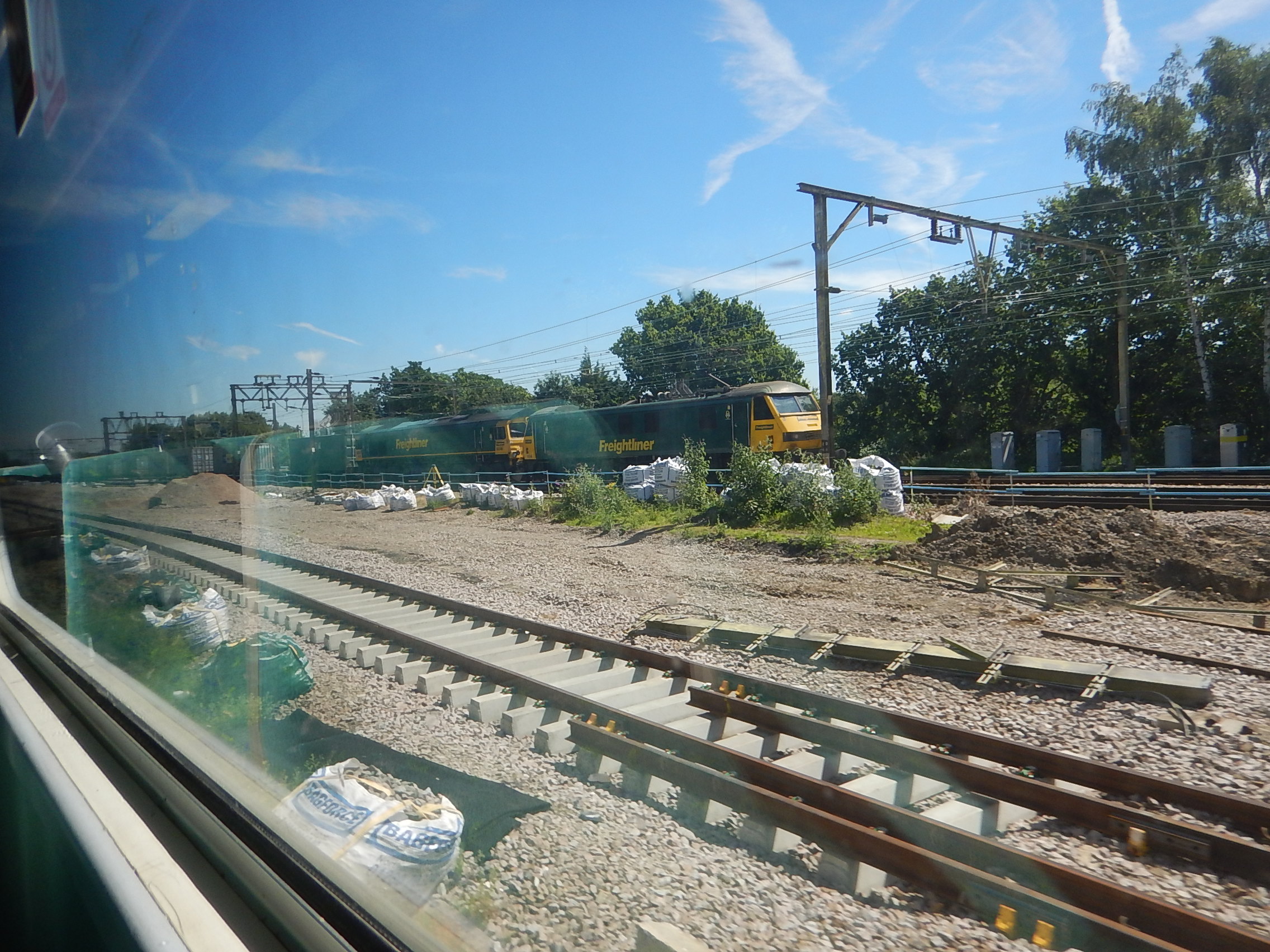
This double-headed train has a Class 90 electric locomotive and a Class 66 diesel locomotive at the front of a long freight train.
- The Class 90 locomotive has an TDM system for multiple working.
- The Class 66 locomotive has an AAR system for multiple working.
So does this mean that the two locomotives can’t work together, which if it does begs the question of what is happening.
- Had the Class 66 locomotive failed and Class 90 was acting as a Thunderbird?
- Was the Class 66 locomotive being moved from one depot to another for maintenance or repair?
- Was it an experiment to see if the two locomotives could work together?
I sometimes think that I didn’t see this unusual formation, but then the camera doesn’t lie.
But could we learn from what Wabtec are doing for Roy Hill in Australia?
The Class 93 Locomotive
Rail Operations Group have already ordered thirty Class 93 tri-mode locomotives from Stadler, which have following power ratings.
- Electric – 4000 kW
- Diesel – 900 kW
- Hybrid – 1300 kW
If this locomotive is capable of hauling the heaviest intermodal freight trains out of Felixstowe, Southampton and other ports and freight terminals, it could contribute to substantial reductions in the diesel fuel used and emissions.
As an example, I will use a freight train between Felixstowe North Terminal and Trafford Park Euro Terminal.
- It is a route of 280 miles.
- I will ignore that it goes along the North London Line through North London and along the Castlefield Corridor through Manchester Piccadilly station.
- There is fifteen miles without electrification at the Felixstowe end.
- There is under three miles without electrification at the Manchester end.
On this service , it could be as much as 94 % of diesel and emissions are saved, if the Class 93 locomotive can haul a heavy freight train out of Felixstowe. A few miles of strategically-placed electrification at the Ipswich end would help, if required.
It must also be born in mind, that the Class 93 locomotive is a 110 mph locomotive on electric power and could probably do the following.
- Run at 100 mph on the busy Great Eastern Main Line.
- Run at faster speeds on the West Coast Main Line.
- Fit in well with the 100 mph passenger trains, that run on both routes.
So not only does it save diesel and carbon emissions, but it will save time and make the freight train easier to timetable on a route with lots of 100 mph passenger trains.
The Class 93 locomotive looks like it could be a game-changer for long-distance intermodal freight, especially, if there were short sections of strategically-placed electrification, added to the electrified network.
Emissions could also be reduced further by using some for of sustainable fuel.

The picture shows a Class 66 locomotive, which is powered by Hydrotreated Vegetable Oil or HVO.
I can see that all diesel-powered trains and locomotives will be powered by sustainable fuels by the end of this decade.
A Wabtec Battery-Electric Locomotive
Wabtec is building a battery-electric locomotive for Roy Hill in Australia.
This article on Railway Age talks about Wabtec’s FLXdrive battery locomotives and describes some features of the locomotive for Roy Hill in Australia.
It mentions pantographs and overhead wires to charge the batteries.
- Wabtec’s prototype battery locomotive has a power output of 3.24 MW and a battery size of 2.4 MWh
- The Roy Hill battery locomotive has a power output of 3.24 MW and a battery size of 7 MWh
I could envisage Wabtec designing a UK-sized battery-electric locomotive with these characteristics.
- 2.5 MW power output, which is similar to a Class 66 locomotive.
- A battery size of perhaps 1.8 MWh based on Wabtec’s FLXdrive technology.
- A pantograph to charge the batteries and also power the locomotive where electrification exists.
- 75 mph operating speed.
- Ability to work in tandem with a Class 66 locomotive.
All technology is under Wabtec’s control.
This locomotive could have a range of at least fifty miles on battery power.
I think this locomotive could handle these routes.
- Peterborough and Doncaster via the Great Northern and Great Eastern Joint Line via Lincoln, with some form of charging at halfway.
- Felixstowe and Nuneaton, with some extra electrification at some point between Peterborough and Leicester.
- Oxford and Birmingham, with possibly some extra electrification in the middle.
One option for charging electrification, would surely be to electrify passing loops.
I think a battery-electric locomtive based on Wabtec’s FLXdrive technology could be a very useful locomotive.
Could Wabtec’s Battery-Electric Locomotive Pair-Up With A Class 66 Locomotive?
Roy Hill will use their locomotive to form a consist of three diesel locomotives and one battery locomotive to obtain double-digit savings of fuel and emissions, when hauling iron-ore trains that are 1.6 miles long on a route of 214 miles.
We don’t have massive iron-ore trains like this, but we do move huge quantities of segregates and stone around the country in trains generally hauled by Class 66 locomotives.
So could a Class 66 or another suitable locomotive be paired-up with a battery-electric locomotive to make savings of fuel and emissions?
I would suggest that if it works in Australia, the technology will probably work in the UK.
The biggest problem for Wabtec is that the heavy end of the market may well be a good one for hydrogen-powered locomotives. But Wabtec are going down that route too!
Conclusion
I am convinced that the two decarbonisation routes I have outlined here are viable for the UK.
But I also feel that locomotive manufacturers will produce hydrogen-powered locomotives.
Other companies like Alstom, Siemens and Talgo will also offer innovative solutions.
Werrington Dive-Under – 8th September 2021
I had gone to Peterborough to take pictures of the Werrington Dive Under, from a train between Peterborough and Spalding.
I took these pictures going Peterborough and Spalding.








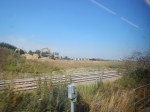
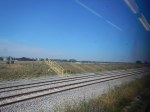

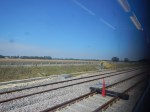
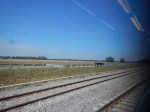
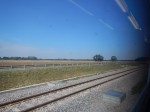
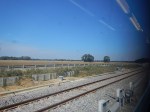
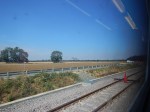
My train between Peterborough and Spalding stations took the following route.
- The Class 158 train was a great improvement on the Class 153 train, I took in From Peterborough To Lincoln in 2015.
- It started in Platform 1b at Peterborough station.
- It then crossed over to the Down Fast line to go North.
- Finally, it slowed to cross the Up Fast and Up Slow lines to go towards Spalding.
- It is surely not an efficient and the safest way to run a railway.
Think about turning right on a busy dual carriageway, by going through a gap in the central reservation.
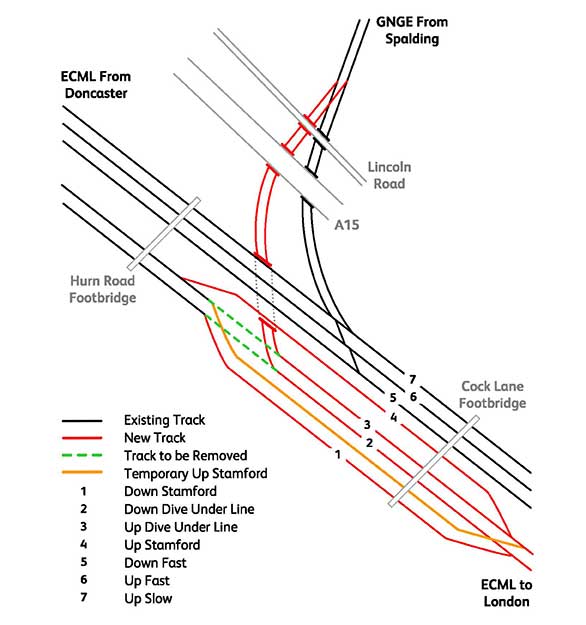
This diagram shows the new track layout of Werrington Junction.
Note.
- My train was going North on Line 5, so it had to use the two crossovers to get to the lines to Spalding.
- The Up Stamford (Line 4) can be seen in the pictures after the two lines have disappeared into the dive-under.
It’s a pity the first of my pictures aren’t better, but the sun was in the wrong direction.
I took these pictures going Spalding and Peterborough.


Note.
- The train used the Up Slow (line 7) to go between Werrington Junction and Peterborough station.
- The last two pictures show the Class 158 train in Platform 1b at Peterborough station.
At least this time, the train didn’t cross the Fast lines.
Will Passenger Trains Use The Werrington Dive-Under?
I’m very sure they will!
- On the Western side of Peterborough station, there are four platforms 4 to 7 and an avoiding line for freight trains going North.
- It appears that all of these lines can access the Down Stamford (Line 1) and Up Stamford (Line 4) to go to Werrington Junction.
- At Werrington Junction, trains either take the route to Stamford or use the dive-under for Spalding.
It looks to me, that if the trains to and from Spalding terminated in one of the Western platforms, then they could use the Stamford Lines to access the dive-under and they wouldn’t cross the Fast Lines of the East Coast Main Line on the flat.
Greengauge 21’s Suggestion, That Thameslink Be Extended To Spalding
In the study by Greengauge 21, which is entitled Connecting East Lincolnshire, this is said.
As noted the Spalding-Peterborough line should be a strong candidate for electrification because of its freight potential, and if so it could also accommodate an extension of Thameslink services from London and the South East to Spalding where interchange would be made with a Spalding–Boston–Louth–Grimsby express bus using the A16.
This proposal may be possible, if instead of using the dive-under, the Thameslink trains were able to use the Up Slow (line 7) to go both ways between Werrington Junction and Peterborough station.
As in the near future, full digital signalling will apply through Peterborough, this shouldn’t be a problem.
Electrification Of The Werrington Dive-Under?
Consider.
- There is a gap of around ninety miles in the freight route between the comprehensive electrification at Peterborough and Doncaster stations on the Great Northern and Great Eastern Joint Line (GNGE).
- There are dozens of level crossings.
- The route goes through the centre of Lincoln, where there are two level crossings.
There are two ways of decarbonising the route.
- Full electrification
- Using hydrogen-powered freight locomotives.
Both solutions have their proposers and opponents.
I favour hydrogen-electric hybrid locomotives, that can use electrification where it exists, as it reduces the infrastructure cost on overbridges and in freight depots.
- Hydrogen-powered locomotives have a go-anywhere capability.
- There are also a lot of routes in the UK, where freight trains currently run and it would take a long time to electrify all of them.
- As rail freight companies would have to purchase a lot of new locomotives, I can see them opting for hydrogen-electric hybrid locomotives.
But there are others, who think the only way is full electrification.
London And Lincolnshire By Electric Train
Passenger trains are not a problem, as Alstom, CAF, Hitachi, Stadler and others have demonstrated battery ranges of over fifty miles.
LNER are currently serving Lincoln from London using Hitachi bi-mode Class 800 trains, which use diesel for the 16.5 miles between Newark and Lincoln.
Hitachi’s proposed Intercity Tri-Mode Battery Train, is described in this Hitachi infographic.
I believe it would be possible to handle London and Lincoln via Newark without using diesel.
It also looks like it will be possible to convert the LNER’s current Class 800 trains into Intercity Tri-Mode Battery Trains.
But I doubt their range would sufficient to go between London and Lincoln via Peterborough, Spalding and Sleaford, unless there were to be a charging system at Lincoln.
But surely though, the ideal train for Lincolnshire would be a train that ran between London and Cleethorpes via Peterborough, Spalding, Sleaford, Lincoln, Market Rasen and Grimsby Town.
- Peterborough and Lincoln is 56.9 miles.
- Lincoln and Cleethorpes is 47.2 miles.
- The service could be timed for a convenient interchange with the other Lincolnshire train services.
- The service could run perhaps a few times per day.
With charging systems at Lincoln and Cleethorpes, similar to the Hitachi ABB Power Grids system that I described in Solving The Electrification Conundrum, this service could be run by an Intercity Tri-Mode Battery Train.
Peterborough And Lincolnshire By Electric Train
If you could run between Peterborough and major places in Lincolnshire, as part of a London service, I also suspect that a well-designed Peterborough and Lincolnshire service could serve Lincolnshire almost equally well.
It might use Platform 5 to terminate at Peterborough.
- This is paired with Platform 4, which is the platform generally used by LNER trains from London, so there would be a cross-platform interchange going North.
- Going South, there would be a need to use the footbridge.
How many people would use an hourly cross-TransLincs service?
Railway To Hell To Be Electrified
This is the title of a serious article on Railway Gazette.
Hell is a village near to Trondheim in Norway and the railways around Trondheim are being electrified.
Electrification Between Clay Cross North Junction And Sheffield Station
Long term readers of this blog, will have noticed that I make regular references to this proposed electrification, that is part of High Speed Two’s proposals to connect Sheffield to the new high speed railway.
So I thought I would bring all my thoughts together in this post.
Connecting Sheffield To High Speed Two
Sheffield is to be accessed from a branch off the Main High Speed Two route to Leeds.
This map clipped from High Speed Two’s interactive map, shows the route of the Sheffield Branch, from where it branches North West from the main Eastern Leg of High Speed Two.
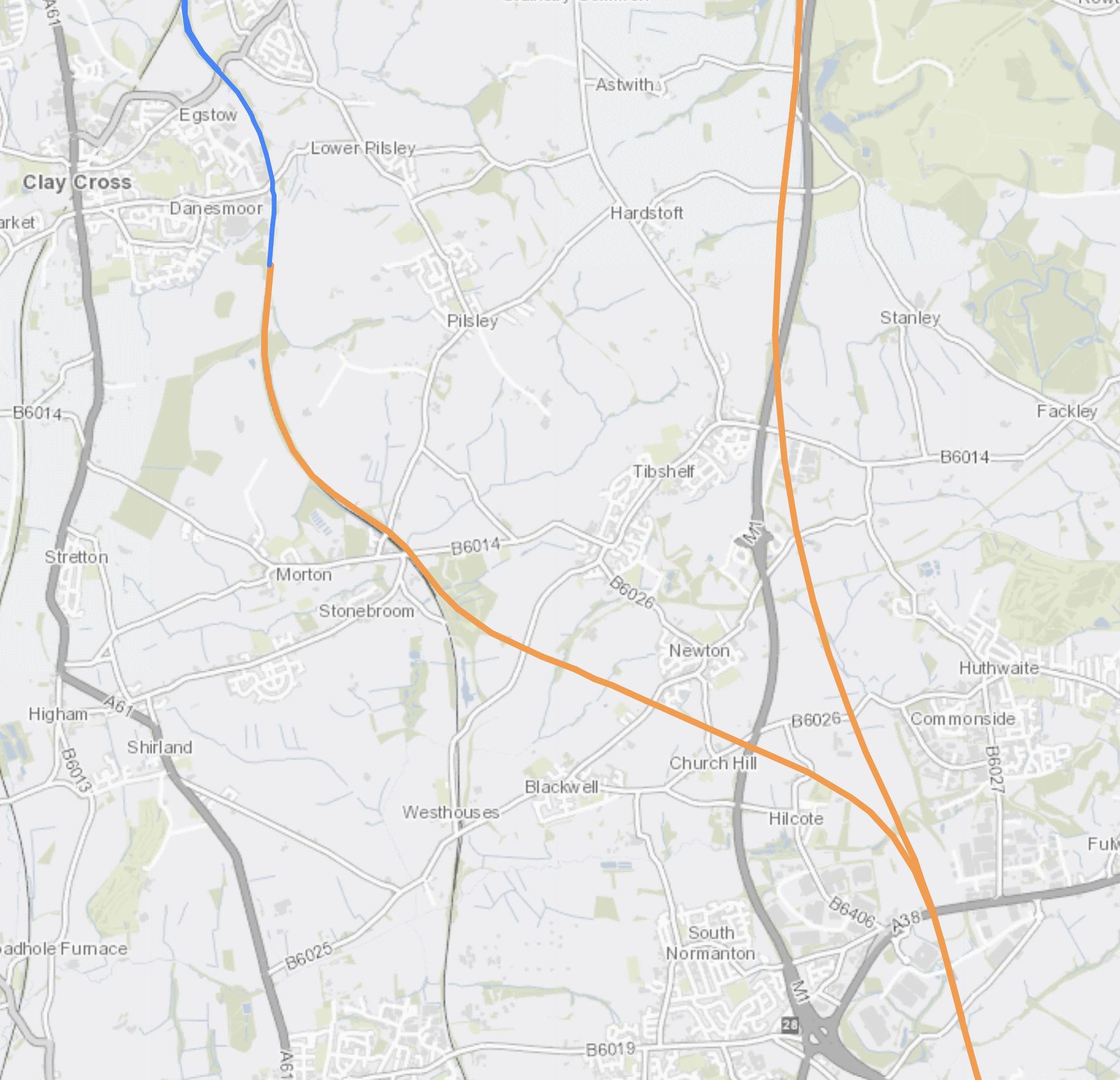
Note.
- Orange indicates new High Speed Two track.
- Blue indicates track that High Speed Two will share with other services.
- The orange route goes North to Leeds, along the M1
- The blue route goes North to Chesterfield and Sheffield, after skirting to the East of Clay Cross.
- The orange route goes South to East Midlands Hub station.
This second map, shows where the Erewash Valley Line joins the Sheffield Branch near the village of Stonebroom.
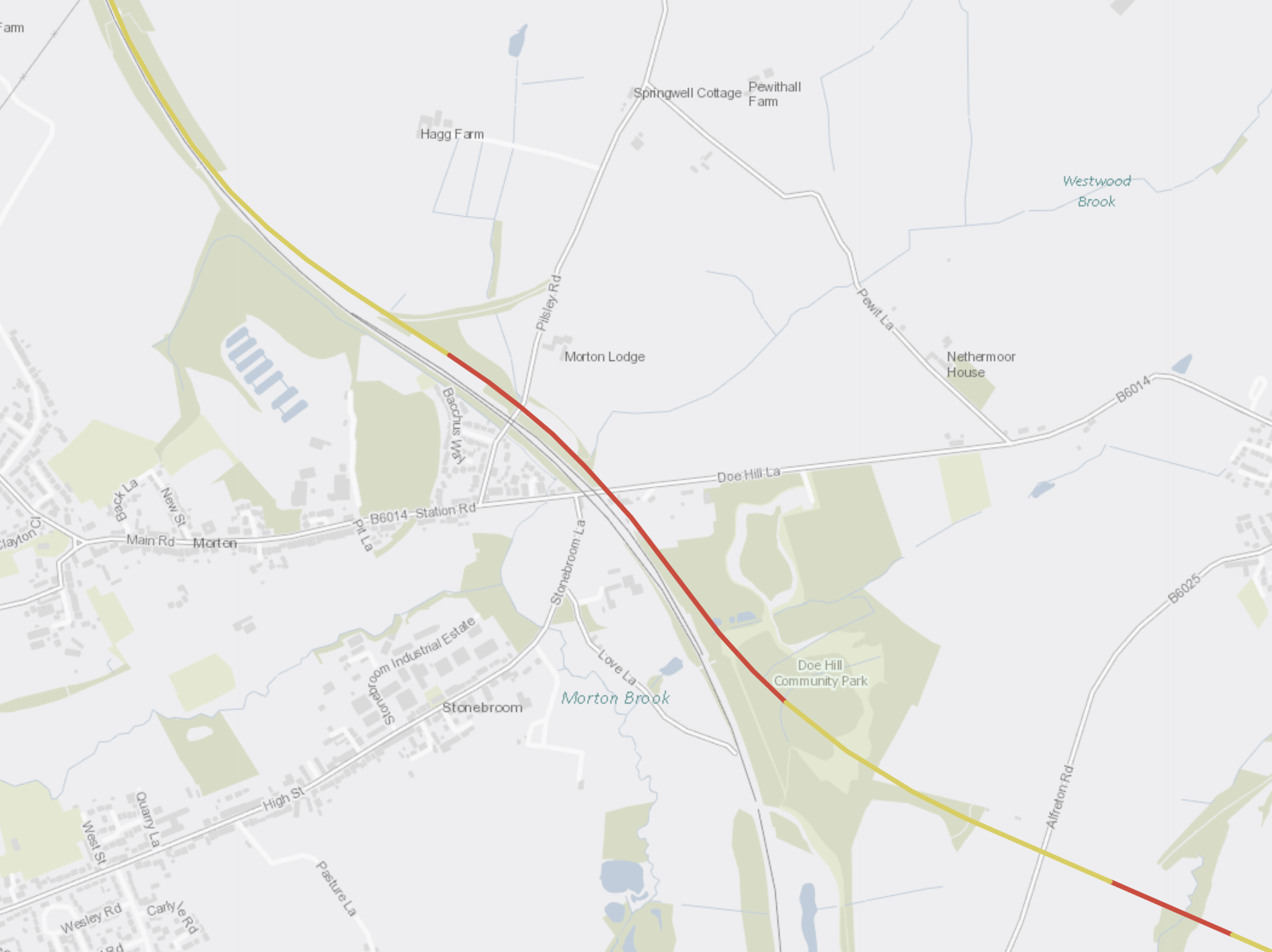
Note.
- Red is an embankment.
- Yellow is a cutting.
- The Sheffield Branch goes North-West to Clay Cross, Chesterfield and Sheffield
- The Sheffield Branch goes South-East to East Midlands Hub station.
- The Sheffield Branch goes through Doe Hill Country Park.
- The Sheffield Branch runs alongside the existing Erewash Valley Line, which goes South to Langley Mill, Ilkeston and the Derby-Nottingham area.
The Sheffield Branch and the Erewash Valley Line appear to share a route, which continues round Clay Cross and is shown in this third map.
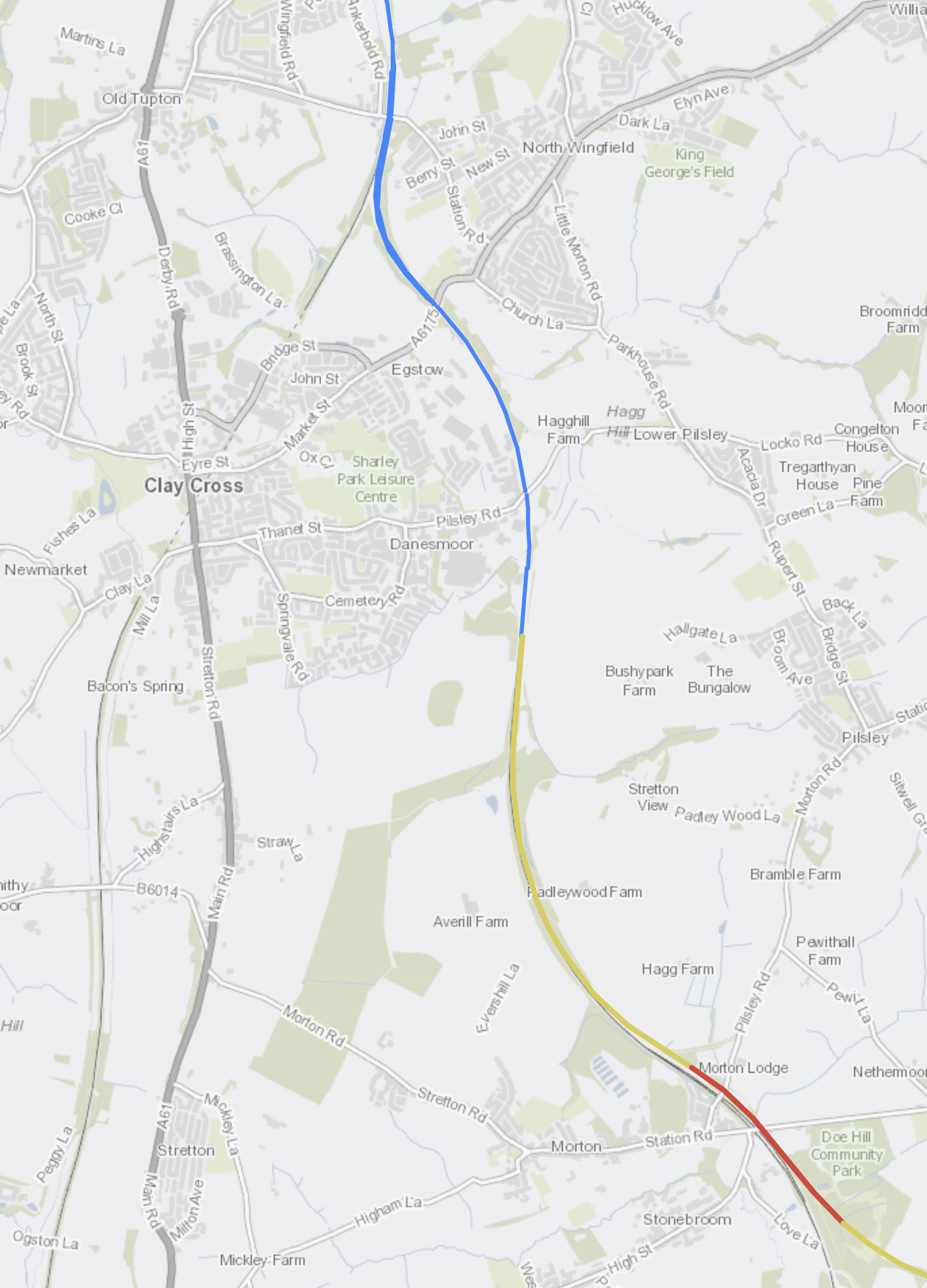
Note
- Doe Hill Country Park is in the South-East corner of the map.
- The dark line running North-South is the A61.
- Running to the West of the A61 is the Midland Main Line, which currently joins the Erewash Valley Line at Clay Cross North junction.
High Speed Two and the Midland Main Line will share a route and/or tracks from Clay Cross North junction to Sheffield.
This fourth map, shows where the combined route joins the Hope Valley Line to Manchester to the South West of Sheffield.
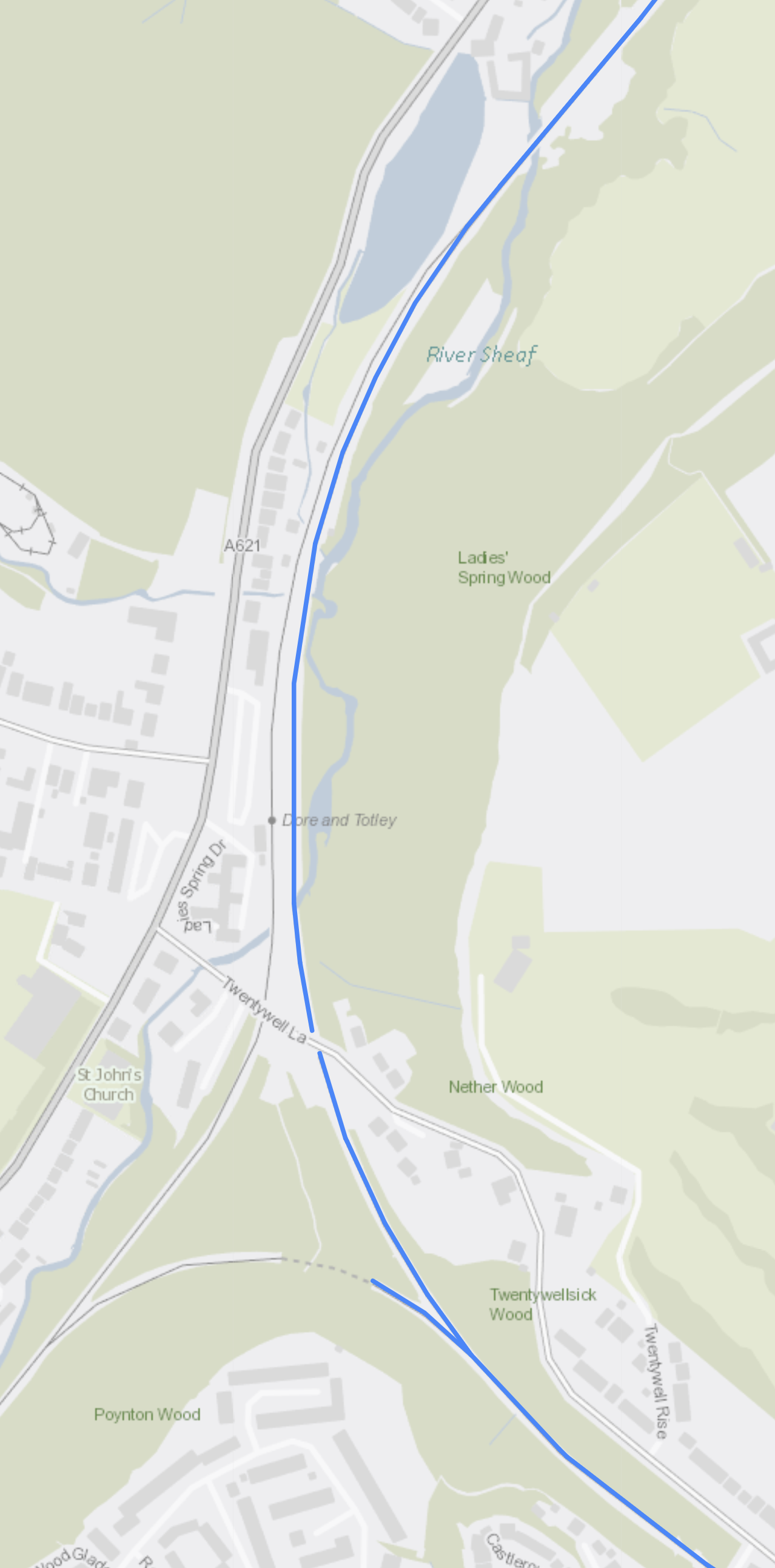
Note.
- Sheffield is to the North East.
- Chesterfield is to the South East,
- Totley junction is a large triangular junction, that connects to the Hope Valley Line.
These are some timings for various sections of the route.
- Clay Cross North Junction and Chesterfield (current) – 4 minutes
- Clay Cross North Junction and Sheffield (current) – 17 minutes
- Chesterfield and Sheffield (current) – 13 minutes
- Chesterfield and Sheffield (High Speed Two) – 13 minutes
- East Midlands Hub and Chesterfield (High Speed Two) – 16 minutes
- East Midlands Hub and Sheffield (High Speed Two) – 27 minutes
As Class Cross North Junction and Sheffield are 15.5 miles, this means the section is run at an average speed of 53 mph.
Can I draw any conclusions from the maps and timings?
- There would appear to be similar current and High Speed Two timings between Chesterfield and Sheffield.
- The various junctions appear to be built for speed.
The Midland Main Line will be electrified between Clay Cross North Junction and Sheffield, so that High Speed Two trains can use the route.
What will be the characteristics of the tracks between Clay Cross North Junction and Sheffield?
- Will it be just two tracks as it mainly is now or will it be a multi-track railway to separate the freight trains from the high speed trains?
- Will it have a high enough maximum speed, so that East Midland Railway’s new Class 810 trains can go at their maximum speed of 140 mph?
- Will it be capable of handling a frequency of 18 tph, which is the maximum frequency of High Speed Two?
Surely, it will be built to a full High Speed Two standard to future-proof the line.
Current Passenger Services Between Clay Cross North Junction And Sheffield Station
These trains use all or part of the route between Cross North Junction And Sheffield stations.
- CrossCountry – Plymouth and Edinburgh via Derby, Chesterfield, Sheffield and Leeds – 1 tph
- East Midlands Railway – London St. Pancras and Sheffield via Derby and Chesterfield – 2 tph
- East Midlands Railway – Liverpool Lime Street and Norwich via Stockport, The Hope Valley Line, Sheffield and Chesterfield – 1 tph
- Northern Trains – Manchester Piccadilly and Sheffield via the Hope Valley Line – 1 tph
- Northern Trains – Leeds and Nottingham via Meadowhall, Sheffield and Chesterfield – 1 tph
- TransPennine Express – Manchester Airport and Cleethorpes via Stockport, the Hope Valley Line and Sheffield – 1 tph
Note.
- tph is trains per hour.
- High Speed Two is currently planning to run two tph to Sheffield, which will run between Cross North junction and Sheffield stations.
- The services on the Hope Valley Line run on electrified tracks at the Manchester end.
These services can be aggregated to show the number of trains on each section of track.
- Hope Valley Line between Manchester and Totley junction – 3 tph
- Totley junction and Sheffield station – 7 tph
- Totley junction and Clay Cross North junction via Chesterfield – 4 tph
Adding in the High Speed Two services gives these numbers.
- Hope Valley Line between Manchester and Totley junction – 3 tph
- Totley junction and Sheffield station – 9 tph
- Totley junction and Clay Cross North junction via Chesterfield – 6 tph
This report on the Transport for the North web site, is entitled At A Glance – Northern Powerhouse Rail. It states that Transport for the North’s aspirations for Manchester and Sheffield are four tph with a journey time of forty minutes.
Adding in the extra train gives these numbers.
- Hope Valley Line between Manchester and Totley junction – 4 tph
- Totley junction and Sheffield station – 10 tph
- Totley junction and Clay Cross North junction via Chesterfield – 6 tph
This level of services can be accommodated on a twin-track railway designed to the right high speed standards.
Freight Services Between Clay Cross North Junction And Sheffield Station
The route is used by freight trains, with up to two tph on each of the three routes from Totley junction.
And these are likely to increase.
Tracks Between Clay Cross North Junction And Sheffield Station
I am absolutely certain, that two tracks between Clay Cross North junction And Sheffield station will not be enough, even if they are built to High Speed Two standards to allow at least 140 mph running under digital signalling.
Battery Electric Trains
The only battery-electric train with a partly-revealed specification is Hitachi’s Regional Battery Train, which is described in this Hitachi infographic.

Note.
- The train is a 100 mph unit.
- Ninety kilometres is fifty-six miles.
I would expect that battery-electric trains from other manufacturers like Alstom, CAF and Siemens would have similar performance on battery power.
In Thoughts On CAF’s Battery-Electric Class 331 Trains, I concluded CAF’s approach could give the following ranges.
- Three-car battery-electric train with one battery pack – 46.7 miles
- Four-car battery-electric train with one battery pack – 35 miles
- Four-car battery-electric train with two battery packs – 70 miles
I was impressed.
These are my thoughts on battery-electric trains on the routes from an electrified Sheffield.
Adwick
Sheffield and Adwick is 22.7 miles without electrification
I am sure that battery-electric trains can handle this route.
If the battery range is sufficient, there may not need to be charging at Adwick.
Bridlington
Sheffield and Bridlington is 90.5 miles without electrification, except for a short section through Doncaster, where trains could top up batteries.
I am sure that battery-electric trains can handle this route.
But there would need to be a charging system at Hull, where the trains reverse.
An alternative would be to electrify Hull and Brough, which is just 10.4 miles and takes about twelve minutes.
Derby Via The Midland Main Line
Clay Cross North junction and Derby is 20.9 miles without electrification.
I am sure that battery-electric trains can handle this route.
Gainsborough Central
Sheffield and Gainsborough Central is 33.6 miles without electrification
I am sure that battery-electric trains can handle this route.
But there will need to be a charging system at Gainsborough Central.
Huddersfield Via The Penistone Line
This is a distance of 36.4 miles with electrification at both ends, after the electrification between Huddersfield and Westtown is completed.
I am sure that battery-electric trains can handle this route.
Hull
Sheffield and Hull is 59.4 miles without electrification, except for a short section through Doncaster, where trains could top up batteries.
I am sure that battery-electric trains can handle this route.
But there will probably need to be a charging system at Hull.
An alternative would be to electrify Hull and Brough, which is just 10.4 miles and takes about twelve minutes.
Leeds Via The Hallam Or Wakefield Lines
This is a distance of 40-45 miles with electrification at both ends.
I am sure that battery-electric trains can handle this route.
Lincoln
Sheffield and Lincoln Central is 48.5 miles without electrification
I am sure that battery-electric trains can handle this route.
But there will probably need to be a charging system at Lincoln Central.
Manchester Via The Hope Valley Line
This is a distance of forty-two miles with electrification at both ends.
I am sure that battery-electric trains can handle this route.
Nottingham
Clay Cross North junction and Nottingham is 25.1 miles without electrification
I am sure that battery-electric trains can handle this route.
But there may need to be a charging system at Nottingham.
York
This is a distance of 46.4 miles with electrification at both ends.
I am sure that battery-electric trains can handle this route.
Is London St. Pancras And Sheffield Within Range Of Battery-Electric Trains?
In the previous section, I showed that it would be possible to easily reach Derby, as Clay Cross North junction and Derby is 20.9 miles without electrification.
- Current plans include electrifying the Midland Main Line as far North as Market Harborough.
- Market Harborough is 82.8 miles from London St. Pancras
- Derby is 128.3 miles from London St. Pancras
So what would be the best way to cover the 45.5 miles in the middle?
One of the best ways would surely be to electrify between Derby and East Midlands Parkway stations.
- Derby and East Midlands Parkway stations are just 10.2 miles apart.
- Current services take around twelve-fourteen minutes to travel between the two stations, so it would be more than enough time to charge a battery-electric train.
- Power for the electrification should not be a problem, as Radcliffe-on-Soar power station is by East Midlands Parkway station. Although the coal-fired power station will soon be closed, it must have a high class connection to the electricity grid.
- The East Midlands Hub station of High Speed Two will be built at Toton between Derby and Nottingham and will have connections to the Midland Main Line.
- An electrified spur could connect to Nottingham station.
I have flown my virtual helicopter along the route and found the following.
- Three overbridges that are not modern and built for large containers and electrification.
- Two level crossings.
- One short tunnel.
- Two intermediate stations.
- Perhaps half-a-dozen modern footbridges designed to clear electrification.
I’ve certainly seen routes that would be much more challenging to electrify.
I wonder if gauge clearance has already been performed on this key section of the Midland Main Line.
If this section were to be electrified, the sections of the Midland Main Line between London St. Pancras and Sheffield would be as follows.
- London St. Pancras and Market Harborough – Electrified – 82.8 miles
- Market Harborough and East Midlands Parkway – Not Electrified – 35.3 miles
- East Midlands Parkway and Derby – Electrified – 10.2 miles
- Derby and Clay Cross North junction – Not Electrified – 20.9 miles
- Clay Cross North junction and Sheffield – Electrified – 15.5 miles
Note.
- The World Heritage Site of the Derwent Valley Mills is not electrified, which could ease the planning.
- Leicester station with its low bridge, which could be difficult to electrify, has not been electrified.
- Under thirty miles of electrification will allow battery-electric trains to run between London St. Pancras and Sheffield, provided they had a range on batteries of around forty miles.
Probably, the best way to electrify between East Midlands Parkway and Derby might be to develop a joint project with High Speed Two, that combines all the power and other early works for East Midlands Hub station, with the electrification between the two stations.
Will The Class 810 Trains Be Converted To Battery-Electric Operation?
Hitachi’s Class 8xx trains tend to be different, when it comes to power. These figures relate to five-car trains.
- Class 800 train – 3 x 560 kW diesel engines
- Class 801 train – 1 x 560 kW diesel engine
- Class 802 train – 3 x 700 kW diesel engines
- Class 803 train – All electric – No diesel and an emergency battery
- Class 805 train – 3 x 700 kW diesel engines (?)
- Class 807 train – All electric – No diesel or emergency battery
- Class 810 train – 4 x 700 kW diesel engines (?)
Note.
- These figures relate to five-car trains.
- Class 807 train are seven-car trains.
- Where there is a question mark (?), the power has not been disclosed.
- Hitachi use two sizes of diesel engine; 560 kW and 700 kW.
It was generally thought with the Class 810 train to be used on the Midland Main Line, will be fitted with four engines to be able to run at 125 mph on diesel.
But are they 560 kW or 700 kW engines?
- A Class 802 train has an operating speed of 110 mph on diesel, with 2100 kW of installed power.
- To increase speed, the power will probably be related to something like the square of the speed.
So crudely the power required for 125 mph would be 2100*125*125/110/110, which works out at 2712 kW.
Could this explain why four engines are fitted? And why they are 700 kW versions?
Interestingly, I suspect, Hitachi’s five-car trains have two more or less identical driver cars, except for the passenger interiors, for the efficiency of manufacturing and servicing.
So does that mean, that a fifth engine could be fitted if required?
There probably wouldn’t be a need for five diesel engines, but as I also believe that the Hyperdrive Innovation battery packs for these trains are plug-compatible with the diesel engines, does that mean that Hitachi’s trains can be fitted with five batteries?
Suppose you wanted to run a Class 810 train at 125 mph to clear an electrification gap of forty miles would mean the following.
- It would take 0.32 hours or 19.2 minutes to cross the gap.
- In that time 2800 kW of diesel engines would generate 896 kWh.
- So to do the same on batteries would need a total battery capacity of 896 kWh.
- If all diesel engines were replaced, each battery would need to be 224 kWh
A battery of this size is not impractical and probably weighs less than the at least four tonnes of the diesel engine it replaces.
Conclusions
Electrification between Clay Cross North Junction and Sheffield station is an important project that enables the following.
- A high proportion of diesel services to and from Sheffield to be converted to battery-electric power.
- With electrification between Derby and East Midlands Parkway, it enables 125 mph battery-electric trains to run between London St. Pancras and Sheffield.
- It prepares Sheffield for High Speed Two.
It should be carried out as soon as possible.
Battery-Electric Trains And The TransPennine Upgrade
In Is There Going To Be Full Electrification Between Leeds And Huddersfield?, I showed this map of the TransPennine Upgrade between Huddersfield and Westtown near Dewsbury.
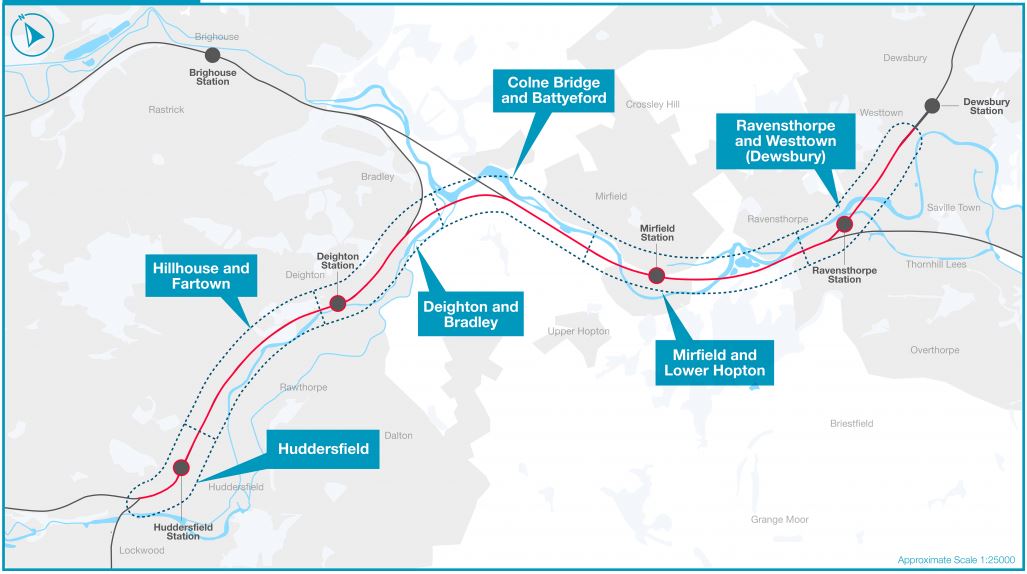
Note.
- There will be electrification between Dewsbury and Huddersfield.
- Tracks will be doubled from two to four.
- Ravensthorpe, Mirfield, Deighton and Huddersfield stations will be electrified and probably upgraded.
- Dewsbury and Huddersfield stations are eight miles apart.
This page on the Network Rail website gives more information.
Click on Huddersfield and Westtown (Dewsbury) and you get this information.
On 31 March 2021, we submitted a Transport and Works Act Order (TWAO) application to the Secretary of State for Transport for the Huddersfield to Westtown (Dewsbury) scheme.
Throughout this eight-mile section of the route, we’re proposing to double the number of tracks from two-to-four, electrify from Huddersfield to Dewsbury and make big improvements to the four stations in this section – Huddersfield, Deighton, Mirfield and Ravensthorpe; where we also need to separate the lines going to/from Leeds from the lines going to/from Wakefield, with either a bridge or a tunnel.
It is a much larger scheme than the one between Bolton and Wigan, which I wrote about in Bolton-Wigan £78m Rail Electrification Project Announced.
- Huddersfield-Westtown is eight miles, whereas Bolton-Wigan is 6.5 miles.
- Both involve upgrading four stations.
- Both involve full electrification.
- Huddersfield-Westtown involves doubling the number of tracks, whereas Bolton-Wigan needs little work to the track.
- Huddersfield-Westtown will need a bridge or a tunnel, whereas Bolton-Wigan might need minor work to a couple of flat junctions.
- Huddersfield station is Grade 1 Listed, whereas Wigan Wallgate station has some good features.
- The Huddersfield-Westtown scheme is costed at £2.9 billion, whereas Bolton-Wigan is just £78 million.
The Huddersfield-Westtown scheme is thirty-seven times larger in terms of money.
What Passenger Services Use The Route Between Huddersfield And Dewsbury?
These services use the route, all or in part.
- Northern Trains – Wigan Wallgate and Leeds via Manchester Victoria, Hebden Bridge, Brighouse, Mirfield, Ravensthorpe and Dewsbury – 1 tph
- Northern Trains – Huddersfield and Castleford via Deighton, Mirfield and Wakefield Kirkgate – 1 tph
- TransPennine Express – Liverpool Lime Street and Scarborough via Manchester Victoria, Stalybridge, Huddersfield and Leeds – 1 tph
- TransPennine Express – Manchester Airport and Redcar Central via Manchester Victoria, Stalybridge, Huddersfield, Dewsbury and Leeds – 1 tph
- TransPennine Express – Liverpool Lime Street and Edinburgh via Manchester Victoria, Huddersfield and Leeds – 1 tph
- TransPennine Express – Manchester Airport and Newcastle via Manchester Victoria, Huddersfield, Dewsbury and Leeds – 1 tph
- TransPennine Express – Manchester Piccadilly and Hull via Stalybridge, Huddersfield and Leeds – 1 tph
- TransPennine Express – Huddersfield and Leeds via Deighton, Mirfield, Ravensthorpe and Dewsbury – 1 tph
Note.
- All trains are one train per hour (tph)
- Three tph run non-stop between Huddersfield and Leeds.
- Two tph stop at Deighton station, Mirfield and Ravensthorpe.
After completion of the Huddersfield and Westtown upgrade, there will be electrification at the following places.
- West of Manchester Victoria station
- Between Huddersfield and Westtown
- Between Leeds and York – Currently being electrified between York and Church Fenton.
And these routes will not be electrified.
- Dewsbury and Leeds – 9.2 miles
- Leeds and Hull – 51.5 miles
- Mirfield and Castleford – 16 miles
- Manchester Piccadilly and Stalybridge – Could be electrified – 7.5 miles
- Manchester Victoria and Heaton Lodge Junction via Hebden Bridge – 47.4 miles
- Manchester Victoria and Stalybridge – Could be electrified – 7.7 miles
- Redcar Central and Northallerton – 28.1 miles
- Stalybridge and Huddersfield – 18 miles
- York and Scarborough – 42.1 miles
Note that all routes except Mirfield and Castleford and Leeds and Hull have electrification at both ends.
Which Routes Between Huddersfield And Westtown Could Be Handled By Battery-Electric Trains?
I will assume that operators will have a battery-electric train capable of running 56 miles on batter ypower. This distance comes from Hitachi’s specification for the Hitachi Regional Battery Train, which is shown in this Hitachi infographic.
These are the routes and my answers.
Northern Trains – Wigan Wallgate and Leeds
The longest section without electrification is Manchester Victoria and Heaton Lodge Junction via Hebden Bridge, which is 47.4 miles.
I am sure this route is possible with battery-electric trains.
Northern Trains – Huddersfield and Castleford
The longest section without electrification is Mirfield and Castleford, which is 16 miles.
But it must be handled on both an out and back basis. So the train will cover 32 miles on battery power.
I am sure this route is possible with battery-electric trains.
TransPennine Express – Liverpool Lime Street and Scarborough
The longest section without electrification to the West of Leeds, is Manchester Victoria and Huddersfield, which is 25.7 miles.
At the Eastern end, as York and Scarborough is 42.1 miles without electrification, there would need to be some electrification or a charging system at Scarborough station.
I am sure this route is possible with battery-electric trains.
TransPennine Express – Manchester Airport and Redcar Central
The longest section without electrification to the West of Leeds,is Manchester Victoria and Huddersfield, which is 25.7 miles.
At the Eastern end, as Northallerton and Redcar Central is 28.1 miles without electrification, there may need to be some electrification or a charging system at Redcar Central station.
I am sure this route is possible with battery-electric trains.
TransPennine Express – Liverpool Lime Street and Edinburgh
The longest section without electrification is Manchester Victoria and Huddersfield, which is 25.7 miles.
Leeds and Edinburgh is fully electrified.
I am sure this route is possible with battery-electric trains.
TransPennine Express – Manchester Airport and Newcastle
The longest section without electrification is Manchester Victoria and Huddersfield, which is 25.7 miles.
Leeds and Newcastle is fully electrified.
I am sure this route is possible with battery-electric trains.
TransPennine Express – Manchester Piccadilly and Hull
The longest section without electrification to the West of Leeds, is Manchester Victoria and Huddersfield, which is 25.5 miles.
At the Eastern end, as Leeds and Hull is 51.5 miles, there would need to be some electrification or a charging system at Hull station.
I am sure this route is possible with battery-electric trains.
TransPennine Express – Huddersfield and Leeds
The longest section without electrification is Dewsbury and Leeds, which is 9.2 miles.
I am sure this route is possible with battery-electric trains.
Handling The Eastern Ends
At Hull, Redcar Central and Scarborough stations, there will need to be some means to recharge the trains, so they can get back to the electrification on the East Coast Main Line.
There could either be a short length of 25 KVAC overhead electrification or a special-purpose charging station.
There would need to be an allowance in the turnback, of perhaps 10-15 minutes to make sure trains started back with full batteries.
Will Huddersfield And Westtown Be Long Enough To Charge A Battery-Electric Train?
I have looked at train times between Huddersfield And Westtown and typically trains take around 11-12 minutes to go between Huddersfield and Dewsbury stations.
That should probably be enough, especially, as the trains will probably be using regenerative braking to batteries at any station stops.
Conclusion
I am absolutely certain that by completing the TransPennine Upgrade with full electrification between Huddersfield and Westtown, that all passenger services through the section could be run by battery-electric trains with a range of ninety kilometres or fifty-six miles.
There would probably need to be some electrification or a charging system at Hull, Redcar Central and Scarborough stations.
A Thought On Short Sections Of Electrification
As with the Bolton-Wigan scheme to the West of the Pennines, a length of electrified track that is less than ten miles, allows several services to be run by battery-electric trains and decarbonised.
How many other sections of less than ten miles of electrification can transform train services and reduce the use of diesel around the UK, by the introduction of fleets of battery-electric trains?
Bolton-Wigan £78m Rail Electrification Project Announced
The title of this post, is the same as that of this article on the BBC.
This is a small electrification project compared to many, but it still includes.
- 13 miles of electrification.
- 450 new overhead line equipment stanchions.
- Modifications to 17 bridges and two level crossings.
- Platform extensions at Westhoughton, Hindley and Ince stations, so that they can handle six-car trains.
Completion is expected to be 2025.
The numbers indicate it could be be a small project with quite a bit of work.
I have a few specific thoughts.
How Far Will The Electrification Go?
This document on the Government web site is entitled Green Light Given For Wigan To Bolton Electrification.
These are two paragraphs.
The track between Wigan North Western station and Lostock Junction near Bolton will receive a £78 million upgrade, targeted to complete in 2024/2025.
Through electrifying almost 13 miles of infrastructure and lengthening platforms, this investment will ensure that CO2 emitting diesel trains are replaced by electric rolling stock. As longer trains with additional capacity, these will provide passengers with greener, more comfortable and more reliable journeys.
Note.
- Lostock junction is on the Manchester and Preston Line which was electrified in 2019.
- As is typical, the electrification continues for a short distance from Lostock junction towards the Wigan stations.
- Wigan North Western station is a fully-electrified station on the West Coast Main Line.
- Wigan Wallgate station is not electrified.
- The distance between Lostock junction and Wigan Wallgate station is 6.9 miles.
- Lostock junction and Wigan Wallgate station is double-track all the way.
- My Track Atlas shows crossovers that allow trains to and from Lostock junction to access some platforms at Wigan North Western.
These facts lead me to these conclusions.
- As thirteen files of electrification would be 6.5 miles of double-track electrification, the new electrification would create a fully-electrified line between Lostock junction and Wigan Wallgate station.
- By electrifying the crossovers at Wigan Station junction, electric trains would to able to access both Wigan stations.
But this does mean, that electric trains can’t run past Wigan Wallgate station, as the wires seem to stop there.
Electrification At Wigan Wallgate Station
Mark Clayton has made this comment to this post.
Yes there is a single track connecting from the track through Hindley to the WCML and vice versa, however at Wallgate there are buildings straddling the line and the station itself. Maybe the track could be lowered, but it could well be a major engineering project to get the wires under Wallgate.
The best picture, that I can get of the tracks under Wallgate is this 3D image from Google Maps.
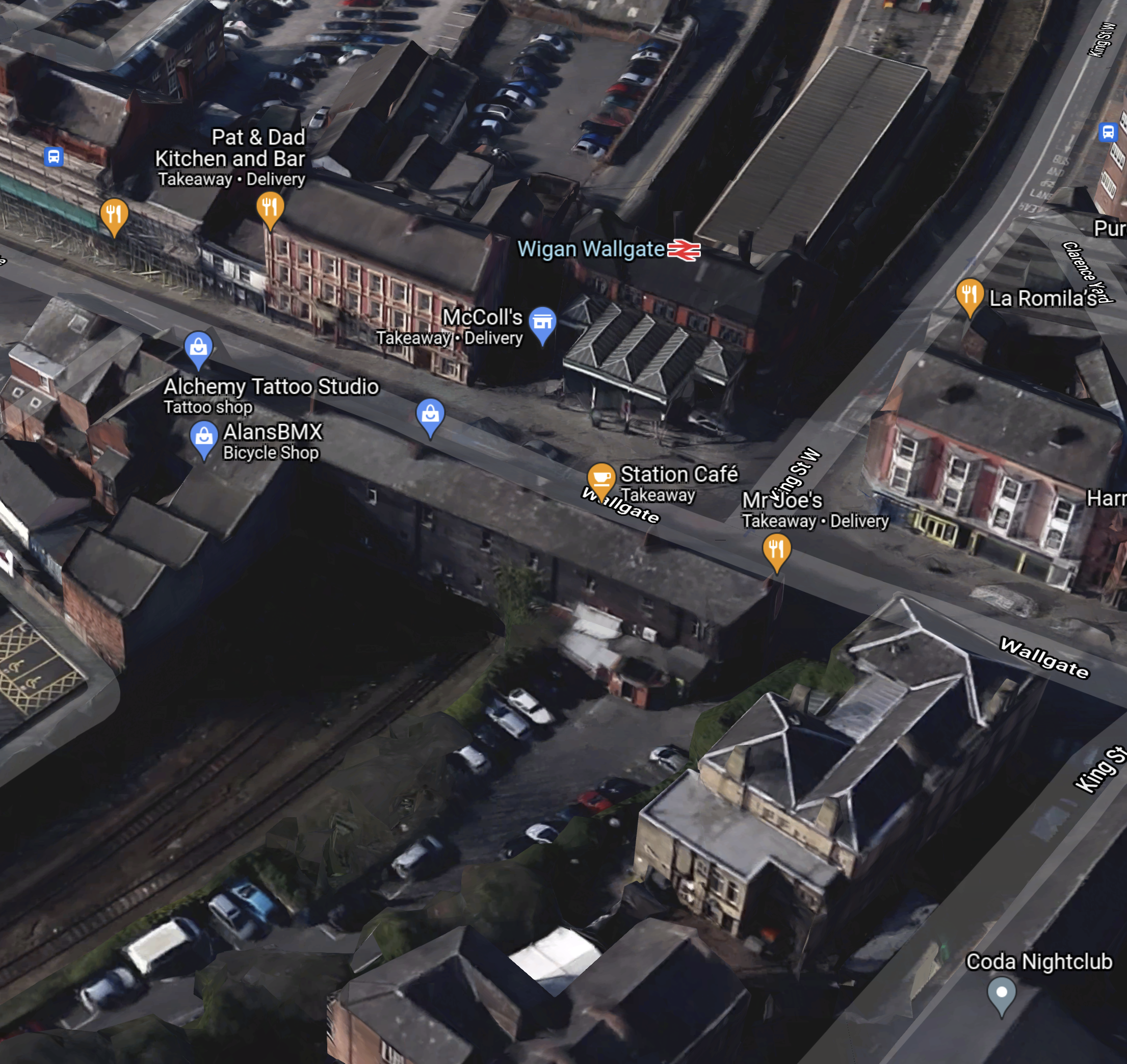
It does seem a bit tight in terms of height.
I have also looked at several videos of trains going trough the station and I suspect that the tracks may need lowering to get the wires through.
Or they could use some of the discontinuous tricks being used on the South Wales Metro.
It could be difficult, but I don’t think it will be impossible.
I do suspect though for operational reasons, Network Rail and the train operators would want the wires to extend to the station.
- Train operators probably prefer to raise and lower the pantograph in a station, in case anything goes wrong.
- If battery-electric trains should be used on the line, then if necessary, they could wait in the station to charge the batteries.
- If the station is wired, then the West-facing bay-platform can also be wired, so that it could be used for a battery-electric shuttle train to Kirkby or Southport.
It looks to me, that for lots of reasons, the engineers will have to find a way of getting the wires under the low bridge under Wallgate.
Services That Use All Or Part Of The Route Between Lostock Junction And Wigan
These services use all or part of the route.
- 1 tph – Southport and Alderley Edge via Ince (irregular), Hindley, Westhoughton and Bolton
- 1 tph – Southport and Stalybridge via Hindley, Westhoughton and Bolton
- 1 tph – Kirkby and Manchester Victoria via Ince (irregular), Hindley, Daisy Hill, Hag Fold, Atherton, Walkden, Moorside, Swinton and Salford Crescent.
- 1 tph – Wigan Wallgate and Blackburn via Hindley, Daisy Hill, Atherton, Walkden, Swinton and Salford Crescent.
- 1 tph – Wigan Wallgate and Leeds via Daisy Hill, Atherton, Walkden and Salford Crescent.
Note.
- tph is trains per hour.
- The two services that terminate at Wigan Wallgate sometimes terminate in Wigan North Western station.
- Wigan Wallgate station would appear to get up to five tph to Manchester, via a variety of routes.
I wonder how many of these services could be run by a battery-electric train, with a performance like the Hitachi Regional Battery Train, which is described in this Hitachi infographic.
Note 90 kilometres is 56 miles.
I will look at each route in detail.
Southport And Alderley Edge
The only section without electrification will be between Wigan Wallgate and Southport stations, which is a distance of 17.4 miles.
With a battery range of 56 miles, a battery-electric train should be able to run a return trip between Wigan Wallgate and Southport stations on battery power and have time for a leisurely turnround in Southport.
The batteries would be charged on the fully electrified section of the line between Wigan Wallgate and Alderley Edge stations.
Southport And Stalybridge
There are two sections without electrification.
- Wigan Wallgate and Southport stations – 17.4 miles
- Manchester Victoria and Stalybridge stations – 7.6 miles
With a battery range of 56 miles, a battery-electric train should be able to run a return trip on both sections without electrification.
The batteries would be charged on the fully electrified section of the line between Wigan Wallgate and Manchester Victoria stations.
Kirkby And Manchester Victoria
There are two sections without electrification.
- Wigan Wallgate and Kirkby stations – 12.1 miles
- Hindley and Salford Crescent stations – 13.4 miles
With a battery range of 56 miles, a battery-electric train should be able to run services on both sections without electrification.
The batteries would be charged on the two fully electrified sections of the line between Wigan Wallgate and Manchester Victoria stations.
Wigan Wallgate And Blackburn
There are two sections without electrification.
- Hindley and Salford Crescent stations – 13.4 miles
- Manchester Victoria and Blackburn stations – 39.4 miles
The first section could be easily run by a battery electric train, but the second section would need a charger at Blackburn station to return to Manchester Victoria station.
The batteries would be charged on the two fully electrified sections of the line between Wigan Wallgate and Manchester Victoria stations.
Wigan Wallgate And Leeds
There are two sections without electrification.
- Hindley and Salford Crescent stations – 13.4 miles
- Manchester Victoria and Leeds stations – 50.2 miles
The first section could be easily run by a battery electric train.
But the second section would be very much touch-and-go with a battery-electric train with a range of 56 miles, despite the fact that both Manchester Victoria and Leeds stations are electrified.
It should also be noted that Network Rail has plans in the TransPennine Upgrade to electrify the route between Leeds and Heaton Lodge junction between Mirfield and Brighouse stations. This would reduce the second section without electrification to a more manageable 37.1 miles.
I suspect that by the time the TransPennine Upgrade is complete, battery range would have improved to allow Manchester Victoria and Leeds stations to handle the route.
Battery-Electric Trains That Could Run The Services Through Wigan Wallgate Station
I have used the Hitachi Regional Battery Train as an example of a train that might run the services through Wigan Wallgate station.
- It has an operating speed of 100 mph.
- It could be based on a Class 385 train, which have three or four cars.
- It would have a battery range of 56 miles.
I suspect a demonstration train will run by 2025, which is the expected date of completion of the Lostock and Wigan electrification project.
But other manufacturers and rolling stock companies could also supply trains, with this specification.
- Alstom could create a battery-electric train based on an Electrostar, like a Class 379 or Class 387 train.
- CAF are developing a battery-electric train based on a Class 331 train.
- Porterbrook are developing a battery-electric train, based on a Class 350 train.
- Stadler could probably deliver a battery-electric Flirt based on a Class 755 train.
Competition would hopefully result in an excellent train, that would be suitable for many routes in the UK.
Northern’s Battery Plans And CAF
I suspect though that CAF could be the front runner as Northern already have forty-three Class 331 trains in service.
In Northern’s Battery Plans, I describe how CAF and Northern are planning to convert a number of three-car Class 331 trains into four-car battery-electric trains.
- The fourth car would contain batteries.
- Batteries would also be added to the PTS (pantograph) car.
I suspect that the battery range could be arranged so that all routes suitable for battery-electric operation could be handled.
In this article on Rail Magazine, which is entitled Northern Plans More New Trains After CAF Milestone, this is a paragraph.
A CAF source confirmed that a lot of work was ongoing with Northern, including the continued development of a battery EMU that is planned to be tested on the Oxenholme-Windermere route.
As the article dates from January 2021, things should be progressing.
Possible routes for battery-electric operation could be.
- Northumberland Line – Under construction
- Csrlisle and Newcastle – 61.5 miles between electrification at both ends
- Wigan Wallgate and Leeds via Dewsbury – 50.2 miles between electrification at both ends
- Manchester Victoria and Leeds via Hebden Bridge – 49.8 miles between electrification at both ends
- Leeds And Carlisle via Settle – 86.8 miles between electrification at both ends.
- Leeds and Morecambe – 37.8 miles between electrification.
- Manchester Airport and Barrow-in-Furness – 28.7 miles from electrification
- Manchester Airport and Windermere – 10.9 miles from electrification
Note.
- The distance is the longest section without electrification.
- Some routes have electrification at both ends.
- Some need an out-and-back journey at one end of the route.
I was surprised that the Settle and Carlisle Line could be included and as battery technology improves it certainly will be possible.
What a tourist attraction that line would be if worked by battery-electric trains.
Conclusion
This electrification of just 6.5 miles of double-track between Lostock junction and Wigan Wallgate station seems to be one of the smaller electrification projects.
But on closer examination, when linked to a fleet of battery-electric trains with a range of perhaps forty miles, the electrification enables battery-electric trains to run these services.
- Southport And Alderley Edge
- Southport And Stalybridge
- Kirkby And Manchester Victoria
With a charging station in Blackburn station, then the Wigan Wallgate And Blackburn service can be added.
It also looks that with the completion of the TransPennine Upgrade between Huddersfield and Leeds, that it might even be possible to run Wigan Wallgate and Leeds using battery-electric trains.
There will be a long list of stations, previously served by diesel trains, that will now only be served by electric or battery-electric trains.
- Appley Bridge
- Atherton
- Bescar Lane
- Burscough Bridge
- Daisy Hill
- Gathurst
- Hag Fold
- Hindley
- Hoscar
- Ince
- Kirkby
- Meols Cop
- Moorside
- New Lane
- Orrell
- Parbold
- Pemberton
- Rainford
- Southport
- Swinton
- Upholland
- Walkden
- Wigan Wallgate
- Westhoughton
That is a total of twenty-four stations.
Never in the field of railway engineering, has one small section of electrification delivered electric trains to so many stations.
Improving The Cross Country Route
The Cross Country Route is one of the UK’s forgotten railway lines.
- It runs between York and Bristol Temple Meads.
- Intermediate stations include Leeds, Wakefield Westgate, Rotherham Central, Meadowhall, Sheffield, Chesterfield, Derby, Burton-on-Trent, Tamworth, Birmingham New Street, University, Bromsgrove, Worcestershire Parkway, Cheltenham Spa and Bristol Parkway.
- At the Northern end trains can swap to the electrified East Coast Main Line and can extend services to Edinburgh and Aberdeen.
- At the Southern end trains can swap to the Great Western Main Line and extend services to Taunton, Exeter, Plymouth and Penzance.
- Trains can also swap to the South Wales Main Line in the Bristol area, to serve Cardiff and South Wales.
- Operating speeds are generally around 100 mph, but there are sections of 125 mph running.
- Some sections of the route have 25 KVAC overhead electrification.
I very much believe that it is a route that is ripe for improvement.
These are my thoughts.
Extra And Rebuilt Stations
Recently, Worcestershire Parkway station has been opened on the route.
Bromsgrove station was rebuilt and reopened in 2016.
Derby station was remodelled in 2018.
In addition, there are aspirations for other mew stations and station improvements on the route.
- University station is being rebuilt for the 2022 Commonwealth Games.
- Sheffield Region are proposing a station at Barnsley Dearne Valley. I wrote about this in Sheffield Region Transport Plan 2019 – A New Station At Barnsley Dearne Valley.
- Sheffield Region may be creating a new station in Rotherham.
I can see more station improvements and additions on the Cross Country Route.
New Trains
Most services are run by CrossCountry, who only use diesel trains.
Their core services are as follows.
Plymouth And Edinburgh uses the route between York and Bristol Temple Meads. The service runs under wires North of Leeds and at Bristol Parkway and at Birmingham New Street.
Southampton Central And Newcastle uses the route between York and Birmingham New Street. The service runs under wires North of Leeds and at Reading and at Birmingham New Street.
Bournemouth and Manchester Piccadilly uses the route at Birmingham New Street. The service runs under wires North of Birmingham New Street.
Bristol Temple Meads and Manchester Piccadilly uses the route between Bristol Temple Meads and Birmingham New Street. The service runs under wires at Bristol Parkway and North of Birmingham New Street.
Cardiff Central and Nottingham uses the route between Gloucester and Derby. The service runs under the wires West of Bristol Parkway and at Birmingham New Street.
Birmingham New Street and Nottingham uses the route between Birmingham New Street and Derby. The service runs under the wires at Birmingham New Street.
Birmingham New Street and Stansted Airport does not use the route. The service runs under the wires at Birmingham New Street and around Cambridge and Peterborough.
Birmingham New Street and Leicester does not use the route. The service runs under the wires at Birmingham New Street.
Note.
- Several services run under wires for sufficient time to charge a battery-electric train.
- Several services turn in stations for sufficient time to charge a battery-electric train.
- At least six or possibly seven of the services run for at least fifty miles on tracks that can handle 125 mph running. Some of this track will be upgraded to 140 mph with digital signalling.
This Hitachi infographic shows the Hitachi Intercity Tri-Mode Battery Train.
I believe that Hitachi could produce a version of this train, that would partially meet CrossCountry’s need for a new fleet to reduce their carbon footprint.
For the purpose of this analysis, I will assume this about the trains.
- Battery power will always be used in stations.
- The trains have a battery range of around forty miles at 100 mph.
- Running at 125 mph will need 25 KVAC overhead electrification.
This table shows the current electrification status of the Cross Country Route.
- York and South Kirby junction- 45.4 miles – Electrified
- South Kirby junction and Birmingham New Street – 96.6 miles – Not Electrified
- Birmingham New Street and Bromsgrove – 16 miles – Electrified
- Bromsgrove and Bristol Parkway – 69.8 miles – Not Electrified
- Bristol Parkway and Bristol Temple Meads – 4.8 miles- Not Electrified
The trains would appear to still need to use diesel on some parts of the route.
Or Hitachi ABB Power Grids could install short lengths of 25 KVAC overhead electrification to top up the trains’ batteries in appropriate places.
I believe CrossCountry could decarbonise this route using battery-electric trains and discontinuous electrification.
This would surely refresh the line and attract passengers, but would the trains speed up the service?
- Birmingham New Street and Leeds is 116.4 miles and currently takes just under two hours at an average speed of 59.3 mph in a Class 221 train.
- Several sections of line between Birmingham New Street and Leeds can sustain 125 mph running.
- London Liverpool Street and Norwich is 114.5 miles and has regularly been achieved by British Rail-era electric trains in ninety minutes on a 100 mph line, which is an average speed of 76 mph.
- Averaging 76 mph between Birmingham New Street and Leeds would give a time of 92 minutes.
For these and other reasons, I am fairly sure that a battery-electric train capable of running at 125 mph with fast acceleration could run between Birmingham New Street and Leeds in under ninety minutes, with the addition of some discontinuous electrification.
- There is currently one tph between Birmingham New Street and Leeds, which also serves Sheffield.
- There is also one tph between Birmingham New Street and Sheffield by a different route.
- There is two tph between Birmingham New Street and Nottingham.
- My calculations indicate that the Nottingham and Sheffield services would take under an hour to and from Birmingham New Street, with the Leeds service taking thirty minutes longer.
In normal circumstances no diesel would be used.
Track Improvements And Discontinuous Electrification
This table shows the current electrification status of the Cross Country Route.
- York and South Kirby junction- 45.4 miles – Electrified
- South Kirby junction and Birmingham New Street – 96.6 miles – Not Electrified
- Birmingham New Street and Bromsgrove – 16 miles – Electrified
- Bromsgrove and Bristol Parkway – 69.8 miles – Not Electrified
- Bristol Parkway and Bristol Temple Meads – 4.8 miles – Not Electrified
Solutions will have to be found to decarbonise a lot of the route.
I have flown my virtual helicopter from Tamworth to Sheffield and this part of the route seems to the sort of route that could be upgraded to a full 125 mph line, as it is fairly straight and some sections already allow trains to travel at this speed.
As the 15.5 miles between Clay Cross North Junction and Sheffield will be updated and electrified for High Speed Two’s spur into Sheffield sometime in the future, I would feel that as updating this section benefits High Speed Two, the Midland Main Line, the Cross Country Route and the Hope Valley Line, that this section should be rebuilt as necessary and electrified, as soon as is practically possible.
I believe that Clay Cross North Junction and Sheffield is one of the most important routes in the country to be electrified, if not the most important.
This table shows the electrification status of the Cross Country Route after electrification of Clay Cross North Junction and Sheffield.
- York and South Kirby junction- 45.4 miles – Electrified
- South Kirby junction and Sheffield – 18.8 miles – Not Electrified
- Sheffield and Clay Cross North junction – 15.5 miles – Electrified
- Clay Cross North junction and Birmingham New Street – 62.1 miles – Not Electrified
- Birmingham New Street and Bromsgrove – 16 miles – Electrified
- Bromsgrove and Bristol Parkway – 69.8 miles – Not Electrified
- Bristol Parkway and Bristol Temple Meads – 4.8 miles – Not Electrified
It looks that by electrifying the 15.5 miles between Sheffield and Clay Cross North junction, the gap of 18.8 miles between South Kirby junction and Sheffield could be easily bridged by a battery-electric train.
The section between Clay Cross North junction and Birmingham New Street can be split into three.
- Clay Cross North junction and Derby – 20.9 miles
- Derby and Tamworth – 23.9 miles
- Tamworth and Birmingham New Street – 17.3 miles
If Hitachi ABB Power Grids installed discontinuous electrification at Derby and Tamworth, this should bridge the gap to the electrification at Birmingham.
As some of this section can sustain 125 mph running, it may be better to fully electrify part of the route.
This table shows the electrification status of the route would become
- York and South Kirby junction- 45.4 miles – Electrified
- South Kirby junction and Sheffield – 18.8 miles – Not Electrified
- Sheffield and Clay Cross North junction – 15.5 miles – Electrified
- Clay Cross North junction and Derby – 20.9 miles – Not Electrified
- Derby and Tamworth – 23.9 miles – Not Electrified
- Tamworth and Birmingham New Street – 17.3 miles – Not Electrified
- Birmingham New Street and Bromsgrove – 16 miles – Electrified
- Bromsgrove and Bristol Parkway – 69.8 miles – Not Electrified
- Bristol Parkway and Bristol Temple Meads – 4.8 miles – Not Electrified
I have also flown my virtual helicopter from Bromsgrove to Westerleigh junction, where the Cross Country Route joins the electrified Great Western Main Line, about 4.5 miles East of Bristol Parkway station.
It looks to me that this Southern short section of electrified line would be able to charge a battery-electric train so that it could reach Bristol Temple Meads station.
But the sixty-plus miles of route without electrification between Bromsgrove and Westerleigh junction would be too far to travel without some electrification.
This could either be full electrification or discontinuous using the methods proposed by Hitachi ABB Power Grids.
It certainly looks to me, that Hitachi’s technology or similar, that I talked about in Solving The Electrification Conundrum could be used to run battery-electric trains between York and Bristol Temple Meads on the Cross Country Route.
Digital Signalling
I would assume this will be installed on the route, to give more precise control of trains on the more complicated sections of the route.
East Coast Main Line Improvements
There are several improvements to the North of York, that will reduce journey times on all services using the East Coast Main Line.
These could contribute time saving of up to ten minutes, according to High Speed Two’s Journey Planner and current timetables.
Comparison With The Proposed Eastern Leg Of High Speed Two
With all the talk about possible cancellation of the Eastern Leg of High Speed Two could an improved Cross Country Route be used in the interim?
I will look at a few timings from Birmingham.
Birmingham And Leeds
A fully-developed High Speed Two is claiming forty-nine minutes, as against the one hour and fifty-eight minutes today.
I have stated that ninety minutes is an attainable time on a 116.4 mile journey, where a good proportion of 125 mph running will be possible, sustained by electrification.
But with full electrification, more 125 mph running and even some 140 mph running under the control of digital signalling, I suspect that ninety minutes is only an upper limit to the journey time between Birmingham and Leeds.
High Speed Two are saying they will run two tph between Birmingham and Leeds, which is twice the current frequency.
I could see that an improved frequency on the Cross Country Route could be very convenient, if it increased the frequency between the two cities to four tph.
Is it going to annoy passengers, that services will leave from two different stations in Birmingham and if you go to the wrong one, you’ll have to wait thirty minutes for the next train?
Birmingham And Middlesbrough
Times between Birmingham and Middlesbrough will be determined by adding a Leeds and Middlesbrough time to the Birmingham and Leeds times.
The best time between Leeds and Middlesbrough today is one hour and 23 minutes, which I suspect will lose a few minutes due to East Coast Main Line improvements North of York.
This gives using High Speed Two to Leeds a time of two hours and eight minutes, as against two hours and forty-nine minutes using an improved Cross Country Route.
Birmingham And Newcastle
A fully-developed High Speed Two is claiming one hour and fifty-seven minutes, as against the three hours and twenty-six minutes today.
Based on the current and possible times between Birmingham at Leeds using CrossCountry, I feel times to stations North of Leeds will be reduced by at least twenty-eight minutes, putting the Birmingham and Newcastle time a few minutes under three hours.
Birmingham And Nottingham
A fully-developed High Speed Two is claiming twenty minutes to East Midlands Hub, which when adding in the tram to Nottingham City Centre will be thirty-five minutes..
,Current services are one hour and ten minutes today.
On an improved Cross Country Route, with with battery-electric trains and some 125 mph running, I can see this time shrink to under an hour, even with the reverse at Derby.
Midlands Connect are also proposing a high speed service between Birmingham Curzon Street and Nottingham station, which will take thirty-three minutes.
High Speed Two are saying they will run three tph between Birmingham and East Midlands Hub, which compares with two tph using the Cross Country Route.
Birmingham And Sheffield
A fully-developed High Speed Two is claiming fifty-seven minutes, as against the one hour and fifteen minutes today.
I have stated that an hour is an attainable time on this route, with battery-electric trains and some 125 mph running.
A time of an hour would be very competitive with the Eastern Leg of High Speed Two.
High Speed Two are saying they will run two tph between Birmingham and Sheffield with a change at East Midlands Hub, which compares with two tph using the Cross Country Route.
Conclusion
A fully developed East Coast Main Line will give High Speed Two a good run for its money on services between London and Yorkshire, North East England and Scotland. I indicated my thoughts and conclusions in What Is Possible On The East Coast Main Line?.
I also believe that an improved Cross Country Route could give the Eastern Leg of High Speed Two a very good run for its money.
Perhaps, we should safeguard the route of Eastern Leg of High Speed Two for building later to increase capacity when it is needed, but in the interim we should upgrade the following routes.
- Cross Country Route
- East Coast Main Line
- Midland Main Line
- Northern Powerhouse Rail
- West Coast Main Line
These routes should have at least these minimum standards.
- All passenger trains electric or battery-electric.
- All freight locomotives electric, battery-electric or hydrogen-electric.
- Where possible all lines should allow 125 mph running.
- Universal in-cab digital signalling
- There should be sections of 140 mph running, where possible.
We will need the Eastern Leg of High Speed Two in the future, but we don’t need it in the next few years.
Installation Of OLE Begins In The Valleys
The title of this post, is the same as that of a short article in the September 2021 Edition of Modern Railways.
This is the first paragraph.
Construction of Core Valley Lines (CVL) overhead electrification equipment commenced on 26 July, when the first piles for masts were installed on the Aberdare branch.
The article appears has several small stories buried in the text.
Was This Good Project Management?
This is a paragraph.
The work, between Penrhiwceiber and Mountain Ash took place a year later than Transport for Wales had aimed for prior to the Covid-19 pandemic. However, TfW does not expect significant delays to completion, because the CVL transformation has been rescheduled and revised.
It certainly sounds like it to me that good Project Management has brought the electrification back on track.
I have seen this happen many times over past decades.
Yesterday, at Whitechapel station, I asked one of Crossrail’s Senior Managers, who in the past had used Artemis, if good project management was bringing Crossrail under control. He gave a knowing smile and said that there’s still a lot to do with the trains and gave me the official First Half Of Next Year answer.
But I do wonder, if we’ll get a surprise!
Battery Power To The Rescue
This is a paragraph.
Less overhead line electrification will be needed than was expected when the plans were announced in 2018. Improvements in battery technology enable the battery/electric dock to run further without OLE than had been assumed.
There must be an optimal point, where the extra expense of battery/electric trains are paid for by the savings and disruption of not installing overhead line equipment.
Using The Pandemic To Advantage
This is a paragraph.
TfW also accelerated preparatory works between Radyr and Pontypridd with a three-week blockade last winter taking advantage of low passenger numbers during the second Covid-19 lockdown.
It sounds like another case of good Project Management.
Dealing With A Level Crossing
This is a paragraph.
A crossing on the Rhondda Line will be permanently closed as a result of TfW purchasing the only building accessed by it! Deputy Climate Change Minister Lee Waters said it was more cost-effective for TfW to acquire the former army barracks at Pentre than spend an estimated £450,000 to bring the nearby crossing up to the requisite safety standards.
This Google Map shows the site.

It strikes me, that Transport for Wales will have to be very innovative to find a sensible use for a site hemmed in by the railway on one side and the River Rhondda on the other.
Conclusion
As we do more electrification in the UK, hopefully we’ll get better at it.
 The Anonymous Widower