Viritech Issues A Call To Action For Hydrogen In The United Kingdom
The title of this post, is the same as that of this article on Daily Research Reporting.
This is the first paragraph.
According to Viritech, adopting clean hydrogen innovation to power road, air, and marine transportation offers the UK a major potential to retake a global engineering pioneering role, create an economic premium, and secure a key environmental dividend. The firm makes the case in its Call to Action for accelerated public and private sector commitment to groundbreaking technology with the potential to restore the UK’s leadership role in the automotive industry while also making a strong dedication to decarbonizing the difficult-to-reduce heavy freight segments of the transportation mix.
I’ll go along with what Viritech says.
Three things caught my eye in the article.
The first is the picture of a car, which I assume is hydrogen-powered.
I also liked this paragraph, which gives a prediction about how batteries and hydrogen will play out their competition.
“Hydrogen is a critical component of the zero-emissions puzzle,” said Jay Nagley, a seasoned automotive pundit from Viritech. “Batteries cannot do everything, and there are many use cases, particularly in heavy freight applications like heavy cargo vehicles, where batteries solely are not the answer to replacing fossil fuels. A dual-track method combining hydrogen and batteries, on the other hand, offers a full range of possibilities for achieving this goal. While batteries will be the primary source of growth in the early 2020s, the hydrogen powertrains will become the primary source of growth in the late 2020s.”
I agree with Jay Nagley.
The last point is only a few words.
Structural graphene pressure vessels.
That sounds to be just the ticket to reduce the size of hydrogen tanks.
Conclusion
Viritech could be one to watch.
New Company Established To Help Transition Bus Fleets To Hydrogen
The title of this post, is the same as that of this article on H2 View.
These first two paragraphs describe the company.
A new asset financed company has been launched to help design, deliver, and finance the seamless transition to a zero-emissions bus fleet with hydrogen included.
Launched by Wrightbus owner Jo Bamford today (August 9), FUZE will support the energy transition to cleaner variants by offering packages that enable the transition to hydrogen or electric fleets of buses.
If Jo Bamford gets this right, it could certainly smooth the transition to hydrogen and electric buses, where bus companies will be introducing new technology.
The words asset-based make me think, that buses, fuelling systems and chargers could all be hired on a bus-by-the-hour basis in much the same way train manufacturing companies like Hitachi and Stadler supply trains to the train operating companies.
The manufacturers are contracted to supply so many trains each day and if there are reliability or availability problems, then they must compensate the operators. That model would surely work with buses.
- I also suspect the model would allow flexibility, as to the choice of either an electric or hydrogen bus.
- I also think, that the model would be able to provide short-term deals for large events and Rail Replacement services.
- Buses no longer needed could also be returned, repainted and hired by another operator.
- FUZE could also have a standby fleet, so any bus operator wanting to try hydrogen buses for a month, could enter into a short-term deal.
I also think that this new generation of buses can open up innovative ideas for bus use. In Three Hydrogen Double Decker Buses Set For Dublin, I describe how Dublin will use just three hydrogen buses to create a fast commuter route.
Conclusion
I like it!
Short Term Hire Of Buses
I have a feeling that if say you wanted to hire a small fleet of buses for say a festival like Glastonbury, that hydrogen buses could be the better bet.
Suppose you wanted to run a fleet of five buses to and from the car park at the nearest rail station.
- Feeding the chargers for five buses will need a substantial electricity feed.
- Hydrogen buses can be refuelled from a mobile fuelling station.
- Hydrogen buses can probably run all day on one refuelling.
The ease of refuelling would appear to favour the hydrogen bus.
HS2 Utilising UK-First Pioneering 3D Concrete Printing On Project
The title of this post, is the same as that of this article on Rail Technology Magazine.
3D-Printing of concrete has been around for some time and it has been used extensively on Crossrail.
But High Speed Two are printing the heavy components on site, to avoid the problems of transport.
Was This The Most Significant Statement On Freight Locomotives Last Week?
This press release from Freightliner, is entitled Freightliner Secures Government Funding For Dual-Fuel Project.
The dual-fuel project is important and will cut carbon emissions in the short term.
But it is only a quick fix, made possible by good technology.
It is also not zero-carbon.
This sixth paragraph from the press release is very significant.
This sustainable solution will support a programme to decarbonise freight operating companies’ diesel fleets in a cost-efficient manner that does not require significant short-term investment and facilitates operational learning in support of a longer-term fleet replacement programme, potentially using 100% hydrogen fuel.
I believe the paragraph indicates, that Freightliner and possibly the other companies involved in the building and operation of heavy freight locomotives have concluded, that the technology is now such, that a zero-carbon rail locomotive powered by 100 % hydrogen is now possible.
- Rolls-Royce and possibly other gas-turbine companies have the technology to build small gas-turbine powered generators that can produce several megawatts of reliable electrical zero-carbon power, when fuelled by hydrogen.
- We are seeing companies developing strategies for the safe supply of hydrogen in large industrial quantities.
- Hydrogen has been successfully deployed on buses, trains and other large vehicles.
- The technology has been proven that will allow dual-mode hydrogen-electric locomotives, that can use electrification, where it exists.
- Some big companies like Cummins, JCB and Shell are backing hydrogen.
There are thousands of large diesel-powered locomotives all over the world and locomotive builders that can successfully replace these with hydrogen-powered locomotives will not go financially unrewarded!
Freightliner Secures Government Funding For Dual-Fuel Project
The title of this post, is the same as that of this press release from Freightliner.
This is the first two paragraphs.
Freightliner, a subsidiary of Genesee & Wyoming Inc. (G&W), in partnership with a consortium of specialist suppliers, has been successful in securing government funding to develop a dual-fuel solution for the Class 66 locomotive.
The technology is one of the 30 winners of the latest round of the First of a Kind (FOAK) competition announced today by the Transport Secretary. Already the safest and greenest mode of ground-freight transportation, the competition has been aimed at making the railways even cleaner, greener and more passenger friendly.
These are my thoughts.
A Big Opportunity
Freightliner have a total of 113 Class 66 locomotives, out of a UK total of well over 400.
If the project succeeds, this could cut a large amount of carbon emissions from UK rail freight.
Who Are The Partners?
The press release gives these project partners.
The key project partners are Freightliner, which operates over 113 Class-66s in the UK, and Clean Air Power, providers of innovative clean air solutions for freight. The project is also supported by Network Rail, Tarmac, Rail Safety Standards Board (RSSB), Flogas, Carrickarory and the University of Birmingham.
It is a comprehensive group of partners, which probably covers all aspects.
- From their web site, Clean Air Power would appear to have the expertise for the project, with back-up from the University of Birmingham, who seem to be involved in several high-profile rail projects.
- The early involvement of standards must be a good thing.
- Flogas are a gas company
- Carrickarory would appear to be consultants specialising in rail.
Getting the team right is important in having a successful project.
What Are The Objectives Of The Project?
The press release gives these project objectives.
The project will investigate the ability to substitute diesel with both hydrogen and biogas on the Class-66 locomotive which hauls over 80% of freight on the UK rail network and, in doing so, reduce carbon emissions on one of the industry’s most challenging two-stroke locomotives.
This will be achieved by retrofitting the Class 66 with Clean Air Power’s precision injection technology, creating a Class 66 that can run on a combination of diesel, biogas and hydrogen.
Sounds a good set of reduced carbon objectives!
Would The Technology Be Applicable To Other Operators And Locomotives?
The press release says this.
This sustainable solution will support a programme to decarbonise freight operating companies’ diesel fleets in a cost-efficient manner that does not require significant short-term investment and facilitates operational learning in support of a longer-term fleet replacement programme, potentially using 100% hydrogen fuel.
Does this mean that the eventual Class 66 replacement will be a locomotive, that runs exclusively on hydrogen?
I suspect it does!
How very sensible!
Conclusion
This could be a big step in the battle to decarbonise.
Ten Innovative Approaches To Tackling Climate Change From Our Carbon Revolution Series
The title of this post, is the same as that of this article on Dezeen.
It is a very definite must read!
Cargo Sous Terrain
This is a Swiss idea to move small parcels around the country.
This is the project’s web site.
There will be a network of tunnels under Switzerland serving all the major centres.
This article on LeNews is entitled Switzerland’s Underground Tunnel Project Gets Green Light From Upper House, describes the project.
This is the first paragraph.
On 1 June 2021, a project to build an underground freight tunnel network stretching from Geneva to St Gallen, gained almost unanimous support in the Council of States, Switzerland upper house.
These are a few points from the article.
- It appears to be privately funded.
- There will be a three-lane tunnel network across the country.
- It will use driverless electric vehicles.
- Speed will be 30 kph.
- It will run twenty-four hours per day.
- There will be a track in the roof of the tunnel for smaller parcels.
- There will be a total of 500 km of tunnels.
- Completion date is set for 2045.
- It will cost around £24 billion.
It’s as though all of Switzerland were to be turned into a giant Amazon or Ocado warehouse.
Will It Work?
I don’t see why not, although it would be an immense project!
This paragraph indicates they will start small.
The first 70 km section of the tunnel network, which will connect a hub in Härkingen-Niederbipp with Zurich, is scheduled for completion in 2031.
But even that will cost around £2.5 billion!
It certainly, is a bold idea, that has possibilities.
My First Ride In A Class 769 Train
I went to Cardiff today and had my first ride in a Class 769 train. These pictures summarise my ride on the train between Cardiff Central and Bargoed stations.




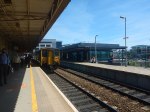


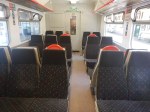

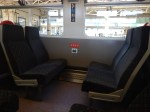
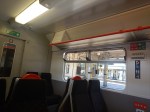
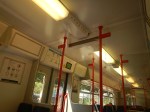




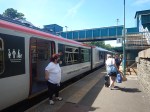
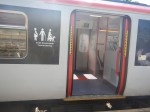
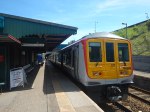
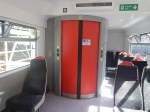
So what was it like?
Noise And Vibration
Going up to Bargoed, I deliberately sat as near over the top of the engine as I could.
There was a bit of a whine, but not as much as in a new Class 195 train.
For those, who commuted on Class 319 trains for years on Thameslink, they probably wouldn’t notice much difference.
Performance
For a 100 mph electric train built for running between the flat lands of Bedfordshire and the South Coast over the hillocks of the Downs, the train climbed to Bengoed, which has an altitude of around a thousand feet with a purpose.
But then I have a Porterbrook brochure for these trains and the power source was sized, such that the train would be able to climb the stiffest routes in the UK.
The Interior
It looked to me like the Thameslink interior with new sea covers and plugs to charge a mobile phone.
They could certainly be upgraded a bit further to the standard of the Class 319 trains on the Abbey Line, that I wrote about in A Very Smart Class 319 Train.
A Job To Do
Trains for Wales has acquired these trains for extra capacity, whilst they refurbish their Class 150, 153 and 160 trains.
It looks to me, that they will do this job more than adequately.
Future Uses
I suspect Porterbrook hope that these trains will find uses around the UK, as they have spent a lot of time, effort and money to bring these trains into service.
But there are around eighty of the Class 319 trains in service or in store, from which the Class 769 trains are converted.
So they could find uses in several niche applications.
Short Term Fleets
This is effectively, the Trains for Wales application, where extra trains are provided, so that a fleet refurbishment can be performed.
- They would surely, have been a better replacement fleet for Greater Anglia, than the three Mark 2 coaches and a pair of diesel locomotives, that they used after a series of level crossing accidents.
- They could also be used to increase capacity for some major events like the Open Golf or a pop festival.
- Uniquely, they can stand in for both a 100 mph electric train or a 90 mph diesel train.
- They can even be fitted with third-rail shoes.
- They are the right size at four cars.
- They fit most UK platforms.
- They can be run in formations of up to twelve cars.
I wouldn’t be surprised to see Porterbrook or someone on their behalf, keep a fleet of trains on standby to handle short term needs.
Route Development And Testing
There has been a lot of pressure to open up new routes in recent years and these trains would be ideal to try out routes and test new electrification.
Tri-Mode Services
Great Western Railway have a particular problem with their service between Reading and Gatwick, in that it has some third-rail electrification. As they might like to extend this service to Oxford, an ideal train would be dual-voltage and self-powered.
This extract is from the Great Western Railway section in the Wikipedia entry for the Class 769 train.
Although initially planned for use in London and the Thames Valley whilst twelve Class 387 units are modified for Heathrow Express services, the future plan for these units will be operating on services between Oxford, Reading and Gatwick Airport, which would mean operating on unelectrified, 25 kV AC OHLE and 750 V DC third-rail routes. To enable this, Great Western Railway’s allocation of Class 769 units will retain their dual-voltage capability in addition to being fitted with diesel power units. The units will also receive an internal refurbishment and be fitted with air cooling.
I suspect, that they’ll also be used on the Henley, Marlow and Windsor branches, which have some operational problems.
- The branches are not electrified.
- Some branches run occasional services to Paddington.
- The Windsor branch probably needs more capacity.
The Marlow branch could be difficult, but I suspect that, there’s a solution somewhere.
Luxury Bi-Modes
Greater Anglia felt they needed luxury bi-modes for East Anglia and they bought Class 755 trains, which are probably a lot more expensive, as they are brand-new and from Stadler of Switzerland.
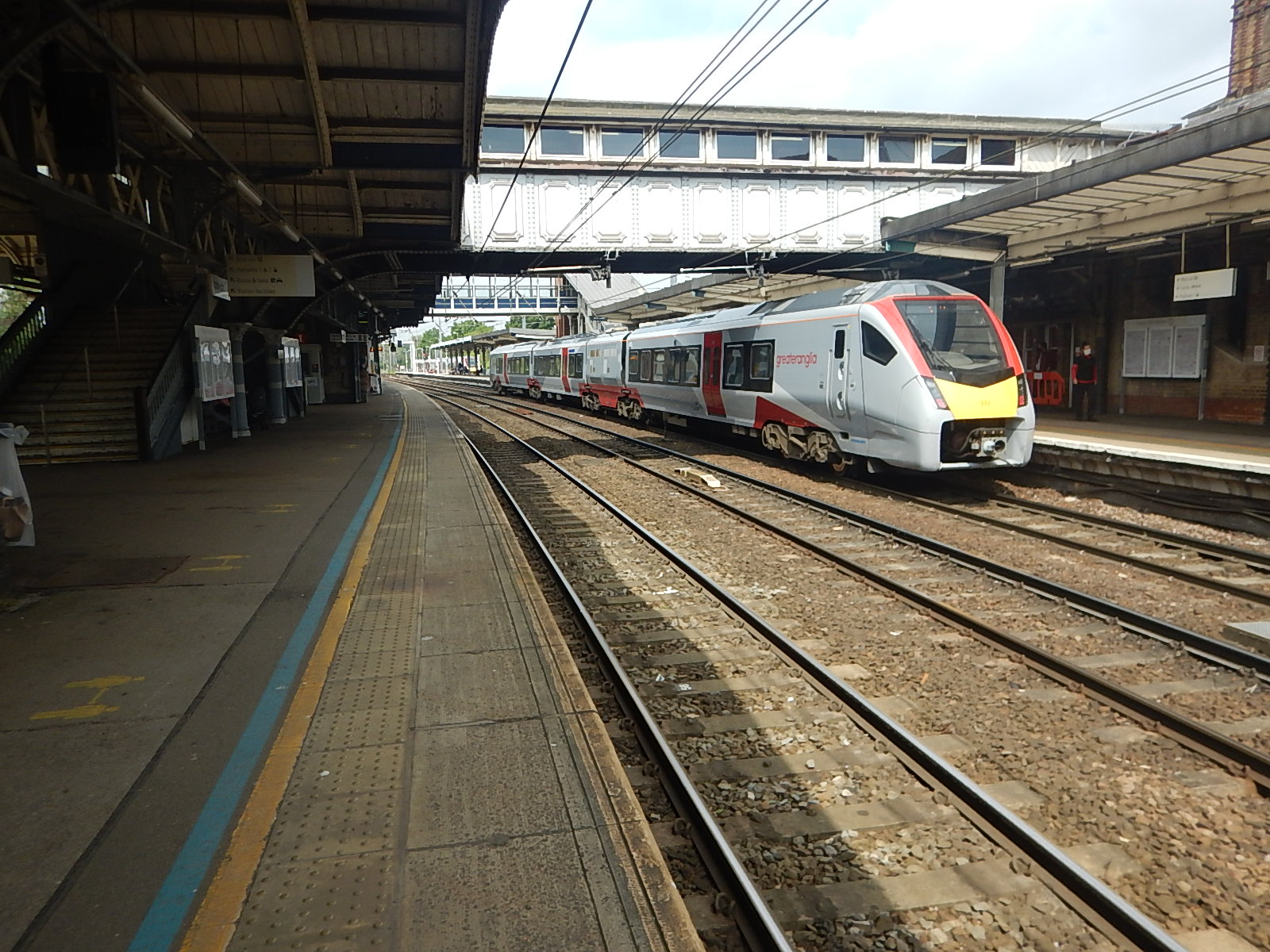
Surprisingly, the Class 319 trains have a higher passenger capacity.
But both trains could do a similar task, where the route is partially electrified.
As I said earlier about the GWR units.
The units will also receive an internal refurbishment and be fitted with air cooling.
Porterbrook’s brochure for the Class 769 train talks about using them between Manchester and Buxton.
Surely, this route could do with a Northern version of a GWR interior.
I also think a service should link Hellifield and Buxton. as I wrote about in Why Not Buxton To Hellifield?
That would show what Class 769 trains could do!
It would also connect the Peak District to the hills North of Lancashire.
I might also be, that the standby-fleet should also be the luxury variant of the train. Surely, supporters going to the Open at some of the inaccessible venues could afford pay to pay extra for a comfy train.
Express Freight And Parcels Services
Rail Operations Group would appear to have placed the second-largest order for Class 769 trains, which they will use to launch a high-speed parcels service called Orion.
This extract is from the Rail Operations Group section in the Wikipedia entry for the Class 769 train.
Orion is aiming to launch its first trial service conveying parcels and light freight in April 2021, with the Midlands to Mossend now likely to be the debut flow. The company is to use converted Class 319s for the service and is now planning for a fleet of 19 four-car units – nine Class 319s and 10 Class 769s. Arlington Fleet Services at Eastleigh is modifying the interiors of the units to accommodate roller cages for parcels, with the aim of operating primarily under electric power but with the 769s using their diesel engines to act as tractor units for the 319s on non-electrified stretches. The first 769 bi-mode, No 769501, has undergone its Flex conversion at Brush in Loughborough and is due to be outshopped from Arlington at Eastleigh in March following its interior modification.
In Did These Strawberries Have Road- Or Rail-Miles?, I talked about strawberries going between Scotland and London.
Surely, the movement of high-quality food could be one of the cargoes for Orion.
It wouldn’t be the first such traffic, as Class 43 power cars of the InterCity 125s used to carry flowers and fish up to London from Cornwall.
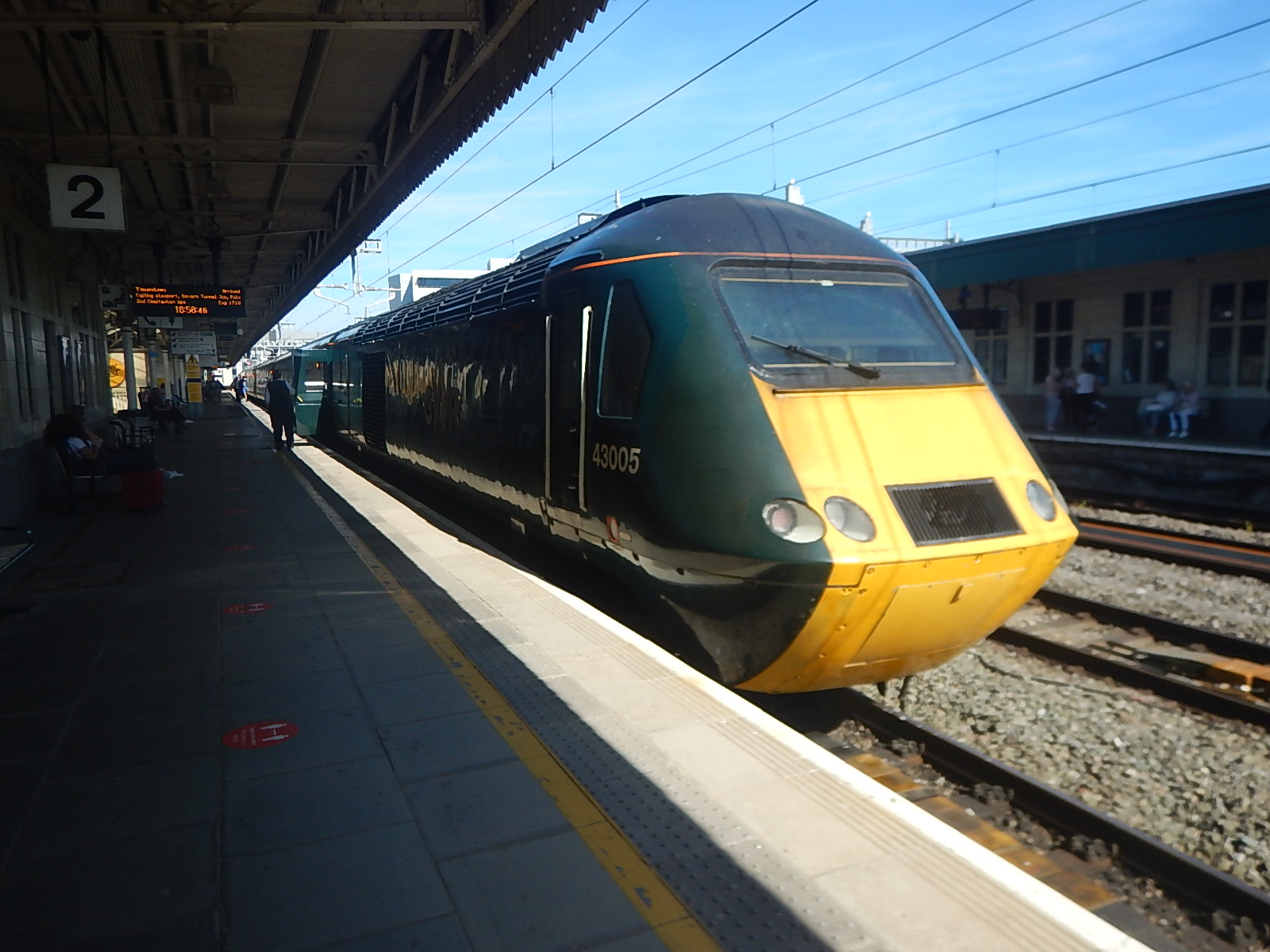
There’s a lot of space in the back of a Class 43 power car.
I certainly feel there are possibilities for using Class 769 trains as high speed parcels transport.
It should be noted that Class 325 trains already run high speed parcel services up and down the country on behalf of Royal Mail. These trains may look like later British Rail trains, but they are in fact based on Class 319 trains.
So I doubt, there’ll be any worries that the trains can’t handle the required services after conversion.
Conclusion
It looks to me that Porterbrooks plan to convert numbers of their Class 319 trains into Class 769 trains will find several ready markets.
It could be argued that more carbon savings could be achieved by perhaps a new battery-electric or hydrogen-electric train. But these will take years to develop!
These trains are a good short-term solution, that will help define their zero-carbon successors.
INEOS To Spearhead Formula 1 Hydrogen Fuel Technology Initiative With Mercedes
The title of this post, is the same as that of this article on Hydrogen Fuel News.
It’s an interesting concept to promote hydrogen-powered cars, trucks and specialist vehicles.
On the plus side, there would be all the environmental benefits.
But on the negative side there would be no noise and probably no smell.
If trials avowed it could be as exciting as Formula One today on a good day, I do feel it could be a way for the sport to progress.
All You Want To Know About Highview Power
This article on Power is entitled Market Prospects Heating Up for Cryogenic Energy Storage.
It talks in detail about the technology, financing and market prospects for Highview Power and their CRYOBattery.
- Their batteries store energy by liquifying air and storing it in large tanks.
- To recover the energy, the air is encouraged to go to a gaseous phase and put through an air turbine.
- Their first commercial system is being built at Carrington near Manchester.
- The Carrington system will have an output of 50 MW and be able to store up to 250 MWh.
- Other systems are under development for Vermont and Spain.
- The systems are built like Leho from readily available components from the oil and gas industry.
One of my regrets in life, is that I missed the crowdfunding for this company!
Read the article as you might find one of Highview Power’s CRYOBatteries coming to a site near you.
Power’s article is the best yet on describing the technology.
 The Anonymous Widower