‘A Rare Opportunity’: Northern Will Run Service Along Heritage Railway Line For The First Time And Tickets Are Now On Sale
The title of this post, is the as that of this news item from Northern Trains.
This is the sub-heading.
Northern will run a service along a heritage railway line for the first time, to raise money for charity.
These four paragraphs add detail to the story.
Tickets are now on sale for the service, which will set off from Darlington station on Sunday, 22 February and complete a return trip along Weardale Railway before heading back to Darlington.
Northern has been working closely with Weardale Railway to organise this event.
The railway, which opened in 1847, is a popular tourist attraction and allows visitors to travel on heritage trains along a picturesque 16-mile route. It runs between Bishop Auckland West and Stanhope in County Durham.
In 2020, it was saved from administration by The Auckland Project, which has since provided significant investment to fund essential repairs and infrastructure improvements.
Note.
- The train will be one of Northern’s Class 158 trains.
- Tickets are being sold for £25 and the proceeds will be donated to two local charities: The Angel Trust, based in Bishop Auckland, and 123help4familys, based in Stanhope.
- The train will leave Darlington at 09:46 and finishes its trips up and down the Weardale Line at Darlington at 17:44.
I won’t be going, as I can’t fit the day together.
Is There Support For An Extended Service From Bishop Auckland?
I asked Google AI, this question, and got this mildly surprising answer.
Yes, there is support for extended services in Bishop Auckland, primarily through NHS GP extended access, which provides appointments outside of normal hours (6 PM – 8 PM weekdays and weekends) at Bishop Auckland Hospital. The Urgent Treatment Centre is available 24/7, and various community-based support services, including care agencies and mental health support, are also available.
If the hospital and the other medical facilities are open, surely in a rural area, if they are needed, transport should be available.
Is There A Need For More Housing In Bishop Auckland?
Yes, there is a significant, documented need for more housing in Bishop Auckland to address a, “chronic shortage of quality bungalows and assisted living” alongside a broader demand for modern, energy-efficient homes. The town is undergoing a regeneration with plans for increased, “affordable housing” and “100% affordable” developments (e.g., in “Westerton Road” and “Holdforth Crescent”) to meet the growing population and “economic needs”.
Note.
- A regular service to Darlington may make building more housing viable.
- Judging by the amount of new houses along the Northumberland Line, the new railway has encouraged their building.
Services and stations could be added as required, as appears to be being done on the Northumberland Line.
Could Electric Trains Run Between St. Pancras International and Sheffield Stations With No More Electrification?
A reader suggested, that I look at this, so here goes!
- A couple of weeks ago, I took a Class 222 diesel train back from Sheffield to St. Pancras International and it seemed a few minutes quicker.
- Looking at the timetable today, at least one service on the route is now just under two hours and some others are just over.
So the new Class 810 trains may not be fully in service yet, but the trains have already had an effect on the timetable.
How Far North Is The Midland Main Line Being Electrified?
I asked Google AI this question and received this answer.
As of early 2026, the Midland Main Line (MML) is electrified as far north as Wigston, just south of Leicester.
- Northern Limit: The section from Kettering up to Wigston South Junction was energised in July 2024, representing the current northern limit of 25kV overhead line equipment (OLE).
- Pause in Further Electrification: Following a UK government spending review, the further, planned northward extension of electrification to Leicester, Derby, Nottingham, and Sheffield was indefinitely paused in July 2025.
- Current Operations: While electrification has stopped at Wigston, the line is served by new bi-mode (electro-diesel) trains, allowing for electric running from London St Pancras to Wigston before switching to diesel power.
- Previous Work: The line is also fully electrified from London St Pancras to Bedford, including the route to Corby.
Note.
- South Wigston Junction and Sheffield are 69.4 miles apart.
- The Hitachi trains can raise and lower pantographs on the move.
Distances without wires from London St. Pancras International to various destinations are as follows.
- Sheffield – 69.4 miles
- Leicester – 3.7 miles
- Derby – 36.4 miles
- Nottingham – 31.1 miles
As trains will have to go out and back to these destinations distances travelled will be doubled.
- Sheffield – 138.8 miles
- Leicester – 7.4 miles
- Derby – 72.8 miles
- Nottingham – 62.2 miles
It looks to me, that if the new Class 810 trains, can travel 138.8 miles on batteries and diesel engines as a tri-mode train, then the Midland Main Line is electrified.
Could The Sheffield Services Turn Round At Doncaster And Charge Their Batteries There?
Note.
- South Wigston Junction and Doncaster are 79.5 miles apart.
- Doncaster is a fully-electrified station.
- Sheffield and Doncaster would get two extra connecting trains per hour.
- The two services could also call at Meadowhall and/or Rotherham Central.
The Class 810 trains could charge their batteries, whilst passengers to and from Doncaster left and entered the trains.
Could A Simple Cross-Platform Change Be Arranged Between East Coast And Midland Main Line Services?
Doncaster station has two long island platforms, one of which is generally used for Northbound services and one for Southbound services.
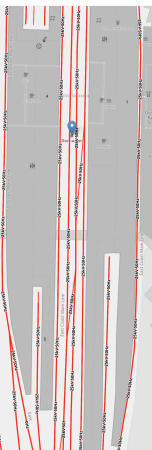
Note.
- All electrified tracks are shown in red.
- The two wide island platforms, with Northbound on the West side and Southbound on the East side.
- Each island platform has an electrified platform face on both sides.
- The four platforms faces on the island platforms can hold pairs of five-car Hitachi trains.
- There are two through tracks or avoiding lines between the two island platforms for trains that aren’t stopping.
- There are bay platforms at the ends of the station for local trains.
- The station is fully step-free with a wide pedestrian underpass.
I know the station well and it looks to me, that East Midland Railway’s five-car services for St. Pancras could charge up in the Southern ends of the four faces of the island platforms and the two South-facing bay platforms.
I also believe that a pair of five-car Class 810 trains could be handled and charged, should it become necessary.
It looks to me, that the engineers updating the East Coast Main Line, know that they were caught out badly by High Speed Two, so the redesign for the next fifty or a hundred years will be completely future-proofed.
Doncaster and London could almost be considered to be twin main lines, with two pairs of high speed lines taking different routes, that serve different towns and cities.
How Many Travellers Go Between East Scotland And The North-East of England And The English Midlands?
It must be quite a few, as in the new East Coast Main Line timetable, more Scottish services stop at places like Doncaster and Newark.
But surely, if you could go between say Perth or Aberdeen and Derby or Nottingham in two battery-electric trains, with a relaxed change at Doncaster, you’d take it?
I certainly would!
East Coast And Midland Main Lines Compared
These are times between London and Doncaster.
- Current times between Doncaster and London are typically between 1 hour and 31-40 minutes going via the East Coast Main Line.
- I estimate times between Doncaster and London will be typically 2 hours and 22-27 minutes going via the Midland Main Line.
Note.
- Doncaster and London King’s Cross is 156 miles
- Doncaster and London St. Pancras International is 183.3 miles
- So the Midland Main Line route would appear to to be about 45 minutes slower.
- I suspect, that for passengers between between London and North of York, it will always be quicker to use an East Coast Main Line service.
These are times between London and Sheffield.
- Current times between Sheffield and London are typically between 2 hours and 4-9 minutes going via the Midland Main Line.
- I estimate times between Sheffield and London will be typically between 2 hours and 2 minutes going via the East Coast Main Line.
Note.
- Sheffield and London King’s Cross is via Retford.
- Sheffield and London King’s Cross is 162.1 miles
- Sheffield and London St. Pancras International is 183.3 miles
- Sheffield and Retford is 23.5 miles
- So the Midland Main Line route would appear to to be a few minutes slower.
I would feel that there is scope that under Great British Railways to optimise services between London and Doncaster and Sheffield.
The Master Cutler
The Master Cutler is a named train, that is described in this Wikipedia entry, that was introduced in 1947.
- Over its life it has run into both King’s Cross and St. Pancras.
- I can remember the train in the 1950s, running into King’s Cross.
- It has also been run to and from Leeds.
- It has been run as a Pullman service.
- There are reports of overcrowding in recent years.
It strikes me that the Master Cutler could do with a revamp.
- As St. Pancras can accept pairs of five-car Class 810 trains, ten-car trains could be run into King’s Cross or St. Pancras.
- An alternative would be to use a nine-car Hitachi Class 800/801 train.
- All trains would be battery electric.
- All trains would use the East Coast Main Line for a faster service.
- Services could terminate in the North at Leeds.
- The service could be run as a Pullman service.
- This article on Ian Visits, writes about East Coast Main Line trains using St. Pancras.
I would create a train service, that would attract passengers from all over the world.
Who knows?
If it was conceived in the right way, it might warrant a second service or similar service on other lines like these possibilities.
London and Blackpool via Crewe, Wigan and Preston.
- London and Aberystwyth via Birmingham and Shrewsbury.
- London and Bristol via Bath
- London and Fishguard via Cardiff and Swansea
- London and Holyhead via Birmingham and Chester
- London and Liverpool
- London and Manchester
- London and Newcastle via York and Durham
- London and Norwich via Colchester and Ipswich
- London and Plymouth via Exeter
Note.
- All routes could be run using electric or battery-electric trains.
- The Fishguard and Holyhead services would be zero-carbon routes to Ireland, connecting to appropriate zero-carbon ferries.
- Could services be arranged so that all parts of the country have at least one service in both directions every day?
- In the days of British Rail, London and Norwich had a very high-class service, that could serve a full English breakfast between Colchester and London, which certainly wasn’t like the regular joke.
Get the offering right and it could level-up the UK.
Milestone Reached As 250,000th Passenger Journey Made On Northumberland Line
The title of this post, is the same as that of this news item from Northumberland County Council.
These three introductory paragraphs add detail?
Passengers who have made more than 250,000 journeys on Northumberland Line services are being reminded they can beat the queues for tickets by buying online.
Northern said the major milestone was reached this week, after it began running passenger trains on the line in December, for the first time in 60 years.
Services call at Newcastle, Manors and new stations in Seaton Delaval, Newsham and Ashington, with a journey along the entire route taking around 35 minutes and a single fare costing no more than £3.
This is a good leveling-up story, so why hasn’t the government got a pipeline of shovel-ready new rail projects?
These projects could be for starters.
The West London Orbital
This page on the Transport for London web site gives the current progress and starts with this paragraph.
We’re making plans for a new rail service on existing, underused rail lines in west London that would become part of the London Overground network. The West London Orbital rail service would run from Hounslow towards Hendon and West Hampstead in the north.
The Mayor and Transport for London are probably spending most of their time, thinking of a silly woke name, that no-one will remember and just cause confusion.
The Ivanhoe Line
This article on the BBC is entitled Disappointment As Reopening Of Railway Line Halted.
This is the sub-heading.
The restoration of a passenger rail link through the Midlands has been stopped in its tracks.
These three paragraphs give more detail.
A business case for reopening the Ivanhoe Line rail link from Burton-upon-Trent to Leicester had been submitted before the election, with campaigners hopeful that work could begin in 2024.
But on Monday, Chancellor Rachel Reeves said the Treasury needed to find £5.5bn of savings in 2024 and a further £8.1bn in 2025.
Speaking in the House of Commons, the Chancellor said that the previous government’s entire Restoring Your Railway programme would be scrapped, saving £85m.
Note.
- I don’t believe this government believes in improving the rail infrastructure in the UK.
- But how do they expect people to get around, given their preferred transport mode of electric cars are ridiculously overpriced?
- The article on the BBC is a must-read.
- Last week Arriva Group announced a new Newcastle and Brighton open access service, that will call at Burton-on-Trent, which is planned to be the Western terminus of the Ivanhoe Line. See Arriva Group Submits Open Access Rail Application To Connect Newcastle And Brighton, Via London Gatwick for more details.
For more on the Ivanhoe Line, read the Campaign to Reopen the Ivanhoe Line web site.
Wind Farm: Yorkshire Moors Could Get England’s Biggest Wind Farm
The title of this post, is the same as that, of this article on the BBC.
This is the sub-heading.
The largest onshore wind farm in England could be built on moorland in the Pennines if plans get the go-ahead.
These are the first two paragraphs.
Calderdale Windfarm Ltd is exploring options for 65 turbines on Walshaw Moor, near the Walshaw Dean reservoirs above Hebden Bridge in Calderdale.
The company said the scheme would generate enough electricity to power more than 286,000 homes a year.
The Calderdale Wind Farm has a web site, which adds these details about the proposals.
- The 65 wind turbines will generate up to 302 MW of electricity.
- There will be a 150 MW battery on site.
- £2.5 million per year will be put in a Community Benefit Fund.
- Up to 300,000 trees will be planted across the site.
This Google Map shows the Walshaw Dean reservoirs and Hebden Bridge.
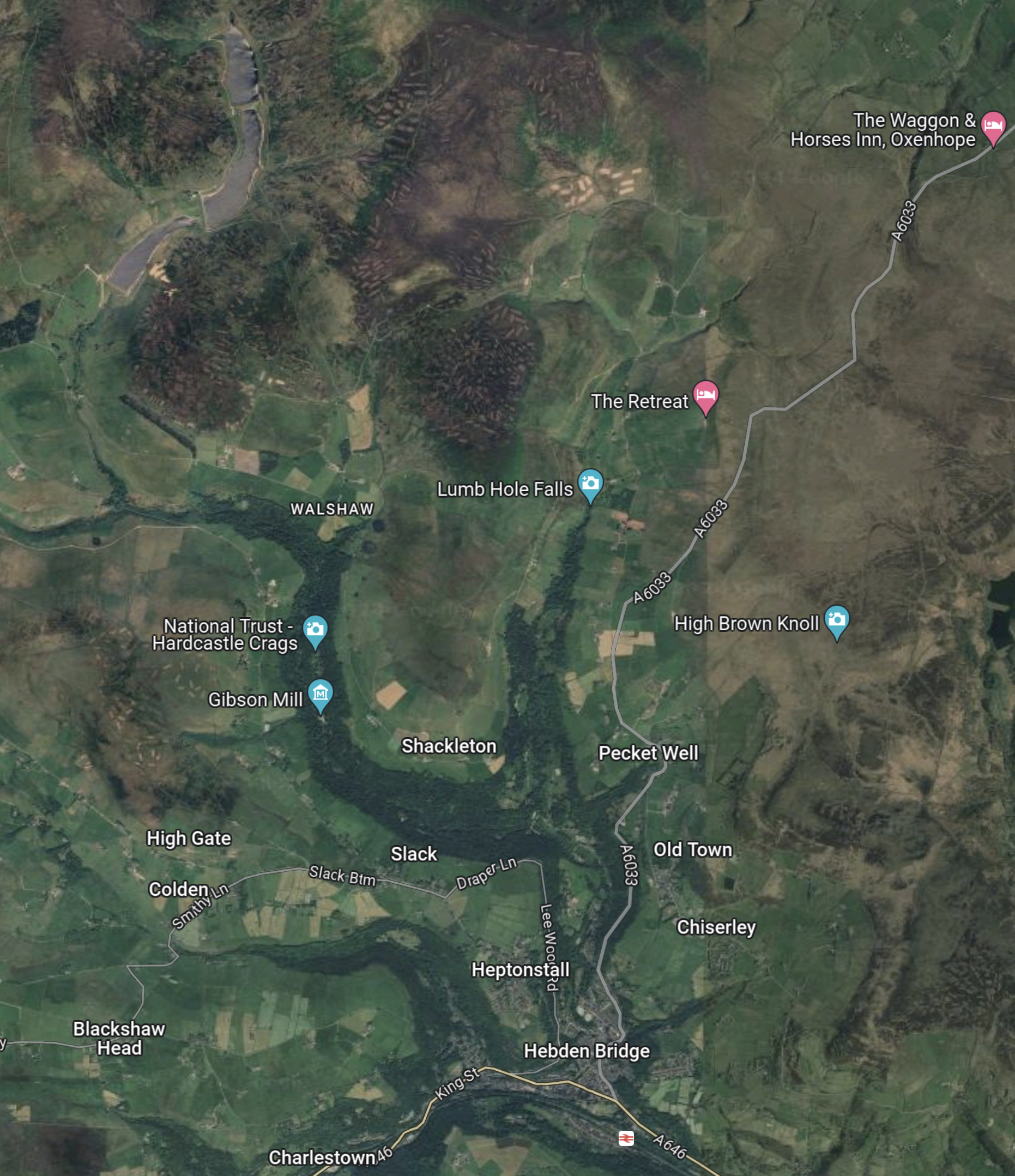
Note.
- Walshaw Dean reservoirs are in the North-West corner of the map.
- Hebden Bridge is at the bottom of the map.
- Hebden Bridge station on the Calder Valley Line is also marked.
- This will be a very unusual wind farm for England.
It could also be a controversial wind farm.
These are some of my thoughts and those of the BBC article.
Environmental Opinions
These five paragraphs indicate both sides of the environmental argument.
Environmental campaigners warned the development would disturb peat bogs, releasing carbon into the atmosphere.
A spokesperson for Calderdale Windfarm, which is backed by Worldwide Renewable Energy (WWRE), said the proposal was an “incredibly exciting opportunity”.
“During a cost-of-living crisis, with ongoing energy security challenges and the climate emergency, the UK needs to explore how it can generate more carbon-free renewable electricity,” the firm said.
“But our proposals are at a very early stage and we recognise there will be a range of views about the merits of our proposal.
“We look forward to continuing to work with the local community, environmental groups, local councillors and others over the coming months to help shape the final design of the project.”
The £2.5 million per year Community Benefit Fund could be the clincher.
The Site Has A Battery
In my view, it is good practice to fit every wind farm with a battery, if this is practical and cost-effective.
As most batteries associated with wind farms, seem to be able to replace the wind farm for two hours, I wouldn’t be surprised to see the battery specified as a 150 MW/300 MWh unit.
A battery this size would improve the stability of the electricity supply in the area.
How Will Calderdale Wind Farm Be Connected To The Grid?
This question is answered in the page of FAQs.
We already have an offer from the Distribution Network Operator Energy North West to connect into the local electricity network substation at Padiham. Negotiations are also ongoing about an alternative connection via a new substation and that would go into National Grid which would connect into existing 440 KV pylons.
Padiham is a few miles away to the West, so the second option may need a smaller number of pylons.
The grid connection and associated infrastructure would be subject to a separate planning application to the wind farm.
Is Calderdale Wind Farm Just Wind Turbines?
This question is answered in the page of FAQs.
- No. Alongside our proposals for onshore wind we are also exploring the potential for the inclusion of battery storage and solar panels on southern slopes.
- As we develop the proposals further, we will be able to confirm whether we will be including other renewable technologies as part of the proposals.
I wouldn’t be surprised to see solar panels floated on the reservoirs. This also has the secondary benefit of reducing evaporation.
How Will Calderdale Wind Farm Benefit Calderdale?
This question is answered in the page of FAQs.
If consented, Calderdale Wind Farm would represent an investment of circa £500m into the local economy. Calderdale Wind Farm will support the local economy and present many opportunities for years to come.
Community Benefit Fund
Around 16,500 households in Calderdale are living in fuel poverty, with around 1,200 of these being in the HX7 postcode area. As part of our proposals for Calderdale we are exploring a community benefit fund to provide support to these households across the 30-year operational lifetime of Calderdale Wind Farm.
This fund would represent £75m worth of funding across a 30-year timeframe that would be paid to Calderdale Council to help relieve fuel poverty for the operational lifetime of the Calderdale Wind Farm.
We want to work closely with the communities in and around Calderdale to ensure they benefit from the project to help address identified local challenges such as the current energy and cost of living crisis.
Socio Economic Impacts
A socio-economic report produced by Biggar Economics suggests that the project would be a significant boost to both the Calderdale and wider regional economy if it goes ahead. The report estimates that Calderdale Wind Farm would generate at least £2.2million GVA for Calderdale through the design, build and operational lifetime of the windfarm.
This is surely going to level-up Calderdale.
Is This Going To Impact My Walking Route?
This question is answered in the page of FAQs.
As we develop our proposals, we will design the scheme and placement of the wind turbines and associated infrastructure to minimise any disruption to existing paths and trails. Our team has taken into consideration the importance of preserving the natural beauty and accessibility of the area in our early stage designs, which will evolve as we undertake further work ahead of a planning submission.
While there might be temporary adjustments or diversions to certain paths during the construction phase to ensure safety, these changes will be communicated well in advance, and we will strive to keep any inconveniences to a minimum.
Once operational the moor will continue to be accessible to members of the public.
As part of our commitment to community consultation, we want to hear your thoughts on the proposals, if you have any specific concerns about how the wind farm might affect your walking routes please let us now, community input is vital to designing a scheme that works seamlessly with the local environment.
It does look like the impact will not be all that great.
Is Grouse Shooting On Walshaw Moor Expected To Continue If Calderdale Wind Farm Is Approved?
This question is answered in the page of FAQs.
WWRE and Calderdale Wind Farm Ltd are pleased to confirm that the approval of the wind farm would result in the end of grouse shooting on Walshaw Moor.
This could face a lot of opposition from the shooting lobby.
Who Are WWRE?
The Calderdale wind farm has a page of FAQs.
In response to who are the funding partners of the project, this is said.
WWRE Global is a UK based company that was looking at projects in Spain and registered with Companies House in Gibraltar. With its investors and opportunities its current operations are focused on helping to deliver new renewable energy infrastructure in locations across the UK, which is why the business is now listed at Companies House in London.
WWRE Global is responsible for delivering investment opportunities for Energy Horizon II Investment Company and managing the planning and consenting process.
WWRE Global has a web site.
When Will The Wind Farm Be Built?
This question is answered in the page of FAQs.
Calderdale Wind Farm is a fully funded project, and it is envisaged the construction would commence within 12 months of any planning permission being granted and conditions being discharged. At this stage it is expected that construction could take up to two years.
WWRE Global certainly seem to want to get on with it.
Objectors
Use Google to search for news about Calderdale wind farm and you get a lot of objectors.
Conclusion
This is a bold and scientifically-correct proposal and it will be a close decision, as to whether the wind farm gets built or not!
Two Ports Advance To Next Stage Of UK Gov Funding For Floating Wind
The title of this post, is the same as this article in Ground Engineering.
This is the sub-heading.
Port Talbot in Wales and Port of Cromarty Firth in Scotland have advanced to the next stage of a government funding scheme to develop port infrastructure that will facilitate floating offshore wind.
These three paragraphs introduce the developments.
The UK Government has agreed that the port expansion projects should progress to the next stage of its floating offshore wind manufacturing investment scheme (FLOWMIS) known as the primary list phase.
Up to £160M of grant funding will be allocated to certain investments in the floating offshore wind sector under the scheme.
The money will go towards funding the basic infrastructure necessary to support the assembly of floating offshore wind turbines. This includes the construction, replacement and upgrade of port infrastructure to accommodate large components such as towers and blades, as well as steel and concrete foundations and mooring cables required for floating offshore wind.
The article also says this about Port Talbot.
The Future Port Talbot project in south Wales would see the port transformed into a major hub for the manufacturing, assembly, and integration of floating offshore wind components for projects in the Celtic Sea.
Associated British Ports (ABP), which owns and operates the port, welcomed the government’s decision.
Note.
- Port Talbot will almost certainly use locally produced steel.
- There appears to be at least 4,832 MW of floating wind to be developed in the Celtic Sea in the next few years.
Port Talbot would be ideally placed to handle both English and Welsh coasts and waters in the Celtic Sea.
The article also says this about the Port of Cromarty Firth.
The Port of Cromarty Firth (PoCF) on the east coast of the Scottish Highlands will undergo a fifth phase of expansion work. This will develop the facilities and infrastructure necessary to enable the port to support offshore wind infrastructure projects off the coast of Scotland.
Over £50M has also been earmarked for the port’s expansion.
There appears to be at least 15,216 MW of floating wind to be developed in Scotland in the next few years.
Both ports seem to have welcomed the funding.
Adding the plans for Scotland and the Celtic Sea together gives a figure of just over 20 GW of floating wind to be developed in the next few years.
Conclusion
Surely, the award of funding for floating wind, is a good way to create a new industry and jobs in these two areas and also perform some sensible levelling-up.
I also suspect that spending £160 million to enable the construction of 20 GW of floating wind farm is a good return on the investment.
Interview: Rethinking ‘Unusual And Special’ CrossCountry
The title of this post, is the same as that of this article on Railway Gazette.
This is the sub-heading.
CrossCountry’s National Rail Contract came into force on October 15, giving the business some medium-term certainty and Managing Director Tom Joyner a chance to reflect with Rail Business UK on its evolving role as a truly national train operator.
These are thoughts based on what is said in the article.
Unusual And Special
This paragraph is Tom Joyner’s explanation of what he meant.
‘CrossCountry is unusual and special. The fact that we’re a long-distance operator that connects so many places means we can be there for something different’, believes Managing Director Tom Joyner as he reflects on the operator’s short and medium-term future following the award on September 20 of its National Rail Contract.
I have found CrossCountry useful in the past to efficiently visit some towns and cities in the past, when Ipswich Town are playing away.
Arriva UK’s Contract To Run CrossCountry
This paragraph details the operating contract.
Under the NRC, incumbent Arriva UK Trains will continue to run the non-London inter-city passenger business as it has since November 2007. Commencing on October 15, the contract has a guaranteed core term of four years and an option for this to be extended to eight. The government will take the revenue risk, as it has done since the pandemic, with Arriva receiving a fixed fee to operate the business, with limited bonuses on offer if certain performance targets are met.
As a resident of London, I rarely use CrossCountry. But my only obvious improvement would be that CrossCountry ran trains with a smaller carbon footprint.
Post Pandemic Purpose
This paragraph details their post-pandemic purpose.
‘CrossCountry hasn’t benefitted from re-franchising in the last 10 years and this has presented challenges, particularly from a rolling stock perspective. We’ve been working closely with DfT to agree the post-pandemic purpose and vision for CrossCountry and how these fit into our railway network’, Joyner reports.
Most rail operators in the UK are London-centric or regional. Perhaps CrossCountry should become more ‘Unusual And Special’ to serve the important places, that other rail operators cannot reach.
One place would be the National Memorial Arboretum, which I wrote about in New Station Proposed For National Arboretum.
There must be lots of other places.
It could surely be the transport network for those who wanted to roam the UK on a holiday.
Could it be at the heart of levelling up the regions of the UK?
Fleet Under Pressure
This paragraph describes the current fleet and its condition.
Perhaps most reassuring for regular users of CrossCountry is news that the NRC will allow the operator to deliver some improvements to its train fleet, the backbone of which are the Class 220 and 221 DEMUs Arriva inherited from Virgin Trains in 2007. Other than some minor cosmetic work, these have not been refurbished since they were introduced in 2001. These 200 km/h Voyager trainsets are augmented by a fleet of Class 170 Turbostar DMUs for 160 km/h operation on regional routes to Cardiff and Stansted Airport; CrossCountry withdrew its last ex-British Rail IC125 High Speed Trains on September 18.
I do think, that some way must be found to reduce the operators large carbon footprint.
Are Battery Trains The Answer?
This paragraph gives Tom Joyner’s view on battery trains.
He is equally sceptical about the prospects for alternative traction technology to replace diesel. ‘I keep hearing views from industry colleagues who say, “electrification isn’t the answer, battery is the answer”. But you can’t get a battery that’s got the range that we need, even on the regional services currently worked by Class 170s.’
Birmingham New Street and Leicester is only 39.8 miles, so this route for a Class 170 train, might be possible for battery-electric trains, when there is electrification or charging at Leicester.
Perhaps the plan would be to run battery-electric trains between Birmingham and Leicester and see how the passengers react and how this will change the economics of the other Class 170 services?
A Lot More Food For Thought
There are some more sections in the article, that are worth a read.
- Sustainability Challenge
- Service Offering
- Commuters’ ‘Coventry Conundrum’
- Doing Something Different
This paragraph towards the end of the article makes the levelling up case, that CrossCountry can fulfil.
He suggests that the operator may not need as structured a timetable, and that its operating model could involve serving more destinations rather than the current largely fixed hourly axes crossing in Birmingham. ‘We serve regional Britain and when we talk about levelling up, the railway company best placed to level up in terms of connecting the whole of Britain is us’, he insists. This ethos is reflected in the daily Cardiff – Edinburgh service, with Joyner noting that this will not be a repeating service through the day.
Read the whole article.
I wish Tom Joyner the best of luck!
A Waste Of Valuable Resources Between Paddington And Heathrow
Much of my working life was spent in writing project management software.
I like to think, I was an expert at writing software to juggle resources.
I wrote my first piece of software in that field in ICI, to get my boss out of trouble, after he’d promised the department a program to allocate the department’s office space more efficiently.
Unfortunately, the student, who’d written the software, without leaving anything that worked or any decent instructions.
So I told my boss;Colin, that I’d have a go.
In my previous position at ICI in Runcorn, I’d worked out an algorithm to decode mass spectrometer traces, which started with a rough idea of what was there, which was entered by an operator and then used permutations and combinations to fit the output.
I used the algorithm in every resource scheduler, I ever wrote and it worked a treat.
So when I see a waste of resources, I get angry, as I know those who devised the system could have done a lot better.
Look at these pictures, I took of a Heathrow Express, that I took today.

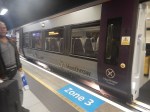
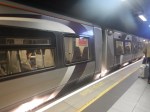

It is barely ten percent full.
It has become a waste of resources; train, valuable paths in the Heathrow tunnel, and platform space at Paddington.
These are a few thoughts.
Capacity To And From Heathrow
Consider.
- Heathrow Express uses twelve-car Class 387 trains, with a capacity of 672 seats, that run at a frequency of four trains per hour (tph), which is 2,688 seats per hour.
- The Elizabeth Line uses nine-car Class 345 trains, with a capacity of 454 seats, that run at a frequency of six tph, which is 2,724 seats per hour.
- The Class 345 trains can also carry another 1046 standing passengers on each journey, which adds up to a maximum of 6276 standees per hour.
- The Piccadilly Line uses 73 Stock trains, with a capacity of 684 seats, that run at a frequency of twelve tph, which is 8,208 seats per hour.
This gives a capacity of 19,896 passengers, staff and visitors per hour, or which 13,620 get seats.
Expressed as percentages, the four modes of transport are as follows.
- Heathrow Express – 13.5 %
- Elizabeth Line – Sitting – 13.7 %
- Elizabeth Line – Standees – 33.8 %
- Piccadilly Line – 41.2 %
In Effects Of The ULEZ In West London, I said this about journeys to and from the airport.
Heathrow Airport is one of the world’s busiest airports and 76,000 people work at the airport, with many more employed nearby.
The airport handled 61.6 million passengers in 2022, which is a few short of 170,000 per day.
If you consider that those that work at the airport do two trips per day and passengers generally do one, that means there are 322,000 trips per day to or from the airport.
But as it now so easy to get to the Airport using the Elizabeth Line will more people use the new line to meet and greet and say goodbye to loved ones or business associates. Since the Elizabeth Line opened, I’ve met a couple of friends at Heathrow, who were passing through.
I wonder, if that daily journey total of 322,000 could be nearer to 350,000 or even 400,000.
If the ULEZ charge makes some passengers and staff switch from their car to using a bus or train, this probably means that public transport to and from the airport, will need to be boosted by a substantial amount.
322,000 trips per day is 13,416 per hour assuming a 24 hour day.
Consider.
- The ULEZ will drive employees and passengers to trains to Heathrow.
- A lot of would-be travellers to Heathrow have had a tough couple of years.
- Because of the Elizabeth Line more meeters and greeters will go to the airport.
- The Elizabeth Line is making it easy to get to Heathrow for a large proportion of those living in the South-East.
- There have been numerous car parking scandals at Heathrow and other airports.
- Are there enough charging points for electric cars in Heathrow’s parking?
- Parking at Heathrow is expensive.
- Taxis to the airport are very expensive.
- Passengers with large cases can use the Elizabeth Line.
- Good reports of the Elizabeth Line will push people to use it.
- The Elizabeth Line serves the City, Canary Wharf and the West End.
- The Elizabeth Line has a step-free connection with Thameslink.
- Passengers seem to travel with very large cases.
- Passengers seem to be deserting Heathrow Express, as I wrote in Elizabeth Line Takes Fliers Away From Heathrow Express.
Note.
- The train, I took back from Heathrow this morning was full with all seats taken and quite a few standees.
- And it was a Sunday morning!
- We won’t know the effect of the ULEZ until August, but I believe it will be significant.
Obviously, I’m only using rough figures, but they lead me to believe that in a few months, the Elizabeth Line will be at full capacity to and from Heathrow.
Heathrow Express’s Train Paths Should Be Re-Allocated To The Elizabeth Line
This would increase hourly passenger capacity from 19,896 to 23,208 or by seventeen percent.
Great Western Railway would get two extra platforms at Heathrow and the Class 387 trains could be reallocated.
Where Would Great Western Railway Run Trains From Two Extra Platforms?
Consider.
- Various government levelling up funding has been allocated to Wales and the West.
- I talk about the Mid-Cornwall Metro in Landmark Levelling Up Fund To Spark Transformational Change Across The UK.
- The Mid-Cornwall Metro could include direct trains between London and Newquay.
- There are also plans for a new station at Okehampton Parkway.
- Given all the wind farm development in the Celtic Sea, I can see more trains between London and Pembrokeshire.
- Cardiff and Bristol would probably welcome extra services.
I don’t think Great Western Railway will have problems finding destinations to serve from two extra platforms.
What Will Happen To The Class 387 Trains?
Currently, twelve Class 387 trains are used for Heathrow Express.
In The Future Of The Class 387 And Class 379 Trains, I said this.
The Battery-Electric Class 379 Train
I rode this prototype train in 2015.

An Outwardly Normal Class 379 Train
I think it is reasonable to assume, that as battery technology has improved in the seven years since I rode this train, that converting Class 379 trains to battery-electric operation would not be a challenging project.
Creating A Battery-Electric Class 387 Train
If the Class 387 train is as internally similar to the Class 379 train as it outwardly looks, I couldn’t believe that converting them to battery-electric operation would be that difficult.
I could see a lot of the Class 379 and Class 387 trains converted to 110 mph battery-electric trains.
Would Heathrow Express Completely Disappear?
If the Elizabeth Line trains are going between Heathrow Airport and Central London, at a frequency of 10 tph or one train every six minutes, I feel there may be scope for marketing and operational reasons to create a sub-fleet of the Class 345 trains.
The trains would be identical to the Elizabeth Line’s current fleet, except for livery, seating and some internal passenger features.
- Perhaps, they could be called the Heathrow Train boldly on the outside, so even the dimmest passenger didn’t get on a Reading train instead of a Heathrow one.
- All trains would have wi-fi and 4G connectivity. These features have been promised for the Class 345 trains.
- Some coaches would be fitted with luggage spaces for the outsize cases people carry.
I could envisage the Heathrow Trains terminating at a wide number of places in addition to Abbey Wood and Shenfield. Possibilities must include Beaulieu Park, Ebbsfleet, Gravesend, Northfleet and Southend Victoria
Skegness Station To Benefit From A £3.3m Improvement Package
The title of this post, is the same as that of this article on Rail Technology Magazine.
I took these pictures of Skegness station, on a visit to the town in July last year, which I wrote about in A Trip To Skegness.
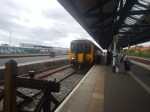







I feel that Skegness station would welcome some improvement.
The Rail Technology Magazine article says this about the project.
Upon completion of the project, customers will be able to utilise a number of enhanced facilities, including an improved accessible toilet with changing spaces, two new start-up offices, a community café and retail provisions. Upgrades will continue through improved access into the station for pedestrians and vehicles, offering integration with the surrounding community.
Work is hoped to start this year.
A Modern Zero-Carbon Train Service
If £3.3 million is going to be spent on Skegness station, would it not be a good idea to have better trains serving the station.
In A Trip To Skegness, I talked about updating the hourly Nottingham and Skegness service using Class 170 trains with Rolls-Royce MTU Hybrid PowerPacks.
I wonder if this route could be improved by fitting the Class 170 trains with Rolls-Royce MTU Hybrid PowerPacks?
- The hybrid technology would have a lower fuel consumption and allow electric operation in stations.
- The prototype hybrid is already working on Chiltern Railways in a Class 168 train.
- The Class 168 train is an earlier version of the Class 170 train and they are members of the Turbostar family.
- Rolls-Royce are developing versions of these hybrid transmissions, that will work with sustainable fuels.
- As we have a total of 207 Turbostar trainsets, these could be a convenient way of cutting carbon emissions on long rural lines.
- As Rolls-Royce MTU are also developing the technology, so their diesel engines can run on hydrogen, it is not outrageous to believe that they could be on a route to complete decarbonisation of this type of train.
I believe that we could see hydrogen-hybrid Class 170 trains, with a Rolls-Royce badge on the side.
But would it be possible to go the whole way using one of Stadler’s battery-electric trains?
Consider the service between Nottingham and Skegness.
- It is hourly.
- The route is run by 100 mph Class 170 trains.
- Nottingham and Grantham are 22.7 miles apart.
- Grantham and Skegness are 58.2 miles apart.
- Trains take four minutes to reverse at Grantham.
- Trains wait 20 minutes before returning at the two end stations.
- Trains reverse at Nottingham in a bay platform, which is numbered 2.
- Grantham is electrified.
- Nottingham station will be electrified in the next few years.
- Skegness station is next to the bus station in the middle of the town, so hopefully the electricity supply is robust enough to charge buses and trains.
Stadler make a train called an Akku.
- It is a member of the FLIRT family.
- It is a 100 mph train.
- I wrote Stadler FLIRT Akku Battery Train Demonstrates 185km Range, which means it could run between Nottingham and Skegness without intermediate charging.
This leads me to the conclusion that with charging systems at Nottingham and Skegness and taking a four-minute top-up at Grantham if needed, a FLIRT Akku could handle this route with ease.
Conclusion
Skegness is a town that needs leveling-up. A refurbished station and 100 mph electric trains to Grantham and London would be a good start.
Extending The Elizabeth Line – Serving South-East London
The Inadequacies Of Abbey Wood Station
Abbey Wood station is the Elizabeth Line’s main terminus in South-East London.
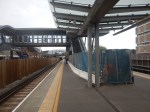
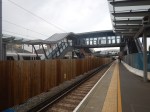




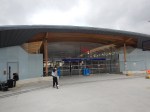

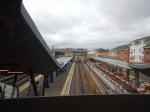

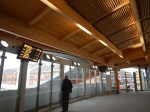
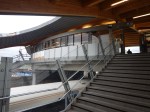
The architecture is impressive, as the pictures taken before the station was finished show.
But other things are less than impressive.
- There is no station parking.
- Central London rail terminals served by Elizabeth Line services are only Liverpool Street/Moorgate and Paddington.
- Central London rail terminals served by National Rail services are Cannon Street, London Bridge, King’s Cross and St. Pancras.
In my view, Abbey Wood is a lost cause, as a commuter station, unless substantial parking is built at the station.
Parking At Stations In West Kent
This list shows the number of car parking spaces at stations in West Kent and South East London.
- Barnehurst – 162 *
- Belvedere – None *
- Bexleyheath – 83 *
- Chatham – 276 *
- Dartford – 186 *
- Ebbsfleet International – 4945 #
- Erith – None *
- Eynsford – 15
- Farningham Road – None
- Gillingham – 152 *
- Gravesend – 94 *
- Greenhithe – 8 *
- Longfield – 88
- Meopham – 167
- Northfleet – None *
- Plumstead – None *
- Rochester – None *
- St. Mary Cray – 31
- Slade Green – 25
- Sole Street – 61
- Stone Crossing – None *
- Strood – 112 *
- Swanley – 106
- Swanscombe – None *
- Welling – 117
Note.
- An asterisk (*) indicates direct trains to and from Abbey Wood station for the Elizabeth Line.
- An hash(#) indicates direct trains to and from Stratford International for the Elizabeth Line.
These figures are according to the National Rail web site.
It looks like unless you can walk to your nearest station and that has an easy connection to Abbey Wood, you’re probably better off going to Ebbsfleet and parking there.
Travelling Between Ebbsfleet International And The Elizabeth Line At Stratford International
Consider.
- Southeastern’s Highspeed service between Ebbsfleet International and Stratford International has a frequency of three trains per hour (tph)
- It takes less than twelve minutes between the two stations.
- It takes ten minutes to walk between Stratford International and Stratford Station for the Elizabeth Line and Greater Anglia services.
- There are eight Elizabeth Line tph to Paddington, calling at all stations. For Heathrow change at Whitechapel station.
Note.
- From these points, it should be possible to estimate the time you should park at Ebbsfleet to get to an event in London or East Anglia, if you live in Kent and are parking at Ebbsfleet International.
- I think four tph between Ebbsfleet International and Stratford International would make the route more attractive.
- If you’re going to Norwich or Ipswich be careful, as only one of the two tph stop at Stratford.
I catch the 12:30 from Liverpool Street for matches at Ipswich on Saturdays. This is the 12:38 from Stratford, so I suspect if you parked at parked at Ebbsfleet before 12:00, you’d make it.
Who’d have thought, that when they built the massive car parks at Ebbsfleet international, that they would be a Park-and-Ride for football at Ipswich. And Norwich too!
Changing Trains At Stratford
This map from Cartometro shows the two Stratford stations.
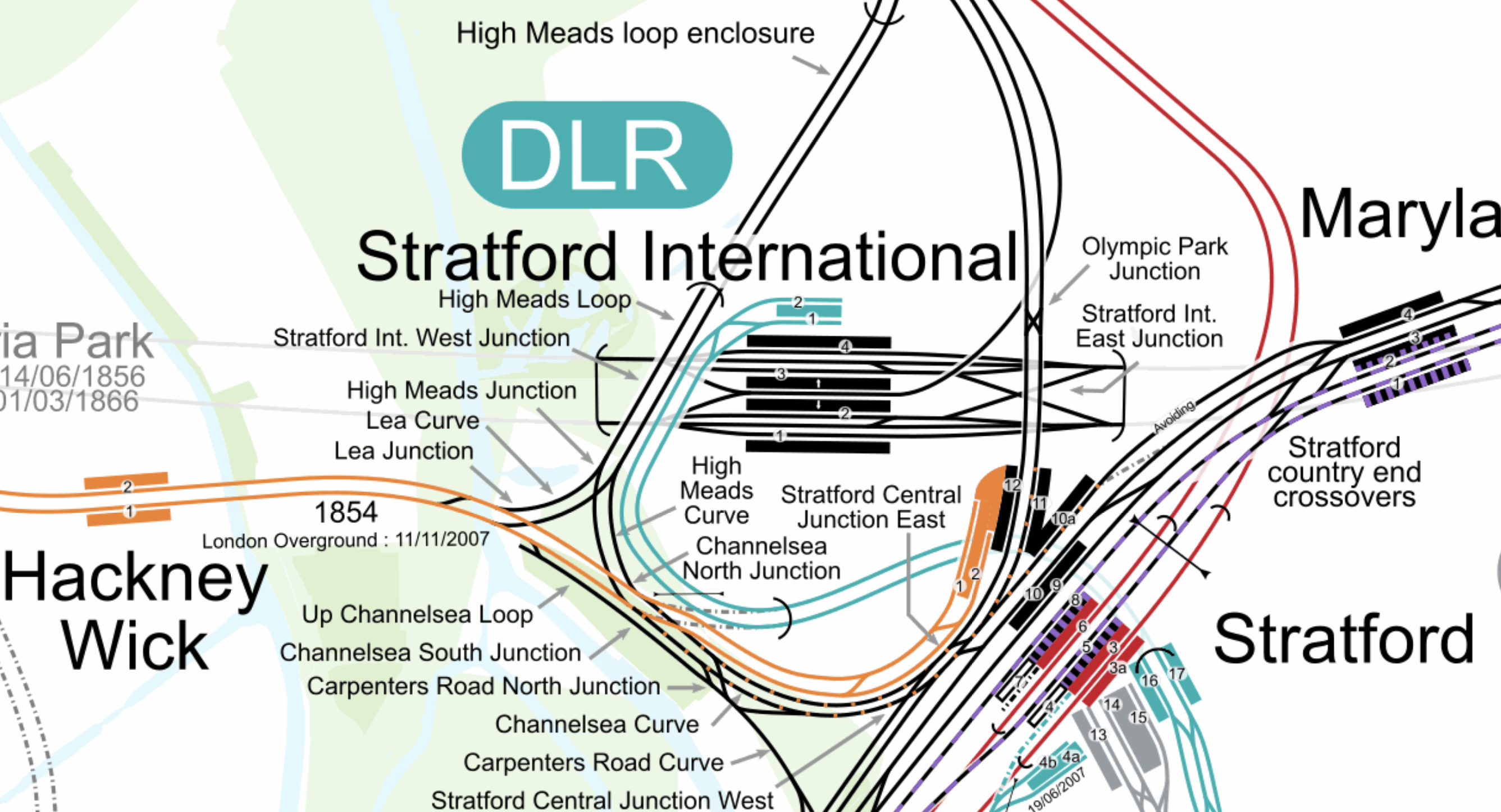
Note.
- The Elizabeth Line is shown in purple.
- The Central Line is shown in red.
- The Jubilee Line is shown in silver.
- The Overground is shown in orange.
- Lifts and escalators take passengers to and from the surface from between platforms 2 and 3 at Stratford International station.
Two pedestrian tunnels connect all the platforms in Stratford station.
- Elizabeth Line trains use platforms 5 and 8.
- Central Line trains use platforms 3, 3a and 6.
- Great Eastern Main Line trains use platforms 9, 9a and 10.
- Overground trains use platforms 1 and 2.
All platforms have lifts.
I suspect, that when you get to know the Stratford complex well, it’s easier than it looks.
But it does need better signage.
Full Step-Free Route Between Ebbsfleet And Heathrow Central
I have just used Transport for London’s Journey Planner, as if I was in a wheelchair and need full step-free access to go from Ebbsfleet to Heathrow Central.
This was the route.
- Southeastern to Stratford International station – 10 mins
- Walk to Stratford station – 21 mins
- Jubilee Line to Bond Street – 24 mins
- Bond Street to Heathrow Central – 32 mins
Note.
- The times are slower than say myself.
- I think it is possible to pick up the Elizabeth Line at Stratford.
But the route is certainly possible in a wheel-chair.
The Penge Interchange
This map from Cartometro shows where the East London Line of the London Overground and the Chatham Main Line between Victoria and Chatham cross in Penge.
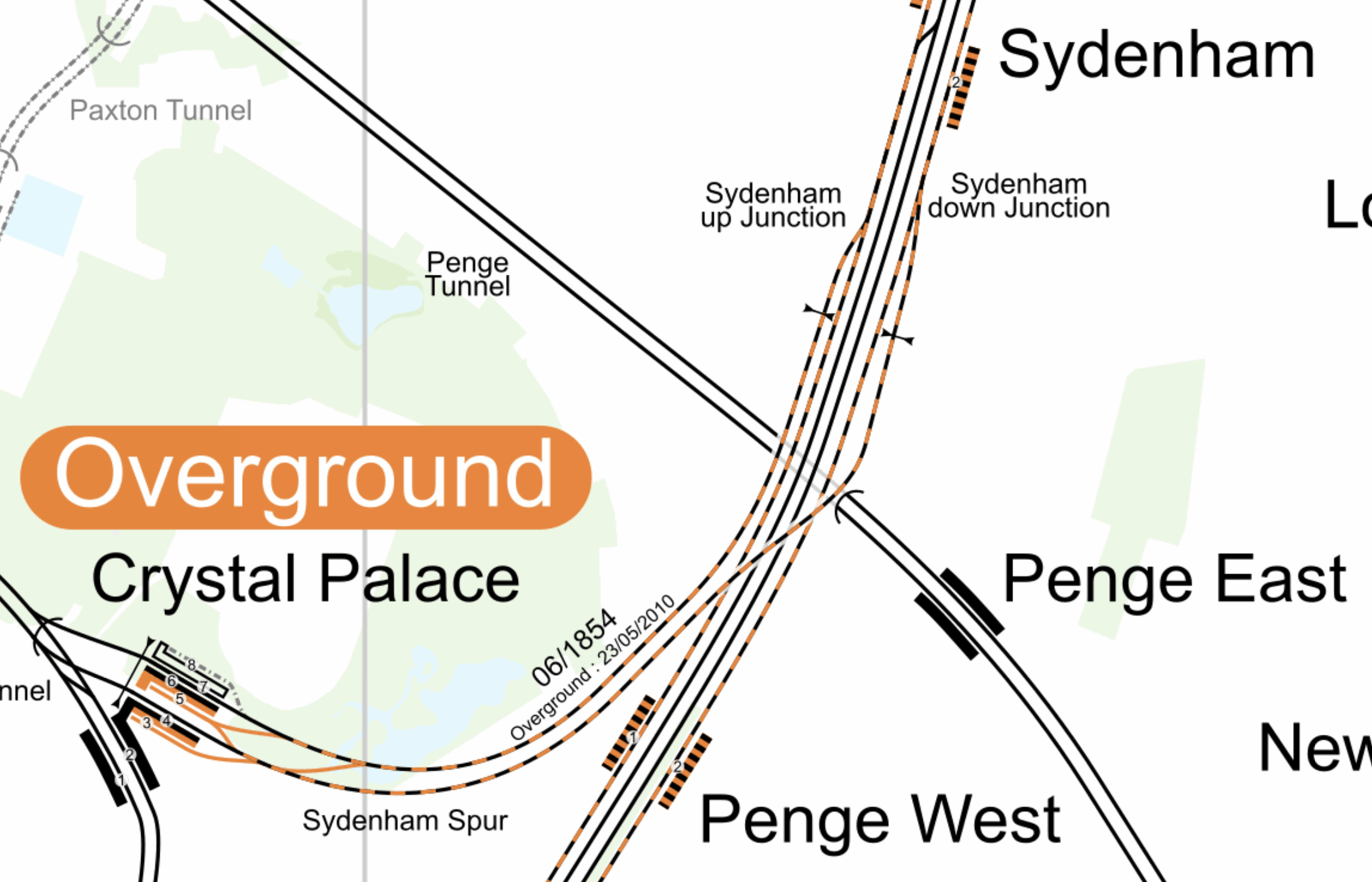
Note.
- The East London Line runs North-South through Sydenham and Penge West stations.
- The Chatham Main Line runs through Penge East station.
There is a plan by Transport for London to create a Penge Interchange station on railway land, where the two lines cross.
- The station could replace Penge West and Penge East stations.
- It would be fully step-free.
- Interchange would be allowed between the East London Line and the Chatham Main Line.
This would increase connectivity for those travelling to and from South-East London and West Kent.
I brlieve that this one interchange could help level-up a large area of South-East London.
Thoughts On Belmont Station
This press release from Sutton Council is entitled Trains Running To Belmont Set To Double As Sutton Wins £14 million Levelling Up Funding.
These four paragraphs outline the scheme.
The number of trains running to Belmont is set to double after Sutton Council secured a £14.1 million cash injection from the government’s Levelling Up Fund.
The investment has been awarded to unlock the full potential of the London Cancer Hub, the world-leading life sciences campus that is being developed in Belmont and is poised to create 13,000 jobs and £1.2 billion each year for the UK economy.
The money will be used to improve rail services at Belmont, an area which has been poorly served by public transport until now. This will enable train services to double from two to four trains an hour, with additional direct services between Belmont and London Victoria. Belmont station will also be improved with step-free access, better wayfinding signage and new walking and cycling routes to the London Cancer Hub.
Better public transport is key to delivering the huge health and employment benefits of the London Cancer Hub. The major regeneration project is set to bring unprecedented investment to Sutton and tackle health inequalities nationwide by accelerating life-saving cancer research and innovation.
I have some thoughts.
Comparison To The Cambridge Biomedical Campus
The Cambridge Biomedical Campus is a similar medical research site in Cambridge.
- The Cambridge site does more general research, than the Sutton site.
- Both sites have world class hospitals.
- Both hospitals attract lots of patients from some distance away.
- The Cambridge site already has 20,000 employees, as opposed to Sutton’s target of 12,000.
- In a few years, the Cambridge site will have a railway station; Cambridge South, connecting it to London and the wider environs of Cambridge.
- The Cambridge site has good cycle and bus connections to the Greater Cambridge area.
- The Sutton site, needs good cycle and bus connections to the local area and especially local stations, including Belmont.
In addition, I believe that if Belmont had four trains per hour (tph) connecting it to Greater London, this would be an alternative to using private cars to reach the Sutton site.
Handling Patients At Belmont Station
Going into hospital even for just a short out-patient visit can be stressful, so I feel it is important that everything is done to make the time in the station and getting between the train and bus, as stress-free as possible.
- Access between train and platform should be step-free and wheelchair-friendly.
- There should be a comfortable waiting area.
- Access between the train and bus should be step-free and wheelchair-friendly.
- Buses should be timed to meet the trains.
- There should be lots of information.
- I suspect blind people get cancer, just like most people, so there probably needs to be staff or volunteers at the station.
I see a couple of problems.
- Getting the bus next to the platform is difficult, as they’ve built flats on the space in front of the station.
- The light controlled crossing, is in the wrong place for slow travellers to get across the road to the bus station.
Some hard and possibly expensive thinking will be needed to get good access between the trains and the bus to the hospital.
How Well Would Four tph Connecting London Victoria And Belmont Serve The Hospital?
The current trains between London Victoria and Belmont call at the following stations, where there are interchange possibilities.
- Clapham Junction, which has lots of connections.
- Balham, which connects to the Northern Line.
- West Croydon, which connects to the Overground.
- Sutton, which connects to Thameslink.
There may be sensible reasons for the extra two tph from Belmont to serve another set of destinations.
The train services should be designed in partnership with the NHS cancer treatment.
 The Anonymous Widower