Planning Approval Granted For Network Rail’s Transformation Of Liverpool Street — Britain’s Busiest Station
The title of this post is the same as that of this article in Rail Technology Magazine.
This is the sub-heading.
Network Rail has secured a major milestone in the redevelopment of Liverpool Street station, following the City of London Planning Committee’s resolution on 10 February to grant full planning permission for the long‑awaited transformation of the UK’s busiest rail hub.
These two paragraphs adds some more detail.
The Eastern Region’s Anglia Route will oversee the upgrade, which aims to futureproof the station for decades as passenger numbers continue to grow sharply. Liverpool Street, last redeveloped in 1991, now handles 118 million passenger movements each year, and demand is projected to rise by 35%, reaching 158 million by 2041.
Looking further ahead, planners expect the station will need to accommodate over 200 million annual journeys, making capacity enhancement essential for maintaining operational performance and customer experience across London, East Anglia and the wider east of England.
To say this is a large project would be a massive understatement and I wish, that this could have been the last project planned and built by the Artemis project management system, that I wrote in a Suffolk attic fifty years ago.
This list summarises the work that will be done.
- 76% increase in overall concourse capacity
- 23% expansion of the lower concourse to smooth passenger flow
- Step‑free access from street to all platforms, including every Underground line for the first time
- Eight new large lifts, replacing the existing four‑person unit
- Escalators increased from four to ten
- New accessible entrances and intuitive wayfinding from Broadgate, Exchange Square, and key interchange points
- Toilets on all levels, including Changing Places facilities and family amenities
Respecting Heritage While Creating New Spaces
The project safeguards the station’s Victorian character, with the iconic trainshed fully preserved. The redevelopment will also create new vantage points overlooking the heritage structures, bringing passengers visually closer to the original architecture.
Above the concourse, a new office building featuring a publicly accessible roof garden will provide one of London’s most sustainably connected workplaces, directly supporting the City Corporation’s long‑term growth and employment aspirations.
Around twenty major contractors and professional firms will be handling the transformation.
Hopefully, I will be able to watch this project as it grows to occupy its place in the City of London.
Can The Signalling Of The London Overground Be Improved?
An article on Modern Railways Online is entitled First To Succeed Arriva On London Overground.
These are two paragraphs of the article.
Under the new concession, which runs for eight years, First Rail London Limited (FRLL) will introduce extra peak time trains on the Mildmay Line from May 2026, more frequent trains on the Windrush Line from December 2026 – up to 18 trains per hour – and upgrade help points and CCTV.
It will also introduce ‘targeted upgrades’ on the Mildmay Line infrastructure to “boost performance for customers.”
It would appear that the signalling is being improved.
So I asked Google AI, the question in the title of this post and received this reply.
Yes, London Overground signalling is actively being improved through major projects like the Windrush Line upgrades (aiming for 18-20 trains per hour) and South London signalling modernisation (Alstom’s new system for better reliability), allowing for increased capacity, faster journeys, and fewer delays, although these upgrades involve planned disruptive works.
It would appear that the improved signalling will lead to more faster and better services.
These have been indicated in the Modern Railways article.
- Extra peak time trains on the Mildmay Line
- More frequent trains on the Windrush Line
I would also expect more freight, open access and other special trains to be able to use London Overground tracks to pass through London.
London has a rail capacity problem, for both freight and passenger trains.
This report from Network Rail is entitled The London Rail Freight Strategy (LRFS).
I have written a series of posts based on this report.
- Decarbonisation Of London’s Freight Routes
- Doubling Harlesden Junction
- East Coast Main Line South Bi-Directional Capability
- Gauge Improvements Across London
- Gospel Oak Speed Increases
- Headway Reductions On The Gospel Oak To Barking, North London and West London Lines
- Heavy Axle Weight Restrictions
- Kensal Green Junction Improvement
- Longhedge Junction Speed Increases
- Moving The West London Line AC/DC Switchover To Kensington Olympia
- Moving The West London Line AC/DC Switchover To Shepherd’s Bush
- Nunhead Junction Improvement
- Stratford Regulating Point Extension
- Will Camden Road Station Get A Third Platform?
- Will Clapham Junction Station Get A Platform 0?
There is certainly work to be performed on London’s railways to increase the total number of freight trains, that pass through and around the capital.
Conclusion
I believe that as has been shown on the Lizzie Line, Thameslink, the East Coast Main Line and other lines around the world, that the number of trains per hour on the Overground can be increased to meet the objectives stated in the Modern Railways article.
What Is The Peak Frequency Of The East London Line?
I asked Google AI, the question in the title of this section and received this reply.
The East London Line (now part of the Windrush Line, London Overground) has peak frequencies of around every 4-6 minutes (10-15 trains per hour) on its busiest sections, though some parts might see higher frequencies, generally offering a very frequent service through East London during peak times. Specific frequency can vary by section (e.g., Stratford-Lewisham, Canary Wharf-Lewisham), but generally, you can expect trains every few minutes during weekday rush hours (around 06:30-09:30 & 16:00-19:00).
I do think that Google AI has got its DLR and its East London Line mixed up.
But even if we accept that current East London Line service needs 15 tph and the new capacity will be the Modern Railways article figure of 18 tph, that’s still an increase of 3 tph through the Thames Tunnel-section of the East London Line.
What Is The Peak Frequency Of The North London Line?
I asked Google AI, the question in the title of this section and received this reply.
The North London Line (NLL), part of London Overground, typically runs 8 trains per hour (tph) during weekday peaks, with plans to increase this with infrastructure upgrades like digital signalling and longer trains to meet growing demand and integrate with Crossrail/HS2. While 8tph has been a target, the line also carries significant freight, impacting passenger service frequency, with older plans aiming for 6-8tph peaks and even longer trains (3-4 cars) for capacity.
The peak frequency of trains on the North London Line appears less than the East London Line, so I would assume, that like the East London Line, it could probably squeeze in another 3 tph.
When you consider that the working day is over eighteen hours, 3 tph means nearly an extra sixty trains per day on both the the East and North London Lines.
Could This Extra Capacity On The East and North London Lines Created By Improved Signalling Be Used For Extra Services?
Consider.
Every train of the service, would need its own path.
- A typical four tph Overground service like Dalston Junction and New Cross would need four paths per hour.
- A typical freight service would need a dedicated path.
- A typical long-distance passenger service would need a dedicated path.
There are certainly possibilities.
Could Anglia Railways’ London Crosslink Be Recreated As Part Of The London Overground?
This is the first paragraph of the Wikipedia entry for the original London Crosslink.
London Crosslink was a passenger train service operated by Anglia Railways between Norwich and Basingstoke, using the North London Line to bypass central London. Class 170 Turbostar diesel multiple units were used, and the service operated between 22 May 2000 and 28 September 2002, supported by funding from the Strategic Rail Authority through its Rail Passenger Partnership fund.
Note.
- The service called at Diss, Stowmarket, Ipswich, Colchester, Whitham, Chelmsford, Ingatestone, Romford, Stratford, Highbury & Islington, Camden Road, Willesden Junction, West Hampstead Thameslink, Brentford, Feltham, Staines, Woking, and Farnborough (Main)
- It ran six times on Monday to Friday and five times on Sunday.
- Feltham and Woking stations have a coach link to Heathrow.
- Journeys took around 3 hours and 44 minutes.
Over the years, attractions and other rail lines and stations served by the route have changed. improved and been added.
- In 2006, the Arsenal’s Emirates Stadium opened within walking distance of Highbury & Islington station.
- In 2012, the Olympic Stadium opened at Stratford and is now used by West Ham United.
- In 2020, Brentford Stadium opened within walking distance of Brentford station.
- There are long-term plans for a station at Brentford stadium.
- In 2022, Romford and Stratford stations were connected to the Elizabeth Line.
- In 2025, Beaulieu Park station was added to the Greater Anglia Main Line.
- In 2026, both ends of the route came under the control of Great British Railways.
At some point in the future, Old Oak Common Lane station will open to link the route to High Speed Two, the Great Western Main Line and the Elizabeth Line.
In Can The Signalling Of The London Overground Be Improved?, I looked in detail at the signalling of the London Overground and if it could handle more trains.
My conclusion was that on the East and North London Lines, another three trains per hour (tph) could probably be accommodated, which over an average day was probably around sixty trains.
As a restored London Crosslink would need just six paths per day, I would suspect the service could be restored, if it were thought to be a good idea.
I certainly feel that capacity would not be a problem.
These are a few other thoughts.
Will There Be Political Problems?
Providing the London Mayor approves, I can’s see any problem with Labour and I can’t see other parties objecting if passengers like it.
Would It Be Sensible To Use Lumo Branding And Trains?
Consider.
- Lumo is trusted branding.
- A five-car Lumo Class 803 train is 132 metres long and a pair of four-car London Overground Class 710 trains is 166 metres long, so I suspect platform length problems will be minimal.
- I doubt there will be problems on the Greater Anglia network.
- Stratford and Norwich is mainly a 100 mph network.
- Not all parts of the route have 25 KVAC overhead electrification, but batteries can be fitted to the Class 803 trains, that will cover any gaps.
- My calculations show that the modern trains will be twenty-two minutes quicker, than Anglia Railways Class 170 diesel trains.
- At one point Anglia Railways was owned by First Group, so FirstGroup may have knowledge of the problems of the route.
I believe it would be sensible to use Lumo branding and trains.
Could The Route Be Extended?
Consider.
- It could probably be extended to Winchester, Southampton and Bournemouth in the South.
- If offshore hydrogen takes off at Great Yarmouth, it might be worth extending with a reverse to Yarmouth in the North.
- Yarmouth has had a direct service from London in the past.
The service could also develop days out by the sea.
Mushroom Management On TfL And Uber
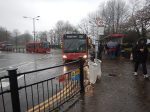
London has a new electric ferry between Rotherhithe and Canary Wharf, so this morning, I went to have a ride across the Thames.
I started by taking the East London Line to Rotherhithe station, where no-one had a clue, as to where to find the new ferry, which only started running late last week.
But, I did see it, in some of these pictures.
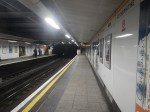
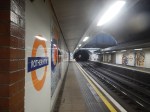
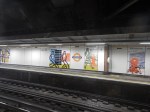
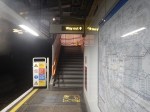
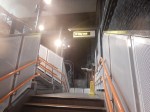
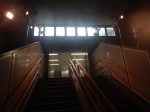
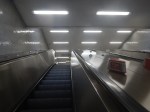
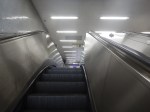
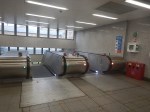

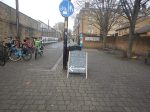
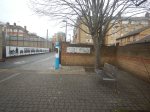
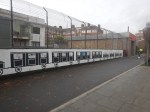
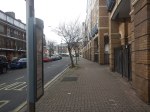
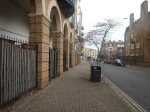
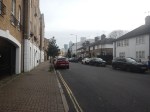
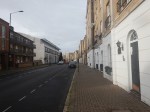



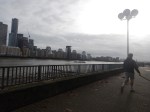

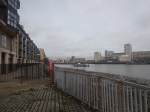
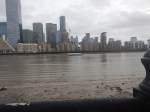
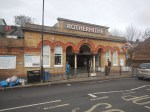
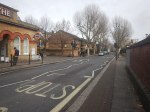
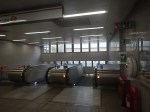
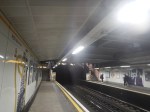
Note.
- Rotherhithe station is unusual for the Overground, in that it has escalators, but not lifts.
- The station has a cosy little cafe in the entrance, which smelt good.
- The Brunel Museum is just round the corner from the station.
- The Wrightbus electric buses were constantly going East and West along the road behind the river bank beteen Victoria and Canada Water stations.
So, in the end, I took the bus back to Rotherhithe station and came home.
‘Bakerloop’ Bus Route launches In Autumn, TfL Says
The title of this post, is the same as that as this article on the BBC.
This is the sub-heading.
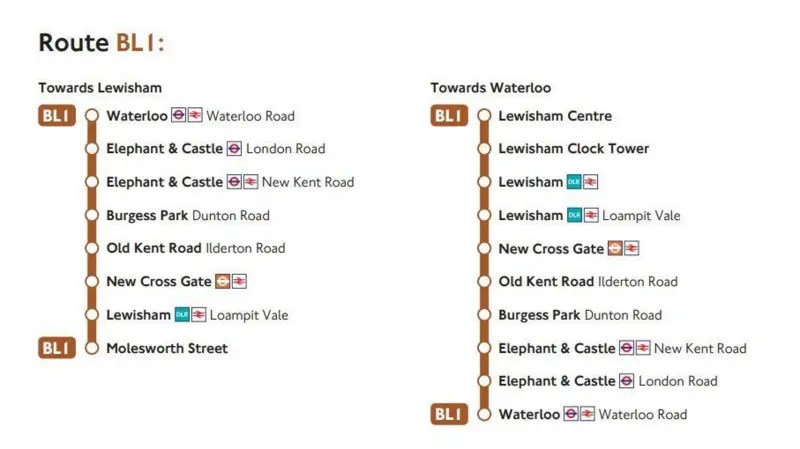
A new bus route named the Bakerloop is set to launch in autumn to connect stations and areas in south-east London.
This graphic clipped from the BBC article shows the route.
I don’t deny that South London doesn’t need more buses, but I am getting rather fed up with SadIQ showing he is a South Londoner by putting on more and more buses for his friends.
My regular bus to Moorgate is the 141 bus, which must be the worst bus route in London on an overall basis.
Did Plans For Crossrail Ever Include A Station At Holborn?
I have only one North-South bus route, where I live.
The 141 bus connects Palmers Green and London Bridge station.
- The 141 bus was the replacement for the 641 trolley bus, which was the main link between Wood Green, Turnpike Lane and Harringay, and the City of London, when I was a child.
- The vehicles are up to ten years old Wrightbus diesel hybrids.
- The route suffers badly from overcrowding as it connects, Bank and Moorgate stations in the City of London, with the outer reaches of the Piccadilly Line.
The overcrowding on the 141 bus route has got worse in the last couple of years because of the following.
- The rebuilding of London Bridge station brought more passengers to the 141 bus route.
- The opening of the new London Bridge bus station at London Bridge station has improved access to the buses at London Bridge station.
- The improvement of the connection of the buses to the Docklands Light Railway, Central Line and Northern Line at Bank station.
- The opening of the Battersea branch of the Northern Line, which brings more passengers to Bank station.
- The opening of the new Cannon Street entrance to Bank Underground station.
- The opening of the Elizabeth Line through Moorgate station.
- Recently, a new walking route between Moorgate and Liverpool Street was opened, which will bring more passengers to the buses on Moorgate.
- The rebuilding of Old Street station brought more passengers to the 141 bus route.
So what was the response of the Mayor and Transport for London, to all this increase of passenger numbers?
The 21 bus, which shadowed the 141 route, and doubled the number of buses through where I live, was moved to serve Holloway.
It was a big crime against mathematics and the wishes of our long-serving Labour MP; Meg Hillier.
So to handle many more passengers between London Bridge station and Newington Green through the City of London, the number of buses was halved.
I believe that the overcrowding will get worse because of the improvements, that Transport for London have planned.
- The Piccadilly Line will be getting new air-conditioned trains within a couple of years and these will inevitably attract more passengers to the line.
- On the other hand the air-conditioning may persuade passengers to use the Piccadilly Line more than they do now. Instead of changing to the 141 bus at Manor House station, passengers could change at Finsbury Park, King’s Cross St. Pancras or Holborn stations for other routes to the City of London.
- The third line to receive the new air-conditioned trains will probably be the Central Line, which would create another East-West air-conditioned line and bring more passengers to Bank station.
- The Central Line could give some relief for the buses through Bank, if an extra station was built on the Central Line to interchange with Shoreditch High Street station on the East London Line of the London Overground.
- The fourth line to receive the new air-conditioned trains will probably be the Waterloo and City Line, which would create another air-conditioned line and bring more passengers to Bank station.
- It is likely, that more services will be added to the Elizabeth Line, which will bring more passengers to Moorgate station.
- It is likely, that more services will be added to the Northern City Line, which will bring more passengers to Moorgate station.
- The Mayor is also planning to pedestrianise Oxford Street, which may fill up the Central Line with extra passengers.
It looks to me, that there will be a need for a large increase of bus capacity through the City of London on a North-South axis.
On the other hand, the City of London have stated that they will pedestrianise many of their streets.
So what can be done to avoid gridlock in the City of London?
Develop The Northern City Line At Moorgate
I use this route regularly to and from Moorgate station.
- It already has new Class 717 air-conditioned trains.
- The route is already digitally signalled in conjunction with the East Coast Digital Programme.
- It has two platforms at Moorgate station.
- Highbury & Islington station has interchanges with the Victoria Line and the North and East London Lines of the London Overground.
- Finsbury Park station has interchanges with the Victoria Line and National Rail services.
- Bowes Park station has an out of station interchange with Bounds Green station on the Piccadilly Line.
- Step-free access needs improving.
- The Victorians had plans to extend the line to Lothbury near Bank station.
If the Northern City Line could handle more passengers, would passengers get to all parts of the City of London by changing at Finsbury Park and walking from Moorgate or Old Street stations?
I regularly go between my house and Moorgate, by taking a bus to Essex Road station and using the Northern City Line.
I believe that with improvements on the Northern City Line, the line could be turned into a very valuable part of London’s rail infrastructure.
Connect The Central Line And The East London Line At Shoreditch High Street Station
I wrote about this proposal in Will Shoreditch High Street Be Connected To The Central Line?
The Elizabeth Line needed to be completed before this could be started.
Build The Western Extension Of The Docklands Light Railway
I wrote about this proposal in The Bank Station Upgrade And The Western Extension Of The DLR.
Rebuild Holborn Station
The interchange between Piccadilly and Central Line at Holborn station is difficult to say the least.
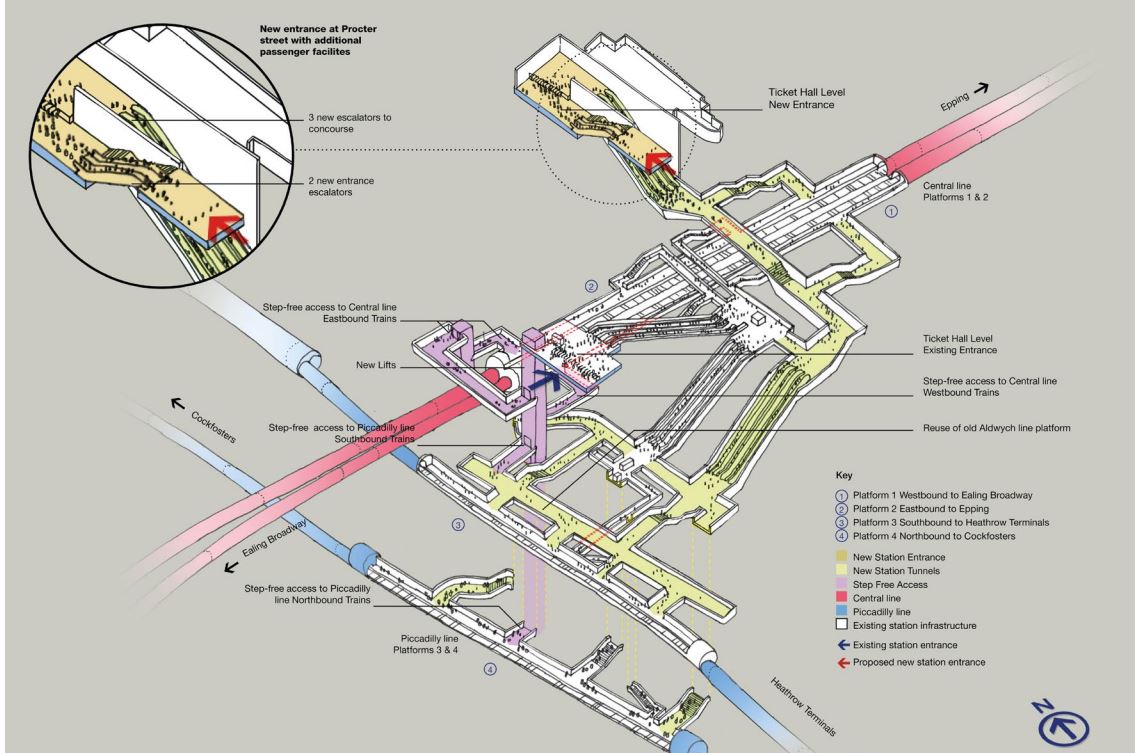
Holborn station is being extended with a new entrance. As with Euston, I suspect it has been designed with a feasible place for DLR platforms to be added.
This document on the TfL web site, gives more details of what is proposed at Holborn station.
I extracted this visualisation of the proposed station.
This map from carto.metro.free.fr shows the lines in the through and around the station.
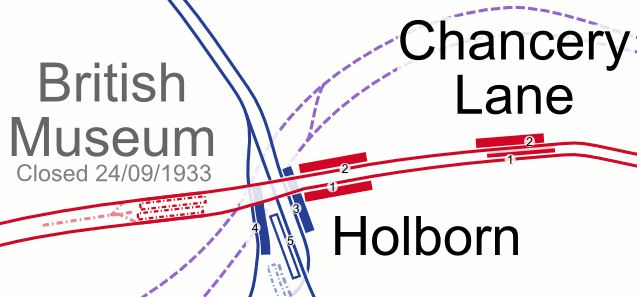
.Note, the Elizabeth Line, which is shown by dotted lines passes to the North of the station.
Conclusion
Not all these improvements need to be done, but each would improve transport in the City of London.
An Alternative Lift At Caledonian Road and Barnsbury Station
I went to look at something this morning, that might have made a post for this blog.
But as it wasn’t worth photographing, I decided to come home and decided to take a train home from Caledonian Road and Barnsbury station.
The station is of a slightly unusual design, which is described in Is Caledonian Road And Barnsbury An Ideal Four-Track Station?.
There is a wide island platform, where the Overground trains call on either side, which is connected to the station exit, by a half-bridge with lifts.


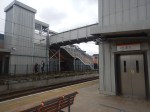
It was an affordable way to make the station accessible for all.
But today the lift on the island platform had failed.
- As I approached the bridge on entering the station, a London Overground station-man was waving at me from the island platform.
- He shouted at me, that the lift on the island platform had failed.
- So I took the working lift and then walked across to the central lift tower, with its failed lift.
- He met me at the top of the stairs and offered to escort me down.
- But I said, that if I could go down the right hand side, with my good arm on the rail, I’d be OK.
- He said that would be fine and he watched me descend, which I did safely.
- Whilst I was there, two mothers with young children in buggies arrived on a train. So after a quick chat, the mothers carried their children up the stairs and he carried the buggies.
London Overground had certainly setup an alternative approach, that should work well until the lift is repaired.
Getting Home From Caledonian Road and Barnsbury Station
The Balls Pond Road of Round The Horne and Beyond Our Ken fame in the 1950s and 1960s, runs between Highbury and Islington and Dalston Junction stations.
- I live about half way between the two stations and as, what would have been my nearest station; Mildmay Park closed in 1934, I have to get a bus from Dalston Junction to get home.
- Today, though, I took a slightly longer route, but one with minimal walking.
- I took a train four stops to Hackney Central station.
- I used the bridge with lifts to cross the tracks at Hackney Central station.
- I exited Hackney Central station through the second exit on Graham Road, that was opened in 2022.
- After crossing Graham Road on a light-controlled crossing, I was able to catch a 38 bus to within a hundred metres of my house.
There would be no case for reopening Mildmay Park station, but as I get older this route is the easiest.
Is The Silvertown Tunnel A Silver Elephant?
I have been through the Silvertown Tunnel several times now and every time the bus has never really slowed for lots of traffic.
I went through this morning on Easter Sunday and these pictures show all the other traffic I saw.
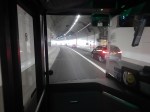
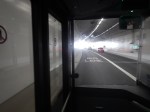
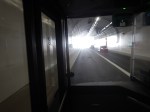
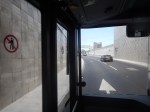
Note.
- I was sitting in the front passenger seat of a 129 bus, which is on the left of the bus.
- We were going from South to North through the Silvertown Tunnel.
- I could read the driver’s speedometer and it showed within a mile per hour of thirty all the way.
- We were passed by only one car in the tunnel.
- There were about a dozen passengers on the lower deck of the bus.
- I didn’t check how many were on the top deck of the bus.
Even on an Easter Sunday, I would have thought the service would have been busier.
Is The Silvertown Tunnel A Silver Elephant?
There are two answera to this question.
- Yes – A lot of money has been spent for just a few cars and bus passengers to have an easy ride through the tunnel.
- No – As traffic is flowing freely through the tunnel, it shows the tunnel is doing its job and freeing up traffic in East London.
But whatever view you take, a lot of money has been spent for a small number of vehicles and passengers to pass through the tunnel.
I also suspect very little extra revenue is being generated.
The Jubilee Line Was Busy
The complete route I took this morning was as follows.
- Home To Angel – 38 bus – Not very busy.
- Angel to London Bridge – Northern Line – Not very busy.
- London Bridge to North Greenwich – Jubilee Line – All seats taken.
- North Greenwich to West Silvertown – 129 bus – Not very busy.
- West Silvertown to Canning Town – Docklands Light Railway – Not very busy.
- Canning Town to Canada Water – Jubilee Line – All seats taken.
- Canada Water to Dalston Junction – Overground – Not very busy.
- Dalston Junction to Home – 30 bus – Not very busy.
Note.
- Only the sections on the Jubilee Line were really busy, with all seats taken.
- London Bridge, Stratford and Waterloo stations on the Jubilee Line are also busy National Rail stations.
- London Bridge, Canada Water, North Greenwich, Canning Town and Stratford all have large modern well-designed bus stations within easy walking distance of the Jubilee Line.
- Given, that there is now a charge to cross the river, have a lot of people decided to take the Jubilee Line rather than their car to go to the O2 at North Greenwich and the Olympic Park and Eastfield at Stratford?
I strongly feel, that more capacity is needed on the Jubilee Line, as no matter what time I use it, I never seem to get a seat.
Taking The Dover Road
This Google Map shows how the A2 ( the Dover Road) links up with the Silvertown and Blackwall Tunnels.
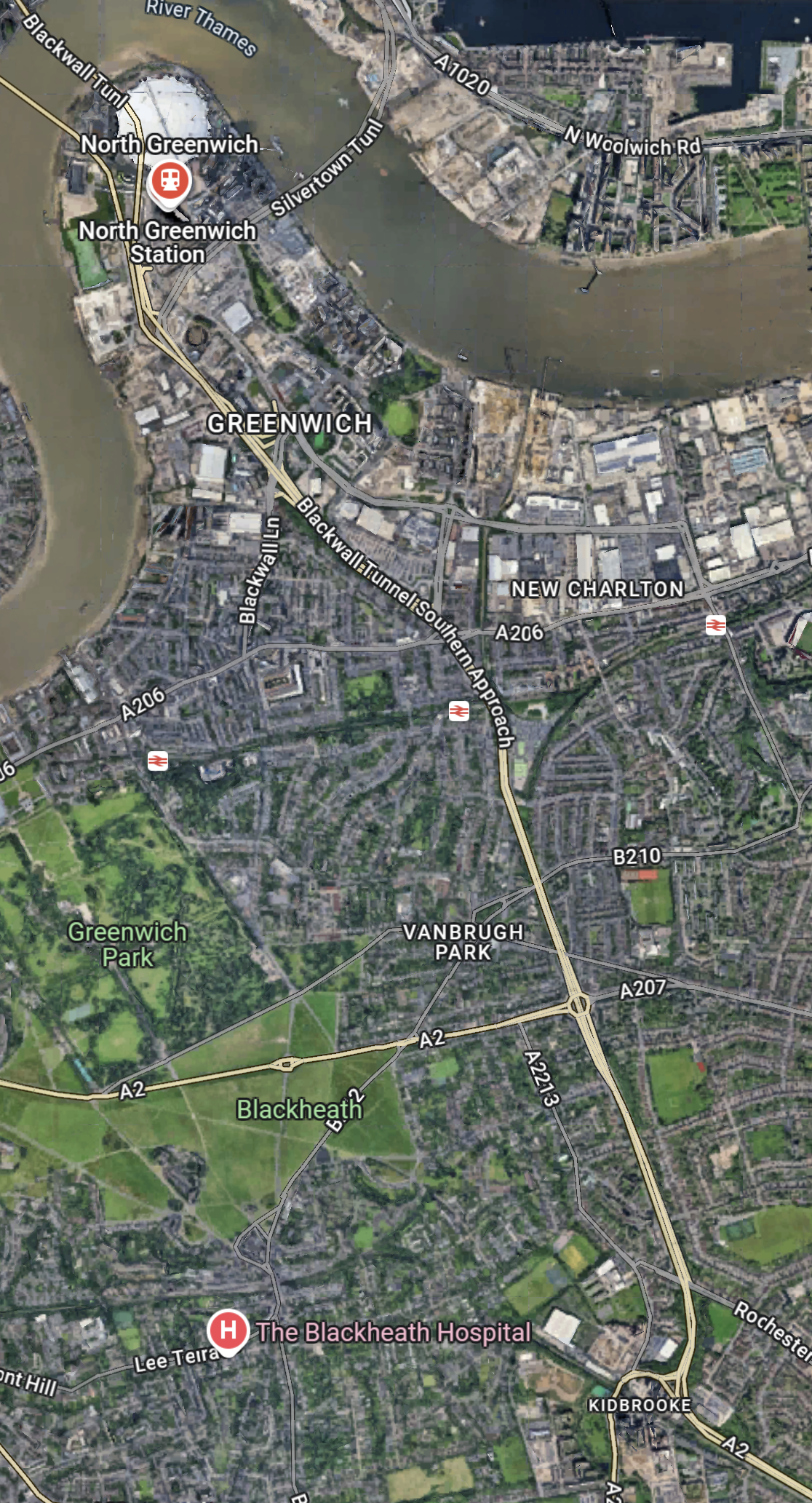
Note.
- The O2 in the North-West corner of the map, with North Greenwich station in red under it.
- The Blackwall Tunnel crosses the river to the North-West of the O2.
- The Silvertown Tunnel crosses the river to the East of the O2.
- Running diagonally across the map is the Blackwall Tunnel Southern Approach, which also serves the Silvertown Tunnel.
- The station to the West of the Southern Approach is Westcombe Park station.
- Click the map to show it to a larger scale.
This second Google Map shows the O2, North Greenwich station and the approaches to both tunnels.
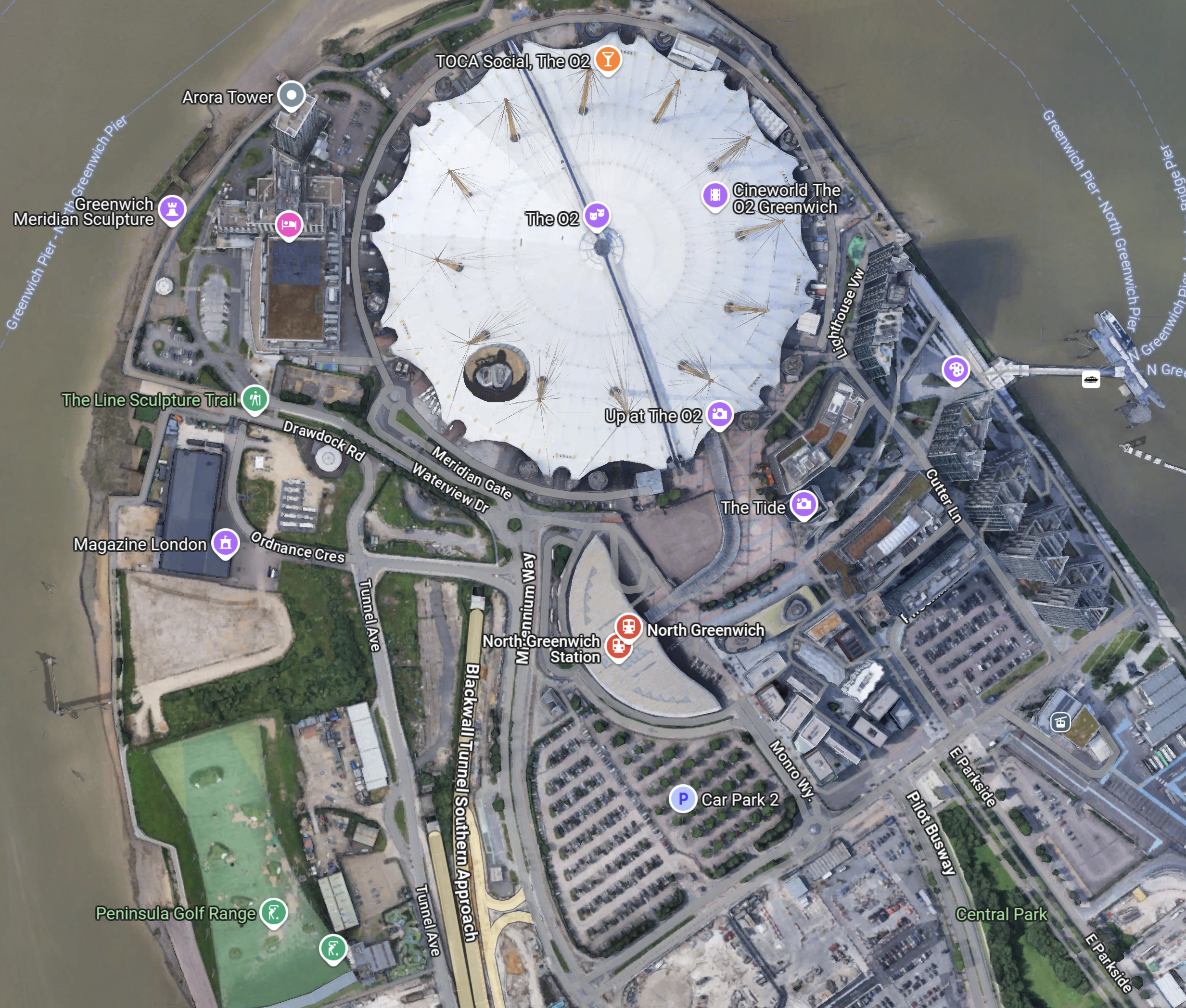
Note.
- The half-moon-shaped building is North Greenwich station.
- The tunnel approaches are rather complicated, but seem to be working well.
- There is lots of car parking.
- The Blackwall Tunnel Southern Approach leaves the tunnles in a Southerly direction.
- Click the map to show it to a larger scale.
This third Google Map shows how the A2 (Dover Road) and A20 (Folkestone Road) link up to the Blackwall Tunnel Southern Approach.
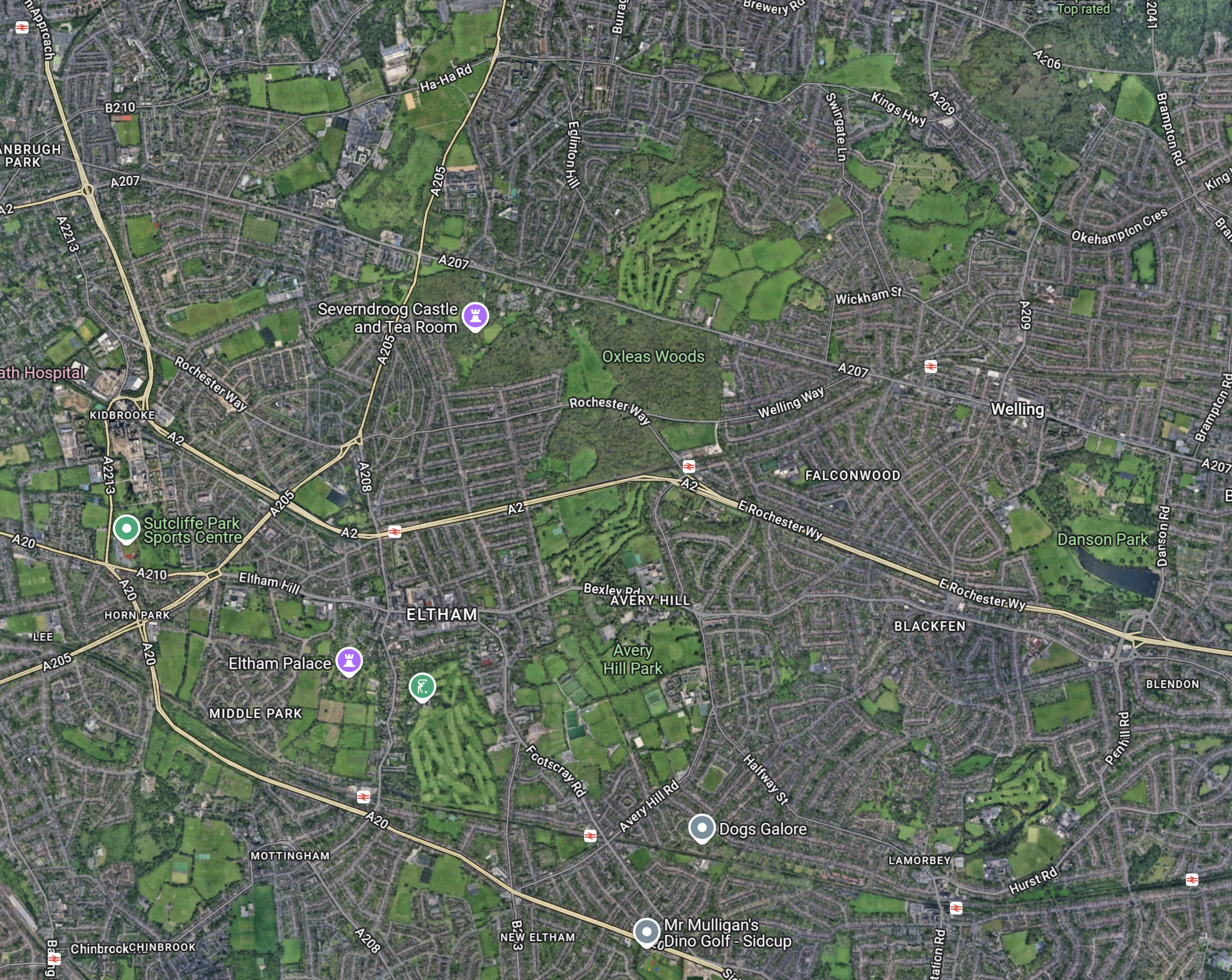
Note.
- The station in the North-West corner of the map is Westcombe Park.
- The road running diagonally South-East from the corner is the Blackwall Tunnel Southern Approach.
- The Blackwall Tunnel Southern Approach then turns East to join with the A2 (Dover Road).
- The Blackwall Tunnel Southern Approach also links up with the A20 (Folkestone Road) , which is the other road running diagonally at the bottom of the map.
In some ways, I am rather surprised at how little traffic is passing through the tunnels given this double dual-carriageway/motorway connection to East Kent, the Channel Tunnel and the Continent. It also has a double connection at both the A2 and A20 to join the M25.
Perhaps, it does mean that the charges are frightening drivers away.
The Roads To The North
This Google Map shows the main approach road to the Blackwall Tunnel.
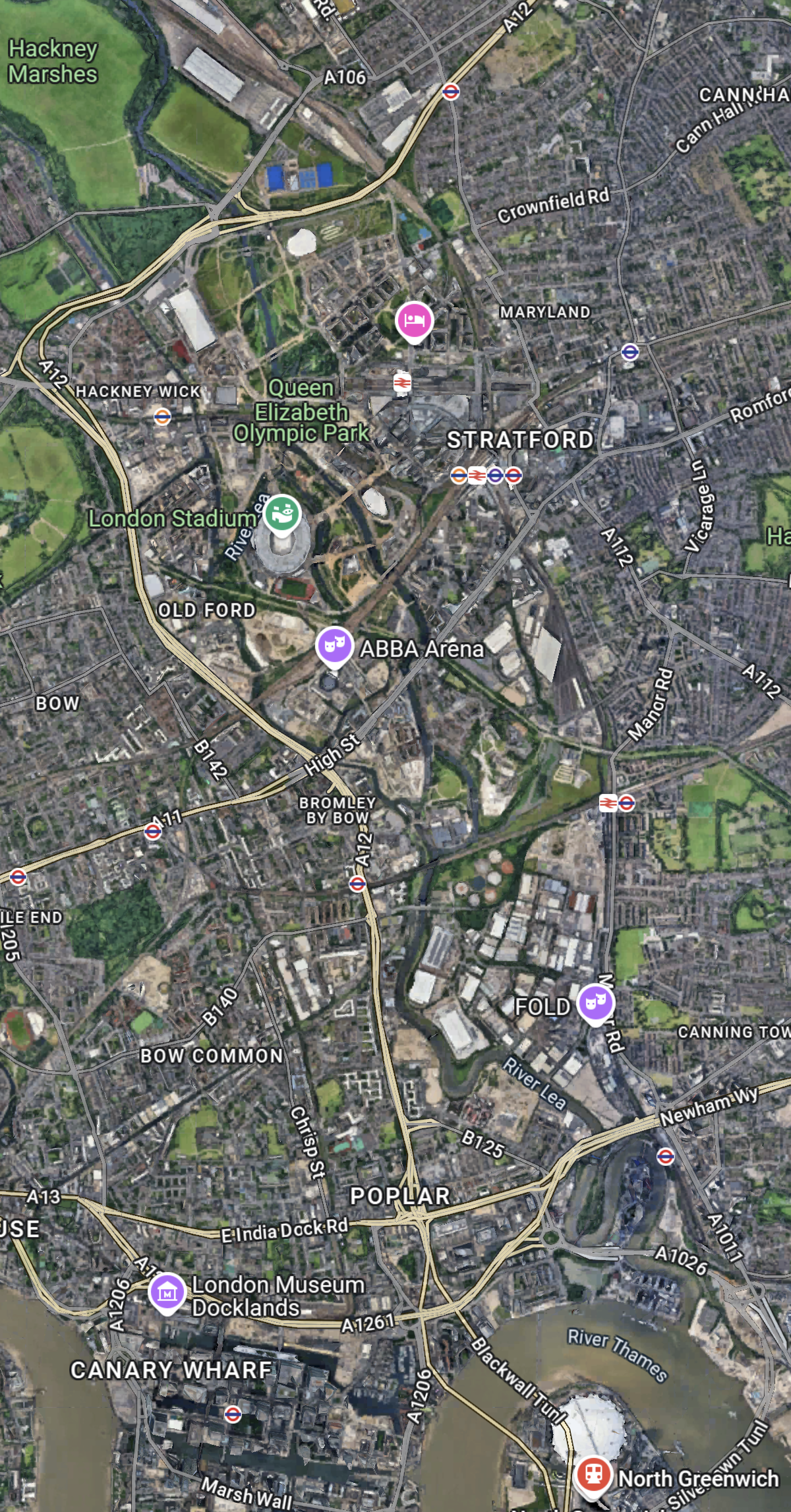
Note.
- The O2 and North Greenwich station in the South-East corner of the map.
- The Blackwall Tunnel crosses the river to the North-West of the O2.
- The A12 dual-carriageway runs North up the Lea Valley through Hackney.
- There is a dual-carriageway/motorway box formed by the M11 in the West, A12 in the East, M 25 in the North and A 406 in the South to speed traffic on its way, including to the two main routes to the North; the M1 and the A1.
I have lived for thirty years of my life in North London, and I feel, that although the roads to the North of London could be improved, I don’t suspect they are the reason drivers are not using the Silvertown and Blackwall Tunnels.
I would suspect that drivers don’t like or trust the charging system, or could it be that the public transport system in London and especially the East of London is too good?
But we do need to increase the capacity of the Jubilee Line either directly or would a high-capacity bus-route shadowing the line, be able to add the extra capacity needed?
Crystal Palace Subway – 1st December 2024
This is the sub-heading on the Crystal Palace Subway web site.
The Grade II* listed Crystal Palace Subway is a beautifully designed and crafted relic of Victorian construction, built to provide access to the Crystal Palace for first-class rail passengers. In September 2024 a major restoration project was completed, just in time for its 160th anniversary in 2025.
These two paragraphs outline the relationship of the two stations at Crystal Palace.
The Palace was originally served by two railway stations: Crystal Palace Low Level station (still in use), which opened in 1854, and the High Level Station, designed by Charles Barry Junior, which opened in 1865 on the western side of Crystal Palace Parade.
It was intended that first-class passengers should enter the Palace through groined arches of coloured brick and stone, leading to a vestibule roofed with glass and iron, the grandeur of which was considered a fitting approach to the Crystal Palace.
These pictures give a flavour of the current Crystal Palace station.
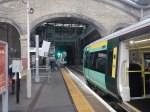
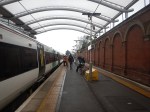
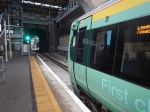
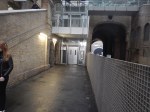
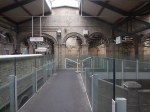
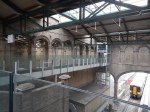
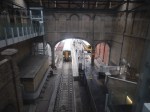
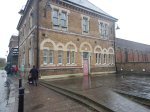
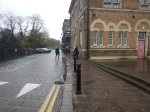
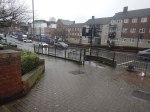
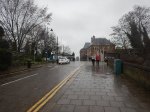
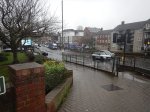
Note.
- It is served by both Southern and London Overground services.
- The station has several good lifts.
- There are toilets in the station by the gate line.
- The station is in excellent condition.
- The cafe in the station has a good reputation and I’ve used it several times.
If like me today, you are going up the hill to the bus station, Crystal Palace Parade or Crystal Palace Subway, there is a convenient bus stop on the other side of the road from the station. Any bus going to Crystal Palace should do.
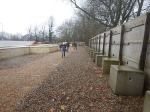
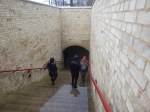
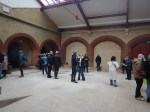
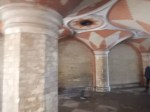
These pictures document my visit to the Crystal Palace Subway.





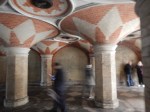

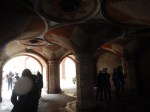

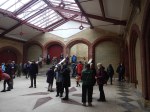
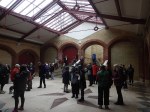
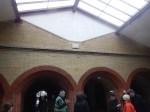
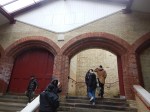


Note.
- Some of the ie Trams were running.
- The people were turning up.
- The restoration is top class.
And all despite the weather.
Why The Elizabeth Line Must Be Extended To Ebbsfleet International
There are various plans to link the Elizabeth Line to Ebbsfleet International.
In Elizabeth Line To Ebbsfleet Extension Could Cost £3.2 Billion, I showed this map from the Abbeywood2Ebbsfleet consultation.
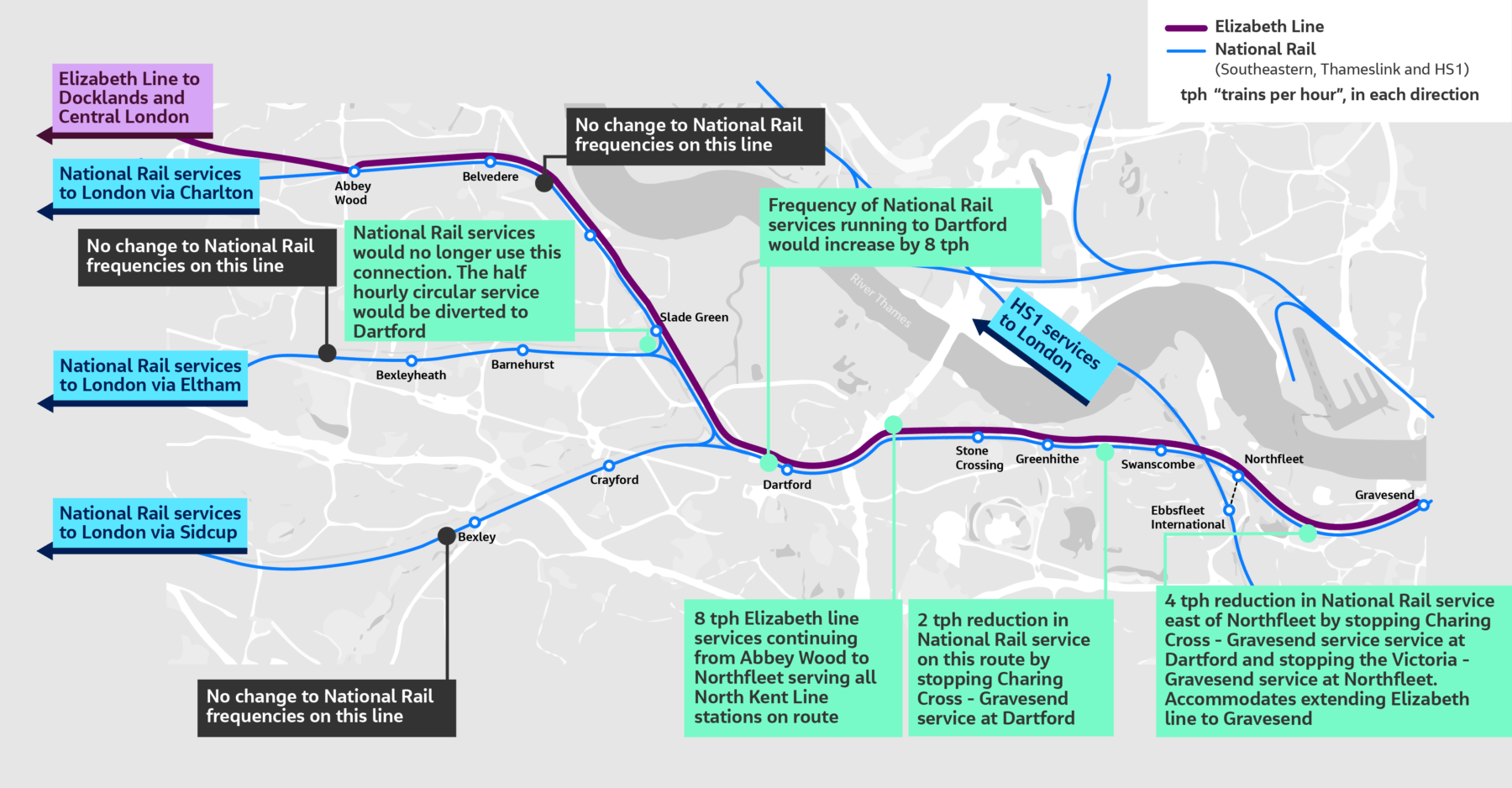
There doesn’t appear to be too much new infrastructure, except for a proper connection between Northfleet and Ebbsfleet stations. References on the Internet, say that the similar-sized Luton DART connection at Luton Airport, cost around £225 million.
The Elizabeth Line connects to the following.
- Bond Street
- Canary Wharf
- City of London
- Farringdon for Thameslink
- Heathrow Airport
- Old Oak Common for High Speed Two
- Liverpool Street station
- Oxford Street
- Paddington station
- Slough for Windsor
- Tottenham Court Road for the British Museum, Oxford Street, Soho, Theatreland and the Underground.
- West End of London
- Whitechapel for the Overground and Underground
For many people like me, the Elizabeth Line at Ebbsfleet will provide one of the quickest ways to get to and from European trains.
High Speed Two Services
This diagram shows High Speed Two services, as they were originally envisaged before Phase 2 was discontinued.
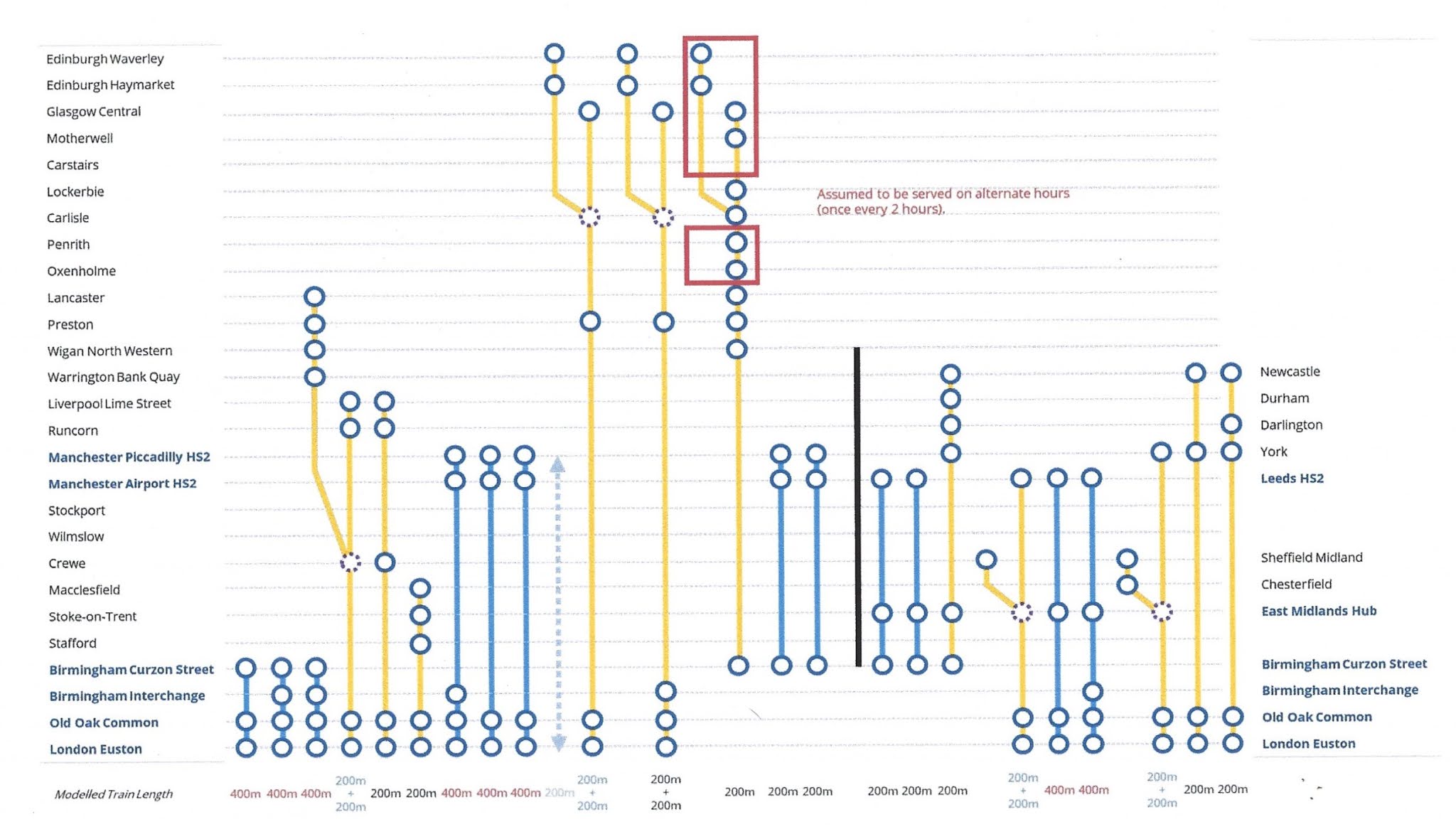
Note.
- Trains to the left of the vertical black line are Phase 1 and those to the right are Phase 2.
- Full-Size trains are shown in blue.
- Classic-Compatible trains are shown in yellow.
- The dotted circles are where trains split and join.
- In the red boxes routes alternate every hour.
- Was Lancaster chosen as it’s close to the new Eden Project Morecambe?
Click on the diagram to enlarge it.
Destinations served by the current foreshortened High Speed Two or High Speed Two Lite will be.
- Birmingham Curzon Street
- Birmingham Interchange
- Carlisle
- Carstairs
- Crewe
- Edinburgh Haymarket
- Edinburgh Waverley
- Glasgow Central
- Lancaster
- Liverpool Lime Street
- Lockerbie
- Macclesfield
- Manchester Airport
- Manchester Piccadilly
- Motherwell
- Oxenholme
- Penrith
- Preston
- Runcorn
- Stafford
- Srockport
- Stoke-on-Trent
- Warrington Bank Quay
- Wigan North Western
- Wilmslow
That is twenty-five stations.
I would add these extra stations.
- Bangor
- Blackpool
- Chester
- Holyhead
- Llandudno Junction
- Wrexham
Note.
- These extra six stations would make High Speed Two, a line for more of the people.
- Because the Eastern leg is cancelled, the paths that would have served that leg can be used to provide services for the West of the country.
The East of the country could be served by updating the East Coast Main Line.
The Development Of Eurostar
Consider.
- Eurostar and Thalys have now merged and I can see them providing extra direct services between London and Europe.
- Bordeaux, Cologne, Frankfurt and Geneva have been mentioned as possible destinations.
- Most of the new destinations, will be served by extending current services from Amsterdam, Brussels and Paris appropriately.
But to cope with the extra numbers of passengers, there will have to be extra passenger capacity at St. Pancras and/or Ebbsfleet International.
High Speed Two And Continental Services
Currently, if you want to go from the North of England or Scotland to the Continent, you do one of the following.
- Take a train to King’s Cross and walk across to St. Pancras International.
- Take a train to St. Pancras and walk to the International section of the station.
- Take a train to Euston and walk or take a bus, taxi or Underground to St. Pancras International.
Note.
- Passengers from North Wales take the Euston route.
- Some passengers will take an Elizabeth Line train to Farringdon and then take Thameslink to St. Pancras International.
- Passengers arriving at Paddington on Heathrow Express will probably take a taxi to St. Pancras International.
- Passengers arriving at Paddington on a budget will probably take the Underground to St. Pancras International.
For Londoners and those travellers, who know London well, the routes to St. Pancras International, are not to bad but they could be better.
If the current foreshortened High Speed Two or High Speed Two Lite finishes at Old Oak Common station, passengers will have to use the following routes for their onward journey.
- Elizabeth Line
- Great Western Railway – local services.
- Heathrow Express
- North London Line of the London Overground, or whatever the Mayor at the time calls it.
If the full High Speed Two or High Speed Two Lite finishes at Euston station, passengers will have to use the following routes for their onward journey.
- Avanti West Coast
- Circle, Hammersmith & City and Metropolitan Lines
- London North Western – local services
- Northern Line
- Victoria Line
- Watford DC Line of the London Overground, or whatever the Mayor at the time calls it.
These routes will be in addition to those at Old Oak Common station.
There will be two routes between High Speed Two and St. Pancras International station.
- Passengers arriving at Old Oak Common will take an Elizabeth Line train to Farringdon and then take Thameslink to St. Pancras International.
- Passengers arriving at Euston will walk or take a bus, taxi or Underground to St. Pancras International.
I am not sure that either route will have enough capacity, if High Speed Two attracts a large number of passengers.
Extend High Speed Two To Euston
I believe that this is essential, as it improves the connectivity greatly, at the bottom end of High Speed Two, as several Underground Lines will be connected to High Speed Two.
Extend The Elizabeth Line from Old Oak Common To Ebbsfleet International
I believe this too is essential, as it gives the North of England and Scotland, the connection to the Continent that they need.
There could be cross-platform connections at both Old Oak Common and Ebbsfleet International between the Elizabeth Line and the high speed lines.
Conclusion
Politicians should stop the dithering and act to give the UK, the rail connection it needs up and down the country and to the Continent.
 The Anonymous Widower