Darlington Station – 26th June 2025
I visited Darlington station, three times on my trip.
These pictures are in chronological order.
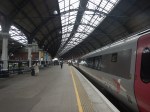
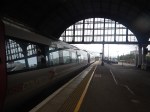
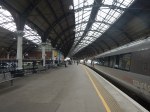
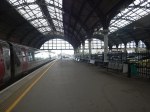
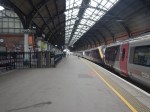
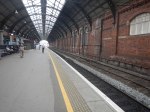
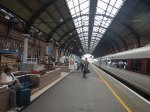
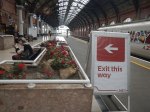
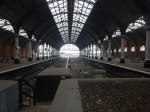
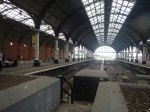
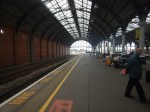
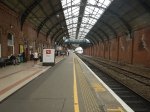
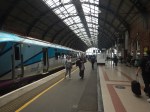
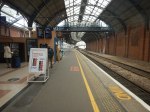
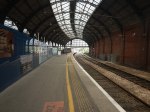
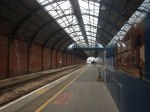
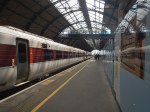
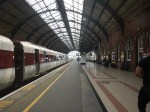
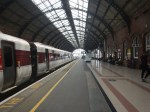
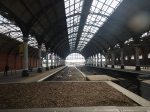
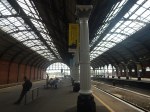
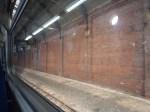
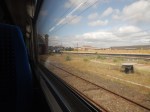
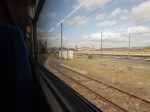
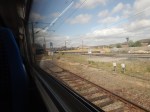
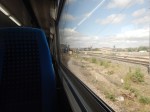
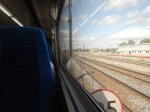
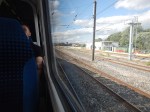
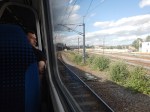
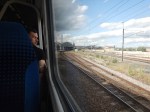
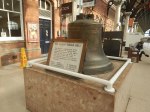
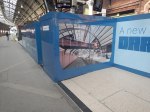
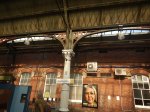
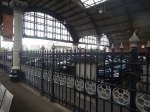
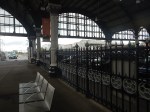
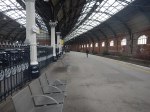
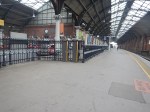
Note.
- The station is being given a major upgrade, so it can handle more trains.
- The station has a large number of top-quality Victorian features.
- The station is Grade II* Listed.
- Inside the enormous train-shed are two long platforms, that handle most of the trains and two South-facing bay platforms.
- Two new platforms, which are numbered 5 & 6, and possibly a double-track avoiding line are being added outside the train-shed on the East side.
- In images with a comment saying Note Platform 5, the new long electrified Platform 5 can be seen.
- Platform 5 appears to be already electrified at its Southern end.
These three OpenRailwayMaps shows the future layout.
The first OpenRailwayMap shows the junction, where the branch to Newton Aycliffe, Shildon and Bishop Auckland connects.
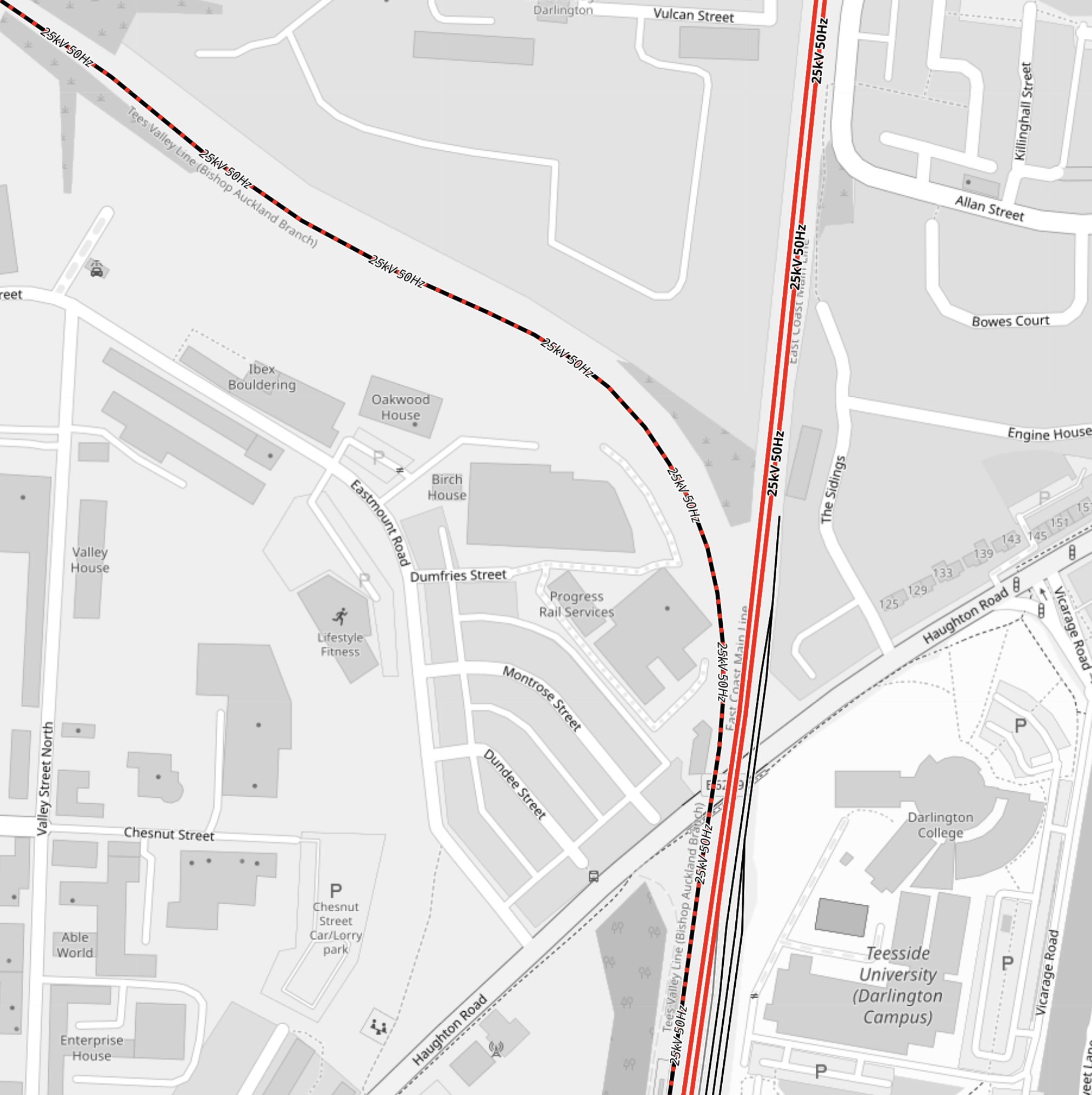
Note.
- The red tracks are electrified and indicate the East Coast Main Line.
- The track curving off to the North-West is the Bishop Auckland Branch.
- The black tracks are not-electrified.
- The Bishop Auckland Branch is shown dotted black and red, as it will be electrified, so that Hitachi can get their new trains to the East Coast Main Line.
- The two tracks of the East Coast Main Line are very straight and the map shows them to have a 125 mph operating speed.
The second OpenRailwayMap, shows the lines immediately to the South of Darlington station.
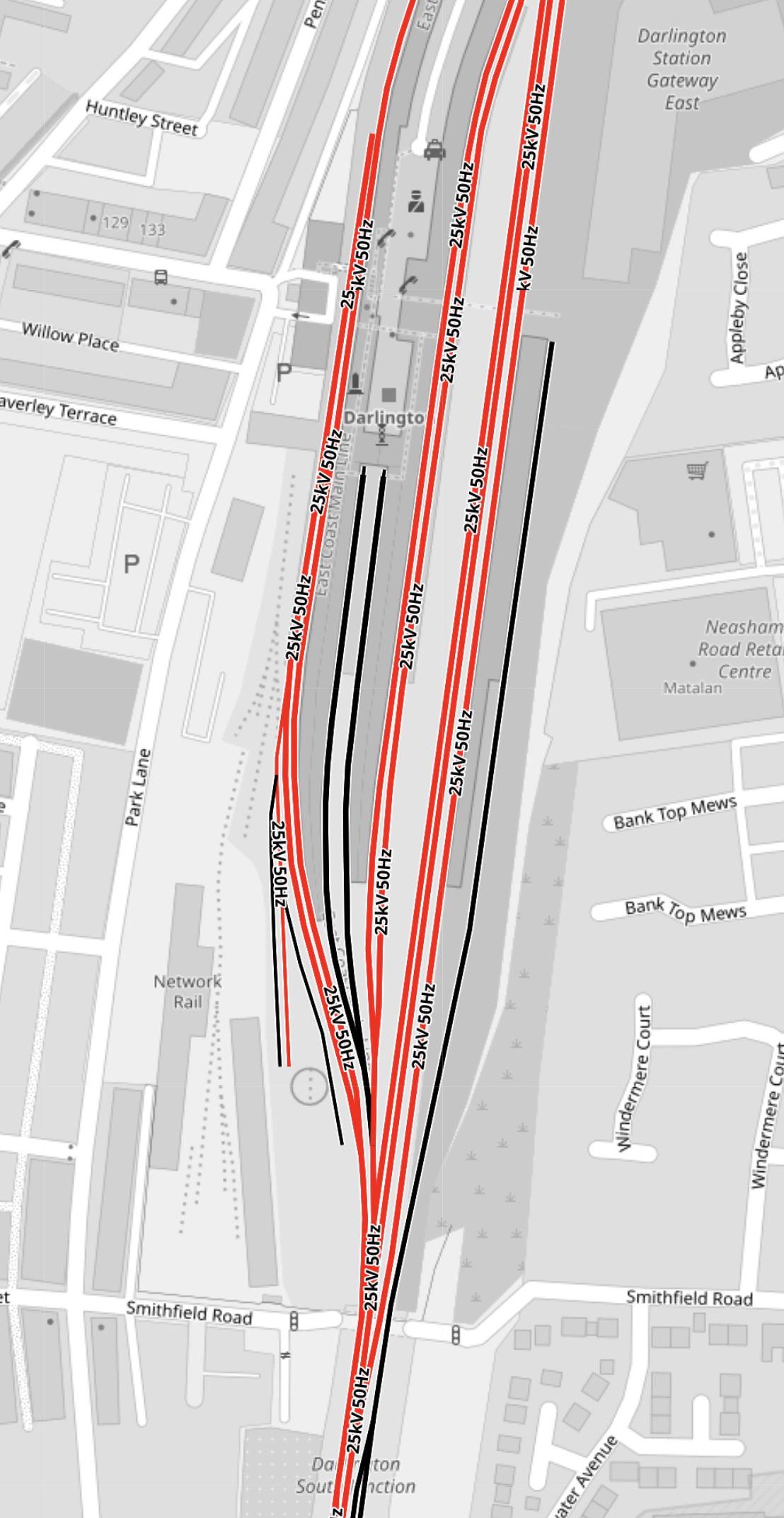
Note.
- The red tracks are electrified.
- The black tracks are not electrified.
- Tracks are number 4, 3, 2 and 1 from the West.
- The Southern ends of Platforms 1 and 4, and Platforms 2 and 3, which are inside the current train-shed appear to be virtually unchanged.
- Platform 1 is electrified and will probably still cater for Southbound trains.
- Platforms 2 and 3 are bay platforms without electrification for trains terminating at Darlington.
- Platform 4 is electrified and will probably still cater for Northbound trains.
- There is an electrified avoiding line to the East of Platform 1.
- The brick wall of the current train shed is in the white space to the East of Platform 1.
- Outside the current train shed are two electrified 125 mph lines, an electrified through platform and a South-facing bay platform without electrification.
- The new electrified platform looks very long. Could it be long enough to handle a pair of High Speed Two Classic-Compatible trains? I suspect though it is long enough to handle the splitting and joining of a pair of five-car Hitachi Class 80x trains.
- The new bay platform looks longer that the current bay platforms 2 & 3. Is it long enough to handle a five-car Hitachi Class 80x train?
- It does appear from the track layout, that the new electrified platform is connected to the East Coast Main Line, the Saltburn branch and stabling sidings to the North of the station.
- The new bay platform appears to be connected to the Saltburn branch.
The two new platforms also appear to be adjacent to an area of the station, which is labelled Darlington Station Gateway East. I would assume, that this proximity will be used to make the station easy for changing trains.
The third OpenRailwayMap shows the section of the station between the two previous maps.
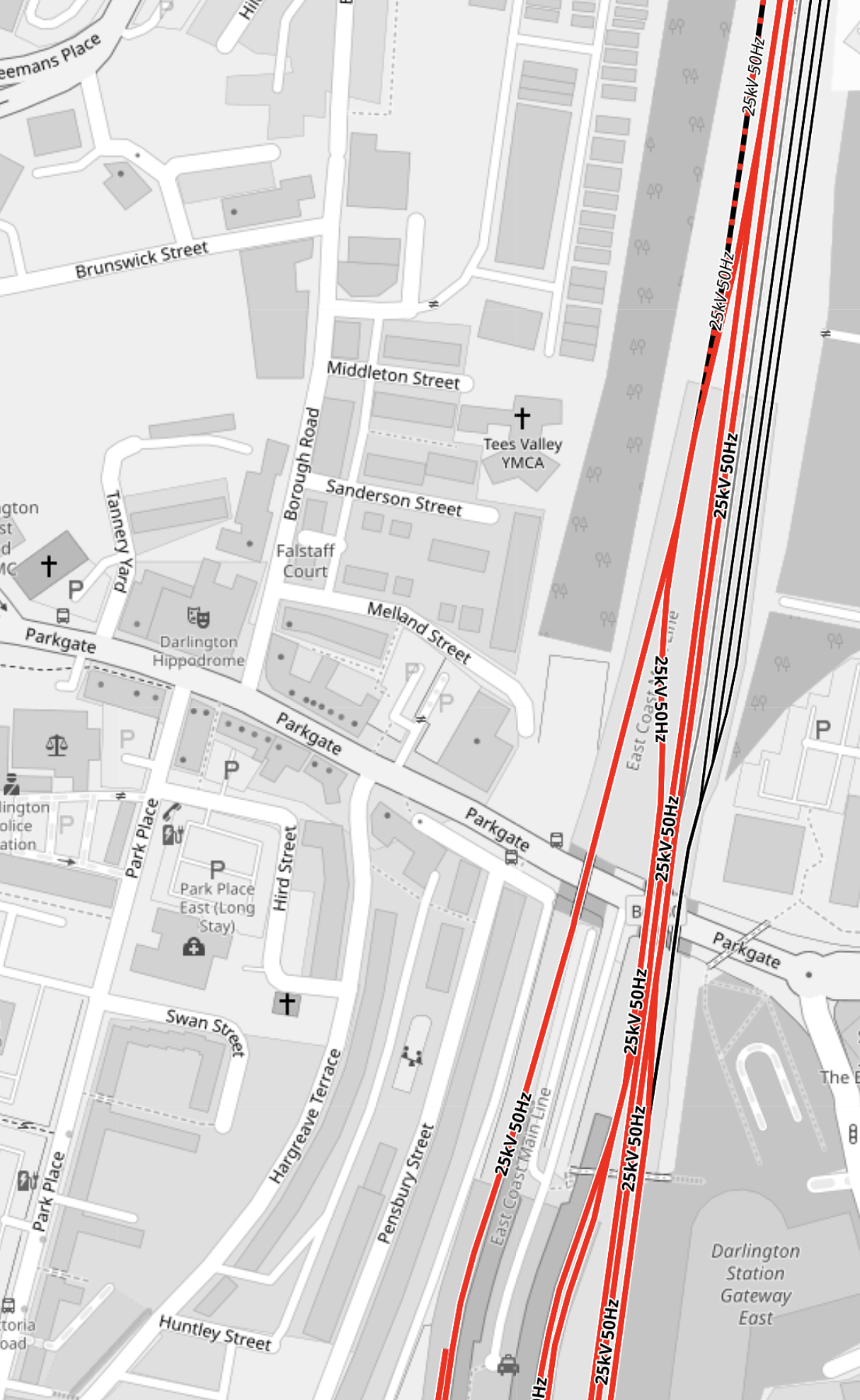
Note.
- The red tracks are electrified.
- The black tracks are not-electrified.
- The Darlington end of the Bishop Auckland Branch is shown dotted black and red, as it will be electrified, so that Hitachi can get their trains to and from the East Coast Main Line.
- Both Platforms 1 and 4 appear to connect to the East Coast Main Line, so high speed services can operate as they do now, by taking a diversion through the current Darlington station.
- To the East of the East Coast Main Line, there appear to be some very useful stabling sidings.
I have some general thoughts about Darlington station.
Will Trains Not Stopping At Darlington Station Use The New 125 mph Lines Through the Station?
It does appear that the two 125 mph lines through the new part of the station are very straight.
- They are shown as 125 mph, but could be faster.
- It should be remembered that according to Wikipedia, British Rail built the Selby Diversion for 160 mph in 1983.
- Between Durham and York stations is 66.2 miles of mainly 125 mph railway.
I believe that cutting out the need for trains to slow to go through Darlington station could save several minutes.
Will Trains Stopping At Darlington Station Use The Current Platforms 1 And 4 As They Do Now?
The track layout would seem to allow this and those changing to another train, would not have to walk a long way.
Can Trains Stopping At Darlington Station Use The New Eastern Platforms?
I have examined the second and third maps in detail and it looks as if the track layout will allow trains on the East Coast Main Line in both directions to stop at the long electrified platform.
The shorter bay platform appears to be only connected to the Tees Valley Line to Middlesbrough and Saltburn.
How Long Are The New Eastern Platforms?
Estimating against the scale on the map, I reckon these are the likely lengths.
- Long electrified platform – 400 metres – Appears to be numbered 5
- Bay platform – 200 metres – Appears to be numbered 6.
These are very useful lengths.
An Aerial View Of The New Platforms
This image from Tees Valley Combined Authority shows the Northern ends of the new platforms and the new footbridge.
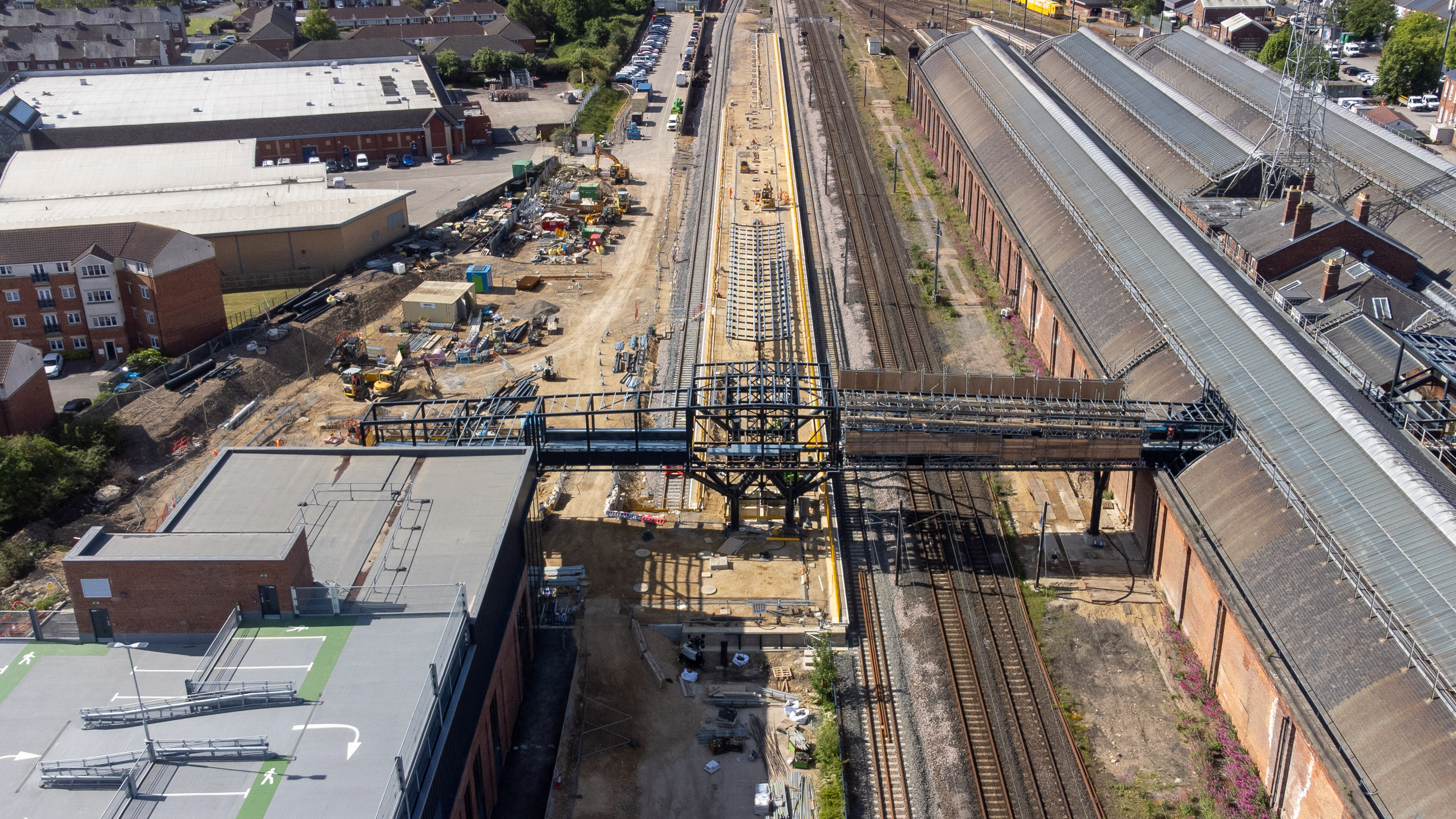
Note.
- The original four-platform Victorian station is on the right, which is the Western side.
- The East wall of the Victorian train shed can be clearly seen.
- The two absolutely straight 125 mph lines, that allow trains to bypass the original station are closest to the wall.
- The long electrified platform, which appears to be numbered 5, also appears to be absolutely straight.
- The unelectrified bay platform, which appears to be numbered 6, is to the left.
- Platforms 5 and 6 would seem to be separated by a wide island platform, which would make interchange easy.
This page on the Network Rail web site, gives more information.
Car Parking At Darlington Station
This image from Tees Valley Combined Authority shows the Northern end of the station.
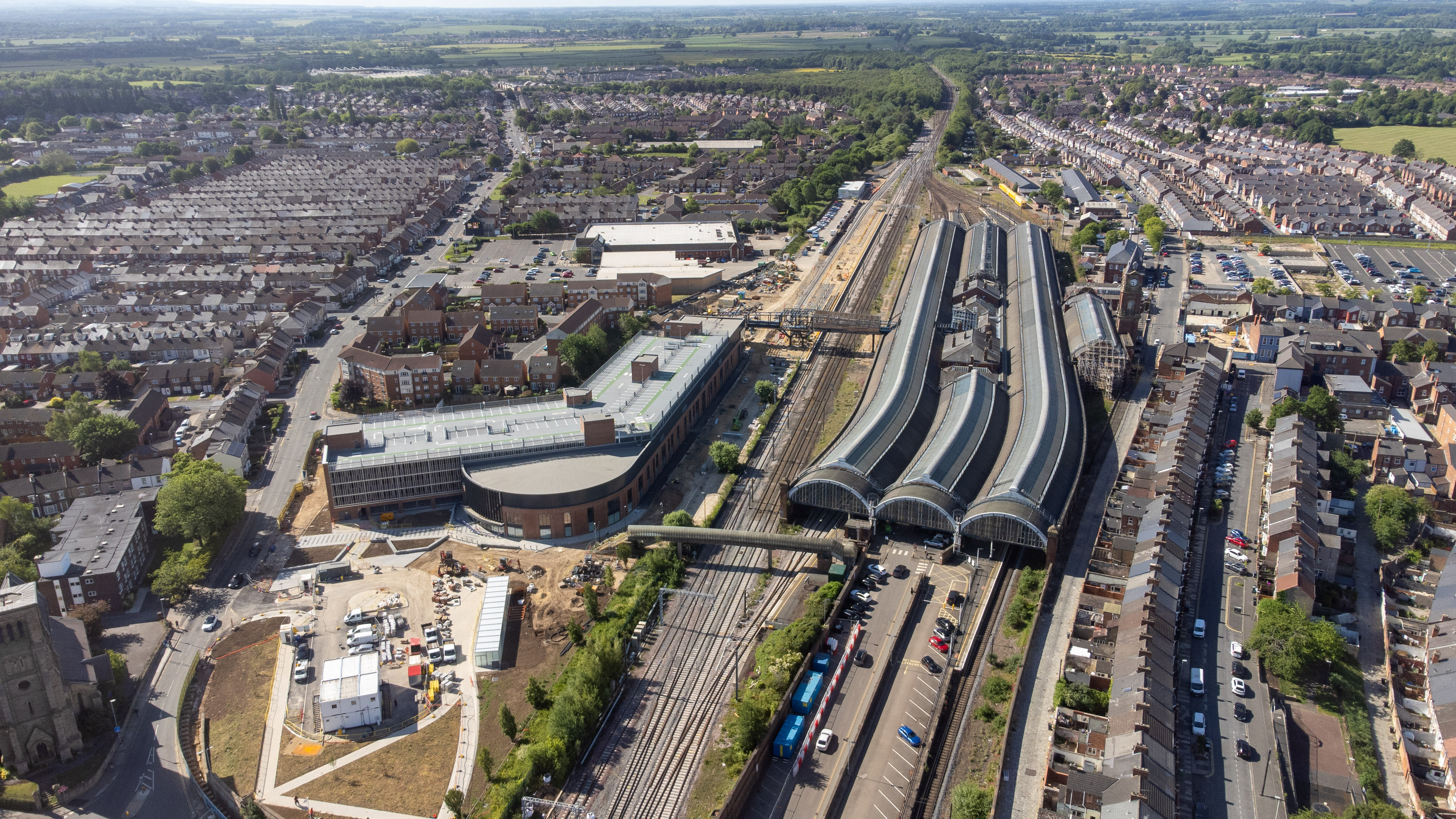
Note.
- The three sections of the Victorian station.
- The two new platforms ; 5 and 6 at the top of the image.
- The two 125 mph lines bypassing the Victorian station.
- There are two new footbridges connecting the Victorian station to the land on the other side of the 125 mph lines.
To the left of the station, there appears to be a massive multi-story car-park.
I asked Google about the new car park at Darlington station and got this reply.
The new multi-story car park at Darlington Station will have a capacity of more than 650 vehicles. This is part of a larger £140 million redevelopment of the station, which also includes new platforms and an eastern concourse. The car park will include accessible parking bays and electric car charging points.
This image from Tees Valley Combined Authority shows the car parking from the South.
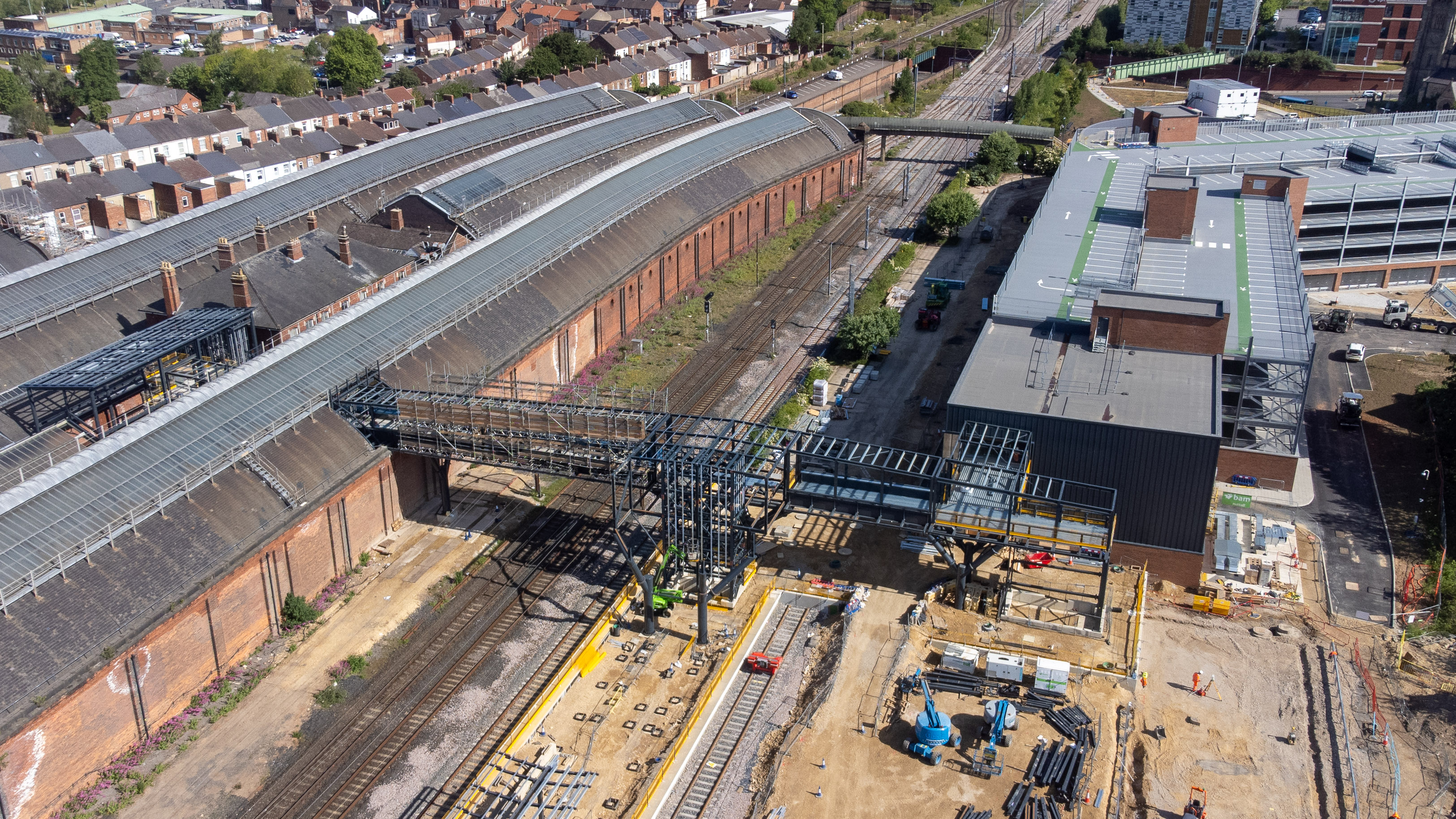
Note.
- The building appears to be a five-story car park.
- There appears to be a very easy connection between the car park and the bridge to the station.
- From the roof layout, there appears to be several lifts.
- It looks like there will be a large area between the platforms and the car park, where travellers can meet and socialise.
- The bay platform 6 already has a pair of red buffer stops.
Railways may have come to Darlington two hundred years ago and it looks like they are getting the car parking at the station ready for at least the next two hundred.
Further Electrification
If as I expect, the UK embraces battery electric technology for local and regional trains, I can see the three South-facing bay-platforms being electrified, so they could charge he battery-electric trains.
This picture shows that bars have been placed across Platforms 2 and 3, that could be used to support the electrification.
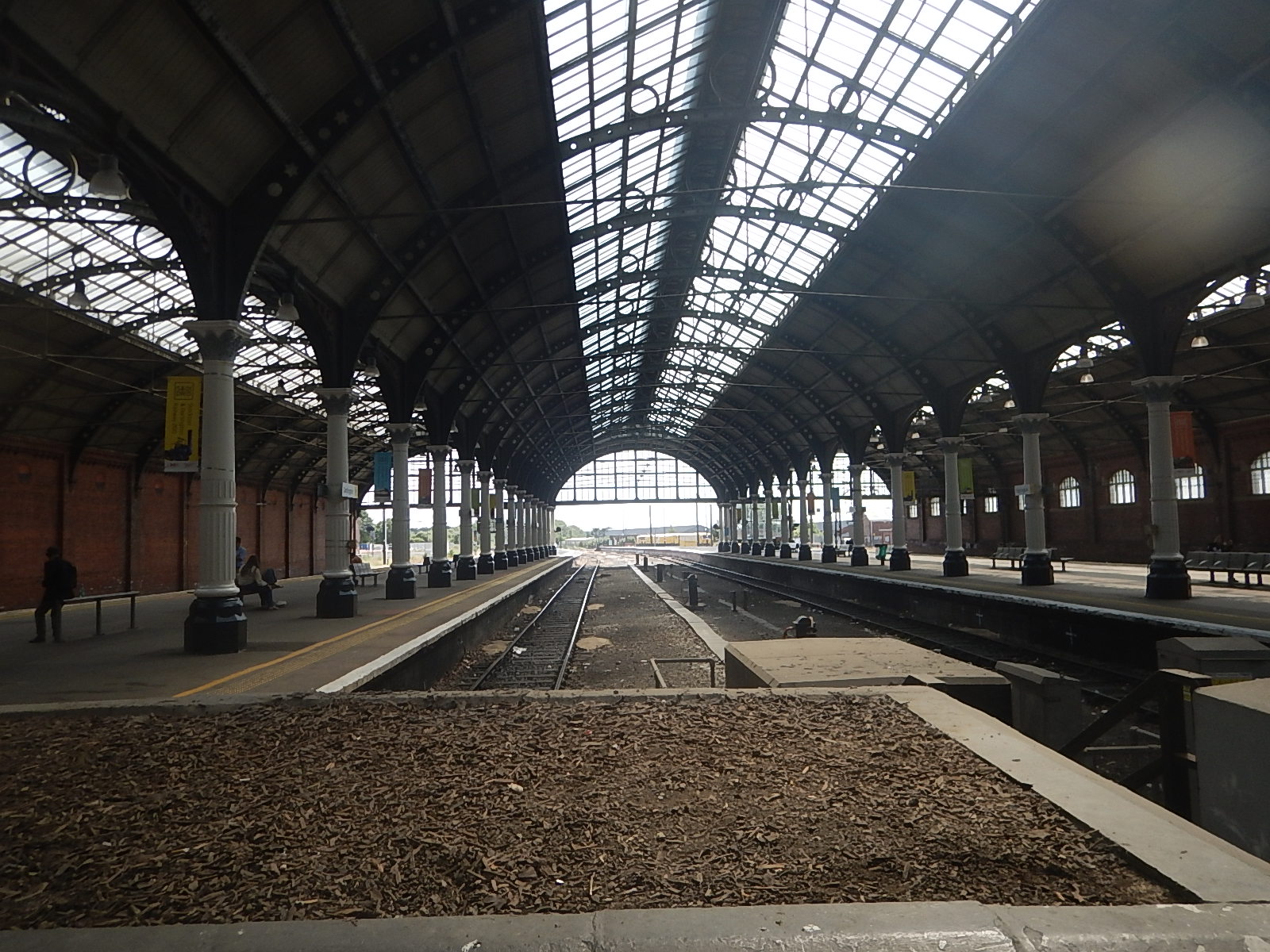
This method has been used in Victorian stations in the UK before. I show some installations and discuss electrifying Victorian stations in Could Hull Station Be Electrified?.
Darlington Station And High Speed Two
This graphic shows the original service pattern for High Speed Two.
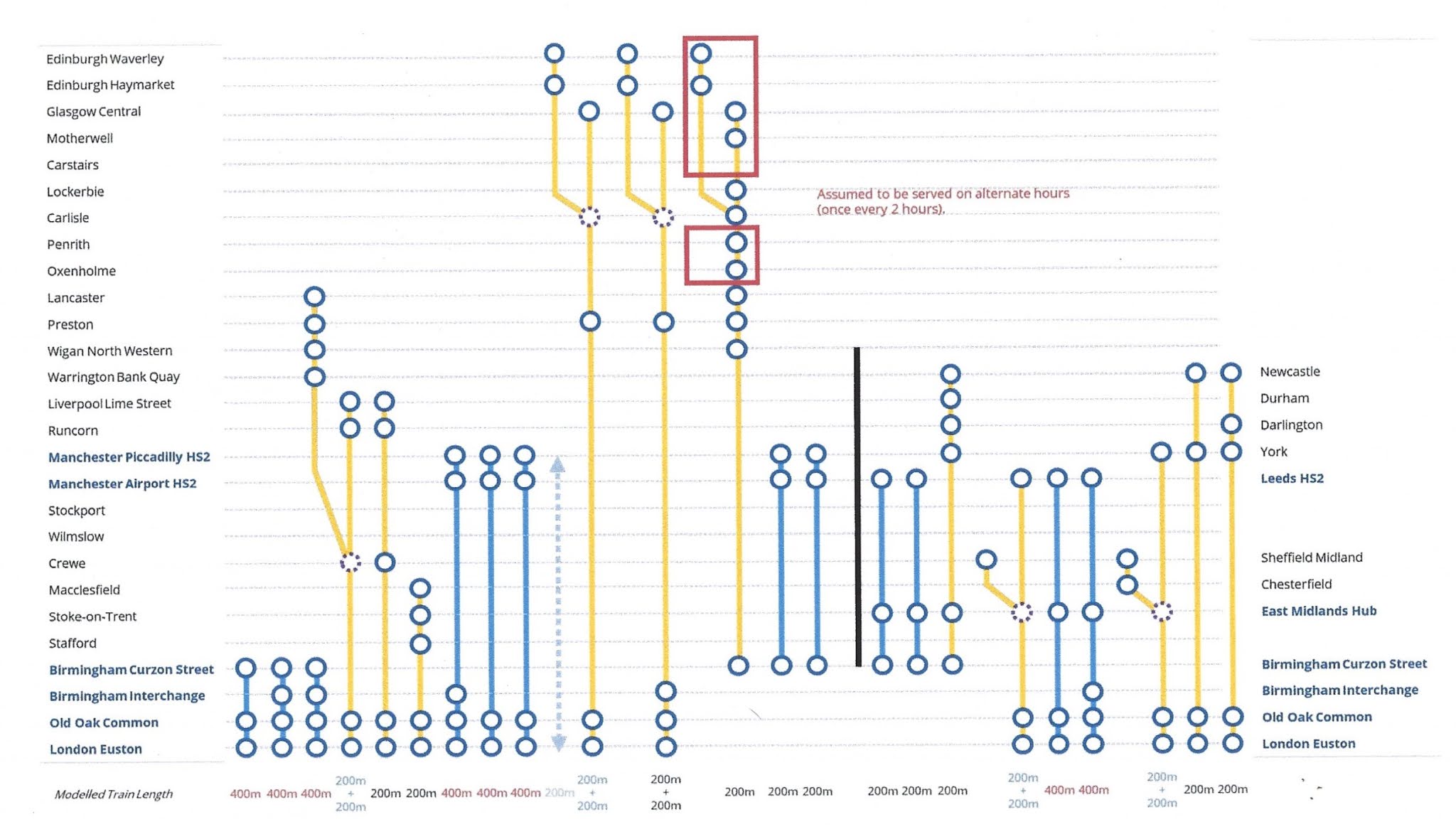
Note.
- There are seventeen paths terminating in the South at Euston station.
- Six of these paths go to Leeds, Newcastle or York.
- As the Eastern leg has been abandoned, that means there will be no High Speed Two trains to Leeds HS2, York, Darlington, Durham and Newcastle via the East Coast Main Line.
Darlington was to be served by these hourly services.
- Train 17 – Birmingham Curzon Street and Newcastle via East Midlands Hub, York, Darlington and Durham.
- Train 23 – London and Newcastle via York and Darlington.
Both trains would have been a single 200 metre long High Speed Two Classic-Compatible train.
Joining And Splitting Trains At Darlington
As Platform 5 looks like it would be a 400 metre long platform, it would look like it would be possible to handle a pair of High Speed Two Classic-Compatible trains.
But these trains will not now be serving Darlington in the near future, as the Eastern leg of High Speed Two has been cancelled.
A pair of nine-car Class 801 trains would be 467.4 metres long and might be able to fit into Platform 5.
But a pair of seven-car trains would certainly fit into a 400 metre Platform 5.
In Do Class 800/801/802 Trains Use Batteries For Regenerative Braking?, I found this snippet in an Hitachi document.
To simplify the rearrangement and management of train configurations, functions are provided for identifying the train (Class 800/801), for automatically determining the cars in the trainset and its total length, and for coupling and uncoupling up to 12 cars in
normal and 24 cars in rescue or emergency mode.
So I suspect with software updates two nine-car trains could run together.
Suppose LNER wanted to attack the airlines on the London and Scottish route.
- Two seven- or nine-car Class 800 or 801 trains would leave Edinburgh working as a pair.
- First stop would be Platform 5 in Darlington.
- The trains would split in Darlington.
- One train would go to King’s Cross stopping at perhaps Doncaster and Peterborough.
- The other train would go to St. Pancras stopping at perhaps Leeds, Sheffield, Nottingham and Bedford.
Note.
- A seven-car Azuma would be under 200 metres long.
- Seven-car trains would fit in St. Pancras.
- LNER have run an Azuma train into St. Pancras.
- The train would interchange with East-West Rail at Bedford.
- Travellers to and from East Anglia would change at Peterborough.
Large areas of England would have a fast route to and from Scotland.
Middlesbrough Station – 16th December 2021
Middlesbrough station is a Grade II Listed building and I took these pictures as I passed through.
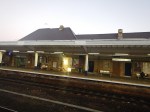
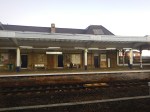
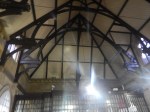
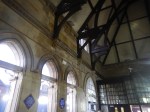
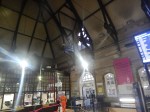
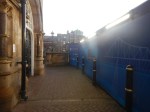


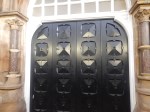
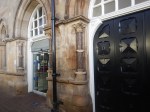
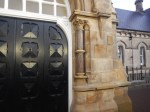
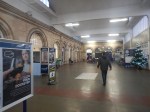
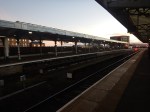
Note.
- The station is being upgraded.
- Some of the details are impressive.
- The station has a good cafe.
Every time that I visit the station seems to have improved.
To Middlesbrough By LNER
Today, I took the new LNER service to Middlesbrough.
It left at 15:25 and should have arrived in just under three hours. But it was eighteen minutes late.
I took these pictures of our arrival in Middlesbrough.

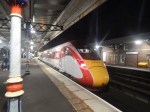
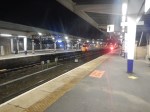
Note.
- The train wasn’t full at Middlesbrough.
- Quite a few passengers left and joined at York.
- There were also a good number of leavers at Thornaby.
- The train was five cars.
As it is only the third day of the new service, passenger numbers seem to me to be on-line with what I’ve seen for other new services.
I have a few thoughts.
Is A London and Middlesbrough Service Needed?
In the 1970s, when I worked at ICI, I would regularly travel to Middlesbrough from London for a day’s work at their Wilton site.
In those days there was no direct train and you had to change at Darlington.
Since then I’ve also travelled to Middlesbrough to see football matches and visit the local countryside.
I suspect I’ve done well over fifty trips between the town and London, but today’s trip was my first one that was direct.
Will More Services Be Added?
If you look at LNER’s service patterns to Harrogate and Lincoln, they started with a single service and have quietly grown to between five and seven trains per day (tpd) in both directions.
I suspect that an early and a late train are essential to allow a full day in London or Middlesbrough.
Could This Route Be Run By A Nine-Car Train?
I suspect normally, a five-car train would be sufficient, but suppose one of the big London football clubs was playing Middlesbrough in an FA Cup quarter final, LNER might like to add capacity for the match.
King’s Cross and York stations regularly handle nine-car Azuma trains and from my pictures, it looks like Middlesbrough can too! The only other stop is Thornaby station, which is shown in this Google Map.
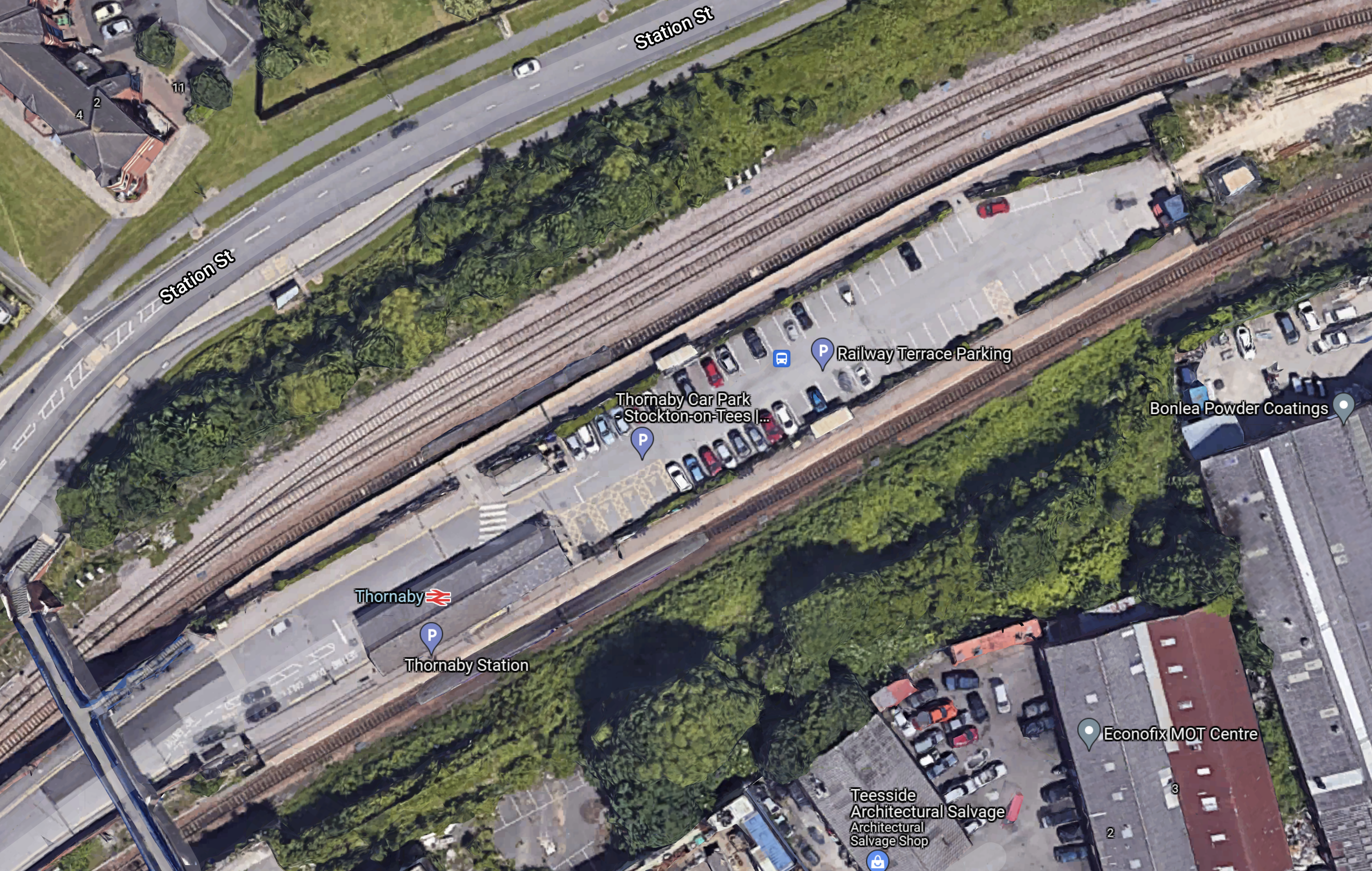
I suspect that it might just be possible, if Thornaby passengers were told to get in the first six cars.
Could This Route Be Run By A Battery-Electric Train?
Consider.
- The trains run on diesel power North of Longlands junction, where they leave and join the East Coast Main Line.
- It is a distance of only 22.2 miles.
With some form of charging at Middlesbrough, I think that within a few years, this could be an all-electric service.
It would be very handy for Hitachi, as any possible customers for battery-electric trains could be given a demo to or from London.
I Think The Stop At York Is A Good Idea
It could be argued that LNER’s King’s Cross and Middlesbrough service is two services in one.
- A direct service between London King’s Cross and Thornaby and Middlesbrough.
- A fast non-stop service between London King’s Cross and York, that takes several minutes under two hours.
Hence my view, that the York stop is a good idea.
Could The Middlesbrough Service Split And Join With Another Service At York?
The Middlesbrough service takes five minutes for the stop at York, but other services only take three minutes.
Has the longer stop been inserted into the timetable, so that the Middlesbrough timetable can be split to serve two separate destinations?
- Secondary destinations would have to be North of York or York station itself.
- These could include Bishops Auckland, Edinburgh, Newcastle, Scarborough and Sunderland.
- Given the arguments, there have been over the new timetable not calling at smaller stations, could these be served by a train to Newcastle?
There are quite a few sensible possibilities.
An alternative could be to split and join at Thornaby to serve both Middlesbrough and Sunderland.
First Phase Of ‘Transformational’ Darlington Rail Station Upgrade Approved
The title of this post is the same as that of this article on the North East Times.
This upgrade is on the Eastern side of the current station and will include a new entrance, station building, concourse and three new platforms.
This design should allow the following.
- LNER, High Speed Two and other expresses not stopping at the Darlington station to pass through at speeds of up to 125 mph or more.
- Expresses stopping in the station will slow and accelerate in less time than they do now.
- It will probably allow more local trains to Bishops Auckland, Middlesbrough and Saltburn
A seventy-five percent increase in platforms probably offers other advantages.
LNER’s Middlesbrough And London Service Starts On December 13th
Tucked at the bottom of the article entitled LNER Tickets For Christmas Getaway in Edition 939 of Rail Magazine, there is this paragraph separated from the article by a sole bullet point.
LNER has confirmed that from December 13 it will run a new weekday service between London King’s Cross and Middlesbrough.
It has already made an appearance on Real Time Trains and I can find the following details.
- There will be one train per day (tpd)
- Intermediate stops will be at Thornaby and York.
- The Middlesbrough and London service will leave Middlesbrough from Platform 1 at 07:08 and arrive in King’s Cross at 10:22.
- The London and Middlesbrough service will leave King’s Cross at 15:25 and arrive in Middlesbrough in Platform 2 at 18:18.
These are my thoughts.
Trains Per Day
One train per day, is obviously an introductory service and like services to Harrogate and Lincoln, the number of services will ramp up to perhaps four or five tpd, if the demand is there and the paths and trains are available.
Journey Times
Consider
- The Southbound journey takes three hours and fourteen minutes with a time of two hours and nine minutes between York and King’s Cross
- The Northbound journey takes two hours and fifty-three minutes with a time of one hour and fifty-six minutes between King’s Cross and York.
- Some services between King’s Cross and York are as fast as one hour and forty-eight minutes.
- Middlesbrough and York seems to take around 52-58 minutes.
- These Middlesbrough and York timings are consistent with TransPennine Express.
- Digital signalling could offer savings in journey time between York and London.
I think it is very likely as the timetable improves, that timings between Middlesbrough and London could be around two hours and forty minutes.
Electrification
The route is fully electrified except for between Middlesbrough and Longlands Junction, where it joins the electrification of the East Coast Main Line, which is a distance of twenty-two miles.
Hitachi are developing a battery-train, which they call the Hitachi Intercity Tri-Mode Battery Train, which is described in this Hitachi infographic.

Note.
- LNER’s current Class 800 trains will probably be able to be converted to this train.
- A range on battery power of upwards of forty miles would be expected.
If the range on battery-power can be stretched to perhaps sixty miles, this train should be capable of serving Middlesbrough without the need for any extra charging at the terminus.
I am sure Hitachi would like to see their battery-electric trains running between King’s Cross and Middlesbrough, as it would be an ideal route on which to show the trains to prospective customers, given that their factory is at Newton Aycliffe.
Conclusion
This could be good demonstration battery-electric service for Hitachi and LNER.
Middlesbrough To London LNER Trains To Run From 13 December
The title of this post, is the same as that of this article on the BBC.
The title is clear and these paragraphs give details of the train service.
The daily weekday service in each direction will also connect nearby Thornaby with London King’s Cross.
The services will depart Middlesbrough at 07:08 and Thornaby at 07:15, arriving at King’s Cross at 10:22.
Northbound from London will leave at 15:25, stopping at York, to Thornaby at 18:08 and Middlesbrough at 18:18.
This is obviously not a complete service.
- It will be impossible to use direct trains to spend a day on Teesside from London, as I have done many times over the years, usually with a change at Darlington station.
- It needs to run seven days a week.
But as the article says, more work needs to be done at Middlesbrough to turn the trains.
Currently, LNER run one train per two hours (1tp2h) to York, which alternates with a service to Lincoln at the same frequency.
LNER have said, that the Middlesbrough service will be an extension of the York service.
- As York trains can be nine-car trains, this could explain the need for works at Middlesbrough station.
- As York and Middlesbrough are 51 miles and an hour apart, it looks to me, that once Middlesbrough station has been updated, LNER can extend services to Middlesbrough according to passenger demand.
I suspect that eventually, the London and Middlesbrough service will have a similar frequency as the Harrogate and Lincoln services of five trains per day (tpd).
What Real Time Trains Says About The Service
Although it’s exactly four months before the service starts, it has already been entered into Real Time Trains.
The following information is given about the services.
- One seven-minute stop at York going South and a five-minute stop going North.
- Changeover between diesel and electric at Longlands junction, where the Teesside trains leave and join the East Coast Main Line.
- Services do not appear to pass through Northallerton station.
Train times are as given by the BBC.
Splitting And Joining At Newark
I think it would be possible to combine the Lincoln, Middlesbrough and York services into one service.
- A pair of five-car Azumas would run between Kings Cross and Newark North Gate, with stops at Stevenage, Peterborough and Grantham.
- They would split at Newark North Gate station.
- The front train would continue Northwards to Middlesbrough, with stops at Retford, Doncaster, York and Thornaby.
- The rear train would continue Eastwards to Lincoln, with a possible extension to Grimsby Town and Cleethorpes.
Returning South the trains would join at Newark North Gate.
Note.
- As TransPennine Express services to and from Middlesbrough, call at Northallerton, LNER services could do the same.
- As with splitting and joining at Newark, only a five-car train runs to and from Middlesbrough, this could be used before the new platform at Middlesbrough is constructed.
- if this service ran at a frequency of 1tp2h, there would be space in the timetable for a new 1tp2h service to perhaps Newcastle and Edinburgh.
There are a lot of possibilities.
Battery-Electric Trains Between London And Middlesbrough
Only the twenty miles between Northallerton and Middlesbrough on the route are without electrification.
Hitachi have announced the Hitachi Intercity Tri-Mode Battery Train, which is described in this Hitachi infographic.
I believe that a version of this train could be given sufficient battery range to be able to achieve a round trip to Middlesbrough station from the electrification of the East Coast Main Line, without any need for charging at Middlesbrough.
It could be one of the first InterCity services in the world, run by battery-electric trains.
A New Timetable For The East Coast
The title of this post, is the same as that of an article in the August 2021 Edition of Modern Railways.
The Modern Railways article describes in detail the thinking behind the proposed timetable for the East Coast Main Line, that will be introduced in May 2022.
The new titletable would appear to be a compromise and judging by the number of complaints that have appeared in the media, the compromise doesn’t suit everyone.
A lot of my programming was concerned with the allocation of resources in large projects and that expertise convinces me, that the East Coast Main Line doesn’t have enough capacity to accommodate all the services that passengers need and train companies want to run.
These are my thoughts.
High Speed Two
When High Speed Two is completed to Leeds, it will add the following services to Leeds.
- Three trains per hour (tph) between London Euston and Leeds in a time of one hour and twenty-one minutes.
- Two tph between Birmingham Curzon Street and Leeds in a time of forty-nine minutes.
- One tph between Bedford and Leeds, run by Midlands Connect, in a time of one hour and thirty-six minutes.
Leeds will benefit from these services from the South on the new High Speed Two.
But the High Speed Two network has been designed to need to run three tph between York and Newcastle, which will have to share with other East Coast Main Line services.
Both High Speed Two and the aspiration of providing more services on the East Coast Main Line mean that more capacity must be provided between York and Newcastle.
High Speed Two is not mentioned in the Modern Railways article.
I know the Eastern Leg of High Speed Two is many years away, but surely, it should have an influence on the design of East Coast Main Line services.
For instance, destinations like Bradford, Cleethorpes, Doncaster, Harrogate, Huddersfield, Hull, Lincoln, Middlesbrough, Peterborough, Redcar, Scarborough, Skegness and Sunderland are unlikely to be served by High Speed Two services, so how does that determine our thinking, when planning train services to these destinations.
Perhaps, there should be lists of secondary destinations, that should be served by the various operators.
London And Leeds In Two Hours
This is mentioned in the Modern Railways article as being an aspiration of Virgin Trains East Coast, when they ran the franchise.
In Thoughts On Digital Signalling On The East Coast Main Line, I did a few rough calculations and said this.
Consider.
-
- The fastest current trains between London Kings Cross and Leeds take between two hours and twelve minutes and two hours and fifteen minutes.
- I suspect that the extra tracks into Kings Cross, that are currently being built will save a few minutes.
- There must be some savings to be made between Doncaster and Leeds
- There must be some savings to be made between London Kings Cross and Woolmer Green.
- There could be a rearrangement of stops.
I think it is highly likely that in the future, there will be at least one train per hour (tph) between London Kings Cross and Leeds, that does the trip in two hours.
It is my view, that any new East Coast Main Line timetable should include services between London Kings Cross and Leeds in a few minutes under two hours.
London And Edinburgh In Four Hours
This must be another objective of the train companies, as it is competitive with the airlines.
But it is not a simple process as cutting stops to save time, often annoys the locals.
So achieving the objective of a four-hour trip between London and Edinburgh probably needs some major upgrades to the East Coast Main Line.
Some of the improvements needed are detailed in Northern Powerhouse Rail – Significant Upgrades Of The East Coast Main Line From Leeds To Newcastle (Via York And Darlington) And Restoration Of The Leamside Line.
Projects in the related article include.
- Phase 2 Of The East Coast Main Line Power Supply Upgrade
- York to Church Fenton Improvement Scheme
- Darlington Station Remodelling
- The North Throat Of York Station Including Skelton Bridge Junction
- Use Of The Leamside Line
- Full Digital ERTMS signalling.
It would appear there’s a lot of work to do, but all of it, will be needed for High Speed Two.
The Modern Railways article does point out, that the new Hitachi trains have superior acceleration to the InterCity 225 trains, that they have replaced. So that will help!
Although it is a worthwhile objective, I think it will be some years before London and Edinburgh times of under four hours are obtained on the East Coast Main Line.
Hitachi’s Intercity Tri-Mode Battery Train
These trains are described in this Hitachi infographic.
Within a couple of years these trains will start to be seen on the East Coast Main Line serving destinations like Cleethorpes, Grimsby, Harrogate, Huddersfield, Hull, Lincoln, Middlesbrough and Sunderland.
Although, it says batteries will replace one engine in the infographic, I believe the standard five-car train for the East Coast Main Line will have two battery packs and an emergency diesel engine. Before the end of the decade, they will be fully-decarbonised with three battery packs.
Splitting And Joining
Although the Hitachi trains can accomplish splitting and joining with ease, it is only mentioned once in the Modern Railways article and that is concerned with a service to Huddersfield, which will split and join at Leeds.
I can see this being used to make sure that each train running into Kings Cross is either a nine-car or a pair of five-car trains, as this would maximise capacity on the route.
Currently, trains to York and Lincoln share a path into Kings Cross, with trains alternating to each destination, so each destination gets one train per two hours (1tp2h).
It would surely be possible for a pair of trains to leave Kings Cross, that split at Newark, with one train going to York and the other to Lincoln.
- The Modern Railways article says that the Middlesbrough service will be an extension of the 1tp2h York service.
- This means Kings Cross and Middlesbrough would call at Stevenage, Peterborough, Grantham, Newark North Gate, Retford, Doncaster and York.
- So at some time in the future could the Middlesbrough and Lincoln services share a path, with a split and join at Newark?
If the Lincoln and Middlesbrough services were to be run at a frequency of 1tp2h, the intervening paths could be used for other destinations.
Theoretically, by using pairs of five-car trains and splitting and joining, four destinations can be given a service of 1tp2h to and from London, that all use the same path.
I think the following splits and joins would be feasible.
- Lincoln/Middlesbrough splitting and joining at Newark North Gate.
- Lincoln/Scarborough splitting and joining at Newark North Gate.
- Nottingham/Sheffield splitting and joining at Newark North Gate.
- Harrogate/Huddersfield splitting and joining at Leeds.
- Bradford/Skipton splitting and joining at Leeds.
- Hull/Leeds splitting and joining at Doncaster.
Note.
- The two Lincoln splits and joins at Newark North Gate could possibly be arranged, so that Middlesbrough got roughly 1tp2h and Scarborough got perhaps two trains per day (tpd).
- Hull would be a very useful destination, as it is a large station to the East of the East Coast Main Line.
- Nottingham and Sheffield could be useful destinations during any disruption on the Midland Main Line, perhaps due to installation of full electrification.
The permutations and combinations are endless.
All Fast Trains Must Have Similar Performance
East Coast Trains, Hull Trains, LNER and TransPennine Express all use trains with similar performance.
But other operators like Great Northern use slower trains on the East Coast Main Line.
As the Hitachi trains will be running at up to 140 mph under the control of full digital signalling, it strikes me that for safe, fast and efficient operation, the other operators will need faster trains, where they run on the fast lines of the East Coast Main Line.
Grand Central
Grand Central‘s fleet of Class 180 trains will need to be replaced to decarbonise the operator and will surely be replaced with more 140 mph trains to take advantage of the digitally-signalled East Coast Main Line.
As their routes are not fully-electrified, I suspect they’ll be using similar Hitachi battery-electric trains.
The Cambridge Effect
Cambridge is becoming one of the most important cities in the world, let alone England and the UK.
It is generating new businesses at a tremendous rate and it needs an expanded rail network to give access to housing and industrial premises in the surrounding cities and towns.
- Peterborough is in the same county and is developing alongside Cambridge.
- Bury St. Edmunds, Norwich and other towns are being drawn into Cambridge.
- East West Rail to Bedford, Milton Keynes and Oxford is coming.
Cambridge is well-connected to London, but needs better connections to the North and Midlands.
King’s Cross And King’s Lynn
Currently, this route is run by 110 mph Class 387 trains.
These trains are just not fast enough for Network Rail’s 140 mph digitally signalled railway between King’s Cross and Hitchin.
In Call For ETCS On King’s Lynn Route, I examine how 125 mph trains and full digital signalling could be used to run between King’s Cross and King’s Lynn via Cambridge.
This would allow the trains to use the fast lines into King’s Cross.
I also feel, that to maximise the use of paths into King’s Cross, that the King’s Lynn service could be paired with a new Norwich service. The two trains would split and join at Cambridge.
Liverpool Lime Street And Norwich
This service is currently run by Class 156 trains and needs decarbonising. It also runs on 125 mph lines between.
- Peterborough and Grantham
- Nottingham and Sheffield
It certainly needs a thorough redesign and modern rolling stock to replace the current rolling road blocks.
East West Rail will certainly increase Cambridge and Norwich services to two tph, so why not terminate this Liverpool service at Cambridge rather than Norwich?
- Cambridge station has a lot of space to add extra platforms.
- The service would not need to reverse at Ely.
- It would add much-needed capacity to the Cambridge and Peterborough route.
- The service could even terminate at the new Cambridge South station.
- There have been plans for some time to split this service at Nottingham.
As between Peterborough and Grantham is a fully-electrified four-track line, I suspect that a Cambridge and Nottingham service could be handled by a 110 mph battery-electric train based on a Class 350 or Class 379 train.
Similar battery-electric trains could probably handle the Northern section between Nottingham and Liverpool Lime Street.
Stansted Airport And Birmingham Via Cambridge
After the work to the North of Peterborough at Werrington, this service has a clear route away from the East Coast Main Line, so it can be ignored.
The service does need decarbonisation and I suspect that it could be run by a 110 mph battery-electric train based on a Class 350 or Class 379 train.
CrossCountry And TransPennine Express Services
CrossCountry and TransPennine Express also run services on the Northern section of the East Coast Main Line.
- CrossCountry – 1 tph – Leeds and Edinburgh via York, Darlington, Durham, Newcastle, Alnmouth, Berwick-upon-Tweed and Dunbar (1tp2h)
- CrossCountry – 1 tph – Sheffield and Newcastle via Doncaster, York, Darlington and Durham.
- TransPennine Express – 1 tph – Liverpool Lime Street and Scarborough via Leeds, Garforth and York
- TransPennine Express – 1 tph – Manchester Airport and Redcar via Leeds, York, Thirsk, Northallerton, Yarm, Thornaby, and Middlesbrough.
- TransPennine Express – 1 tph – Liverpool Lime Street and Edinburgh via Leeds, York, Darlington, Durham, Newcastle and Morpeth.
- TransPennine Express – 1 tph – Manchester Airport and Newcastle via Leeds, York, Northallerton, Darlington, Durham and Chester-le-Street (1t2h)
In addition LNER and East Coast Trains also run these services on the same section.
- LNER – 1 tp2h – London Kings Cross and York
- LNER – 1 tph – London Kings Cross and Edinburgh via York, Darlington, Newcastle, Berwick-upon-Tweed
- LNER – 1 tph – London Kings Cross and Edinburgh via York, Northallerton (1tp2h), Darlington, Durham, Newcastle and Alnmouth (1tp2h)
- East Coast Trains – 5 tpd – London Kings Cross and Edinburgh via Newcastle and Morpeth.
Aggregating the stops gives the following.
- York – 8.5 tph
- Darlington – 6 tph
- Durham – 5 tph
- Chester-le-Street – 0.5 tph
- Newcastle – 6 tph and 5 tpd
- Morpeth – 1 tph and 5 tpd
- Almouth – 1.5 tph
- Berwick-on-Tweed – 2 tph
- Dunbar – 0.5 tph
Note.
- 1 tp2h = 0.5 tph
- Scotland is building two new stations at Reston and East Linton.
- Northern run trains between Newcastle and Morpeth.
It does appear from comments in the Modern Railways article, that the various train companies and passenger groups can’t agree on who calls where to the North of York.
Perhaps the Fat Controller should step in.
Between Newcastle and Berwick-on-Tweed
With the reopening of the Northumberland Line between Newcastle and Ashington, there may be an opportunity to reorganise services between Newcastle and Berwick-on-Tweed.
- Morpeth could be served via the Northumberland Line.
- Britishvolt are building a large gigafactory for batteries at Blyth.
- It would probably be a good idea to remove slow diesel services from the East Coast Main Line.
- Reston station will need a train service.
- Morpeth and Newcastle are under twenty miles apart on the East Coast Main Line and the route via Ashington is perhaps only ten miles longer.
It looks to me that local services on the Northumberland Line and between Newcastle and Reston on the East Coast Main Line could be run by a 110 mph battery-electric train.
Conclusion
There would appear to be a lot of scope to create a very much improved timetable for the East Coast Main Line.
I do think though that the following actions must be taken.
- Ensure, that all the long-distance train companies have trains capable of running at 140 mph under the control of digital signalling.
- Develop a 110 mph battery-electric train to work the local routes, that run on the East Coast Main Line.
- Get agreement between passengers and train companies about stopping patterns to the North of York.
- Use splitting and joining creatively to squeeze more trains into the available paths.
LNER would also need to increase their fleet.
Beeching Reversal – Ferryhill Station Reopening
This is one of the Beeching Reversal projects that the Government and Network Rail are proposing to reverse some of the Beeching cuts. There used to be a Ferryhill station on the East Coast Main Line. It closed in 1967 and burnt down in 1969, before being demolished.
I first noted the station in Boris Johnson Backs Station Opening Which Could See Metro Link To County Durham, after Boris promised it would be built in PMQs.
I then mentioned the station in Northern Powerhouse Rail – Significant Upgrades Of The East Coast Main Line From Leeds To Newcastle (Via York And Darlington) And Restoration Of The Leamside Line.
Last night, I read this document from Railfuture, which talks about rail improvements in the North East and on the East Coast Main Line.
In the document, Ferryhill station is mentioned eighteen times.
Reopening Ferryhill station would appear to have support at all levels.
The Location Of Ferryhill Station
This Google Map shows the general area of the proposed Ferryhill station.
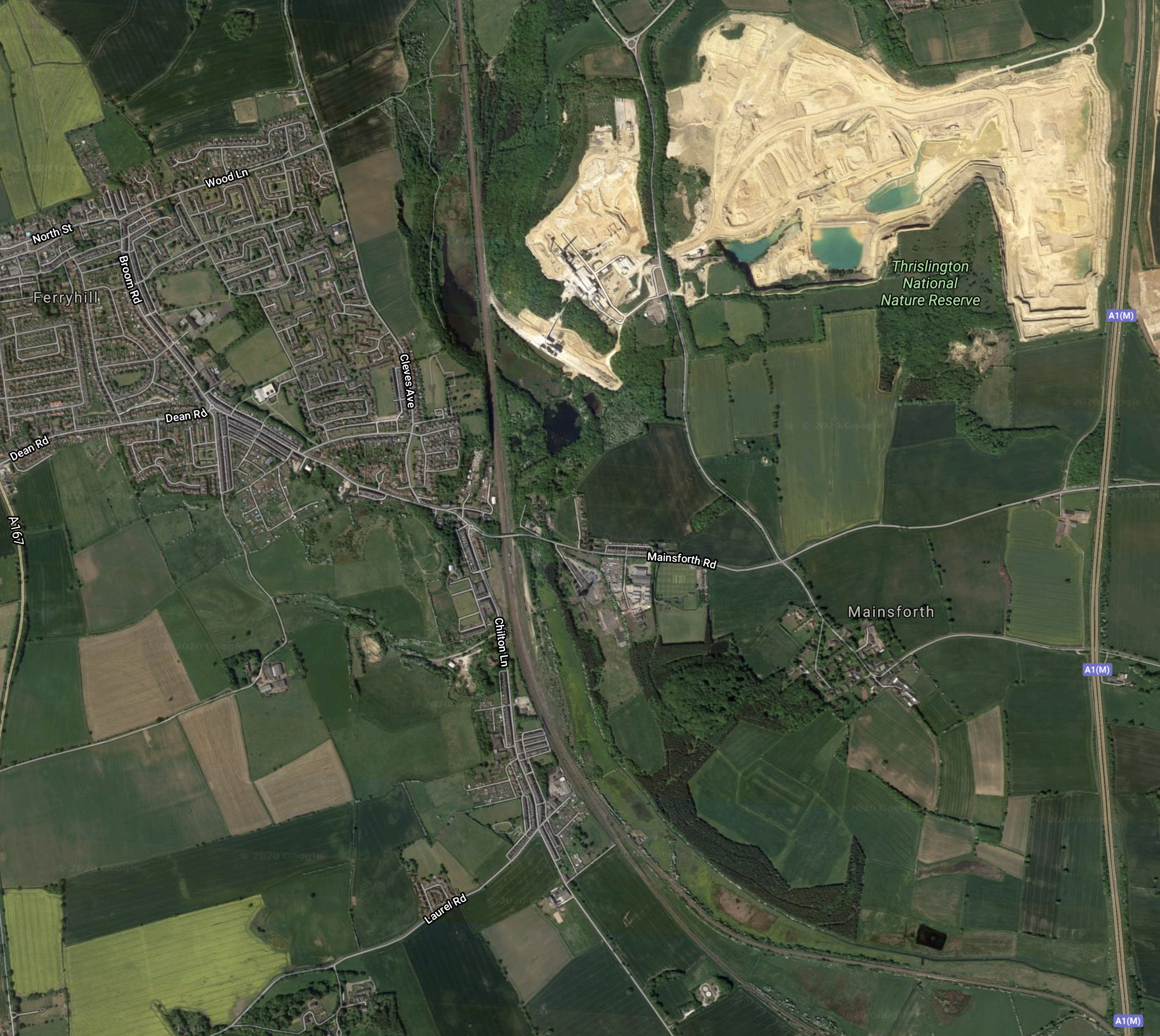
Note.
- Ferryhill is the village in the North-West corner of the map.
- The lion-shaped quarry in the North-East is destined to become a landfill site.
- Below this is Thrislington Plantation, which is a National Nature Reserve.
- The East Coast Main Line runs North-South between the village and the quarry.
South of the village the line splits, as is shown in detail in this second Google Map.
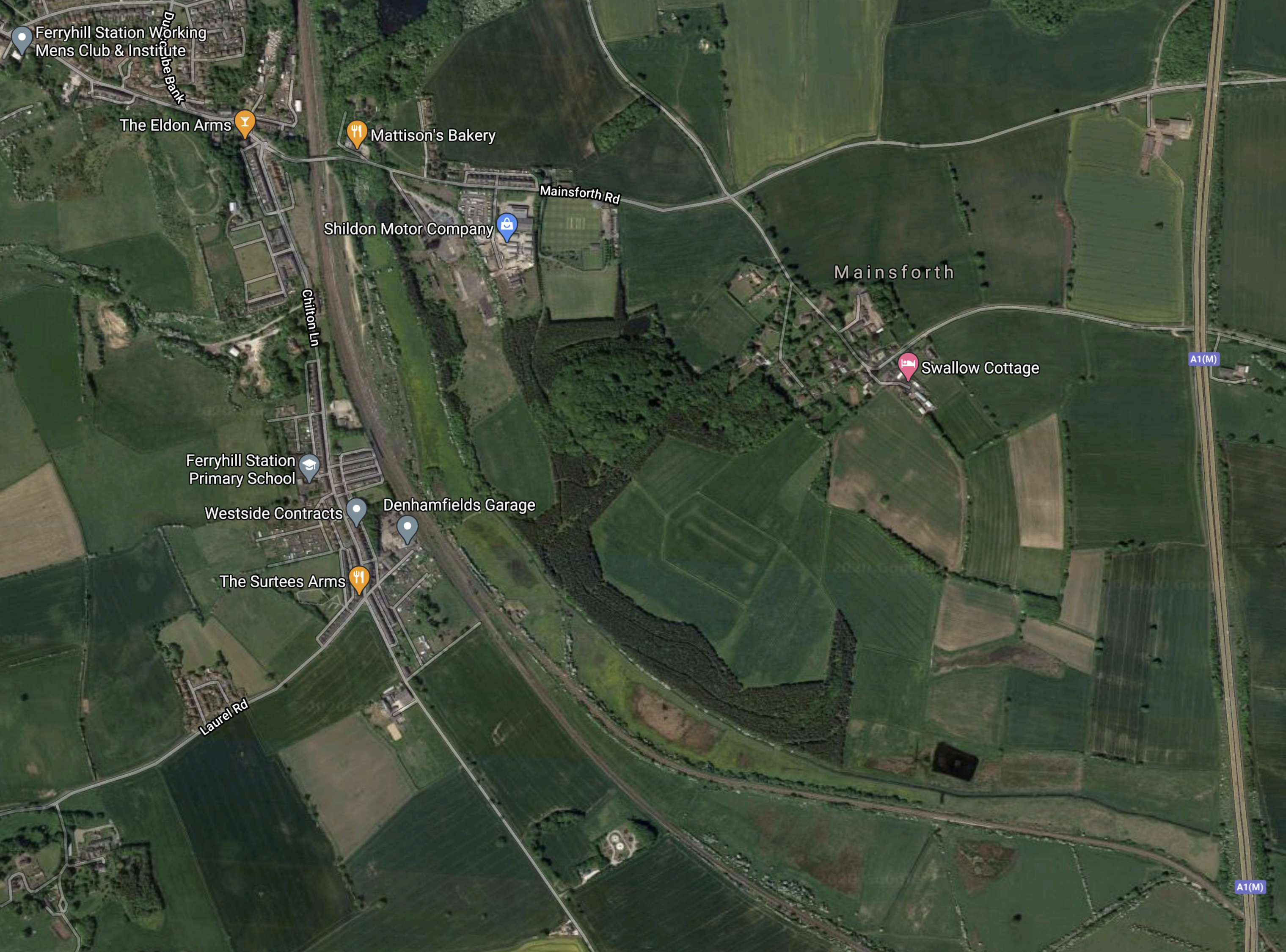
Note.
- Ferryhill South junction by Denhamfields Garage, with the nearby Ferryhill Station Primary School
- The line going South-East is the Stillington freight line to Teesside.
- The other line going in a more Southerly direction is the electrified East Coast Main Line to Darlington and the South.
- Between Ferryhill South junction and Tursdale Junction with the Leamside Line is a 2.5 mile four-track electrified railway.
I suspect the station could be any convenient location, to the North of the junction.
Railfuture have strong opinions on the station and feel it should be a Park-and-Ride station for the settlements in the former North Durham coalfield, with frequent services to Newcastle.
Current Passenger Train Services Through Ferryhill
These services currently pass the location of the proposed Ferryhill station.
- LNER – London Kings Cross and Edinburgh via York, Darlington. Newcastle and Berwick-upon-Tweed
- LNER – London Kings Cross and Edinburgh via Peterborough, Newark North Gate, Doncaster, York, Darlington, Durham and Newcastle
- CrossCountry – Plymouth and Edinburgh via Totnes, Newton Abbot, Exeter St Davids, Tiverton Parkway, Taunton, Bristol Temple Meads, Bristol Parkway, Cheltenham Spa, Birmingham New Street, Derby, Chesterfield, Sheffield, Wakefield Westgate, Leeds, York, Darlington, Durham and Newcastle
- CrossCountry – Southampton and Newcastle via Birmingham New Street, Derby, Sheffield, Doncaster, York, Darlington and Durham
- TransPennine Express – Liverpool Lime Street and Edinburgh via Newton-le-Willows, Manchester Victoria, Huddersfield, Leeds, York, Darlington, Durham, Newcastle and Morpeth
- TransPennine Express – Manchester Airport and Newcastle via Manchester Piccadilly, Manchester Oxford Road, Manchester Victoria, Huddersfield, Dewsbury, Leeds, York, Northallerton, Darlington and Durham
Note.
- All trains have a frequency of one train per hour (tph)
- All trains call at York, Darlington and Newcastle.
- I have missed out some of the intermediate stations, where trains don’t call at least hourly.
- I have missed out stations South of Birmingham New Street.
- A few Northern Trains services pass through at Peak times or to go to and from depots.
I suspect some of these services could stop and to encourage commuters to Newcastle, Durham and Darlington to swap from car to train,
I also suspect that Ferryhill station needs a frequency of at least two tph and if possible four! Four tph would give a Turn-up-and-Go service to Darlington, Newcastle and York.
Planned And Possible Future Passenger Train Services Through Ferryhill
From various sources, these services are either planned or possible.
High Speed Two
High Speed Two are planning the following services, that will pass through.
- Birmingham Curzon Street and Newcastle via East Midlands Hub, York, Darlington and Durham.
- London Euston and Newcastle via Old Oak Common, East Midlands Hub and York.
- London Euston and Newcastle via Old Oak Common, East Midlands Hub, York and Darlington.
Note.
- All trains have a frequency of one tph.
- All trains call at York, East Midlands Hub, York and Newcastle.
- All trains will be 200 metres long.
I feel that Ferryhill station should have platforms long enough to accommodate these trains and other long trains, to future-proof the design and to cater for possible emergencies.
The longest trains on the route would probably be one of the following.
- A pair of five-car Class 800 trains or similar, which would be 260 metres long.
- A High Speed Two Classic-Compatible train, which would be 200 metres long.
Unless provision needed to be made for pairs of High Speed Two Classic-Compatible trains.
East Coast Trains
From next year, East Coast Trains, intend to run a five trains per day (tpd) service between London and Edinburgh via Stevenage, Newcastle and Morpeth.
Note that in Thoughts On East Coast Trains, I said this service would stop at Durham, as that was said in Wikipedia at the time.
Northern Powerhouse Rail
Northern Powerhouse Rail has an objective to to run four tph between Leeds and Newcastle in 58 minutes.
At present there are only three tph on this route, two tph from TransPennine Express and one tph from CrossCountry. All three services stop at Leeds, York, Darlington, Durham and Newcastle.
I believe that the best way to provide the fourth service between Leeds and Newcastle would be to run a third LNER service between London Kings Cross and Edinburgh, when upgrades to the East Coast Main Line give the train operating company another path.
- The service would only stop en route at Leeds and Newcastle.
- It would increase the frequency between London Kings Cross and Leeds to three tph
- It would increase the frequency between London Kings Cross and Newcastle to three tph
- It would increase the frequency between London Kings Cross and Edinburgh to three tph
- It would increase the frequency between London Leeds and Newcastle to four tph
- It would run non-stop between London Kings Cross and Leeds, in under two hours.
I believe that, when all the upgrades to the East Coast Main Line are complete, that such a service could match or even better High Speed Two’s time of three hours and forty-eight minutes between London and Edinburgh.
Ferryhill And Teesside Via The Stillington Freight Line
The Clarence Railway is described in this paragraph in its Wikipedia entry.
The Clarence Railway was an early railway company that operated in north-east England between 1833 and 1853. The railway was built to take coal from mines in County Durham to ports on the River Tees and was a competitor to the Stockton and Darlington Railway (S&DR). It suffered financial difficulty soon after it opened because traffic was low and the S&DR charged a high rate for transporting coal to the Clarence, and the company was managed by the Exchequer Loan Commissioners after July 1834.
But it has left behind a legacy of useful rail lines, that connect important factories, ports, towns, works on other railways on Teesside.
- It forms the link between the Durham Coast Line and Middlesbrough station.
- It forms the link between Northallerton and Middlesbrough stations.
This Google Map shows the triangle between Eaglescliffe, Stockton-on-Tees and Thornaby stations.
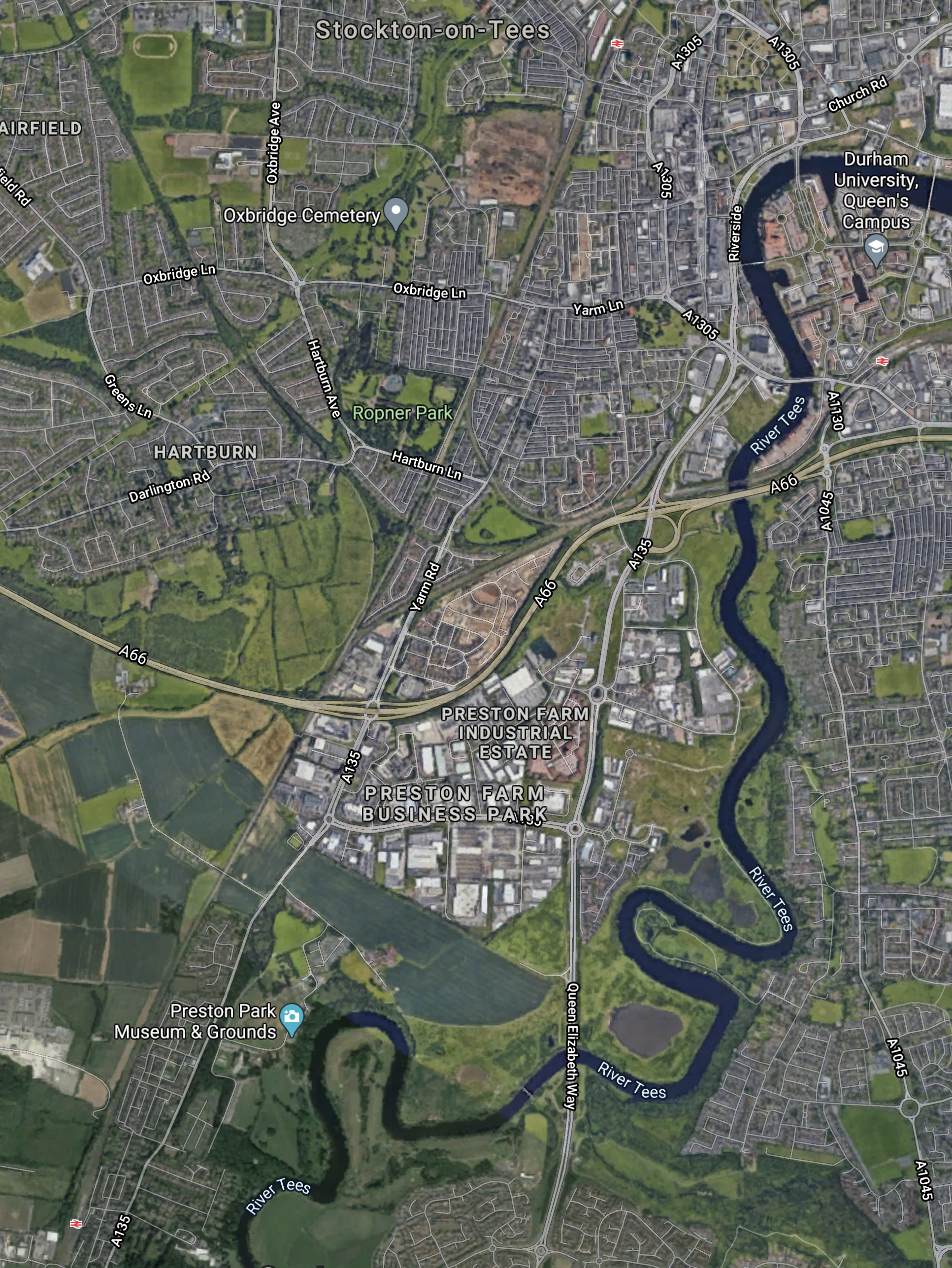
Note.
- Eaglescliffe station is in the South-West corner of the map and lines from the station lead to Darlington and Northallerton stations.
- Thornaby station is in the North-East corner of the map and connects to Middlesbrough station.
- Stockton station is at the North of the map.
Tracks connect the three stations.
This Google Map shows the connection between Thornaby and Stockton stations.
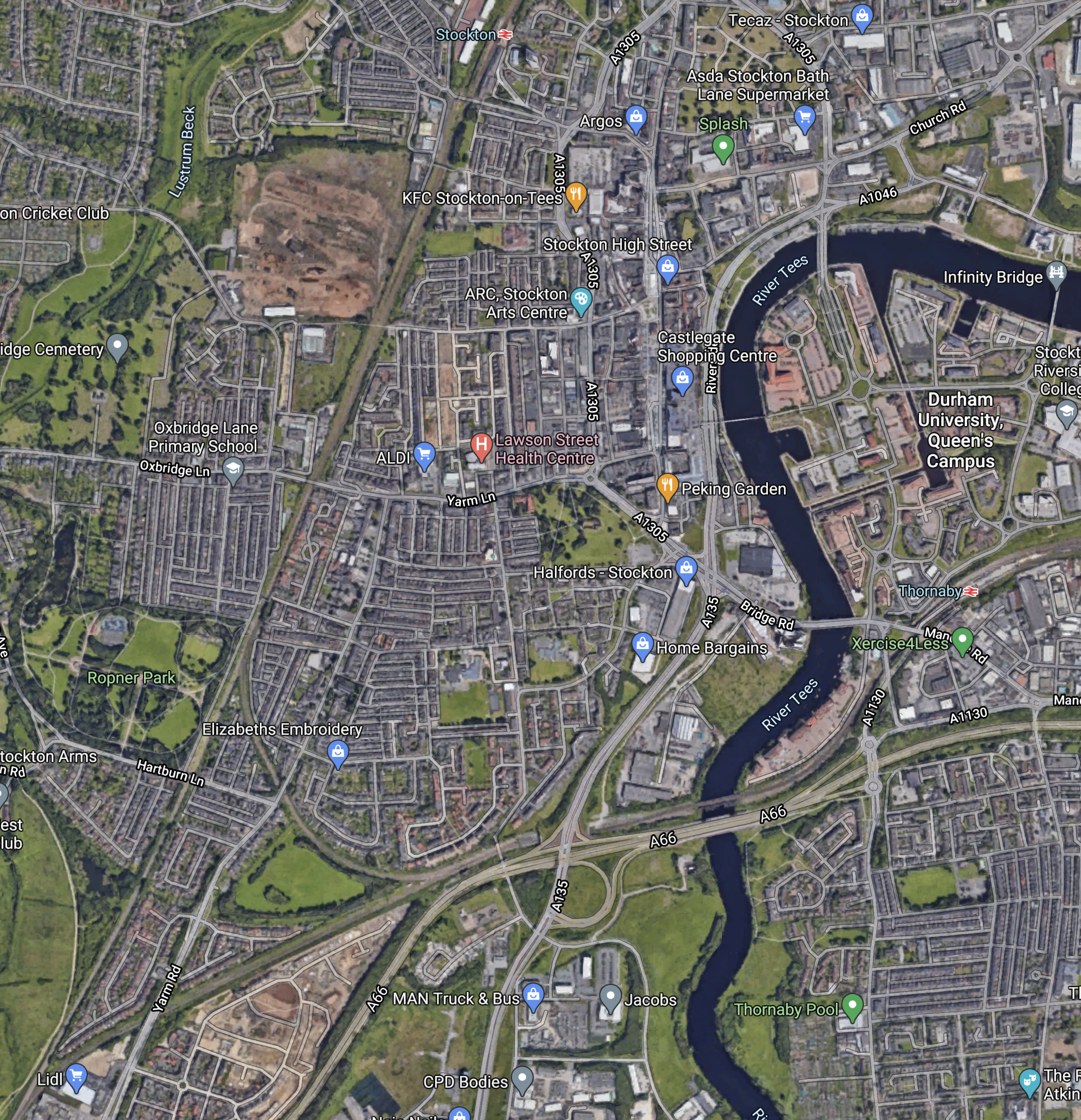
Note.
- Stockton station is at the North of the map.
- Thornaby station is at the East of the map.
- In the South-Western corner of the map is a triangular junction, that links Eaglescliffe, Stockton-on-Tees and Thornaby stations.
Currently, this triangular junction, allows trains to go between.
- Middlesbrough and Newcastle via Thornaby, Stockton, Hartlepool and Sunderland.
- Middlesbrough and Darlington via Thornaby and Eaglescliffe.
- Middlesbrough and Northallerton via Thornaby and Eaglescliffe.
But it could be even better.
This Google Map shows another triangular junction to the North of Stockton station.
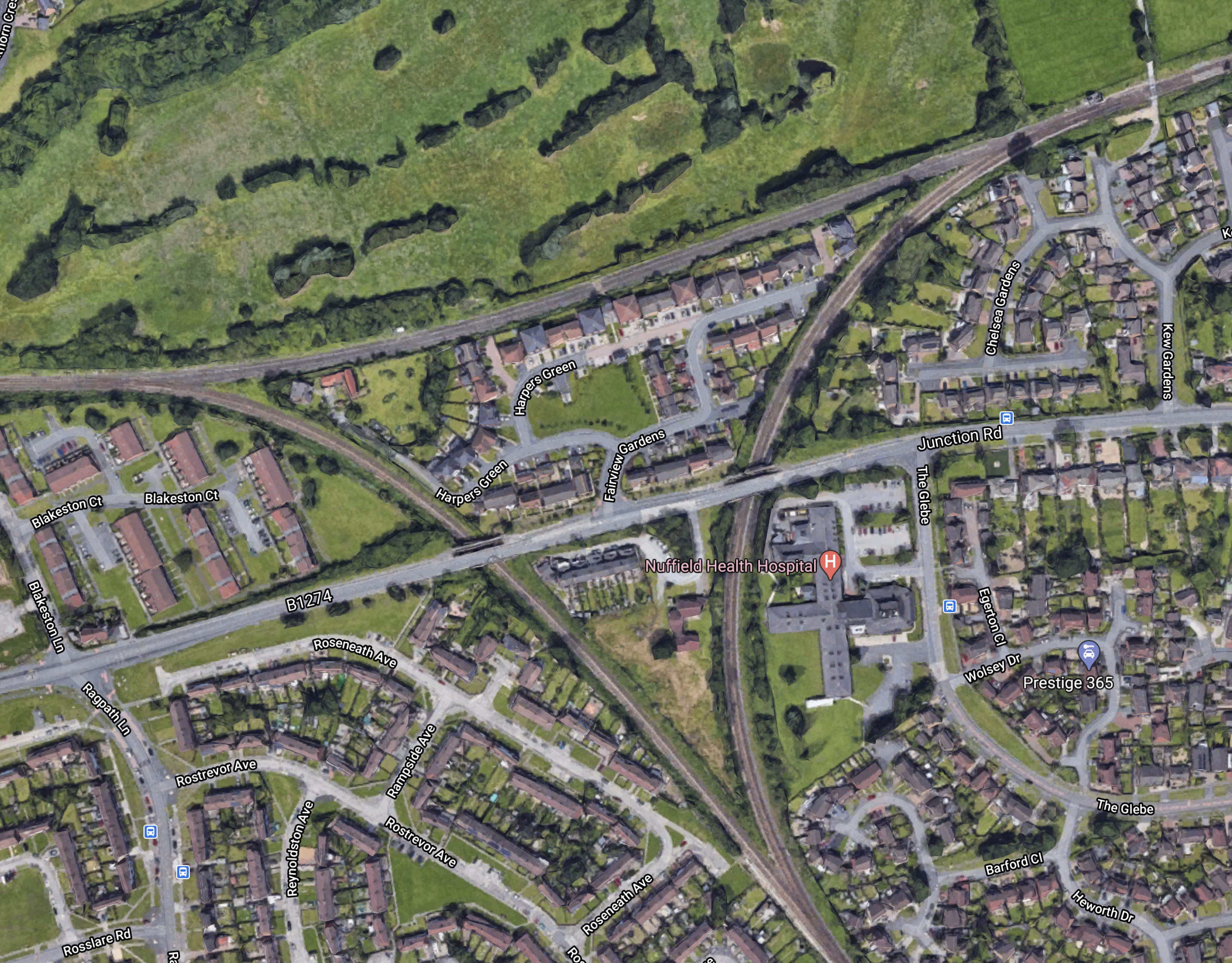
Note.
- The Southern junction of the triangle leads to Stockton station and ultimately to Darlington, Eaglescliffe, Middlesbrough, Northallerton and Thornaby.
- The Eastern junction leads to Hartlepool, Sunderland and Newcastle.
So where does the Western Junction lead to?
The railway is the Stillington Branch Line.
- It leads to Ferryhill.
- It is about ten miles long.
- It is double-track.
- There used to be intermediate stations at Radmarshall, Stillington and Sedgefield.
Looking at timings for trains on the various sections of the route gives.
- Middlesbrough and Stockton – 11 minutes
- Stockton and Ferryhill South Junction – 23 minutes
- Ferryhill South Junction and Newcastle – 20 minutes
This gives a timing of 54 minutes compared with up to 78 minutes for the current service on the Durham Coast Line.
In their document, Railfuture gives this as one of their campaigns.
Providing Faster Journeys Teesside to Tyneside by running passenger services from
Middlesbrough, Thornaby and Stockton via the 10 mile Stillington freight only line and then via the
East Coast Main Line to Newcastle. Our aim is to reduce overall journey time on direct train
between Middlesbrough to Newcastle from 1 hour 15 minutes to 55 minutes and so open up many
additional job opportunities to the residents of both areas.
My calculations say that it should be possible, to run a useful service between Middlesbrough and Newcastle, via the Stillington freight line.
- The route is used regularly for freight trains and by LNER for what look to be testing or empty stock movements.
- Will any station be built at Radmarshall, Stillington or Sedgefield?
- I estimate that between Ferryhill South Junction and Middlesbrough, is about fifteen miles, so it might be possible to run a Middlesbrough and Newcastle service using battery electric trains, like Hitachi’s Regional Battery Trains, which would be charged on the East Coast Main Line.
Activating the route, doesn’t look to be the most expensive passenger reopening on the cards.
I suspect though, that if passenger services were to be run on the Stillington Line, that Ferryhill station, will need platforms on both the East Coast Main Line and the Stillington Line.
Services could include.
- Newcastle and Middlesbrough via Ferryhill
- Newcastle and Hartlepool via Ferryhill
- Newcastle and York via Eaglescliffe and Ferryhill, with a reverse at Middlesbrough.
Note.
- The Northern terminus could be Ferryhill for some trains.
- Two tph between Stockton and Ferryhill would be a useful service.
- Would a Newcastle and Middlesbrough service call at the poorly-served Chester-le-Street station to improve services?
I also feel that as some of these services will be running on the East Coast Main Line between Ferryhill and Newcastle, it probably would be desirable for these services to be run by Hitachi’s Regional Battery Trains, which would be capable of maintaining the maximum speed for the route, as all the other passenger services can at present!
Ferryhill And Tyneside Via The Leamside Line
The reopening of the Leamside Line is a high priority of Northern Powerhouse Rail, which I wrote about in Northern Powerhouse Rail – Significant Upgrades Of The East Coast Main Line From Leeds To Newcastle (Via York And Darlington) And Restoration Of The Leamside Line.
In their document, Railfuture gives this as one of their campaigns.
Reopening the rail line from Ferryhill to Pelaw (the Leamside Line) with the aim of providing
services that will improve local connections and open new opportunities to people living in this part
of County Durham, as well as providing relief for congestion on the existing line through Durham.
This reopening has been talked about for years, so I suspect that Network Rail know the problems and at least have a rough estimate for what needs to be done and how much it will cost.
The Wikipedia entry for the Leamside Line has a section, which is entitled Proposed Re-Opening, Upgrade and Development, where this is the first paragraph.
Since the line’s closure in the early 1990s, a number of proposals to re-open the Leamside Line were put forward, including plans by AECOM, ATOC, Durham County Council, Railtrack and Tyne and Wear PTE. The line has been considered for a number of potential uses, including a regional suburban rail service linking Tyneside and Teesside, a diversionary freight route for the East Coast Main Line, and an extension to the Tyne and Wear Metro network.
Wikipedia also states that an application to the Restoring Your Railway Fund for money for a feasibility study was unsuccessful.
All that could change with the developments needed between Leeds and Newcastle for High Speed Two and Northern Powerhouse Rail.
- High Speed Two are planning to run at least three tph to and from Newcastle.
- Northern Powerhouse Rail are planning to run an extra service between Leeds and Newcastle.
- LNER will have an extra path on the East Coast Main Line, that could be used through the area.
Using the Leamside Line as a diversion for freight and slower passenger trains would appear to be a possibility.
It could also be combined with the Stillington Line and Northallerton and Stockton to create a double-track diversion, alongside the double-track section of the East Coast Main Line between Northallerton and Newcastle.
Extending The Tyne And Wear Metro Along The Leamside Line
This has been talked about for some time.
In the Wikipedia entry for the Tyne and Wear Metro. there is a section, which is entitled Extension To Washington IAMP, where this is said.
There have been a number of proposals looking in to the possibility of re-opening the former Leamside Line to Washington, including a 2009 report from the Association of Train Operating Companies (ATOC), and a 2016 proposal from the North East Combined Authority (NECA), as well as the abandoned Project Orpheus programme, from the early 2000s. Most recently, proposals are being put forward to link the current network at Pelaw and South Hylton, with the International Advanced Manufacturing Park in Washington, using part of the alignment of the former Leamside Line.
If the Tyne and Wear Metro were to be extended to the Southern end of the Leamside Line, Ferryhill station could be a Southern terminal.
- There is space to create a line alongside the East Coast Main Line between Tursdale Junction, where it connects with the Leamside Line and Ferryhill station.
- The new Tyne and Wear trains have been designed to share tracks with other trains on Network Rail tracks.
- This would enable interchange between East Coast Main Line, Stillington Line and Metro services, without going North to Newcastle.
At the present time, all that would be needed would be for the Metro connection to be safeguarded.
Railfuture’s Campaigns In The North East
This is a tidying up of several improvements, which are campaigns of Railfuture, that are outlined in this document.
- New Station At Team Valley
- New Station At Gilsland
- New Rail Service From Newcastle To Ashington
- North Of Morpeth Local Service
They will be covered in separate posts.
Conclusions
I can separate conclusions into sections.
The Design Of Ferryhill Station
These are my conclusions about the design of Ferryhill station.
- It should be built as a Park-and-Ride station.
- It should have platforms long enough for any train that might stop at the station. I suspect this would be a pair of Class 800 trains, which would be 260 metres long.
- Platforms should be on both the East Coast Main Line and the Stillington Line.
- There should be safeguarding of a route, so that Metro trains could access the station from the Leamside Line.
As the station could be a Park-and-Ride station, I will assume the station will need good road access.
Train Services At Ferryhill Station
These are my conclusions about the services calling at Ferryhill station.
There should be four tph between Leeds and Newcastle, all of which would stop at York, Darlington, Ferryhill and Durham, with some services calling at Northallerton and Chester-le-Street.
There should also be less frequent services at Ferryhill to Scotland and London. Perhaps a frequency of around six tpd would be sufficient, as changes could be made at Leeds, Newcastle of York.
Two tph would probably be ideal for services on the Stillington Line to Hartlepool, Middlesbrough and Redcar.
It would certainly be a busy and well-connected station.
Saltburn Station – 28th October 2020
I paid a quick visit to Saltburn station.

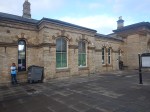
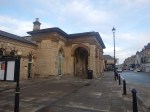
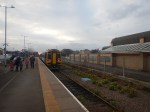
I would have had a bigger look round, but time was tight.
The reason the time was tight, was a classic example of what you get with a rail route, with only one train per hour (tph). The next train would have meant, I’d missed my train to London and would have had to buy another ticket.
This Google Map shows the station.
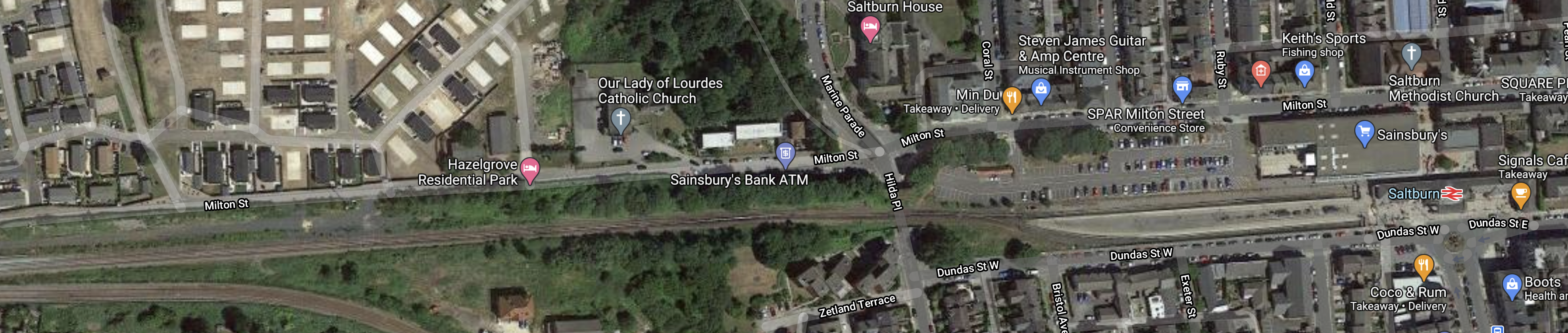
Note.
- There are two platforms.
- The station appears to be close to the Town Centre.
- There is a branch leading South to the Boulby Mine. This branch is used to handle the output of the mine, which is polyhalite and rock salt.
These are my thoughts.
Four tph Between Darlington And Saltburn
Four tph is planned between Darlington and Saltburn.
- Two platforms at Saltburn will surely help.
- All intermediate stations have two platforms.
- The route is double track all the way, except for the approach to Darlington station.
I discussed the approach from the East to Darlington station in Darlington Station – 28th October 2020 and suggested that a dive-under is needed to allow the following.
- High speed trains can make a fast approach and departure from the new high speed platforms at Darlington.
- Saltburn to Bishop Auckland services to avoid crossing the East Coast Main Line on the flat to access Platform 4 at Darlington.
- Darlington and Saltburn services to sneak under the East Coast Main Line and access Platform 2 at Darlington.
There may also need to be some track modifications to the North of Darlington station, but as there are two tph between Bishop Auckland and Darlington to accommodate, the modifications would probably be less extensive.
Charging Battery Electric Trains At Saltburn
I doubt that this would be essential, as Middlesbrough is only thirteen miles away, but there is surely space to fit in one of Vivarail’s Fast Charge systems in the station.
Passenger Services On The Boulby Mine Branch
If housing is developed around Saltburn, this could be a possibility at some time in the future.
This was the route of the Whitby, Redcar and Middlesbrough Union Railway, which was closed in 1958 and then reopened to Boulby Mine in the 1970s.
There were originally two stations between Saltburn and Boulby; Loftus and Grinkle.
In a section of the Wikipedia entry for the railway called The Railway Today, this is said.
In January 2019, Campaign for Better Transport released a report identifying the line between Saltburn and Loftus which was listed as Priority 2 for reopening. Priority 2 is for those lines which require further development or a change in circumstances (such as housing developments)
I wouldn’t be surprised to see a passenger service on this route.
This Google Map shows the Boulby Mine and the Coast.
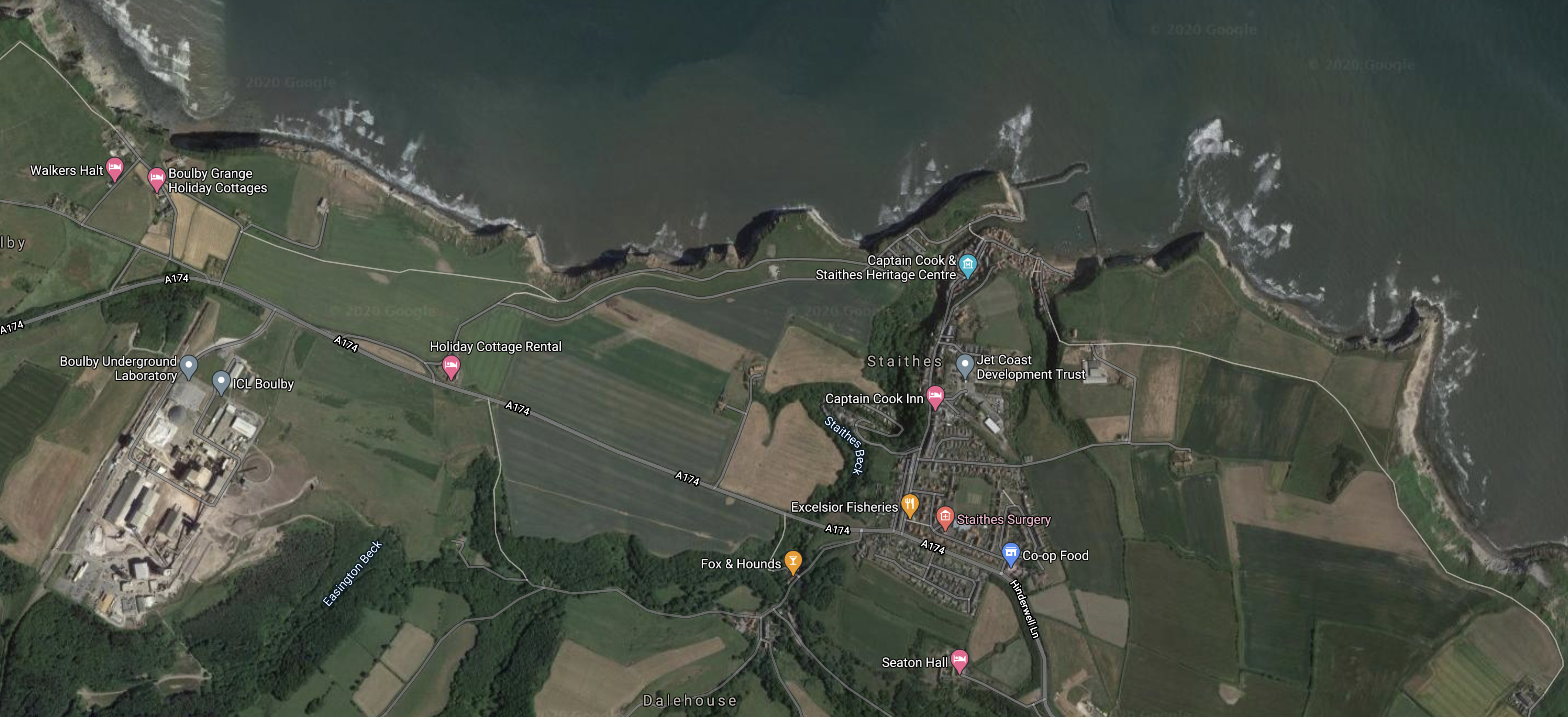
Note.
- The Boulby Mine is at the Western side of the map.
- The village of Staithes has strong connections to Captain Cook.
- The original railway. that ran South of the site of the mine through Staithes and on to Whitby is now a walking route.
I wonder if there should be a station close to the mine.
Conclusion
There is a lot of potential to improve the railway between Middlesbrough and Saltburn.
 The Anonymous Widower