Northumberland Council To Campaign For Better Rural Train Services
The title of this post is the same as that of this article on Rail Advent.
These are the first three paragraphs.
In response to the reduction in the number of trains serving Morpeth and Berwick in the new East Coast Main Line timetable, Northumberland County Council has pledged to continue campaigning hard for improved rail services for communities along the line and beyond.
Councillor Glen Sanderson said the new timetable “Sacrifices the North east’s rail connectivity in order to improve it for the rest of the country.”
The new timetable was due to be introduced last May 2023, but was deferred after the North East Joint Transport Committee said that it was wholly unacceptable. However, the new timetable shows very little improvement from the original. Although more frequent trains will operate between London and Edinburgh, not all of them will stop at Morpeth or Berwick, which are the services the council has been fighting hard for as they are key population centres.
The problems are that between Newcastle and Edinburgh are.
- The railway is only double-track all of the way, with a passing loop South of Berwick.
- The maximum speed is 125 mph for about 40 % of the track, 100/110 mph for another 30 %, with the rest slower.
- Berwick, Morpeth and the new stations at East Linton and Reston are only two platform stations.
The capacity needs to be increased, so that more trains can use the line.
These are my thoughts.
Install Digital Signalling
It has been claimed that digital signalling will add another train per hour (tph) between Stevenage and Doncaster.
So if it was able to do the same between Newcastle and Edinburgh, it might be the first solution to try.
All Passenger Trains Capable Of Running At 125 mph
In Call For ETCS On King’s Lynn Route, I outlined the problem with fast services to Cambridge, Ely and Kings Lynn, where the rains will need 125 mph capability to keep out of the way of LNER’s Azumas on the East Coast Main Line.
There will be a similar problem between Newcastle and Edinburgh.
Improve The Tracks
This would improve more sections of 125 mph running and perhaps better turnbacks at Morpeth and Berwick.
Conclusion
Quite a bit of work will need to be done to get the timetable to the standard the customers require.
Are LNER Going To Take On The Airlines?
Nine years ago, I wrote Edinburgh – Plane Or Train?, after a trip to Scotland, where I took easyJet up and came back in First Class by train.
- Both trips were about five hours door-to-door.
- The flight was about six quid more,
- But I got free food and drink on the train.
- Security on the plane was a pain.
- I had to take my passport for identification at Stansted.
I haven’t flown internally in Great Britain since, although, I have flown to Belfast.
For shorter flights the market is going towards rail, as these posts seem to suggest.
- 2.7M Tonnes Of Co2 Could Be Saved Per Year If UK Domestic Flights Went Electric
- Air Travellers To Be Hit By Carbon Charge On All Tickets
- Climate Change ‘May Curb Growth In UK Flying’
- France Bans Short-Haul Flights To Cut Carbon Emissions
- KLM Replaces Plane With High Speed Train
- Lumo Carbon Data Shows Its Trains Are 22 Times Greener Than Flying
- Next Time I’ll Go By Train
- Ryanair One Of Europe’s Top Polluters, EU Data Suggests
- Stop Taking Internal Flights And Go Green, Says Lib Dem Contender Davey
The climate seems to be turning against flying short-haul.
This is a paragraph, in this press release from LNER, which is entitled First Tri-Mode Long Distance Trains For The East Coast Main Line.
This new fleet of trains will keep LNER on track to reduce its emissions by 67 per cent by 2035 and be net zero by 2045. LNER has already reduced carbon emissions by 50 per cent compared with 2018/19. Per mile, LNER trains produce 15 times less carbon emissions than a domestic flight.
Are LNER building a number of climate-based sticks, with which to beat the airlines on the routes, where they compete?
These are my thoughts on the various routes, where LNER compete with airlines.
Newcastle
Newcastle is an interesting one.
- Newcastle station is in the city centre and is on the Tyne and Wear Metro.
- London King’s Cross is one of London’s major Underground hubs.
- There are lots of buses and local trains within walking distance of both stations.
- There are three trains every two hours and an additional eight trains per day (tpd) between the two London King’s Cross and Newcastle stations.
- Lumo also run five tpd on the route.
- There are generally no security delays at rail stations.
- London King’s Cross is laid out to maximise passenger flows. If it gets busy, everybody just walks out into King’s Cross Square.
- I’ve never had a problem at Newcastle station with overcrowding.
Perhaps, if you live near one of the airports, flying is more convenient.
LNER’s weapons against the airlines between London King’s Cross and Newcastle will be convenience and journey times.
Convenience is all about the location of the stations, their excellent local transport networks and good walking routes around the station.
Journey times will only get better, as the magic of digital in-cab signalling, allows the Azumas, the new CAF tri-mode long distance trains and the few remaining InterCity 225s to show what they were designed to do.
Dalton-on-Tees, where the first phase of the digitally signalling will end, is 39.8 miles South of Newcastle, so once the Newcastle train is passes Dalton-on-Tees on the East Coast Main Line, it will be a digital-signalled electrified railway all the way to Woolmer Green.
- Dalton-on-Tees is 39.8 miles South of Newcastle
- Woolmer Green is 244.8 miles South of Newcastle.
- Dalton-on-Tees and Woolmer Green is 205 miles.
- Newcastle and Dalton-on-Tees takes 37 minutes.
- Woolmer Green and King’s Cross takes 18 minutes
- Trains take typically an average three hours and nine minutes between London and Newcastle.
- A typical train time by LNER between Dalton-on-Tees and Woolmer Green is two hours and 14 minutes.
- This is an average speed of 91.8 mph between Dalton-on-Tees and Woolmer Green.
- Between London King’s Cross and Newcastle is fully-electrified.
I can build a table of timings and savings at various average speeds.
- 120 mph – 103 minutes – two hours and 38 minutes – 31 minutes
- 125 mph – 98 minutes – two hours and 33 minutes – 36 minutes
- 130 mph – 95 minutes – two hours and 30 minutes – 39 minutes
- 135 mph – 91 minutes – two hours and 26 minutes – 43 minutes
- 140 mph – 88 minutes – two hours and 23 minutes – 46 minutes
Note.
- The first field is the average speed between Dalton-on-Tees and Woolmer Green.
- The second field is the time between Dalton-on-Tees and Woolmer Green.
- The third field is the time between London and Newcastle.
- The fourth field is the saving over current timings.
- The London and Newcastle time is calculated by adding the times for the three sections together.
I have regularly timed trains at a very constant 125 mph, so with digital signalling, I suspect an average of 130 mph is possible.
This would mean, times of a few minutes under two hours and thirty minutes could be possible between London and Newcastle.
Edinburgh
Edinburgh builds on the improvements South of Newcastle.
Edinburgh station Waverley is a well-connected station.
- There are lots of buses, local trains and the Edinburgh Tram within walking distance of Edinburgh Waverley station.
- There are three trains every two hours and an additional seven tpd between the London King’s Cross and Edinburgh Waverley stations.
- Lumo also run five tpd on the route.
- Trains take typically an average four hours and thirty minutes between London and Edinburgh Waverley.
- Any savings because of the digital in-cab signalling between London and Newcastle can be applied to London and Edinburgh Waverley services.
As my calculations showed that averaging 130 mph between Dalton-on-Tees and Woolmer Green could save 39 minutes on journey times, I am fairly sure than a sub-four hour journey time will be possible between London and Edinburgh Waverley.
It should also be noted that that the power supply has been improved between Newcastle and Edinburgh Waverley.
- The distance between Newcastle and Edinburgh Waverley is 124.2 miles
- Newcastle and Edinburgh Waverley takes around one hour and 30 minutes.
- This is an average speed of 82.8 mph between Newcastle and Edinburgh Waverley.
- Between London King’s Cross and Edinburgh Waverley is fully-electrified.
As the record time for between London King’s Cross and Edinburgh Waverley was set by an InterCity225 train in 1993 at three hours and twenty-nine minutes, I suspect that with more digital signalling and some track improvements, that there are more journey time improvements to be squeezed out.
I certainly believe that a time of three hours and fifty minutes between London and Edinburgh Waverley will be regularly achieved. This is a journey time saving of around forty minutes.
Dundee
Dundee has an airport and a station on the East Coast Main Line.
Trains between London King’s Cross and Dundee take around five hours and 45 minutes.
LNER run three trains per day to and from London King’s Cross and one tpd to and from Leeds.
CrossCountry also run services.
Loganair has two flights per day to Heathrow.
Aberdeen
Aberdeen builds on the improvements South of Edinburgh.
The four direct tpd between London and Aberdeen take around seven hours and ten minutes.
This should come down to around six hours and thirty minutes with the journey time savings between London King’s Cross and Edinburgh Waverley.
Will this tempt travellers from the airlines?
Battery-Electric Trains To Dundee And Aberdeen
One thing that will help, is that Edinburgh and Aberdeen is to be partially electrified.
InPiling Work To Get Underway To Electrify Line To Fife, I included this Network Rail map of the electrification.
This map has been downloaded from the Network Rail web site.
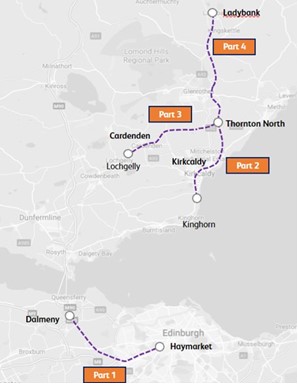
The electrification is split into four phases.
- Haymarket and Dalmeny – 25 km
- Kirkcaldy and Thornton North – 25 km.
- Lochgelly and Thornton North – 20 km.
- Thornton North and Ladybank – 34 km.
Note.
- The last three phases of electrification connect to Thornton North.
- The new rail link to Leven will also be electrified. and connected to Thornton North.
- The Forth Bridge is not to be electrified.
As Ladybank station is just 91.4 miles from Aberdeen, I suspect LNER will use Hitachi Intercity Battery Hybrid Trains to serve Aberdeen.
If these trains haven’t got the range, then I suspect LNER’s new CAF Tri-Mode Trains could handle the route.
Inverness
Inverness has a problem.
Zero-carbon trains will be unlikely to get to the city without full electrification of the Highland Main Line.
- Dunblane is the nearest electrified station to Inverness, but it is 146.2 miles away over a route with lots of steep climbs.
- I doubt that a battery-electric train could handle that route.
One solution would be for LNER to run the new CAF Tri-Mode Trains to Inverness using HVO or biodiesel.
Glasgow
Glasgow is the only other Scottish city with an airport and good rail connections to the South.
I am sure that Avanti West Coast will target airline passengers, if LNER prove it is a successful policy.
Other Factors
These are other factors, that will come into a traveller’s choice.
First Class
Some travellers like a bit more comfort and service.
Ability To Work
Some travellers like to work on a train.
You Don’t Get Tables On a Plane
I like to open a paper or magazine flat, which is difficult on a plane.
Views Tend To Be Better On a Train
Providing you get a window!
Parking Tends To Be Better At An Airport
But it may be more expensive!
Security Is Less Hassle On A Train
At the moment!
You Don’t Need To Prove Your Identity On A Train
Not in the UK! Yet!
Conclusion
It looks like LNER can offer the airlines to four of our major Northern cities serious zero-carbon competition.
Could The New Northumberland Line Be Used As A Diversion For The East Coast Main Line?
This question was asked by a friend, so I thought I’d investigate.
This OpenRailwayMap shows the Southern end of the Northumberland Line.
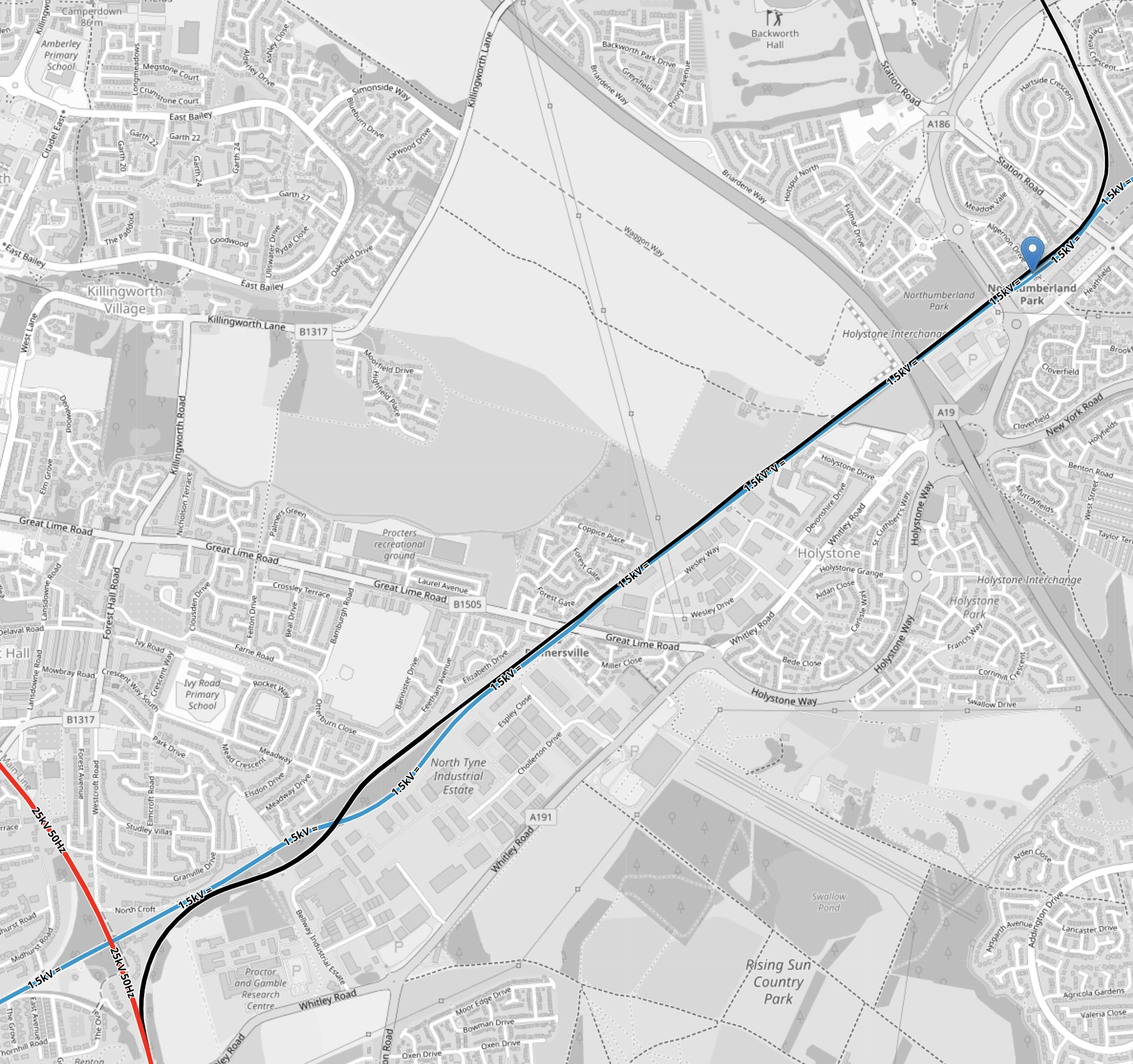
Note.
- Tracks in red are the 25 KVAC overhead electrified East Coast Main Line.
- Tracks in blue are the 1.5 kV overhead electrified Tyne and Wear Metro.
- The track in black running alongside the Metro and then turning North is the Northumberland Line.
- The Northumberland Line is mainly double track, with some single-track sections.
- The blue arrow indicates Northumberland Park station.
At Benton Junction junction in the South-West corner of the map, trains can be handled in the following directions.
- Trains going North on the East Coast Main Line can go North on the Northumberland Line.
- Trains going South on the Northumberland Line can go South on the East Coast Main Line.
Currently, only the occasional freight train uses the junction.
When the Northumberland Line opens, there will be two trains per hour (tph) in each direction.
This second OpenRailwayMap shows the Northern end of the Northumberland Line.
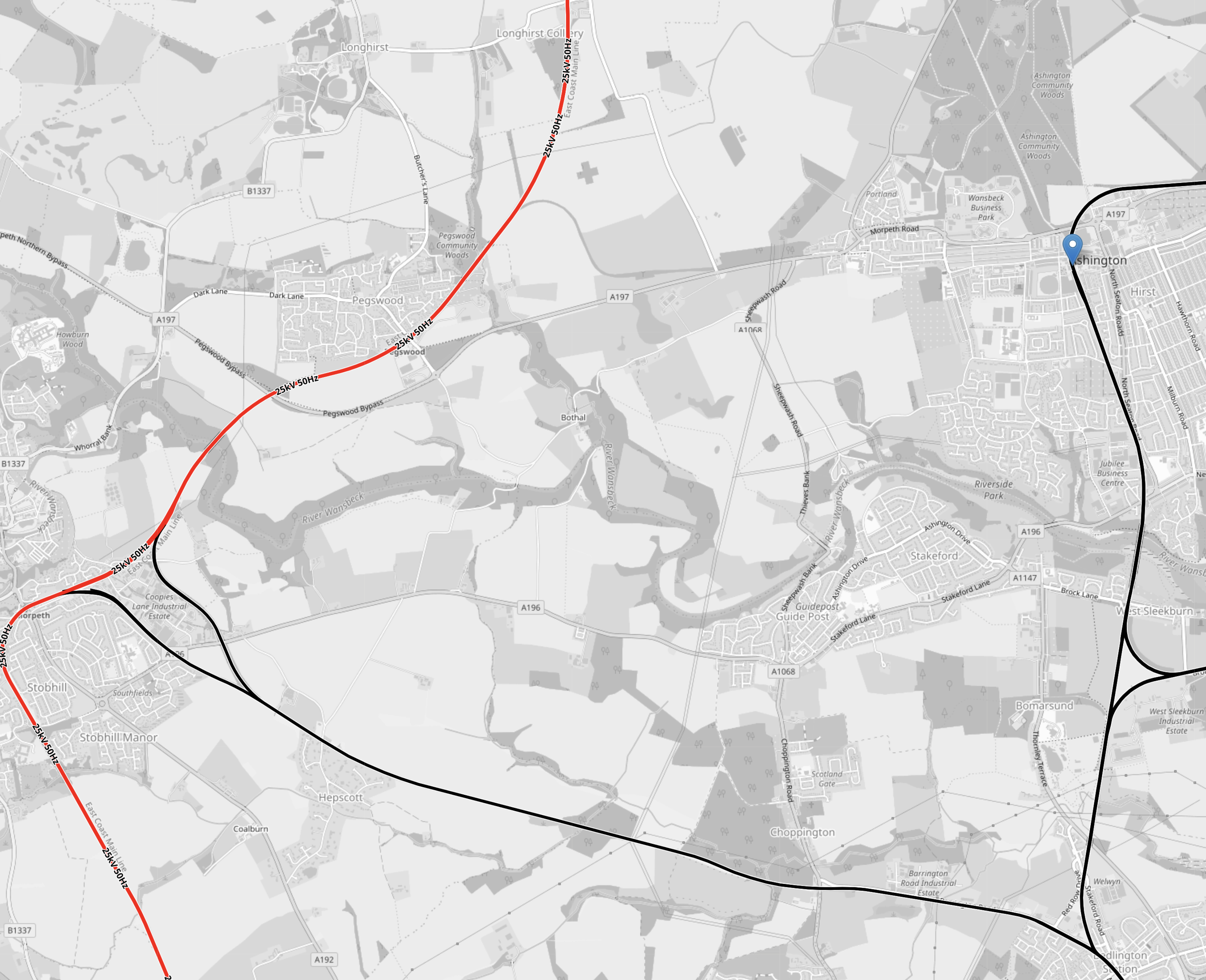
Note.
- Tracks in red are the 25 KVAC overhead electrified East Coast Main Line.
- The blue arrow indicates the Ashington station, which will be the Northern terminus of Northumberland Line services.
- The Northumberland Line runs down the Eastern side of the map.
- The village of Bedlington, which will have a station on the Northumberland Line is in the South-East corner of the map.
- A second track connects Bedlington on the Northumberland Line to the East Coast Main Line, where trains can go North or South.
It does appear that because of the track layout at both ends of the Northumberland Line, the following is possible.
A train going in either direction on the East Coast Main Line can use the Northumberland Line as a diversion.
Passenger services between Newcastle and Morpeth could use the Northumberland Line.
Passenger services between Newcastle and North of Morpeth could use the Northumberland Line.
Note.
- Although High Speed Two through Newcastle is probably dead, there is still a need to increase capacity through the area.
- I suspect diversions could be useful, when there were problems between Newcastle and Morpeth.
- Could the Northumberland Line be used for freight trains to increase capacity through Newcastle?
- We shouldn’t ignored the possibilities offered by a reopened Leamside Line.
But I suspect that as housing and other developments get proposed in Northumberland, that more passenger services will be developed.
Conclusion
The Northumberland Line will have limited use for diversions, but could general other services.
Derby Alstom Train Factory Jobs Fear As Orders Dry Up
The title of this post, is the same as that of this article on the BBC.
This is the sub-heading.
Derby City Council is seeking talks with train builder Alstom over reports it could be about to lay off workers.
These two paragraphs introduce the story.
The firm’s Litchurch Lane site is the only UK train factory able to design, build, engineer and test trains for domestic and export markets.
About 2,000 people work at the factory but the firm says its current order book only runs until early 2024.
This could be another serious problem for High Speed Two.
Could LNER Use High Speed Two Classic-Compatible Trains?
In LNER Seeks 10 More Bi-Modes, I discuss how LNER are needing ten more bi-mode trains to expand their services.
Consider.
- One of LNER’s predecessors used to run Eurostar trains between Kings Cross and Leeds
- A High Speed Two Classic-Compatible trains are 200 metres long, as against the 233.7 metres of a nine-car Class 801 train.
- High Speed Two Classic-Compatible trains will run on the East Coast Main Line, when High Speed Two fully opens.
- London to Doncaster, Edinburgh, Leeds, Newcastle and York are all fully electrified routes.
So if all these fully-electric routes, were to be run using High Speed Two Classic-Compatible trains, this would release a number of Class 800 and Class 801 trains, which could be converted to bi-modes or battery-electric variants.
London and Edinburgh In Three-And-A-Half Hours
This is a paragraph from the Wikipedia entry for the InterCity 225 train.
The InterCity 225 was designed to achieve a peak service speed of 140 mph (225 km/h); during a test run in 1989 on Stoke Bank between Peterborough and Grantham, an InterCity 225 was recorded at a speed of 162 mph (260.7 km/h). Its high speed capabilities were again demonstrated via a 3hr 29mins non-stop run between London and Edinburgh on 26 September 1991. British regulations have since required in-cab signalling on any train running at speeds above 125 mph (201 km/h) preventing such speeds from being legally attained in regular service. Thus, except on High Speed 1, which is equipped with cab signalling, British signalling does not allow any train, including the InterCity 225, to exceed 125 mph (201 km/h) in regular service, due to the impracticality of correctly observing lineside signals at high speed.
If in-cab digital signalling were to be installed between London and Edinburgh, I believe that the three-and-a-half hour timing can be regularly achieved by a High Speed Two Classic-Compatible train.
I also believe that at least one train per hour (tph) between London and Edinburgh could achieve the three-and-a-half hour timing.
High Speed Two are promising a 3:48 time between London and Edinburgh.
It could be a Lumo-squasher!
A one tph service would need eight trains, but would release eight nine-car Class 801 trains.
Euston and Glasgow
This might be another route, where High Speed Two Classic-Compatible trains could be used.
Conclusion
LNER gets some more trains and Derby gets more work.
But the biggest benefits would be that, the trains would get a thorough testing before High Speed Two opens and passengers would get a view of the shape of things to come.
Liverpool Lime Street And Newcastle By Battery-Electric Class 802 Train
After my visit to Morley station, which I wrote about in Morley Station – 17th August 2023, in this post, I look at how a battery-electric Class 802 train might run between Liverpool Lime Street And Newcastle stations.
These are the various sections of the route.
- Liverpool Lime Street and Manchester Victoria – 31.6 miles – 36 minutes – Electrified
- Manchester Victoria and Huddersfield – 25.7 miles – 30 minutes – Not Electrified
- Huddersfield and Dewsbury – 8 miles – 7 minutes – Currently Being Electrified
- Dewsbury and Leeds – 9.1 miles – 14 minutes – Not Electrified
- Leeds and York – 25.8 miles – 30 minutes – Currently Being Electrified
- York and Newcastle – 80.2 miles – 58 minutes – Electrified
Note.
- Liverpool Lime Street and Manchester Victoria, Leeds and York and York and Newcastle are all long enough to fully charge a battery-electric train.
- There is electrification of both ends of the route.
- Manchester Victoria and York is a distance of 68.6 miles.
- The total route length is a distance of 180.4 miles.
In the August 2023 Edition of Modern Railways, there is an article, which is entitled GWR Seeks Opportunities To Grow.
This is the sub-heading.
Managing Director Mark Hopwood tells Philip Sherratt there is plenty of potential to increase rail’s economic contribution.
This is a paragraph.
Meanwhile, GWR had announced plans with Eversholt Rail to trial the replacement of a diesel generator unit with batteries on a Class 802 IET. However, Mr. Hopwood says this would not be useful for GWR and so the trial is not proceeding; instead, a TransPennine Express Class 802 will be the subject of a battery trial.
Could the trial be conducted on TransPennine Express’s Liverpool Lime Street And Newcastle route?
- The total route length is a distance of 180.4 miles.
- The two electrified sections at the ends of the route; Liverpool Lime Street and Manchester Victoria and York and Newcastle are both long enough to fully charge a battery-electric train.
- The central section between Manchester Victoria and York is not overly long at 68.6 miles.
- The route is convenient for Hitachi’s headquarters at Newton Aycliffe.
It looks like, the Liverpool Lime Street And Newcastle route would make an ideal test route for battery-electric Class 802 trains.
Manchester Piccadilly And Newcastle By Battery-Electric Class 802 Train
This is a very similar route to the Liverpool Lime Street And Newcastle route with a different Western terminal.
These are the various sections of the route.
- Manchester Piccadilly and Huddersfield – 25.5 miles – 42 minutes – Not Electrified
- Huddersfield and Dewsbury – 8 miles – 10 minutes – Currently Being Electrified
- Dewsbury and Leeds – 9.1 miles – 14 minutes – Not Electrified
- Leeds and York – 25.8 miles – 30 minutes – Currently Being Electrified
- York and Newcastle – 80.2 miles – 58 minutes – Electrified
Note.
- Turnround time at Manchester Piccadilly and York and Newcastle are all long enough to fully charge a battery-electric train.
- There is electrification of both ends of the route.
- Manchester Piccadilly and York is a distance of 68.4 miles.
- The total route length is a distance of 148.5 miles.
Like the Liverpool Lime Street And Newcastle route, I believe the Manchester Piccadilly And Newcastle route would make an ideal test route for battery-electric Class 802 trains.
The Integrated Rail Plan For The North And Midlands And The East Coast Main Line
Note that this is not a finished post.
To read the The Integrated Rail Plan For The North And Midlands (IRP), click this link.
There is a section in the IRP called Serving Leeds, York and North East England.
It is a section of six paragraphs and I shall describe their contents in detail separately.
Paragraph 3.41
This is said in the IRP.
Under the original plans, HS2 trains would have served Leeds, York and North East England via the West Midlands, with the Eastern Leg branching off from the Phase One line just north of Birmingham Interchange.
This is a significantly longer route than the current East Coast Main Line from King’s Cross, which goes directly up the eastern side of the country.
Due to capacity constraints north of Doncaster HS2 trains to Newcastle and York could also only be accommodated at the expense of existing services, potentially reducing or removing connections between the North East and Doncaster, Newark and Peterborough.
Unlike the West Coast Main Line, there is also potential to lengthen existing trains by up to three carriages, increasing the number of seats on those trains by around 40%.
Geography wins and I’ll discuss the train lengthening later.
Paragraph 3.42
This is said in the IRP.
The IRP has concluded in favour of a significant package of upgrades to the East Coast Main Line which could deliver similar journey times to London and capacity improvements for York and the North East as the original proposals – but many years sooner, and with operational carbon savings because trains will be taking a shorter route.
Speed is important in both project delivery and running of the trains.
Paragraph 3.43
This is said in the IRP.
We are therefore taking forward a substantial package of investment for the East Coast Main Line between London and Leeds and the North East, subject to future business case. Development work will consider interventions from both NPR designs undertaken by Network Rail, mainly focussed on York and northwards, and work undertaken by Mott MacDonald for the Department for Transport focused on the line south of York. North of York we will look to increase the number of paths for long distance high speed trains from 6 to 7 or 8 per hour. In addition to the already planned roll-out of digital signalling, work is expected to include looking at opportunities to improve rolling stock performance; power supply upgrades to allow longer and faster trains; route upgrades to allow higher speeds, including of up to 140mph on some sections; measures to tackle bottlenecks, for example south of Peterborough and at stations and junctions such as Newark, Doncaster, York, Northallerton, Darlington and Newcastle all of which limit speed and capacity; and to replace level crossings where needed.
We will ask Network Rail to now take forward these proposals, including considering any alternatives which may deliver better outputs and/or more cost-effective solutions.
I’ll discuss a lot of this later in more detail.
Paragraph 3.44
This is said in the IRP.
This package is intended to:
-
- Cut journey times from London to a range of destinations, including Leeds, Darlington, Northallerton, Durham, and Newcastle by up to 28 minutes, bringing journey times closer to those proposed by HS2, much earlier than previously planned;
- Allow the introduction of longer trains, increasing the number of seats;
- Provide 7–8 long distance high speed paths per hour north of York to Newcastle, compared to the current 6 paths (and so allowing a minimum of two fast Manchester to Newcastle services each hour alongside other ambitions);
- Improve performance and reliability, enabling faster and more reliable services for passengers.
I’ll discuss a lot of this later in more detail.
Paragraph 3.45
This is said in the IRP.
Journey times from London to Newcastle under this plan could be as little as 2 hrs 25-28 minutes (subject to stopping pattern), about 21-24 minutes faster than now and 8 minutes slower than under the full HS2 plans.
Journey times to York and Darlington under this plan would be about 15 minutes faster than now and 12-14 minutes slower than under the full HS2 plans.
Journey times from London to Leeds, at around 1 hour 53, would be about 20 minutes faster than now, but 32 minutes slower than under the full HS2 plans.
I’ll discuss a lot of this later in more detail.
Paragraph 3.46
This is said in the IRP.
Journey times from Birmingham to Leeds would be around 30 minutes faster than the current typical time, and, subject
to further analysis, York and the North East could be would be around 30 minutes faster than the current typical time,
via HS2 Western Leg, Manchester and NPR (based on indicative train service).
I’ll discuss a lot of this later in more detail.
My Thoughts
These are my thoughts.
Longer Trains
This is said in Paragraph 3.41
Unlike the West Coast Main Line, there is also potential to lengthen existing trains by up to three carriages, increasing the number of seats on those trains by around 40%.
The Hitachi Class 800, Class 801, Class 802 and Class 803 trains, that run the routes out of King’s Cross come in lengths of five, nine and ten coaches.
- The maximum length of an individual train is twelve cars according to this Hitachi document.
- All destinations with the possible exception of Harrogate, Lincoln and Middlesbrough can handle the current nine-car trains.
- Lengthening a five-car train by three cars would increase capacity by 60 %. You’d just run a current nine-car train.
- Lengthening a nine-car train by three cars would increase capacity by 33.3 %. Poor maths but possible.
- Lengthening a ten-car train by three cars would increase capacity by 30 %. Two trains would have to be lengthened, as ten-car trains are a pair of five-car trains.
It looks to me that the IRP is talking about running twelve-car trains.
- The Hitachi trains are all plug-and-play.
- The main stations on the route are Doncaster, Edinburgh, King’s Cross, Leeds, Newcastle and York.
- Some platforms would need to be lengthened, but some like Edinburgh, Leeds and York are probably already long enough.
But what about the important London terminus at King’s Cross?
These pictures show the Northern ends of the platforms at King’s Cross station.
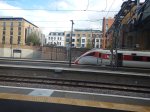
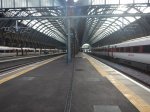
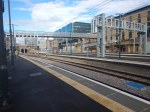
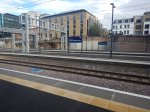
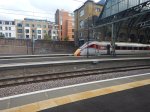
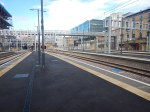
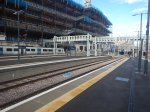
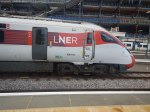
The two trains are both nine-car Hitachi Class 800 or Class 801 trains and I was standing in line with their noses.
I wonder what is the maximum length of trains that can be handled in these platforms.
- They can certainly handle ten-car trains, as LNER run these to Leeds.
- Looking at maps, I suspect that eleven-car trains could be the largest that can be handled.
I suspect it will be tight, but I suspect with a simple platform extension, twelve car trains could be accommodated in King’s Cross station.
Journey Times
These times come from High Speed Two’s Journey Planner and the IRP.
- London and Edinburgh – Three hours and forty-eight minutes – Four hours and nineteen minutes – Three hours and fifty-eight minutes – My estimate based on IRP figures
- London and Newcastle – Two hours and seventeen minutes – Two hours and forty-nine minutes – Two hours and 25-28 minutes
- London and Durham – Two hours and sixteen minutes – Two hours and fifty-five minutes – Two hours and forty minutes
- London and Darlington – One hour and fifty minutes – Two hours and twenty-two minutes – Two hours and seven minutes
- London and York – One hour and twenty-four minutes – Two hours and ten minutes – One hour and fifty-five minutes – My estimate based on IRP figures
- London and Leeds – One hour and twenty-one minutes – Two hours and thirteen minutes – One hour and fifty-three minutes
Note.
- The first time is that from High Speed Two, which assumes the Eastern Leg of High Speed Two has been built.
- The second time is the current best time via the East Coast Main Line.
- The third time is the IRP’s estimate via an upgraded East Coast Main Line.
- Where the estimates are mine it is noted.
London and York and London and Leeds are under two hours, London and Newcastle is under three hours and London and Edinburgh is under four hours.
Are these times fast enough for modal shift from the Air and Roads to Rail?
Project Delivery
Rail projects in the UK have a variable record in the delivering of projects on time and on budget.
I haven’t done the full analysis, but I do believe that smaller projects have a better record of delivery, based on media reports.
In Railway Restored: Regular Trains To Run On Dartmoor Line For First Time In 50 Years, Network Rail have delivered an important smaller project, for which I said.
Network Rail have set themselves a good precedent to open the line in nine months and £10 million under budget.
As the improvement of the East Coast Main Line is more of a succession of smaller projects, rather than one large project does this mean it is more likely to be delivered on time and on budget?
Extra Paths
This is said in Paragraph 3.43
North of York we will look to increase the number of paths for long distance high speed trains from 6 to 7 or 8 per hour.
One of the min reasons for building High Speed Two, but here we have extra capacity being created on the East Coast Main Line.
One extra path would be very good, but two would be excellent.
Power Supply Upgrades
In the last eighteen months, I’ve written two articles about updating of the power supply on the East Coast Main Line.
- East Coast Main Line Northern Power Supply Works Funded
- East Coast Main Line Electrification Research Agreement
The second article talks about the involvement of the University of Leeds to get the power supply to a high standard.
It does appear that Network Rail are doing all they can to enable the East Coast Main Line to handle the eight electric trains per hour
140 mph Running
There are several elements to the successful achievement of 140 mph running on a railway.
- The trains must be capable of running safely at 140 mph.
- The track must be able to support trains at that speed.
- The signalling must be in-cab and fully tested.
- The electrification must be designed for running at the required speed.
- The drivers must be fully trained.
Note.
- There are certainly 140 mph trains in service and there are tracks in the UK, where they can be tested at that speed.
- I wouldn’t be surprised as we have been running 140 mph InterCity 225 trains on the East Coast Main Line for thirty years, that a lot of the track is already profiled for 140 mph running.
- The digital signalling is being installed.
- The electrification on the East Coast Main Line has been dodgy for years, but is now being upgraded.
- Drivers are probably the least to worry about, as they probably know the route well and are honing their skills in simulators.
I can see 140 mph running being delivered in stages and on time.
Darlington Improvements
In First Phase Of ‘Transformational’ Darlington Rail Station Upgrade Approved, I said this about the improvements at Darlington station.
This upgrade is on the Eastern side of the current station and will include a new entrance, station building, concourse and three new platforms.
This design should allow the following.
-
- LNER, High Speed Two and other expresses not stopping at the Darlington station to pass through at speeds of up to 125 mph or more.
- Expresses stopping in the station will slow and accelerate in less time than they do now.
- It will probably allow more local trains to Bishops Auckland, Middlesbrough and Saltburn
A seventy-five percent increase in platforms probably offers other advantages.
This could knock several minutes off journey times.
York Improvements
I describe this problem and my solution in Improving The North Throat Of York Station Including Skelton Bridge Junction.
My solution won’t happen, as I advocate replacing the historic Skelton Bridge with a modern four-track bridge.
Effects On Lincoln Service
It will be interesting to see how the improvements to the East Coast Main Line effect LNER’s service between King’s Cross and Lincoln.
Any time improvements South of Newatk will surely be reflected in the time between King’s Cross and Lincoln.
Conclusion
The plan seems feasible to me.
London To Edinburgh On Lumo
Yesterday, I took the 10:45 Lumo service from King’s Cross to Edinburgh.
I took some pictures on the way.
I have split them into sepate topics.
Lumo’s Class 803 Train Arrives
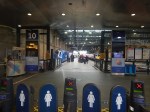

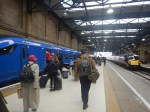
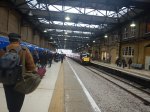
Note.
- The train is in Platform 10 in the old suburban station.
- This has now been reduced to just two platforms.
- In the other platform is a Grand Central service to Bradford Interchange station.
At least it appears, that there could be space to reinstate a third platform, if it should prove necessary.
Seating On Lumo
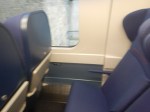

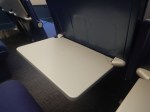


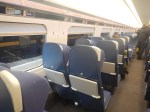

Note.
- I didn’t get a seat with a proper window.
- The seat-back table is generously-sized.
- There is a light over the table.
- The luggage racks were well used.
- There is more than normal leg-room. My neighbour, who was taller than my 1.70 metres, also liked the leg-room.
Both of us, thought the seats were more comfortable than LNER.
I have a spine that curves outwards at the bottom and it often objects to train and car seats. But after four-and-a-half hours on Lumo, it wasn’t protesting.
York to Church Fenton Improvement Scheme
When the York To Church Fenton Improvement Scheme and the closely related Huddersfield To Westtown (Dewsbury) Upgrade are completed, the TransPennine route between Huddersfield and York will be fully-electrified.
These pictures show the electrification is underway.
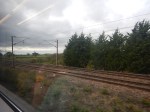
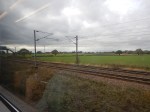






York to Huddersfield will be over forty miles of electrified line, with a remaining gap of just eighteen miles to the electrification being installed between Stalybridge and Manchester Victoria.
Work At Reston Station
Reston station is being built North of Berwick-on-Tweed. I took these pictures as we passed through.


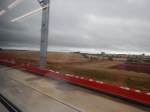

I describe the station in a post called A New Reston Station.
Arrival In Edinburgh
I took these pictures when we arrived in Edinburgh.
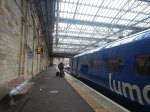

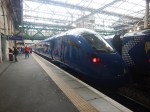
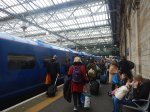
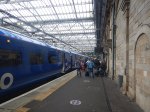
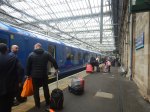
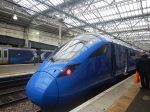
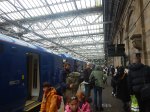
Note Edinburgh is not short of platforms that can take five- and ten-car trains.
These are a few other thoughts about the journey.
Non-Stop Between King’s Cross And Newcastle
It seemed to me, that a lot of passengers left the train at Newcastle.
- Times between King’s Cross And Newcastle are comparable betyween LNER and Lumo.
- Lumo is non-stop until Newcastle.
- Lumo is probably more affordable.
I can see Lumo picking up a lot of business on this leg.
Football At Newcastle
I have come across several Newcastle United season ticket holders in London.
Looking at Lumo’s full timetable, there are these two trains on a Saturday.
- A train leaves King’s Cross at 10:25 and arrives in Newcastle at 13:25.
- A train leaves Newcastle at 19:35 and arrives in King’s Cross at 22:29.
These could be ideal to see the match and get back to London.
Food
The full food service isn’t in operation yet, but we the trolley did come through twice.
Passenger Loading
Most seats were taken, as we left King’s Cross, but due to high number, who left at Newcastle, there were a few gaps as we ran between Newcastle and Edinburgh.
But then this is a shorter leg and perhaps travellers are more likely to drive.
I suspect that Lumo can’t wait to build up their service to the full five trains per day, as it does look like the demand is there.
Morpeth Station
There wasn’t many boarders and leavers at Morpeth station, but as services build up and travellers realise the system is there, will business increase?
Conclusion
I shall take another trip in the New Year, when the full service is implemented.
Planning Permission Granted For The First New Railway Station On The Northumberland Line
The title of this post, is the same as that of this article on ITV.
The station concerned is Ashington station.
One of the reasons, I wrote this post, is that the ITV article has a very good map of the railway being reopened.
These two paragraphs describe the station’s features.
The new platform will be approximately 100 metres long, with a range of facilities including waiting shelters, CCTV, help points and lighting.
Plans also include car park providing up to 270 spaces including 17 accessible spaces and 18 electric vehicle charging bays.
It also gives the reopening date of the railway as 2024, when the service will be a half-hourly one between Newcastle and Ashington stations that should take thirty-five minutes.
New Rail Service From Newcastle To Edinburgh To Stop At These Northumberland Stations
The title of this post, is the same as that of this article on the Chronicle Live.
Details of the service are as follows.
- It will be run by TransPennine Express.
- It starts in December 2021.
- It will run five times per day (tpd)
- It will call at Cramlington, Morpeth, Widdrington, Alnmouth, Berwick-upon-Tweed, Reston and Dunbar.
It is planned to run at least until May 2023.
These are my thoughts.
What Trains Will TransPennine Express Use?
The service will probably need a single train, if it was run by a dedicated fleet of trains, that just shuttled between Edinburgh and Newcastle. TransPennine could use either an electric Class 802 train or a diesel Class 185 train.
The diesel train might not be a good idea for operational reasons as TransPennine’s current services to Newcastle and Edinburgh use Class 802 trains.
But this service wouldn’t need a Class 802 train, as the route is fully electrified, so TransPennine might use a Class 800 train, if one were available from another company in the First Group.
TransPennine could also extend selected Manchester Airport and Newcastle services to Edinburgh, which might be the most efficient ways of using both trains and platforms in Newcastle.
This would give those using the intermediate stations between Edinburgh and Newcastle a service to and from Manchester Airport and the intervening stations, with a change at Newcastle, which would involve staying on the same train.
I’d organise the service as five tpd between Manchester Airport and Edinburgh with calls at Manchester Piccadilly, Manchester Oxford Road, Manchester Victoria, Huddersfield, Dewsbury, Leeds, York, Northallerton, Darlington, Durham, Chester-le-Street, Newcastle, Cramlington, Morpeth, Widdrington, Alnmouth, Berwick-upon-Tweed, Reston and Dunbar.
The big advantage of this, is that TransPennine could use the existing Class 802 trains, although they may need one more.
Reston Station
It looks like it will be a much needed service, that will get the new Reston station up and running.
I suspect that, passenger numbers at Reston station will determine the calling pattern after May 2023.
Will Other Services Continue?
TransPennine Express only has one service that stops between Newcastle and Edinburgh and that is the hourly service between Liverpool Lime Street and Edinburgh stations and that only stops at Morpeth.
I doubt this service will be changed, although after May 2023, it may make some extra stops depending on passenger numbers on the new service.
It should be noted that CrossCountry and LNER call irregularly at Alnmouth, Berwick-upon-Tweed and Dunbar.
As LNER are in rather a mess over their new timetable, I suspect that after May 2023, there could be a bit of a sort out of services.
How Will The New Service Fit With The Reopened Northumberland Line?
Initially the Northumberland Line will run as far as Ashington and won’t open until 2023 at the earliest.
But plans exist to extend the Northumberland Line to Morpeth.
The new service would fit well with an extended Northumberland Line service.
How Will The New Service Fit With East Coast Trains New London And Edinburgh Service?
East Coast Trains will be running a new Open Access service between London and Edinburgh from this autumn.
- It will have a frequency of 5 tpd.
- It will stop at Newcastle, Morpeth and Stevenage.
- It will offer one way fares of £25.
East Coast Trains are another First Group company.
As both services are five tpd in both directions, will the two services co-ordinate stops, so that passengers between say London and Reston can take advantage?
Going North, the stopping train could follow the East Coast Trains express and going South the stopping train would be a few minutes in front of the express.
This would also help with maximising capacity between Edinburgh and Newcastle on the busy East Coast Main Line.
Conclusion
This new stopping service between Edinburgh and Newcastle looks to be a simple solution to improve passenger services for intermediate stations between the two important cities.
Should All High Speed Long Distance Services To Newcastle Extend To Edinburgh?
Look at this Google Map of Newcastle station.
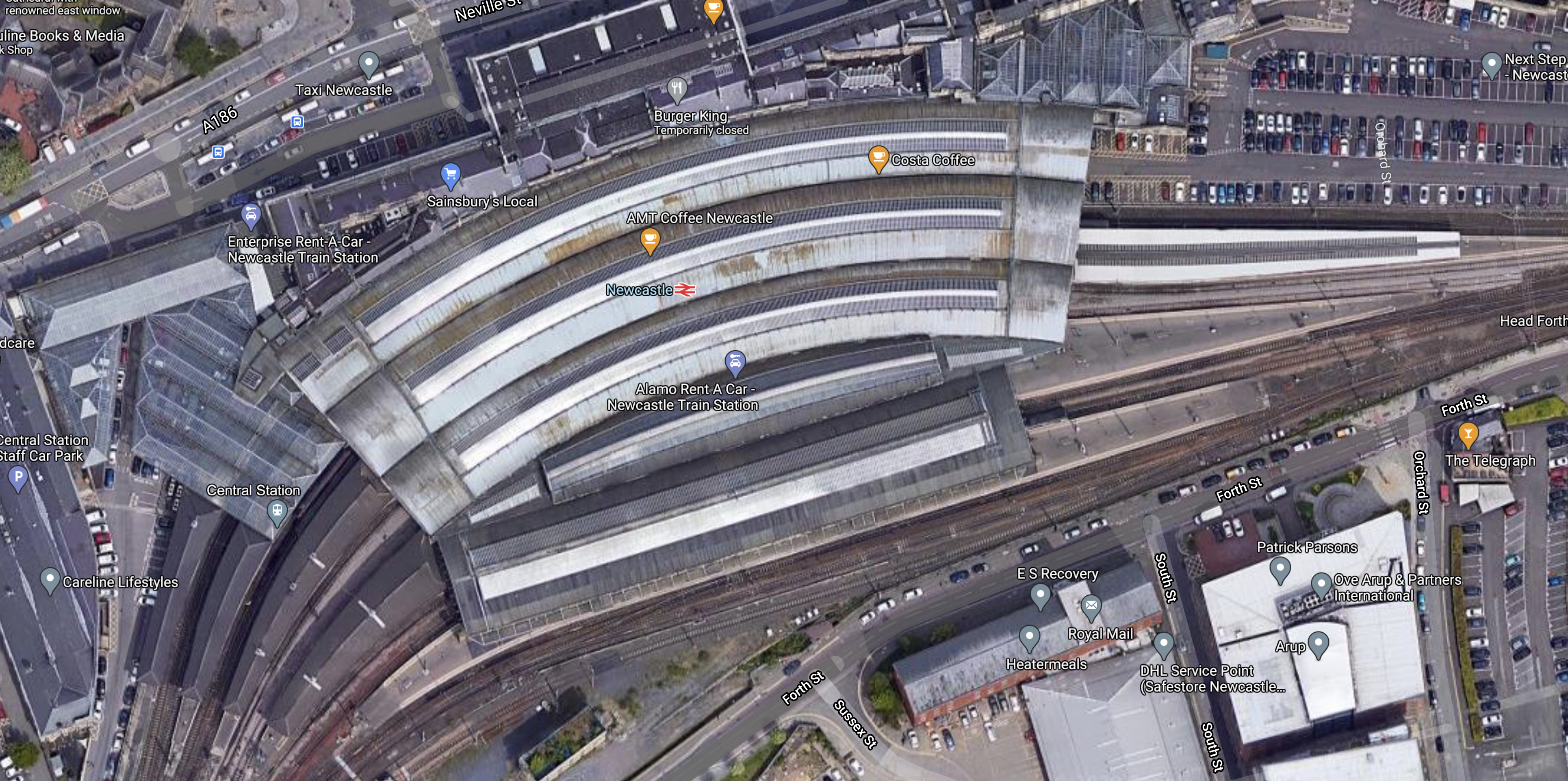
Note.
- It is built on a curve.
- It is on a cramped site.
- Platforms are numbered from 1 at the top to 8 at the bottom.
- Platform 2 seems to be used for all express services going North.
- Platforms 3 and 4 seem to be used for all express services going South.
- Not all platforms would appear to be long enough for nine-car Class 80x trains.
I am certain, that any nation with a sophisticated railway system wouldn’t build a station on a curve with no avoiding lines like Newcastle these days.
Network Rail have a plan to sort out Darlington station and I’m sure they’d like to sort out Newcastle as well!
Current Long Distance Trains Through And To Newcastle
These include.
- CrossCountry – Plymouth and Edinburgh or Glasgow via Alnmouth, Berwick-upon-Tweed and Dunbar.
- CrossCountry – Southampton Central or Reading and Newcastle.
- LNER – King’s Cross and Edinburgh via Berwick-upon-Tweed
- LNER – King’s Cross and Edinburgh via Alnmouth
- TransPennine Express – Liverpool Lime Street and Edinburgh via Morpeth
- TransPennine Express – Manchester Airport and Newcastle.
Note.
- All have a frequency of one train per hour (tph)
- All trains call at Newcastle.
- Two tph terminate at Newcastle and four tph terminate at Edinburgh or beyond.
There is also a new and Edinburgh service from East Coast Trains, that will start this year.
- It will run five trains per day (tpd).
- It will call at Newcastle.
- It will stop at Morpeth between Newcastle and Edinburgh.
There will also be High Speed Two services to Newcastle in a few years.
- There will be two tph between Euston and Newcastle
- There will be one tph between Birmingham Curzon Street and Newcastle.
Note.
- All services will be run by 200 metre long High Speed Two Classic-Compatible trains.
- There is no High Speed Two service to Newcastle, that calls at Leeds.
- Only one High Speed Two service to Newcastle calls at East Midlands Hub.
I suspect High Speed Two services need a dedicated platform at Newcastle, especially, if another High Speed Two service were to be added.
Extra Paths For LNER
In the December 2020 Edition of Modern Railways, there is an article, which is entitled LNER Seeks 10 More Bi-Modes.
This is the last paragraph.
Infrastructure upgrades are due to prompt a timetable recast in May 2022 (delayed from December 2021), from which point LNER will operate 6.5 trains per hour out of King’s Cross, compared to five today. As an interim measure LNER is retaining seven rakes of Mk. 4 coaches hauled by 12 Class 91 locomotives to supplement the Azuma fleet and support its timetable ambitions until new trains are delivered.
There would certainly appear to be a path available if LNER wanted to increase the frequency of trains between King’s Cross and Edinburgh from the current two trains per hour (tph) to three.
I laid out how I would use this third path to Edinburgh in A New Elizabethan.
The Possible Long Distance Trains Through And To Newcastle
These trains can be summed up as follows.
- 1 tph – CrossCountry – Plymouth and Edinburgh or Glasgow via Alnmouth, Berwick-upon-Tweed and Dunbar.
- 1 tph – CrossCountry – Southampton Central or Reading and Newcastle.
- 1 tph – LNER – King’s Cross and Edinburgh via Berwick-upon-Tweed
- 1 tph – LNER – King’s Cross and Edinburgh via Alnmouth
- 1 tph – TransPennine Express – Liverpool Lime Street and Edinburgh via Morpeth
- 1 tph – TransPennine Express – Manchester Airport and Newcastle.
- 5 tpd – East Coast Trains – King’s Cross and Edinburgh via Morpeth
- 2 tph – High Speed Two – Euston and Newcastle
- 1 tph – High Speed Two – Birmingham Curzon Street and Newcastle
- 1 tph – LNER – King’s Cross and Edinburgh – Extra service
This is ten tph and the five tpd of East Coast Trains.
Capacity Between Newcastle And Edinburgh
I wonder what capacity and linespeed would be possible on the East Coast Main Line between Newcastle and Edinburgh.
There are a few freight trains and some suburban electrics at the Northern end, but I suspect that the route could handle ten tph with some upgrades.
Edinburgh As A Terminal
Consider.
- Not all trains terminate at Edinburgh, but several tpd go through to places like Aberdeen, Glasgow, Inverness and Stirling.
- Edinburgh has several shorter East-facing bay platforms, that can take five-car Class 802 trains.
- Edinburgh has undergone a lot of reconstruction in recent years, so that it can turn more trains.
I very much feel that Edinburgh could handle, at least ten tph from the South.
Conclusion
I think it would be possible to extend all trains to Newcastle to at least Edinburgh.
Would it increase passenger capacity between the two capitals?
It would certainly avoid the difficult and expensive rebuilding at Newcastle station.

