Crown Estate Supports Four Nature-Positive Offshore Wind Research Projects
The title of this post, is the same as that of this article on offshoreWIND.biz.
This is the sub-heading.
The Crown Estate has revealed that it is partnering with a range of UK-wide expert bodies to launch four research projects to support nature recovery and the coexistence of offshore wind farms with marine life.
The four projects are described in these paragraphs.
The first of four projects is called Prevalence of Seabird Species and Collision Events in OWF (PrediCtOr), led by the Carbon Trust under the Offshore Renewables Joint Industry Programme (ORJIP).
It aims to develop a coordinated approach for reducing uncertainty surrounding bird collision risk and influencing factors, and therefore reducing consenting risk, at offshore wind farms.
The second project is Procellariiform Behaviour & Demographics (ProcBe), led by JNCC, which seeks to fill evidence gaps around how seabird species, such as storm petrels and Manx shearwater might interact with offshore wind farms and improve the demographic rate and population modelling approaches.
Reducing Seabird Collisions Using Evidence (ReSCUE) project, led by Natural England, is a three-and-a-half project that could improve the industry’s knowledge of seabird flight heights and collision risk with offshore wind turbines in UK waters.
And the last project, named Strategic Compensations Pilots for Offshore Wind, is led by OWIC.
Research like this will surely increase the acceptance of offshore wind power amongst conservationists.
Climate Change: Y Bryn Wind Farm Aids Net Zero Aim – Developer
The title of this post, is the same as that of this article on the BBC.
This is the sub-heading.
A new onshore wind farm could help Wales move towards its net zero target by 2050, say developers.
These two paragraphs outline the scheme.
But some local people called the Y Bryn plan between Port Talbot and Maesteg a “blight on the landscape”.
The plan, first proposed in 2021, now includes 18 turbines up to 250m (820ft), rather than the original 26.
I feel that we need to develop renewable energy all round the UK.
This project, is obviously felt by the developers to be a serious proposition, judging by the very professional web site.
Some places like the Midlands and the South of England are a long way from large offshore wind and nuclear developments, but Port Talbot and Maesteg may be close enough to planned offshore wind farms, that this wind farm may need not to be developed.
I shall be following this development.
Denny Bros Completes Solar Scheme At Bury St Edmunds Factory
The title of this post, is the same as that of this article on the East Anglian Daily Times.
This is the sub-title.
An energy-hungry manufacturer has completed a huge £0.5m solar array across its roofs – which on a good day can power the whole operation and more.
This Google Map from a few months ago, shows the incomplete array.
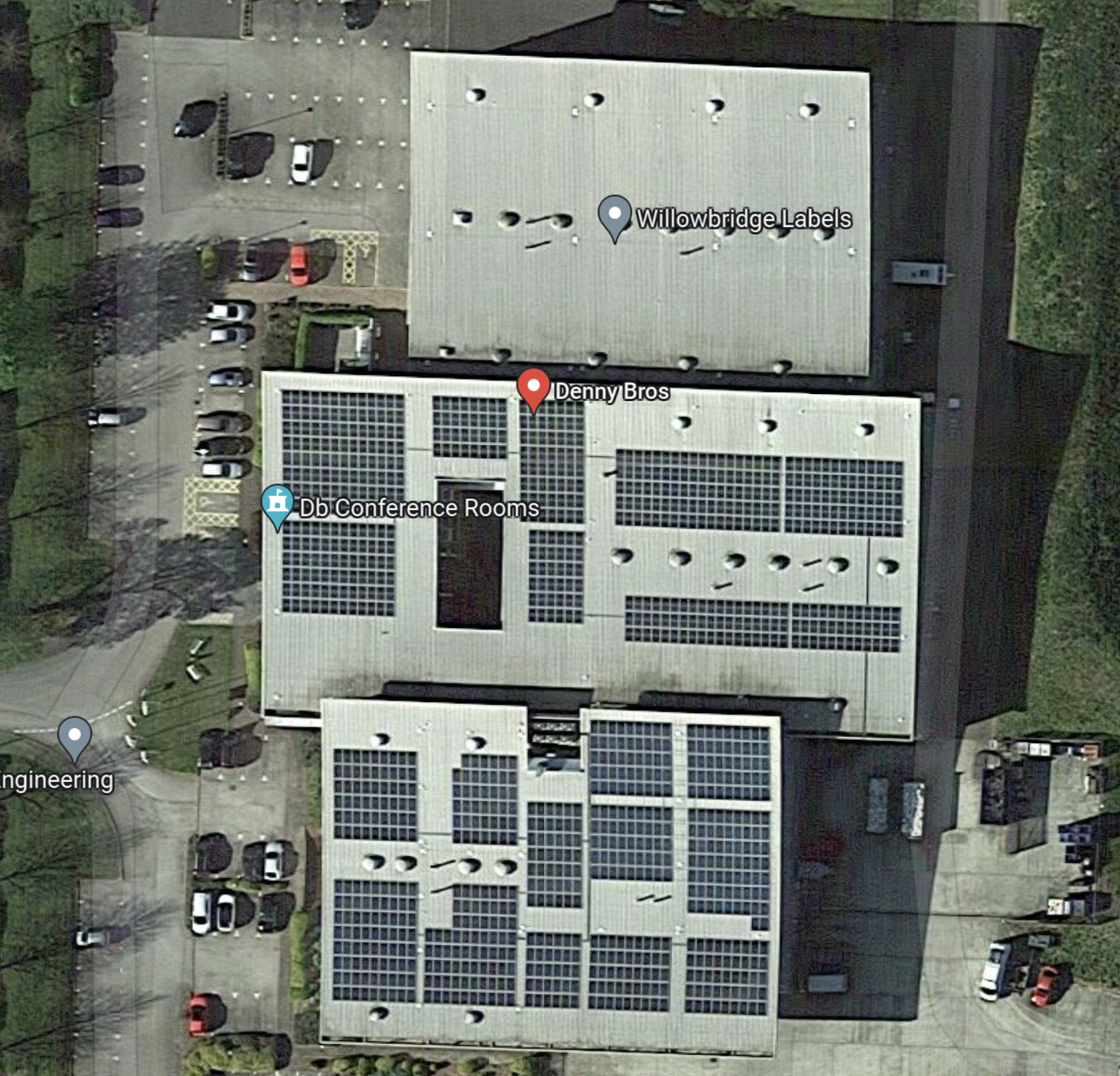
A more recent picture in the article, shows the top building with solar panels on the roof.
According to another report in the East Anglian Daily Times, the company turns over about eight millions.
As Denny Brothers appears to be a well-run company, that is partly employee-owned, the numbers must add up.
Incidentally, the article was displayed with two adverts; one for a solar panel company and the other for the well-known employee-owned company; John Lewis.
I suppose that’s the way the cookie rumbles!
I certainly don’t regret installing solar panels on my flat roof!
What About A Couple Of Wind Turbines?
I ask this question, as some MPs want to allow more onshore wind, providing the natives don’t mind.
I wrote about onshore wind in Chancellor Confirms England Onshore Wind Planning Reform and I think that in the right place they are acceptable.
I know the Government has changed since September, but if you look at the Google Map above, I suspect a couple of turbines could be squeezed in and they probably would be in Germany.
Hydrogen-Powered Turbines May Help Clean And Improve Electrical Grid Reliability
The title of this post, is the same as that of this article on Hydrogen Fuel News.
This is the first paragraph.
In less than three years, one or more hydrogen-powered turbines are expected to be up and running at or near New Jersey’s Bayonne Energy Center power plant, which feeds power to New York City.
Note.
- The Bayonne Energy Center is a peaker plant with ten gas turbines, with a total capacity of 640 MW.
- Peaker plants automatically cut in, when power demand is high, but power generation is low.
- The Bayonne Energy Centre transfers power to New York, through an underwater cable.
- The electrolyzers will be made by Ohmium International Inc and I suspect they will be powered by offshore wind.
- The hydrogen that is created will be stored. As Bayonne has a history of chemical manufacturing, there may be salt caverns that can be used or the hydrogen could be stored as a compressed gas or liquid in tanks.
I can see hydrogen being used in peaker plants elsewhere in the world, where there is lots of renewable energy and suitable hydrogen storage.
The hydrogen can also be used to decarbonise local industries and transportation.
The Potential For Wind Power In New Jersey
Wikipedia says this about the potential of wind power in the state.
New Jersey has the potential to generate 373 GWh/year from 132 MW of 80 m high wind turbines or 997 GWh/year from 349 MW of 100 m high wind turbines located onshore as well as 430,000 GWh/year from 102,000 MW of offshore wind turbines.
Note.
- New Jersey used 76,759 GWh in 2011
- It appears that most of these turbines would be located along the coast.
There is also a worry about hurricanes. But solving that is an engineering problem.
From my experience of modelling floating structures, I believe they may stand up to high winds better. But I’m not sure!
Biggleswade Wind Farm
The Biggleswade Wind Farm is a small wind farm on the East side of the East Coast Main Line, to the South of Biggleswade.
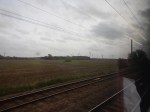
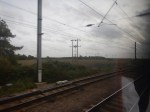
I took the pictures as I went North to Doncaster yesterday.
- The wind farm generates 20 MW.
- There are ten turbines.
I was sitting backwards in one of LNER’s Azuma trains.
It was in some ways an experiment to get a general wind farm picture.
Rolls-Royce And SOWITEC Cooperate On Power-To-X Projects
The title of this post, is the same of that of this press release from Rolls-Royce.
The press release starts with these two bullet points.
- Target: up to 500 MW electrolysis capacity for power-to-X projects
- Production of green hydrogen and e-fuels for shipping, aviation, mining, agriculture, data centers
In Rolls-Royce Makes Duisburg Container Terminal Climate Neutral With MTU Hydrogen Technology, I wrote how Rolls-Royce were building a carbon-neutral energy supply for the port.
This Rolls-Royce graphic illustrates the project.

It looks like SOWITEC would be the sort of company to install the decentralised renewables for this project.
Rolls-Royce seem to be collecting the technology to build complex projects like the power supply for the Duisburg Container Terminal, either by acquisition or negotiating friendly links.
But I do think, that Rolls-Royce possibly need two items for a complete portfolio.
A factory with a large capacity to build electrolysers. The press release says they need 500 MW by 2028 or nearly 100 MW per year.
Some form of GWh-sized energy storage. I wouldn’t be surprised to see Rolls-Royce do a deal with an energy storage company.
Chancellor Confirms England Onshore Wind Planning Reform
The title of this post, is the same as that of this article on renews.biz.
These are the first two paragraphs.
UK Chancellor Kwasi Kwarteng has confirmed that onshore wind planning policy is to be brought in line with other infrastructure to allow it to be deployed more easily in England.
The announcement is the strongest sign yet that the Conservative Party could be poised to reverse its 2015 ban on new onshore wind farms being built in England.
I take a scientifically-correct view of onshore wind, in that I am sometimes against it, but on the other hand in certain locations, I would be very much in favour.
These pictures show Keadby Wind Farm in Lincolnshire.
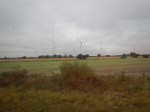
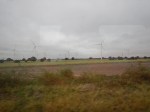
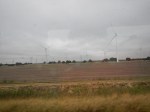
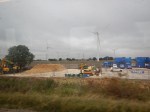
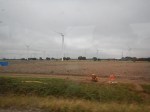
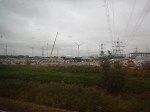
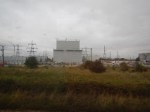
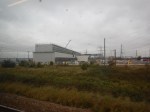
As the wind farm sits next to two gas-fired power stations and is surrounded by high voltage overhead electricity cables, this is probably a more acceptable location, than beside a picturesque village.
In this page on their web site, SSE says this about the construction of the 68 MW wind farm.
After receiving planning permission in 2008, construction began in 2012 and the first turbine foundation was complete in February 2013. The final turbine was assembled on 11 December 2013 and the project was completed in summer 2014.
If this is typical, and I think it is, it would take six years plus the time arguing about planning permission, to get a new onshore wind farm built.
But supposing, you are a farmer who wants to decarbonise. One way might be with a 10 MW wind turbine and a hydrogen electrolyser, so you had your own hydrogen source to power your tractors and other equipment.
On the other hand, solar panels on house, shed and barn roofs might be a more discrete alternative.
SSE Renewables Completes Acquisition Of European Renewable Energy Development Platform
The title of this post, is the same as that of this press release from SSE.
This paragraph introduces the deal.
SSE Renewables has completed the transaction with Siemens Gamesa Renewable Energy (SGRE) to acquire its existing European renewable energy development platform for a consideration of €580m.
I have a few thoughts.
Why Have Siemens Gamesa Sold Their European Renewable Energy Development Platform?
This article on Renewables Now is entitled Siemens Gamesa Wraps Up Sale Of 3.9-GW Wind Portfolio To SSE Renewables, gives a reason.
For the turbine maker, the sale represents one of the measures implemented to rein in profit losses quarter after quarter due to internal challenges, high costs and supply chain issues.
As with many things, it appears to be all about the money.
Can SSE Renewables Afford It?
Consider.
- SSE are developing the 1.5 GW/30 GWh Coire Glas pumped stored hydroelectric power station. I doubt the cost of that will be under a billion pounds.
- SSE developed the 0.5 GW Greater Gabbard wind farm and that development cost £1.5 billion
- SSE Renewables and Equinor are estimated on the web to be investing £9 billion in the Dogger Bank wind farm, which could deliver 3.6 GW.
- SSE Renewables have just announced the 4.1 GW Berwick Bank wind farm, which must need at least £9 billion.
SSE seem to have found a Scottish magic money tree.
€580m is just small change.
What Projects Are Included In The Deal?
This is a paragraph from the press release.
The SGRE portfolio includes c.3.8GW of onshore wind development projects – around half of which is located in Spain with the remainder across France, Italy and Greece – with scope for up to 1.4GW of additional co-located solar development opportunities. Development of the portfolio of projects has continued to progress since the acquisition was announced in April, with additional opportunities identified and permits and grid connections advancing. Over 2GW of the total pipeline is considered to be at a secured stage, where a grid connection or land agreement has been secured or relevant permits granted.
Note.
- As an engineer, I note that there is no offshore wind, which surely is the renewable energy development with most risk and installation costs.
- SSE Renewables have a lot of experience of onshore wind, so delivering and financing the extra 3.8 GW, shouldn’t be a problem.
- The 1.4 GW of solar comes with the word co-located. Wind and solar together, perhaps with a battery must surely be a good investment in the sunnier climes of Europe.
It doesn’t look to me that SSE Renewables have bought a load of assets that no-one wants.
I do wonder thought, if Siemens Gamesa were having trouble progressing this large diverse portfolio of projects, due to a shortage of resources like money and engineers.
So are SSE finishing off a few projects and they can transfer a few engineers to these projects?
Are SSE Spreading The Risk?
SSE operate mainly in the UK and Ireland, so is adding Spain, France, Italy and Greece a good idea?
Of the four new countries, it’s unlikely that all will perform well, but a mixed portfolio is usually a good idea.
Will SSE Renewables Buy Siemens Gamesa Turbines In The Future?
SSE Renewables seem to do an individual deal on each wind farm, as no one manufacturer dominates.
But now Siemens Gamesa may be more financially stable, perhaps they can get a better deal for the turbines they want.
Conclusion
I don’t think SSE Renewables have done a bad deal.
Bord na Mona Planning Offaly Hydrogen Project As New Wind Farm Is Switched On
The title of this post, is the same as that of this article on OffalyLive.
The policy of the Bord na Mona is described in detail in the article.
This paragraph describes the green hydrogen development.
The development will be two megawatts and will comprise a hydrogen electrolysis plant containing an electrolyser, three high pressure hydrogen storage units, a generator, a substation and an underground cable connecting to a wind turbine 600 metres away.
Surely, this hydrogen will have the right to be marketed as genuine Irish green hydrogen!
For those of you, who are confused by the various colours of hydrogen, this page on the National Grid web site, which is entitled The Hydrogen Colour Spectrum gives a useful guide.
Note that there is no orange hydrogen defined as yet, but there is a yellow hydrogen defined like this.
Yellow hydrogen is a relatively new phrase for hydrogen made through electrolysis using solar power.
So it does look, that yellow hydrogen, which could be called orange hydrogen at a pinch, is as environmentally-friendly as green hydrogen.
Is The Morocco-UK Power Project Just A Taste Of The Future?
After writing WSP Lends Hand On Morocco-UK Power Link, about WSP’s involvement in the ambitious project to create a 3.6 GW interconnector to bring power from Morocco to the UK, I’m now certain, that this major project will come to fruition.
Out of curiosity, I created this Google Map of North-West Africa.
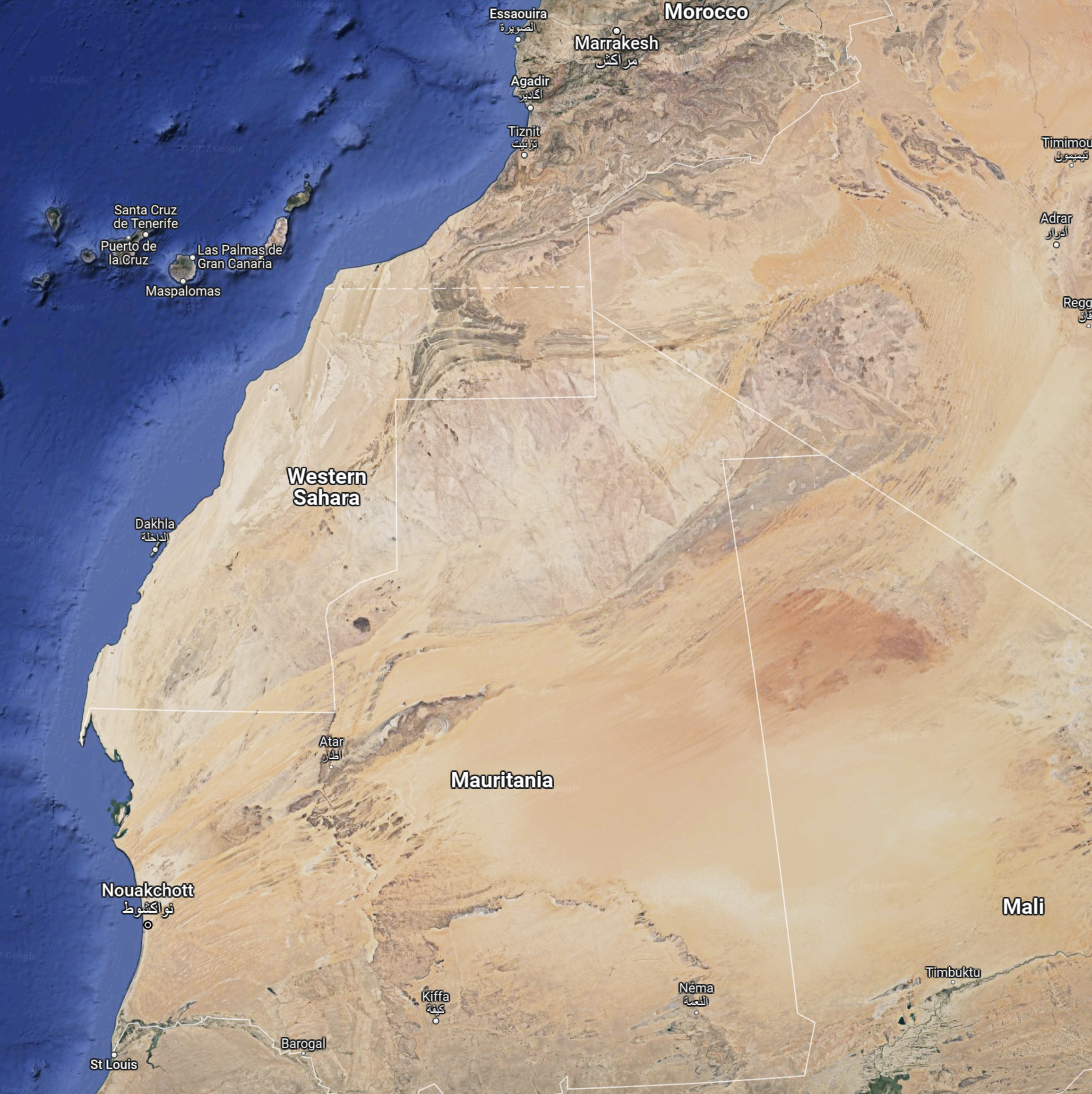
Note.
- Morocco is at the North edge of the map.
- The map is filled with the Sahara Desert.
- The Caqnary Islands are off the coast of Africa.
- Three of the least developed countries in the world; Western Sahara, Mauritania and Mali, circle the desert to the South-West and South.
I do wonder if the Morocco-UK Power Project is a success, if other developers and countries will decide to developer their renewable energy resources.
- France, Portugal and Spain may want to get involved.
- High-Temperature Electrolysis boosted by solar energy, could be used to generate hydrogen for shipment to Europe.
- The interconnectors to Europe will be upgraded.
Given the size of the desert, I’m sure that several GW of electricity could be delivered to Europe.
 The Anonymous Widower