First Of A Kind Funding Awarded For 25 Rail Innovation Projects
The title of this post, is the same as that of this article on Railway Gazette.
This is the introductory paragraph.
The Department for Transport and Innovate UK have announced the 25 projects which are to share £9·4m of funding under the 2020 round of the First of a Kind rail industry innovation programme.
It appears to be a longer list, than I’ve seen previously awarded.
Project 1 Train Swap From Seatfrog Ops
Seatfrog is an app, that enables passengers to quickly and remotely update their seat reservation to a different service.
It already appears to be in use with Avanti West Coast, CrossCountry, GWR and LNER.
This application could have legs, as it looks a bit like eBay for First Class seats.
Project 2 Dynamic Capacity Management From Esoterix Systems Ltd
It is described as follows.
Ticketing that adjusts to travel patterns and rewards particular choices, using a monthly subscription that will help customers to save money on a large upfront fee.
Their web site doesn’t give much specific detail, as I write this.
Project 3 Next Generation Composite Poles For A 5G Enabled Railway From Hive Composites
It is descrtibed as follows.
Installation of lightweight composite poles along railways to improve wi-fi speed, consistency and connectivity.
Their web site doesn’t give more specific detail, as I write this.
Project 4 Illumin Heated Concrete Platform Coper Slabs From Sheffield Hallam University
It is described as follows.
Illuminated and heated low-energy concrete slabs for station platforms, which automatically switch on in freezing conditions to help prevent passengers from slipping on ice.
The Sheffield Hallam University doesn’t give more specific detail, as I write this.
Project 5 LAMINAR From iProov
It is described as follows.
iProov, WorldReach Software and Eurostar are to establish a walk-through ’facial biometric corridor’ at London St Pancras International to allow passengers to complete ticket checks and border exit processes without needing to come into contact with people or hardware.
There is more on the iProov web site.
I think, this could be the way to ensure safe train travel in these pandemic times.
It would certainly cut queues.
Project 6 Track-To-Train Communications To Transport for Wales From Ingram Networks
It is described as follows.
Lab-based study into cost-effective 10 Gbps+ trackside to train communications infrastructure, to be tested on an 8 km heritage railway in Leicestershire.
Their web site doesn’t give more specific detail, as I write this.
Project 7 Prototype Zero Emissions Trac Rail Transposer (TRT-e) From Unipart Rail
This is described as follows.
A zero-emissions machine which removes and replaces rails.
The Unipart Rail web site, doesn’t give more specific details as I write this
Will it be battery or hydrogen-powered?
Project 8 LoCe: Less Oil, Cleaner Exhaust From Porterbrook Leasing
This is described as follows.
£400 000 to support Porterbook, Eminox, Bosch Rexroth and DG8 in retrofitting a Bombardier Class 170 Turbostar DMUs leased to East Midlands Railway with with Eminox SCRT technology to evaluate whether this can reduce CO, particulate, hydrocarbon and NOx emissions to make mid-life diesel engines more environmentally sustainable.
There is more on Porterbrook’s web site.
Project 9 Zero Emission Rail Freight Power From Steamology Motion
This is described as follows.
Hydrogen-based steam turbine system to provide zero emission power for existing freight locomotives.
In Steam, But Not As You Know It…, I give more details of their technology.
Could Steamology Motion really be on the verge of reengining a Class 66 locomotive with a zero-carbon steam technology that uses hydrogen and oxygen as a fuel?
Project 10 Daybreak From Riding Sunbeams
This is described as follows.
A direct connection between renewable energy generation and overhead electrifcation systems.
There is more on this page on the Riding Sunbeams web site.
Project 11 Resi-Glaze From FAR-UK
This is described as follows.
Resilient glazing solution to ensure passenger safety on trains and a potential CO2 emissions saving.
I can’t find anything more about this.
Project 12 HydroFLEX Raft Production From BCRRE
This is described as follows.
£400 000 grant to support final production design and testing by the University of Birmingham and Porterbrook of a hydrogen power pack intended to minimise the loss of passenger saloon space.
Just reading the extract, it seems that the University of Birmingham have found a solution to the big problem of hydrogen-powered trains in the UK; the small loading gauge.
Project 13 Low Environmental Impact Composite Footbridge From Associated Utility Supplies
This is described as follows.
A footbridge made entirely from fibre reinforced polymer, which is designed to be significantly easier to install than an equivalent steel bridge to help reduce network disruption and local environmental damage.
Could their share of the £9.4 million, almost build the first footbridge?
Looking at the Associated Utility Supplies web site, amongst the wide range of equipment, that they source for various industries, where danger is ever present, there are no footbridges.
So did their expertise and that of some Network Rail engineers, all come together in a convivial meeting to produce an innovative design of footbridge?
Project 14 Integrated Optical Fibre Sensing (OptRail-PRO) From rcm2
This is described as follows.
Optic fibre sensors to monitor the condition of switches and crossings.
The rcm2 web site doesn’t give more specific details, as I write this.
Project 15 Train Axle Crack Monitoring From TAMON – Perpetuum
This is described as follows.
Using sensors and pattern-recognition technologies to identify cracks in axles, helping to reduce returns to depot.
Perpetuum seem a very capable company.
Project 16 High Speed Cryogenic Blasting For Rail Cleaning To Alleviate Low Adhesion From Sheffield University
This is described as follows.
High speed cryogenic cleaning system for tracks to prevent low adhesion and slow running of trains.
This article on the BBC, which is entitled Dry ice ‘could stop leaves on line rail delays’, explains the technology.
Dry Ice Blasting is also explained on this page on the IceTech Technologies web site.
As the dry ice is carbon dioxide, will the Green Movement object?
The Wikipedia entry for dry ice blasting says this about its environmental effects.
Dry ice blasting is an environmentally responsible cleaning method. Dry ice is made of reclaimed carbon dioxide that is produced from other industrial processes, and is an approved media by the EPA, FDA and USDA. It also reduces or eliminates employee exposure to the use of chemical cleaning agents.
Compared to other media blasting methods, dry ice blasting does not create secondary waste or chemical residues as dry ice sublimates, or converts back to a gaseous state, when it hits the surface that is being cleaned. Dry ice blasting does not require clean-up of a blasting medium. The waste products, which includes just the dislodged media, can be swept up, vacuumed or washed away depending on the containment.
It appears it could be one of those processes, that when it replaces a traditional method, has more benefits than disadvantages.
Project 17 InnoTamp From Fugro
This is described as follows.
Data gathering to ensure the maintenance of optimum rail alignment.
The project is described on this page of the Fugro web site.
Prokject 18 Thermal Radiometry For The Remote Condition Monitoring Of Railway Vehicles From Rail Innovations
This is described as follows.
Using thermal radiometry camera technology to measure temperatures of mechanical systems on moving trains, sending automatic alarms in the event of over heating.
I can’t find any more information on this project.
Project 19 Minimising Disruption Of Overhead Line Renewals Via Novel Headspan Assemblies From Associated Utility Supplies
This is described as follows.
Span wire clamping system to enable rapid, low-cost overhead line equipment headspan renewals with minimum network disruption.
This is a second project from the same company.
Project 20 Trainserv Software User Trial And Preparation For Commercialisation From Cogitaire
This is described as follows.
Integrating multiple sources of real-time data for use by rail workers to help them improve services and respond to incidents.
Cogitare seem a very capable company.
Project 21 Cleartrak On-Train Testing From Garrandale
This is described as follows.
Innovative and efficient system for processing toilet waste, reducing cost and maintenance requirements.
Ptoject 22 IRIS: Information System For Railway Station Staff From Liverpool John Moores University
This is described as follows.
An information system for frontline station staff to enhance communication and enable them to help passengers in making travel decisions and planning more effectively.
Another project from a University.
Project 23 Railway Optical Detection & Obstructions – Tunnel & Station Monitoring From Vortex IoT
This is described as follows.
Sensors and data analysis tools to detect and identify intrusion and obstructions on the track, and send real-time situational alerts to the rail control centre to prompt further investigation.
This page on the Vortex IoT web site shows some of the technology they will use.
Project 24 Improving Resilience Through A Surface Water Flooding Decision Support System from IBA Consulting
This is described as follows.
This project seeks to develop a first of a kind surface water flood forecasting and early warning system for Network Rail using technology and data to map the surface water flood likelihood in real time, ahead of the event and forecast rainfall intensity.
I can’t find the company or this project.
Project 25 Improved Railway Operations Through Train-Mounted Water Addition From CoCatalyst
This is described as follows.
Spraying a small amount of water from the train when slippery rails are detected to improve traction and braking, and prevent subsequent services from being affected.
There’s a detailed description on this page on the Water=Trak web site.
This looks to be a simple idea, that may be significant, to stop wheel slippage.
Conclusion
The ideas are more numerous than usual and they are a very wide-ranging bunch.
In Grants To Support Low-Carbon Technology Demonstrators, which were a similar group in 2019, that were also funded by Innovate UK, there were only five projects.
I also feel, some could have significant export opportunities.
Porterbrook: Modified Trains Have A Role To Play
The title of this post is the same as that of this article on Rail Magazine
Poterbrook are talking about reducing carbon dioxide emissions.
The problem is that building a new electric train produces around 146 tonnes of CO2, whilst maintenance produces around 2-3 tonnes of CO2 annually.
- CO2 produced in a 20 year lifetime in construction and maintenance is 196 tonnes or 9.8 tonnes per year.
- CO2 produced in a 40 year lifetime in construction and maintenance is 246 tonnes or 6.15 tonnes per year.
So if you can prolong the useful life of a train by modifying the train at say twenty years, you could save carbon dioxide emissions.
Surely, this calculation must work for cars, earth-moving equipment and food-mixers.
The longer something lasts, the less will be the CO2 emissions per year.
Shapps Wants ‘Earlier Extinction Of Diesel Trains’
The title of this post, is the same as that of this article on the East London and West Essex Guardian.
This is the first two paragraphs of the article.
The phasing out of diesel trains from Britain’s railways could be intensified as part of the Government’s bid to cut carbon emissions.
Transport Secretary Grant Shapps told MPs he is “hugely concerned” that the current policy means diesel trains will continue to operate until 2040.
In some ways the positioning of the article in a newspaper serving East London and West Essex is a bit strange.
- The only diesel trains in the area are freight trains, after the electrification of the Gospel Oak and Barking Line.
- Grant Schapps constituency is Welwyn and Hatfield, which is twenty or so miles North of London.
It looks to me to be a syndicated story picked up by the paper.
But as it reports what he said to the Transport Select Committee, there is a strong chance that it is not fake news.
How Feasible Would It Be To Bring Forward The 2040 Diesel Extinction Date?
Government policy of an extinction date of 2040 was first mentioned by Jo Johnson, when he was Rail Minister in February 2018.
This article on Politics Home is entitled Rail Minister Announces Diesel Trains To Be Phased Out By 2040, gives more details about what Jo said.
Since then several developments have happened in the intervening nearly two years.
Scores Of Class 800 Trains Are In Service
Class 800 trains and their similar siblings can honestly be said to have arrived.
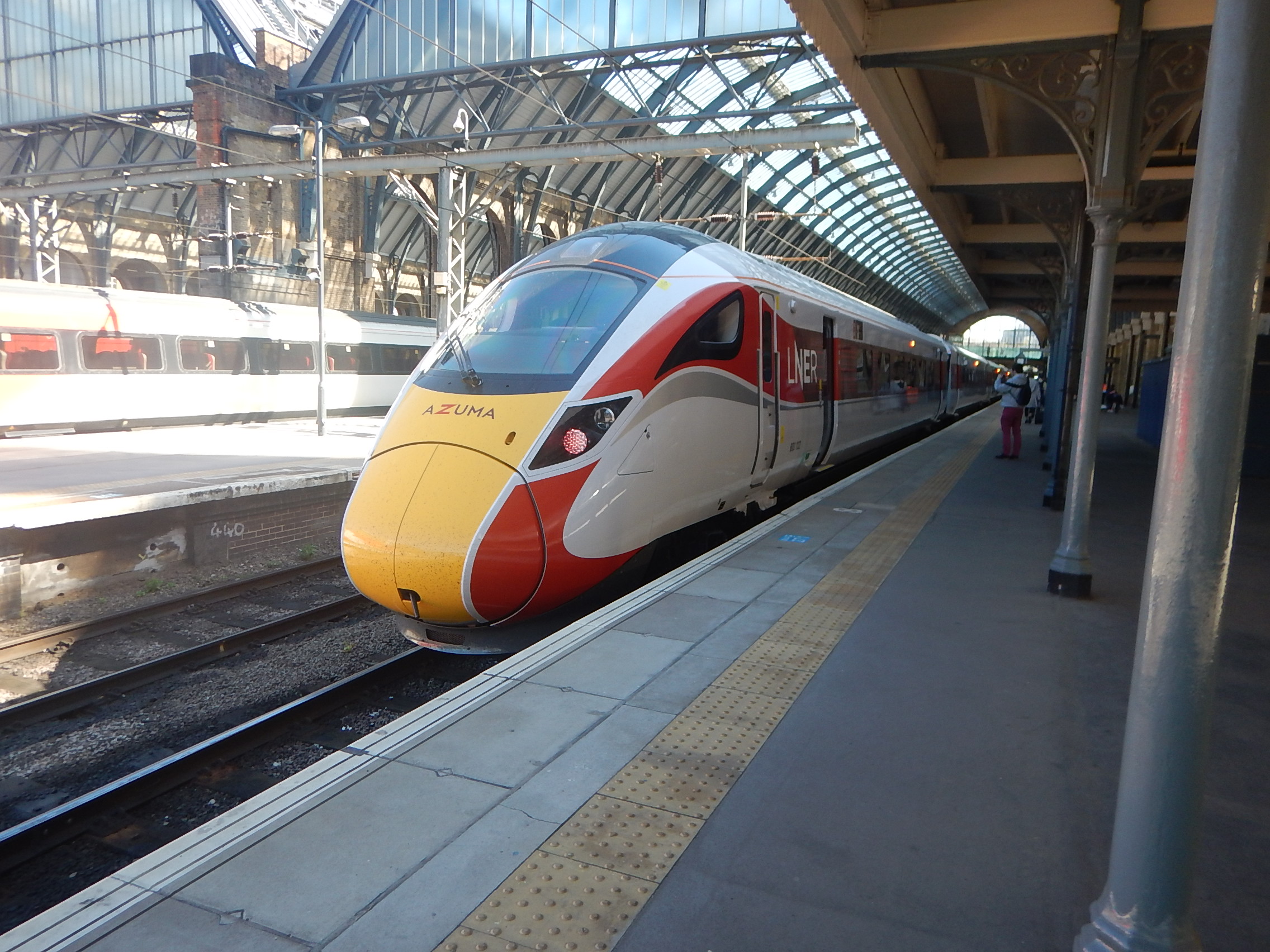
Currently, there appear to be over two hundred of these trains either delivered or on order.
Many have replaced diesel trains on Great Western Railway and LNER and stations like Kings Cross, Paddington and Reading are becoming over ninety percent diesel-free.
It should be noted that over half of these trains have diesel engines, so they can run on lines without electrification.
But the diesel engines are designed to be removed, to convert the trains into pure electric trains, when more electrification is installed.
Midland Main Line Upgrade
This line will be the next to be treated to the Hitachi effect, with thirsty-three of the second generation of Hitachi’s 125 mph trains.
- The Hitachi trains will use electrification South of Melton Mowbray and diesel power to the North.
- The trains will have a redesigned nose and I am sure, this is to make the trains more aerodynamically efficient.
- The introduction of the trains will mean, that, all passenger trains on the Midland Main Line will be electric South of Melton Mowbray.
- St. Pancras will become a diesel-free station.
Whether High Speed Two is built as planned or in a reduced form, I can see electrification creeping up the Midland Main Line to Derby, Nottingham and Sheffield and eventually on to Leeds.
Other Main Line Routes
The Midland Main Line will have joined a group of routes, that are run partly by diesel and partly by electricity.
- London and Aberdeen
- London and Bradford
- London and Cheltenham
- London and Harrogate
- London and Hull
- London and Inverness
- London and Lincoln
- London and Middlesbrough
- London and Penzance via Exeter and Plymouth.
- London and Sunderland
- London and Swansea
- London and Worcester and Hereford
Once the Midland Main Line is upgraded, these main routes will only be these routes that use pure diesel for passenger routes.
- TransPennine Routes
- Chiltern Route
- London and Exeter via Basingstoke
- London and Holyhead
Plans already exist from West Coast Rail to use bi-mode on the Holyhead route and the Basingstoke route could also be a bi-mode route.
TransPennine and Chiltern will need bespoke solutions.
Some Electrification Has Happened
Electrification has continued at a slow pace and these schemes have been completed or progressed.
- Chase Line
- Between Birmingham and Bromsgrove
- North West England
- Between Edinbugh, Glasgow, Alloa, Dunblane and Stirling.
- Gospel Oak to Barking Line
- Between St. Pancras and Corby.
- Crossrail
In addition London and Cardiff will soon be electrified and a lot of electrification designed by the Treasury in the past fifty years has been updated to a modern standard.
Battery Trains Have Been Developed And Orders Have Been Received Or Promised
Stadler bi-mode Class 755 trains have been delivered to Greater Anglia and these will be delivered as electric-diesel-battery trains to South Wales.
Stadler also have orders for battery-electric trains for Germany, which are a version of the Flirt called an Akku.
In the Wikipedia entry for the Stadler Flirt, this is a paragraph.
In July 2019, Schleswig-Holstein rail authority NAH.SH awarded Stadler a €600m order for 55 battery-powered Flirt Akku multiple unit trains along with maintenance for 30 years. The trains will start entering service in 2022 and replace DMUs on non-electrified routes.
55 trains at €600 million is not a small order.
Alstom, Bombardier, CAF, Hitacxhi and Siemens all seem to be involved in the development of battery-electric trains.
I think, if a train operator wanted to buy a fleet of battery trains for delivery in 2023, they wouldn’t have too much difficulty finding a manmufacturer.
Quite A Few Recently-Built Electric Trains Are Being Replaced And Could Be Converted To Battery-Electric Trains
In 2015 Bombardier converted a Class 379 train, into a battery-electric demonstrator.
The project showed a lot more than battery-electric trains were possible.
- Range could be up to fifty miles.
- The trains could be reliable.
- Passengers liked the concept.
Judging by the elapsed time, that Bombardier spent on the demonstrator, I would be very surprised to be told that adding batteries to a reasonably modern electric train, is the most difficult of projects.
The Class 379 trains are being replaced by by brand-new Class 745 trains and at the time of writing, no-one wants the currents fleet of thirty trains, that were only built in 2010-2011.
In addition to the Class 379 trains, the following electric trains are being replaced and could be suitable for conversion to battery-electric trains.
- Thirty Class 707 trains from South Western Railway.
- Thirty-seven Class 350/2 trains from West Miidlands Railway.
- Perhaps twenty Class 387 trains from various sources.
There also may be other trains frm Heathrow Express and Heathrow Connect.
All of these trains are too good for the scrapyard and the leasing companies that own them, will want to find profitable uses for them.
Porterbrook are already looking at converting some Class 350 trains to Battery-electric operation.
Vivarail And Others Are Developing Fast Charging Systems For Trains
Battery trains are not much use, unless they can be reliably charged in a short time.
Vivarail and others are developing various systems to charge trains.
Hydrogen-Powered Trains Have Entered Service In Germany
Hydrogen-powered Alstom Coradia Lint trains are now operating in Germany.
Alstom are developing a Class 321 train powered by hydrogen for the UK.
Stadler’s Bi-Mode Class 755 Train
The Class 755 train is the other successful bi-mode train in service on UK railways.
I would be very surprised if Grant Schapps hasn’t had good reports about these trains.
They may be diesel-electric trains, but Stadler have made no secret of the fact that these trains can be battery electric.
Like the Class 800 train, the Class 755 train must now be an off-the-shelf solution to use on UK railways to avoid the need for full electrification.
Class 93 Locomotives
Stadler’s new Class 93 locomotive is a tri-mode locomotive, that is capable of running on electric, diesel or battery power.
This locomotive could be the best option for hauling freight, with a lighter carbon footprint.
As an example of the usability of this locomotive, London Gateway has around fifty freights trains per day, that use the port.
- That is an average of two tph in and two tph out all day.
- All trains thread their way through London using either the North London or Gospel Oak to Barking Lines.
- Most trains run run substantially on electrified tracks.
- All services seem to go to freight terminals.
With perhaps a few of miles of electrification, at some freight terminals could most, if not all services to and from London Gateway be handled by Class 93 locomotives or similar? Diesel and/or battery power would only be used to move the train into, out of and around the freight terminals.
And then there’s Felixstowe!
How much electrification would be needed on the Felixstowe Branch to enable a Class 93 locomotive to take trains into and out of Felixstowe Port?
I have a feeling that we’ll be seeing a lot of these tri-mode freight locomotives.
Heavy Freight Locomotives
One of the major uses of diesel heavy freight locomotives,, like Class 59 and Class 70 locomotives is to move cargoes like coal, biomass, stone and aggregate. Coal traffic is declining, but the others are increasing.
Other countries also use these heavy freight locomotives and like the UK, would like to see a zero-carbon replacement.
I also believe that the current diesel locomotives will become targets of politicians and environmentalists, which will increase the need for a replacement.
There could be a sizeable world-wide market, if say a company could develop a powerful low-carbon locomotive.
A Class 93 locomotive has the following power outputs.
- 1,300 kW on hybrid power
- 4,055 kW on electric
It also has a very useful operating speed on 110 mph on electric power.
Compare these figures with the power output of a Class 70 locomotive at 2,750 kW on diesel.
I wonder if Stadler have ideas for a locomotive design, that can give 4,000 kW on electric and 3,000 kW on diesel/battery hybrid power.
A few thoughts.
- It might be a two-section locomotive.
- Features and components could be borrowed from UKLight locomotives.
- It would have a similar axle loading to the current UKLight locomotives.
- There are 54 UKLight locomotives in service or on order for the UK.
- Stadler will have details of all routes run by Class 59, Class 66 and Class 70 locomotives, in the UK.
- Stadler will have the experience of certifying locomotives for the UK.
Stadler also have a reputation for innovation and being a bit different.
Conclusion
All pf the developments I have listed mean that a large selection of efficient zero carbon passenger trains are easier to procure,than they were when Jo Johnson set 2040 as the diesel extinction date.
The one area, where zero carbon operation is difficult is the heavy freight sector.
For freight to be zero-carbon, we probably need a lot more electrification and more electric locomotives.
Battery Electrostars And The Uckfield Branch
In Rounding Up The Class 170 Trains, I said this, which is based on a quote from an article in the October 2019 Edition of Modern Railways.
Are Battery Electrostars On The Way?
The article finishes with this paragraph about the Class 171 trains, that will come from Govia Thameslink Railway (GTR) and be converted back to Class 170 trains.
GTR currently uses the ‘171s’ on the non-electrified Marshlink and Uckfield lines, and the release of these sets to EMR is contingent on their replacement with converted Electrostar EMUs with bi-mode battery capability, removing these diesel islands of operation from the otherwise all-electric GTR fleet.
So are these battery Electrostars finally on their way?
The article got several comments, which said that some five-car Electrostars were to be converted and they would probably be Class 376 trains, that would be used.
The comments also said that Network Rail were working on using short lengths of third-rail to charge the train batteries.
That sounds like Vivarail’s system to me, that I wrote about in Vivarail Unveils Fast Charging System For Class 230 Battery Trains.
Southern’s Current Diesel Fleet
I will start by looking at Southern’s current diesel fleet that works London Bridge and Uckfield stations and the Marshlink Line.
Currently, Southern has a diesel fleet of Class 171 trains.
- 12 x two-car trains
- 8 x four-car trains.
According to Modern Railways, the following trains will transfer to EMR Regional in September 2021.
- 10 x two car
- 6 x three-car, which will be created by moving a few cars in the four-car trains.
It looks as if after the transfer Southern will be left with eight driver-cars and ten intermediate cars.
This would give them four four-car trains and two spare intermediate cars. I’m sure that someone will have a need for the intermediate cars to lengthen a two-car Class 170 train because of capacity issues.
The Marshlink Line Service
The service on the Marshlink Line is an hourly service between Ashford International and Eastbourne stations.
- It is run by Class 171 diesel trains.
- Trains were four-cars most times I’ve used it.
- Journey times are around one hour and twenty-minutes.
- A round trip takes three hours.
- It would appear that three four-car trains are needed to run the service.
So if there is a spare train, four trains would be ideal, After all the transfers, this is the remaining number of Class 171 trains, that would be left with Southern.
If they wanyted to get rid of the diesel trains, then they could replace the trains on the Marshlink Line with four four-car battery bi-mode Electrostars!
Network Rail’s Plan For The Uckfield Branch
This document on the Network Rail web site from 2016, is entitled Delivering A Better Railway
For A Better Britain – Route Specifications 2016 – South East.
In the document, this is said about the the route between Hurst Green and Uckfield.
The key issue presently is overcrowding on the shorter length services that operate on the route during and close to the peak hours. As the route is operated by Class 171 diesel units, there is only a small fleet available to the TOC to deploy on the route. As a result some peak and shoulder peak services are not able to operate at the maximum length the route is capable of (8-car).
Electrification schemes in the North West will displace rolling stock to strengthen existing peak services to 8-car and eventually of 10-car operation during CP5, so associated platform lengthening is currently being developed, this will also be compatible with 12-car 20m vehicle trains.
Electrification is still an aspiration for this route or use of battery-powered trains (currently under development) if they are deemed successful.
Signalling is controlled by Oxted Signal Box but during CP5 this will be transferred to Three Bridges ROC.
The key point is that the platforms have been lengthened for 240-metre long trains, which will also allow ten-car Class 171 trains, which have 23 metre vehicles.
The Uckfield Branch Service
The service on the Uckfield Branch is an hourly service between London Bridge and Uckfield stations.
- It is currently run by Class 171 diesel trains.
- The platforms on the route can accept ten-car trains with 23 m vehicles or twelve-car trains with 20 metre vehicles.
- A round trip takes three hours.
- It would appear that three ten- or twelve-car trains are needed to run the service.
So if we add in a spare and perhaps an extra train for the rush hour, it would appear that around half-a-dozen ten- or twelve-car battery bi-mode trains will be needed for the service.
- As a ten-car train would be two five-car trains, twelve five-car trains would be needed.
- As a twelve-car train would be three four-car trains, eighteen four-car trains would be needed.
Interestingly, Southern have three trains that could be candidates for conversion to battery bi-modes in their fleet.
- One hundred and fifty-two four-car Class 377 trains.
- Thirty-four five car Class 377 trains.
- Twenty-nine four-car Class 387 trains.
All trains were built for longer commuter journeys,
Which Electrostars Will Be Converted To Battery Operation For The Uckfield Service?
Obviously, the trains must be four- or five-cars and suitable for conversion to battery bi-mode trains, but I feel they must have other features.
- Toilets
- First Class seats.
- Plenty of tables.
- Wi-fi and plug sockets.
- Comfortable interiors.
- End gangways, to ensure staff and passengers can move around the train if required.
I’ll now look at the various fleets of Electrostars.
Class 357 Trains
The Class 357 trains can probably be discounted, as I suspect c2c need them and they are not third rail.
Class 375 Trains
The Class 375 trains can probably be discounted, as I suspect Southeastern need them.
But if the new Southeastern franchise should decide on a complete fleet replacement, as the trains are dual-voltage, they might be very useful if fitted with a battery capability.
Class 376 Trains
The Class 376 trains can probably be discounted, as I suspect Southeastern need them.
The trains are also third-rail only and lack toilets, so would probably need a rebuilt interior.
Class 377 Trains
The Class 377 trains are a possibility as Soiuthern has a large fleet of both four- and five-car trains.
But they would be losing the Class 171 trains, so would probably need to bring in some new trains to have a large enough fleet.
Class 378 Trains
The Class 378 trains can probably be discounted, as London Overground need them.
Class 379 Trains
The Class 379 trains are surely a possibility, as Greater Anglia will be releasing them before the end of 2020.
Consider.
- There have no new home to go to.
- I am suspicious that that NXEA overpaid for these trains and Macquarie are sitting on a very good deal, that will cost Grester Anglia a lot to cancel!
- They appeared to me to be a shoe-in for Corby services, so perhaps they lost out to the Class 360 trains on cost.
- They are only 100 mph trains, whereas others are 110 mph trains.
- They would need to be fitted with third-rail shoes.
- The trains are coming up to nine years old and probably need a refresh.
- They have an interior aimed at airport passengers.
If I was Macquarie, I’d convert these into go-anywhere battery bi-modes for use in small fleets by operators.
But, Porterbrook’s battery-bi-mode conversion of a Class 350 train may be available at a lower price.
Class 387 Trains
The Class 387 trains are surely a serious possibility, for the following reasons.
- Govia already has fifty-six of these trains on lease and in service.
- c2c has six trains, that could come off lease in 2021.
- The trains are dual voltage
- The trains are 110 mph trains.
- They can run as twelve-car walk-through trains.
- Many of the trains are leased from Porterbrook.
I’ve felt for some time, that these trains would make excellent battery bi-modes.
But they are a good fit for Southern, as surely one could be scrounged from their Great Northern fleet to create a prototype for test.
I would feel that having the required number of trains for the Uckfield Branch can be achieved by September 2021, when the Class 171 trains will be sent to the Midlands.
There is also a backstop, in that there are nineteen Class 365 trains in store, which were replaced by Class 387 trains on Great Northern services. If there is a shortage of Class 387 trains during the conversion, surely some of these Class 365 trains could stand in, just as they did successfully in Scotland recently.
My Choice
I would convert Class 387 trains.
- There are quite a few Class 387 trains, that could be converted.
- Southern already have fifty-six Class 387 trains.
- There are enough to convert eighteen for Uckfield and four for the Marshlink
- It could be possible to deliver the full fleet before the Class 171 trains leave.
- If during conversion of the trains, they are short of stock, Southern can hire in some Class 365 trains.
It looks to be a low-risk project.
It will also have collateral benefits.
- The hourly London Bridge and Uckfield service will be raised to maximum capacity without any new infrastructure, except the trains and a number of battery chargers.
- Diesel will be eliminated in London Bridge station making the station electric trains only.
- Diesel will be eliminated between London Bridge and Uckfield stations.
- Efficient regenerative braking to battery would be available on the complete route.
- A ten-car diesel service between East Croydon and London Bridge will be replaced by a twelve-car electric service. stations.
In addition, if the diesel trains on the Marshlink Line were to be replaced by battery bi-modes, Southern would be a diesel-free franchise.
What About New Trains?
It’s all about the money and whether the new trains could be delivered in time.
I would suspect that Bombardier, CAF, Stadler and others are making competitive proposals to Southern, but would they be more affordable and timely, than a conversion of Class 387 trains?
But could they be as competitive if Bombadier and Porterbrook co-operated to convert some of Porterbrook’s Class 387 trains, that are already leased to Great Northern?
You don’t usually move house if you need a new boiler, you replace the boiler!
What About Hydrogen Trains?
The Alstom Breeze based on a Class 321 train is scheduled to first come into service in 2022. This is too late, as the Class 171 trains are scheduled to leave in September 2021.
Hydrogen trains would need a hydrogen filling station.
Kinetic Energy Of Class 387 Trains
I will calculate the kinetic energy of a four-car Class 387 train.
I will assume the following.
- Empty train weight – 174.81 tonnes – Read from the side of the train.
- Seats – 223
- Standees – 60 – Estimated from the seats/standing ratio of a Class 720 train.
- Total passengers – 283
- Each passenger weighs 90 Kg, with baggage, bikes and buggies.
- This gives a passenger weight of 25.47 tonnes and a train weight of 200.28 tonnes
Using Omni’s Kinetic Energy calculator, gives the following kinetic energies.
- 40 mph – 8.89 kWh
- 50 mph – 13.9 kWh
- 60 mph – 20.0 kWh
- 70 mph – 27.2 kWh
- 80 mph – 35.6 kWh
- 90 mph – 45.0 kWh
- 100 mph – 55.6 kWh
- 110 mph – 67.3 kWh
These figures are for a full train, but even so many will think they are low, when you think that 60 kWh batteries are used in hybrid buses.
A Trip To Uckfield
I took a trip to Uckfield today and these are my observations.
- The maximum operating speed of the train was no more than 70 mph.
- For much of the journey the train trundled along at around 40-50 mph.
- The route is reasonably flat with only gentle gradients.
- I hardly noticed the diesel engine under the floor of my car.
- Obviously in the Peak, the engines will have to work harder.
It was a very good demonstration of five Turbostars working in unison.
I can understand why East Midlands Railway are using Class 170 trains, as their standard train for EMR Regional.
Modelling the Route
I have built a mathematical model of the route between Hurst Green and Uckfield using Excel.
Input parameters are.
- Cruise Energy Consumption in kWh per vehicle mile. I assumed 3 kWh per vehicle mile
- Cruise Kinetic Energy in kWh. I assumed a 70 mph cruise and used 20 kWh
- Regeneration Energy Loss as a ratio. I assumed 0.15.
These parameters showed that a battery of between 290 kWh and 350 kWh would be needed, that was full at Hurst Green and was recharged at Uckfield.
Note that Vivarail are talking about putting 424 kWh under a three-car Class 230 train.
This page on the Vivarail web site is entitled Battery Train Update.
This is a paragraph.
Battery trains are not new but battery technology is – and Vivarail is leading the way in new and innovative ways to bring them into service. 230002 has a total of 4 battery rafts each with a capacity of 106 kWh and requires an 8 minute charge at each end of the journey. With a 10 minute charge this range is extended to 50 miles and battery technology is developing all the time so these distances will increase.
So it looks like Vivarail manage to put 212 kWh under each car of their two-car train.
I don’t think putting 350 kWh of batteries under a four-car Class 387 train would be impossible.
I have also created an Excel model for the second route between Ashford and Ore stations.
This shows that a battery of about 300 kWh on the train should cover the route.
It might appear strange that the longer Marshlink route needs a smaller battery, but this is because it leaves both ends of the route with a full battery.
These two links give access to the two Excel models that I have used. Feel free to access and criticise them.
It does appear, that on both these routes, if a train starts with full batteries, the energy in the battery is reduced in these ways as it travels along the route.
- There is an energy use to power the train along the line which is proportional to the vehicle-miles.
- Energy is needed to accelerate the train to line speed after each stop.
- Energy is needed to operate stop-related functions like opening and closing the doors.
But there will also be energy recovered from regenerative braking from line speed, although this won’t cover the subsequent acceleration.
I suspect with better understanding and better data, Bombardier can create a simple formula for battery size needed based on the following.
- The length of the route.
- The number of stations.
- The line speed
- The gradient and speed profile of the route
- The kinetic energy of the train at various loadings and speeds
- The amount of energy needed for each vehicle mile
- The efficiency of the regenerative braking
It is not the most difficult of calculations and I was doing lots of them in the 1960s and early 1970s.
Charging The Train At Uckfield
This picture shows the long platform at Uckfield station.

The platform has been built to accept a twelve-car electric train and if traditional third rail electrification were to be installed, this could be used to charge the batteries.
I would use a Vivarail-style system, which I described fully in Vivarail Unveils Fast Charging System For Class 230 Battery Trains.
As trains take a few minutes at Uckfield to turnback, I’m sure enough time can be arranged in the timetable to charge the batteries with enough power to get back to the electrification at Hurst Green.
The train would switch the charging system on and off by automatically connecting and disconnecting.
University Of Birmingham Leases HST For Alternative Fuel Tests
The title of this post is the same as that of this article on Rail Magazine.
This is the first paragraph.
A High Speed Train is being leased by the University of Birmingham to help analyse and test what alternative fuel could be used to power long-distance passenger or freight trains.
It will be interesting to see what results from the research.
A few of my thoughts.
Suitability Of A HST For Research
It must be suitable for research purposes, otherwise the University wouldn’t have obtained the train.
If you look at the Birmingham Centre for Railway Research and Education web site, they list the Research Areas.
- Railway Control and Operations Simulation
- Data Integration and Cybersecurity
- Condition Monitoring and Sensing
- Centre of Excellence in Digital Systems
- Power Systems and Energy Use
- Aerodynamics
- Climate Change and Weather Impact
There must be a lot of scope for the use of a real train, especially one which has a lot of free space in the engine, where test equipment can be mounted.
Porterbrook’s Interest
I can think of several reasons, why Porterbrook might need to partner with the Research Centre, for sound commercial reasons.
Most will probably seem small in the eyes of the general public, but might be based on Porterbrook’s feedback from customers about their extensive fleet.
Understanding The HST’s Success
The HST or InterCity 125 has been an undoubted success with passengers, drivers, staff and train companies for forty years and understanding the reasons could be invaluable in improving rail transport in the future.
Education
I suspect too that the train will be used to educate students, especially those, who want to work in train or railway design.
When I left Liverpool University with my Control Engineering degree in 1968, I was one of the few, who’d worked on bg heavy machinery in a factory environment.
These days, with Heath and Safety rules much tighter, I doubt, today’s students can gewt the same experience.
Conclusion
I do hope that Porterbrook and the Research Centre, when they look back in a few years, feel that this venture has been a success.
Job Sharing
I found this little story on the Railway Gazette web site.
Leasing company Porterbrook has jointly appointed Helen Simpson and Chandra Morbey to the role of Innovation & Projects Director as a job-share; they will report to Director of Engineering Services Jason Groombridge. Both have been involved with the development of Porterbrook’s Innovation Hub and the Hydro Flex fuel-cell multiple-unit demonstrator.
I’ve always thought job-sharing is a good idea, but rarely do you see it formally announced.
Perhaps, Porterbrook are making a statement about their policy towards job-sharing?
A Brief Glimpse Of The Class 799 Train On BBC Breakfast
The Class 799 train is being launched today and BBC Breakfast were there with cameras.
These are my thoughts.
A Test Train
Helen Simpson from Porterbrook, said it was very much a test train.
Seats appear to be in some of the cars.
It looks like Birmingham University have sensibly put the hydrogen drive system in one or both of the two central cars, which in the original Class 319 train were given the designations PMSO and MSOL
The Hydrogen Tanks And Fuel Cell
The hydrogen tanks didn’t appear to be unduly large, which suggests, the the train is not going for a very long rang. But it is only a test train.
The fuel cell was clearly marked from Ballard and was just a large anonymous box. I would think, that it was probably upwards of 100 kW.
It should be noted that the Class 319 train was originally a 1,000 kW train, with a top speed of 100 mph and good acceleration.
I’ll be interested to see what size these components are, when they are published.
The Battery System
The battery did appear to be large, but then these are probably not batteries designed to fit the train, but what is available.
As with the hydrogen tanks and fuel cell, sizes would appear to have been chosen large enough to make sure that the train is not significantly less powerful, than current Class 319 trains.
Is There Nothing A Class 319 Train Can’t Do?
If a train every goes into orbit round the world, it will be highly-likely that it will be a Class 319 train!
Electric Trains In North-West England
The fleet of eighty-six trains entered service in 1987 on Thameslink and now twenty-seven are plying their trade on the electrified routes around the North-West of England.
- You don’t hear many complaints about them being called London’s cast-offs.
- Passengers fill them up in Blackpool, Liverpool, Manchester and Preston.
- They still do 100 mph where possible.
- They seem to be reliable.
- They are not the most attractive of trains.
But handsome is as handsome does!
Drivers have told me, that although the suspension may be a bit soft for the bumpy route across Chat Moss, the trains do have superb brakes.
Bi-Mode Class 769 Trains
Nearly thirty of the trains are being converted into bi-mode Class 769 trains for working partially-electrifired routes and although these are running late, they should be in service this year.
Rail Operations Group
Two Class 769 trains have been ordered to be fast logistics trains by Rail Operations Group.
Wikipedia says the trains will be used to transport mail.
But if you read the history of the Rail Operations Group, they make the assets sweat and I’ve read the trains will still have seats, so they might do some other rail operations.
The Hydrogen-Powered Class 799 Train
And now comes the Class 799 train!
This is a demonstrator to prove the concept of conversion to hydrogen power.
The fact that the train now has it’s own number must be of some significance.
Alstom are converting Class 321 trains into Class 321 Breeze trains.
- The conversion will reduce passenger capacity, due to the large hydrogen tank
- It will have a 1,000 km range.
- It will have regenerative breaking.
- It will have a new AC traction package
- It will probably have the interior of a Class 321 Renatus train.
The conversion will obviously build on Alstom’s experience with the Alstom Coradia iLint train and Eversholt’s experience with the Renatus.
When it comes to the Class 799 train, the following will apply.
- Porterbrook have all the experience of creating the bi-mode and dual-voltage Class 769 train.
- Birmingham University’s Birmingham Centre For Railway Research And Education (BCRRE) are providing the expertise to design and convert the Class 319 train to hydrogen power.
- I also wouldn’t be surprised to find out, that the BCRRE has applied some very extensive mathematical modelling to find out the performance of a hydrogen-powered Class 319 train or HydroFLEX train.
- The conversion could be based closely on Class 769 experience and sub-systems,
Could the main purpose be to demonstrate the technology and ascertain the views of train operators and passengers on hydrogen power?
The most important question, is whether the Class 799 train, will have the same passenger capacity as the original Class 319 train?
If it does, then BCRRE must have found a way to store the hydrogen in the roof or under the floor.
It should be noted, that it was only in September 2018, that the contract to develop the Class 799 train was signed and yet less than a year later BCRRE and Porterbrook will be demonstrating the train at a trade show.
This short development time, must mean that there is not enough time to modify the structure of the train to fit a large hydrphen tank inside, as Alstom are proposing.
A smaller hydrogen tank could be placed in one of three places.
- Underneath the train.
- On the roof.
- Inside the train, if it is small enough to fit through the train’s doors.
Note.
- I doubt that anybody would put the tank inside the train for perceived safety reasons from passengers.
- On the roof, would require substantial structural modifications. Is there enough time?
So how do you reduce the size of the hydrogen tank and still store enough hydrogen in it to give the train a useful range?
In Better Storage Might Give Hydrogen The Edge As Renewable Car Fuel, I indicated technology from Lancaster University, that could store four times as much hydrogen in a given size of tank.
This reduced tank size would make the following possible.
- The hydrogen tank, the fuel cell and the batteries could be located underneath the four-cars of the Class 319 train.
- The seating capacity of the Class 799 train could be the same as that of a Class 319 train.
Clever electronics would link everything together.
If BCRRE succeed in their development and produce a working hydrogen-powered Class 799 train, how would the technology be used?
Personally, I don’t think we’ll see too many hydrogen-powered Class 799 trains, running passengers on the UK network.
- The trains are based on a thirty-year-old train.
- The interiors are rather utilitarian and would need a lot of improvement, to satisfy what passengers expect.
- Their market can probably be filled in the short-term by more Class 769 trains.
But I do believe that the technology could be applied to more modern trains.
A Hydrogen-Powered Electrostar
Porterbrook own at least twenty four-car Electrostar trains, which have been built in recent years.
Six Class 387 trains, currently used by c2c, may come off lease in the next few years.
Could these trains be converted into a train with the following specification?
- Modern train interior, with lots of tables and everything passengers want.
- No reduction in passenger capacity.
- 110 mph operating speed using electrification.
- Useful speed and range on hydrogen power.
- ERTMS capability, which Porterbrook are fitting to the Class 387 trains to be used by Heathrow Express.
It should be born in mind, that a closely-related Class 379 train proved the concept of a UK battery train.
- The train was converted by Bombardier.
- It ran successfully for three months between Manningtree and Harwich.
- The interior of the train was untouched.
But what was impressive was that the train was converted to battery operation and back to normal operation in a very short time.
This leads me to think, that adding new power sources to an Electrostar, is not a complicated rebuild of the train’s electrical system.
If the smaller hydrogen tank, fuel cell and batteries can be fitted under a Class 319 train, I suspect that fitting them under an Electrostar will be no more difficult.
I believe that once the technology is proven with the Class 799 train, then there is no reason, why later Electrostars couldn’t be converted to hydrogen power.
- Class 387 trains from c2c, Great Northern and Great Western Railway.
- Class 379 trains, that will be released from Greater Anglia by new Class 745 trains.
- Class 377 trains from Southeastern could be released by the new franchise holder.
In addition, some Class 378 trains on the London Overground could be converted for service on the proposed West London Orbital Railway.
A Hydrogen-Powered Aventra
If the Electrostar can be converted, I don’t see why an Aventra couldn’t be fitted with a similar system.
Conclusion
A smaller hydrogen tank, holding hydrogen at a high-density would enable trains to be converted without major structural modifications or reducing the passenger capacity.
The development of a more efficient method of hydrogen storage, would open up the possibilities for the conversion of trains to electric-hydrogen hybrid trains.
 The Anonymous Widower