Rail Agreement Signed ‘Subject To Value For Money’
The title of this post, is the same as that of this article on the BBC.
This is the sub heading.
An agreement to reopen a regional rail line has been signed by the transport secretary, subject to the assurance that it delivers good value for money.
These three paragraphs add detail to the story.
Further development work on the Leamside Line, which runs from Pelaw in Gateshead to Tursdale in County Durham, is set to progress as part of the Northern Powerhouse Rail (NPR) initiative.
Regional politicians said the line could provide train links for 100,000 people in the north-east of England, after it closed to passengers in the 1960s.
The document stated the government would ensure resources were available for the Leamside Line reopening “subject to agreement of that business case and assurance that this delivers good value for money”.
Note.
- There is an excellent map in the BBC article.
- It looks like there will be at least five new or refurbished stations at Ferryhill, Sincliffe, Belmont, West Rainton and Penshaw.
- Belmont appears to have an alternative name of Durham Parkway, so will it be a Park-and-Ride for the area?
- There will be an alternative path for freight trains between Newcastle and York.
- In New Direct Rail Link To Seaham: How This Picturesque Seaside Town Will Connect To London Starting December 2025, I described Seaham’s new link to London, courtesy of Grand Central Trains.
- In Arriva Group Invests In New Battery Hybrid Train Fleet In Boost To UK Rail Industry, I talked about Grand Central’s new trains, which should be in service by 2028 to Seaham and Sunderland.
- It was in June 2020, that I wrote about Boris Johnson making a speech about the Leamside Line in Boris Johnson Backs Station Opening Which Could See Metro Link To County Durham.
This important link has been a long time coming.
Will The Rail Improvements Between London and The North East Create More Tourism?
Consider.
- The digital signalling will create more paths for trains between London and the North East.
- Journey times will come down to generally below three hours.
- There is a lot of excellent walking in the area.
- The North-East doesn’t just host top-class football and athletics.
- A trip could be combined with a day-trip to Edinburgh, Glasgow or the Scottish Borders.
- I have met Americans, who’ve started their holiday in Europe, in Edinburgh and worked their way down via York and London to Paris by train, and then flown back non-stop to the United States.
As I’ve spent a couple of enjoyable weekends in Newcastle and Sunderland, I don’t see why the area can’t attract tourists.
Should The East Coast Main Line Be Renamed?
Consider.
- It is one of the oldest long-distance main lines in the world.
- It links two of the UK’s capitals.
- It is 331 miles long, which is covered in four and a half hours.
- There are some of the world’s best hotels at either end.
- There is good shopping at either end.
- There is no Trump hotel in London or Edinburgh.
Perhaps, it should be called High Speed East Coast?
Changing Trains At Newcastle Station
In the last few weeks, I have changed trains at Newcastle station between the East Coast Main and the Northumberland Line four times.
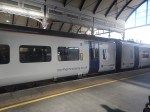
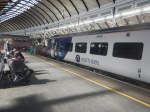
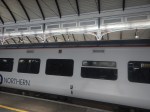
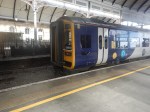
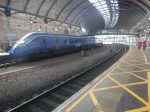
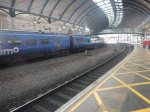
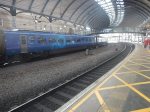
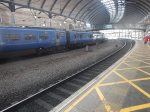
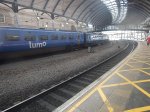
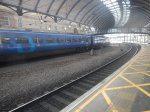
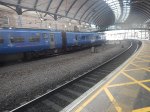
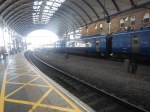
I took these pictures on Sunday, when I changed twice.
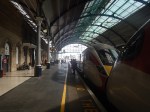
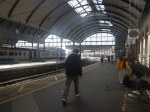
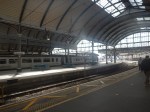
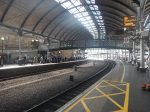
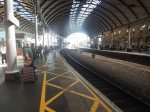
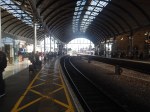
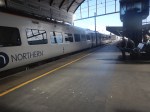

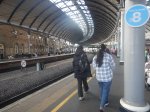

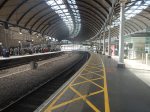
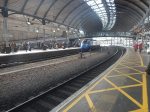
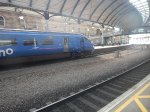
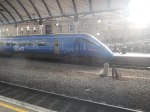
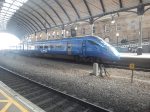
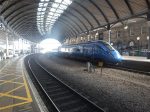
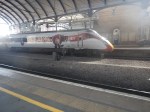

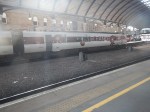
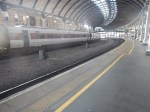
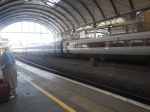
Note.
- On my two train changes yesterday, I needed to buy a ticket for the next leg of my journey and I had to walk miles to the ticket office.
- The walk was rather straining on my dodgy knees.
- There are no signs to the ticket office and I only found it due to a helful human.
- In the morning, I missed my connection and had to wait an hour for the next train.
- A lot of these pictures show diesel multiple units, that were working the Northumberland Line to Ashington in Platform 1, surrounded by happy passengers.
- Platform 1 appears to be able to take at least a pair of Class 158 two-car diesel multiple units.
- Platform 1 appears to be electrified with 25 KVAC overhead wires, even if the Northumberland Line isn’t electrified.
- The staff seem extremely pleased with the success of the Northumberland Line.
The staff were very helpful, but it was all very much organised chaos.
But from what I saw yesterday, it appears that something powerful is stirring along the Northumberland Line.
Perhaps what the BBC predicted in Northumberland Line: Railway ‘Could Create Economic Powerhouse’ is starting to happen?
This was the sub-heading of the BBC article.
An “east coast economic powerhouse” stretching from Edinburgh to Leeds could be created if the Northumberland Line rail scheme goes ahead, a public inquiry has been told.
I’m well aware that one busy weekend doesn’t make a powerhouse.
But Northumberland Council must get ready for the next phases of the project.
Larger Zero-Carbon Trains
In Alstom Hydrogen Aventras And The Reopened Northumberland Line, I suggested that Alstom hydrogen trains might be suitable for the Northumberland Line, but these trains have not been seen in the flesh, so they can probably be discounted.
But this is a picture I took yesterday of Platform 1 at Newcastle station.
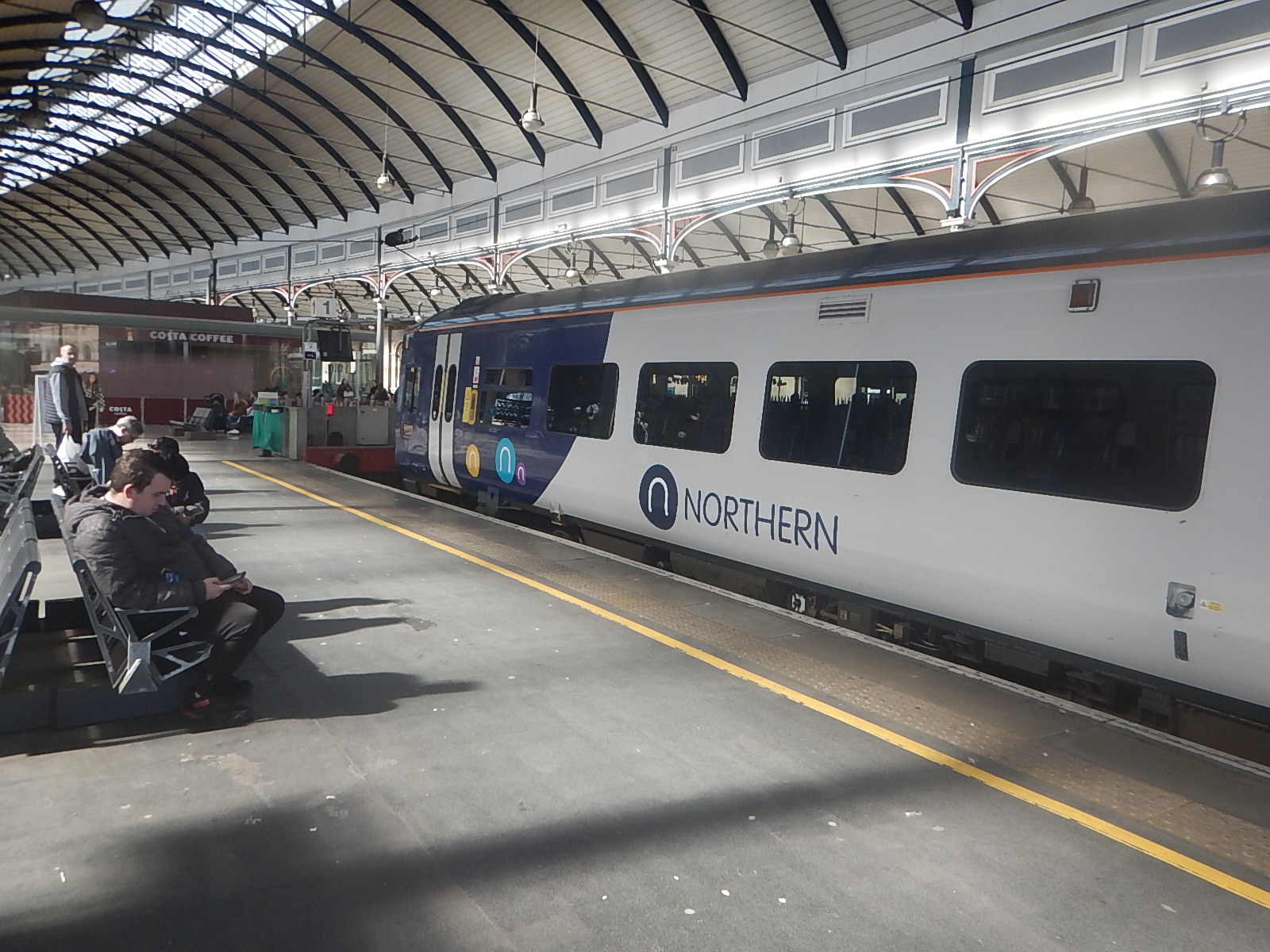
Note.
- The wires of the electrification above the Class 158 diesel multiple unit.
- An out and back trip between Newcastle and Ashington is probably less than fifty miles.
In the Wikipedia entry for Merseyrail’s Stadler Class 777 trains, this is said.
In December 2022, a maximum test range of 135 km (84 miles) was achieved, which was “much longer than we expected”.
It would appear that a small fleet of perhaps three trains, that were fitted with pantographs for charging could work the Northumberland Line, without the need for substantial additions to the infrastructure.
In the Wikipedia entry for the new Tyne and Wear Metro’s Stadler Class 555 trains, this is said.
The new trains will be five cars long in fixed formations, with a Jacobs bogie between the inner cars. One centre car will be fitted with a Brecknell Willis pantograph to draw the power from the 1,500 V DC overhead lines. They will also be fitted with regenerative braking technology for greater energy efficiency, and a battery energy storage system that will allow the trains to remain powered and reach the nearest station if the overhead lines fail. This offers the potential to be used on routes that are not fitted with overhead lines that may be added to the network in the future.
As the Class 777 and Class 555 trains appear to be cousins, perhaps those innovative Swiss engineers at Stadler can come up with a 25 KVAC battery-electric Class 555 train, that could charge its batteries in Platform 1 at Newcastle station and then use battery power to get to Ashington and back.
With perhaps a couple of short lengths of 25 KVAC overhead electrification, I feel Stadler could create a battery-electric Class 555 train, that could handle.
- Newcastle and Ashington and on to Newbiggin, as I wrote about in Onward To Newbiggin-by-the-Sea For The Northumberland Line?.
- Newcastle and Carlisle
- Carlisle and Morpeth via Newcastle
- Hexham and Nunthorpe via Newcastle
How many other branches from electrified main lines in the UK, could be handled by such a train?
How about these routes for starters.
- Darlington and Bishop Auckland
- Darlington and Saltburn
- Preston and Blackpool South.
- Skipton and Preston via Colne.
- Lancaster and Morecambe
- Leeds Metro
- Llandudno Junction and Blaenau Ffestiniog
- Middlesbrough and Whitby.
- Sheffield and Huddersfield
- Sheffield and Leeds
- Sheeffield and Manchester Piccaduilly
Sheffield and York
The Class 555 trains would also have other advantages.
- In the Newcastle area, I’m sure the Tyne and Wear Metro could probably service them.
- They have the Stadler steps for easy access.
- Most Stadler trains, tram-trains and trams are good at climbing hills.
Great British Railways could do a lot worse, than buying a reasonable number of Class 555 battery-electric trains.
Cafe Plans For Derelict Building On New Rail Line
The title of this post, is the same as that of this article on the BBC.
This is the sub-heading.
A disused building on a newly reopened railway line could be saved if planners back proposals, external for its renovation.
These three paragraphs give more details.
One structure at Bedlington station in Northumberland has already been demolished but plans have been submitted which would save the building on the northbound side.
It was used until 1964 when the line closed, and while passenger services on the Northumberland Line between Ashington and Newcastle resumed last year, a new station in Bedlington has not yet been completed.
East Bedlington Parish Council chair Keith Grimes said: “It’s one of the oldest buildings in the parish, so it’s definitely worth keeping.”
I wrote about my visit to the new Northumberland Line in My First Trip On The Northumberland Line – 18th December 2024.
If the Northumberland Line is going to attract leisure travelers, a sprinkling of cafes along the line is a must.
These are pictures of Bedlington from my earlier trip.
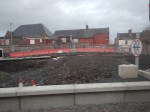
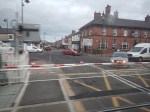
Note.
- I’d hoped I’d got a picture of the prospective cafe. But no luck.
- I didn’t see any Bedlington Terriers either.
- But then there are several of those excellent and distinctive dogs, near where I live in London.
The station should be operational this year, but it appears there’s still a lot of work to do.
Access To The Coast
This OpenRailwayMap shows the railway lines of Northumberland in relation to the coast.
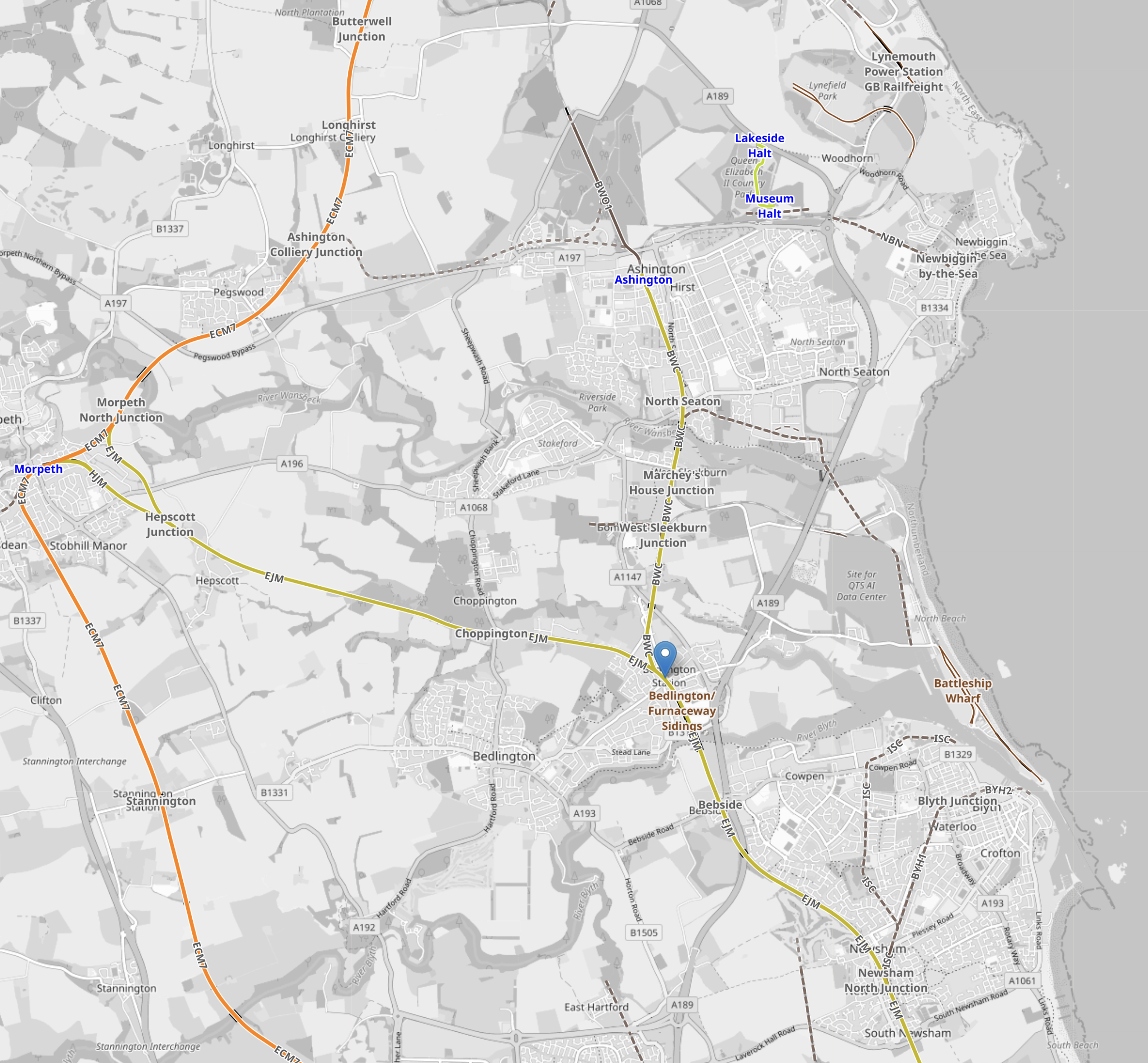
Note.
- The orange line is the East Coast Main Line between Newcastle and Edinburgh.
- Morpeth is the station on the Western edge of the map.
- The yellow line is the Northumberland Line between Newcastle and Ashington.
- The site of the new Bedlington station is indicated by the blue arrow.
It looks to me, that there are a lot of disused railway lines, that could be used to develop the Northumberland Line into a system with a much wider coverage.
The Wikipedia entry for the Northumberland line does say this about Ashington station.
Ashington station has been developed in such a way that an extension, such as that previously proposed to Newbiggin-by-the-Sea and Woodhorn could still be built, albeit part of a separate scheme.
Note.
- Newbiggin-by-the-Sea is East of Ashington.
- Woodburn is on a line that goes to the West of the East Coast Main Line.
- The extensions would open up the area for more housing and rail-oriented leisure activities.
This OpenRailwayMap shows the railway lines to the West and North of Newcastle.
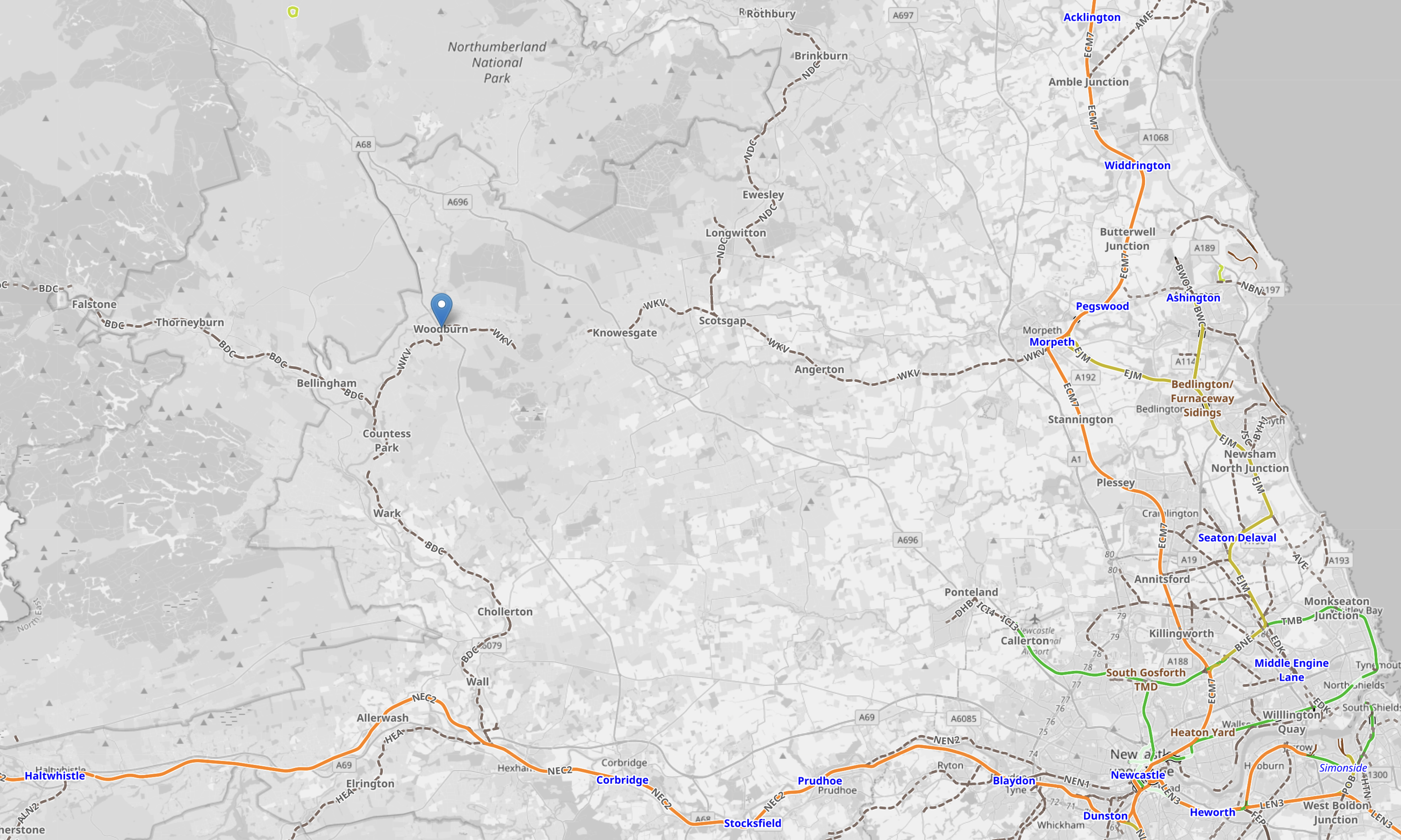
Note.
- The orange line on the East side of the map is the East Coast Main Line between Newcastle and Edinburgh via Morpeth.
- The yellow line to the East of the East Coast Main Line, is the Northumberland Line between Newcastle and Ashington.
- The green line is the Tyne and Wear Metro
- The orange line going along the bottom edge of the map is the Tyne Valley Line between Newcastle and Carlisle via Corbridge and Hexham.
- All the lines meet at Newcastle station.
- Woodburn station is indicated by the arrow on disused lines that connect Morpeth on the East Coast Main Line with the Tyne Valley Line.
Reopening the lines to Woodburn would create a new railway, that would encircle Newcastle and surely create lots of housing, business and leisure opportunities.
But let’s get Phase One finished first and see how passenger numbers develop.
Northumberland Line ‘Phased Reopening’ By Summer
The title of this post, is the same as that as this article on the BBC.
These are the first three paragraphs.
The Northumberland Line will partially reopen this summer days after it was announced it would not be in service until the end of 2024.
Conservative county council leader Glen Sanderson said there had been “challenges” with the project, but when fully reopened the rail line would be a “game changer” for travellers.
The stations due to be open in the summer are Seaton Delaval, Ashington and Newsham.
In my lifetime, the Victoria, Jubilee and Elizabeth Lines in London, have opened on a phased manner.
So why shouldn’t the Northumberland Line?
In fact given the route, it could be opened with a shuttle between Ashington and Newcastle stations, to train drivers and test the concept.
- The intermediate stations could be added over a couple of years.
- I would add a station with lots of parking early.
- If the views live up to the pictures, a lot of passengers will have a day out for the views.
- I’m sure enthusiasts and locals, especially with their kids will be exploring this short railway in droves.
To me, this is definitely a line, that will suffer from London Overground Syndrome.
This OpenRailwayMap shows the railways to the North of Newcastle.
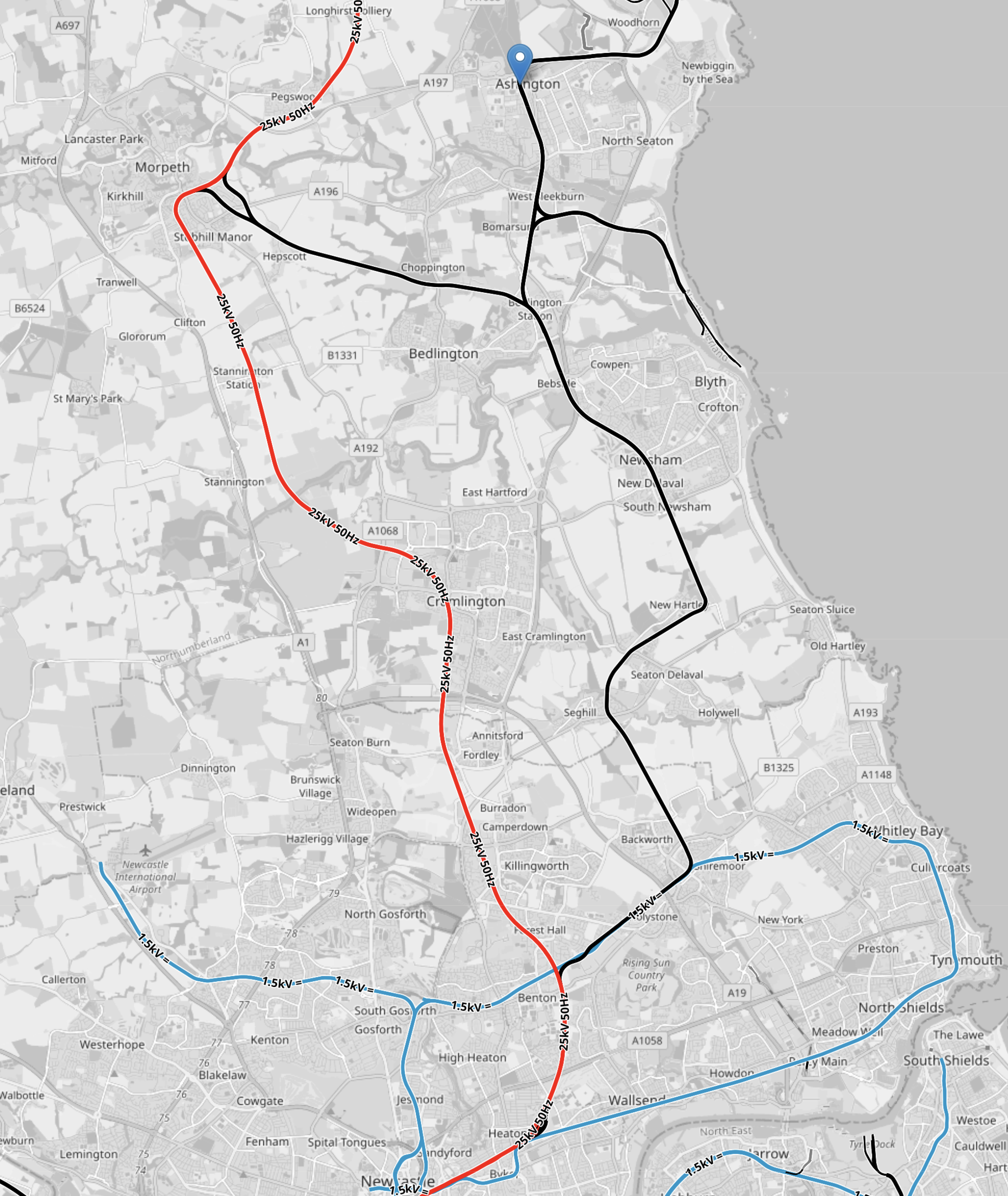
Note.
- The red track is the electrified East Coast Main Line.
- Ashington station is at the top of the map and is marked by a blue arrow.
- The blue track is the Tyne and Wear Metro.
- Newcastle station is where the Metro crosses the East Coast Main Line at the bottom of the map.
- The black trackrunning North-South to the East of the East Coast Main Line is the Northumberland Line.
This OpenRailwayMap shows the railways to the North of Ashington.
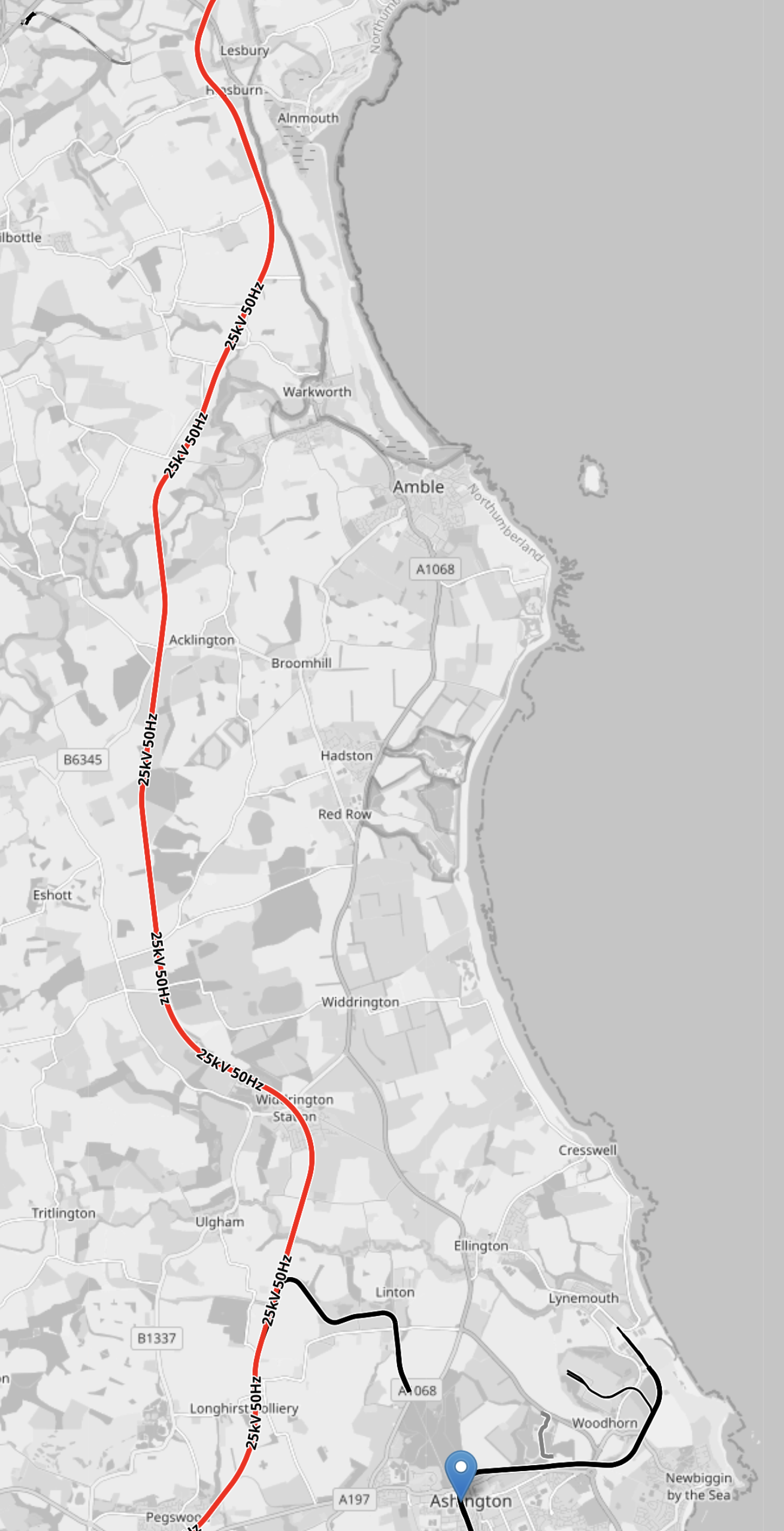
Note.
- The red track is the electrifed East Coast Main Line.
- Ashington station is at the bottom of the map and is marked by a blue arrow.
- There are a few disused colliery lines to the North of Ashington.
I believe that these railways to the North of Newcastle could and should be developed.
The East Coast Main Line Is Congested
Consider.
- The East Coast Main Line has only two tracks.
- It is one of only two rail routes between England and Scotland.
- It carries local services as well as long distance express services.
- In recent years more services have been added by Lumo and TransPennine Express.
It is my belief that applying digital signalling between Newcastle and Edinburgh via Berwick, should be a high priority project to increase the capacity of the East Coast Main Line.
Local Services Can Be Extended
The Northumberland Line opens up possibilities for extension, where track already exists..
- From Ashington to Newbiggin-on-Sea and Lynemouth.
- From Bedlington to Morpeth and the East Coast Main Line.
- From Bedlington to North Blyth.
It would appear that it might be possible to run a new line North from Ashington to connect with the East Coast Main Line.
Distances Are Short
Consider.
- Ashington and Newcastle is 20.6 miles
- Newcastle and Morpeth is 16.6 miles
- Newcastle and Berwick is electrified.
- In The Data Sheet For Hitachi Battery Electric Trains, I stated that Hitachi’s battery-electric express trains have a range of 43.5 miles on one battery. A slower commuter train would certainly achieve this distance.
I have a feeling that a passenger-friendly network of battery-electric trains can be developed along and around the Northumberland Line and the East Coast Main Line.
Are LNER Going To Take On The Airlines?
Nine years ago, I wrote Edinburgh – Plane Or Train?, after a trip to Scotland, where I took easyJet up and came back in First Class by train.
- Both trips were about five hours door-to-door.
- The flight was about six quid more,
- But I got free food and drink on the train.
- Security on the plane was a pain.
- I had to take my passport for identification at Stansted.
I haven’t flown internally in Great Britain since, although, I have flown to Belfast.
For shorter flights the market is going towards rail, as these posts seem to suggest.
- 2.7M Tonnes Of Co2 Could Be Saved Per Year If UK Domestic Flights Went Electric
- Air Travellers To Be Hit By Carbon Charge On All Tickets
- Climate Change ‘May Curb Growth In UK Flying’
- France Bans Short-Haul Flights To Cut Carbon Emissions
- KLM Replaces Plane With High Speed Train
- Lumo Carbon Data Shows Its Trains Are 22 Times Greener Than Flying
- Next Time I’ll Go By Train
- Ryanair One Of Europe’s Top Polluters, EU Data Suggests
- Stop Taking Internal Flights And Go Green, Says Lib Dem Contender Davey
The climate seems to be turning against flying short-haul.
This is a paragraph, in this press release from LNER, which is entitled First Tri-Mode Long Distance Trains For The East Coast Main Line.
This new fleet of trains will keep LNER on track to reduce its emissions by 67 per cent by 2035 and be net zero by 2045. LNER has already reduced carbon emissions by 50 per cent compared with 2018/19. Per mile, LNER trains produce 15 times less carbon emissions than a domestic flight.
Are LNER building a number of climate-based sticks, with which to beat the airlines on the routes, where they compete?
These are my thoughts on the various routes, where LNER compete with airlines.
Newcastle
Newcastle is an interesting one.
- Newcastle station is in the city centre and is on the Tyne and Wear Metro.
- London King’s Cross is one of London’s major Underground hubs.
- There are lots of buses and local trains within walking distance of both stations.
- There are three trains every two hours and an additional eight trains per day (tpd) between the two London King’s Cross and Newcastle stations.
- Lumo also run five tpd on the route.
- There are generally no security delays at rail stations.
- London King’s Cross is laid out to maximise passenger flows. If it gets busy, everybody just walks out into King’s Cross Square.
- I’ve never had a problem at Newcastle station with overcrowding.
Perhaps, if you live near one of the airports, flying is more convenient.
LNER’s weapons against the airlines between London King’s Cross and Newcastle will be convenience and journey times.
Convenience is all about the location of the stations, their excellent local transport networks and good walking routes around the station.
Journey times will only get better, as the magic of digital in-cab signalling, allows the Azumas, the new CAF tri-mode long distance trains and the few remaining InterCity 225s to show what they were designed to do.
Dalton-on-Tees, where the first phase of the digitally signalling will end, is 39.8 miles South of Newcastle, so once the Newcastle train is passes Dalton-on-Tees on the East Coast Main Line, it will be a digital-signalled electrified railway all the way to Woolmer Green.
- Dalton-on-Tees is 39.8 miles South of Newcastle
- Woolmer Green is 244.8 miles South of Newcastle.
- Dalton-on-Tees and Woolmer Green is 205 miles.
- Newcastle and Dalton-on-Tees takes 37 minutes.
- Woolmer Green and King’s Cross takes 18 minutes
- Trains take typically an average three hours and nine minutes between London and Newcastle.
- A typical train time by LNER between Dalton-on-Tees and Woolmer Green is two hours and 14 minutes.
- This is an average speed of 91.8 mph between Dalton-on-Tees and Woolmer Green.
- Between London King’s Cross and Newcastle is fully-electrified.
I can build a table of timings and savings at various average speeds.
- 120 mph – 103 minutes – two hours and 38 minutes – 31 minutes
- 125 mph – 98 minutes – two hours and 33 minutes – 36 minutes
- 130 mph – 95 minutes – two hours and 30 minutes – 39 minutes
- 135 mph – 91 minutes – two hours and 26 minutes – 43 minutes
- 140 mph – 88 minutes – two hours and 23 minutes – 46 minutes
Note.
- The first field is the average speed between Dalton-on-Tees and Woolmer Green.
- The second field is the time between Dalton-on-Tees and Woolmer Green.
- The third field is the time between London and Newcastle.
- The fourth field is the saving over current timings.
- The London and Newcastle time is calculated by adding the times for the three sections together.
I have regularly timed trains at a very constant 125 mph, so with digital signalling, I suspect an average of 130 mph is possible.
This would mean, times of a few minutes under two hours and thirty minutes could be possible between London and Newcastle.
Edinburgh
Edinburgh builds on the improvements South of Newcastle.
Edinburgh station Waverley is a well-connected station.
- There are lots of buses, local trains and the Edinburgh Tram within walking distance of Edinburgh Waverley station.
- There are three trains every two hours and an additional seven tpd between the London King’s Cross and Edinburgh Waverley stations.
- Lumo also run five tpd on the route.
- Trains take typically an average four hours and thirty minutes between London and Edinburgh Waverley.
- Any savings because of the digital in-cab signalling between London and Newcastle can be applied to London and Edinburgh Waverley services.
As my calculations showed that averaging 130 mph between Dalton-on-Tees and Woolmer Green could save 39 minutes on journey times, I am fairly sure than a sub-four hour journey time will be possible between London and Edinburgh Waverley.
It should also be noted that that the power supply has been improved between Newcastle and Edinburgh Waverley.
- The distance between Newcastle and Edinburgh Waverley is 124.2 miles
- Newcastle and Edinburgh Waverley takes around one hour and 30 minutes.
- This is an average speed of 82.8 mph between Newcastle and Edinburgh Waverley.
- Between London King’s Cross and Edinburgh Waverley is fully-electrified.
As the record time for between London King’s Cross and Edinburgh Waverley was set by an InterCity225 train in 1993 at three hours and twenty-nine minutes, I suspect that with more digital signalling and some track improvements, that there are more journey time improvements to be squeezed out.
I certainly believe that a time of three hours and fifty minutes between London and Edinburgh Waverley will be regularly achieved. This is a journey time saving of around forty minutes.
Dundee
Dundee has an airport and a station on the East Coast Main Line.
Trains between London King’s Cross and Dundee take around five hours and 45 minutes.
LNER run three trains per day to and from London King’s Cross and one tpd to and from Leeds.
CrossCountry also run services.
Loganair has two flights per day to Heathrow.
Aberdeen
Aberdeen builds on the improvements South of Edinburgh.
The four direct tpd between London and Aberdeen take around seven hours and ten minutes.
This should come down to around six hours and thirty minutes with the journey time savings between London King’s Cross and Edinburgh Waverley.
Will this tempt travellers from the airlines?
Battery-Electric Trains To Dundee And Aberdeen
One thing that will help, is that Edinburgh and Aberdeen is to be partially electrified.
InPiling Work To Get Underway To Electrify Line To Fife, I included this Network Rail map of the electrification.
This map has been downloaded from the Network Rail web site.
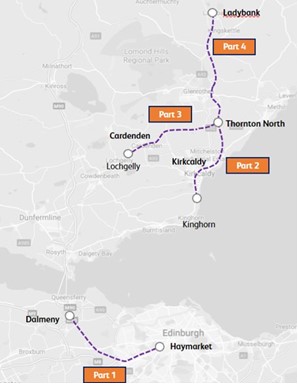
The electrification is split into four phases.
- Haymarket and Dalmeny – 25 km
- Kirkcaldy and Thornton North – 25 km.
- Lochgelly and Thornton North – 20 km.
- Thornton North and Ladybank – 34 km.
Note.
- The last three phases of electrification connect to Thornton North.
- The new rail link to Leven will also be electrified. and connected to Thornton North.
- The Forth Bridge is not to be electrified.
As Ladybank station is just 91.4 miles from Aberdeen, I suspect LNER will use Hitachi Intercity Battery Hybrid Trains to serve Aberdeen.
If these trains haven’t got the range, then I suspect LNER’s new CAF Tri-Mode Trains could handle the route.
Inverness
Inverness has a problem.
Zero-carbon trains will be unlikely to get to the city without full electrification of the Highland Main Line.
- Dunblane is the nearest electrified station to Inverness, but it is 146.2 miles away over a route with lots of steep climbs.
- I doubt that a battery-electric train could handle that route.
One solution would be for LNER to run the new CAF Tri-Mode Trains to Inverness using HVO or biodiesel.
Glasgow
Glasgow is the only other Scottish city with an airport and good rail connections to the South.
I am sure that Avanti West Coast will target airline passengers, if LNER prove it is a successful policy.
Other Factors
These are other factors, that will come into a traveller’s choice.
First Class
Some travellers like a bit more comfort and service.
Ability To Work
Some travellers like to work on a train.
You Don’t Get Tables On a Plane
I like to open a paper or magazine flat, which is difficult on a plane.
Views Tend To Be Better On a Train
Providing you get a window!
Parking Tends To Be Better At An Airport
But it may be more expensive!
Security Is Less Hassle On A Train
At the moment!
You Don’t Need To Prove Your Identity On A Train
Not in the UK! Yet!
Conclusion
It looks like LNER can offer the airlines to four of our major Northern cities serious zero-carbon competition.
Could The New Northumberland Line Be Used As A Diversion For The East Coast Main Line?
This question was asked by a friend, so I thought I’d investigate.
This OpenRailwayMap shows the Southern end of the Northumberland Line.
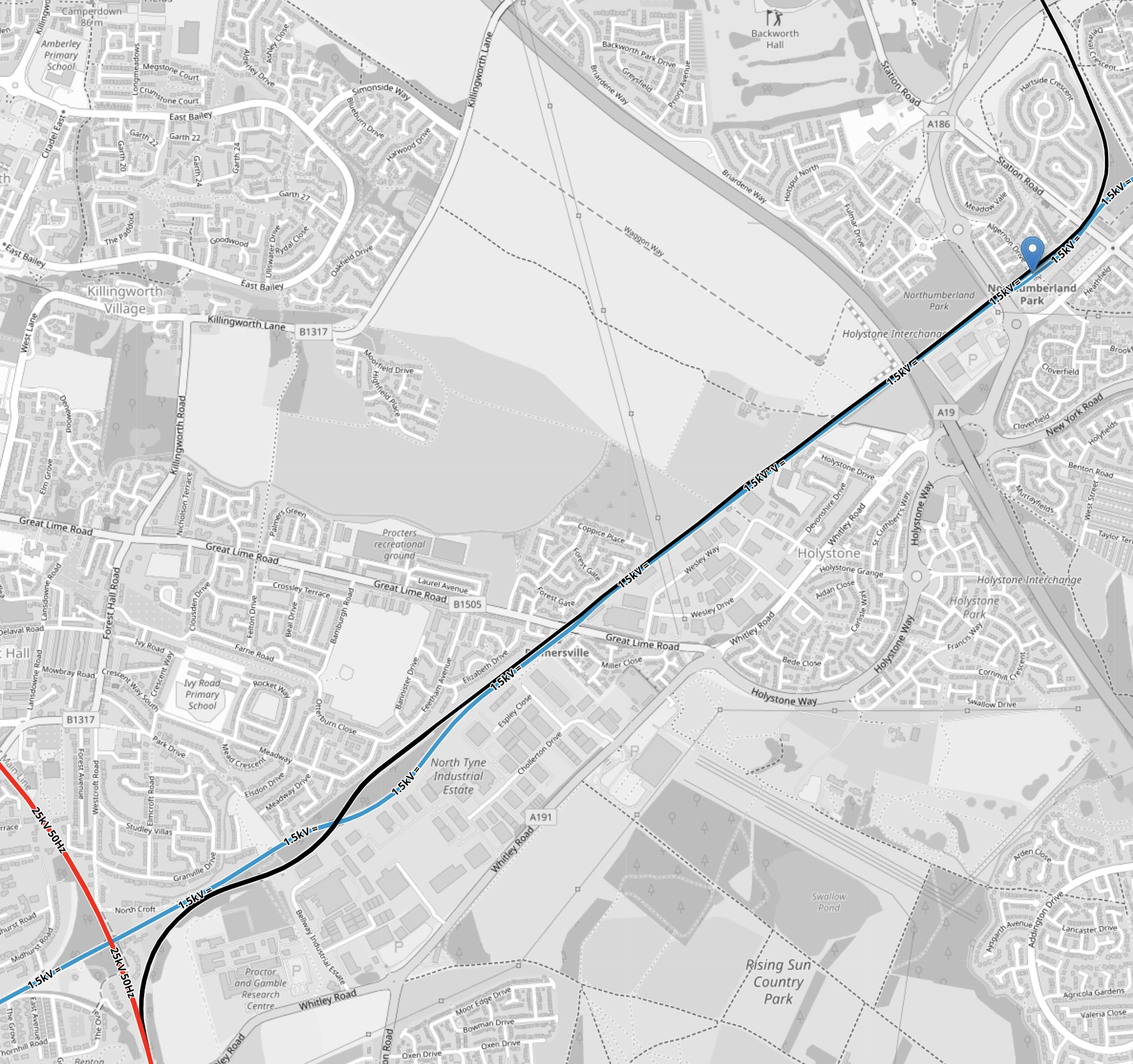
Note.
- Tracks in red are the 25 KVAC overhead electrified East Coast Main Line.
- Tracks in blue are the 1.5 kV overhead electrified Tyne and Wear Metro.
- The track in black running alongside the Metro and then turning North is the Northumberland Line.
- The Northumberland Line is mainly double track, with some single-track sections.
- The blue arrow indicates Northumberland Park station.
At Benton Junction junction in the South-West corner of the map, trains can be handled in the following directions.
- Trains going North on the East Coast Main Line can go North on the Northumberland Line.
- Trains going South on the Northumberland Line can go South on the East Coast Main Line.
Currently, only the occasional freight train uses the junction.
When the Northumberland Line opens, there will be two trains per hour (tph) in each direction.
This second OpenRailwayMap shows the Northern end of the Northumberland Line.
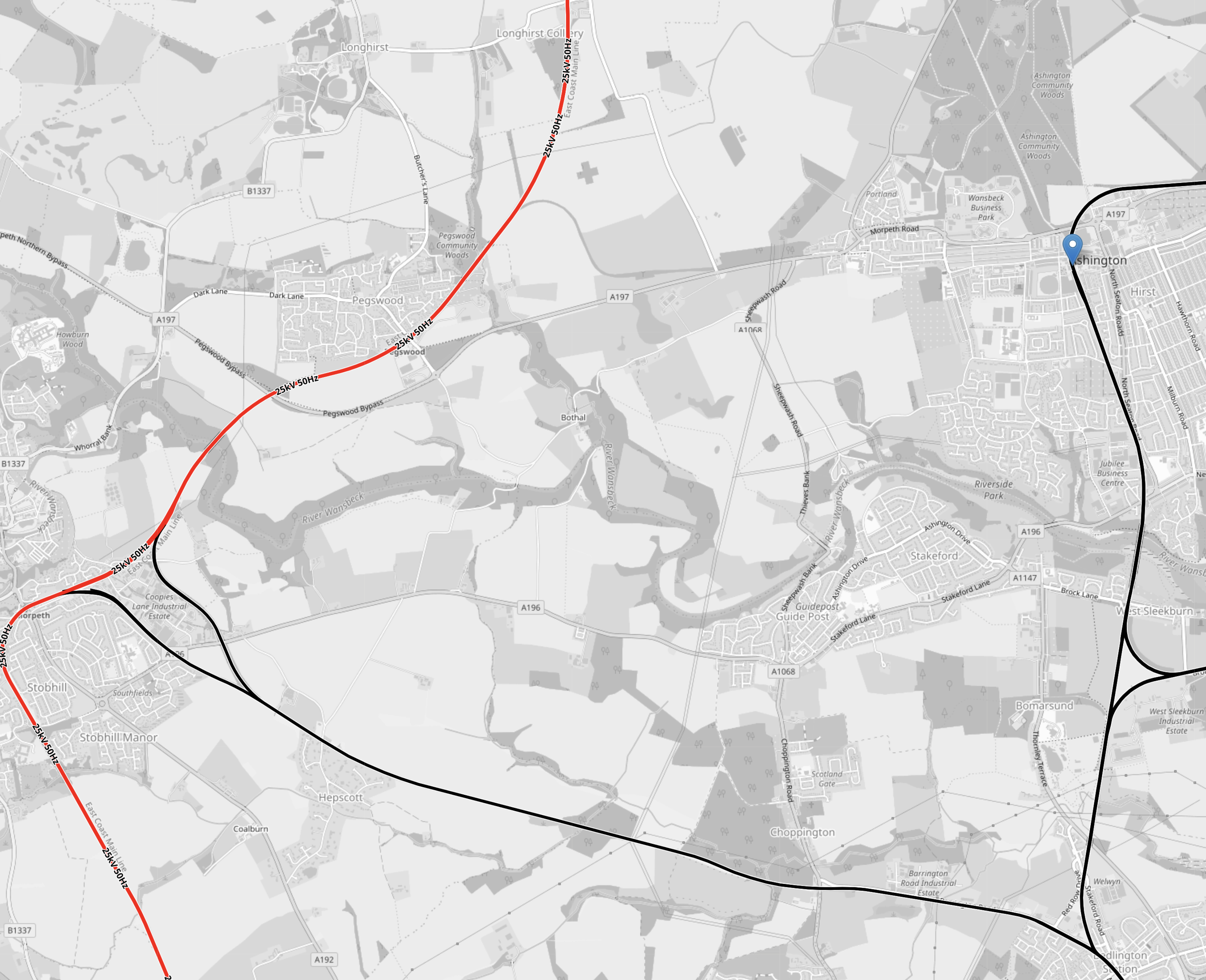
Note.
- Tracks in red are the 25 KVAC overhead electrified East Coast Main Line.
- The blue arrow indicates the Ashington station, which will be the Northern terminus of Northumberland Line services.
- The Northumberland Line runs down the Eastern side of the map.
- The village of Bedlington, which will have a station on the Northumberland Line is in the South-East corner of the map.
- A second track connects Bedlington on the Northumberland Line to the East Coast Main Line, where trains can go North or South.
It does appear that because of the track layout at both ends of the Northumberland Line, the following is possible.
A train going in either direction on the East Coast Main Line can use the Northumberland Line as a diversion.
Passenger services between Newcastle and Morpeth could use the Northumberland Line.
Passenger services between Newcastle and North of Morpeth could use the Northumberland Line.
Note.
- Although High Speed Two through Newcastle is probably dead, there is still a need to increase capacity through the area.
- I suspect diversions could be useful, when there were problems between Newcastle and Morpeth.
- Could the Northumberland Line be used for freight trains to increase capacity through Newcastle?
- We shouldn’t ignored the possibilities offered by a reopened Leamside Line.
But I suspect that as housing and other developments get proposed in Northumberland, that more passenger services will be developed.
Conclusion
The Northumberland Line will have limited use for diversions, but could general other services.
Northern Rail Apologises Over Disruption On Durham Coast Line
The title of this post, is the same as that of this article on the Northern Echo.
These is the first two paragraphs.
Easington MP Grahame Morris has invited Northern Rail executives and the Rail Minister to travel on the Durham Coast Line following “another weekend of rail chaos”.
As the football season kicked off and Seaham Food Festival attracted thousands of people, travellers were left angry and disappointed as they were unable to board overcrowded rail services at Horden and Seaham train stations.
The article then goes on to say that this has been an ongoing problem for several years.
I would have thought that to maximise revenue on any transport service, it is best to provide enough stagecoaches, charabancs, buses, trams or trains.
Could this business naivety be why the original Northern went bust?
What Should The Government Do?
As Northern is now run by the Government’s Operator Of Last Resort, it is up to the Government.
In Boris Johnson Backs Station Opening Which Could See Metro Link To County Durham, I report on an exchange between Boris Johnson and an MP in Prime Minister’s Questions.
These are my two main improvements.
Reopen Ferryhill Station And The Leamside and Stillington Lines To Create A New Route
Boris Johnson talked about reopening Ferryhill station, which could be key to opening up a second route between Teesside and Newcastle and Sunderland.
- Ferryhill station would be on the East Coast Main Line and electrified to handle battery-electric trains.
- Ferryhill terminal would be an ideal Southern terminal for a reopened Leamside Line, which most stakeholders seem in favour of, as it would take the pressure off the East Coast Main Line to the South of Newcastle and connect large areas to the rail network and in particular, the Tyne and Wear Metro.
- Ferryhill station would be at the Northern end of the freight-only Stillington Line, which runs South-Eastwards from the East Coast Main Line at Ferryhill to Stockton and Hartlepool or Middlesbrough.
- A combination of the Leamside and Stillington Lines would open up a second route between the two conurbations.
It might also be possible to run a semi-fast York and Newcastle service via Northallerton, Yarm, Thornaby, Stockton, Ferryhill and the Leamside Line.
- This service would only run on the East Coast Main Line, where there were four tracks to the South of Northallerton.
- It could be run by a battery-electric train.
- A battery-electric train could be charged at York, Ferryhill and Newcastle.
This article on the Northern Echo is entitled ‘Rapid’ Progress On Reopening Leamside Line, Connecting County Durham And Washington.
Things don’t seem to be standing still.
There would appear to be lots of scope for rail development between the Tyne and Wear in the North and the Tees in the South.
If the go-ahead is given by Government to develop the Leamside and Stillington Lines, the great thing is that construction of the new route will not affect anything on the important East Coast Main Line, as Network Rail would just be creating a railway by-pass around one of busiest sections of main line, that will be used by local and freight trains.
Two routes through the area, would certainly double the capacity, if both had an hourly train.
Battery-Electric Trains
I mentioned battery-electric trains as the rolling stock for a possible semi-fast service between York and Newcastle.
We are accumulating a large pile of surplus Class 350, 387 and 379 trains.
- They are being replaced by modern units.
- They were built within the last twenty years.
- They are all high-quality four car trains.
- They can all be modified for a 110 mph operating speed, so could venture on the East Coast Main Line if needed.
These trains have been mentioned several times as possibilities for conversion to battery-electric trains.
With a few strategically-placed charging systems, these would be ideal trains for services in the area.
Conclusion
It would be a great improvement for train services in the North-East.
My first step would be to convert the Hexham and Nunthorpe service via Newcastle, Sunderland, Seaham, Horden and Middlesbrough to battery-electric operation, by adding charging at Hexham and Nunthorpe stations.
Some are keen on hydrogen trains for this route, but these will have a longer gestation period.
I would also suspect that travellers in the North-East would prefer jam today, rather than possibly inferior jam sometime in the future.
Battery-electric trains based on the train classes I named would also be ideal for the Northumberland Line and the Salburn and Bishop Auckland service.
Trains: £34m For Revival Of 50-Year-Old North-East Railway Line
The title of this post, is the same as that of this article on the Northern Echo.
These are the introductory paragraphs.
A £34 million investment to reopen a North-East rail route that closed more than 50 years ago has been announced by Transport Secretary Grant Shapps.
The funding, announced today, January 23, is to progress plans to reopen the Northumberland Line between Newcastle and Ashington, which closed to passengers in 1964 as part of the Beeching cuts.
The money will fund preparatory works, including land acquisition, detailed design work and early site works.
The general tone of the article and the tone of comments from interested parties is welcoming and generally positive.
The Northumberland Line
In the Wikipedia entry for the Blyth And Tyne Railway, there is a section, which is entitled 2019-Present: Revised Plans And The Northumberland Line Project, where this is said about the design of the Northumberland Line.
The revised proposals, released in July 2019, are reduced in scope from the plan considered in the 2016 GRIP 2 study and propose a four-phase project allowing a reduction in the initial cost of the scheme; the initial phase, at an estimated £90 million, would see the creation of new or reopened stations at Northumberland Park, Newsham, Bedlington and Ashington as well as some line-speed upgrades, extension of the double track section further to the south of Newsham, creation of turn-back facilities at Ashington and some level crossing upgrades or closures Two further stations, at Seaton Delaval and Blyth Bebside (formerly Blyth Park & Ride), and additional line-speed improvements are suggested for Phase 2 while Phases 3 and 4 would deliver further line-speed improvements (including signalling upgrades) and an additional passing-loop at Seaton Delaval respectively. Previously proposed stations at Seghill and Woodhorn appear to have been dropped from the scheme.
There is also a lot more detail in this article on Rail Engineer, which is entitled Beeching Reversed: Reopening Of The Northumberland Line.
These are a few of my thoughts, based on Wikiiedia, Google Maps and the Rail Engineer article.
The Current Tracks Between Newcastle and Ashington
I will now follow the route of the Northumberland Line in a series of maps from where it leaves the East Coast Main Line to Ashington.
Benton Junction
Benton Junction is where the Northumberland Line joins the East Coast Main Line.
This Google Map shows Benton Junction
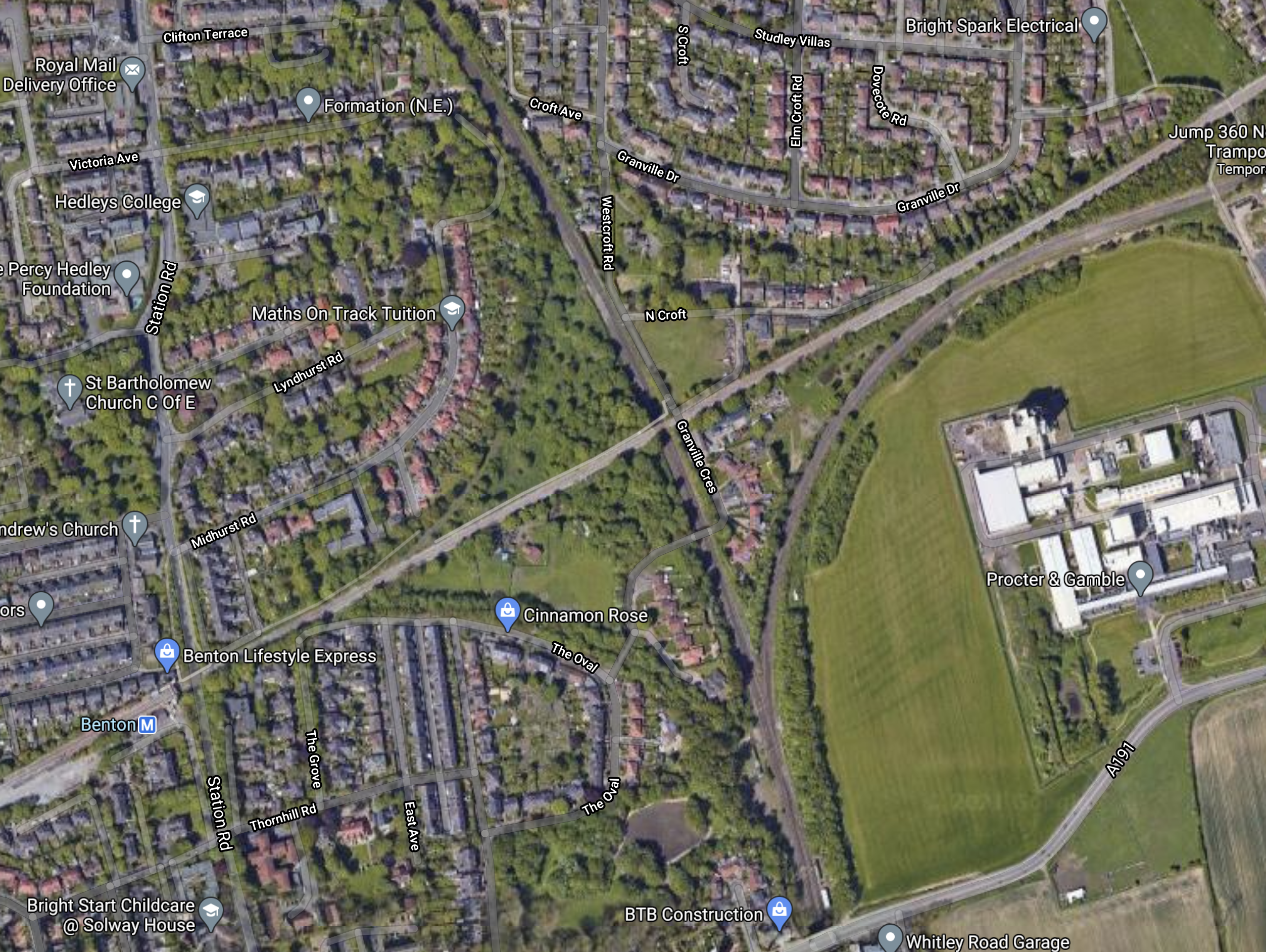
Note.
- The Tyne and Wear Metro (Metro) running East-West across the map.
- Benton Metro station towards the West of the map
- The fully-electrified East Coast Main Line (ECML) running North-South down the map.
- The bridge at the bottom of the map, where the A191 crosses over the ECML, would need to be rebuilt to fit in any extra tracks.
- Manors station is the next station to the South on the ECML.
- Newcastle Central station is 4.3 miles to the South.
- Proctor and Gamble’s site to the East of the Junction.
- The Northumberland Line curves round the Proctor and Gamble site, connecting East and South.
This second Google Map shows the junction at the Southern point of the junction.
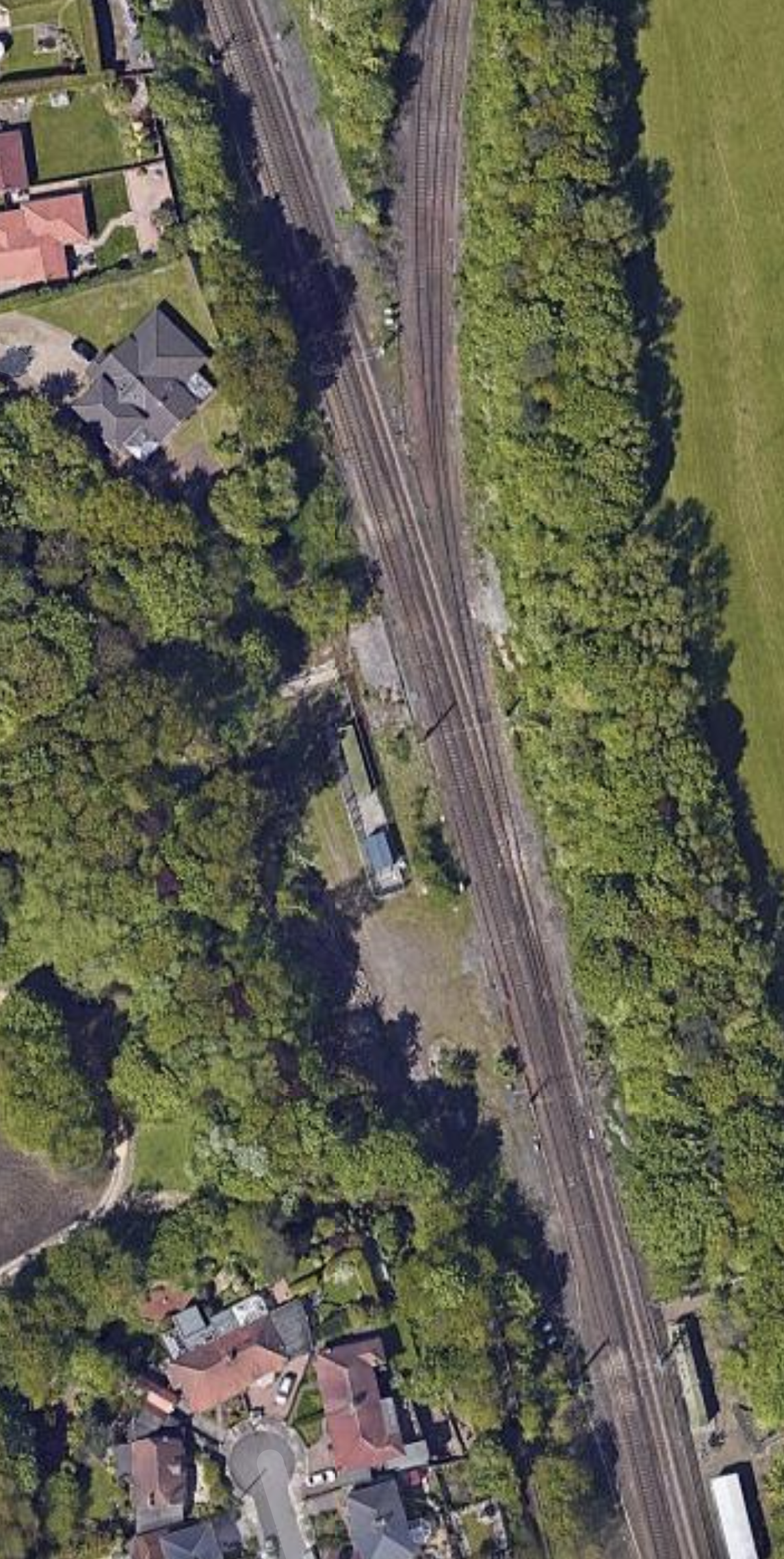
When the Northumberland Line closed to passenger trains in 1964, there were perhaps a dozen trains per day through this junction.
There are now 49, most of which are expresses on the ECML, so I suspect improvements are needed.
If the junction is remodelled, the single track section could be removed and perhaps Proctor & Gamble would like a station for their large workforce.
Single Track Alongside The Metro
After turning East after passing Proctor and Gamble, the Northumberland Line becomes single track and runs along the North side of the Metro.
This Google Map shows a section of the tracks.
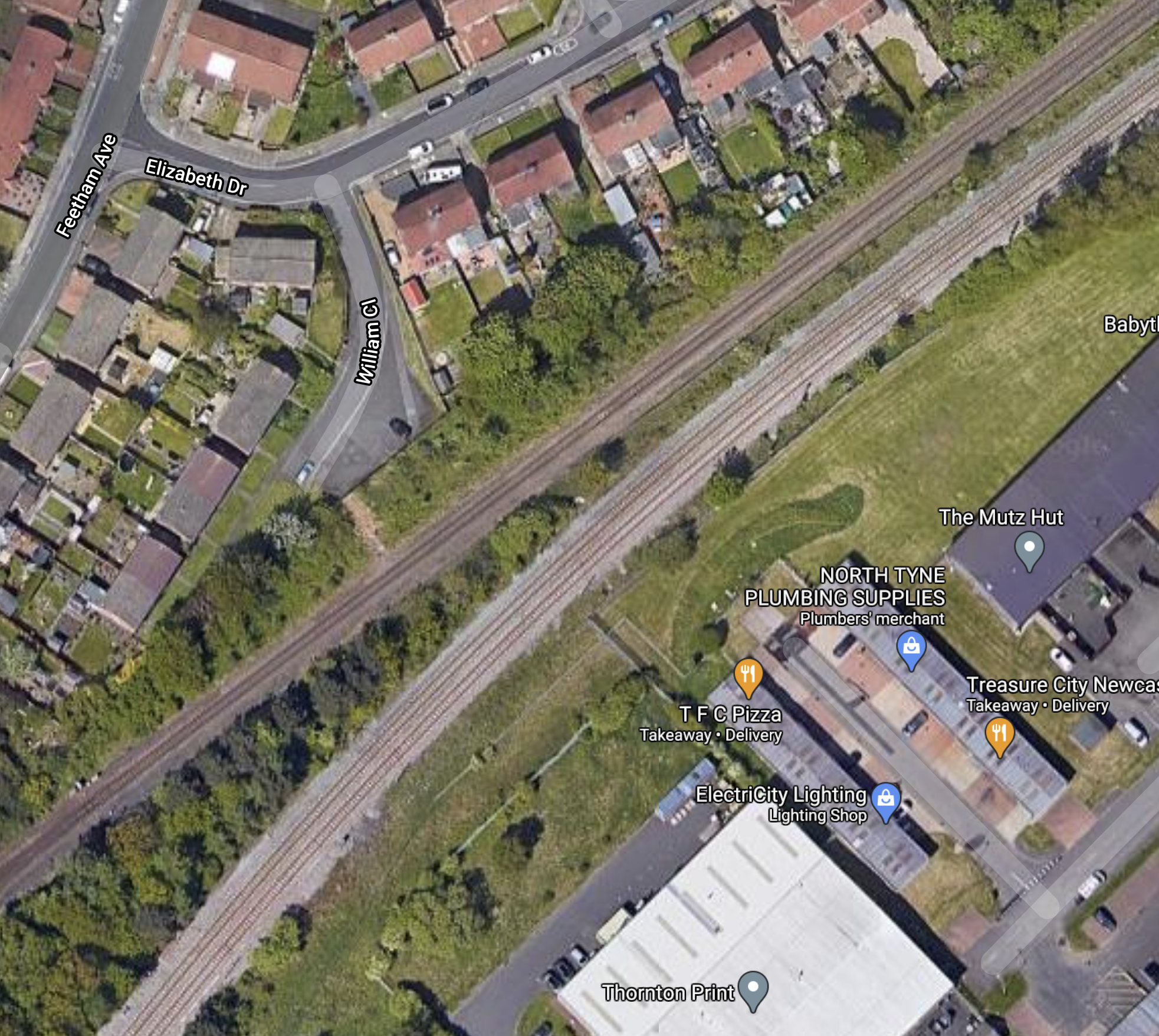
It would appear that if required, there could be space to add an extra track.
Palmersville Station
The Northumberland Line then passes to the North of Palmersville Metro station, as this Google Map shows.
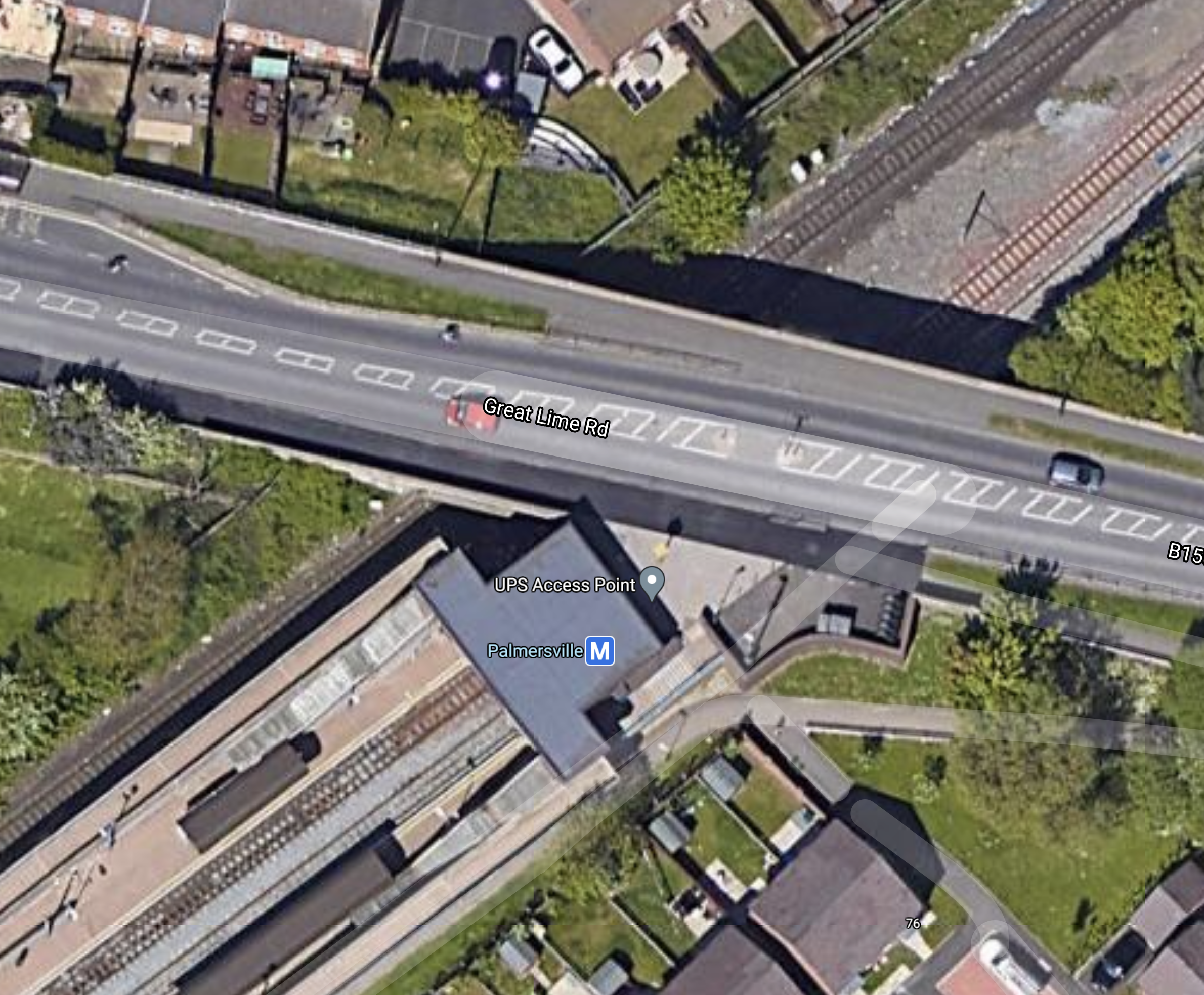
This extract from the Wikipedia entry for the station, indicates plans for connection between the Northumberland Line and the Metro.
Heading east from Palmersville, the route runs alongside a single-track line, which is used by freight services to and from North Blyth and Lynemouth. As of May 2020, proposals exist for the reinstatement of a passenger service over this route, as far as Ashington, as part of the Northumberland Line project. It is expected that additional platforms would be constructed at the nearby Northumberland Park station, in order to accommodate the new rail service, with a predicted September 2023 opening.
My only thought, is that a bi-directional platform could be created at this station, as a simple connection between the two Northumberland Line and the Metro.
Northumberland Park Station
Northumberland Park station is planned to be an interchange between the Northumberland Line and the Metro.
This Google Map shows the station.
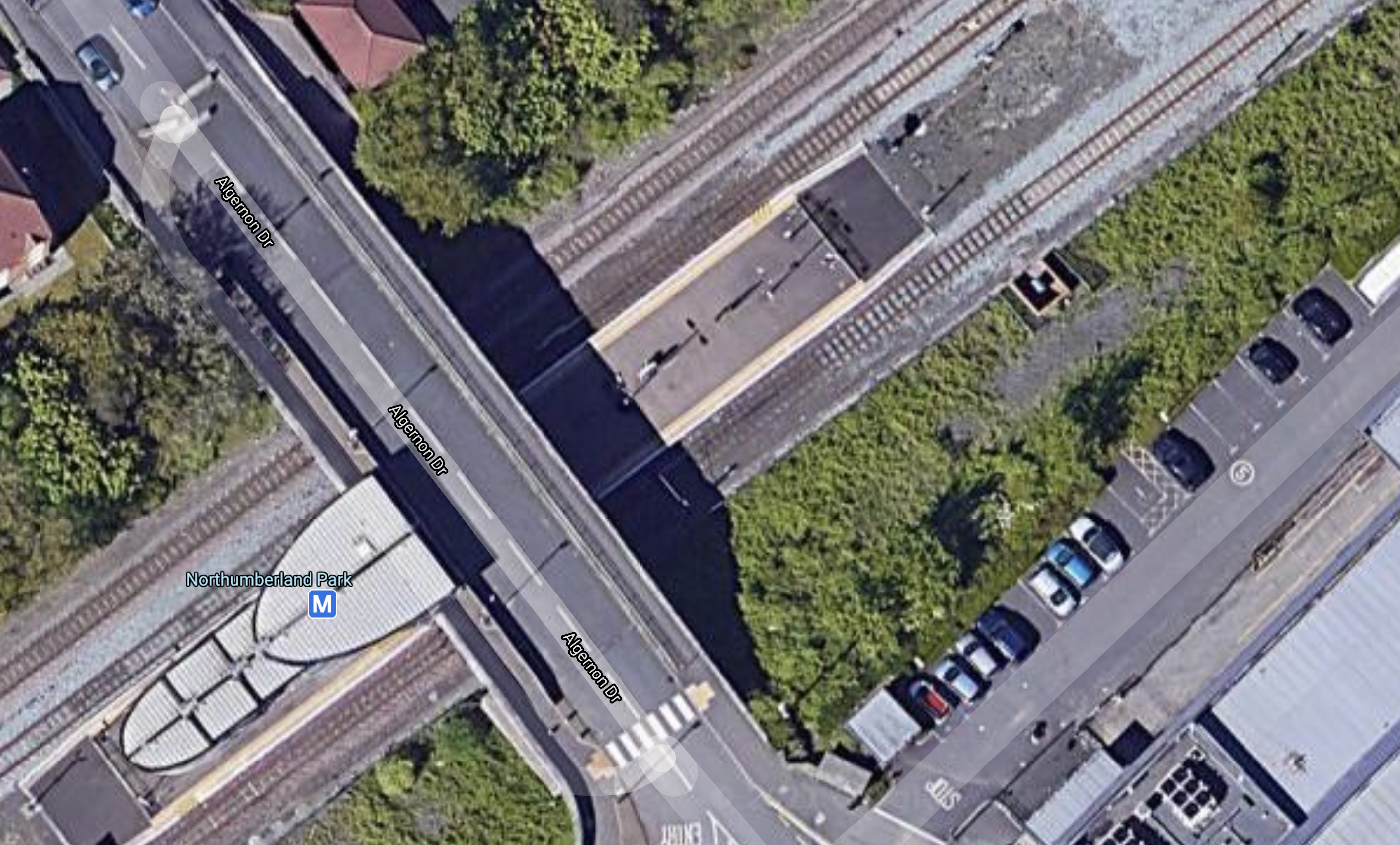
Note.
- The two Metro tracks either side of an island platform.
- The single track of the Northumberland Line alongside.
There would appear to be space to the North of the Metro tracks to squeeze in two tracks, each with a platform for each.
But if the frequency on the Northumberland Line were only two trains per hour (tph), would the simplicity of a single Northumberland Line platform be worthwhile?
North From Northumberland Park
This Google Map shows the track layout to the North East of Northumberland Park station.
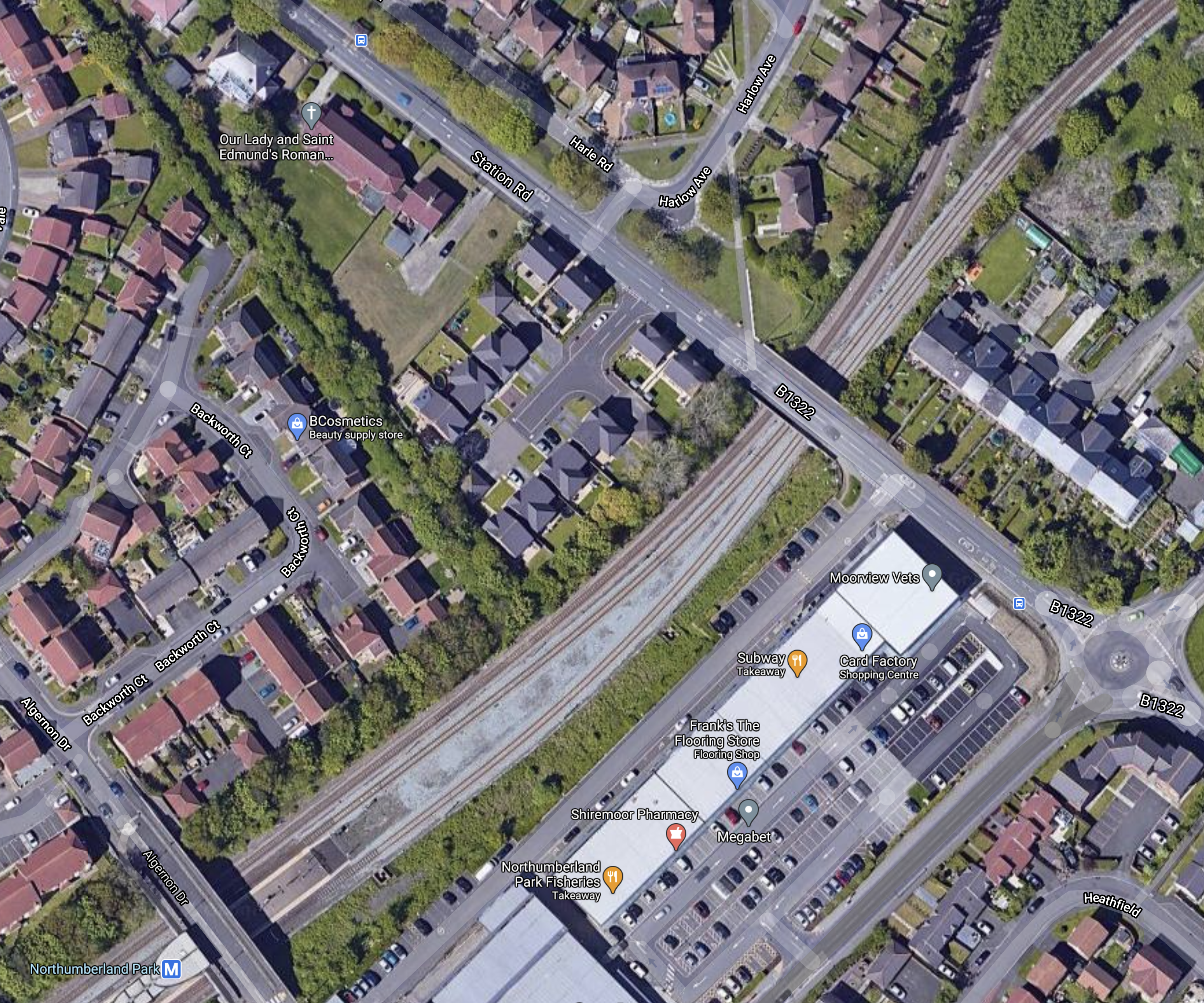
Note.
- Northumberland Park station is in the South West corner of the map.
- The double-tack of the Metro goes diagonally across the map to the North-East corner of the map.
- The Northumberland Line is a single-track line that breaks away to the North.
Would there be enough space to double-track the Northumberland Line through this area?
This 3D image from my virtual helicopter shows the bridge towards the top of the previous map.
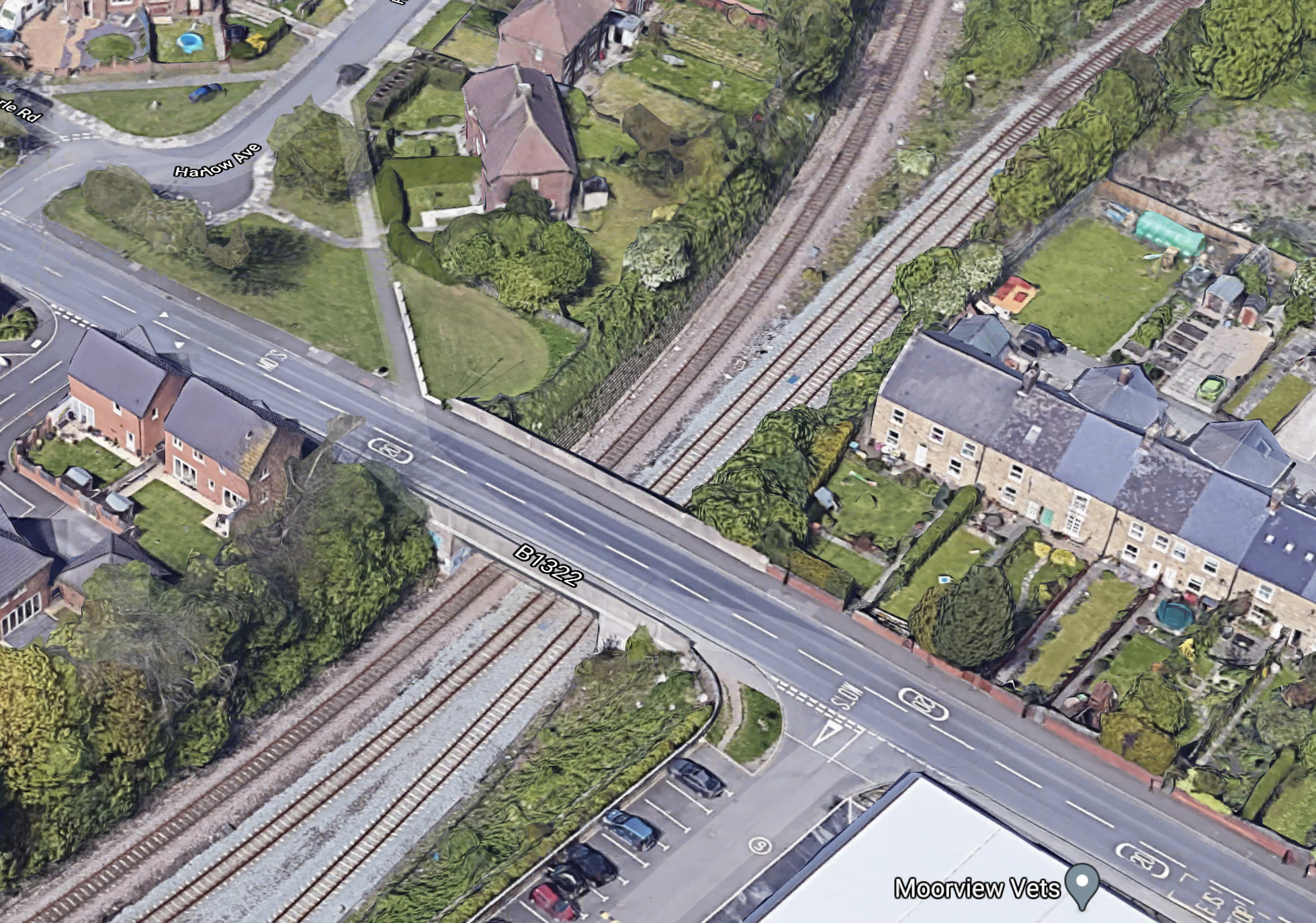
It looks it would be a tight fit to put four tracks through this bridge or an expensive and disruptive rebuild.
As the Northumberland Line goes North from here, the engineering needed to add a second track would appear to get less challenging.
This image from my virtual helicopter, shows the Northumberland Line going under the A186.
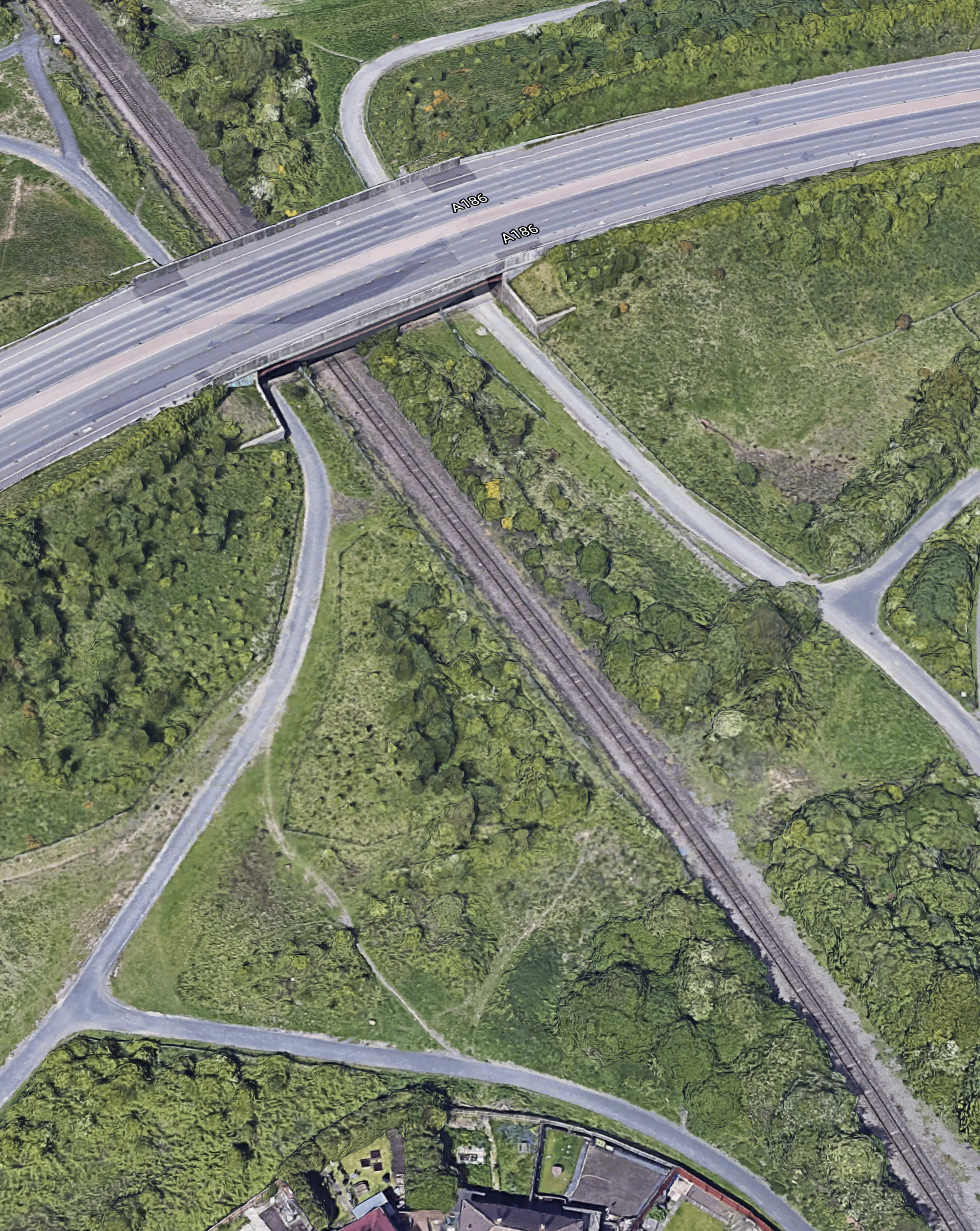
At least this bridge seems to have been built large enough for all future options.
There would even be space for full double-tracking and a passing loop, where freight trains could wait for their slot to pass through.
Seghill Station
The line is single track until the site of the former Seghill station, which is shown in this Google Map.
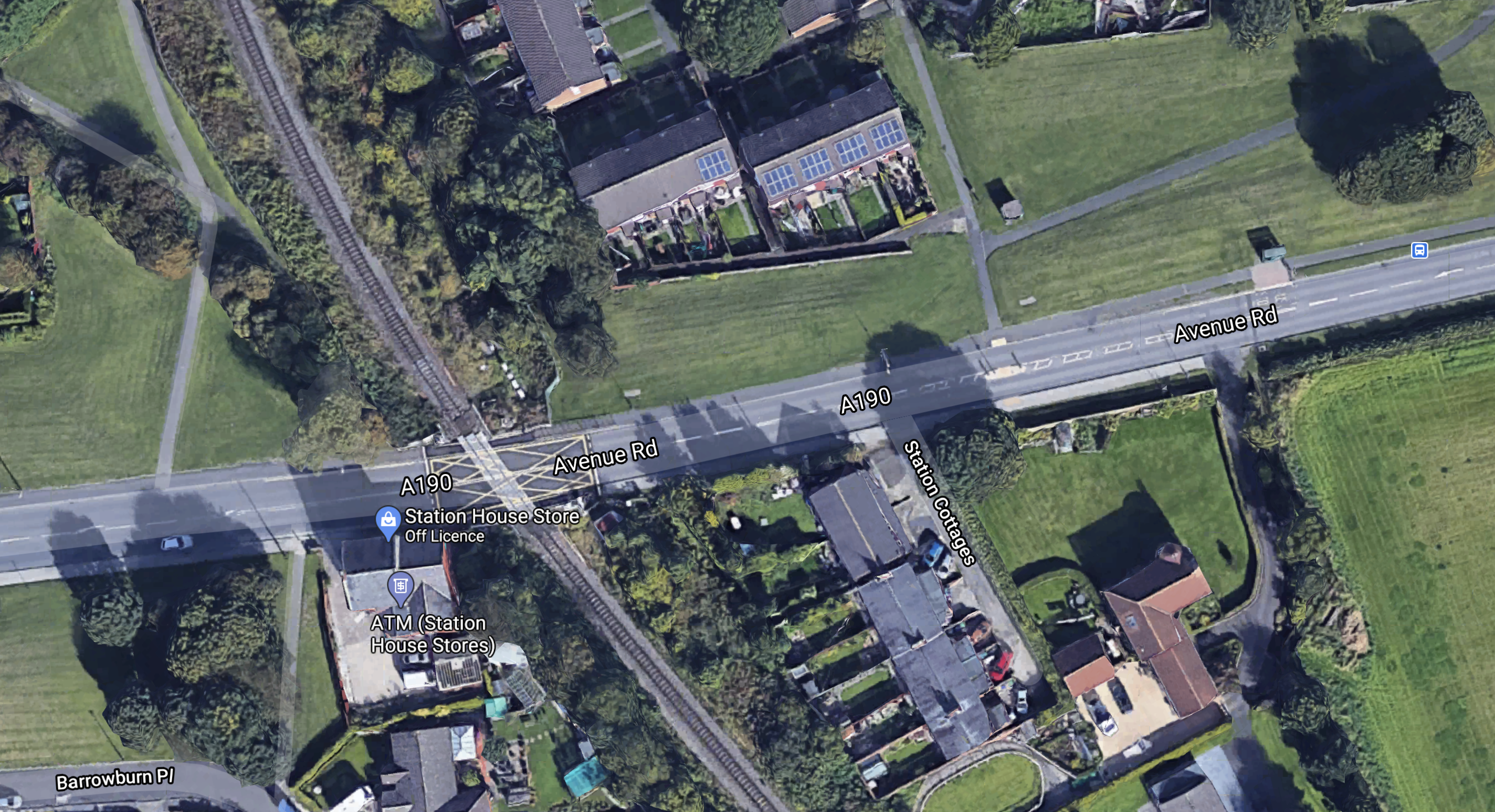
The number of references to a station in the names are a bit of a giveaway.
- According to Wikipedia, a new Seghill station was in the original plans.
- It has since been dropped.
But there is still the problem of the level crossing.
As the original station was only a single platform, I do feel that following the example of some of the single platform stations like Newcourt in Devon, a single-platform station at Seghill could be a possibility in the future.
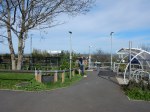
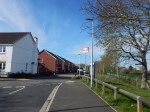
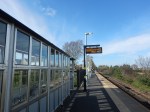
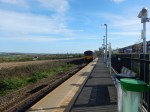
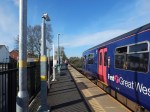
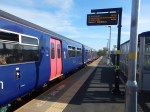
The current service at Newcourt station is two tph in both directions.
Onwards To Seaton Delaval Station
Seaton Delaval station is the first station proposed for reopening after Northumberland Park station and is shown in this image from my virtual helicopter.
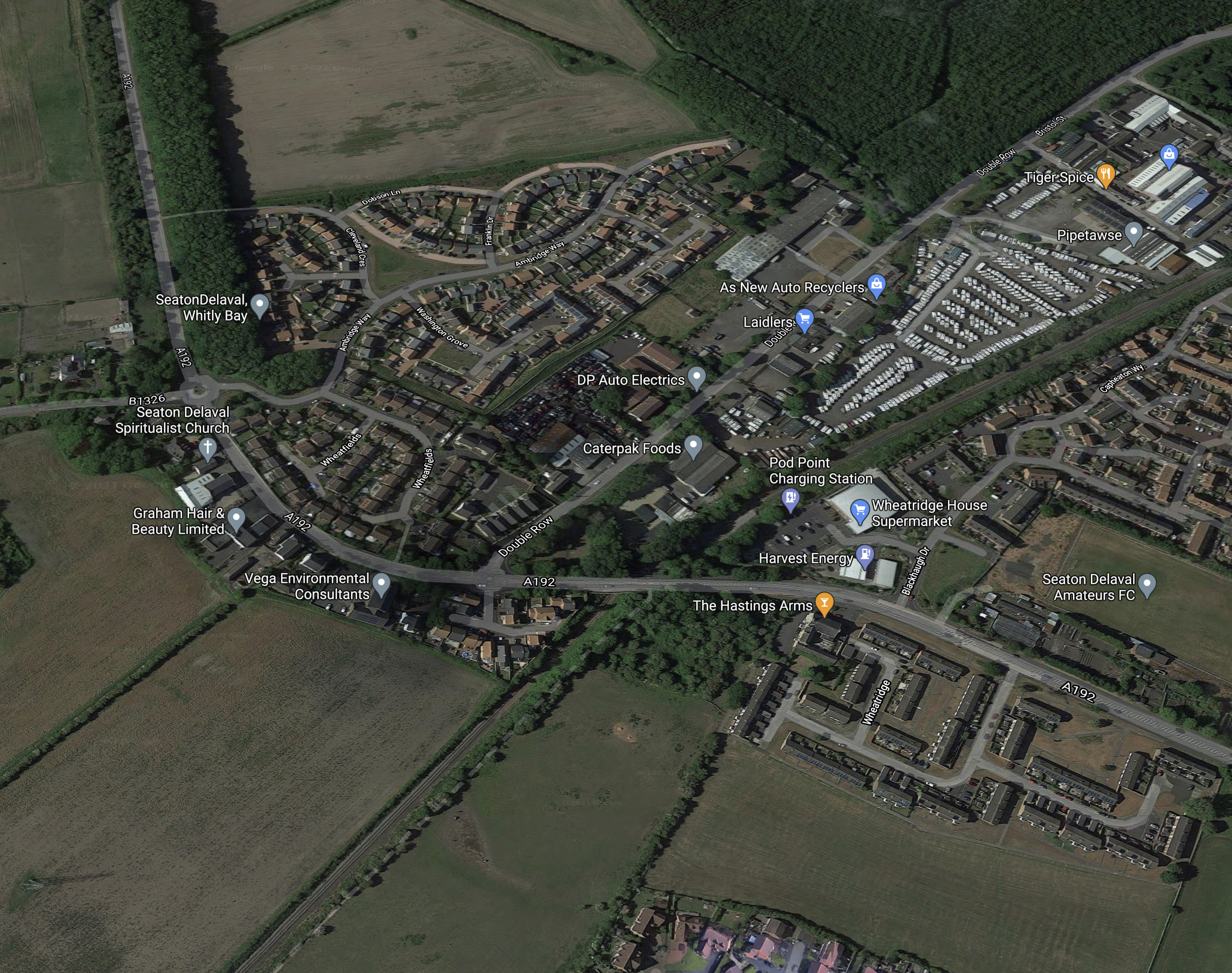
Note that there is already a bridge over the railway line.
According to Wikipedia, the plans for Seaton Delaval station include.
- Not building the station in the initial phase of the project.
- Building the station at a later date.
- Adding a passing loop.
Note that the original station had two platforms.
Newsham South Level Crossing
This Google Map shows the Newsham South level crossing, which still has a signal box.
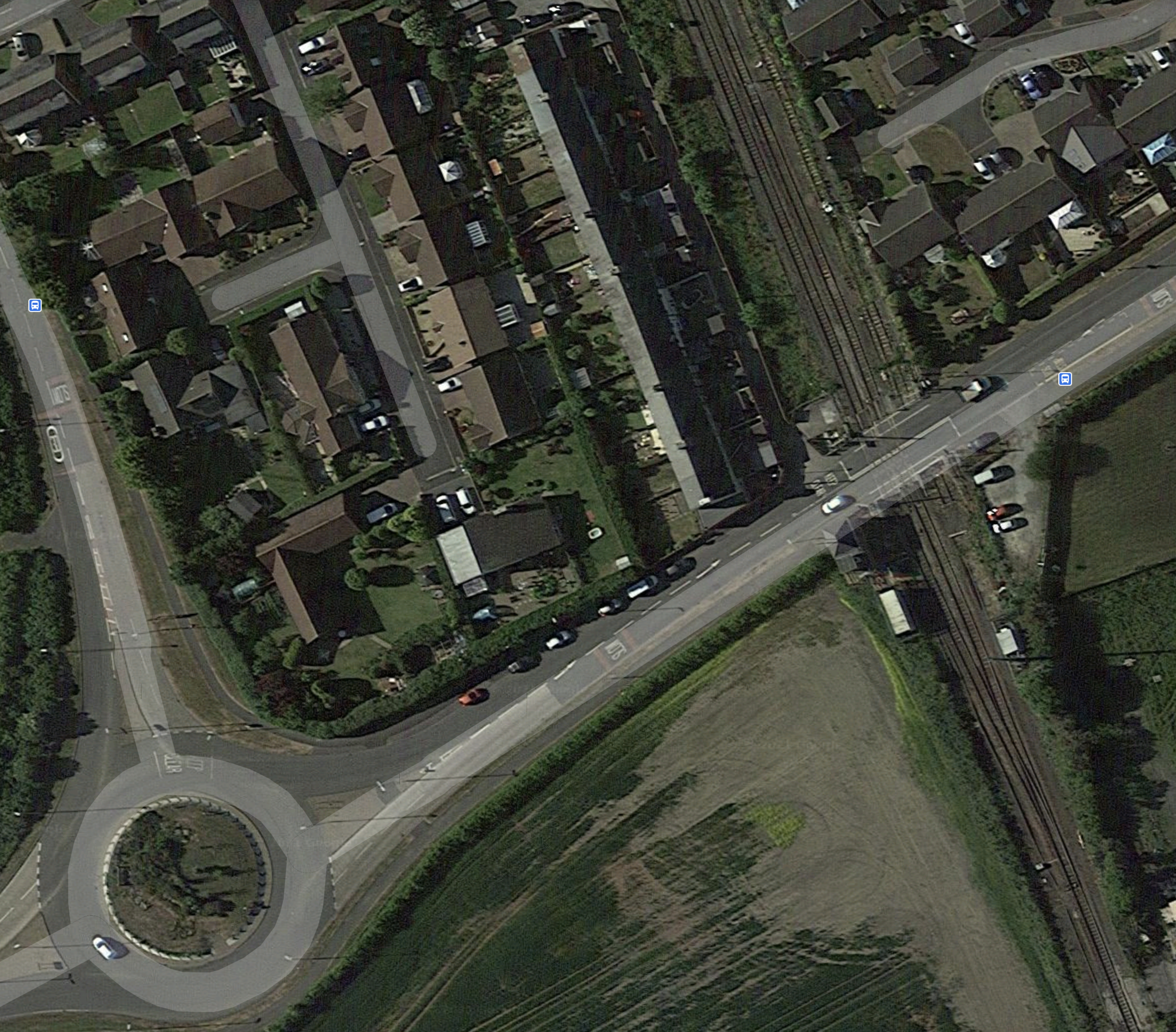
Note that just to the South of this crossing the track goes from single to double-track.
Newsham North Level Crossing
This Google Map shows the Newsham North level crossing, which is a very complicated affair.
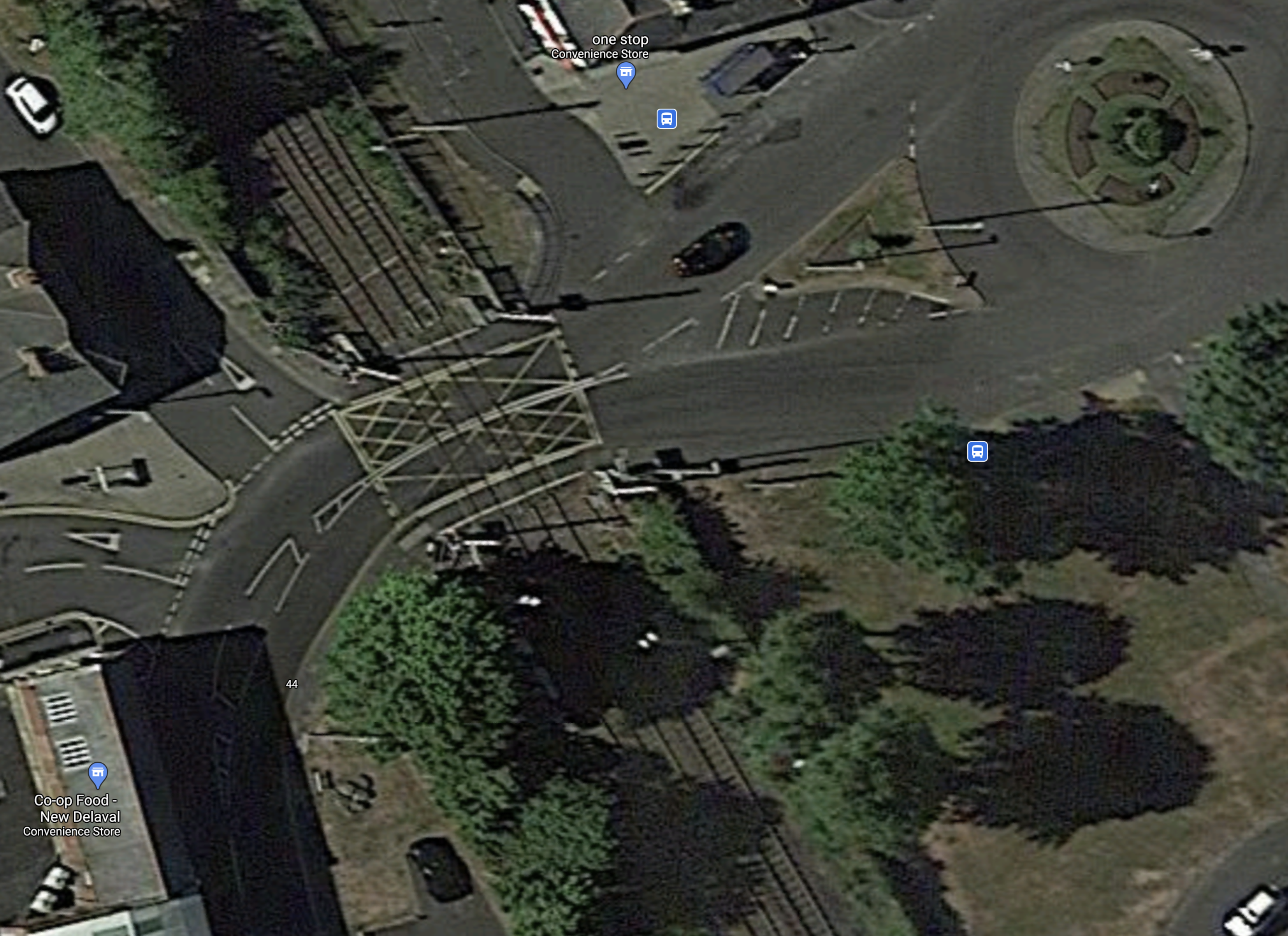
At least the railway is double-track all the way through Newsham.
Newsham Station
Wikipedia says this about the location of the former Newsham station.
It was situated at the end of Seaton Avenue and Carlton Road, off South Newsham Road on the B1523. There was an extensive system of sidings at the station and The Railway Clearing House Handbook indicated that the station handled goods and livestock.
Wikipedia also says it was a junction station.
This Google Map shows Newsham and its two level crossings on the Northumberland Line.
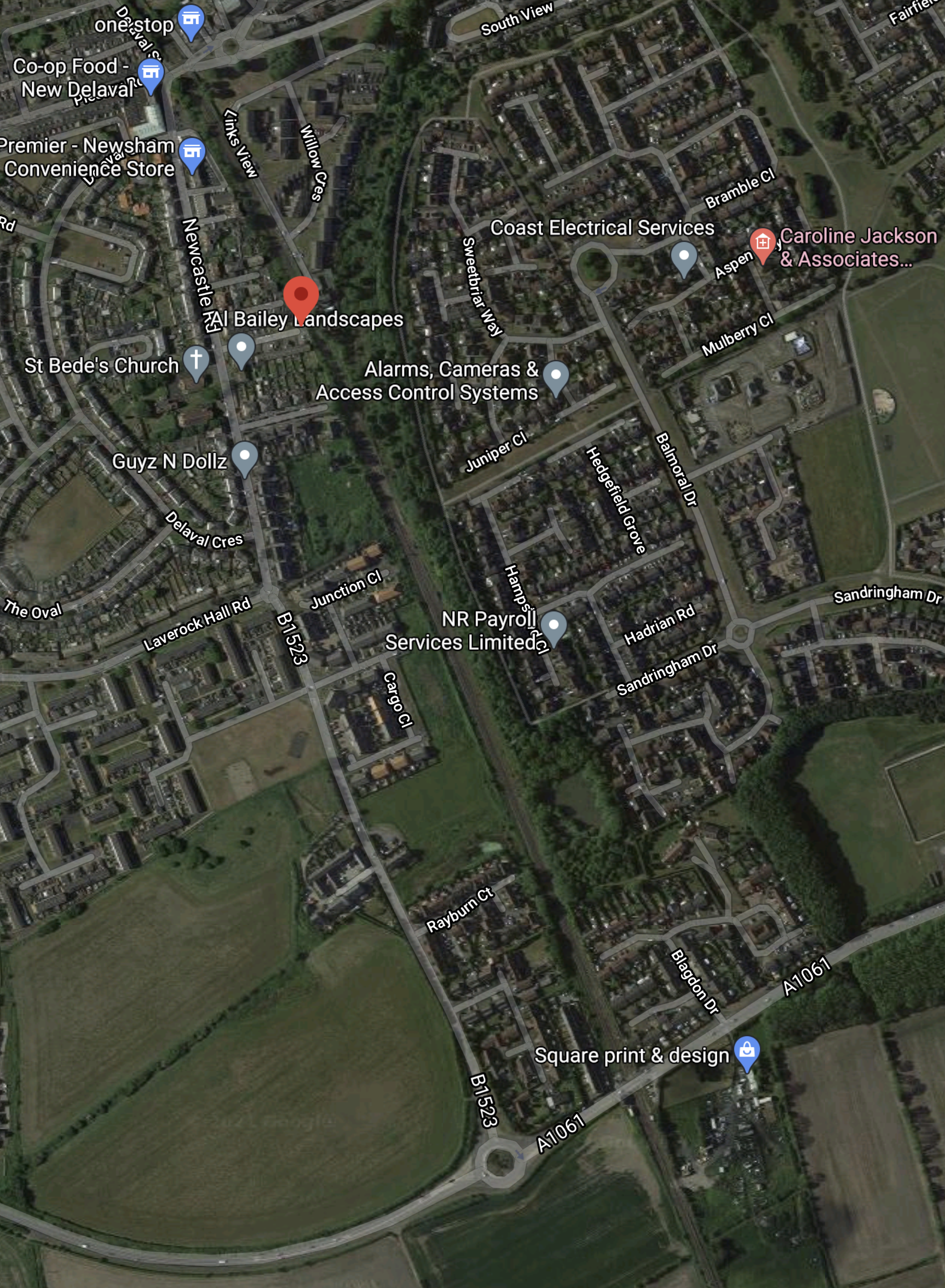
Note.
- Newsham North level crossing is in the North-West corner of the map
- Newsham South level crossing is to the East of the roundabout in the South of the map.
- The red arrow indicates Seaton Avenue, which was close to the station.
- There appears to be green space to the North-East of the red arrow, which could have been the extensive system of sidings mentioned in Wikipedia.
This Google Map shows Seaton Avenue and Carlton Road linking the B1523 to the old station site.
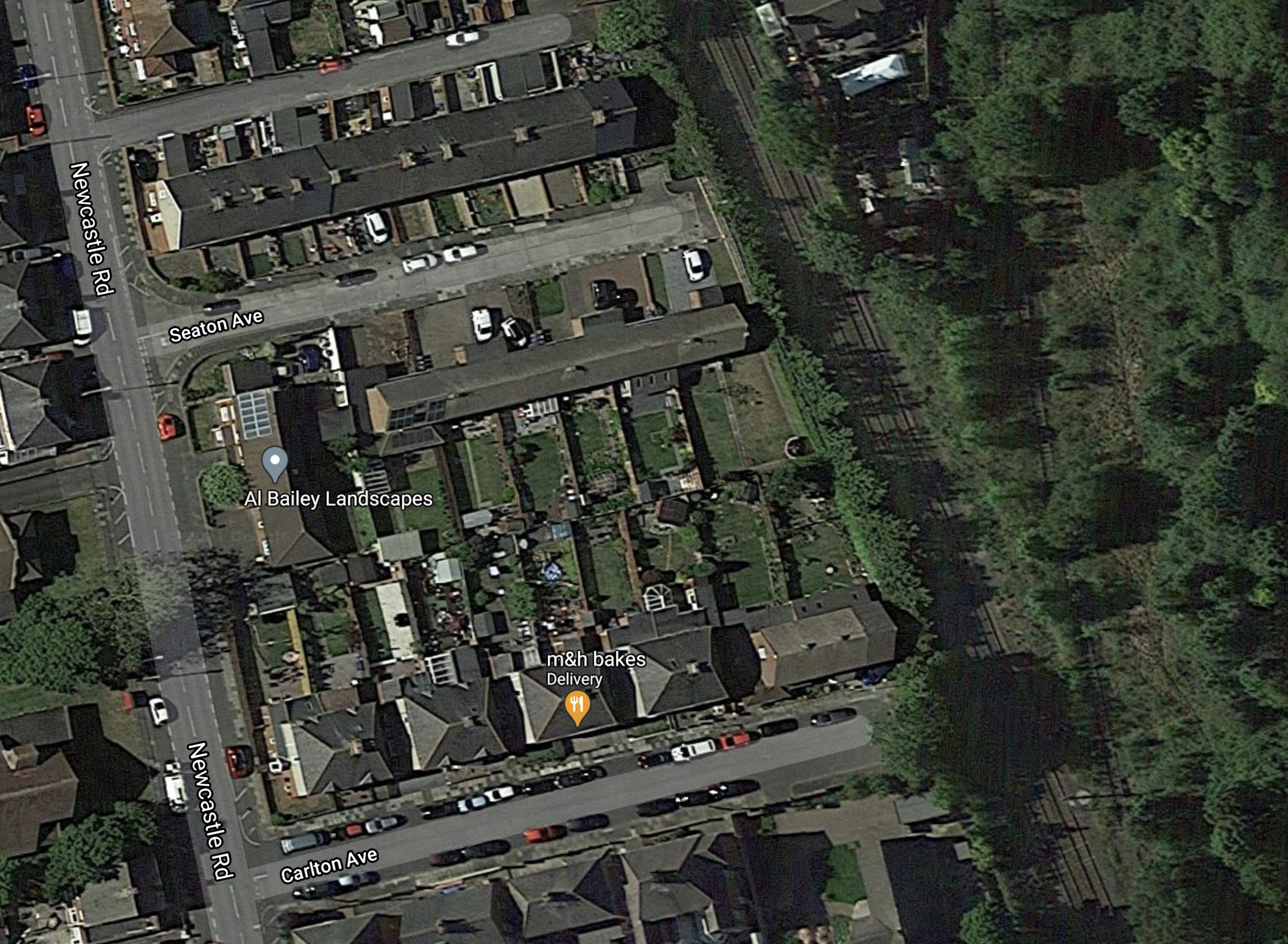
It looks to me, that the original station location would have very difficult access for buses, cars, taxis and pedestrians.
Perhaps, the rebuilt station would be better placed by one of the level crossings.
I obviously don’t know the area, but is the Southern level crossing in the wrong place.
One of the most interesting train systems, that I have seen is in Zwickau in the former East Germany, where instead of buying more trams to connect to other towns and cities, they devised a train-tram system using standard diesel multiple units.
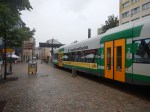
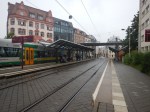
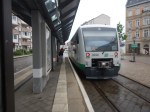
The Zwickau system is as step-free as anything you’ll find in Germany, but I’m sure Stadler, who are the masters of step-free access and a few innovative Geordies could do much better
Would it be possible to build two tram-style platforms, South of the Northern level crossings and run the trains through at a safe speed?
The electric trains would probably be battery-powered through the area.
Bebside Station
Wikipedia says this about the location of Bebside station.
The station was situated on the south side of Front Street on the A19. The goods shed was north of the level crossing and east of the running lines.
This Google Map shows the location of Bebside station.
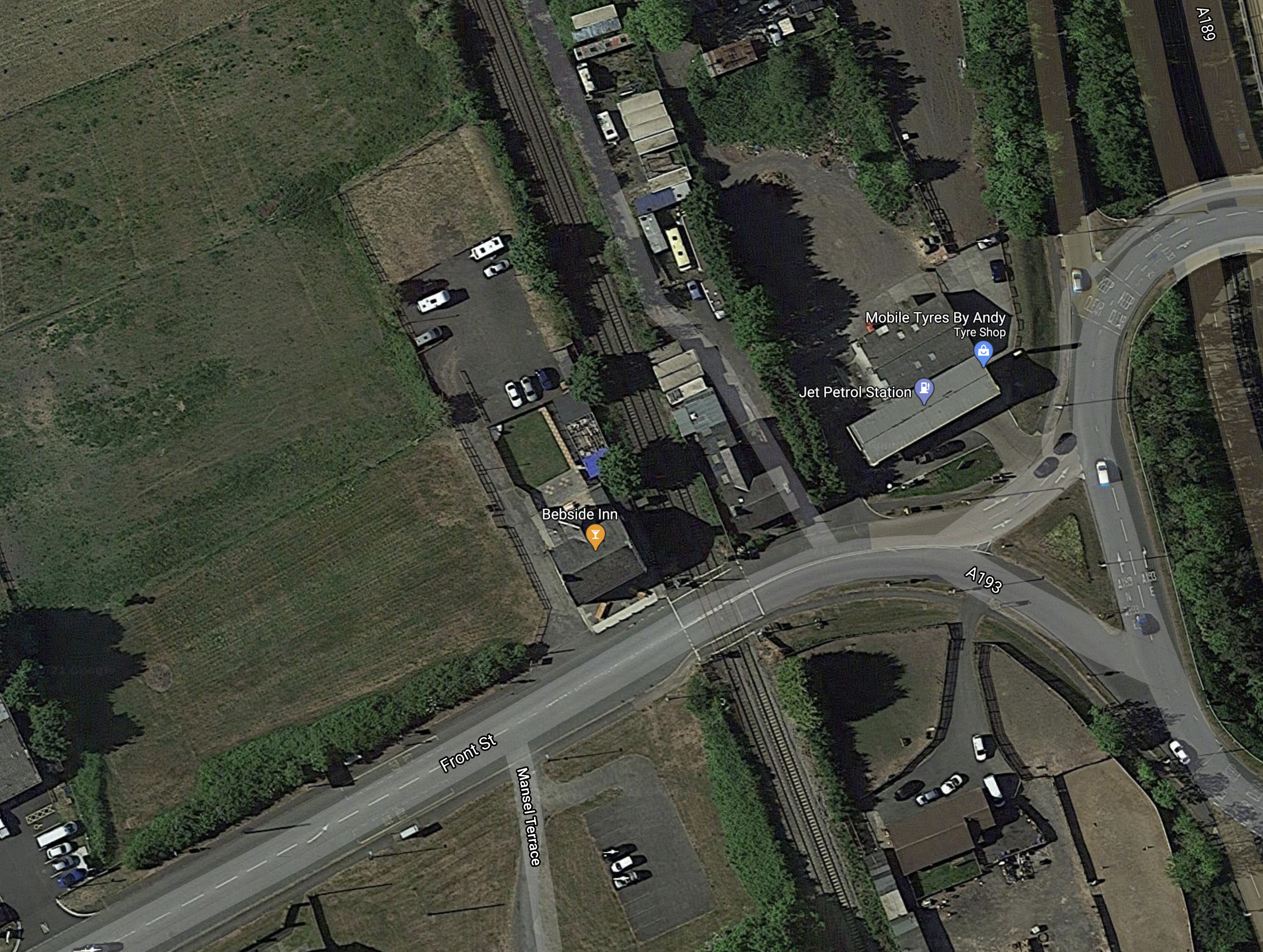
Note.
- This map fits with Wikipedia.
- The double-track through Bebside station, appears to run between Newsham South level crossing and Ashington.
Wikipedia says this about a reopened station at Bebside.
The GRIP 2 study, which NCC received in October 2016, confirmed that the reintroduction of a frequent seven-day a week passenger service between Newcastle and Ashington was feasible and could provide economic benefits of £70 million with more than 380,000 people using the line each year by 2034. The study suggested that a new Blyth Park & Ride station should be constructed close to the site of Bebside station to serve Blyth due to its close proximity to the A189 dual carriageway.
There certainly appears to be space for the Park-and-Ride.
Could this station be one of the busiest and most profitable of the route?
If surveys show, that could be the case, would it be worthwhile to build this station first and possibly run a preview service to perhaps Northumberland Park station?
Over The River Blyth
Between Bebside and Bedlington, there is the Bedlington Railway Viaduct.
This Google Map shows the viaduct.

Note the amazing shadow.
This image was taken from my virtual helicopter looking from the East.
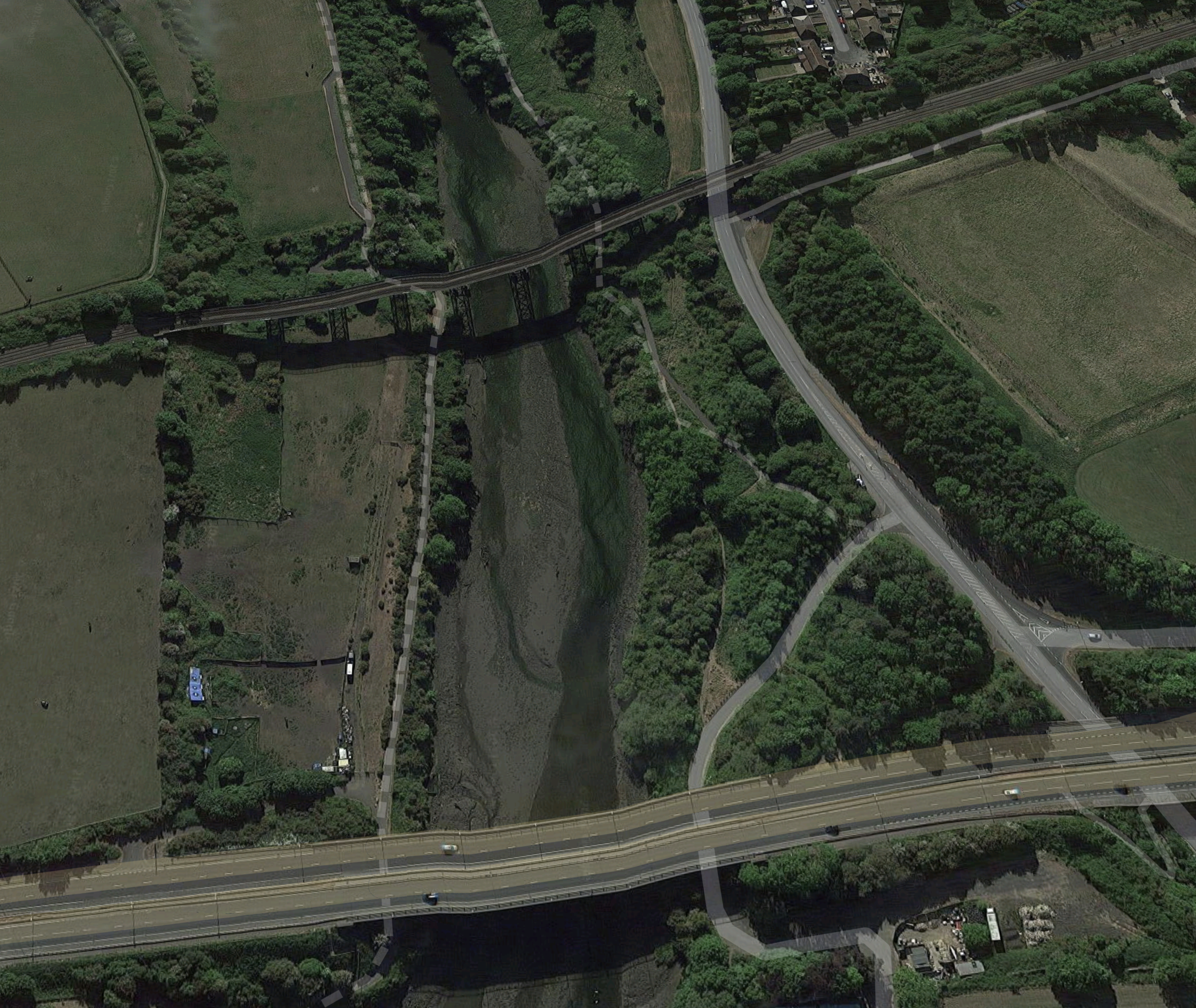
Note that the road in the foreground is the A189.
Bedlington Station
Wikipedia says this about the location of Bedlington station.
The station was situated on the north side of the level crossing on Station Road, west of the junction with Palace Road. Nearby was Bedlington Colliery.
This Google Map shows the location of Bedlington station.
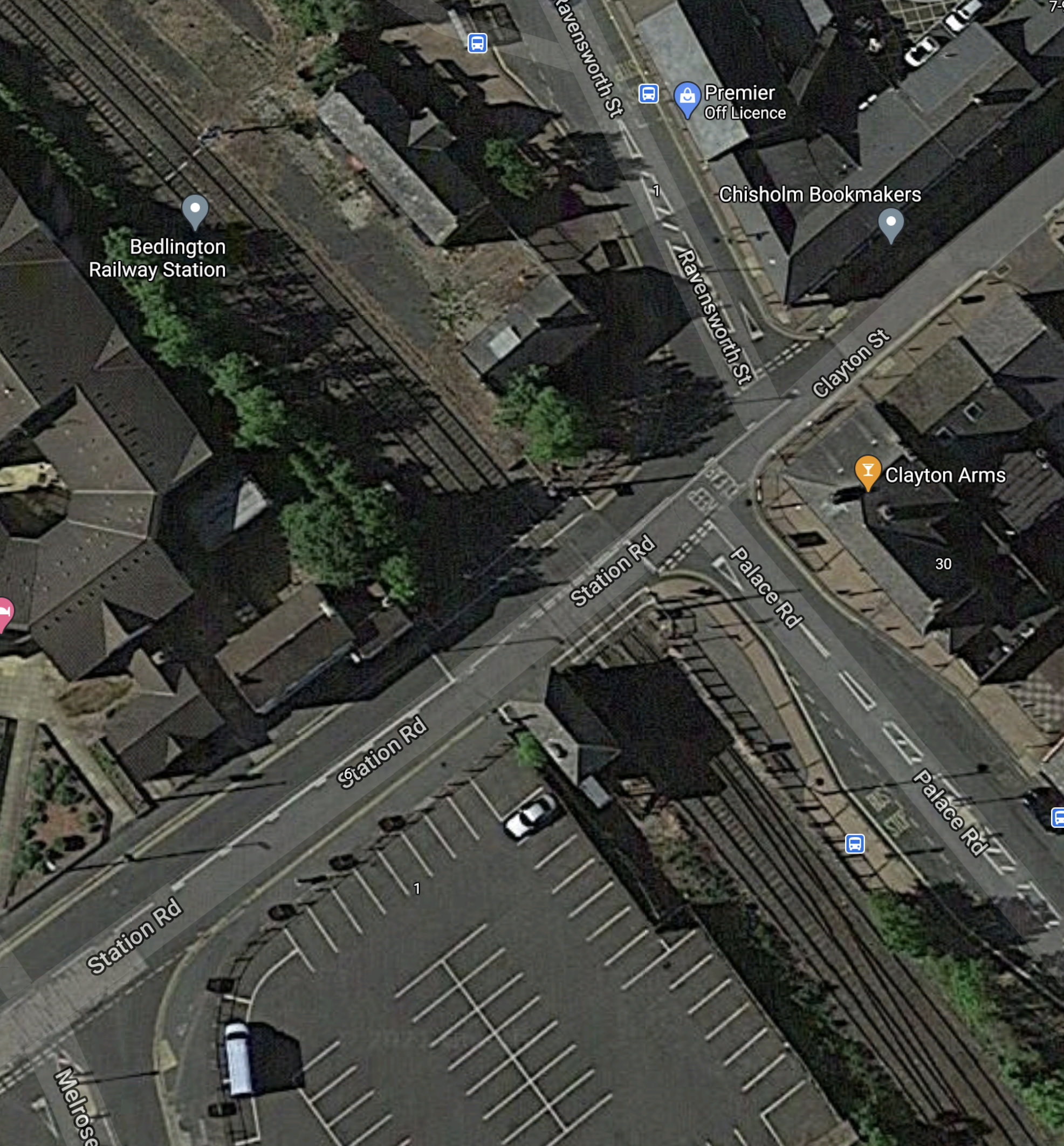
Note.
- Some of the old station still exists.
- The route is double-track through the station.
- Although the original station only had one platform, there would appear to be space for a second.
On the other hand good design as at Galashiels, which has a slightly smaller population than Bedlington, has created a new station with only a single platform.
These pictures show Galashiels station on the recently opened Borders Railway.
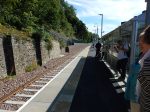
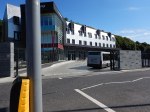
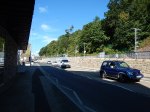
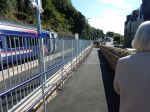
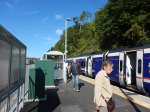
Galashiels is an interesting solution, as there is a single-platform step-free railway station on one side of the road and a comprehensive bus interchange on the other with seats, cafes, shops and warm shelter.
Galashiels station is designed to handle two tph in both directions.
Bedlington North Junction
This Google Map shows Bedlington North Junction.
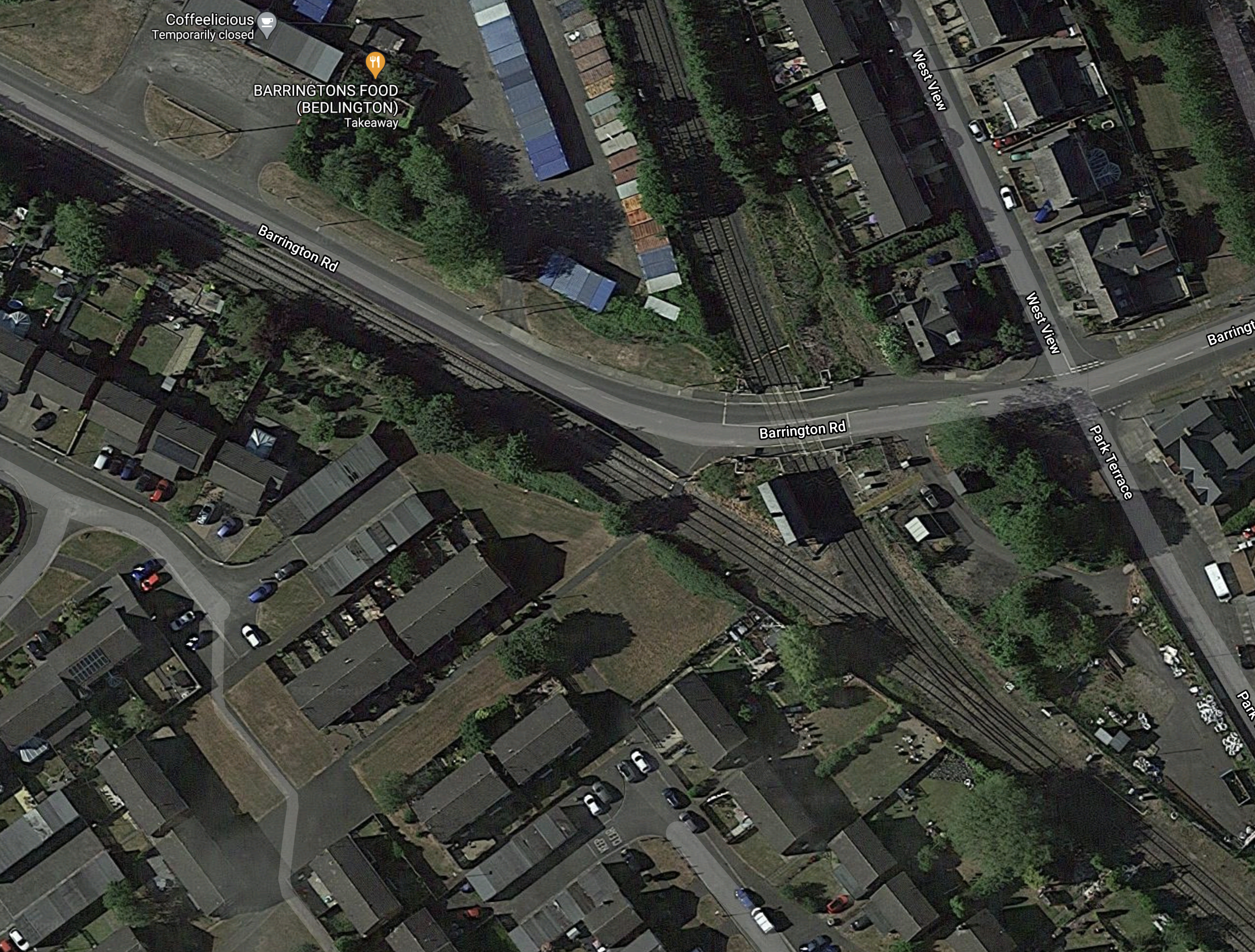
Note.
- The double-track railway going West, quickly becomes a single track, which connects Bedlington to Morpeth.
- There is a full triangular junction at Morpeth, so that trains can go North or South on the East Coast Main Line.
- The double-track railway going North connects to Ashington.
There is also another level crossing, just to the North of the junction.
Connecting To North Blyth
About a mile North of Bedlington, there is a branch to North Blyth and the Port of Blyth.
This Google Map shows the junction.
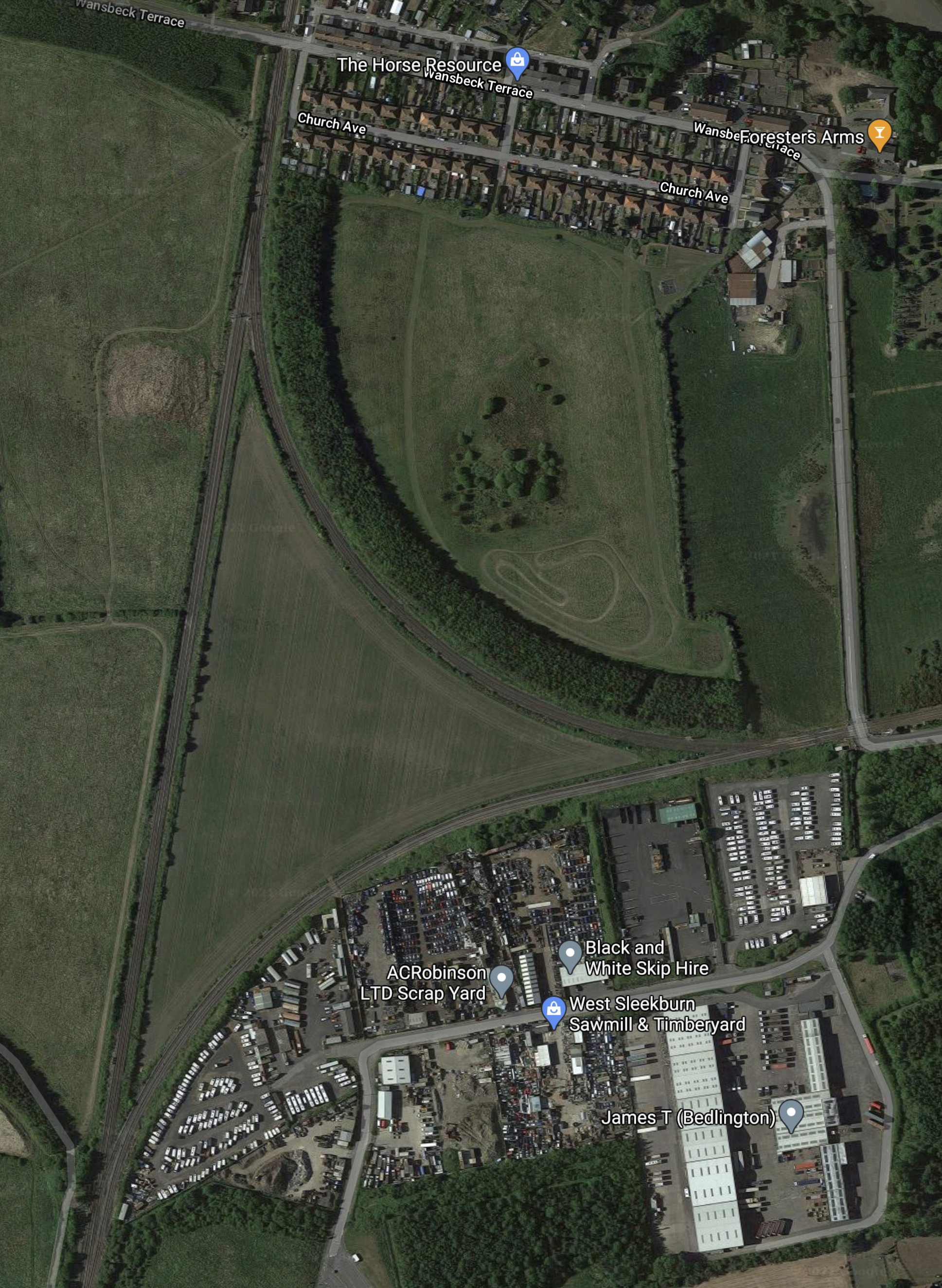
Note.
- West Sleekburn junction is at the South.
- Marcheys House junction is at the North.
- Winning junction is at the East.
This Google Map shows the mouth of the River Blyth.
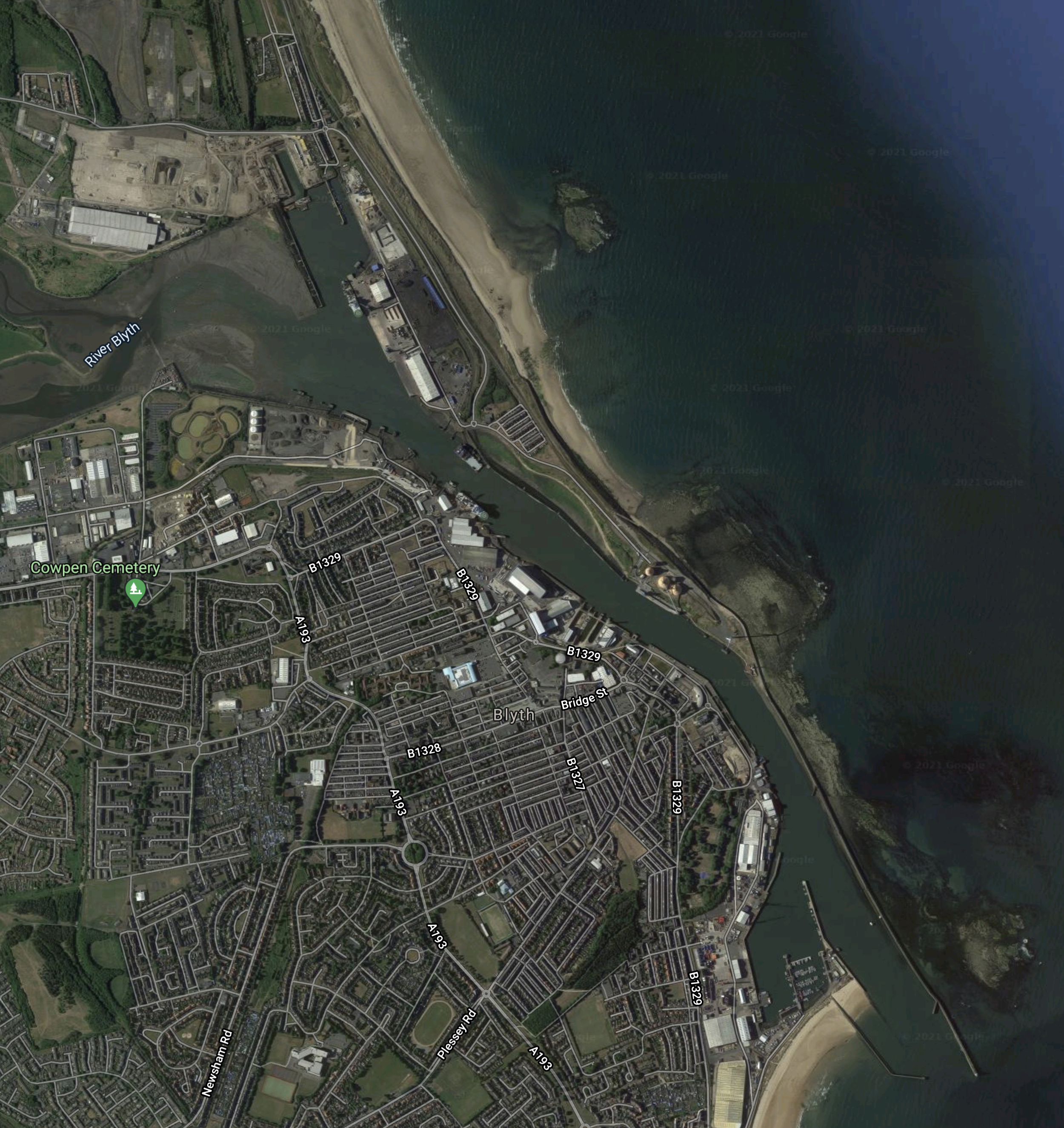
I can see some would find reasons to extend passenger services along the branch.
Over The River Wansbeck
I hadn’t expected what comes next.
This Google Map shows the crossing of the River Wansbeck, by the North Seaton Rail Viaduct.
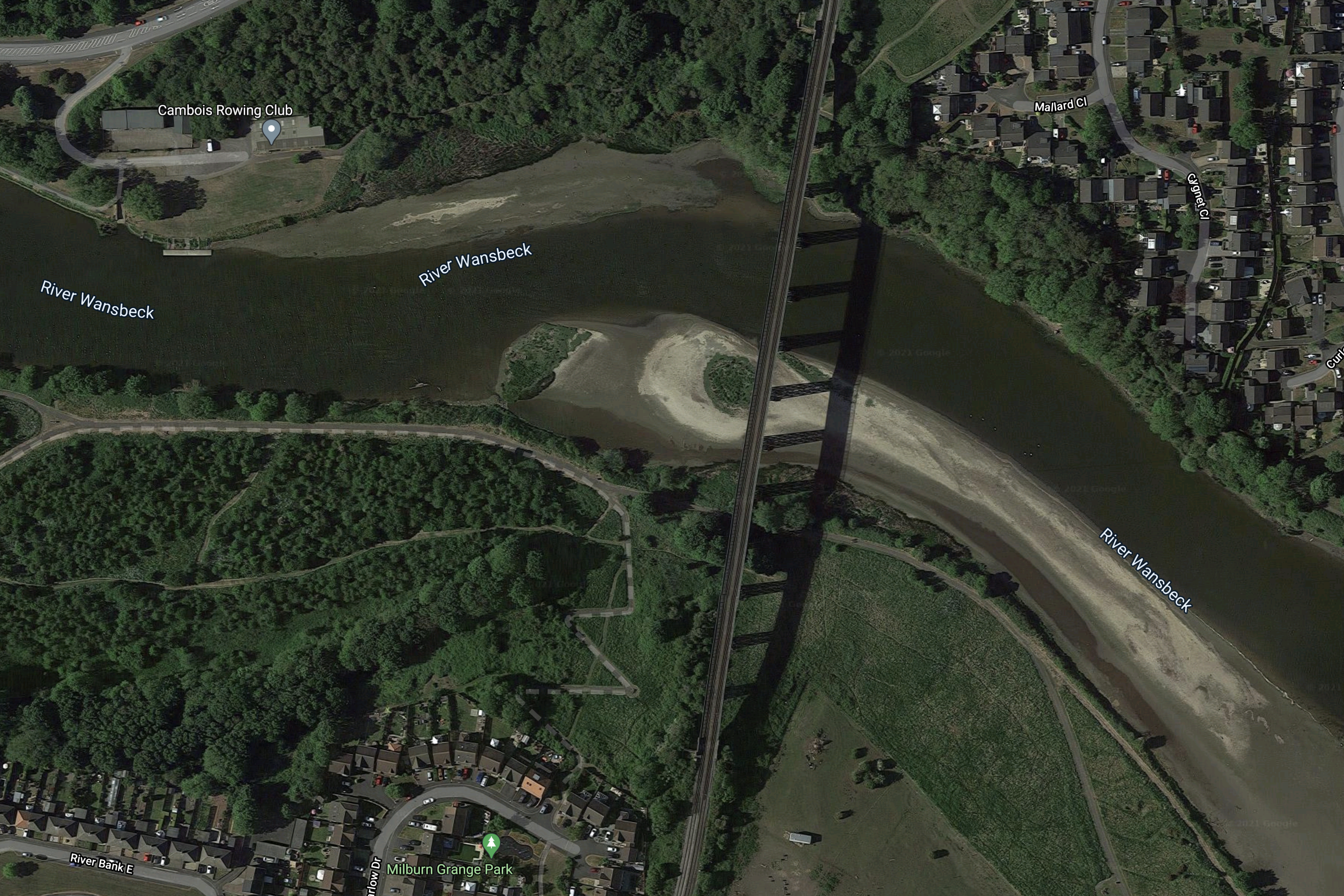
This second image was taken from the East from my virtual helicopter.
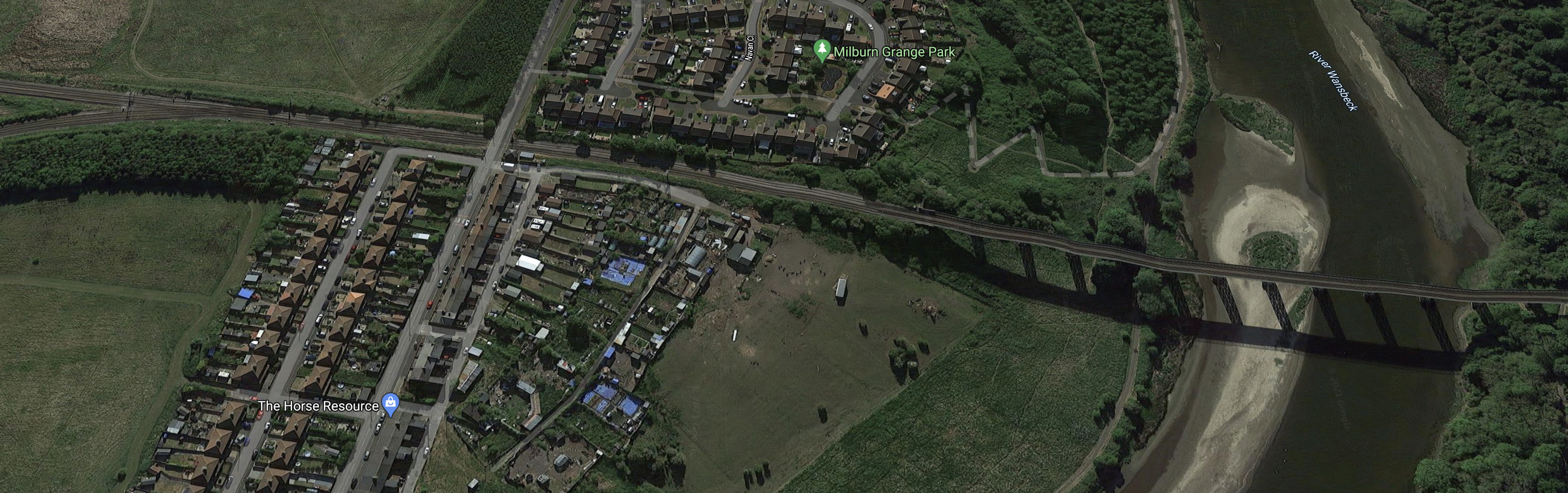
Note.
- Marcheys House junction can be seen in the left of the second image.
- The bridge is double track.
- It is known as The Black Bridge.
As the viaduct will celebrate, its centenary sometime later in this decade, what better way to mark it, than reinstate the passenger service over the viaduct.
Through The Houses Into Ashington
This Google Map shows the route North from the bridge over the River Wansbeck into Ashington.
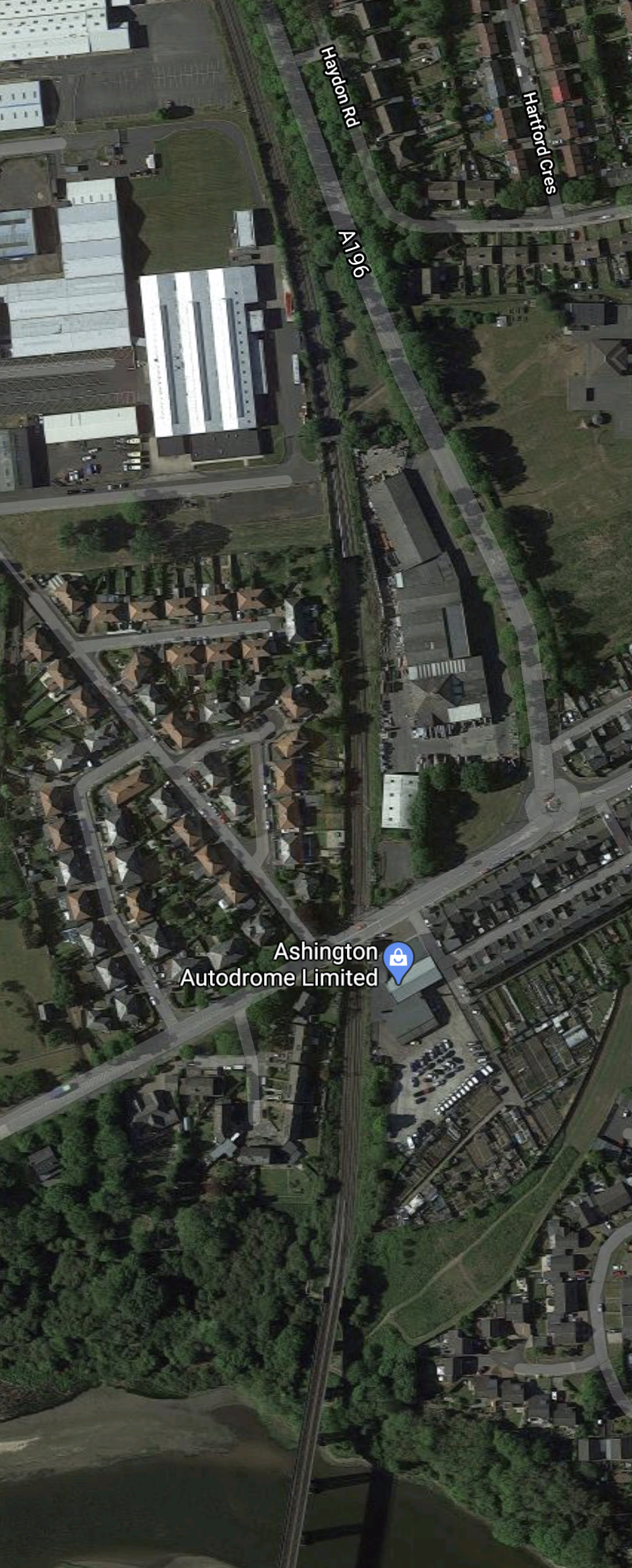
Note.
- The River Wansbeck is at the South of the Map.
- The railway is double track through the town.
- North Seaton station used to be about a third of the way up the map, where the A196 road crosses the railway.
This enlarged Google Map shows the site of station.
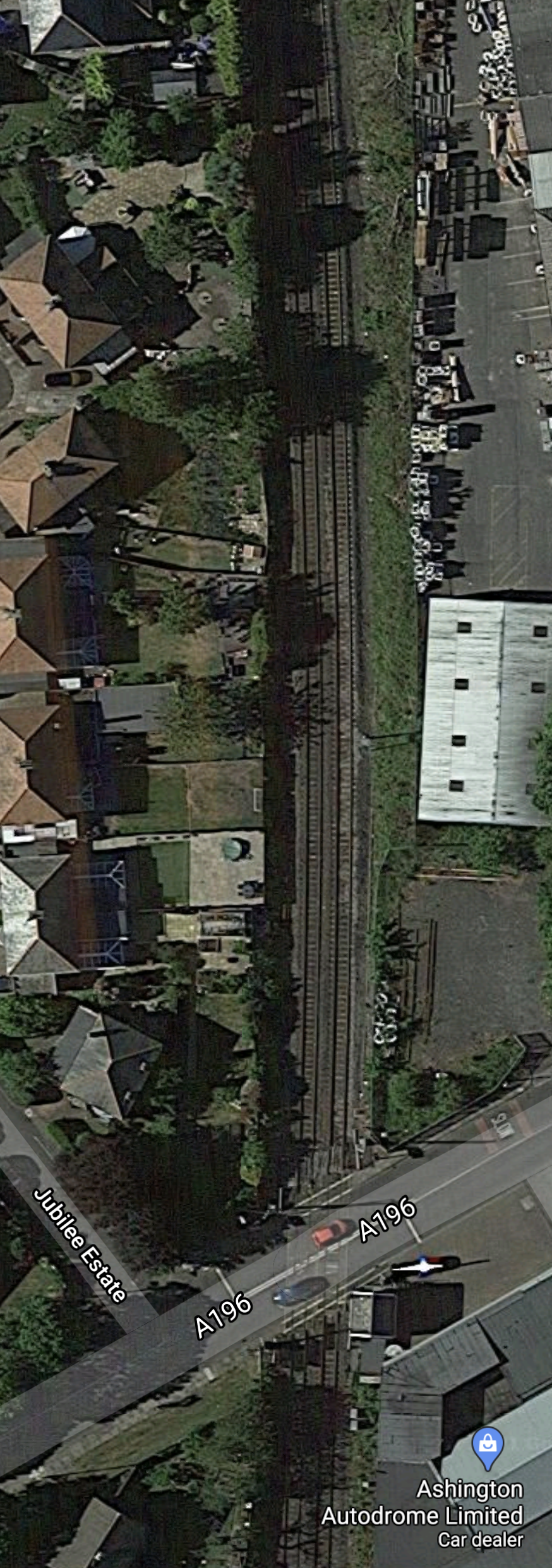
Note.
- The original station had two platforms.
- There is a level crossing where the railway crosses the road.
There doesn’t appear to be any plans to re-open North Seaton station.
There is another level crossing between the bridge and the original site of Ashington station.

Will these level crossings be a problem?
Ashington Station
This Google Map shows the original site of Ashington station.
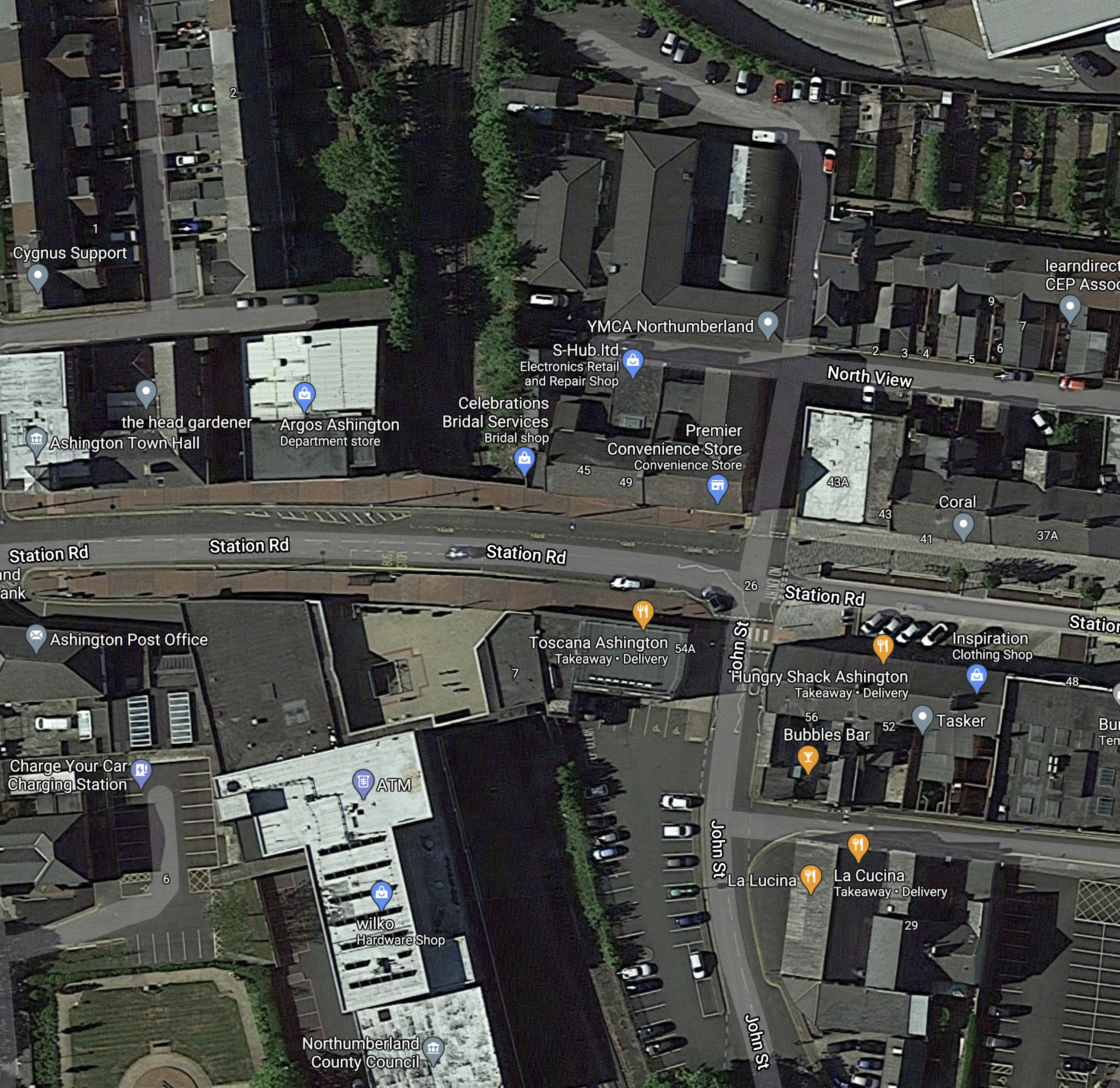
Note.
- Station Road is a bit of a giveaway as to the location.
- The station would appear to have been in a cutting in a busy part of the town.
- Little of the original station seems to have survived.
It would appear that a station could be built here with a small amount of demolition.
But would it be big enough for all the possible plans for services to the North of Ashington.
This Google Map shows where the railway line when it emerges to the North of Station Road.
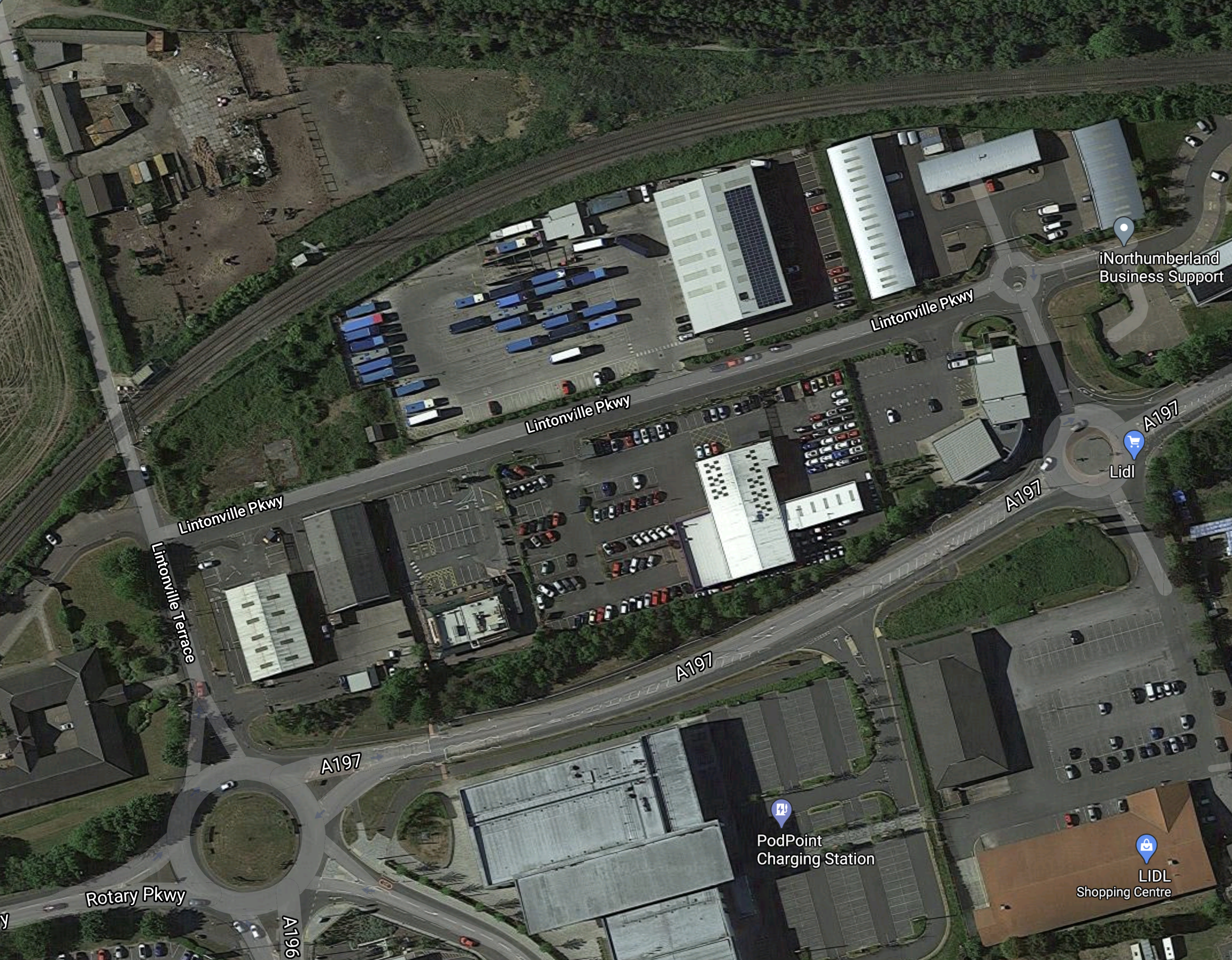
Note.
- The Northumberland Line curves round to the East to go to Lynemouth.
- It originally continued to Newbiggin-by-the-Sea.
- The area close to the line is a bus depot.
- There are several retail premises in the area.
Would it eventually be better to have an integrated transport interchange here?
Ashington To The Coast
This Google Map shows Ashington to the coast.
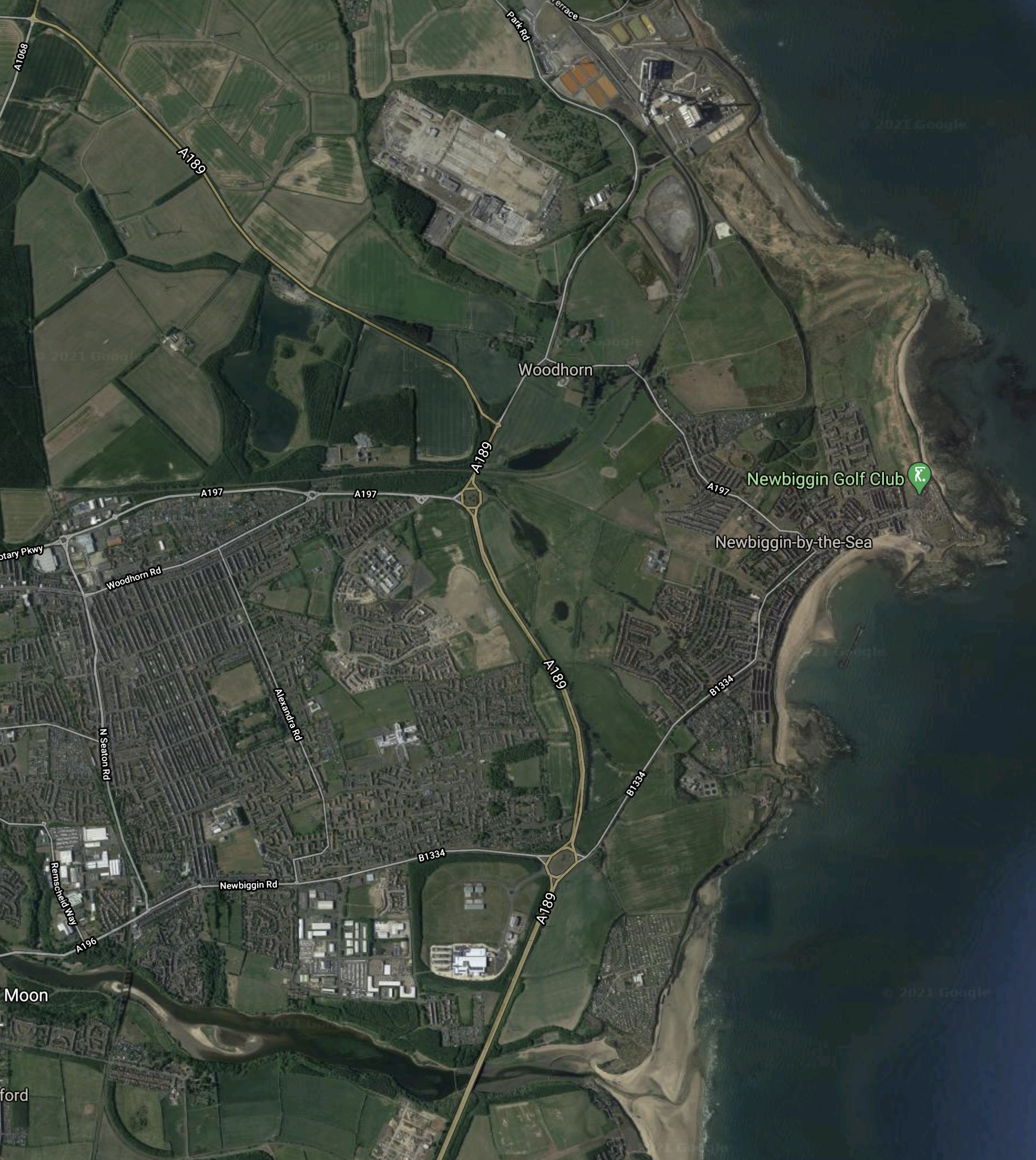
Note.
- The mothballed Alcan Smelter and Lynemouth power station are at the top of the map.
- The smelter and the power station are served by an extension of the Northumberland Line from Ashington, that is double-track for about half the way.
- Newbiggin-by-the-Sea on the coast and used to be served by a branch line from Ashington.
The route of the branch line can be picked out on this Google Map.
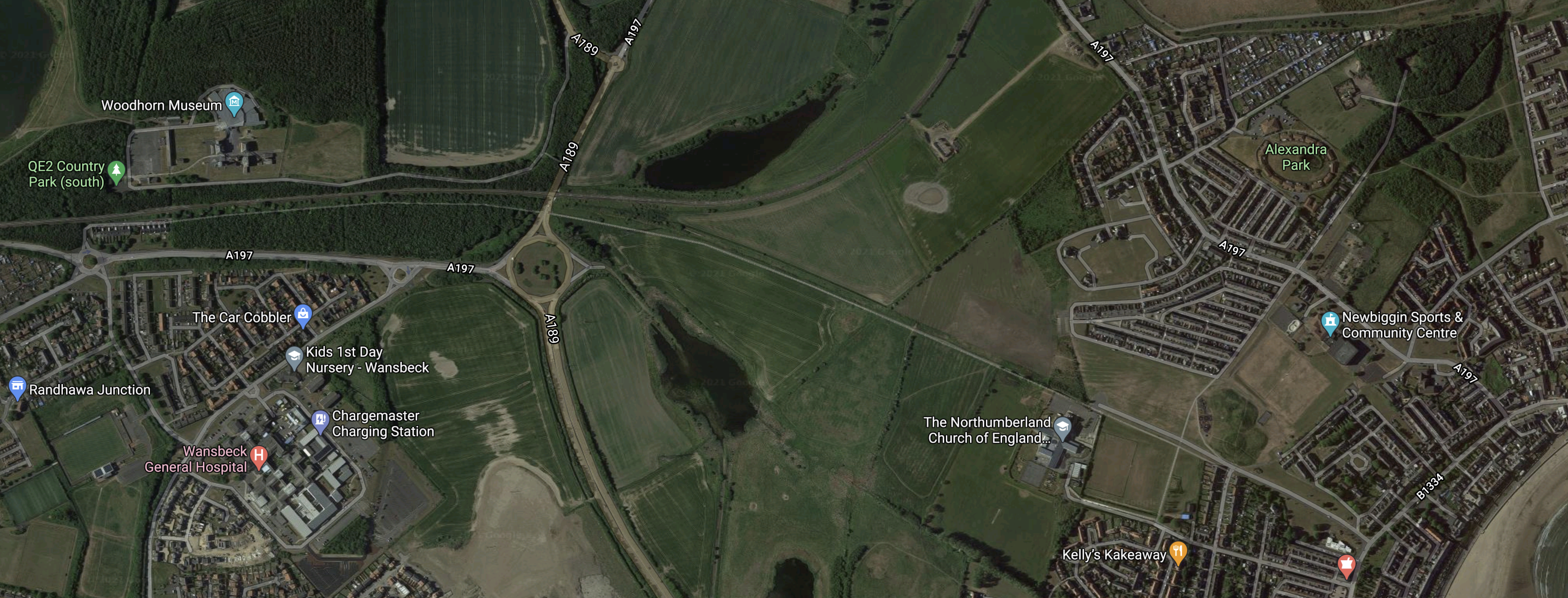
Note.
- The two branches used to divide by the Woodhorn Museum.
- Could a simple station be built to serve the museum and Wansbeck General Hospital.
- The branch to the smelter and the power station curves to the North.
The branch to Newbiggin-by-the-Sea station, takes a direct route to the coast.
I do think, that this extension from Ashington has possibilities.
I’ve even found this video of a freight train going to the smelter from the Port of Blyth.
You don’t often see Class 55 locomotives or Deltics in action like this.
The State Of The Infrastructure
I’ve also found this video, which shows a cab ride from Blyth to the East Coast Main Line.
I can make the following observations. from the video.
- There are wide margins in a lot of places so double-tracking could be possible.
- The signalling is a mixture of semaphore and colour light signals.
- There is work to do on some of the level crossings to make them safer.
- The old platform is still visible at Bedlington station.
- The bridge at Seaton Delaval is modern, but a double track, would be a tight fit.
- The bridge where the B1322 crosses the tracks to the East of Northumberland Park station, looks like it would be little space for a fourth track.
- The bridge taking the A186 over the Northumberland Line to the North of Northumberland Park station has been built with masses of space for extra tracks.
- It would be difficult to fully double-track from Northumberland Park station to the East Coast Main Line.
Everything appears to be in generally good condition.
Length And Operating Speed Of The Route
Consider.
- I estimate that the distance between Benton North Junction and Ashington is around nineteen miles. A round trip would therefore be under forty miles.
- The Rail Engineer article says that the operating speed on the line will be increased to 65 mph.
- I have found a freight train, that recently took 37 minutes to go between Benton North Junction and Ashington, which is an average speed of 31 mph.
I also estimate that the halfway point between Benton North Junction and Ashington is not far from the site of the possible Seaton Delaval station. Could this be why a passing loop has been proposed for the station?
The Frequency Of The Trains
Various sources like Wikipedia and media reports talk about the basic service being two tph or half-hourly.
Various average speeds Benton North Junction and Ashington give the following times for the journey.
- 30 mph – 38 minutes
- 40 mph – 28.5 minutes
- 45 mph – 25 minutes
- 50 mph – 22.8 minutes
- 60 mph – 19 minutes
From these figures it looks to me, that a half-hourly service would certainly be possible with trains passing in a two-platform station with a passing loop at Seaton Delaval.
- They would need to run at an average speed of 45 mph including stops.
- This is a similar average speed to Ipswich and Cambridge, which has seven stops.
- Modern step-free trains, as Stadler are building for the Metro, are designed for fast stops.
- If the trains passed at Seaton Delaval at halfway, only one train would be North and South of that station at any time.
If only one train is on any section of the route at any one time, then single platform stations can be used, except at Seaton Delaval and Ashington.
There are a lot of people, who feel that train services like this should be four tph, as this gives a genuine Turn-Up-And-Go service.
Birmingham, London Overground, Merseyrail and other services use this frequency.
The Metro uses five tph, where possible.
Four tph would probably be possible with the passing loop at Seaton Delaval, as North of Newsham, the Northumberland Line is double-track, all the way to Ashington.
If the line is a success, I suspect there will be pressure to extend the passenger service to new stations at Lynemouth, Newbiggin-by-the-Sea and perhaps other places.
Extra Northern destinations would help to create a viable four tph service between Newcastle and Ahington.
Rolling Stock
Consider.
- As the trains will be running on a 65 mph route, trains capable of at least 90 mph would probably be needed.
- The trains would run a short distance on the ECML, so perhaps electric trains, with at least a 100 mph capability would be needed, so they didn’t get in the way of the Azumas.
- Pedicting ridership on a line like the Northumberland Line would be very much a Black Art and initial ideas will be wrong, so perhaps the initial trains should be three cars, with the capability of being easily lengthened to four cars. They must also be capable of working in pairs.
- Electric traction is desirable, as it is zero-carbon at point of use, gives better acceleration and regenerative braking enables energy saving.
- Ability to use a pantograph to access 25 KVAC overhead electrification would be useful.
Some would feel, that the same trains as the Metro should be used, but I can see services connecting across Newcastle using the 25 KVAC overhead electrification of the ECML.
The slower Metro trains would reduce the capacity of the ECML.
I’m drawn inextricably to the conclusion, that the trains should be 100 mph battery-electric trains.
Hitachi, who have a factory in the North-East, have announced their Regional Battery Train in July 2020, which is described in this Hitachi infographic.

These trains can be based on Class 385 trains.
- They are 100 mph trains.
- They come in three- and four-cars lengths.
- The three-car trains have 206 seats.
- They can work in pairs.
- They can use 25 KVAC overhead electrification.
- They have a range of 90 kilometres or 56 miles on battery power.
- The batteries would be charged on the ECML between Benton North junction and Newcastle station.
- The battery packs will be designed and manufactured by Hyperdrive Innovation in Sunderland.
- They have big windows for the views.
I’m sure Hitachi and Hyperdrive would like a fleet in service, just up the road from their factories.
These pictures show a ScotRail Class 385 train.

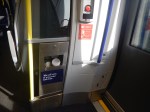
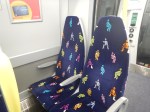
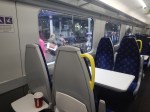
I think trains like these fitted with batteries, would do nicely.
There might need to be a charging station at Ashington to make sure the trains can get back to Benton North junction and the electrification.
Collateral Benefits Of Battery Electric Trains
I am one of a very small group of the general public, who have ridden in two different battery-electric trains in the UK.
It is my belief, that they have collateral benefits compared to other trains powered by electricity or diesel.
When I rode Bombardier’s Class 379 BEMU, six years ago, between Manningtree and Harwich, afterwards I wrote Is The Battery Electric Multiple Unit (BEMU) A Big Innovation In Train Design?.
I must admit, that on that day as I travelled to Manningtree, I had my doubts, that the train would perform, to a sufficient level to be able to replace an electric or diesel train in regular passenger service.
But this was a paragraph I wrote.
It was an impressive demonstration, of how a full-size train could be run in normal service without connection to a power supply. I also suspect that the partners in the project must be very confident about the train and its technology to allow paying passengers to travel on their only test train.
This was my conclusion to the post.
Who’d have thought that such a rather unusual concept of a battery electric multiple unit would have so many possibilities?
I think I’ve seen the future and it just might work!
I think now, I might substitute will for might in the last sentence, with several manufacturers now offering battery-electric trains.
I very much feel my doubts before riding the train, were commonplace.
A year or so, after my ride, I met a lady on a train to Ipswich. She had been sceptical the train would work, but she had used the train to go to work every day for three months and was sorry, that it hadn’t been kept in service for longer.
I believe this scepticism and a natural human curiosity could lead to a serious increase in usage of the service, when compared to the predictions.
Did this mixture or curiosity and skepticism lead to the large turnout in Scotland to ride Vivarail’s battery-electric Class 230 train prototype, that I wrote about in Battery Class 230 Train Demonstration At Bo’ness And Kinneil Railway?
I will not be surprised, if in a couple of years, after battery-electric trains have been introduced on several routes, that train operators are reporting, unexpected increases in passenger numbers.
As I said, I have ridden in two battery electric train; a Class 379 and a Class 230.
One characteristic of both that is exceptional, is their low noise levels.
Even as an Electrical Engineer, I can’t explain it, but then all electric vehicles, I’ve ridden in are quieter than I would have expected.
Could it be, that the electrics don’t contain any mechanical components, that clank away? Or are pantographs noisier than I think they actually are?
Will these low noise levels, drive more people to travel on the trains?
Other factors like zero pollution, reliability and lack of unsightly wires could all be further collateral benefits.
I seriously believe, that battery electric trains could be a dream for a Marketing Man or Woman.
Signalling
Earlier I included a video of a train going from Blyth to Benton North junction.
One thing you notice in the video, is that much of the signalling is still outdated semaphore signalling and there are lots of signal boxes.
Network Rail have two main methods to modernise the signalling.
- In Norfolk, they have used modular colour light signals.
- On the Cambrian Line in Wales, they have used full digital in-cab ERTMS signalling.
As there will only be a limited amount of trains using the line and the ECML will be fitted with the digital signalling, I wouldn’t be surprised to see the full digital signalling installed on the Northumberland Line.
Extra Northern Destinations
The obvious extra Northern destinations are Newbiggin-by-the-Sea and possibly Lynemouth.
- The track for the latter is already in place and extension would probably be dependent on some form of housing, industrial or energy development in the area.
- Blyth Offshore Demonstrator Wind Farm is a test site for new and emerging technology.
- There is also the small Blyth Harbour Wind Farm.
- Newbiggin-by-the-Sea is a town of 6300 people.
- New track would need to be lid to Newbiggin-by-the-Sea.
It could all lead to a need for a passenger service to Newcastle via Ashington.
The other destination that could be served by a train on the Northumberland Line would be Morpeth station.
- The track exists between Bedlington and Morpeth.
- There used to be two intermediate stations between Bedlington and Morpeth, at Choppington and Hepscott.
- There is an hourly service between Newcastle and Morpeth calling at Manors and Cramlington.
- Manors station could be served by trains on the Northumberland Line, which pass through the station.
If Morpeth were to be served by the Northumberland Line, the problem would be that Cramlington would lose its service to and from Newcastle.
The Wikipedia entry for Cramlington station, says this about the station.
Northumberland County Council and the local rail users group SENRUG is campaigning to relocate the station to a new site 200 metres south of its present position, in order to better serve the town’s Manor Walks shopping centre, Westmorland Retail Park and main employment areas. The proposed site would also allow for the construction of a dedicated bus-rail interchange, a larger car park and serve several residential estates to the west built in the 1960s and 1970s.
That sounds a sensible, but cunning plan.
The simple way to give Cramlington an hourly service to Newcastle would be to have one tph of either CrossCountry, LNER or TransPennine Express stop at the station. But the companies might not want to introduce another stop.
Alternatively, the Morpeth train could continue South for a few minutes to a bay platform ar the new Cramlington station.
This Google Map shows Cramlington.
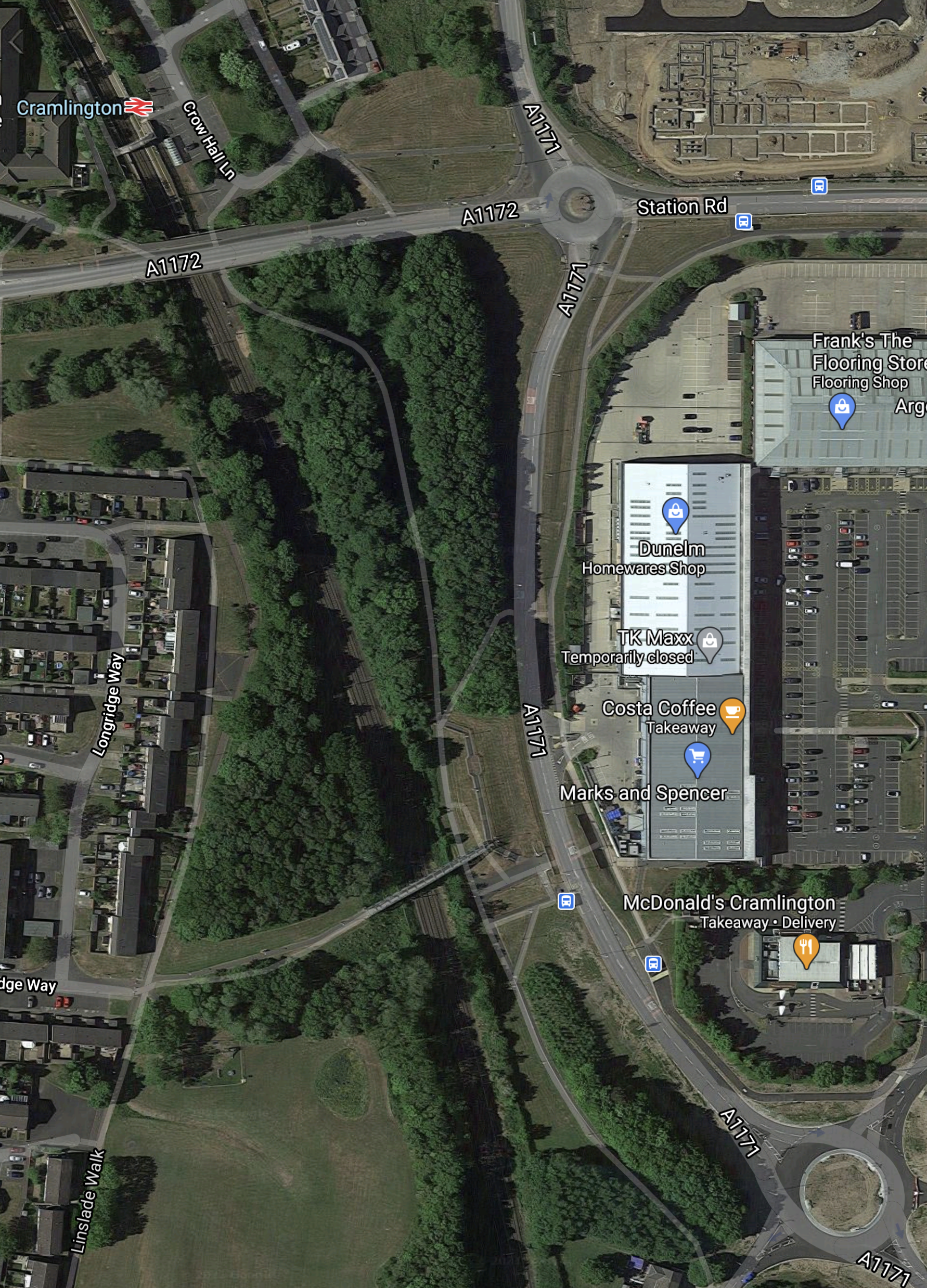
It looks like moving the station would be a good plan.
Future Traffic On The East Coast Main Line
The ECML between Newcastle and Berwick-on-Tweed is a very busy double-track railway.
Over the next few years, it is likely the following will happen.
- Digital in-cab ERTMS signalling will allow large sections of 140 mph running on the ECML.
- London Kings Cross and Edinburgh timings will drop to around three and a half hours. This timing was achieved by an InterCity 225 train in the 1980s.
- Under four-hour timings will mean, passengers will switch to train from plane on the route.
- Extra services will run between Newcastle and Edinburgh.
- There will certainly be three tph and possibly four tph between London Kings Cross and Edinburgh.
- Freight trains will be electric hauled at up to 120 mph.
It will be extremely difficult to fit the local services between Newcastle and Morpeth and Newcastle and Chathill into the traffic on the ECML.
The first improvement would be to run 110 mph battery electric trains between Carlisle and Morpeth and Chathill via Newcastle.
- Many Morpeth and Newcastle trains are extended to Carlisle.
- Carlisle and Newcastle id 61.5 miles, which with a small amount of electrification, would be within battery range.
- Several services from Newcastle would be decarbonised.
To reduce the traffic on the ECML, these services could be rerouted via the Northumberland Line.
I suspect to Network Rail’s train planners, the Northumberland Line, is seen as a secondary route that can take the pressure from the ECML
Reopening The Northumberland Line In Sequence
My background is project management and I believe this project can be improved by good class project management.
I would do the project in this order.
Order A Fleet Of New Battery Electric Trains
These would have the following specification.
- 100 mph or possible 110 mph on electrification on the ECML.
- 100 mph on batteries, where the route allows.
- 56 mile range on battery power.
- Three- or four-cars
- Ability to use digital in-cab ERTMS signalling.
As I said earlier, the Hitachi specification for their Regional Battery Train based on a Class 385 train would be ideal, but other manufacturers would be capable of providing a suitable train.
Introduce The Trains Into Service
The trains would be introduced into service on the following routes from Newcastle.
- Newcastle and Carlisle
- Newcastle and Morpeth
- Newcastle and Chathill
Note.
- There may need to be some extra electrification for the Newcastle and Carlisle service.
- Morpeth and Chathill would be served via the ECML.
Other routes from Newcastle could be possible.
Benefits would include.
- Carlisle and Morpeth get electric train services from Newcastle.
- Some services would be decarbonised.
- The TOC would get feedback about the use of battery electric trains, in terms of passenger numbers and their comments.
Hopefully, the TOC would get information, that will help them plan future phases.
Test The Trains On The Northumberland Line
This would be for the following reasons.
- To assess train performance.
- Ascertain whether any changing would be needed at Ashington.
- Determine if any electrification would be needed to run any of the proposed services.
The TOC would continue to learn more.
Add A Single Platform On The Northumberland Line At Northumberland Park Station
Initially, I would only add a single platform at Northumberland Park station,
- This would enable interchange between Northumberland Line and Metro services.
- A temporary lift could be provided, as they were during the rebuilding of Abbey Wood station.
- The extension to the station would be designed, so that all possible future scenarios could be added later.
I would expect that the rebuilding of this station is on the critical path, so this should probably be performed early or in parallel with the introduction of the trains.
Benefits would include, the ability to start a shuttle service from the station to perhaps Carlisle via Manors and Newcastle.
Build A Single Platform Park-And-Ride Station At Bebside
I said earlier, that this Park-And-Ride station is important and it should be built early.
- It is 6 miles from Ashington.
- It is 4.5 miles from Cramlington.
- It is proposed as a station for Blyth.
- It is close to the A 189 dual carriageway.
It should be built early as a one-platform station with a large car park.
It would need a cross-over to turn back trains or the existing one at Bedlington could be used.
Reinstate A Single Platform Station At Bedlington
Bedlington station has some interesting remains.
- There is a derelict platform on the Eastern (Up) track.
- There are cross-overs to turnback trains.
- There is a level crossing.
There is also a signal box with a signaller to keep order.
Start A Preview Service Between Newcastle and Bedlington
A preview service could be started once the following has been completed.
- The track and signalling has passed all necessary inspections.
- The trains have been certified for the route.
- The interchange with the Metro has been completed at Northumberland Park station.
- Either Bebside or Bedlington has been completed.
- Drivers and other staff have been trained.
Starting a preview service should enable the future extensions of the service to be designed using some real passenger numbers and feedback.
Beeching Reversal – Ferryhill Station Reopening
This is one of the Beeching Reversal projects that the Government and Network Rail are proposing to reverse some of the Beeching cuts. There used to be a Ferryhill station on the East Coast Main Line. It closed in 1967 and burnt down in 1969, before being demolished.
I first noted the station in Boris Johnson Backs Station Opening Which Could See Metro Link To County Durham, after Boris promised it would be built in PMQs.
I then mentioned the station in Northern Powerhouse Rail – Significant Upgrades Of The East Coast Main Line From Leeds To Newcastle (Via York And Darlington) And Restoration Of The Leamside Line.
Last night, I read this document from Railfuture, which talks about rail improvements in the North East and on the East Coast Main Line.
In the document, Ferryhill station is mentioned eighteen times.
Reopening Ferryhill station would appear to have support at all levels.
The Location Of Ferryhill Station
This Google Map shows the general area of the proposed Ferryhill station.
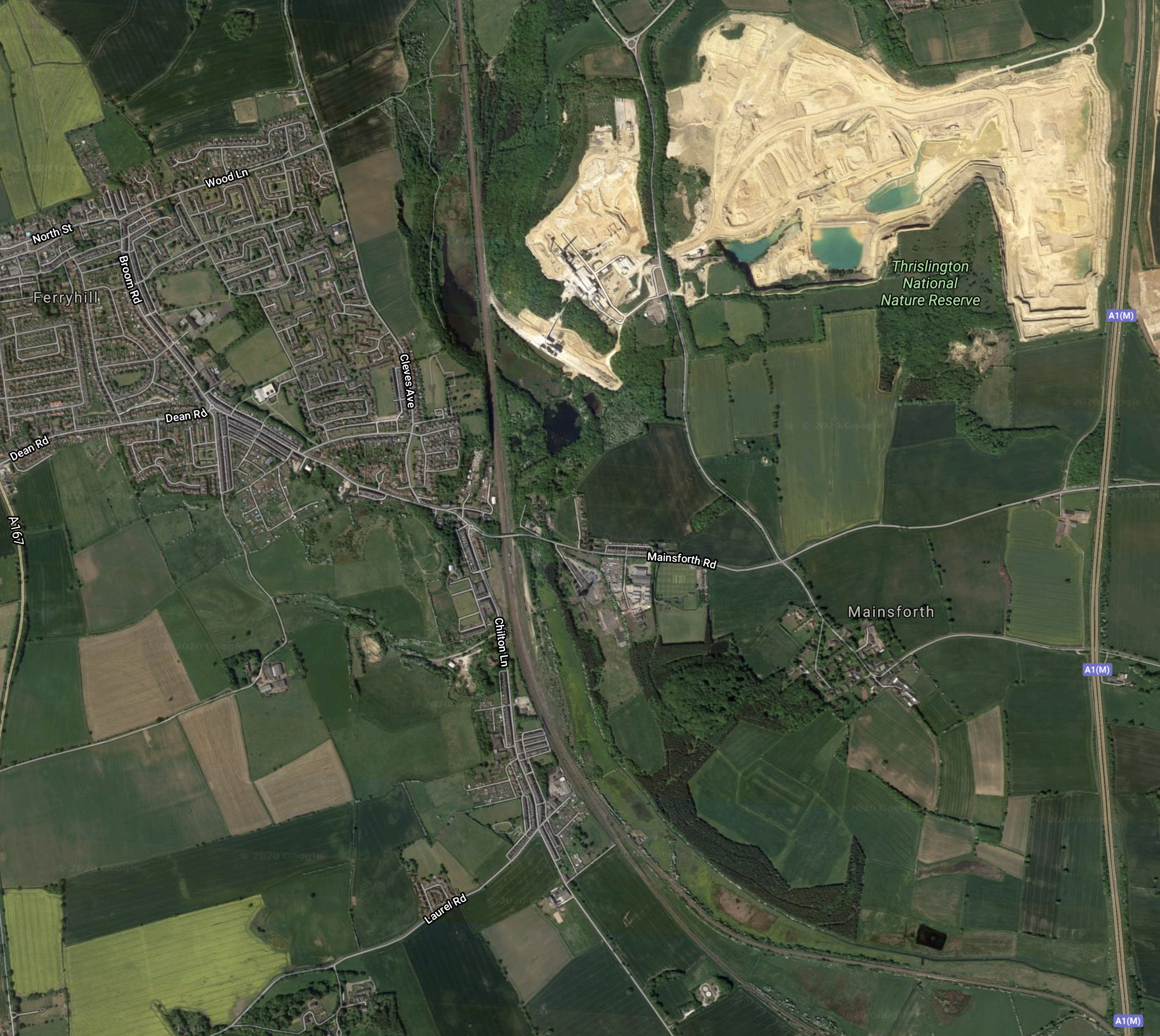
Note.
- Ferryhill is the village in the North-West corner of the map.
- The lion-shaped quarry in the North-East is destined to become a landfill site.
- Below this is Thrislington Plantation, which is a National Nature Reserve.
- The East Coast Main Line runs North-South between the village and the quarry.
South of the village the line splits, as is shown in detail in this second Google Map.
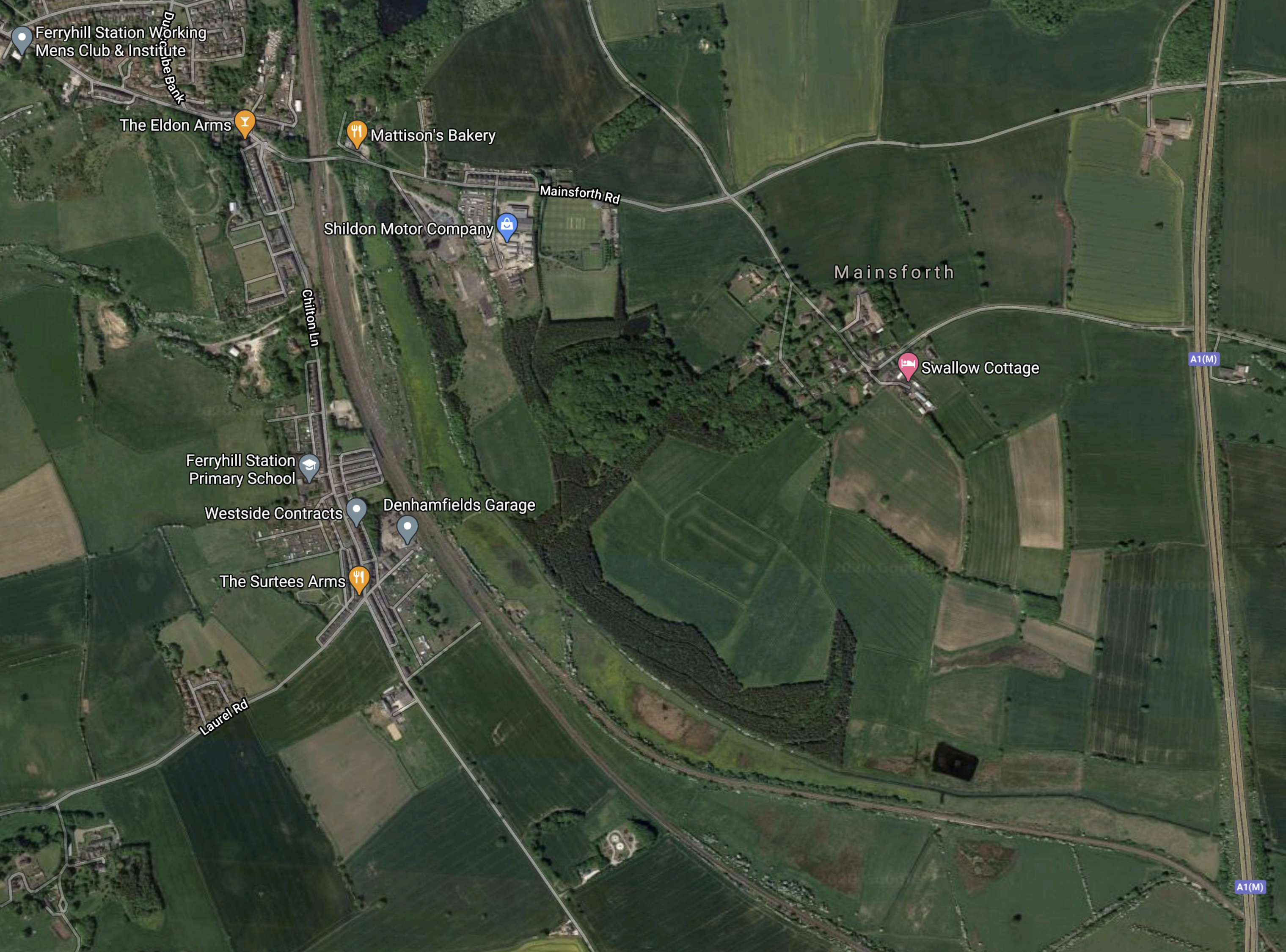
Note.
- Ferryhill South junction by Denhamfields Garage, with the nearby Ferryhill Station Primary School
- The line going South-East is the Stillington freight line to Teesside.
- The other line going in a more Southerly direction is the electrified East Coast Main Line to Darlington and the South.
- Between Ferryhill South junction and Tursdale Junction with the Leamside Line is a 2.5 mile four-track electrified railway.
I suspect the station could be any convenient location, to the North of the junction.
Railfuture have strong opinions on the station and feel it should be a Park-and-Ride station for the settlements in the former North Durham coalfield, with frequent services to Newcastle.
Current Passenger Train Services Through Ferryhill
These services currently pass the location of the proposed Ferryhill station.
- LNER – London Kings Cross and Edinburgh via York, Darlington. Newcastle and Berwick-upon-Tweed
- LNER – London Kings Cross and Edinburgh via Peterborough, Newark North Gate, Doncaster, York, Darlington, Durham and Newcastle
- CrossCountry – Plymouth and Edinburgh via Totnes, Newton Abbot, Exeter St Davids, Tiverton Parkway, Taunton, Bristol Temple Meads, Bristol Parkway, Cheltenham Spa, Birmingham New Street, Derby, Chesterfield, Sheffield, Wakefield Westgate, Leeds, York, Darlington, Durham and Newcastle
- CrossCountry – Southampton and Newcastle via Birmingham New Street, Derby, Sheffield, Doncaster, York, Darlington and Durham
- TransPennine Express – Liverpool Lime Street and Edinburgh via Newton-le-Willows, Manchester Victoria, Huddersfield, Leeds, York, Darlington, Durham, Newcastle and Morpeth
- TransPennine Express – Manchester Airport and Newcastle via Manchester Piccadilly, Manchester Oxford Road, Manchester Victoria, Huddersfield, Dewsbury, Leeds, York, Northallerton, Darlington and Durham
Note.
- All trains have a frequency of one train per hour (tph)
- All trains call at York, Darlington and Newcastle.
- I have missed out some of the intermediate stations, where trains don’t call at least hourly.
- I have missed out stations South of Birmingham New Street.
- A few Northern Trains services pass through at Peak times or to go to and from depots.
I suspect some of these services could stop and to encourage commuters to Newcastle, Durham and Darlington to swap from car to train,
I also suspect that Ferryhill station needs a frequency of at least two tph and if possible four! Four tph would give a Turn-up-and-Go service to Darlington, Newcastle and York.
Planned And Possible Future Passenger Train Services Through Ferryhill
From various sources, these services are either planned or possible.
High Speed Two
High Speed Two are planning the following services, that will pass through.
- Birmingham Curzon Street and Newcastle via East Midlands Hub, York, Darlington and Durham.
- London Euston and Newcastle via Old Oak Common, East Midlands Hub and York.
- London Euston and Newcastle via Old Oak Common, East Midlands Hub, York and Darlington.
Note.
- All trains have a frequency of one tph.
- All trains call at York, East Midlands Hub, York and Newcastle.
- All trains will be 200 metres long.
I feel that Ferryhill station should have platforms long enough to accommodate these trains and other long trains, to future-proof the design and to cater for possible emergencies.
The longest trains on the route would probably be one of the following.
- A pair of five-car Class 800 trains or similar, which would be 260 metres long.
- A High Speed Two Classic-Compatible train, which would be 200 metres long.
Unless provision needed to be made for pairs of High Speed Two Classic-Compatible trains.
East Coast Trains
From next year, East Coast Trains, intend to run a five trains per day (tpd) service between London and Edinburgh via Stevenage, Newcastle and Morpeth.
Note that in Thoughts On East Coast Trains, I said this service would stop at Durham, as that was said in Wikipedia at the time.
Northern Powerhouse Rail
Northern Powerhouse Rail has an objective to to run four tph between Leeds and Newcastle in 58 minutes.
At present there are only three tph on this route, two tph from TransPennine Express and one tph from CrossCountry. All three services stop at Leeds, York, Darlington, Durham and Newcastle.
I believe that the best way to provide the fourth service between Leeds and Newcastle would be to run a third LNER service between London Kings Cross and Edinburgh, when upgrades to the East Coast Main Line give the train operating company another path.
- The service would only stop en route at Leeds and Newcastle.
- It would increase the frequency between London Kings Cross and Leeds to three tph
- It would increase the frequency between London Kings Cross and Newcastle to three tph
- It would increase the frequency between London Kings Cross and Edinburgh to three tph
- It would increase the frequency between London Leeds and Newcastle to four tph
- It would run non-stop between London Kings Cross and Leeds, in under two hours.
I believe that, when all the upgrades to the East Coast Main Line are complete, that such a service could match or even better High Speed Two’s time of three hours and forty-eight minutes between London and Edinburgh.
Ferryhill And Teesside Via The Stillington Freight Line
The Clarence Railway is described in this paragraph in its Wikipedia entry.
The Clarence Railway was an early railway company that operated in north-east England between 1833 and 1853. The railway was built to take coal from mines in County Durham to ports on the River Tees and was a competitor to the Stockton and Darlington Railway (S&DR). It suffered financial difficulty soon after it opened because traffic was low and the S&DR charged a high rate for transporting coal to the Clarence, and the company was managed by the Exchequer Loan Commissioners after July 1834.
But it has left behind a legacy of useful rail lines, that connect important factories, ports, towns, works on other railways on Teesside.
- It forms the link between the Durham Coast Line and Middlesbrough station.
- It forms the link between Northallerton and Middlesbrough stations.
This Google Map shows the triangle between Eaglescliffe, Stockton-on-Tees and Thornaby stations.
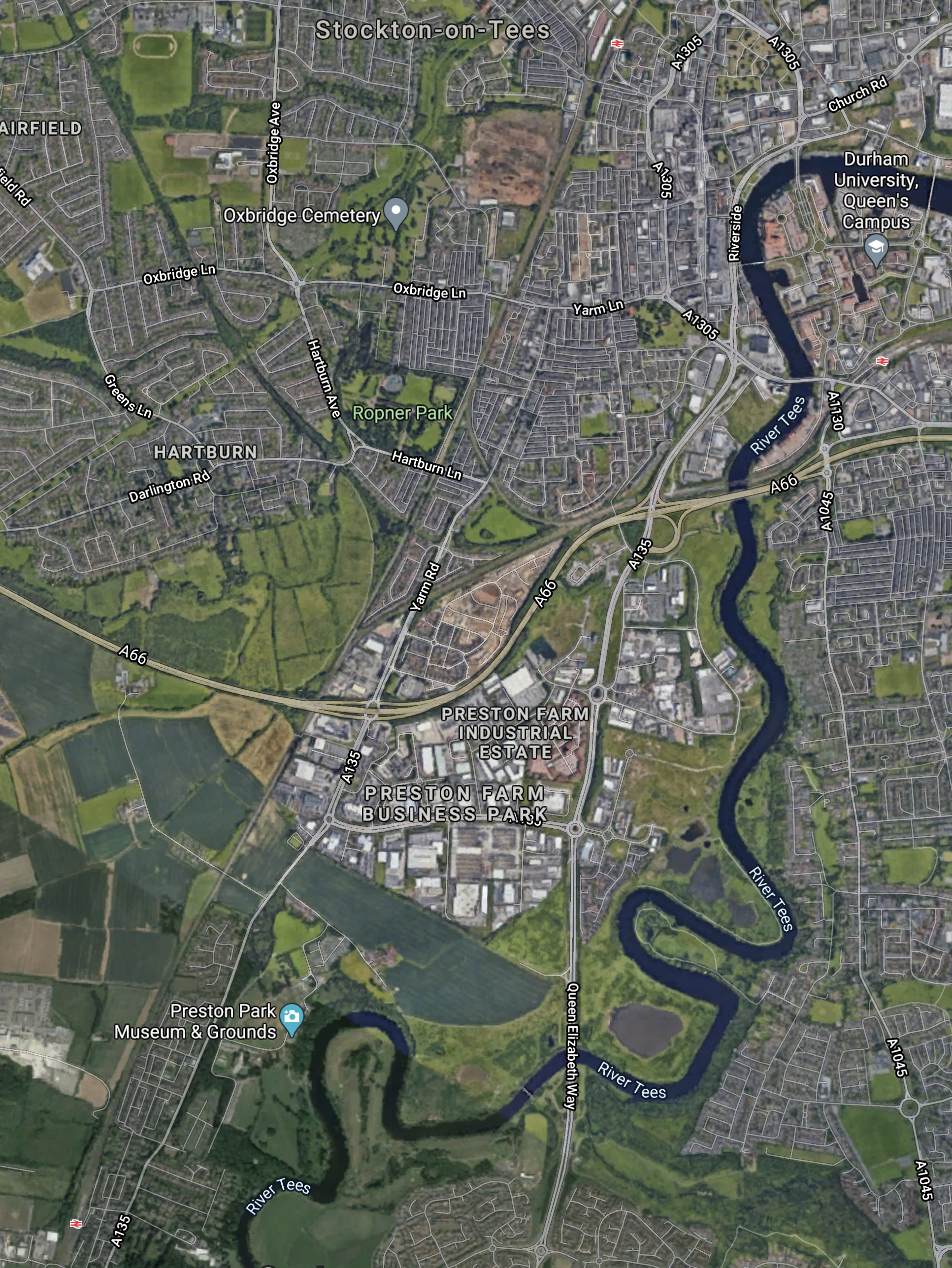
Note.
- Eaglescliffe station is in the South-West corner of the map and lines from the station lead to Darlington and Northallerton stations.
- Thornaby station is in the North-East corner of the map and connects to Middlesbrough station.
- Stockton station is at the North of the map.
Tracks connect the three stations.
This Google Map shows the connection between Thornaby and Stockton stations.
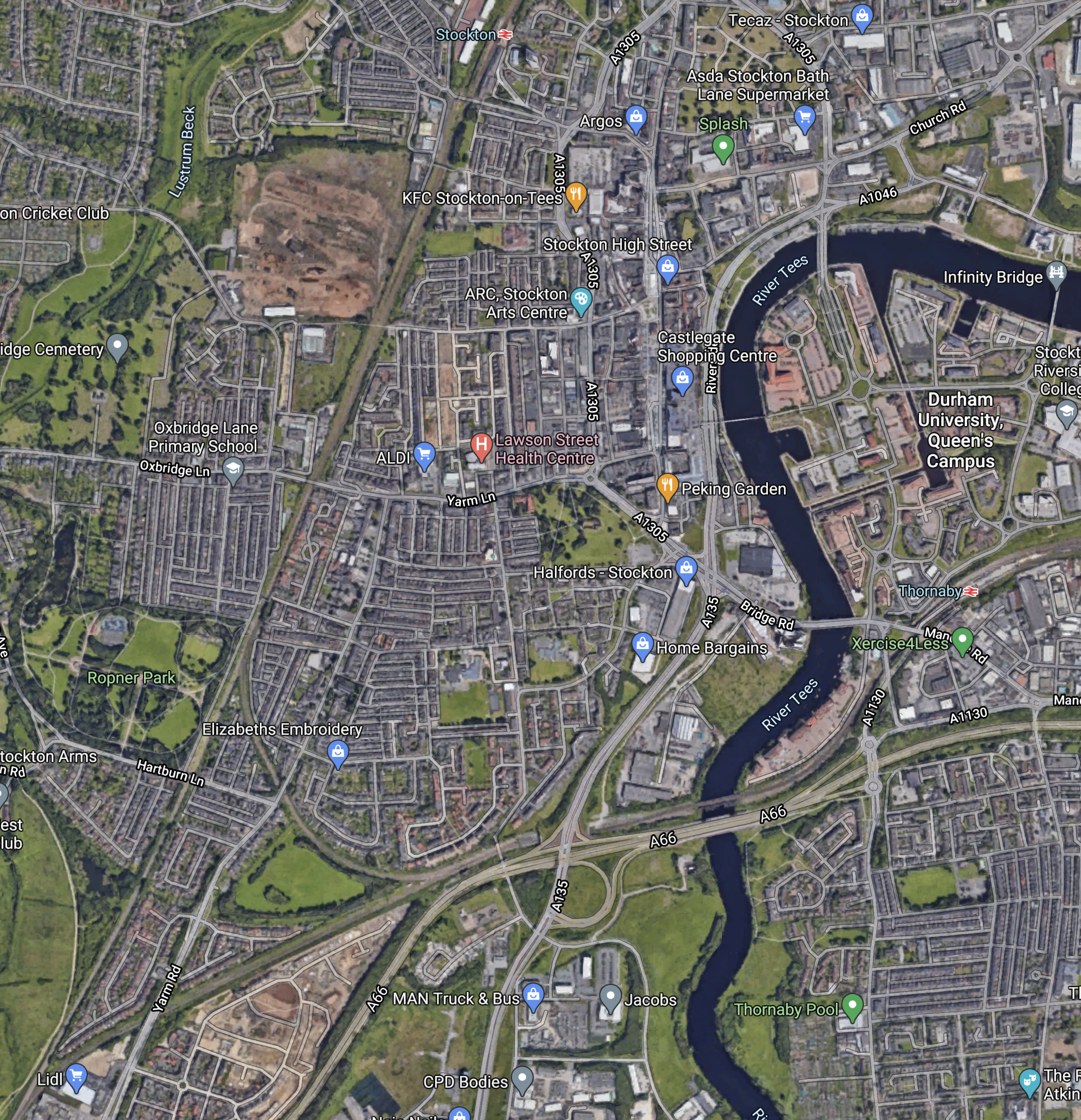
Note.
- Stockton station is at the North of the map.
- Thornaby station is at the East of the map.
- In the South-Western corner of the map is a triangular junction, that links Eaglescliffe, Stockton-on-Tees and Thornaby stations.
Currently, this triangular junction, allows trains to go between.
- Middlesbrough and Newcastle via Thornaby, Stockton, Hartlepool and Sunderland.
- Middlesbrough and Darlington via Thornaby and Eaglescliffe.
- Middlesbrough and Northallerton via Thornaby and Eaglescliffe.
But it could be even better.
This Google Map shows another triangular junction to the North of Stockton station.
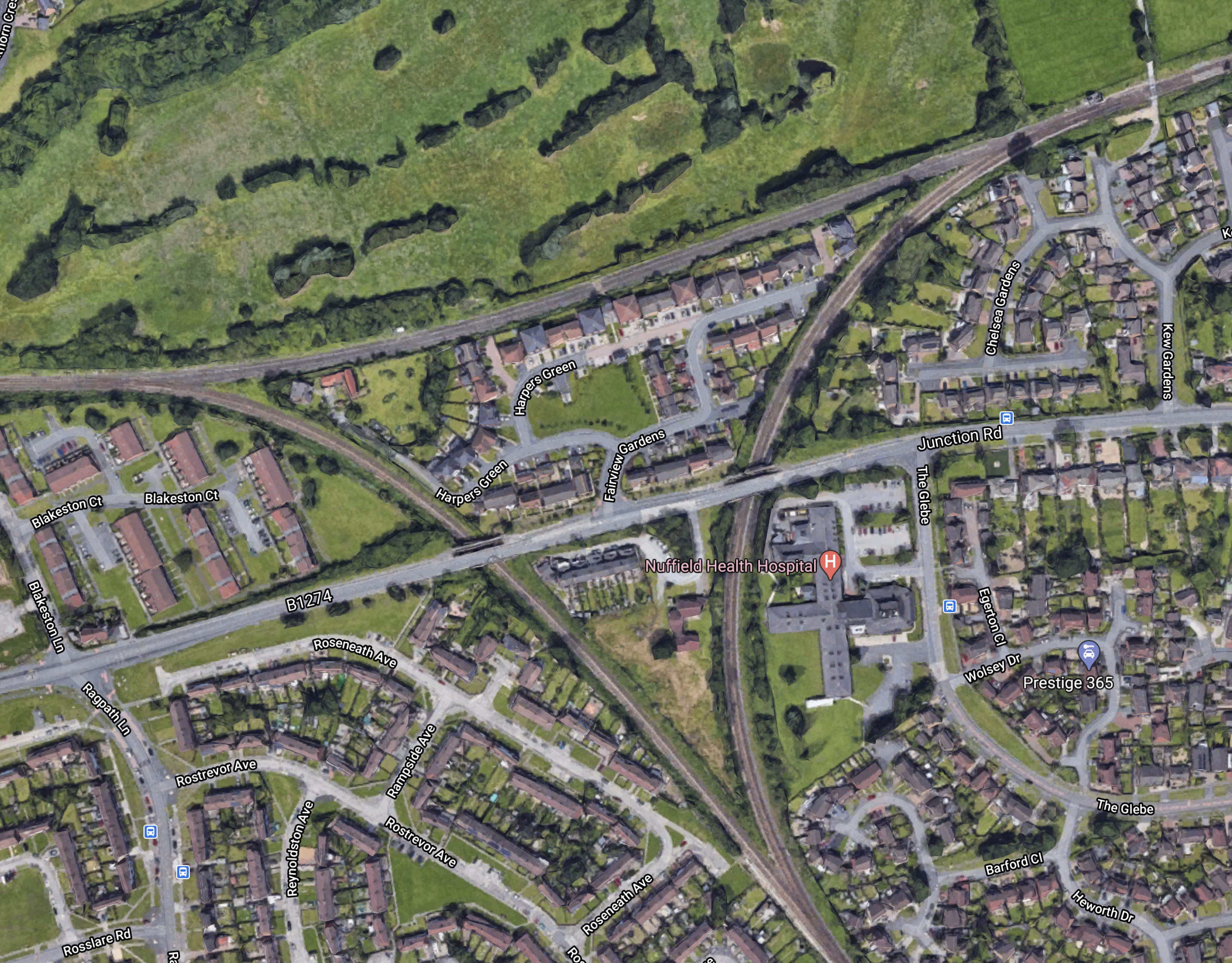
Note.
- The Southern junction of the triangle leads to Stockton station and ultimately to Darlington, Eaglescliffe, Middlesbrough, Northallerton and Thornaby.
- The Eastern junction leads to Hartlepool, Sunderland and Newcastle.
So where does the Western Junction lead to?
The railway is the Stillington Branch Line.
- It leads to Ferryhill.
- It is about ten miles long.
- It is double-track.
- There used to be intermediate stations at Radmarshall, Stillington and Sedgefield.
Looking at timings for trains on the various sections of the route gives.
- Middlesbrough and Stockton – 11 minutes
- Stockton and Ferryhill South Junction – 23 minutes
- Ferryhill South Junction and Newcastle – 20 minutes
This gives a timing of 54 minutes compared with up to 78 minutes for the current service on the Durham Coast Line.
In their document, Railfuture gives this as one of their campaigns.
Providing Faster Journeys Teesside to Tyneside by running passenger services from
Middlesbrough, Thornaby and Stockton via the 10 mile Stillington freight only line and then via the
East Coast Main Line to Newcastle. Our aim is to reduce overall journey time on direct train
between Middlesbrough to Newcastle from 1 hour 15 minutes to 55 minutes and so open up many
additional job opportunities to the residents of both areas.
My calculations say that it should be possible, to run a useful service between Middlesbrough and Newcastle, via the Stillington freight line.
- The route is used regularly for freight trains and by LNER for what look to be testing or empty stock movements.
- Will any station be built at Radmarshall, Stillington or Sedgefield?
- I estimate that between Ferryhill South Junction and Middlesbrough, is about fifteen miles, so it might be possible to run a Middlesbrough and Newcastle service using battery electric trains, like Hitachi’s Regional Battery Trains, which would be charged on the East Coast Main Line.
Activating the route, doesn’t look to be the most expensive passenger reopening on the cards.
I suspect though, that if passenger services were to be run on the Stillington Line, that Ferryhill station, will need platforms on both the East Coast Main Line and the Stillington Line.
Services could include.
- Newcastle and Middlesbrough via Ferryhill
- Newcastle and Hartlepool via Ferryhill
- Newcastle and York via Eaglescliffe and Ferryhill, with a reverse at Middlesbrough.
Note.
- The Northern terminus could be Ferryhill for some trains.
- Two tph between Stockton and Ferryhill would be a useful service.
- Would a Newcastle and Middlesbrough service call at the poorly-served Chester-le-Street station to improve services?
I also feel that as some of these services will be running on the East Coast Main Line between Ferryhill and Newcastle, it probably would be desirable for these services to be run by Hitachi’s Regional Battery Trains, which would be capable of maintaining the maximum speed for the route, as all the other passenger services can at present!
Ferryhill And Tyneside Via The Leamside Line
The reopening of the Leamside Line is a high priority of Northern Powerhouse Rail, which I wrote about in Northern Powerhouse Rail – Significant Upgrades Of The East Coast Main Line From Leeds To Newcastle (Via York And Darlington) And Restoration Of The Leamside Line.
In their document, Railfuture gives this as one of their campaigns.
Reopening the rail line from Ferryhill to Pelaw (the Leamside Line) with the aim of providing
services that will improve local connections and open new opportunities to people living in this part
of County Durham, as well as providing relief for congestion on the existing line through Durham.
This reopening has been talked about for years, so I suspect that Network Rail know the problems and at least have a rough estimate for what needs to be done and how much it will cost.
The Wikipedia entry for the Leamside Line has a section, which is entitled Proposed Re-Opening, Upgrade and Development, where this is the first paragraph.
Since the line’s closure in the early 1990s, a number of proposals to re-open the Leamside Line were put forward, including plans by AECOM, ATOC, Durham County Council, Railtrack and Tyne and Wear PTE. The line has been considered for a number of potential uses, including a regional suburban rail service linking Tyneside and Teesside, a diversionary freight route for the East Coast Main Line, and an extension to the Tyne and Wear Metro network.
Wikipedia also states that an application to the Restoring Your Railway Fund for money for a feasibility study was unsuccessful.
All that could change with the developments needed between Leeds and Newcastle for High Speed Two and Northern Powerhouse Rail.
- High Speed Two are planning to run at least three tph to and from Newcastle.
- Northern Powerhouse Rail are planning to run an extra service between Leeds and Newcastle.
- LNER will have an extra path on the East Coast Main Line, that could be used through the area.
Using the Leamside Line as a diversion for freight and slower passenger trains would appear to be a possibility.
It could also be combined with the Stillington Line and Northallerton and Stockton to create a double-track diversion, alongside the double-track section of the East Coast Main Line between Northallerton and Newcastle.
Extending The Tyne And Wear Metro Along The Leamside Line
This has been talked about for some time.
In the Wikipedia entry for the Tyne and Wear Metro. there is a section, which is entitled Extension To Washington IAMP, where this is said.
There have been a number of proposals looking in to the possibility of re-opening the former Leamside Line to Washington, including a 2009 report from the Association of Train Operating Companies (ATOC), and a 2016 proposal from the North East Combined Authority (NECA), as well as the abandoned Project Orpheus programme, from the early 2000s. Most recently, proposals are being put forward to link the current network at Pelaw and South Hylton, with the International Advanced Manufacturing Park in Washington, using part of the alignment of the former Leamside Line.
If the Tyne and Wear Metro were to be extended to the Southern end of the Leamside Line, Ferryhill station could be a Southern terminal.
- There is space to create a line alongside the East Coast Main Line between Tursdale Junction, where it connects with the Leamside Line and Ferryhill station.
- The new Tyne and Wear trains have been designed to share tracks with other trains on Network Rail tracks.
- This would enable interchange between East Coast Main Line, Stillington Line and Metro services, without going North to Newcastle.
At the present time, all that would be needed would be for the Metro connection to be safeguarded.
Railfuture’s Campaigns In The North East
This is a tidying up of several improvements, which are campaigns of Railfuture, that are outlined in this document.
- New Station At Team Valley
- New Station At Gilsland
- New Rail Service From Newcastle To Ashington
- North Of Morpeth Local Service
They will be covered in separate posts.
Conclusions
I can separate conclusions into sections.
The Design Of Ferryhill Station
These are my conclusions about the design of Ferryhill station.
- It should be built as a Park-and-Ride station.
- It should have platforms long enough for any train that might stop at the station. I suspect this would be a pair of Class 800 trains, which would be 260 metres long.
- Platforms should be on both the East Coast Main Line and the Stillington Line.
- There should be safeguarding of a route, so that Metro trains could access the station from the Leamside Line.
As the station could be a Park-and-Ride station, I will assume the station will need good road access.
Train Services At Ferryhill Station
These are my conclusions about the services calling at Ferryhill station.
There should be four tph between Leeds and Newcastle, all of which would stop at York, Darlington, Ferryhill and Durham, with some services calling at Northallerton and Chester-le-Street.
There should also be less frequent services at Ferryhill to Scotland and London. Perhaps a frequency of around six tpd would be sufficient, as changes could be made at Leeds, Newcastle of York.
Two tph would probably be ideal for services on the Stillington Line to Hartlepool, Middlesbrough and Redcar.
It would certainly be a busy and well-connected station.
Beeching Reversal – Consett-Newcastle Connection
This is one of the Beeching Reversal projects that the Government and Network Rail are proposing to reverse some of the Beeching cuts. There used to be a direct line between Newcastle and Consett, which was the Derwent Valley Railway, which connected Consett to the Tyne Valley Line.
I would assume that the basis of the plan, is to reinstate this route and build a new station at Consett.
The Former Route
I will show the route starting from the Tyne Valley Line.
Connection To The Tyne Valley Line
This Google Map shows the MetroCentre with the Tyne Valley Line running along its North side.

Note.
- The River Tyne running along the North side of the map.
- MetroCentre station on the Tyne Valley Line is by the North-East corner of the MetroCentre.
- The River Derwent meanders its way to the River Tyne, to the West of the MetroCentre.
- The Derwent Valley Line used to come through this area to join the Tyne Valley Line.
I have a feeling that much of the route of the Derwent Valley Line lies under the new roads.
This map clipped from the Wikipedia entry for the Derwent Valley Line, shows how, the line connected to the Tyne Valley Line.

This Google Map shows the area.

Note.
- The Scotswood Railway Bridge is the dark-coloured bridge in the North-West corner of the map.
- The Tyne Valley Line runs East-West across the map.
- Swalwell station must have been in the area of the junction on the A1.
As the old route appears to be blocked, another route must be found to connect to the Tyne Valley Line.
Perhaps there would be enough space to squeeze a railway line alongside the River Derwent.
Between Swalwell And Nine Arches Viaduct
The Nine Arches Viaduct is an iconic feature of the line. This image of the bridge was taken from a Google Map.
This second image shows it as a map.
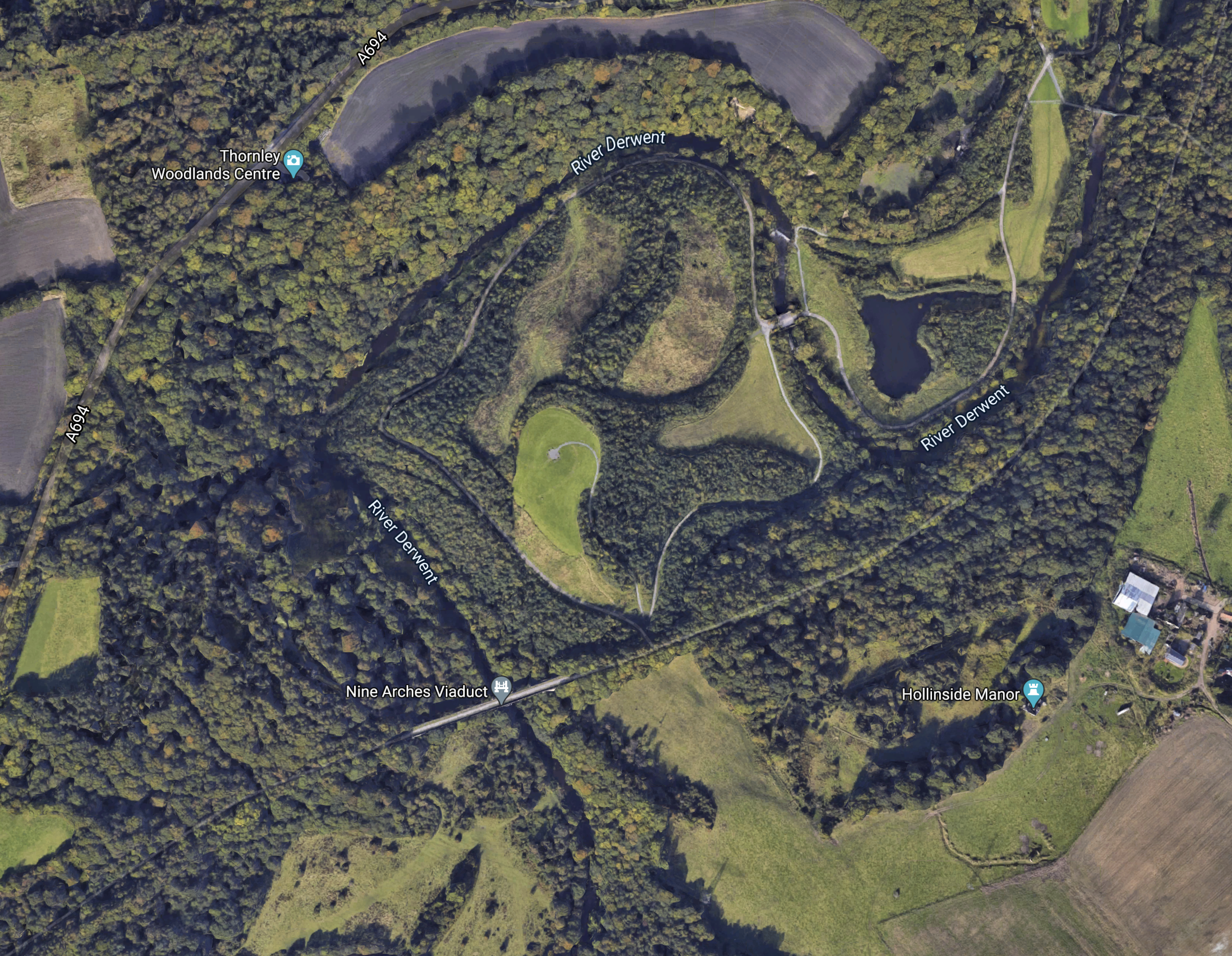
Note that I have arranged the map, so that the path that uses the route of the Derwent Valley Line runs between the South-West and North-East corners of the map.
This third Google Map has the Nine Arches Viaduct in the South-West corner and Swalwell in the North-East corner.

Note the tadpole-shaped green space by the bridge.
Between Nine Arches Viaduct and Lintz Green
This Google Map shows this section.

Note.
- The Nine Arches Viaduct is in the North-East corner.
- Lintz Green is in the South West corner.
On the Derwent Valley Railway, there were stations at Lintz Green and Rowlands Gill.
The History section in the Wikipedia entry for the Derwent Valley Railway, explains why a more direct route wasn’t taken in this area.
Between Lintz Green And Ebchester
This Google Map shows this section.

Note.
Lintz Green is at the Eastern edge of the map.
Ebchester is in the South-West corner.
On the Derwent Valley Railway, there were stations at High Westwood and Ebchester.
Between Ebchester and Consett
This Google Map shows this section.
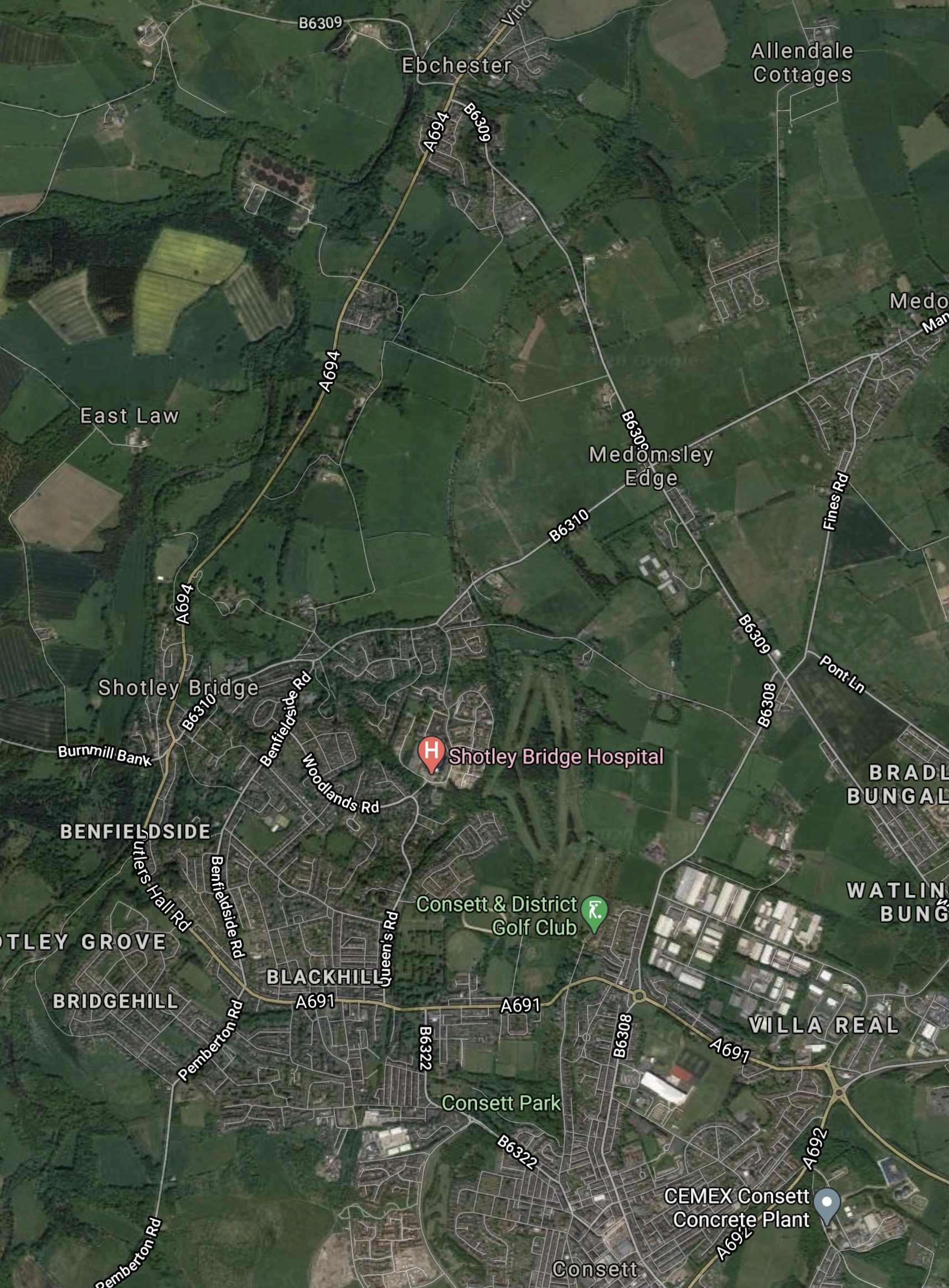
Note.
- Ebchester is at the Northern edge of the map in the centre.
- Consett is in the South of the map.
- Shotley Bridge Hospital is an NHS hospital.
On the Derwent Valley Railway, there were stations at Shotley Bridge, Blackhill and Consett.
Consett Station
A new station would have to be built in Consett.
Consett is a town of around 25,000 and is shown in this Google Map.

Note that the red arrow shows the rough location of the original station near Annfield Plain. The station and the tracks were demolished in the 1980s to make way for new roads.
How thinking on transport has changed in forty years!
Is This Route Feasible?
Google gives the distance between the Metrocentre and Consett as 11.5 miles and Wikipedia says that Consett is about 900 feet above sea level.
To put the altitude into perspective, this is higher than Merthyr Tydfil, but not as high as Buxton, so I feel that trains could ascend to Consett, as steam trains did in far-off Victorian days, when they carried over half a million passengers every year, according to Wikipedia.
I would say, that although restoring the route could be challenging, it would not be filed under Impossible.
These are a few other thoughts.
Would The Route Carry Freight?
If we’re talking about long freight trains with lots of containers or many trucks of coal, the answer is probably a negative.
But rail freight is changing, I can see many towns in the UK getting a high speed parcels service using modified electric multiple units.
- Rail Operations Group and others are planning to experiment with this type of service.
- With on-line shopping, 25,000 residents can generate a lot of deliveries and returns.
- The average guy on the Consett omnibus, is getting more worried about carbon emissions.
But trains like these could fit in with the passenger service on the route and could even unload at a well-designed passenger terminal in Consett.
The route would also have to be able to take maintenance and construction trains, just like the London Underground and the Tyne and Wear Metro do!
Would The Route Be Single- Or Double-Track?
Consider.
- The original Victorian route was double-track.
- The more trains on the route, the greater the need for a full double-track railway.
- Would the Nine Arches Viaduct accommodate a double-track.
- Single-track railways are easier to construct and more affordable.
Hopefully a serious study, will give an answer.
How Would Trains Go Between MetroCentre and Newcastle Stations?
Currently, there are three trains per hour (tph) between MetroCentre and Newcastle stations.
The Tyne and Wear Metro generally runs on the principle of five tph, so a one or two tph service between Consett and Newcastle would fit in well with the Tyne and Wear Metro, even if it was not their service.
This Google Map shows MetroCentre station.

Could a third platform be fitted here to run a shuttle service to Consett?
Trains between MetroCentre and Newcastle stations, go via Dunston station, Norwood Junction and the King Edward VII Bridge.
Note.
- Norwood Junction also allows trains to go between The Tyne Valley Line and the East Coast Main Line in both North and South directions.
- The comprehensive track layout to the South of Newcastle allows access to everywhere.
The Consett trains could even be run on a Back-to-Back basis to Ashington and Blyth, which is now being called the Northumberland Line in the media.
Would The Line Be Zero-Carbon?
I feel strongly, that all new or reopened railways should be zero-carbon.
But whether it should be electrified is another matter and depends on the rolling stock.
Battery Electric Trains To Consett
If the route to Consett is to be zero-carbon, then the obvious choice for the route are battery electric trains.
- To run these successfully, there would probably need to be some electrification along the Tyne Valley Line, as far as the junction with the new Derwent Valley Line, so trains started the climb to Consett with full batteries.
- If necessary, some parts of the Derwent Valley Line could be electrified, to assist the trains up the hill.
- Coming down from Consett, they could use Newton’s friend, with regenerative braking charging the batteries.
- Intriguingly, between MetroCentre and Hexham is under twenty miles, so why not run these services using similar battery electric trains.
I also think, that if the electrification were to be 25 KVAC, then it could enable battery electric trains like Hitachi’s Regional Battery Train or CAF’s proposed battery-electric Class 331 train, to run between Newcastle and Carlisle stations.
The Tyne And Wear Metro’s New Trains
I believe that the new trains being built by Stadler for the Tyne and Wear Metro, will be very similar to the Class 777 trains for Merseyrail.
The Class 777 trains are known to have this features.
- A capacity of 484 passengers.
- An operating speed of 75 mph.
- A weight of 99 tonnes.
- Ability to use 750 VDC third-rail electrification.
- A small battery to be used for hotel power, when there is no electrification.
- Some will be fitted with batteries to allow route extension on unelectrified lines, like between Ormskirk and Preston, which is 15.3 miles.
- In the future, they will be able to use 25 KVAC overhead electrification.
The new Tyne and Wear trains appear to be different to the Class 777 trains in the following ways.
- A different length, with five cars instead of four.
- Ability to use 750 VDC overhead instead of 750 VDC third-rail electrification.
- Longitudinal instead of transverse seating.
These facts should also be born in mind.
Stadler built the Class 399 tram-trains for Sheffield, that can use both 750 VDC and 25 KVAC overhead electrification from the same pantograph.
Parts of the Tyne and Wear Metro use tram-train operation under the Karlsruhe model, which is also used in Sheffield.
Could The Tyne And Wear Metro’s New Trains Work Between Newcastle And Consett Stations?
I feel if the following conditions were to be met, that the Tyne And Wear Metro’s new trains, would be able to work the route.
- Batteries with sufficient range to work the route were fitted.
- Ability to use both 750 VDC and 25 KVAC overhead electrification.
- Sufficient electrification were erected to power the train and charge the batteries on their journey between Newcastle and MetroCentre stations.
It is my view, that the trains could be ideal for the route.
They could also work between Newcastle and Hexham, with slightly larger batteries than their Liverpool cousins.
What Size Batteries Would Be Needed For A Service To Consett?
I will do a calculation based on the Class 777 train figures.
- The train weight is 99 tonnes.
- Each of 484 passengers weighs 80 Kg with baggage, bikes and buggies.
- This adds up to 38.7 tonnes giving a train weight of 137.7 tonnes.
Using Omni’s Potential Energy Calculator gives a value of 103 kWh to lift the full train the 900 feet to Consett.
In an article in the October 2017 Edition of Modern Railways, which is entitled Celling England By The Pound, Ian Walmsley says this in relation to trains running on the Uckfield Branch, which is not very challenging.
A modern EMU needs between 3 and 5 kWh per vehicle mile for this sort of service.
The new Tyne and Wear Metro trains have five cars, so assuming 3 kWh per vehicle mile, would need the following energy to power the train to Consett.
5* 3 * 11.5 = 172.5 kWh
I wouldn’t be surprised to see a 400 kWh battery on the train.
On the flat, it would do about twenty-seven miles, which would mean the train could provide a service between Newcastle and Hexham.
Incidentally, the distance between Newcastle and Ashington is under twenty five miles of which a couple of miles are electrified.
Conclusion
Newcastle and Consett would appear to be an ideal route to reopen.
It would require.
- A dozen miles of new track. much of which would be on an dismantled alignment.
- An appropriate number of new stations.
- Some electrification between Newcastle and MetroCentre stations.
- A number of the new Stadler trains for the Tyne and Wear Metro to be fitted with batteries.
A service of one or two tph could be provided.
In addition, the following could be possible.
- The Newcastle and Hexham service could be run by the same battery electric trains.
- The Consett and Newcastle service could be run Back-to-Back with the proposed Newcastle and Ashington service.
This scheme has collateral benefits.
 The Anonymous Widower