Crown Estate Details Round 5 Plans
The title of this post, is the same as that of this article on offshoreWIND.biz.
This is the sub-heading.
The Crown Estate has revealed details of a new leasing round, known as Round 5, for three commercial-scale floating wind projects in the Celtic Sea.
These are the first two paragraphs, which outline the three initial projects.
Located off the coast of South Wales and South West England, the sites will have a combined capacity of up to 4.5 GW, enough to supply four million homes with renewable energy.
The new wind farms are expected to be the first phase of commercial development in the region, with the UK Government confirming as part of its Autumn Statement in November its intention to unlock space for up to a further 12 GW of capacity in the Celtic Sea.
It looks like there could be another 7.5 GW available.
These four paragraphs indicate that the Crown Estate. expect the developers to to develop the local infratructure.
New details about the Round 5 auction include upfront investment in important workstreams to de-risk the process for developers and accelerate the deployment of projects.
This includes a multi-million-pound programme of marine surveys to better understand the physical and environmental properties around the locations of the new wind farms, as well as carrying out a Plan-Level Habitats Regulations Assessment early on in the process.
An Information Memorandum published today, on 7th December, also includes details of a series of contractual commitments for developers to create positive social and environmental impacts, focused on skills and training, tackling inequalities in employment, environmental benefits, and working with local communities.
In addition, bidders will be required to demonstrate commitments for the timely access to the port infrastructure needed to develop their projects, the Crown Estate said.
But it also appears that the Crown Estate are doing their bit by carrying out marine surveys.
Conclusion
It looks like the Crown Estate are making thing easier for developers, so that they increase the interest in Celtic Sea wind farms.
We’ll see if the strategy is successful, when contracts are awarded.
Wales’ Public Transport Priorities All Wrong, Expert Says
The title of this post, is the same as that if this article on the BBC.
This is the sub-heading.
The Welsh government has got its priorities wrong over public transport, an expert has said.
These five paragraphs outline the story.
Ministers should have improved bus and train services before reducing speeds from 30mph to 20mph on many Welsh roads, said Stuart Cole, Emeritus Professor at University of South Wales.
He said public transport facilities should have been “put in before any other anti-motorist legislation”.
The Welsh government said current arrangements were complex across Wales.
But Prof Cole said the Welsh government had “gone about it the wrong way round” although “what they’ve done is not in itself a bad idea”.
He said he wanted to see Wales emulate the Netherlands, where there’s been massive investment in trains and buses to entice motorists out of their cars.
I agree with Professor Cole and I feel that the Welsh Government’s approach has been all stick and no carrot!
He also criticises the lack of a Welsh travel card.
The article gives a classic example of bad transport planning.
Llanelli, in Carmarthenshire, which happens to be Transport Minister Lee Waters’ constituency, is a good example of how buses and trains are not integrated.
The bus station is a mile away from the train station, and there are no buses linking the two.
In fact there are no buses at all from the railway station.
There must be other examples like this all over the country.
Perhaps we need a UK-wide complaints department for idiocies like this.
The Crown Estate Refines Plans For Celtic Sea Floating Wind
The title of this post, is the same as that of this press release from Crown Estate.
This is the first part of the press release.
The Crown Estate has set out further details on its plans for Offshore Wind Leasing Round 5, which aims to establish new floating offshore wind technology off the coast of Wales and South West England. The update includes details on the final planned locations for the new windfarms, as well as further information on a multi-million-pound programme of marine surveys.
Round 5 is expected to be the first phase of development in the Celtic Sea, with The Crown Estate working to catalyse and accelerate the UK’s energy transition, and to de-risk developments to speed up their deployment. This includes investing in an upfront Habitats Regulation Assessment, an extensive programme of marine surveys and working with the Electricity System Operator on a coordinated approach to grid design.
This latest update follows a period of engagement with developers and wider stakeholders on proposals set out in July over how to make best use of available space in the Celtic Sea. As a result of the feedback received, The Crown Estate has confirmed that:
- Three Project Development Areas (PDAs) of roughly equal size are expected to be made available to bidders, as opposed to the previously proposed four PDAs of varying sizes
- No bidder will be able to secure an Agreement for Lease for more than one PDA
- As a result of bringing forward three equal-sized PDAs – each with a potential capacity of up to 1.5GW – the overall capacity available through Round 5 has increased from a possible 4GW to up to 4.5GW, enough to power more than 4 million homes
Note.
- Another 4.5 GW of offshore wind should hit the queue.
- It sounds like they have been listening to developers.
To find out more of the potential of the Celtic Sea, I recommend this article on the Engineer, which is entitled Unlocking The Renewables Potential Of The Celtic Sea.
I’ll go along with what this article says and accept that 50 GW of wind capacity could be installed in the Celtic Sea.
Climate Change: Y Bryn Wind Farm Aids Net Zero Aim – Developer
The title of this post, is the same as that of this article on the BBC.
This is the sub-heading.
A new onshore wind farm could help Wales move towards its net zero target by 2050, say developers.
These two paragraphs outline the scheme.
But some local people called the Y Bryn plan between Port Talbot and Maesteg a “blight on the landscape”.
The plan, first proposed in 2021, now includes 18 turbines up to 250m (820ft), rather than the original 26.
I feel that we need to develop renewable energy all round the UK.
This project, is obviously felt by the developers to be a serious proposition, judging by the very professional web site.
Some places like the Midlands and the South of England are a long way from large offshore wind and nuclear developments, but Port Talbot and Maesteg may be close enough to planned offshore wind farms, that this wind farm may need not to be developed.
I shall be following this development.
Green Hydrogen Production Facility
The title of this post is the same as this project on the Arup web site.
This is the introduction.
Green hydrogen – hydrogen produced using 100% renewable energy – holds promise as a future, low emission energy source. Across the world many players are beginning to explore or invest in its production at scale.
Statkraft are Europe’s largest renewable energy producer and are investing heavily in green hydrogen as an energy source for use in transportation and industry. Statkraft have identified a site in Pembrokeshire for a green hydrogen production facility near to the Haven Waterway Enterprise Zone, an area focusing on developing opportunities within the energy and environment sectors.
This green energy hub will be located on the former Royal Navy Armaments Depot in Trecwn, Pembrokeshire. During development, the site employed over 3,000 people, and it is hoped that this new facility can continue to support highly skilled jobs in the area, while contributing to the Welsh Government’s net zero strategy.
Statkraft have a web page for the Trecwn Green Energy Hub, where this is said about the expected production.
It is estimated that the 15MW hydrogen plant will generate up to 4 tonnes of hydrogen a day, the equivalent of powering a single bus for over 40,000 miles. The hydrogen produced could be used locally for a range of purposes including transport, as a feedstock or heat source for industry and manufacturing, as well as for heating buildings.
This Google Map shows the location of Trecwn in Pembrokeshire.

Note.
- The red arrow indicates Trecwn.
- The port of Fishguard is just to the North of Trecwn.
The site appears to be at RNAD Trecwn, which is a decommissioned Royal Navy Armaments Depot.
This second Google Map shows the remains of some of the site.
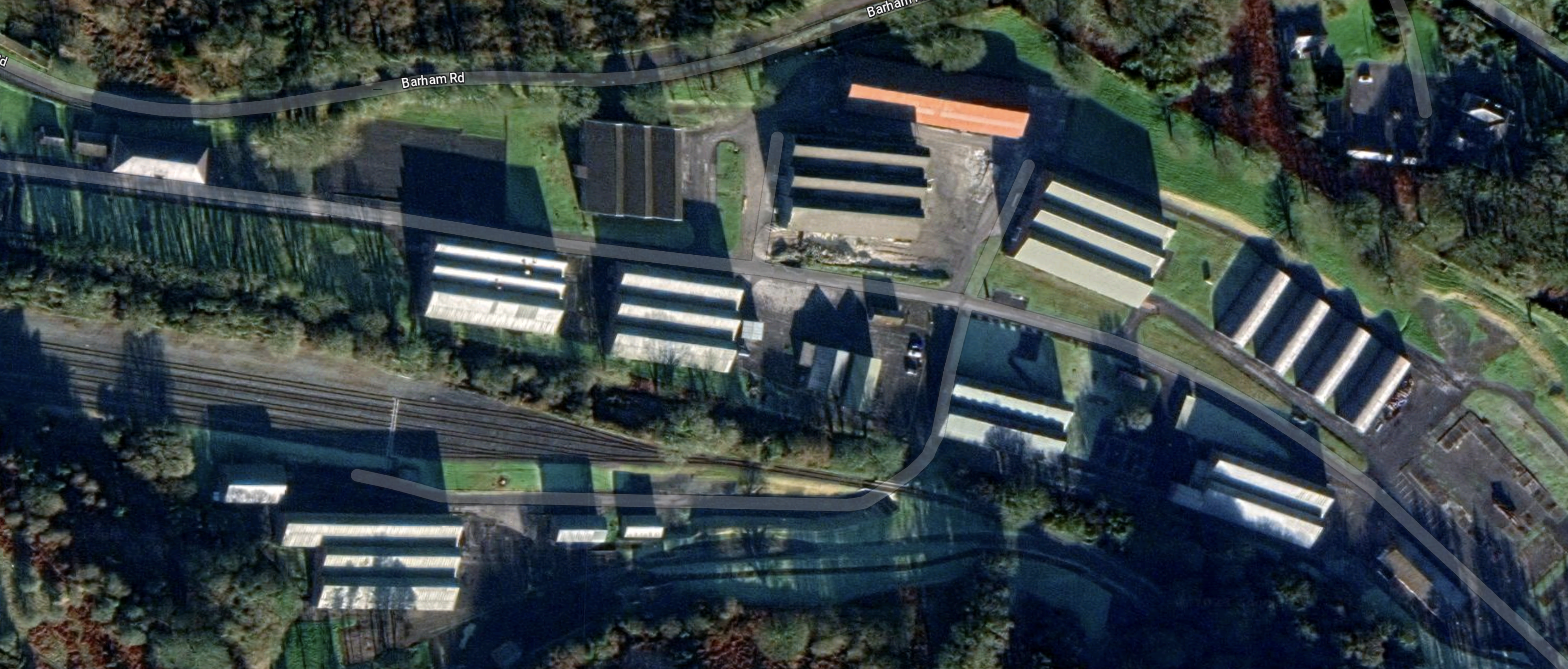
Note the railway line to the site, which is visible in West of the map, which connects to Carmarthen, Fishguard, Milford Haven and Pembroke Dock.
Wikipedia says this about its condition.
Network Rail have not only kept the railway connection operational, but refurbished it to allow the site to develop as an Intermodal freight traffic distribution site from Fishguard.
Note.
This would surely enable local trains, port operations, railway locomotives and ships to be hydrogen-powered.
- Trains and railway locomotives could be filled on the site.
- Buses and trucks could be filled on the site.
- Ports could be supplied by hydrogen trains.
- Strangely, I’ve not seen a design for a short hydrogen delivery train, which would be needed to supply the ports. But I doubt, it would be difficult to design and build.
All the Health and Safety protocols could probably easily be created, given the former use of the site.
Conclusion
Statkraft seem to have chosen an ideal site for the hydrogen electrolyser.
Wales’ Inaugural Hybrid Train Service Launches On The Borderlands Line
The title of this post, is the same as that of this article on Rail Technology Magazine.
These are the first two paragraphs.
Today marks a historic day for the Welsh rail sector, seeing the introduction of the first battery-hybrid trains used in regular passenger service on the Borderlands Line between Wrexham and Bidston, as announced by Transport for Wales (TfW).
The inaugural service for the Class 230 trains left Wrexham Central at 07:31, following months of testing and crew training.
Unfortunately, it didn’t go very well, as some trains were late and there were several rail replacement buses and cancellations.
I’m afraid, Vivarail’s ambitious project is starting to look like a heroic failure.
Could Stadler Rescue The Borderlands Line?
Perhaps the solution for the Borderlands Line, which is only 27.5 miles each way, is to ask Stadler for an estimate to extend Merseyrail’s Class 777 trains to Wrexham Central station.
- Trains would use battery power between Bidston and Wrexham.
- Passengers would not need to change trains to go between Liverpool and Wrexham.
- Trains would go round the rail loop under Liverpool, where they would charge their batteries.
- There may need to be some form of charging in Wrexham.
I’m sure the good people Merseyside and North Wales wouldn’t object, but the politicians in Cardiff might!
The UK-Wide Need For Self-Powered Trains
Consider.
- The UK needs a substantial number of two-, three- and four-car self-powered trains.
- A proportion of these trains will run on partially-electrified routes.
- 100 mph trains would be preferable.
- Some routes would need trains capable of using third-rail electrification.
They are also needed urgently.
Will Mark 3’s Save The Day?
Consider.
- The only Mark 3 electric multiple units still running or in a state good enough to be converted are the thirty-four three-car Class 320 trains and perhaps fifty four-car Class 321 trains.
- Class 317 and Class 318 trains are probably too old to convert.
- A Class 319 train is a very inferior train from a passengers point of view to the Class 321 Renatus.
As some of these like the thirty Class 321 Renatus have been refurbished and given AC transmissions, it might be a good idea to build a few prototypes and try them out on various routes to assess their quality, reliability and performance.
But this route would only give about eighty three- and four-car trains.
It wouldn’t supply any two-car trains.
Sadly, the twenty-four two-car Class 456 trains, which could have been converted have all been recently scrapped.
Are There Any Other Trains That Can Be Converted?
There are several fleets of modern trains, that might be available.
- Four-car Class 350 trains
- Four-car Class 360 trains
- Four-car Class 379 trains
- Four-car Class 386 trains
There may also be some three- and four-car Bombardier Electrostars.
Again, there is a shortage of two-car trains, except for thirty-nine Class 466 trains.
- They are Networkers.
- They were built in the 1990s.
- They were refurbished ten years ago.
- They are third-rail trains.
- They are not in bad condition.
- Their operating speed is only 75 mph.
But they would probably be a hard train to convert and would only be a stopgap.
Conclusion
I am led to the conclusion, that there is a large gap in the UK rail network for a two-car train with this specification.
- Battery-electric operation.
- 100 mph operation
- Battery range of at least eighty miles.
- Quality interior.
- Ability to run on 25 KVAC overhead and/or 750 VDC third-rail electrification.
- Ability to add a third-car in the middle to create a three-car train.
Effectively, they would be a replacement for the Class 170 diesel trains.
Hydro-Storage Options To Be Studied For Grängesberg
The title of this post, is the same as that of this news item from Anglesey Mining.
These are the highlights of the news item.
- Anglesey Mining plc, together with its 49.75% owned subsidiary Grängesberg Iron AB (“GIAB”) have entered into an MoU with Mine Storage to investigate the potential for the Grängesberg Mine to be converted into a Pumped Hydro-Storage project at the end of the mine’s producing life.
- Pumped-Hydro Storage is a green-energy storage solution that utilises water and gravity to store electrical energy. An underground mine can provide a closed-loop solution using proven, pumped hydro-power technology. Essentially, the system involves water being gravity fed through pipes down a shaft into the turbines, which produce electricity for supply to the grid and also pump the water back to surface. The mine storage system has a high round-trip efficiency of 75-85% and proven durability.
- The MoU with Mine Storage could lead to numerous future benefits.
I like this project.
Too often, when mines, quarries or other large operations come to the end of their economic lives, they are just abandoned in the hope that something worthwhile will happen.
But here we have a company planning the end of an iron ore mine in a way that will turn it into a source of future revenue.
I have a few thoughts.
Mine Storage
Mine Storage are a Swedish company with an informative web site.
The web site answered most of my questions.
Mines Are Moving From a Liability To A Resource
Consider.
- Gravitricity are using mines to store energy using cables and weights.
- Charlotte Adams and her team at Durham University are developing the use of the heat in abandoned coal mines.
- The Global Centre of Rail Excellence is being developed in a disused opencast mine in Wales.
- RheEnergise are developing their first High Density Hydro system in the Hemerdon Tungsten Mine in Devon.
And now we have this co-operation between Anglesey Mining and Mine Storage working together on pumped storage hydroelectricity.
Where is Grängesberg
This Google Map shows the location of Grängesberg.
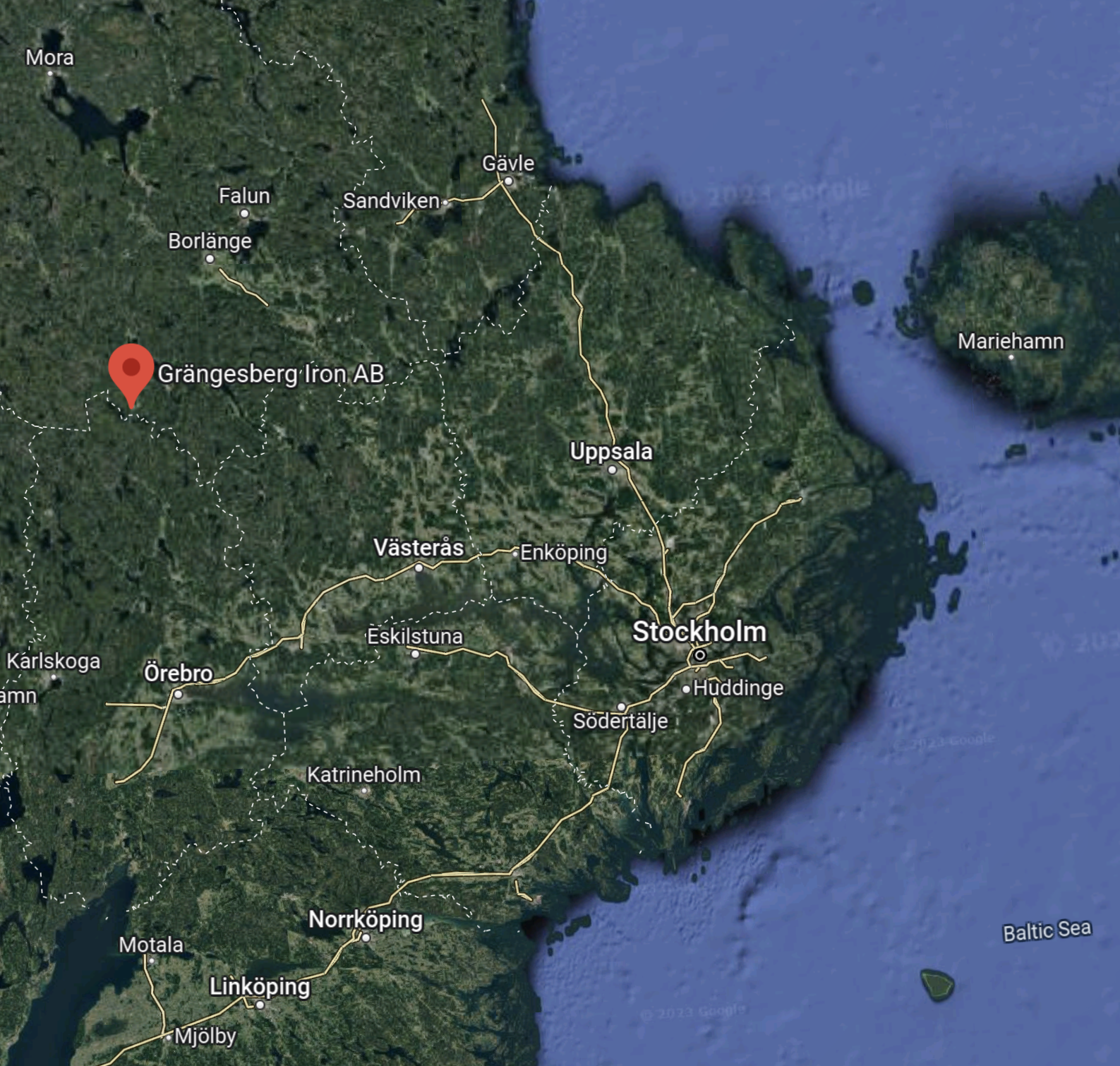
It is convenient for storing energy for Stockholm.
Welsh Government Greenlights Erebus Floating Offshore Wind Farm
The title of this post, is the same as that of this article on offshoreWIND.biz.
This is the sub-heading.
The Welsh Government has granted consent for the country’s first floating offshore wind farm located 40 kilometres off the coast of Pembrokeshire
This is the first paragraph.
Project Erebus will feature seven next-generation 14 MW turbines on floating platforms, providing enough renewable energy to power 93,000 homes.
This near 100 MW project is the first in the Celtic Sea, where there 4 GW are to be installed in the next decade.
This is another paragraph.
Future phases of the development could realise an additional 20 GW of renewable energy, according to the Government.
Wales is not going to be short of energy!
Surveys Completed For Celtic Sea Floating Offshore Wind Projects
The title of this post, is the same as that of this article on offshoreWIND.biz.
This is the sub-heading.
N-Sea Group has finished a series of benthic and geophysical surveys for Llŷr 1 and Llŷr 2 floating offshore wind projects in the Celtic Sea.
I described the two projects in detail in Two More Floating Wind Projects In The Celtic Sea.
- At least the surveys are complete and it still appears that a commissioning date of 2026/27 is still feasible for these twin 100 MW projects.
- In the original documents, it was stated that there would be six next generation turbines in each wind farm, with a capacity of between 12 and 20 MW.
- There appears to be no decision on the floats or turbine size to be used.
I wouldn’t be surprised to see larger turbines used and the capacity of the farms increased.
Wales’ First Floating Offshore Wind Farm Gets Marine License
The title of this post, is the same as that of this article on offshoreWIND.biz.
This is the sub-heading.
Blue Gem Wind, a joint venture between TotalEnergies and Simply Blue Group, has secured a marine license for the 100 MW Erebus floating offshore wind project in Wales.
These are some other points from the article.
- The project will use seven next-generation 14 MW turbines.
- They will be mounted on WindFloats, which are a proven technology.
- The wind farm will provide enough renewable energy to power 93,000 homes.
- It is aimed that the project will be commissioned in 2026.
The project has a web site, which is in English and Welsh. The home page has a good visualisation of three wind turbines on their WindFloats. Underneath is this mission statement.
Independent studies have suggested there could be as much as 50GW of electricity capacity available in the Celtic Sea waters of the UK and Ireland. This renewable energy resource could play a key role in the UK meeting the 2050 Net-Zero target required to mitigate climate change. Erebus, the first floating offshore wind project in the Celtic Sea will provide new low carbon supply chain opportunities, support coastal communities and create long-term benefits for the region.
Wales will be powered by sea dragons!
 The Anonymous Widower