First Ever Gravity Green Energy Storage System Set For North Yorkshire Town
The title of this post, is the same as that of this article on the Yorkshire Post.
These paragraphs give an outline of the project.
Plans to create the UK’s first below ground gravity energy storage system have been unveiled in North Yorkshire.
Scottish energy storage firm Gravitricity is to apply to Ryedale District Council with its plan for a facility at East Knapton in Ryedale on the site of the former Knapton gas generator.
If completed, it could store up to four megawatt hours (4MWhs) of electricity – sufficient to power more than 9,000 homes for an hour.
It looks like the system will have an output of 4 MW.
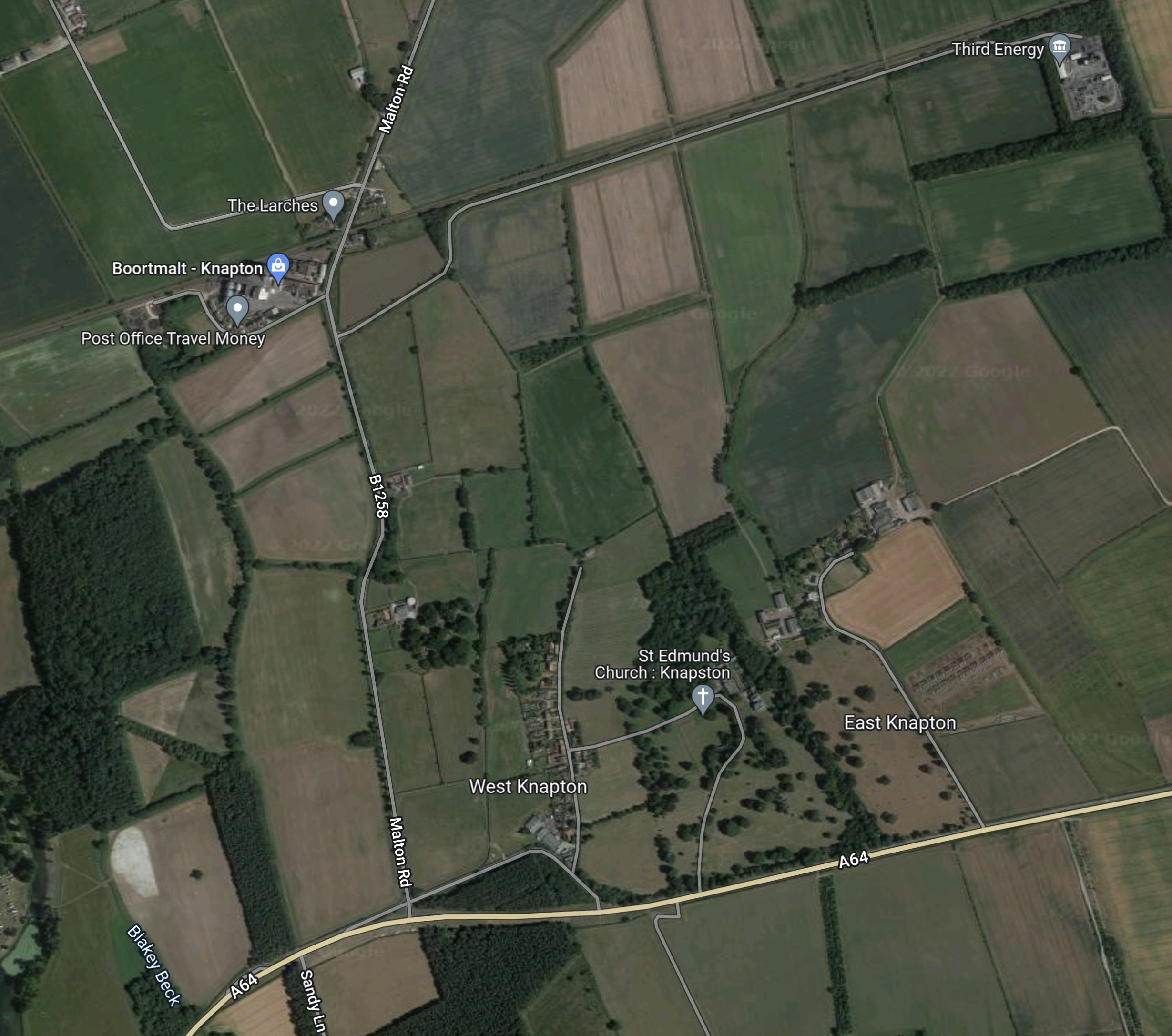
This Google Map shows the two villages of West and East Knapton.
Note.
- The A64 road between Malton and Scarborough going across the map.
- Scarborough and the coast is about fifteen miles to the East.
- The Third Energy site in the North-East corner of the map.
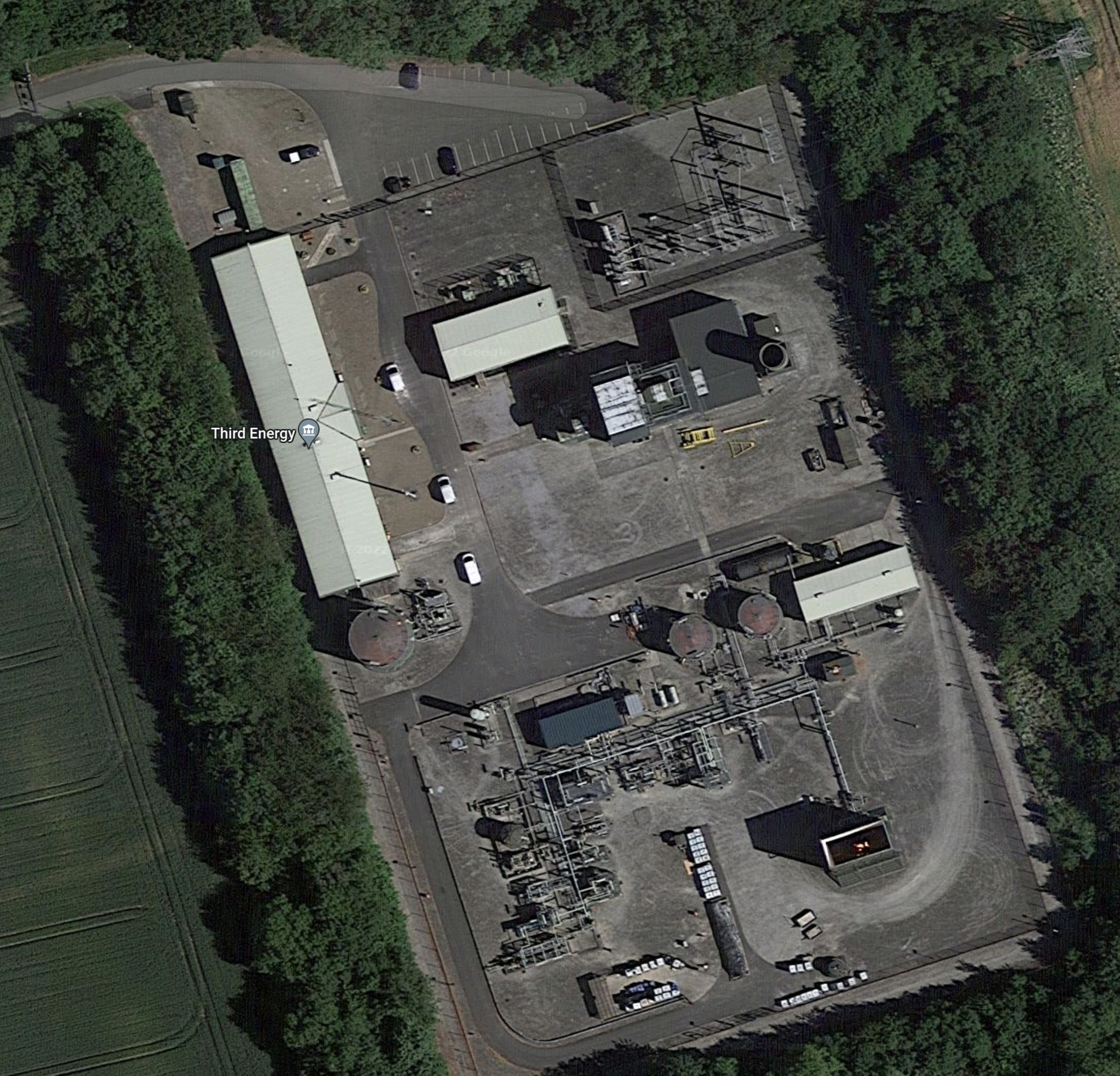
This second Google Map shows the Third Energy site in more detail.
Note.
- The substation and a power line in the North-East corner of the map.
- The 42 MW Knapton Generating Station used to be on this site and it was powered by local gas wells.
Third Energy have now called the site Knapton Energy Park and it now has a web page, which has this mission statement.
Third Energy is developing the former Knapton Generating Station into the Knapton Energy Park. The energy park will house multiple sources of power generation and energy storage. The aim of the project is to pay a part in the development and generation of renewable energy systems in North Yorkshire, and contribute to making the UK Net Zero by 2050.
This paragraph talks about weights.
One of our technology partners has also received government funding to conduct feasibility studies for a pilot project at Knapton which would utilise suspended weights to store energy as an alternative to the traditional battery storage technologies. This project will be developed through 2022 onwards.
It looks like Gravitricity has planted an acorn in Yorkshire.
The Third Energy web site is worth an explore. This is the mission statement on the home page.
At Third Energy our aim is to be at the forefront of North Yorkshire’s transition from fossil fuels to sustainable energy. Our team are proactively playing a part in innovative energy solutions and energy development; transforming our facilities into a multi-purpose energy park and research centre.
I particularly like this page, which is entitled Plug & Abandon.
This is the outline of their P % A philosophy on the page.
As wells near the end of their life cycle they must be decommissioned and the land returned to its original state. Unfortunately, the current P&A practices of the oil and gas industry are cost prohibitive, resulting in delays to abandonment (as companies attempt to avoid the high cost), and poor abandonment practices that may be harmful to the environment.
Fortunately, there are solutions to this problem. Our ambition is to use new and innovative technologies to P&A the wells in a more effective and sustainable manner, and first to extend the period our wells may service the community by re-purposing them for geothermal energy.
Can they really convert abandoned gas wells into geothermal energy sources?
Highview Power’s Second Commercial System In Yorkshire
This is all that Highview Power say about their proposed system in Yorkshire, on their web site.
Highview Power’s second commercial renewable energy power station in the UK is a 200MW/2.5GWh facility in Yorkshire. This is the first of 18 sites for UK wide deployment strategically located to benefit from the existing transmission infrastructure.
I have a few thoughts.
How Does The Size Of This System Fit With Other Systems?
According to the Highview Power web site the Manchester system is a 50MW/300MWh facility, but Wikipedia has this system as a 50MW/250MWh.
In this article on the Telegraph, which is entitled Britain Will Soon Have A Glut Of Cheap Power, And World-Leading Batteries To Store It, it is stated that they are planning a battery with this specification, location and timeline.
- 2.5 GW output
- 30 GWh of storage
- Located on Humberside
- Delivery in late 2024.
This CRYOBattery is an absolute monster.
Will The Humberside CRYOBattery Be Built At Creyke Beck Substation?
In Highview Power’s Plan To Add Energy Storage To The UK Power Network, I came to the conclusion, that the Humberside CRYOBattery will most likely be built near Creyke Beck substation, which is close to Cottingham.
- Dogger Bank A, Dogger Bank B and Hornsea 4 offshore wind farms will all be connected to the Creyke Beck substation.
- These wind farms have a total capacity of 3.4 GW.
- The Humberside CRYOBattery, now looks to have a maximum output of 2.5 GW.
- It looks like the Humberside CRYOBattery would be a well-matched backup to the three planned wind farms and perhaps even a few more turbines.
Building the Humberside CRYOBattery at Creyke Beck substation would appear to be a sensible decision.
Is Cottingham In Humberside, Yorkshire Or Both?
The Wikipedia entry for the village is named Cottingham, East Riding of Yorkshire, says this.
A golf course and leisure club on Wood Hill Way, and a major (400/275 kV AC) electricity substation “Creyke Beck”, lie just outside the formal boundaries of the parish, within Skidby civil parish.
Skidby is definitely in Yorkshire.
Where Are The Other Seventeen Sites?
The Yorkshire facility is indicated to be one of 18 sites on the Highview Power web site. Where are the other seventeen?
All we know is that they will be strategically located to benefit from the existing transmission infrastructure.
This is said in the Wikipedia entry, which is entitled High-Voltage Substations In The United Kingdom.
In 2020 there were 179 400 kV substations and 137 275 kV substations.
He who pays the money, makes the choice!
Has The Company Changed Direction?
I wrote Highview Power Names Rupert Pearce Chief Executive Officer on April 12th, 2022.
- Since then, the Vermont and Chile projects have disappeared from the web site and projects in Yorkshire and Australia have been added.
- The web site has also been improved.
- As new CEOs often do, is Rupert Pearce refocussing the company?
Are they also looking in detail at current projects?
Has The Yorkshire Project Grown Substantially?
Consider.
- National Grid are a company that has improved its image and engineering in recent years.
- It has shown it can obtain finance for infrastructure from the City of London and respected financial institutions.
- National Grid probably have extensive computer models of their electricity network.
- National Grid knows it must add energy storage to their electricity network.
- National Grid pays almost a billion pounds a year to wind farm operators to shut them down.
Eventually saving up to a billion pounds would be a good reason to have a small bet on promising technology.
Did Rupert Pearce ask his engineers to design the largest CRYOBattery they can?
Did National Grid have a count up sand find that twenty CRYOBatteries would cover all the strategic points on their transmission infrastructure?
According to the figures on the Highview Power web site (200 MW/2.5 GWh), eighteen systems like the one proposed for Yorkshire would have.
- A total output of 3.6 GW
- A total storage capacity of 45 GWh
The figures given in the article in the Telegraph (2.5 GW/30 GWh) for the very large system, would mean that twenty systems would have.
- A total output of 50 GW
- A total storage capacity of 600 GWh
These figures are between thirteen and fourteen times larger than those originally proposed.
Building The System
The Highview Power web site, says this about the deployment of eighteen systems.
UK wide deployment strategically located to benefit from the existing transmission infrastructure.
This Google Map shows the Creyke Beck substation.
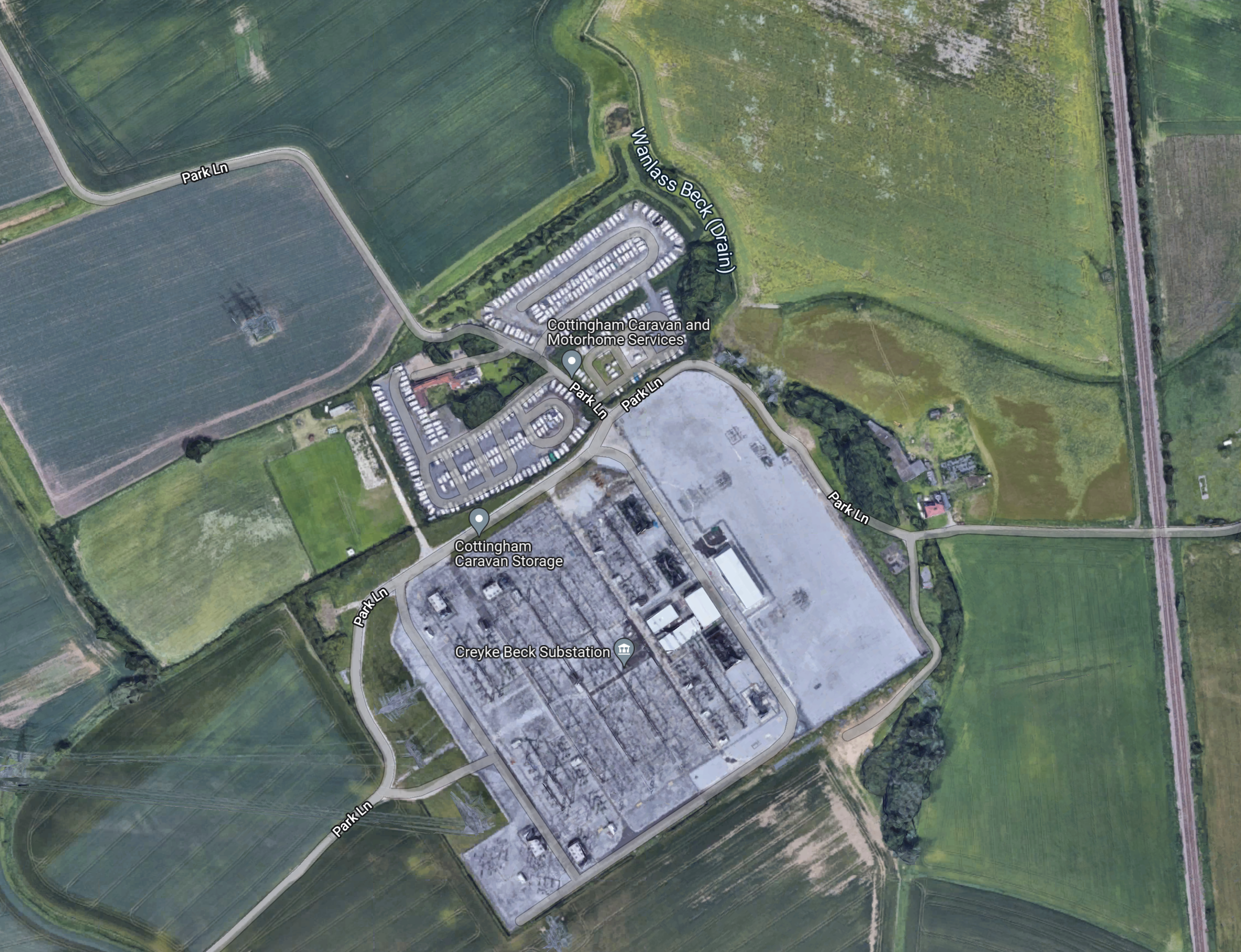
Could 30 GWh of liquid-air storage be accommodated on the site?
I can see a large insulated sphere, partly buried in the ground being used.
Designing, building and testing the first system will probably be the most difficult part of the project.
- But once the first system is successfully working reliably, the roll-out of other systems can be started.
- The biggest problem will probably be planning permissions, so the systems must be designed to be sympathetic to the local environment.
I can certainly see, twenty of these systems in the UK, but how many others will we see worldwide?
I
Lumo: Why Won’t The New Train Service Stop At Yorkshire Stations?
The title of this post, is the same as that of this article on the Yorkshire Post.
This is the first article, I’ve found about Lumo, that has a negative headline.
The reason is probably very simple, in that most Lumo services are planned to stop at only at Newcastle and Morpeth, with two services having an extra stop Stevenage.
They are intending to run the service in as short a time as possible between London King’s Cross and Edinburgh.
As each stop has a time penalty, not stopping in Yorkshire will give potential to go cut the journey time.
But the positive message that comes from the writer of the Yorkshire Post article is that Yorkshire likes the concept.
This paragraph is their take on the service.
The goal is to encourage a more environmentally friendly mode of transportation and affordable travel. Lumo will provide low-carbon emissions, affordable long-distance travel for more than one million passengers every year.
Perhaps they would like their own Yorkshire flyer.
The obvious way for this to happen would be for the Open Access operator; Grand Central to convert themselves into a train operator like Lumo.
- The ten diesel Class 180 trains would be replaced by new electric trains.
- The trains would need a 140 mph capability under digital signalling to fit in with the plans of Network Rail, LNER and Lumo to create a top-class high-speed high-capacity East Coast Main Line.
- The trains would need a battery capability as Grand Central’s routes are not fully electrified.
- They could copy Lumo’s green marketing philosophy, ticketing and catering offering.
As to the trains, I’m sure that Hitachi could offer a version of their Intercity Tri-Mode Battery Train, the specification of which is shown in this Hitachi infographic.

The trains would need a range of fifty miles on battery-power.
Charging facilities wold be needed at Bradford Interchange and Sunderland stations, as neither has suitable 25 KVAC overhead electrification.
Conclusion
The conversion of Grand Central to work on the Lumo model is possible and as the trains will need to be changed to zero-carbon ones soon to meet decarbonisation objectives, I would suspect that at least that will happen.
Green Hydrogen For Scotland
The title of this post, has been taken from this press release from ITM Power, which is entitled ‘Green Hydrogen For Scotland’ To Help Reach Net Zero Targets: First Project To Deliver A 10MW Electrolyser To Glasgow Facility.
This is the introductory paragraph.
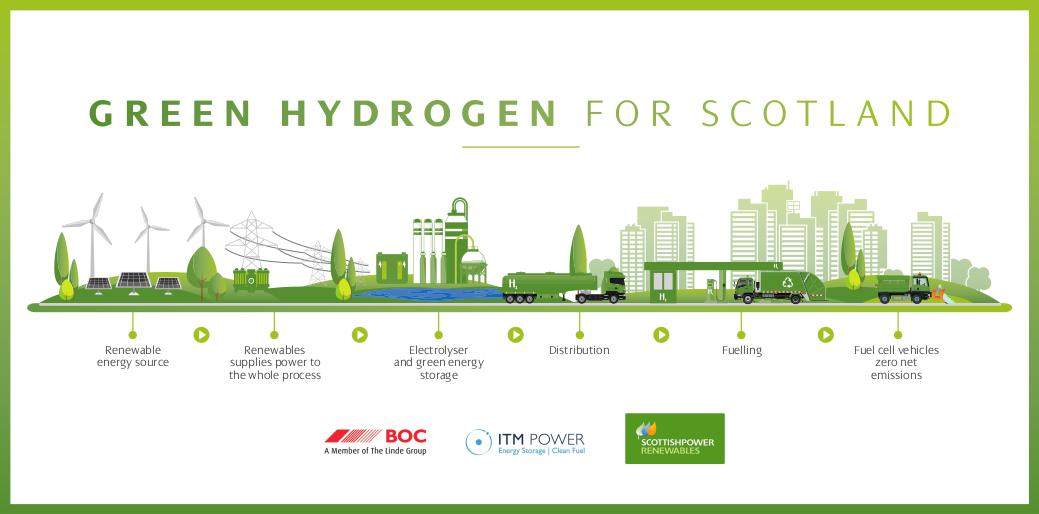
A pioneering Strategic partnership has been established to create new green hydrogen production facilities with clusters of refuelling stations across Scotland, supporting the country’s efforts to achieve net zero by 2045. ‘Green Hydrogen for Scotland’ – a partnership of ScottishPower Renewables, BOC (a Linde company) and ITM Power – brings together industry-leading names in the renewables and clean fuel industries to offer an end-to-end market solution for reducing vehicle emissions through the provision of green hydrogen.
Other details include.
- The green hydrogen production facility located on the outskirts of Glasgow will be operated by BOC.
- ITM Power will deliver a 10 MW electrolyser.
- Electricity will come from , wind and solar produced by ScottishPower Renewables.
- The project aims to supply hydrogen to the commercial market within the next two years.
This ITM Power infographic outlines Green Hydrogen for Scotland.
Surely it should be called tartan hydrogen. Does anybody know a tartan containing the blue of Scotland, the white of Yorkshire and the black, red and gold of Germany?
Could The Wensleydale Railway Become A New TransPennine Route?
Yesterday, The Times had a nearly full page article with a title of The Village With Nowt Taken Out.
It describes how the small market town of Hawes has by its own efforts turned itself from a very much declining town into a thriving community.
The town’s latest project is to take over the only filling station in the town, to avoid a 36-mile round trip to fill up.
The Times was also very impressed, as the newspaper published a Leading Article, which was entitled Hawes for Thought. This is said.
Hawes is a phenomenon, a case study in self-sufficiency, community spirit, bloody-mindedness and the awesome power of bootstraps.
The Leading Article said that Hawes station closed in 1959, which would have been when I was just twelve.
The station buildings are now part of the Dales Countryside Museum.
I got to wondering as I do, where the railway used to run.
Hawes station used to be on the Wensleydale Railway, which connected the East Coast Main Line at Northallerton station to the Settle-Carlisle Line at Garsdale station.
The Wensleydale Railway is now a heritage railway running trains between Northallerton West and Redmire stations, with up to six intermediate stations.
This section from Wikipedia, details their future plans.
The company’s longer-term aim is to reopen the 18 miles (29 km) of line west from Redmire via Castle Bolton, Aysgarth, Askrigg, Bainbridge, Hawes and Mossdale to join up with the Settle-Carlisle Railway Route at Garsdale. A study commissioned by the railway indicated that an initial extension to Aysgarth from Redmire (3 miles (4.8 km)), would generate an extra income of £3.1 million into the local economy with an additional £500,000 in ticket sales for the railway.
There is also this in the Wikipedia entry for Northallerton West station in a section call Future.
The aim of the Wensleydale Railway in the long-term is to extend the line to Northallerton station and allow passengers to interchange with National Rail services. As this will require an agreement with Network Rail, the provision of the platform is an interim solution which will allow the track to be brought into more regular use whilst also bringing in extra income for the heritage railway.
I’ve have looked on at Ordnance Survey map at the track at the Western end and its original position is clearly visible.
Surely, this is the sort of project that rural areas with a high level of tourism need, if the sums add up in the right way!
Consider.
- The line will have a full length of about forty miles. So it could be a Grand Day Out?
- The line would connect to the iconic Settle-Carlisle Line at its Western end, with connections to Carlisle, Carnforth and Cumbria and Black and Lancashire.
- The Line would connect to the East Coast Main Line at its Eastern end, with connections to Darlington, Middlesbrough, Newcastle and York.
- Network Rail have spent a fortune on the Settle-Carlisle and this would feed in more passengers.
An extended Wensleydale Railway would greatly add to the tourism infrstructure in the area.
Conclusion
If the residents of the area, show the grit and determination, that has been shown by the residents of Hawes, this railway will get built!
There would be another slow-speed TransPennine route.
From Leeds To Rotherham
This was not what you would call a quality journey.
By train it took 56 minutes, which is about nine minutes longer than it would take in the average car according to various web sites.
There are also nine stops in another Cook’s Tour of Yorkshire.
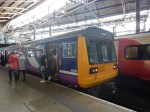
It was also in a Class 142 train or Pacer.
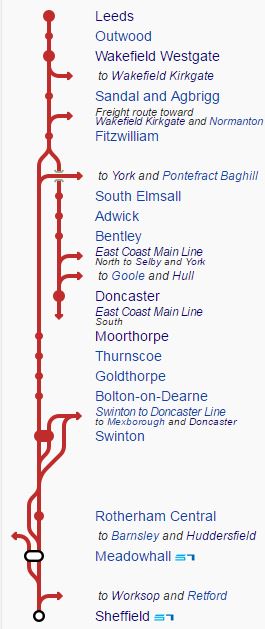
The map clipped from Wikipedia shows the Wakefield Line, which is the route the train took.
These pictures were taken on the journey.


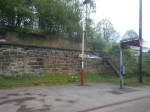
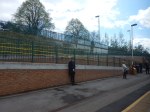

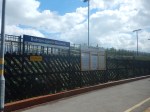
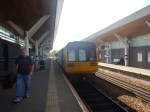
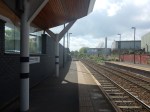
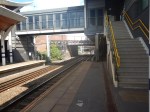
In this day and age for a journey of an hour a better train is needed, especially as the two end points are Leeds and Sheffield,where the two cities have a joint population of about 1.3 million.
The fastest trains between Leeds and Sheffield are run by CrossCountry and take forty minutes using the Wakefield Line.
As the fastest Rotherham Central to Sheffield trains take 14 minutes, I think it is reasonable to assume, that the right train could do Leeds to Rotherham Central in 26 minutes.
This route could become a Northern Connect route, run by new Class 195 trains.
As the route is electrified between Leeds and Fitzwilliam station, I wonder if this could be a route for a Class 319 Flex train.
Both trains are 100 mph units, as against the 75 mph of the Class 142 train, which probably defines the timetable.
From my observations, the route is not particularly arduous and I suspect that either train could do the journey in just over forty minutes, even with all the stops.
Certainly, the current service is truly dreadful and inadequate.
It appears that the overhead wires are going up for the tram-train to Sheffield. Or at least the gantries!
From Bradford To Skipton
I took the train from Bradford Forster Square station to Skipton station.
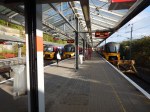


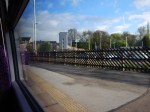

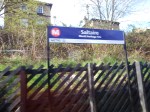



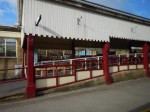
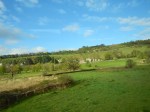
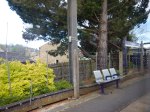
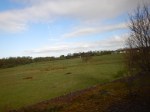
It is a route on which there are interesting things to see,
Saltaire
Everything must come second to the World Heritage Site at Saltaire.
Shipley Station
Shipley station is an unusual concept in that the station is built in the middle of a triangular junction.
This Google Map shows the station
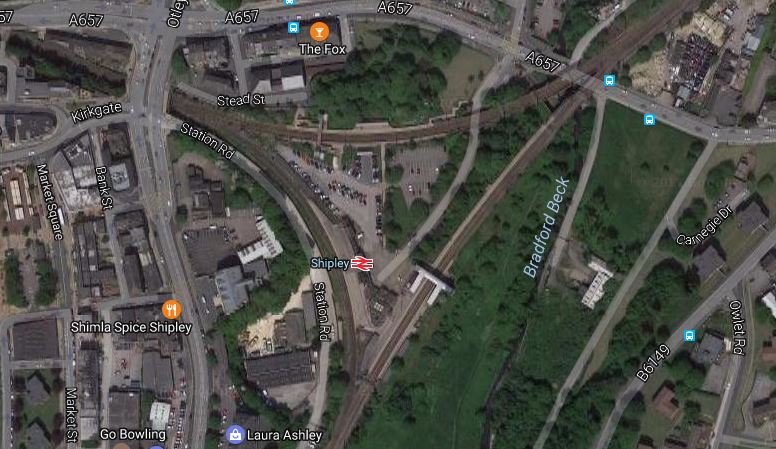
It has five platforms and four lifts.
Keighley Station
Keighley station is the interchange with the Keithley and Worth Valley Railway, which is a heritage railway running steam and vintage diesel trains.
There is a section called Commuter Use in the Wikipedia entry for the Keithley and Worth Valley Railway.
This is said.
As a privately owned heritage railway, the line does not specifically serve commuters; however, a study by Ove Arup & Partners funded by Metro looked at the feasibility of a daily commuter service between Oxenhope and Keighley in 2009.[16] After the first stage of the study was released, Metro stated concerns about a lack of funding and available rolling stock, meaning that services are unlikely to run in the short to medium term
Given that we live in an era of innovative rolling stock, why not run a battery train between Keithley and Haworth?
Improvements To The East Coast Main Line Through West Yorkshire
This article in Rail Technology Magazine is entitled West Yorkshire to agree £3bn ‘whole route ethos’ investment in ECML.
The article doesn’t go into much detail, but it does explain how a lot of work is needed not only to improve London to Newcastle and |Edinburgh times, but to accommodate high speed services across the North of England.
Looking at the East Coast Main Line on Wikipedia, throws up these improvements.
- Creation of a platform 0 at Doncaster station, which was completed in December 2016.
- Improvements through York station.
- South of Newcastle to Northallerton (which is also predominately double track), leading to proposals to reopen the Leamside line to passenger and freight traffic.
- Electrification of Northallerton to Middlesbrough.
- Electrification the line between Leeds and York (Neville Hill Depot to Colton Junction) as a diversionary route and a route for Liverpool to Newcastle services via Manchester and Leeds.
- Upgrade the line for 140 mph running under ERMTS.
I also think that the Treasury-specified economy electrification should be upgraded to a modern standard. They didn’t make much of a saving as upgrading the line to a modern standard will cost £1.3billion.
Hopefully, these improvements will allow London to Edinburgh in four hours.
Also helping with this goal is the project announced in this article on the Rail Magazine web site, which is entitled NR seeks fourth track north of Huntingdon. The article indicates that this work together with improvements at Werrington Junction, which I wrote about in To Dive Or Fly At Werrington, would improve capacity on the East Coast Main Line.
Driver Only Train Operation In Yorkshire
One of my readers has just sent me this story from the Yorkshire Post, which is entitled Commuter chaos in Yorkshire after train driver leaves conductor behind.
No-one seems to have been hurt in this demonstration of Driver Only Operation, so perhaps as a matter of honour, the RMT should look at more efficient ways of train operation.
 The Anonymous Widower