A Hotel That Loves To Say No!
Last night I stayed in the easyHotel in Ipswich.
It was convenient for after the match. affordable and I wanted to see what the low cost chain was like.,
I took these pictures.



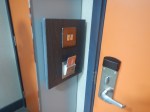







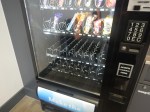
Note all these Noes!
- No Space
- No Two-Ply Toilet Paper
- No window.
- No Space For Two People To Hang Clothes
- No Glass For Water
- No Bottles Of Water In The Vending Machine. This made worse the fact that there is no late-night shop in the centre of Ipswich.
- No automated check-in system.
- No free wi-fi
- No free television. The need to enter a code each time you switched it on, was a total pain.
- No free room cleaning
- No space to put a large suitcase.
- No space to put a cot for a baby.
- No flat space to change a baby’s nappy! A real one, I hope!
- No bottle opener.
- No food to buy except chocolate or even a good nearby cafe.
I know it’s designed down to a price, but I’ve been in sleeper trains, caravans and boats that do it much better.
Note that I’m only one metre seventy and sixty kilos and C was a little bit smaller. We could just about have managed, as we always travelled light.
I don’t think, I’ll use it again, but if I do, I’ll use it this way.
- No case bigger than a brief-case.
- Bring a bottle!
- Bring a plastic glass.
- Make sure, I arrived as late as possible and left as early as possible.
- Expect to leave in the same clothes I arrived in.
- Ask how to get radio on the TV.
But at least, I slept reasonably well!
Rumours about the possible Ryanair hotels include.
- Pay-As-You-Go use of the bathroom.
- Corkage charges for any wine or beer taken into the room.
- Extra charges for those not checking in online.
- Extra charges to put your large cases in a secure separate room.
- Shielded room, so you get no mobile signal and have to pay to use wi-fi.
I do wonder, if there is to be a race to the cheapest, whether Governments will legislate on room size and various charges.
Pacers To Continue Into 2020, Operators Confirm
The title of this post is the same as that of this article on Railway Gazette.
This is the introductory paragraph.
Operators have confirmed that their Pacer diesel multiple-units will remain in service into early 2020, in spite of previous announcements that the unpopular four-wheeled vehicles dating from the 1980s would be withdrawn before enhanced PRM accessibility requirements come into force on January 1 2020.
The article then summarises the situation in the three operators running Pacers.
Northern
Some Pacers used by Northern will continue in service into 2020, because of late delivery of new Class 195 diesel trains and Class 331 electric trains.
They are also still awaiting delivery of eight Class 769 trains, which are very late into service.
Great Western
Great Western has said, that some Pacers will continue in service around Exeter.
No reason is given, but it does appear that because of non-delivery of electrification to Oxford and the late arrival of Crossrail, Great Western they still need Class 165 and Class 166 trains to work services for London commuters.
They are also still awaiting delivery of nineteen Class 769 trains.
Transport For Wales
Transport for Wales are in the same position as Great Western, in that the Class 769 trains, they ordered have still not been delivered.
The Operator Will Get The Blame!
Obviously, the operator will get the blame, but I would argue that all three have at least tried hard to avoid this crisis, as they knew the Pacers would have to be on their way to the scrapyard at the end of 2019.
- If CAF had delivered their trains for Northern on time, things would be much better in the North.
- If Porterbrook and their engineers had delivered the Class 769 trains on time, all three operators would be in a better position.
Hopefully, in a few months, the new trains will have been delivered and the Class 769 trains will have been created and in service.
Smart Lavatories Could Spot Tumours Before They Form
The title of this post is the same as that of this article on page 14 of today’s copy of The Times.
With bowel cancer being a big killer, I can understand how it might work there, but how will it spot brain tumours.
Perhaps all those school bullies, who put unfortunates’ heads down the toilet and pulled the chain, had it roight?
Pollution Charge For Diesels Has Cut City’s Toxic Fumes By A Third
The title of this post is the same as that of this article on Page 4 of today’s copy of The Times.
The only applies to London at the moment.
Surely other cities should follow the capital’s lead.
Haughley Junction Improvements
This article in the East Anglian Daily Times is entitled New Tracks. New Platforms At Ipswich Station. And Faster Trains. Will East Anglia’s Rail Bosses Be Able To Deliver?.
This is said about Haughley Junction.
Mr Bradley said improving Haughley junction, making it a full double-track junction, would mainly benefit cross-country services but it would reduce a potential main-line bottleneck.
This Google Map shows the junction.
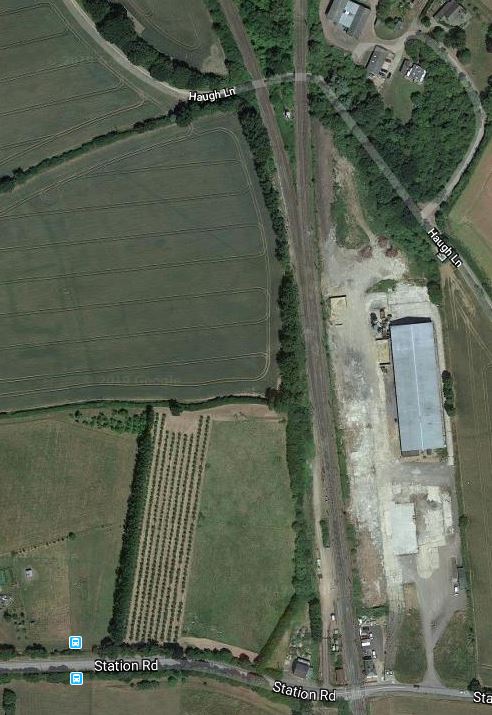
Haughley Junction is towards the top of the map.
- The track going vaguely to the North-West goes towards Bury St. Edmunds, Newmarket and Cambridge.
- The track going North goes to Diss and Norwich.
- Ipswich is to the South.
Work is eased by having a large space on the Eastern side of the junction, but where the railway crosses Station Road, there is a level crossing, which is to be removed.
It looks to me, that this is one of those projects, that can grow to be very complicated.
Consider.
- Will a flyover be built or will it be a flat junction?
- Will the main Ipswich-Norwich line be moved to the East.
- How will engineers deal with the level crossing closure?
- Will any electrification be added towards Cambridge?
With regards to the last question, it should be noted that Cambridge and Haughley Junction are forty-two miles apart.
Greater Anglia’s Class 755 trains can replace each diesel engine with a battery pack. This will be done on the South Wales Metro.
In .Battery Power Lined Up For ‘755s’, I investigate what Stadler have said about Class 755 trains running on batteries.
- Ranges of up to forty miles are quoted.
- Batteries could be fitted to Greater Anglia’s bi-mode Flirts at an overhaul.
I would expect that the electrification would be extended towards Cambridge by as much as is needed to make sure that battery operation between Ipswich and Cambridge is possible.
I have just flown my helicopter along the line, as far as Chippenham Junction.
- The line splits at Chippenham Junction, with one branch going through Newmarket to Cambridge and the other to Ely.
- Chippenham Junction is seventeen miles from Cambridge.
- The route betwen Chippenham Junction and Haughley Junction appears to have been cleared for el;ectrification.
- Electrification through Newmarket would be expensive, as there is a tunnel, a section of single track and possibly a station rebuild.
- Chippenham Junction and Haughley Junction are about twenty-five miles apart.
- Chippenham Junction and Ely are about fourteen miles apart.
If I was in charge of this project, I would certainly investigate the possibility of electrification between Haughley and Chippenham Junctions
- Class 755 trains with batteries would be able to run between Chippenham Junction and Cambridge or Ely on battery power.
- The East West Rail Consortium is proposing a Park-And Ride station, which could be called A14 Parkway.
- How much money would train operators save, if this section was el;ectrified?
- Power for the electrification would be picked up at Haughley Junction.
Would it allow tri-mode Class 93 locomotives to be able to go between Felixstowe and Ely only using a relatively small amount of diesel compared to a Class 66 locomotive?
I also think that electrifying between Chippenham and Haughley Junctions is low risk electrification.
- The route has been gauge-cleared.
- Thee new Class 755 trains can run without it.
- On the other hand they will run more efficiently when it has been installed.
- It would enable Class 93 locomotives to run on electricity.
Too many electrification projects need new trains. These are already in service.
Conclusion
There is more to this project than meets the eye.
Shapps Wants ‘Earlier Extinction Of Diesel Trains’
The title of this post, is the same as that of this article on the East London and West Essex Guardian.
This is the first two paragraphs of the article.
The phasing out of diesel trains from Britain’s railways could be intensified as part of the Government’s bid to cut carbon emissions.
Transport Secretary Grant Shapps told MPs he is “hugely concerned” that the current policy means diesel trains will continue to operate until 2040.
In some ways the positioning of the article in a newspaper serving East London and West Essex is a bit strange.
- The only diesel trains in the area are freight trains, after the electrification of the Gospel Oak and Barking Line.
- Grant Schapps constituency is Welwyn and Hatfield, which is twenty or so miles North of London.
It looks to me to be a syndicated story picked up by the paper.
But as it reports what he said to the Transport Select Committee, there is a strong chance that it is not fake news.
How Feasible Would It Be To Bring Forward The 2040 Diesel Extinction Date?
Government policy of an extinction date of 2040 was first mentioned by Jo Johnson, when he was Rail Minister in February 2018.
This article on Politics Home is entitled Rail Minister Announces Diesel Trains To Be Phased Out By 2040, gives more details about what Jo said.
Since then several developments have happened in the intervening nearly two years.
Scores Of Class 800 Trains Are In Service
Class 800 trains and their similar siblings can honestly be said to have arrived.
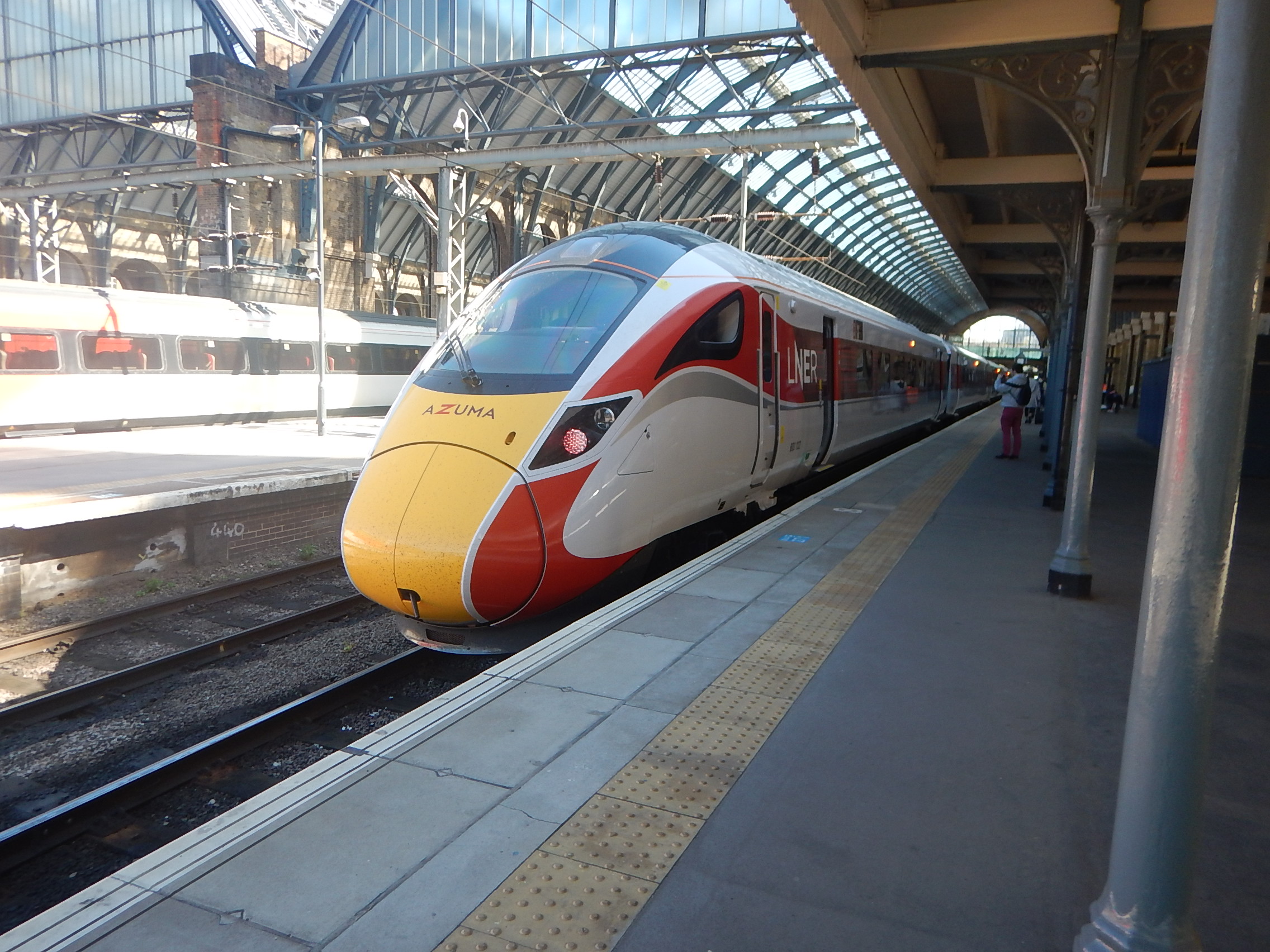
Currently, there appear to be over two hundred of these trains either delivered or on order.
Many have replaced diesel trains on Great Western Railway and LNER and stations like Kings Cross, Paddington and Reading are becoming over ninety percent diesel-free.
It should be noted that over half of these trains have diesel engines, so they can run on lines without electrification.
But the diesel engines are designed to be removed, to convert the trains into pure electric trains, when more electrification is installed.
Midland Main Line Upgrade
This line will be the next to be treated to the Hitachi effect, with thirsty-three of the second generation of Hitachi’s 125 mph trains.
- The Hitachi trains will use electrification South of Melton Mowbray and diesel power to the North.
- The trains will have a redesigned nose and I am sure, this is to make the trains more aerodynamically efficient.
- The introduction of the trains will mean, that, all passenger trains on the Midland Main Line will be electric South of Melton Mowbray.
- St. Pancras will become a diesel-free station.
Whether High Speed Two is built as planned or in a reduced form, I can see electrification creeping up the Midland Main Line to Derby, Nottingham and Sheffield and eventually on to Leeds.
Other Main Line Routes
The Midland Main Line will have joined a group of routes, that are run partly by diesel and partly by electricity.
- London and Aberdeen
- London and Bradford
- London and Cheltenham
- London and Harrogate
- London and Hull
- London and Inverness
- London and Lincoln
- London and Middlesbrough
- London and Penzance via Exeter and Plymouth.
- London and Sunderland
- London and Swansea
- London and Worcester and Hereford
Once the Midland Main Line is upgraded, these main routes will only be these routes that use pure diesel for passenger routes.
- TransPennine Routes
- Chiltern Route
- London and Exeter via Basingstoke
- London and Holyhead
Plans already exist from West Coast Rail to use bi-mode on the Holyhead route and the Basingstoke route could also be a bi-mode route.
TransPennine and Chiltern will need bespoke solutions.
Some Electrification Has Happened
Electrification has continued at a slow pace and these schemes have been completed or progressed.
- Chase Line
- Between Birmingham and Bromsgrove
- North West England
- Between Edinbugh, Glasgow, Alloa, Dunblane and Stirling.
- Gospel Oak to Barking Line
- Between St. Pancras and Corby.
- Crossrail
In addition London and Cardiff will soon be electrified and a lot of electrification designed by the Treasury in the past fifty years has been updated to a modern standard.
Battery Trains Have Been Developed And Orders Have Been Received Or Promised
Stadler bi-mode Class 755 trains have been delivered to Greater Anglia and these will be delivered as electric-diesel-battery trains to South Wales.
Stadler also have orders for battery-electric trains for Germany, which are a version of the Flirt called an Akku.
In the Wikipedia entry for the Stadler Flirt, this is a paragraph.
In July 2019, Schleswig-Holstein rail authority NAH.SH awarded Stadler a €600m order for 55 battery-powered Flirt Akku multiple unit trains along with maintenance for 30 years. The trains will start entering service in 2022 and replace DMUs on non-electrified routes.
55 trains at €600 million is not a small order.
Alstom, Bombardier, CAF, Hitacxhi and Siemens all seem to be involved in the development of battery-electric trains.
I think, if a train operator wanted to buy a fleet of battery trains for delivery in 2023, they wouldn’t have too much difficulty finding a manmufacturer.
Quite A Few Recently-Built Electric Trains Are Being Replaced And Could Be Converted To Battery-Electric Trains
In 2015 Bombardier converted a Class 379 train, into a battery-electric demonstrator.
The project showed a lot more than battery-electric trains were possible.
- Range could be up to fifty miles.
- The trains could be reliable.
- Passengers liked the concept.
Judging by the elapsed time, that Bombardier spent on the demonstrator, I would be very surprised to be told that adding batteries to a reasonably modern electric train, is the most difficult of projects.
The Class 379 trains are being replaced by by brand-new Class 745 trains and at the time of writing, no-one wants the currents fleet of thirty trains, that were only built in 2010-2011.
In addition to the Class 379 trains, the following electric trains are being replaced and could be suitable for conversion to battery-electric trains.
- Thirty Class 707 trains from South Western Railway.
- Thirty-seven Class 350/2 trains from West Miidlands Railway.
- Perhaps twenty Class 387 trains from various sources.
There also may be other trains frm Heathrow Express and Heathrow Connect.
All of these trains are too good for the scrapyard and the leasing companies that own them, will want to find profitable uses for them.
Porterbrook are already looking at converting some Class 350 trains to Battery-electric operation.
Vivarail And Others Are Developing Fast Charging Systems For Trains
Battery trains are not much use, unless they can be reliably charged in a short time.
Vivarail and others are developing various systems to charge trains.
Hydrogen-Powered Trains Have Entered Service In Germany
Hydrogen-powered Alstom Coradia Lint trains are now operating in Germany.
Alstom are developing a Class 321 train powered by hydrogen for the UK.
Stadler’s Bi-Mode Class 755 Train
The Class 755 train is the other successful bi-mode train in service on UK railways.
I would be very surprised if Grant Schapps hasn’t had good reports about these trains.
They may be diesel-electric trains, but Stadler have made no secret of the fact that these trains can be battery electric.
Like the Class 800 train, the Class 755 train must now be an off-the-shelf solution to use on UK railways to avoid the need for full electrification.
Class 93 Locomotives
Stadler’s new Class 93 locomotive is a tri-mode locomotive, that is capable of running on electric, diesel or battery power.
This locomotive could be the best option for hauling freight, with a lighter carbon footprint.
As an example of the usability of this locomotive, London Gateway has around fifty freights trains per day, that use the port.
- That is an average of two tph in and two tph out all day.
- All trains thread their way through London using either the North London or Gospel Oak to Barking Lines.
- Most trains run run substantially on electrified tracks.
- All services seem to go to freight terminals.
With perhaps a few of miles of electrification, at some freight terminals could most, if not all services to and from London Gateway be handled by Class 93 locomotives or similar? Diesel and/or battery power would only be used to move the train into, out of and around the freight terminals.
And then there’s Felixstowe!
How much electrification would be needed on the Felixstowe Branch to enable a Class 93 locomotive to take trains into and out of Felixstowe Port?
I have a feeling that we’ll be seeing a lot of these tri-mode freight locomotives.
Heavy Freight Locomotives
One of the major uses of diesel heavy freight locomotives,, like Class 59 and Class 70 locomotives is to move cargoes like coal, biomass, stone and aggregate. Coal traffic is declining, but the others are increasing.
Other countries also use these heavy freight locomotives and like the UK, would like to see a zero-carbon replacement.
I also believe that the current diesel locomotives will become targets of politicians and environmentalists, which will increase the need for a replacement.
There could be a sizeable world-wide market, if say a company could develop a powerful low-carbon locomotive.
A Class 93 locomotive has the following power outputs.
- 1,300 kW on hybrid power
- 4,055 kW on electric
It also has a very useful operating speed on 110 mph on electric power.
Compare these figures with the power output of a Class 70 locomotive at 2,750 kW on diesel.
I wonder if Stadler have ideas for a locomotive design, that can give 4,000 kW on electric and 3,000 kW on diesel/battery hybrid power.
A few thoughts.
- It might be a two-section locomotive.
- Features and components could be borrowed from UKLight locomotives.
- It would have a similar axle loading to the current UKLight locomotives.
- There are 54 UKLight locomotives in service or on order for the UK.
- Stadler will have details of all routes run by Class 59, Class 66 and Class 70 locomotives, in the UK.
- Stadler will have the experience of certifying locomotives for the UK.
Stadler also have a reputation for innovation and being a bit different.
Conclusion
All pf the developments I have listed mean that a large selection of efficient zero carbon passenger trains are easier to procure,than they were when Jo Johnson set 2040 as the diesel extinction date.
The one area, where zero carbon operation is difficult is the heavy freight sector.
For freight to be zero-carbon, we probably need a lot more electrification and more electric locomotives.
Ultrasound On A Chip
The latest episode of BBC Click is a must-watch.
One section is about a new ultrasound device from Butterfly Network.
Their product called Butterfly iQ; is an ultrasound sensor on a chip, that converts a smart phone into a full function medical ultrasound machine.
But as an engineer, who knows a bit about this sort of technology, I doubt that all the applications are medical ones.
Typical hospital ultrasound machines cost tens of thousands of pounds, but the price of the sensor on the Butterfly Network web site is in the order of a couple of grand. Software is probably extra, but even so, Southampton Hospital has bought four and one is in their paediatric ambulance.
I have one big question.
Is the device open source? This would enable, an imaginative programmer, as I once was, to convert the device, so that it is able to perform an important application.
I would be very disappointing if it wasn’t!
To get a snapshot of the power of ultrasound, read the Wikipedia entry for ultrasound.
A Video
I found this on the Internet.
As you can see, it’s not very big.
Conclusion
This is an amazing development and it will revolutionise so much of healthcare and other fields.
London St Pancras Twins With Bordeaux Saint-Jean To Promote Direct Service
The title of this post is the same as that of this article on Railway Gazette.
This is the introductory paragraph.
Channel Tunnel rail link concessionaire HS1 Ltd announced a twinning agreement between its London St Pancras International station and SNCF’s Bordeaux Saint-Jean station on October 18, saying this would help to progress the development of proposals for a through passenger service between the cities.
I tend to think, that all twinning arrangements are mainly about giving directors, mayors and those at the top, junkets and expensive free dinners.
It is much more important that the links go much deeper and hat those lower down meet the important objectives.
In the case of this twinning, will it accelerate the start of a direct London and Bordeaux service, which could be much-needed or a waste of resources.
Let’s get on with trialling the service, rather than wasting time thinking about it and posing for photographs.
 The Anonymous Widower