Would A North-East And South West Sleeper Service Be A Good Idea?
I ask this question as in the October 2021, there is an article entitled A New Sleeper, which has this explanatory sub-title.
Des Bradley describes his concept for a North-East to South-West Overnight Service
Paraphrasing his resume from the article, Des Bradley is probably best described as a rail enthusiast, who has travelled all over Europe by train, especially on sleeper trains. He has also worked recently with ScotRail, where he led their integrated travel activities.
I regularly use the Caledonian Sleeper on my trips to Scotland, often taking a sleeper one way and a day time train the other. Towards the end of next month, I have tickets booked for a low-cost Lumo train to Edinburgh and a sleeper back to London in the evening.
In this blog, I have regularly written about the sleeper trains being introduced across Europe and this summer I had intended to go via Eurostar and NightJet to Vienna. But the pandemic has kept me in England for two years.
An Edinburgh And Plymouth Sleeper
Des Bradley is proposing a sleeper train between Edinburgh and Plymouth.
- A typical daytime trip on this route takes eight hours and forty-five minutes.
- Intermediate stops would be Berwick-upon-Tweed, Newcastle, Durham, Darlington, York, Leeds, Sheffield, Derby, Birmingham New Street, Cheltenham Spa, Bristol Parkway, Bristol Temple Meads, Taunton, Exeter St. David’s and Newton Abbot.
- Journey time would be just over twelve hours.
- By comparison a sleeper between London and Edinburgh takes about seven hours and thirty minutes.
He calls the service the NESW Sleeper.
I have some thoughts on the proposal.
A Spine Route Between Edinburgh And Penzance
The route is effectively a spine between Edinburgh and Plymouth on which other services can be built.
Unlike the Caledonian Sleeper, Des Bradley doesn’t feel the train should split and join as it travels up and down the country.
But I do think that the NESW Sleeper can be timed to fit in with high-quality connecting services to extend the coverage.
An Innovative Timetable
Des Bradley’s timetable is innovative.
- Trains leave Edinburgh and Plymouth around 21:00.
- Trains arrive at their destination around 09:00.
- Trains stop for about two hours at Derby.
- After resting at Derby, the trains are effectively early morning trains.
Note.
- The wait at Derby, adds extra time, that can be used to make up for engineering diversions, which often happen at night!
- The trains could be used by non-sleeper passengers to get to Plymouth or Edinburgh early.
The consequence of the second point, is that the trains will have to offer some Standard Class seats.
Should The Train Serve Penzance?
The Great Western Railway’s Night Riviera sleeper train calls at Liskeard, Bodmin Parkway, Lostwithiel, St.Austell, Truro, Redruth, Cambourne, Hoyle and St. Erth between Plymouth and Penzance.
According to a proposed NESW timetable, the Night Riviera has long gone, before the NESW Sleeper arrives in Plymouth at 08:58.
But I’m sure Great Western Railway could arrange for a convenient service between Plymouth and Penzance to pick up passengers in the morning and deliver them in the evening. This picture taken at Plymouth, indicates that cross-platform interchange may be possible.
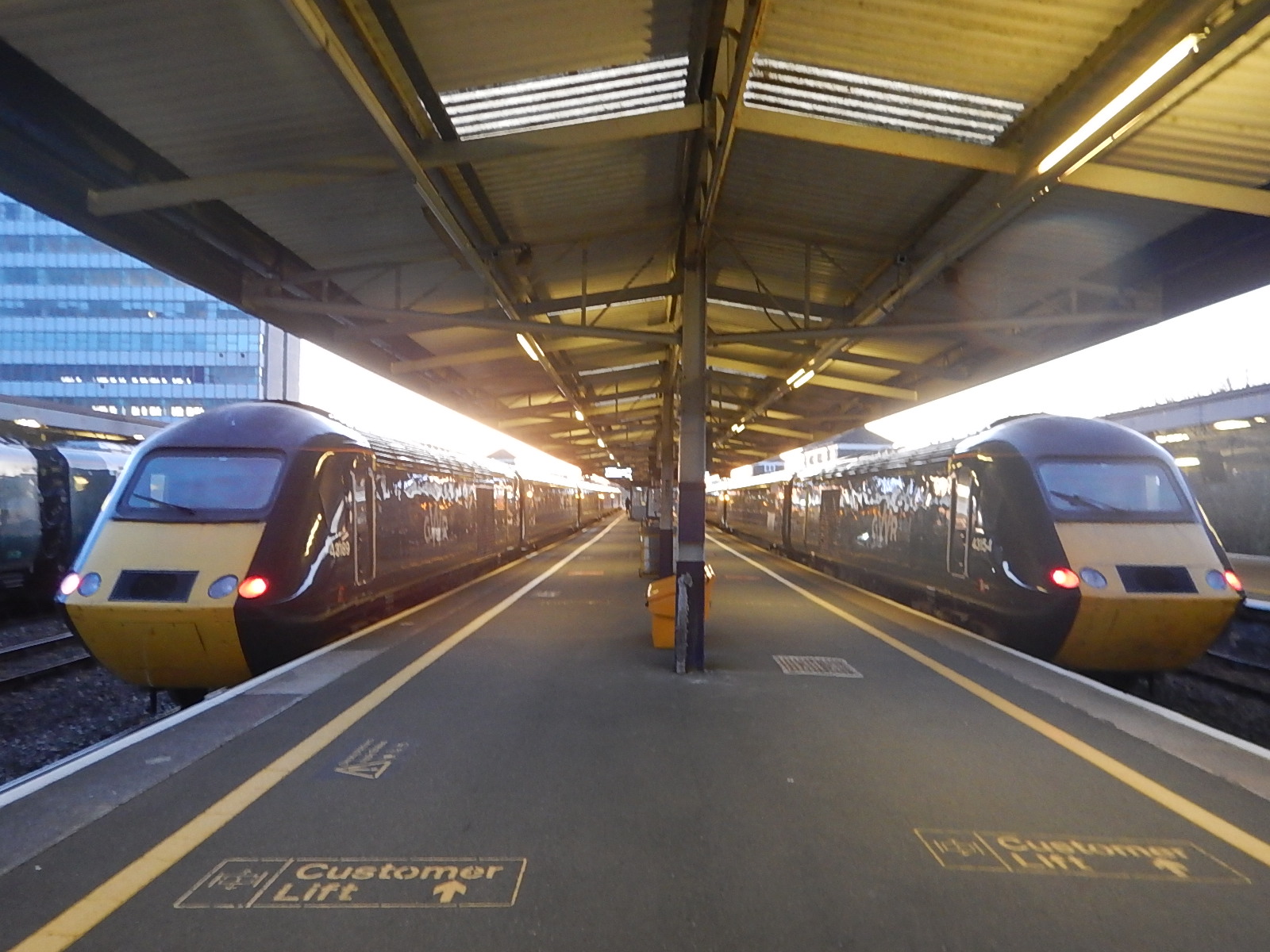
This picture shows a pair of GWR Castles, which regularly work additional services between Plymouth and Penzance.
What About Wales?
I suspect that Cardiff, Swansea and other towns and cities in South Wales, can be served in a similar way, by connecting with GWR services at Bristol Parkway station.
Other Connecting Services
Birmingham New Street, Derby, Leeds and Newcastle are important interchange stations and I can see services being timed to bring passengers to and from the NESW Sleeper.
Rolling Stock
The author offers choices for the trains, based on what is used currently in the UK and adding multiple units. But he is definitely tending towards fixed formations.
I feel that the trains should meet the following criteria.
They should be of similar standard as the Caledonian Sleeper.
They would need an independently-powered capability for sections without electrification.
They should be zero-carbon.
They should offer a range of accommodation including Standard Class seats to cater the early birds and budget travellers.
The possibility to run at 100 mph or faster might be useful to catch up time on some sections of the route.
I think that two trains could be possible.
- A rake of coaches hauled by a hydrogen-electric locomotive.
- A battery-electric Sleeper Multiple-Unit with a range of perhaps eighty miles on batteries.
This is a sentence from the article.
The concept of ‘Sleeper Multiple-Units’ has also emerged in recent years, and this idea could be attractive; although it has some inherent inflexibility, it could in the future allow multi-portion or experimental new routes to be tagged onto the core service.
Sleeper Multiple Units might enable a South Wales and Edinburgh service, that used the same train path between Edinburgh and Bristol Parkway, where the two trains would split and join.
Conclusion
I like this proposal and definitely think it is a good idea.
Moroccan Solar-Plus-Wind To Be Linked To GB In ‘Ground-Breaking’ Xlinks Project
The title of this post, is the same as that of this article on Current News.
This is the first paragraph.
New solar and wind under development in Morocco is to be linked with Britain, with developer Xlinks also seeking to develop a cable manufacturing industry.
It looks to be a very challenging project.
- The HVDC cable will be 3,800 km long.
- The plan envisages 10.5 GW of electricity being generated.
- There will be a 5GW/20GWh battery in Morocco.
- They will export 3.6 GW of electricity to the UK for at least twenty hours per day.
- The electricity will be exported to the UK by a cable that skirts to the West of Spain, Portugal and France.
- The UK end of the cable will be at Alverdiscott in Devon.
All except the last are pushing current technology to the limit.
There is more information on the Morocco-UK Power Project page on the Xlinks web site.
- The company claims, that it can supply renewable energy, that acts like baseload power.
- When complete, it could supply eight percent of the UK’s energy needs.
These are my thoughts.
The 3,800 km. HVDC Link
This paragraph on the project web page describes the HVDC link.
Four cables, each 3,800km long form the twin 1.8GW HVDC subsea cable systems that will follow the shallow water route from the Moroccan site to a grid location in Great Britain, passing Spain, Portugal, and France.
It appears that would be 15200 kilometres of cable.
The longest HVDC link in the world is 2375 km. It’s overland and it’s in Brazil.
I can’t think otherwise, than that this will be a very challenging part of the project.
This Google map shows the area of Morocco, where the energy will be generated.
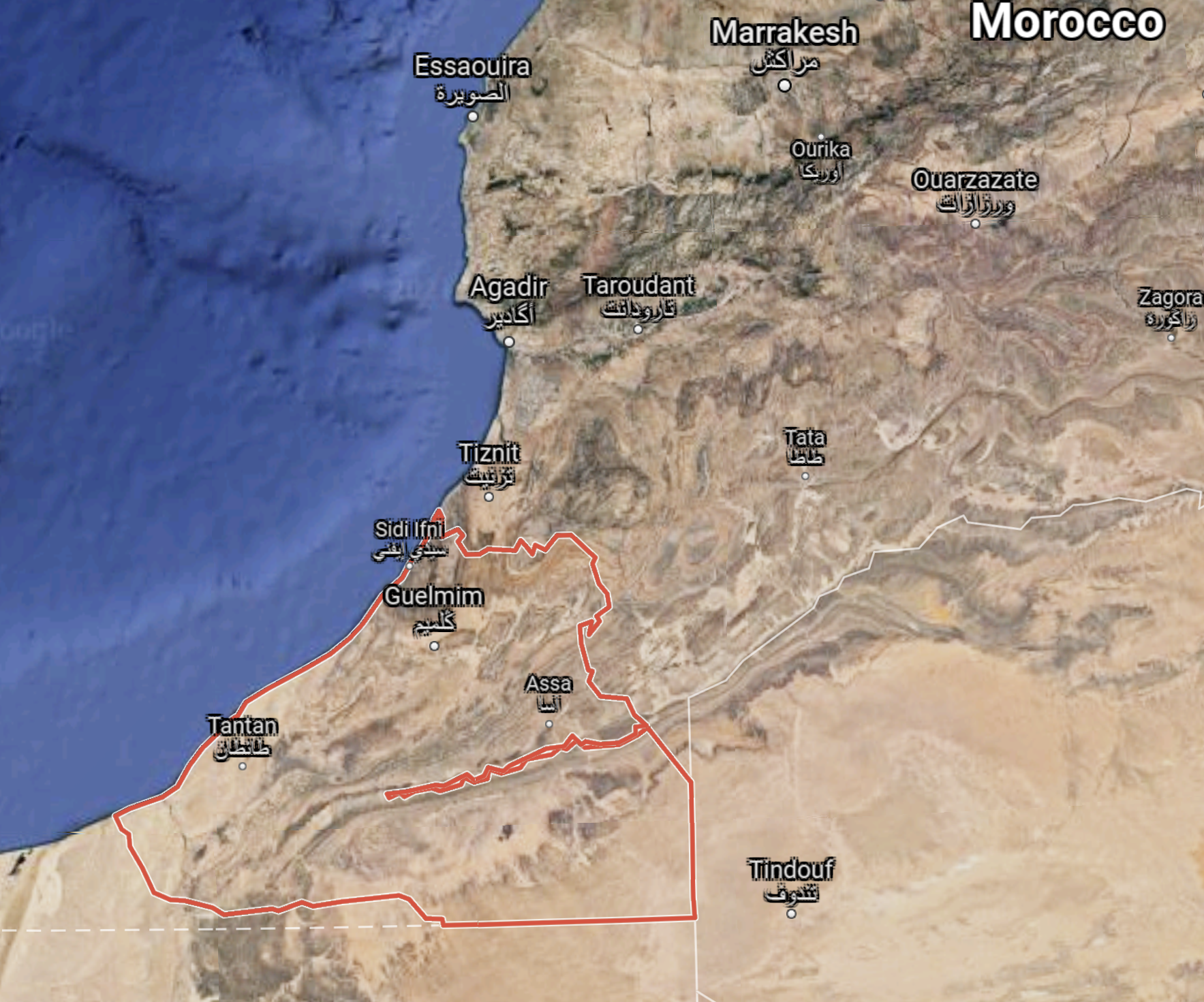
Note.
- Guelmim Oued Noun is outlined in red.
- The Canary Islands are just off the map to the West.
At least the project will be able to have convenient access to the sea.
This second Google Map shows the <Moroccan, Portuguese and Spanish coasts from Guelmim Oued Noun to the Bay of Biscay.

Note.
- The light blue of the Continental Shelf
- The darker blue of deeper water.
- Guelmim Oued Noun is outlined in red.
- The Canary Islands in the Atlantic Ocean to the West of Guelmim Oued Noun.
- Could the cable bring power to Gibraltar?
- There are other large cities on the route in Morocco, Portugal and Spain.
This third Google Map shows the Bay of Biscay.
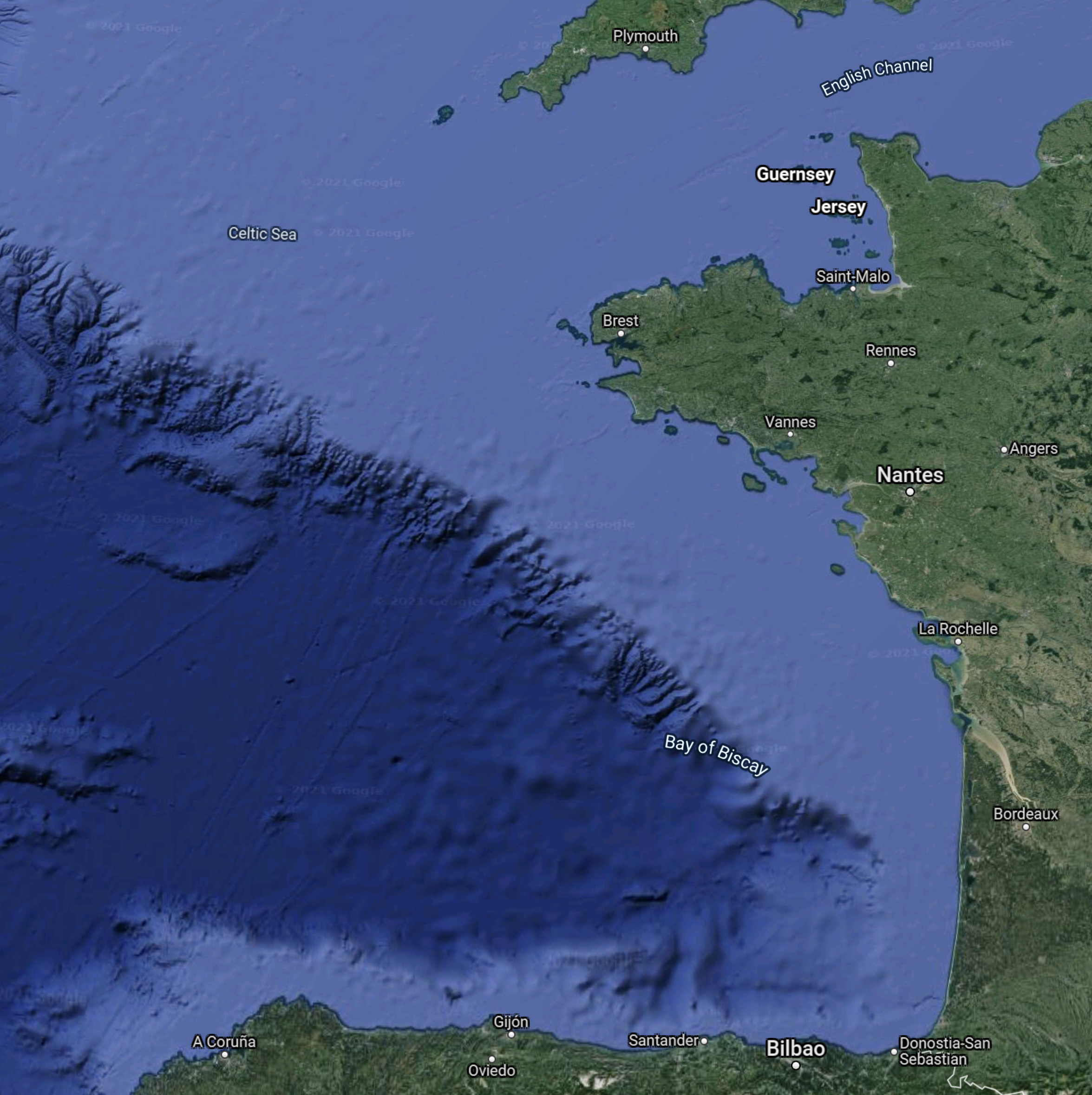
Note.
- The light blue of the Continental Shelf
- The darker blue of deeper water.
- There are a series of islands off the Spanish and French coasts.
- Could these islands be used as stepping stones for the cable?
This fourth Google Map shows the Western Approaches to the UK.
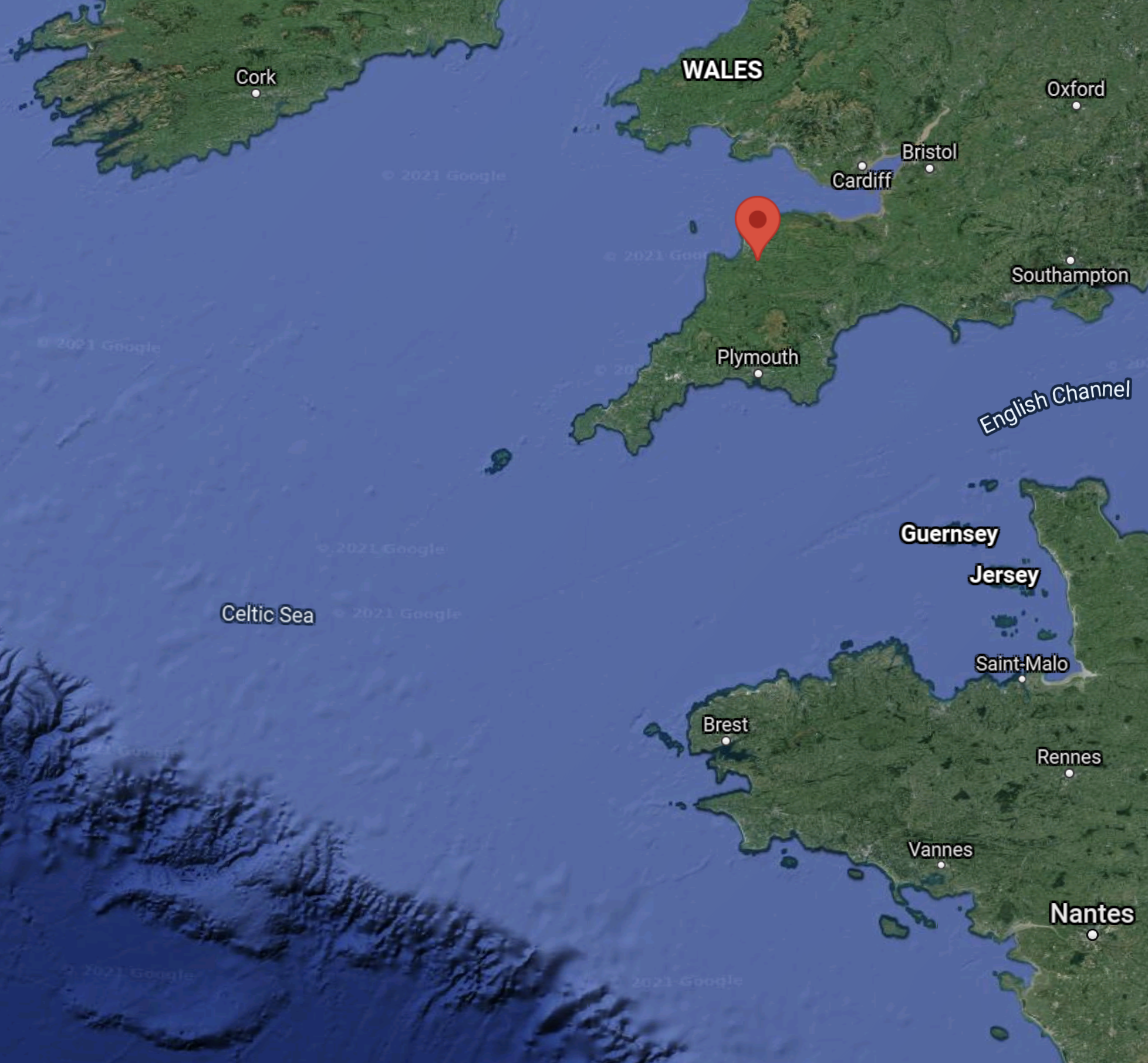
Note that the prominent red arrow indicates Alverdiscott, where cable connects to the UK National Grid.
This fifth Google Map shows Alverdiscott to Lundy Island.
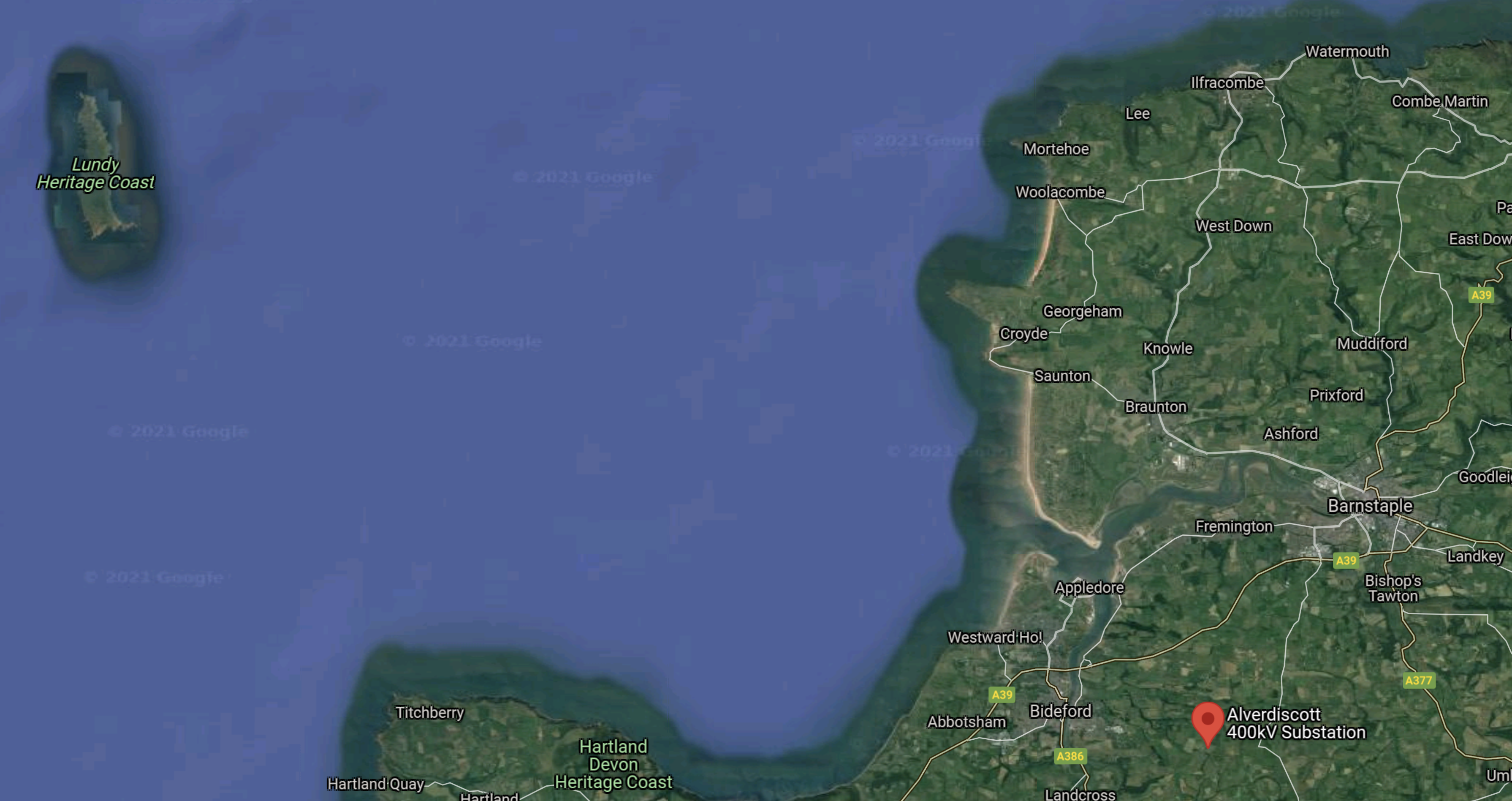
Alverdiscott substation is indicated by the red arrow.
This sixth Google Map shows the Alverdiscott substation in relation to the town of Bideford.
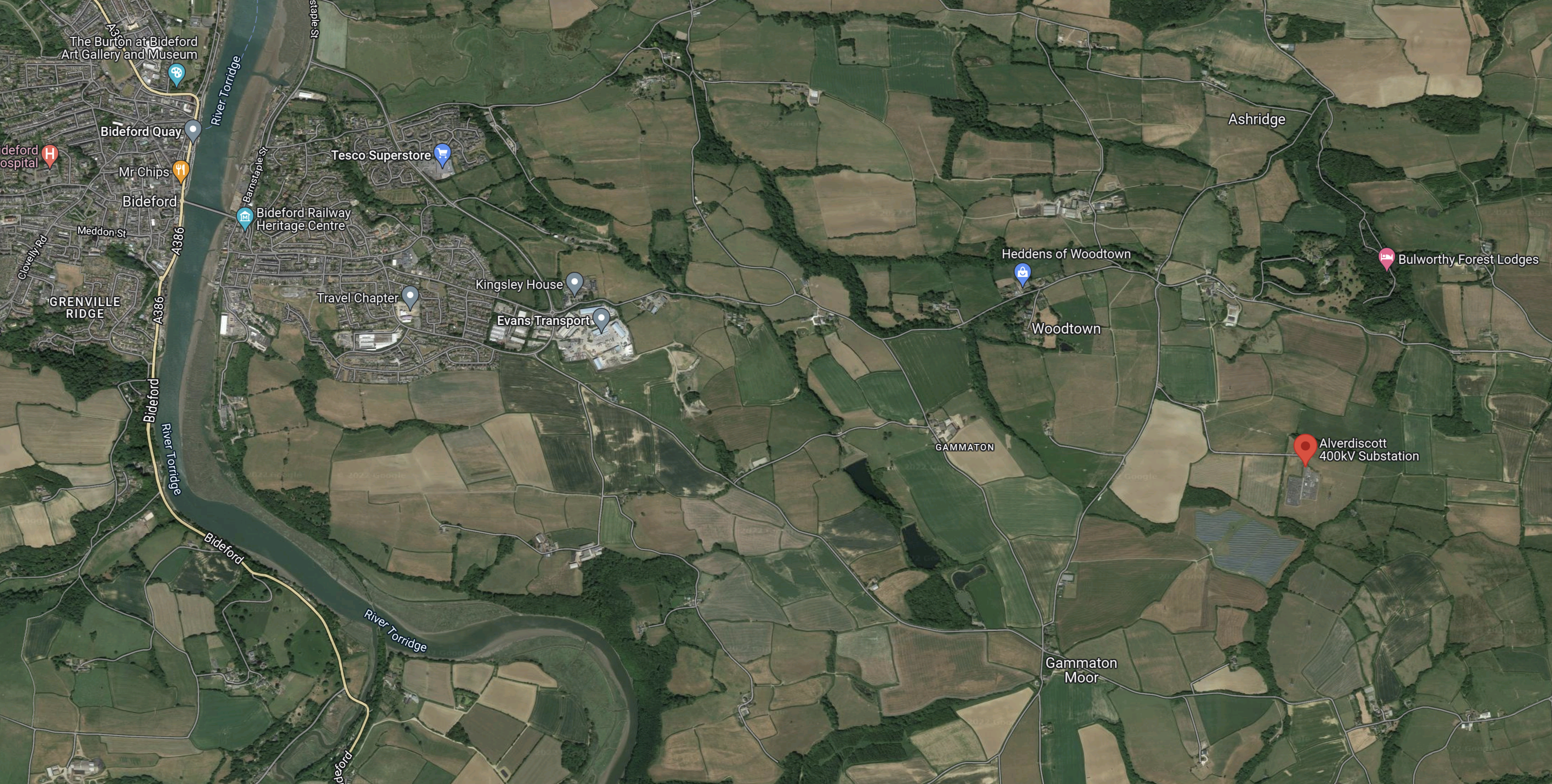
Note.
- Bideford is in the North-West corner of the map.
- The red arrow indicates the Alverdiscott substation.
- The River Torridge runs through the town of Bideford.
Could the river be used to bring the cables from Morocco to the substation?
This seventh Google Map shows the Alverdiscott substation
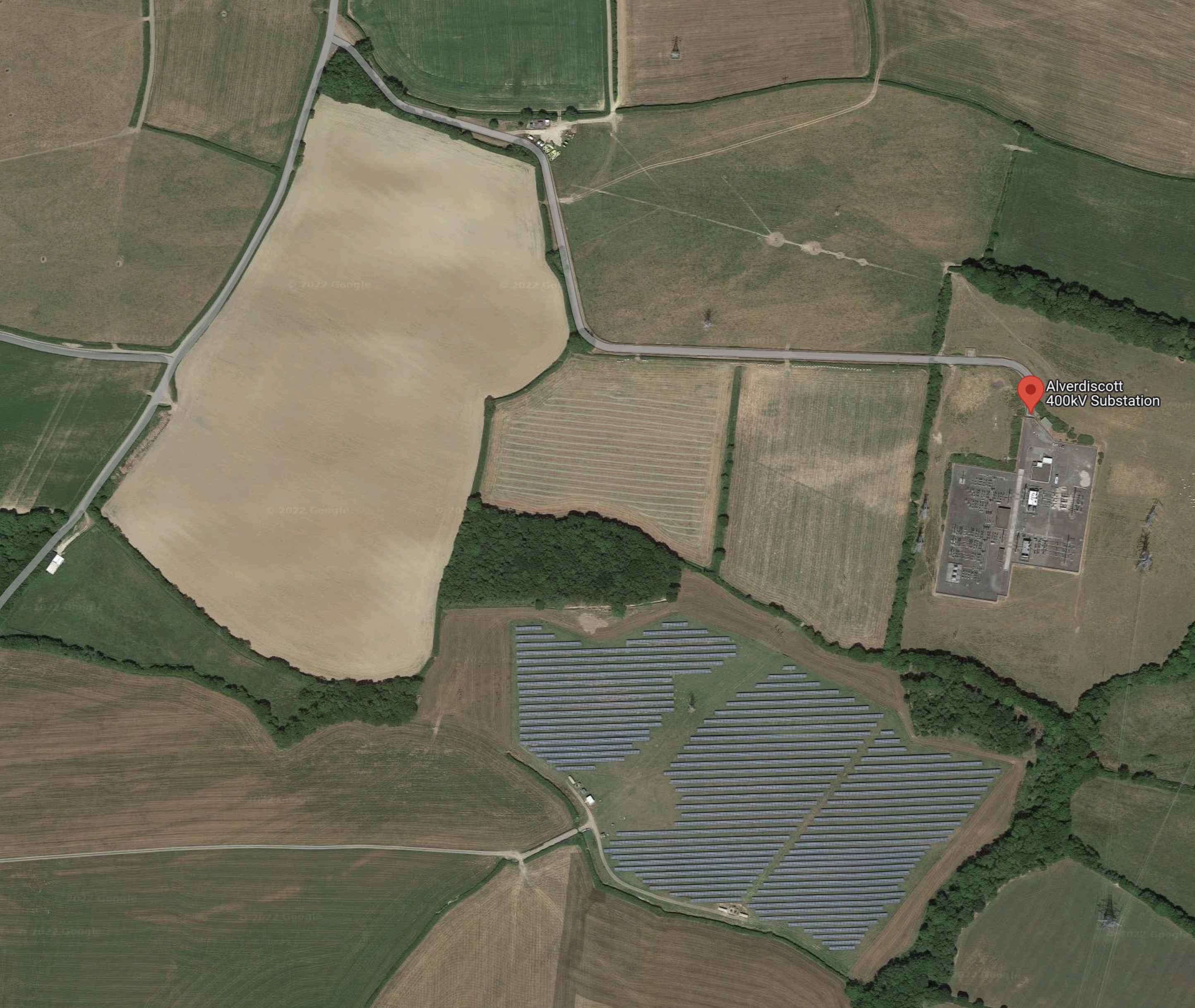
Note the solar farm to the South of the substation.
HVDC Cable
The article also says that they may be building their own cable-manufacturing facility. Does this indicate that there is a shortage of HVDC cable?
Judging by the number of proposed interconnectors proposed for UK waters, it might be a prudent move to improve cable-manufacturing capacity.
10.5 GW Of Zero-Carbon Electricity
This sentence on the project web page describes the power generation.
This “first of a kind” project will generate 10.5GW of zero carbon electricity from the sun and wind to deliver 3.6GW of reliable energy for an average of 20+ hours a day.
It appears that they will be providing a baseload of 3.6 GW to the UK for over twenty hours per day.
Consider.
- Hinckley Point C has an output of 3.2 GW.
- As I write this around midnight, the UK is generating 22.2 GW of electricity.
This paragraph from their web site describes the advantages of Morocco.
Most importantly, Morocco benefits from ideal solar and wind resources, required to develop renewable projects that could guarantee suitable power production throughout the year. It has the third highest Global Horizontal Irradiance (GHI) in North Africa, which is 20% greater than Spain’s GHI and over twice that of the UK. Furthermore, the shortest winter day still offers more than 10 hours of sunlight. This helps in providing production profiles that address the needs of the UK power market, especially during periods of low offshore wind production.
It is not a small power station in the wrong place.
The 5GW/20GWh Battery
That is a massive battery.
The world’s largest lithium-ion battery is Gateway Energy Storage in California. It has a capacity of 250 megawatts for one hour.
The proposed battery in Morocco is eighty times as large.
If I was choosing a battery for this application, I believe the only one that has been demonstrated and might work is Highview Power’s CRYOBattery.
I wrote about Highview’s similar type of application to Morocco in Chile in The Power Of Solar With A Large Battery.
But that installation only will only have storage of half a GWh.
But I believe Highview and their partner; MAN Energy Solutions can do it.
Conclusion
I wish the company well, but I have a feeling that there’s a chance, that this will join the large pile of dead mega-projects.
But I do feel that the solar and wind power station in Morocco will be developed.
And like the project in Chile it will have a large Highview CRYOBattery.
Cummins Accelerates Work On Hydrogen-Fueled Internal Combustion Engines
The title of this post, is the same as that of this article on CSR Wire.
This is the first paragraph.
Global power leader Cummins Inc. is accelerating its work on internal combustion engines fueled by low-carbon hydrogen.
Cummins aren’t the only company going this route, as JCB have also developed a hydrogen-powered internal combustion engine.
In some ways it makes sense, as in a truck, railway locomotive or specialist machine, the conversion of the current diesel version to a hydrogen one could be easier.
From my experience of selling software to Cummins, they see themselves as specialists in providing customised diesel engines for anybody who wants them.
So could they supply customised hydrogen engines which are a direct replacement for a diesel engine?
It could be a very profitable market for Cummins, good for the environment and a quick way to decarbonise a lot of applications.
Between Camden Road And Camden Town Stations Along The Canal
This walk is preferable to walking along the busy Camden Road with its heavy traffic and narrow pavements.



















Note.
- The entrance is at the side of a Costa Coffee on the Camden Road.
- The canal seems to have more than its share of green algae.
- Hawley School in Buck Street will be the site of the new entrance to Camden Town station.
- Kentish Town Road could do with some decent buildings.
- It is not an area, that is short on graffiti.
- But is short on signage compared to some parts of the Regent’s Canal.
- It took me seven minutes walking along the canal and another seven minutes on Kentish Town Road. But I wasn’t walking fast.
The route is also an easy way to get to Camden Lock from Camden Road station, which avoids the chaos at Camden Town station.
Should We Stun Animals With Carbon Dioxide?
This post has been prompted by a text from a cardiologist. He said.
Current CO2 crisis reminds me that I think we should be using nitrogen to stun animals before slaughter, not CO2.
I heard a project on Farming Today a few months ago about CO2 stunning and thought it a great mistake as it can stimulate breathing and cause distress in some.
Have you seen anything on using nitrogen?
I haven’t but I must admit, I’ve had the thought myself and have also asked myself, if the gas in food packages is nitrogen, which would be logical to me.
I do have some thoughts.
The Best Beef I Ever Tasted
Over forty years ago, I used to buy beef from a local farmer in Suffolk.
- It would now be considered organic.
- All the farmer’s animals got the best care.
- He used to slaughter the animals himself in the field after giving them a pick of grass, using a captive bolt.
It was certainly, the best beef, I’ve ever tasted. But then the animals suffered no distress.
Medical Uses Of Carbon Dioxide
This is from the Wikipedia entry for carbon dioxide.
In medicine, up to 5% carbon dioxide (130 times atmospheric concentration) is added to oxygen for stimulation of breathing after apnea and to stabilize the O2/CO2 balance in blood.
This would appear to support the cardiologist’s text.
Is Carbon Dioxide Cheaper Than Nitrogen?
I have found these prices for ten litre cylinder of both gases.
- Carbon Dioxide – £78
- Nitrogen – £54
On this quick comparison, there would appear to not be a large difference.
Availability Of Nitrogen
Reading the Wikipedia entry for nitrogen, it appears to me, that production of oxygen-free nitrogen is not that difficult and this may explain the price comparison with carbon dioxide.
Nitrogen And The Death Penalty In The United States
This is a section called Euthanasia in the Wikipedia entry for nitrogen.
Nitrogen gas has become the inert gas of choice for inert gas asphyxiation, and is under consideration as a replacement for lethal injection in Oklahoma.
As nitrogen is an asphyxiant gas, some jurisdictions have considered inert gas asphyxiation by inhalation of pure nitrogen as a means of capital punishment (as a substitute for lethal injection).
I have been totally against the death penalty since meeting Jimmy O’Connor in the 1970s.
Conclusion
It strikes me that nitrogen could be used to stun animals as a more humane alternative to carbon dioxide.
Wrightbus Presents Electric & Fuel Cell Single-Decker Buses
The title of this post, is the same as that as this article on Electrive.
This is the first paragraph.
The Northern Irish bus manufacturer Wrightbus is introducing a new single-deck bus with battery and fuel cell propulsion. The new models of the GB Kite series in the Hydroliner FCEV and Electroliner BEV variants can each accommodate up to 90 passengers and are scheduled to go into series production in 2022.
This means that Wrightbus now have single and double-deck zero emission buses with both battery and fuel cell propulsion.
These are my thoughts.
High Commonality
There may be four different buses, but they have a surprising amount in common.
In this press release on the Wrightbus web site, which is entitled Wrightbus To Showcase Two New Zero-Emission Buses, there is this paragraph.
Both buses share an 86% parts commonality with their Double Deck sisters which delivers significant benefits to operators in terms of reducing complexity and costs for fleet maintenance.
Vehicle manufacturers have been looking for high commonality for many decades and it is amazing that Wrightbus have achieved such a figure.
We mustn’t forget the advantages, Wrightbus will get from such commonality in terms of production, product support and the supply of parts and sub assemblies.
Passenger Capacity
The passenger capacity of the four buses are as follows.
- Double-decker – Hydrogen – 86
- Double-decker – Battery – 95
- Single-decker – Hydrogen – 90
- Single-decker – Battery – 90
Note.
- These figures come from the Wrightbus web site.
- The site says that the figures for the single-decker buses depend on bus length and specification.
Does the similar capacity of all the buses give operators more flexibility?
Range
The range of the four buses are as follows.
- Double-decker – Hydrogen – 350 miles
- Double-decker – Battery – 200 miles
- Single-decker – Hydrogen – 640 miles
- Single-decker – Battery – 300 miles
Note.
- These figures come from the Wrightbus web site or the press release for the new single-deck buses.
- These ranges are claimed by Wrightbus as best-in-class.
- But surely the range of 640 miles for a single-deck zero-carbon hydrogen bus opens up some interesting and unusual routes.
- Single-deck buses appear to have a longer range than their double-deck sisters.
There is also a degree of battery size flexibility in the battery-electric buses to suit an operator’s routes.
Single-deck battery-electric buses are available with these battery sizes and charging times.
- 340kWh – 2 ½ hours @ 150kW
- 454kWh – 3 hours @ 150kW
- 567kWh – 3 ½ hours @ 150kW
And these are the figures for the double-deck battery-electric buses.
- 340kWh – 2 ½ hours @ 150kW
- 454kWh – 3 hours @ 150kW
Note.
- Both single- and double-deck buses can use the two smaller batteries.
- I would assume that they are similar and it’s all part of the commonality.
- Both buses can also be fitted with a pantograph to charge the batteries, when the routes present an opportunity.
Could the largest battery be fitted to the double-deck bus? Perhaps at some point, but I suspect, that currently, a weight limitation applies.
The Fuel Cell
This sentence from the Electrive article, describes the fuel cell system of the hydrogen bus.
The fuel cell solo bus model is very similar in design. Instead of the pure BEV drive, the GB Kite Hydroliner FCEV has a Ballard FCmove fuel cell with 70 kW or 100 kW and a small supplementary battery with 30 or 45 kWh on board.
It appears, there is flexibility in the power.
Forsee Batteries From France
This paragraph from the Electrive article, talks about the batteries.
Incidentally, Forsee Power is acting as the supplier of the batteries for the BEV buses. The Bamford Group, new parent of Wrightbus, had extended the partnership with the French battery manufacturer in October 2020 with a new contract for several hundred battery systems per year. Forsee Power announced the introduction of extra-thin battery modules earlier this year and directly named Wrightbus as the launch customer for the modules of the new Slim series. Whether these batteries are now already being installed in the two Electroliners is not specified. However, the high storage capacity of the 567-kWh top battery leads us to assume this, at least for the solo bus model.
Forsee’s slimline batteries seem a major advance in the powering of vehicles like buses.
It certainly looks like extra-thin is beautiful, where batteries are concerned.
Conclusion
This is a formidable line-up of four zero-carbon buses, that can be tailored to an operator’s needs.
When linked tom Jo Bamford’s company; FUZE, which I wrote about in New Company Established To Help Transition Bus Fleets To Hydrogen, Bamford’s deck of cards look even stronger.
Will Jo Bamford do for the bus industry, what his grandfather did for diggers? I wouldn’t bet against it!
Hydrogen Trains Planned For Apennine Route
The title of this post, is the same as that of this article on Railway Gazette.
The trains appear to be part of a project to bring a sustainable economic recovery to an area that has been affected by three earthquakes in recent years and suffered badly from depopulation.
There would appear to be four projects.
Refurbishment Of The Sansepolcro And Sulmona Railway
This 300 km railway will also switch from diesel to hydrogen trains.
- Sansepolcros is a town in the Eastern part of Tuscany, to the South-East of Florence.
- Sulmona is a city that is roughly East of Rome.
- The Northern section of the route is covered in Wikipedia by the entry for the Terni – Perugia – Sansepolcro Railway.
- The Southern section of the route is covered in Wikipedia by the entry for the Terni and Sulmona Ralway.
- There are connections to Rome at Terni and Sulmona.
This railway looks like it could be an interesting route for a railway tourist. In my past experience, Todi and Perugia were certainly worth a visit.
Two Seas Railway
The Railway Gazette article says this about the Two Seas Railway.
This would cross Italy from west to east, connecting Roma’s Fiumicino airport with San Benedetto del Tronto via Rieti, Amatrice and Ascoli Picen.
It has been proposed for a long time and could use hydrogen traction.
Building Back Sustainably
The Railway Gazette article says this about the third and fourth projects.
A third project will assess the potential for diffused green hydrogen manufacturing activity in the region, and a fourth will look at ways to apply new energy and environmental technologies in post-earthquake reconstruction.
It looks to me, that hydrogen will play a large part in restoring this region of Italy.
Conclusion
It sounds a bit like, the Italians are rebuilding their railways like the UK and several other countries are doing.
Isle Of Wight Rail Line Set To Reopen After 10-Month Closure
The title of this post, is the same as that of this article on the BBC.
It may have been a long time coming, but let’s hope it’s worth it.
I shall certainly going down, when it opens.
It would appear that the reason for the delay is partly down to software problems.
This seems to me an all-to-frequent occurrence these days.
Could this be that first generation programmers like myself, who honed our skills on small machines in the 1960s and 1970s have mostly retired and are not there to pass on expertise?
From Battersea Power Station Station To The River
I took these pictures as I walked from Battersea Power Station station to Battersea Power Station pier to get a Thames Clipper back to London Bridge.




















Note.
- There appears to be fake smoke coming out of the chimney in the third picture.
- I think the second entrance to the station will be close to where I walked.
- To my taste there appeared to be a lot of car parking.
The walk took me under ten minutes.
The Second Entrance At Battersea Power Station Station
In Battersea Power Station Station Opens, I said this.
There is also probably space to put another set of three escalators pointing the other way, at the other end of the intermediate level, away from the current set of three escalators, that lead to the surface.
So I went back today and had another look.



I was told by a member of the station staff, that a second entrance, where the posters are on the wall will lead to the power station, the shops and the river.
 The Anonymous Widower