Express On A Perpetual Motion Machine. Scientists Create An Electric Train That Will Charge By Gravity
The title of this post, is the same as that of this article on The Saxon.
These are the first two paragraphs.
The world’s first “infinity train” will recharge its electric batteries during deceleration using the force of gravity.
Scientists and engineers from the Australian company Fortescue Future Industries have begun developing the world’s first train that will be powered by gravity. The company plans to spend $50 million on this development over the next two years, according to the Daily Mail.
How Does The Train Work?
According to the article, the sequence of operation appears to be as follows.
- The train starts at the high end of the line.
- The train rolls down the hill to the low end of the line.
- As it descends, it will pick up kinetic energy due to gravity.
- Regenerative braking on the train will be used to charge the battery.
- The train will have a full battery, when it reaches the low end of the line.
- The full battery will then power the empty train back up the hill.
I have a feeling that this will work, where there is a full train coming down the hill and an empty one going up.
In an example, I will assume the following.
- The high end of the line is 100 metres above the low end.
- The train weighs 100 tonnes.
- The full load weighs 100 tonnes.
- Regenerative braking is 100 % efficient.
I can calculate these energy values for a train running down and then up the line.
- A full train just about to descend, which weighs 200 tonnes and is 100 metres up will have a potential energy of 54.4 kWh.
- Whilst descending, this energy will be converted to kinetic energy and the regenerative braking will transfer this energy to the battery, which will then contain 54.4 kWh of electrical energy.
- After descending, the full train, which weighs 200 tonnes and is zero metres up will have a potential energy of 0 kWh.
- After emptying, the empty train, which weighs 100 tonnes and is zero metres up will have a potential energy of 0 kWh.
- After ascending, the the empty train, which weighs 100 tonnes and is 100 metres up will have a potential energy of 27.2 kWh.
- When the train reaches the high end, there will still be 27.2 kWh left in the battery.
Note.
- After a trip, there will be some energy left in the battery to start the train rolling down the hill on the next trip.
- Effectively, the train is powered by the weight of its cargo, which in Fortescue’s case is very dense iron ore on its trains from Pilbara to the coast.
- In some ways the Infinity train carrying iron ore is a bit like an overshot water wheel, where weight is added to the wheel and this makes the wheel turn.
- The train is driven by the weight of the cargo.
It may look like perpetual motion, but the train needs to be loaded for each trip to increase its potential energy.
I will now look at a passenger train on the same route.
- The high end of the line is 100 metres above the low end.
- The train weighs 100 tonnes.
- I will assume there are 50 passengers in both directions.
- I will assume each weighs 80 Kg with baggage, bikes and buggies, which gives a weight of 4 tonnes.
- Regenerative braking is 100 % efficient.
I can calculate these energy values for a passenger train running down and then up the line.
- A passenger train just about to descend, which weighs 104 tonnes and is 100 metres up will have a potential energy of 28.3 kWh.
- Whilst descending, this energy will be converted to kinetic energy and the regenerative braking will transfer this energy to the battery, which will then contain 28.3 kWh of electrical energy.
- After descending, the full train, which weighs 104 tonnes and is zero metres up will have a potential energy of 0 kWh.
- After emptying and reloading, the empty train, which weighs 104 tonnes and is zero metres up will have a potential energy of 0 kWh.
- After ascending, the the empty train, which weighs 104 tonnes and is 100 metres up will have a potential energy of 28.3 kWh.
Note.
- After a trip, there will be almost no energy left in the battery to start the train rolling down the hill on the next trip.
- If the regenerative braking has an efficiency of less than 100 %, it would be unlikely to work.
But it would work, if an appropriate amount of energy were to be added to the battery at either or both ends of the route.
Could A Passenger Train Like This Work On A Real Route?
In the UK, there are several lines, where a rail line climbs a few hundred metres.
- Cardiff Central and Aberdare
- Cardiff Central and Ebbw Vale Town
- Cardiff Central and Merthyr Tydfil
- Cardiff Central and Rhymney
- Cardiff Central and Treherbert
- Glasgow Central and East Kilbride
- Llandudno Junction and Blaenau Ffestiniog
- Manchester Piccadilly and Buxton
- Manchester Piccadilly and Glossop
For the trains to work, I suspect the following is needed.
- Regenerative braking efficiency must be as close to 100 % as possible.
- The total number of passengers going down during the day needs to be at least the same as the total number of passengers going up.
- For passenger trains to work, an appropriate amount of energy needs to be added to the battery at either or both ends of the route.
Freight trains which are transferring weight down the hill will generally always work.
Conclusion
The Infinity Train will work well with heavy freight, but will probably need supplemental charging to work with passenger trains.
Both heavy freight and passenger trains will use less energy, than one working to traditional principles.
Great British Journeys┃Beautiful Railway Journeys┃24/7 Live Stream
The title of this post is the same as this National Rail video on YouTube.
This is their description.
Sit back and relax as you enjoy a driver’s eye view of Britain’s most picturesque railway journeys, streamed in our exclusive footage.
Experience what it’s like to travel across the Scottish Highlands; watch the waves crash against the Devon coast; get lost in the pleasant green land of Wales and immerse yourself in the natural beauty of Suffolk.
The sounds and the motion of travelling by train have been scientifically proven to help people relax, which is why we’ve developed Great British Journeys; a series of the country’s most scenic train journeys – all shot from the train driver’s cab.
It looks like this could be an idea that grows and could turn out to be good marketing.
A Resilient Net Zero Electricity System Achievable By 2035 But Increased Investment Required, Regen Report Finds
The title of this post, is the same as that of this article on Current News.
This is the first two paragraphs.
The technical solutions needed to operate a net zero electricity system by 2035 are available or attainable, Regen has found, though a step-change in the level of investment is still needed.
The trade body has produced a new report for National Grid ESO into a ‘day in the life’ of a fully decarbonized electricity system by 2035, which the ESO is aiming for.
The article gives a lot of figures about our electricity supply in 2035.
Consumption of electricity will be between 450 and 500TWh per year, with the following sources.
- 55-65GW of offshore wind
- 25-35GW onshore wind
- 40-50GW of solar
- 6-10GW of other renewables
- 10-15GW of low carbon dispatch
- 8-10GW of nuclear
- 8-12GW of carbon capture and storage (CCS)
- 15-25GW of fossil fuel backup.
Note.
- 450-500 TWh is 51-57 GW per hour averaged out over the year.
- They emphasise the importance of energy storage.
- No mention is made of the massive Coire Glas pumped hydro storage.
- No mention is made of hydrogen.
- As is normal, with reports like this the authors don’t keep their GW and GWh separate.
- They also don’t explain the hierarchy of MW, GW and TW, which is 1000 x steps up the scale.
The full report is at this page on the Internet.
Harrow-On-The-Hill Station – 16th March 2022
Harrow-On-The-Hill station is now step-free.
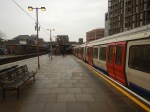
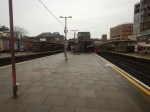
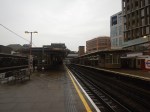
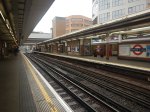
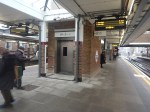
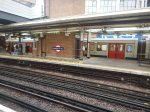

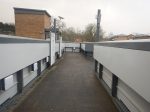
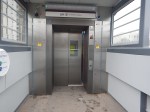

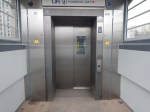
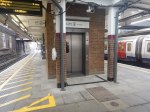
Note.
- Three lifts have been added with a new walkway between them.
- It looks like the brick-work and other details are tasteful and in keeping with the original station.
It is one of the best step-free installations, constructed in the last few years.
Deutsche Bahn Is Building Overhead Line ‘Islands’ For Battery Trains
The title of this post, is the same as that of this article on Railway News.
This paragraph describes the concept.
This means, instead of electrifying a line in full, as is conventional for electric trains to draw traction power, these lines will feature intermittent electrification. The first of these lines to become operational will be in Schleswig-Holstein in December 2023. Deutsche Bahn says it will only electrify short stretches (a few hundred metres up to a few kilometres) or stations – enough to allow battery-powered trains to recharge on these lines. The state rail operator estimates that this move will mean that more than ten million train kilometres can be completed using electric rather than diesel traction in Schleswig-Holstein. The diesel trains currently in use will be decommissioned. DB estimates an annual diesel fuel saving of around ten million litres.
It looks like a simple concept will save a lot of diesel fuel.
I first talked about electrification islands to charge battery-electric trains in The Concept Of Electrification Islands, which I wrote in April 2020.
DB Cargo UK Successfully Trials The Use Of ‘Combi-Consists’
The title of this post, is the same as that of this press release on DB Cargo UK.
This is the first paragraph.
DB Cargo UK is trialling the use of ‘combi-consists’ to increase capacity, improve customer service and improve its efficiency.
The next four paragraphs describe the trial.
This month the UK’s largest rail freight operator ran a unique jumbo train from Belmont Yard in Doncaster to Barking, East London, carrying a mix of wagons for two altogether different types of customers.
The train consisted of two sets of empty wagons – 21 x MBA wagons for Ward Recycling and 18 x JNA wagons for FCC Environment – with an isolated DIT (dead-in-train) locomotive – in the middle.
The MBA wagons had previously been discharged at Immingham in North Lincolnshire and the JNA wagons discharged at FCC Environment’s new waste transfer facility at Tinsley in South Yorkshire.
Both sets of wagons were then taken to DB Cargo UK’s Belmont Yard depot in Doncaster where the jumbo train was assembled. The train travelled from Belmont Yard to Barking via Lincoln Central, Spalding, The East Coast Mainline, Hertford North and Canonbury Tunnel.
There is also a video embedded in the press release, which shows the formation of the train in detail.
This train is certainly efficient, as it uses less train paths, crew and fuel.
DB Cargo UK now intend to trial the concept on a greater portion of the East Coast Main Line and the Midland Main Line.
I have a few thoughts.
Could The Concept Work With Loaded Trains?
This trial was with empty trains, but would it be possible to use the concept with two shorter loaded trains?
Would there be advantages in terms of efficiency, if the following were done?
- Two container trains leave Felixstowe as a pair, with one going to Plymouth and the other going to Cardiff.
- They split at say Swindon and then proceed independently.
Obviously, all the weights would have to be in order and the locomotive would need to be able to pull the combined train.
Other possibilities might be.
- Stone trains running from the Mendips and the Peak District to London.
- Biomass trains running from import terminals to power stations in the Midlands.
- Trains delivering new cars.
- Trains delivering goods for supermarkets. Tesco are certainly increasing their use of trains.
I would suspect that DB Cargo UK have several ideas.
Could An Electric Locomotive Go In The Middle?
A Class 90 locomotive weighs 84.5 tonnes, as against the 129.6 tonnes of the Class 66 locomotive used in the trial.
So if the electric locomotive can be run dead-in-train, the weight would be slightly less.
But this might give a big advantage, if they ever wanted to run a pair of trains from Felixstowe to Plymouth and Cardiff, as per my earlier example.
- The trains would split anywhere on the electrified section of the Great Western Main Line.
- The lead train would go to Plymouth.
- The second train would go to Cardiff, which is now fully electrified.
There would appear to be possibilities to save carbon emissions.
Could An Electric Locomotive Go On The Front?
Some routes out of Felixstowe are fully-electrified from the Great Eastern Main Line.
It could be possible for the following.
- Two diesel-hauled trains to leave Felixstowe with ubiquitous Class 66 locomotives and form up as a combi-consist train in Ipswich yard.
- The Class 66 locomotive on the front is replaced by an electric locomotive.
- Both Class 90 and Class 92 electric locomotives have twice the power of a Class 66 locomotive, so both should be able to haul the combi-consist train.
The trains would split en-route with the electric locomotive hauling a train to an electrified destination.
This picture shows, what could be an experiment by Freightliner at Shenfield.
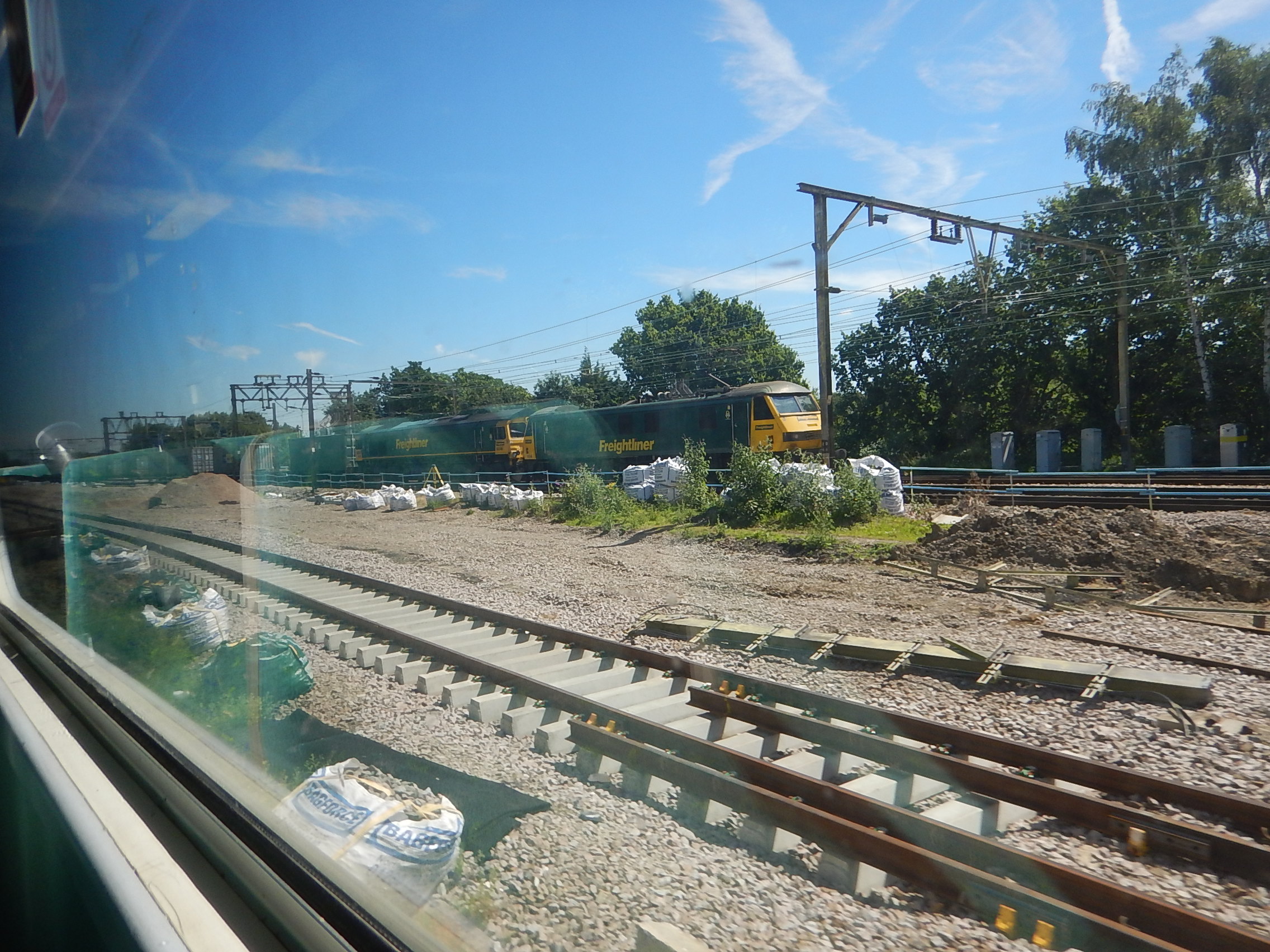
Unfortunately, I didn’t have a chance to ask the driver, if the Class 66 locomotive was running dead-in-train or helping the Class 90 locomotive with a very heavy load.
The picture shows, that the electric and diesel locomotives can work together, at the front of a train.
Since I took this picture, I’ve never seen a similar consist again.
Could A Bi-Mode Locomotive Go On The Front?
In GB Railfreight Plans Order For Future-Proofed Bi-Mode Locomotives, I talked about how GB Railfreight had started negotiations to purchase a fleet of powerful bi-mode locomotives from Stadler.
- Provisionally, they have been called Class 99 locomotives.
- The locomotives will be Co-Co bi-modes.
- The diesel engine will be for heavy main line freight and not just last-mile operations.
- I suspect that on diesel the power will be at least 2.5 MW to match a Class 66 locomotive.
These locomotives could be ideal for hauling combi-consist trains.
Would Combi-Consist Trains Save Energy?
This could be a big driver of the use of combi-consist trains and may push DB Cargo UK to acquire some powerful bi-mode locomotives.
Conclusion
Combi-consist trains seem to be an excellent idea.
The Neighbourhood Leading A Green Energy Revolution
The title of this post, is the same as that of this article on the BBC.
These are the first two paragraphs.
An ambitious target of using hydrogen to partly power homes in the UK within three years has been set by the National Grid, the BBC has learned. On the east coast of Scotland, a small neighbourhood is playing a key role in this energy revolution.
From next year, about 300 homes in Buckhaven, and Methil, in the area of Levenmouth, will be powered by green hydrogen gas in a project called H100. Customers will be offered free hydrogen-ready boilers and cookers in the scheme, which will initially last five and a half years.
I described the H100 Project in ‘World First’: SGN Launches Bid For 300 Green Hydrogen Homes Project In Fife.
This is the home page of the H100 Fife project web site.
This Google Map shows part of Buckhaven.
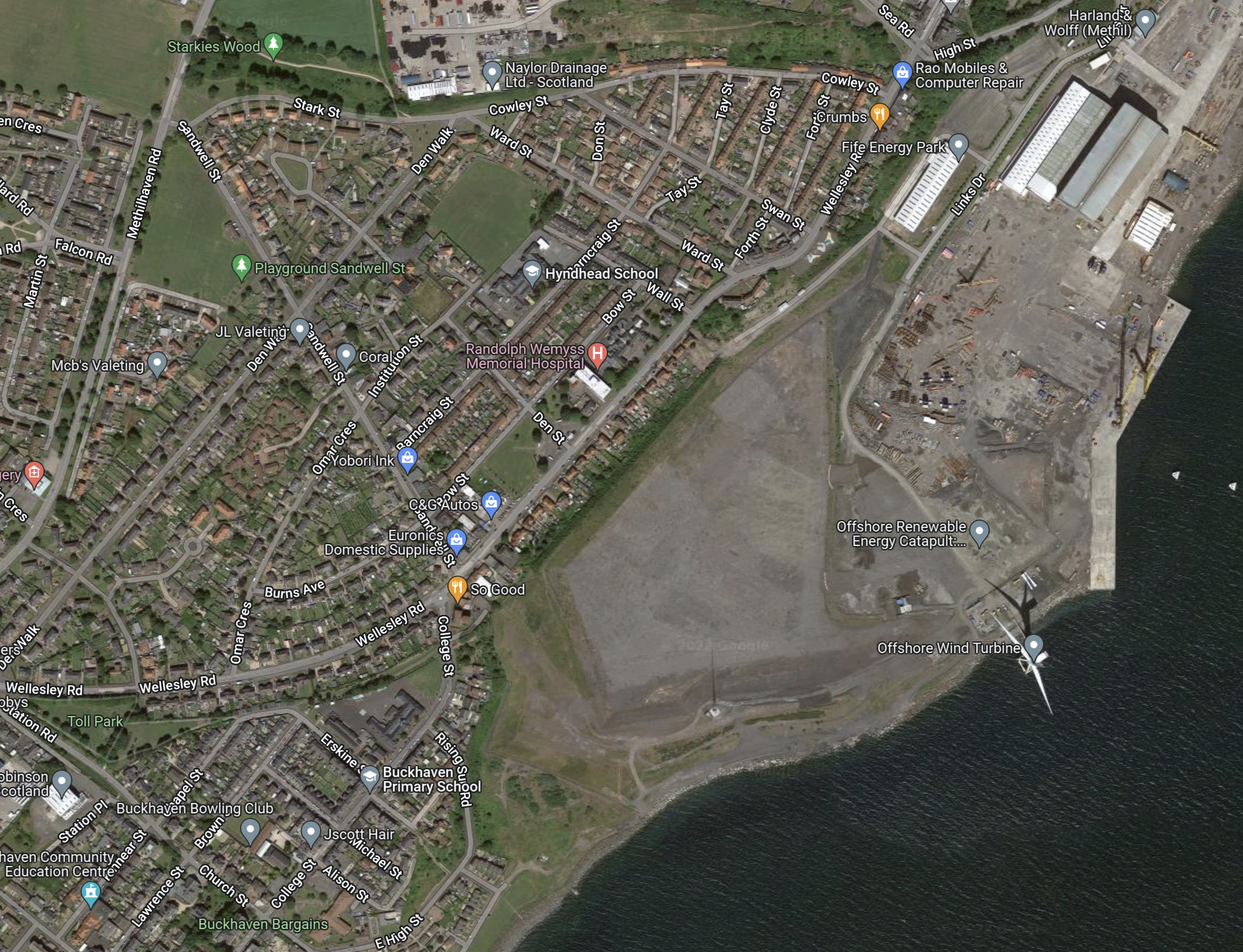
Note the wind turbine, that will produce the hydrogen is in the South-East corner of the map.
Now That’s What I Call A Mission Statement!
This is a paragraph from the Comment in the Business section of today’s times, with the heading of Mission Statement.
Rousing stuff from Astarta, a Ukrainian agri-group listed in Warsaw spanning sugar, milk and soya beans. Having secured extra financing for the “spring planting” season, its latest update underlines a commitment to “maintaining food security and rebuilding the national economy”. The sign-off? Well, not your typical corporate speak: “We believe in the army of Ukraine! We believe in Ukraine! We believe in our Victory!”
Companies love mission statements. Surely, this is one of the best.
Slava Ukraini!
EDF Renewables Eyes 50MW Solar Farm To Power Green Hydrogen Development In Teesside
The title of this post, is the same as that of this article on Solar Power Portal.
These are the first two paragraphs.
EDF Renewables is looking to develop a 49.9MW solar farm to power a new green hydrogen production facility in Teesside.
Working together with Hynamics, a subsidiary of the EDF Group specialising in hydrogen, the companies are planning to develop a 30-50MW electrolyser, which will subsequently be scaled to over 500MW in line with emerging demand.
They are working with PD Ports and British Steel.
Teesside is certainly getting the green hydrogen it needs, as there is also a 400 MW hydrogen project on Teesside, that I wrote about in BP Plans To Turn Teesside Into First Green Hydrogen Hub.
TransPennine Express Explores Further Fleet And Capacity Expansion Options
The title of this post, is the same as that of this article on Railway Gazette.
This is the first paragraph.
First TransPennine Express is hopeful that it will be able to issue a call for expressions of interest in the provision of additional bi-mode trains before the end of March. This follows ‘a healthy level of interest’ in its existing call for expressions of interest in the supply of bi-mode locomotives to replace the Class 68s which work with its MkVa coaches.
I wrote about the expressions of interest to replace the Class 68 locomotives with new bi-mode locomotives in Suppliers Sought For New Bi-Mode Locomotives For TransPennine Express And Great Western Railway.
This was my conclusion in the related post.
When I saw First Group’s proposals, I thought that they were over ambitious.
But after doing a few simple calculations, I think they can decarbonise some, but not all of the TransPennine Express services and the Night Riviera.
So do First Group want to complete the decarbonisation of TransPennine Express services?
These are my thoughts.
The Train Fleet Specification
The Railway Gazette article makes these points about the new bi-mode trains.
- The trains could be existing or new bi-modes.
- It would be desirable for the trains to have a long-term electric-only option.
- Options for this would include removing the diesel engines or converting the trains to battery-electric operation.
- Hydrogen is not mentioned.
- A fleet size of twenty-five trains is mentioned.
- The possibility of electric-only trains in the future is mentioned..
- Five-cars, with the ability to lengthen to six- or seven-cars.
- 200 km/h operation.
There is nothing unusual in the specification.
Will They Be Existing Or New Trains?
I doubt that there are any existing 200 km/h bi-modes in the UK, that are not wanted by their current operators.
I am very certain they will be new trains.
Could The Trains Be Hitachi Class 802 Trains?
The trains sound very much like Hitachi Class 802 trains, that are in service with TransPennine Express, Great Western Railway and Hull Trains, all of whom are First Group companies.
- Long-term, the diesel engines can be removed or replaced with batteries.
- The battery option is under development and should be on test this year.
- The trains can be lengthened to as long as twelve cars, so six- and seven-car trains would be possible.
Hitachi will obviously show interest in this possible order.
Will These Trains Replace the Class 185 Trains?
Consider.
- TransPennine Express have 51 three-car Class 185 trains.
- This is a total of 153 cars.
- On some routes they work singly and on others they work in pairs.
- A three-car Class 185 train has 167 Standard Class and 15 First Class seats or 60.7 seats per car.
- A pair of Class 185 trains have 334 Standard Class and 30 First Class seats.
- A five-car TransPennine Express Class 802 train has 318 Standard Class and 24 First Class seats or 68.4 seats per car.
- It would appear that a Class 802 train is not that far short of the capacity of a pair of Class 185 trains.
- Some of the TransPennine services are very crowded.
I suspect that twenty-five five-car trains be able to handle the the workload of the Class 185 trains.
If a small amount of extra capacity were needed, some of the new trains could be six-cars.
In this section, I have assumed the new trains will be Class 802 trains, but any train manufacturer pitching for this order would adjust the capacity to the needs of TransPennine Express.
The Railway Gazette article says this.
TPE continues to explore opportunities for new services in the north of England, and the move could also feed into government plans for the removal of older and more costly to operate diesel trains elsewhere on the network, should any rolling stock become surplus to requirements at TPE.
So where could the Class 185 trains be used in the future?
Recently, MTU Hybrid PowerPacks have replaced the transmission on a Class 168 train, which reduces carbon emissions and fuel consumption and makes the train quieter and more passenger-friendly, as it doesn’t use diesel in stations.
The Class 185 trains are only fifteen years old and I suspect that MTU have designed the Hybrid PowerPack, so that it can replace the Cummins engine in trains like these.
The conversion could be done as a rolling program, so that any future operator would start with diesel and go hybrid a train at a time.
There has been speculation, that the trains may end up on the East West Railway and I wrote about this in East West Railway Company To Start Second Phase Of Rolling Stock Procurement.
But the East West Railway may prefer to use zero-carbon trains on a route, where there is electrification in places on the route.
Alternatively, South Western Railway run 10 two-car Class 158 trains and 30 three-car Class 159 trains between London Waterloo and Exeter.
- South Western Railway is another First Group company.
- The Class 185 trains could provide a capacity increase.
- The Class 185 trains are 100 mph trains, whereas the Class 158/159 trains are only capable of 90 mph.
The London Waterloo and Exeter Route could be electrified in the future and I am pretty sure, that the Class 185 trains with a hybrid transmission could be a good stand-in until this happens.
Other Train Manufacturers
I believe that Hitachi are in pole position for this order, just because they are an established supplier to both TransPennine Express and First Group.
But twenty-five five-car trains would be a very worthwhile order, so I suspect that companies like Alstom, CAF, Siemens, Stadler and Talgo will also express interest.
Conclusion
Buying extra bi-mode trains will take TransPennine Express further along the route to full decarbonisation.
 The Anonymous Widower