A Walk Over Tower Bridge
It was a nice day today, so I decided to enjoy the last of this year’s sunshine by going for a walk along the Thames from London Bridge and then cross to the North side using Tower Bridge.
Strangely, I’d never ever walked further from London Bridge than HMS Belfast.








































These are a few thoughts.
The Shard
I still don’t like it, as it sticks out like a saw thumb on the South Bank.
At least on the North Bank there is a cluster of skyscrapers, which make a more interesting and comprehensive backdrop.
The Tower Of London
I’ve only ever properly visited once, when a friend from University; Dave Roberts, visited me in London.
Although I did go to see the poppies. See Viewing The Poppies In The Rain. But I never went inside.
City Hall, London (Southwark)
The former City Hall looked all sad and abandoned, as it was being refurbished for whatever purpose.
I can’t think what use it will have except possibly as a showroom for Chinese EVs.
The deal between the Kuwaiti government, who own the building and London’s politicians, doesn’t appear to have been the best interests of both parties.
The Girl With A Dolphin
The Girl With a Dolphin sculpture is on the North side of the River Thames in front of the Tower Hotel.
This article in the Times, which is entitled The Naked Girl With A Dolphin At Tower Bridge? That’s Me, Says Virginia Wade, reveals the story behind the sculpture and its sculptor and model.
Conclusion
This is a walk I can recommend, as there are some excellent photographic opportunities. I think, I was lucky as the light was good and there was little cloud.
National Grid To Accelerate Up To 20GW Of Grid Connections Across Its Transmission And Distribution Networks
The title of this post, is the same as that of this press release from National Grid.
These four bullet points, act as sub-headings.
- Connection dates of 10GW of battery projects accelerated at transmission level, and 10GW of capacity unlocked at distribution level, both part of the Electricity System Operator (ESO)’s connections five-point plan.
- Battery energy storage projects connecting to the transmission network to be offered new connection dates averaging four years earlier than their current agreement.
- The accelerated 20GW equates to the capacity of six Hinkley Point C nuclear power stations.
- Work is part of ongoing collaborative industry efforts, together with Ofgem and government, to speed up and reform connections.
This is the opening paragraph.
National Grid is accelerating the connection of up to 20GW of clean energy projects to its electricity transmission and distribution networks in England and Wales as part of ongoing collaborative work across industry.
As I write this, the UK is generating 38.5 GW of electricity, so another 20 GW will be a large increase in capacity.
I shall look at what National Grid are proposing in sections.
10 GW Of Battery Power
These two paragraphs, outline the plan for 10 GW of battery power.
On its transmission network, 19 battery energy storage projects worth around 10GW will be offered dates to plug in averaging four years earlier than their current agreement, based on a new approach which removes the need for non-essential engineering works prior to connecting storage.
The new policy is part of National Grid’s connections reform initiative targeting transmission capacity, spearheaded by the ESO – which owns the contractual relationship with connecting projects – and actioned jointly with National Grid Electricity Transmission (ET), the part of the business which designs and builds the transmission infrastructure needed in England and Wales to plug projects in.
It looks to me that someone has been doing some serious mathematical modelling of the UK’s electricity network.
Fifty years ago, I provided the differential equation solving software, that enabled the Water Resources Board to plan, where reservoirs and pipelines were to be built. I have no idea how successful it was, but we don’t seem to have any serious water supply problems, except when there is equipment failures or serious drought.
But modelling water and electrical networks is mathematically similar, with rainfall, pipelines and reservoirs in the water network and power generation, transmission lines and batteries and pumped storage hydroelectricity in the electricity network.
I’d be interesting to know what software was used to solve the mathematical model.
I certainly agree with the solution.
Two of our modern sources of renewable energy; solar and wind are not very predictable, but cost a lot of capital investment to build.
So it is very wrong not to do something positive with any excess electricity generated. And what better place to put it than in a battery, so it can be retrieved later.
The earlier, the batteries come on stream, the earlier, the batteries can save all the excess electricity.
So moving the plug in dates for battery storage four years earlier is a very positive thing to do.
A simple calculation shows that for 10 GW, we would need nineteen batteries of about 526 MW.
Ideally, like power stations, they would be spread around the country.
Could Pumped-Storage Hydroelectricity Be Used?
The largest battery in the UK is the Dinorwig pumped-storage hydroelectric power station, which is commonly known as Electric Mountain or Mynydd Gwefru if you’re Welsh.
- It opened in 1984, after a ten years of construction.
- It has a power output of 1.8 GW.
- The energy storage capacity of the station is around 9.1 GWh.
Roughly, every gigawatt of output is backed up by 5 GWh of storage.
If the proposed nineteen new batteries have the same power to storage ratio as Electric Mountain, then each battery will have a storage capacity of 2.63 GWh
SSE Renewables are planning two large pumped-storage hydroelectric power stations in Scotland.
- Coire Glas – 1.5 GW/30 GWh – Possible completion in 2031.
- Loch Sloy – 152.5 MW/25 GWh – See SSE Unveils Redevelopment Plans For Sloy Hydro-Electric Power Station.
A quick calculation, says we’d need seven pumped-storage hydroelectric power stations, which need a lot of space and a handy mountain.
I don’t think pumped-storage hydroelectric would be feasible.
Could Lithium-Ion Batteries Be Used?
My mathematical jottings have shown we need nineteen batteries with this specification.
- An output of about 526 MW.
- A storage capacity of around 2.63 GWh
This Wikipedia entry gives a list of the world’s largest battery power stations.
The current largest is Vistra Moss Landing battery in California, which has this specification.
- An output of 750 MW.
- A storage capacity of 3 GWh
Reading the Wikipedia entry for Vistra Moss Landing, it appears to have taken five years to construct.
I believe that nineteen lithium-ion batteries could handle National Grid’s need and they could be built in a reasonable time.
Could Any Other Batteries Be Used?
Rounding the battery size, I feel it would be better have twenty batteries with this specification.
- An output of 500 MW.
- A storage capacity of 2.5 GWh
Are there any companies that could produce a battery of that size?
Form Energy
Form Energy are well-backed with an MIT heritage, but their largest proposed battery is only 10 MW/1 GWh.
They could be a possibility, but I feel it’s only a small chance.
Highview Power
Highview Power say this about their next projects on this page of their web site.
Highview Power’s next projects will be located in Scotland and the North East and each will be 200MW/2.5GWh capacity. These will be located on the national transmission network where the wind is being generated and therefore will enable these regions to unleash their untapped renewable energy potential and store excess wind power at scale.
Note.
- This is more like the size.
- Work is now underway at Carrington – a 50MW / 300MWh plant at Trafford Energy Park near Manchester.
- Highview’s technology uses liquid air to store energy and well-proven turbo-machinery.
- Highview have a co-operation agreement with Ørsted
They are a definite possibility.
10 GW Of Extra Unlocked Capacity
These two paragraphs, outline the plan for 10 GW of extra unlocked capacity.
On its distribution network in the Midlands, South West of England and South Wales, the additional 10GW of unlocked capacity announced recently is set to accelerate the connection of scores of low carbon technology projects, bringing forward some ‘shovel ready’ schemes by up to five years.
National Grid has already been in contact with more than 200 projects interested in fast tracking their distribution connection dates in the first wave of the capacity release, with 16 expressing an interest in connecting in the next 12 months and another 180 looking to connect within two to five years.
This page from National Grid ESO, lists the actions that were taken to release the extra grid capacity.
Conclusion
This looks to be a very good plan from National Grid.
Virgin Atlantic Granted Permit For Historic 100% Sustainable Aviation Fuel Flight
The title of this post, is the same as that of this press release from Virgin Atlantic.
These two paragraphs outline the proposed flight.
Virgin Atlantic’s historic 100% sustainable aviation fuel flight has been granted a permit to fly by the Civil Aviation Authority.
Virgin Atlantic plans to fly across the Atlantic from London Heathrow to New York JFK on 28 November 2023 to test and showcase the feasibility of flying on 100% SAF.
Note.
- Strangely, I’ve never flown Virgin, although I did once book then to go to Kenya, but as the flight was cancelled at the last minute, I swapped to Kenya Airways.
- Virgin have seventeen Rolls-Royce-powered Boeing 787s.
As Branson is involved, I do wonder, if this is more about PR than anything else.
This paragraph talks about sustainable aviation fuel (SAF).
SAF is fuel derived from non-petroleum based renewable sources that is capable of being used as a replacement for, or blended with, kerosene. SAF can currently be used in jet engines to a maximum blend of 50% with traditional kerosene without the need for any modifications. There are several processes to produce SAF, including algae, synthesised fuels from hydrogen waste, or from directly capturing carbon dioxide. When fully replacing kerosene, SAF could reduce lifecycle carbon emissions by over 70% compared to conventional fossil jet fuel.
There is nothing specifically said about the fuel, that Virgin Atlantic will use.
I first mentioned this flight in a post in December 2022, which is entitled World’s First Net Zero Transatlantic Flight To Fly From London in 2023, Powered By The Rolls-Royce Trent 1000.
The press release from Rolls-Royce, said that the flight would be this year. So, that appears to be happening.
In fact, it does appear that Rolls-Royce are being thorough with their testing of sustainable aviation fuel, as these posts include both Rolls-Royce and sustainable aviation fuel.
- Rolls-Royce Completes Next Step On Its Journey To Decarbonising Business Aviation
- New Rolls-Royce Small Engine Set To Begin Tests To Advance Hybrid-Electric Flight
- Rolls-Royce And Gulfstream Give Wings To Sustainable Business Aviation
- News Of The Day From Rolls-Royce
- First In-flight 100% Sustainable-Fuels Emissions Study Of Passenger Jet Shows Early Promise
- Rolls-Royce Joins Boeing And World Energy For Successful 100% Sustainable Aviation Fuel Flight
Several are based on Rolls-Royce press releases.
UK And Germany Boost Offshore Renewables Ties
The title of this post, is the same as that of this article on offshoreWIND.biz.
This is the sub-heading.
A new partnership between the UK and German governments has been agreed on 3 November to help secure safe, affordable, and clean energy for consumers in both nations for the long-term and bolster energy security. Both countries commit to strengthening cooperation in renewables, notably offshore wind and electricity interconnection.
These two paragraphs introduce the deal.
Under the new partnership signed in London by Energy Security Secretary Claire Coutinho and Germany’s Vice Chancellor, Robert Habeck, the UK and Germany have reaffirmed their shared ambition and commitment to net zero and progressing the energy transition.
Europe’s two largest economies have also doubled down on commitments made under the Paris Agreement to limit global warming to 1.5 degrees.
i think this could be a worthwhile follow-up to the relationship, that Boris Johnson and Olaf Scholz seemed to encourage after their high profile meeting in April 2022.
This press release from Downing Street is entitled PM meeting with German Chancellor Olaf Scholz: 8 April 2022 and this is the first two paragraphs.
The Prime Minister welcomed German Chancellor Olaf Scholz to Downing Street this afternoon to discuss the West’s response to Putin’s barbaric invasion of Ukraine.
The two leaders shared their disgust at the Russian regime’s onslaught and condemned Putin’s recent attacks.
I wrote Armoured Vehicles For Ukraine based on some of the things said in the press conference after what seemed to be a very wide discussion.
But it was these paragraphs in the press release that caught my eye.
They also agreed on the need to maximise the potential of renewable energy in the North Sea and collaborate on climate ambitions and green energy.
The Prime Minister said he wanted to further deepen the UK’s relationship with Germany, and intensify its cooperation across defence and security, innovation and science.
After Boris and Olaf’s meeting at Downing Street, I have been able to write these posts about the Anglo-German energy relationship and also make some other observations.
- Mona, Morgan And Morven
- UK-German Energy Link Reaches Financial Close
- RWE, Siemens and other German companies seem to be building a strong presence in the UK.
- Rolls-Royce are doing the same in Germany.
Claire Coutinho and Robert Habeck seem to be wanting to continue the co-operation, judging by this paragraph from the article on offshoreWIND,biz.
The energy and climate partnership sees both countries commit to enhancing cooperation in renewables, particularly in offshore wind and electricity interconnection, including offshore hybrid interconnection.
The most significant part of this paragraph is the mention of offshore hybrid interconnection.
If you want more details on their meeting, this document is the official UK Government declaration.
I have my thoughts.
What Is Meant By Offshore Hybrid Interconnection?
Type “Offshore Hybrid Interconnection” into Google and the first page is this page from National Grid, that is entitled Offshore Hybrid Assets, that has this sub-heading.
How the North Sea has the potential to become Europe’s green energy ‘powerhouse’
This is the introductory paragraph.
Now more than ever we need more renewable energy to make energy cleaner, more affordable, and more secure. The North Sea offers an incredible opportunity for the UK and our European neighbours to deliver huge increases in offshore wind. But delivering new offshore wind will require more infrastructure, which will have an impact on communities.
Hybrid is all-purpose comfort word like cashmere, platinum or puppies.
The page on the National Grid web site describes The Next Generation Interconnector with these paragraphs.
Interconnectors already provide a way to share electricity between countries safely and reliably. But what if they could do much more than that? What if interconnectors could become an offshore connection hub for green energy?
Instead of individual wind farms connecting one by one to the shore, offshore hybrid assets (OHAs) will allow clusters of offshore wind farms to connect all in one go, plugging into the energy systems of neighbouring countries.
And then there is this section entitled Tomorrow’s Solution: Offshore Wind And Interconnectors In Harmony, where this is said.
Today, offshore wind and interconnectors operate alongside each other, connecting to the shore individually. In the future, offshore hybrid assets could enable offshore wind and interconnection to work together as a combined asset.
We now call this type of infrastructure an offshore hybrid asset (OHA), but we used to refer to it as a multi-purpose interconnector (MPI). We changed it because we work so closely together with Europe, it made sense to use the same terminology.
The page on the National Grid web site also has an interactive graphic, which shows the benefit of the approach.
LionLink
National Grid are already developing LionLink, with Dutch grid operator; TenneT, which will be a multi-purpose interconnector linking the UK and the Netherlands.
LionLink is described on this page from National Grid, where this is the sub-heading.
We’re developing a first-of-its-kind electricity link to connect offshore wind between the UK and the Netherlands.
This is the introductory paragraph.
Designed together with our Dutch partners TenneT, LionLink (formerly known as EuroLink) is an electricity link that can supply around 1.8 gigawatts of clean electricity, enough to power approximately 1.8 million British homes. By connecting Dutch offshore wind to Dutch and British markets via subsea electricity cables called interconnectors, LionLink will strengthen our national energy security and support the UK’s climate and energy goals.
Will we be planning a similar electric handshake with the Germans?
How Much Offshore Wind Power Are We Talking About?
This is answered by the last two paragraphs of the article on offshoreWIND.biz.
Around 75 per cent of installed offshore wind capacity in the North Sea is in German and British waters. This is helping to drive the UK’s ambition for up to 50 GW of offshore wind, including up to 5 GW of floating wind, by 2030, the governments said.
Germany is aiming at installing 30 GW by 2030.
That is an Anglo-German starter for eighty GW.
Electrolysers In The Middle If The North Sea
Why Not?
This is a clip from National Grid’s graphic on the page that introduces Offshore Hybrid Assets,
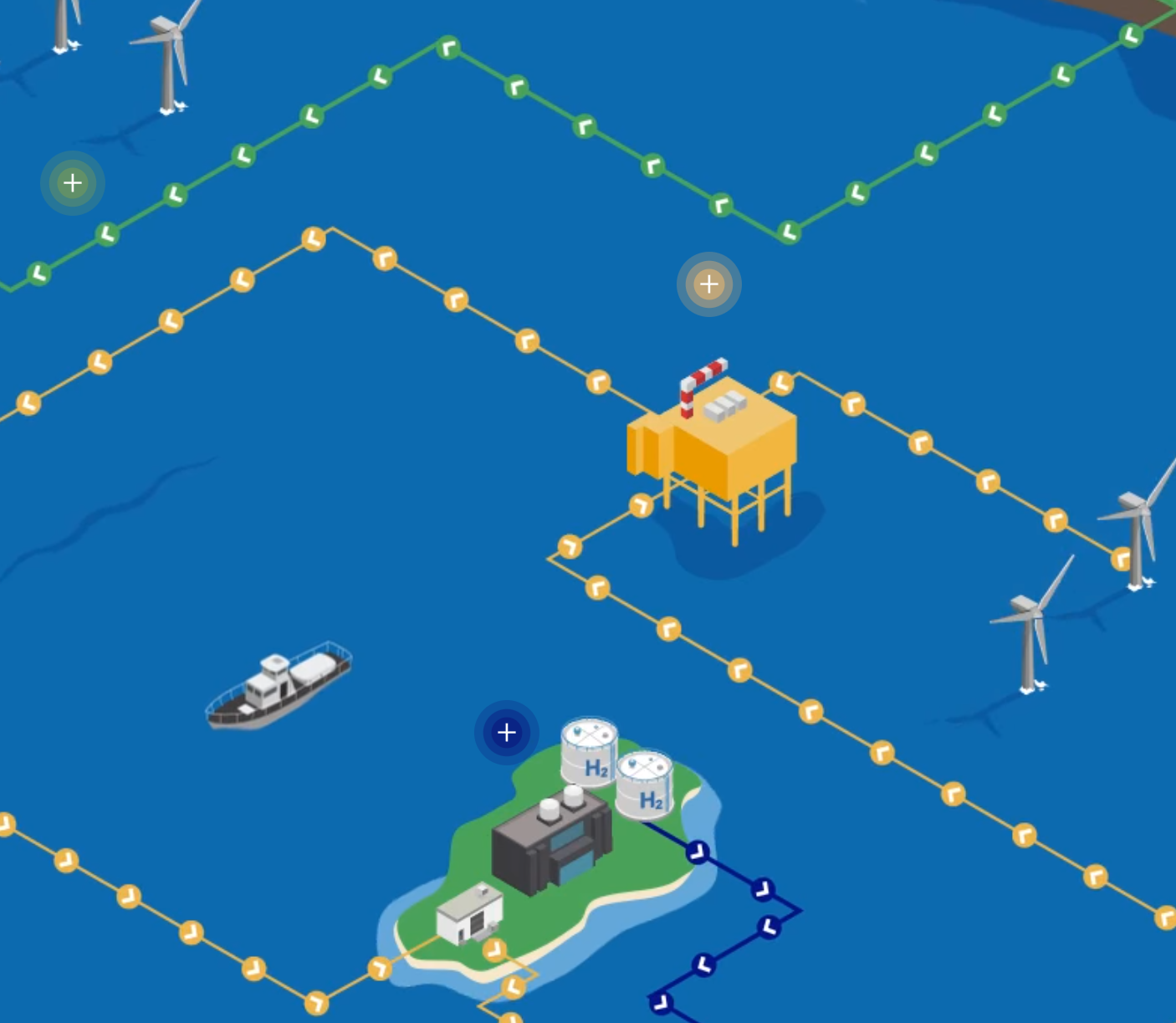
It shows an offshore hydrogen electrolyser.
- You could have an offshore hybrid asset that went between say Bacton in Norfolk and Hamburg via these assets.
- One or more wind farms in UK territorial waters.
- A mammoth offshore electrolyser, with hydrogen storage, possibly in a depleted gas field.
- One or more wind farms in German territorial waters.
Electricity will be able to go three ways; to the UK, to Germany or to the electrolyser.
The Involvement Of German Energy Companies In UK Territorial Waters
Wikipedia lists offshore fifteen wind farms, that have German owners in UK territorial waters, that total 12,960 MW.
This compares with.
- Equinor – 6 wind farms totalling 6466 MW.
- Ørsted – 15 wind farms totalling 9683 MW.
- Scottish Power – 2 wind farms totalling 5,000 MW.
- SSE Renewables – 15 wind farms totalling 15,591 MW.
- Vattenfall – 6 wind farms totalling 4384 MW.
As there is a number of partnerships, these figures only show the relative sizes of the investment by individual companies.
But at nearly 13 GW, the amount of total German investment in UK territorial waters is substantial.
Is This Solely An Anglo-German Club Or Can Others Join?
Consider.
- It seems to me, that because of the LionLink, the Dutch are already involved.
- TenneT is also a large electricity distributor in Germany.
- Countries with substantial shares of the water and winds of the North Sea in addition to Germany, the Netherlands and the UK, include Belgium, Denmark and Norway.
- The UK has interconnectors with Belgium, Denmark, France, Germany, Norway and the Netherlands.
It appears that the world’s largest multi-national power generator is evolving by stealth.
North Sea Wind Power Hub
This concept seems to have developed around 2017, by Danish, Dutch and German interests.
The Wikipedia entry introduces it like this.
North Sea Wind Power Hub is a proposed energy island complex to be built in the middle of the North Sea as part of a European system for sustainable electricity. One or more “Power Link” artificial islands will be created at the northeast end of the Dogger Bank, a relatively shallow area in the North Sea, just outside the continental shelf of the United Kingdom and near the point where the borders between the territorial waters of Netherlands, Germany, and Denmark come together. Dutch, German, and Danish electrical grid operators are cooperating in this project to help develop a cluster of offshore wind parks with a capacity of several gigawatts, with interconnections to the North Sea countries. Undersea cables will make international trade in electricity possible.
Currently, the UK is developing these wind farms on their portion of the Dogger Bank.
- Doggerbank A – 1235 MW – Started producing electricity in 2023.
- Doggerbank B – 1235 MW – Planned commissioning in 2024.
- Doggerbank C – 1218 MW – Planned commissioning in 2025.
- Doggerbank D – 1320 MW – Being planned.
- Doggerbank South – 3000 MW – Being planned.
Note.
- That’s a total of 8 GW.
- A, B, C and D are being developed by a consortium of SSE Renewables and Equinor.
- South is being developed by RWE.
- This web site is for Dogger Bank D.
- This web site is for Dogger Bank South.
This map from the European Atlas of the Seas, shows the various exclusive economic zones (EEZ) in the North Sea.

Note.
- The pinkish zone to the East of the UK, is the UK’s EEZ.
- The light blue zone at the top is Norway’s EEZ.
- The greenish zone in the North-East corner of the map is Denmark’s EEZ.
- The light blue zone below Denmark’s EEZ is Germany’s EEZ.
- Then we have the EEZs for The Netherlands, Belgium and France.
The Dogger Bank is situated where the British, Dutch, German and Norwegian EEZs meet.
All five Dogger Bank wind farms are in British waters.
The Wikipedia entry for the Dogger Bank says this about its size.
The bank extends over about 17,600 square kilometres (6,800 sq mi), and is about 260 by 100 kilometres (160 by 60 mi) in extent. The water depth ranges from 15 to 36 metres (50 to 120 ft), about 20 metres (65 ft) shallower than the surrounding sea.
This probably makes it easy to accommodate a large fixed-foundation wind farm.
Overlaying the map in the Wikipedia entry, with the EEZ map, I’m fairly sure that the northeast end of the Dogger Bank is close to where the EEZs meet.
Progress On The North Sea Wind Power Hub
The North Sea Wind Power Hub has a web site, but it seems to be more about thinking than doing.
It seems to have been hijacked by that august body; The Institute of Meetings Engineers.
This page on the web site, which is entitled Explore The Future Energy Highways, has a simple interactive map.
This shows its vision for 2030.
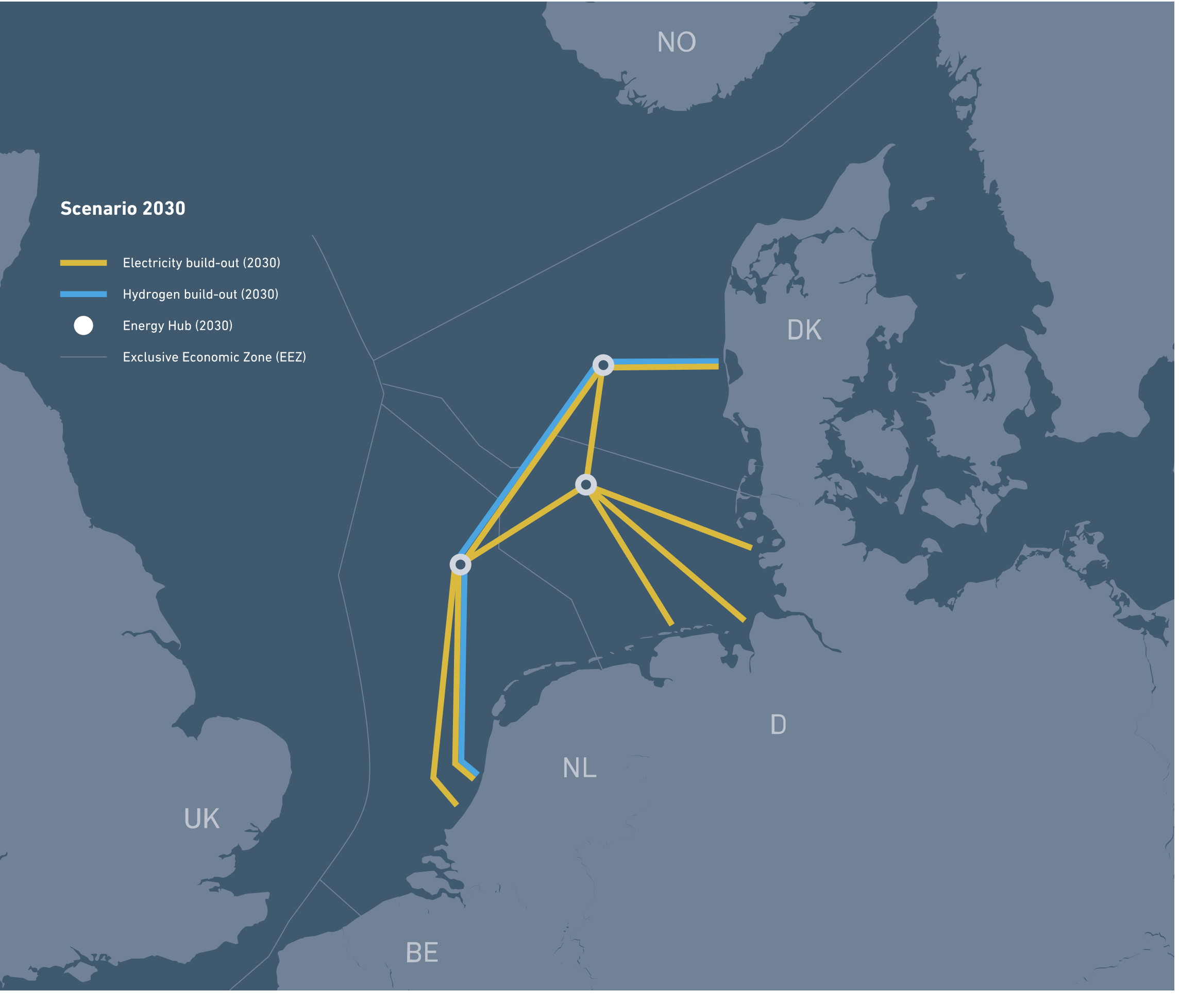
Note.
- Yellow is electricity links to be built before 2030.
- Blue is hydrogen links to be built before 2030.
- Feint lines indicate the EEZ boundaries.
There are two problems with this layout.
- It doesn’t connect to the Dogger Bank area, where the original plan as detailed in Wikipedia talked about “Power Link” artificial islands.
- No hydrogen is delivered direct to Germany.
This shows its vision for 2050.
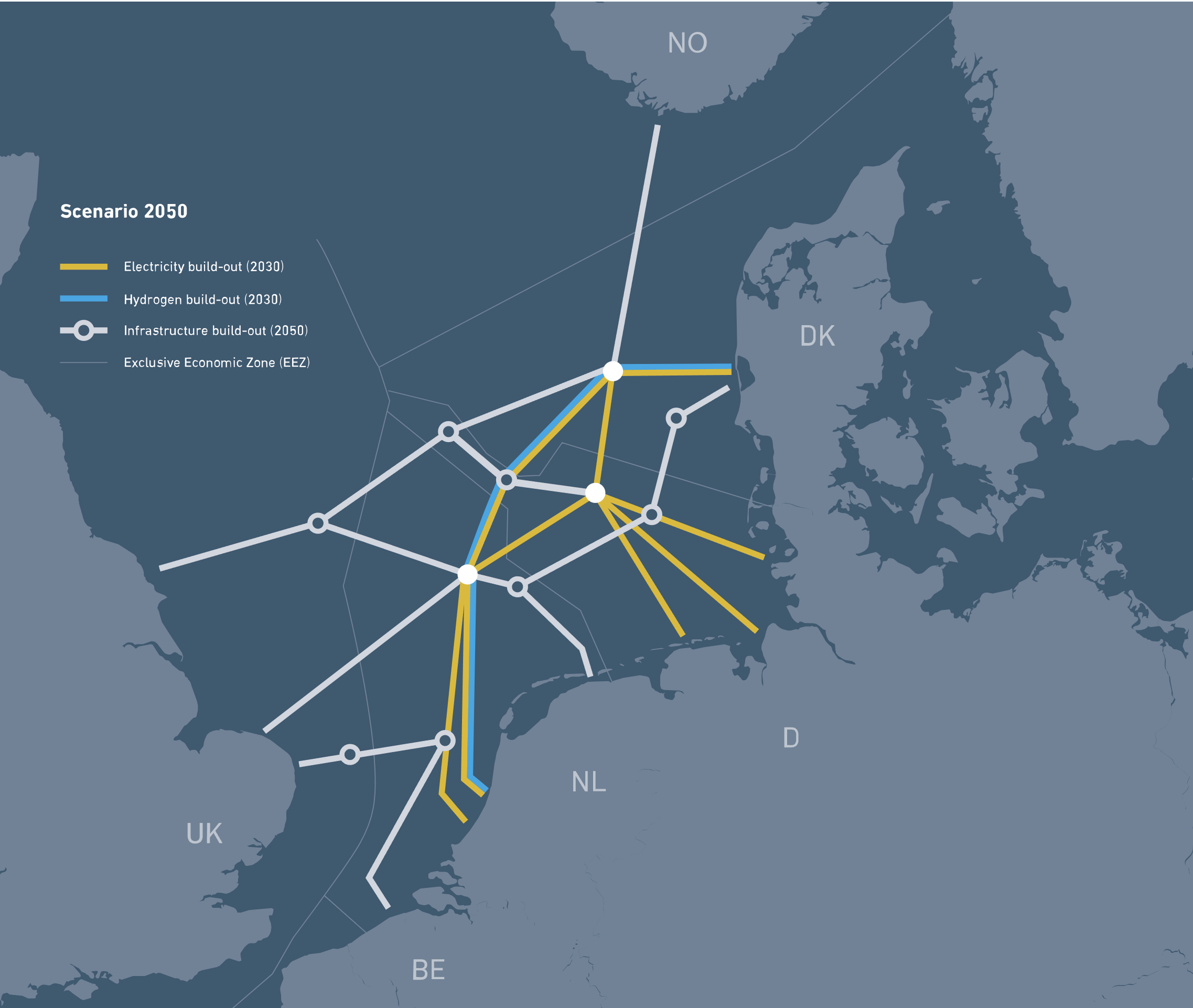
Note.
- Yellow, blue and feint lines are as before.
- White is electricity links to be built before 2050.
- There appears to be a node on the Dogger Bank in the German EEZ. This node could be connected to the “Power Link” artificial islands.
- The Southernmost connection to East Anglia could be Bacton.
- The other Norfolk connection could be where wind farms are already connected.
- The Northern connection could be Teesside, where some of the Dogger Bank wind farms connect.
- If the Northern connection to England is Teesside, then first node, which is in the British EEZ, could be one of the offshore sub-stations in the Dogger Bank wind farm complex.
This all seems a lot more feasible.
A New Offshore Hybrid Asset Between Teesside And Germany
Consider.
- A new offshore sub-station will be needed in the German EEZ to connect the “Power Link” artificial islands to the power network.
- The new offshore sub-station will eventually have three interconnectors to the German coast.
- Only the 1218 MW Dogger Bank C wind farm will be connected to the Teesside onshore substation.
- Germany has a power supply problem, after shutting down nuclear power stations and building more coal-fired power stations.
A new Offshore Hybrid Asset between Teesside and Germany could be created by building the following.
- A the new offshore sub-station in the German EEZ to connect the “Power Link” artificial islands to the power network.
- An interconnector between a sub-station of the Dogger Bank wind farm complex and the new sub-station
- A second interconnector to connect the new sub-station for the “Power Link” artificial islands to the German electricity grid.
All of the work would be done mainly in the German EEZ, with a small amount in the British EEZ.
Where Does Dogger Bank South Fit In?
Consider.
- Dogger Bank South is planned to be a 3 GW wind farm.
- It will need a 3 GW connection to the onshore electricity grid.
- Creyke Beck substation is the proposed location for the onshore connection.
- It is owned by German electricity company; RWE.
Could it be that some of the electricity produced by Dogger Bank South is going to be sent to Germany or to another node to produce hydrogen?
It certainly illustrates the value of an Offshore Hybrid Asset.
East Midlands Railway To Leeds
This news story from the Department of Transport is entitled Yorkshire And The Humber To Benefit From £19.8 billion Transport Investment.
This is said about Leeds and Sheffield services.
The line between Sheffield and Leeds will be electrified and upgraded, giving passengers a choice of 3 to 4 fast trains an hour, instead of 1, with journey times of 40 minutes. A new mainline station for Rotherham will also be added to the route, which could give the town its first direct service to London since the 1980s, boosting capacity by 300%.
These are my thoughts.
A New Mainline Station For Rotherham
This page on Rotherham Business News, says this about the location of the Rotherham mainline station.
South Yorkshire Mayoral Combined Authority (SYMCA) and Rotherham Council have been developing a scheme to return mainline train services to the borough for the first time since the 1980s. A site at Parkgate is the frontrunner for a regeneration project described by experts as “a relatively straightforward scheme for delivery within three to four years.”
Various posts and comments on the Internet back the councils preference for a new station at Rotherham Parkgate.
- It would be at Rotherham Parkgate shopping centre.
- It connects to the tram-trains, which run half-hourly to Cathedral in Sheffield city centre via Rotherham Central.
- There appears to be plenty of space.
This OpenRailwayMap shows the tracks at the current Rotherham Parkgate tram stop.
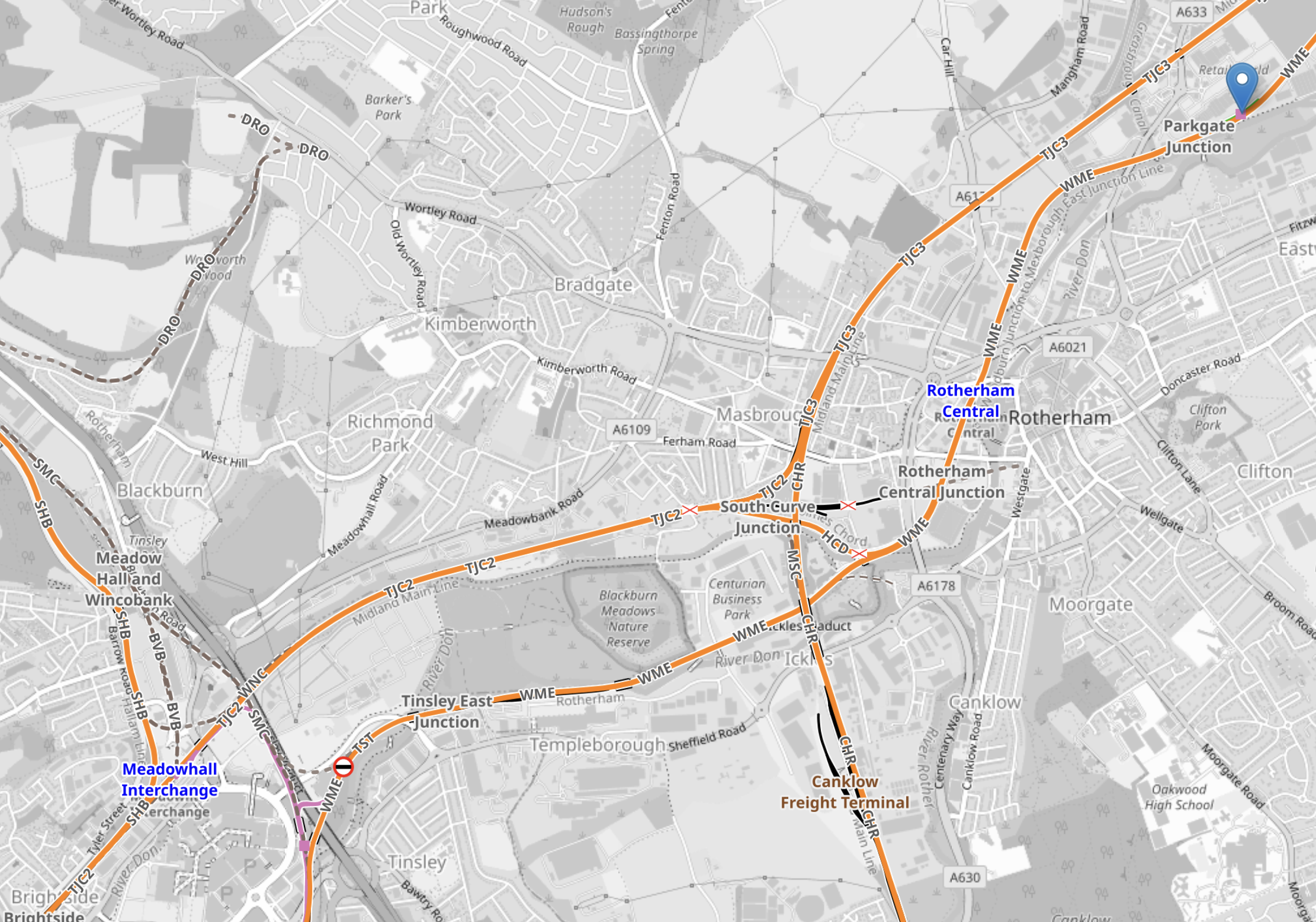
Note.
- The orange lines are the main railway tracks.
- Rotherham Parkgate is indicated by the blue arrow in the North-East corner of the map.
- Trains would run between Sheffield and Rotherham Parkgate via Meadowhall Interchange and Rotherham Central.
- Trains and tram-trains would share tracks through Rotherham Central.
After passing Rotherham Parkgate trains would go to Swinton, and then on to Doncaster or Leeds.
Sheffield And Leeds Via Rotherham Parkgate
Currently, there is an hourly service between Leeds and Sheffield, that goes through the Rotherham Parkgate site.
- It calls at Outwood, Wakefield Westgate, Sandal & Agbrigg, Fitzwilliam, Moorthorpe, Thurnscoe, Goldthorpe, Bolton-upon-Dearne, Swinton, Rotherham Central, Meadowhall.
- The service takes one hour and thirteen minutes, but there are eleven stops.
- As the distance is 38.9 miles, that works out at an average speed of 32 mph.
I suspect this schedule was written for Pacers.
The Department of Transport is aiming for a forty minute journey, which is an average speed of 58.4 mph.
Consider.
- If you look at the maximum speeds of the route from Rotherham Parkgate to Wakefield Westgate, it is 21.8 miles of 100 mph track.
- About twenty miles to the South of Wakefield Westgate is electrified.
- Leeds and Wakefield Westgate is 10.1 miles of 75-85 mph track.
- LNER’s expresses leave Wakefield Westgate, eleven minutes after leaving Leeds.
- I can find a TransPennine Express that takes thirteen minutes to go between Sheffield and Rotherham Parkgate late at night on the way to the depot.
The eleven and thirteen minutes mean that leaves 16 minutes for Rotherham Parkgate to Wakefield Westgate, if Sheffield and Leeds are to be timed at forty minutes, which would be an average speed of 82 mph between Rotherham Parkgate and Wakefield Westgate.
I feel that for a forty minute journey between Leeds and Sheffield, the following conditions would need to be met.
- Very few stops. Perhaps only Meadowhall, Rotherham Parkgate and Wakefield Westgate.
- 100 mph running where possible.
- 100 mph trains
- Electric trains would help, as acceleration is faster. Battery-electric trains would probably be sufficient.
- Some track improvements might help.
But forty minutes would certainly be possible.
At present there are five trains per hour (tph) between Leeds and Sheffield.
- Northern – 2 tph – via Wakefield Kirkgate, Barnsley and Meadowhall – 58 minutes
- Northern – 1 tph – via Outwood, Wakefield Westgate, Sandal & Agbrigg, Fitzwilliam, Moorthorpe, Thurnscoe, Goldthorpe, Bolton-upon-Dearne, Swinton, Rotherham Central and Meadowhall – One hour and 13 minutes
- Northern – 1 tph – via Woodlesford, Castleford, Normanton, Wakefield Kirkgate, Darton, Barnsley, Wombwell, Elsecar, Chapeltown and Meadowhall – One hour and 19 minutes.
- CrossCountry – 1 tph – via Wakefield Westgate – 44 minutes
Note.
- Only the second service will go through Rotherham Parkgate.
- The CrossCountry service takes the more direct route avoiding Rotherham Parkgate.
- All trains go via Meadowhall, although the CrossCountry service doesn’t stop.
- If the CrossCountry service was run by electric trains, it might be able to shave a few minutes as part of the route is electrified.
The CrossCountry service indicates to me, that 40 minutes between Leeds and Sheffield will be possible, but a stop at Meadowhall could be dropped to save time.
Extending East Midlands Railway’s Sheffield Service To Leeds
Consider
- Sheffield station has two tph to London all day.
- The CrossCountry service looks like it could be timed to run between Leeds and Sheffield in forty minutes.
- An East Midlands Railway Class 810 train could probably be timed at 40 minutes between Leeds and Sheffield via Meadowhall, Rotherham Parkgate and Wakefield Westgate.
- The current Northern services could continue to provide connectivity for stations between Leeds and Sheffield.
Extending one tph of East Midlands Railway’s trains to Leeds would probably be sufficient to give two fast trains per hour between Leeds and Sheffield.
- The East Midlands Railway and CrossCountry services could provide a fast service between Leeds and Sheffield in forty minutes.
- If they were electric or battery-electric trains, I suspect that they could call at Meadowhall, Rotherham Parkgate and Wakefield Westgate.
- They could be backed up by the two tph through Barnsley, which could probably be speeded up to around fifty minutes by electrification or using battery-electric trains.
The East Midlands Railway service between London and Leeds would be under three hours.
- Rotherham would get an hourly train to London.
- ,London and Leeds in under three hours, would be slower than Leeds and King’s Cross.
- But the electrification of the Midland Main Line would speed it up a bit.
A fast Leeds and Derby service might compensate for the loss of the Eastern leg of High Speed Two.
Sheffield And Doncaster Via Rotherham Parkgate
At present there are three tph between Sheffield and Doncaster.
- Northern – 1 tph – via Meadowhall, Rotherham Central, Swinton, Mexborough and Conisbrough – 42 minutes
- Northern – 1 tph – via Meadowhall – 28 minutes
- TransPennine Express – 1 tph – via Meadowhall – 27 minutes
Note.
- The first Northern train continues calling at all stations to Adwick.
- The second Northern train continues calling at all stations to Scarborough.
- Both Northern services go through Rotherham Parkgate.
- The TransPennine Express service takes the more direct route avoiding Rotherham Parkgate.
- All trains go via Meadowhall.
These services would give good connectivity for a London train, with a change at Rotherham Parkgate.
Improving Tracks Between Doncaster, Leeds and Sheffield
Consider.
- About 65 % of the main routes between Doncaster, Leeds and Sheffield have a maximum operating speed of 100 mph.
- Doncaster and Leeds is electrified.
- Only 35 miles is without electrification.
- The Midland Main Line is in the process of being electrified to Sheffield.
- There are plans to extend the Sheffield tram-trains to Doncaster Sheffield Airport, that I wrote about in Sheffield Region Transport Plan 2019 – Doncaster Sheffield Airport.
There is also heavyweight electrification infrastructure through Rotherham Central for the Sheffield tram-trains.












As it is only used by the tram-trains it may be only 750 VDC. But it can probably handle 25 KVAC.
- Could these routes be improved to allow faster running?
- Would it be cost-effective to electrify between Sheffield and the East Coast Main Line and the Doncaster and Leeds Line?
- Alternatively battery-electric trains could be run on the routes between Doncaster, Leeds and Sheffield, charging at all three main stations.
Any form of electric train should be faster, as acceleration and deceleration is faster in any electric train, be it powered by electrification, batteries, hydrogen or a hybrid diesel-battery-electric powertrain.
Conclusion
Flotation Energy, Vårgrønn Seal Exclusivity Agreements For 1.9 GW Scottish Floaters
The title of this post, is the same as that of this article on offshoreWIND.biz.
This is the sub-heading.
Vårgrønn, a joint venture between Plenitude (Eni) and HitecVision, and Flotation Energy have signed exclusivity agreements for two floating offshore wind developments under Crown Estate Scotland’s Innovation and Targeted Oil and Gas (INTOG) leasing round.
These two paragraphs give more details.
Once completed, the floating offshore wind farms, with up to a total of 1.9 GW capacity, will provide renewable electricity to oil and gas platforms, aiming to reduce carbon emissions from the assets they supply.
In addition, Green Volt and Cenos projects will also provide electricity to the UK grid.
Note.
I can’t see a loser with these wind farms.
- The wind farms provide zero-carbon electricity to oil and gas platforms.
- These platforms cut their emissions, by not using fossil fuels to generate the electricity they need for their operation.
- Some platforms use gas to generate the electricity, so this gas can be delivered to the shore for the UK gas network.
- Any spare electricity will be available for using in the UK electricity grid.
- Crown Estate Scotland will be paid for the lease for the wind farm.
There will be no carbon emissions from the platforms, but there will be extra onshore emissions from any gas that is currently used to power the platforms, if it is burnt onshore in power stations and industrial processes, or used for heating.
But increasingly gas in the UK will be used in applications, where the carbon emissions can be captured for use or storage.
It will be very interesting to see how as offshore operations are decarbonised our total carbon emissions change.
Passing Brent Cross West Station – 1st November 2023
I took these pictures of the Eastern entrance of the station, as my train passed this morning.






Note.
- There doesn’t seem to be much going on.
- There seem to be very few of the Orange Army around.
- None of the staff I talked to at St. Pancras, knew anything about the station’s opening date.
Perhaps, the station is due to open on Timetable Change Day; 10th December, 2023? It certainly looks, that it might be able to.
First Massive ‘Lego Block’ Beams Lifted For HS2’s Pioneering Thame Valley Viaduct
The title of this post, is the same as that of this press release from High Speed Two.
HS2 has begun lifting the first of 72 huge beams that will support the deck of the Thame Valley Viaduct – the first of its kind in the UK to have all major elements manufactured off site.
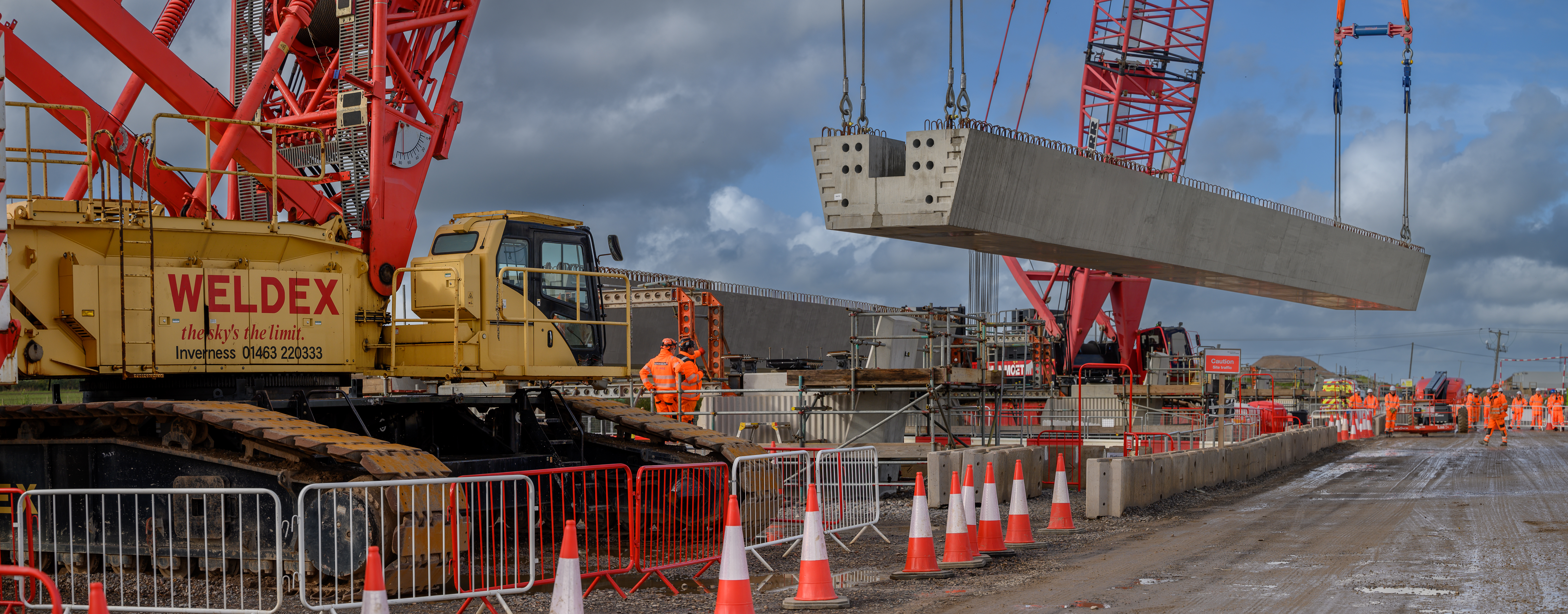
HS2 Bicester viaduct beam placement.
These paragraphs describe the building of the viaduct.
Engineers at the site near Aylesbury used two massive cranes to lift the beams – 25 metres long and weighing 90 tonnes each – into position on top of the viaduct piers, like giant Lego blocks.
Instead of using a more traditional approach, with multiple smaller beams for each span, the design team opted for a simple structural solution with just two larger hollow u-shaped beams per span, which allows for a lighter structure and simpler construction.
The lighter-weight design, inspired by viaducts on the Spanish high speed rail network, also reduces the amount of carbon-intensive concrete and steel in the structure – cutting its carbon footprint by around a third.
It doesn’t say, if they are using low-carbon concrete for the beams, but High Speed Two have used this material before.
Wabtec And Roy Hill Unveil The First FLXdrive Battery Locomotive
The title of this post, is the same as that of this press release from Wabtec.
This is the sub-heading.
World’s first 100% battery-powered, heavy-haul freight locomotive for mainline service
This is the first three paragraphs.
Wabtec and its launch customer, Roy Hill, a leading iron ore miner majority owned by Australia’s most successful private company, Hancock Prospecting, have celebrated the debut of the FLXdrive battery locomotive, the world’s first 100% battery-powered, heavy-haul locomotive for mainline service. The ceremony unveiled the unique, striking pink-colored locomotive at Wabtec’s design and development center in Pennsylvania in front of employees, customer executives, and government and community officials.
“This FLXdrive locomotive represents a major step in the journey to a low-to-zero-emission future in the rail industry,” said Rafael Santana, President & CEO of Wabtec. “The FLXdrive is driven from within by our battery technology and the innovative spirit of our employees. Roy Hill is an ideal customer to partner with given their leadership and excellent operational record.”
Roy Hill’s FLXdrive battery-electric locomotive will feature an energy capacity of 7 megawatt hours (MWh). Based on the route and company’s rail operations, the FLXdrive is anticipated to provide a double-digit percentage reduction in fuel costs and emissions per train. Once Wabtec completes the final battery installations and track testing, the locomotive will begin its 17,000-kilometer (10,500-mile) journey in 2024 for delivery to its new home in the Pilbara region of Western Australia, one of the world’s premier mining precincts.
These further two paragraphs outline the operation of the locomotive.
The FLXdrive locomotive represents not only a first for the Pilbara, but a first for the mining industry. The technological smarts that have gone into the development of the loco makes it well suited for our rail network. By using regenerative braking, it will charge its battery on the 344 kilometer (214 mile) downhill run from our mine to port facility and use that stored energy to return to the mine, starting the cycle all over again. This will not only enable us to realise energy efficiencies but also lower operating costs.”
Today, Roy Hill uses four Wabtec ES44ACi “Evolution Series” diesel-electric locomotives in a consist to pull trains that are typically 2,700 meters (1.6 miles) in length carrying more than 33,000 tonnes of iron ore. The addition of the FLXdrive will form a hybrid locomotive consist with Wabtec diesel-electric locomotives, and recharge during the trip through regenerative braking. The FLXdrive manages the overall train energy flow and distribution through its state-of-the-art energy management software. It is also designed with a unique battery thermal management system using liquid cooling to withstand the Pilbara heat, where temperatures can reach 55°C (130°F).
I have some thoughts.
Could Class 66 Locomotives Be Converted Into Battery-Electric Locomotives?
I answered this question fully in Could Class 66 Locomotives Be Converted Into Battery-Electric Locomotives? a couple of years ago and came to this conclusion.
I am not a lover of the smelly, noisy and polluting diesel Class 66 locomotives, but it does look it could be possible to convert some into battery-electric locomotives.
I wouldn’t be surprised to see Wabtec convert some Class 66 locomotives into battery-electric locomotives.
I also believe, that conversion of Class 66 locomotives to battery-electric operation could be the most affordable way to help decarbonise rail freight.
Note.
- Class 68 locomotives could probably also be converted.
- The battery-electric locomotives would either be used singly or in conjunction with diesel-electric locomotives as Roy Hill propose to do.
After the launch of Wabtec’s first production locomotive, I wouldn’t be surprised to find that some of the UK’s freight operators are talking to Wabtec.
Could A Battery-Electric Class 66 locomotive Work With An Electric Locomotive?
This picture shows, what could be an experiment by Freightliner at Shenfield.
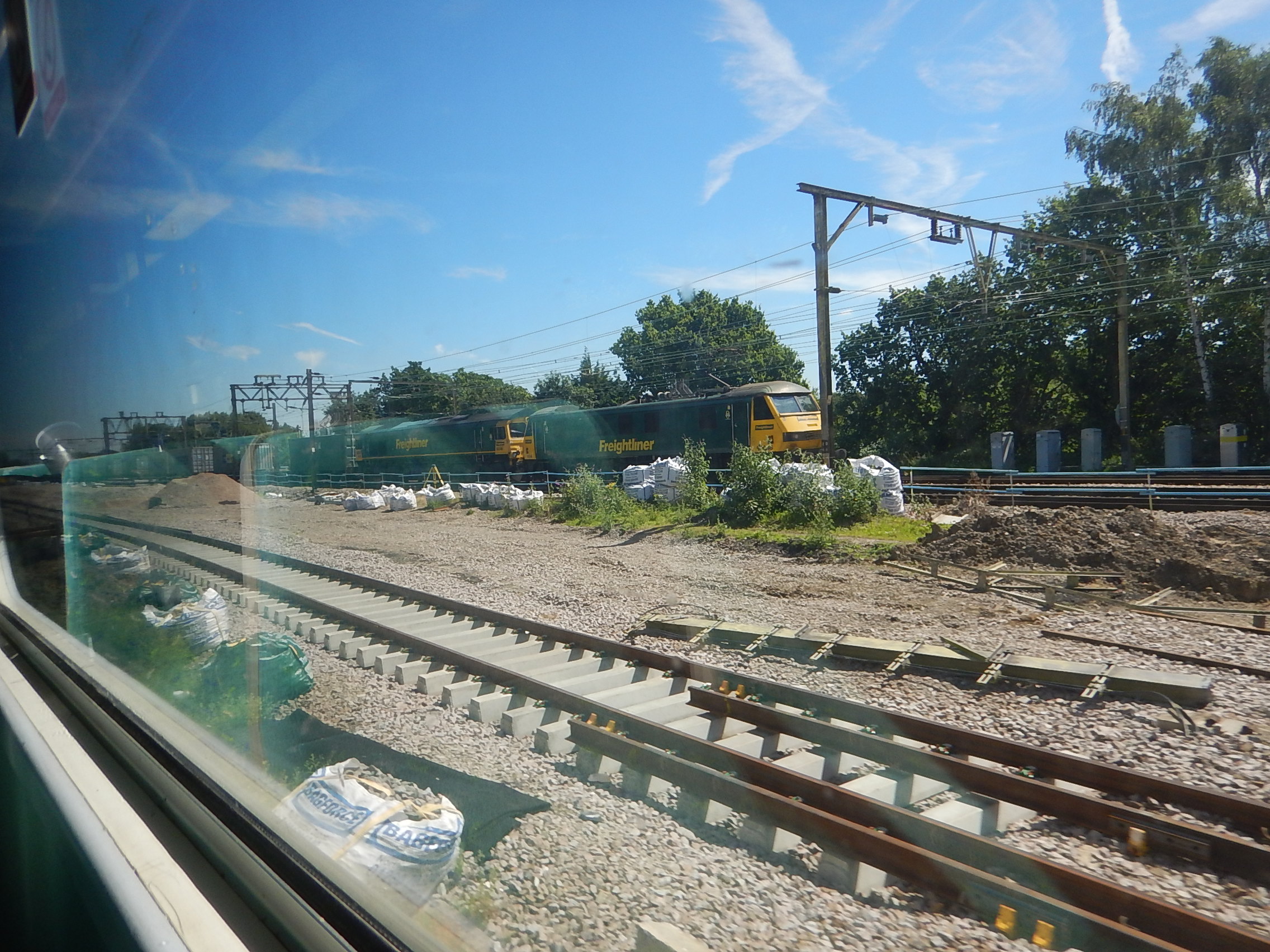
Unfortunately, I didn’t have a chance to ask the driver, if the Class 66 locomotive was running dead-in-train or helping the Class 90 locomotive with a very heavy load.
The picture shows, that the electric and diesel locomotives can work together, at the front of a train.
Consider.
- The battery-electric locomotive would be used, where there is no electrification.
- The battery-electric locomotive could be charged by the electric locomotive or regenerative braking.
It could be an interesting way to handle some freight routes in the UK.
UK Companies Forge O&M Services Alliance
The title of this post, is the same as that of this article on offshoreWIND.biz.
This is the sub-heading.
RES, GEV Wind Power, Outreach Offshore, and Rix Renewables have launched the Offshore Wind O&M Partnership (OWOP) to supply a complete package of long-term operations and maintenance (O&M) services to offshore wind asset owners.
These two paragraphs outline the deal.
The Partnership aims to reduce the complexity and resource intensity associated with the traditional way of subcontracting for multiple O&M services, allowing asset owners to benefit from a much more strategic approach while also ensuring execution to the highest safety standards, according to the press release.
Through just one contract, asset owners will have access to all typical turbine, blade, substation, and balance of plant O&M services as well as workboats and advanced digital tools.
It all sounds like a good deal to me.
 The Anonymous Widower