Qassem Soleimani
Yesterday, The Times had an article, which was entitled Rising stars: Twenty faces to look out for in 2020.
I read the article on my phone and it was a good read.
One of those people mentioned was Qassem Soleimani
He was certainly somebody to look out for and I wondered what he would get up to next!
I don’t have to wonder anymore.
This article on the BBC is entitled Qasem Soleimani: US kills Iran Quds Force leader, Pentagon confirms.
Apparently, the killing was on the direct orders of President Trump.
He obviously hasn’t read about the Greek Monster, where when Heracles cut off one head another appeared.
I certainly fear for the hostages caught up in this Iranian mess!
Trump is staggering blindly towards a disaster!
The Connecting Viaduct At Pomona On The Manchester Metrolink
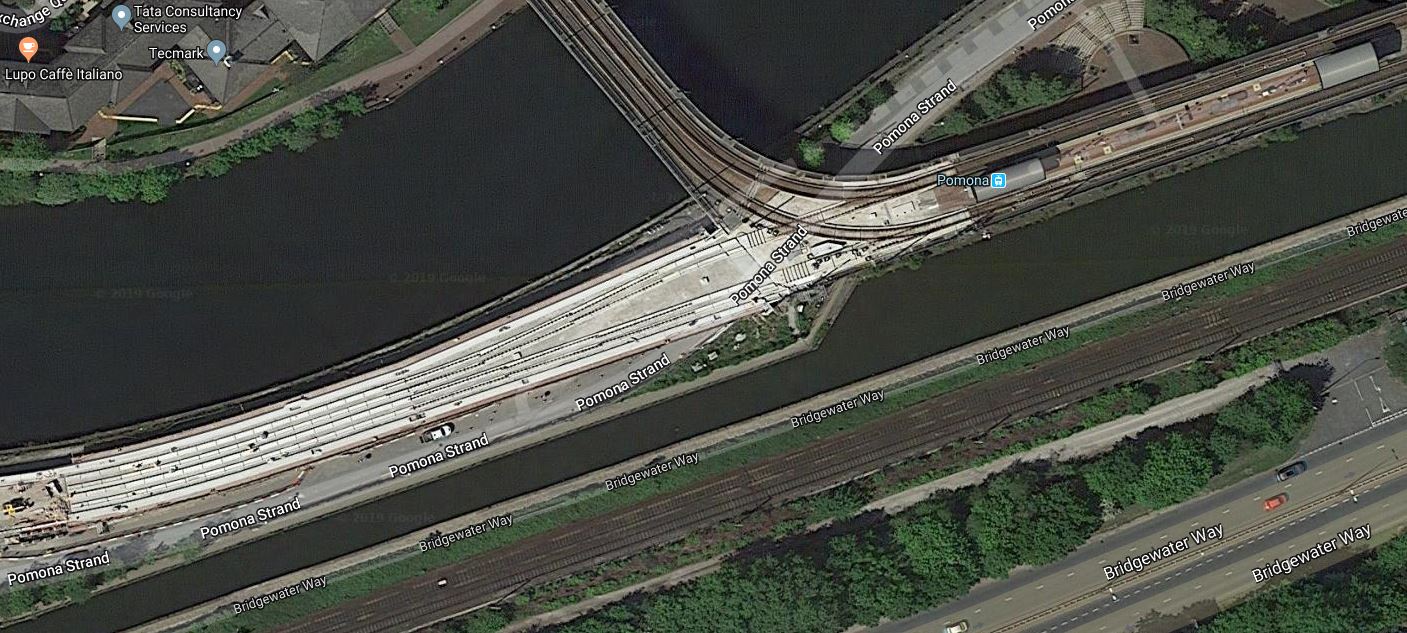
These pictures shown the connecting viaduct at Pomona tram stop on the Manchester Metrolink, where the new Trafford Park Line joins the existing network.


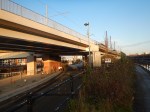

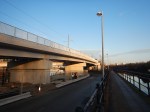
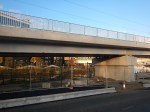

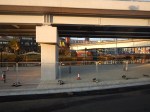
This Google Map shows Pomona tram stop.
Note.
- The pictures were taken from alongside the canal.
- The Trafford Park Line goes off towards the West.
- The Eccles Line crosses the canal and goes North towards MediaCityUK and Eccles.
- Manchester City Centre is to the East.
The trackbed to the West is mainly on level streets, so this viaduct appears to be the only new substantial bridge or viaduct on the line.
The New Third Platform At Crumpsall Tram Stop
These pictures show the new third platform at Crumpsall tram stop on the Bury Line of the Manchester Metrolink.




The new platform will be the Northern terminus of the Trafford Park Line.
This Google Map shows the third platform under construction.
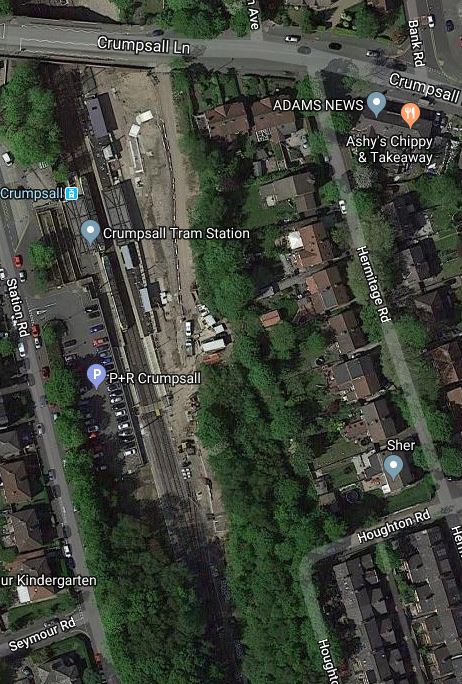
The new platform is on the Eastern side of the tracks of the Bury Line through the station.
AI ‘Outperforms’ Doctors Diagnosing Breast Cancer
The title of this post is the same as that of this article on the BBC.
This is the first two paragraphs.
Artificial intelligence is more accurate than doctors in diagnosing breast cancer from mammograms, a study in the journal Nature suggests.
An international team, including researchers from Google Health and Imperial College London, designed and trained a computer model on X-ray images from nearly 29,000 women.
I have rarely worked with healthcare data, so I can’t comment on the accuracy of this trial.
However, over fifty years ago, I was able to make a lot of progress in the analysis of mass spectrometry data, by observing operators and asking how they identified various chemicals in the scan from the mass spectrometer.
I wouldn’t be surprised to find some detailed observation of the working methods of radiologists, formed the foundation data for this research.
The research seems to have done it well, judging by the published results.
Should we trust ourselves to methods like this in healthcare?
Undoubtedly! Yes!
Many systems like this are starting to be used in the maintenance of complex entities, as diverse as trains, planes, chemical works and advanced automated distribution depots.
But every fault, is always tested by a trained person.
This is a paragraph from the BBC article.
Prof Ara Darzi, report co-author and director of the Cancer Research UK (CRUK) Imperial Centre, told the BBC: “This went far beyond my expectations. It will have a significant impact on improving the quality of reporting, and also free up radiologists to do even more important things.”
I very much feel we will see very much more of this automated testing of the human body! And not just for cancer!
I already know of groups working on automatic diagnosis of arthritis!
Hitachi Trains For Avanti
The title of this post is the same as that of an article in the January 2020 Edition of Modern Railways.
The Bi-Mode Trains
Some more details of the thirteen bi-mode and ten electric Hitachi AT 300 trains are given.
Engine Size and Batteries
This is an extract from the article.
Hitachi told Modern Railways it was unable to confirm the rating of the diesel engines on the bi-modes, but said these would be replaceable by batteries in future if specified.
I do wonder if my speculation in Will Future Hitachi AT-300 Trains Have MTU Hybrid PowerPacks? is possible.
After all, why do all the hard work to develop a hybrid drive system, when your engine supplier has done it for you?
Would Avanti West Coast need a train that will do 125 mph on diesel?
- The North Wales Coast Line has a maximum line speed of just 90 mph.
- Wikipedia is uncertain of the maximum speed of the Chester and Shrewbury Line, but it is extremely unlikely to be more than 80-90 mph.
The only place, they will be able to run at 125 mph or even higher will be on the West Coast Main Line, where they will be running under electric power from the pantograph.
If I were designing a bi-mode for 90 mph on diesel and 125 mph on electric, I would have batteries on the train for the following purposes.
- Handle regenerative braking.
- Provide hotel power in stations or when stationery.
- Provide an acceleration boost, if required, when running on diesel.
- Provide emergency power, if the wires go down in electric mode.
I’m sure MTU could work out a suitable size of diesel engine and batteries in an MTU PowerPack, that would meet the required performance.
Or maybe a smaller diesel could be used. An LNER Class 800 train has 1680 kW of installed power to maintain 125 mph. But the Great Western Railway versions have 2100 kW or twenty-five percent more, as their routes are more challenging with steeper gradients.
For the less challenging routes at a maximum of 90 mph between Crewe, Chester, Shrewsbury and North Wales, I wonder what level of power is needed.
A very rough estimate based on the speed required could put the power requirement as low as 1200-1500 kW.
As the diesel engines are only electrical generators, it would not effect the ability of the train to do 125 mph between Crewe and London.
There looks to be a virtuous circle at work here.
- Lower maximum speed on diesel means smaller diesel engines.
- Smaller diesel engines means lighter diesel engines and less fuel to carry.
- Less weight to accelerate needs less installed power.
- Less power probably means a more affordable train, that uses less diesel.
It looks to me, that Hitachi have designed a train, that will work Avanti West Coast’s routes efficiently.
The Asymmetric Bi-Mode Train
It looks to me that the bi-mode train that Avanti West Coast are buying has very different performance depending on the power source and signalling
- 90 mph or perhaps up to 100 mph on diesel.
- 125 mph on electric power.with current signalling.
- Up to 140 mph on electric power with in-cab digital signalling.
This compares with the current Class 221 trains, which can do 125 mph on all tracks, with a high enough operating speed.
The new trains’ different performance on diesel and electric power means they could be called asymmetric bi-modes.
Surely, creating an asymmetric bi-mode train, with on-board power; battery, diesel or hydrogen, sized to the route, means less weight, greater efficiency, less cost and in the case of diesel, higher carbon efficiency.
Carbon Emissions
Does the improvement in powertrain efficiency with smaller engines running the train at slower speeds help to explain this statement from the Modern Railways article?
Significant emissions reduction are promised from the elimination of diesel operation on electrified sections as currently seen with the Voyagers, with an expected reduction in CO2 emissions across the franchise of around two-thirds.
That is a large reduction, which is why I feel, that efficiency and batteries must play a part.
Battery-Electric Conversion
In my quote earlier from the Modern Railways article, I said this.
These (the diesel engines) would be replaceable by batteries in future if specified.
In Thoughts On The Next Generation Of Hitachi High Speed Trains, I looked at routes that could be run by a battery-electric version of Hitachi AT-300 trains.
I first estimated how far an AT-300 train could go on batteries.
How far will an AT-300 train go on battery power?
- I don’t think it is unreasonable to be able to have 150 kWh of batteries per car, especially if the train only has one diesel engine, rather than the current three in a five-car train.
- I feel with better aerodynamics and other improvements based on experience with the current trains, that an energy consumption of 2.5 kWh per vehicle mile is possible, as compared to the 3.5 kWh per vehicle mile of the current trains.
Doing the calculation gives a range of sixty miles for an AT-300 train with batteries.
As train efficiency improves and batteries are able to store more energy for a given volume, this range can only get better.
I then said this about routes that will be part of Avanti West Coast’s network.
With a range of sixty miles on batteries, the following is possible.
- Chester, Gobowen, Shrewsbury And Wrexham Central stations could be reached on battery power from the nearest electrification.
- Charging would only be needed at Shrewsbury to ensure a return to Crewe.
Gobowen is probably at the limit of battery range, so was it chosen as a destination for this reason.
The original post was based on trains running faster than the 90 mph that is the maximum possible on the lines without electrification, so my sixty mile battery range could be an underestimate.
These distances should be noted.
- Crewe and Chester – 21 miles
- Chester and Shrewsbury – 42 miles
- Chester and Llandudno – 47 miles
- Chester and Holyhead – 84 miles
Could electrification between Crewe and Chester make it possible for Avanti West Coast’s new trains to go all the way between Chester and Holyhead on battery power in a few years?
I feel that trains with a sixty mile battery range would make operations easier for Avanti West Coast.
Eighty miles would almost get them all the way to Holyhead, where they could recharge!
Rlectrification Between Chester And Crewe
I feel that this twenty-odd miles of electrification could be key to enabling battery-electric trains for the routes to the West of Chester to Shrewsbury, Llandudno and Holyhead.
How difficult would it be to electrify between Chester and Crewe?
- It is not a long distance to electrify.
- There doesn’t appear to be difficult viaducts or cuttings.
- It is electrified at Crewe, so power is not a problem.
- There are no intermediate stations.
But there does seem to be a very large number of bridges. I counted forty-four overbridges and six underbridges. At least some of the bridges are new and appear to have been built with the correct clearance.
Perhaps it would be simpler to develop fast charging for the trains and install it at Chester station.
Conclusion On The Bi-Mode Trains
It appears to me that Avanti West Coast, Hitachi and Rock Rail, who are financing the trains have done a very good job in devising the specification for a fleet of trains that will offer a good service and gradually move towards being able to deliver that service in a carbon-free manner.
- The initial bi-mode trains will give a big improvement in performance and reduction in emission on the current Voyagers, as they will be able to make use of the existing electrification between Crewe and London.
- The trains could be designed for 125 mph on electric power and only 90-100 mph on diesel, as no route requires over 100 mph on diesel. This must save operating costs and reduce carbon emissions.
- They could use MTU Hybrid PowerPacks instead of conventional diesel engines to further reduce emissions and save energy
- It also appears that Hitachi might be able to convert the trains to battery operation in a few years.
- The only new infrastructure would be a few charging stations for the batteries and possible electrification between Chester and Crewe.
I don’t think Avanti West Coast’s ambition of a two-thirds reduction in CO2 is unreasonable and feel it could even be exceeded.
Other Routes For Asymetric Bi-Mode Trains
I like the concept of an asymetric bi-mode train, where the train has the following performance.
- Up to 100 mph on battery, diesel or hydrogen.
- Up to 100 mph on electrified slower-speed lines.
- 125 mph on electrified high-speed lines, with current signalling.
- Up to 140 mph on electrified high-speed lines, with in-cab digital signalling.
I am very sure that Hitachi can now tailor an AT-300 train to a particular company’s needs. Certainly, in the case of Avanti West Coast, this seems to have happened, when Avanti West Coast, Hitachi, Network Rail and Rock Rail had some serious negotiation.
LNER At Leeds
As an example consider the rumoured splitting and joining of trains at Leeds to provide direct services between London and Bradford, Harrogate, Huddersfield, Ilkley, Skipton and other places, that I wrote about in Dancing Azumas At Leeds.
In the related post, I gave some possible destinations.
- Bradford – 13 miles – 25 minutes – Electrified
- Harrogate – 18 miles – 30 minutes
- Huddersfield – 17 miles – 35 minutes
- Hull – 20 miles – 60 minutes
- Ilkley – 16 miles – 26 minutes – Electrified
- Skipton – 26 miles – 43 minutes – Electrified
- York – 25 miles – 30 minutes
Note, that the extended services would have the following characteristics.
They would be run by one five-car train.
- Services to Bradford, Ilkley and Skipton would be electric
- Electrification is planned from Leeds to Huddersfield and York, so these services could be electric in a few years.
- All other services would need independent power; battery, diesel or hydrogen to and from Leeds.
- Two trains would join at Leeds and run fast to London on the electrified line.
- Services would probably have a frequency of six trains per day, which works out at a around a train every two hours and makes London and back very possible in a day.
- They would stop at most intermediate stations to boost services to and from Leeds and give a direct service to and from London.
As there are thirty trains per day between London and Leeds in each direction, there are a lot of possible services that could be provided.
Currently, LNER are only serving Harrogate via Leeds.
- LNER are using either a nine-car train or a pair of five-car trains.
- The trains reverse in Platforms 6 or 8 at Leeds, both of which can handle full-length trains.
- LNER allow for a generous time for the reverse, which would allow the required splitting and joining.
- All trains going to Harrogate are Class 800 bi-mode trains.
Note that the Class 800 trains are capable of 125 mph on diesel, whereas the average speed between Harrogate and Leeds is just 35 mph. Obviously, some of this slow speed is due to the route, but surely a train with a maximum speed of 90-100 mph, with an appropriate total amount of diesel power, would be the following.
- Lighter in weight.
- More efficient.
- Emit less pollution.
- Still capable of high speed on electrified lines.
- Bi-mode and electric versions could run in pairs between Leeds and London.
LNER would probably save on track access charges and diesel fuel.
LNER To Other Places
Could LNER split and join in a similar way to other places?
- Doncaster for Hull and Sheffield
- Edinburgh for Aberdeen and Inverness
- Newark for Lincoln and Nottingham
- York for Middlesbrough and Scarborough.
It should be noted that many of the extended routes are quite short, so I suspect some train diagrams will be arranged, so that trains are only filled up with diesel overnight,
GWR
Great Western Railway are another First Group company and I’m sure some of their routes could benefit, from similar planning to that of Avanti West Coast.
Splitting and joining might take place at Reading, Swindon, Bristol and Swansea.
South Western Railway
South Western Railway will need to replace the three-car Class 159 trains to Exeter, that generally work in pairs with a total number of around 400 seats, in the next few years.
These could be replaced with a fleet of third-rail Hitachi trains of appropriate length.
- Seven cars sating 420 passengers?
- They would remove diesel trains from Waterloo station.
- All South Western Railway Trains running between Waterloo and Basingstoke would be 100 mph trains.
I wonder, if in-cab digital signalling on the route, would increase the capacity? It is sorely needed!
Southeastern
Southeastern need bi-mode trains to run the promised service to Hastings.
- Trains would need a third-rail capability.
- Trains need to be capable of 140 mph for High Speed One.
- Trains need to be able to travel the 25 miles between Ashford International and Ore stations.
- Trains would preferably be battery-electric for working into St. Pancras International station.
Would the trains be made up from six twenty-metre cars, like the Class 395 trains?
The Simple All-Electric Train
The Modern Railways article, also says this about the ten all-electric AT-300 trains for Birmingham, Blackpool and Liverpool services.
The electric trains will be fully reliant on the overhead wire, with no diesel auxiliary engines or batteries.
It strikes me as strange, that Hitachi are throwing out one of their design criteria, which is the ability of the train to rescue itself, when the overhead wires fail.
In Do Class 800/801/802 Trains Use Batteries For Regenerative Braking?, I published this extract from this document on the Hitachi Rail web site.
The system can select the appropriate power source from either the main transformer or the GUs. Also, the size and weight of the system were minimized by designing the power supply converter to be able to work with both power sources. To ensure that the Class 800 and 801 are able to adapt to future changes in operating practices, they both have the same traction system and the rolling stock can be operated as either class by simply adding or removing GUs. On the Class 800, which is intended to run on both electrified and non-electrified track, each traction system has its own GU. On the other hand, the Class 801 is designed only for electrified lines and has one or two GUs depending on the length of the trainset (one GU for trainsets of five to nine cars, two GUs for trainsets of 10 to 12 cars). These GUs supply emergency traction power and auxiliary power in the event of a power outage on the catenary, and as an auxiliary power supply on non-electrified lines where the Class 801 is in service and pulled by a locomotive. This allows the Class 801 to operate on lines it would otherwise not be able to use and provides a backup in the event of a catenary power outage or other problem on the ground systems as well as non-electrified routes in loco-hauled mode.
This is a very comprehensive power system, with a backup in case of power or catenary failure.
So why does it look like Hitachi are throwing that capability out on the trains for Avanti West Coast.
There are several possibilities.
- The reliability of the trains and the overhead wire is such, that the ability of a train to rescue itself is not needed.
- The auxiliary generator has never been used for rescuing the train.
- The West Coast Main Line is well-provided with Thunderbird locomotives for rescuing Pendelinos, as these trains have no auxiliary generator or batteries.
- Removal of the excess weight of the auxiliary engine and batteries, enables the Hitachi AT-300 trains to match the performance of the Pendelinos, when they are using tilt.
Obviously, Hitachi have a lot of train performance statistics, from the what must be around a hundred trains in service.
It looks like Hitachi are creating a lightweight all-electric train, that has the performance or better of a Pendelino, that it achieves without using tilt.
- No tilt means less weight and more interior space.
- No auxiliary generator or batteries means less weight.
- Wikipedia indicates, that Hitachi coaches are around 41 tonnes and Pendelino coaches are perhaps up to ten tonnes heavier.
- Less weight means fast acceleration and deceleration.
- Less weight means less electricity generated under regenerative braking.
- Pendelinos use regenerative braking, through the catenary.
- Will the new Hitachi trains do the same instead of the complex system they now use?
If the train fails and needs to be rescued, it uses the same Thunderbird system, that the Pendelinos use when they fail.
Will The New Hitachi Trains Be Less Costly To Run?
These trains will be lighter in weight than the Pendelinos and will not require the track to allow tilting.
Does this mean, that Avanti West Coast will pay lower track access charges for their new trains?
They should also pay less on a particular trip for the electricity, as the lighter trains will need less electricity to accelerate them to line speed.
Are Avanti West Coast Going To Keep The Fleets Apart?
Under a heading of Only South Of Preston, the Modern Railways article says this.
Unlike the current West Coast fleet, the Hitachi trains will not be able to tilt. Bid Director Caroline Donaldson told Modern Railways this will be compensated for by their improved acceleration and deceleration characteristics and that the operator is also working with Network Rail to look at opportunities to improve the linespeed for non-tilting trains.
The routes on which the Hitachi trains will operate have been chosen with the lack of tilt capability in mind, with this having the greatest impact north of Preston, where only Class 390 Pendelinos, which continue to make use of their tilting capability will be used.
Avanti West Coast have said that the Hitachi trains will run from London to Birmingham, Blackpool and Liverpool.
All of these places are on fully-electrified branches running West from the West Coast Main Line, so it looks like there will be separation.
Will The New Hitachi Trains Be Faster To Birmingham, Blackpool And Liverpool?
Using data from Real Time Trains, I find the following data about the current services.
- Birmingham and Coventry is 19 miles and takes 20 minutes at an average speed of 57 mph
- Blackpool and Preston is 16.5 miles and takes 21 minutes at an average speed of 47 mph
- Liverpool and Runcorn is 3.15 miles and takes 15 minutes at an average speed of 52 mph
All the final legs when approaching the terminus seem to be at similar speeds, so I doubt there are much savings to be made away from the West Coast Main Line.
Most savings will be on the West Coast Main Line, where hopefully modern in-cab digital signalling will allow faster running at up to the design speed of both the Hitachi and Pendelino trains of 140 mph.
As an illustration of what might be possible, London to Liverpool takes two hours and thirteen minutes.
The distance is 203 miles, which means that including stops the average speed is 91.6 mph.
If the average speed could be raised to 100 mph, this would mean a journey time of two hours and two minutes.
As much of the journey between London and Liverpool is spent at 125 mph, which is the limit set by the signalling, raising that to 135 mph could bring substantial benefits.
To achieve the journey in two hours would require an overall average speed of 101.5 mph.
As the proportion of track on which faster speeds, than the current 125 mph increase over the next few years, I can see Hitachi’s lightweight all-electric expresses breaking the two hour barrier between London and Liverpool.
What About The Pendelinos And Digital Signalling?
The January 2020 Edition of Modern Railways also has an article entitled Pendolino Refurb Planned.
These improvements are mentioned.
- Better standard class seats! (Hallelujah!)
- Refreshed First Class.
- Revamped shop.
Nothing is mentioned about any preparation for the installation of the equipment to enable faster running using digital in-cab signalling, when it is installed on the West Coast Main Line.
Surely, the trains will be updated to be ready to use digital signalling, as soon as they can.
Just as the new Hitachi trains will be able to take advantage of the digital signalling, when it is installed, the Pendellinos will be able to as well.
Looking at London and Glasgow, the distance is 400 miles and it takes four hours and thirty minutes.
This is an average speed of 89 mph, which compares well with the 91.6 mph between London and Liverpool.
Raise the average speed to 100 mph with the installation of digital in-cab signalling on the route, that will allow running at over 125 mph for long sections and the journey time will be around four hours.
This is a table of average speeds and journey times.
- 100 mph – four hours
- 105 mph – three hours and forty-eight minutes
- 110 mph – three hours and thirty-eight minutes
- 115 mph – three hours and twenty-eight minutes
- 120 mph – three hours and twenty minutes
- 125 mph – three hours and twelve minutes
- 130 mph – three hours and four minutes
I think that I’m still young enough at 72 to be able to see Pendelinos running regularly between London and Glasgow in three hours twenty minutes.
The paragraph is from the Wikipedia entry for the Advanced Passenger Train.
The APT is acknowledged as a milestone in the development of the current generation of tilting high speed trains. 25 years later on an upgraded infrastructure the Class 390 Pendolinos now match the APT’s scheduled timings. The London to Glasgow route by APT (1980/81 timetable) was 4hrs 10min, the same time as the fastest Pendolino timing (December 2008 timetable). In 2006, on a one off non-stop run for charity, a Pendolino completed the Glasgow to London journey in 3hrs 55min, whereas the APT completed the opposite London to Glasgow journey in 3hrs 52min in 1984.
I think it’s a case of give the Pendelinos the modern digital in-cab signalling they need and let them see what they can do.
It is also possible to give an estimate for a possible time to and from Manchester.
An average speed of 120 mph on the route would deliver a time of under one hour and forty minutes.
Is it possible? I suspect someone is working on it!
Conclusion
I certainly think, that Avanti West Coast, Hitachi and Network Rail, have been seriously thinking how to maximise capacity and speed on the West Coast Main Line.
I also think, that they have an ultimate objective to make Avanti West Coast an operator, that only uses diesel fuel in an emergency.
My First Ride In A Nova 3 Train
Nova 3 is the name that TransPennine Express have given to their new fleet of Mark 5A coaches hauled by Class 68 locomotives.

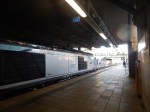
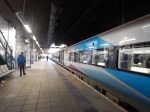
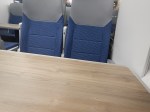
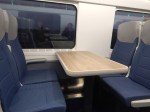
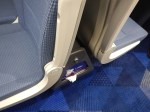
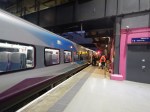
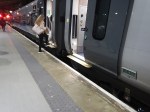
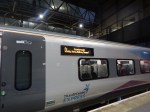
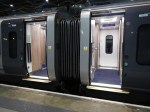
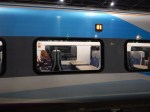
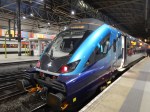
The first few pictures were taken, when I saw a Nova 3 at Manchester Victoria station and the ither during and after a ride between Manchester Victoria and Leeds stations.
These are a few of my thoughts.
Comfort, Noise And Vibration
It was certainly good and up there with the best.
Tables For Four
There were quite a few tables, but not everyone got one.
Ride And Performance
There was nothing wrong with the ride, but we were only doing 75 mph across the Pennines.
Next time, I’m in the North, I’ll take one of these trains up the East Coast Main Line to Scarborough or Redcar to feel them at a faster speed.
Conclusion
I wouldn’t object to having these coaches with a Class 88 electric locomotive running between London and Nowich via Ipswich.
A Toned Down Automatic Leon In Leeds Station
Leon have opened a new outlet in Leeds station.



It’s toned-down with an automatic order facility.
Dancing Azumas At Leeds
This picture shows the 1749 arrival at Leeds from London Kings Cross.
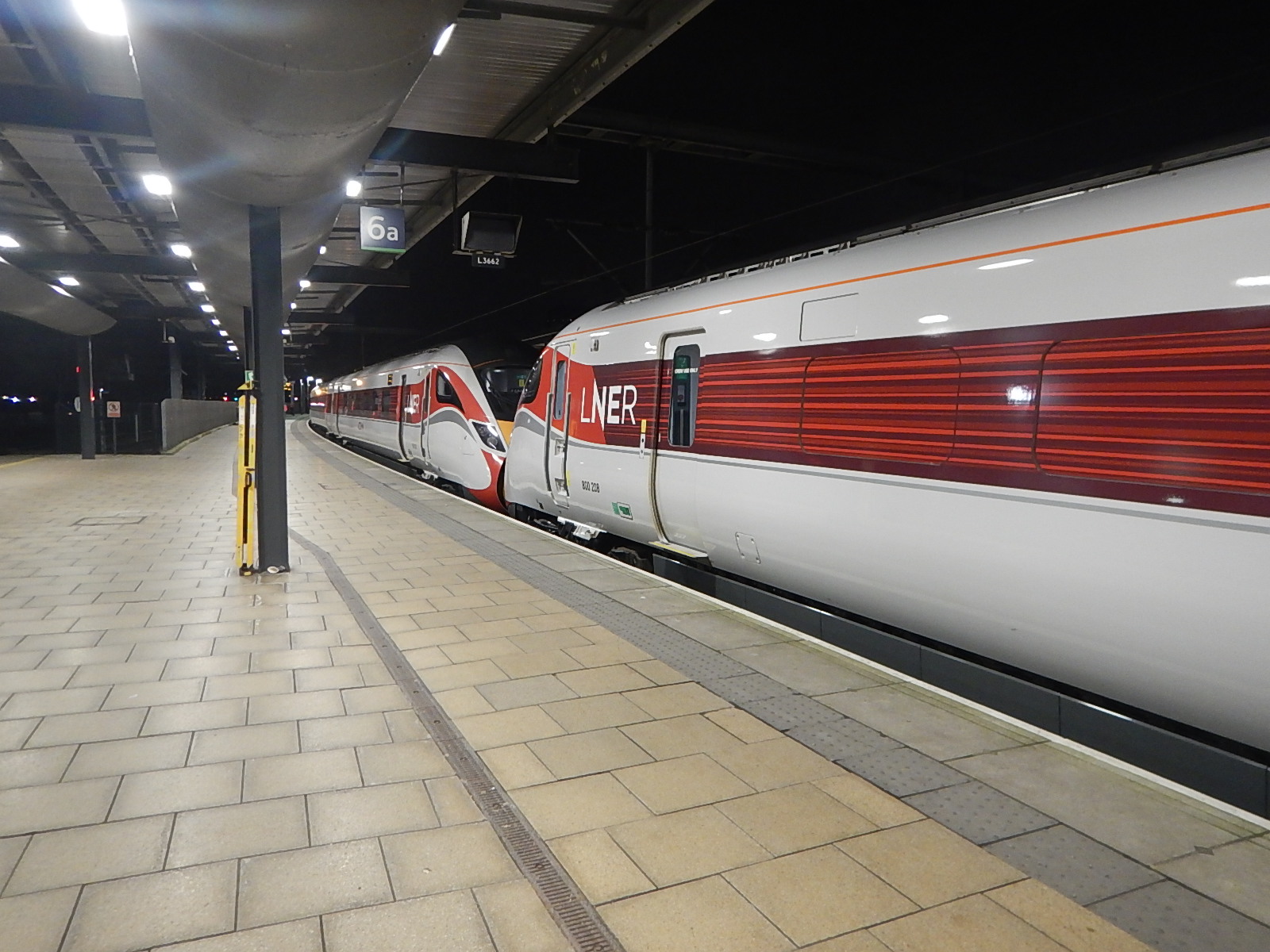
Train details were as follows.
- The train had left Kings Cross at 1533.
- It was formed of two five-car trains working as a pair.
- The train was perhaps a couple of minutes late, arriving in Leeds.
- The train arrives in Platform 6.
- The complete ten-car formation left for Harrogate at 1800.
My train for London, which was another pair of five-car trains arrived in Platform 8 at Leeds at 1806 from Harrogate. The train left on time at 1815.
At present there is no joining and splitting, but if this is used by LNER, the following timings are possible.
- 1533 – Two five-car trains working as a pair leave Kings Cross.
- 1749 – The train arrives in Platform 6 at Leeds and the two trains are uncoupled.
- 1800 – A second driver gets into the rear train and he drives it towards Harrogate.
- 1800 – The front train stays in the platform.
- 1806 – The Harrogate to London service arrives from Harrogate and couples to the train in Platform 6.
- 1815 – The pair of five-car trains leave for London.
I think it is all rather elegant.
- Harrogate gets a five-car Azuma service, which is probably sufficient for the town’s need.
- Five-car trains probably fit all platforms easily on the Harrogate Line, where stops are planned.
- Will platforms at Headingley station be extended, so that London trains can stop during Test matches?
- The inbound and outbound services to and from Harrogate pass each other on the double track.
- The rear train from London reverses and goes to Harrogate..
- The front train just fills up with new passengers and after coupling with the train from Harrogate goes back to London.
- As Class 800 trains are supposed to be able to couple and uncouple in under two minutes, there should be only a small delay.
- LNER are running two trains per hour between London and Leeds, but they could be running four separate services per hour Between London and Yorkshire.
But the biggest advantage is that the front train from London can go somewhere else! Bradford? Huddersfield?
Possible Destinations
These are possible destinations, distances and times.
- Bradford – 13 miles – 25 minutes
- Harrogate – 18 miles – 30 minutes
- Huddersfield – 17 miles – 35 minutes
- Hull – 20 miles – 60 minutes
- Ilkley – 16 miles – 26 minutes
- Middlesbrough – – 76 miles – 84 minutes
- Scarborough – 67 miles – 75 minutes
- Skipton – 26 miles – 43 minutes
- York – 25 miles – 30 minutes
Harrogate would probably pair well with Bradford, Huddersfield, Skipton or York
Note.
- I have added Ilkley although it doesn’t have a service to London.
- Bradford Forster Square and Skipton already have one train per day (tpd) from London via Leeds.
- Routes to Bradford Forster Square, Ilkley and Skipton are electrified.
- Network Rail has plans to electrify the routes to Huddersfield and York.
- There are at least thirty tpd between London and Leeds in both directions run by LNER.
Six tpd, as are now running to Harrogate and Lincoln to all six destinations would need just eighteen tpd to split and join at Leeds.
Stations That Could Be Served
All these stations could be given a direct service to and from London.
- Apperley Bridge – On the route to Bradford Forster Square – This is a new Park-and-Ride station.
- Batley – On the route to Huddersfield
- Ben Rhydding – On the route to Ilkley
- Bingley – On the route to Skipton
- Bradford Forster Square
- Burley-in-Wharfedale – On the route to Ilkley
- Burley Park – On the Harrogate Line
- Church Fenton – On the route to York
- Cononley – On the route to Skipton
- Cottingley – On the route to Huddersfield – Could be replaced by White Rose.
- Crossflats – On the route to Skipton
- Cross Gates – On the route to York
- Deighton– On the route to Huddersfield
- Dewsbury – On the route to Huddersfield
- East Garforth – On the route to York
- Frizinghall On the route to Bradford Forster Square
- Garforth – OLn the route to York
- Guiseley – On the route to Ilkley
- Harrogate – Terminus
- Headingley – On the Harrogate Line
- Hornbeam Park – On the Harrogate Line
- Horsforth – On the Harrogate Line
- Huddersfield – Terminus
- Ilkley – Terminus
- Keithley – On the route to Skipton
- Kirkstall Forge – On the route to Bradford Forster Square – This is a new Park-and-Ride station.
- Menston – On the route to Ilkley
- Micklefield – On the route to York
- Mirfield – On the route to Huddersfield
- Morley – On the route to Huddersfield
- Pannal – On the Harrogate Line
- Ravensthorpe – On the route to Huddersfield
- Saltaire – On the route to Skipton
- Shipley – On the route to Bradford Forster Square
- Skipton – Terminus
- Steeton & Silsden – On the route to Skipton
- Weeton – On The Harrogate Line
- York – Terminus
I have included every station, which the LNER trains pass, in this list.
But why not?
- These modern trains can make a station stop much quicker than older trains.
- They would improve the local service to Leeds.
- Some stations might be too small for five-car Azumas, that are 130 metres long.
- No electrification would be needed, but it could be added.
Leeds could become an even more important rail hub for North Yorkshire.
Azumas Now Have A Virtuous Sister
As I arrived in Kings Cross tonight from Leeds, one of Hull Trains’s new Paragons was in the next platform to the LNER Azuma, that I arrived in.
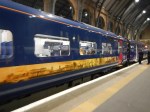

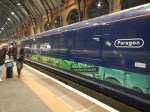
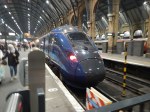
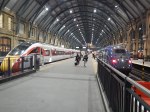
The Azuma is a Class 800 train and the Paragon is a Class 802 train.
I wouldn’t be surprised to see a strong commercial battle, between the two train companies on the route between London and Hull
- Both companies are running new, modern trains.
- At present LNER run just one train per day to and from Hull, with Hull trains running around half-a-dozen trains per day.
- Hull Trains are the only company that runs on Sunday to Hull.
- It should be noted that the Hitachi trains seem to be fairly agile and I wouldn’t be surprised that they could reach Scarborough via Beverley, Driffield and Bridlington.
I don’t think passengers to and from East Yorkshire will be losing out!
The Proposed Development Under Cavendish Square
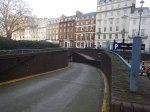
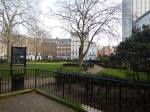
These pictures show Cavendish Square.










Note
- Underneath the square is a very expensive car park
- Harley Street, with its medical connections, lies at one cornet.
- John Lewis sits on another corner.
It is a very pleasant place to sit and have lunch on a sunny day.
This article on IanVisits is entitled A Shopping Centre Under Cavendish Square?.
Ian details how, plans are emerging to turn the Cavendish Square car park into a shopping centre and medical complex, spread over four floors under a re landscaped Cavendish Square.
Ian also discloses how the square was used as an access point to build the Victoria Line in the 1960s.
This development could change the area in several ways.
- Cavendish Square could become an even better landscaped garden.
- The medical complex would be a much-needed modern extension to Harley Street.
- Could the development be used to create the much-needed step-free access to Oxford Circus station?
- Would upmarket shoppers be drawn to the development?
- Could the square become electric vehicles only?
I very much think this development could be a valuable addition to the area.
 The Anonymous Widower