How Would Opening Crossrail Affect The Covids In London?
There seems to be very little on the Internet about this, that I can find, Partly because if you search for Crossrail and Covid-19 you get lots of articles about how the virus is delaying construction.
These are a few of my thoughts.
The Class 345 Trains
Crossrail’s Class 345 trains are 205 metres long and can hold 1500 passengers.
- The passenger density is 7.3 passengers per metre, but the trains have three doors per car, as opposed to others like the Class 700 trains, which have a similar passenger density and only two doors.
- Would the space and the wide doors, make social-distancing easier at all times?
- I’ve ridden these trains several times during the pandemic and their full air-conditioning for the tunnels, would surely be ideal to help keep the trains free of the virus, by changing the air regularly.
- The trains are walk-through, which means you can walk-away from someone who looks dodgy.
There will probably be some better trains to reduce the spreading of the virus, but I doubt there will be that many.
The Stations
I’ve only been in two Crossrail stations.
These are pictures taken in the Woolwich station box.
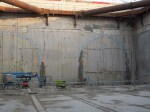
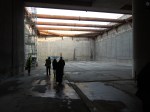





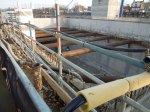
And these pictures were taken inside the Canary Wharf station box
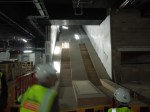
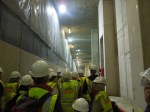


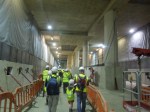


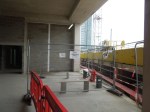
Note.
- I think we can assume that the platforms and associated station tunnels are not small.
- All underground platforms will have platform edge doors.
- The stations will be fully air-conditioned.
- Both picture sets were taken in 2013.
Will passengers be safer and less likely to contract the virus compared to the cramped stations of the Central Line?
Crossrail Will Increase Capacity On London’s Rail System
Crossrail will add nearly twenty per cent of extra capacity to London’s East-West rail network.
That will have two major effects.
- More passengers will use rail transport, rather, than buses or their own cars.
- There will be more space, that will make social-distancing easier on rail journeys.
I can’t see either increasing the spread of the covids.
Will Passengers Who Can, Swap To Crossrail From Other Lines?
Consider.
- The Central Line will have interchanges with Crossrail at Stratford, Tottenham Court Road, Bond Street and Ealing Broadway.
- Stratford and Ealing Broadway currently takes 52 minutes on the Central Line and will take 27 minutes on Crossrail.
- The Hammersmith and City Line will have interchanges with Crossrail at Whitechapel, Liverpool Street and Paddington.
- Whitechapel and Paddington currently takes 40 minutes on the Hammersmith and City Line and will take 13 minutes on Crossrail.
- The Jubilee Line will have interchanges with Crossrail at Canary Wharf, Stratford and Bond Street.
- Stratford and Ealing Broadway currently takes 32 minutes on the Jubilee Line and will take 15 minutes on Crossrail.
Looking at speed alone, there will be good reasons to change to Crossrail for many.
But there will also be journeys that currently require a change will be direct because of Crossrail.
- Slough and Liverpool Street or Canary Wharf
- Woolwich and Heathrow
- Gidea Park and Paddington,
And there will be round-the corner journeys with a cross-platform interchange at Whitechapel.
Ilford and Canary Wharf currently takes 33 minutes and will take 17 minutes after Crossrail opens.
I am absolutely sure, that after Crossrail opens, passengers will use the route for a faster journey and one because of more spacious trains and stations, a more socially-distanced one.
An Air-Conditioned Journey
The proportion of time on a typical journey in London, spent in an air-conditioned train or station will increase.
This can only be a good thing for fighting the covids.
Conclusion
It looks to my eye, that Crossrail will not increase the spread of the covids and it could be a powerful weapon to reduce the levels of the virus across London.
I think it should be opened as soon as possible.
Could Crossrail Be Opened In Sections?
Unlike some of London’s Underground lines, which were provided with below-ground turnbacks, there appears to be no turnback on Crossrail between Whitechapel and Paddington.
Compare that with the Piccadilly Line, which has turnbacks at Wood Green and Hyde Park Corner, which are near the end of the central tunnel.
Crossrail does have crossovers at Custom House, Whitechapel and between Farringdon and Tottenham Court Road, so could any of these be used to improvise a turnback.
What effects would there be if say a four trains per hour (tph) preview service were to be run between Abbey Wood and Whitechapel?
- It would allow Crossrail to test systems.
- It would improve connections to Canary Wharf.
- It would give Londoners and others a small cup of much-needed cheer.
I also doubt, it would increase the number of cases of the covids in London, if everybody behaved themselves.
It would need Abbey Wood, Woolwich, Custom House, Canary Wharf and Whitechapel stations to be certified safe to open.
- Abbey Wood station is already open for National Rail services and could surely be easy to finish and certify.
- Woolwich, Custom House and Canary Wharf are more or less independent buildings and again should be easy to open.
- Only Whitechapel looks difficult with a lot of work to do.
Perhaps the preview service should terminate at Custom House? But that doesn’t include the important Canary Wharf!
- Could trains just pass through Whitechapel station and still use the turnback? The platform edge doors would ensure safety.
- Could trains even use an improvised turnback on the Western side of Farringdon, where there is a crossover?
- As stations at Liverpool Street and Farringdon became available, they could be added to the route.
I’m sure that there’s a solution in there, that could allow Crossrail to open gradually, rather than as a big bang.
I hope Crossrail are looking at it, as the design and architecture of this railway could be a weapon in the fight against covids.
Hull Trains Seat Allocation System
When I went to Hull recently, I used Hull Trains.
These pictures show the train as I boarded at London Kings Cross.

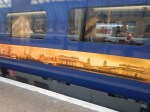
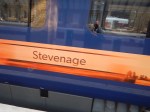
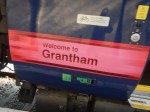

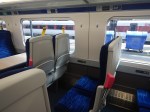
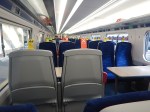
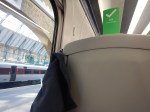
When I got my ticket out of the machine, I was very surprised to see the phrase No Specified Seat on the ticket.
I queried it with one of the LNER staff and they said, it will be alright and anyway, it is nothing to do with them.
When I got to the gate, I asked the guy from Hull Trains and he said, you’ll see when you get inside and something like. “Sit in any seat with a green flag!”
You can see the coloured flags on the seats in the pictures. The different colours mean.
- Green – For single travellers
- Red – Do not sit here
- Yellow – For two or more travelling together.
So I choose a window seat with a green flag on it.
Did it work?
- There were no families, but several pairs of travellers and I suspect about sixty percent of the seats were taken.
- Everybody was socially distanced and either had a spare seat or someone they knew next to them.
- At one table, I could see four guys all sitting together,
- The system deals with no-shows and leaves their seat for someone else.
Until proven otherwise, I think it worked well.
- I didn’t get allocated a seat, but I’m certain the system would work well if say some seats had been allocated by the booking computer.
- Seats could also be indicated by coloured lights.
- But as Hull Trains had only just restarted after the attack of the covids.
I had to have a quiet smile though.
My father was a master at designing production control systems and coloured cards were one of the tools in his box.
Often cards for his big customers like Belling, Dunlop and Enfield Rolling Mills were intricate and numbered creations, all produced with letterpress and his two faithful Original Heidelberg Plattern Presses.
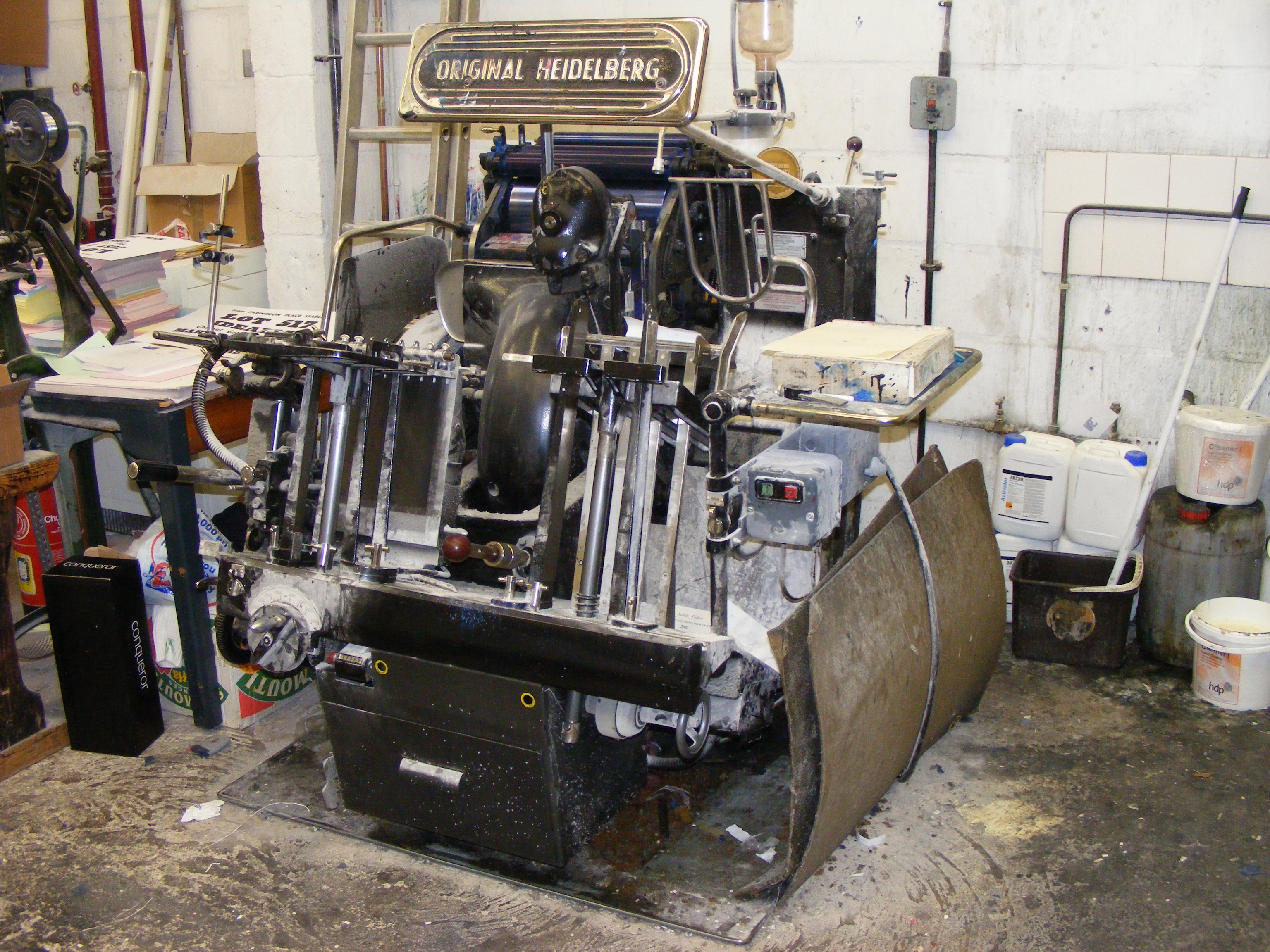
Original Heidelberg
With the right gadgets in the chase, that held the type, they could number, score and perforate. You couldn’t do those operations with litho, in the 1950s and 1960s.
I hadn’t realised much about this side of my father’s work, until I met Ray Askew, whilst walking our basset hound. He had a basset too and on talking, it turned out he had worked for Enfield Rolling Mills and it was part of his job to source production control documents and he used to design them with my father, whose firm, then printed them!
Could This System Be Used On East Coast Trains?
East Coast Trains are another First Group company like Hull Trains, who will be running services between London and Edinburgh from some time next year.
I can’t see why they could use a developed version of this system, with tri-colour lights on the seats.
East Coast Trains will be aiming for a four hour service and I suspect they’d like people to just turn up and go, so quick ticketing would be needed. A simple app, where you said how many tickets and what train and then you just turned up in time for your train would do.
Ulstein Designs Hydrogen Powered Wind Turbine Installation Vessel
The title of this post, is the same as that of this article on 4c Offshore.
This is the introductory paragraphs.
Ulstein has revealed its second hydrogen hybrid design for the offshore wind industry, the ULSTEIN J102 zero emission wind turbine installation vessel (WTIV). The shipbuilders claim the vessel can operate 75% of the time in zero emission mode. Using readily available technology, the additional cost is limited to less than 5% of the total CAPEX.
Most new jack-up designs are featuring a battery hybrid system in addition to diesel gen sets, with a future option for hydrogen powered fuel cell system. Ulstein stated that the down side of a high-power battery energy storage system (BESS) is its heavy weight and cost.
The article shows how hydrogen could be the power source for large specialist equipment.
Ulstein are a Norwegian company.
Daimler Trucks Presents Technology Strategy For Electrification – World Premiere Of Mercedes-Benz Fuel-Cell Concept Truck
This title of this post, is the same as that of this article on the Daimler Global Media Site.
These are the opening bullet points.
- Mercedes-Benz GenH2 Truck, a fuel-cell truck with a range of up to 1,000 kilometers and more for flexible and demanding long-haul transport – customer trials in 2023, start of series production in second half of this decade.
- Mercedes-Benz eActros LongHaul, a battery-electric truck with a range of about 500 kilometers for energy-efficient transport on plannable long-haul routes – projected to be ready for series production in 2024.
- Mercedes-Benz eActros, a battery-electric truck with a range of well over 200 kilometers for heavy urban distribution to go into series production in 2021.
- ePowertrain global platform architecture offers synergies and economies of scale.
Judging by the spelling, this media copy, is from the bad spellers of Trumpland.
It looks to be a case of Daimler have called up the heavy brigade.
The best way to learn more is to search for “Mercedes-Benz GenH2 Truck”
There’s some good YouTube videos.
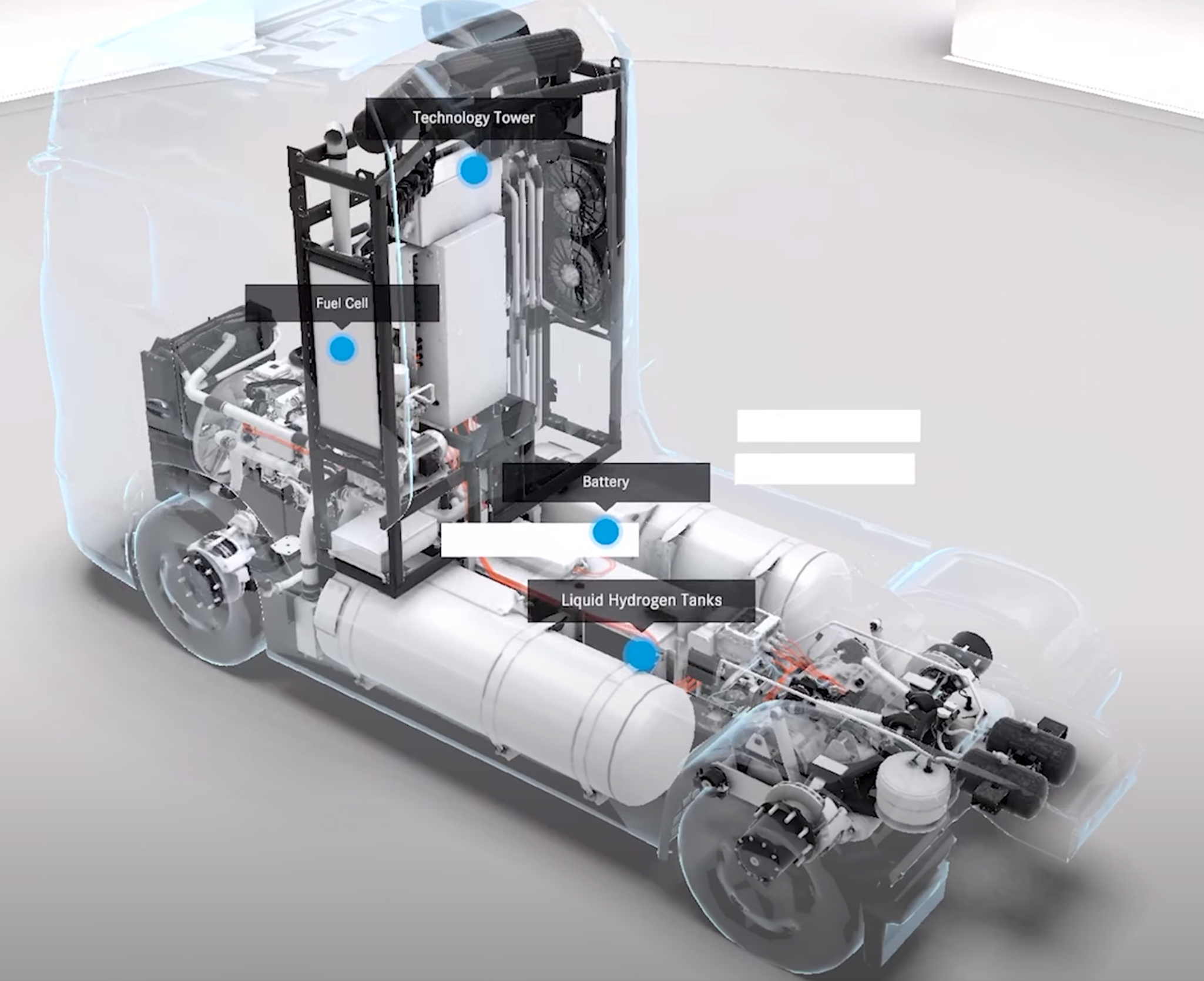
From this video, I ascertained the following.
- The truck has a stainless steel tank for liquid hydrogen on either side between the front and rear wheels.
- There are two 150 kW fuel cells, which appear to be of an inhouse Mercedes design.
- There is a 70 kWh battery between the two liquid hydrogen tanks low down in the middle of the truck.
- The battery can supply 400 kW, if needed.
This screen capture shows a cutaway from the video.
I am impressed by the design.
- Everything is fitted neatly in the small space.
- The design doesn’t seem to intrude into the load space, so I would assume, it would work with all existing trailers and bodies.
- The battery position must help stability and driveability.
- It looks like a design, that would be friendly to cyclists, as the hydrogen tanks act as a round safety barrier.
I shall look at the operation.
Consider.
- The current Actros trucks have engines with a power of up to 500 HP or 400 kW.
- The 70 kWh battery can provide 400 kW for about 10 minutes.
- Regenerative braking to the battery must be possible.
- There’s probably a well-programmed computer between the driver and the electric transmission.
I wouldn’t be surprised that the truck is more of a battery-hydrogen hybrid, than a pure hydrogen truck.
Suppose, it was hauling a heavy load from Felixstowe to Manchester.
- Will the truck charge the battery before it leaves Felixstowe? It could use the fuel cells or be plugged in to a high-performance charger. 70 kWh, is not the biggest of batteries compared to say those on a train.
- Once on the A45 (Sorry! A14), it would accelerate quickly to the cruising speed, probably using mostly battery power.
- It would then cruise mainly using hydrogen and the fuel cells to the destination. The truck would be optimised for an economic cruise.
- During any deceleration, regenerative braking to the battery would be used.
- Battery power might be called upon on any inclines or after a stop.
Intriguingly, a range of 1000 kilometres or 620 miles would allow many out-and-bank journeys in the UK, France, Germany or Italy to be performed without refuelling.
Leeds, Liverpool, Manchester and Newcastle are all under 300 miles from the Suffolk port.
Conclusion
I used to part-own a company, that financed trucks, moving loads into and out of Felixstowe in the 1980s.
From what I learned then of the heavy truck market, hydrogen-powered heavy trucks are going to be a winner, especially, if most journeys are out-and-back from one end.
Memories Of Althorpe
On The way to Cleethorpes, I passed through Althorpe station.
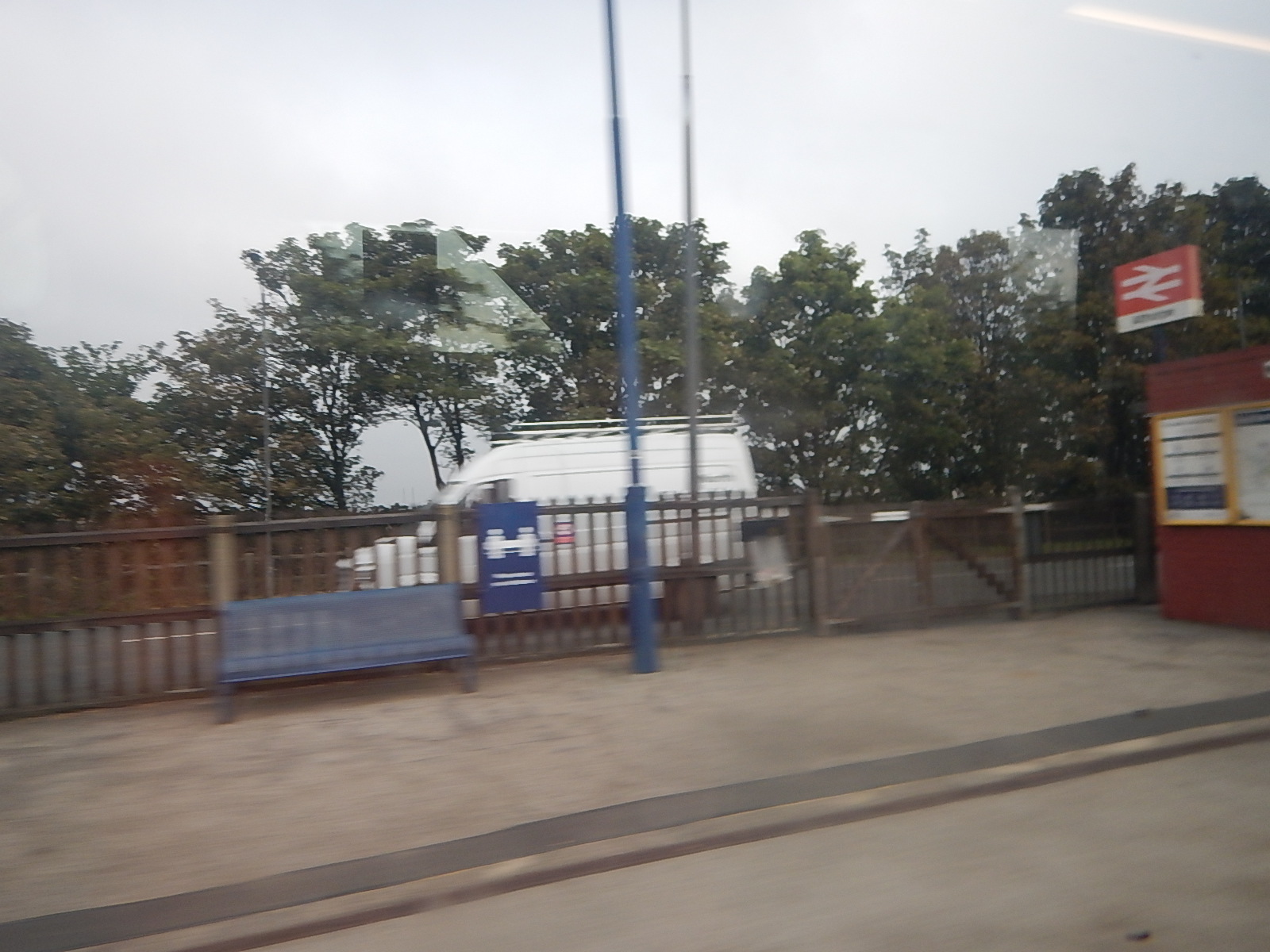
This Google Map shows the area.
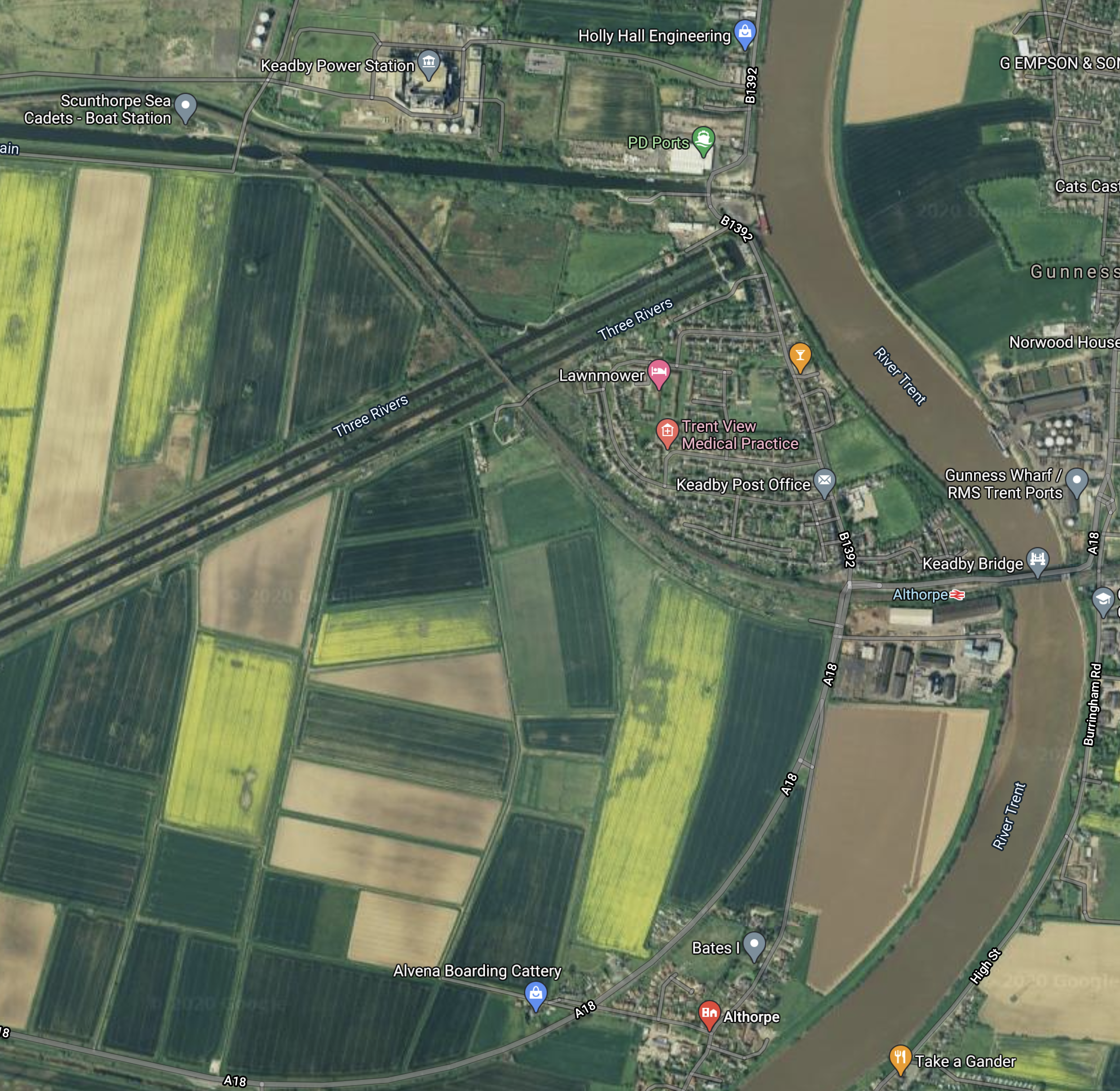
Note.
- The River Trent flowing South to North.
- Keadby power station at the top of the map.
- Althorpe station close to the bridge over the river.
- The village of Althorpe is at the South of the map by the river.
C and myself had friends, who farmed much of the land in the curve of river, South of the railway.
These are a few tales, some might enjoy.
Althorpe And Princess Diana’s Grave
I was once told, that regularly tourists would appear looking for the last resting place of Princess Diana.
Sat-navs may be a wonderful gadget for some, but they do lead those with a certain lack of common sense on wild goose chases.
C And The Tug-Boats
C once spent a night in their farmhouse, which was by the River Trent.
She didn’t sleep well, as tug-boats pulling barges were constantly going past and sounding their sirens. The river was actually above the house, due to the embankments to stop flooding.
Princess Anne And The Centrefold
Our friends’ daughter was a very good rider in eventing and used to supplement her variable income in the sport with modelling. At one point, I used her for some promotional shots for one of my companies.
Some years ago, she was competing at an event in Yorkshire. Coincidentally, this was just after she had appeared as the centrefold in a well-known men’s magazine.
The event was a bit of a nightmare for her, as paparazzi were following her with open copies of the magazine.
At one point, it all got a bit much, so she decided to sneak back to the calm of her horsebox, by a circuitous route.
As she walked back, she encountered Princess Anne, who was also competing and using the same route to avoid the paparazzi.
They talked about the pressures of the paparazzi, who were being a nuisance, with the Princess saying, she approved of my friends’ daughter’s modelling and hoped it continued, as it had taken the pressure off herself.
Flixborough
My friends’ farm was not far from Flixborough, which is infamous for the Flixborough Disaster in 1974, when a chemical plant exploded and killed 28 people and seriously injured a further 36.
My friends also lost several thousand pigs because of the explosion.
Wikipedia says this about the cause of the explosion.
The disaster involved (and may well have been caused by) a hasty modification. There was no on-site senior manager with mechanical engineering expertise (virtually all the plant management had chemical engineering qualifications); mechanical engineering issues with the modification were overlooked by the managers who approved it, nor was the severity of the potential consequences of its failure appreciated.
At the time, I had just left ICI and I was still in contact with my former colleagues.
One told me, that he had met a Senior ICI Engineer, who had been involved with the enquiry into the disaster.
The plant had been a copy of a Dutch plant, that had been built to metric units, which were converted to Imperial to build the Flixborough plant.
As ICI had used metric units since the mid-1950s, there was considerable alarm in the mind of the Senior Engineer, that when the hasty modification was made, someone got mixed up.
Would the Flixborough disaster have happened, if the plant had been built as a copy of the Dutch plant using metric units?
The Big Metro Fleet Upgrade That Could Make It ‘Easy’ To Finally Extend Train Services To New Areas
The title of this post, is the same as that of this article on the Newcastle Chronicle.
This is the first paragraph.
Every train in Metro’s new fleet will be capable of running via an on-board battery, reducing the chance of major shutdowns and making it much cheaper to extend the network.
The fact that it is technically possible, is not a surprise as Stadler’s Class 777 trains for Merseyrail will be using battery power to extend routes. I would be very surprised if the new Tyne and Wear Metro trains and those for Merseyrail, didn’t have a lot of design in common.
But what is surprising, is that the Tyne and Wear Metro’s whole fleet will be fitted with batteries. This must be the first time in the UK, that a whole fleet of trains has been said to have batteries.
The Merseyrail trains will also have a dual voltage capability and will be able to be modified for running on 25 KVAC overhead electrification, as well as 750 VDC third-rail electrification.
Will the Tyne and Wear trains be able to use 25 KVAC electrification? It could be useful in some places on the network and I’m sure, if there was a financial case for a service using existing 25 KVAC electrification, then some trains would be modified accordingly.
A Quick Comparison
This is a quick comparison between Merseyrail’s Class 777 trains and the Tyne and Wear Metro’s new trains.
- Cars – 777 – 4 – T&W – 5
- Operating Speed – 777 – 75 mph – T&W – 50 mph
- Capacity – 484 – T&W – 600
- Capacity Per Car – 121 – T&W – 125
- In Service – 2022 (?) – T&W – 2024
They are not that different and it looks like the Tyne and Wear trains will be built after the Merseyrail trains.
Battery Running
The article says this about running on battery power.
He said the 16km off-wire running would allow for a new loop extending out from South Hylton, through Washington, connecting back to Pelaw.
He added that it would be “easy” to create new connections between existing Metro lines – potentially allowing for a new route through Silverlink and the Cobalt business park in North Tyneside, or a link-up from South Shields towards Sunderland.
Battery power would also solve the problem of running Metro trains on Network Rail lines, which is currently impossible because they operate at different voltages.
Mr Blagburn said: “You could remove the electrification from the complex parts of the route, say over historic structures or through tunnels.
Note.
- The range of sixteen kilometres or ten miles could be very useful.
- The trains appear to be designed to run on Network Rail tracks, as the current trains already do.
- The current trains use the Karlsruhe model to effectively work as tram-trains on shared tracks.
I actually believe that the new Tyne and Wear trains could be modified to run on both 25 KVAC and 750 VDC overhead electrification, as Stadler’s Class 399 tram-trains do in Sheffield.
Conclusion
These trains are using all Stadler’s experience of trains and tram-trains from all over the world.
- They will normally operate using 750 VDC overhead electrification.
- But Stadler have the technology to enable the trains for 25 KVAC overhead electrification, if required.
- They have a range of ten miles on batteries.
- Are the batteries charged by using the energy created by the regenerative braking?
These are not bog-standard trains!
But then neither are the trains built for Greater Anglia by Stadler!
One Side Of A Man’s Kitchen
I’ve now virtually completed one side of my kitchen.








Note.
- The television is on a 270° swivel so it can be watched from outside, when I’m eating or working.
- The worktop will be extended through to continue over storage cupboards and a small deep-freeze on the other side of the hole in the wall.
- The cooker could be replaced by a small AGA-60 City.
- The shelf above the cooker will be moved up a bit and fitted with lights underneath.
- I think a fold-away stool would be better.
- It is currently planned that there will be a low wooden wall between the two sides, that will be topped by a steel beam, so that hot serving dishes can be placed there.
- The flange of the beam could also be used to store condiments, sauces, oils and other things that might be needed both inside and outside the kitchen.
- I haven’t decided where to put the touch-screen pad computer, so I can display my Serial Cooking pages.
- You’ll notice that there isn’t much electrical equipment. The only equipment, that I use is a Delia’s Little Chopper, which I acquired long before she publicised them, a kettle and a microwave .
- You’ll notice the only gas in the kitchen is in the fire extinguisher.
- Gas incidentally, should be banned from inside the inhabited parts of dwellings on health and safety grounds.
Many of the pictures were taken with me sitting on one of my all purpose stools, that I designed over forty years ago and had made by a furniture maker. Incidentally, four were used as saw horses to support the work-top, whilst it was cut to size.
James Cook Station – The Reinvention Of The Halt
Simple stations or halts, were once very common on UK railways. These pictures show James Cook station in Middlesbrough, which is a new small station, that opened in May 2014.
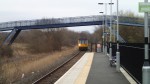



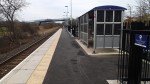


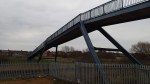








As the trains stopping at the station have conductors to sell tickets, there is no ticket machine, but there is a smart shelter, a help point, a destination board, a step-free bridge and ramps to the single platform.
James Cook station is the first construction in the possible creation of a Tees Valley Metro, which may see other new stations created or old ones reopened.
Surely, some of the ideas used in the design of the single platform James Cook station could be used at several places on the Tees Valley Metro and the wider UK rail network.
Incidentally, is there another station named solely after a person?
Using The Strange Property Of Water To Advantage
Most people, except perhaps those, who live in hot climates, know from their personal experience that ice floats on water. But most people don’t know that water is at its densest at 4°C. So water at this temperature sinks, but it rises at all others.
I once heard somebody use the existence of this property as a reason why God exists. He argued that if it didn’t, then life would have been impossible in water. It was all a bit contrived, but it is still as a strange property.
This morning, I was listening to Wake Up To Money, when a company called SureChill was mentioned. So I looked them up and found that they are using this property to create a new type of refrigerator. This page explains it all. This section describes the solution.
Sure Chill is a brand new kind of cooling system. It doesn’t need a constant power source. In an on-grid situation with intermittent power, it works perfectly well. In an off-grid situation, where a solar panel may be used, a Sure Chill powered refrigerator doesn’t even need a rechargeable battery. It shouldn’t work but it does. And it works beautifully.
Water surrounds a Sure Chill refrigeration compartment. When it has power, the water cools and forms ice above the compartment leaving only water at four degrees cooling the contents. When the power is switched off, the water warms and rises while the ice begins to melt, keeping only four-degree water cooling the contents of the compartment. So it has its own internal and entirely natural energy store that maintains a completely steady temperature. The system can operate like this, without power, for days and weeks.
People think physics is boring. Outside of Metier, I’ve done well in my career and made quite a bit of money by understanding the laws of physics that govern our lives.
My surprise at this idea, is that the technique could have been implemented in a refrigeration system decades ago. Artificial refrigeration was first performed by William Cullen in 1755. My bible; Nelkon amd Parker says that the maximum density of water was first measured by Thomas Charles Hope in 1804.
That is a long time from experimental proof to reality!
Who’d Be A Clothes Retailer?
According to the Daily Mail, winter clothes aren’t selling as it’s still warm. Here’s the first paragraph.
Indian summer hits M&S and Next clothes sales: Stores unable to shift winter boots and coats because of warm October temperatures.
It doesn’t bother me, as I wear almost the same clothes all year round. I’m always in a short-sleeved shirt, with or without a cashmere jumper from M & S. I do swap cords for chinos if it gets too hot, but I rarely wear shorts. And for nearly eight months now, I’ve worn the same lightweight bomber jacket, as it keeps me dry and has the right format of pockets.
If I’m going somewhere smart, I might wear a 25-year-old sports jacket, which is so unstylish that it gets admired all the time. I wore it at CERN.
I am finding that I’m spending less and less money on clothes. I did think that I might get some new expensive Daks cords for the winter, but when I went to try them on, I found that trendy designers had ruined the design. The fastenings were so complicated, if you had got taken short, you wouldn’t have been able to get your trousers down quick enough. So I decided to buy another pair from M & S.
Because of this inability to buy clothes, I now tend to be ruthless in taking unwanted ones to Oxfam and then buy a replacement in probably M & S.
The only thing I spend money on are belts and bags. I’m still searching for a perfect one of the latter. The trouble is they’re not designed by real people.
 The Anonymous Widower