Basil Crop Hits The Roof At Scunthorpe Vertical Farm With Artificial Sun
The title of this post, is the same as that of this article in The Times.
It is a fascinating article about how basil is farmed vertically in Scunthorpe.
- Much of the crop goes to UK supermarkets.
- The grower has now teamed with Ocado to build the largest vertical farm in the world.
- The grower is also growing rosemary, chard and spinach. Although the latter looked a bit sad.
- He has also experimented with turnips and carrots and hopes to move on to soft fruits and cut flowers.
Surely, the only way is Up!
Is the farmer feeding the crops carbon dioxide captured from the massive Keadby gas-fired power-stations in the area?
That way we can generate our electricity with added CO2 and eat it.
I know of a tomato grower, who uses a gas-powered combined heat and power boiler to heat his greenhouses, where the CO2 is fed to the tomatoes and any electricity he doesn’t need is sold to local consumers.
If we can eat all the CO2, why not go fracking for the gas? The only losers would be the Qataris and Putin.
Railfreight Goes Back To Diesel As Electricity Costs Soar
The title of this post, is the same as that of this article on Railnews.
This is the first paragraph.
Some rail freight operators have abandoned electric traction, at least for now, because the price of electricity has been rising sharply. The electricity tariffs include a 40 per cent renewable energy tax, and following the latest rises diesel traction is now cheaper. The drivers’ union ASLEF is calling for the government to intervene, but Freightliner has already taken action.
This quote from the article is from ASLEF General Secretary; Mick Whelan.
Moving freight by rail rather than road is, inherently, a carbon-efficient mode of transport and an environmentally-friendly way of doing business. Electric-hauled freight services reduce emissions by 99 per cent; even moving goods by diesel traction reduces emissions by 76 per cent.
It looks to me, that a reputable and trusted environmental economist could come up with a compromise price and possibly a solution to improve the situation.
Possible solutions could include.
- Use of Biodiesel or Hydrotreated Vegetable Oil
- More energy storage.
Surely, though, the long term solution is hydrogen-powered locomotives. or dual-fuel locomotives, as I wrote about in Freightliner Secures Government Funding For Dual-Fuel Project.
Battery Train Fast Charging Station Tested
The title of this post, is the same as that of this article on Railway Gazette.
This is the first paragraph.
A prototype Voltap rapid charging station for battery trains has been tested under real-world conditions for the first time.
The Voltap system is from Furrer + Frey and this is the data sheet on their web site, which is entitled Voltap Charging Station For Battery Trains.
Looking at the pictures in the article, the system seems to consist of two components.
- An overhead conductor rail suspended from pantries on the platform.
- A container that contains all the power supplies and control systems.
It certainly looks to be a simple system to install and operate.
- Charging would appear to take place through the pantograph, with no cables to handle.
- It is claimed to be able to charge a train in an extremely short time.
- The system is designed for areas, where the electricity network is perhaps a bit weaker.
- It is available in 15 KVAC and 25 KVAC.
- The system is future-proofed.
I can see these being suitable for several stations in the UK.
Norfolk And Suffolk
As an example, it looks like all the branch lines in Norfolk and Suffolk could be made suitable for battery-electric trains with Voltap systems at Cromer, Felixstowe, Lowestoft, Sheringham, Sudbury and Yarmouth.
Note.
- The Class 755 trains would be converted to battery-electric trains.
- Some stations would need more than one platform to have a charger.
- There may be other chargers to ensure that services like Norwich and Stansted Airport could be run electrically.
These pictures show Class 755 trains in various East Anglian stations.
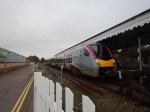

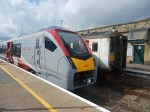
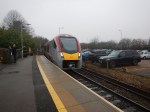
Felixstowe and some other stations may need a slightly different installation due to the narrow platforms, but I’m sure Furrer + Frey have installations for all platforms.
I think Great British Railways are going to need a lot of these chargers and the battery-electric trains to go with them.
The Uckfield Branch
The Uckfield Branch probably needs to have some form of charging at Uckfield station.

The picture shows the single long platform at Uckfield station.
Consider.
- Trains to work the branch will need to be able to use third-rail electrification between London Bridge station and Hurst Green junction.
- Hurst Green junction to Uckfield station and back is probably too far for a battery-electric train, so charging will be needed at Uckfield station.
- Third-rail charging could be used, but I suspect that Health and Safety will say no!
But using a dual-voltage train and a Voltap system at Uckfield station would probably be ideal.
Middlesbrough
From December the 13th, LNER will be running a new daily service between Middlesbrough and London, which I described in LNER’s Middlesbrough And London Service Starts On December 13th.
The route is fully electrified except for between Middlesbrough and Longlands Junction, where it joins the electrification of the East Coast Main Line, which is a distance of twenty-two miles.
Hitachi are developing a battery-train, which they call the Hitachi Intercity Tri-Mode Battery Train, which is described in this Hitachi infographic.

Note.
- LNER’s current Class 800 trains will probably be able to be converted to this train.
- Normally, these trains have three diesel generators.
- A range on battery power of upwards of forty miles would be expected.
If the range on battery-power can be stretched to perhaps sixty miles, this train should be capable of serving Middlesbrough without the need for any extra charging at the terminus.
I have just looked at the planned path of the first train on December 13th.
- The train comes from Heaton depot in Newcastle via Sunderland and Hartlepool.
- It passes through Middlesbrough station.
- It then reverses amongst the chemical and steel works to the East, before returning to Middlesbrough station.
Once back at Middlesbrough station, it waits for eight minutes before leaving for London.
It looks to me to be a safe route, to make sure that the train leaves on time. It also only occupies the platform at Middlesbrough station for less than ten minutes.
But it would also be possible to find space amongst the chemical and steel works to find space for a well-designed reversing siding with refuelling for the diesel-electric trains or a Voltap charging system for a battery-electric train.
Lincoln
I have been looking at the pattern of LNER’s London and Lincoln service today.
- There have been six trains per day (tpd) in both directions.
- Trains going North take up to seven minutes to unload passengers at Lincoln station before moving on to Lincoln Terrace C. H. S., which I would assume is a convenient reversing siding.
- Trains going South wait up to thirty-forty minutes at Lincoln station after arriving from Lincoln Terrace C. H. S., before leaving for Kings Cross.
It looks to me, that if London and Lincoln were to be run by a Hitachi Intercity Tri-Mode Battery Train, that the timings would be ideal for charging the batteries on the train in either the reversing siding or the station.
But surely, the charging system in the station would allow extension of the service to Grimsby and Cleethorpes, which has been stated as being part of LNER’s plans.
This picture shows Lincoln station.

I suspect that Swiss ingenuity could fit a Voltap charging system in the station.
These are a few distances from Lincoln station.
- Cleethorpes – 47.2 miles
- Doncaster – 35.4 miles
- Newark North Gate – 16.6 miles
- Peterborough – 56.9 miles
How many of these destinations could be reached by a battery-electric train, that had been fully-charged at Lincoln station.
ITM Power Raises £250 million
The title of this post, is the same as that of this media release from ITM Power.
There is a also a sub-title.
Manufacturing Expanded To 5GW Per Annum By 2024
ITM Power are certainly going large.
Given the number of plans for electrolysers published around the world, a 5GW annual production is by no means over ambitious.
Crossing The Mersey
I took these pictures as the train to Liverpool crossed the Mersey yesterday.
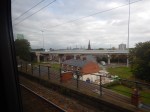














Note.
- The green bridge is now called the Silver Jubilee Bridge, but when I lived in Liverpool and worked at ICI in Runcorn, everybody called it the Runcorn-Widnes Road Bridge.
- The train is on the Ethelfleda, Britannia or Runcorn Railway Bridge depending on your preference. I tend to use Britannia, as the guys I worked with used that name.
- The three towers of the cable stayed Mersey Gateway Bridge can be seen in several pictures.
- Fiddlers Ferry power station is now decommissioned, but was an almost 2GW coal-fired power station.
In January 2011, I took a video as I crossed the Mersey and it is shown in Train Across the Mersey.
The Future Of Fiddlers Ferry Power Station
The Wikipedia entry for the power station, says this about the future use of the site.
Demolition of the station was due to begin in 2020 and will take up to seven years. The land upon which it sits will be redeveloped, with Warrington Council stating it had designated the land as an employment site.
As it obviously has a high-capacity electricity connection and there is a lot of offshore wind power in Liverpool Bay, I would feel it could be an ideal location for a large battery of perhaps 2 GWh.
The Future Of The Britannia Railway Bridge
The bridge was opened in 1868 and is Grade II* Listed.
Did the designer of the bridge; William Baker ever envisage, that in the future his bridge would be carrying trains over 250 metres long, that were capable of 125 mph?
Probably not! But in a few years, the bridge will be carrying High Speed Two Classic Compatible trains between London and Liverpool.
Sun Cable’s Australia-Asia PowerLink
Two weeks ago, in How Clean Energy And Jobs Can Flow From Morocco to The UK, I talked about a plan to generate electricity using solar arrays in Southern Morocco and use an underwater interconnector to bring it to the UK.
If you think that project was ambitious and distinctly bonkers, then that project is outshone by Sun Cable‘s Australia-Asia PowerLink, which is shown in this SunCable graphic.
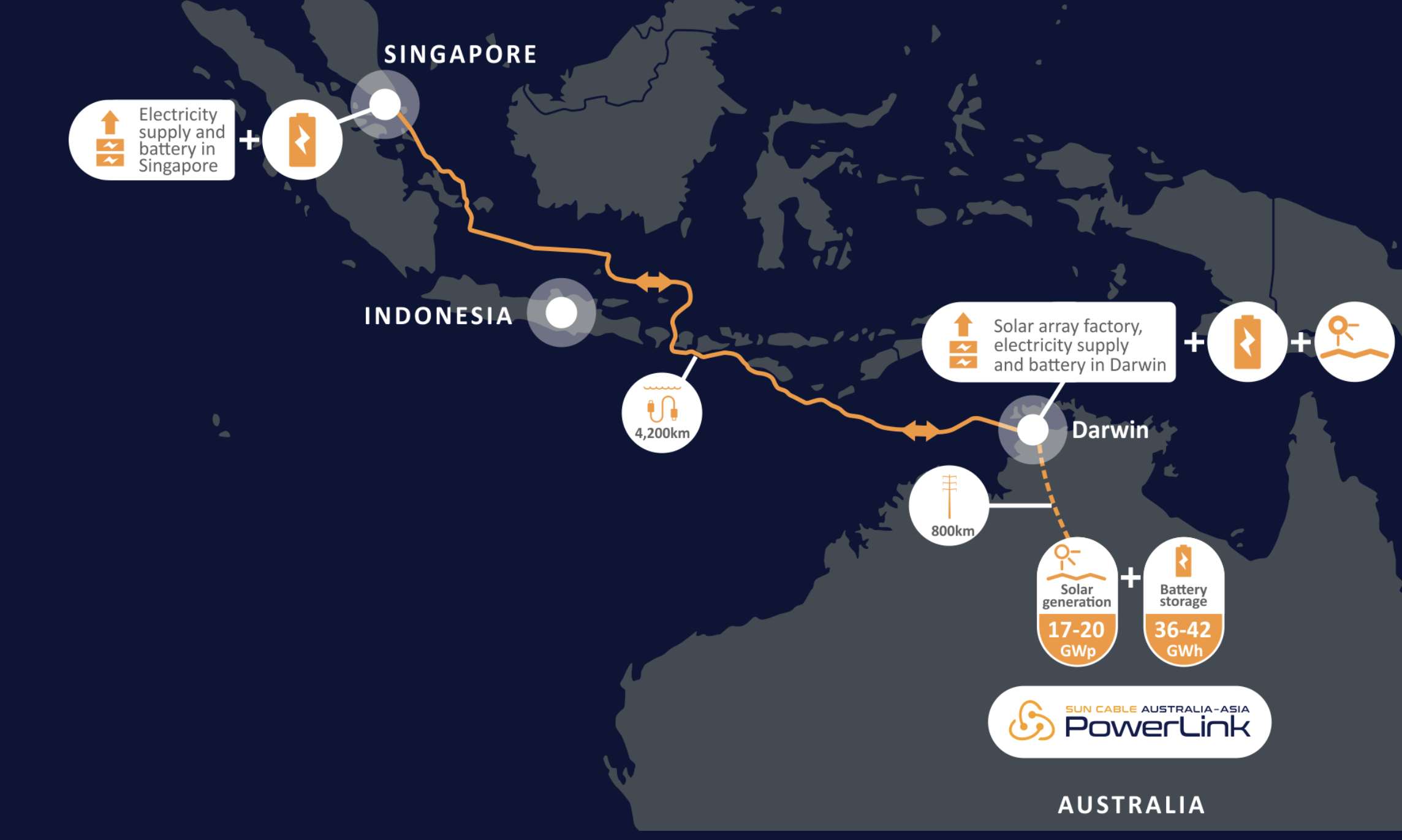
These are a few facts about the project.
- Electricity will be generated by solar panels in the Northern Territories of Australia.
- There will be 12,000 hectares of solar panels in Australia, which will create 3.2 GW of electricity for distribution.
- There will be a 36-42 GWh battery in Australia.
- There will be 4,200 km of submarine HVDC cable to deliver the electricity to Singapore and Indonesia.
- It looks like there will be batteries in Darwin and Singapore.
- The link could supply up to fifteen percent of Singapore’s electricity.
It is certainly an ambitious project, that will contain the world’s largest solar array, the world’s largest battery, and the world’s longest submarine power cable.
Note.
- Currently, the largest solar park in the world is Bhadia Solar Park in India, which is half the size of the solar array proposed.
- At 720 km, the North Sea Link is the largest undersea HVDC is operation.
- The largest battery in the UK is Electric Mountain in Snowdonia, which is only 9.1 GWh.
- A Tesla Megapack battery of the required size would probably cost at least ten billion dollars.
This is certainly, a project that is dealing in superlatives.
Is The Australia-Asia PowerLink Possible?
I shall look at the various elements.
The Solar Panels
I have flown a Piper Arrow from Adelaide to Cairns.
- My route was via Coober Pedy, Yulara, Alice Springs and Mount Isa.
- There didn’t seem to be much evidence of rain.
- The circle from South to East took four days of almost continuous flying, as Australia is not a small country.
- It left me with the impression of a flat featureless and hot country.
Having seen solar panels on flat areas in the UK, the Australian Outback could be ideal for solar farms.
Sun Cable are talking about 10,000 hectares of solar panels, which is roughly 38.6 square miles or a 6.2 mile square.
Given enough money to source the solar panels and install them, I would expect that the required solar farm could be realised.
The Cable
Consider.
- The North Sea Link is a 1.4 GW cable that is 720 km. long.
- I would size it as 10008 GW-km, by multiplying the units together.
- The Australia-Asia PowerLink will be 4200 km or nearly six times as long.
- But at 3.2 GW as opposed to 1.4 GW, it will have 2.3 times the capacity.
- I would size it as 13,400 GW-km.
Whichever way you look at it, the amount of cable needed will be massive.
The Battery
Currently, the largest battery in the world is the Bath County Pumped Storage Station, which has these characteristics.
- Peak power of 3 GW
- Storage capacity of 24 GWh.
Sun Cable’s 36-42 GWh battery will be the largest in the world, by a long way.
But I don’t think pumped storage will be suitable in the usually dry climate of Northern Australia.
The largest lithium-ion battery in the world is the Hornsdale Power Reserve in South Australia, which is only 150 MW/194 MWh, so something else will have to be used.
As Highview Power are building a CRYOBattery for the Atacama region in Chile, which I wrote about in The Power Of Solar With A Large Battery, I wonder, if a cluster of these could provide sufficient storage.
Tesla Batteries Power UK Energy Storage Plan
The title of this post, is the same as that of this article on The Times.
Britain’s energy problems could be alleviated by a new scheme to build power-storage sites across the UK using batteries produced by Tesla, the electric carmaker.
Six sites will be built by Harmony Energy Income Trust.
- The trust intends to raise £230 million in a stock market listing.
- The trust was registered on the 1st October 2021.
- The batteries will be built in rural locations.
- The sites will use Tesla Magapack batteries and Autobidder software.
- These batteries charge up in two hours and provide energy for two hours.
- The sites are “shovel ready”
- All planning permissions and contracts have been signed.
It would appear that everything is ready to go.
This is a paragraph in The Times article.
The trust is a spin-off from developer Harmony Energy, which found the six sites and obtained the permissions for construction. The developer will retain a minority stake after the listing.
It is also said in the article that two sites at Holes Bay in Dorset and Contego in West Sussex, have already been developed using Tesla batteries.
The Harmony Energy web site lists fifteen wind projects and thirteen battery projects.
- The average size of the battery projects is an output of 44 MW.
- If they can supply that for two hours, the average capacity would be 88 MWh.
The company does appear to be developing smaller batteries than the two established energy storage funds; Gore Street and Gresham House. But then everyone can use their own plan.
UK National Grid In Talks To Build An Energy Island In The North Sea
The title of this post, is the same as that of this article on the New Scientist.
This is the first paragraph.
UK company National Grid has revealed it is in talks with two other parties about building an “energy island” in the North Sea that would use wind farms to supply clean electricity to millions of homes in north-west Europe.
These are my thoughts.
An Artificial Island on the Dogger Bank
The idea of the North Sea Wind Power Hub in the area of the Dogger Bank has been around for a few years and has a comprehensive Wikipedia entry.
Wikipedia says that it would be an artificial island on the Dutch section of the Dogger Bank and the surrounding sea could eventually host up to 110 GW of wind turbines.
North Sea Wind Power Hub Programme
The Dutch and the Danes seems to have moved on and there is now a web site for the North Sea Wind Power Hub Programme.
The home page is split into two, with the upper half entitled Beyond The Waves and saying.
The incredible story of how the Netherlands went beyond technical engineering as it had ever been seen before. Beyond water management. To secure the lives of millions of inhabitants.
I have met Dutch engineers, who designed and built the Delta Works after the North Sea Floods of 1953 and I have seen the works all over the country and it is an impressive legacy.
And the lower half of the home page is entitled North Sea Wind Power Hub and saying.
Today, climate policy is largely national, decoupled and incremental. We need a new approach to effectively realise the potential of the North Sea and reach the goals of the Paris Agreement. We take a different perspective: harnessing the power of the North Sea requires a transnational and cross-sector approach to take the step-change we need.
Behind each half are two videos, which explain the concept of the programme.
It is a strange web site in a way.
- It is written totally in English with English not American spelling.
- The project is backed by Energinet, Gasunie and TenneT, who are Danish and Dutch companies, that are responsible for gas and electricity distribution networks in Denmark, Ger,many and The Netherlands.
- There are four sections to the web site; Netherlands, Germany, Denmark and North Sea.
It is almost as if the web site has been designed for a British company to join the party.
Hubs And Spokes In North Sea Wind Power Hub Programme
If you watch the videos on the site, they will explain their concept of hubs and spokes, where not one but several energy islands or hubs will be connected by spokes or electricity cables and/or hydrogen pipelines to each other and the shore.
Many electrical networks on land are designed in a similar way, including in the UK, where we have clusters of power stations connected by the electricity grid.
The Dogger Bank
The Dogger Bank is a large sandbank in a shallow area of the North Sea about 100 kilometres off the east coast of England.
Wikipedia says this about the geography of the Dogger Bank.
The bank extends over about 17,600 square kilometres (6,800 sq mi), and is about 260 by 100 kilometres (160 by 60 mi) in extent. The water depth ranges from 15 to 36 metres (50 to 120 ft), about 20 metres (65 ft) shallower than the surrounding sea.
As there are Gunfleet Sands Wind Farm and Scroby Sands Wind Farm and others, on sandbanks in the North Sea, it would appear that the engineering of building wind farms on sandbanks in the North Sea is well understood.
The Dogger Bank Wind Farm
We are already developing the four section Dogger Bank Wind Farm in our portion of the Dogger Bank and these could generate up to 4.8 GW by 2025.
The Dogger Bank Wind Farm has its own web site, which greets you with this statement.
Building the World’s Largest Offshore Wind Farm
At 4.8 GW, it will be 45 % larger than Hinckley Point C nuclear power station, which is only 3.3 GW. So it is not small.
The three wind farms; Dogger Bank A, B and C will occupy 1670 square kilometres and generate a total of 3.6 GW or 0.0021 GW per square kilometre.
If this density of wind turbines could be erected all over the Dogger Bank, we could be looking at nearly 40 GW of capacity in the middle of the North Sea.
Interconnectors Across The North Sea
This Google Map shows the onshore route of the cable from the Dogger Bank Wind Farm.
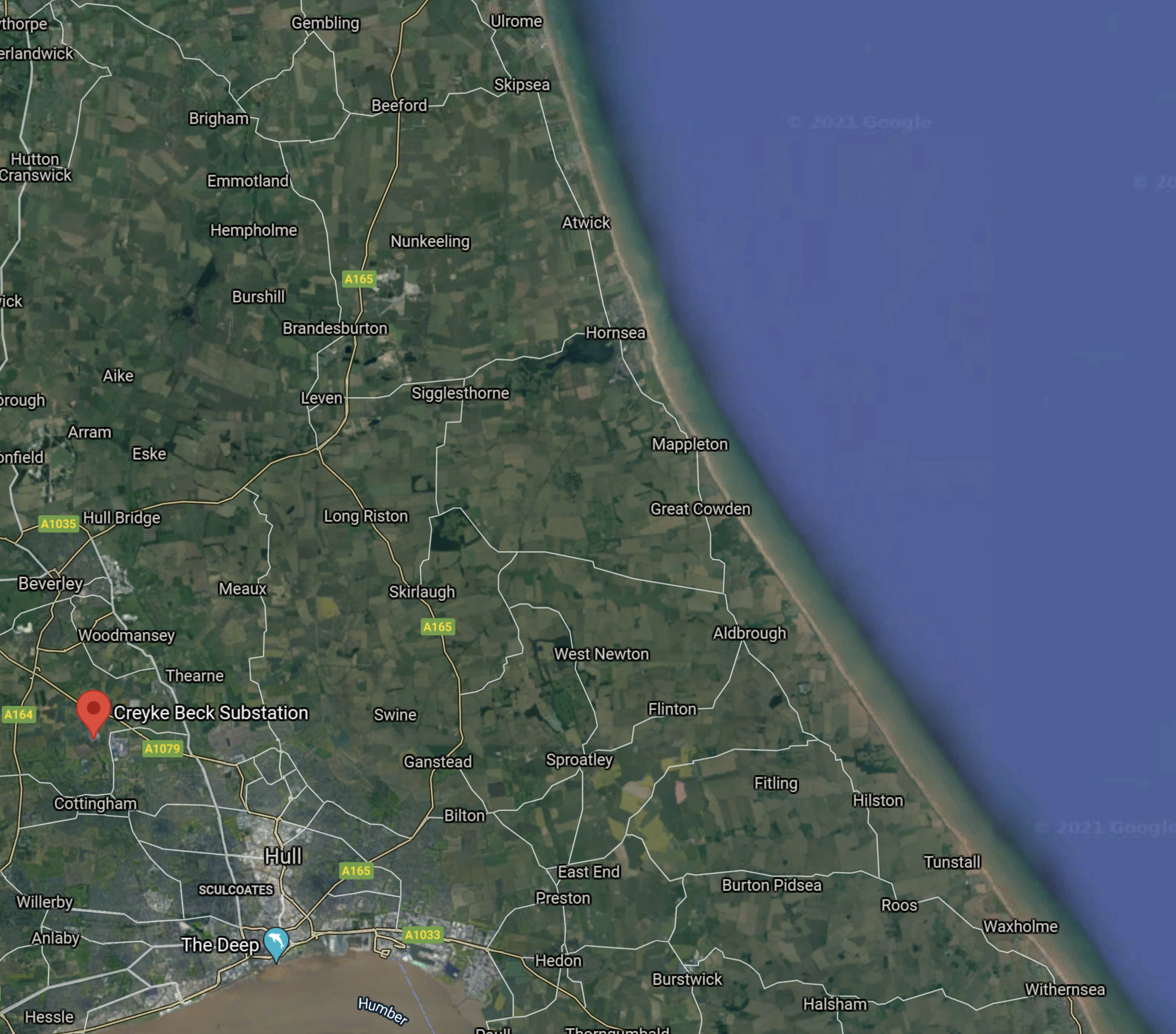
Note.
- Hull and the River Humber at the bottom of the map.
- The red arrow which marks Creyke Beck sub station, where the cable from the Dogger Bank Wind Farm connects to the UK electricity grid.
- At the top of the map on the coast is the village of Ulrome, where the cable comes ashore.
The sub station is also close to the Hull and Scarborough Line, so would be ideal to feed any electrification erected.
I would assume that cables from the Dogger Bank Wind Farm could also link the Wind Farm to the proposed Dutch/Danish North Sea Wind Power Hub.
Given that the cables between the wind farms and Creyke Beck could in future handle at least 4.8 GW and the cables from the North Sea Wind Power Hub to mainland Europe would probably be larger, it looks like there could be a very high capacity interconnector between Yorkshire and Denmark, Germany and The Netherlands.
It almost makes the recently-opened North Sea Link to Norway, which is rated at 1.4 GW seem a bit small.
The North Sea Link
The North Sea Link is a joint project between Statnett and National Grid, which cost €2 billion and appears to have been delivered as planned, when it started operating in October 2021.
So it would appear that National Grid have shown themselves capable of delivering their end of a complex interconnector project.
Project Orion And The Shetlands
In Do BP And The Germans Have A Cunning Plan For European Energy Domination?, I introduced Project Orion, which is an electrification and hydrogen hub and clean energy project in the Shetland Islands.
The project’s scope is described in this graphic.
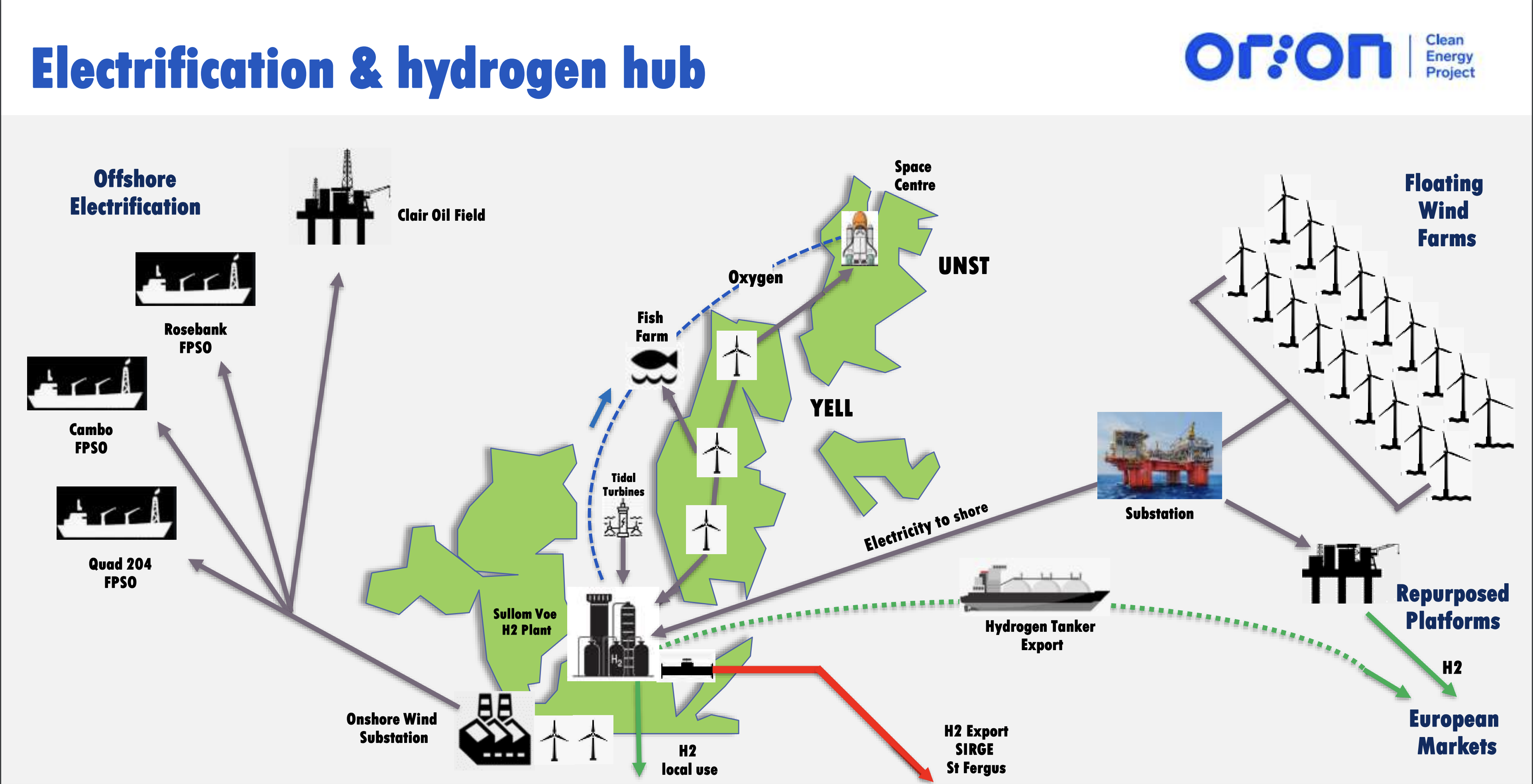
Note that Project Orion now has its own web site.
- Could the Shetlands become an onshore hub for the North Sea Power Hub Programme?
- Could Icelink, which is an interconnector to Iceland be incorporated?
With all this renewable energy and hydrogen, I believe that the Shetlands could become one of the most prosperous areas in Europe.
Funding The Wind Farms And Other Infrastructure In The North Sea
In World’s Largest Wind Farm Attracts Huge Backing From Insurance Giant, I described how Aviva were funding the Hornsea wind farm.
I very much believe that City of London financial institutions will be able to finance a lot of the developments in the North Sea.
After all National Grid managed to find a billion euros in a sock drawer to fund their half of the North Sea Link.
Electrifying The North Sea: A Gamechanger For Wind Power Production?
The title of this section, is the same as that of this article on Engineering and Technology Magazine.
This article in the magazine of the IET is a serious read and puts forward some useful facts and interesting ideas.
- The EU is targeting offshore wind at 60 GW by 2030 and 300 GW by 2050.
- The UK is targeting offshore wind at 40 GW by 2030.
- The article explains why HVDC electricity links should be used.
- The major players in European offshore wind are the UK, Belgium, the Netherlands, Germany, and Denmark.
- The foundations for a North Sea grid, which could also support the wider ambitions for a European super-grid, are already forming.
- A North Sea grid needs co-operation between governments and technology vendors. as well as technological innovation.
- National Grid are thinking hard about HVDC electrical networks.
- By combining HVDC links it can be possible to save a lot of development capital.
- The Danes are already building artificial islands eighty kilometres offshore.
- Electrical sub-stations could be built on the sea-bed.
I can see that by 2050, the North Sea, South of a line between Hull and Esbjerg in Denmark will be full of wind turbines, which could generate around 300 GW.
Further Reading
There are various articles and web pages that cover the possibility of a grid in the North Sea.
- National Grid – Interconnectors
- The Guardian – National Grid In Talks Over Plan For Energy Island In North Sea
- The Times – National Grid Planning ‘Energy Island’ In North Sea
I shall add to these as required.
Conclusion
I am coming to the conclusion that National Grid will be joining the North Sea Wind Power Hub Programme.
- They certainly have the expertise and access to funding to build long cable links.
- The Dogger Bank wind farm would even be one of the hubs in the planned hub and spoke network covering the North Sea.
- Only a short connection would be needed to connect the Dogger Bank wind farm, to where the Dutch and Danes originally planned to build the first energy island.
- There may be other possibilities for wind farm hubs in the UK section of the North Sea. Hornsea Wind Farm, which could be well upwards of 5 GW is surely a possibility.
- Would it also give access to the massive amounts of energy storage in the Norwegian mountains, through the North Sea Link or Nord.Link between Norway and Germany.
Without doubt, I know as a Control Engineer, that the more hubs and spokes in a network, the more stable it will be.
So is National Grid’s main reason to join is to stabilise the UK electricity grid? And in turn, this will stabilise the Danish and Dutch grids.
Fortescue Future Industries Invests In Dutch Thin-Film Solar And H2 Firm HyET
I missed this article, when it was published, so I’m publishing it now!
The title of this post, is the same as that of this article on Renewables Now.
These two paragraphs outline the deal.
Australia’s Fortescue Future Industries (FFI) has taken a 60% stake in Dutch company High yield Energy Technologies (HyET) Group to assist in its ambition to supply 15 million tonnes of green hydrogen globally by 2030.
The green energy company of Fortescue Metals Group Ltd (ASX:FMG) has also provided the majority of financing for the expansion of the Dutch solar photovoltaic (PV) factory of HyET Solar.
Andrew Forrest certainly seems to be splashing the cash.
I first wrote about the hydrogen innovation of the HyET Group in December 2020 in New Device Separates Hydrogen From Natural Gas When The Two Gases Are Blended In Pipelines.
I finished that post, with this simple sentence.
This invention could change the world!
In the UK, there is a project called HyDeploy, which aims to blend twenty percent hydrogen into the UK’s natural gas.
- At this level, all boilers, appliances and processes would work without major changes.
- A significant amount of carbon emissions would be saved.
- Gas imports would be reduced.
Could HyET’s technology be used to piggyback a hydrogen delivery network alongside the UK’s gas network?
It might even be possible to attach hydrogen filling stations direct to the gas network.
Panasonic Launches 5 kW Type Pure Hydrogen Fuel Cell Generator
The title of this post, is the same as that of this press release from Panasonic.
This is the first paragraph.
Panasonic Corporation today announced that it has developed a pure hydrogen fuel cell generator, which generates power through chemical reaction with high-purity hydrogen and oxygen in the air. The generator will be launched on October 1, 2021 for commercial use in Japan.
Features include.
- 5 kW basic unit scalable as needed.
- A hot water unit can be added to use the waste heat.
- Ability to run during a power outage.
- Remote operation.
I can envisage a log of uses for a useful generator like this and I will be interested to see how equipment like this is used in the future.
But there will be many generators in all sizes from many different manufacturers that will be released in the next few years to fulfil a lot of different applications.
We will also see lots of innovative ways to distribute hydrogen to various agricultural, industrial and office locations.
 The Anonymous Widower