Artificial Photosynthesis As A Renewable Energy Source
The title of this post, is the same as that of this article on altenergymag.
Why not?
Sun, carbon-dioxide and water go in one end and methanol, methane or hydrogen comes out the other.
Interestingly, is it ultra-vegan?
Plans Announced For ‘Low Carbon’ Power Stations In Lincolnshire
The title of this post, is the same as that of this article on the BBC.
This is the introductory paragraph.
Hundreds of jobs could be created after plans were announced to build two “low carbon” power stations in North Lincolnshire.
Last year, I only had one night away from home and that was in Doncaster, from where I explored North East Lincolnshire and wrote Energy In North-East Lincolnshire, where I made a few predictions.
These are my thoughts on my predictions and other points made in the BBC article.
Keadby 1
Keadby 1 is a 734 MW gas-fired power station, that was commissioned in 1996.
Keadby 2
- Keadby 2 will be a 840 MW gas-fired power station.
- It will be possible to add Carbon Capture and Storage technology to Keadby 2 to make the plant net-zero carbon.
- Keadby 2 will be able to run on hydrogen.
Keadby 2 is under construction.
Keadby 3 And Keadby 4
I predicted that two new power stations would be added to the Keadby cluster.
- When I wrote the other post, SSE were still designing Keadby 3, but had said it would be a 910 MW station.
- This would mean that Keadby 1, Keadby 2 and Keadby 3 would have a combined capacity of 2484 MW of electricity.
- Adding a fourth station, which I called Keadby 4, which I proposed to be the same size as Keadby 3 would give a combined capacity of 3394 MW.
This will be more than the planned capacity of the under-construction Hinckley Point C nuclear power station will be able to generate 3200 MW.
The BBC article says this about the plans for Keadby.
One plant would burn natural gas and use carbon capture technology to remove the CO2 from its emissions. The CO2 would then be transported along pipelines before being securely stored in rocks under the North Sea.
The hydrogen power station would produce “zero emissions at the point of combustion”, its developers claimed.
It looks like Keadby will have the power of a Hinckley Point nuclear station, but running on gas.
Carbon Capture And Storage
From what I read on the sseThermal web site and published in Energy In North-East Lincolnshire, it looks like Keadby 2 and Keadby 3 will use carbon capture and storage and Keadby 4 will use hydrogen.
There are plenty of depleted gas fields connected to the Easington terminal that can be used for carbon-dioxide storage.
The Zero Carbon Humber Network
The Zero Carbon Humber is going to be a gas network along the Humber, that will distribute hydrogen to large industrial users and return carbon dioxide for storage under the North Sea.
This map shows the Zero Carbon Humber pipeline layout.

Note.
- The orange line is a proposed carbon dioxide pipeline
- The black line alongside it, is a proposed hydrogen pipeline.
- Drax, Keadby and Saltend are power stations.
- Easington gas terminal is connected to around twenty gas fields in the North Sea.
- The terminal imports natural gas from Norway using the Langeled pipeline.
- The Rough field has been converted to gas storage and can hold four days supply of natural gas for the UK.
I can see this network being extended, with some of the depleted gas fields being converted into storage for natural gas, hydrogen or carbon dioxide.
Enter The Vikings
This article on The Times is entitled SSE and Equinor’s ‘Blue Hydrogen’ Power Plant Set To Be World First.
This is the introductory paragraph.
The world’s first large-scale power station to burn pure hydrogen could be built in Britain this decade by SSE and Equinor to generate enough low-carbon energy to supply more than a million homes.
This second paragraph explains the working of the production of the blue hydrogen.
The proposed power station near Scunthorpe would burn “blue hydrogen”, produced by processing natural gas and capturing and disposing of waste CO2 in a process that has low but not zero emissions. Equinor is already working on plans for a blue hydrogen production facility at Saltend in the Humber.
This may seem to some to be a wasteful process in that you use energy to produce blue hydrogen from natural gas and then use the hydrogen to generate power, but I suspect there are good reasons for the indirect route.
I believe that green hydrogen will become available from the North Sea from combined wind-turbine electrolysers being developed by Orsted and ITM Power, before the end of the decade.
Green hydrogen because it is produced by electrolysis will have less impurities than blue hydrogen.
Both will be zero-carbon fuels.
According to this document on the TNO web site, green hydrogen will be used for fuel cell applications and blue hydrogen for industrial processes.
Blue hydrogen would be able to power Keadby 2, 3 and 4.
I can see a scenario where Equinor’s blue hydrogen will reduce the price of hydrogen steelmaking and other industrial processes. It will also allow the purer and more costly green hydrogen to be reserved for transport and other fuel cell applications.
Using The Carbon Instead Of Storing
The document on the TNO web site has this surprising paragraph.
Hydrogen produced from natural gas using the so-called molten metal pyrolysis technology is called ‘turquoise hydrogen’ or ‘low carbon hydrogen’. Natural gas is passed through a molten metal that releases hydrogen gas as well as solid carbon. The latter can find a useful application in, for example, car tyres. This technology is still in the laboratory phase and it will take at least ten years for the first pilot plant to be realised.
This technical paper is entitled Methane Pyrolysis In A Molten Gallium Bubble Column Reactor For Sustainable Hydrogen Production: Proof Of Concept & Techno-Economic Assessment.
This may be a few years away, but just imagine using the carbon dioxide from power stations and industrial processes to create a synthetic rubber.
But I believe there is a better use for the carbon dioxide in the interim to cut down the amount that goes into long-term storage, which in some ways is the energy equivalent of landfill except that it isn’t in the least way toxic, as carbon-dioxide is one of the most benign substances on the planet.
Lincolnshire used to be famous for flowers. On a BBC Countryfile program a couple of weeks ago, there was a feature on the automated growing and harvesting of tulips in greenhouses.
There are references on the Internet to of carbon dioxide being fed to flowers in greenhouses to make them better flowers.
So will be see extensive building of greenhouses on the flat lands of Lincolnshire growing not just flowers, but soft fruits and salad vegetables.
Conclusion
The plans of SSE and Equinor as laid out in The Times and the BBC could create a massive power station cluster.
- It would be powered by natural gas and hydrogen.
- Blue hydrogen will be produced by an efficient chemical process.
- Green hydrogen will be produced offshore in massive farms of wind-turbine/electrolysers.
- It would generate as much electricity as a big nuclear power station.
- All carbon-dioxide produced would be either stored or used to create useful industrial products and food or flowers in greenhouses.
Do power stations like this hasten the end of big nuclear power stations?
Probably, until someone finds a way to turn nuclear waste into something useful.
Massless Energy Storage: The Next Step In Battery Technology
The title of this post, is the same as that of this article on AZOCleanTech.
This is the introductory paragraph.
In this environmentally conscious world, fossil fuels are being shunned in favor of renewables for electricity generation and transportation. Due to their periodic nature, excess energy generated by renewables is frequently stored in batteries. However, these often add extra weight to the cars and consumer electronics they power.
To solve the problem, researchers in Sweden have developed a structural battery.
Sounds like a good idea to me!
Tesla And PG&E Are Working On A Massive ‘Up To 1.1 GWh’ Powerpack Battery System
The title of this post, is the same as that of this article on electrek.
This is the first two paragraphs.
For the past few months, Tesla and CEO Elon Musk have been teasing a giant battery project that would dwarf even the company’s 129 MWh Powerpack project in Australia.
Today, we learn that Tesla is working with PG&E on a massive battery system with a capacity of “up to 1.1 GWh” in California.
It certainly, is a big lithium-ion battery.
- It will be able to provide 182.5 MW for four hours.
- It looks like it could be the largest lithium-ion battery in the world.
It is worth comparing with the Castaic Power Plant, which is also in California.
- This is a pumped storage plant.
- It can produce 1566 MW and has a capacity of 12470 MWh.
This Google Map shows the plant.
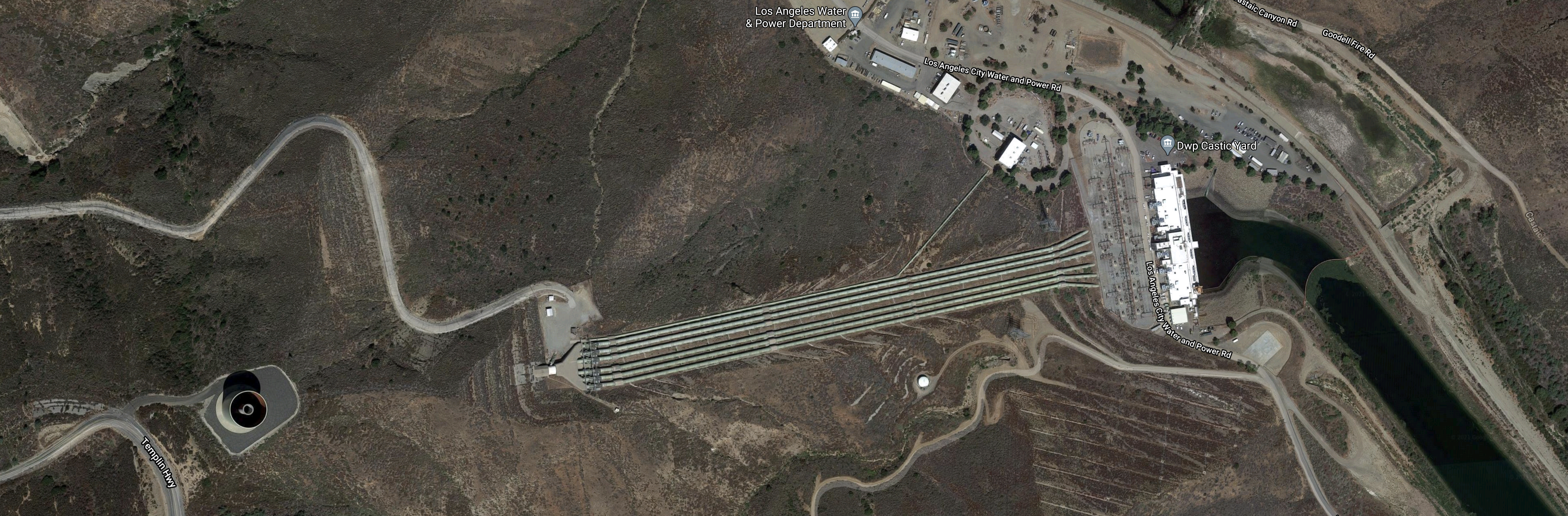
Note.
- The power plant is also part of the California State Water Project, which transfer water from North to South.
- The low-lake is Elderberry Forebay to the East.
- The high-lake is Pyramid Lake to the North.
It is a complicated system that includes the Angeles Tunnel, which takes water between Pyramid Lake and the Castaic power plant.
It cost a lot more than the 1.1 GWh battery, but it can generate a lot more power.
Orsted In Gigawatt-Scale Offshore Wind To Green Hydrogen Plan With Steel Giant ArcelorMittal
The title of this post, is the same as that of this article on Recharge.
The title says a lot and at the heart of the plan is a 1 GW electrolyser.
Now that is enormous.
Will it be made in Rotherham by ITM Power?
The article is a must read.
Is This A Case Of The Sh1t Hitting The Turbofan?
The title of this post was inspired by this article on Nonwovens Industry, which is entitled British Airways to Use Fuel Sourced From Recycled Diapers.
This is the first paraph.
British Airways will likely soon have part of its fleet fueled by trash. The company has entered into a partnership to build facilities that convert household waste into renewable jet fuel. The first stage of the partnership is a feasability stage with final investment planned for 2019. If the first stage is successful, part of BA’s fleet will fly using the fuel.
Admittedly, this is old news and the plant is now being built by Altalto at Immingham.
But it does get rid of one of the problems of the modern world; disposable nappies.
Solar Canals Already Competitive With Ground-Mounted PV
The title of this post, is the same as that of this article on PV Magazine.
This is the introductory paragraph.
U.S. researchers have assessed the technical and economic feasibility of solar canals in California and have found that their LCOE is already close to that of ground-mounted solar plants. Three different project configurations were analyzed for eight different sites across the California network of canals.
It is a fascinating concept and is already been tried in India.
But apparently, California has the world’s largest network of canals.
Unlike the French system of Floatovoltaics, which I wrote about in Understanding Floatovoltaics, they don’t float the panels on the water, but suspend them with cables or trusses.
But like the French system, they do cut down evaporation.
Hydrogen: Can The Lightest Gas Turn Heavy Industry Green?
The title of this post, is the same as that as this article on the FT.
It is an excellent summary of how we will decarbonise heavy industries like steel, cement and chemicals using hydrogen.
If you don’t read anything else this morning, then read this article.
Could We See More Bunhill 2s On The London Underground?
This article on Railway Gazette, is entitled Air-Conditioned Piccadilly Line Train Designs Presented.
This is said in the article about the air-conditioning of the new trains.
The trains will feature air-conditioning for the first time on one of the capital’s small-profile deep-level Tube lines, which has posed a significant engineering challenge. The heat passed into the tunnels from the air-conditioning units is expected to be offset by a reduced heat output from the traction and braking equipment, given the trains’ lower energy consumption.
Cutting the energy consumption will be mainy good basic engineering.
- Lighting will use LEDs to use less electricity and cut heat generated.
- Efficient air-conditioning units will save energy.
- All electrical equipment like traction motors, transformers and door actuators will be low energy units.
There could also be some more complex ways to save energy.
Extensive Mathematical Modelling Of the Temperature And Humidity Of The Trains
I have built large numbers of mathematical models. I can see a lot of scope to use the technique to find the most efficient method of operation.
- On hot days would the trains be cooled down on the surface sections, so that they entered the tunnels cold?
- Conversely on cold days, would the heat in the tunnels be recovered to get cold trains entering the long central tunnel up to temperature?
- How does passenger loading effect the temperature and humidity?
The model would help to identify, the best operating procedure given the weather conditions.
The mathematical model could even be built into the control system of the train.
Heated Floors
As I said in Air-Conditioned Piccadilly Line Train Designs Presented, the trains could have heated floors, which are an efficient use of space.
They might even be an efficient way of warming a train on a cold day.
I lived near Cockfosters Depot for the first sixteen years of my life and know from personal experience, it can get very cold in the winter.
Regenerative Braking To Batteries
Regenerative braking is used in two ways on the London Underground.
- As the system is DC, electricity generated during braking, can be returned to the rails for use by nearby trains.
- Some stations are also hump-backed, so trains are slowed coming up the hill into the station and pick the energy up, going downhill out of the station. Stations using this technique are very noticeable on the Victoria Line.
I believe that the new Siemens trains should and probably will use regenerative braking to batteries.
- Electricity generated during braking is stored in a battery or batteries on the train.
- When accelerating away from the station, this energy is reused.
The method has advantages.
- There is less electricity transfer between train and conductor rails, which means less heat generated and less contact shoe wear.
- If there is a power failure, the batteries can provide hotel power for the train and could even be large enough to move it to the next station for evacuation of the passengers.
- There may even be scope in building batteries and traction motors as an integrated unit to save weight and reduce heat generation.
- Because of the reuse of energy, energy use is reduced.
I will be very surprised if these new trains aren’t fitted with batteries.
Why Build More Bunhill 2s?
The Bunhill 2 Energy Centre is described on this page of the Borough of Islington web site, which is entitled Bunhill Heat Network.
This is said about Phase 2 of the project.
Phase 2 of the Bunhill Heat and Power network involves building a new energy centre at the top of Central Street, connecting the King’s Square Estate to the network and adding capacity to supply a further 1,000 homes.
The core of the new energy centre is a 1MW heat pump that will recycle the otherwise wasted heat from a ventilation shaft on the Northern Line of the London Underground network, and will transfer that heat into the hot water network. During the summer months, the system will be reversed to inject cool air into the tube tunnels.
Note that a 1MW heat pump can supply enough hot water to heat upwards of a thousand homes.
This page on the Islington web site lists the project partners.
Transport for London is a key partner and this is said.
As a key partner in the Bunhill 2 scheme, TfL upgraded its City Road mid-tunnel ventilation system to enable the capture and utilisation of waste heat from the Northern line tunnels to provide hot water to local homes and businesses. TfL is also carrying out further research to identify opportunities for similar projects across the Tube network as part of its Energy and Carbon Strategy.
So what other stations could be used?
These are disused stations on the deep lines.
- Brompton Road – Piccadilly Line
- Down Street – Piccadilly Line
- South Kentish Town – Northern Line
- York Road – Piccadilly Line
York Road, which is close to all the developments to the North of Kings Cross, would probably be the most likely to be converted into an energy centre to transfer heat to and from the Underground.
Could Some Ventilation Shafts Be Converted Into Energy Centres?
The obvious one is probably Green Lanes Ventilation Station.
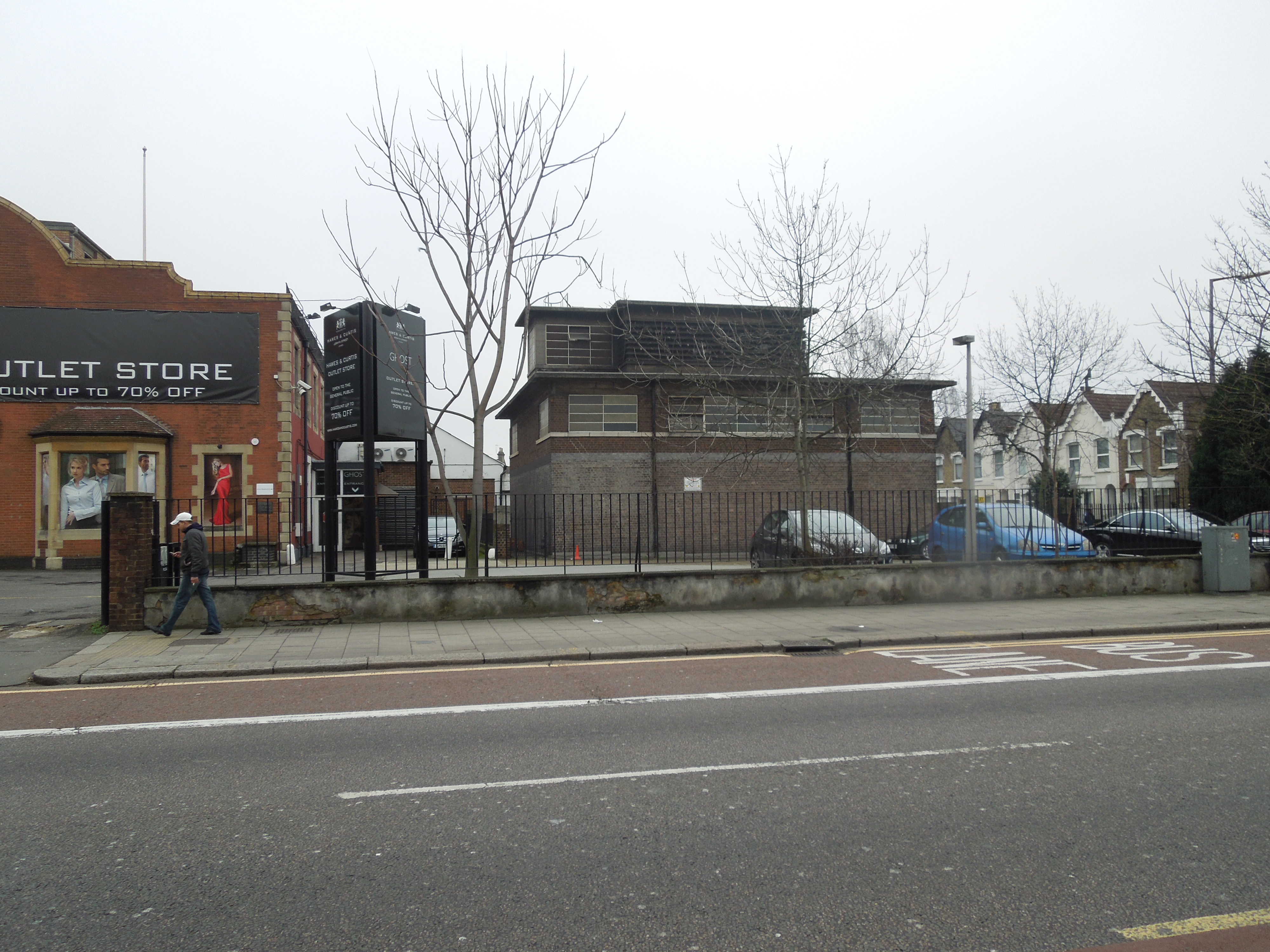
Green Lanes Ventilation Station
But then I suspect this is on Transport for London’s list of sites to be converted into something more useful.
Get H2 Partners Propose Green Hydrogen Pipeline In Europe
The title of this post, is the same as that of this article on the Green Car Congress.
This is the first paragraph.
Seven companies from the GET H2 initiative in Europe want to build a cross-border pipeline for green hydrogen. From Lingen (Emsland) to Gelsenkirchen and from the Dutch border to Salzgitter, production, transport, storage and industrial acceptance of green hydrogen are to be connected in several steps between 2024 and 2030 under the umbrella of the overall project.
Note.
- I suspect this could be almost four hundred kilometres of hydrogen pipeline.
- The hydrogen will be used in refineries, for steelmaking and other industrial uses.
- It could avoid production of sixteen million tonnes of carbon dioxide by 2030.
This will need a lot of wind-turbines and electrolysers, most of which I expect will be in the German and Dutch parts of the North Sea.
 The Anonymous Widower