Thistle Wind Partners Rename 2 GW ScotWind Offshore Wind Projects
The title of this post, is the same as that of this article on offshoreWIND.biz.
This is the sub-heading.
Thistle Wind Partners (TWP), a consortium founded by DEME Concession, Qair, and Aspiravi, has announced the final names for its two ScotWind offshore wind projects
This is the first paragraph.
TWP won the seabed leasing rights for two offshore wind projects in the ScotWind auction last year, in which 25 GW of capacity was awarded.
These paragraphs give details of the new names and an update on the sizes of the turbines.
The consortium plans to build the 1 GW Bowdun offshore wind project, originally named Cluaran Deas Ear, located off the coast of Stonehaven and lying 44 kilometres out from the landmark of Bowdun Head.
The site covers an area of 187 square kilometres (in the E3 leasing zone). The project is planned to feature between 50 and 60 wind turbines with an individual capacity of 18-25 MW each, depending upon the final design choice.
The second wind farm, located 33 kilometres from the East Mainland of Orkney in the NE2 leasing zone, is named the Ayre Offshore Wind Farm, originally called Clearan Ear-Thuath. This will be a 1 GW floating wind project following a similar base case for turbine numbers and capacity as Bowdun.
Note.
- They appear to be using 18-25 MW turbines.
- These are the first wind farms, that have talked about using such large turbines.
- 18 MW turbines would need 55 turbines for a GW.
- 25 MW turbines would need 40 turbines for a GW.
- Ayre wind farm has a web page, which says that it will have 56 x 18 MW turbines.
- Bowden wind farm has a web page, which says that it will have 56 x 18 MW turbines.
- The web site does say that the size and number of turbines is provisional.
Construction of both farms should start in 2029, with commissioning in 2033.
A Worthwhile Tailpiece
The article has a good tailpiece in the last paragraph.
TWP is one of the founders of a new initiative from the University of Highlands & Islands to deliver a STEM (Science, Technology, Engineering, and Mathematics) outreach programme for primary schools in Scotland, providing materials and teacher training.
TWP obviously intend to catch the next generation of technologists young.
Conclusion
Thistle Wind Partners have gone for the bold option.
Budweiser To Convert Second UK Brewery To Hydrogen
The title of this post, is the same as that of this article on The Engineer.
This is the sub-heading.
Samlesbury Brewery in Lancashire is set to be powered by green hydrogen from 2025, according to new plans announced by owner Budweiser Brewing Group.
This paragraph outlines what will be done at Salmesbury.
The Samlesbury Net Zero project will see the brewery paired with a new hydrogen production facility (HPF), delivered by UK hydrogen services company Protium. Situated adjacent to the brewery, the HPF will provide green hydrogen to meet the thermal demand of the brewing processes, as well as the building’s other heating requirements.
Note.
- A refuelling station for hydrogen-ready HGVs will also be developed as part of the project.
- Heat from the HPF will be recovered and used in Budweiser’s bottling process.
- This is the second project involving Budweiser and Protium, after one at Magor in South Wales.
- Beers produced at the facility include Budweiser, Stella Artois and Corona.
I may have had the odd bottle of Corona in the States, but I’ve generally drunk real ale only since, I started having halves of Adnams with my father at the age of thirteen.
Now, because I’m on Warfarin, I more or less exclusively drink zero-alcohol beers, most of which is Adnams, straight from the brewery.
I’ve yet to find any beer which is less than 0.5 % alcohol, has contained enough gluten to have an effect on my gut.
I have discussed this with experienced brewers and they are not surprised, as the brewing process for zero-alcohol beers doesn’t use much barley.
Conclusion
We need more integrated projects like this, that both decarbonise industrial processes and provide filling stations for hydrogen-powered vehicles.
Vattenfall Selects Norfolk Offshore Wind Zone O&M Base
The title of this post, is the same as that of this article on offshoreWIND.biz.
This is the sub-heading.
Vattenfall has selected Peel Ports as the preferred bidder, and its port at Great Yarmouth as the location for the operations and maintenance base of the Norfolk Offshore Wind Zone in the UK.
This was said about the competition to host the facility.
Vattenfall said that the competition was fierce to secure the agreement with an excellent bid from Lowestoft and Associated British Ports. With both ports offering excellent services it is clear that East Anglia’s potential as a superpower of offshore wind is secure.
I have a few thoughts.
Lowestoft In Suffolk And Great Yarmouth In Norfolk Must Work Together
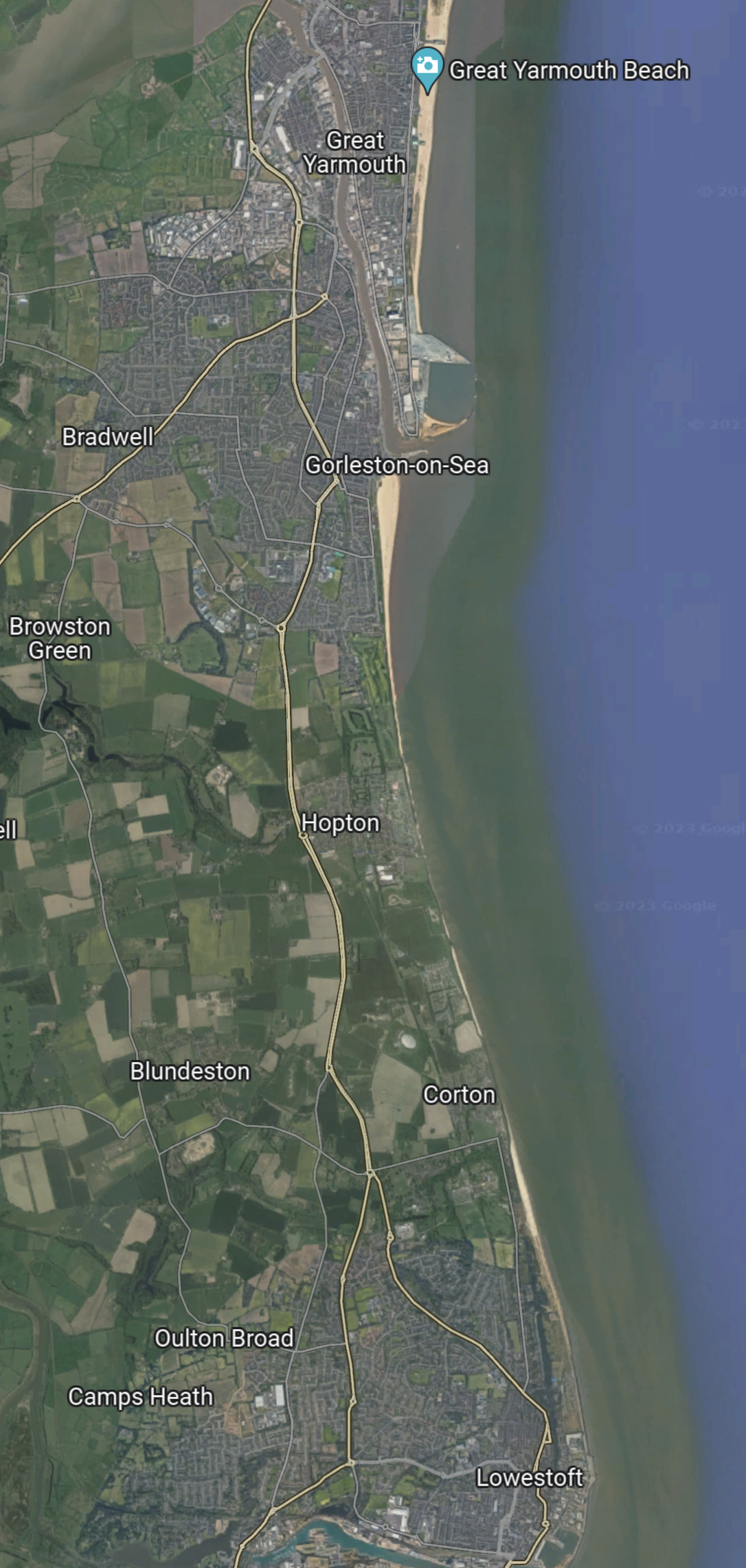
This Google Map shows the coast between the two ports.
Note.
- Great Yarmouth is at the top of the map.
- Lowestoft is at the bottom of the map.
- The two towns are less than twelve miles apart.
- The Great Yarmouth Outer Harbour, is towards the top of the map.
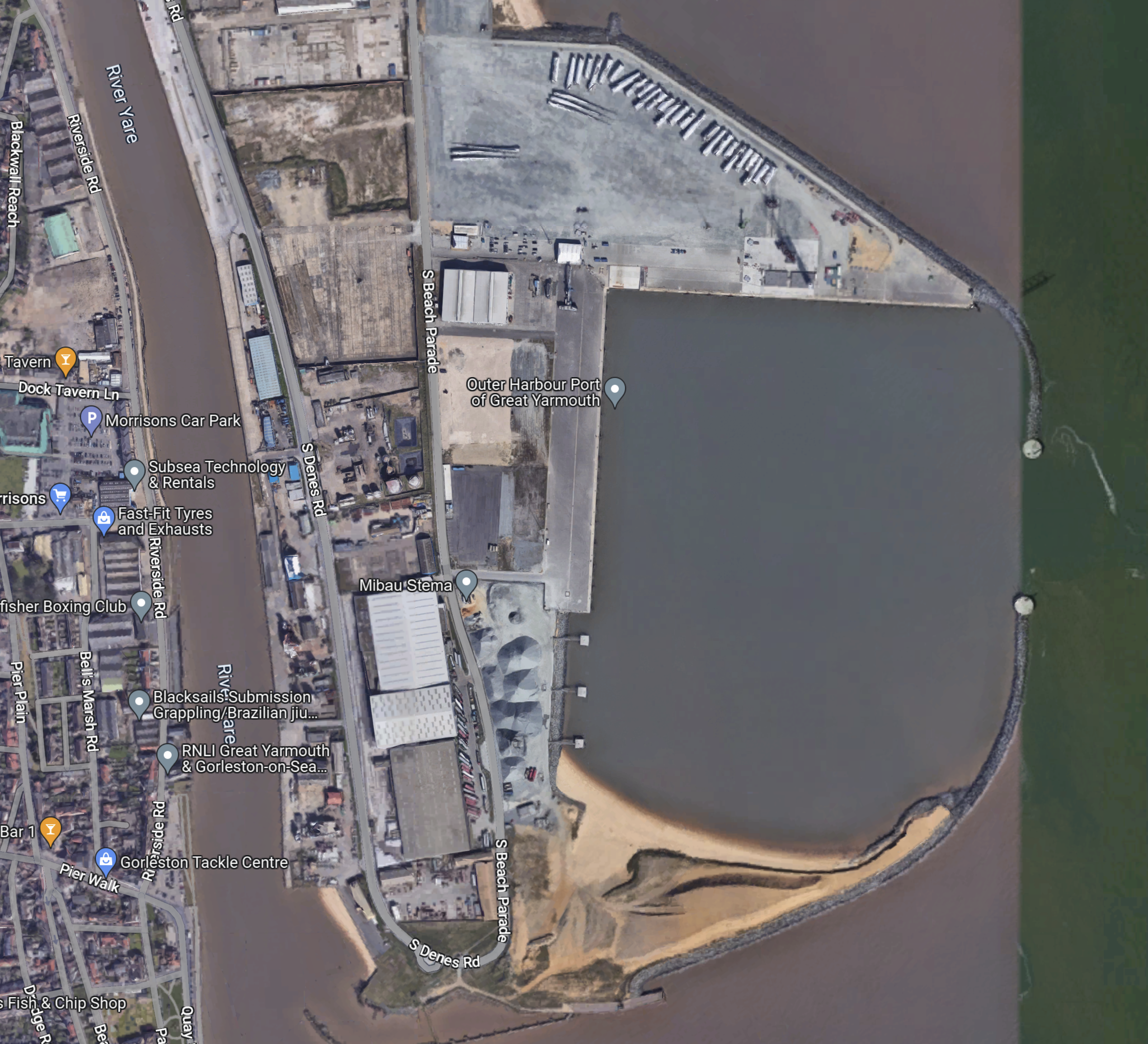
The Google Map shows the port in more detail.
Note.
- Great Yarmouth Outer Harbour only opened in 2009.
- It has an average depth of 10 metres.
- It was planned as a container port, but the ships didn’t materialise.
- Some consider it to be a bit of a white elephant.
Could the Outer Harbour be used to assemble floating wind turbines?
I think it could but at present, there are no plans to use floating wind turbines off the coast of Norfolk.
I suspect though, if someone decided to build floating wind farms to the East of the Vattenfall’s Norfolk Zone fields, that Great Yarmouth Outer Harbour could be used to assemble the floating wind turbines.
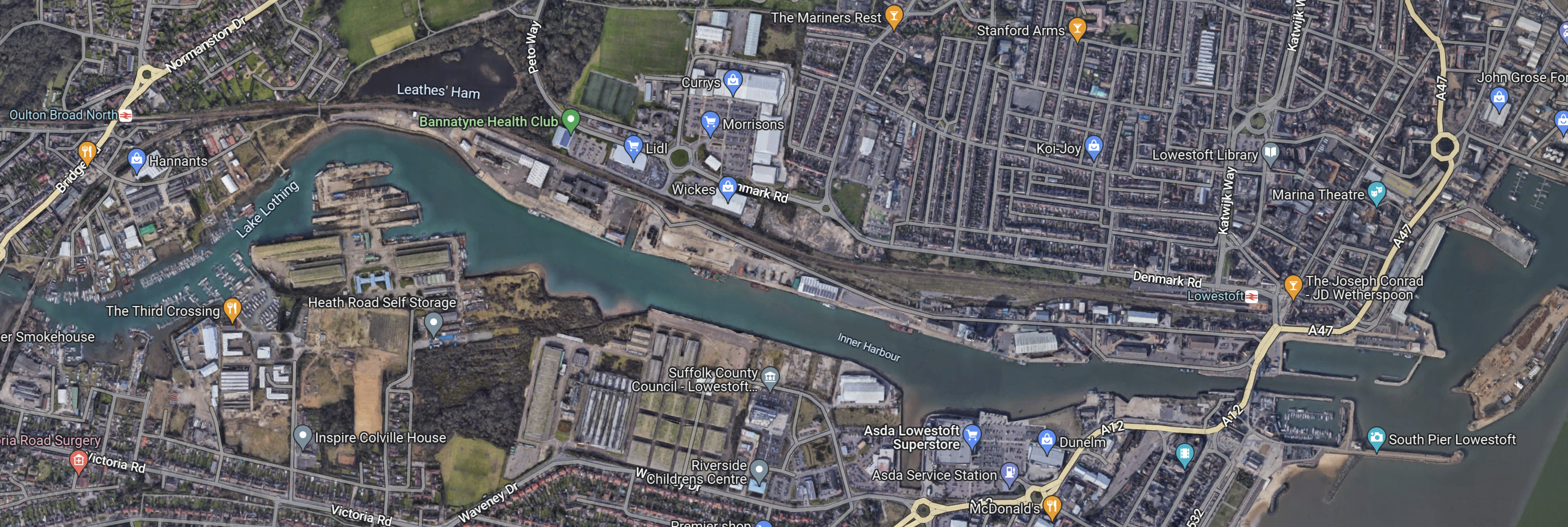
This Google Map shows the Port of Lowestoft.
Note.
- There is over a kilometre of quays.
- It doesn’t have the water depth of Great Yarmouth.
- There is a lot of brownfield sites along the River Waveney.
- The East Anglia One wind farm is managed from Lowestoft.
Both harbours have their good and bad points.
- Both have good rail connections to Norwich.
- Lowestoft has a rail connection to Ipswich and has been promised a London service.
- Road connections to Ipswich and Norwich need improvement.
I suspect that it was a close contest, as to the port that got the Vattenfall contract.
A Lowestoft And Great Yarmouth Rail Connection
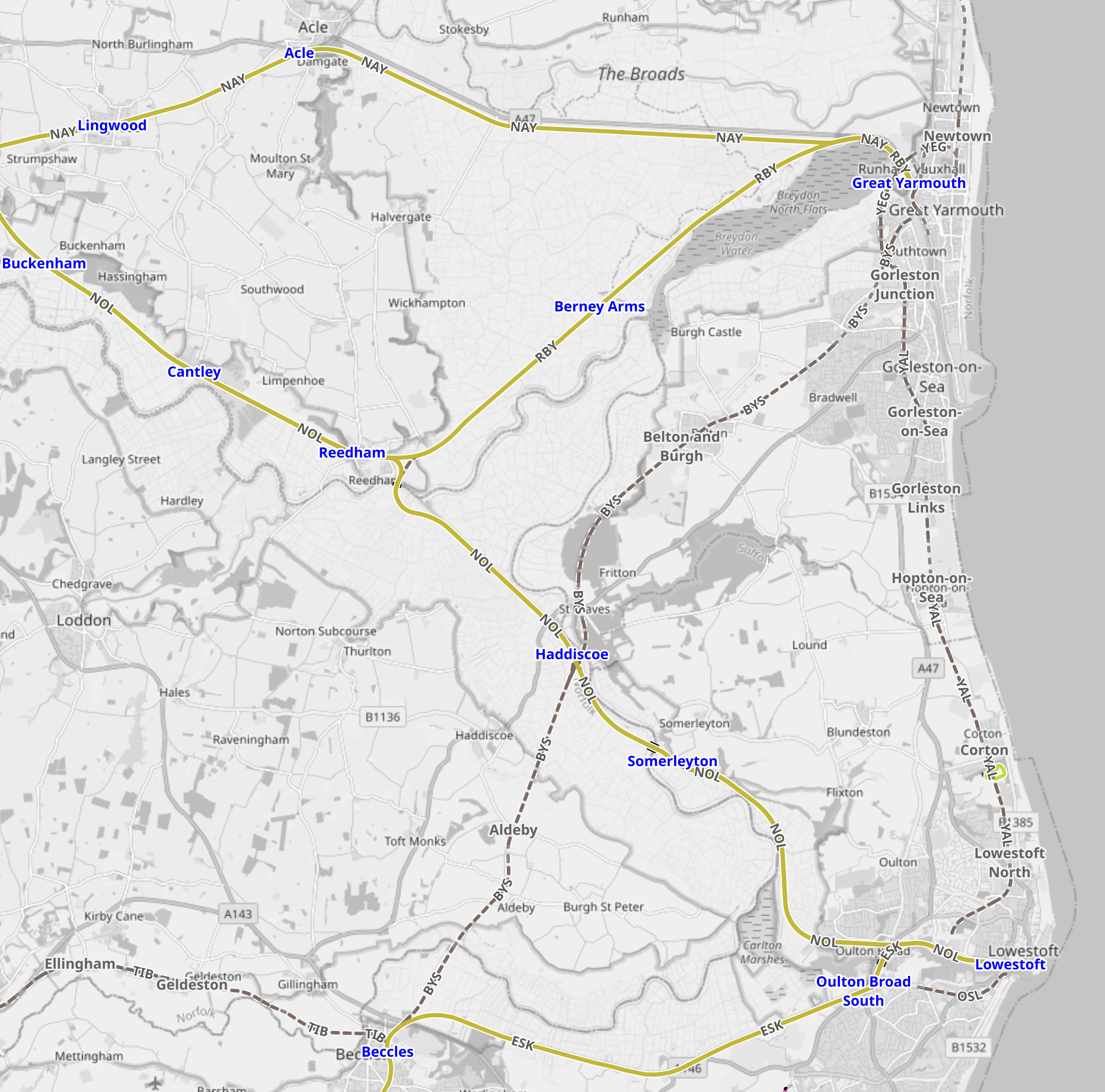
This map from Open RailwayMap between the two towns.
Note.
- The existing railways are shown in yellow.
- Former railways are shown in black dotted lines.
- There was even a railway along the coast.
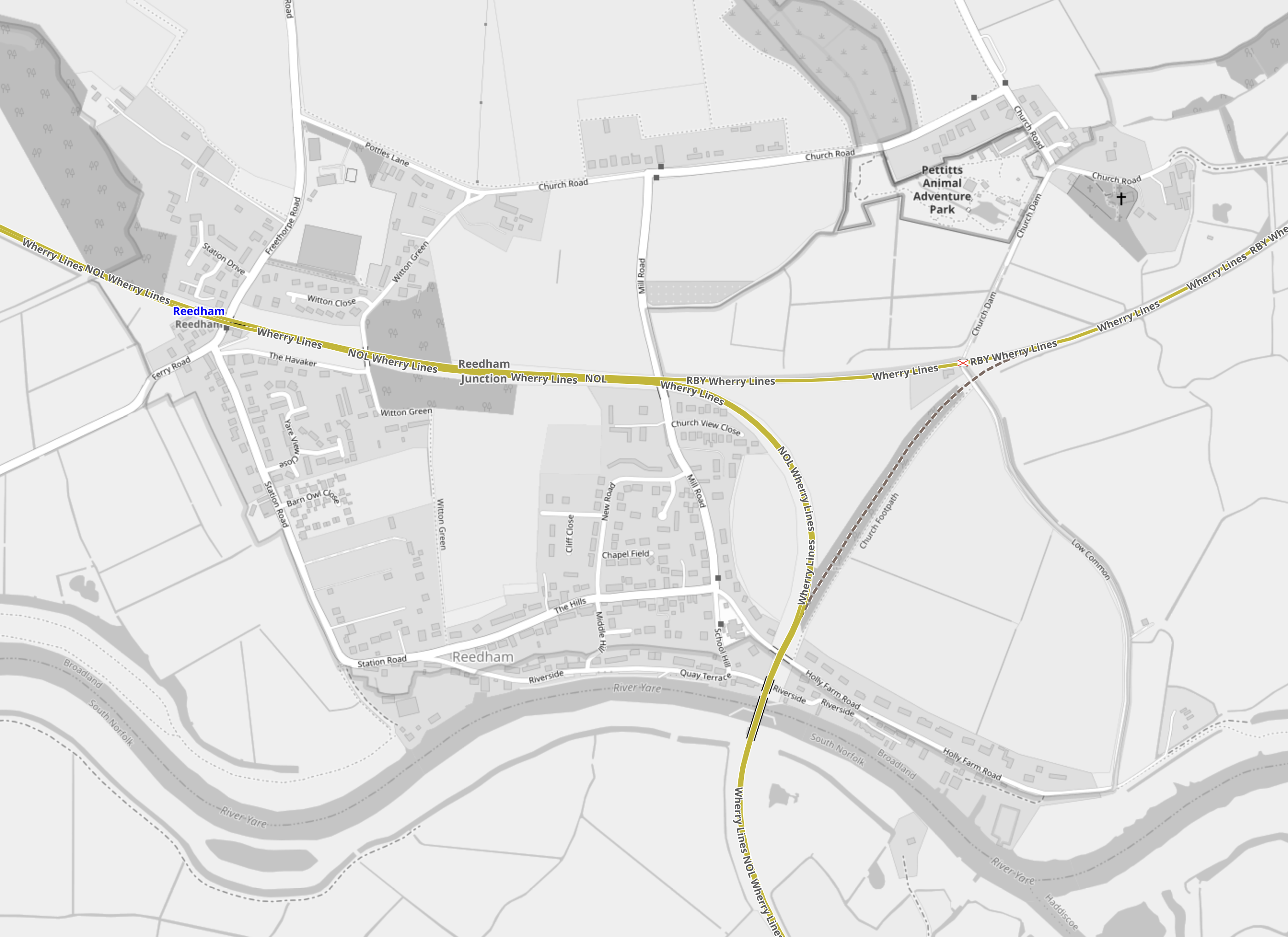
The only rail connection between the ports is via Reedham, where the track layout is shown on this second OpenRailwayMap.
Note.
- Reedham station is in the North West corner on the line to Norwich.
- The line going North-East goes to Great Yarmouth.
- The line going South goes to Lowestoft.
There used to be a chord connecting Great Yarmouth and Lowestoft, but it was cancelled by Beeching’s grandfather.
There is certainly scope to improve the rail connection between the two ports.
- There could be a convenient change at Reedham, if the timetables were adjusted.
- Trains could reverse at Reedham.
- The chord could be reopened to allow direct trains.
It wouldn’t be the most challenging rail project to have an hourly rail service between the two ports.
A Lowestoft And London Rail Service
This was promised with a frequency of something like four trains per day (tpd)
I think it should run between London and Yarmouth with a reverse at Lowestoft.
Hydro-Storage Options To Be Studied For Grängesberg
The title of this post, is the same as that of this news item from Anglesey Mining.
These are the highlights of the news item.
- Anglesey Mining plc, together with its 49.75% owned subsidiary Grängesberg Iron AB (“GIAB”) have entered into an MoU with Mine Storage to investigate the potential for the Grängesberg Mine to be converted into a Pumped Hydro-Storage project at the end of the mine’s producing life.
- Pumped-Hydro Storage is a green-energy storage solution that utilises water and gravity to store electrical energy. An underground mine can provide a closed-loop solution using proven, pumped hydro-power technology. Essentially, the system involves water being gravity fed through pipes down a shaft into the turbines, which produce electricity for supply to the grid and also pump the water back to surface. The mine storage system has a high round-trip efficiency of 75-85% and proven durability.
- The MoU with Mine Storage could lead to numerous future benefits.
I like this project.
Too often, when mines, quarries or other large operations come to the end of their economic lives, they are just abandoned in the hope that something worthwhile will happen.
But here we have a company planning the end of an iron ore mine in a way that will turn it into a source of future revenue.
I have a few thoughts.
Mine Storage
Mine Storage are a Swedish company with an informative web site.
The web site answered most of my questions.
Mines Are Moving From a Liability To A Resource
Consider.
- Gravitricity are using mines to store energy using cables and weights.
- Charlotte Adams and her team at Durham University are developing the use of the heat in abandoned coal mines.
- The Global Centre of Rail Excellence is being developed in a disused opencast mine in Wales.
- RheEnergise are developing their first High Density Hydro system in the Hemerdon Tungsten Mine in Devon.
And now we have this co-operation between Anglesey Mining and Mine Storage working together on pumped storage hydroelectricity.
Where is Grängesberg
This Google Map shows the location of Grängesberg.
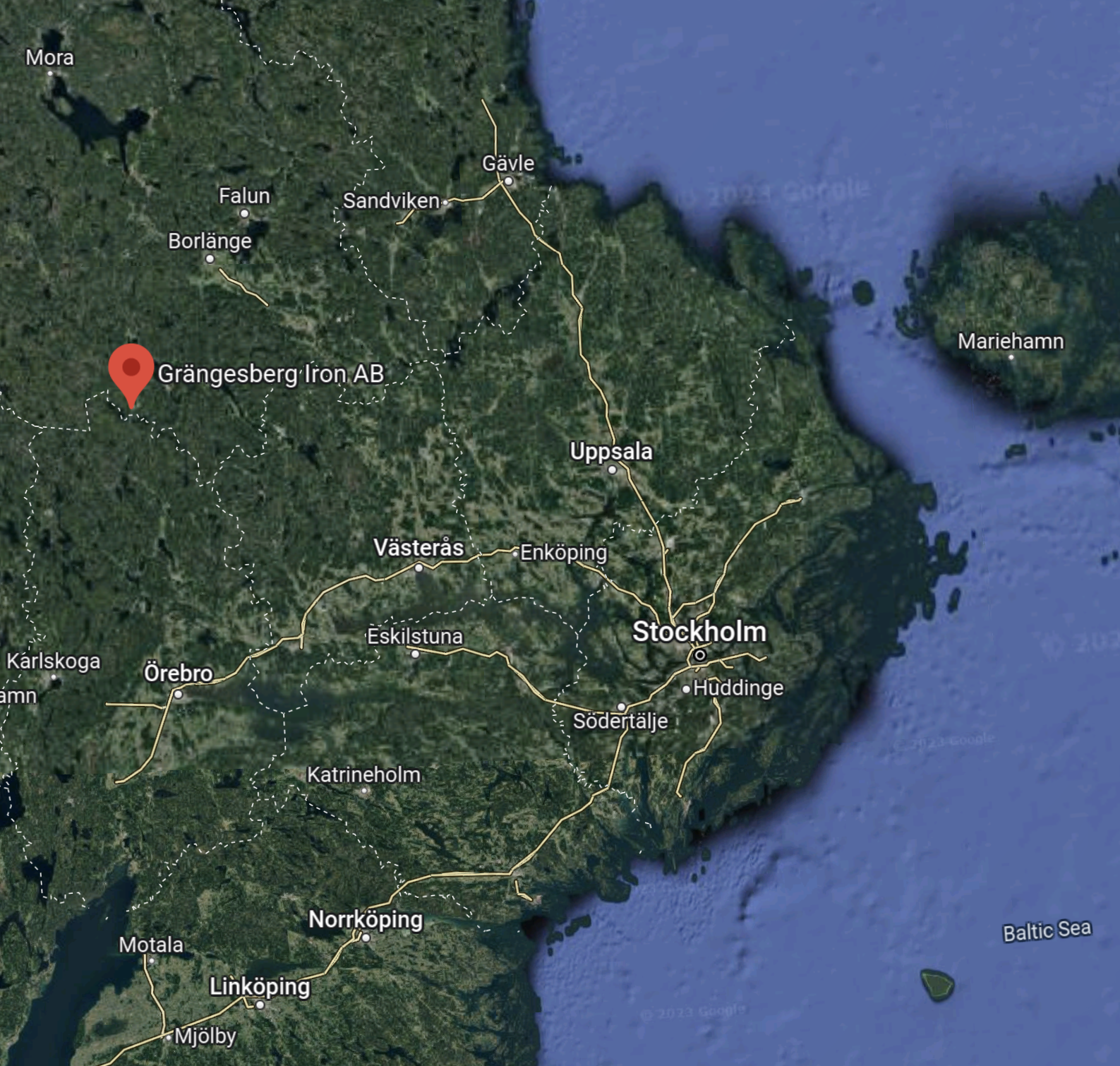
It is convenient for storing energy for Stockholm.
SSE, Marubeni & CIP’s Floating Wind Farm In Scotland Could Have 270 Turbines And 6 Offshore Substations
The title of this post, is the same as that of this article on offshoreWIND.biz.
This is the sub-heading.
SSE Renewables, Marubeni and Copenhagen Infrastructure Partners (CIP) have submitted the Environmental Impact Assessment (EIA) Scoping Report for the array area of their Ossian floating wind farm to Marine Scotland. According to the report, the wind farm could have up to 270 wind turbines and six offshore substations.
Ossian floating wind farm will be one of the world’s largest floating wind farms.
- If it sticks to 3.6 GW, 270 turbines will mean 13 MW turbines.
- 14 MW would be 3.8 GW and 15 MW would be 4 GW, with the same number of turbines.
- If they stick to 3.6 GW, this could be 257 x 14 MW or 240 x 15 MW turbines.
- Knowing ambitious engineers as I do and given that 15 MW turbines are on the way, I wouldn’t be surprised to see 15 MW turbines, to get the full 4 GW.
- According to this press release from Siemens Gamesa, they can make the turbine blades for their 15 MW turbines in Hull.
These two paragraphs outline the design possibilities.
For the floating wind turbine foundations, the consortium is considering either semi-submersible or Tension Leg Platform (TLP) structures and three mooring configurations; catenary, semi taut and taut mooring lines. Anchoring options currently under consideration include driven piles, and a number of different embedded anchor types, including suction piles, Drag Embedment Anchors (DEA) and VLA, with up to nine anchors required per foundation.
Floating foundations might not only be used for the wind turbines, but also for Ossian’s offshore substations.
When I look at a project like this, I also think of the project management possibilities.
- Will the six offshore sub-stations be positioned, so that as turbines are installed, they can be commissioned and start generating electricity?
- Is there software to optimise the order of installation?
- Has a specialist project management system been written for wind farms?
If you need a program to do analyse anything like that, buy me a drink and we’ll talk about it.
It’s about time, some of the algorithms in my brain were put to use.
The article also says this.
The 3.6 GW Ossian floating wind farm is planned to be up and running before the end of the decade.
My experience tells me, that if the right philosophy is used, that estimated date could be beaten.
It’s just that it is a project with so many complexities, that a proper mathematical model of its construction would yield benefits.
UK Confirms £205 Million Budget To Power More Of Britain From Britain
The title of this post, is the same as that of this press release from the Department of Energy Security And NetZero.
This is the sub title.
UK government confirms budget for this year’s Contracts for Difference scheme as it enters its first annual auction, boosting energy security.
These are the three bullet points.
- Government announces significant financial backing for first annual flagship renewables auction, boosting Britain’s energy security
- £170 million pledged for established technologies to ensure Britain remains a front runner in renewables and £10 million ring-fenced budget for tidal
- Scheme will bolster investment into the sector every year, delivering clean, homegrown energy as well as green growth and jobs
These are my thoughts.
First And Annual
The scheme is flagged as both first and annual!
Does this mean, that each Budget will bring forward a pot of money for renewables every year?
My father, who being a letterpress printer and a Cockney poet would say it did and I’ll follow his lead.
Two Pots
In Contracts for Difference Round 4, there were three pots.
- Pot 1 – Onshore Wind and Solar
- Pot 2 – Floating Offshore Wind, Remote Island Wind and Tidal Stream
- Pot 3 – Fixed Foundation Offshore Wind
This document on the government web site lists all the results.
For Contracts for Difference Round 5, there will be two pots, which is described in this paragraph of the press release.
Arranged across 2 ‘pots’, this year’s fifth Allocation Round (AR5) includes an allocation of £170 million to Pot 1 for established technologies, which for the first time includes offshore wind and remote island wind – and confirms an allocation of £35 million for Pot 2 which covers emerging technologies such as geothermal and floating offshore wind, as well as a £10 million ring-fenced budget available for tidal stream technologies.
It could be described as a two-pot structure with a smaller ring-fenced pot for tidal stream technologies.
Contract for Difference
There is a Wikipedia entry for Contract for Difference and I’m putting in an extract, which describes how they work with renewable electricity generation.
To support new low carbon electricity generation in the United Kingdom, both nuclear and renewable, contracts for difference were introduced by the Energy Act 2013, progressively replacing the previous Renewables Obligation scheme. A House of Commons Library report explained the scheme as:
Contracts for Difference (CfD) are a system of reverse auctions intended to give investors the confidence and certainty they need to invest in low carbon electricity generation. CfDs have also been agreed on a bilateral basis, such as the agreement struck for the Hinkley Point C nuclear plant.
CfDs work by fixing the prices received by low carbon generation, reducing the risks they face, and ensuring that eligible technology receives a price for generated power that supports investment. CfDs also reduce costs by fixing the price consumers pay for low carbon electricity. This requires generators to pay money back when wholesale electricity prices are higher than the strike price, and provides financial support when the wholesale electricity prices are lower.
The costs of the CfD scheme are funded by a statutory levy on all UK-based licensed electricity suppliers (known as the ‘Supplier Obligation’), which is passed on to consumers.
In some countries, such as Turkey, the price may be fixed by the government rather than an auction.
Note.
- I would trust the House of Commons Library to write up CfDs properly.
- As a Control Engineer, I find a CfD an interesting idea.
- If a generator has more electricity than expected, they will make more money than they expected. So this should drop the wholesale price, so they would get less. Get the parameters right and the generator and the electricity distributor would probably end up in a stable equilibrium. This should be fairly close to the strike price.
I would expect in Turkey with Erdogan as President, there are also other factors involved.
Renewable Generation With Energy Storage
I do wonder, if wind, solar or tidal energy, is paired with energy storage, this would allow optimisation of the system around the Contract for Difference.
If it did, it would probably mean that the generator settled into a state of equilibrium, where it supplied a constant amount of electricity.
Remote Island Wind
Remote Island Wind was introduced in Round 4 and I wrote about it in The Concept Of Remote Island Wind.
This was my conclusion in that post.
I must admit that I like the concept. Especially, when like some of the schemes, when it is linked to community involvement and improvement.
Only time will tell, if the concept of Remote Island Wind works well.
There are possibilities, although England and Wales compared to Scotland and Ireland, would appear to be short of islands.
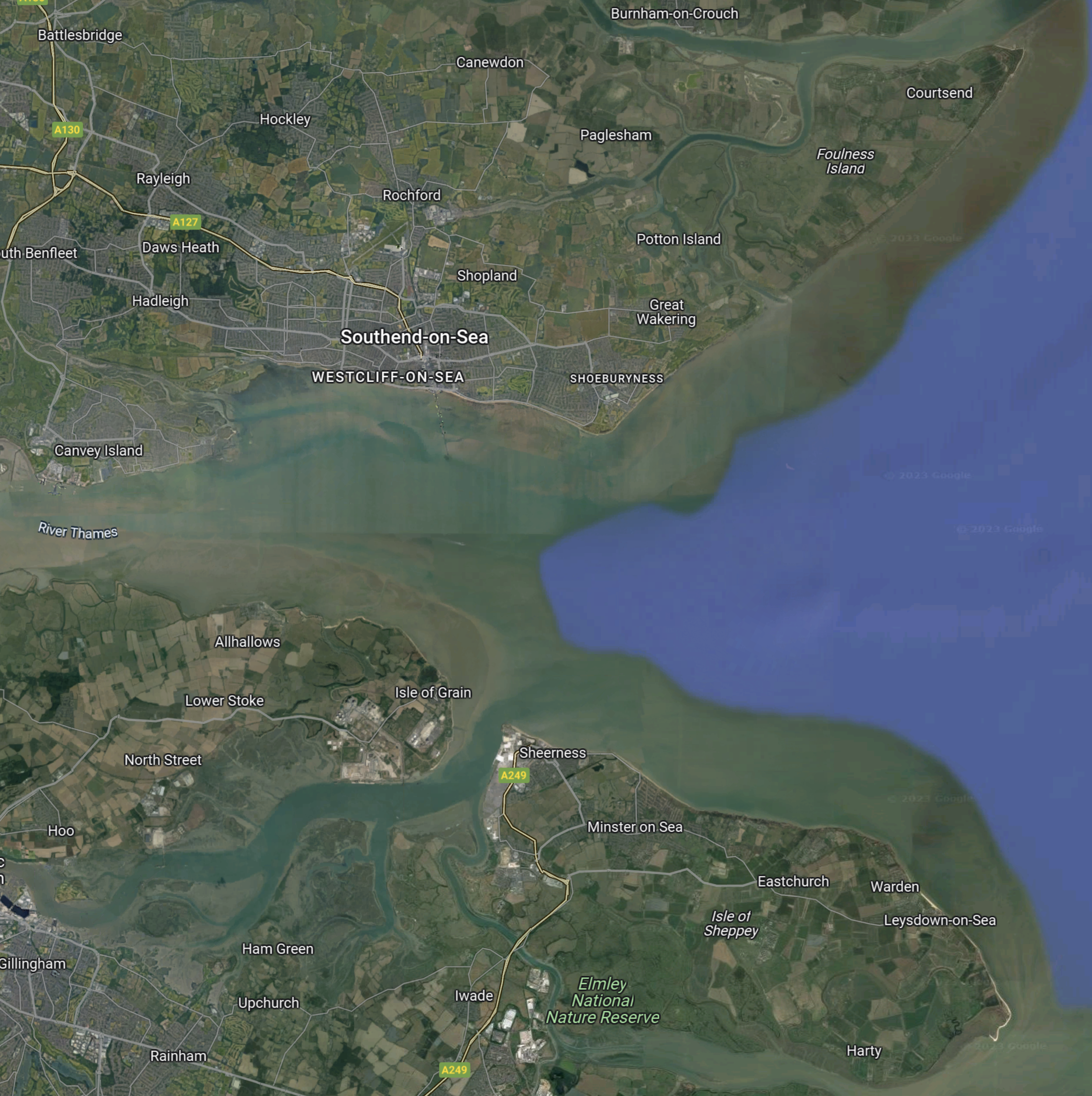
This map shows the islands of the Thames Estuary.
Note.
- In Kent, there is the Isle of Sheppey and the Isle of Grain.
- Between the two islands is a large gas terminal , a gas-fired power station and an electricity sub-station connecting to Germany.
- In Essex, there is Canvey, Foulness and Potton Islands.
- There is also the site at Bradwell, where there used to be a nuclear power station.
If we assume that each island could support 200 MW, there could be a GW of onshore wind for London and perhaps a couple of SMRs to add another GW.
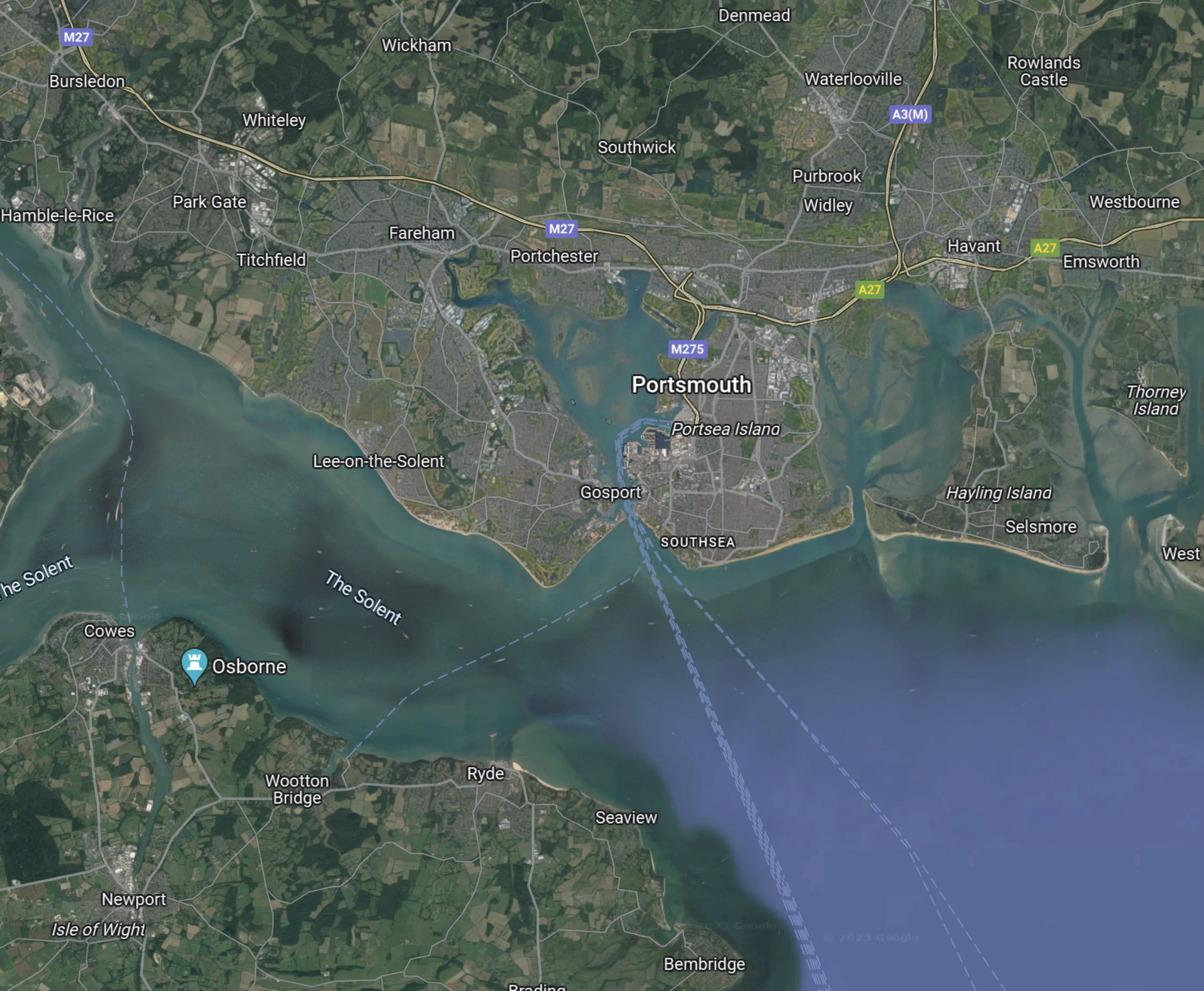
This map shows the islands around Portsmouth.
Note.
- Hayling Island is to the East of Portsmouth.
- Further East is Thorney Island with an airfield.
The Isle of Wight could be the sort of island, that wouldn’t welcome wind farms, although they do make the blades for turbines. Perhaps they should have a wind farm to make the blades even more green.
But going round England and Wales there doesn’t seem to be many suitable places for Remote Island Wind.
I do think though, that Scotland could make up the difference.
Geothermal Energy
This is directly mentioned as going into the emerging technologies pot, which is numbered 2.
I think we could see a surprise here, as how many commentators predicted that geothermal heat from the London Underground could be used to heat buildings in Islington, as I wrote about in ‘World-First’ As Bunhill 2 Launches Using Tube Heat To Warm 1,350 Homes.
Perhaps, Charlotte Adams and her team at Durham University, will capitalise on some of their work with a abandoned coal mine, that I wrote about in Exciting Renewable Energy Project for Spennymoor.
Timescale
This paragraph gives the timescale.
The publication of these notices mean that AR5 is set to open to applications on 30 March with results to be announced in late summer/early autumn 2023, with the goal of building upon the already paramount success of the scheme.
It does look like the Government intends this round to progress at a fast pace.
Conclusion
If this is going to be an annual auction, this could turn out to be a big spur to the development of renewable energy.
Supposing you have a really off-beat idea to generate electricity and the idea place in the world is off the coast of Anglesey.
You will certainly be able to make a bid and know like Eurovision, one auction will come along each year.
How Sideshore Technology Can Optimise The Layout Of Your Offshore Wind Farm By Applying State-Of-The-Art Algorithms
The title of this post, is the same as that of this article on offshoreWIND.biz.
This is the sub-heading.
Smarter offshore wind farm layouts will accelerate the energy transition
These paragraphs outline the problem.
Wind farm layout optimisation is the art of defining the optimal locations of wind turbines, infield cables and substation structures. It presents a golden opportunity to increase project value.
The academic community has done extensive research into numerical wind farm layout optimization, however, in real projects, it is hardly ever applied. Wind farm layout optimisation is complex because it is multidisciplinary. A wind farm development is typically split into work packages (turbine, foundations, cables, substation). The location of each turbine influences the project cost across the various work packages. While wake effects are important, other aspects need to be considered as well. For example, water depth affects the foundation size. Turbulence levels need to be restricted. And cables, seabed preparation, and soil conditions are often neglected, while they too can have a substantial impact on costs. Fully optimising the turbine positions requires not only insight into wake interactions and the cost drivers across all work packages but also a way of linking everything together.
My project management software writing experience would take a system like this further and use the output pf their system to create the project network for a project management system.
The possibilities then are endless.
Project Launches To Pair Offshore Wind With Sustainable Food Production
Note that it’s a little over a fortnight to April Fool’s Day!
The title of this post, is the same as that of this article on offshoreWIND.biz.
This is the sub-heading.
Win@Sea, a new collaboration between Vattenfall and Danish universities and companies, will investigate how to produce offshore wind power and sustainable food – all while improving the marine environment and biodiversity in the same marine area.
This is the first paragraph.
The partners will look into whether an offshore wind farm could simultaneously produce fossil-free electricity and sustainable food while also contributing positively to biodiversity in the same area.
But this report is not alone, in using the sea as a farm.
- Amazon Finances First-Ever Commercial-Scale Seaweed Farm Located Between Offshore Wind Turbines
- Brown Seaweed Could Remove 550 Million Tons Of Carbon
- The Plans For Giant Seaweed Farms In European Waters
- Oysters Get New Home At Eneco Luchterduinen Offshore Wind Farm
It sounds to me like a case of great minds thinking alike.
UK Ports Need GBP 4 Billion Investment To Help Unleash Floating Offshore Wind Industry – Report
The title of this post, is the same as that of this article on offshoreWIND.biz.
This is the sub-heading.
A new report by the Floating Wind Offshore Wind Taskforce says up to eleven ports around the UK will need to be transformed as fast as possible into new industrial hubs to enable the roll-out of floating offshore wind at scale
This is the first paragraph.
The report contains a series of recommendations which could see 34 GW of floating wind installed in UK waters by 2040 if the country’s government takes swift and decisive action. At present Ministers have set a target of 5 GW by 2030.
What a lorra lorra lot of wind! (With apologies to Cilla!)
RWE Conducting Seabed Habitat Survey For 3 GW Offshore Wind Farm In UK
The title of this post, is the same as that of this article on offshoreWIND.biz.
This is the sub-heading.
RWE is performing a benthic survey off the northeast coast of the UK, where the company plans to build its 3 GW Dogger Bank South (DBS) Offshore Wind Farm.
That sounds like another 3 GW will soon be on its way.
In How Long Does It Take To Build An Offshore Wind Farm?, I said that six years from planning permission to commissioning was typical, so as this wind farm is applying for planning permission in 2024, I would expect that a completion date of 2030 is possible.
 The Anonymous Widower