Alstom’s Coradia iLint Hydrogen Train Makes Its Swedish Debut
The title of this post, is the same as that of this article on Global Railway Review.
This picture shows a hydrogen-powered Alstom Coradia iLint train near Hamburg

If you’re ever in Hamburg, take a ride to Buxtehude and take a ride to Cuxhaven.
These trains are now in service in Germany and have been ordered in quantity in Germany and have been demonstrated in Austria, Italy and The Netherlands.
Fraunhofer Targets Hydrogen Adoption With Improved Electrolysis System Efficiency
The title of this post, is the same as that of this article on Hydrogen Fuel News.
This is the first paragraph.
The Fraunhofer Heinrich Hertz Institute (HHI) has announced that it is taking part in a new research project meant to accelerate hydrogen adoption. Its main focus is to examine water electrolysis in order to achieve improve efficiency.
The research project is called InnoEly, and this appears to be the project’s aim, as stated on the web site.
Modeling and characterization tools for the development of water electrolysers – from materials to system integration
This could be a project, that brings about a big improvement in the efficiency of electrolysers.
Could London’s New Routemaster Buses Be Converted To Hydrogen Power?
There are a thousand New Routemaster buses on the roads of London.
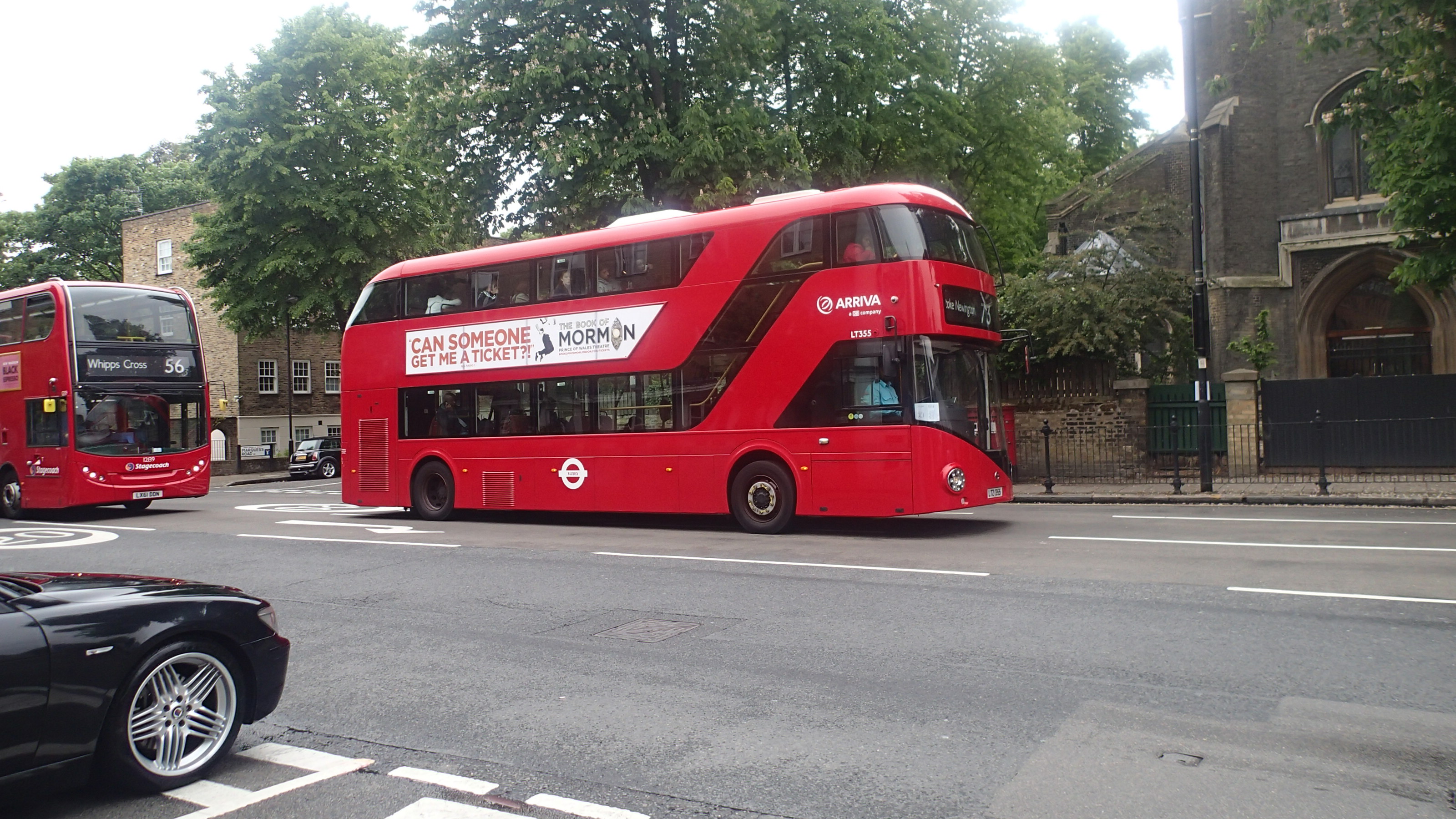
This paragraph from Wikipedia describes the transmission.
The bus is a hybrid diesel-electric driven by a battery-powered electric motor, charged by a diesel fuelled generator and recovering energy during braking by regenerative braking.
Note.
- The Cummins diesel engine is under the back stairs and is mounted high up. You can sometimes hear it start and stop if you sit or stand at the back of the bus.
- The diesel engine is part of the Cummins B Series Engine family, which is used very widely, included in vehicles like the Dodge Ram pick-up.
- The battery is mounted under the front stairs.
Cummins are embracing hydrogen in a big way and bought hydrogen company; Hydrogenics in 2019.
This press release from Cummins is entitled Cummins Begins Testing Of Hydrogen Fueled Internal Combustion Engine.
This is the first paragraph.
Cummins has taken another step forward in advancing zero carbon technology as the company began testing a hydrogen-fueled internal combustion engine. The proof-of-concept test is building on Cummins’ existing technology leadership in gaseous-fuel applications and powertrain leadership to create new power solutions that help customers meet the energy and environmental needs of the future.
Only today in Deutz Hydrogen Engine Ready For Market, I reported on how Deutz were going down a similar route.
I have done consultancy work for Cummins in Darlington, where I suspect the New Routemaster engines were built and the company prides itself in being able to provide a specially-laid out diesel engine for a niche-market application.
If they develop a hydrogen replacement for the B Series engine, I suspect that they will adopt the same sales philosophy.
For a start, it would enable all their many existing customers to convert their products from diesel to hydrogen power.
A hydrogen engine would be a direct way to enable conversion of a New Routemaster to hydrogen.
- The new hydrogen engine and generator would just replace the current diesel engine and generator.
- The chassis, body, battery and traction motor could be retained.
- I am also sure, that Wrightbus have the expertise to squeeze a hydrogen tank in somewhere.
.I believe that in a few years Cummins will be able to replace the diesel engine with a hydrogen engine of equivalent size and power.
After Ricardo announced their fuel cell approach to convert modern diesel buses to hydrogen, which I wrote about in Ricardo To Engineer Zero Emission Buses For UK’s First Hydrogen Transport Hub, I am sure we’re going to see thousands of modern buses converted to hydrogen power.
Conclusion
I believe from my knowledge of Cummins and the way they work, that they will come up with a hydrogen-based solution, that will replace the Cummins diesel in these buses with a zero-carbon engine.
If Cummins don’t then someone else will.
Whoever solves the problem of converting London’s new Routemasters to hydrogen will have one of the best adverts for their product, there has ever been.
After converting London’s thousand Routemasters, the engineers could move on to anything powered by a Cummins engine.
Ricardo To Engineer Zero Emission Buses For UK’s First Hydrogen Transport Hub
The title of this post, is the same as that of this article from Ricardo.
This is the first paragraph.
As part of its mission to support the decarbonisation of the global transport and energy sectors Ricardo, a world-class environmental, engineering and strategic consulting company, has announced that it has received Government funding to create a retrofit hydrogen fuel cell bus demonstrator for the UK’s first hydrogen transport hub in the north-east of England.
The market for refitting buses with hydrogen power is large, as this sentence from the press release shows.
There are 38,000 buses in service in the UK: 98% are diesel powered; and 50% are less than eight years old.
And that’s just the UK!
The last paragraph sums up Ricardo’s ambitions.
Ricardo will develop a scalable, modular solution, enabling it to be installed, with minimal adaption, to multiple single and double decker platforms. The modular concept may also be saleable as a ‘new fuel cell’ module to coach builders across the European Union enabling them to develop new fuel cell
buses by taking a rolling chassis and applying their coach build body alongside the fuel cell module solution.
Never underestimate Ricardo!
Deutz Hydrogen Engine Ready For Market
The title of this post, is the same as this article on H2 View.
These are the first two paragraphs
A brand-new hydrogen engine has been developed in Cologne, Germany to help accelerate the rollout of low and zero emission drive systems.
Developed by Deutz, the TCG 7.8 H2 engine has already passed initial tests on the test bench and is scheduled to go into full production in 2024.
This could be a very significant development.
Initially from the article, they seem to be concentrating on stationary applications, but it could be an easy route for large vehicle manufacturers to decarbonise their products.
Is The TP Group Worth A Punt?
I have been following the Class 799 train for some time. It is a hydrogen train prototype being sponsored by the owner of the train; Porterbrook.
The difficult task of fitting all of the hydrogen and electrical electrical gubbins under the floor of the train has been accomplished by the combined efforts of Birmingham University and TP Group.
But TP Group according to this article on The Times, which is entitled Directors In Line Of Fire As TP Group Takeover Bid Turns Sour, seems to have turned a bit difficult for the company.
I wrote about the Class 799 train in A Class 319 Train, But Not As We Know It! and I predict that it could be one of the stars of COP26 in Glasgow later in the year.
This picture sums up why!
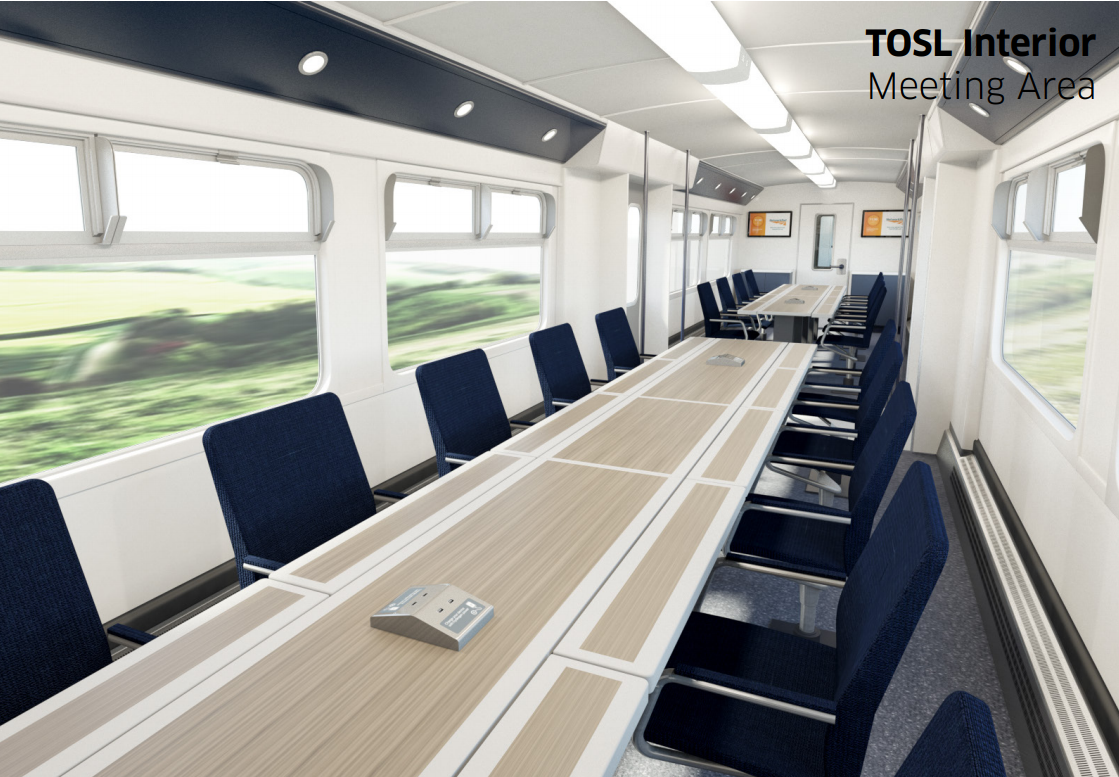
The prototype may have designed for publicity, but I can see pictures of Joe, Boris, Angela et all going for a ride in this zero-carbon train, that started out as a British Rail commuter train on Thameslink.
I shall be watching the TP Group share price with interest.
Viritech Issues A Call To Action For Hydrogen In The United Kingdom
The title of this post, is the same as that of this article on Daily Research Reporting.
This is the first paragraph.
According to Viritech, adopting clean hydrogen innovation to power road, air, and marine transportation offers the UK a major potential to retake a global engineering pioneering role, create an economic premium, and secure a key environmental dividend. The firm makes the case in its Call to Action for accelerated public and private sector commitment to groundbreaking technology with the potential to restore the UK’s leadership role in the automotive industry while also making a strong dedication to decarbonizing the difficult-to-reduce heavy freight segments of the transportation mix.
I’ll go along with what Viritech says.
Three things caught my eye in the article.
The first is the picture of a car, which I assume is hydrogen-powered.
I also liked this paragraph, which gives a prediction about how batteries and hydrogen will play out their competition.
“Hydrogen is a critical component of the zero-emissions puzzle,” said Jay Nagley, a seasoned automotive pundit from Viritech. “Batteries cannot do everything, and there are many use cases, particularly in heavy freight applications like heavy cargo vehicles, where batteries solely are not the answer to replacing fossil fuels. A dual-track method combining hydrogen and batteries, on the other hand, offers a full range of possibilities for achieving this goal. While batteries will be the primary source of growth in the early 2020s, the hydrogen powertrains will become the primary source of growth in the late 2020s.”
I agree with Jay Nagley.
The last point is only a few words.
Structural graphene pressure vessels.
That sounds to be just the ticket to reduce the size of hydrogen tanks.
Conclusion
Viritech could be one to watch.
Greater Manchester’s First Low Carbon Hydrogen Hub To Be Developed As Part Of New Collaboration
The title of this post, is the same as that of this article from Manchester Metropolitan University.
This is the first two paragraphs.
A new partnership aims to support ambitions for Greater Manchester to become the first Net Zero region in the world by 2040, with the planned installation of the city’s first low-carbon hydrogen hub.
For the first time, sustainable hydrogen fuel will be produced at scale in the region, creating opportunities for businesses in the area to make Net Zero plans with hydrogen in mind.
It doesn’t say much about the hydrogen hub, but from other sources, I have found the following.
it appears it will have the capability of producing 200 MW of green hydrogen.
- Carlton Power is the main developer.
- It will be built on the Trafford Low Carbon Energy Park.
- Building will start next year with operation scheduled for 2023.
- It will be built near Highview Power’s 50MW/250 MWh CRYOBattery.
It sounds ambitious. Especially, as it appears Carlton Power are talking about developing another ten similar sites in the UK.
New Company Established To Help Transition Bus Fleets To Hydrogen
The title of this post, is the same as that of this article on H2 View.
These first two paragraphs describe the company.
A new asset financed company has been launched to help design, deliver, and finance the seamless transition to a zero-emissions bus fleet with hydrogen included.
Launched by Wrightbus owner Jo Bamford today (August 9), FUZE will support the energy transition to cleaner variants by offering packages that enable the transition to hydrogen or electric fleets of buses.
If Jo Bamford gets this right, it could certainly smooth the transition to hydrogen and electric buses, where bus companies will be introducing new technology.
The words asset-based make me think, that buses, fuelling systems and chargers could all be hired on a bus-by-the-hour basis in much the same way train manufacturing companies like Hitachi and Stadler supply trains to the train operating companies.
The manufacturers are contracted to supply so many trains each day and if there are reliability or availability problems, then they must compensate the operators. That model would surely work with buses.
- I also suspect the model would allow flexibility, as to the choice of either an electric or hydrogen bus.
- I also think, that the model would be able to provide short-term deals for large events and Rail Replacement services.
- Buses no longer needed could also be returned, repainted and hired by another operator.
- FUZE could also have a standby fleet, so any bus operator wanting to try hydrogen buses for a month, could enter into a short-term deal.
I also think that this new generation of buses can open up innovative ideas for bus use. In Three Hydrogen Double Decker Buses Set For Dublin, I describe how Dublin will use just three hydrogen buses to create a fast commuter route.
Conclusion
I like it!
Short Term Hire Of Buses
I have a feeling that if say you wanted to hire a small fleet of buses for say a festival like Glastonbury, that hydrogen buses could be the better bet.
Suppose you wanted to run a fleet of five buses to and from the car park at the nearest rail station.
- Feeding the chargers for five buses will need a substantial electricity feed.
- Hydrogen buses can be refuelled from a mobile fuelling station.
- Hydrogen buses can probably run all day on one refuelling.
The ease of refuelling would appear to favour the hydrogen bus.
Talgo and Repsol To Develop Fuel Cell Trains Powered By Renewable Hydrogen
The title of this post, is the same as that of this article on Railway Gazette.
This article follows the pattern, of if you’re going to build hydrogen-powered trains, you need a quality partner for your hydrogen.
I still puzzle, what Talgo will do with their factory in Scotland, if they miss out on the orders for High Speed Two.
- Russia is an obvious market for their Spanish gauge high speed trains and delivery from Rosyth by ship is probably easier, than from Spain.
- The UK probably needs a quality modern hydrogen train for remote routes, as does the island of Ireland.
- As I indicated in LNER Seeks 10 More Bi-Modes, there could be a niche for a small fleet of 140 mph hydrogen bi-modes to run between London and the North of Scotland.
Note.
The UK probably has enough capacity for regional and commuter electric and battery trains, with Alstom, CAF and Hitachi all with modern trains in production.
Ireland and Russia, with their similar gauge to Spain could be worthwhile markets.
However, I do believe that the 140 mph hydrogen bi-modes would slot into substantial markets in continents and countries like Africa, Australia, Canada, India, Norway, South America, Sweden and the United States, where there are enormous mileages of standard gauge railways without electrification.
 The Anonymous Widower