Through The Blackwall Tunnel In A 108 Bus
Around lunchtime today, I took a 108 bus from North Greenwich station on the Jubilee Line to Bow Church station on the DLR. It’s rather a roundabout way to get home from Bow Church station, so I walked to Bow Road station to get a train to Moorgate for a bus home.
I took these pictures of the journey.







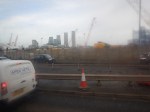








Note.
- The first picture shows the Radisson Red hotel on Tunnel Avenue.
- The Northbound bus travelled through the old tunnel, which was built in 1897.
- It looks in good condition for its age in my pictures.
- Even at lunchtime on Christmas Eve, there are queues of traffic waiting to go through the tunnel from both directions.
- The dog in the last picture is better and less-threatening street art, than you get in some parts of the UK
Taking good pictures from inside a dirty single-deck bus is not the easiest task.
This paragraph from the Wikipedia entry for the Blackwall Tunnel, gives a snapshot of the tunnel’s development.
The tunnel was originally opened as a single bore in 1897 by the Prince of Wales, as a major transport project to improve commerce and trade in London’s East End, and supported a mix of foot, cycle, horse-drawn and vehicular traffic. By the 1930s, capacity was becoming inadequate, and consequently a second bore opened in 1967, handling southbound traffic while the earlier 19th century tunnel handles northbound.
Note.
- Both tunnels are not open to pedestrians, cyclists or non-motorised traffic.
- There is a four metre height limit on the Northbound tunnel, which also has sharp bends.
- The Southbound tunnel is straight and has a height limit of 4.72 metres.
- London’s iconic Routemaster and New Routemaster buses are 4.38 and 4.39 metres high respectively.
- The tunnel will be tolled, when the Silvertown Tunnel opens in a few years time.
- It looks like both Blackwall and Silvertown tunnels will have the same charge as the Dartford Crossing, which is currently two pounds if you pre-pay for a car.
The pictures and words give clues to why the Mayor has decided to build the Silvertown Tunnel.
It is very rare to get through the tunnel without being delayed in a queue of traffic.
Double deck buses can’t go through the Northbound Tunnel.
As a non-driver, who doesn’t need to use the Blackwall Tunnel, I don’t listen to traffic reports, but perhaps once a week whilst waiting for the news on Radio 5, I hear of problems at the tunnel. Sometimes, these are caused by over-height or over-long vehicles, which have got stuck in the Northbound tunnel.
Incidentally, my earliest memory of the tunnel is probably from about 1953, when my family was stuck in the tunnel for several hours in my father’s Y-type MG.

, My father’s car had the registration BNH 368.
I doubt I’ve driven through the tunnel this century, as I have rarely driven to South and South-East London since the 1970s, as I’ve generally taken the train across London. I can remember one trip in about 2008 though, when I took the Woolwich Ferry for the Southbound crossing.
As I was living near the top of the M11 in Suffolk, I may have gone home via the Blackwall Tunnel.
Ruby Wax, Melanie Brown and Emily Atack Climb Pikes Peak
I have just watched these three ladies climb Pikes Peak in Colorado.
Around the age of 18, I used to regularly read the American car magazine; Road & Track and was fascinated to read about the annual hill climb, that took place on the 14,000 foot Pikes Peak.
I am surprised that the hill climb up Pikes Peak was not mentioned in the program.
I have only driven at anywhere near that height once, although, I flew my Cessna 340 at 24,000 ft several times.
When C and I had a memorable holiday in Ecuador, we took a small Chevrolet Metro, up to about 12,000 feet in the Andes.
Cars cough badly at that altitude!
World’s First Net Zero Transatlantic Flight To Fly From London in 2023, Powered By The Rolls-Royce Trent 1000
The title of this post, is the same as that of this press release from Rolls-Royce.
These are the three main bullet points.
- World first as Virgin Atlantic wins UK government funding to operate historic London – New York flight
- Rolls-Royce, Boeing, Imperial College London, University of Sheffield, Rocky Mountain Institute (RMI) and ICF also form part of an iconic British-led consortium
- Heralds future of low carbon aviation, with the wider sustainable aviation fuel (SAF) industry potentially creating thousands of UK jobs while supporting delivery of net zero aviation emissions by 2050
Note.
- The flight will take place next year.
- The aircraft will be one of Virgin Atlantic’s flagship Boeing 787s, which are powered by a pair of Rolls-Royce Trent 1000 engines.
- When fully replacing kerosene, SAF can slash lifecycle carbon emissions by more than 70% compared to conventional fossil jet fuel.
- This flight is expected to be fuelled by SAF made primarily from waste oils and fats, such as used cooking oil.
- SAF could create a UK industry with an annual turnover of £2.4bn by 2040, and which supports up to 5,200 UK jobs by 2035.
The flight could be made net zero, if it used 100 % SAF and offset any carbon dioxide produced.
What Is Sustainable Aviation Fuel?
It is also known as Aviation biofuel, which has a comprehensive Wikipedia entry, which has this first paragraph.
An aviation biofuel or bio-jet fuel or bio-aviation fuel (BAF) is a biofuel used to power aircraft and is said to be a sustainable aviation fuel (SAF). The International Air Transport Association (IATA) considers it a key element to reducing the carbon footprint within the environmental impact of aviation. Aviation biofuel could help decarbonize medium- and long-haul air travel generating most emissions, and could extend the life of older aircraft types by lowering their carbon footprint.
Sustainable Aviation Fuel (SAF) can be made in a variety of ways, which are described in the Wikipedia entry.
Could A Plane Run On Kerosene One Flight And SAF The Next?
I suspect that the practicalities of airline operation and schedules and the production and distribution of aviation fuel, will mean that if an airliner can run on both kerosene and SAF would be a great advantage.
This is a paragraph from the press release.
It comes hot off the heels of the world’s first sustainable fuel military transporter flight using 100% SAF, completed by the RAF last month using the iconic Voyager aircraft.
Note.
- The Voyager is an RAF military transport/tanker aircraft based on the Airbus 330 and fitted with Rolls-Royce Trent 772B-B-60 engines.
- Rolls-Royce Trent engines power both the Dreamliner and the Voyager.
- I’m sure that for operational reasons, the RAF would mandate a dual fuel capability.
This press release on the RAF web site, which is entitled Royal Air Force Completes World-First Sustainable Fuel Military Transporter Flight, gives more details of the RAF flight.
Rolls-Royce And Gulfstream Give Wings To Sustainable Business Aviation
The title of this post, is the same as that of this press release from Rolls-Royce.
These are the first two paragraphs of the press release.
Rolls-Royce and Gulfstream Aerospace Corp. are leading the way towards sustainable business aviation by conducting the first original equipment manufacturer test flight of an ultralong-range business jet powered by 100% Sustainable Aviation Fuel (SAF). The test took place on the BR725-powered Gulfstream G650 twin-jet over Gulfstream’s headquarters in Savannah, Georgia.
Demonstrating that current Rolls-Royce engines for business jet and large civil applications can operate with 100% SAF as a full “drop-in” option, this test lays the groundwork for moving this type of fuel towards certification. At present, SAF is only certified for blends of up to 50% with conventional jet fuel and can be used on all current Rolls-Royce engines.
Note.
- The BR725 is described in this Wikipedia entry.
- The Gulfstream G650 is described in this Wikipedia entry.
- All current Rolls-Royce engines can run with blends of up to 50 % SAF and conventional jet fuel.
The BR725 or other engines in the family have other applications.
- It is used in the Bombardier Global Express.
- It was used in the Boeing 717 airliner.
- The military version of the BR725 will be used to re-engine the USAF’s Boeing B52-H Stratofortresses.
- The Dassault Falcon 10X will be powered by a development of the BR725.
I can certainly see, the owners of business jets being very interested in operating a sustainable business jet.
But would the USAF be interested in running a seventy-year-old bomber on 100% Sustainable Aviation Fuel?
The Fuel Used In The Test
This paragraph of the press release describes the fuel.
The SAF that was used in the test consists of two components: HEFA (Hydroprocessed Esters and Fatty Acids), produced from waste fat and waste plant oils by low-carbon fuel specialist World Energy in Paramount, California, and (SAK) Synthesised Aromatic Kerosene made from waste plant-based sugars by Wisconsin-based Virent Inc. This innovative and fully sustainable fuel in development eliminates the need for the addition of further petroleum-based components and enables a 100% drop-in SAF that can be used in existing jet engines and infrastructure without any modifications. This sustainable fuel has the potential to reduce net CO2 lifecycle emissions by about 80% compared to conventional jet fuel, with the possibility of further reductions in future.
That sounds impressive.
A Sustainable Airliner
The Boeing 717 is a hundred seat airliner, with about a hundred still in service. They appear to have a good safety record.
One of the operators is Hawaiian Airlines and might be the sort of airline, that would like to decarbonise their flights.
So might we see some airlines using the Boeing 717 on SAF to attract passengers?
I wouldn’t rule it out and after certifying the engine on the Gulfstream, certification on another type wouldn’t be the most demanding of certifications.
I also think, it is quite likely, that an aircraft manufacturer could use engines in the BR 725 family to create a hundred seat sustainable airliner.
Hyperbat In Multimillion-Pound Deal To Supply Battery Packs For Lotus Supercar
The title of this post, is the same as that of this article on The Times.
Lotus or supercars for that matter, will not be a big market for battery packs, but they will be a high-profile one. The article in The Times may well flush out a few good sales leads from companies who want to decarbonise their products.
Many years ago, I did a consultancy job for Cummins, where my software was used to look for faults in their engine testing system. One of their engineers explained to me that they had a sales and production philosophy that could handle all markets from the large down to small niche ones. He said that we can’t tell which niche markets are going to be successful.
In the last couple of years Cummins have embraced hydrogen very strongly and it looks like they are adopting a similar philosophy.
So in the Cummins engine business model, it looks like the niche market is important.
I suspect that what goes for the diesel engine market will also go for the electric transmission market, with niche markets being nicely profitable and an important part of sales.
It looks to me that Hyperbat are going for that market, backed up by the engineering and battery experience of Williams Advanced Engineering and the manufacturing knowledge and logistics of Unipart.
Note that Williams Advanced Engineering is now owned by Australian billionaire; Andrew Forrest, through his company; Fortescue Future Industries. I wrote about this purchase in Fortescue Buys Williams Engineering In Major Push Into High Performance Batteries.
On the Hyperbat web site, this is said about their manufacturing facility.
The facility is about to double in size to meet current needs, with plans to double again in the next 2 years.
The factory is based on the site of a former exhaust plant and reintroduces manufacturing to the area, with an environmentally sustainable future.
Capacity of the factory is approximately 10,000 packs per year.
I;m sure the company, has enough backing for a very successful future.
Extending The Elizabeth Line – Linking To The Chatham Main Line
Preamble
I believe that everybody in the South East of England needs the best access possible to the Elizabeth Line, by train from where they live.
- The Elizabeth Line serves the important places like Brick Lane, Canary Wharf, the City of London, Heathrow Airport, Liverpool Street station, the Olympic Park, Oxford Street and Paddington station directly.
- Because of its connection to Thameslink, the Elizabeth Line also serves important places like Bedford, Brighton, Cambridge, Gatwick Airport, Luton Airport and Tate Modern with a single change at Farringdon station.
- Using the Elizabeth Line, Thameslink and perhaps a bus, it is possible to get to most important places in Central London.
- The more passengers that use the Elizabeth Line and Thameslink, the more London’s businesses will thrive creating employment and tax revenues.
- It should also be remembered, that using a train to visit central London, probably cuts your carbon footprint.
- The Elizabeth Line also cost a fortune, so perhaps by using it, you will be getting some of your portion of what it cost you back.
This post is one of several, where I discuss how to bring more passengers into the Elizabeth Line network.
The Chatham Main Line
This is the introduction to the Wikipedia entry for the Chatham Main Line.
The Chatham Main Line is a railway line in England that links London Victoria and Dover Priory / Ramsgate, travelling via Medway (of which the town of Chatham is part, hence the name).
Services to Cannon Street follow the route as far as St Mary Cray Junction where they diverge onto the South Eastern Main Line near Chislehurst.
Thameslink services to Luton run in parallel from Rainham to Rochester, diverging once across the River Medway at Rochester Bridge Junction onto the North Kent Line via Gravesend and Dartford.
A shuttle service operates on the Sheerness Line which starts at Sittingbourne.
Note.
- The main London terminals for trains to London on the Chatham Main Line are Cannon Street (Peak only), St. Pancras and Victoria.
- Services stop at Rainham station, so passengers can change to the two trains per hour (tph) Thameslink service to Luton.
- St. Pancras has one tph from Strood, Rochester, Chatham, Gillingham, Rainham, Sittingbourne and Faversham stations.
- Victoria has two tph from Strood, Rochester, Chatham, Gillingham, Rainham, Sittingbourne and Faversham stations.
- Rochester, Gillingham, Rainham and Faversham can turnback trains to London.
The only connections to the Elizabeth Line are.
- The HighSpeed service to St. Pancras calls at Stratford International, where the connection is tortuous.
- The Thameslink service calls at Farringdon, where the connection is easy.
As an example say you were going from Chatham to Heathrow Terminal 4.
The National Rail timetable suggests this route.
- Southeastern HighSpeed – Chatham to St. Pancras
- Thameslink – St. Pancras to Farringdon
- Elizabeth Line – Farringdon to Heathrow
Note that the change at St. Pancras is not the easiest.
Extending The Elizabeth Line To The Chatham Main Line
In Elizabeth Line To Ebbsfleet Extension Could Cost £3.2 Billion, I talk about this proposal as described in this article on Ian Visits.
One of the key features of Crossrail To Ebbsfleet (C2E) project is that instead of all trains terminating at Abbey Wood, trains will terminate as follows.
- Abbey Wood – 4 tph
- Northfleet – 4 tph
- Gravesend – 4 tph
This will mean that 8 tph would pass through Abbey Wood station.
Gravesend is not the best place to turn trains, so why not turn two tph at somewhere like Rochester, Gillingham, Rainham or Faversham?
If two tph to Rainham is good enough for Thameslink, surely two tph to Faversham could be good enough?
Extending The Elizabeth Line To A New Hoo Station
In Effort To Contain Costs For Hoo Reopening, I discussed opening the new Hoo station.
Consider.
- Hoo junction to Hoo station is no more than five or six miles.
- Aventras have been designed to run on battery power, so I suspect Lizzie’s Class 345 trains could be so fitted.
- Range would be sufficient for one return trip from Hoo junction to Hoo station
- Two tph at Hoo station could be handled by a single platform.
It looks to me, that of the four tph to Gravesend if C2E is built, two tph could go to both of Hoo and Faversham.
This assumes of course that digital signalling can fit all the trains on the North Kent Line between Abbey Wood and Faversham.
Chatham And London Main Line Stations
In these routes, I am assuming that there are two tph on the Lizzie Line between Faversham and Heathrow.
- Chatham and Cannon Street – Lizzie Line to Whitechapel and then District Line
- Chatham and Charing Cross – Lizzie Line to Whitechapel and then District Line
- Chatham and Euston – Lizzie Line to Whitechapel and then Hammersmith & City Line
- Chatham and Farringdon – Lizzie Line direct – Thameslink direct
- Chatham and Fenchurch Street – Lizzie Line to Whitechapel and then District Line
- Chatham and Liverpool Street – Lizzie Line direct
- Chatham and Marylebone – Lizzie Line to Paddington and then Bakerloo Line
- Chatham and Paddington – Lizzie Line direct
- Chatham and Kings Cross – Thameslink direct – Lizzie Line to Whitechapel and then Hammersmith & City Line
- Chatham and St. Pancras – Thameslink direct – Southeastern HighSpeed direct
- Chatham and Victoria – Southeastern direct – Lizzie Line to Whitechapel and then District Line
- Chatham and Waterloo – Lizzie Line to Paddington and then Bakerloo Line
Note how Whitechapel is an important interchange, as I said in Whitechapel Station Is The Preferred Interchange.
Conclusion
I do believe that the Elizabeth Line could be successfully extended to Kent.
HS2 Tech Incubator Bases Start-Ups On Site
The title of this post, is the same as that of this press release from HS2.
This is the introductory paragraph.
The latest cohort of the successful Innovation Accelerator initiative will base tech start-ups with project’s main civil engineering contractors to help tailor innovative solutions for the construction industry.
After discussing the aims, the press release then lists five SMEs.
Silicon Microgravity, a SME spun out from Cambridge University research, is developing non-invasive next-generation gravity sensors to identify underground hazards that could be deployed for ground investigation surveys and utility diversion planning.
EHAB is developing hyper-local weather forecasting and using A.I. to optimise daily works schedules according to when or if rain is due. Reducing weather-related delays helps to maintain programme timetables and control costs.
Immense Simulations will further develop its A.I.-based strategic and operational transport planning tool to de-risk the effects of works traffic on local road networks. The technology could also help plan for the effects future that HS2 stations could have on traffic movements in surrounding areas.
Consequence has developed “carbon accounting” technology that illustrates the full carbon content of construction materials used on HS2.
Mafic is developing technology to enhance productivity and protect delivery schedules.
My experience of science, data analysis and writing a lot of database and project management software, leads me to the conclusion, that these companies have been well-chosen and a majority will be a success.
Ducking And Diving Between Moorgate And Liberty
Liberty is one of my favourite shops. That probably dates from the times in the 1970s, when C and I didn’t have large amounts of money and three kids, so if she needed a new summer dress, I’d make it and we’d usually choose the fabric at Liberty.
I was doing some Christmas shopping today, so after breakfast at Leon on Moorgate, I jumped into the Lizzie Line to the Hanover Square entrance at Bond Street station, where it was a short walk to Liberty.
These pictures document the route.
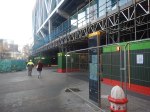
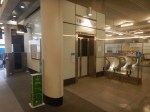

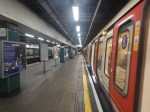
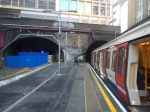
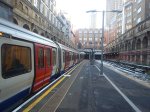
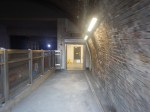

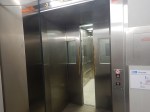
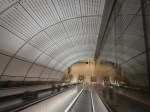

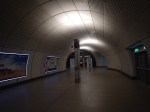
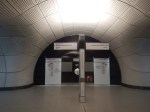

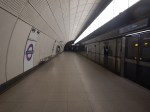
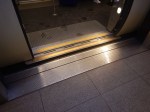
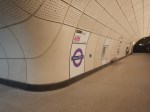






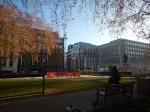



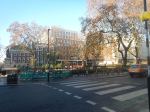








Note.
- I took one stop on the Metropolitan Line from Moorgate to Barbican.
- I positioned myself, at the front of the train.
- This enabled me to take the lift at Barbican station to the Lizzie Line passenger interchange level at Farringdon station.
- I then got the escalator down to the platforms.
- I was able to get into the back of the Westbound train, which I needed to avoid a long walk at Bond Street station.
The Lizzie Line will bring out the best ducking and diving in us all.
But with my manoeuvres, I avoided a two hundred metre walk from one end of the train to another!
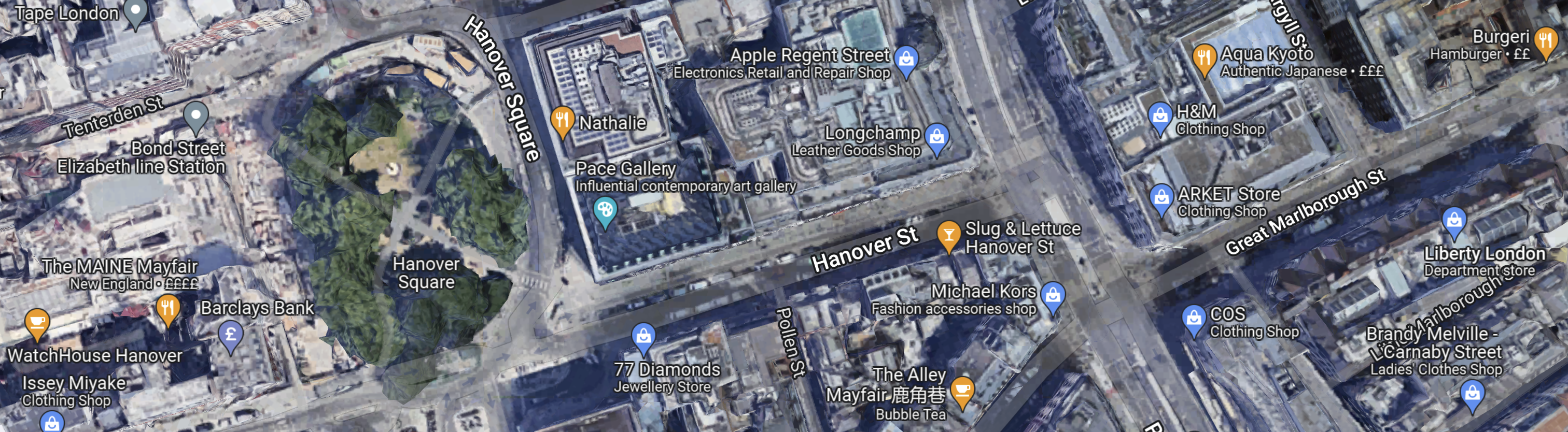
This Google Map shows my walking route from Bond Street station to Liberty.
Note.
- Hanover Square is the green space to the left of the map.
- The Hanover Square entrance to Bond Street station is in the North-West corner of the square.
- Liberty is at the far right of the map.
Advantages of this route include.
- The Western end is in one of London’s best squares.
- All major road crossings have zebras or light controlled crossings.
- There are a few smaller useful shops like itsu, a Pret and a Ryman on Hanover Street.
- The route wasn’t too busy with pedestrians.
I would recommend using the Hanover Square entrance to Bond Street station for places like Bond Street, Carnaby Street, John Lewis, Regent Street and The Palladium.
After I’d done my shopping at Liberty, I walked along Great Marlborough Street to the back entrance of Marks and Spencer’s flagship store, thus avoiding the crowds on Oxford Street.
What If I Want To Go To John Lewis On Oxford Street?
As for Liberty, you would take the Lizzie Line to Bond Street station and use the Hanover Square or Eastern exit, then follow these pictures.
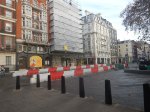
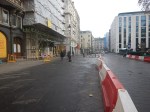



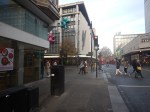
Note the Leon, which will probably opening soon.
What If I Want To Go To Bond Street?
You take the Medici Courtyard by the side of the station.
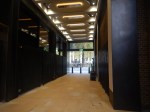
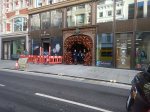


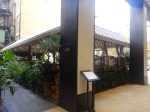
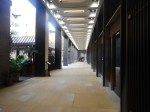
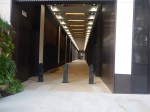
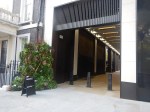
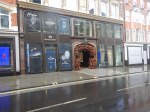







Note.
- There is an upmarket hotel in the courtyard.
- The courtyard has some artwork.
- The floral entrance on Bond Street.
It will be interesting to see how the Medici Courtyard develops.
Would Southeastern’s Proposed Battery-Electric Trains Be More Reliable In The Snow?
This article on CityMonitor, which is entitled No Trains South Of London During Cold Weather? Blame A Pair of Herberts For Choosing The Wrong Electrical System, explains it all.
The article was written in 2018 and these are the first two paragraphs.
As is often the case when the weather is below freezing, commuters around London are having a terrible time this week. The blizzard has hit services on all lines around the capital. Trains running towards the south and southeast have had the worst of it, with services cancelled on Monday before the full impact of the storm really hit.
It’s frustrating to compare the UK’s lack of readiness when extreme weather hits with services in Switzerland or Sweden, which cheerfully run in heavy snow conditions.
The article blames the poor performance on South London’s third rail electrification, which as the title suggests was chosen by a couple of Herberts.
Does anybody know of a child in the last fifty years, who has been called Herbert?
I shouldn’t be too hard on Herberts, as my paternal grandfather was a Herbert. But he was an alcoholic and died before he was forty.
Hydrogen Corolla Cross Begins Testing In Japan
The title of this post, is the same as that of this article on Toyota UK Magazine.
These two introductory paragraphs outline Toyota’s plans for hydrogen.
Toyota’s approach to carbon neutrality is to develop and offer multiple technologies to support widely varying customer needs and market environments around the world. This multi-technology approach – which includes battery electric and fuel cell electric and plug-in hybrid electric and hybrid electric vehicles – is witnessed in the company’s development of a new hydrogen car powered by a hydrogen combustion engine.
Toyota firmly believes it is too early to focus on a single zero-emission solution and is therefore concurrently developing hydrogen fuel cell and hydrogen combustion technology alongside battery electric technology. Today’s announcement follows last week’s confirmation that Toyota Motor Manufacturing UK will lead a consortium developing a hydrogen fuel cell version of the Hilux pick-up at its Burnaston car plant in Derbyshire.
This paragraph gives more details of the car.
This version of the mid-size Corolla SUV* is powered by the 1.6-litre, three-cylinder turbocharged engine featured in the GR Corolla* performance model, re-engineered with high-pressure hydrogen direct injection technology. The prototype is also fitted with hydrogen fuel tanks, packaged with know-how gained from the development of the Toyota Mirai fuel cell electric saloon. The prototype is able to accommodate five passengers and their luggage. Real-world evaluation is being carried out alongside digital development, and the vehicle will soon undergo winter testing in northern Japan.
I must admit, that if I still drove, this type of vehicle with a hydrogen internal combustion engine, would be what I’d buy.
 The Anonymous Widower