Piling Work To Get Underway To Electrify Line To Fife
The title of this post, is the same as that of this press release from Network Rail.
These four paragraphs outline the project.
Work to lay foundations that will pave the way for the electrification of the Fife Circle is about to get underway.
The £55million Scottish Government investment in the line between Haymarket and Dalmeny will see the railway transformed to accommodate quieter, more environmentally friendly electric trains.
The first phase of work between Haymarket and Dalmeny will see Network Rail pile the foundations for masts that will carry overhead wires up to the Forth Bridge. In total it will see 25 single track kilometres (STKs) of railway electrified by December 2024.
Subsequent phases of work will see ‘partial’ electrification of lines in Fife – totalling a further 104 STKs, to enable the introduction of Battery Electric Multiple Units (BEMUs) to replace life-expired diesel units which will be phased out.
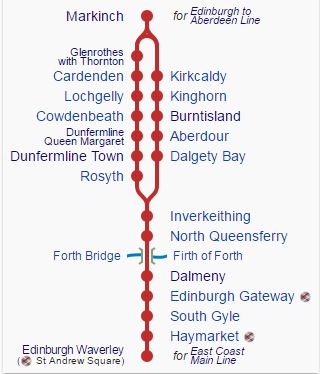
This map from Wikipedia shows the stations on the Fife Circle Line.
Note.
- The route is double-track.
- The route is not electrified.
- The train service is generally two trains per hour (tph) in both directions.
- The distance from Dalmeny to Glenrothes with Thornton via Cowdenbeath is 22.3 miles
- The distance from Dalmeny to Glenrothes with Thornton via Kirkcaldy is 21.4 miles
- Trains appear to wait between three and seven minutes at Glenrothes with Thornton before returning to Edinburgh by the alternate route.
I have a few thoughts.
Partial Electrification And Battery-Electric Trains
In the Notes To Editors, this is said about what Network Rail means by partial electrification.
The ‘partial’ electrification approach to the decarbonisation of the railway – beyond delivering a reduction in carbon emissions, will also reduce the ongoing net cost to the taxpayer of operating the railway at an earlier point.
Reduced upfront infrastructure and associated capital expenditure makes projects more affordable and enables electrification of key trunk routes to start as a priority so the benefits of electrified railways will be realised earlier. Additionally, it does not preclude full electrification occurring at a future date.
The Fife electrification scheme has been approved for partial electrification, using battery electric multiple units, and further development work is to be undertaken to support this. The project is part of the plan to decarbonise the passenger railway network by 2035.
This map has been downloaded from the Network Rail web site.
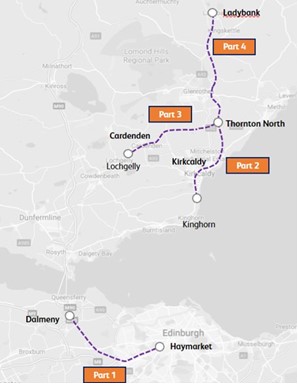
The electrification is split into four phases.
- Haymarket and Dalmeny – 25 km
- Kirkcaldy and Thornton North – 25 km.
- Lochgelly and Thornton North – 20 km.
- Thornton North and Ladybank – 34 km.
Note that the last three phases of electrification connect to Thornton North.
Thornton North is Thornton North Junction, which is shown in this map from OpenRailwayMap.
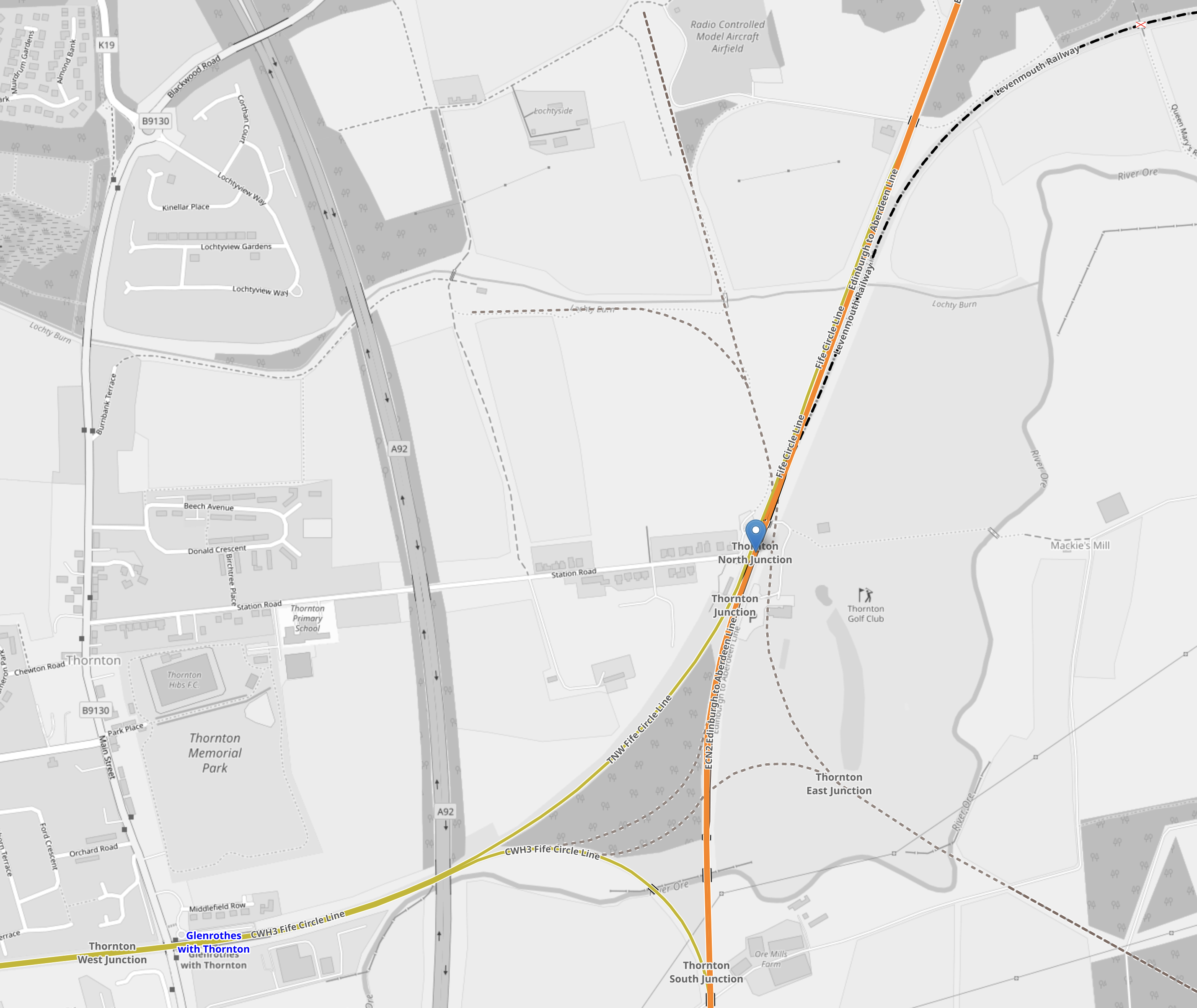
Note.
- The orange line is the main Edinburgh and Aberdeen Line. South from here, it forms part of the Fife Circle Line and goes over the Forth Bridge.
- The yellow lines going West via Glenrothes with Thornton station are the Fife Circle Line via Dunfermline.
- The lines form a triangle which is Thornton Junction.
- North Thornton Junction is the Northern point of the triangle marked by a blue arrow.
- The black hashed line going to the North-East is the Levenmouth Rail Link, which is under construction.
As the Levenmouth Rail Link will be electrified, there will be four electrified lines fanning out from Thornton North Junction.
This must make construction easier.
- Power supply can be established at Thornton North Junction.
- The Levenmouth Rail Link can be built and electrified.
- Phase 1 of the Fife Electrification between Haymarket and Dalmeny can be installed, as an extension of the electrification at Haymarket station.
- These two sections of electrification could also allow battery-electric trains to run between Edinburgh and Leven stations, as the gap is less than thirty miles.
- Phase 2, 3 and 4 of the Fife Electrification can then be installed in the preferred order.
It would appear, that someone has designed the electrification to a high standard.
The Forth Bridge
The Forth Bridge will be a nightmare to electrify.
I suspect the engineering problems can be solved, but the Heritage Taliban would probably protest about the desecration of a World Heritage Site.
Electrification Gaps And The Hitachi Regional Battery Train
The gaps in the electrification after all phases of the electrification have been completed, will be as follows.
- Dalmeny and Lochgelly – 15.2 miles
- Dalmeny and Kirkaldy – 16.4 miles
- Ladybank and Perth – 17.8 miles
- Ladybank and Dundee – 20.1 miles
The performance of the Hitachi Regional Battery Train is shown in this Hitachi infographic.

Note that a battery range of 90 km. is 56 miles.
A battery train of this performance, should be able to handle these routes.
- Edinburgh and Dundee
- Edinburgh and Glenrothes with Thornton via Kirkcaldy
- Edinburgh and Glenrothes with Thornton via Lochgelly
- Edinburgh and Leven
- Edinburgh and Perth
With one of more further stretches of electrification North of Dundee, a train with this performance should be able to reach Aberdeen.
But to handle the Fife Circle and Levenmouth Rail Link, would probably need a train with a battery range of about forty miles, to allow for a round trip, if say there were problems like lifestock on the line.
Rolling Stock Procurement
The Network Rail press release also says this about Rolling Stock Procurement.
Approval has also been given hold a procurement competition to identify a preferred manufacturer and financier for new suburban trains to operate decarbonised rail passenger services on the routes covered by East Kilbride, Fife and Borders routes, replacing 42 Class 156 trains and to replace the 55 Class 318 and 320 trains operating in the Strathclyde area.
Note.
- It would appear that the East Kilbride, Fife and Borders routes would be worked by battery-electric trains, as they are all routes without electrification.
- I wrote about the East Kilbride and Kilmarnock services in East Kilbride Electrification Underway. The largest gap is about 16.8 miles.
- I wrote about electrification of the Borders Railway in Scottish Government Is Considering Plans To Electrify The Borders Railway. The largest gap is just under 31 miles.
It looks to me that a Hitachi Regional Battery Train with a battery range of over 40 miles would be suitable for the East Kilbride, Fife and Borders routes’
Rail Baltica Electrification Procurement Begins
The title of this post, is the same as that of this article on Railway Gazette.
These two paragraphs define the project.
Rail Baltica project promoter RB Rail has begun procurement of the electrification systems for the future standard gauge line between Poland, Lithuania, Latvia and Estonia, saying it will be the largest railway electrification scheme in Europe to be implemented as a single project.
The energy subsystem contract covers 870 km of double track line from the Polish border to Tallinn including the line from Kaunas to Vilnius, and includes design and construction of substations, connections to the public high voltage grids, control systems and more than 2 000 track-km of overhead equipment.
It looks like the procurement process will be finished by 2023.
Hopefully, Vlad the Mad won’t object to this standard gauge line going too close to lines with his beloved Russian gauge.
The Mayor Of London Is Pruning The North London Bus Network Again
Sadiq Khan is proposing to cut these bus routes.
- 4 – Archway and Blackfriars – North London
- 11 – Fulham Town Hall and Appold Street – North London
- 12 – Oxford Circus Stn / Margaret Street and Dulwich Library – Cross-River
- 14 – Putney Heath and Russell Square – North London
- 16 – Mora Road and Victoria Bus Station – North London
- 24 – Grosvenor Road and Royal Free Hospital – North London
- 31 – White City Bus Station and Baynham Street – North London
- 45 – Newington Causeway and Atkins Road / New Park Road – South London
- 72 – Brunel Road and Hammersmith Bridge Road – North London
- 74 – Putney Exchange and Baker Street – North London
- 78 -Shoreditch High Street Station and St Mary’s Road – Cross-River
- 242 – Aldgate Station and Homerton Hospital – North London
- 349 – Glyn Road and Rookwood Road – North London
- 521 – Waterloo Station and London Bridge Station – North London
- C3 – Clapham Junction Station / Falcon Road Warwick Road Tesco – Cross-River
- D7 – All Saints Church and Mile End Station – North London
Note.
- The 74 is one of the recommended ways to get to Zoo.
- The 242 is my preferred method to get between Dalston and the excellent Homerton Hospital.
- The 349 is probably important to the Jewish Community in Stamford Hill.
- 521 appears to be a very good link between the two terminal stations. Especially, if you have a heavy case or a baby in a buggy.
- I have judged whether a bus is North London, South London or Cross-River from TfL’s maps of each route.
I suspect others will have their own objections.
These are my totals.
- North London – 12
- South London – 1
- Cross-River – 3
These are definitely the cuts that would be imposed by someone with their roots firmly in the South, who feels that there is no valid reason to cross the Thames.
But then with these cuts, he won’t get complaints from South Londoners.
First Order In For Revolutionary Modular Railway Footbridge
The title of this post, is the same as that of this article on New Civil Engineer.
Greater Anglia seem to have ordered the footbridge for Stowmarket station, without seeing a real one.
A prototype is also being installed at the former Widmerspool station on the Old Dalby Test Track.
I wrote about the proposed footbridge at Stowmarket in Stowmarket Station To Go Step-Free.
Council ‘Talking’ To Government On Improving Train Provision, Leader Says
The title of this post, is the same as that of this article on the Barking and Dagenham Post.
These are the introductory paragraphs.
Barking and Dagenham Council leader Darren Rodwell said the authority is “talking” to the government about improving train provision through the borough.
Last week saw the opening of the Elizabeth line, which stretches more than 100km from Reading and Heathrow in the west to Shenfield and Abbey Wood in the east.
But none of its stations are in Barking and Dagenham – with the nearest being Chadwell Heath – and Cllr Rodwell does not believe the borough stands to benefit from the line at the moment.
He has a point and is asking for extra stations in the borough.
Dagenham East on c2c is mentioned.
This paragraph also talks about HS1 domestic.
Cllr Rodwell, who is beginning a third term as council leader, also said HS1 domestic should stop in the borough.
At the moment, the domestic services that run on the line are operated by Southeastern and travel between London and Kent.
The sole stops in the capital are St Pancras and Stratford International.
“It should be Ebbsfleet, Purfleet, Barking, Stratford International” before terminating at St Pancras, Cllr Rodwell said.
“That would be massive for the ability of our young people to get jobs.
I feel he’s right about the jobs, but would the extra stations be possible.
Dagenham East
This map from cartometro.com shows the location of Dagenham East station.
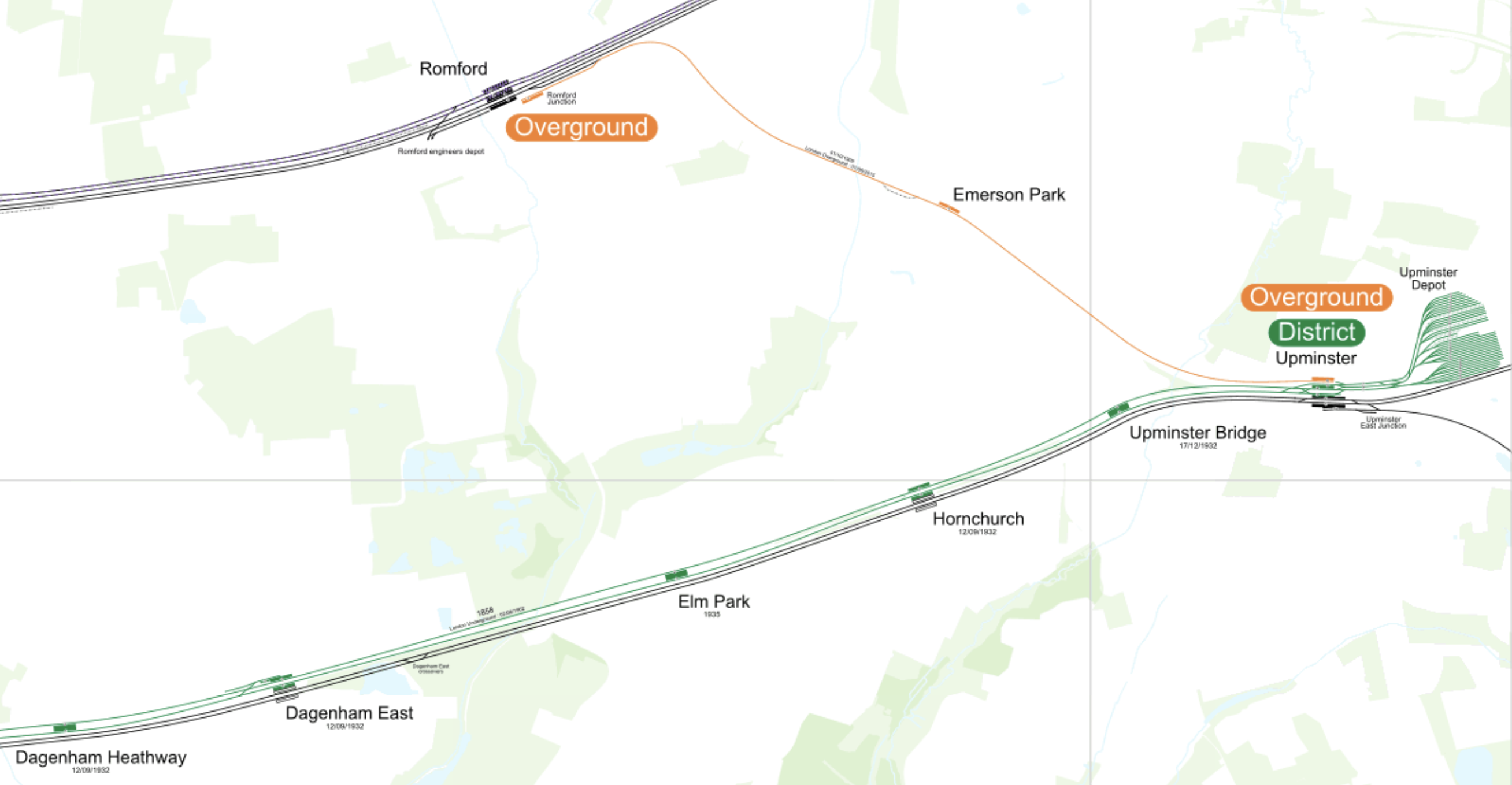
Note.
- The Elizabeth Line passing through Romford at the North of the map.
- The District Line and c2c passing through Upminster across towards the bottom of the map.
- Upminster is in the London Borough of Havering, as are all stations after Dagenham East.
- Dagenham East station is the second station on the line and used to be a c2c station until 1962.
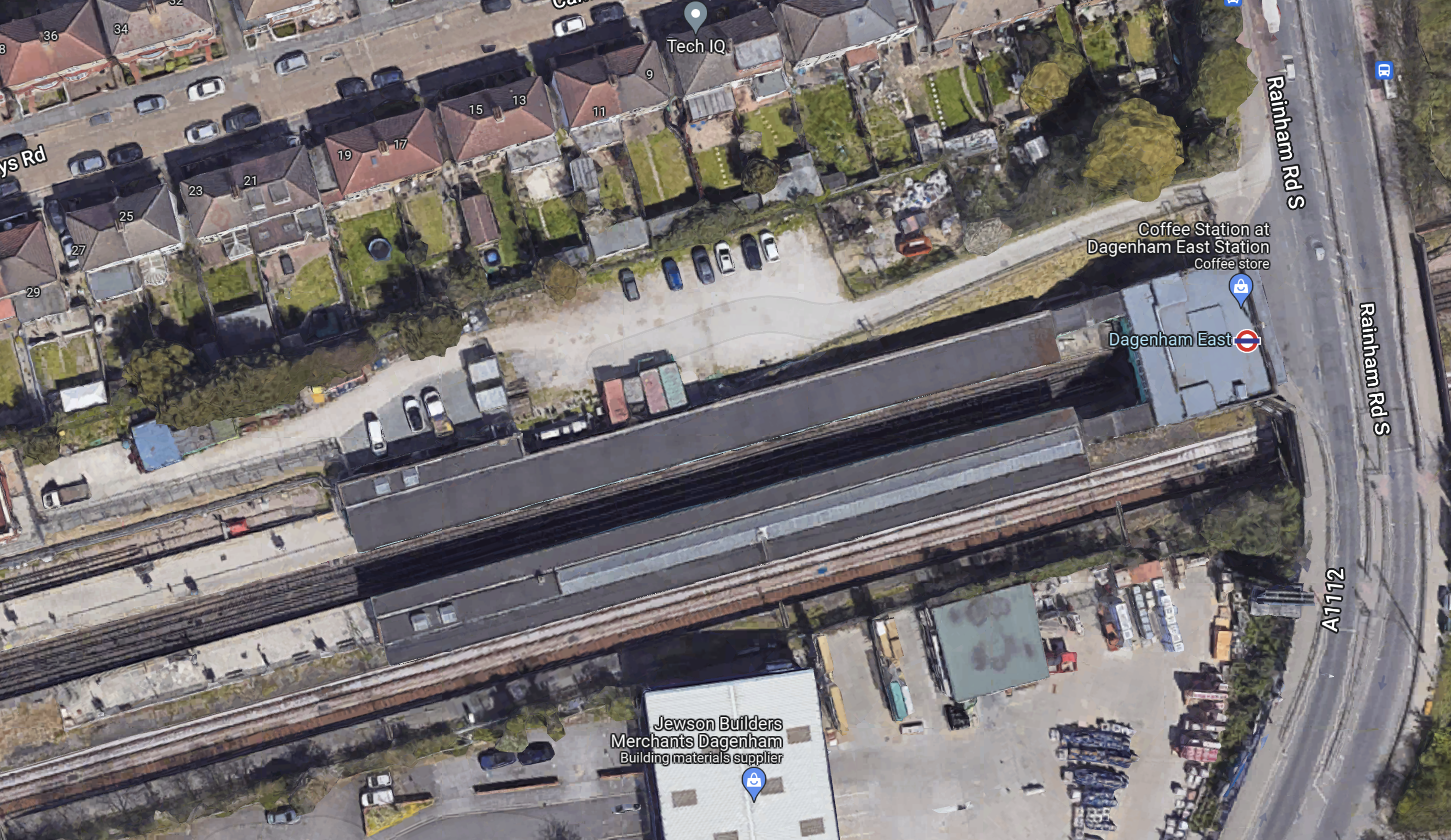
This Google Map shows Dagenham East station.
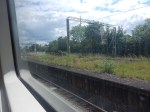
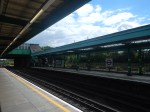
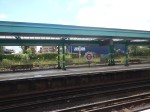
These pictures show the station.

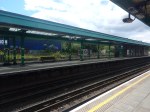


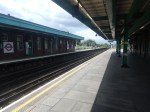
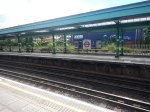
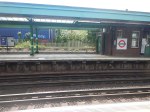
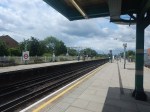
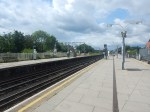
Note.
- The c2c platforms appear to be still in place. Although, some work needs to be done.
- A new bridge will be required to access the far platform.
- six c2c trains per hour (tph) pass through the station.
I feel that perhaps a two tph service between Dagenham East and Fenchurch Street could be possible.
A Thought About High Speed One
High Speed One links London and the Channel Tunnel.
- Every time a train stops, it increases the total journey time by a couple of minutes.
- So two extra stops on Southeastern Highspeed services at Purfleet and Barking, would slow the service and take up capacity on High Speed One.
- If you read the Wikipedia entry for the link, there are several operators, who seem to be hoping to run extra services on the route.
- In addition Thalys and Eurostar have merged and surely, they will bring London more into their routes.
I feel that what spare capacity, there is on High Speed One will more likely be allocated to European services than domestic services in East London. It’s probably more profitable for the operator of High Speed One for a start.
Purfleet
This Google Map shows Purfleet station and its location in relation to High Speed One.
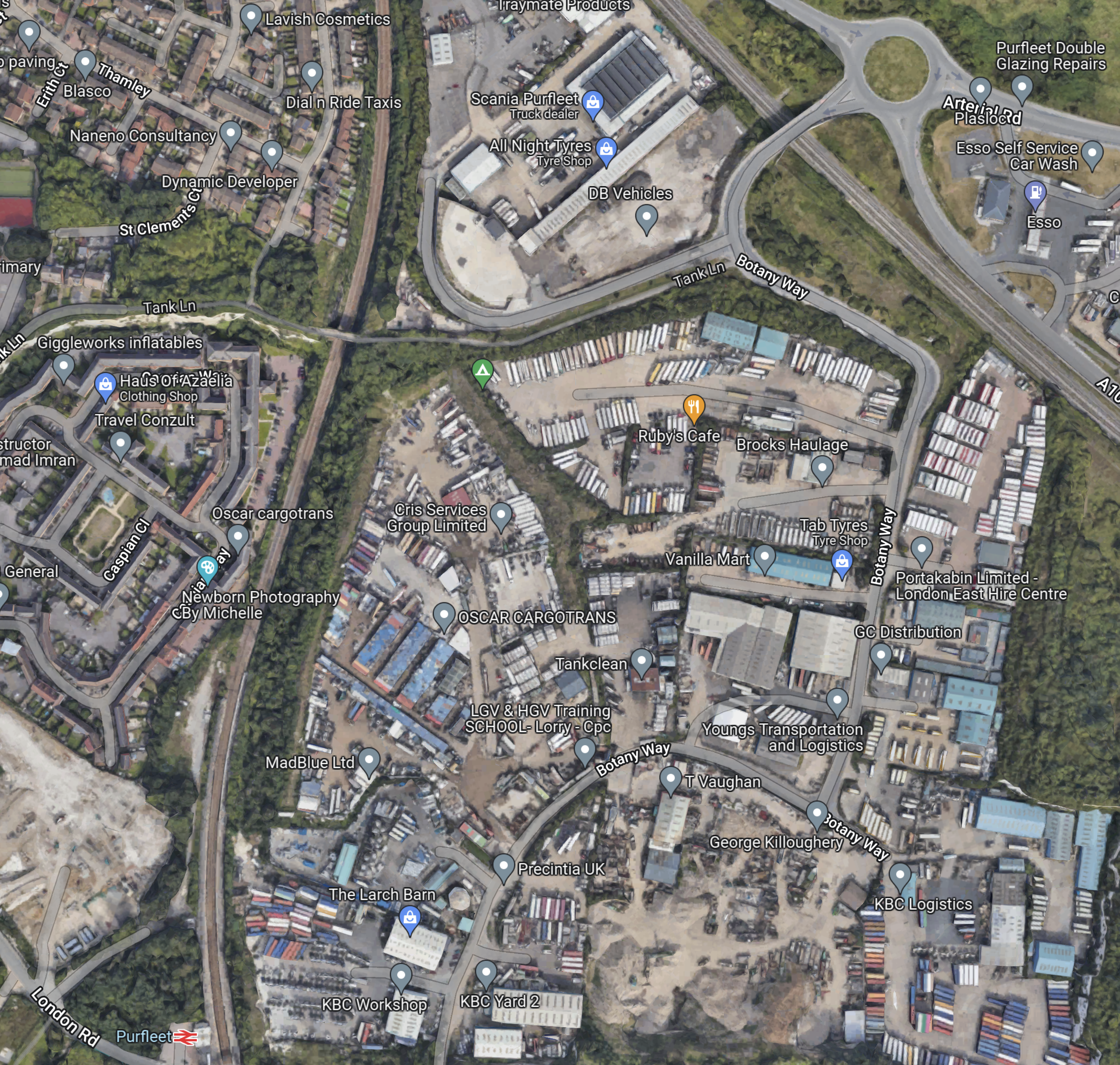
Note.
- Purfleet station is in the South-West corner of the map.
- High Speed One runs across the North-East corner of the map.
- Purfleet station is served by two tph between Fenchurch Street and Grays.
- In Purfleet Station – 19th August 2021, there is a gallery of pictures of Purfleet station.
- In that post, I also describe planned developments at Purfleet station.
Given the distance between the current Purfleet station and High Speed One, and the planned developments, I think that an interchange between c2c and High Speed One at the current Purfleet station, would not be a very practical one.
But there may be possibilities to the East, where c2c and High Speed One cross.
This Google Map shows the location of their crossing by the QE2 bridge.
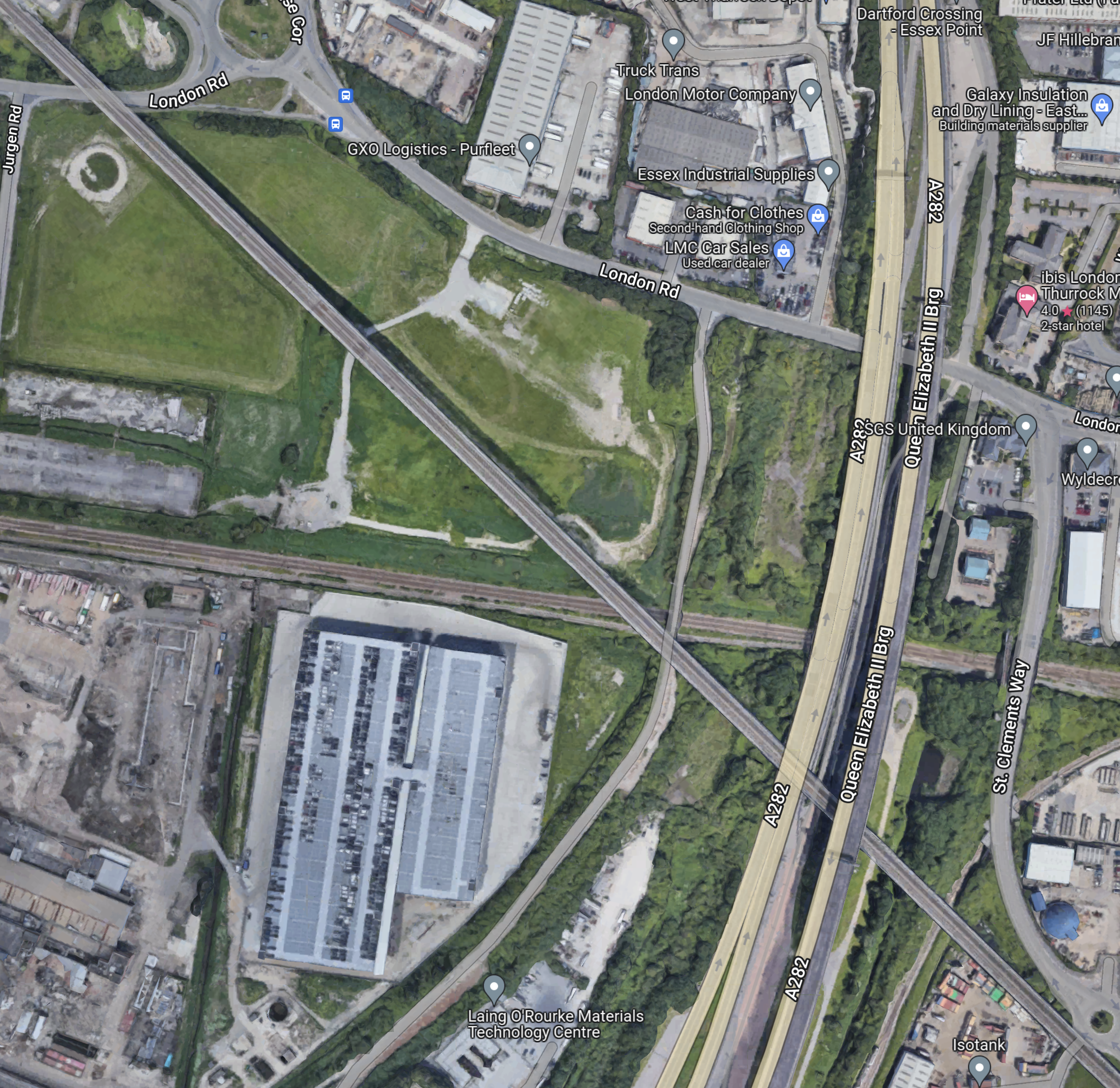
Note.
- High Speed One going diagonally NW-SE across the map
- The A 282 crossing over the QE2 bridge going North-South.
- The c2c line going East-West across the map.
Could the proposed station be built, where the two rail lines cross?
Probably, but!
- High Speed One would only connect to the Fenchurch Street and Grays service running at two tph.
- Passengers for the City of Southend would have to change at Grays.
- There would probably need to be separate lines for expresses to pass stopping trains.
- Stations on viaducts are expensive to build.
I don’t think a station at Purfleet would be the most practical or affordable of projects.
Barking
This OpenRailwayMap shows the routes of High Speed One and c2c through Barking.

Note.
- The red line is High Speed One.
- High Speed Two is shown in pink, when it is in tunnel.
- The orange line is the c2c line between Fenchurch Street and Grays.
- Dagenham Dock station is in the London Borough of Barking and Dagenham.
- Rainham station is in the London Borough of Havering.
It looks like Dagenham Dock station would be the only station, where an interchange could be built.
This Google Map shows Dagenham Dock station.
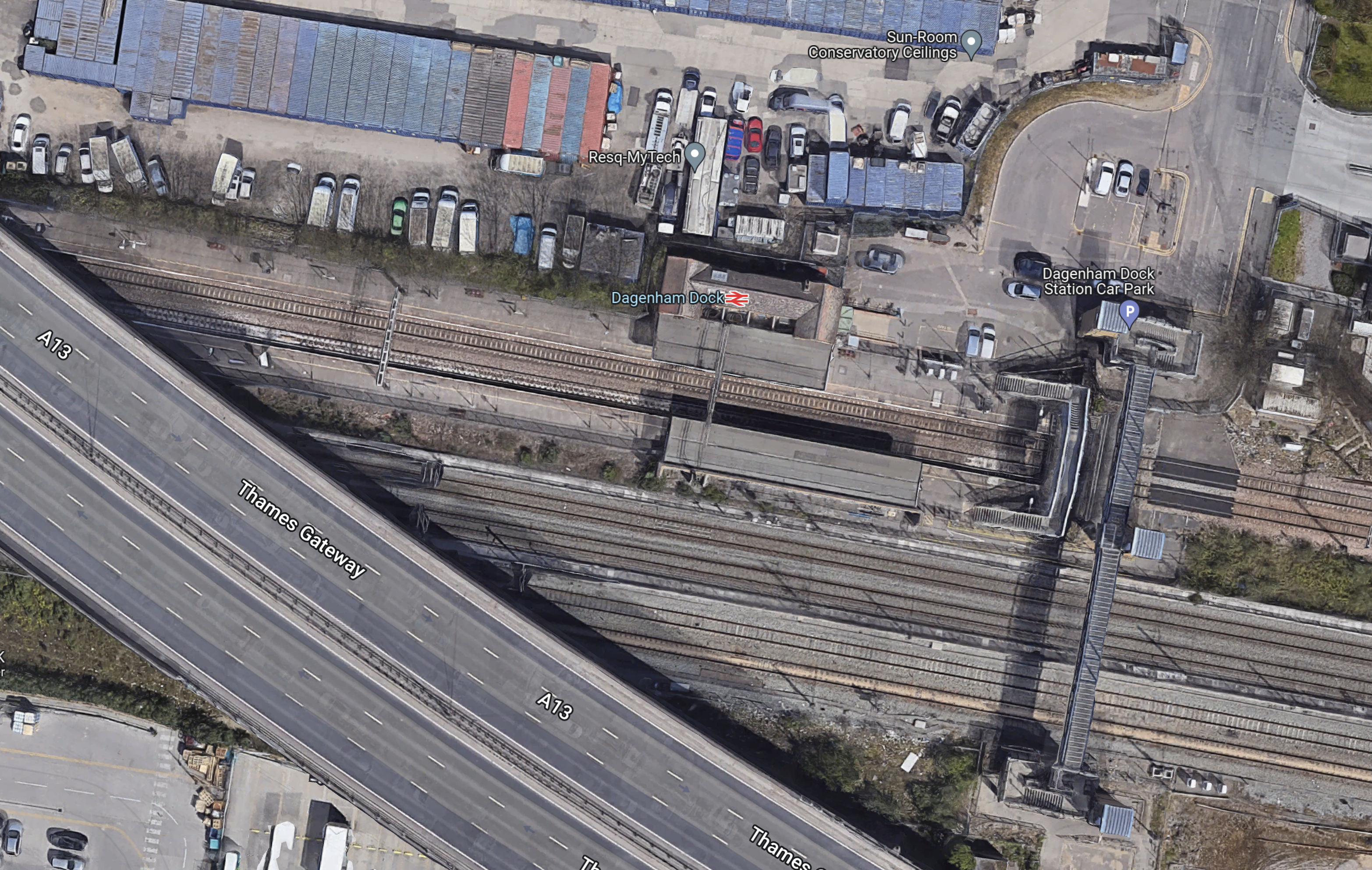
Note.
- The top pair of lines are the c2c lines.
- The next pair of lines are High Speed One.
- The lines below High Speed One are a freight link between High Speed One and the Barking freight hub.
There certainly would appear to be space for two platforms on High Speed One.
But then we still have the problem of an extra station using up valuable space on High Speed One.
The only solution, that I can think of, is that Southeastern HighSpeed services would perhaps stop only at Dagenham Dock or Stratford, but not both.
Conclusion
In this simple analysis, it looks like an extra stop on c2c at Dagenham East is possible, but extra stations on High Speed One might be difficult to fit in.
Possible Regular Services Between West Somerset Railway And Taunton
The title of this post, is the same as that of this article on Rail Advent.
These are the introductory paragraphs.
Hopes are growing that regular scheduled train services will once more operate between the West Somerset Railway (WSR) and the national rail network.
There is an increasing interest in re-opening long-closed stations and lines on the network. To this end, a partnership working group has been set up to look at the prospects of running scheduled trains between WSR’s Bishops Lydeard station and Taunton, which would safeguard the WSR’s long-term future.
The working group comprises representatives of the Heart of South West Local Enterprise Partnership, Great Western Railway, Network Rail, Somerset County Council, and WSR Plc.
Given the success of the reopened Okehampton station, that I wrote about in Success For The Dartmoor Line, where 2,500 passengers a week have used the trains since last November, I wonder if Somerset is aiming to emulate Devon’s success, with the West Somerset Railway.
There are certainly similarities between the two routes.
Connection To The County Town
Both routes connect to the county town.
- The Dartmoor Line connects to Exeter, which is the county town of Devon.
- The West Somerset Railway connects to Taunton, which is the county town of Somerset.
As the county town usually contains important local services like the council offices and the Courts, this is often convenient.
Connection To The Great Western Railway
Both routes could have excellent connections to the Great Western Railway.
- Exeter St. David’s station is a major interchange.
- Taunton station could be a more important interchange.
Note.
- Both stations have connections to Bristol, London and Cornwall.
- The two stations are well-connected to each other.
- Both stations have six platforms, which include some bay platforms for branch line services.
This Google Map shows the less developed Taunton station.
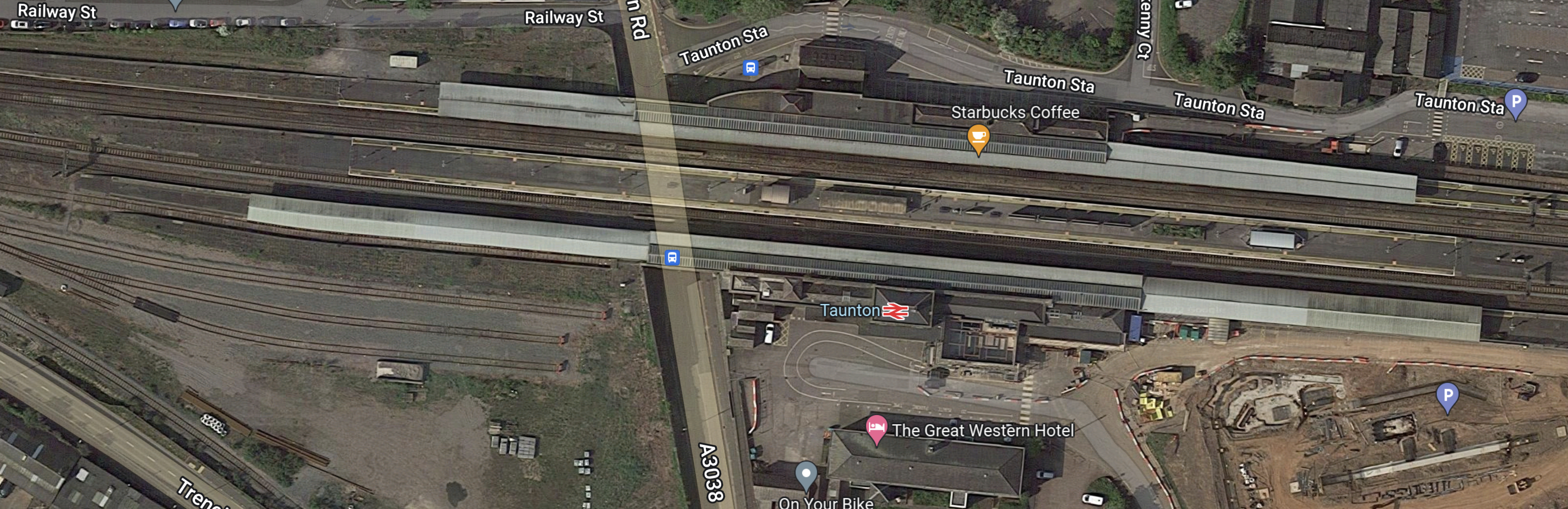
Note that there appears to be lots of space for development of rail and related development.
Both Branches Were/Are In Use Before Development
Before the Dartmoor Line was reopened, the route was in occasional use for both freight and passenger trains. Great Western Railway have in recent years run InterCity125 trains to Okehampton station.
With reopening the line to Okehampton, there was no major viaduct or bridges to rebuild, although Network Rail took the prudent decision to relay the track.
It would appear that the West Somerset Railway has similar use for both freight and passenger trains. How much work will be needed to bring it up to an acceptable standard.
Great Western Railway Are Providing Initial Weekend Services
On the Dartmoor Line services started between Exeter and Okehampton in 2019 and Wikipedia says this about initial services between Taunton and Bishops Lydeard station.
In 2019, the WSR entered into a partnership with the modern Great Western Railway (GWR) to operate Summer Saturday services to Bishops Lydeard from Taunton beginning on 27 July 2019. The introduction of these GWR services will mark the first time the station has been connected to the rest of the national rail network since its initial closure in 1971.
Is history going to repeat itself?
The First Step
This paragraph from the Rail Advent article, indicates the first step to reopening a service between Taunton and Minehead.
The first task will be to look at the simplest and most effective way in which the link between the WSR and the mainline can be improved, signalled, and operated. An outline business plan will then be developed to estimate how much it would cost.
This Google Map shows the link between the West Somerset Railway and the mainline.
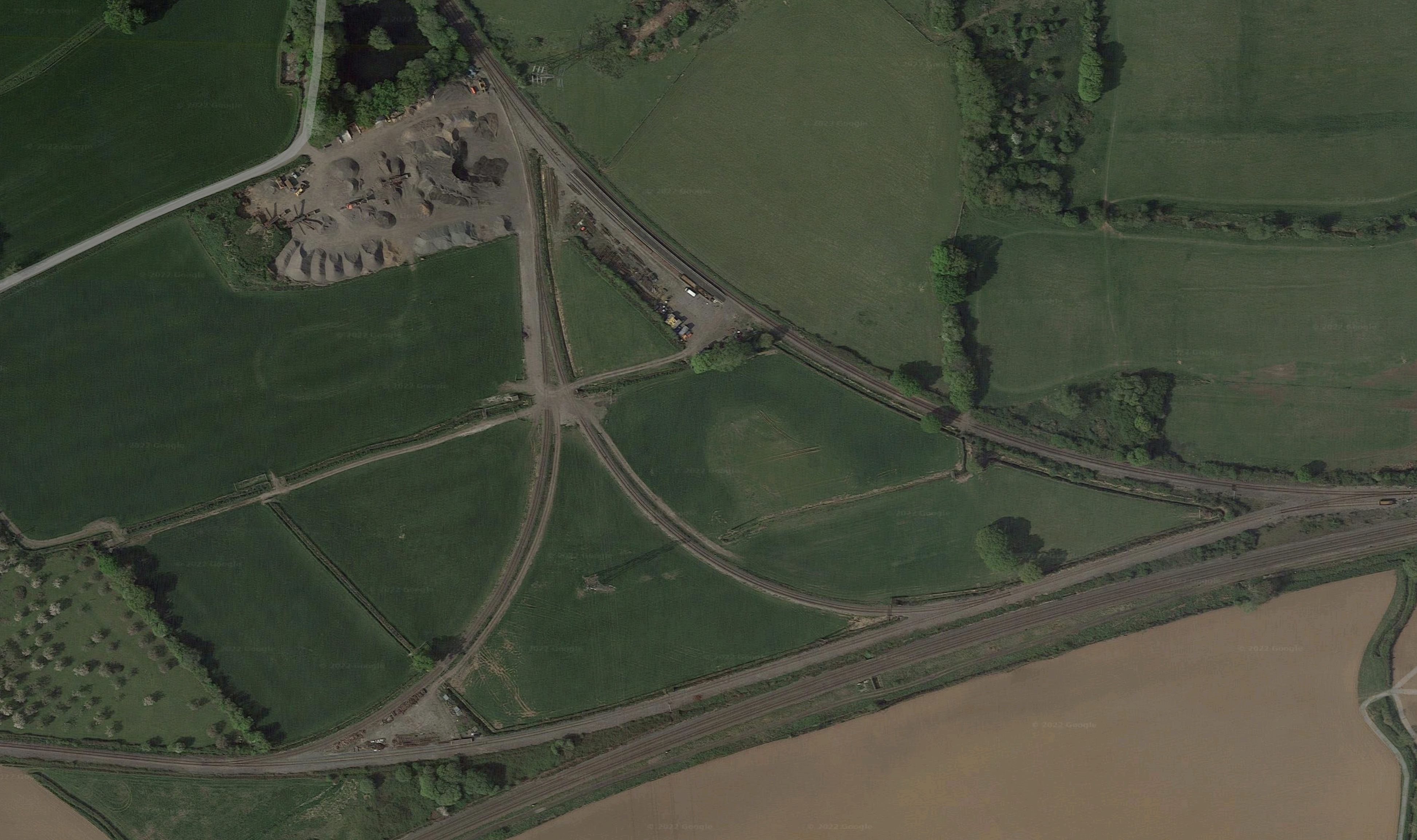
Note.
- The large triangular junction.
- The Bristol-Exeter railway runs East-West across the bottom of the map.
- Minehead is to the North.
- Taunton is to the East.
- A disused line to Barnstaple is to the West.
- The site to the West of the top of the triangular junction is a ballast cleaning site.
It does appear that there could be the space to create an efficient junction linking the two railways.
Initial Regular Services
This was one of the introductory paragraphs.
There is an increasing interest in re-opening long-closed stations and lines on the network. To this end, a partnership working group has been set up to look at the prospects of running scheduled trains between WSR’s Bishops Lydeard station and Taunton, which would safeguard the WSR’s long-term future.
This page on the Railway Touring Company web site is entitled The West Somerset Steam Express.
This paragraph describes the trip.
This series of trains from London Paddington to Minehead features haulage by two steam locomotives in one day.
One steam locomotive will haul our train from London Paddington to the West Somerset Railway at Bishops Lydeard.
The Heritage Railway will then provide a steam locomotive to haul our train to Minehead and back. This provides a truly fascinating day out travelling through beautiful scenery to the Bristol Channel coast.
So it looks like, the initial services on the between Taunton and Bishops Lydeard stations, will duplicate services that are already planned on a very much less frequent basis.
Bishops Lydeard Station
Bishops Lydeard station is the station, where mainline and West Somerset services meet.
This OpenRailwayMap shows the track layout at the station.
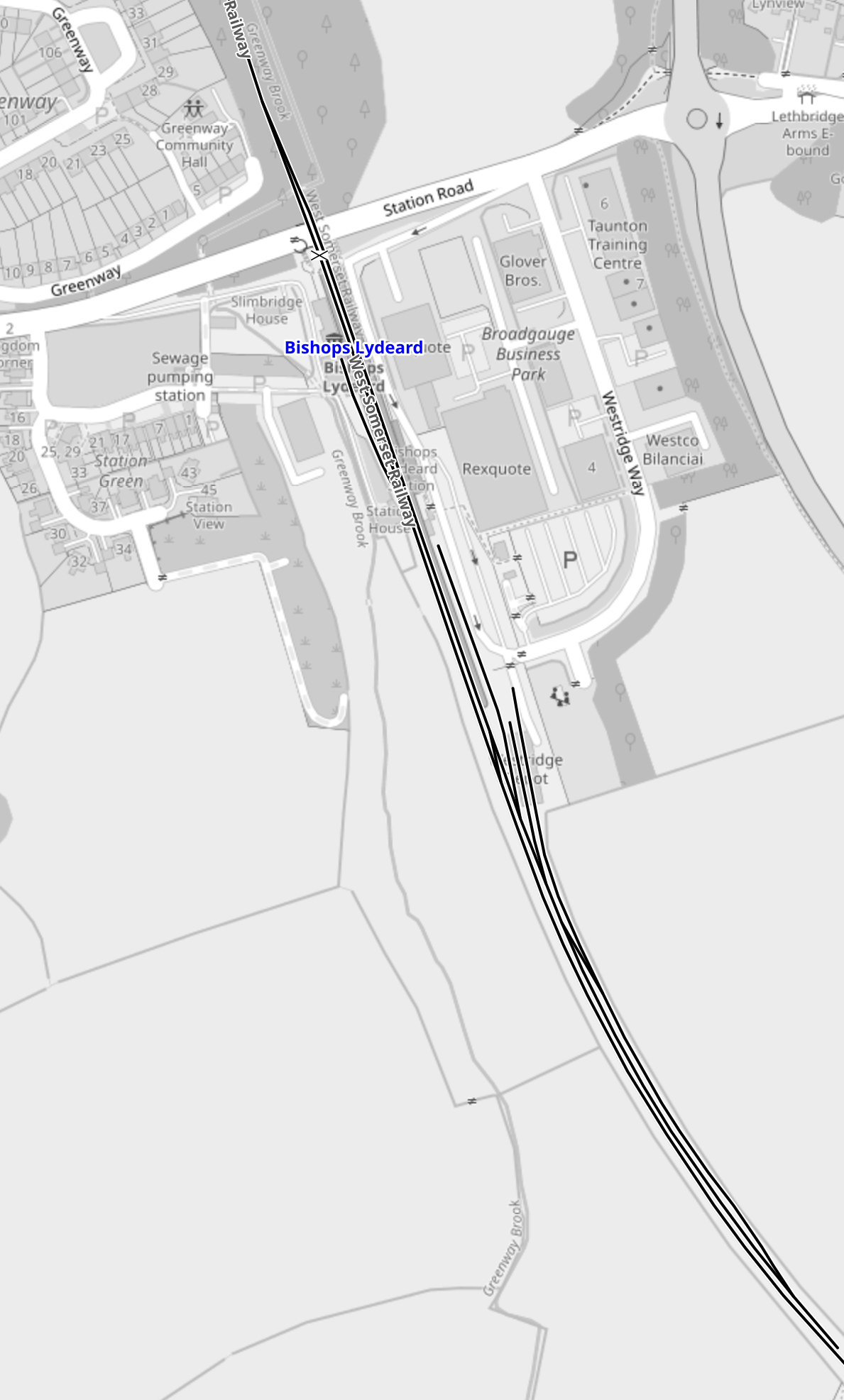
Note.
- The station is the Southern terminus of the West Somerset Railway.
- Track is single to the North and South of the station.
- Bishops Lydeard station has two platforms.
- There is a passing loop.
If the terminal station has a serious problem, it doesn’t appear to have much parking.
So it would appear, that a link to Taunton might improve the finances of the West Somerset Railway, by attracting more visitors.
Onward To Minehead
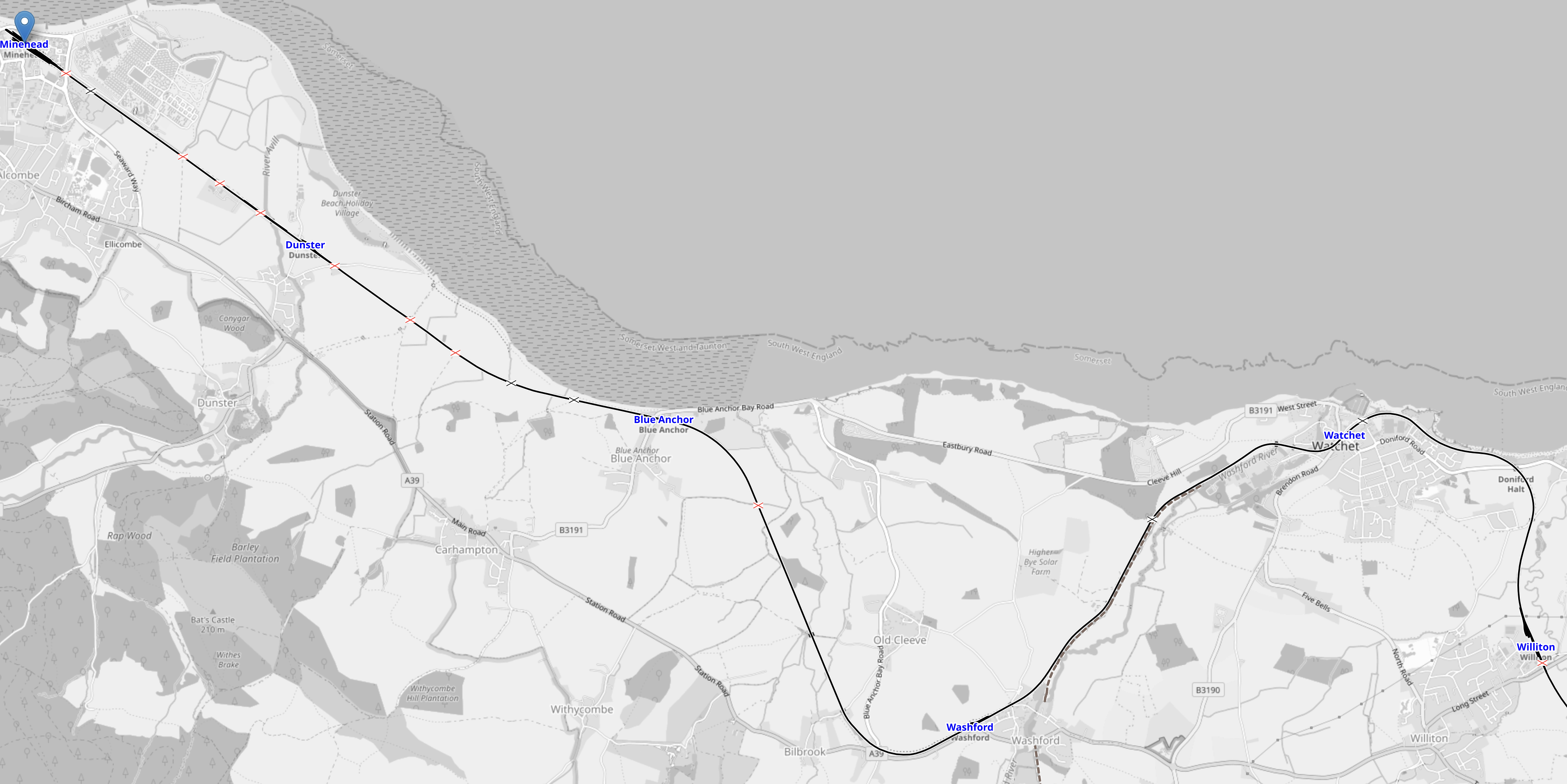
This OpenRailwayMap shows the last section of the West Somerset Railway to Minehead.
Note.
- Minehead station is in the North West corner of the map.
- Minehead station appears to be a well-equipped station, with two platforms.
- Minehead station even has a turntable for turning locomotives.
- There are four or five stations close to the coast.
The Wikipedia entry for Minehead, says this about the town.
The parish of Minehead has a population of approximately 11,981, making it the most populous town in the western part of the Somerset West and Taunton local government district, which in turn, is the worst area in the country for social mobility.
The West Somerset Railway could become both a useful and a real bucket-and-spade railway. Surely, that could generate revenue and level-up the area.
Financing
If you want something to work well, you must get the finances right.
I have lived in Dalston in London for twelve years now. When I moved here after my wife died and I had had a serious stroke, which left me unable to drive, I relied on an antiquated mainly bendy-bus-based public transport system.
Then along came the Overground and fleets of shiny new buses and Hackney and Dalston in particular was more than levelled up with London’s more salubrious boroughs.
Shopping improved with M & S returning after at least seventy years. There’s even a Pret, which boomed during the pandemic.
Transport for London got the financing for the Overground right and they created a success.
Conclusion
Can the initial working group find a financial model so that the West Somerset Railway can do for West Somerset, what the Overground has done for Dalston and the Dartmoor Line appears to be doing for Devon?
I thoroughly hope so!
Will It Be Third-Time Lucky For Grand Union Trains In Wales?
It is three years since I wrote Grand Union Seeks ’91s’ To Cardiff and their proposal has not been accepted and the third iteration has been announced.
This article on Wales Online is entitled Independent Rail Firm Bids To Launch As Rival To Great Western On The Mainline From South Wales To London.
These are the introductory paragraphs.
An independent rail firm is hoping to launch a rival train service in Wales which they say will slash journey times between Carmarthen and London. Grand Union Trains is making a fresh bid to introduce an initial service in both directions between Cardiff and London on the existing Great Western line.
The company believes the move will “create passenger choice” and increase the number of trains available, with the hope that the service can be extended west in South Wales towards Carmarthen.
Other points in the article include.
- Swansea will be by-passed, which will speed up services to and from Llanelli and Carmarthen.
- A new Park-and-Ride station will be built by Grand Union at Felindre, which is to the North of Swansea.
- Services will stop at Llanelli, Cardiff Central, Newport, Severn Tunnel Junction and Bristol Parkway.
- When Cardiff Parkway opens, this will be an extra stop.
An article in the June 2022 Edition of Modern Railways, which is entitled Grand Union Bids For London To Carmarthen, gives extra details.
- Three classes.
- 2023 start for the service.
- Five return trains per day.
- Cycle provision.
- Vanload freight will be carried.
- Electric trains could start between London and Cardiff by 2023.
- In 2025, trains could be nine-car bi-modes.
- South Wales-based operation and maintenance.
- 125 full-time jobs created.
It certainly seems to be a comprehensive and well-thought out plan.
These are my thoughts and observations.
Felindre Station
Felindre station is named in Wikipedia as the West Wales Parkway station, where it is introduced like this.
West Wales Parkway is a proposed railway station north of Swansea, near to the boundaries of the neighbouring principal area of Carmarthenshire, and the villages of Felindre and Llangyfelach. The station is proposed to be situated at the former Felindre steelworks, near Junction 46 of the M4 and A48, and near Felindre Business Park and Penllergaer Business Park. The project is in the planning stages, as part of a wider Department for Transport proposal to re-open the Swansea District line to passenger traffic.
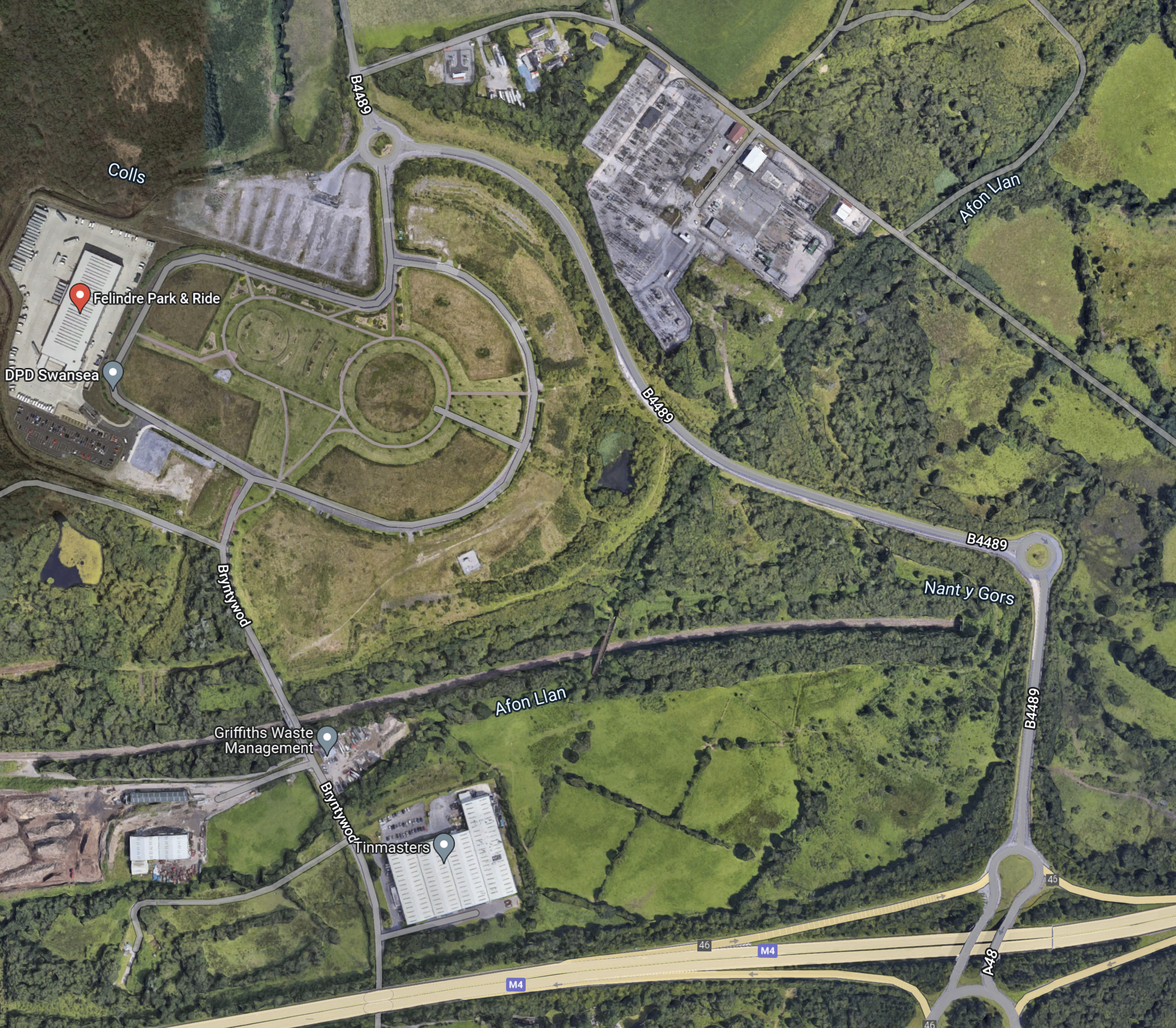
This Google Map shows where, it appears the Felindre station will be built.
Note.
- The Felindre Business Park in the North-West corner of the map, with a Park-and-Ride.
- The M4 running across the bottom of the map.
- The Swansea District Line runs East-West between the motorway and the Business Park.
It looks that the new station could be located on the South side of the Business Park.
According to Wikipedia, the station would cost £20 million to build.
- It would need a comprehensive rethinking of transport improvements in the Swansea area.
- But it could result in time savings on services between Carmarthen and Cardiff.
The Modern Railways article says this.
GU proposes to build the Felindre station near Swansea and invest in Severn Tunnel Junction station, where it says it will increase parking, provide direct access from the M4 motorway and improve passenger and staff facilities, backing up plans being evaluated by the Welsh Government for the station.
Grand Union is not a charity and does this indicate that a bank or infrastructure company is prepared to fund parking and the extra passengers pay the charges.
Rolling Stock
Wikipedia says that the rolling stock could be nine-car InterCity 225s hauled by Class 91 or Class 93 locomotives.
As the Class 93 locomotives are bi-modes, these would handle the Carmarthen and Cardiff leg.
The Modern Railways article says this.
Trains could start between Cardiff and London Paddington as early as May 2023 if electric only, with services extended west around two years later with new bi-mode trains in up to nine-car formations.
Would a new Class 93 locomotive count as a new bi-mode train?
I suspect the new locomotive would be more affordable, than a new bi-mode train.
Vanload Freight
This is an interesting idea and it follows similar thinking to Royal Mail’s latest ideas, that I wrote about in Royal Mail Rolling Back The Years To Put More Post On Trains.
One coach could be a nice little earner, if it were modified to carry roller cages, that were loaded and unloaded at the end of the route.
One advantage of the InterCity 225s is that they are 125 mph trains, so that this will be high speed freight.
Timings
Consider.
- A GWR Carmarthen and London service takes three hours and 47 minutes.
- This includes a nine-minute reverse at Swansea.
- GWR makes seven more stops than Grand Union will.
- GWR does seven diesel stops, whereas Grand Union will only do two.
I would estimate that Grand Union will be under three hours and thirty minutes.
Carmarthen Station
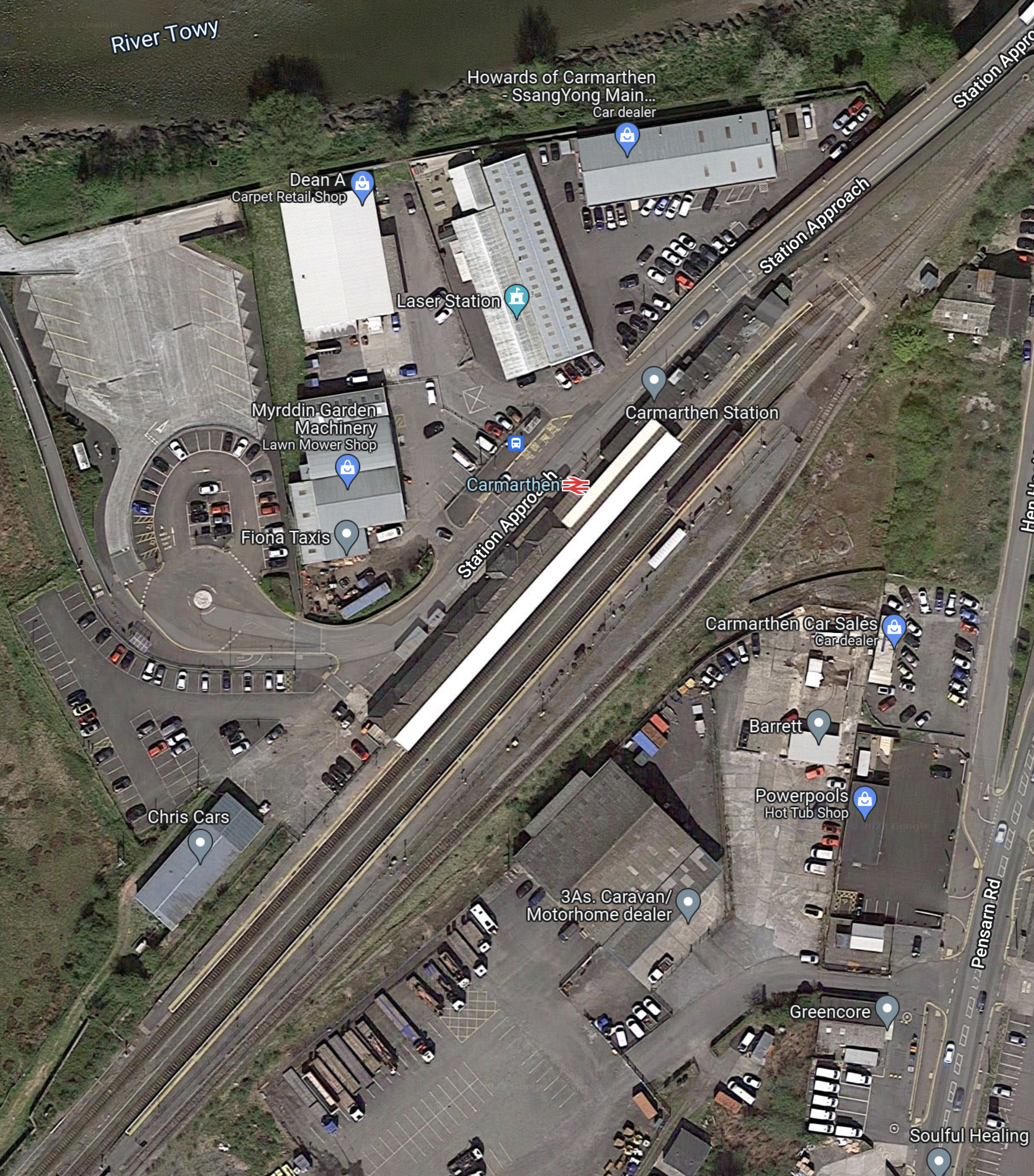
This Google Map shows Carmarthen station.
Note.
- The station has two platforms.
- There are certainly pictures of the station with an InterCity 125 in the station.
These pictures show the station.
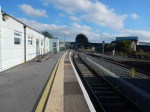

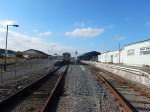


I suspect that the station will be upgraded to accommodate Grand Union.
Rrenewable Energy Developments In South West Wales
In Enter The Dragon, I talked about renewable energy developments in South West Wales.
I used information from this article on the Engineer, which is entitled Unlocking The Renewables Potential Of The Celtic Sea.
The article on the Engineer finishes with this conclusion.
For now, Wales may be lagging slightly behind its Celtic cousin to the north, but if the true potential of the Celtic Sea can be unleashed – FLOW, tidal stream, lagoon and wave – it looks set to play an even more prominent role in the net zero pursuit.
The Red Dragon is entering the battle to replace Vlad the Mad’s tainted energy.
South West Wales could see a massive renewable energy boom.
The Railways To The West Of Carmarthen
This map from OpenRailwayMap shows the rail lines to the West of Carmarthen.
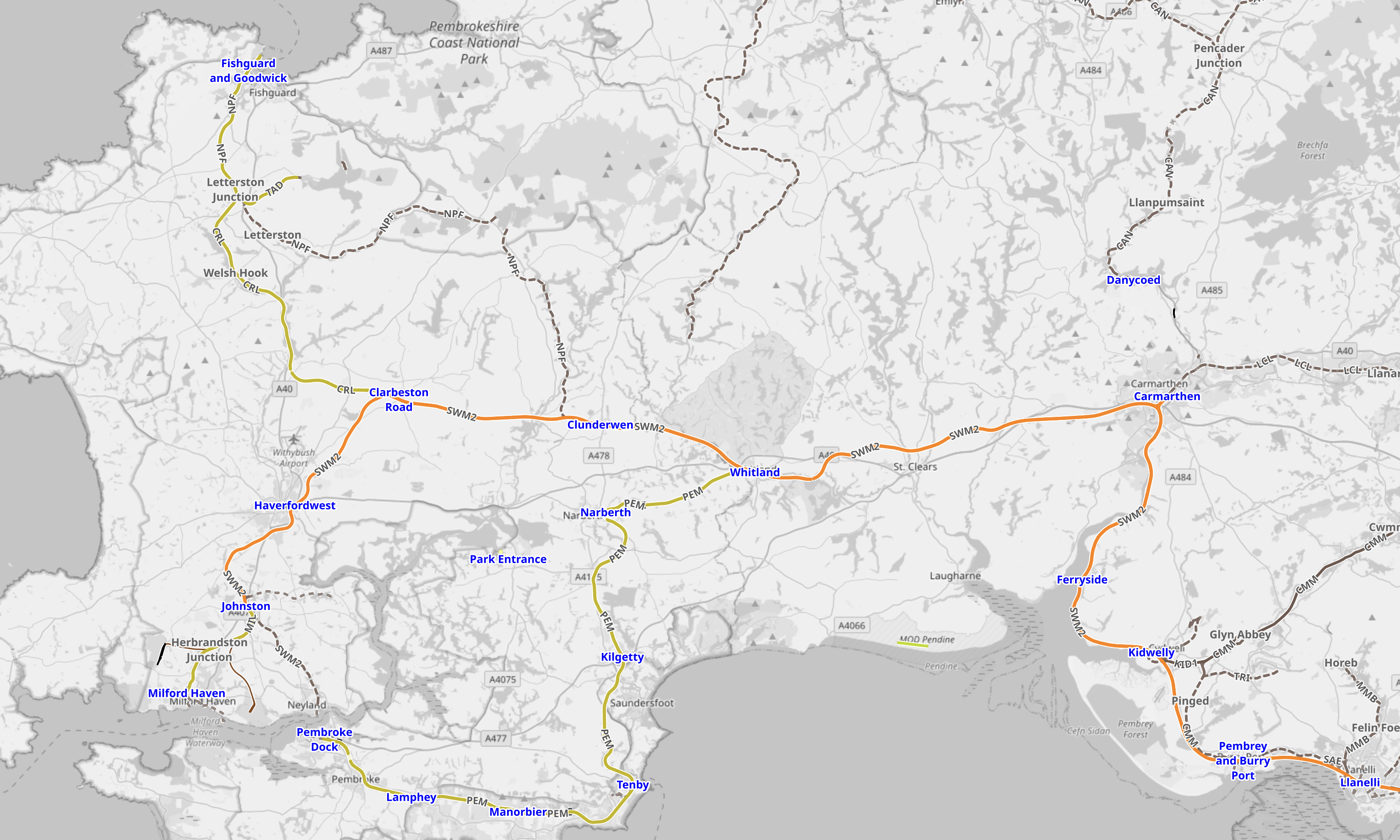
There are three main branches to Fishguard, Milford Haven and Pembroke Dock.
I can see the railways becoming increasingly important in supporting the growing renewable energy in the area.
- There would be more frequent services.
- Services would tie in with London and Cardiff trains at Carmarthen.
- Closed stations could be reopened and new ones built.
It may also be possible to bring in large components needed by the renewable energy industry.
Conclusion
I feel that Grand Union have seen the opportunities presented to a frequent Carmarthen and London service and have grabbed them with both hands.
2.7M Tonnes Of Co2 Could Be Saved Per Year If UK Domestic Flights Went Electric
The title of this post is the same as that of this article on Simple Flying.
This is the introductory paragraph.
Analysing over 100 domestic routes within the UK, researchers have uncovered some significant Co2 reductions upon the inevitable switch to electric.
It is an excellent summary of the state and potential of electric airliners in the UK.
The article gives this example of the sort of carbon savings, that can be achieved.
One of the shortest domestic flights in the United Kingdom, a 38-minute hop between Belfast International and the Isle of Man, uses around 36kg of carbon dioxide per passenger. In 2019, the route served approximately 20,000 passengers – with a switch to electric aviation, 752 tonnes of carbon dioxide could be cut on the 76-mile flight.
The article says this about one of the more developed electric aircraft; the ES-19 from Heart Aerospace.
One manufacturer, in particular, is seeing a significant surge in interest; Swedish electric aircraft startup, Heart Aviation. Currently holding letters of interest from United Airlines and Finnair, Heart’s 19-seat ES-19 is set to be the first all-electric regional aircraft, boasting a 400km range with a full-charge time of just 40 minutes. The first flight is planned for 2024, with an anticipated 2026 start date.
Airports within a 400 km range from London would include.
- Anglesey
- Blackpool
- Exeter
- Guernsey
- Jersey
- Leeds/Bradford
- Liverpool
- Manchester
- Newquay
- Norwich
- Paris
- Schipol
Dublin, Isle of Man and Newcastle are just over 400 km.
Note.
I also suspect that Dublin, Edinburgh, Leeds and Liverpool would make excellent hubs for electric aircraft.
I used Free Map Tools to get the distances.
Does The Paddington Bakerloo Line Link Make The Bakerloo Line A NW-SE Cross-Branch Of The Elizabeth Line?
The Elizabeth Line has these major North-South cross-branches.
- Jubilee Line at Bond Street station.
- Charing Cross Branch of the Northern Line at Tottenham Court Road station.
- Thameslink at Farringdon station.
- Bank Branch of the Northern Line at Moorgate station.
- East London Line of the Overground at Whitechapel station.
With the opening of the Paddington Bakerloo Line Link, another North-South cross-branch of the Elizabeth Line has been added.
It could be argued that London has a new NW-SE high frequency link between Harrow & Wealdstone and Abbey Wood stations.
- Bakerloo Line – Harrow & Wealdstone and Paddington
- Paddington Bakerloo Line Link – 165 metre level step-free walk
- Elizabeth Line – Paddington and Abbey Wood via Whitechapel and Canary Wharf
The journey would appear to take 73 minutes from the National Rail journey planner, which allows fifteen minutes for the change at Paddington.
A New Route Between New Cross Gate And Queen’s Park Stations
In Does The Elizabeth Line Offer Similar Benefits To The Bakerloo Line Extension?, I said this.
I suspect that the easiest way between New Cross Gate and Harrow & Wealdstone will be with changes at Whitechapel and Paddington.
I also said, I would try out the route today.
I did a shorter route between New Cross Gate And Queen’s Park stations, with the same two changes.
For each extra station, I can apply Irene’s Law, by adding two minutes for each station.
I took these pictures on the route.





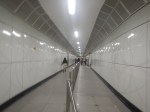

Note.
- On the Overground and the Elizabeth Line, there were few spare seats and a number of standees.
- Quite a few passengers changed at Whitechapel.
- The tunnel at Paddington between Elizabeth and Bakerloo Lines wasn’t very busy.
- The Bakerloo Line wasn’t very busy.
I have a few thoughts.
First Time Riders
I got the impression, a lot of passengers were first-time riders.
This could explain the passenger numbers.
Timings
These were my timings.
- It took me forty-six minutes for the fourteen stations.
- The interchange at Whitechapel was about four minutes.
- At Paddington, I walked between the Elizabeth and Bakerloo Line platforms in under five minutes and then just missed a Northbound train.
Irene’s Law
I talk about Irene’s Law in Irene’s Law – Estimating Tube Journey Times, where I define it like this.
If you want to get an estimate of how long a journey will take on the London Underground, you count the number of stations and multiply by two, before adding five for every interchange.
For the Overground, I’ve found that using three minutes for the number of stations gives a reasonable answer.
So how does it fit for my journey?
- The base time is forty-six minutes.
- Deduct ten minutes for the two changes gives thirty-six minutes.
- 36/14 gives 2.6 minutes.
I’ll go with that! But it looks like for a mixed journey like this, 2.5 might give a rough estimate.
How Would This Time Compare With An Extended Bakerloo Line?
Consider.
- New Cross Gate station could be on an extended Bakerloo Line.
- The Bakerloo Line timetable gives a time of 26 minutes between Queen’s Park and Elephant & Castle stations.
- There are three extra stations, which would probably be two minutes per station.
So the time between Queen’s Park and New Cross Gate stations would be 32 minutes via an extended Bakerloo line.
Conclusion
It looks like an extended Bakerloo Line will be a few minutes quicker.
But that the Elizabeth Line will be a good alternative for a few years.
My feeling is that the Elizabeth Line will have enough capacity for several years, but that eventually the Bakerloo Line will need to be extended.
 The Anonymous Widower