Dutch Province To Introduce Regular Hydrogen Services
The title of this post, is the same as that of this article on the International Railway Journal.
This is the introductory paragraph.
The regional transport authority in the Dutch province of Groningen has announced plans to introduce hydrogen trains for its regional concession following a successful test earlier this year.
In March 2019, I went to Groningen and explored the railways in the area, where Stadler GTW trains are used for the train services.
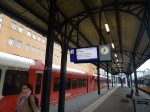
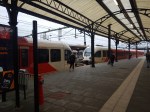
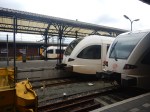

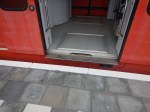
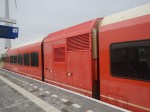
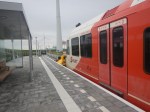
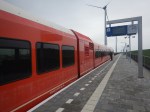
These trains are a smaller version of Greater Anglia’s Class 755 trains.
In The Train Station At The Northern End Of The Netherlands, I describe a visit to Eemshaven station to the North of Groningen.
I said this.
At the turnround at Eemshaven with the driver, he indicated that there had been speculation about battery and hydrogen trains in the North of The Netherlands.
It appears the driver was right.
The Bridge Over The Ems
The article also indicates that the bridge over the River Ems, that I wrote about in From Groningen To Leer By Train, could be opening soon.
This video shows what the new bridge will look like.
And this Google Map shows the current state of the bridge.
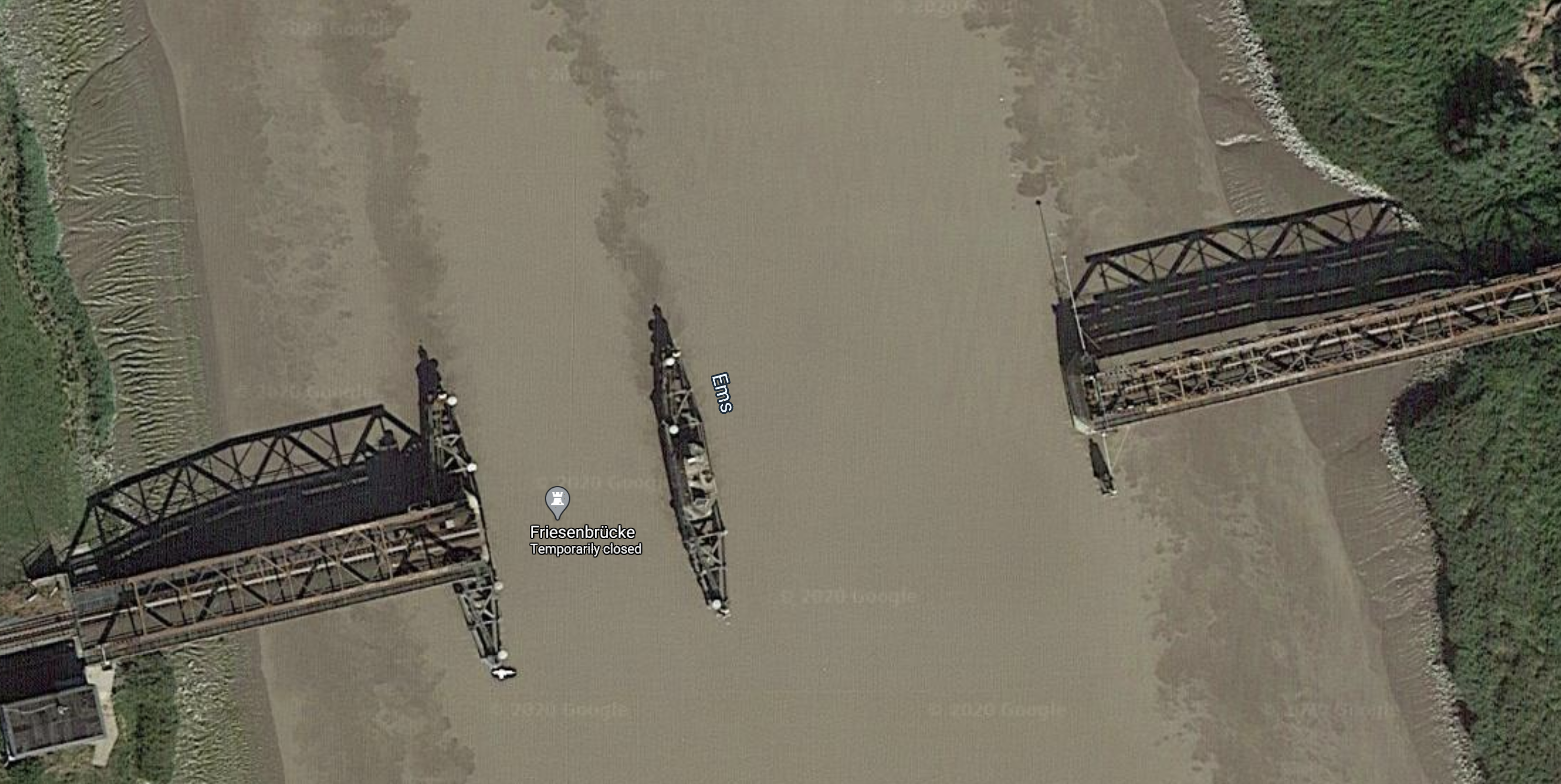
I’m not sure of the date of the picture, but there still appears a lot of work to do.
Daimler Unveils Electric Bus With 441 kWh Solid-State Battery Pack
The title of this post, is the same as that of this article on electrek.
This is the introductory paragraph.
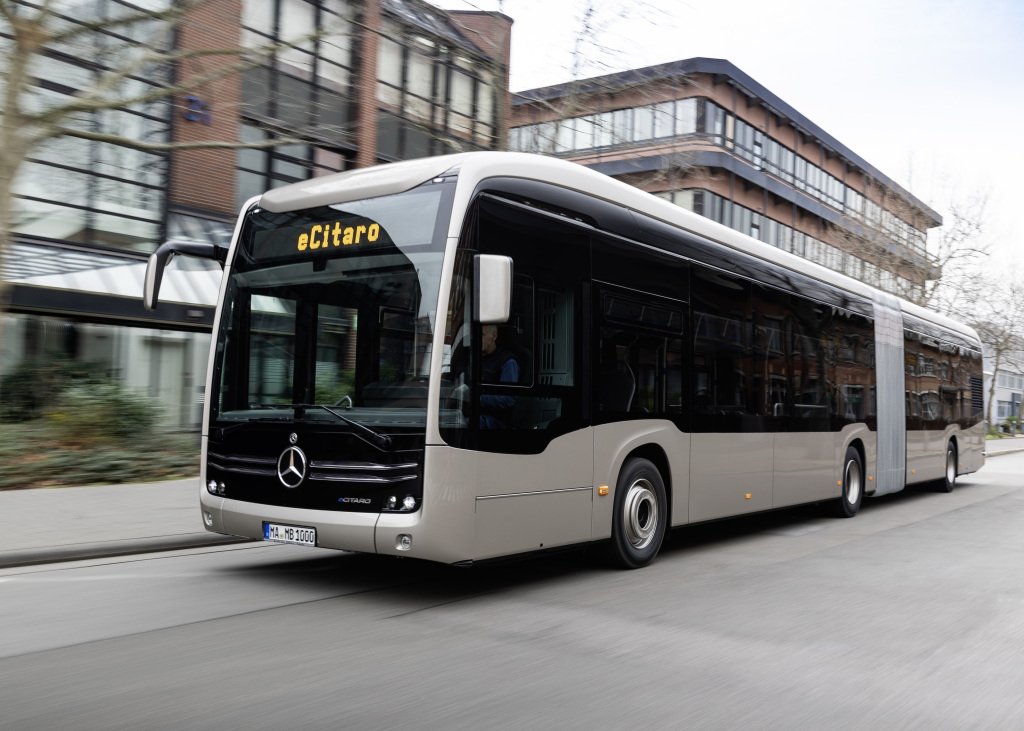
Daimler has unveiled an electric bus equipped with a solid-state battery pack — probably becoming the first planned production EV with a solid-state battery.
What is meant by solid-state battery, is not stated.
But at 441 kWh it is not a small battery!
This article on the Daimler Global Media Site gives these extra details.
In general, vehicles with solid-state batteries as standard were not expected until the middle of this decade. Mercedes-Benz is faster: the new eCitaro G is the first series production city bus in its category anywhere in the world to be equipped with solid-state batteries. They have a very high energy density which is around 25 percent greater than the coming generation of traditional lithium-ion batteries with liquid electrolyte. The result is an impressive energy content of 441 kWh for the new eCitaro G. This battery technology is also free of the chemical element cobalt and therefore especially environmentally friendly in the manufacture of the components.
The long life of the solid-state batteries is particularly striking. Therefore, when purchasing an eCitaro with solid-state batteries, a basic guarantee for the high-voltage battery for up to 10 years or up to 280 MWh energy throughput per battery pack is standard.
They sound impressive.
A Useful Tool
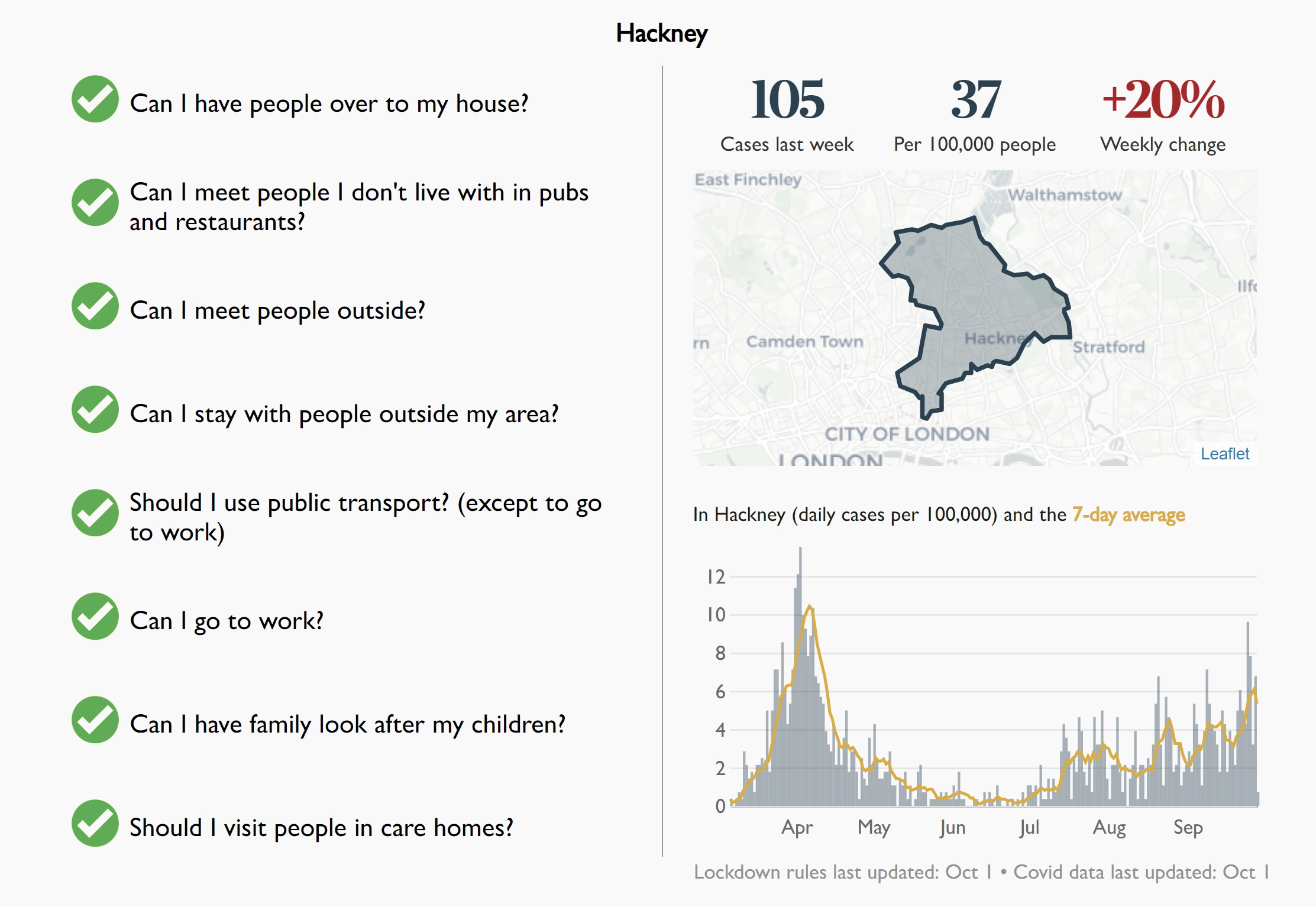
The Times has added a useful tool to its web site, which shows the latest figures for the covids, according to a particular post code. It also shows the rules that apply.
This is the display for Hackney, where I live.
And this is the one for Liverpool, where I go regularly, although, I’ve only been once since March.
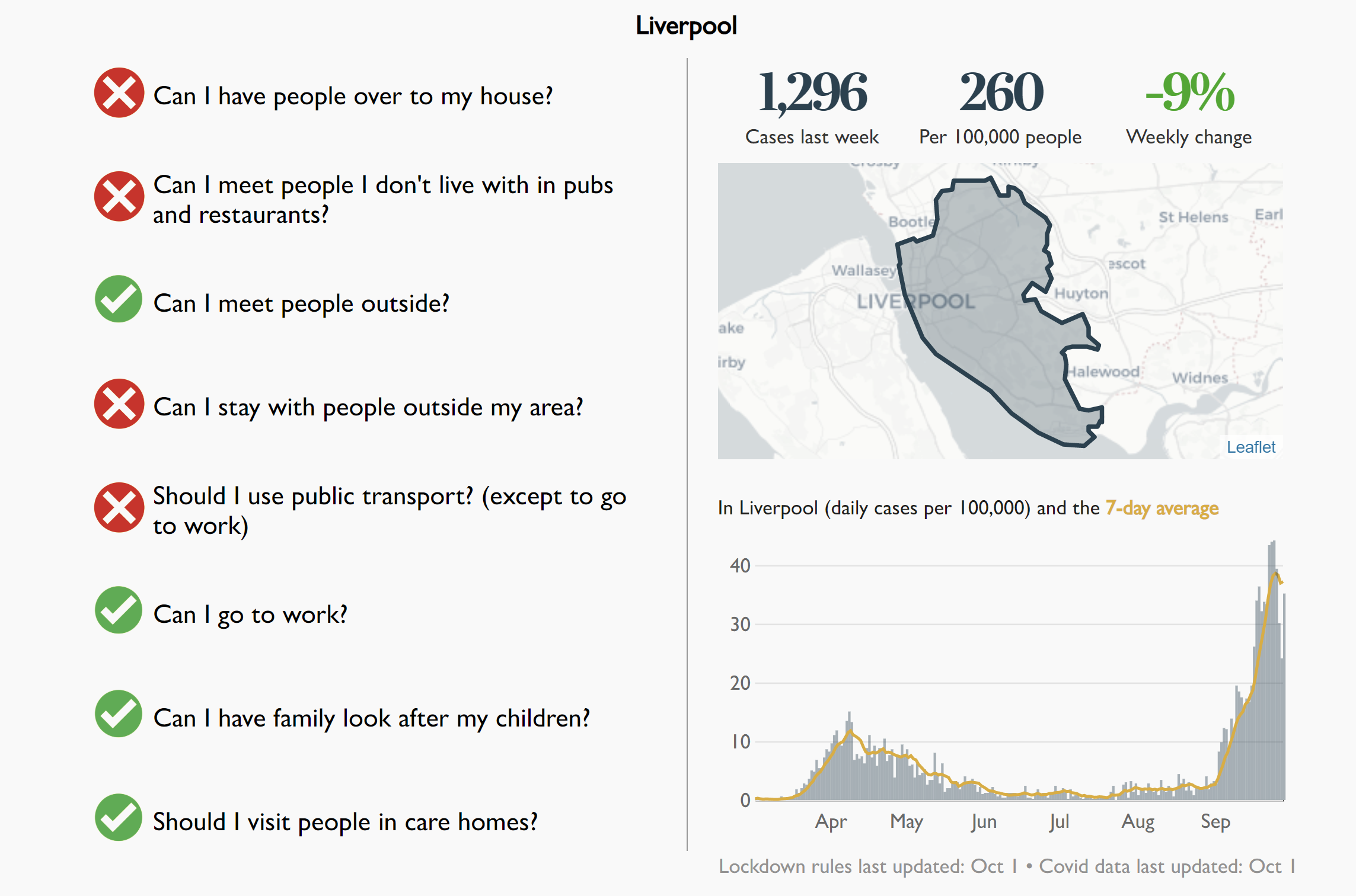
I shall use these displays to check before I travel.
Perhaps, The Times or another organ, should do something of a similar ilk for countries and places, we might want to visit.
Hydrogen-Powered Train Makes UK Maiden Journey
The title of this post, is the same as that of this article on the BBC.
This is said in the article.
A hydrogen-powered train has travelled on Britain’s rail network for the first time.
The prototype, called the Hydroflex, made a 25-mile round trip through Warwickshire and Worcestershire, reaching speeds of up to 50 mph.
Its next phase is to move the hydrogen tanks, fuel cell and battery out of a carriage and stash them underneath the train.
The aim is for the train to start carrying paying passengers by the end of 2021.
Note that the article contains a broadcast-quality video.
There are now two hydrogen-powered trains in development in the UK.
- This Class 799 train by Birmingham University and Porterbrook, which has been converted from a Class 319 train.
- The Class 600 train by Alstom, which is being converted from a Class 321 trains.
Both the trains being converted are British Rail trains based on the Mark 3 coach design.
- They were built originally in the 1980s and 1990s.
- They were built for commuting over medium distances.
- They are 100 mph trains.
- They will keep their pantographs, so running using 25 KVAC overhead electrification.
Both trains could be fitted with quality interiors.
But from what has been disclosed the designs will be quite different.
- The Class 799 train will be four cars, as opposed to three cars of the Class 600 train.
- The Class 600 trains will have large hydrogen tanks inside the train, whereas the Class 799 train will have smaller ones underneath the train.
- I would expect the Class 600 train to have a longer range between refuelling.
- The Class 799 train will also be a tri-mode train, with the ability to use 750 VDC third-rail electrification.
As there are nearly over a hundred Class 321 trains and nearly ninety Class 319 trains, if the hydrogen conversion is successful, we could be seeing a lot of hydrogen trains on the UK rail network.
Walking Along Moorgate – 30th September 2020
I took these pictures as I walked from North to South along Moorgate today from the bus stop by Finsbury Square.

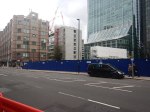
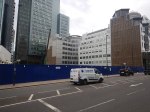




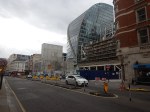
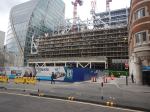

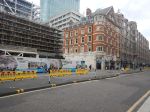
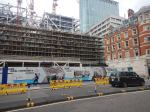
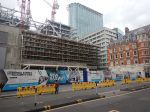

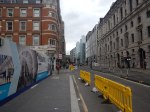
Note.
- I did cross the road three times.
- The building site behind the blue hoardings in some of the first pictures, looks like it could be another tall building.
- The tower looming in the background of several of the pictures is Citypoint, which was originally built in 1967 and refurbished in 2000.
- The new looking building, with the Barclays branch at street level, is not new but another refurbished building, that has been finished in the last few months.
- The older red and white building is Moorgate station. There is nothing to indicate that this building will be rebuilt.
- The odd shaped building to the South of the station is Moor House.
- A large new entrance to the station, with an office block on top is being built between the original station entrance and Moor House.
- Between the new station entrance and Moorgate, 101 Moorgate is being built.
There is certainly, a lot of all types of property development going on at Moorgate station, which after Crossrail opens will become the Western entrance to the Crossrail station at Liverpool Street station.
This 3D Google Map shows Moorgate.
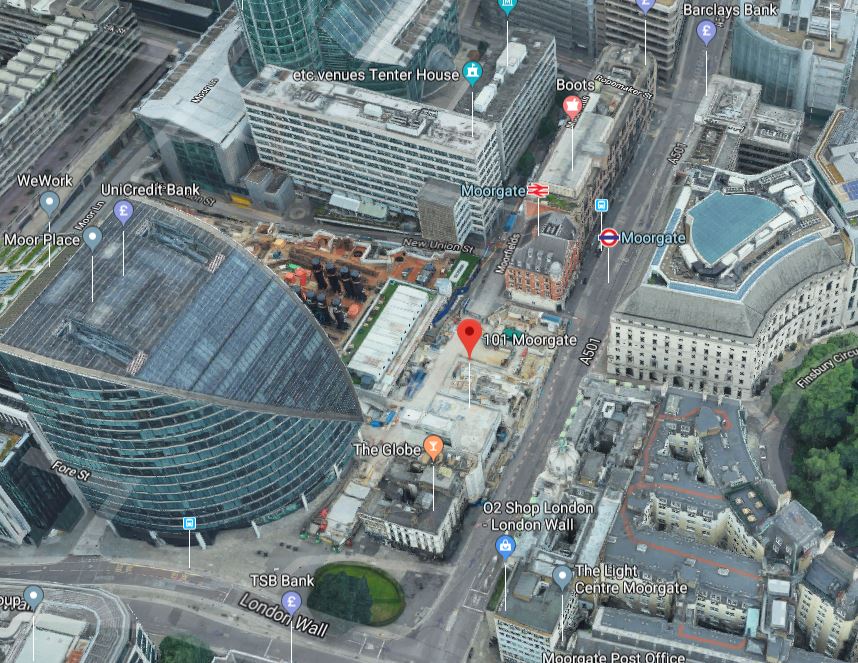
101 Moorgate is marked with a red arrow.
A Crossrail Video Of Liverpool Street Station
This video shows the design of Crossrail’s Liverpool Street station.
This screen-capture from the video shows a possible future Moorgate.
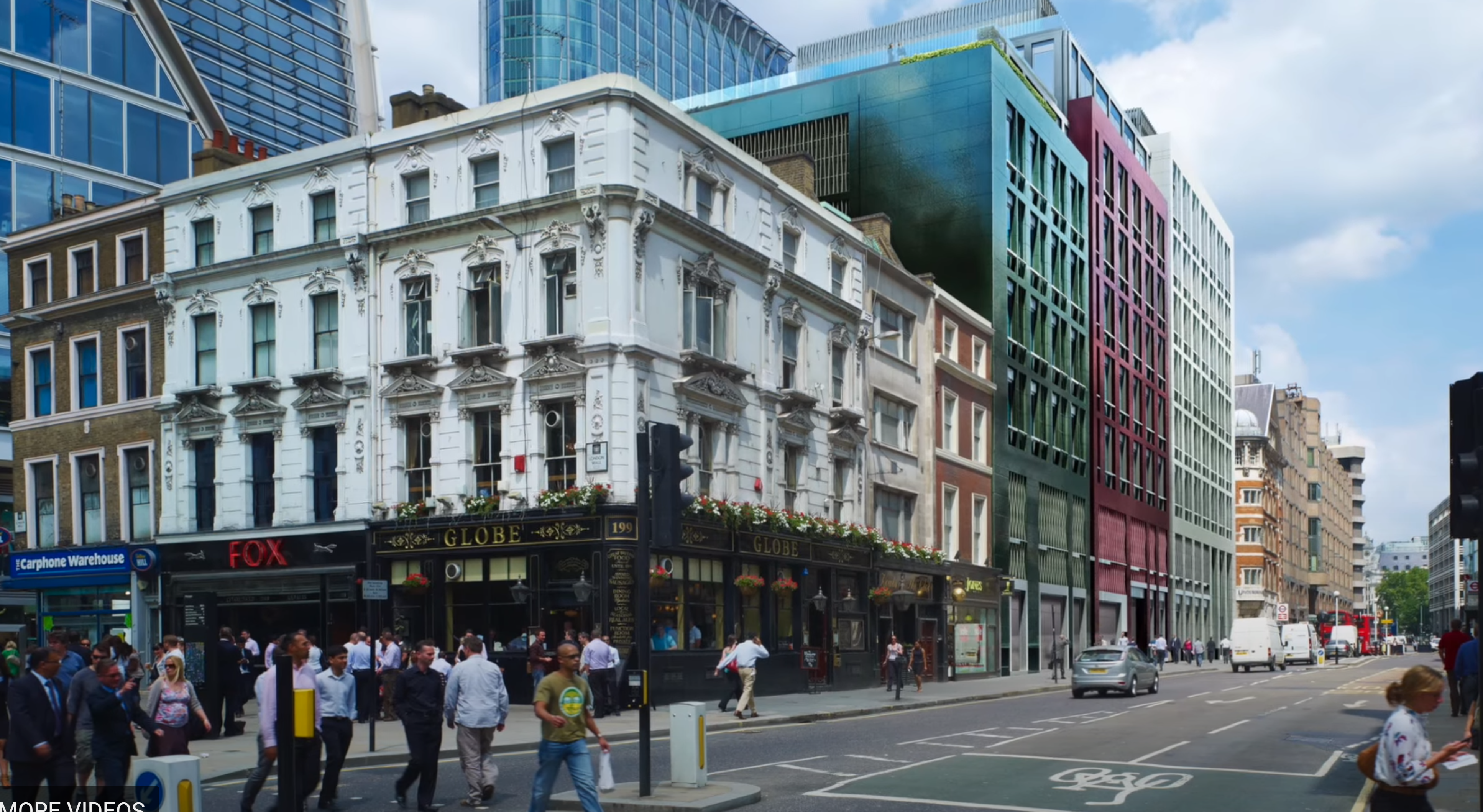
Note the new buildings at 101 Moorgate and the current Moorgate station.
These are related posts on the design of the Crossrail station at Moorgate and Liverpool Street.
- London’s First Underground Roller Coaster
- Moorgate Is Being Refurbished In Readiness For Crossrail
- Has The Possibility Been Created For A Pedestrian Tunnel Between Bank And Moorgate Stations?
The station could become the major one for the City of London.
Extending the Northern City Line To The South
This was intended by the builders of the Northern City Line and they intended to take the route to just North of Bank station at Lothbury.
In the Wikipedia entry for Moor House, this is said.
Completed in 2004, it was the first building to be designed for the forthcoming Crossrail, with a ventilation shaft to the station underneath the building. When built, it had the deepest foundations in London, which reach down 57 metres (187 ft) and are specifically designed to withstand further tunneling below it in the future.
I suspect that could mean that Moor House won’t get in the way of any further railway development.
In the Wikipedia entry for the Northern City Line, this is said about possible developments planned after World War 2.
After the war there were proposals to extend the Northern City Line north and south. The London Plan Working Party Report of 1949 proposed several new lines and suburban electrification schemes for London, lettered from A to M. The lower-priority routes J and K would have seen the Northern City Line extended to Woolwich (Route J) and Crystal Palace (Route K), retaining the “Northern Heights” extensions to Edgware and Alexandra Palace. The lines would have run in small-diameter tube tunnels south from Moorgate to Bank and London Bridge. The “K” branch would have run under Peckham to Peckham Rye, joining the old Crystal Palace (High Level) branch (which was still open in 1949) near Lordship Lane. Nothing came of these proposals, and the Edgware, Alexandra Palace and Crystal Palace (High Level) branches were all closed to passengers in 1954. As a result, the Northern City Line remained isolated from the rest of the network.
Note.
- The proposed J branch to Woolwich has been covered by Crossrail calling at both Moorgate and Woolwich.
- The proposed K branch to Peckham Rye and Crystal Palace has been covered by Crossrail and the London Overground with a change at Whitechapel.
So why bother to open up the possibility by designing Moor House for more tunnels to be bored?
As the London Plan Working Party Report of 1949 indicated several more lines and electrification were proposed.
Also during the war several deep-level shelters were built under Underground stations. Wikipedia says this about the background to the shelters.
Each shelter consists of a pair of parallel tunnels 16 feet 6 inches (5.03 m) in diameter and 1,200 feet (370 m) long. Each tunnel is subdivided into two decks, and each shelter was designed to hold up to 8,000 people. It was planned that after the war the shelters would be used as part of new express tube lines paralleling parts of the existing Northern and Central lines. Existing tube lines typically had 11-foot-8.25-inch (3.56 m) diameter running tunnels and about 21 feet (6.4 m) at stations; thus the shelter tunnels would not have been suitable as platform tunnels and were constructed at stations the new lines would have bypassed. However, they would have been suitable as running tunnels for main-line size trains. (One existing tube, the Northern City Line opened in 1904, used a similar size of tunnel for this reason, although in fact main-line trains did not use it until 1976.)
Shelters were planned on the Northern Line at Belsize Park, Camden Town, Goodge Street, Stockwell, Clapham North, Clapham Common, and Clapham South on the Northern Line. Did London Transport do a full survey of the Northern Line before the war and leave documents saying where an express Northern Line could be easily built.
My mother told me about these plans and as her best friend worked in Personnel at London Transport, she probably knew more than the average suburban housewife, who worked part-time for my father as a book-keeper.
After Crossrail opens and Moorgate station and the Bank station Upgrade are completed will it be possible to bore two new full-size tunnels underneath the Northern Line and Moor House and other buildings on the route to create a Northern Line Express service?
Consider.
- The tunnels would be very deep and suitable for full-size trains.
- Moorgate, Bank and London Bridge stations will have all been rebuilt in the last twenty years, so hopefully, they have been built to allow tunnels for a Northern Line Express service to pass through.
- The Northern Line Express would take the pressure off the City Branch of the Northern Line?
- Initially, the line might terminate under London Bridge station in perhaps a two platform station.
- Modern digital signalling would allow up to 24 trains per hour (tph) on the section between London Bridge and Alexandra Palace station and 12 tph on the Welwyn Garden City and Stevenage branches
It would be a lot easier to build than Crossrail 2 and would give some of the benefits.
An Extension To North Cheam?
The Wikipedia entry for Morden station has this paragraph.
A post-war review of rail transport in the London area produced a report in 1946 that proposed many new lines and identified the Morden branch as being the most overcrowded section of the London Underground, needing additional capacity. To relieve the congestion and to provide a new service south of Morden, the report recommended construction of a second pair of tunnels beneath the northern line’s tunnels from Tooting Broadway to Kennington and an extension from Morden to North Cheam. Trains using the existing tunnels would start and end at Tooting Broadway with the service in the new tunnels joining the existing tunnels to Morden. The extension to North Cheam would run in tunnel. Designated as routes 10 and 11, these proposals were not developed by the London Passenger Transport Board or its successor organisations.
Perhaps, the solution would be to bore two new deep full-size tunnels from Moorgate to Tooting Broadway.
- The Northern Line Express trains couldn’t continue to Morden, as they would be too big for the existing tunnels.
- So they would have to turn back at Tooting Broadway station.
- The stations between Kennington and Morden, that are in need of improvement could be updated.
- I would design the interchange between Northern Line Express and Northern Line trains at Tooting Broadway station as a step-free cross-platform interchange.
The Wikipedia entry for North Cheam station, describes the extension to the station.
- It would have been in tunnel from Morden.
- There would be an intermediate station at Morden South station.
- It didn’t think much of the economics.
- I would suspect that the tunnel would run under the A 24.
- The tunnel would be just under three miles long.
I wonder, if the extra distance, made operation of the line easier.
I estimate that a train could go from Morden to North Cheam stations and back in under ten minutes.
- This would allow 6 tph with a single tunnel and track between the two stations.
- The two new stations; North Cheam and Morden South could be single platform.
- The signalling could be simplified.
The extension could be more affordable.
Romford Station – 14th September 2020
I took these pictures at Romford station, a couple of weeks ago.





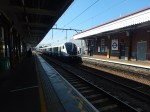


Note.
- The rebuild isn’t as extensive as at Ilford station.
- It appears to be mainly cosmetic and adding step free access.
- There would appear to be an ambitious reconstruction next to the station.
- The station has a marble entrance hall, which is a bit small, by modern standards.
Romford station must have one of the least spectacular entrances on Crossrail.
Ilford Station – 14th September 2020
I took these pictures today at Ilford station.





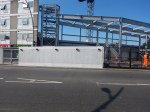


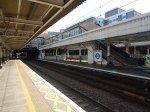
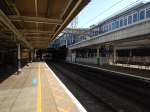


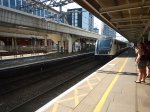





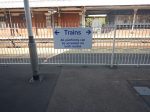

Note.
- The old station building seems to have been demolished and the main structural steel seems to have been erected.
- The Second Entrance was completed a long time ago.
- The Third Entrance is not far off completion.
- The coffee shop was well worth a visit.
The construction of the new station does seem to be getting there.
Hopes Rekindled Of Full Midland Main Line Electrification
The title of this post, is the same as that of this article on Rail Magazine.
This is the key section of the article.
During a House of Commons debate on transport on September 17, HS2 Minister Andrew Stephenson said in response to a question from Alex Norris (Labour/Co-op, Nottingham North): “We are currently delivering the Midland Main Line upgrade, which includes electrification from London to Kettering, with additional electrification to Market Harborough being developed.
“Further electrification of the MML is currently at an early stage, but it is being examined by Network Rail.”
Stephenson said the DfT will continue to work closely with NR on the development of a proposal that would include approaches to advancing the delivery of electrification across the route.
The title of the article, probably sums it up well.
Electrification Of The Midland Main Line
Having read lots of stories about electrification of Midland Main Line, I think the following must be born in mind.
- Electrification on the line will reach as far North as Market Harborough station.
- The route between Sheffield station and Clay Cross North Junction will be shared with High Speed Two. It will obviously need to be electrified for High Speed Two.
- The section of the Midland Main Line between Derby and Clay Cross North Junction, runs through the World Heritage Site of the Derwent Valley Mills. The Heritage Taliban will love the electrification, with a vengeance.
- Electrification through Leicester station could be tricky, as the station building and the A6 road are over the tracks and there is limited clearance. Electrification could involve major disruption to the trains for some time.
These are some of the distances involved of sections of the route that are not electrified.
- Market Harborough and Derby are 54 miles apart.
- Market Harborough and Clay Cross North Junction are 67 miles apart.
- Market Harborough and Chesterfield are 70 miles apart.
- Market Harborough and Nottingham are 44 miles apart
- Market Harborough and Leicester are 16 miles apart.
- Derby and Clay Cross North Junction are 21 miles apart.
Since 2017, when electrification for the full route was originally abandoned, there have been big changes in rolling stock technology.
The biggest change has been the development of battery trains.
Hitachi’s Regional Battery Trains
This infographic from Hitachi gives the specification for their Regional Battery Train.

Note.
- The trains have a range of 56 miles on battery power.
- The trains can cruise at 100 mph on battery power.
- Hitachi have said that all of their AT-300 trains can be converted into Regional Battery Trains.
- Trains are converted by removing the diesel engines and replacing them with battery packs.
- I suspect these battery packs look like a diesel engine in terms of control inputs and performance to the driver and the train’s computer.
It is extremely likely, that the bi-mode Class 810 trains, which are a version of the AT-300 train, that have been ordered for the Midland Main Line can be converted into Regional Battery Trains.
These trains have four diesel engines, as opposed to the Class 800 and Class 802 trains, which only have three.
These are reasons, why the trains could need four engines.
- The trains need more power to work the Midland Main Line. I think this is unlikely.
- Four engine positions gives ,more flexibility when converting to Regional Battery Trains.
- Four battery packs could give a longer range of up to 120 kilometres or 75 miles.
It could just be, that Hitachi are just being conservative, as engines can easily be removed or replaced. The fifth-car might even be fitted with all the wiring and other gubbins, so that a fifth-engine or battery pack can be added.
I suspect the train’s computer works on a Plug-And-Play principle, so when the train is started, it looks round each car to see how many diesel engines and battery packs are available and it then controls the train according to what power is available.
London St. Pancras And Sheffield By Battery Electric Train
Any battery electric train going between London St. Pancras and Sheffield will need to be charged, at both ends of the route.
- At the London end, it will use the electrification currently being erected as far as Market Harborough station.
- At the Sheffield end, the easiest way to charge the trains, would be to bring forward the electrification and updating between Sheffield station and Clay Cross North Junction, that is needed for High Speed Two.
This will leave a 67 mile gap in the electrification between Market Harborough station and Clay Cross North junction.
It looks to me, the Class 810 trains should be able to run between London St. Pancras and Sheffield, after the following projects are undertaken.
- Class 810 trains are given four battery packs and a battery range of 75 miles.
- Electrification is installed between Sheffield station and Clay Cross North Junction.
Trains would need to leave Market Harborough station going North and Clay Cross Junction going South with full batteries.
Note.
- Trains currently take over an hour to go between Chesterfield to Sheffield and then back to Chesterfield, which would be more than enough to fully charge the batteries.
- Trains currently take around an hour to go between London St. Pancras and Market Harborough, which would be more than enough to fully charge the batteries.
- Chesterfield station is only three miles further, so if power changeover, needed to be in a station, it could be performed there.
- Leeds and Sheffield are under fifty miles apart and as both stations would be electrified, London St. Pancras and Sheffield services could be extended to start and finish at Leeds.
London St. Pancras and Sheffield can be run by battery electric trains.
London St. Pancras And Nottingham By Battery Electric Train
Could a battery electric train go from Market Harborough to Nottingham and back, after being fully-charged on the hour-long trip from London?
- The trip is 44 miles each way or 88 miles for a round trip.
- Services have either three or eight stops, of which two or three respectively are at stations without electrification.
- Trains seem to take over thirty minutes to turnback at Nottingham station.
Extra power North of Market Harborough will also be needed.
- To provide hotel power for the train, during turnback at Nottingham station.
- To compensate for power losses at station stops.
If 75 miles is the maximum battery range, I doubt that a round trip is possible.
I also believe, that Hitachi must be developing a practical solution to charging a train during turnback, at a station like Nottingham, where trains take nearly thirty minutes to turnback.
If the Class 810 trains have a battery range of 75 miles, they would be able to handle the London St. Pancras and Nottingham service, with charging at Nottingham.
Conclusion
It appears that both the Nottingham and Sheffield services can be run using battery electric Class 810 trains.
- All four diesel engines in the Class 810 trains would need to be replaced with batteries.
- The route between Clay Cross North Junction and Sheffield station, which will be shared with High Speed Two, will need to be electrified.
- Charging facilities for the battery electric trains will need to be provided at Nottingham.
On the other hand using battery electric trains mean the two tricky sections of the Derwent Valley Mills and Leicester station and possibly others, won’t need to be electrified to enable electric trains to run on the East Midlands Railway network.
Will it be the first main line service in the world, run by battery electric trains?
Redhill To Ashford International Via Tonbridge
I did this trip to find out what the current service was like after writing Gatwick Rail Service Could Link Far Reaches Of The South East.
The journey can be broken into sections.
Changing At Redhill Station
I arrived at Redhill station and took these pictures as I changed to the train for Tonbridge station.
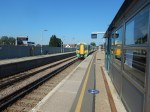
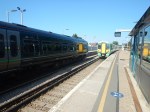
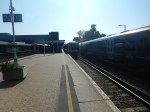
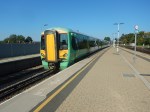
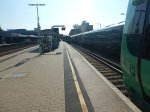
The three services are in Redhill station at approximately the same time.
- The Southern service to and from Tonbridge used Platform 1a.
- The GWR service from Reading to Gatwick used Platform 1.
- The GWR service from Gatwick to Reading used Platform 0.
I think if you’re nippy on the stairs, travellers wanting to go between Reading and Ashford or vice-versa could manage the train, but a direct through service would be preferred by some travellers.
Between Redhill And Tonbridge Stations
I took these pictures as the train ran between Redhill and Tonbridge.









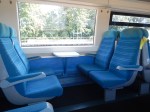
Note.
- The train was a smart three-car Class 377 train.
- It is a route with a quiet calm along the Downs.
- There are new housing and commercial developments along the route.
Some of the stations could do with improvement, which should probably include step-free access, as at Redhill and Tonbridge stations.
Changing At Tonbridge Station
These pictures show Tonbridge station.

Note.
- The station is step-free with lifts.
- I had to use the bridge to get from one side of the station to the other to catch my next train.
- There seemed to be several passengers, who continued their journey from Tonbridge.
After a wait of nearly thirty minutes I was on my way to Ashford International station.
Thoughts On The Service
These are my thoughts on the service.
Battery Electric Trains
Having seen this service in operation, I feel that this must be one of the most suitable services for battery electric trains in the UK.
In Gatwick Rail Service Could Link Far Reaches Of The South East, I broke the route down into electrified and non-electrified sections.
- Ashford and Tonbridge – Electrified – 26.5 miles – 38 minutes
- Tonbridge and Redhill – Electrified – 20 miles – 35 minutes
- Redhill and Gatwick – Electrified – 7 miles – 8 minutes
- Gatwick and Redhill – Electrified – 7 miles – 8 minutes
- Redhill and Reigate – Electrified – 2 miles – 4 minutes
- Reigate and Shalford Junction – Not Electrified – 17 miles – 20 minutes
- Shalford Junction and North Camp – Electrified – 9 miles – 11 minutes
- North Camp and Wokingham – Not Electrified – 11 miles – 14 minutes
- Wokingham and Reading – Electrified – 7 miles and 9 minutes
Note.
- Ashford, Tonbridge, Redhill, Gatwick, Guildford, Wokingham and Reading are all fully-electrified main line stations.
- Most of the route and the two ends are electrified.
- All electrification is 750 VDC third rail.
- All sections without electrification are less than twenty miles.
- The route is more than 75 % electrified.
There are several trains, which have been fitted with batteries, plans to fit them with batteries exist or would be suitable to be fitted with batteries.
- Class 379 trains – Have already been fitted with batteries for experimental purposes.
- Class 387 trains – Similar to Class 379 trains.
- Class 377 trains – Similar to Class 379 trains.
- Class 350 trains – Being converted to battery operation by Porterbrook
- Class 450 trains – Similar to Class 350 trains.
All trains have similar specifications.
- Four cars.
- 100 mph operating speed.
- All are modern trains.
- They either have third-rail shoes or can be fitted with them.
In addition, no infrastructure changes would be needed.
I also feel, that the same class of train could be used on these services in the South-East.
- Oxted and Uckfield
- Ashford International and Hastings
Why not use one class of battery electric trains for all these routes?
The Three Reverses
The full service between Reading and Ashford International stations will require three reverses at Gatwick and Redhill (twice).
Having seen the current system in operation at Redhill station, I feel the following operation would work, using a version of London Underground’s stepping-up.
From Reading to Ashford International the following sequence would apply.
- The train from Reading would stop in Platform 1 at Redhill, as they do now.
- A second driver would step-up into the rear cab and take control of the train.
- The original or first driver, who’d driven the train from Reading would stay in the cab.
- The second driver would drive the train to Gatwick.
- When, the train is ready to leave, the first driver takes control from his cab.
- The second driver, who’d driven the train from Redhill would stay in the cab.
- The first driver would drive the train back to Platform 0 at Redhill, as they do now.
- When, the train is ready to leave, the second driver takes control from his cab.
- The first driver would step down and probably have a break, before he is needed to drive another train.
- The second driver would drive the train to Ashford International.
Trains going the other way would do a similar sequence in reverse.
Other than the battery system, the trains may need a communication and safety system between the two cabs.
Hydrogen Trains
Consider these points about using a hydrogen-powered train between Reading and Ashford International.
- The maximum distance without electrification is just 20 miles.
- The route is over 75 % electrified.
- Hydrogen fuelling and supply systems would need to be provided.
- Hydrogen trains would require changes to maintenance.
In my view, using a hydrogen-powered train would be like using a sledgehammer to crack a nut.
Gatwick Connect
Could the service be considered to be a Gatwick Connect service?
The full Reading and Ashford International service would call at these major locations
- In the West – Reading, Winnersh, Wokingham, Crowthorne, Farnborough, Guildford, Dorking and Reigate
- In the East – Ashford International, Paddock Wood and Tonbridge.
Both the Eastern and Western legs also call at Redhill.
Could the service be extended in the West?
The obvious destination would be Heathrow.
Once the future of Heathrow is sorted, there will probably be some form of Southern or South-Western access into Heathrow.
Could this service connect Gatwick and Heathrow?
- Perhaps there would be a reverse at Reading!
- Or it might use one of numerous schemes put forward to access Heathrow from the West.
In any case, as Reading is one of the best-connected stations in England, passengers will use this connectivity to get to Gatwick.
Could the service be extended in the East?
Like Reading, Ashford International is a well-connected station.
It would be possible to extend the service to perhaps Canterbury or Dover?
There must also be the possibility of running a service to Maidstone West or Strood in the East!
Conclusion
There could be a lot of possibilities for this route.
I also feel, that it is one of the best routes to be run by battery trains in the UK. These trains could also be the same, as those working Oxted-Uckfield and Ashford International-Hastings.
There would be no need for any new infrastructure, as there is electrification at both ends of the route.
Blues On The Right, Whites On The Left
I just thought, that this arrangement of Minis in Winchester, needed to be snapped.



Why the formation?
 The Anonymous Widower