Last Of The Many
I took a train to East Midlands Parkway station, this morning and took these pictures of the cooling towers of the last coal-fired power station to generate electricity in the UK.
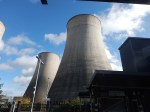

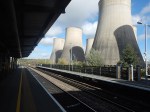




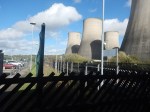
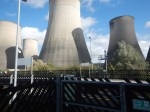










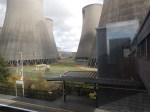
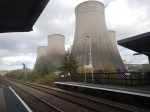
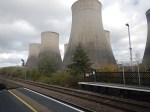

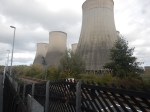
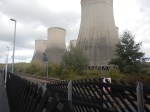
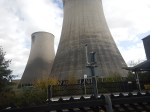
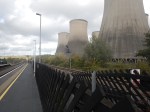

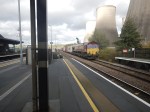
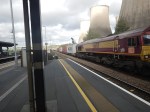
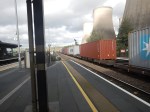
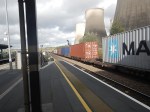
Note.
- The power station was commissioned in 1968.
- It has a nameplate capacity of 2.116 GW.
- Dogger Bank wind farm is intended to have a capacity of 3 GW
- There are eight cooling towers.The diesel locomotive hauling a freight train past the site is a Class 66 locomotive.
- These locomotives are likely to be scrapped in the next few years, to improve air quality in areas, where they run. Some will be replaced by electric or even hydrogen locomotives.
This Google Map shows a map view of the power station in 2024.
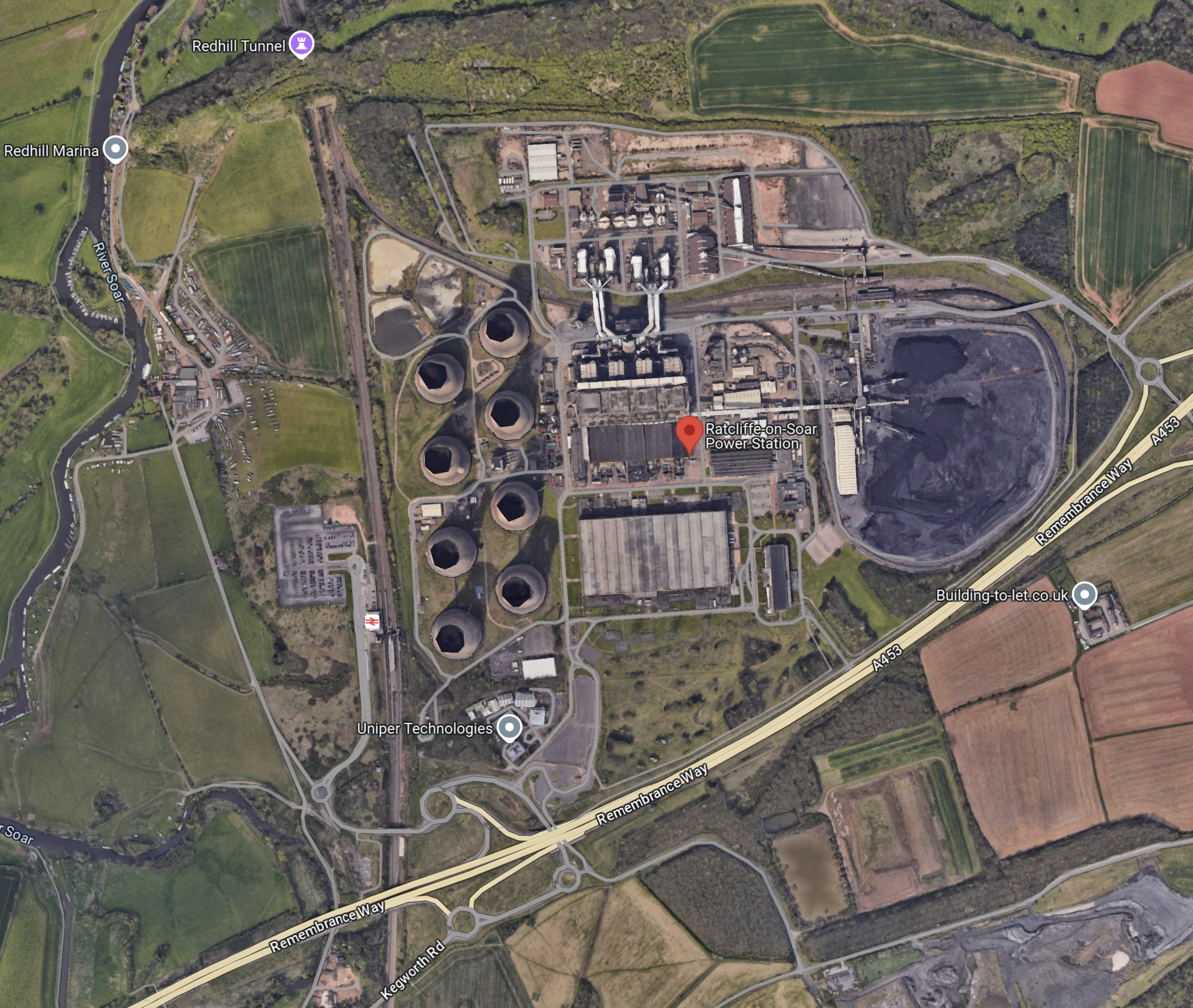
As the famous estate agent Roy Brooks would have said in the 1960s, it is a site with enormous potential.
Ensuring A Sustainable Future For A Coal-Fired Power Station Site Approaching Closure
The title of this section is that of an ARUP report on the future of the Radcliffe-on-Soar site.
This is the introductory paragraph.
Operating for more than 50 years, the Ratcliffe-on-Soar power station closed in September 2024. Its buildings, cooling towers and other structures will be decommissioned and demolished, making the site and surrounding land suitable to be redeveloped as a zero-carbon technology and energy hub for the East Midlands. Arup, working with Uniper, the site owner, supported Rushcliffe Borough Council to establish a Local Development Order (LDO) to make the most out of the potential development opportunities of the site.
ARUP’s report is a good start for one of the most important sites in the Midlands.
Improvements At Marylebone Station – 15th October 2024
I passed through Marylebone station today and took these pictures of the improvements.
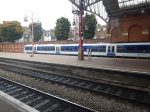
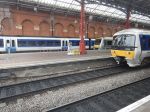
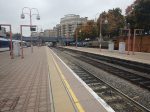

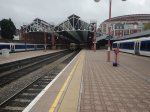
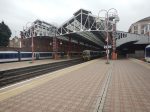
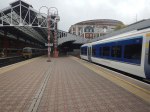




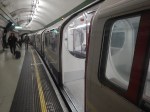
Note.
- The Class 165 and Class 168 trains are being refurbished.
- The Chiltern gate line has been improved.
- A wider ticket gate line has been installed in the Underground station.
- The stairs to the Bakerloo Line has been replaced with a third escalator.
- The last picture shows the lack of grab handles in the doors of Bakerloo Line trains.
It certainly looks like Chiltern Railways and its assets are improving.
UK Investment Summit Latest: Starmer Announces £1.1bn Expansion Of Stansted Airport
The title of this post, is the same as that of this article on The Times.
The Times has this sub-heading about Stansted
Analysis: Stansted Deal Prioritises Growth Over Climate
There are four paragraphs of analysis.
Over the weekend, Sir Keir Starmer made clear that his commitments to boost workers’ rights would not get in the way of his desire to bring in cash from the owners of P&O. As ministers now trumpet a deal to upgrade Stansted airport, it seems that growth and jobs also trump concerns about emissions.
Louise Haigh, the transport secretary who prompted the row with DP World by calling P&O a “rogue operator”, praised the Stansted deal as a “clear signal that Britain is open for business”. She argued that Stansted could be upgraded “while also meeting our existing environment obligations”, with the airport promising a new solar farm to generate electricity. But environmentalists will be dismayed by the prospect of more plane journeys and associated emissions.
The deal also raises fresh questions about a third runway at Heathrow after years of dithering under the Conservatives. No 10 has previously said it is “not opposed” to expansion if it can meet tests on emissions, climate change, noise pollution — and growth.
Starmer has said he will not duck decisions because they are “too difficult”. A decision on Heathrow offers a very clear test of that promise.
Is Hydrogen The Reason For The Choice Of Stansted?
I wonder if the choice of Stansted for expansion is down to the likelihood, that East Anglia will be a big centre for the generation of zero-carbon green and pink hydrogen, with gigawatts of offshore wind farms for the green and nuclear at Sizewell for the pink.
Aircraft of the future will surely need hydrogen for flying to their destinations.
Already, the massive construction of Sizewell C is going to be performed using zero-construction methods involving electricity and hydrogen, as far as is possible.
Large construction at Stansted Airport could be done in a similar manner, using perhaps a hydrogen pipeline between Sizewell and Stansted running along the A 14. This would probably be built anyway, so that East Anglia’s large numbers of heavy trucks could be converted to hydrogen.
Already the hydrogen buses to bring workers to the Sizewell C site have been ordered from Wrightbus in Ballymena.
Airbus, are planning to have their hydrogen-powered Boeing 737/A 320-size airliner in service by the mid-2030s. From visualisations released by Airbus, the Zeroe hydrogen Turbofan looks very much like a redesigned version of the current A320 neo, with two hydrogen turbofans (hopefully with RR on the side!) Converting an existing proven airliner, only means that the new parts need to be certified, so this would bring the plane into service quicker.
Airbus’s infographic shows the Zeroe hydrogen Turbofan will seat up to 200 passengers and have a range of 2,000 nautical miles or 3,700 km.

Discover the three zero-emission concept aircraft known as ZEROe in this infographic. These turbofan, turboprop, and blended-wing-body configurations are all hydrogen hybrid aircraft.
A typical A 320 neo will fly 165 passengers up to 3,500 nautical miles or 6.500 km.
A few distances from Stansted include.
- Athens – 2,400 km.
- Berlin – 905 km.
- Cairo – 3514 km.
- Copenhagen 913 km.
- Dublin – 470 km.
- Edinburgh – 509 km.
- Gander 3,800 km
- Geneva – 760 km.
- Glasgow – 540 km.
- Istanbul – 2480 km.
- Madrid – 1300 km.
- Milan – 960 km.
- Munich – 909 km.
- Palma de Mallorca – 1,400 km.
- Reykjavík – 1870 km.
- Rome – 1,442 km.
- Stockholm – 1,400 km.
- Tel-Aviv – 3,564 km.
- Tenerife North – 2944 km.
- Tenerife South – 2999 km.
- Warsaw 1,412 km.
These distances would mean, a lot of current European destinations could be reached, if the plane were filled at both airports, but a surprising number of popular places could be reached by only refuelling at Stansted.
It also appears to me, that with refuelling in Iceland and perhaps a stopover, in that delightful and different country, zero-carbon flights across the Atlantic would be possible.
If a hydrogen-powered aircraft has the 3,700 km. range that Airbus are promising, it will be an aircraft with a lot of possibilities!
Short Flights
- Amsterdam – 541 km.
- Cardiff – 253 km.
- Exeter – 284 km.
- Jersey – 344 km.
- Liverpool – 264 km.
- Newcastle – 373 km.
- Newquay – 399 km.
- Ronaldsway – 408 km.
- Southampton – 151 km.
Some of these flights would be competing with trains.
Flights Around The British Isles
One of the longest flights around the British Isles would be between Stansted and Sumburgh Airport in the Shetland Isles.
But this is only 894 kilometres, so a return trip would be possible.
I also feel that arranging hydrogen refuelling on Shetland will not be a difficult task, as the islands are likely to have copious supplies of green hydrogen.
Flights From Stansted To Europe
Applying a ten percent reserve probably means a safe one-way range of around 1,700 km.
This would mean that.
- Amsterdam – 541 km.
- Berlin – 905 km.
- Copenhagen – 913 km.
- Madrid – 1300 km.
- Milan – 960 km.
- Munich – 909 km.
- Palma de Mallorca – 1,400 km.
- Rome – 1,442 km.
- Stockholm – 1,400 km.
- Warsaw 1,412 km.
Should all be in range. of an out-and-back flight, after fully fuelling the plane at Stansted Airport.
Others like.
- Athens – 2,400 km.
- Bucharest – 2070 km.
- Cairo – 3514 km.
- Istanbul – 2480 km.
- Lisbon – 1630 km.
- Malta – 2107 km.
- Marrakech – 2350. km.
- Sofia – 2010 km.
- Tel-Aviv – 3,564 km.
- Tenerife North – 2944 km.
- Tenerife South – 2999 km.
Could be handled by refuelling at the destination.
Hopping Across The Atlantic
Consider.
- My great aunt Beatrice used to fly the Atlantic in the 1950s, although it was usually a succession of small hops between Heathrow Shannon and Gander Airports. I think she regularly used ships like the Queen Mary and Elizabeth, as she found them less stressful.
- Icelandair offer short stopovers in Reykjavik and I suspect they will offer this with hydrogen-fuelled aircraft.
- British Airways used to offer a London City Airport to New York flight via Shannon using an Airbus A 318.
I would certainly be interested to hop across from Stansted to New York in a hydrogen-powered aircraft, and I suspect others would do it for the environmental brownie points.
Legs could be.
- Stansted and Reykjavík – 1870 km.
- Reykjavík and Gander – 2568 km
- Gander and New York – 1767 km.
A stop could possibly be squeezed in at Boston.
It could be an interesting way to cross the Atlantic.
Hydrogen Production In East Anglia
I said earlier that East Anglia could produce a lot of zero-carbon green and prink hydrogen from wind and nuclear and this would be used for the following.
- Aviation out of Stansted and Southend Airports.
- Shipping out of the Port of Felixstowe, London Gateway and other smaller ports.
- Providing energy for heavy transport in East Anglia.
- Providing energy for Freeport East at Felixstowe and Harwich.
- Refuelling passing shipping.
- Supplying off-grid energy to rural properties and businesses in the East of England, which I wrote about in Developing A Rural Hydrogen Network.
Any spare hydrogen could always be sold to the Germans.
Decarbonisation Of The Railways In East Anglia
Undoubtedly, some hydrogen will be used to decarbonise some parts of East Anglia’s railways.
Many passenger trains are electrified, but some rural and cross-country services still use diesel. However, the Class 745 trains, that were built by Stadler for these services could be converted to hydrogen or battery-electric.
Similarly, locomotives that haul the freight trains out of the ports of East Anglia will be replaced with hydrogen or battery-electric locomotives.
I am fairly certain, that by 2040, all railways in East Anglia will be zero-carbon.
The East-West Rail Link
It is not known yet, whether the current government will continue to build the East West Rail Link, but it could be invaluable in connecting Stansted Airport to the West of England.
Connecting Stansted Airport To The North Of England and Scotland By Rail
If Stansted is developed as a zero-carbon airport, based on the new hydrogen-powered aircraft, travellers between say the North of England and Scotland, will surely want to travel to Stansted in a carbon-free manner.
So would it be sensible to run rail electric services between the North and Stansted?
Conclusion
Stansted could develop into the UK’s zero-carbon airport.
Abergavenny Station – 13th October 2024
For a trip today, I went to Abergavenny station to see the progress on the new step-free bridge and take a few pictures.
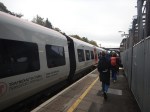

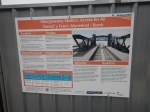

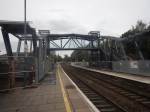
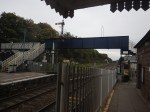
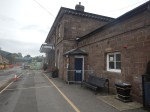
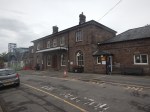
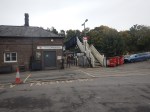





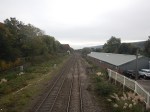



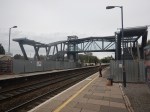
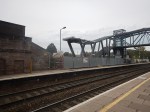
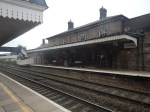

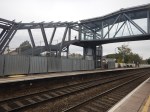
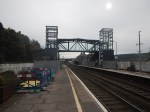
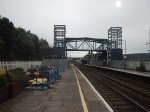
Note.
- The station has several unusual features.
- The car park could take all of about six cars.
- The current bridge would be dangerous for the elderly with shopping trolleys.
- Network Rail seem to be explaining the work in more detail, than usual.
Why is it that each new step-free station bridge appears to be a different design?
Paddington Square – 12th Oct 2024
Some parts of Paddington Square at Paddington station are now open and I took these pictures.



























Note.
Extending The Elizabeth Line – Adding Ladbroke Grove Station To The Elizabeth Line
There is a Wikipedia entry for Ladbroke Grove railway station, which starts with this paragraph.
Ladbroke Grove is a proposed railway station in London, England on the Crossrail Route between Old Oak Common and Paddington. This is not part of the internal route and would be added at a later stage. Locals want the station to be called Portobello Central to serve the nearby Portobello Market. It was originally called Kensal.
The Wikipedia entry also gives these details of two proposals for a Ladbroke Grove station on the Elizabeth Line.
Kensington and Chelsea Council has been pushing for a station at North Kensington / Kensal, just to the east of the Old Oak Common railway station site, off Ladbroke Grove and Canal Way, as a turn-back facility will have to be built in the area anyway. Siting it at Kensal Rise, rather than next to Paddington itself, would provide a new station to regenerate the area. Amongst the general public there is a huge amount of support for the project and then-mayor of London Boris Johnson stated that a station would be added if it did not increase Crossrail’s overall cost; in response, Kensington and Chelsea Council agreed to underwrite the projected £33 million cost of a Crossrail station, which was received very well by the residents of the borough. Transport for London (TfL) is conducting a feasibility study on the station and the project is backed by National Grid, retailers Sainsbury’s and Cath Kidston, and Jenny Jones (Green Party member of the London Assembly).
The plans were resurrected by Boris Johnson in 2016.
In March 2017, it was announced that TfL was considering a Crossrail station in Kensal Green, on the site of a former gasworks, and it would be between Old Oak Common and Paddington.
This map from cartometro.com shows the railway lines to the West of Paddington.
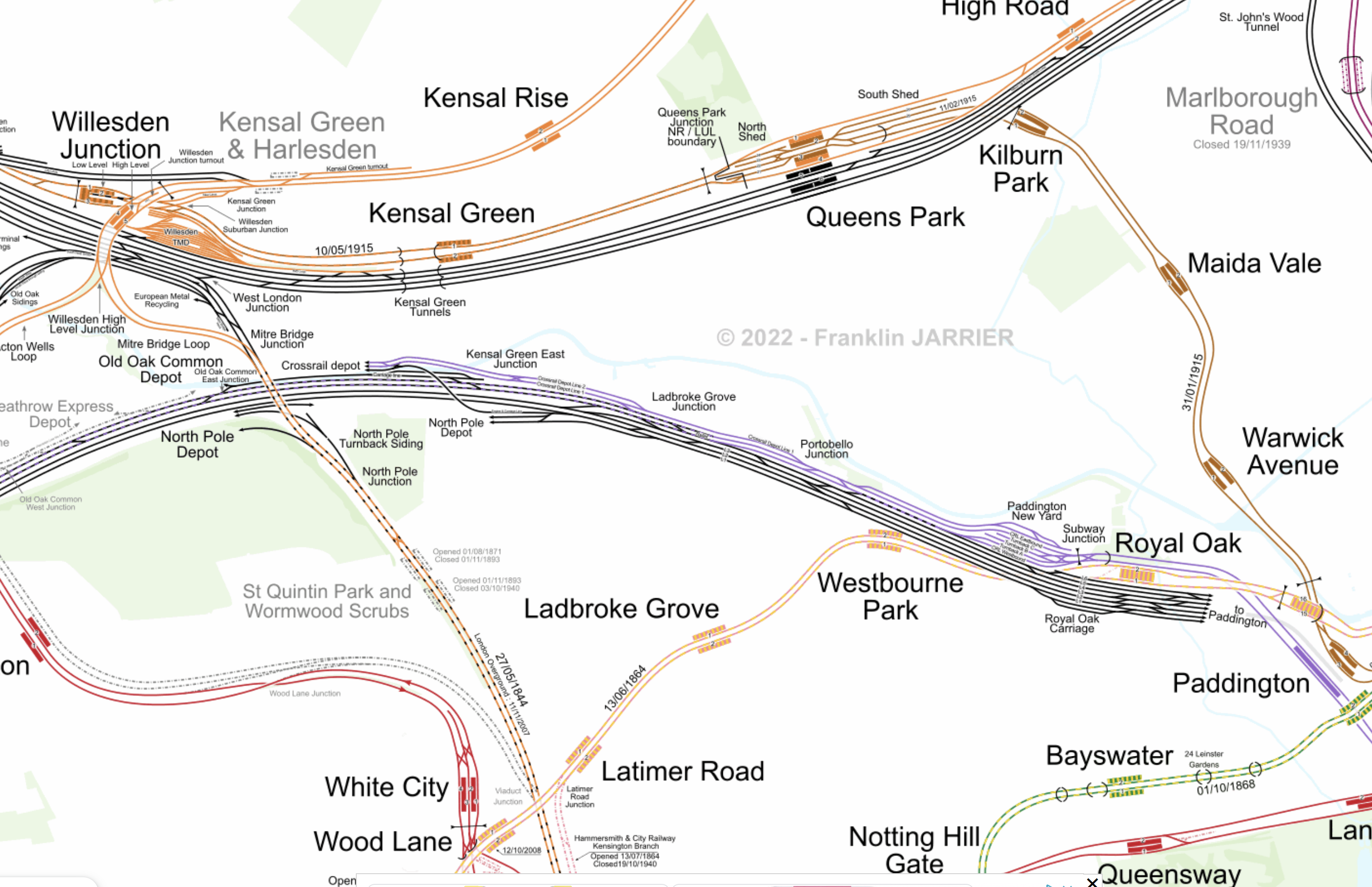
Note.
- The Elizabeth Line is shown in purple.
- Ladbroke Grove rube station is not close to the Elizabeth Line.
- Kensal Green tube station is not close to the Elizabeth Line.
But we do know this about the future Old Oak Common station.
- It will be served by Elizabeth Line services between Central London and Heathrow Airport.
- It will be served by High Speed Two services between London Euston and the North of England and Scotland.
- It will be served by Great Western services between London Paddington and the West of England and Wales.
- It will be served by North London Line services betweeen Stratford and Richmond.
- It will be served by Heathrow Express services between London Paddington and Heathrow Airport.
From the map, it looks unlikely that the Hammersmith & City Line will be able to serve Old Oak Common station.
However, it might be possible that Euston and Old Oak Common could be served by Watford DC Line services, which called at either Old Oak Common or Kensal Greeen.
A link between Euston and Old Oak Common, would give all stations on the line access to High Speed Two and Heathrow with a change at Old Oak Common.
Some Euston suburban services could stop at Old Oak Common for access to High Speed Two and Heathrow.
The Watford DC Line which is very self-contained could become a comprehensive feeder line for High Speed Two and Heathrow.
Kensal Green Station
I took a trip to Kensal Green station and took these pictures.

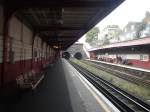
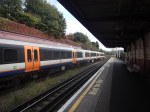
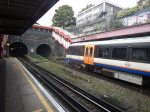
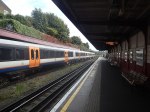





Note.
The station handles two heights of trains on single-height platforms.
Some of the stairs are not the best.
There is no step-free access.
There are six lines through the station and there may be scope for more platforms.
If ever there was a station that needed a makeover it is Kensal Green.
Conclusion
I doubt that the Hammersmith & City Line could be connected to the Elizabeth Line to the West of Paddingt9n.
But I do feel that the Watford DC Line could be developed into a comprehensive link between Euston and Old Oak Common satiations.
Lower Thames Crossing Decision Delayed To May 2025
The title of this post, is the same as that of this article on the BBC.
This is the sub-heading.
A decision on whether to build a new road crossing under the Thames will not now be made until at least 23 May 2025.
These are the first three paragraphs.
The Lower Thames Crossing would link Gravesend in Kent and Tilbury in Essex.
A statement from Transport Secretary Louise Haigh on Monday said the delay was “to allow more time for the application to be considered further, including any decisions made as part of the spending review”.
This is the third time the decision has been extended, with previous dates of 20 June and 4 October having also been missed.
This article on RouteOne, which is entitled Further Lower Thames Crossing Delay Draws Dismay From RHA, indicates the views of the road haulage industry.
On the other hand opponents say that the building of the link will damage the Green Belt.
But then the Government’s proposed housing will do that!
I laid out various options in What Are We Going To Do For The Lower Thames Crossing?, but it just seems an intractable problem.
The Wikipedia entry for the Lower Thames Crossing is a long list of failed and abandoned proposals.
Wrightbus Signs Deal For Largest Ever Order
The title of this post, is the same as that of this article on the BBC.
This is the sub-heading.
Ballymena bus manufacturer Wrightbus has signed a deal to supply more than 1,000 buses to operator Go-Ahead over the next three years.
These are the first three paragraphs.
The company said it is the largest deal in its 78-year history and will be worth up to half a billion pounds.
Go-Ahead is an international transport group and one of the UK’s largest public service providers.
Wrightbus has had a strong 2024 with 786 buses registered so far this year and it now employs more than 2,000 people.
It finally looks like Wrightbus is securely on the road again.
Looks Like It Was Modelled On A Steel Urinal Stolen From The Gents In A Flat-Roofed Pub
This pithy comment was put in the comments of The Times for an article on the Tesla Cybertruck.
I once saw a Hummer on the road in London, but Tesla’s monstrosity would be a lot worse.design.
The Cybertruck is certainly a design crime!
Mushroom Management On TfL Buses
Transport for London or as all Londoners abuse them as TfL, are getting the masters at applying mushroom management to running the buses. Especially at the weekends.
For those of you not familiar with the last century term, it means keeping everybody in the dark and throwing in lots of manure. As in the 1970s, I used to live next door to a mushroom factory, I know it at least works with fungi, but I’m not sure of it’s effectiveness with fleets of buses about moving passengers.
Most Saturdays, I take a 141 bus to Moorgate and have a full English gluten-free breakfast in the Leon cafe there, as I like to set myself up for the weekend.
The 141 bus may be one of the least reliable buses in the capital, but last Saturday, I was dropped close to Liverpool Street station and yesterday, I was dropped under the Barbican.
No warning, advice or apology about the change of plan.
But then like the Mayor, TfL are never in the wrong.
Today was different!
After taking a 56 bus from near my house to the Angel I had another full English gluten-free breakfast in the Leon cafe there, before taking the Northern Line to Euston station.
I was hoping, I could take a trip somewhere, but there were extensive engineering works, so I just came home from Euston on the Overground via Willesden Junction station.
I ended up at Hackney Central station, where I did a bit of shopping in the excellent M & S Food shop.
Normally, I just get a 38 bus home from the side of the station, but there weren’t any around.
Again, there was no warning, advice or apology. Just loads of people looking for non-existent buses.
It was a full three hours before I completed my round trip.
Transport for London has no respect for its passengers.
Normal businesses would go bust, if they treated their customers like this.
 The Anonymous Widower