I’m Getting Fed Up Being Coeliac
I’m not getting fed up with the benefits.
- The inability to get serious doses of the covids, as was shown by the University of Padua and I documented in Risk Of COVID-19 In Celiac Disease Patients.
- The lower rate of cancer, compared to the general population as has been shown by Nottingham University.
- Coeliac diease and the B12 injections I take, indirectly helped my recovery from the stroke I had. But that was just luck!
I haven’t had a dose of the covids, but I have had all my vaccinations.
But increasingly, restaurant chains like Carluccio’s and Le Pain Quoitidien are closing only to be replaced by chains that don’t even pay lip-service to coeliacs.
Some chains, even treat being gluten-free as a fad. That is an insult to people like me and the doctors and other medical staff, who diagnosed us.
I’m getting feed up as more and more vcoeliac-friendly cafes and restaurants close.
Coeliac disease indirectly killed my son and probably my paternal grandfather and is present in at least 1-in-100 of the UK population.
We should identify all of those, who have the genes, using the genetic test, which is only a simple blood test costing a few pounds.
Team GB And ParalympicsGB Athletes Find New Career Pathway At Centrica
The title of this post, is the same as that of this press release from Centrica.
This is the sub-heading.
Over the summer, billions of people from across the world tuned in to the Paris 2024 Olympic and Paralympic Games to get behind their nation’s most talented athletes, and Centrica has launched a new employment initiative to help sportspeople transition into a different career once they retire.
These first three paragraphs outline the scheme.
Elite sports professionals are highly skilled and have a lot to offer the world of work, although it can often be challenging for them to know where to start, especially when entering into a new sector.
To help adjust to life after sport, Centrica has created a new scheme – the Centrica Athletes Leadership Placement Programme – to find high performance athletes rewarding careers in the energy sector.
Made available to athletes thanks to Team GB and ParalympicsGB’s landmark five-year partnership with British Gas – a subsidiary of Centrica – the programme will give former sportspeople the chance to transfer their skills to new roles within the wider group.
The scheme appears to be similar to a successful scheme for armed forces personnel, outlined in this paragraph.
The scheme falls under the same umbrella as Centrica’s Armed Forces Pathway, which aims to hire at least 500 ex-forces leavers by 2026.
I wish Centrica and their new employees the best of luck.
But it looks to me, that it should succeed.
Does Ocado Get Used For Christmas Stocking Fillers?
I use cotton handkerchiefs because of my skin and buy them in boxes of seven from Marks and Spencer at £16 a box.
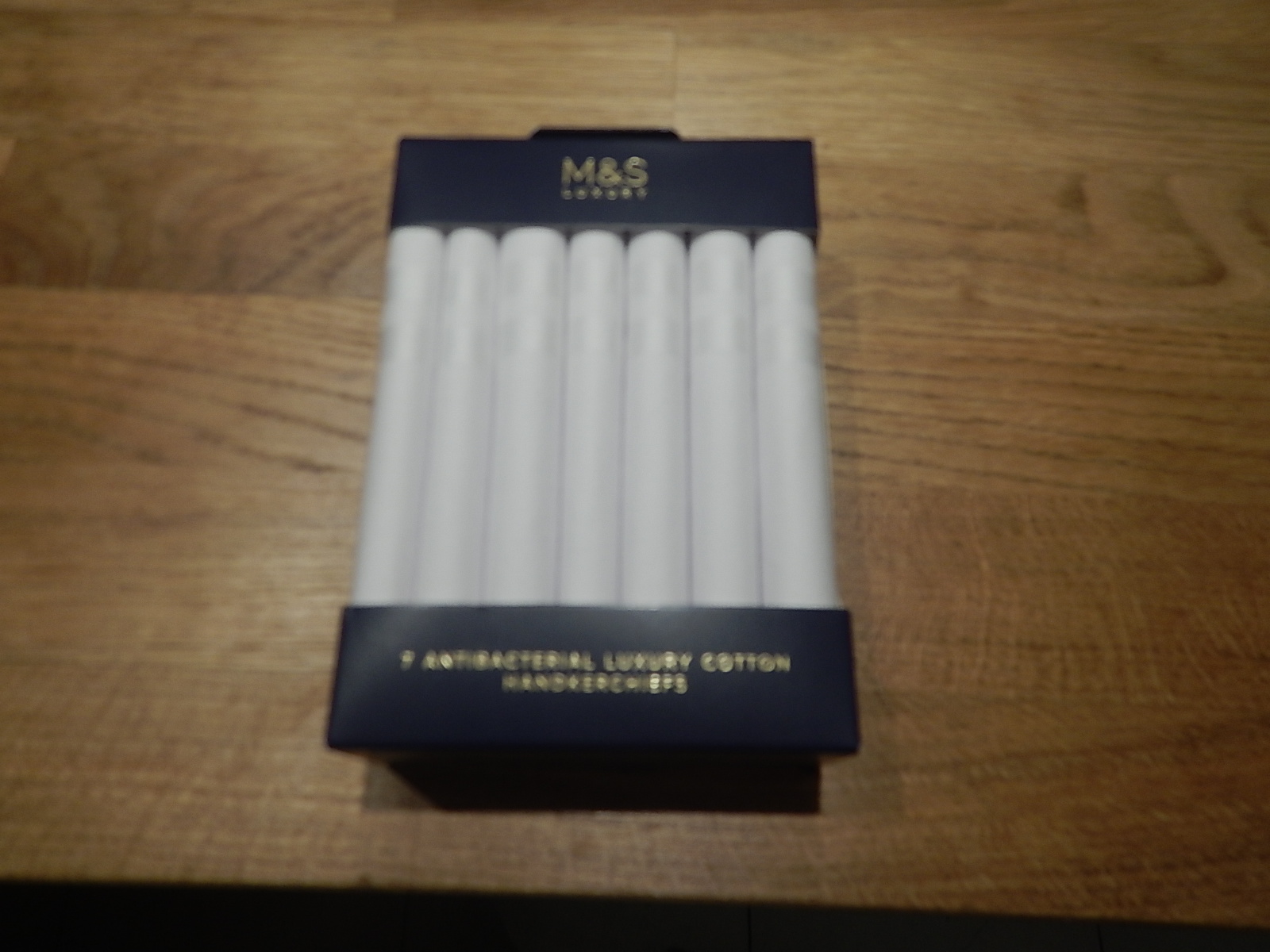
Today, I was doing my weekly Ocado order and wondered if they delivered the handkerchiefs.
They appear to sell ten of a lesser quality for &6.33.
Unfortunately, they were out of stock. Have they been bought up by kids for stocking fillers for relatives?
But, Ocado do stock a selection of items from Marks and Spencer’s Autograph range.
TfL May Increase e-Scooter Speed Limit And Lower Age Restriction
The title of this post, is the same as that of this article on the Telegraph.
This is the sub-heading.
Riders would be able to travel at 15.5mph including 16-year-olds who hold a provisional driving licence
I’m now seventy-seven and I’ve never ridden one of these devices. I didn’t even have one of the push-only variety, as a child in the 1950s.
The article says this about serious injuries.
The authority’s own data shows that e-scooter operators have reported 35 serious injuries since 2021. A serious injury is classified as those requiring hospital “in-patient” treatment, fractures, concussion, internal injuries, crushing, burns, severe cuts or injuries causing death 30 or more days after the collision.
A death figure is not given, but deaths have happened.
My feeling is that thirty-five serious injuries in three years is too high.
But then allowing those as young as sixteen to use these devices without adequate training is surely asking for trouble. I was sixteen once and know how irresponsible, I was on an unpowered bike, at that age.
I have to ask the question, if safety would be improved, if some form of training were to be compulsory?
My parents had a relaxed attitude to my road safety training.
- I was allowed on a bike in the suburban streets of London without training.
- I never took any Cycling Proficiency training.
- At sixteen, I used to cycle down the A45, which is now the A14, between Ipswich and Felixstowe amongst all the heavy trucks.
- I never had any formal driving lessons and had my own car soon over my seventeenth birthday.
In all the miles, I cycled and drove, I never had a serious accident.
- But I am still unhappy at the two proposals in the title of this post.
- Is it that many e-Scooters are ridden irresponsibly or outside the law?
- I am also worried about the propensity of e-Scooters and e-Bikes to catch fire.
I would certainly be happier if a reasonable set of rules for these devices had been devised and was strictly enforced.
Could Liverpool Develop A Massive Zero-Carbon Data Centre?
There is an article in The Sunday Times today, which is entitled Google Signs Nuclear Deal To Power AI Data Centres.
These are the first three paragraphs of the article.
Google has struck a deal with a nuclear power start-up to provide low-carbon energy for its data centres and AI operations, marking a world-first in the tech industry.
The California-based company said the agreement to buy energy from multiple small modular reactors developed by Kairos Power could help spur a nuclear revival in America.
The first reactor is scheduled to come online in America by 2030, followed by additional deployments through 2035.
I am not against nuclear-powered data centres, but could Liverpool build a massive zero-carbon data centre?
This Google Map shows Liverpool Bay, which is a vast expanse of water that stretches along the North Wales coast to Anglesey and all the way to the Isle of Man.
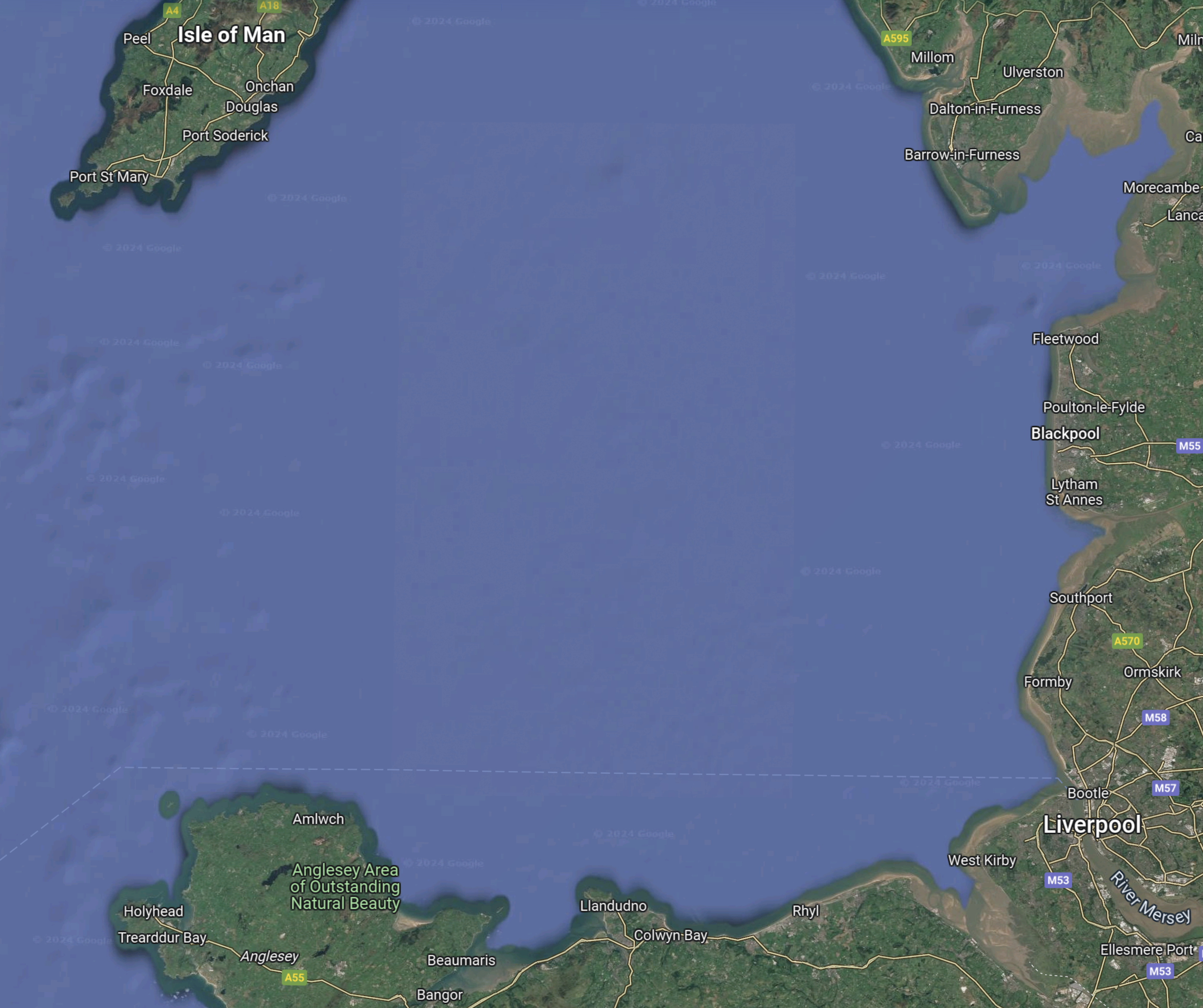
Note.
- The Isle of Man in the North-West corner.
- Liverpool, Birkenhead and the River Mersey in the South-East corner.
- Anglesey in the South-West corner.
- Blackpool with Morecambe Bay to its North in the North-East corner.
Liverpool Bay could be one of Europe’s zero-carbon energy powerhouses.
Wind Farms In Liverpool Bay
At the present time, these wind farms are producing electricity or planned in Liverpool Bay.
- Barrow – 90 MW – Commissioned in 2006
- Burbo Bank – 90 MW – Commissioned in 2007
- Burbo Bank Extension – 258 MW – Commissioned in 2017
- Gwynt y Môr – 576 MW – Commissioned in 2015
- North Hoyle – 60 MW – Commissioned in 2003
- Ormonde – 150 MW – Commissioned in 2012
- Rhyl Flats – 90 MW – Commissioned in 2009
- Walney – 367 MW – Commissioned in 2010
- Walney Extension – 659 MW – Commissioned in 2018
- West if Duddon Sands – 389 MW – Commissioned in 2014
- Awel y Môr – 500 MW – Planned
- Morecambe – 480 MW – Planned
- Mona – 1500 MW – Planned
- Morgan – 1500 MW – Planned
Note.
- 2509 MW has been commissioned.
- 3980 MW is being planned.
- That is a total of 6489 MW
I suspect more space in Liverpool Bay could be developed with wind farms.
Mersey Tidal Power
The Mersey Tidal Power project has a web site.
If it is built, it will probably be built by the South Korean company; K-Water and use some of the design principles of the Sihwa Lake Tidal Power Station.
It will likely have an output of around 1 GW and take ten years to build.
In the 1970s, I did some project management consultancy for Frederick Snow and Partners, and they showed me their plans for a Severn Barrage.
Their futuristic vision for the Severn Estuary was never built, as the Prime Minister of the time; Harold Wilson, felt coal was the future. See Last Of The Many!
I suspect that the Mersey Tidal Power project will be another variation on a proven theme.
Morecambe Bay Bridge And Tidal Barrage Proposal
In the Wikipedia entry for Morecambe Bay, there is a proposal for a bridge and tidal barrage across the bay, where this is said.
In 2004, a proposal was made to build a bridge across the bay flanked by wind turbines and using tidal power. Proposals from Northern Tidal Power Gateways in 2019 outlined a tidal barrage with a road running along on top.
If the Mersey Tidal Power project is a success, then why wouldn’t one across Morecambe Bay, be one too?
500 MW of zero-carbon tidal power would do nicely!
Nuclear Sites At Calder Hall, Heysham And Wylfa
These three nuclear stations have supplied electricity to the North-West of England.
- Calder Hall was the original Magnox site, which the Wikipedia entry says had a nameplate capacity of 240 MW and was decommissioned in 2003, after running for 47 years.
- Heysham is a powerful site which the Wikipedia entry says has a nameplate capacity of 2452 MW and will be decommissioned in 2028.
- Wylfa is an older, smaller Magnox site which the Wikipedia entry says had a nameplate capacity of 1190MW and was decommissioned in 2015.
As the sites are cleared, I am sure that we’ll see more nuclear power stations built on the sites.
How Much Electricity Does A Data Centre Use?
I found this paragraph in an NESO document.
Regardless of this, if we were to use existing market data and modelling projections, this could point to annual data centre electricity consumptions of between 3.6 TWh in 2020 to as much as 35 TWh by 2050.
Dividing by the hours in a year, indicates that an individual data centre could use between 0.4 and 4 GW of electricity.
Using my rough figures here from wind, tidal and nuclear, I suspect that the power on the Mersey will generate enough power for at least one data centre.
Liverpool Is On The Right Side Of The Country For Cables To North America
Cables will go straight out of Liverpool Bay, pass to the North of Ireland and across the Atlantic to somewhere like Puget Sound.
Liverpool has a superb location for a Transatlantic data centre, that connects to networks on both sides of the pond.
Could Underwater Data Centres Be Developed In Liverpool Bay?
This page on the Microsoft web site is entitled Microsoft Finds Underwater Datacenters Are Reliable, Practical And Use Energy Sustainably
These three paragraphs detail the research.
Earlier this summer, marine specialists reeled up a shipping-container-size datacenter coated in algae, barnacles and sea anemones from the seafloor off Scotland’s Orkney Islands.
The retrieval launched the final phase of a years-long effort that proved the concept of underwater datacenters is feasible, as well as logistically, environmentally and economically practical.
Microsoft’s Project Natick team deployed the Northern Isles datacenter 117 feet deep to the seafloor in spring 2018. For the next two years, team members tested and monitored the performance and reliability of the datacenter’s servers.
I would assume that Microsoft have continued the research, as with something like this you can’t be too careful.
But it would appear, that data centres and their servers could be submerged under the waters of Liverpool Bay.
London And Liverpool Will Be Under Two Hours By Train Within A Year
New Class 807 trains, which will be delivered within a year, will improve the train service between the two cities.
- Train times will be brought to around or even below two hours.
- , The extra trains will allow a second hourly service to be added.
- The extra service will additionally stop at Liverpool South Parkway station, for the airport.
- High Speed Two is claiming one hour and fifty minutes, between London and Liverpool.
Liverpool already has one of the best rail terminals in the North of England, as these pictures show.



















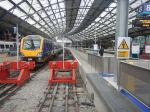











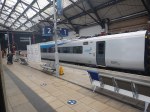

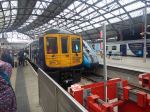
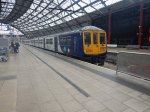




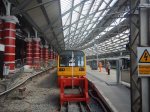

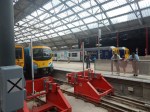

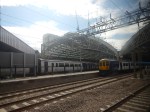
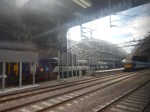







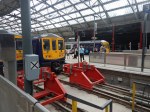



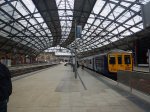
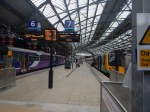
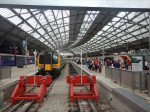
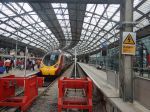

With these service improvements, it will have a service to London and the South, that will be second to no other Northern station.
Liverpool Has A Refurbished Partly-Underground Suburban Railway With New Trains
Liverpool’s Metro is one of the best in Europe for a medium-sized city.
The Metro is also expanding with new routes and stations.
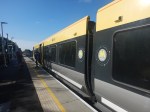
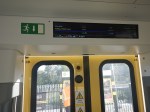










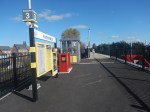

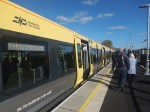
These pictures show the new Headbolt Lane station, which is swerved by the UK’s first battery-electric trains.
Liverpool Has Easy Access To Two International Airports
There are two international airports close by; Liverpool John Lennon and Manchester International.
- For Liverpool Airport, it’s a bus from Liverpool South Parkway station or an express bus from Liverpool city centre.
- For Manchester Airport, it’s a train from Lime Street station.
I am fairly sure, that a hydrofoil could connect Liverpool’s Waterfront and the Tidal Barrier to the airport.
North-West England Has A Rich University Tradition
Liverpool, Manchester and the surrounding area has several world-class universities and research establishments.
Some like The Pandemic Institute would be able to find uses for all the computing power and artificial intelligence on offer at a powerful data centre.
Liverpool Is A World City
Liverpool is a World City, where there is plenty of sport, entertainment and things to do.
Conclusion
Liverpool is installing the power infrastructure for a very large data centre, that will be able to handle the world’s largest and most difficult problems.
ECoR Launches Special Drive Against Carrying Diwali Crackers On Trains
The title of this post, is the same as that of this article on Pragativadi.
These two paragraphs tell the story.
With the Diwali festival approaching, the East Coast Railway (ECoR) has intensified its efforts to ensure the safety of passengers by launching a special drive against the illegal transportation of firecrackers and other inflammable items on trains.
ECoR has reiterated that carrying dangerous goods like crackers, gas cylinders, acid, petrol, kerosene and similar materials in passenger-carrying trains is a punishable offence under the Railways Act, 1989, which can result in imprisonment of up to three years.
The punishment is probably a bit heavier than you get for this offence in Liverpool Lime Street.
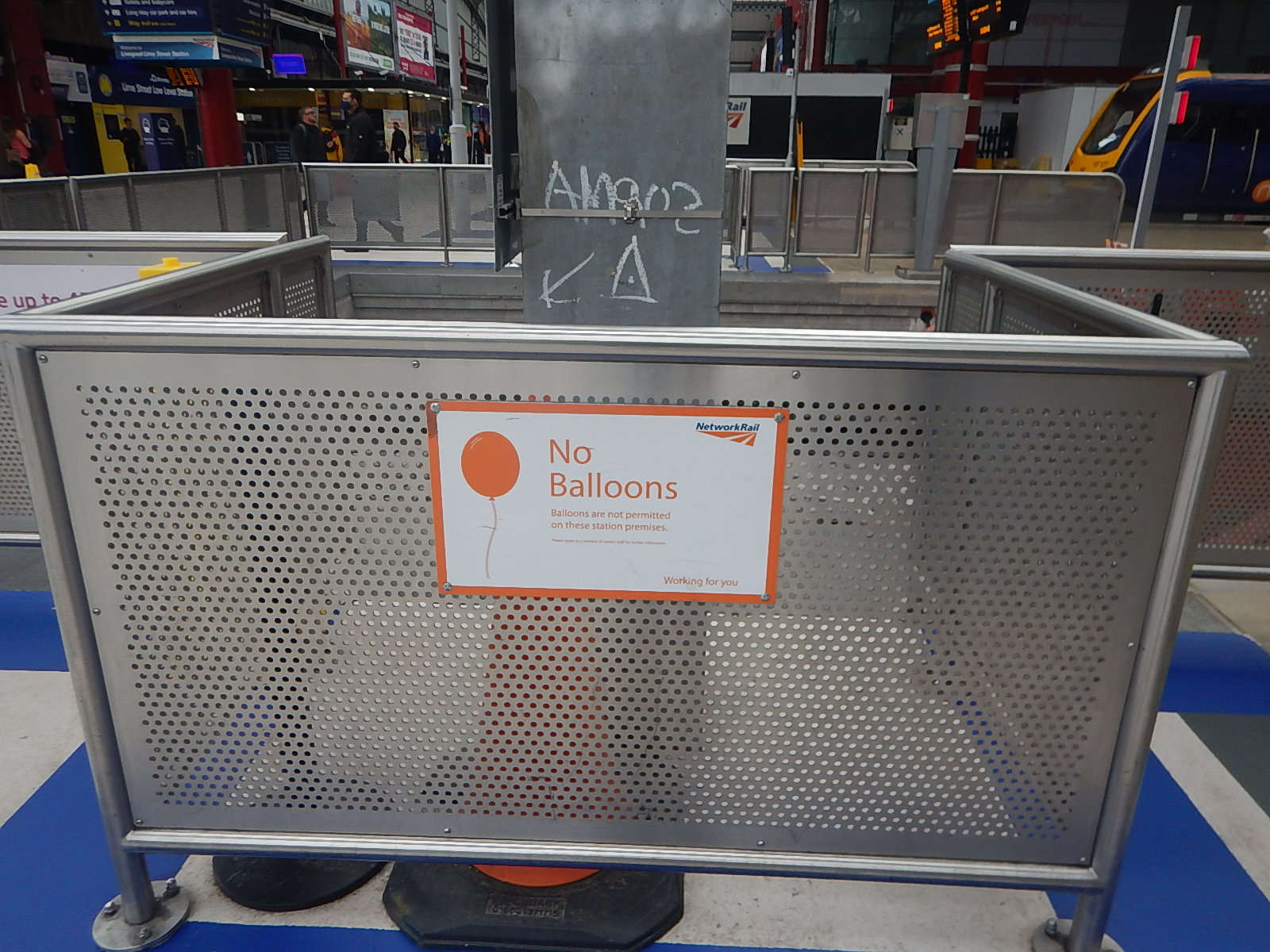
I suspect a Diwali cracker makes a bigger bang, than a typical balloon.
Australian Volgren Rolls Out First Hydrogen Bus Based On Wrightbus Chassis Technology
The title of this post, is the same as that of this article on Sustainable Bus.
These four paragraphs outline the progress.
Australian bus bodybuilder Volgren is rolling out of production a first hydrogen-powered bus model manufactured in cooperation with Northern Irish bus manufacturer Wrightbus.
Back in 2019, Volgren announced launch of its first battery-electric on BYD chassis. The deal with Wrightbus for fuel cell bus manufacturing in Australia dates back to May 2022.
With over 150 zero-emission buses already in operation, spanning six variants of both battery-electric and fuel-cell technologies, this hydrogen-powered bus represents the latest addition in Volgren’s offer.
A second hydrogen bus is already in production and will be delivered to the customer in the coming months, Volgren says.
It will be interesting to see how this deal develops.
Will it follow the successful path set by some of JCB’s deals around the world, or will the Chinese feel Australia is their patch and find a way to kick Wrightbus and its technology, out of the country?
Eurovision Boost For Record Rail Profits
The title of this post, is the same as that of this article on the BBC.
This is the sub-heading.
A train operator has posted record profits thanks in part to the Eurovision Song Contest and other major events.
These four paragraphs sum up the story.
Merseyrail, which operates services across Merseyside and into Cheshire and Lancashire, is one of the most intensively used rail networks in the UK.
According to its directors’ strategic report for the year ending in January 2024, some 78,000 journeys were taken on Merseyrail services on average every day.
There were 28 million passenger journeys, which the company said was a post-Covid peak. It added a profit of just under £44m was the largest in its history.
The report said Merseyrail had benefitted from the Eurovision Song Contest being held in Liverpool, as well as the Open golf tournament at Hoylake on the Wirral and a successful Grand National festival at Aintree.
Note.
- Merseyrail’s trains seem to have taken the spectators to the big events all over the city.
- The trains are also virtually brand new and very bicycle and buggy-friendly, so do they introduce new passengers to Merseyrail?
- Spectators from places around the city like Birkenhead, Chester, Crewe, Manchester, Preston, Southport, Warrington and Wigan all have good rail connections to Liverpool Lime Street, which has its own Merseyrail below-ground station.
For big events like Eurovision, the Grand National or The Open, if you have tickets for the event, a train, on the day from Birmingham, Derby, Leeds, London, Nottingham or Sheffield is very feasible.
- In addition, now that Lime Street station and the area around it has been refurbished, it is a cultural area to visit in its own right.
- I believe that Liverpool will grow as a destination to visit.
- A doubling of the Avanti train service to London will add more capacity.
- The TransPennine Express service across the country and to Scotland will be improved.
- Blackpool will be eighty minutes away.
- The Eden Project North at Morecambe will be only an hour away.
- In a few years time, the Mersey Tidal Barrage will be attracting visitors.
- Liverpool has public transport connections to both Liverpool and Manchester airports.
Liverpool will be a place to stay for the weekend and for those, who don’t have a car or prefer not to drive, they will be able to use the extensive rail network to get to other places like.
- Blackpool and Manchester with their trams.
- Liverpool’s local attractions on Merseyrail.
Liverpool will become a very successful short-stay resort city.
East Midlands Railway’s Dirty Trains
I took these pictures today on my return from East Midlands Parkway.

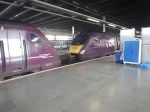
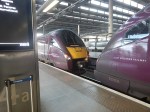


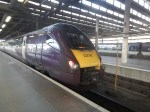
The trains seemed particularly dirty. Perhaps it’s the colour scheme.

