LEON Are In World Cup Mood
I took these pictures in LEON on Moorgate, this morning.




I won’t be eating one as it contains coconut, which is something, that I don’t like.
Crown Estate To Re-Tender 1.5 GW Offshore Wind Site Relinquished by EnBW And JERA Nex BP
The title of this post, is the same as that of this article on offshoreWIND.biz.
This is the sub-heading.
The Crown Estate will launch a competitive tender process next month to bring the 1.5 GW Morgan offshore wind project in the Irish Sea back to market, with plans to appoint a new developer by late 2026.
These two paragraphs add more detail.
The Morgan site was originally awarded through Offshore Wind Leasing Round 4 in 2021, but development was discontinued in January 2026 by the joint venture between EnBW and JERA Nex BP, which held the lease rights.
After EnBW decided to exit the Morgan and Mona offshore wind projects in the UK, its joint venture partner JERA Nex BP acquired EnBW’s stake in 1.5 GW Mona, while the joint venture discontinued the development of the Morgan project and returned the lease rights to the Crown Estate.
There is no Morgan web site, but there is a joint web site with the Morecambe wind farm, which also has its own web site.
The joint web site has a home page showing both Morgan and Morecambe wind farms connecting to Penwortham substation.
In Mooir Vannin Offshore Wind Farm, I say that this web farm will also have a connection to the Penwortham substation.
There does seem a lot of bitterness about using the Penwortham substation being built.
This Ørsted map shows the large number of wind farms in the Irish Sea.
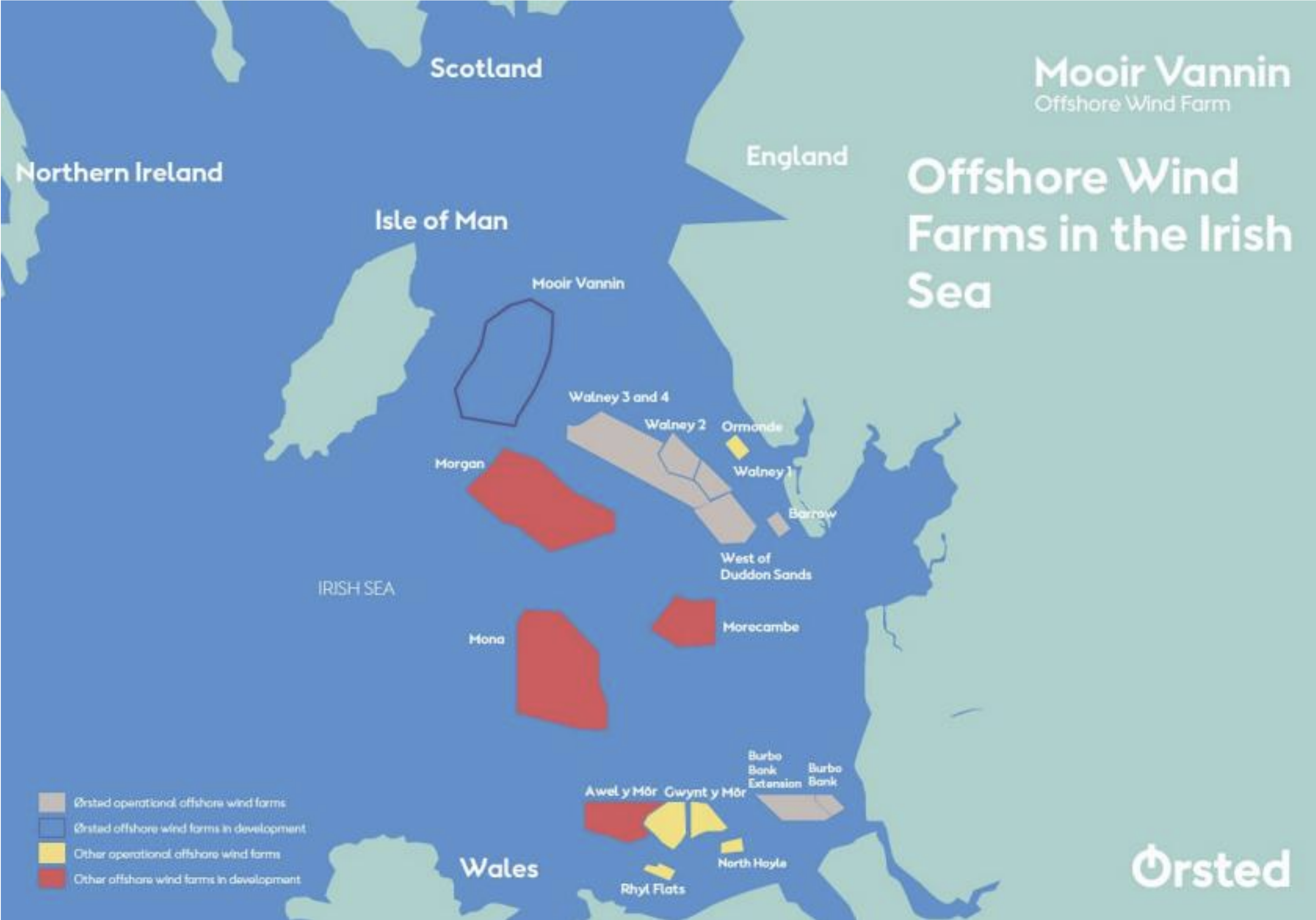
Note.
- Mooir Vannin is a 1.4 GW wind farm being developed to the East of the Isle of Man
- Morgan wind farm would have been a 1.5 GW wind farm to be South of Mooir Vannin.
- Mona wind farm will be a 1.5 GW to the South of Morgan.
- Mona will connect to the North Wales coast.
- Morecambe will be a 480 MW wind farm to the East of Morgan and Mona.
- Mooir Vannin will connect to the Isle of Man.
- Morgan and Morecambe wind farms were all planned to connect to the Penwortham substation.
- Mooir Vannin will additionally connect to the Isle of Man.
It will be interesting to see, what proposals are put to the Crown Estate for a replacement of the Morgan wind farm.
I wouldn’t be surprised to see something to do with offshore production of hydrogen, as there is much more hydrogen production on the East side of the UK, due to the massive German AquaVentus project.
Could Paddington And Minehead Be Within Range Of Hitachi Battery-Electric Intercity Trains?
I am prompted to ask this question, by an article in today’s Telegraph, which is entitled The New British Rail Services Reversing The Damage Of Beeching’s Axe.
Line 8. is given as the West Somerset Railway between London and Minehead?
This paragraph describes the idea.
As with the Severn Valley Railway (SVR) to Bewdley, the West Somerset Railway (WSR) looks like it could one day host mainline trains and connect communities along the route with destinations such as Taunton and Bristol. Like the SVR, the WSR is a very long and well-staffed heritage line with a long history (50 years, in fact, and it was one of Britain’s first heritage lines following its Beeching closure). Running to Minehead and Dunster, you don’t need me to tell you that this is a beautiful part of the world with numerous castles and beaches, and Exmoor National Park next door.
Note.
- The author doesn’t mention London services in the text.
- Batteries are not mentioned either.
- Minehead will be only about twenty miles from Hinckley Point C nuclear power station.
Is it feasible?
What Is The Battery Range Of An Hitachi Intercity Tri-Mode Battery Train?
In The Data Sheet For Hitachi Battery Electric Trains, I came to these conclusions.
- The battery pack has a capacity of 750 kWh.
- A five-car train needs three battery-packs to travel 100 miles.
- A nine-car train needs five battery-packs to travel 100 miles.
- The maximum range of a five-car train with three batteries is 117 miles.
- The maximum range of a nine-car train with five batteries is 121 miles.
As battery technology gets better, these distances will increase.
What Is The Distance Between Minehead And Taunton?
I shall be using 24.8 miles, which I have calculated from figures given in the Wikipedia entry for the West Somerset Railway.
What is The Distance Between Paddington And Taunton Via Newbury?
I shall be using 142.6 miles, which I have calculated from figures given in RealTimeTrains.
What Is The Maximum Range From Paddington Via Newbury Of An Hitachi Intercity Tri-Mode Battery Train?
Consider.
- The electrification runs between Paddington and Newbury.
- The distance between Paddington and Newbury is 53 miles, according to RealTimeTrains.
- Paddington and Taunton is almost 30 miles shorter by Newbury, than via Bath.
This Google Map shows Taunton station.
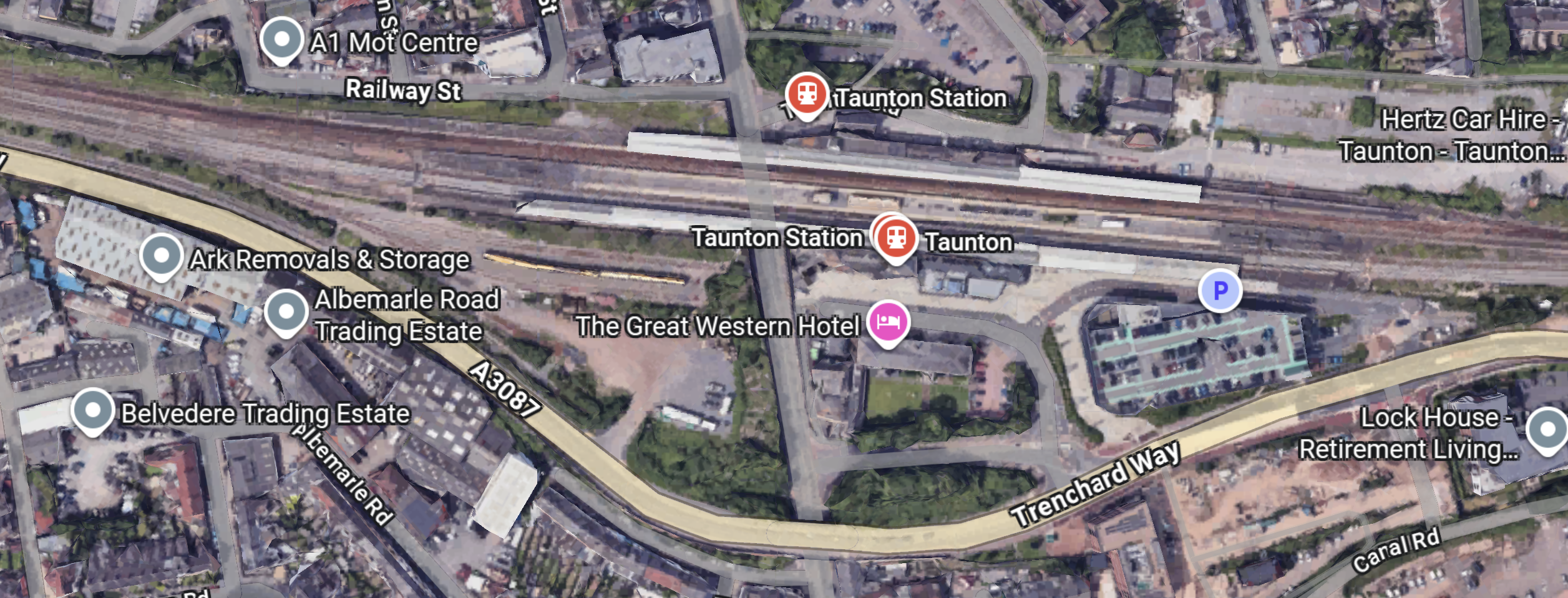
Taunton station looks spacious with numerous platforms and a hotel.
I believe that a five-car Hitachi Intercity train leaving Newbury with three full batteries could travel as far as 53+117 or 170 miles from Paddington.
Could A Hitachi Intercity Five-Car Train Reach Taunton?
This would mean that Taunton would be in range as it is only 142.6 miles.
The train would need to be recharged before returning to London.
Could A Hitachi Intercity Five-Car Train Reach Minehead?
But it could also have enough power in the batteries to reach Minehead, which is only a further 24.8 miles or 167.4 miles in total.
As with Taunton, the train would need to be recharged before returning to London.
Options For Charging Trains That Are Returning To London
This OpenRailwayMap shows the tracks through Taunton.
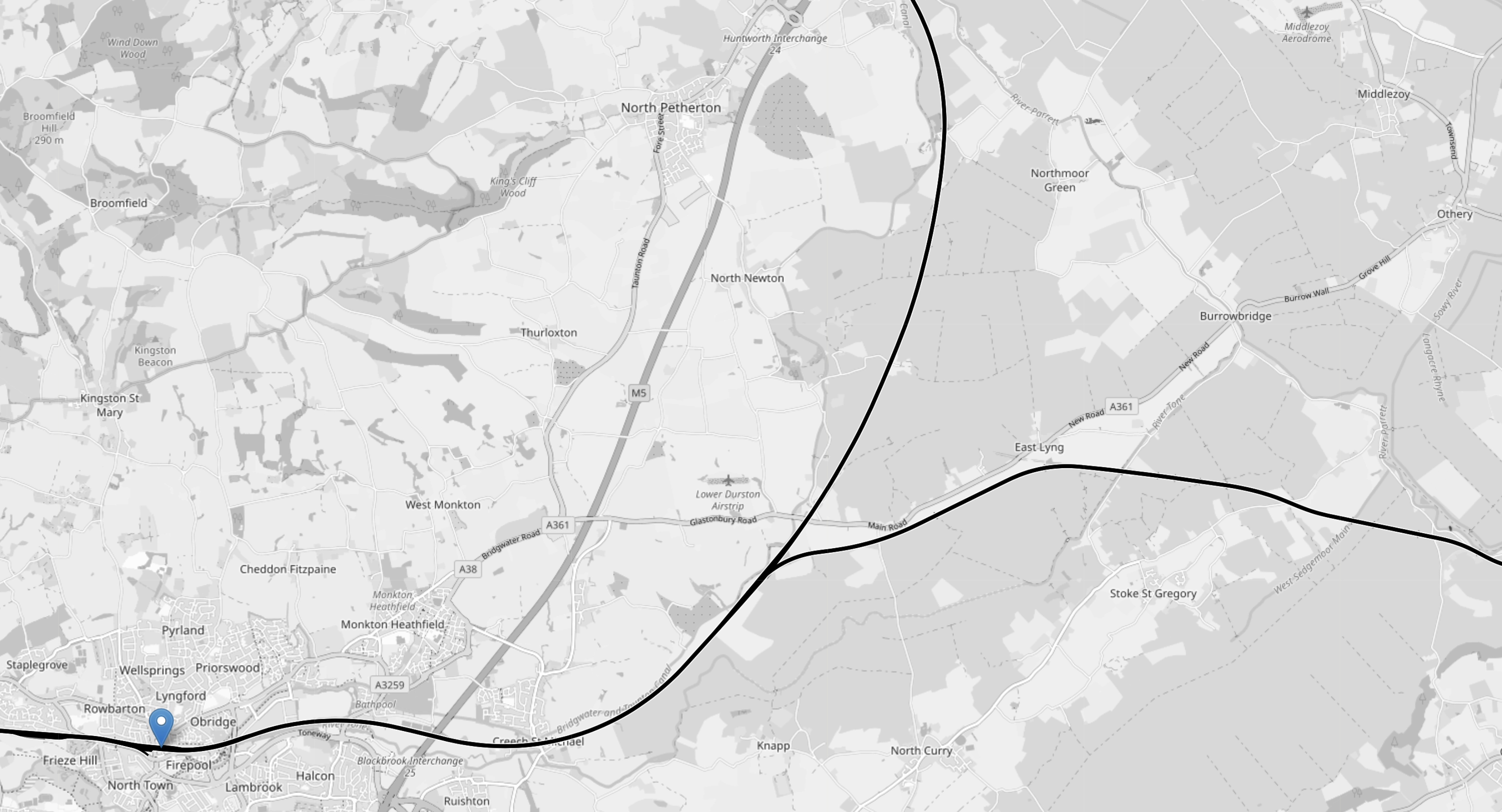
Note.
- Taunton station is indicated by the blue arrow.
- Running East-West across the map and through Taunton station, is the Reading-Taunton Line.
- Running more North-South across the map and through Taunton station, is the ~Bristol-Exeter Line.
- The two lines split going East at Cogload junction.
- Taunton station and Cogload junction are about 4.5 miles apart.
- Trains typically take about six minutes between the two places.
I believe there are three options for charging the trains.
Option 1 – Charge In Minehead Station
This would be possible, but as not all trains go to Minehead station, it probably wouldn’t be very practical.
Option 2 – Charge In Taunton Station
This would be possible, especially as most trains seem to call in Taunton station.
Option 3 – Electrify Between West Of Taunton Station And East Of Cogload Junction
Consider.
- The length of the electrification could be as long as is necessary.
- Trains would charge their batteries at line speed.
- Pantographs would be raised and lowered at line speed.
- Trains would not have to call at Taunton station.
- Trains could charge their batteries on both routes.
- Trains could charge their batteries in both directions.
I believe this could be the most efficient way to charge trains through Taunton.
Onward From Taunton
If the electrification through Taunton could be made long enough, so trains left the station with a full battery, the following would be possible.
- Going South trains should go past Plymouth.
- Going towards Newbury, trains should have enough in the batteries to reach Newbury and electrification for London.
- Going towards Chippenham, which is 63 miles away, trains should have enough in the batteries to reach Chippenham and electrification for London.
- Going towards Bristol Temple Meads, which is 44.8 miles away, trains should have enough in the batteries to reach Bristol Temple Meads.
Ukraine Is Turning The Tide Against Putin. What Happens Next Should Terrify Europe
The title of this post, is the same as that of this article in The Telegraph.
This is the sub-heading.
A ceasefire in Ukraine would not demobilise the Russian army… It would release ex-convicts.
This is the first paragraph.
Whisper it quietly, but the tide may be turning in the war in Ukraine. Yet what comes next should worry us all.
The article is by a Lib-Dem MP; Mike Martin and it paints a frightening picture of the future.
JERA Nex BP, EnBW Submit Morven Offshore Wind Farm Application
The title of this post, is the same as that of this article on offshoreWIND.biz.
This is the sub-heading.
A joint venture between JERA Nex BP and EnBW has submitted Section 36 consent applications for the Morven offshore wind farm to the Scottish government
These two paragraphs add a few details.
The developer secured the seabed rights for the Morven offshore wind farm as a single project in the ScotWind Leasing Round in 2022 and split it into two separate projects during the early development phase.
Located around 60 kilometres off the coast of Aberdeenshire at its closest point, the site is planned to house Morven North and Morven South, which would have a combined installed capacity of up to 3 GW and around 190 wind turbines in total.
Morven Offshore Wind Farm now has a comprehensive web site.
The web site says that the electricity will be brought ashore at Hawthorn Pit.
This Google Map shows the location of Hawthorn Pit.
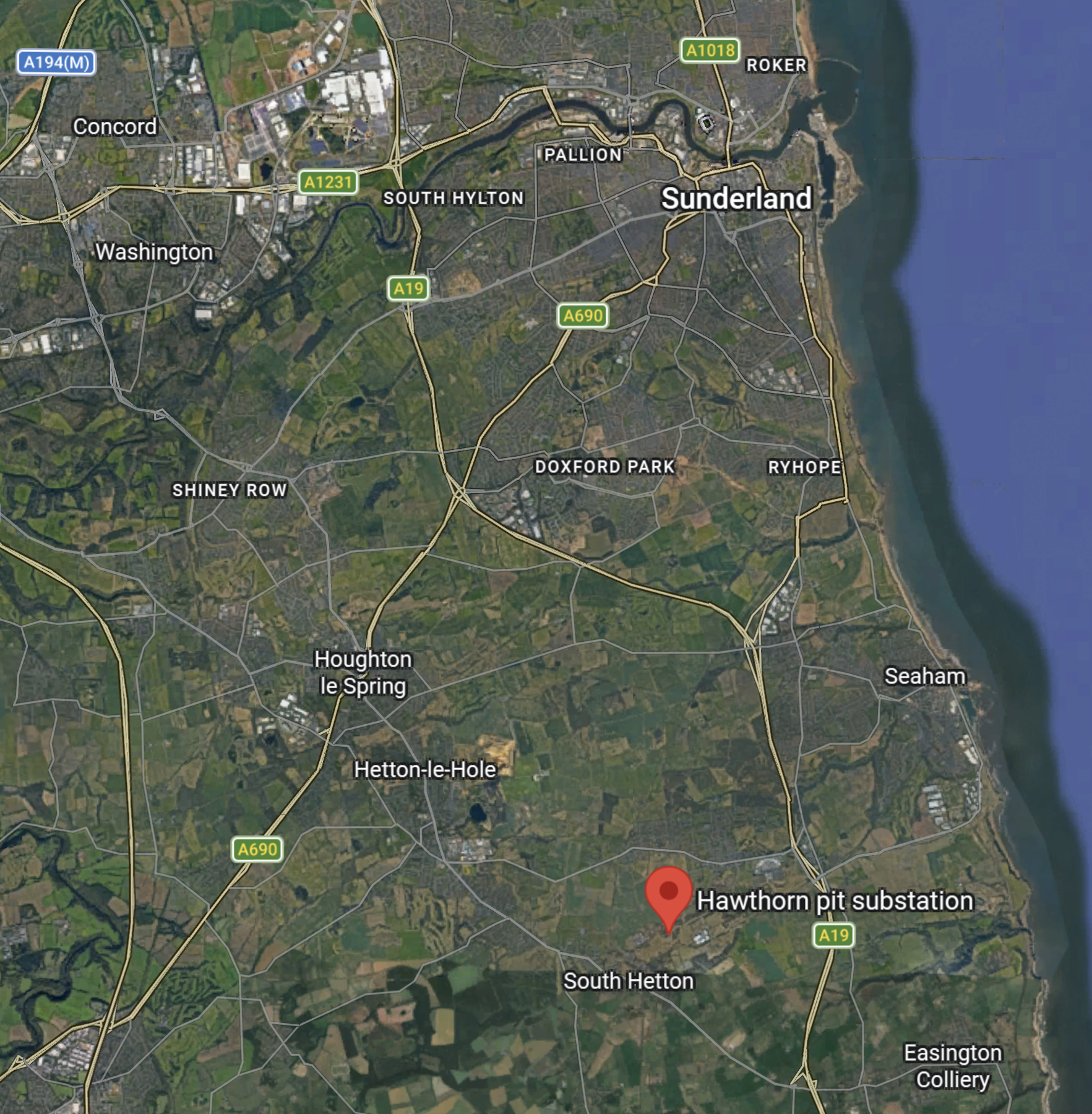
Note.
- Hawthorn Pit is indicated by the red arrow.
- Sunderland is at the top of the map on the coast.
- Aura Power has already obtained planning permission for Hawthorn Pit solar farm, which will be up to 49.9 MW.
- Zenobe are developing a battery-energy-storage-system(BESS) 1.5 km to the South-East of the new Hawthorn Pit substation, which will have an output of 300 MW. Sloppily, there is no detail on capacity, but Google AI indicates, it is a 300 MW/600 MWh battery.
- Hawthorn Pit substation is also the expected to be the Southern end of Eastern Green Link 1, which will help to bring Scottish wind power to England, which will be a 2 GW undersea interconnector to Torness.
In Murphy Starts Work On £2.5bn Eastern Green Link 1, I detail the start of building of Eastern Green Link 1 and say it should be operational by 2029.
When Is The Morven Offshore Wind Farm Expected To Be Commissioned?
I asked Google AI the question above and received this answer.
The 2.9 GW Morven offshore wind farm is expected to be fully commissioned and operational between 2031 and 2035, with initial grid connections and power export potentially starting as early as 2030.
The timeline for full deployment of the Morven Offshore Wind Farm remains somewhat flexible as it depends on final planning approvals and connection offers from the National Energy System Operator (NESO).
The Cables For The Morven Offshore Wind Farm And Eastern Green Link 1
This map clipped from the Morven Offshore Wind Farm web site, shows the locations of Aberdeen, Hawthorn Pit and the Morven Offshore Wind Farm.
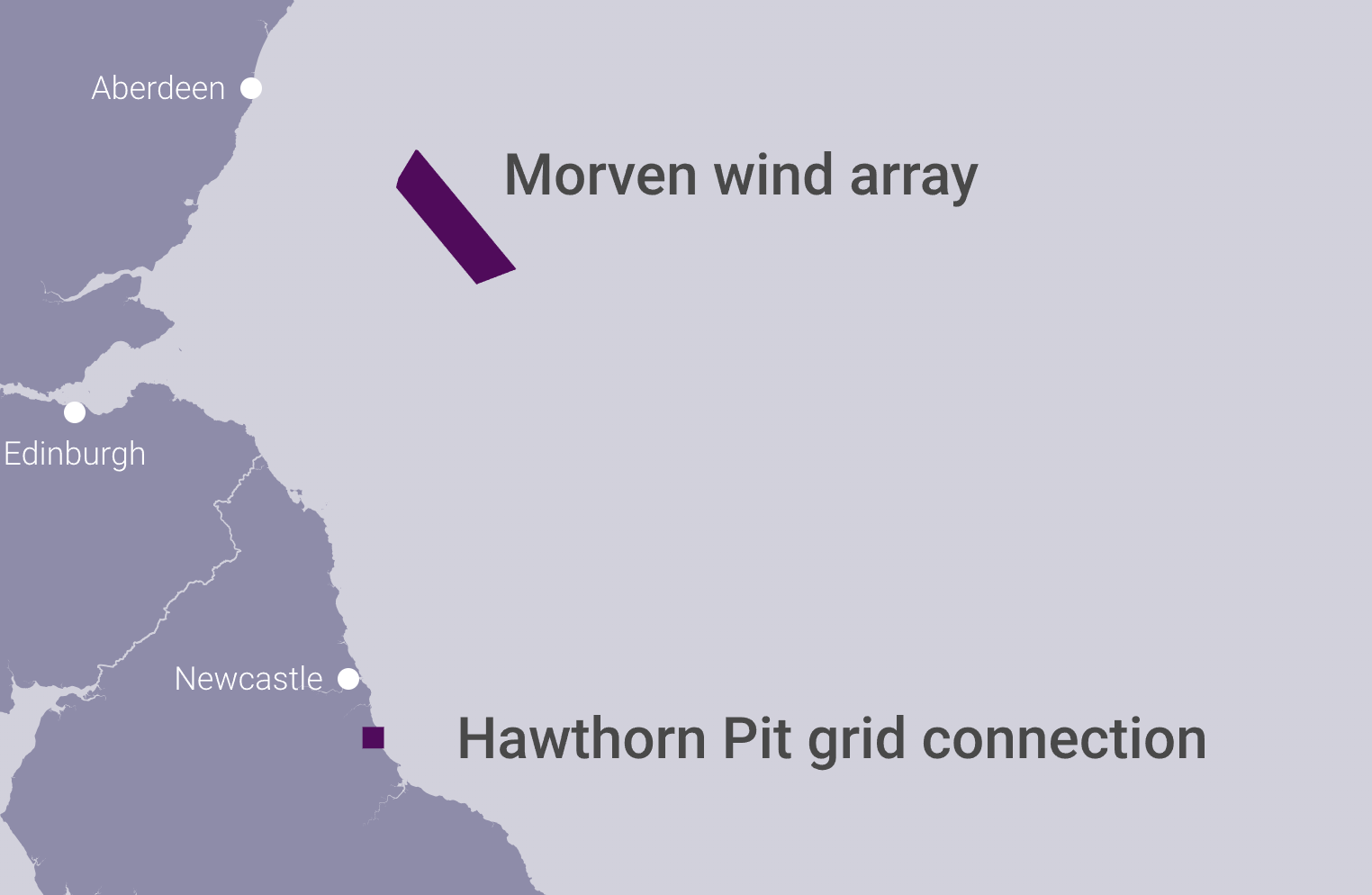
Note.
- The location of the Morven wind array was first mentioned in June 2020, as part of ScotWind by Crown Estate Scotland.
- The development of Eastern Green Link 1 was first mentioned in May 2021, by National Grid.
- Torness is to the East of Edinburgh.
- Eastern Green Link 1 connects Torness and Hawthorn Pit.
- the Morven wind array connects to England at Hawthorn Pit.
Over the last few years National Grid and other companies have been developing a technique called offshore hybrid assets, which I describe in What Are Offshore Hybrid Assets?.
An offshore hybrid asset typically connects two countries via a large offshore wind farm, which can then send electricity to both countries.
In a traditional design, there would need to be.
- A 2 GW cable between Torness and Hawthorn Pit.
- A 2.9 GW cable between Morven and Hawthorn Pit.
In the Offshore Hybrid Asset design, there would need to be.
- A 2 GW cable between Torness and Morven
- A 2.9 GW cable between Morven and Hawthorn Pit.
I suspect cable would be saved.
This map shows the position of each ScotWind Leasing wind farm.

Note.
- The numbers are Scotwind’s lease number in their documents.
- Morven is ScotWind lease number 1.
- Eastern Green Link 1 is one of four interconnectors down the East Coast of the UK.
- I have added up the ScotWind lease numbers 1-6 and they total 10.5 GW.
That would be a lot of power to capture just by converting the four Eastern Green Link interconnectors into offshore hybrid assets.
How Will Aquaventus Connect To Aberdeen?
This is RWE’s description of AquaVentus, which is sub-titled Hydrogen Production In The North Sea.
Hydrogen is considered the great hope of decarbonisation in all sectors that cannot be electrified, e.g. industrial manufacturing, aviation and shipping. Massive investments in the expansion of renewable energy are needed to enable carbon-neutral hydrogen production. After all, wind, solar and hydroelectric power form the basis of climate-friendly hydrogen.
In its quest for climate-friendly hydrogen production, the AquaVentus initiative has set its sights on one renewable energy generation technology: offshore wind. The initiative aims to use electricity from offshore wind farms to operate electrolysers also installed at sea on an industrial scale. Plans envisage setting up electrolysis units in the North Sea with a total capacity of 10 gigawatts, enough to produce 1 million metric tons of green hydrogen.
RWE have also put this AquaVentus video on their web site.
Note, that in the video AquaVentus connects Germany to Denmark, Norway, The Netherlands and Aberdeen and Humberside in the UK.
I asked Google AI, the question in the title of this section, and received this answer.
AquaVentus connects to Aberdeen through a strategic infrastructure partnership with Hydrogen Scotland. The two organizations are integrating offshore wind power, offshore electrolysis, and a shared cross-border pipeline to link Scottish renewable generation with European industrial markets.
The connection strategy relies on a multi-stage approach across the North Sea:
Offshore Production & Transmission: AquaVentus aims to produce green hydrogen directly offshore. It will be transported via a pan-European pipeline network—such as the planned 400 km AquaDuctus to link offshore hubs with both the UK and mainland Europe.
Scottish-German Export Corridor: Building on previous research like the Scot2Ger study, this pipeline corridor directly connects Scotland’s abundant offshore wind resources to European demand, establishing Aberdeen as a critical origin node.
Integrated Energy Backbone: The initiative champions hybrid connection concepts (combining both power cables and hydrogen pipelines). This allows for maximum flexibility when integrating Aberdeen’s local onshore hydrogen infrastructure with broader transnational energy grids.
I will now ask Google AI some supplementary questions about AquaVentus in UK waters.
“Will AquaVentus Produce Hydrogen In UK Waters?”
Google AI gave this reply.
Yes, AquaVentus plans to produce green hydrogen in UK waters. The German-led consortium has partnered with Hydrogen Scotland to harness Scotland’s offshore wind potential for large-scale, cross-border hydrogen production and export.
Key Details of the UK-German Initiative
Production Scale: The initiative aims to install 10 gigawatts (GW) of offshore electrolysis capacity in the North Sea by 2035, producing up to 1 million metric tonnes of green hydrogen annually.
The “Pipes and Wires” Model: Offshore wind parks will be equipped with hybrid connection concepts, providing the flexibility to either send electricity directly to the grid or convert it into hydrogen via offshore electrolysers.
Transportation: The produced hydrogen will be transported to land via a shared transnational subsea pipeline corridor, linking Scottish resources to Germany and mainland Europe.The partnership is specifically aimed at creating a North Sea hydrogen corridor to boost energy security and build the foundational European Hydrogen Backbone.
“Will AquaVentus Land Hydrogen In Scotland?”
Google AI gave this reply.
Yes, the German-led AquaVentus initiative plans to land green hydrogen in Scotland as part of a coordinated North Sea energy corridor.
The cross-border initiative involves the following components:
The Pipeline Connection: A key part of the plan is the AquaDuctus offshore subsea pipeline, designed to collect green hydrogen produced from central North Sea wind farms and land it on the coast.
Scottish Partnership: Hydrogen Scotland and AquaVentus have formalized a Memorandum of Understanding to combine Scotland’s massive offshore wind potential with German infrastructure and electrolysis expertise.
Export Ambitions: Scotland aims to produce up to 3.3 Mt of green hydrogen per year by 2045, heavily relying on pipelines and networks to export this to mainland European hubs like Germany.
Offshore Facilities: The broader initiative plans to install 10 GW of offshore electrolysis capacity in the North Sea to produce up to 1 million tonnes of hydrogen annually.
Note that Google AI has told me that a Megatonne of hydrogen is currently worth around £2.5-5 billion.
“Will AquaVentus Connect To Any Of The ScotWind Leasing Wind Farms?”
Google AI gave this reply.
Yes, AquaVentus plans to link Scottish offshore wind resources (including ScotWind farms) to mainland Europe. Through an agreement with Hydrogen Scotland, AquaVentus intends to utilize hybrid “pipes and wires” infrastructure to transmit power or convert it into green hydrogen for direct pipeline transport.
The partnership serves several strategic goals:
The “Pipes & Wires” Concept: Wind farms built under the ScotWind leasing round will have the flexibility to either route electricity to the UK grid or convert it into green hydrogen via offshore electrolysers.
Cross-Border Pipelines: The hydrogen generated by Scottish offshore wind is targeted to be fed into the planned AquaDuctus pipeline, which forms a transnational energy corridor connecting the UK to Germany and the rest of Europe.
Policy Integration: AquaVentus is actively advocating for legal reforms to accommodate these cross-border hybrid connections, allowing direct pipeline integration for future offshore parks.
I believe these ScotWind Leasing wind farms could be connected to AquaVentus.
- 1 – Morven – 2.9 GW – JERA Nex BP, EnBW
- 2 – Ossian – 2.6 GW – SSE Renewables
- 3 – Bellrock – 1.2 GW – Falck Renewables
- 4 – CampionWind – 2 GW – Scottish Power, Shell
- 5 – Muir Mhòr – 0.8 GW – Vattenfall
- 6 – Bowdun – – 1 GW – Thistle Wind Partners
Note.
- All companies are major energy companies.
- The wind farms are in a cluster to the South-East of Scotland.
- Wind farms 2-5 are floating, and 1 and 6 are fixed.
- There is a maximum power of 10.5 GW.
- These wind farms would not need to be shut down, when there was too much wind, if the excess electricity could be converted into hydrogen.
- The “Pipes & Wires” Concept would allow all energy generated to be transferred to shore, either as electricity or hydrogen.
Cables would need to be laid to perform the functions of the Eastern Green Links 1-4.
- Eastern Green Link 1 – Torness and Hawthorn Pit
- Eastern Green Link 2 – Peterhead and Drax
- Eastern Green Link 3 – Westfield and Lincolnshire
- Eastern Green Link 4 – Peterhead and Lincolnshire
Eastern Green Link 5 is under development between Aberdeenshire and Lincolnshire.
“Is Anderby Creek An Important Node In The Electricity Grid?”
Google AI gave this reply.
Yes, Anderby Creek has become a highly important landfall location for the UK’s electricity grid, acting as a crucial connection point for high-capacity subsea cables bringing renewable energy from Scotland and offshore wind farms into England.
Its role in the national grid’s infrastructure centers on several major “superhighway” projects:
Eastern Green Link 5 (EGL 5): This £3bn National Grid project involves a 585km subsea High Voltage Direct Current (HVDC) cable carrying up to 2 GW of clean power (enough for two million homes) from Aberdeenshire, Scotland, to Anderby Creek.
Eastern Green Links 3 & 4 (EGL 3 / EGL 4): These are additional massive subsea cable projects that also plan to make landfall at Anderby Creek to transport Scottish wind energy down the UK coastline.
Offshore Wind Export Cables: Beyond long-distance transmission, the village already hosts export cables from local offshore wind developments like the Triton Knoll Wind Farm.
Because of the massive volume of power coming ashore, Anderby Creek serves as the starting point for significant onshore infrastructure. The cables transition underground at the beach and run roughly 8km inland to a proposed new converter station near Bilsby/Alford, where the power is converted and integrated into the broader Great Grid Upgrade.
“Will AquaVentus Have Access To The UK’s hydrogen Storage On Humberside?”
Google AI gave this reply.
Yes. Through a strategic partnership with Hydrogen Scotland, the AquaVentus initiative aims to establish cross-border offshore infrastructure that connects the central North Sea with existing and planned hydrogen networks across the UK, including those on Humberside.
The pipeline infrastructure associated with AquaVentus is envisioned to reach the UK just south of the massive hydrogen storage facilities located in East Yorkshire. While the German offshore pipeline (like AquaDuctus) is focused on landing green hydrogen into Germany, the broader AquaVentus framework is designed to integrate with British transmission networks and link to underground cavern storage in the UK.
On Humberside, major energy giants (including Centrica, Equinor, and SSE Thermal) are developing the integrated Humber Hydrogen transport and storage network. This system encompasses large-scale hydrogen storage at the Aldbrough Hydrogen Storage site and Rough Gas Storage. Because the AquaVentus UK branch connects to the Humber area’s onshore network, it positions the initiative to take advantage of these regional storage assets as a cornerstone for international trade and domestic energy resilience.
I think this is key as it gives AquaVentus access to very large hydrogen storage.
Conclusion
It almost looks to me, that National Grid and AquaVentus are combining their pipes and wires between the Southern North Sea and Aberdeen.
- Hydrogen offtake for Germany will be at Wilhelmshaven.
- Hydrogen offtake for England will be at Humberside.
- Hydrogen offtake for Scotland will be at Aberdeen.
- Electricity offtake for Germany will be at Wilhelmshaven.
- Electricity offtake for England will be at Anderby Creek.
- Electricity offtake for England will be at Hawthorn Pit.
- Electricity offtake for Scotland will be at Torness.
- Electricity offtake for Scotland will be at Aberdeen.
Note.
- There will probably be other connections to onshore locations and offshore wind farms.
- Hydrogen imports will be possible from Denmark, Norway and The Netherlands direct into AquaVentus.
Murphy Starts Work On £2.5bn Eastern Green Link 1
The title of this post, is the same as that as this article on Construction Enquirer.
This is the sub-heading.
Murphy has started work on its first package on the vast £2.5bn Eastern Green Link 1
These two paragraphs add more detail.
The joint venture between SP Energy Networks and National Grid Electricity Transmission will see the installation of a 196km, high voltage, subsea electricity cable between Torness in East Lothian, Scotland, and Hawthorn Pit in County Durham.
Murphy is one of the main works contractors alongside Metlen, GE Vernova and Prysmian.
Murphy’s task seems to be to design and build the new substation, integrate it with the existing one and connect it all to Eastern Green Link 1 and other assets. Work is expected to complete in March 2028.
Google AI predicts that Eastern Green Link 1 will be commissioned by 2029, so it should be up and running before the expected election helping to balance and stabilise Scottish and English wind power at a rate of up to 2 GW day and night.
Train Journeys Increase 25% After Rail Upgrade
The title of this post, is the same as that of this article on the BBC.
This is the sub-heading.
Rail journeys have jumped in the first week of upgraded train services between Newquay and Par.
These three paragraphs add more details to the story.
Figures from Great Western Railway show journeys climbed by almost 25%, with 726 more journeys between 17 and 23 May than over the same period in 2025.
It follows the launch of the £57m Mid Cornwall Metro scheme, funded by the UK government and Cornwall Council.
The first phase focuses on the Newquay to Par line, where services have been boosted to up to 15 trains a day during the week. Further plans will extend services to Truro, Penryn and Falmouth next year. Direct summer services between London Paddington and Newquay have also been reinstated, said GWR.
It does appear, that when you improve these branch lines, then people use them.
In recent years, this has happened on the Borders Railway, the London Overground, the Dartmoor Line, the Levenmouth rail Link and the Northumberland Line, to name just five.
I feel we need to reinstate more lines like this.
Creating More Capacity At King’s Cross Station
I took these pictures as I walked through King’s Cross station today.








Note.
- Each of the eight platforms in the main train shed, has been formally divided into a and b sections.
- In the first picture, a sign to the right of the clock, showing 0a and 0b, indicates that Platform 0 has been similarly divided.
- I would assume, that any services run by 10-car trains would use both the a and b platforms.
- Services run by 5-car trains, can use any free ‘a’ or ‘b’ platform.
It would appear to me, that 18 x 5-car platforms must be able to handle more trains than 9 x 10-car platforms.
This information screen, which is one of several, explains what has been done.

This is the message on the screen, which is only visible about once every ten minutes.
- There are now more trains to and from King’s Cross station.
- To help you find your train we’ve added new signs dividing platforms into sections ‘a’ and ‘b’ for some services.
- Please allow extra time to get to section ‘a’, as this is furthest away.
It’s not a good way to present information.
It is one of the worst examples of mushroom management, I’ve seen in a long time.
I suspect, that experienced travellers will understand it, but will the less experienced?
Will It Increase The Capacity?
I believe it is a well-known rule, that you get more bricks in a box, if they are all the same size and they are a fraction of the size of the box.
So by having five- and ten-car trains and platforms, Network Rail are minimising wasted space in the station, which is increasing the capacity.
The new digital signaling gives precise control of the trains and theoretically, would obtain the maximum number of trains in the station.
But all trains, that will use the station must follow these rules.
- Five- or ten-cars long.
- Trains must have a digital-signalling capability.
- Be able to cruise at 125 mph, so they can keep up with other trains.
Terminal stations on the East Coast Main Line, like Aberdeen, Bradford Forster Square, Edinburgh, Harrogate, Hull, Inverness, Leeds and others must also be capable of handling five- or ten-car trains.
Mushrooms Could Be Used In Rivers To Clear E coli And Filter Sewage
The title of this post, is the same as that of this article on The Times.
This is the sub-heading.
Ofwat has funded a nationwide trial after tests revealed that leaky dams of fungi can trap and consume dangerous pollutants
These paragraphs add some detail.
Mushrooms could be deployed in rivers to filter out toxic pollutants after a trial showed fungi can destroy bacteria that pose a risk to human health.
Ofwat, the industry regulator, has awarded Anglian Water £1.5 million to use fungi to clean up rivers after a trial showed that they could remove 80 per cent of E. coli from rivers.
It sounds promising to me, as after living in the countryside for many years, I’ve heard so many countrymen and women, with strange remedies for things like algae.
The Future Of Drax Power Station
This first paragraph from the Wikipedia entry for Drax power station gives a factual description of the power station.
Drax power station is a large biomass power station in Drax, North Yorkshire, England. It has a 2.6 GW capacity for biomass and had a 1.29 GW capacity for coal that was retired in 2021. Its name comes from the nearby village of Drax. It is situated on the River Ouse between Selby and Goole. Its generating capacity of 3,906 megawatts (MW), which includes the shut down coal units, is the highest of any power station in the United Kingdom, providing about 6% of the United Kingdom’s electricity supply.
This second extract from Wikipedia gives details of its current biomass contract and subsidy.
Drax’s subsidy scheme was scheduled to end in 2027, with Drax arguing for an extension to 2030. In February 2025, the UK government extended its operation from 2027 to 2031, but at a reduced 27% maximum load factor using 100% sustainable wood, so it would run “less than half as often as it currently does”, generally only at times of high electricity demand. Drax was given a contract for difference at £113/MWh in 2012 pounds, CPI inflation linked so about £155/MWh in 2025.
Note.
- Rishi Sunak’s Government extended the contract.
- It will now run on 100% sustainable wood, which includes sources like sawmill residues, forest thinnings and certain agricultural products.
- It has a similar type of contract to wind farms and energy storage.
I asked Google AI,”Does Drax Power Station Provide Grid Stability?, and received this answer.
Yes, Drax Power Station—along with its affiliated hydro assets—provides critical grid stability to the UK. As the UK’s power grid shifts toward intermittent renewables like wind and solar, Drax’s dispatchable generation and specialized system support services help maintain a secure electricity network.
The key stability services provided by the Drax portfolio include:
Inertia: Drax’s large spinning turbines and pumped hydro facilities provide vital inertia to the grid. This acts like a shock absorber, helping to control changes in frequency (maintaining 50Hz) and preventing power cuts.
Reactive Power: The facilities help manage voltage support and move power efficiently across different parts of the network.
Dispatchable Power: Unlike weather-dependent generation, Drax’s biomass and hydro plants can be ramped up or down on demand, providing firm capacity and flexible response to real-time grid needs.
Pumped Storage Support: Through its subsidiary Cruachan Power Station in Scotland, Drax operates a pumped hydro storage plant that actively balances supply and demand and holds specialized stability contracts with the National Grid Electricity System Operator (ESO).
So if you love or loathe the power station, it does a lot more than burn biomass to generate electricity.
Drax Power Station And Eastern Green Link Two
The Eastern Green Link Two web site is here.
This is the sub-heading
Eastern Green Link 2 (known as EGL2) is one of the most significant strategic energy infrastructure developments the UK has seen in recent years, connecting the north of Scotland to Yorkshire via the sea.
These two initial paragraphs gives more details.
EGL2 is a 505km electricity superhighway which will enable the transfer of power from Scotland to England (and vice versa) via a subsea cable. This two-gigawatt high voltage direct current (HVDC) cable is connecting Peterhead in Aberdeenshire and Drax in North Yorkshire and once operational, will carry enough electricity to power two million homes.
EGL2 will scale up the UK’s capacity to transport home-produced clean energy, predominantly from offshore wind, from where it is generated to where there is demand. By doing so it will increase the security, resilience, and stability of the UK’s transmission network.
EGL2 is the second of a planned seven interconnectors between Scotland and the South.
The first was the Western HVDC Link between Hunterston in Scotland and Flintshire Bridge in Wales, which became operational in 2013.
EGL2 will go between Peterhead in Scotland and Drax power station.
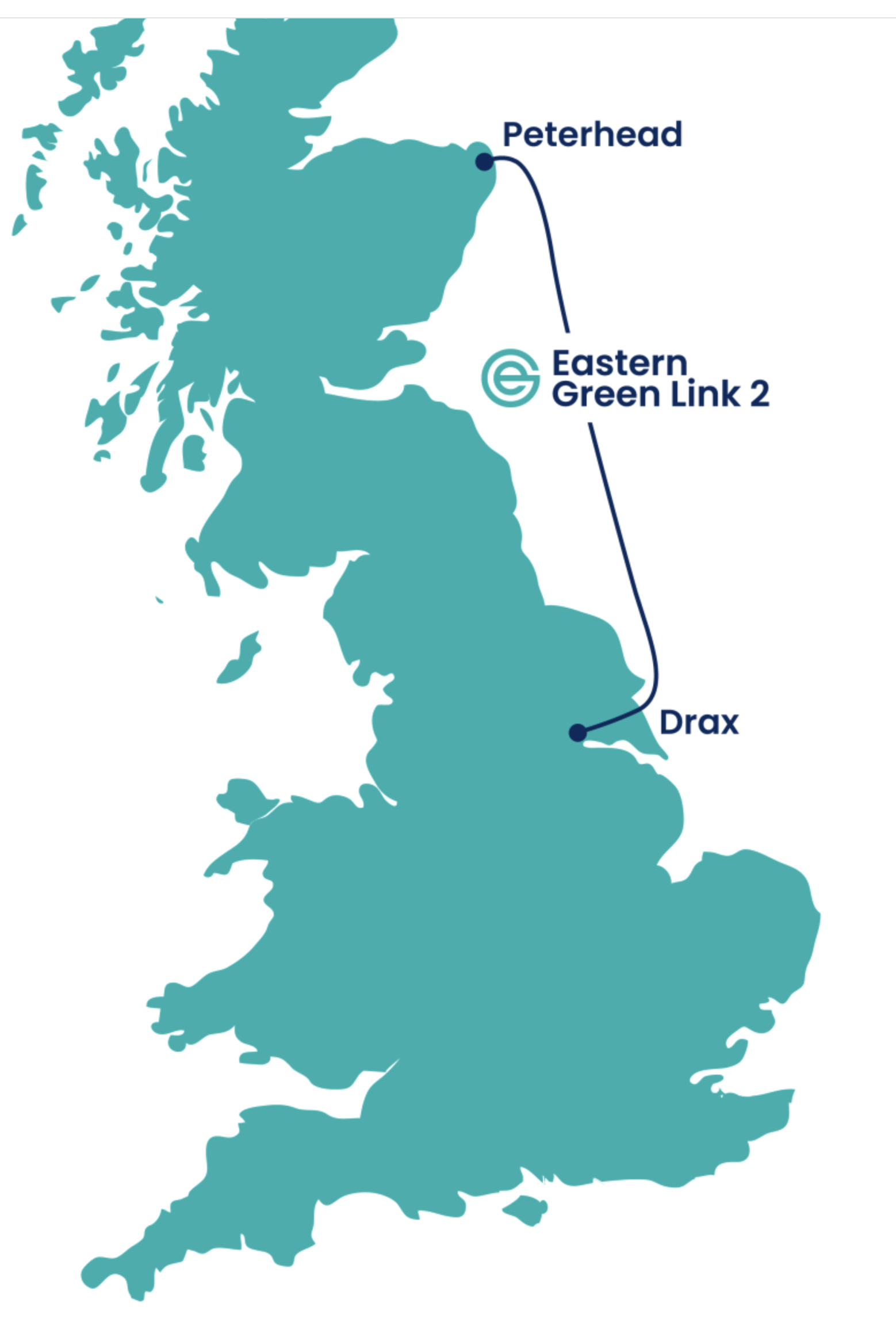
So electricity from Scotland will be able to replace up to two GW of the biomass, that Drax power station currently uses as fuel.
Drax And Solar Power
This Google Map shows Drax power station.

If Drax wanted to add solar power to the site, I’m sure it would be possible.
- There is plenty of space.
- There is a substantial connection to the electricity grid.
After the purchase of Bluefield Solar Income Fund, Drax probably are well-placed to develop as much solar-power as they need.

