Plan For New Nuclear Reactors At Wylfa And Trawsfynydd A Step Closer As Natural Resource Wales Looks At Designs
The title of this post, is the same as that of this article on nation.cymru.
These are the first two paragraphs.
Plans for new nuclear power stations at Trawsfynydd and Wylfa have taken a step closer after the UK Government asked government regulators to assess designs for the reactors.
Natural Resources Wales will be among those assessing the designs by Rolls-Royce, with both Wylfa and Trawsfynydd have been named as potential sites for housing them within the UK.
These are points about the reactors.
- They will cost £1.8 billion each.
- They are capable of powering a city the size of Cardiff, which has a population of about half-a-million.
- I’ve read elsewhere that the reactors are planned to have a nameplate capacity of 470 MW.
The article did mention, that the Nimbys were lining up.
The Wylfa Site
The original Wylfa power station was a Magnox nuclear station generating 980 MW, that was decommissioned in 2015.
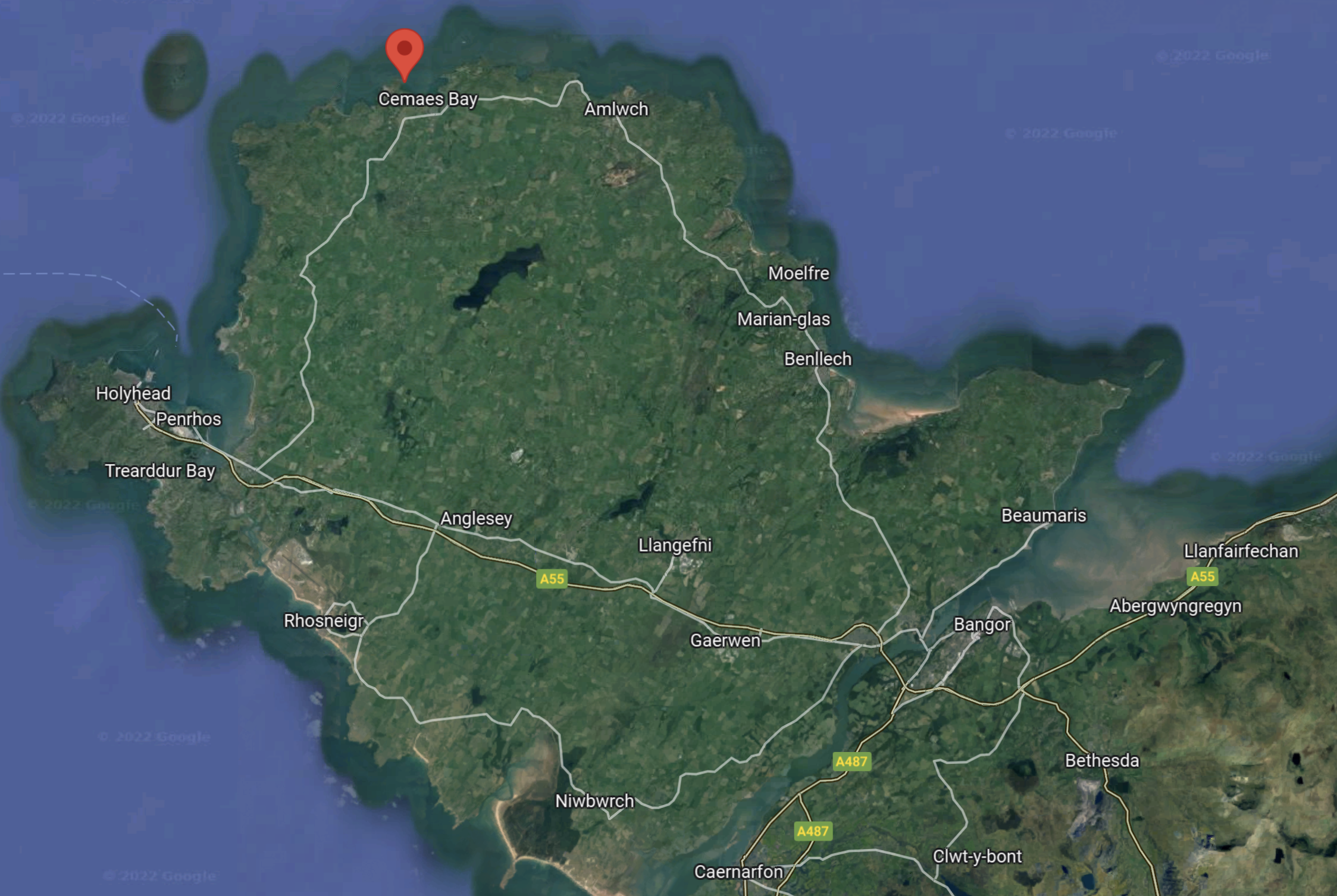
This Google Map shows the location of the site on Anglesey.
This second Google Map shows the site in more detail.
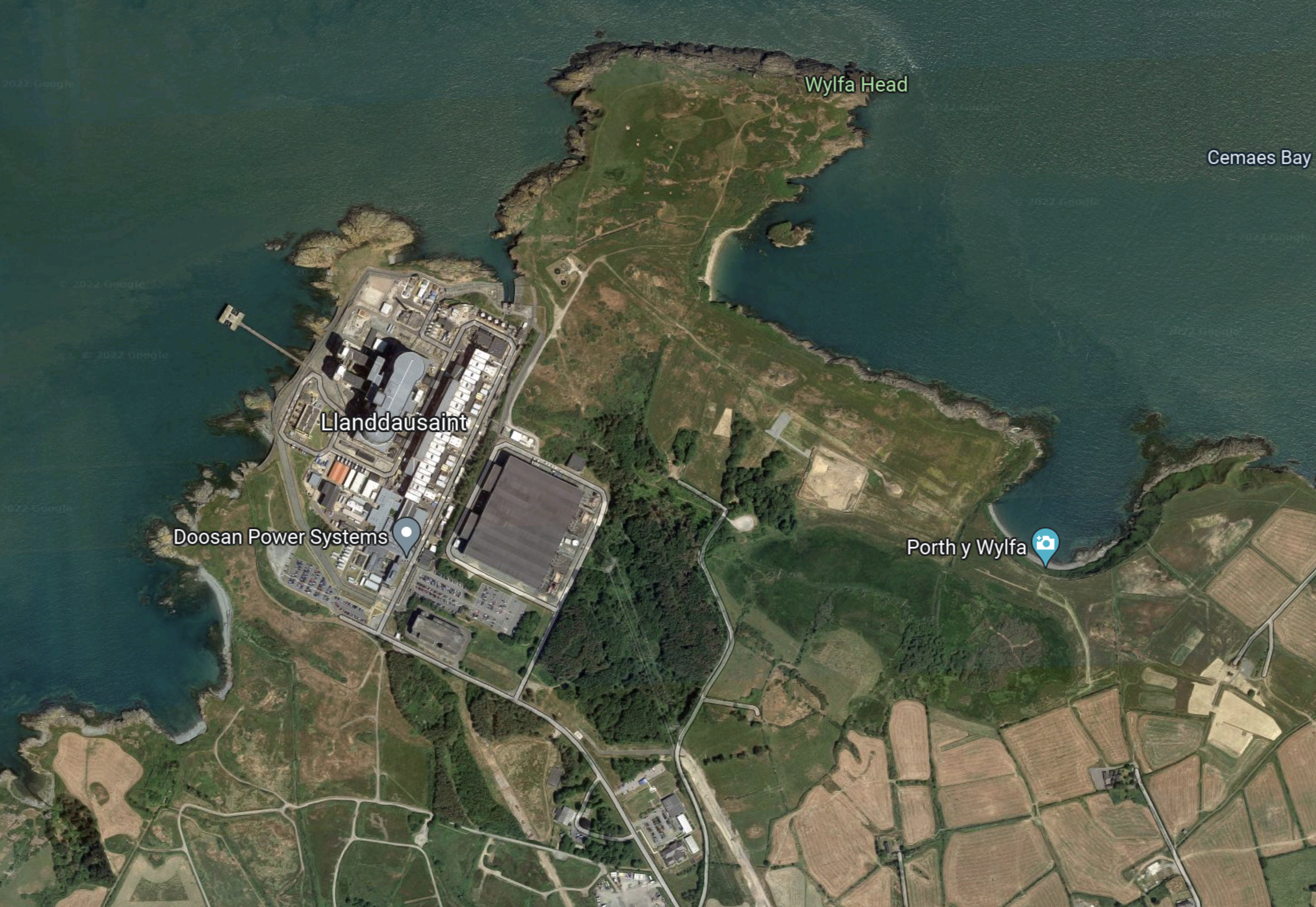
The power station doesn’t appear to have had a rail link, but there is a railway line a few miles away, with sidings that might have been used to handle fuel flasks.
There has been a proposal for a hybrid plant consisting of a wind farm and small modular nuclear reactors, which is described in this Wikipedia section, where this is said.
In January 2021, Shearwater Energy presented plans for a hybrid plant, to consist of a wind farm and small modular reactors (SMRs), to be installed adjacent to the existing Wylfa power station but separate from the proposed Wylfa Newydd site. Shearwater has signed a memorandum of understanding with NuScale Power for the SMRs. The plant could start generation as early as 2027 and would ultimately produce up to 3 GW of electricity and power a hydrogen generation unit producing up to 3 million kg of hydrogen per year.
Note.
- Wylfa Newydd was a proposal by Hitachi to build a nuclear station on the site.
- Shearwater Energy is a UK developer of energy opportunities.
- NuScale Power is an American company with its own design of small modular nuclear reactor.
In Holyhead Hydrogen Hub Planned For Wales, I talked about hydrogen and the port of Holyhead.
The Trawsfynydd Site
The original Trawsfynydd power station was a Magnox nuclear station generating 470 MW, that was decommissioned in 1991.
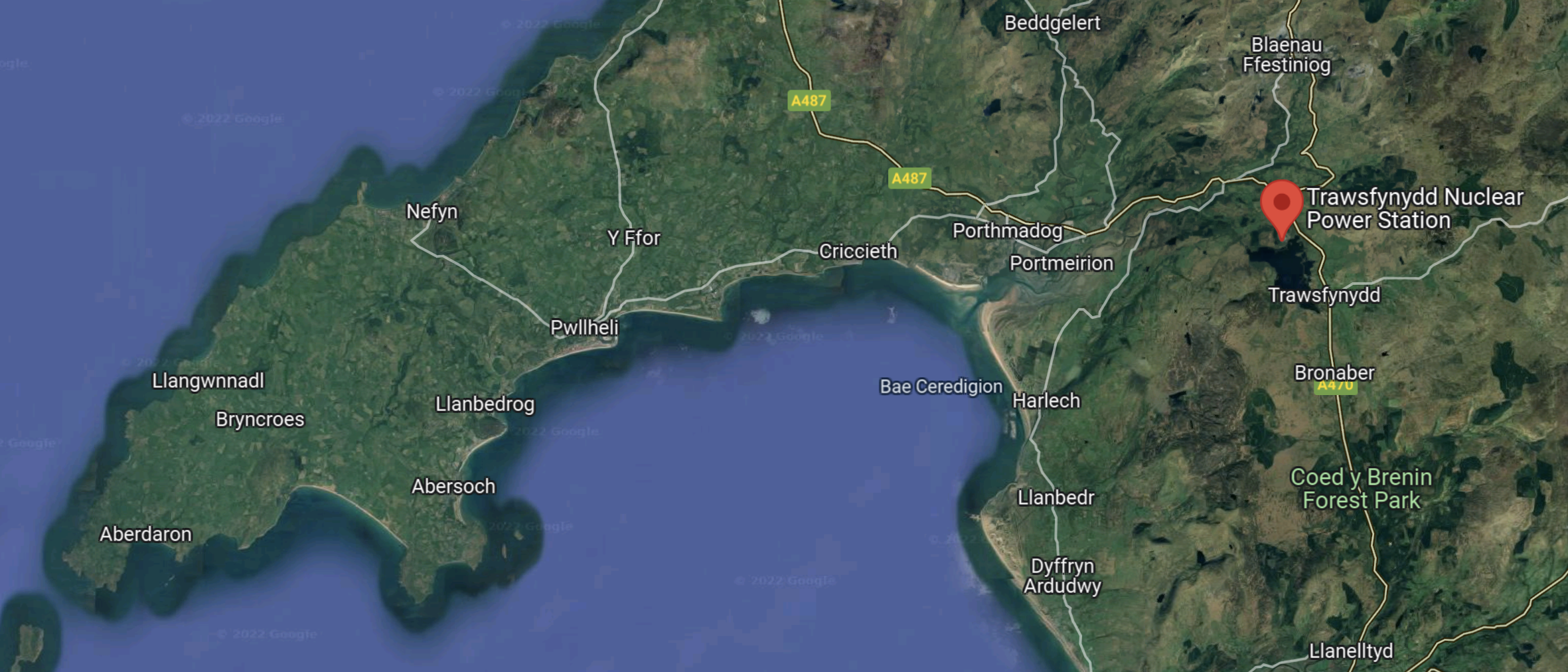
This Google Map shows the location of the site in North Wales.
This second Google Map shows the site in more detail.
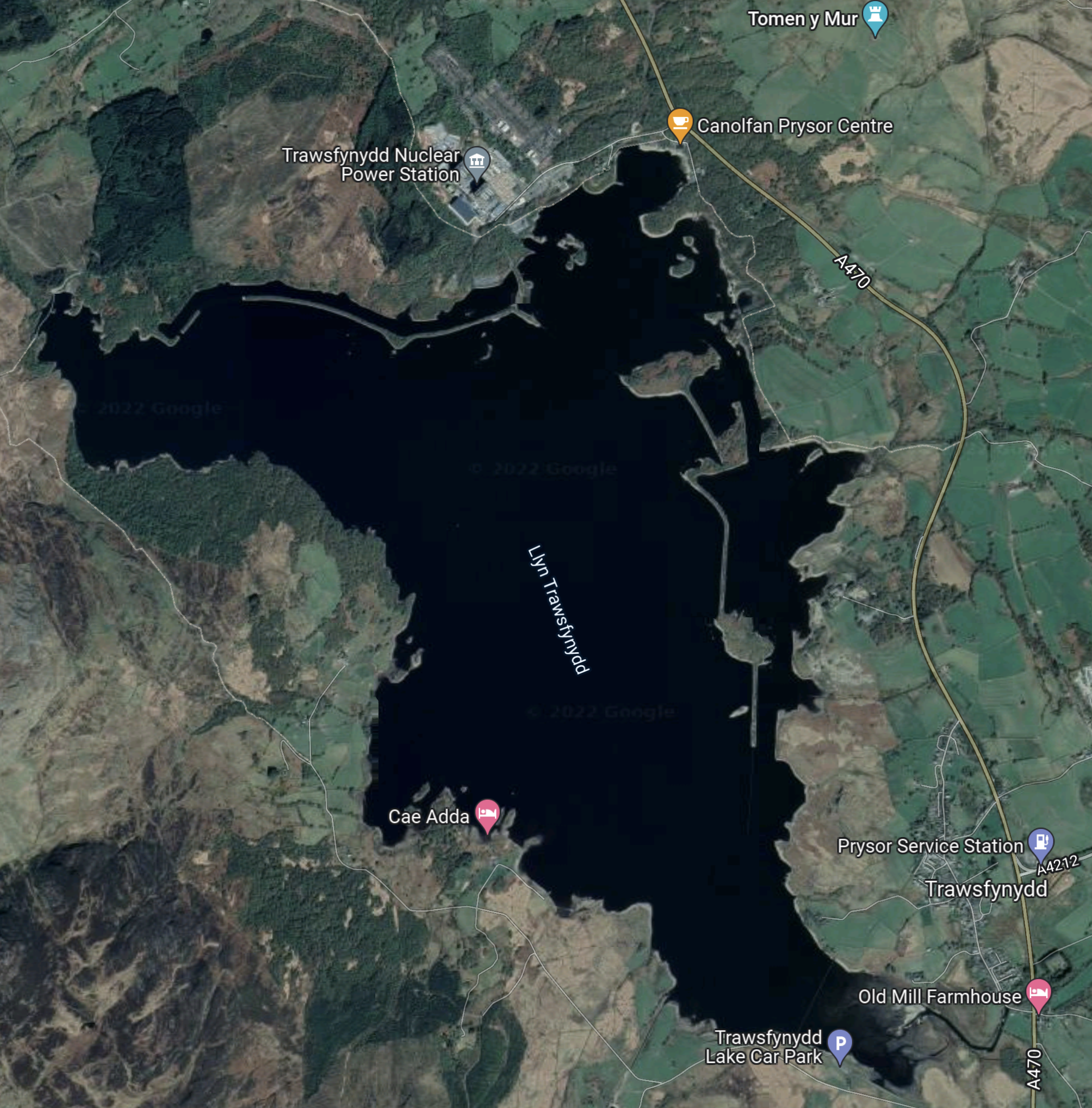
Note.
- The power station was built on the Northern shore of Llyn Trawsfynydd.
- Llyn Trawsfynydd is a man-made lake, that was built in the 1920s to supply water to the 24 MW Maentwrog hydro electric power station.
- There is a railway from near the site, that connects to the Conwy Valley Line at Blaenau Ffestiniog.
The Trawsfynydd site is a lot more than just a decommissioned Magnox power station.
Pumped Energy Storage In Snowdonia
Currently, there are two existing pumped storage in Snowdonia.
- Dinorwig power station, which is often called Electric Mountain, which has a capacity of 9.1 GWh.
- Ffestiniog power station, which has a capacity of around 1 GWh. If anybody has a better figure let me know!
A third scheme is under development at Glyn Rhonwy, which could have a capacity of 700 MWh.
Looking at the size of Llyn Trawsfynydd, I do wonder, if it could be the top lake of a future pumped storage scheme.
- Llyn Trawsfynydd, contains 40 million tonnes of water.
- There is a head of 190 metres.
That could give energy storage of 20 GWh. That sounds a lot of GWhs! But with two possible small modular nuclear reactors at possibly 500 MW each nearby and some help from windfarms, it could be filled within a day, if there is a suitable low-level reservoir.
Rolls-Royce And The Duisburg Container Terminal
In Rolls-Royce Makes Duisburg Container Terminal Climate Neutral With MTU Hydrogen Technology, I showed how Rolls-Royce and its subsidiary were providing an innovative climate neutral solution for Duisburg Container Terminal in Germany.
A North West Wales Powerhouse
Could Rolls-Royce be planning a Duisburg-style solution for North West Wales.
- Small modular nuclear reactors at Wylfa and Trawsfynydd.
- Hydrogen electrolysers to create hydrogen for the Port of Holyhead and heavy transport.
- Adequate pumped hydro storage for surplus energy.
But there could be little serious above-ground construction.
Conclusion
Something is awakening in North West Wales.
Advance Warning Of Brixton To Beckenham Junction Rail Closure In July
The title of this post, is the same as that of this article on Ian Visits.
These are the first two paragraphs.
In late July, the railway between Brixton and Beckenham Junction will be closed for 9-days as Network Rail carry out a major upgrade of the tracks in the Penge railway tunnel.
Over the 9-day closure Network Rail says that it will be delivering a £4.5 million investment to replace the tracks through the Penge tunnel to help improve train service reliability. During the works, they will be replacing 3,970 metres of track in total, using engineering trains, road-rail vehicles and other heavy machinery to complete the work.
The railway will be closed between Herne Hill and Beckenham Junction stations for the week of Saturday 23rd to Sunday 31st July 2022.
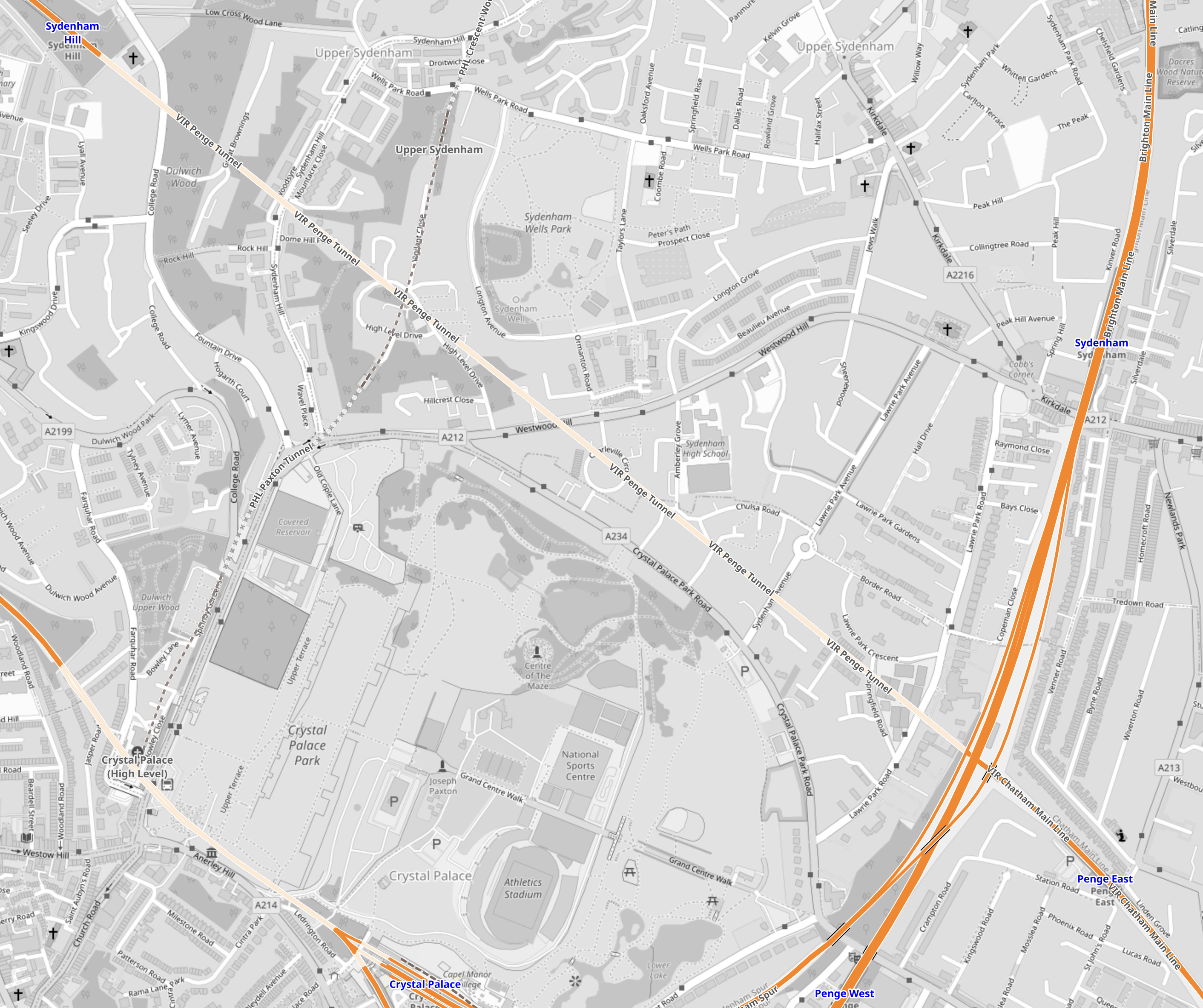
This map from OpenRailwayMap shows the tunnel.
Note.
- The North-South railway is the Brighton Main Line, that passes through Sydenham and Penge West stations.
- The NW-SE railway is the Chatham Main Line, with Sydenham Hill station in the North-West and Penge East station in the South-East.
- Penge East Station – 11th March 2022 shows the station and the distance to Penge Tunnel.
- Sydenham Hill Station – 11th March 2022 shows the station and Penge Tunnel.
- Penge Tunnel is between the two stations and is shown in cream.
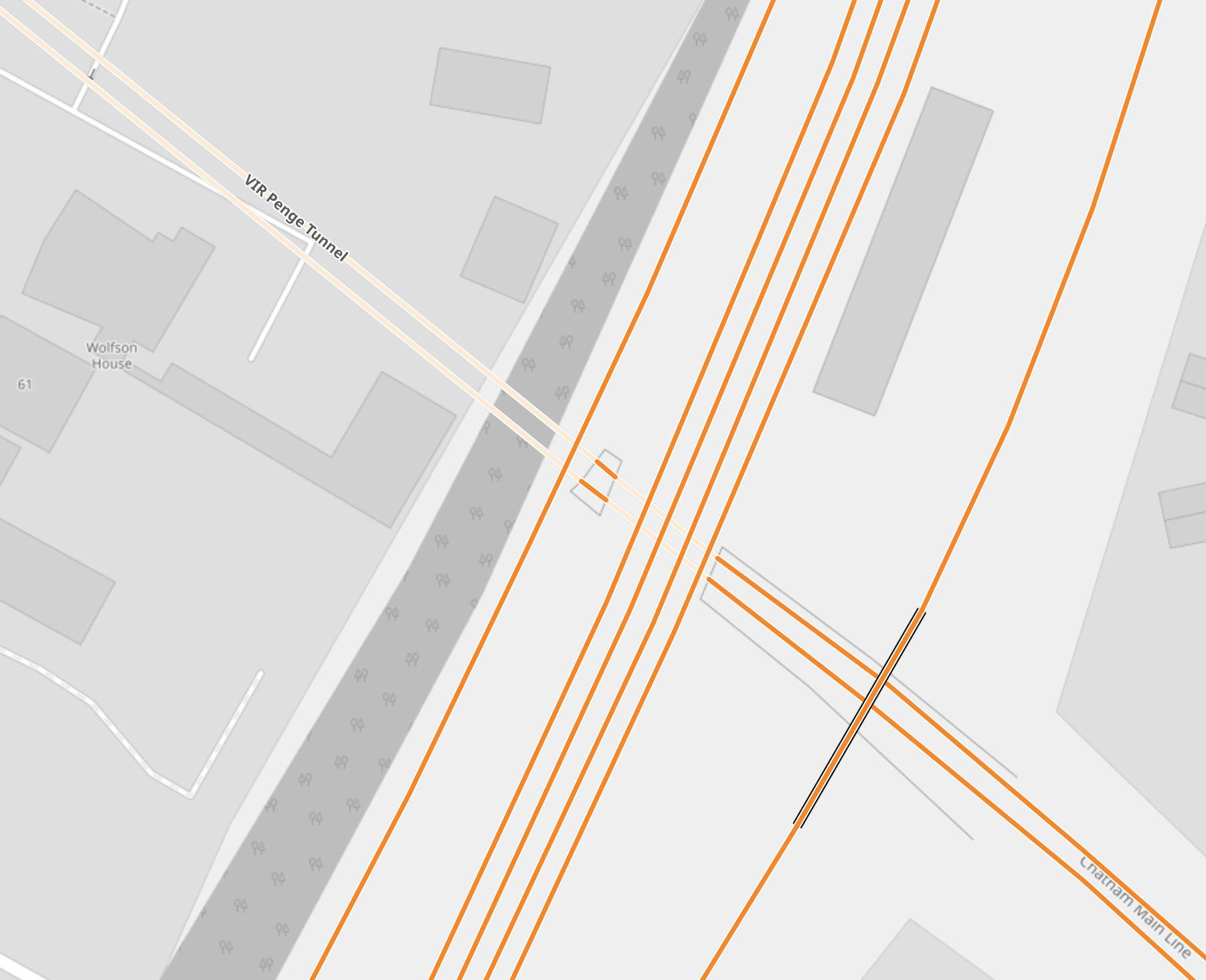
This second map, shows where the two lines cross.
In Penge Interchange, I described how Transport for London would like to build a new Penge Interchange station to possibly replace both Penge East and Penge West stations.
- It could be fully step-free.
- The station would be built on railway land.
- It would have four tph between Victoria and Bromley South stations.
- It would have four tph between Highbury & Islington and West Croydon stations.
- It would have two tph between London Bridge and Caterham stations
- It might also be possible to have platforms on the Crystal Palace branch, thus adding six tph between Highbury & Islington and Crystal Palace stations.
- The station could have Thameslink platforms.
I feel it would offer the following benefits.
- Better connection between South East and North London, without going through Central London.
- Better connection between South East London and Crossrail, with all its connections.
- Closure of the two older Penge stations.
I hope that whilst the railway is closed for the relaying of track, that Network Rail will do a full survey to at least find out whether a Penge Interchange station is feasible.
Gelion Claims Zinc-Bromine Gel Batteries Will Replace Lithium-Ion
The title of this post, is the same as that as this article on RideApart.
These are the first two paragraphs.
Battery technologies are evolving at a rapid pace—and for good reasons. With the automotive world moving toward electrification, companies need to find solutions for producing electric vehicles on a massive scale. While lithium-ion battery technology rules the roost today, that isn’t stopping firms from developing the next big leap forward.
From solid-state power units to structural batteries to sci-fi-worthy quantum batteries, there’s no shortage of ideas and concepts. However, the Australian company Gelion Technologies believes it found a more affordable and durable approach with its zinc-bromine gel battery. Unlike lithium-ion units, the material found in Gelion’s design isn’t rare, expensive, or potentially flammable.
It’s yet another development coming out of Australia.
Wind Farms On The East Coast Of Scotland
This map shows the proposed wind farms off the East coast of Scotland.
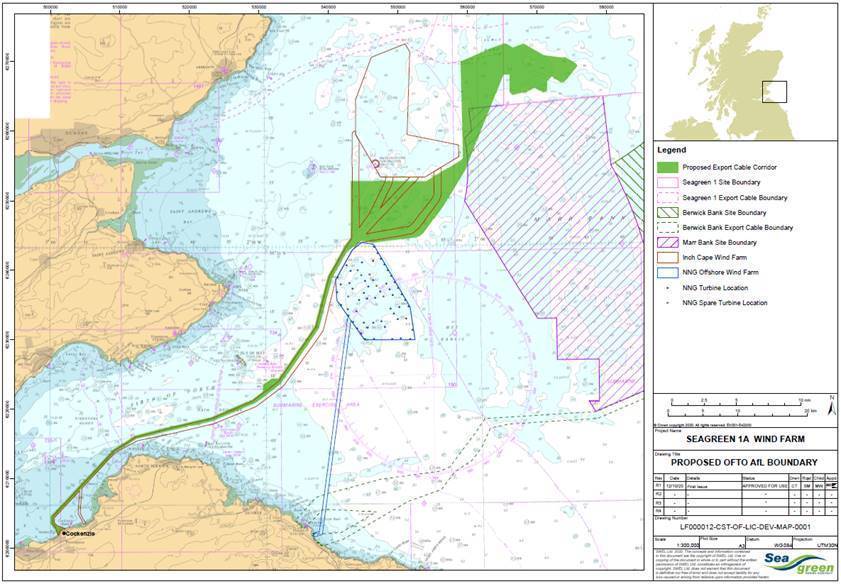
There are five wind farms in the map.
- The green area is the cable corridor for Seagreen 1a
- Inch Cape is the odd-shaped wind farm to the North and West of the green area
- Seagreen at the top of the map, to the North of Inch Cape.
- Marr Bank with the pink NE-SW hatching
- Berwick Bank with the green NW-SE hatching
- Neart Na Gaoithe is edged in blue to the South of the green area.
Berwick Bank and Marr Bank are both owned by SSE and appear to have been combined.
These are some more details on each of the now four wind farms.
Seagreen
These are details of the Seagreen wind farm.
- Seagreen will be Scotland’s largest and the world’s deepest offshore wind farm when complete.
- The first phase will have 114 turbines and a capacity of 1075 MW.
- It will connect to the grid at a new substation at Tealing near Dundee.
- The cables will run to the North of the Inch Cape wind farm.
- It will be completed in 2023.
- The second phase (1a), will have 36 turbines.
- It may have larger turbines.
- The cables will run in the green area to Cockenzie in East Lothian.
This press release from SSE is entitled Another Milestone For Scotland’s Largest Offshore Wind Farm As 4,800 Tonnes Offshore Platform Completed.
This is the first paragraph.
The topside forms the backbone of the offshore wind farm. At 40 metres long, 45 metres wide and 15 metres high, the heavyweight superstructure’s role is to collect and manage 1,075MW of power generated by the 114 Vestas wind turbines before transferring it ashore via around 60km of offshore subsea cabling.
This platform is used to connect the 114 turbines to the shore.
Inch Cape
This paragraph from the home page of the Inch Cape web site, describes the wind farm.
The Inch Cape Offshore Wind Farm, currently in late stage development, will see up to 72 turbines located 15 km off the Angus Coast and connect to the National Grid at Cockenzie, East Lothian. Once complete, it will be one of Scotland’s largest single sources of renewable energy and power up to 1 million homes with clean electricity.
The home page says it will generate up to 1 GW of electricity.
Neart Na Gaoithe
This sentence for the Wikipedia entry for the Neart Na Gaoithe web site describes the wind farm.
It is being developed by Mainstream Renewable Power at a cost of £1.4bn. Offshore work began in 2020, with completion planned for 2023.
The Wikipedia entry says it will generate up to 450 MW of electricity.
Berwick Bank
These two paragraphs from the project page of the Berwick Bank web site describes the wind farm.
Located in the North Sea, in the outer Firth of Forth, Berwick Bank Offshore Wind Farm has the potential to deliver up to 4.1 GW of installed capacity, making it one of the largest offshore opportunities in the world.
Berwick Bank Wind Farm is in the development stage and previously the project was comprised of two separate proposals, Berwick Bank Wind Farm and Marr Bank Wind Farm. Following initial rounds of consultation, it has been decided to combine our proposals into one single opportunity – Berwick Bank Wind Farm.
At 4.1 GW, Berwick Bank is a big wind farm.
The capacity of the four farms can be summarised as follows.
- Seagreen – 1075 MW
- Neart Na Gaoithe – 450 MW
- Inch Cape – 1000 MW
- Berwick Bank – 4100 MW
This gives a total of 6625 MW.
‘Upgrade East Coast Main Line Before HS2’ If Leeds And Yorkshire Want Faster Rail Links To London
The title of this post, is the same as that of this letter to the Yorkshire Post.
This is the opening paragraph.
The decision to scrap HS2 running to Leeds is controversial but those who travel to London should not despair.
The writer makes these points.
- High Speed Two will probably charge a premium fare because of the speed.
- The current journey time to the capital is two hours 13 minutes at a cost of £28-60, if purchased in advance.
- Planned improvements on the East Coast Main Line will reduce the journey time to London King’s Cross to one hour 56 minutes.
- High Speed Two will take one hour 22 minutes.
- If the line between Doncaster and Leeds were to be improved, the journey time could be reduced to one hour 45 minutes.
The writer finishes by saying that if the government ‘four tracked’ the entire East Coast route, 140mph LNER’s Azuma trains would match the times of High Speed Two.
In What Will Be The Fastest Times Possible Between London King’s Cross And Leeds?, I came to this conclusion.
It looks like a non-stop service between London and Leeds running at 140 mph, with perhaps some sections at perhaps a bit faster, could be able to match the High Speed Two times.
Running non-stop saves a total of eighteen minutes.
In an hour, I would give Leeds one non-stop and one stopping service to London.
Ukraine Maternity Hospital ‘Destroyed’ By Russian Shelling
The title of this post, is the same as that of this article on the BBC.
These are the first two paragraphs.
Russian forces surrounding the southern port city of Mariupol have destroyed a maternity hospital, Ukraine says.
President Volodymyr Zelensky said children were under the wreckage, and called on Western leaders to impose a no-fly zone.
This Wikipedia entry is entitled Russian–Syrian Hospital Bombing Campaign.
The campaign may have been started by the Syrians, but the Russians joined in later in 2015-2018, as this paragraph from Wikipedia describes.
After Russia began military operations in Syria, aerial bombardment intensified. In 2015, there were more than 300 attacks on medical facilities by Syrian and Russian forces. From May to December 2016, medical facilities were attacked about 200 times by Russian and Syrian forces.
It does look to me, that the Russians consider bombing hospitals to be a legitimate tactic. It is not, as it is a war crime.
From Belfast With Love
Ben Wallace has just announced in the House of Commons, that Ukraine has received over three and a half thousand NLAW missiles and more are on the way.
This has appeared in the last few minutes on the Wikipedia entry for the Starstreak missile.
On March 9, 2022, Defense Secretary Ben Wallace said that the United Kingdom was looking into delivering Starstreak missiles to Ukraine, to prevent Russian air supremacy amid the Russo-Ukrainian War.
Both NLAW and Starstreak missiles are made by Thales in Belfast.
This YouTube video shows NLAW missiles including during training with Ukrainian forces.
Read the comments, of which this is an example.
In Ukraine the instructions on how to use NLAW is top trending content on Facebook and Instagram. Amazingly you can fit a comprehensive instruction on how to shoot a tank with NLAW in like 10 pictures with arrows and subtitles.
These missiles will change the face of defensive warfare.
Fortescue Future Industries And Airbus Join Forces To Help Decarbonise Aviation
The title of this post, is the same as that of this press release from Fortescue Future Industries.
These are the first two paragraphs.
Global green hydrogen company Fortescue Future Industries (FFI) and Airbus, a world leader in aeronautics, have joined forces to create a working alliance to help enable the aviation industry to decarbonise through zero-emissions green hydrogen.
Today’s announcement reflects FFI’s and Airbus’ shared ambition to leverage their respective expertise to support the entry-into-service of a green hydrogen-based aircraft by 2035. Green hydrogen, unlike other forms of hydrogen, is made from water using 100 per cent renewable electricity.
I think this is a smart move by Airbus.
It could be argued that hydrogen trucks, buses, cars, vans and other road vehicles have not taken off at a great rate due to the lack of hydrogen filling stations.
Hydrogen airliners travelling on typical routes will probably need refuelling at both ends of the route and possibly several times per day, so hydrogen refuelling would be an important part of any deal Airbus signs with an airline.
Fortescue Future Industries seem to be in prime position to be the first global hydrogen company, so they must be the ideal hydrogen fuelling partner.
I don’t think anybody predicted, when Airbus published the possible designs of their concepts for hydrogen-powered aircraft in September 2020, that I wrote about in ZEROe – Towards The World’s First Zero-Emission Commercial Aircraft, that an Australian company would be likely to provide the hydrogen fuel for these aircraft.
The Curious Tale Of The Queen, Putin And David Blunkett’s Guide Dog
This article on the Daily Mirror is entitled Putin Left The Queen Waiting For 14 Mins And She Broke Protocol To Make Snide Remark.
This is an extract.
According to David Blunkett, who was Home Secretary at the time, his guide dog reacted defensively towards Putin.
Mr Blunkett told the BBC : “The only time I met Vladimir Putin was back in 2003 on an official visit and my then dog barked very loudly.
“I did apologise to the Queen who was obviously hosting. I don’t think I am giving anything away when I said, ‘Sorry your Majesty about the dog barking.’
“She said, ‘Dogs have interesting instincts, don’t they?'”
Note that at the time, Putin had a black Labrador Retriever bitch called Konni.
Will Rail Baltica Annoy Putin?
Rail Baltica is described like this in Wikipedia.
Rail Baltica (also known as Rail Baltic in Estonia) is an ongoing greenfield railway infrastructure project to link Finland (via ferry or an undersea tunnel), Estonia, Latvia, Lithuania with Poland and through this with the European standard gauge rail line network. Its purpose is to provide passenger and freight service between participating countries and improve rail connections between Central and Northern Europe, specifically the area in the Southeast of the Baltic sea. Furthermore, it is intended to be a catalyst for building the economic corridor in Northeastern Europe. The project envisages a continuous rail link from Tallinn (Estonia) to Warsaw (Poland). It consists of links via Riga (Latvia), Kaunas and Vilnius (Lithuania). Rail Baltica is one of the priority projects of the European Union.
These are a few more details.
- It will be a double-track railway or four tracks if it handles freight.
- Passenger trains will run at up to 250 kph (155 mph)
- Electrification will be either 25 KVAC or 3 KVDC overhead.
- It will be a standard gauge line.
- There will be no level crossings.
- It is planned to open around 2026.
The biggest problem could be that some of the route is shared with the Russian gauge line, that connect Kaliningrad to Vilnius and then from there to the main part of Russia.
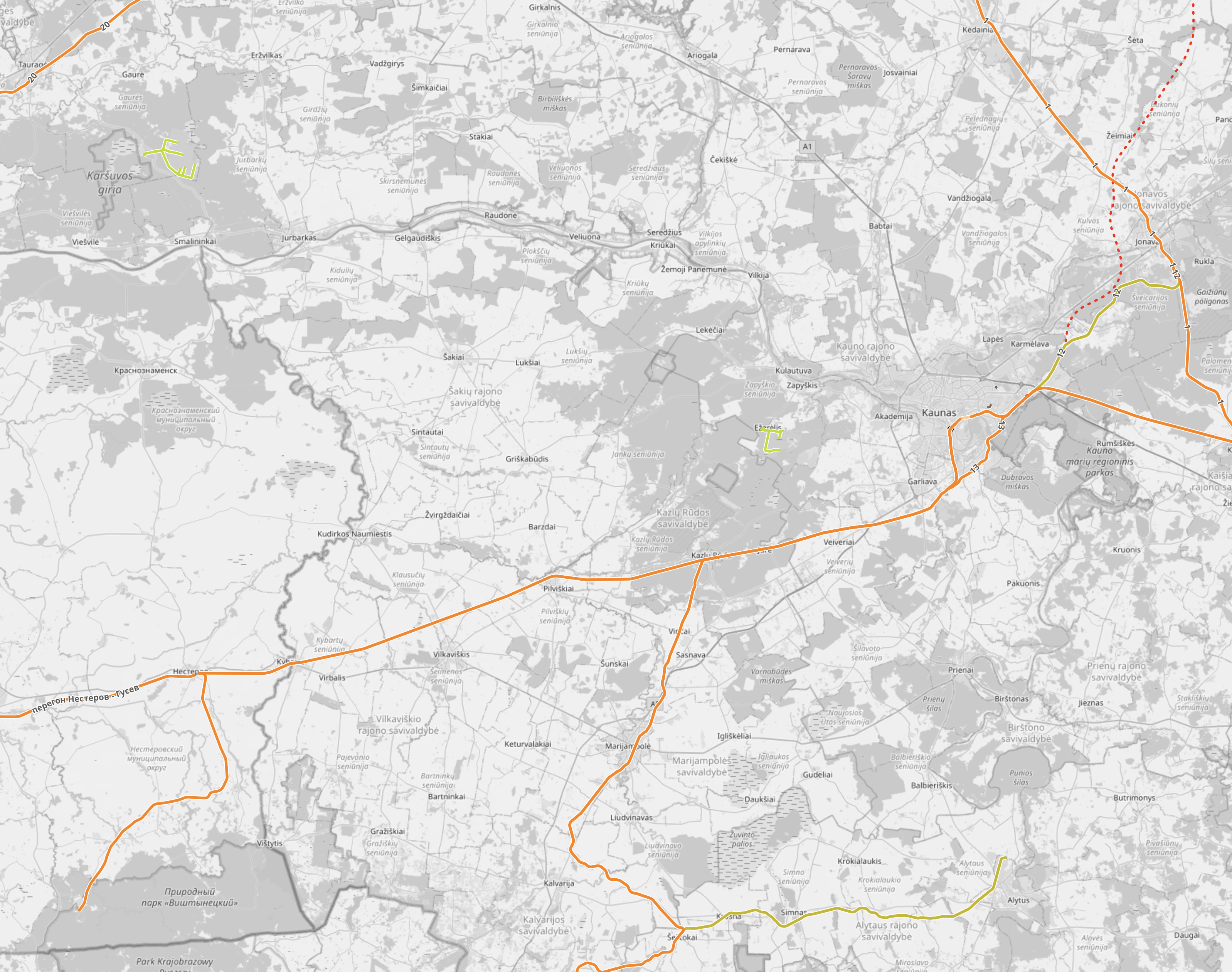
This map from OpenRailwayMap shows the railways between Kaliningrad and Vilnius.
Note.
- The orange lines are main lines.
- The yellow lines are secondary lines.
- The orange line going West goes to Kaliningrad.
- The dark grey line crossing the railway is the border of the Kaliningrad enclave, which was annexed by the Soviet Union in 1945.
- The orange line going South goes to Bialystok, Warsaw and all places to the West.
- The loop in the line is at Kaunus, where there will be an interchange between the two lines.
- The orange lines going East go to Vilnius.
- The dotted red line in the North-East corner of the map, will be new track for Rail Baltica.
The new railway will effectively squeeze itself between Kaliningrad and Kaunus.
Railway Gauges In Poland and the Baltic States
Consider.
- Most, if not all of the railways in the Baltic States are Russian gauge.
- The line between Kaliningrad and Kaunus is Russian gauge.
- Most of the railway lines in Poland are standard gauge.
- The EU likes all new high speed lines like Rail Baltica to be built to standard gauge and have 25 KVAC overhead electrification.
- Kaunus is in Lithuania, so NATO control access to Kaliningrad in sensitive times.
I can’t believe that Vlad likes the current situation and would probably prefer Rail Baltica to be built to Russian gauge, as it would enable the Russian Army to easily move tanks into the Baltic States.
Conclusion
There’s a chance that Vlad will make trouble.
 The Anonymous Widower