EU Nuclear Push Opens Door For More Pink Hydrogen
The title of this post, is the same as that of this article on H2-View.
These four paragraphs introduce the article.
The European Commission has given a renewed push to nuclear development, which may open the door for more pink hydrogen.
Direct, large-scale pink hydrogen production in Europe is currently very limited, as the industry is still in its pilot and policy-alignment phase. Over 95% of European hydrogen is still produced from fossil fuels, primarily through steam methane reforming.
Speaking at the Nuclear Energy Summit, President Ursula von der Leyen pledged €200m to support private investment in nuclear technologies and unveiled a new European strategy for small modular reactors with the aim that they are operational by the early 2030s. Funding will come from the Emissions Trading System.
“After years of declining investment, we need more to turn the tide,” she said.
It is certainly an article worth giving a good read, as it is a view from the very top.
RWE Orders 2.76 GW Of Offshore Wind Turbines At Vestas
The title of this post, is the same as that of this article on offshoreWIND.biz.
This is the sub-heading.
RWE has placed a firm wind turbine order with Vestas for its 1,380 MW Vanguard East offshore wind project in the UK, shortly after confirming a firm order for Vanguard West, which will have the same installed capacity.
These three paragraphs add more details.
For Vanguard East, Vestas will supply, deliver, and commission 92 of its V236-15.0 MW wind turbines, and will also be in charge of servicing them under a five-year service agreement, followed by a long-term operational support agreement.
RWE expects to make a final investment decision (FID) for both Vanguard East and Vanguard West in the summer of 2026, with wind turbine deliveries for Vanguard East to begin in the fourth quarter of 2028.
The commissioning of Vanguard West is expected in 2029, with Vanguard East following suit in 2030.
Note.
- On the 23rd of February, 2026, RWE placed a similar order for Vanguard West with Vestas.
- In Global Investor Joining RWE On Two Norfolk Vanguard Offshore Wind Projects, FID Expected in Summer, I describe how KKR are taking a stake in the two of the Norfolk Vanguard Offshore Wind Projects.
Things are looking good for RWE, Norfolk and wind power.
How Much B12 In A Portion Of Chilli-Con-Carne?
I asked Google AI, the title of this post and received this answer.
A standard 1-cup (approx. 240g–250g) portion of homemade or canned chilli con carne typically contains between 0.68 mcg and 1.6 mcg of Vitamin B12. This amount represents approximately 28% to 67% of the recommended daily intake (DV) for adults.
Vitamin B12 Content Breakdown:
Homemade with Beef (Approx. 250g): ~1.6 mcg (67% DV).
Canned Entree (1 cup/242g): ~0.68 mcg (28% DV).
Chilli with Rice (450g meal): ~2.28 mcg (57% DV).
Key Factors Affecting B12 Levels:
Meat Quantity: A higher ratio of ground beef increases the B12 content, as 3 ounces of lean ground beef alone provides 2.4 mcg (100% DV).
Serving Size: A larger, restaurant-sized portion (e.g., 12 oz) will contain significantly more than a standard 1-cup serving.
Chilli con carne is considered an excellent source of Vitamin B12 due to the beef content, which helps meet the daily requirement of 2.4 mcg for adults.
I generally eat, one Marks and Spencer’s Count on Us chilli-con-carne and rice, every week. It doesn’t say on the packaging if it is gluten-free, but my highly-tuned gut says it is.
What Does Google AI Say In Answer To Is Marks And Spencer’s Count On Us Chilli Con Carne And Rice Gluten Free?
The M&S Count On Us Chilli Con Carne and Rice is generally considered safe as it does not list gluten-containing ingredients, but it is not explicitly labeled as “gluten-free” and may have risks of cross-contamination. While many M&S “Count on Us” meals are considered “accidentally” gluten-free, it is advised to check the label for “may contain” warnings before consuming.
I used to have a ginger Glaswegian friend, who had a Michelin star (Not him, one of the others!) He told me that chilli con carne should be gluten-free.
How Much B12 In A Portion Of Beef Lasagne?
I asked Google AI, the title of this post and received this answer.
A standard portion of beef lasagne (approx. 200g-300g) typically contains between 0.6 mcg and 1.7 mcg of Vitamin B12.
This amount provides roughly 25% to 70% of the recommended daily intake (RDA) for adults (which is 2.4 mcg).
Per 100g: A 100g serving contains approximately 0.3 mcg to 0.4 mcg of B12.
Higher-End Estimates: Some nutritional data indicates that a generous, nutrient-dense serving of homemade beef lasagne can have as much as 1.7 mcg of B12.
Source: The primary source of B12 in this dish is the ground beef, with additional amounts from cheese and dairy.
Note: The exact amount depends on the amount of beef and dairy used in the recipe.
I generally eat, one Marks and Spencer’s Made Without gluten-free beef lasagne every week.
Does Lack Of B12 Affect Your Hearing?
I asked Google AI, the title of this post and received this answer.
Yes, a lack of vitamin B12 can affect your hearing, potentially leading to tinnitus (ringing in the ears) and hearing loss. Deficiencies can cause nerve damage (demyelination) in the auditory nerve and damage the small blood vessels in the inner ear.
Impact on Hearing
Tinnitus: Studies suggest B12 deficiency is linked to tinnitus, with some research indicating that supplementation can improve or reverse these symptoms.
Hearing Loss: Low B12 levels are associated with a higher prevalence of hearing impairment, particularly in older adults.
Inner Ear Damage: A lack of B12 may cause degeneration of the cochlear nerve.
Developmental Issues: In children, B12 deficiency may interfere with auditory development.
Causes and Risk Factors
Deficiency can result in high homocysteine levels, which may impair blood flow to the cochlea.
Risk factors for low B12 include:
Vegetarians/Vegans: Due to limited dietary intake.
Adults Over 60: Due to reduced absorption.
Digestive Disorders: Conditions like Coeliac or Crohn’s disease.
Medications: Long-term use of metformin or antacids.
If you are experiencing persistent tinnitus or hearing changes, it is recommended to consult a doctor to check your B12 levels.
I fairly sure that my hearing fits that pattern. Although, I’ve never had tinnitus.
The Proposed Lionel Road Station On the West London Orbital Railway
Starting with Lionel Road station may seem a strange place to start, but this important station for supporters of Brentford FC, may in the end define how the new line is designed and built.
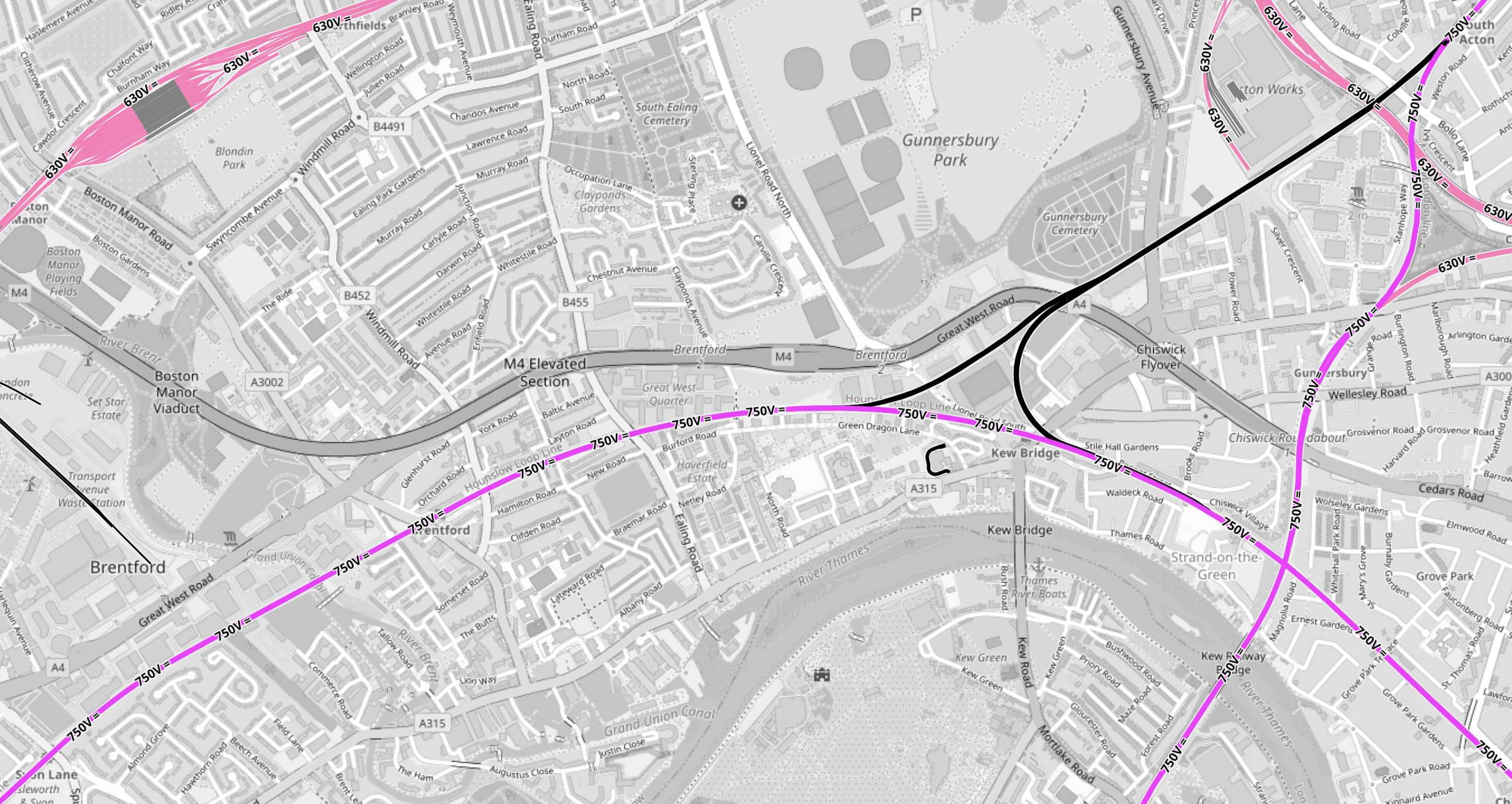
This OpenRailwayMap shows the tracks around the stadium, that has been built for the Premier League football club, which is now called the Gtech Community Stadium.
Note.
- In the North-West corner of the map is the Piccadilly Line branch to Heathrow Airport.
- Northfields Depot is prominent, with the station of the same name to its East.
- South Acton station is in the North-East corner of the map.
- Syon Lane station is in the South-West corner of the map.
- The West London Orbital Railway runs between these two stations.
- Lilac sections are electrified and black sections have none.
- South Acton station is also on the North London Line, which runs North-South to Richmond station off the bottom of the map.
- Syon Lane Station is also on the Hounslow Loop Line, which curves across the bottom half of the map to the South-East corner.
- Click the map to show it to a larger scale.
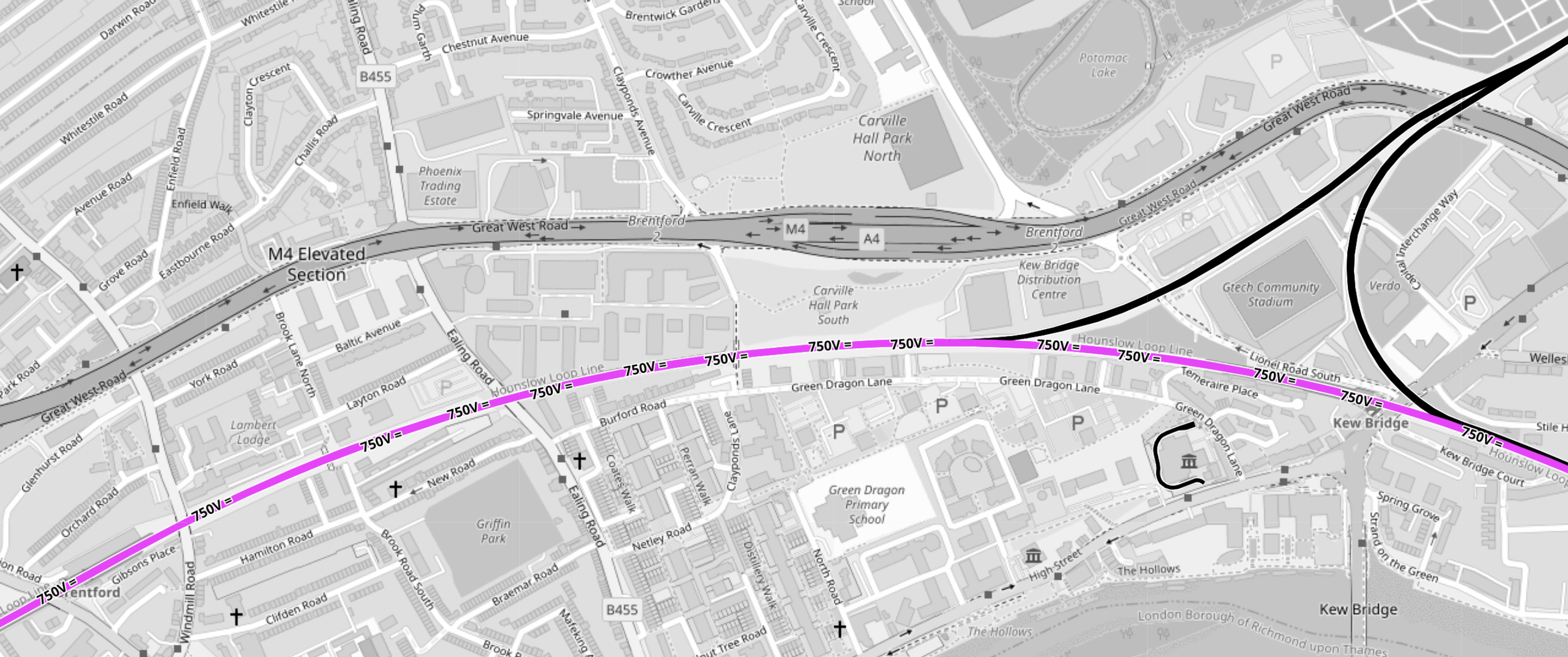
This second OpenRailwayMap shows triangular junction in the middle of the first map to a larger scale.
Note.
- The Gtech Community Stadium sits in the middle of the triangular junction.
- Provision has been made in the layout of the stadium for the station to be on the North-West leg of the triangular junction.
- Kew East Junction is in the North-East corner of the map.
- Old Kew Junction is in the South-West corner of the triangular junction.
- New Kew Junction is in the South-East corner of the triangular junction.
- The lilac track crossing the map is the electrified Hounslow Loop Line.
- The M4/A4 runs across the map
- Only the Southern leg of the triangular junction is electrified.
- Click the map to show it to a larger scale.
These are some of my thoughts.
Lionel Road Station Will Be Unlikely To Be Electrified
Consider
- It will be extremely unlikely that between South Acton station and Old Kew junction will be electrified with third-rail electrification because of safety issues.
- There is a very long chance, that it might be decided to create a 25 KVAC overhead electrified route across London, by means of the North London Line.
- I believe hydrogen trains will be developed for freight services.
- The station will have large numbers of passengers on match-days, so safety may determine an electrification-free station.
- The electrification gap is only 1.4 miles, which is well within range of a battery-electric train.
I think it is more likely that hybrid trains will use what is available.
Will Lionel Road Station Be Step-Free?
Sixty years ago, I used Manchester United station to see a match.
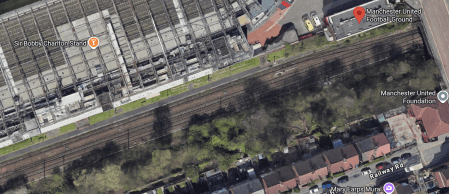
This Google Map shows the station.
Note.
- The station is a single platform tucked in behind the South stand.
- The station entrance is indicated by a red arrow.
- When I went in the 1960s, the train was a steam-hauled shuttle from the city centre.
- This Wikipedia entry gives more details.
I suspect a similar space-saving design could be used at Lionel Road station.
There will be a need for a bridge if the station is used on more than match days.
Will Lionel Road And Kew Bridge Stations Be An Out Of Station Interchange?
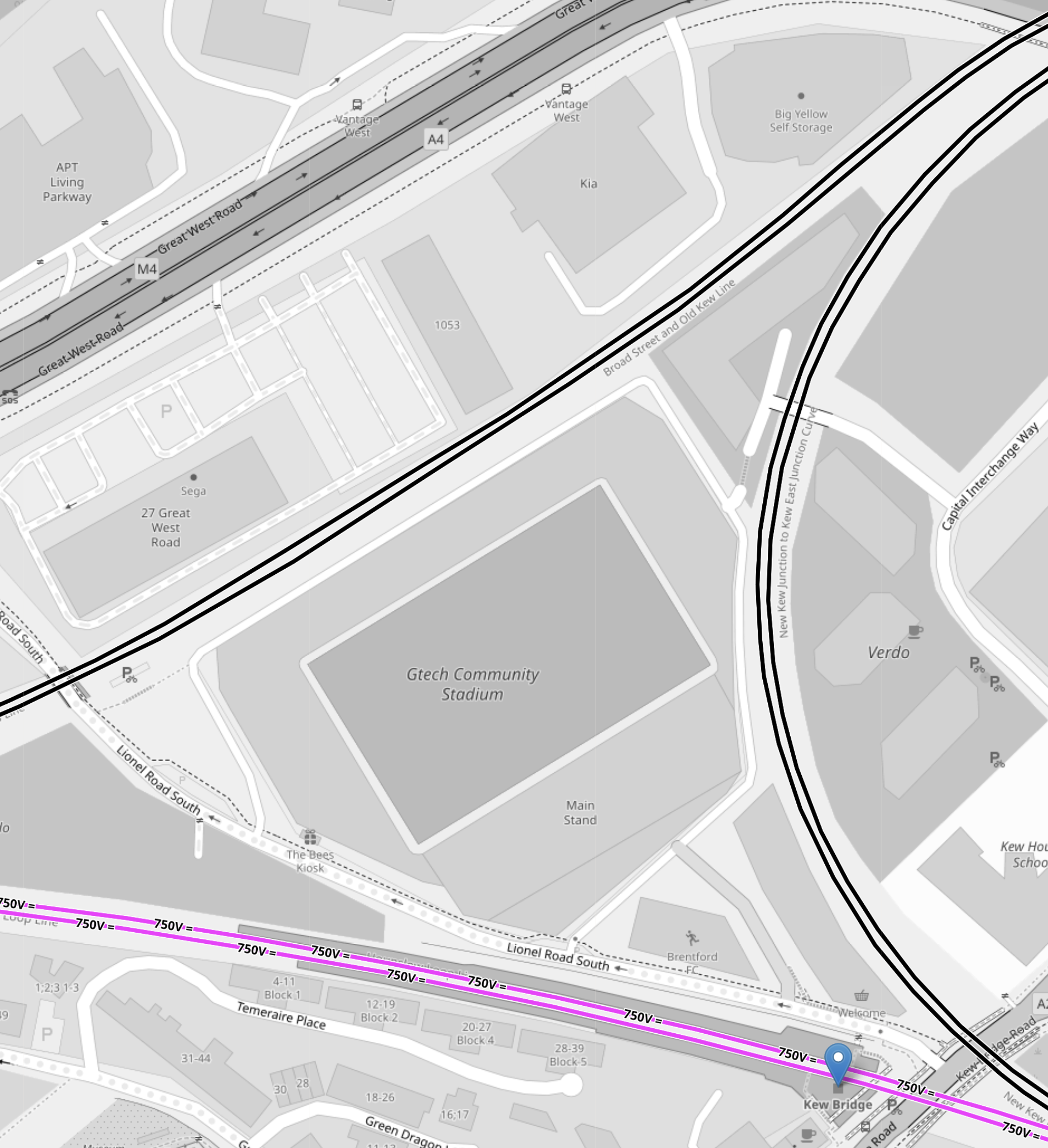
This OpenRailwayMap shows the triangular junction, with the GTech Community Stadium in the middle.
Note.
- Lionel Road station will be on the North-West side of the station.
- Kew Bridge station is marked by a blue arrow.
- There appear to be walking routes all over the plot on which the stadium sits.
- All sides of the junction are double track.
I think an Out-Of-Station Interchange would be useful, especially for those who don’t know the area.
How Easy Will It Be To Get To Lionel Road Station From Major London Stations?
These are my best estimates at a degree of difficulty.
- Bank – 1 Change – Take Central Line with a change at Old Oak Common Lane to Lionel Road.
- Blackfriars – 1 Change – Take Thameslink with a change at Brent Cross West to Lionel Road.
- Bond Street- 1 Change – Take Elizabeth Line with a change at Old Oak Common Lane to Lionel Road.
- Cannon Street – 2 Changes – Get out at London Bridge – Take Thameslink with a change at Brent Cross West to Lionel Road.
- Charing Cross – 1 Change – Take Bakerloo Line with a change at Harlesden to Lionel Road.
- City Thameslink – 1 Change – Take Thameslink with a change at Brent Cross West to Lionel Road.
- Euston – 1 Change – Take Watford DC Line with a change at Harlesden to Lionel Road.
- Farringdon – 1 Change – Take Thameslink with a change at Brent Cross West to Lionel Road.
- King’s Cross – 1 Change – Take Thameslink with a change at Brent Cross West to Lionel Road.
- Liverpool Street – 2 Changes – Get out at Stratford – Take the Overground with a change at South Acton to Lionel Road.
- Liverpool Street – 1 Change – Take Elizabeth Line with a change at Old Oak Common Lane to Lionel Road.
- London Bridge – 1 Change – Take Thameslink with a change at Brent Cross West to Lionel Road.
- Marylebone – 1 Change – Take Bakerloo Line with a change at Harlesden to Lionel Road.
- Moorgate – 1 Change – Take Elizabeth Line with a change at Old Oak Common Lane to Lionel Road.
- Old Street – 2 Changes – Go to Moorgate – Take Elizabeth Line with a change at Old Oak Common Lane to Lionel Road.
- Oxford Circus – 1 Change – Take Bakerloo Line with a change at Harlesden to Lionel Road.
- Paddington – 1 Change – Take Elizabeth Line with a change at Old Oak Common Lane to Lionel Road.
- Piccadilly Circus – 1 Change – Take Bakerloo Line with a change at Harlesden to Lionel Road.
- St. Pancras – 1 Change – Take Thameslink with a change at Brent Cross West to Lionel Road.
- St. Paul’s – 1 Change – Take Central Line with a change at Old Oak Common Lane to Lionel Road.
- Tottenham Court Road – 1 Change – Take Elizabeth Line with a change at Old Oak Common Lane to Lionel Road.
- Vauxhall – 2 Changes – Go to Oxford Circus – Take Bakerloo Line with a change at Harlesden to Lionel Road.
- Victoria – 2 Changes – Go to Oxford Circus – Take Bakerloo Line with a change at Harlesden to Lionel Road.
- Waterloo – Direct – Direct train to Kew Bridge.
- Waterloo – 1 Change – Take Bakerloo Line with a change at Harlesden to Lionel Road
Note.
- It does appear that the connections in stations like Brent Cross West, Harlesden and Old Oak Common Lane, will make a lot of difficult cross-London journeys easier.
- But not many journeys to the GTech Community Stadium, finish at Kew Bridge station.
- Most journeys pick up the West London Orbital at Brent Cross West, Harlesden or Old Oak Common Lane, which probably means these three stations should be step-free.
- As I’ve been writing this, I do wonder if now is the time to create a pedestrian connection between City Thameslink and St. Paul’s stations, that I wrote about in A Pedestrian Connection Between City Thameslink Station And St. Paul’s Tube Station.
I do believe though that there are places on the Central Line, where small projects can give a high return on expenditure.
Conclusion
Surprisingly, this is a lot more than just a station for a Premier League football club.
How Do B12 Levels Affect Pain In Knee Joints?
I asked Google AI, the title of this post and received this answer.
Low Vitamin B12 levels can cause or worsen knee joint pain primarily through nerve damage (peripheral neuropathy), which causes sensations of pain, tingling, or numbness in the legs. Deficiency also increases homocysteine, a pro-inflammatory amino acid linked to joint inflammation and, in some cases, accelerated cartilage deterioration.
Key Connections Between B12 and Knee Pain:
Neuropathic Pain: A lack of B12 damages the myelin sheath protecting nerves, leading to pain, pins and needles, or burning sensations often felt in the extremities, including the knees.
Inflammation and Joint Damage: Low B12 levels are associated with higher homocysteine levels, which can cause inflammation, swelling, and increased friction in the joints.
Deficiency Symptoms: Along with joint pain, B12 deficiency commonly causes fatigue, muscle weakness, and numbness.
Improvement with Supplementation: Studies suggest that maintaining adequate B12 levels, or using supplements, can reduce joint pain and improve mobility.
If you are experiencing persistent joint pain or numbness, it is advisable to have your B12 levels checked.
From my own experience, I would also get tested for coeliac disease.
Does Being Widowed Lower Your B12?
I asked Google AI, the title of this post and received this answer.
Widowhood does not directly cause a biological decrease in B12, but it is often associated with lifestyle changes and stressors—such as depression, loss of appetite, and reduced nutritional intake—that can lead to a lower intake of Vitamin B12.
Key points regarding the connection:
Nutritional Risk: Research suggests that older adults who are widowed or depressed may have lower intakes of various nutrients, including Vitamin B12.
Depression Link: Depression, which is common in bereavement, is significantly associated with lower plasma levels of vitamin B12.
“Undernourishment” Factor: Studies indicate that widowed individuals are frequently represented in groups at high risk for undernutrition, which can contribute to nutrient deficiencies.
Lifestyle Changes: The transition to widowhood often involves a loss of partner support, leading to poorer nutritional habits and neglect of self-care.
While being widowed is not a direct metabolic cause, it is a significant risk factor for conditions that lead to B12 deficiency in older adults.
I certainly, eat less Vitamin B12, than before my wife died, as when we had a meal in a certain pub in Suffolk or Carluccio’s, I always had calves liver or fegato.
Ocean Winds Enters Lease Agreement With Crown Estate For 1.5 GW Celtic Sea Floating Wind Project
The title of this post, is the same as that of this article on offshoreWIND.biz.
This is the sub-heading.
Ocean Winds has entered into an agreement for lease with the Crown Estate for a 1.5 GW floating offshore wind project, for which the developer secured a site in the Round 5 seabed auction last year.
These two paragraphs add detail to the story.
Offshore Wind Leasing Round 5, the UK’s first dedicated floating wind seabed leasing round, was launched in February 2024, offering three areas. In June 2025, the Crown Estate announced Equinor and Gwynt Glas, a joint venture between EDF and ESB, as preferred developers for two project sites and said it was working to ensure the delivery of the full potential capacity of Round 5, which is up to 4.5 GW.
Equinor and Gwynt Glas entered into lease agreements for their floating wind projects in October 2025 and, the following month, the Crown Estate said Ocean Winds had secured the third floating offshore wind site in the Celtic Sea.
This map shows the three wind farms, that make up the Glynt Glas wind farm.
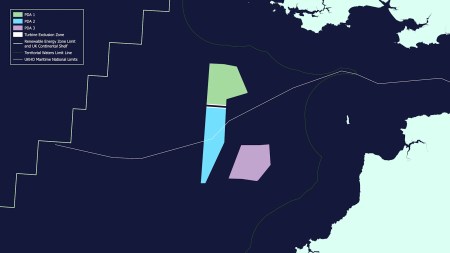
Note.
- It is expected to be built from and connect to the grid at Port Talbot in South Wales.
- The three sites are expected to be commissioned by the early-to-mid 2030s.
- The elongated white dot to the East of the wind farms would appear to be Lundy Island.
- The large bay to the North of Lundy is Carmarthen Bay with Caldey Island at its West end and Llanelli on its East.
- The Gower separates Swansea Bay from Carmarthen Bay.
This Google Map shows the Bristol Channel from the wind farms in the West to Cardiff and Hinkley Point.
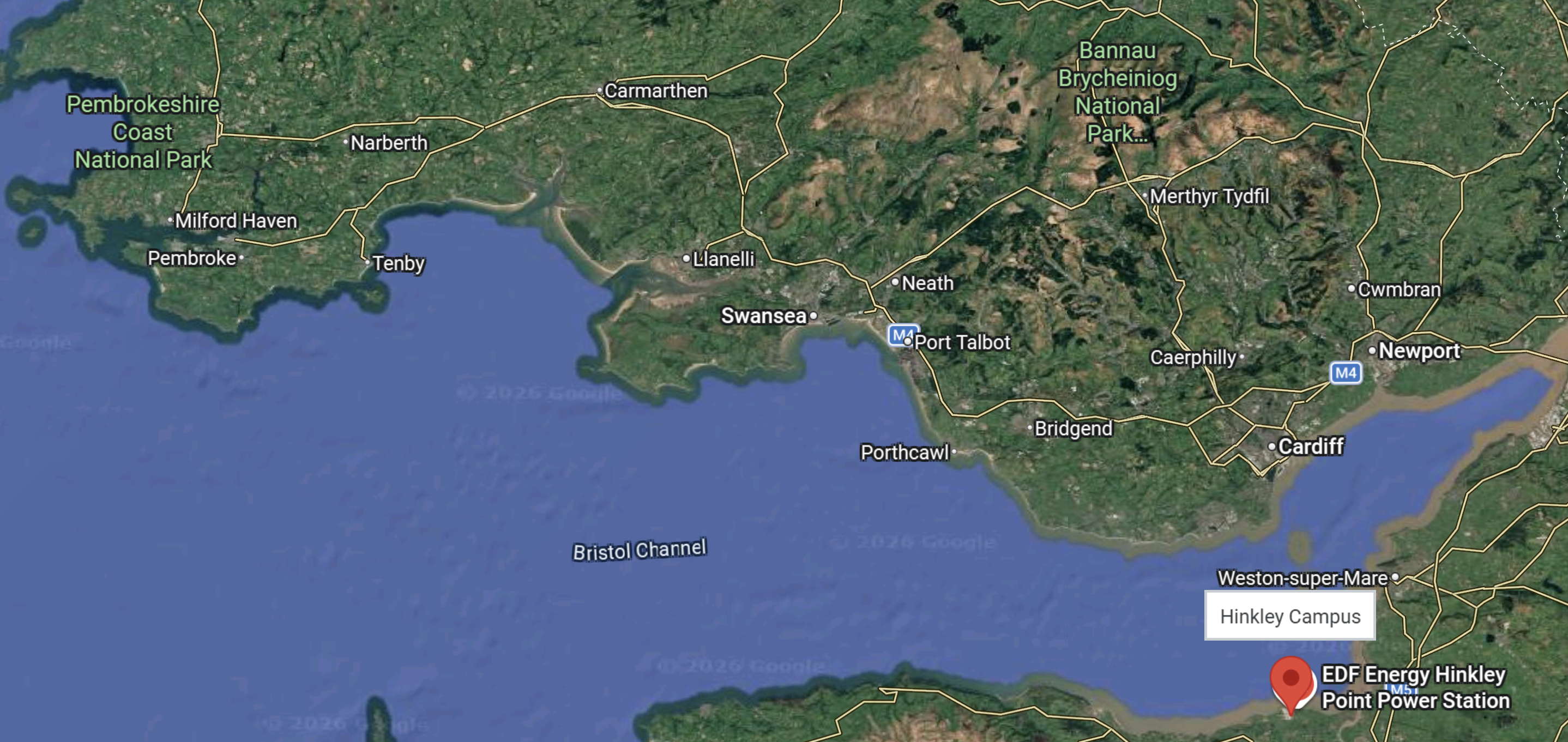
Note.
- Along the North coast of the Bristol Channel, working from West to East, my 78-year-old eyes can pick out Milford Haven, Pembroke, Caldey Island, Tenby, Llanelli, Swansea, Port Talbot, Porthcawl, BridgendCaerphilly, Cardiff and Newport.
- Coming back along the South Coast, I can see Weston-super-Mare, Hinkley Point C and the tip of Lundy Island in line with Tenby.
- The three sections of Glynt Glas will each generate 1.5 GW, making a total of 4.5 GW.
- Hinkley Point C when completed, will be a 3.26 GW nuclear power station.
- There is also a 2.2 GW gas-fired power station at Pembroke.
Nearly 8 GW of renewable electricity should be enough to convert Port Talbot steelworks to the manufacture of green steel.
How Much Wind Power Is Planned For The Western Approaches?
I asked Google AI, the title of this section and received this answer.
The UK has a target of 50 GW of offshore wind by 2030, with significant projects planned for the Celtic Sea (part of the Western Approaches), which is a key area for 5 GW of floating wind. Total UK offshore wind pipeline capacity exceeds 93 GW, with major developments in this region focusing on floating technology.
Key details regarding wind power in the Western Approaches (specifically the Celtic Sea) include:
Celtic Sea Developments: The area is a primary focus for floating wind projects, designed to capitalize on deep-water potential, with 5 GW of floating wind expected to be deployed across the UK by 2030.
Pipeline and Capacity: The total UK pipeline for offshore wind, which includes the Western Approaches, is 93 GW, and the government is aiming for 43-50 GW of installed offshore capacity by 2030.
Project Status: The region is expected to benefit from the Crown Estate’s leasing rounds aimed at accelerating floating wind, with 15.4 GW of new projects submitted across the UK in 2024.
Wales/South West England Context: Wales has 1.4 GW of projects in the pre-application stage, with some potential for developments off the South West coast.
For more detailed information on specific projects and their development status, you can visit the RenewableUK website and RenewableUK website.
It looks like about 20 GW of offshore wind could be installed in the Western Approaches.

