Young Break For The Border To Ring In The New Year
The title of this post, is the same as that on this article on The Times.
This a subtitle to the report, above a picture of five Scots girls enjoying themselves in Newcastle.
Revellers from Scotland and Wales dodging Covid restrictions at home flocked to clubs and bars in England
It will be interesting to see how the Scottish and Welsh Covid statistics pan out in the next few days.
As a trained Control Engineer, I am totally against lockdowns, except as a very last resort.
It’s like trying to ride a bike only turning the handlebars full left and full right.
Try it and you will soon fall off.
Over 10,000 People Use Reopened Dartmoor Line In First Two Weeks
The title of this post, is the same as that of this press release from the Dartmoor Line.
These are the first three paragraphs of the press release.
More than 10,000 people have travelled on the Dartmoor Line in the first two weeks since its reopening.
The line reopened for regular year-round, all-week passenger services on Saturday 20 November and demand for the trains linking Okehampton and Exeter has continued to remain high.
The reopening of the Dartmoor Line is the first of the Government’s Restoring Your Railway schemes, made possible thanks to over £40 million Government investment.
All concerned must be very pleased, especially as it was delivered £10 million under budget and within nine months, ahead of time.
I described my first use of the new route to Okehampton in A Few Hours In Okehampton, where I came to this conclusion.
Exeter and Okehampton is a well-thought out reopening, that will be welcomed in the South West of England.
It would appear the passenger numbers confirm my conclusion.
Since my visit to Okehampton, I have wondered, whether the apparent success of the Okehampton reopening, would have any other effects.
In the December 2021 Edition of Modern Railways, there is an article, which is entitled South West Seeks More Reopenings, with a sub-title of Okehampton Service Could Be A Precursor.
The article details a number of projects.
Marsh Barton Station
A new Marsh Barton station is under construction and has a December 2022 opening date.
Edginswell Station
A new Edginswell station is being planned to serve Torbay Hospital on the Riviera Line, with a possible opening of 2025.
Collumpton And Wellington Stations
The last budget chipped in five million, so that preferred options and a full business case can be developed for these two new stations.
- Collumpton station will probably be developed at the site of the old station, which is close to Collumpton Services on the M5.
- Wellington station will probably be on a new site at Longworth Farm, where five hundred houses are being developed.
The Modern Railways article also says this about housing.
Thousands of houses are expected to be built in both towns in the next decade, making provision of railway stations highly desirable to avoid soaring road congestion.
Network Rail and Great Western Railway also seem to be experimenting with different service patterns through the two stations.
- Both hourly and two-hourly services have been tested.
- In the December 2021 timetable there is now a two-hourly GWR Castle service over the Taunton and Exeter stretch, that will call at the two new stations, when they open.
- To have an hourly service there will also be a Taunton and Exeter shuttle.
This service would provide access to education and employment in Exeter, Taunton and Bristol.
The cost benefit ratio is above the Government’s limit for backing of two.
Opening of the two new stations is pencilled in for 2025.
Barnstaple And Axminster
The Modern Railways article also says this.
As part of the Devon Metro concept, Devon County Council aspires to extend further eastwards the hourly Barnstaple services that currently terminate at Exeter Central, perhaps as far as Axminster.
This would need track improvements East of Pinhoe station.
The current timings of the two sections are as follows.
- Exeter Central and Axminster – 37 minutes
- Exeter Central and Barnstaple – 74 minutes
These timings probably mean that a round trip between Axminster and Barnstaple can be done in a convenient four hours, so an hourly service would need four trains.
From sometime next year, when the frequency of the Exeter Central and Okehampton service becomes hourly, the services along the route will be as follows.
- Exeter St. Davids and Axminster – Hourly
- Exeter Central and Barnstaple – Hourly
- Exeter Central and Okehampton – Hourly
There is also a service, that runs every thirty minutes between Exmouth and Paignton via Exeter Central and Exeter St. Davids, Newton Abbot and Torquay.
The frequencies on the various sections would be as follows.
- Barnstaple and Crediton – One tph
- Okehampton and Crediton – One tph
- Crediton and Exeter St. Davids – Two tph
- Paignton and Exeter St. Davids – At least two tph
- Exeter St. Davids and Exeter Central – Five tph
- Exeter Central and Axminster – One tph
- Exeter Central and Exmouth – Two tph
Note.
- tph is trains per hour.
- Other services run between Exeter St. Davids and Paignton stations.
- In recent years a new station at Cranbrook has opened between Exeter Central and Axminster.
Extending the Barnstaple and Exeter Central service to Axminster would double the frequency on the Exeter Central and Axminster section.
Axminster station is shown in this Google Map.
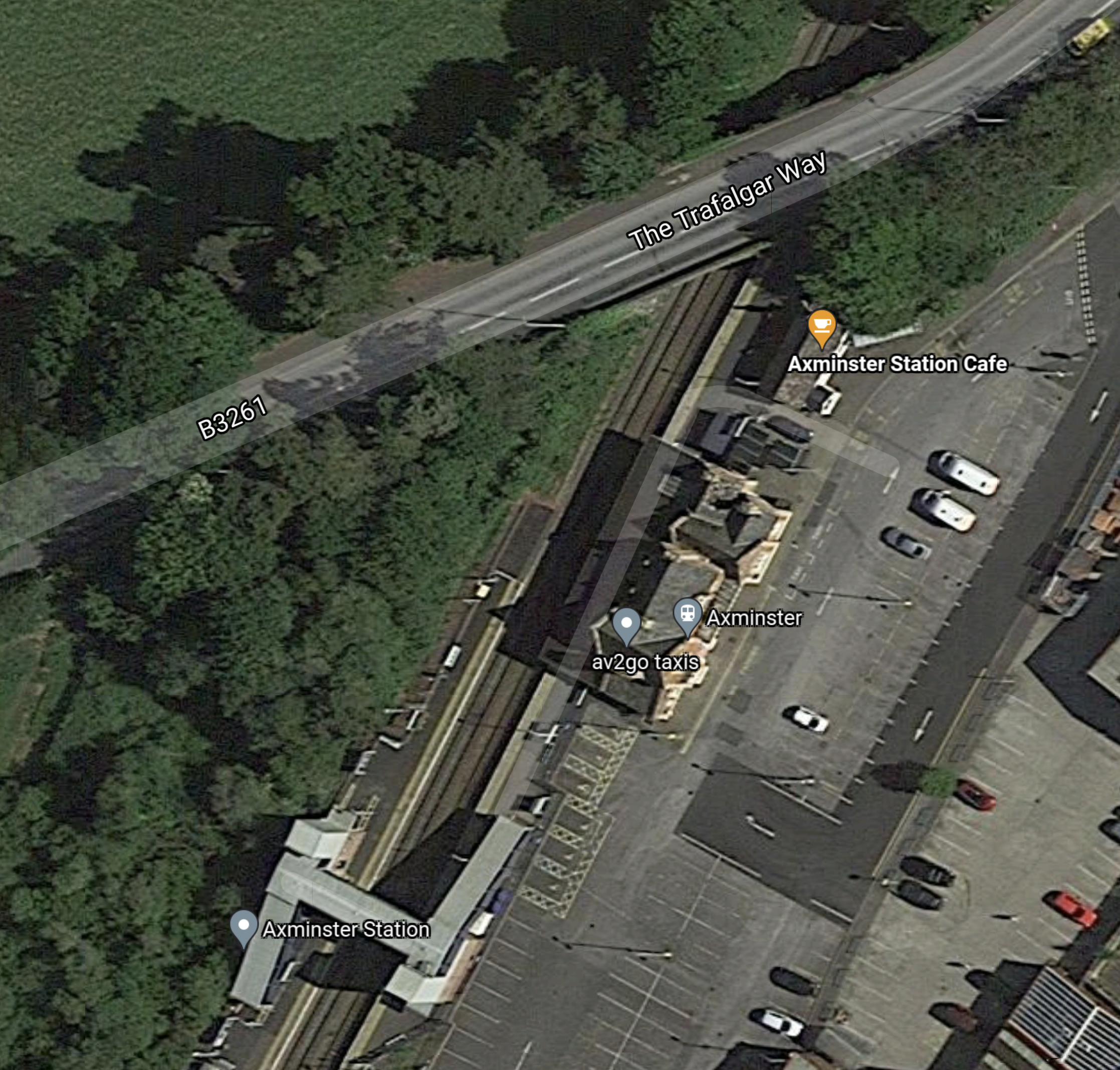
Note.
- The station has two platforms.
- The station appears to have a bridge with lifts.
- The station has a good road connection and the parking could probably be extended.
Axminster station could certainly handle a fast train between London and Exeter, a stopping train to Barnstaple and all the passengers.
Devon Metro
It does appear that the services of the Devon Metro are coming together.
- Paignton and Exmouth is already running.
- Barnstaple and Exeter Central is already running.
- Okehampton and Exeter Central has just started.
- Exeter St. Davids and Taunton via new stations at Collumpton and Wellington is being planned.
- Barnstaple and Exeter Central needs to be extended to Axminster.
How many other cities in the UK could benefit from a metro of this quality?
Bere Alston And Tavistock
The Modern Railways article also says this.
Meanwhile, further west on the former Southern network, restoration of services from Bere Alston to Tavistock has long been proposed, giving Tavistock a rail link to Plymouth. Christian Irwin, Network Rail’s Industry Programme Manager (South West), who oversaw the Okehampton reopening that came in early and underbudget, says he is keen to repeat the trick on the Tavistock route.
It is probably more difficult than at Okehampton.
- The trackbed is mainly intact, but the track has been lifted.
- The track to be laid is shorter than at Okehampton.
- Two structures at the Southern end need to be replaced.
- A new station needs to be built at Tavistock.
Devon County Council seems to be in control of the land needed.
Proposed services seem to be as follows.
- Plymouth and Gunnislake via Bere Alston – One train per two hours (tp2h)
- Plymouth and Tavistock via Bere Alston – One tph
Overall it looks like the Tavistock project will be more expensive than that at Okehampton, but there would appear to be more contributions from developers.
Devon County Council are hoping that the Tavistock link could be build in the next decade.
Tavistock And Okehampton
After the reconnection of Tavistock to the National Rail network, the council would hope to complete the link between Tavistock and Okehampton.
This would give the following benefits.
- Improved public transport connectivity in West Devon and North Cornwall.
- Improve revenue potential at Okehampton and Tavistock stations.
- Create an easier freight route.
- Create an alternative route, if the coastal route is closed.
It is a challenging project, but I feel it will be possible by perhaps 2035.
1,000 Children Shot in A Year As US Gun Violence Soars
The title of this post, is the same as that of this article in The Times.
This is the first paragraph.
More than a thousand children under 12 have been killed or injured by gunfire in the United States this year.
In addition, 4,552 youths aged 12 to 17 were killed and injured.
No comment from me, can do justice to these figures.
Discontinuous Electrification Through Derwent Valley Mills
One big problem area of electrification on the Midland Main Line could be North of Derby, where the railway runs through the World Heritage Site of the Derwent Valley Mills. There might be serious objections to electrification in this area.
But if electrification were to be installed between Leicester and Derby stations, the following would be possible.
- The Midland Main Line would be electrified at East Midlands Hub station.
- Power could be taken from High Speed Two’s supply at East Midland Hub station, even if High Speed Two is not built in full.
- Battery-electric trains could do a return trip to Nottingham from an electrified East Midlands Parkway station, as it’s only sixteen miles in total.
I am sure, that Hitachi’s Class 810 trains could be upgraded to have a of perhaps twenty-five miles on battery power, as this fits with Hitachi’s statements.
North of Derby, there would be electrification on the following sections.
- Derby station and South of the heritage-sensitive section at Belper station.
- Sheffield station and North of the heritage-sensitive section at Duffield station.
Milford Tunnel, which has Grade II Listed portals and is part of the World Heritage Site would not be electrified.
Belper and Duffield stations are 2.6 miles or 4.8 kilometres apart.
I believe it could be arranged that there would be no electrification in the sensitive section, where the Heritage Taliban might object.
The Hitachi Intercity Battery Hybrid Train
Hitachi will start testing their Intercity Battery Hybrid Train next year.
The train is described in this Hitachi infographic.
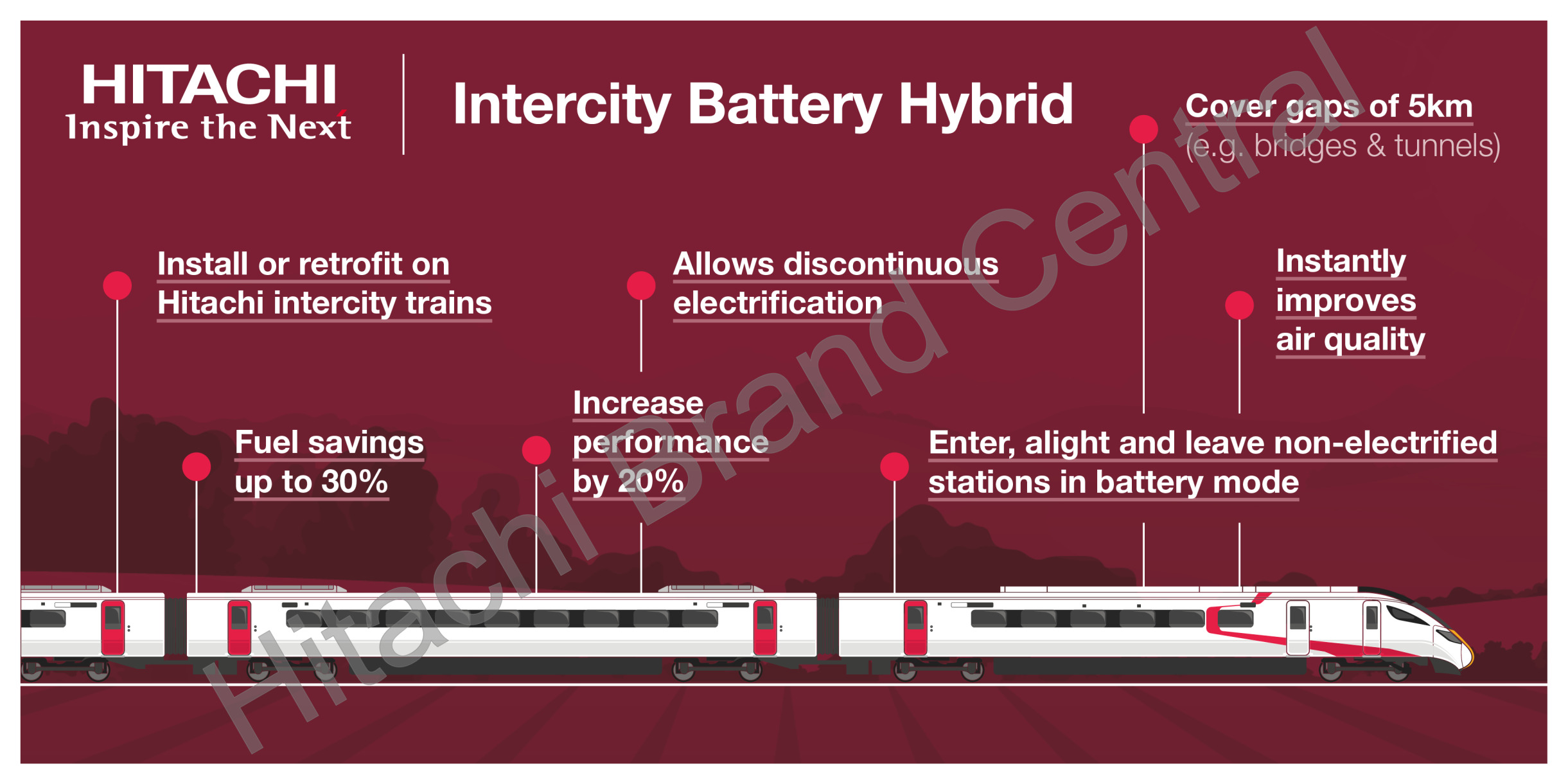
Note that is has a gap-jumping range of 5 km, which would handle the gap between Belper and Duffield stations.
CrossCountry Services Between Derby And Sheffield
CrossCountry operate the following services between Derby and Sheffield through Milford Tunnel and the World Heritage Site.
- Plymouth and Edinburgh Waverley/Glasgow Central
- Southampton/Reading and Newcastle
CrossCountry would need new trains and one of the current Hitachi Class 802 trains could handle this route and use electrification where it exists.
A five kilometre gap will be no big obstacle to designing a battery-electric train for these CrossCountry services.
Freight Trains
In Will Zero-Carbon Freight Trains Be Powered By Battery, Electric Or Hydrogen Locomotives?, I came to this conclusion.
In the title of this post, I asked if freight locomotives of the future would be battery, electric or hydrogen.
I am sure of one thing, which is that all freight locomotives must be able to use electrification and if possible, that means both 25 KVAC overhead and 750 VDC third rail. Electrification will only increase in the future, making it necessary for most if not all locomotives in the future to be able to use it.
I feel there will be both battery-electric and hydrogen-electric locomotives, with the battery-electric locomotives towards the less powerful end.
Hydrogen-electric will certainly dominate at the heavy end.
These locomotives would be able to handle the section of the Midland Main Line through Derwent Valley Mills.
I Don’t Generally Take Pain Killers
I have taken pain killers rarely in my life, but only when I get serious pain.
But since the cataract operation, I have felt a bit of light pain in my left eye.
So I’ve resorted to taking three of these large pain-killers.

Usually, I dunk them in a cup of tea.
I’ve always liked ginger and they have been my favourite biscuits since I was about six.
I also used to see a Jamaican nurse in a former GP practice for my B12 injections and she was fulsome in her praise for the spice and what it can do.
Dr. Google also finds evidence that they help.
However, who cares, so long as I think they work.
Wandering Around King’s Cross – 20th December 2021
I took these pictures, whilst I wandered around King’s Cross.
The unfinished building is Google’s large groundscraper.
I took these pictures as I wandered.


















King’s Cross is on the up.
Green Trains On Their Way To Power One Of The World’s Most Abundant Mining Regions
The title of this post, is the same as that of this article on the Australian Broadcasting Corporation.
It is a comprehensive article, with maps, pictures and background information about the project I wrote about in Anglo American And Aurizon Look To Hydrogen-Powered Trains, that will create hydrogen-powered freight locomotives for Australia.
It should be noted that Aurizon operates a few hundred diesel-electric locomotives, so switching to hydrogen, would probably cut a lot of carbon emissions.
The Old Hackney Town Hall
These pictures show the Old Hackney Town Hall.






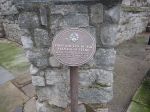

It is now a pub and Grade II Listed.
Behind the building is the Grade I Listed St.Augustine’s Tower, which is all that remains of the 16th Century parish church of St. Augustine.
Hackney Central Station New Entrance – 24th December 2021
The new entrance at Hackney Central station is moving on.



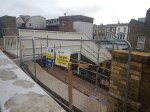
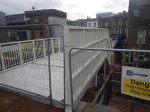
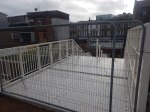
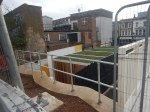

Parts of the structure can now be seen behind the hoardings.
This picture shows the new entrance from Graham Road.
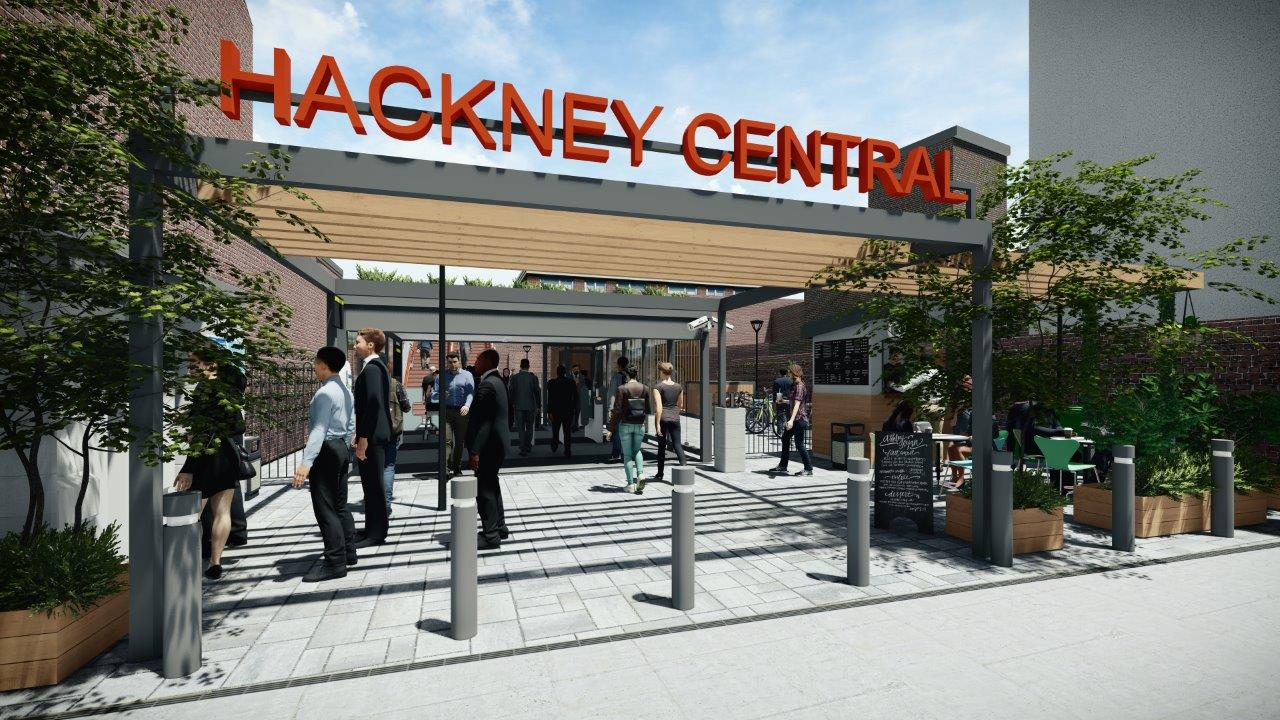
And this picture shows the entrance from above.
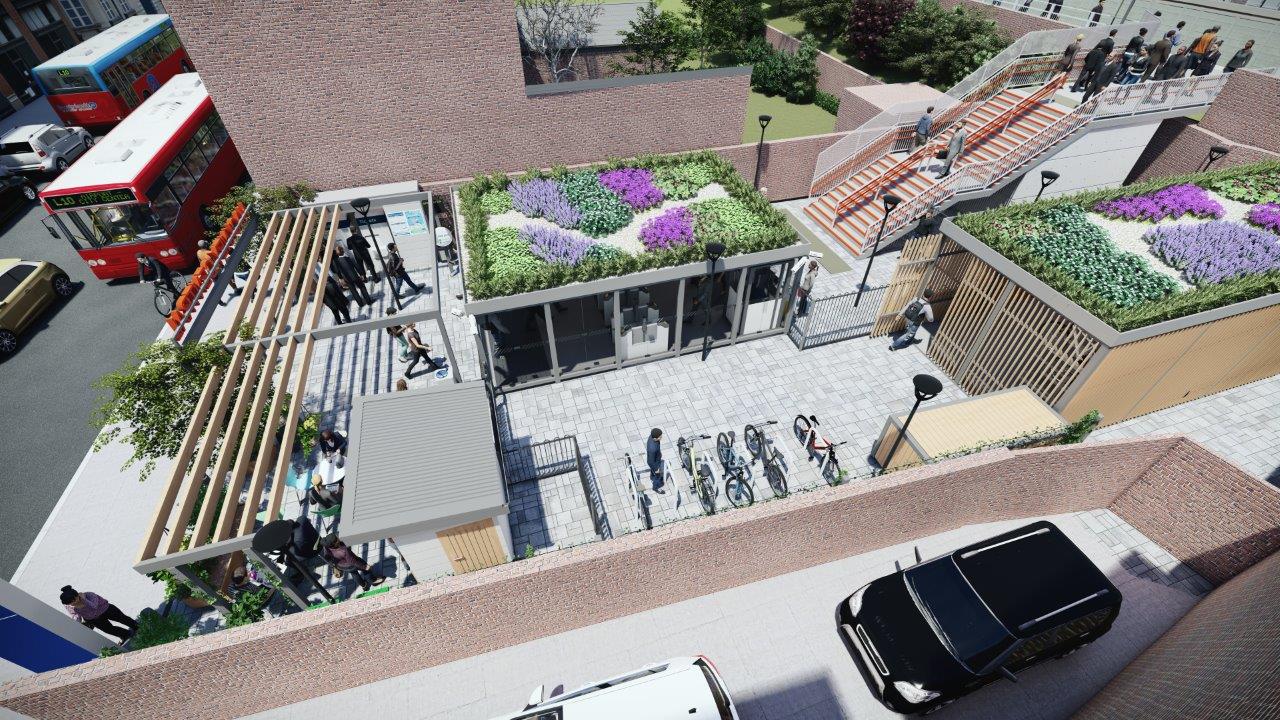
It does not look like step-free access is provided, but I suspect it could be added later.
Strangely, although Hackney Central station is to the East of where I live on the other side of Dalston Junction, it will be on a route, I might take, when I want to go West on the North London Line. I would just take a 38 bus direct to this entrance and then take a train to Richmond or Clapham Junction station as appropriate.
If Hackney Council put a light-controlled crossing over Graham Road, this will make it easy for me to come home from Stratford.
Walking The Line
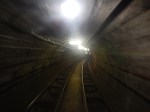
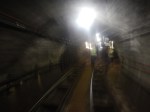
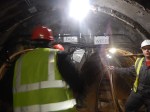
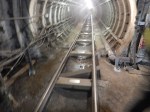
A friend asked, if I’d like to accompany her on a walk along the tunnels of the Post Office Railway.
I said yes, went along and took these pictures.

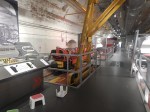
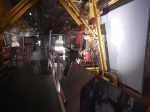

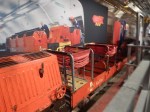
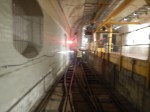



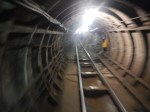
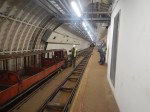

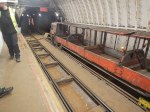
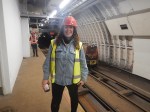
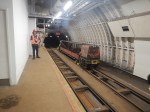

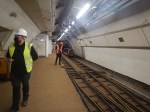
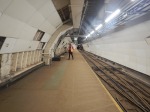
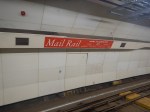

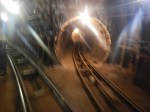
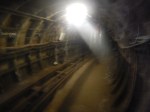
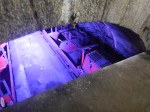

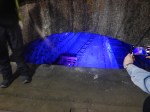

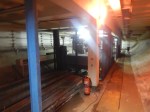

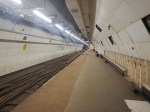
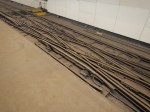
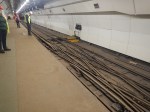
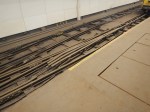

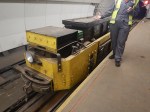
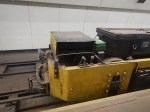
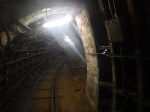
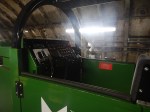
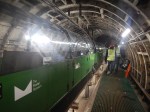
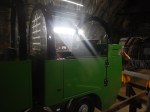
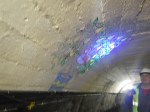




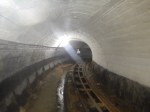
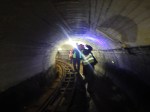
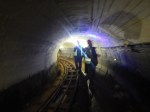

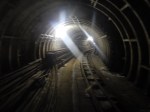
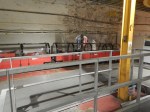
Note.
- The tracks are only two-foot gauge.
- The trains were driverless and electrically powered.
- The two modern trains with the plastic roofs; one of which is red and the other green, are used to take Postal Museum visitors along the tunnels.
- The yellow train was painted that colour for its part in the Bruce Willis film; Hudson Hawk.
- A large number of the sleepers had plaques on them, indicating their sponsors. The sleeps looked to be nearly all original.
- The paintings on the wall show the Twelve Days of Christmas and date from when Christmas parties for children were held in the tunnels.
- The tunnels were dug by hand using a Greathead Shield.
- There was no evidence of rodents.
It is a unique railway that is well worth a visit.
A few other facts and thoughts.
New Tunnels
Most modern tunnels like Crossrail, High Speed Two and the Thames Tideway are now dug by tunnel boring machines or TBMs. These pictures show Millicent and Ursula preparing to start boring the Thames Tideway.
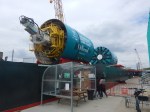
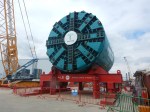
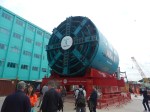
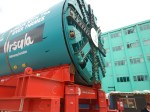
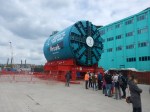
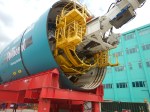

Not all tunnels though use a TBM. Recently, the new running tunnel at Bank and pedestrian tunnels at Paddington and possibly Moorgate have been dug in the traditional way, but probably with the aid of some of the likes of JCB’s finest.
There was also the innovative way, that Whitechapel station was built, that I described in Coal Mining in Whitechapel.
Tunnel Life Research
This is a paragraph from the Wikipedia entry for the Post Office Railway.
A team from the University of Cambridge has taken over a short, double track section of unused Post Office tunnel near Liverpool Street Station, where a newly built tunnel for Crossrail is situated some two metres beneath. The study is to establish how the original cast-iron lining sections, which are similar to those used for many miles of railway under London, resist possible deformation and soil movement caused by the new works. Digital cameras, fibre optic deformation sensors, laser scanners and other low-cost instruments, reporting in real time, have been installed in the vacated tunnel. As well as providing information about the behaviour of the old construction materials, the scheme can also provide an early warning if the new tunnel bores are creating dangerous soil movement
This is worthwhile research, as there have been some problems with London’s older tunnels.
Building The Paddington Bakerloo Line Link Project
This was done in and around the Paddington end of the Post Office Railway.
There is a link to a professional presentation about this complex project in Paddington Bakerloo Line Link Project, London.
Royal Mail Group assets at Paddington helped in the comstruction of the link.
 The Anonymous Widower