To Middlesbrough By LNER
Today, I took the new LNER service to Middlesbrough.
It left at 15:25 and should have arrived in just under three hours. But it was eighteen minutes late.
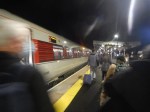
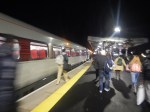
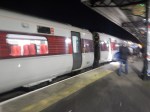
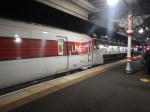
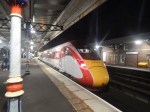
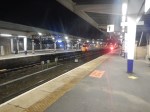
I took these pictures of our arrival in Middlesbrough.


Note.
- The train wasn’t full at Middlesbrough.
- Quite a few passengers left and joined at York.
- There were also a good number of leavers at Thornaby.
- The train was five cars.
As it is only the third day of the new service, passenger numbers seem to me to be on-line with what I’ve seen for other new services.
I have a few thoughts.
Is A London and Middlesbrough Service Needed?
In the 1970s, when I worked at ICI, I would regularly travel to Middlesbrough from London for a day’s work at their Wilton site.
In those days there was no direct train and you had to change at Darlington.
Since then I’ve also travelled to Middlesbrough to see football matches and visit the local countryside.
I suspect I’ve done well over fifty trips between the town and London, but today’s trip was my first one that was direct.
Will More Services Be Added?
If you look at LNER’s service patterns to Harrogate and Lincoln, they started with a single service and have quietly grown to between five and seven trains per day (tpd) in both directions.
I suspect that an early and a late train are essential to allow a full day in London or Middlesbrough.
Could This Route Be Run By A Nine-Car Train?
I suspect normally, a five-car train would be sufficient, but suppose one of the big London football clubs was playing Middlesbrough in an FA Cup quarter final, LNER might like to add capacity for the match.
King’s Cross and York stations regularly handle nine-car Azuma trains and from my pictures, it looks like Middlesbrough can too! The only other stop is Thornaby station, which is shown in this Google Map.
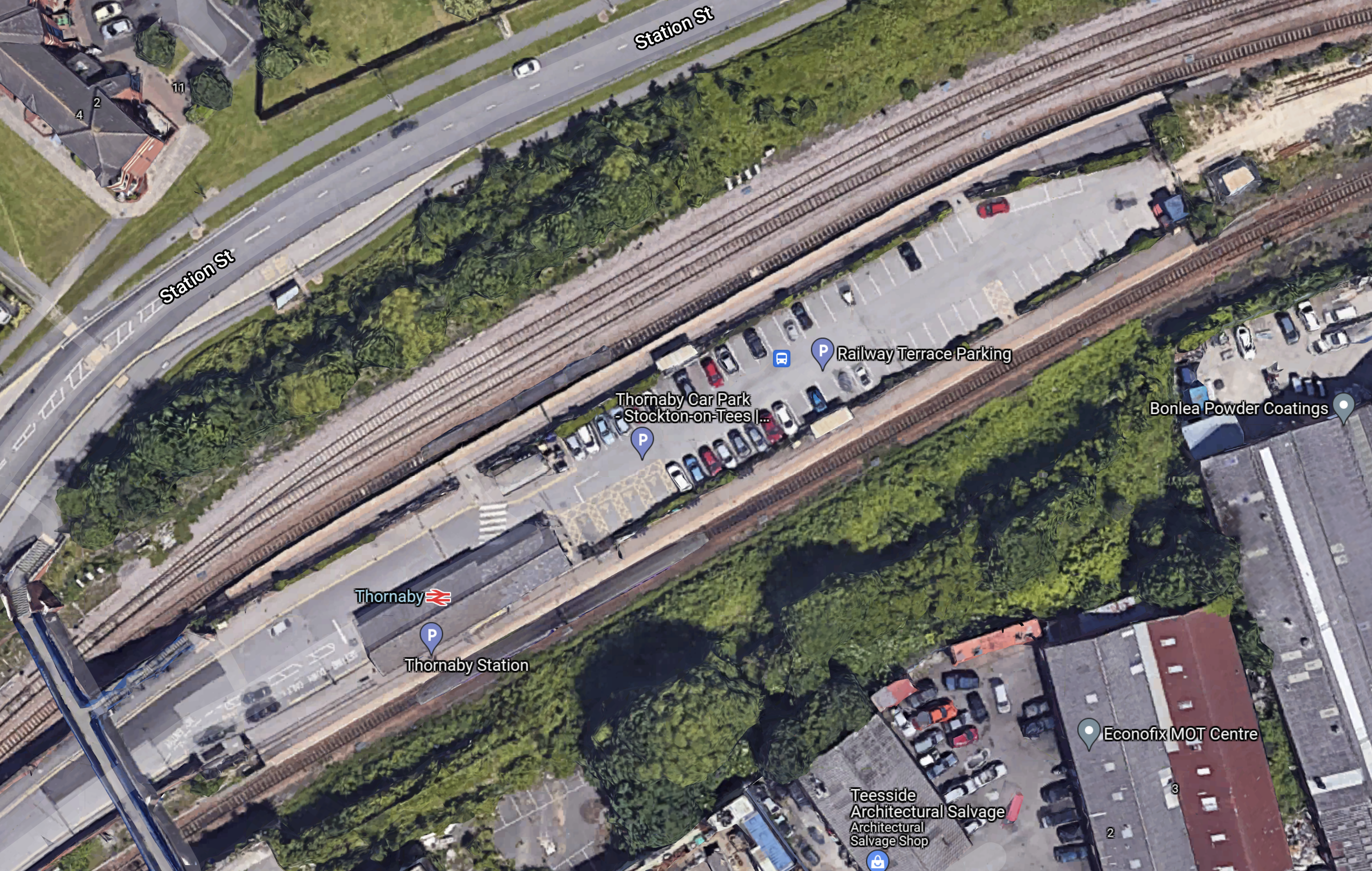
I suspect that it might just be possible, if Thornaby passengers were told to get in the first six cars.
Could This Route Be Run By A Battery-Electric Train?
Consider.
- The trains run on diesel power North of Longlands junction, where they leave and join the East Coast Main Line.
- It is a distance of only 22.2 miles.
With some form of charging at Middlesbrough, I think that within a few years, this could be an all-electric service.
It would be very handy for Hitachi, as any possible customers for battery-electric trains could be given a demo to or from London.
I Think The Stop At York Is A Good Idea
It could be argued that LNER’s King’s Cross and Middlesbrough service is two services in one.
- A direct service between London King’s Cross and Thornaby and Middlesbrough.
- A fast non-stop service between London King’s Cross and York, that takes several minutes under two hours.
Hence my view, that the York stop is a good idea.
Could The Middlesbrough Service Split And Join With Another Service At York?
The Middlesbrough service takes five minutes for the stop at York, but other services only take three minutes.
Has the longer stop been inserted into the timetable, so that the Middlesbrough timetable can be split to serve two separate destinations?
- Secondary destinations would have to be North of York or York station itself.
- These could include Bishops Auckland, Edinburgh, Newcastle, Scarborough and Sunderland.
- Given the arguments, there have been over the new timetable not calling at smaller stations, could these be served by a train to Newcastle?
There are quite a few sensible possibilities.
An alternative could be to split and join at Thornaby to serve both Middlesbrough and Sunderland.
Gift-Wrapping Service On Board LNER Trains This Christmas
The title of this post, is the same as that of this article on Rail Advent.
This article may seem a bit like an April Fool.
But the publicity might just get more people to travel by train.
Zopa Co-Founders Speak Out Against Fintech’s Peer-To-Peer Exit
The title of this post, is the same as that of this article on Financial News.
Read it, as it a cautionary tale about what happens to disruptive innovation.
Eventually, the big bad boys make sure you don’t disrupt their easy life.
Zopa has been part of my life for fourteen years and it did me well. Especially in the bad times and when I had a personal crisis.
I wrote Stability in Financial Systems in 2012, where I said this.
I have a strong feeling that Zopa, the peer-to-peer lender, is also a stable system. Other companies of the same type may well be too! but I am not as familiar with them as I am with Zopa.
Unfortunately, the decision makers in Zopa decided to become a bank, broke the stability and crashed the company.
Son of Zopa will arise!
Hydrogen Hub Plan Will Cut Transport Sector Emissions In The Highlands
The total of this post, is the same as that of this article on the Ross-Shire Journal.
This is the introduction to the article.
The site of one of the Highland capital’s most distinctive industrial landmarks is set to take on new life and a new role, helping decarbonise transport in the region.
The former SGN gas holder site on Harbour Road, Inverness, has been identified by H2 Green as an ideal location for its new green hydrogen production, storage, and distribution facility.
H2 Green, which is part of the Getech Group, signed a deal with gas network operator SGN for use of the site, which lies between Inverness’s rail depot and industrial area.
This Google Map shows the centre of Inverness.
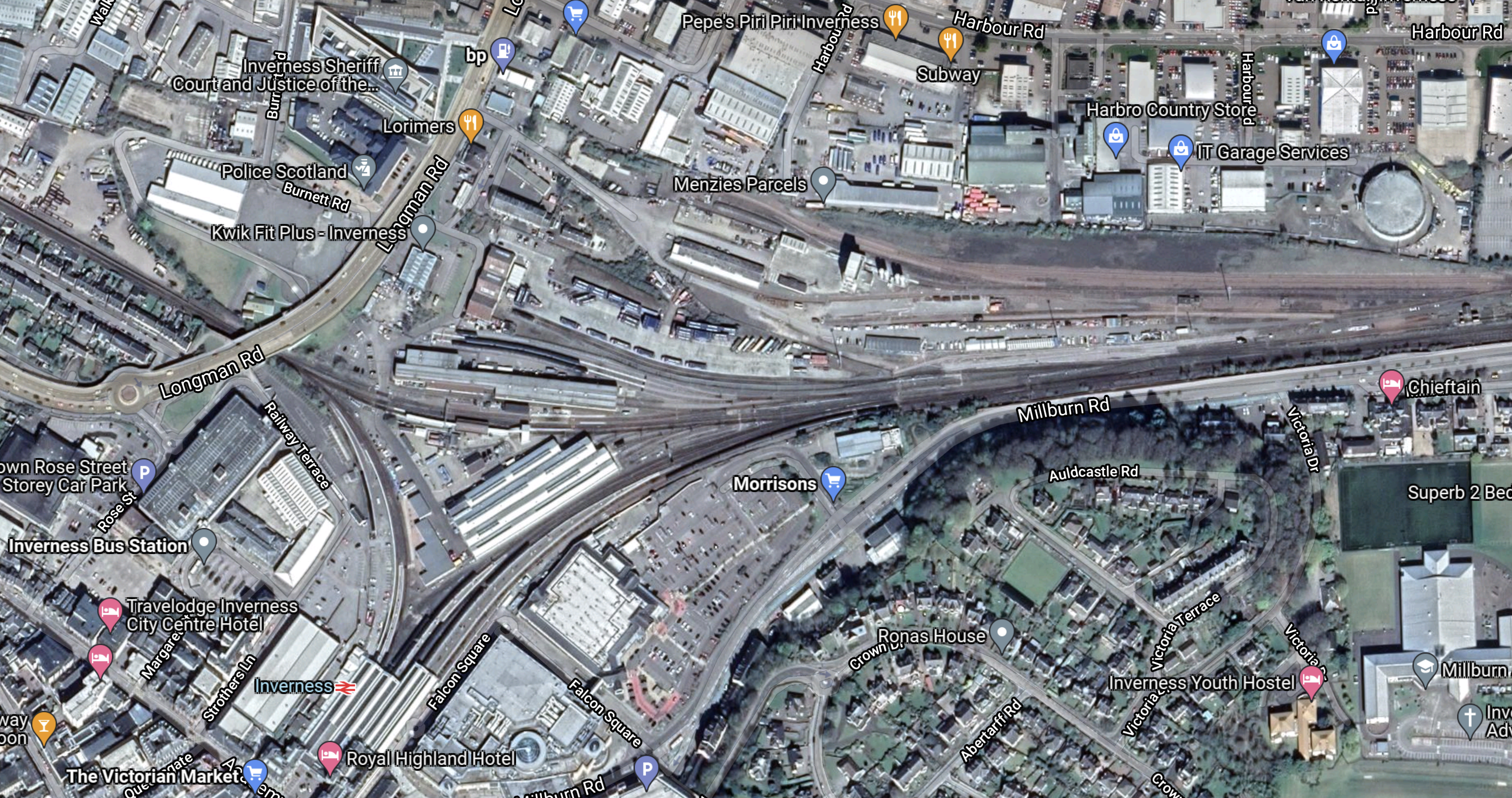
Note.
- Inverness station in the South West corner of the map.
- Inverness bus station is nearby.
- Harbour Road runs across the top of the map.
It looks to me that the round structure in the North East corner is the former SGN gas holder.
These are my thoughts.
The Size Of The Electrolyser
At eight tonnes of hydrogen per day, the proposed electrolyser would be almost as big as the Herne Bay Electrolyser, which creates ten tonnes of hydrogen per day.
Could The Gas Holder Be Used To Store Hydrogen?
As the gas holder was probably built for town gas, which contains a lot of hydrogen, I suspect it could be refurbished to hold hydrogen.
Oxygen Production
The article also says this about oxygen production.
The hub could also provide zero-carbon heat and medical-grade oxygen for hospitals, aquaculture and water treatment works in the area.
Could it be that oxygen is at a premium in the Highlands, so H2 Green are filling a need?
At the height of the pandemic, when hospitals had an oxygen shortage, I asked ITM Power, if they could produce medical grade oxygen, as a by-product of creating hydrogen. They replied in the affirmative.
Conclusion
It looks to me, that H2 Green have a well-thought out plan for hydrogen in The Highlands.
Soham Station – 14th December 2021
I visited the new Soham station today.
I took four trains in total.
- The 11:12 from King’s Cross, which arrived at Ely at 12:23
- The 12:31 from Ely, which arrived at Soham at 12:39
- The 12:51 from Soham, which arrived at Ely at 12:59
- The 13:18 from Ely, which arrived at King’s Cross at 14:33
The outward journey took 87 minutes, with the return taking 102 minutes.
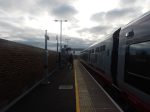
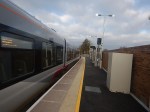
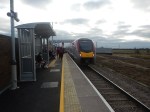
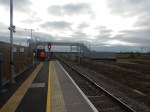
I took these pictures at Soham station.
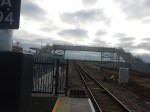
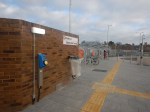
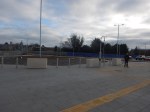
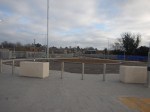
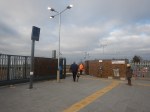
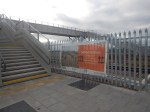
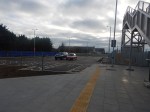

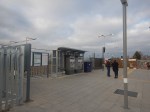
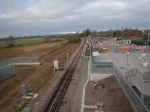
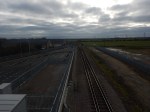
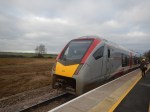
Note.
- The train is a three-car Class 755 train.
- There is only a single platform.
- There are dropped kerbs everywhere on the walking routes.
- There is plenty of car parking.
- There are disabled car parking spaces.
- There is a circular turning area in front of the station, which forms a high-capacity Kiss-and-Ride, with space for a couple of buses.
- The track towards Ely is single-track
- The track towards Bury St. Edmunds and Ipswich is double-track.
- The bridge is ready for a second platform, should it be needed and/or installed.
- The station is unmanned.
These are some further thoughts.
Is Soham The Ultimate Step-Free Station?
Consider
- Greater Anglia’s Class 755 trains are level with the platform, as they have gap fillers.
- Walking from the car parking to the train is step-free.
- There are lots of dropped kerbs and tactile pavements.
I suspect it is one of the few stations in the UK, where if you arrive on foot or by car or bus, that there is no step to the train.
This document on Network Rail says this about the footbridge.
A stepped footbridge across the railway to connect to an existing public right of way, designed for future installation of lifts if a second platform is constructed.
It looks like Network Rail have all eventualities covered.
The Station Has Adequate Parking
This picture from the gallery shows the parking to the South of the station.
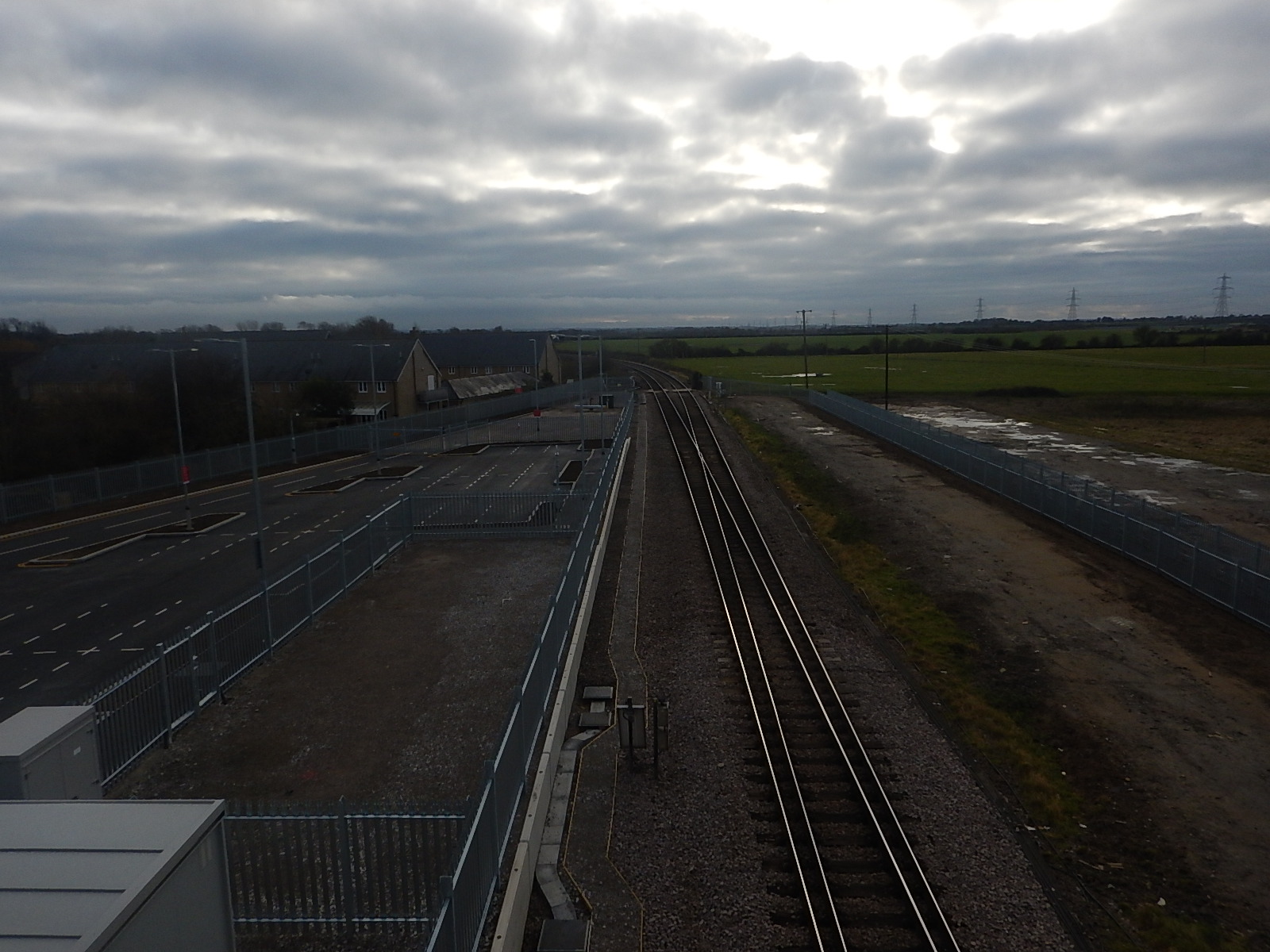
The Network Rail document says that the car park can accommodate 50 vehicles and has four spaces for blue badge holders.
But looking at this picture, there could be space for more parking.
The Station Is Well-Connected To The Road System
This Google Map shows the town of Soham.
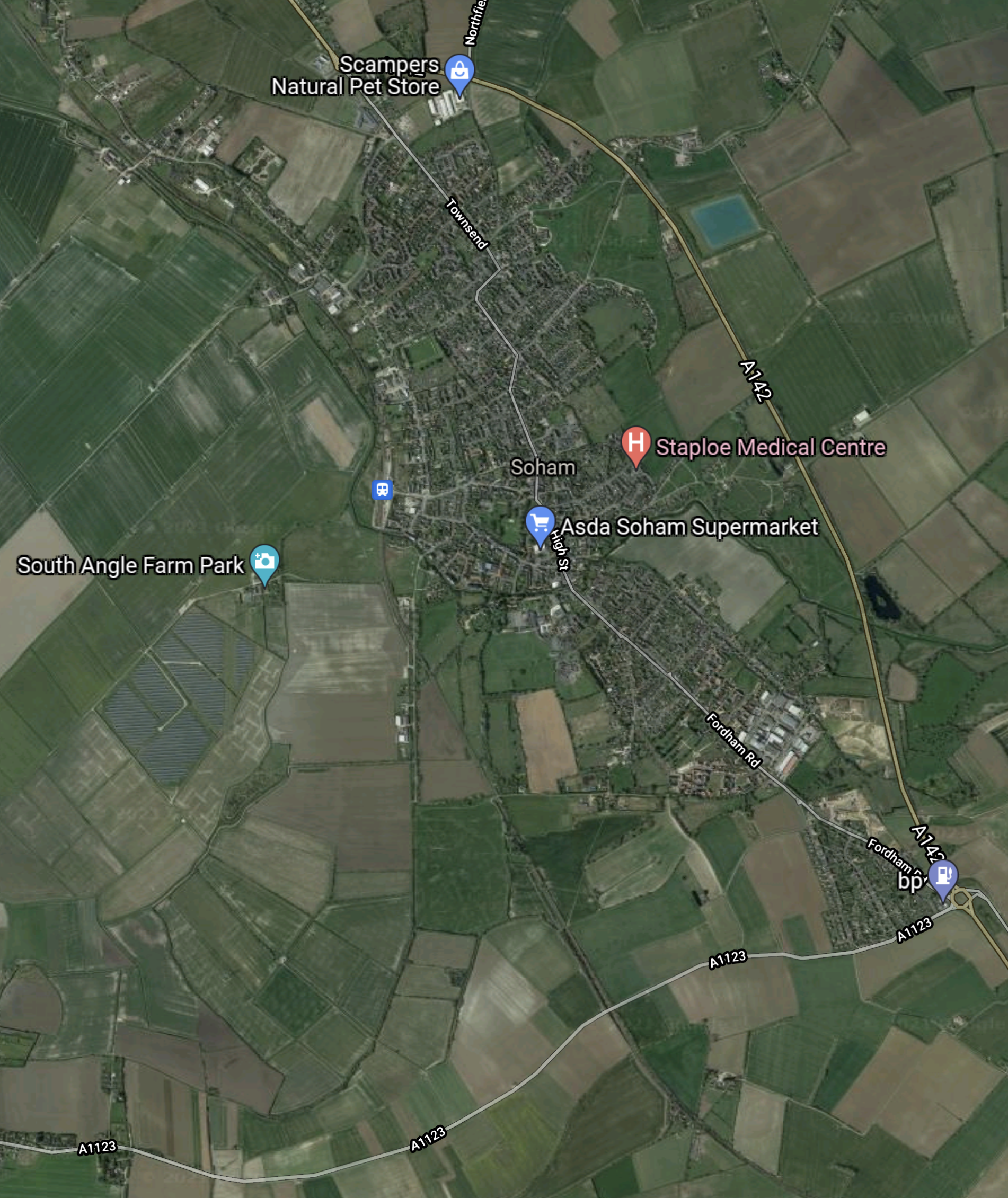
Note.
- Soham has a by-pass around the Eastern side of the town.
- The railway passes to the West side of the town.
- The station is marked by the small blue dot to the left of the word Soham in the middle.
- The old road goes through the centre of the town.
- Soham is a town of nearly eleven thousand people.
- I suspect the town is fairly flat and many will walk or cycle to the station.
Hopefully, the station will attract a lot of passengers.
Does The Station Need A Second Platform?
Network Rail have shown with the Borders Railway and the Avocet Line, that two trains per hour (tph) can be run reliably on a line with sections of single-track and some stations with only one platform.
One of the problems with a second platform at Soham, would be that lifts would be needed for many to cross the track.
It is not the cost that is the problem, but lifts do not have a hundred percent reliability.
Would installing lifts mean providing staff at the station?
I think, that unless the station attracts a lot of passengers, the second platform will never be built.
Would A Second Track Be Provided At Soham Station?
This is a different question, with possibly a different answer.
A large number of freight trains pass through Soham station each day and to increase their number Network Rail have proposed double-tracking the route between Soham and Ely.
As Soham and Ely are just over five miles apart, I wonder if Network Rail are thinking of putting a freight loop through Soham station, that continues to Ely.
These pictures show a long freight train waiting in the freight loop at Ely station before proceeding to Peterborough and the West.
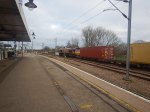
I think that this loop is bi-directional.
Could the new freight loop be built, so that the following happens?
- The freight loop starts to the South of Soham station.
- The freight loop connects to the freight loop at Ely station.
- All passenger trains use the current single-track.
- All freight trains use the freight loop.
- Both tracks would be bi-directional.
- Freight trains don’t pass through the current platform at Soham station.
It stood be noted that passenger and freight trains take less than ten minutes between Ely and Soham stations.
As both freight and passenger trains would have their own tracks, I suspect that a total of at least four passenger tph and four freight tph would be able to pass between Soham and Ely.
The A14 Parkway Station
I wrote this section originally in Soham Station Aims For December 2021 Opening, but it still applies.
The A14 Parkway station is a proposal from the East West Railway.
- It would be just to the East of Chippenham junction and would be served by both Greater Anglia’s services between Ipswich and Cambridge and Ipswich and Peterborough.
- It would also be close to the major road junction, where the A11 and the A14 meet.
- It would be a Park-and-Ride station.
I believe it could be a major factor in cutting road mileage in East Anglia, as drivers going to Cambridge from Ipswich, Norwich, a large area of North-East East Anglia and North Essex could find that using the A14 Parkway station an easier and faster route. But the A14 Parkway would need a frequent service to the soon-to-be-three main Cambridge stations.
A Soham and Cambridge service could reverse at the A14 Parkway station or by careful timetabling, passengers would be able to change trains in a minute or two.
A Cambridge And Soham Service
I do wonder, if Cambridge could benefit from a triangular metro.
The three points of the triangle would be A14 Parkway, Cambridge South and Ely stations.
The three legs would have the following stations.
- A14 Parkway and Cambridge South – Newmarket, Dullingham, Six Mile Bottom *, Fulbourne *, Cherry Hinton * and Cambridge
- Cambridge South and Ely – Cambridge, Cambridge North and Waterbeach
- Ely and A14 Parkway – Soham and Fordham *
Note.
- Stations marked with an asterisk (*) are possible new stations.
- The basic frequency would be one tph.
- Trains would reverse at A14 Parkway, Cambridge South and Ely stations.
The triangular nature of the service may mean that to avoid the driver constantly changing ends, that automation and video technology may allow driving from either end of the train.
These existing services would fit in with the triangular service.
- Norwich and Stansted Airport via Cambridge South, Cambridge, Cambridge North, Waterbeach and Ely.
- Ipswich and Peterborough via A14 Parkway, Soham and Ely
- Ipswich and Cambridge via A14 Parkway, Newmarket and Dullingham
- Wisbech and Cambridge via Cambridge North, Waterbeach and Ely.
- King’s Cross and King’s Lynn via Cambridge South, Cambridge, Cambridge North, Waterbeach and Ely.
- Birmingham and Stansted Airport via Cambridge South, Cambridge, Cambridge North, Waterbeach and Ely.
Note.
- All services would probably be one tph.
- Some services currently terminating at Cambridge, may be extended to Cambridge South.
- There will be other services from East West Railway.
The frequencies on the various legs would be as follows.
- A14 Parkway and Cambridge South – 2 tph plus one tph from East West Railway
- Cambridge South and Ely – 5 tph plus one tph from East West Railway
- Ely and A14 Parkway – 2 tph
The route between A14 Parkway and Cambridge would need to be improved, but this is planned by East West Railway.
Would It Be Possible To Commute From Soham To London?
My timings of around ninety minutes are probably well within the endurance of the average commuter.
Conclusion
Soham station is not your run-of-the-mill rural station.
Cummins To Build H2 Fuel Cell Innovation Center In West Sacramento
The title of this post, is the same as that of this article on Hydrogen Fuel News.
Cummins are one of the companies with a lot to lose, if they don’t replace their diesel products with a zero-carbon alternative.
They took over Hydrogenics and now they seem to be putting money into improving and developing hydrogen fuel cells and probably all the other gubbins to make them work.
I have worked as a consultant for the company and they are very happy to tailor their products to a customer’s needs.
This philosophy would work well with hydrogen-powered vehicles and stationary applications.
I wouldn’t be surprised to see Cummins grow to one of the largest companies in the field of hydrogen.
Germans Turn To Humour In ‘Spritzkrieg’ On Antivaxers
The title of this post, is the same as that of this article on The Times.
A German television show has proposed a plan to persuade far-right antivaxers to get jabbed by offering them free swastika-shaped Bratwursts, dressing staff up as Nazi nurses and calling the vaccination centre Spritzkrieg (Jab War).
Reading the article it sounds like the Germans have asked Mel Brooks for advice.
We should use humour much more against the covids. Or does it have protection under the Virus Rights Act?
The Times says there is a clip on YouTube, but I can’t find it.
Thanks to Robin, here is the video.
If there was an British mockumentary in the same vein perhaps Call The Midwife or Casualty should be given the Blackadder treatment?
Battery Power To Extend Dublin Commuter Services As Alstom Wins DART Fleet Renewal
The title of this post, is the same as that of this article on Railway Gazette.
This is the first paragraph.
Alstom was formally confirmed as supplier of up to 750 suburban multiple-unit cars for Iarnród Éireann as part of its DART+ Programme on December 13, having been named preferred bidder in June.
Interesting part of the fleet renewal is that the trains will be extended from Malahide to Drogheda by using battery power.
- The distance is probably around 41 km. or 25 miles.
- Trains will have a range of 80 km on battery power.
- Trains will take twenty minutes to recharge.
It certainly looks to be a good use of battery electric multiple units or BEMUs.
According to the DART+ entry in Wikipedia, the DART will be extended to Drogheda, Maynooth, Hazelhatch, M3 Parkway and Docklands, which could require another 40 km of electrification.
So it looks like the the BEMUs will earn the extra cost of their batteries.
When Will Energy Storage Funds Take The Leap To New Technology?
This article on the Motley Fool is entitled 3 UK Dividend Shares To Buy Yielding 6%.
This is a paragraph from the article.
The first company on my list is the Gore Street Energy Storage Fund (LSE: GSF). With a dividend yield of just over 6%, at the time of writing, I think this company looks incredibly attractive as an income investment. It is also an excellent way for me to build exposure to the green energy industry.
Just as everybody has a fridge in their house to stop food being wasted, electricity networks with a lot of intermittent resources like wind and solar, needs a device to store electricity, so that it isn’t wasted.
Gore Street Energy Storage Fund is being very safe and conservative at the current time, often using batteries from one of Elon Musk’s companies.
You can’t fault that, but they are only barely making a dent in the amount of batteries that will be needed.
If we are generating tens of GW of wind energy, then we need batteries at the GWh level, whereas at the moment a typical battery in Gore Street’s portfolio has only an output of a few megawatts. They don’t state the capacity in MWh.
There is this statement on their web site, about the technology they use.
Although the projects comprising the Seed Portfolio utilise lithium-ion batteries and much of the pipeline of investments identified by the Company are also expected to utilise lithium-ion batteries, the Company is generally agnostic about which technology it utilises in its energy storage projects. The Company does not presently see any energy storage technology which is a viable alternative to lithium-ion batteries. However, there are a number of technologies which are being researched which if successfully commercialised, could prove over time more favourable and the Company will closely monitor such developing technologies.
They say they are agnostic about technology and are looking around, but they are sticking with lithium-ion technology.
That technology works, is safe and gives a good return.
But they are at least thinking about moving to new technology.
In the rail industry, it is common for rail leasing companies to get together with train manufacturers or remanufacturers to develop new trains.
As an example, Eversholt Rail and Alstom formed a partnership to develop a hydrogen-powered train for the UK, which I wrote about in Alstom And Eversholt Rail Sign An Agreement For The UK’s First Ever Brand-New Hydrogen Train Fleet.
Worldwide, there are probably upwards of a dozen very promising energy storage technologies, so I am very surprised that energy storage funds, like Gore Street and Gresham House have not announced any development deals.
Conclusion
Energy storage funds could benefit from using some of the financing methods used by rolling stock leasing companies.
Levelling Up – The Marks & Spencer Way
When I first moved to Dalston, there were three convenient Marks and Spencer stores within a few bus stops.
- Angel, which is a basically a food store with a floor of clothes above, where my grandmother used to shop before the First World and C and I used to shop in the 1970s, when we lived in the Barbican.
- Moorgate, which is a small department store, with a medium-sized food department in the basement, which I use regularly.
- Hackney, which was a very small department store with a poor food department, was convenient as on some of my journeys, I would get a bus home from outside the store.
Over the last ten years, more Marks and Spencer stores have sprung up, Archway, Camden Town, Dalston, Eastfield, Hampstead, Liverpool Street, Old Street and West Hampstead, which I use occasionally, as they are on routes home.
This morning I went to the eye hospital in Colindale and coming home, I got a 32 bus to Brondesbury for the Overground.
As I needed some food, I had various choices of journey home.
- Get off at West Hampstead and do my shopping there, and then get back on the train.
- Get off at Hampstead Heath and do my shopping there, with a light lunch in le Pain Quotidien.
- Get off at Dalston Kingsland and do my shopping there, with a bus home.
- Get off at Hackney Central and do my shopping there, with a bus home.
Unusually, I chose the last option and got a big surprise.








I had been worried that Marks and Spencer in Hackney would close, but now it has been turned into the most upmarket Marks and Spencer food store, I’ve ever seen.
- It’s more Knightsbridge. than Hackney
- It’s large and spacious.
- There are large ranges of tea and coffee, that you normally don’t see in the store.
- The decor is localised to the store.
- It is only about a hundred metres from Hackney Central station and fifty metres on the flat from my bus home.
- It’s even just called Marks & Spencer Food
Now that’s what I call levelling up!
 The Anonymous Widower