Approaching Kings Cross – 16th September 2020
I took these pictures yesterday, as my train approached Kings Cross station from Doncaster.

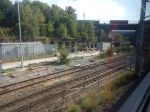
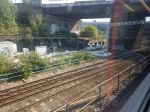
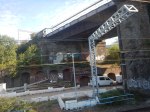
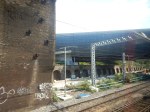

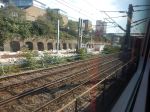
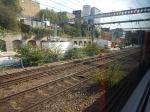
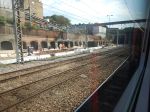
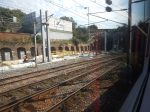




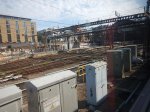

They seem to be making progress on adding two extra tracks into the station, which will be squeezed in on the Eastern side, and through an unused tunnel.
This is a Network Rail video, which explains the project.

Trackside Tim Overview of KX. Aug 19
The Capacity Increase At Kings Cross Station
Theoretically, increasing the number of tracks from four to six could increase the number of trains serving Kings Cross by fifty percent.
This Google Map shows Kings Cross station.
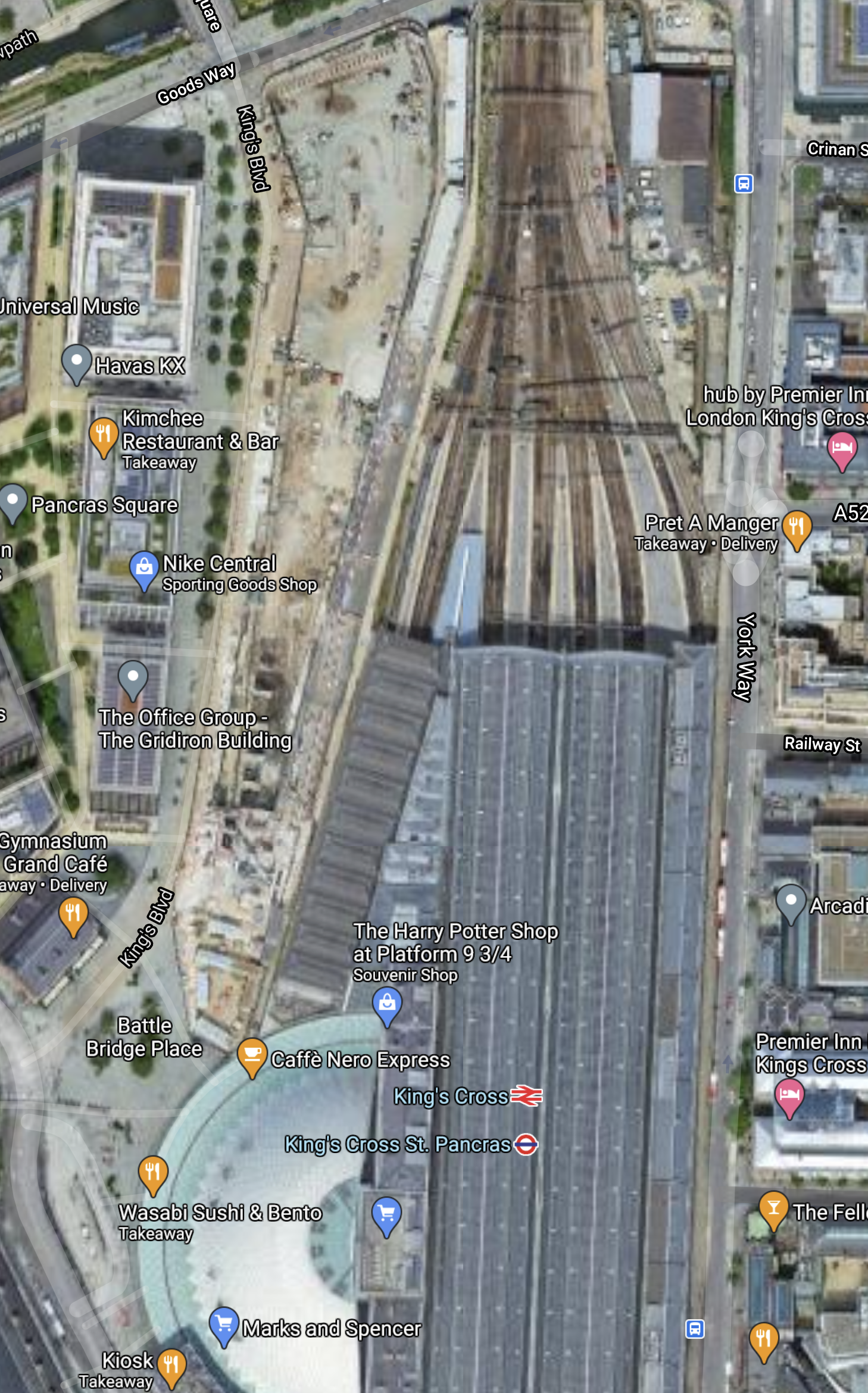
Note.
- Kings Cross station has twelve platforms, which are numbered 0-11, with 0 on the Eastern side.
- Platform 10 is due to be removed in the works.
This second Google Map shows the station throat to a large scale.
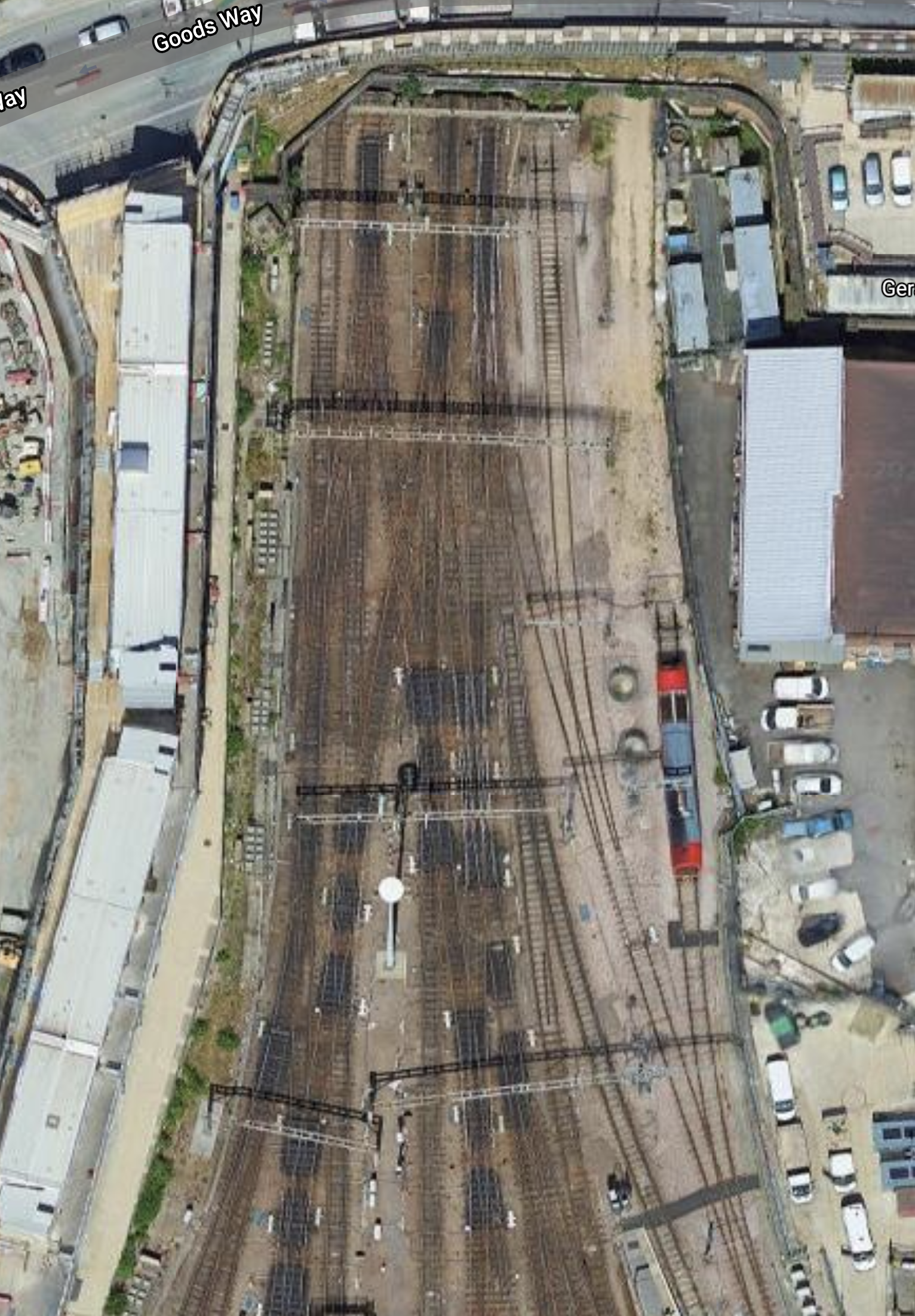
Note.
- The pairs of tracks leading to the current two tunnels can be clearly seen.
- Note how the track from Platform 0 comes right across to go through, what will be the middle tunnel.
- I would assume that six tracks going into eleven platforms would produce a less constricted layout.
Hopefully, when the new layout is complete, everything will be much easier.
I shall repeat this map, when the works are finished.
!40 mph Electric Trains At Kings Cross Station
This picture shows LNER’s old and new 140 mph electric trains at Kings Cross station.
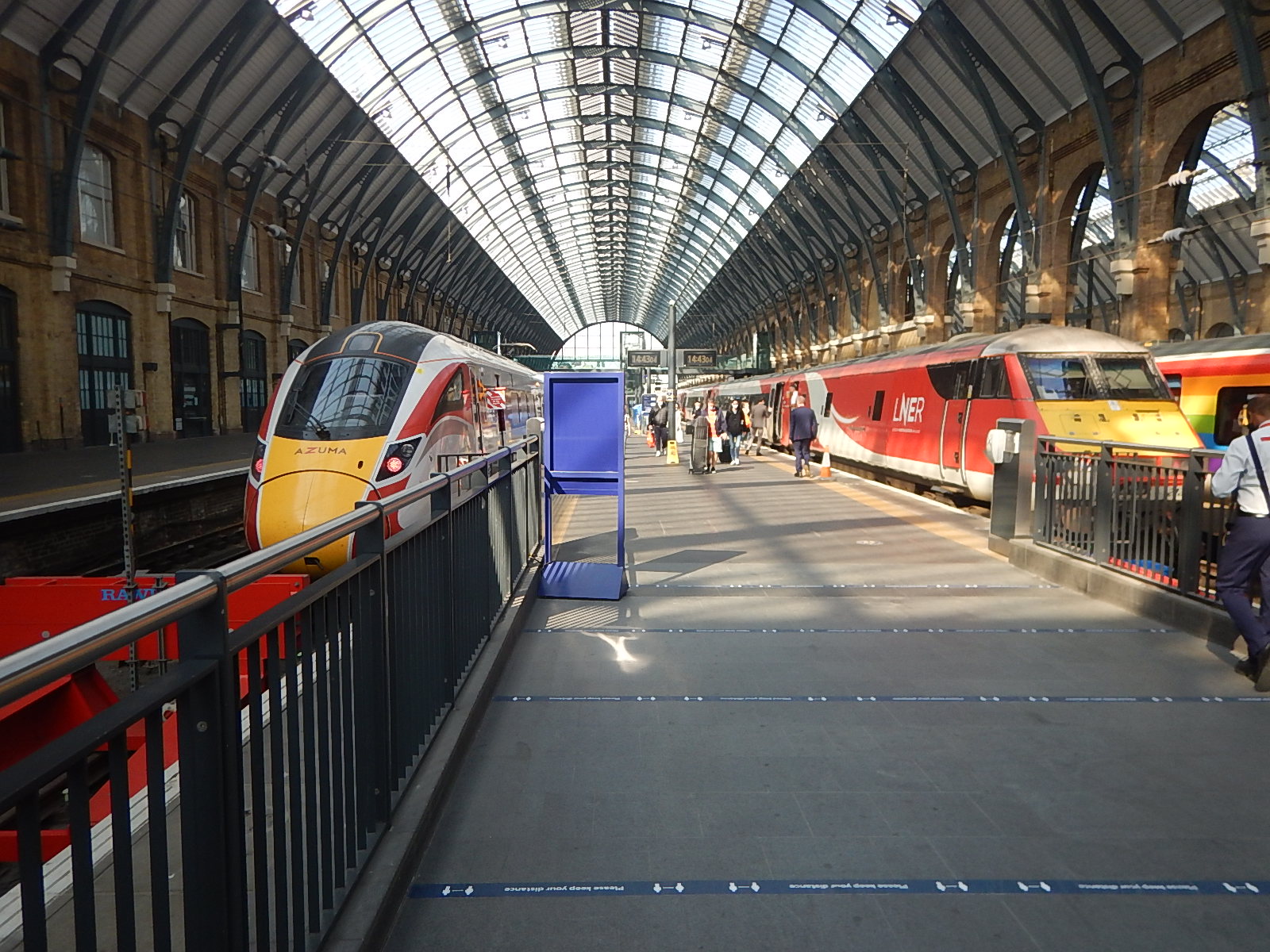
On the left is a nine-car Class 801 train.
- Introduced into service in 2019
- 234 metres long
- Capacity – 510 Standard and 101 First
- One diesel engine for emergency power.
On the right is an InterCity 225.
- Introduced into service in 1988-1991.
- Nine Mark 4 coaches
- 245 metres long
- Capacity 406 Standard and 129 First
- No emergency power
- As I wrote in Overhauls for LNER’s Remaining Class 91s And Mk 4s, the InterCity 225s are being updated to offer electric services between London Kings Cross and Bradford, Leeds, Skipton and York.
Both trains are designed for 140 mph and will be able to attain this speed, when in-cab digital signalling is available.
It looks like LNER will have the following full-size electric fleet.
- Thirty Class 801 trains
- Seven InterCity 225 trains and spare coaches, driving van trailers and locomotives.
Both trains will be able to work any route with full electrification.
Changes In The Future To LNER Services
I predict that the following will happen.
140 mph Running Between Woolmer Green And Doncaster
This will happen and the following trains will take advantage.
- LNER’s Class 800 and Class 801 trains
- Hull Train’s Class 802 trains
- East Coast Trains’s Class 803 trains
The odd ones out will be Grand Central’s Class 180 trains, which are diesel and only capable of 125 mph.
How long will the other train operating companies accept slow trains on the 140 mph railway?
Digital In-Cab Signalling And 140 mph Running Will Speed Up Services
In Thoughts On Digital Signalling On The East Coast Main Line, I said that following train times would be possible., in addition to a London Kings Cross and Leeds time of two hours.
- London Kings Cross and Bradford Forster Square – two hours and thirty minutes
- London Kings Cross and Harrogate – two hours and thirty minutes
- London Kings Cross and Huddersfield – two hours and twenty minutes
- London Kings Cross and Hull – two hours and thirty minutes
- London Kings Cross and Middlesbrough – two hours and thirty minutes
- London Kings Cross and Scarborough – two hours and thirty minutes
- London Kings Cross and Skipton – two hours and thirty minutes
- London Kings Cross and York – two hours
Note.
- All timings would be possible with Hitachi Class 80x trains.
- Timings on Fully-electrified routes would be possible with InterCity 225 trains.
It appears that Grand Central will be stuck in the slow lane.
Grand Central Will Acquire Hitachi Trains Or Give Up
Grand Central‘s destinations of Bradford Interchange and Sunderland can’t be reached by all-electric trains, so will either have to follow Hull Trains and purchase Hitachi bi-mode trains or give up their routes.
The Diesel Engines In The Class 801 Trains Will Be Replaced By Batteries
East Coast Trains’ Class 803 trains have a slightly different powertrain to LNER’s Class 801 trains, which is explained like this in Wikipedia.
Unlike the Class 801, another non-bi-mode AT300 variant which despite being designed only for electrified routes carries a diesel engine per unit for emergency use, the new units will not be fitted with any, and so would not be able to propel themselves in the event of a power failure. They will however be fitted with batteries to enable the train’s on-board services to be maintained, in case the primary electrical supplies would face a failure.
I wouldn’t be surprised to see a similar battery system fitted to the Class 801 trains.
The Diesel Engines In Hull Trains Class 802 Trains Will Be Replaced By Batteries
In Hull Issues New Plea For Electrification, I showed how Hitachi’s Class 802 trains with batteries instead of diesel engines could work long-distance services to and from Hull.
This will happen, as electric trains to London, would be a dream for a marketing man or woman.
Will The InterCity 225 Trains Lose Some First Class Seats?
This may happen, so that the seating layout in both trains is almost identical.
I’m certain, that it could be arranged, that seat numbers in both trains could have a similar position.
This would mean that if an InterCity 225 train replaced a Class 801 train, there wouldn’t need to be a seat reallocation.
Could InterCity 225 Trains Be Fitted With Emergency Batteries?
If LNER thought they were needed, I’m sure that this would be possible and Hyperdrive Innovation would oblige!
Conclusion
British Rail last hurrah, is giving Hitachi’s latest trains, a run for their money!
GTR And Porterbrook Unveil £55 million Fleet Modernisation
The title of this article, is the same as that of this article on RailNews.
This is the introductory paragraph.
Trains built just five years ago are among those set to be upgraded at Selhurst Depot as part of a £55 million fleet modernisation programme announced by Govia Thameslink Railway and leasing company Porterbrook.
The updates to Class 377 and Class 387 trains, include.
- On-board performance monitoring and fault diagnosis
- Passenger information screens
- USB/power points
- LED lighting
- Passenger-counting technology
- Forward-facing CCTV cameras
I wonder, if the forward-facing cameras will be setup, so that passengers can log in to the video. It would surely, be a way of keeping kids of all ages amused.
Trains are getting more and more like computers on wheels.
Vital Energi To Build Waste Heat From Power Plant Centre
The title of this post, is the same as that of this article on the Construction Enquirer.
This is the introductory paragraph.
Waste heat from the nearby £680m North London Waste Authority (NLWA) Energy Recovery Facility will be used to heat homes and businesses in the London Borough of Enfield.
Some of the homes, will be on the 82-hectare Meridian Water development.
We will see more schemes like this.
BP And Microsoft Form Strategic Partnership To Drive Digital Energy Innovation And Advance Net Zero Goals
The title of this post, is the same as that of this article on Authority.
This is the introductory paragraph.
The companies intend to work together to develop new technology innovations and digital solutions to help meet their sustainability aims, including reducing energy use and carbon emissions.
I find this an interesting and possibly very important partnership.
It is an article that is well worth a read.
Conclusion
Strategic partnerships like this might be one of the moves, that will improve the world.
A Hand Sanitiser In A Quiet Corner
This corner at Moorgate station never gets any passenger traffic, but thousands pass within three or four metres or so.
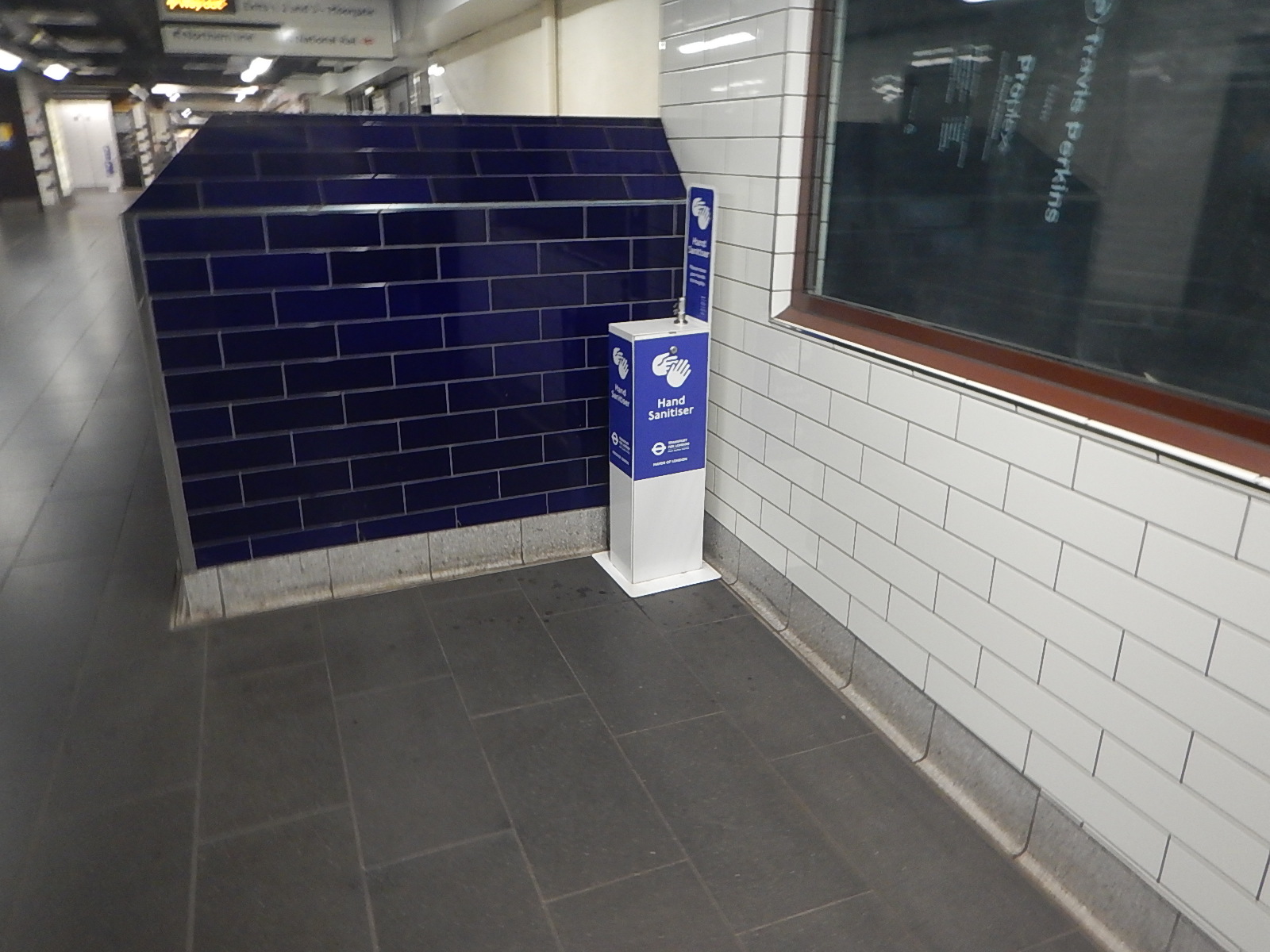
So what a good place to put a hand sanitiser.
I often use these sanitisers, when I pass and wonder if they should be a permanent feature, even after COVID-19 has passed.
Would they help in the control of winter influenza?
Green Hydrogen For Scotland
The title of this post, has been taken from this press release from ITM Power, which is entitled ‘Green Hydrogen For Scotland’ To Help Reach Net Zero Targets: First Project To Deliver A 10MW Electrolyser To Glasgow Facility.
This is the introductory paragraph.
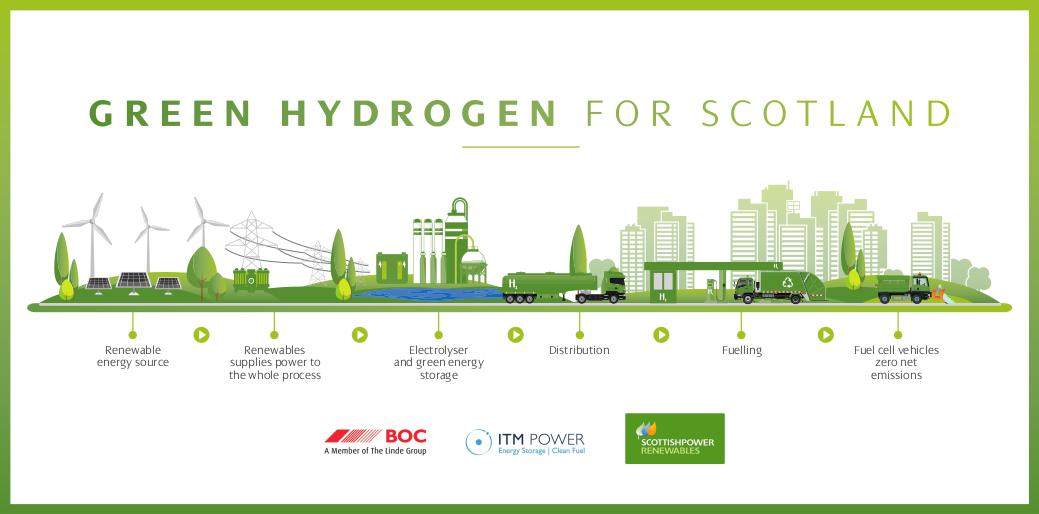
A pioneering Strategic partnership has been established to create new green hydrogen production facilities with clusters of refuelling stations across Scotland, supporting the country’s efforts to achieve net zero by 2045. ‘Green Hydrogen for Scotland’ – a partnership of ScottishPower Renewables, BOC (a Linde company) and ITM Power – brings together industry-leading names in the renewables and clean fuel industries to offer an end-to-end market solution for reducing vehicle emissions through the provision of green hydrogen.
Other details include.
- The green hydrogen production facility located on the outskirts of Glasgow will be operated by BOC.
- ITM Power will deliver a 10 MW electrolyser.
- Electricity will come from , wind and solar produced by ScottishPower Renewables.
- The project aims to supply hydrogen to the commercial market within the next two years.
This ITM Power infographic outlines Green Hydrogen for Scotland.
Surely it should be called tartan hydrogen. Does anybody know a tartan containing the blue of Scotland, the white of Yorkshire and the black, red and gold of Germany?
Why Canada’s Geothermal Industry Is Finally Gaining Ground
The title of this post, is the same as that of this article on the Narwhal.
When I think of Canada, I don’t think hot rocks and volcanoes.
But read the article and this Wikipedia article, which is entitled Geothermal Power In Canada, that adds more flesh.
This is an interesting paragraph.
At present, Canada remains the only major country in the Pacific Rim that is not producing electricity from its geothermal resources. This is despite the fact that the colder it is outside, the more electricity a geothermal power plant can produce. This is because the larger the temperature differentials between the geothermal resource and the ambient air temperature, the more efficiently geothermal plants operate. This makes geothermal power ideal for cold northern countries.
Iceland is certainly blessed, with mountains, volcanoes, hot rocks and cooler weather.
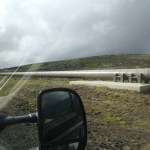





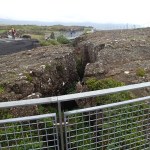

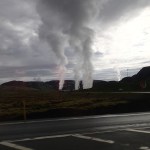
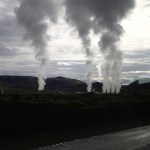
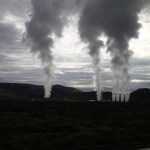
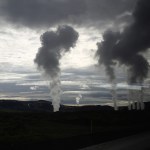

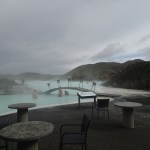
In 2016, sixty-five per cent of Iceland’s electricity and space heating was from geothermal sources.
I took the pictures on a summer holiday In July.
It looks like if the articles on the Narwhal and Wikipedia are to be believed, Canada could exploit a lot of geothermal energy resources.
Canada though will have the advantages of not being first.
The technology has already developed in countries like Iceland, the United States and the Philippines.
A lot of the skills needed is available in Canada’s oil industry.
We’re even seeing oilfield services companies like Schlumberger moving into geothermal energy. I wrote about that in Schlumberger New Energy And Thermal Energy Partners Form Geothermal Development Company STEP Energy.
We shouldn’t forget the potential for geothermal energy in the UK. We’re looking seriously in Cornwall and already extracting heat from the Underground in Islington, using similar techniques.
See Drilling Starts For ‘Hot Rocks’ Power In Cornwall and Bunhill 2 Energy Centre.
Conclusion
Geothermal energy would appear to have a high capital cost, but should return a fixed income year-on-year.
For this reason, I believe that funding for viable geothermal schemes, will be easier to obtain, as we improve the engineering and the returns increase.
So expect more geothermal schemes in the future.
Thoughts On Digital Signalling On The East Coast Main Line
I came up to Doncaster yesterday on a new Hull Trains Class 802 train.
According to my pocket dynamometer car, the train seemed to be at or nearly at 125 mph, most of the time I looked from possibly around Stevenage to just South of Doncaster.
I came back today on an LNER Class 801 train and the train’s performance seemed very similar.
I also noted the following.
- The two stops at Newark and Peterborough, took seven and nine minutes respectively from the start of slowing for the station until back up to speed.
- Between Peterborough and Stevenage the train kept below a maximum of 110 mph.
- The train went through the two tunnels before Welwyn North station and the station itself at 75 mph.
- I timed the train at 100 mph over the Digswell Viaduct, when it reached the South side after accelerating on the viaduct.
- 90 mph was maintained between Potters Bar and New Southgate stations.
- Speed gradually reduced from New Southgate into Kings Cross.
Note.
- 125 mph is the maximum allowable speed of the train.
- The 110 mph running was probably to be compatible with the Class 387 trains.
- I will do the trip again and get some accurate figures.
It appears to me, that the driver was obeying a simple but fast plan.
The Wikipedia entry for the East Coast Main Line, says this about the opiating speed of the line, with the new trains.
Increasing maximum speeds on the fast lines between Woolmer Green and Dalton-on-Tees up to 140 mph (225 km/h) in conjunction with the introduction of the Intercity Express Programme, level crossing closures, ETRMS fitments, OLE rewiring and the OLE PSU – est. to cost £1.3 billion (2014). This project is referred to as “L2E4” or London to Edinburgh (in) 4 Hours. L2E4 examined the operation of the IEP at 140 mph on the ECML and the sections of track which can be upgraded to permit this, together with the engineering and operational costs
It also says this about the implementation of digital signalling.
A new Rail operating centre (ROC), with training facilities, opened in early 2014 at the “Engineer’s Triangle” in York. The ROC will enable signalling and day-to-day operations of the route to be undertaken in a single location. Signalling control/traffic management using ERTMS is scheduled to be introduced from 2020 on the ECML between London King’s Cross and Doncaster – managed from the York ROC.
The signalling could probably work in one of two ways.
- The signalling tells the driver the required speed and they drive the train accordingly.
- The signalling drives the train and the driver monitors what is happening.
Both methods are used in the UK.
A Possible London Kings Cross and Leeds Service
The combined affect of both track and signalling improvements is illustrated by this simple calculation.
- As Dalton-on-Tees is North of Doncaster, the route between Woolmer Green and Doncaster should be possible to be run at 140 mph
- Woolmer Green and Doncaster stations are 132.1 miles apart.
- Non-stop York and London Kings Cross trains are currently timed at 70 minutes between Doncaster and Woolmer Green stations.
- This is an average speed of 113.2 mph.
If 140 mph could be maintained between Doncaster and Woolmer Green, the section of the journey would take 56.6 minutes, which is a saving of 13.4 minutes.
Consider.
- The fastest current trains between London Kings Cross and Leeds take between two hours and twelve minutes and two hours and fifteen minutes.
- I suspect that the extra tracks into Kings Cross, that are currently being built will save a few minutes.
- There must be some savings to be made between Doncaster and Leeds
- There must be some savings to be made between London Kings Cross and Woolmer Green.
- There could be a rearrangement of stops.
I think it is highly likely that in the future, there will be at least one train per hour (tph) between London Kings Cross and Leeds, that does the trip in two hours.
- There is no reason why all London Kings Cross and Leeds trains could not take two hours.
- London Kings Cross and Doncaster could be several minutes under an-hour-and-a-half.
- High Speed Two is predicting one hour and twenty-one minutes for their future service between London Euston and Leeds, which is a saving of 38 minutes.
- London and Leeds in two hours will attract passengers.
There will be serious competition between London and Leeds.
Other Timing Improvements
I also think these times would be possible
- London Kings Cross and Bradford Forster Square – two hours and thirty minutes
- London Kings Cross and Harrogate – two hours and thirty minutes
- London Kings Cross and Huddersfield – two hours and twenty minutes
- London Kings Cross and Hull – two hours and thirty minutes
- London Kings Cross and Middlesbrough – two hours and thirty minutes
- London Kings Cross and Scarborough – two hours and thirty minutes
- London Kings Cross and Sheffield – two hours
- London Kings Cross and Skipton – two hours and thirty minutes
- London Kings Cross and York – two hours
I would be fairly certain that London Kings Cross and Huddersfield could be slowed by ten minutes, which would give the London Kings Cross and Yorkshire a certain symmetry.
- London Kings Cross and Leeds and York would take two hours.
- London Kings Cross and all the others would take two hours and thirty minutes.
It would probably make arrangement of a fast timetable easier.
An interesting Way Of Maintaining Social Distancing On A Train
Hull trains have put flags on all the seats.
- Yellow for groups.
- Green for singles.
- Red for don’t use.
Simple, but it means they maximise capacity.
It’s also very easy for passengers as the green flags are obvious and most passengers, seem to have a window!
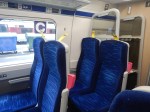
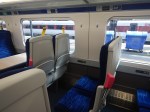
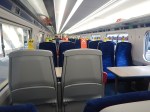
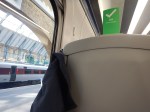

It seemed to be working well and everybody got a seat. Although your seat wasn’t allocated on the ticket.
 The Anonymous Widower