Islington Socialism At Work
This picture illustrates the terrible state of Islington’s pavements.

I had just got off the 141 bus, that is pulling away from the bus stop in the picture.
Despite wearing boots, I nearly fell flat on my face because of the very wet weather and all the leaves.
Note that on the other side of the road, Hackney’s pavements are in much better state, being level and clear of leaves.
Sort your side of the road out, Islington!
Lakeside Facility Connects To Grid And Becomes UK’s Largest Transmission Connected Battery
The title of this post, is the same as that of this press release from National Grid.
These three bullet points, act as sub-headings.
- National Grid plugs TagEnergy’s 100MW battery project in at its Drax substation.
- Following energisation, the facility in North Yorkshire is the UK’s largest transmission connected battery energy storage system (BESS).
- The facility is supporting Britain’s clean energy transition, and helping to ensure secure operation of the electricity system.
This paragraph introduces the project.
A battery storage project developed by TagEnergy is now connected and energised on the electricity transmission network, following work by National Grid to plug the facility into its 132kV Drax substation in North Yorkshire.
- Lakeside Energy Park’s 100MW/200MWh facility is now the largest transmission connected BESS project in the UK following energisation.
- The new facility will boost the capacity and flexibility of the network, helping to balance the system by soaking up surplus clean electricity and discharging it back when the grid needs it.
- To ensure a safe connection, National Grid, working with its contractor Omexom, upgraded its Drax 132kV substation to accommodate the additional clean power.
- Works included extending the busbars – which enable power flows from generation source on to power lines – upgrading busbar protection and substation control systems, and installing an operational tripping scheme, all of which helps keep the network stable and operating securely.
Owned and operated by TagEnergy – with Tesla, Habitat Energy and RES as project partners – the newly-connected battery will help exploit the clean electricity potential of renewable projects in the region, storing and releasing green energy to power homes and businesses and also helping to relieve any system constraints.
National Grid’s adjacent Drax 400kV substation already hosts the connection for Drax power station – the UK’s largest biomass facility – and will also connect the Eastern Green Link 2 electrical superhighway when it starts importing clean energy from Scotland in 2029.
Drax power station seems to be growing into a large node with several gigawatts of electricity, the UK’s largest BESS, a large biomass power station and the Eastern Green Link 2 electrical superhighway which will import clean energy from Scotland from 2029.
Drax appears to be transforming from the dirty man of the UK into a Jolly Green Giant.
I can see further power stations and sources, storage devices and technology joining the party at Drax.
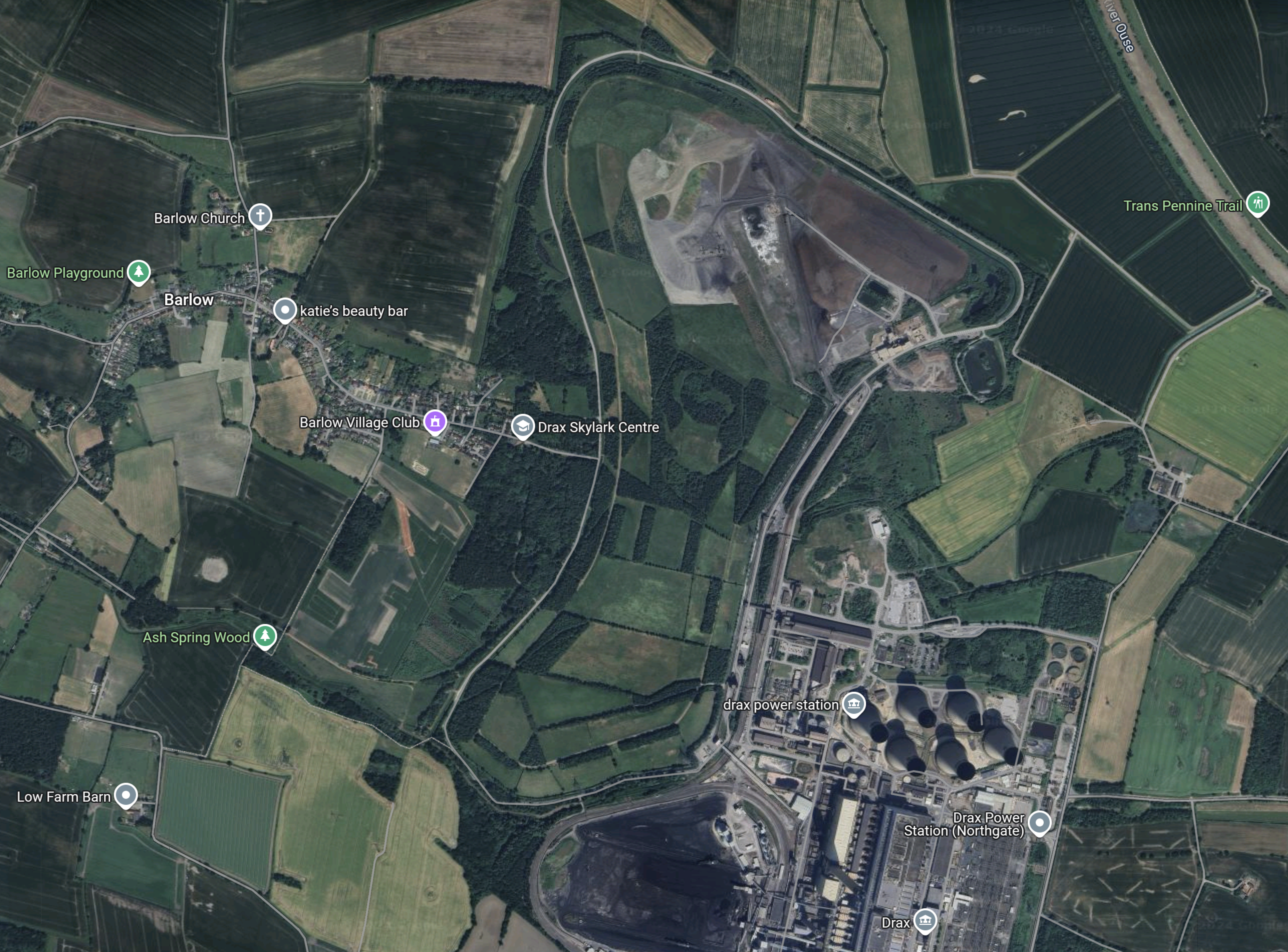
This Google Map shows the Drax site.
Note.
- The cooling towers can be picked out in the South-East quarter of the map.
- The site is rail and road connected, with the River Ouse nearby.
- There is a lot of space.
Surely, Drax would have a big enough space, with a high quality and high capacity electrical connection for Ørsted and Highview Power to put one of their three 200 MW/2.5 GWh batteries, that I talked about in Centrica Business Solutions And Highview Power.
Porterbrook Raises £250m Of New Green Private Placements
The title of this post, is the same as that of this article on Railway Gazette.
This is the sub-heading.
Porterbrook, the UK’s leading rolling stock financier and asset management company, is delighted to announce the successful closing of its £250m Private Placement.
These are the first two paragraphs.
The transaction, which includes existing and new investors, has enabled the company to extend its debt maturity profile at attractive pricing and further diversify its investor base of US, UK and Swiss institutions.
Porterbrook owns a quarter of the national passenger rail fleet, and in recent years has significantly diversified its portfolio including taking ownership of the Long Marston Rail Innovation Centre in Warwickshire, confirming a 49% stake in Brodie Engineering in Kilmarnock, and financing the redevelopment of Bletchley Depot for West Midland Trains.
We must be doing something right on the railways, if US, UK and Swiss institutions are prepared to back them financially.
But then Aviva, who were formerly Norwich Union, backed Greater Anglia’s new Swiss trains.
Conclusion
Despite what some might think, it would appear that green investments aren’t all bad.
Ill Wind For Renewable Energy In US To Boost UK Projects
The title of this post, is the same as that of this article on The Times.
This is the sub-heading.
SSE boss Alistair Phillips-Davies says Trump is expected to put oil and gas ahead of renewables, easing supply chain shortages for UK wind power shortages
These are the first two paragraphs.
A likely push towards more oil and gas drilling under President Trump could help ease supply chain shortages that have hampered a faster rollout of renewables on the UK system, but weaken the availability of parts for gas-fired plants, the boss of electricity supplier SSE has said.
Donald Trump’s election win is expected to boost the American oil and gas industries and diminish the buildout of renewables, which had been accelerated by President Biden’s $369 billion stimulus package for clean power and transport.
SSE’s offshore wind farms under construction or planning in the UK, that are likely to be delivered before the end of Trump’s second term are.
- Dogger Bank A – 1235 MW – GE-Haliade X – 2025
- Dogger Bank B – 1235 MW – GE-Haliade X – 2025
- Dogger Bank C – 1218 MW – GE-Haliade X – 2025
- Dogger Bank D – 1320 MW
- Berwick Bank 4100 MW – 2028
- Seagreen Phase 1A – 500 MW
Note.
- The date is the expected commissioning date.
- GE is an American company, that are heavily into renewables and electrical gubbins to connect them to the grid.
- Trump is unlikely to have much effect on the delivery of Dogger Bank A-C.
- If Trump is stopping US wind farm projects, then if SSE has the finance, they will surely be able to take advantage of a lack of turbine orders.
- If you could handle a 4100 MW order, it would keep your company going for at least three years.
Given that SSE are investing billions in renewable energy and because of their past record, I would expect that the SSE boss has called this one right.
Taking A Bus In London? It Might Be Quicker To Walk
The title of this post, is the same as that of this article from The Times.
This is the sub-heading.
The mayor has been urged to review cycle lane and low-traffic policies after a watchdog revealed that average bus speeds had fallen as low as 6.6mph
After my weekend experiences that I wrote about in Struggling To Get Home From Moorgate Station, I would wholeheartedly agree.
But it’s all Londoners’ fault, as they had the chance to vote him out in May, but no party put up a creditable candidate.
So we’re stuck with SadIQ for another four years.
Struggling To Get Home From Moorgate Station
In most cases to get back to my house, I take a convenient 141 bus from Moorgate station.
- The bus stop at Moorgate is the same side of the road as the exit from Moorgate station.
- At the stop at my home, I just cross the not very busy road and there is a zebra crossing, if the road is busy.
- The walks at both ends are not more than fifty metres.
- The 141 bus, used to share the route with the 21 bus, which meant there was a bus every five minutes.
- The 21 buses are more comfortable New Routemasters.
Now, that the 21 bus no longer shares the route, timings of the 141 are much extended, with sometimes a wait of as long as 15 minutes.
This is because.
- The traffic has got a lot heavier.
- One fleet of buses, is taking both groups of passengers.
- Islington has laid out numerous Low Traffic Neighbourhoods.
Consequently, the remaining 141 buses have a much higher passenger density and I don’t always get a seat.
This Saturday and Sunday, the Elizabeth Line wasn’t running, so the buses were overcrowded.
On both days, I had to get a 76 bus from Moorgate to De Beauvoir Town, as I had waited for a long time and one had not been shown on the app.
Yesterday, I would have had to wait 26 minutes for the 141 bus to do the last mile to get home.
So I walked and took these pictures of Islington’s not so pretty pavements.












Compared to Hackney, they are not a pretty sight. And the pavements did make walking difficult.
As I did the last leg to my house, five 141 buses passed me, as Transport for London don’t believe in spreading them out, where there are punters.
Luckily, I wasn’t carrying anything heavy!
Today, I was even luckier in that a 141 bus stopped, soon after I got off the 76.
Avanti West Coast Increases Liverpool – London Services With Launch Of Electric Evero Trains
The title of this post, is the same as that of this article on Railway Gazette.
This is the sub-heading.
Avanti West Coast officially launched the Class 807 electric only-version of its Hitachi-built Evero trainsets into service on November 11. This enables the operator to offer an additional weekday return service between Liverpool Lime Street and London Euston.
On the 14th of November 2024, these services were run by new Class 807 trains.
- 3F79 – 807001 – 2100 – Northampton to Liverpool Lime Street
- 3F80 – 807001 – 0023 – Liverpool Lime Street to Edge Hill Depot
- 5A99 – 807001 – 0836 – Edge Hill Depot to Liverpool Lime Street
- 1A99 – 807001 – 0901 – Liverpool Lime Street to London Euston – 02:40
- 1F12 – 807003 – 0743 – London Euston to Liverpool Lime Street – 03:07
- 1A28 – 807003 – 1043 – Liverpool Lime Street to London Euston – 02:20
Note,
- I have shown all Class 807 movements that happened. Some possibly didn’t!
- There appear to be extra services, which I’ve marked with their times.
- Time seems to be available to go to Edge Hill Depot if needed.
- I suspect an open return ticket can be used on any train, that’s running.
Services seem to be slow, but they can be booked.
Avanti Are Ramping Up The Service
I suspect that as they add more trains, times will come down and a stop at Liverpool South Parkway will be added.
The Class 390 trains currently used on the Liverpool route are too long for Liverpool South Parkway station.
But seven-car Class 807 trains would fit easily.
The shorter and lighter seven-car Class 807 trains may well have faster acceleration and deceleration than the nine- or eleven-car Class 390 trains with their heavy tilting mechanism.
Could this extra performance mean that the Class 807 trains could still meet the timetable with extra stops?
In Is Liverpool Going To Get High Speed One-Point-Five?, I discussed various options for the London and Liverpool service.
I believe that a practical timetable like this could work.
- Eleven-car Class 390 train – one tph – Non-stop or perhaps a single stop in the Midlands – Under two hours
- Seven-car Class 807 train – one tph – Stopping at Nuneaton, Stafford, Crewe, Runcorn and Liverpool South Parkway – Current time or better
Note.
- An hourly service between London and Liverpool in under two hours would surely be a passenger magnet.
- Two tph would be a 43 % hourly increase in the number of seats between London and Liverpool.
- There would be better connections between Liverpool Lime Street and the East Midlands.
The Railway Gazette article also says this.
From the December timetable change AWC will supplement the current hourly Liverpool – London service with an extra two trains each way every weekday and a third service on Saturdays.
In the short term, AWC will not be delivering the long-standing plan for a half-hourly service on the route, but further services are to be introduced over the next year.
One constraint relates to the power supply. Network Rail has identified two locations where additional electric services cannot currently be accommodated, and discussions over a resolution are ongoing.
A fast service could also be applied to one of the London and Manchester services.
It should be noted, that the two hours and eight minutes record between Manchester and London Euston was set by an InterCity 225 in 1992, so perhaps a seven-car Class 807 could do better than a Class 390 train.
Could A Pair Of Class 807 Trains Leave Euston For Liverpool And Manchester, And Split At Crewe?
Train lengths are as follows.
- Seven-car Class 807 train – 182 metres.
- Fourteen-car Class 807 train – 364 metres.
- Nine-car Class 390 train – 217.5 metres.
- Eleven-car Class 390 train – 365.3 metres.
- Caledonian Sleeper – 374 metres.
I suspect with perhaps a small amount of platform lengthening, a pair of Class 807 could be fitted into all stations, where they would need to call.
This might be a way of adding extra capacity and faster services to Manchester, without needing an extra path on the West Coast Main Line.
Could A Single Class 807 Train Call At Manchester Airport Station?
The platforms at Manchester Airport station are 192 metres long, so a single Class 807 train should fit.
This would allow an hourly service from Manchester Airport to the South, without a change at Manchester Piccadilly or Crewe.
To save paths, it could split and join with the second Liverpool service at Crewe.
Conclusion
The new Class 807 trains could increase performance to between London Euston and both Liverpool Lime Street and Manchester Piccadilly.
German Firm Plans To Build Britain’s Biggest Solar Farm
The title of this post, is the same as that as this article on The Times.
These three paragraphs outline the project.
The developers behind a controversial solar power project in Oxfordshire have submitted a planning application for what is thought will be the largest such scheme in western Europe.
The site in Botley West is being developed by Photovolt, a German company, and could generate 840 megawatts (MW) of electricity, enough to power about 330,000 homes.
However, the project has sparked a backlash among some local residents, who argue the scheme will blight the landscape.
A map shows the site and it is certainly a large one.
- The Botley West site will cover a total of about 3,200 acres.
- It will pass through 15 villages.
- About 1,235 acres will not be covered with solar panels.
- It has a web site, which gives more information.
- There is also a Stop Botley West web site.
I can certainly understand the opposition.
These are my thoughts.
I Would Add A Battery To The Panels
An added battery would undoubtedly smooth the output of the solar panels. Especially, when the sun is not out to play!
A total capacity of 840 MW is planned for Botley West and in my opinion as a Control Engineer, a sizeable battery is needed.
I would not use a Battery Energy Storage System or BESS based on lithium-ion batteries, as I believe that Highview Power’s liquid air batteries and others offer cost and environmental advantages. But that is one for the accountants and the environmentalists!
I Might Add A Few Appropriately-Sized Wind Turbines To The Farm
In Skegness Wind Turbine Trial To Light Up Pier In UK First, I discuss using small, vertical wind turbines from a Norwegian company called Ventum Dynamics.
This picture shows a Ventum Dynamics turbine on Skegness Pier.
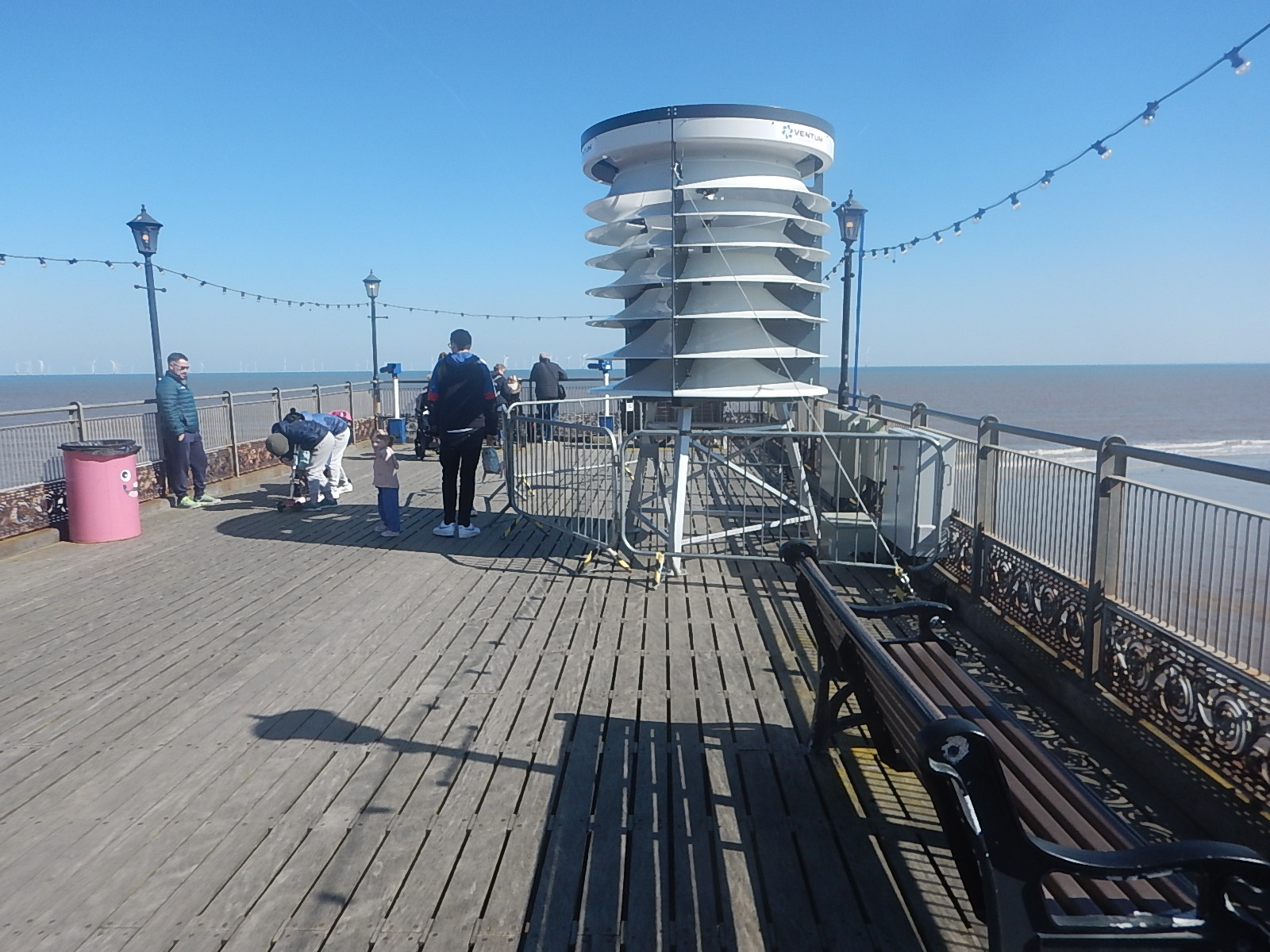
On the Ventum Dynamics web site, there are several pictures of buildings with flat roofs, that have several turbines on each.
Surely, if you’re installing a comprehensive electrical network, then it should be used to collect all the electricity it can.
I believe that Ventum’s turbines could be alternated in a line with trees, so that they merged more into the countryside. Some experiments need to be done.
I Would Also Fit Solar Roofs To Suitable Buildings
Every little helps!
Conclusion
When mixing solar panels and wind turbines into the countryside, you need to be bold and discard preconceived ideas.
Ricardo’s Hydrogen Fuel Cell Module Celebrates Key Milestone To Successfully Generating Power
The title of this post, is the same as that of this press release from Ricardo.
This is the sub-heading.
Ricardo’s ground-breaking high-powered multi-stack hydrogen fuel cell module has reached a new milestone. Following its initial activation, the module is generating significant power output.
These are the first two paragraphs.
Initially developed to generate high energy output with zero-emissions for the maritime sector as part of the Sustainable Hydrogen Powered Shipping (sHYpS) project, the core technology is suitable for a wide range of high-power applications. Ricardo is already seeing strong interest from sectors including, stationary power, rail, off-highway and high-performance vehicles.
The module has already achieved Lloyd’s Register’s Approval in Principle for the system’s safety and certification approach for ocean-going applications. As well as the fuel cell power plant, the sHYpS project is developing a novel swappable liquid hydrogen storage solution, which can be adapted to multiple types of vessels and accelerate the achievement of the International Maritime Organisation’s decarbonisation targets.
Note.
- It seems to be a versatile fuel cell module.
- Ricardo also seem to have designed or sourced a novel refuelling solution.
- The power of the fuel cell module is not given.
I can see a lot of applications for a large fuel cell module.
HiiROC Partners With Siemens To Boost Clean Hydrogen Production
The title of this post, is the same as that of this press release from HiiROC.
These two bullet points, act as sub-headings.
-
HiiROC and Siemens sign a Memorandum of Understanding to provide advanced control technology and ensure the safe automation of hydrogen production.
-
HiiROC’s Thermal Plasma Electrolysis (TPE) process produces clean hydrogen and solid carbon, using significantly less electricity than water electrolysis and without creating carbon dioxide.
These five paragraphs explain the deal.
Clean hydrogen producer HiiROC, has partnered with technology company Siemens on its hydrogen production technology, helping customers to decarbonise their operations and support their Net Zero ambitions.
Under the agreement, HiiROC will leverage Siemens’ control technology and factory and automation expertise to ensure the safe, efficient automation of hydrogen production and support in scaling.
HiiROC’s proprietary Thermal Plasma Electrolysis (TPE) technology is designed to meet rising demand for low-cost, scalable solutions for clean hydrogen production at the point of use, which helps to significantly reduce costs by removing the need for specialised storage and transportation.
The TPE process disassembles gaseous hydrocarbons into hydrogen and solid carbon without creating carbon dioxide. This highly efficient process, recognised under the UK’s Low Carbon Hydrogen Standard, requires only a fifth of the electricity of water electrolysis.
As a key technology partner, Siemens will collaborate with HiiROC to advance product development, while its global developer support community will help in achieving the hydrogen producer’s international expansion goals. Siemens, which has ambitious commitments to decrease carbon emissions and contribute to a more sustainable society, works with organisations across sectors to decarbonise using technology.
Many chemical processes are all about brute force and very large amounts of energy. This marriage made in chemical heaven, is all about elegance and finesse.
The investors in HiiROC are not without substance and include Melrose Industries, HydrogenOne, Centrica, Hyundai and Kia.
I wrote more about HiiROC and a similar process in Centrica Partners With Hull-Based HiiRoc For Hydrogen Fuel Switch Trial At Humber Power Plant.
 The Anonymous Widower