Is This The World’s Most Ambitious Green Energy Solution?
In the 1970s and 1980s, when I was developing Artemis, which was the first desk-sized project management system, we were heavily involved in North Sea Oil, with dozens of systems in Aberdeen. As Norway developed the oil business on the other side of the North Sea, the number of systems there grew to at least twenty.
Increasingly, I became aware of a Norwegian company called Kværner, which seemed to have large numbers of Artemis systems.
In 2002, Kværner merged with Aker Maritime and this eventually led to the formation of Aker Solutions in 2008, which is a company that is headquartered in Oslo and employs nearly 14,000.
According to Wikipedia, the Kværner name was dropped somewhere along the way, as non-Scandinavians have difficulty pronouncing Kværner.
Aker Solutions appears to be wholly Scandinavian-owned, with Aker ASA owning a third of the company.
They are a very respected company, when it comes to offshore engineering for oil and gas and wind projects.
Aker ASA also have a subsidiary called Aker Horizons, which has this web site, where they call themselves a planet-positive company.
This page on the Aker Horizons is entitled Northern Horizons: A Pathway for Scotland to Become a Clean Energy Exporter.
These first two paragraphs outline the project.
A vision to utilise Scottish offshore wind resources in the North Sea to make the country an exporter of clean energy has been unveiled at the COP 26 climate change conference in Glasgow.
The Northern Horizons Project has been unveiled by Aker Horizons’ portfolio companies Aker Offshore Wind and Aker Clean Hydrogen, who have the technical know-how and expertise to realise the project, and DNV, the independent energy expert and assurance provider.
Various targets and ambitions are listed.
- 10 GW of renewable energy in the North Sea.
- 5 GW of green hydrogen.
- Giant turbines nearly as tall as the London Shard on floating platforms more than 130km from Shetland.
- Enough liquid hydrogen will be produced to power 40 percent of the total mileage of local UK buses.
- Enough synthetic fuel to make 750 round trips from the UK to New York.
A completion date of 2030 for this project is mentioned.
This article on The Engineer is entitled Northern Horizons Plans Clean Energy Exports For Scotland.
The article is dated the 4th of November 2021 and starts with this sub-heading and an informative video.
Aker Horizons’ new initiative, Northern Horizons, aims to make Scotland a clean energy exporter by utilising offshore wind resources in the North Sea.
There is an explanatory graphic of the project which shows the following.
- Floating wind turbines.
- A floating DC substation.
- A floating hydrogen electrolyser.
- An onshore net-zero refinery to produce synthetic aviation fuel and diesel.
- A hydrogen pipeline to mainland Scotland.
- Zero-carbon energy for Shetland.
It is all very comprehensive.
These are some other thoughts.
Project Orion
Project Orion how has its own web site and the project that seems to have similar objectives to Northern Horizons.
The title on the home page is Building A World-Leading Clean Energy Island.
There is this statement on the home page.
Orion is a bold, ambitious project that aims to transform Shetland into the home of secure and affordable clean energy.
We will fuel a cleaner future and protect the environment by harnessing the islands’ renewables potential, using onshore and offshore wind, tidal and wave energy.
The graphic has similar features to that Northern Horizons in the article on The Engineer, with the addition of providing an oxygen feed to Skyrora for rocket fuel.
German Finance
I feel very much, that the Germans could be providing finance for developments around Shetland, as the area could be a major source of hydrogen to replace Vlad the Mad’s tainted gas.
In Do BP And The Germans Have A Cunning Plan For European Energy Domination?, I described how BP is working with German utilities and finance to give Germany the hydrogen it needs.
NorthConnect
The NorthConnect (also known as Scotland–Norway interconnector) is a proposed 650 km (400-mile) 1,400 MW HVDC interconnector over the floor of the North Sea.
- It will run between Peterhead in North-East Scotland and Norway.
This project appears to be stalled, but with the harvesting of more renewable energy on Shetland, I can see this link being progressed, so that surplus energy can be stored in Norway’s pumped storage hydro.
Icelink
Icelink is a proposed electricity interconnector between Iceland and Great Britain.
- It would be the longest undersea interconnector in the world, with a length of 620 to 750 miles.
- It would be a 800–1,200 MW high-voltage direct current (HVDC) link.
- National Grid is part of the consortium planning to build the link.
- Iceland has a surplus of renewable energy and the UK, is the only place close enough for a connection.
I believe that if Icelink were to be built in conjunction with energy developments on and around Shetland, a more powerful and efficient interconnector could emerge.
Conclusion
This ambitious project will transform the Shetlands and the energy industry in wider Scotland.
This project is to the North-East of Shetland, but the islands are surrounded by sea, so how many other Northern Horizons can be built in a ring around the islands?
Hayes & Harlington Station – 15th September 2021
Hayes & Harlington station is the latest Crossrail station to be more or less completed.


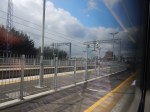
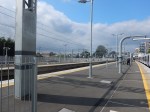


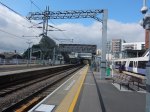





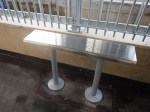

















Note.
- The station is a big improvement on what was there previously.
- The building with the green stripes down the front used to be the offices of Metier Management Systems, of which I was a founder.
- A big development is being built to the South of the station, which is shown in the first to pictures.
There are still a few things to do, but it’s almost a complete station.
Services
It looks like Crossrail will run four trains per hour (tph) through the station all day.
Great Western Railway run two tph between Paddington and Didcot Parkway, that stop at the station.
Installation Of OLE Begins In The Valleys
The title of this post, is the same as that of a short article in the September 2021 Edition of Modern Railways.
This is the first paragraph.
Construction of Core Valley Lines (CVL) overhead electrification equipment commenced on 26 July, when the first piles for masts were installed on the Aberdare branch.
The article appears has several small stories buried in the text.
Was This Good Project Management?
This is a paragraph.
The work, between Penrhiwceiber and Mountain Ash took place a year later than Transport for Wales had aimed for prior to the Covid-19 pandemic. However, TfW does not expect significant delays to completion, because the CVL transformation has been rescheduled and revised.
It certainly sounds like it to me that good Project Management has brought the electrification back on track.
I have seen this happen many times over past decades.
Yesterday, at Whitechapel station, I asked one of Crossrail’s Senior Managers, who in the past had used Artemis, if good project management was bringing Crossrail under control. He gave a knowing smile and said that there’s still a lot to do with the trains and gave me the official First Half Of Next Year answer.
But I do wonder, if we’ll get a surprise!
Battery Power To The Rescue
This is a paragraph.
Less overhead line electrification will be needed than was expected when the plans were announced in 2018. Improvements in battery technology enable the battery/electric dock to run further without OLE than had been assumed.
There must be an optimal point, where the extra expense of battery/electric trains are paid for by the savings and disruption of not installing overhead line equipment.
Using The Pandemic To Advantage
This is a paragraph.
TfW also accelerated preparatory works between Radyr and Pontypridd with a three-week blockade last winter taking advantage of low passenger numbers during the second Covid-19 lockdown.
It sounds like another case of good Project Management.
Dealing With A Level Crossing
This is a paragraph.
A crossing on the Rhondda Line will be permanently closed as a result of TfW purchasing the only building accessed by it! Deputy Climate Change Minister Lee Waters said it was more cost-effective for TfW to acquire the former army barracks at Pentre than spend an estimated £450,000 to bring the nearby crossing up to the requisite safety standards.
This Google Map shows the site.

It strikes me, that Transport for Wales will have to be very innovative to find a sensible use for a site hemmed in by the railway on one side and the River Rhondda on the other.
Conclusion
As we do more electrification in the UK, hopefully we’ll get better at it.
Metier’s First And Second Ipswich Office
My Scottish Borders correspondent has asked me about the first office Metier had in Ipswich.
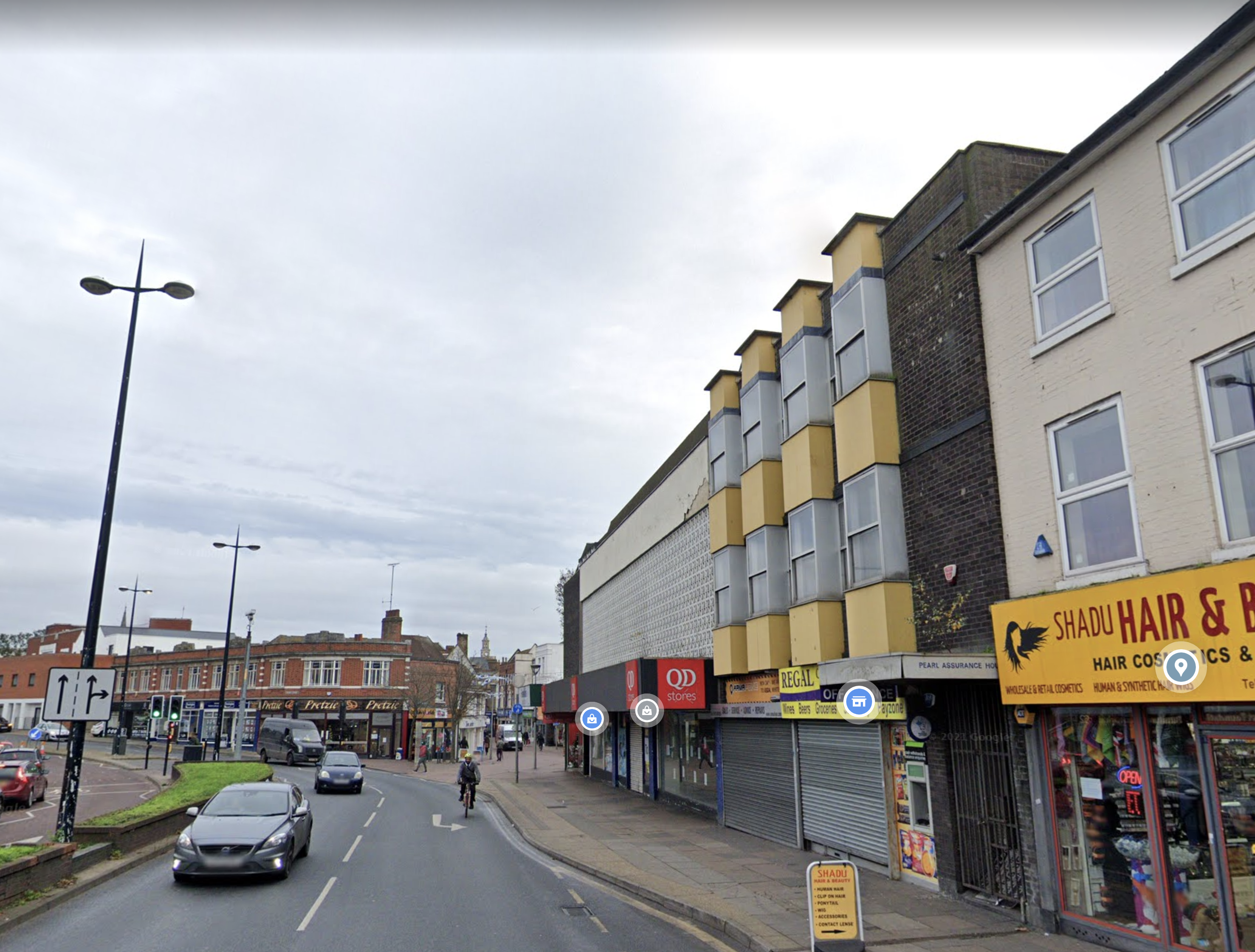
Courtesy of Google Streetview, I was able to capture this image.
Note.
- They were in the four story building with the yellow cladding.
- I see it’s still called Pearl Assurance House.
- Shadu Hair and Beauty used to be a rather good camera shop.
For those of you, who don’t know Ipswich, if you walk straight ahead and keep right, you end up in the centre of Ipswich.
It wasn’t very large, but it was certainly in better condition, than some of the offices we had in London.
This is the second office in Fore Street.
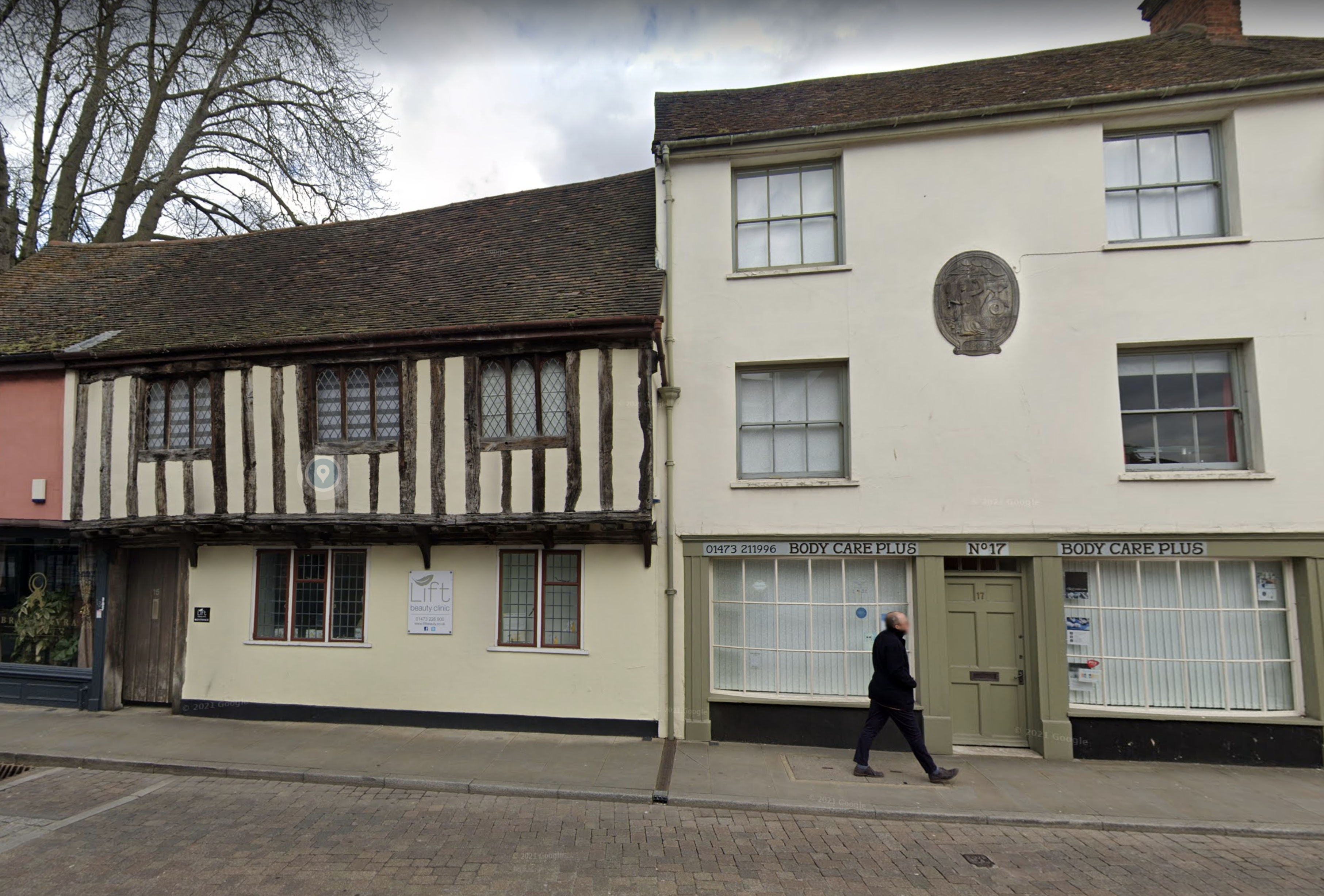
If I remember correctly, the office was found by Wendy, who responded to my advert in the East Anglian Daily Times, saying, that we were looking for an Office Dogsbody.
Crossrail: Report Finds Not Enough Money To Finish Project
The title of this post, is the same as that of this article on the BBC.
These are the first two paragraphs.
The cost of completing Crossrail exceeds available funding, the government spending watchdog has found.
The National Audit Office (NAO) estimates the cost of the new rail link will be between £30m and £218m above the current funding.
After such a good start with the tunneling and surface line going well, how did we get here?
My main business for nearly forty years was writing project management software and that gave me a deep insight into the dynamics and mathematics of large projects.
The software, I created in the 1970s; Artemis was deeply involved in the most important project of the time; North Sea Oil.
But then more by luck, than any judgement on my part, it was well suited to solving the management problems of North Sea Oil.
The software ran on a small Hewlett-Packard mini-computer with an attached display and a printer, whose footprint, gave Artemis an advantage over competitors who needed a mainframe, for which there was no office space in Aberdeen.
I had first got involved in scheduling resources at ICI about five years earlier and because from previous experience I knew resources would be critical, I gave the program extensive resource aggregation and scheduling capabilities.
I have been told that the latter proved invaluable in successfully developing North Sea Oil. People may have been flattering me, but I do know that Shell used to ensure that all their suppliers used Artemis, so they could check easily if they were being told the truth.
I suspect that Shell and others used the aggregation capability to see that they weren’t overloading the pool of available labour.
Artemis definitely proved itself capable of handling the various projects in the North Sea.
We have now moved on forty years, but has project management moved on to cope with the advances in technology of the modern world?
As with North Sea Oil in Aberdeen, in the 1970s, Crossrail and other large projects like Berlin’s new Brandenburg Airport will always have a need for large numbers of resources, be they men, materiel or machines.
I have some questions.
- Do all contractors working on Crossrail use the same software?
- Does Crossrail have the right to inspect the contractors project management systems?
- Is the upward reporting what it needs to be?
- Does the software the contractors use, have an aggregation capability?
- Do Crossrail track and predict the resources needed?
Someone I respect told me, that a lot of modern project management software doesn’t even have an aggregation capability- Enough said!
I must admit, aggregation and scheduling software is difficult to write, so it might be easier to cut it out and let your clients muddle through!
But The Tunnels Were Built On Time And On Budget!
It all started so well, with the first part of the project, which was the boring of the tunnels being completed on time and on budget.
Observing the project, as I did and picking up information from engineers working on the tunnels and various magazines and television programs, I have to come to the conclusion, that the credit for the on time and budget completion must be down to excellent planning.
- I don’t remember any delays or problems reported in the tunneling. Was that good planning and surveying or luck?
- There were few if any articles on the BBC or in the Standard complaining about the problems the tunneling was inflicting on Londoners.
- The planners realised there could be a shortage of workers qualified to work underground, so they built the Tunnelling and Underground Construction Academy at Ilford, which I wrote about in Open House – TUCA.
Certainly, St Barbara, who is the patron saint of tunnellers looked after the project and its builders.
Worsening The Resource Problem
Crossrail, the Greater London Authority and the Boroughs should have been monitoring this growing resource problem, but I doubt they were in anything other than a perfunctory way!
Instead the politicians were giving planning permission to anybody with money, who wanted to build a shiny new development close to a station.
These projects would need more men, materiel or machines.
As many of these new developments are backed by companies or funds with bottomless pockets to get their developments finished they were prepared to pay more for their labour.
So labour has been deserting Crossrail in droves, thus further delaying the project.
Senior politicians in the Greater London Authority and the boroughs should accept some responsibility for Crossrail’s delay.
They didn’t need to withhold the planning permission, just say that construction of the other projects couldn’t commence until an appropriate phase of Crossrail was open.
In some parts of the world, brown envelopes will have changed hands, but it would be nice to know how many mayors and senior politicians have had holidays in places, they would not normally visit.
Senior project managers tell me, that they would not be surprised if developments along Crossrail had delayed the project.
The Covid Problem
No-one saw Covid coming, except possibly the Chinese.
But good project management is all about negotiating the slings and arrows of outrageous fortune.
There is the story of the miniMetro production line.
The first body shells coming out of the automated welder were crooked and it turned out that the machine had hit a motorway bridge in Germany. But by good project management using Artemis, British Leyland engineers were able to get the second line working correctly before the first and the car was launched on time.
With Covid, the Mayor shut construction, and it was some months before it restarted again.
I am certain, that with good project management we could have done better.
Covid is also a good excuse for lateness.
On the other hand good project management got the vaccines developed, manufactured and delivered into arms.
Covid also blew a big hole in Transport for London’s finances.
But then so did Sadiq Khan’s Fare Freeze, that brought him to office.
Could Crossrail Have Part-Opened Earlier?
I often ponder this and others ask me if it would be possible.
The Victoria Line was built with crossovers and it was able to open in phases.
Crossrail has crossovers in the following places.
- Either side of Custom House station
- To the West of Whitechapel station
- Between Farringdon and Tottenham Court Road stations
Note.
- It doesn’t appear to have been built for part opening.
- From media reports, it appears Whitechapel station is the basket case in the East.
The answer is probably that Crossrail can’t be part-opened, but there are good reasons, why it should be opened earlier.
- To generate a small amount of revenue.
- To give travellers and Londoners in general a lift.
The only practical service would be a few trains turning at Farringdon.
Conclusion
I blame politicians for Crossrail being late and over budget.
Piney Point: Emergency Crews Try To Plug Florida Toxic Wastewater Leak
The title of this post, is the same as that of this article on the BBC.
This is the introductory paragraph.
Emergency crews in Florida have been working to prevent a “catastrophic” flood after a leak was found in a large reservoir of toxic wastewater.
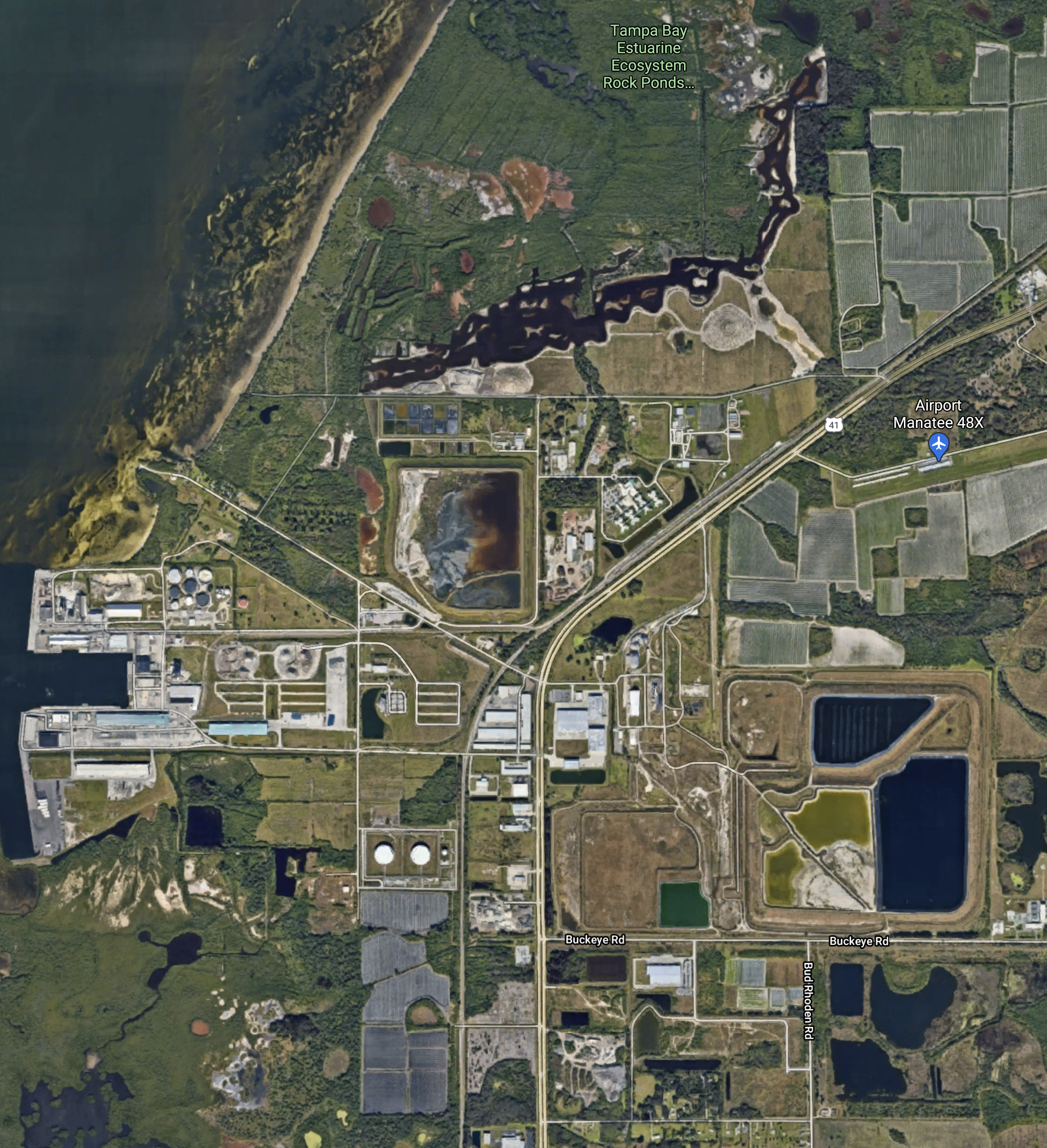
This Google Map shows the location.
Note.
- At the top of the map is an area called Tampa Bay Estuarine Ecosystem Rock Ponds.
- The reservoir appears to be in the South East corner of the map.
- There appear to be several chemical works to the West of the highway.
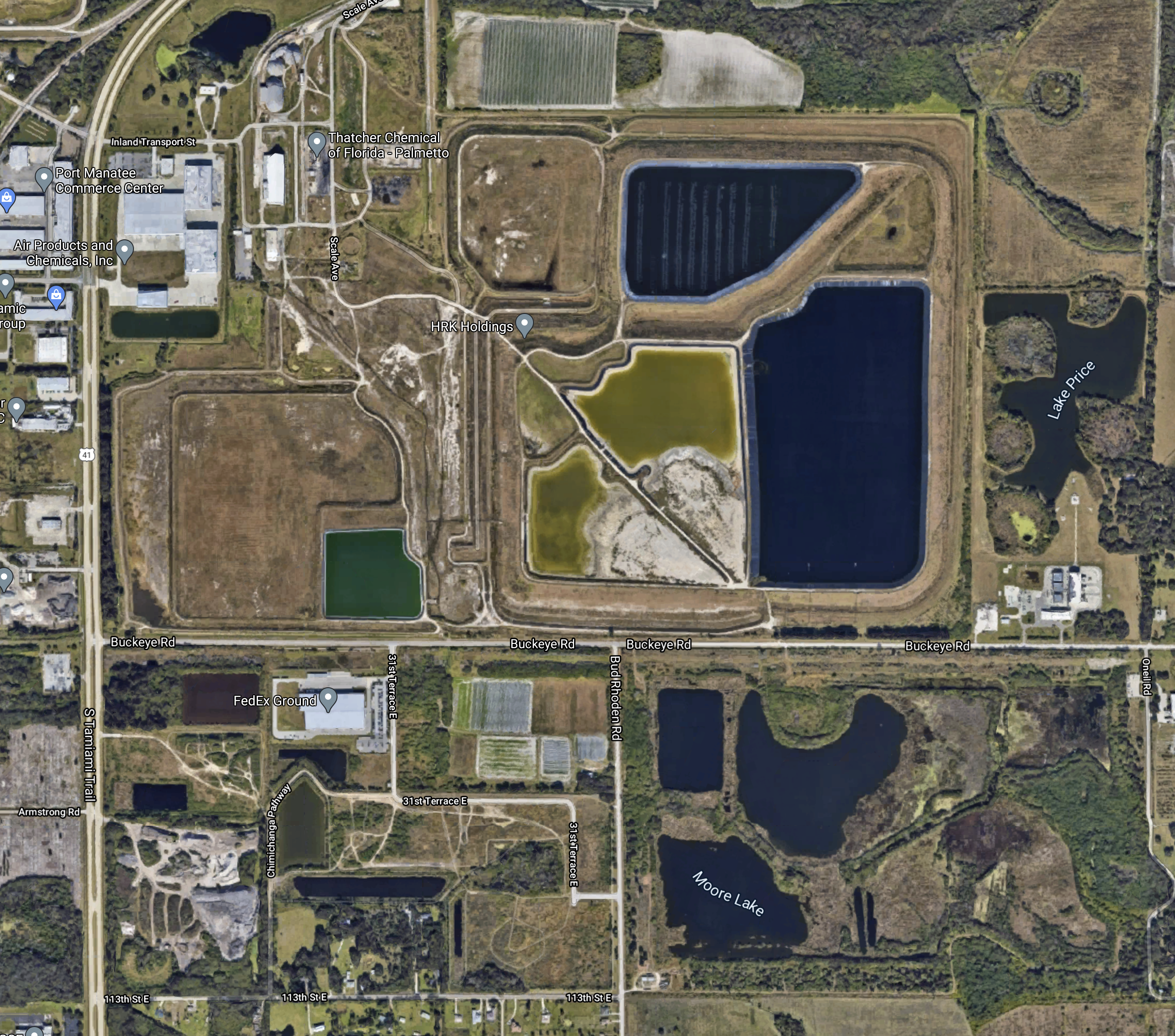
This second Google Map shows the reservoir at a larger scale.
Note.
- The picture in the BBC article was taken from the North West.
- The problem reservoir is right and above of centre.
- To its right is Lake Price, which appears to be the sort of lake to sail a boat and perhaps do a bit of fishing and swimming.
- Moore Lake to the South appears similar to Lake Price.
It looks to me that it is not the place to have an environmental incident.
This article in The Times says this.
Engineers are furiously pumping the phosphate-rich water into the sea to avoid an uncontrolled spill at Piney Point, whose failure could unleash a 20ft-high wall of toxic effluent.
Pumping it into the sea? Surely not?
I suspect there could have been a mixture of sloppy management and loose regulation, with minimal enforcement and I’ll be interested to see what recommendations are put forward by the inevitable investigation.
In my varied past, I was once indirectly involved, in the toxic waste that comes out of chemical plants. At the time, I was working for ICI in Runcorn and my main job was building designing and building instruments for the various chemical plants in and around Runcorn.
As they had hired me because of my programming skills, they asked me if I could do a few small jobs on their Ferranti Argus 500, which could be plugged in to both their Varian NMR machine and their AEI mass spectrometer.
With the former, to get better accuracy in analysis of chemicals, I would take successive scans of a sample and aggregate them together. The accuracy of the results would be proportion to the square root of the number of scans.
The second to my mind was more difficult and much more interesting.
This explanation of mass spectroscopy is from Wikipedia.
Mass spectrometry (MS) is an analytical technique that is used to measure the mass-to-charge ratio of ions. The results are typically presented as a mass spectrum, a plot of intensity as a function of the mass-to-charge ratio. Mass spectrometry is used in many different fields and is applied to pure samples as well as complex mixtures.
ICI at Runcorn had a lot of complex mixtures and the aim of my project, was to take a mass spectrum and automatically decide what chemicals were present in the mixture.
The mass spectra were presented as a long graph on a roll of thermal paper. I noticed that operators would pick out distinctive patterns on the graph, which they told me were distinctive patterns of chlorine ions.
Chlorine has an unusual atomic weight of 35.5 because it is a mixture of two stable isotypes Chlorine-35 and Chlorine-37, which produced these distinctive patterns on the spectra.
I was able to identify these patterns to determine the number of chlorine atoms in a compound. By giving the algorithm a clue in stating how many carbon, oxygen and hydrogen atoms could be involved, it was able to successfully identify what was in a complex mixture.
All this was programmed on computer with just 64K words of memory and a half-megabyte hard disc.
ICI must have been pleased, as I got a bonus.
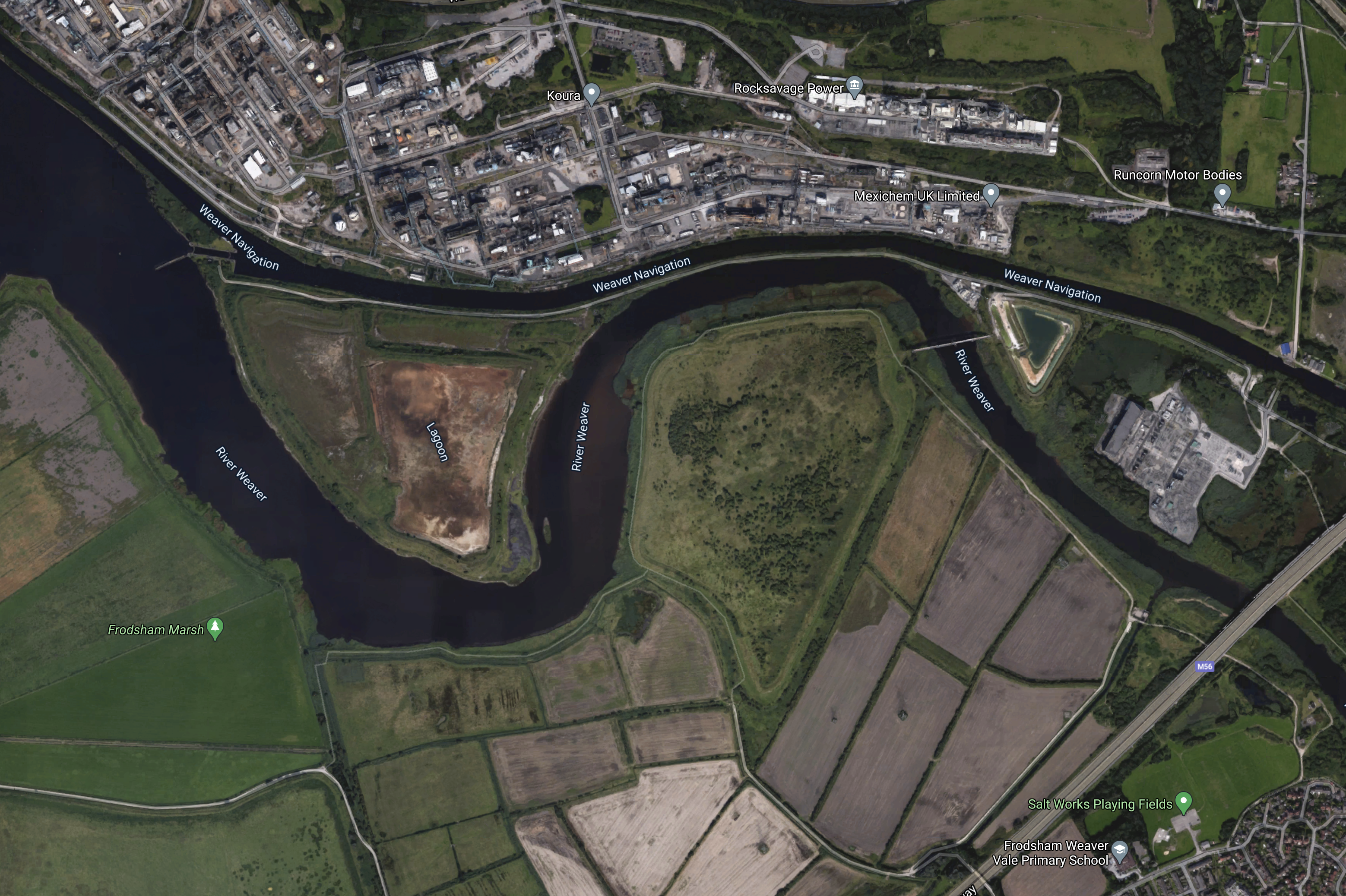
One of the jobs the software was used for was to identify what chemicals were present in the lagoons alongside the River Weaver, which are shown today in this Google Map.
Note.
- The chemical works, which were part of ICI in the 1960s, to the North of the Weaver Navigation Canal.
- The two former lagoons between the canal and the River Weaver, which seem to have been cleaned out and partially restored.
- Was that a third large lagoon to the South of the River Weaver?
- There also appears to be a fourth smaller triangular lagoon between the canal and the river.
There certainly seems to have been a better clear-up in Runcorn, than in Florida.
I moved on from Runcorn soon after, I’d finished that software and have no idea how or if it developed and was used.
But the techniques I used stayed in my brain and were used at least four times in the future.
- In the design of a Space Allocation Program for ICI Plastics Division.
- In the design of two Project Management systems for Time Sharing Ltd.
And of course, they were also used in designing the scheduler in Artemis for Metier.
I
An Untidy Railway
I took these pictures as I returned from Eridge.




You see it all over the railways and not just in the UK; general untidiness!
When I joined ICI in 1968, I went on a thorough and excellent induction course.
One very experienced engineer, gave a Health and Safety Lecture and one thing he said, was that a neat and tidy chemical plant was less likely to have silly accidents.
Some years later, I went to the United States to see some of Metier’s clients, of whom some were nuclear power stations. This must have been just after the Three Mile Island accident, which is described like this in Wikipedia.
The Three Mile Island accident was a partial meltdown of reactor number 2 of Three Mile Island Nuclear Generating Station (TMI-2) in Dauphin County, Pennsylvania, near Harrisburg, and subsequent radiation leak that occurred on March 28, 1979. It is the most significant accident in U.S. commercial nuclear power plant history.
Artemis was involved in maintenance at the nuclear stations I visited. I can remember at AEP Donald C Cook nuclear station being shown a database of work to do and many of the actions were referred to as TMIs and checking them had been mandated by the US regulatory authorities.
I should say, the site on the shores of Lake Michigan impressed me, but another I visited later didn’t. I won’t name it, as it is now closed and it was the most untidy industrial plant of any type I have visited.
As we left, I gave my opinion to our support engineer and he told me they had a very large number of TMIs to process. I wasn’t surprised!
So why are railways generally so untidy?
Coronavirus: How Realistic Is Crossrail Opening Next Year?
The title of thispost, is the same as that of this article on the BBC.
The article takes the form of the BBC’s Transport Correspondent; Tom Edwards interviewing Crossrail’s Chief Executive; Mark Wild.
This is an extract.
But the big challenge is the 40% of work left to do on the safety checks known as “assurances”.
The management team say it is working to the opening date of the summer 2021 for the Paddington to Abbey Wood section under central London.
To make up for lost time, Crossrail wants to carry out blitz testing in August and September.
I asked Mr Wild if he could guarantee 100% if Crossrail will open in summer 2021.
He said: “I guarantee that this project team and myself, will do everything humanly possible to do it.
“I must say we are working pretty effectively – 2,500 people working off-site and we are making great progress on the assurance work.
“Clearly we have to do that safely but there’s no doubt Covid has had an effect and we are working now on a plan to recover lost ground.”
Having watched many projects, that were in dire straits, being recovered by top class project management, I feel that there is a good chance that if Mark Wild and his team, are up to scratch that Summer 2021 could be a realistic possibility.
I remember the tale of British Leyland’s MiniMetro plant, that was recalled in Michael Ewardes‘s book.
- The complicated machine, that assembled the bodies wasn’t working.
- It was then found out, that it had hit a motorway bridge on the journey from Germany.
- Good project management saved the day, by reorganising and accelerating the commissioning of the second line, so that it came into production early enough to save the day.
As British Leyland were Artemis customers, I do wonder how much the software, I wrote in a Suffolk attic, played a part in that episode.
Let’s hope that Mark Wild and his team have some good project management software on their team.
Surviving Lockdown
People ask if I am surviving lockdown.
I am lucky in several ways.
Housing
I live in a spacious house, which is comfortable.
Although, it does have problems.
- It was built by a Turkish Jerrybuilder, who bought fixtures and fittings at the cheapest price possible.
- It gets too hot.
- The plumbing is suspect.
- The air-conditioner is broken and the service company, have had my money to fix it, but won’t come.
- The smoke detector above my bed is just hanging there, as I wrote in A Design Crime – The Average Smoke Detector
Hopefully, when we beat COVID-19, I’ll be able to move.
Finances
My investments give me enough to live comfortably. If you call, living in two rooms, never talking face-to-face with anybody living comfortably.
Exercise
I am still fit and can exercise as much as I need and is recommended.
I have a workout that I do twice a day, which includes movements like press-ups, stretches and single-leg stands.
I can do two dozen press-ups straight off or walk three miles, if I need to.
Health
My health is good, despite being a coeliac and suffering a serious stroke ten years ago.
- I test my own INR.
- I seem to have survived my fall of a month ago.
- I only go to the surgery for B12 injections, drug reviews and the odd problem.
Other than that I just suffer from the problems of a healthy man of 72, like arthritis and hay fever.
I do have a strange skin, that leaks a lot of water and doesn’t bleed, when I have an injection or a doctor or nurse takes blood. I never have a plaster after either procedure.
Food
I am a reasonable and very practical cook, or so my son and various friends tell me. These are some meals, I’ve been cooking under lockdown.
Pasta With Yogurt Sauce For One
Goat’s Cheese, Strawberry And Basil Salad
Smoked Haddock And Curried Rice
I shall add more here.
I won’t starve!
Shopping
A Marks and Spencer food store is fifteen minutes walk away, so I can get all the food I need.
I also got plenty of Adnams 0.5% alcohol Ghost Ship beers direct from the brewers delivered last week.
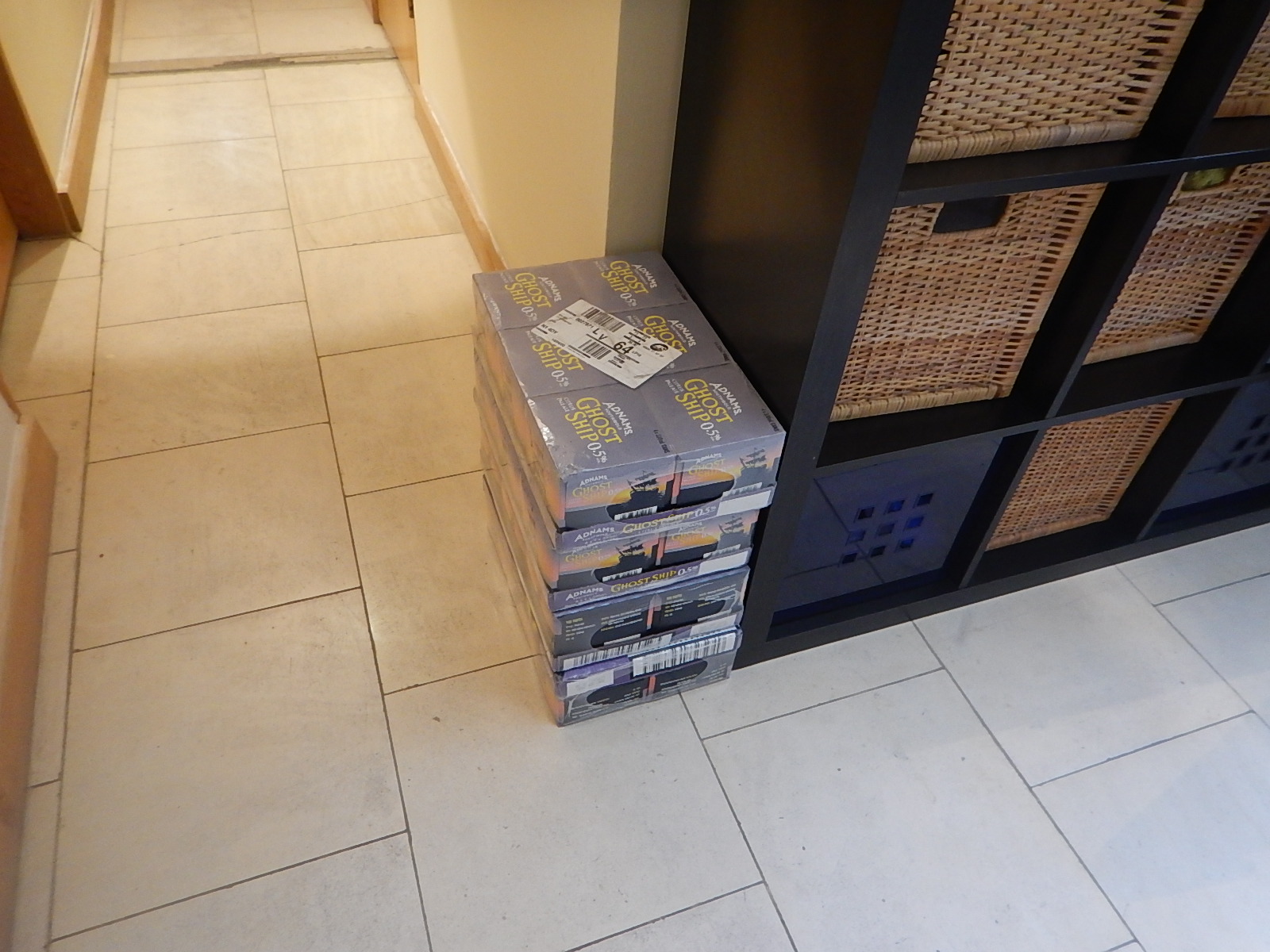
Their beers have been a lifeline, as they are gluten-free, thirst-quenching and don’t get me drunk. Even in quantity!
I also have safe delivery without any contact, as the couriers just ring my bell, we chat through the window about three metres away and they leave the goods on the step.
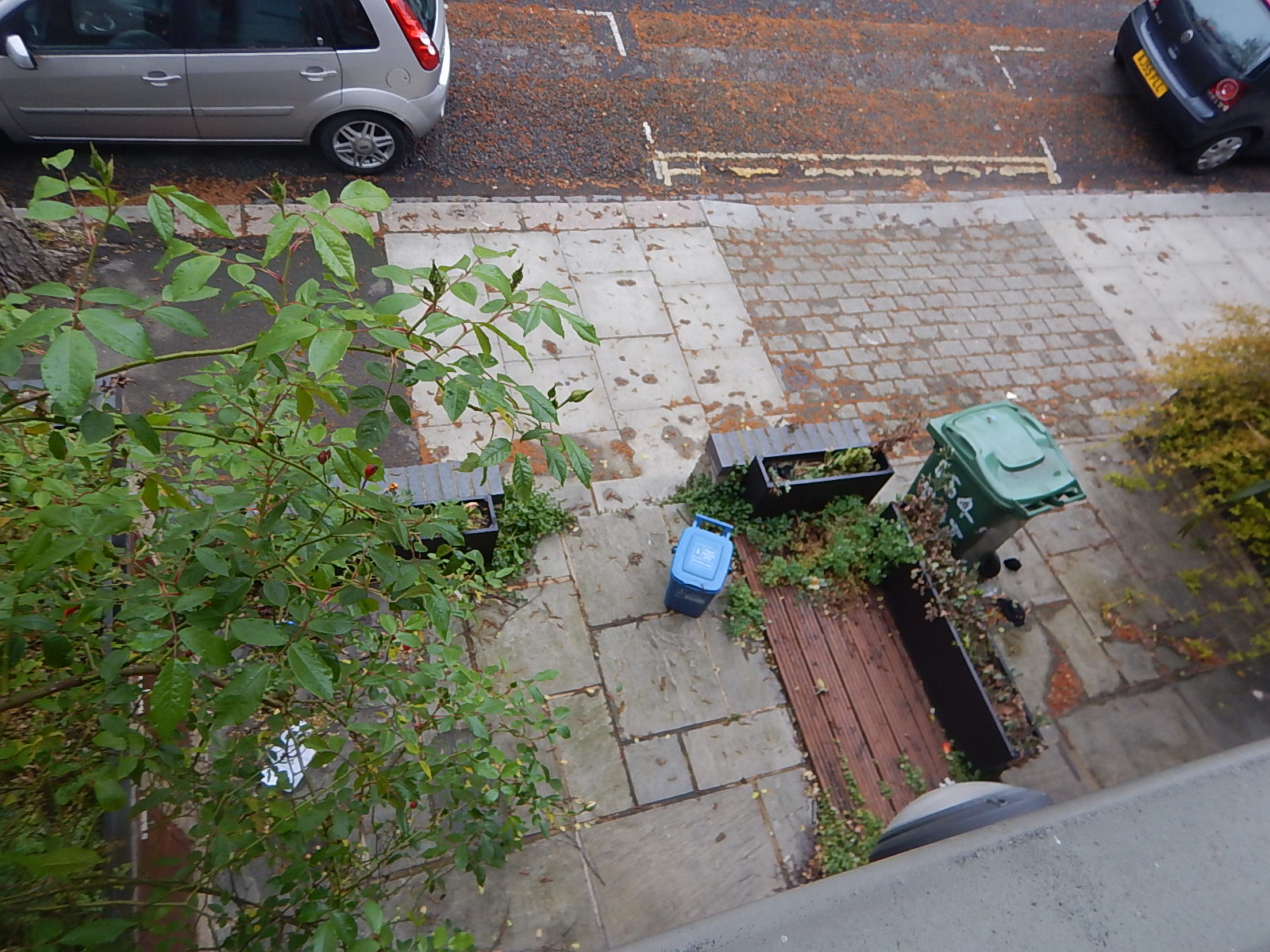
I didn’t think about lockdown, when I bought this house, but it is ideal for safe COVID-19-free deliveries.
Lockdown Practice
There can’t be many people, now going through the COVID-19 lockdown, wo have locked themselves away so many times in their life as I have.
- At the age of about six, I spent three months or more, in isolation because I caught scarlet fever.
- For the summer before A-Levels, my parents went to their house in Felixstowe. For part of the time, I locked myself in my bedroom and read up on my A level Physics.
- A couple of times at ICI, I self-isolated with a computer to get important jobs done. How many have used an IBM-360 as a PC?
- I self-isolated to write Speed, my first piece of independent software.
- Pert7 and other software for Time Sharing Ltd was written overnight sitting in the window of their offices on Great Portland Street.
- Artemis was written in an attic in Suffolk, with no-one else around for most of the time.
- The special PC version of Artemis, that was a combined project management, database and spreadsheet program, was also written under lockdown.
- After Celia died, I wrote Travels With My Celia(c) under lockdown. You can download the pdf file here.
Lockdown has almost been a way of life for me.
But on past form, I certainly have the mental strength to get through lockdown unscathed.
Conclusion
There must be a lot of others in much worse situations than myself.
This Is My Second Lockdown
I can’t be the only person, but in the 1970s, I has locked myself away for nearly a year before. I did it to write the first version of the Project Management software; Artemis.
There are some differences between my situation then and my situation now.
- My wife was alive then and we saw each other for perhaps two days a week.
- I could drive and I occasionally went down the Clopton Crown for the odd pint and meal!
- I hadn’t been diagnosed as a coeliac, as that happened in 1997.
- There was no Internet or social media.
- There was no Radio 5 Live.
- I am a better cook now, than I was then.
- I am within walking distance of a Marks and Spencer Simply Food store.
I think the rules for surviving are as follows.
- Eat and drink enough.
- Have entertaining radio or television on.
- Break the day up with a bit of exercise.
- Get a good night’s sleep.
- Arrange good weather.
Let’s hope this lockdown turns out as well as the last.
 The Anonymous Widower