FIRST TO THE FUTURE: Lumo Owner Bids To Turbo-Charge UK Rail With New Routes
The title of this post, is the same as that of this press release from First Group.
These first three paragraphs introduce FirstGroup’s application for the first phase of three separate applications to the Office of Rail and Road (ORR) for new and extended open access rail services.
FirstGroup plc plans to expand its open access rail operations through its successful Lumo business, boosting connectivity, improving UK productivity and passenger choice across the UK.
The expansion aims to replicate the success of Lumo’s Edinburgh to London service in driving material growth on the East Coast Main Line. Lumo operates without government subsidy and contributes more per train mile to infrastructure investment than any other long-distance operator – delivering growth on the railway and connectivity to local communities, at a substantial benefit to the taxpayer.
FirstGroup has submitted the first phase of three separate applications to the Office of Rail and Road (ORR) for new and extended open access rail services, which are described in these bullet points.
- A revised application to run new services between Rochdale and London Euston via Manchester Victoria from December 2028;
- An extension to Lumo’s current Stirling to London Euston track access agreement to operate services beyond 2030;
- A new route between Cardiff and York via Birmingham, Derby, and Sheffield from December 2028; and
- Purchase of new trains meaning continued investment in UK manufacturing of c.£300 million, and long-term jobs.
This paragraph from the press release describes the philosophy of the rolling stock.
Should these applications be successful, FirstGroup will make use of its option to commit further investment in new Hitachi trains built in County Durham. This investment will include five battery electric trains for the Stirling route and three battery electric trains for Rochdale, supporting jobs at Hitachi’s Newton Aycliffe plant. For the services between Cardiff and York, it will deploy refurbished Class 222s.
Note.
- The Class 222 trains will run the Euston and Stirling service until the future Hitachi trains are delivered in 2028.
- The Class 222 trains will run the Cardiff and York service from 2028.
- The Class 222 trains have a maximum speed of 125 mph
- Avanti West Coast’s Class 390 trains have a maximum speed of 125 mph.
- Avanti West Coast’s Class 805 trains have a maximum speed of 125 mph on electrification.
- Avanti West Coast’s Class 807 trains have a maximum speed of 125 mph.
- Grand Central Trains’s future Hitachi trains have a maximum speed of 125 mph.
- Hull Trains’s Class 802 trains have a maximum speed of 125 mph.
- Lumo’s current Class 803 trains have a maximum speed of 125 mph.
- LNER’s current Class 800 and 801 trains have a maximum speed of 125 mph.
- LNER’s current InterCity 225 trains have a maximum speed of 125 mph.
- LNER’s future Class 897 trains have a maximum speed of 125 mph.
- All of the trains, with the exception of the Class 222 trains are electric and have been designed for 140 mph running and can do this if there is appropriate 140 mph signalling.
If the Class 222 trains don’t run on the East and West Coast Main Lines, then these lines could introduce 140 mph running in stages to speed up rail travel between London and the North of England and Scotland.
Rochdale And London
These three paragraphs from the press release describe the proposed Rochdale and London service.
The new Lumo service will operate the first direct service since 2000 between Rochdale and London. Services will call at Manchester Victoria, Eccles, Newton-le-Willows and Warrington Bank Quay. Eccles station connects other parts of the city of Salford, including the fast-growing MediaCity area, via the nearby interchange with Metrolink. Services to Newton-le-Willows will deliver greater rail connectivity for St Helens.
There will be three new return services on weekdays and Sundays, and four return services on Saturdays, which will provide 1.6 million people in the north-west with a convenient and competitively priced direct rail service to London, encouraging people to switch from cars to train as well as providing additional rail capacity. It will also deliver material economic benefits for the communities along the route, including regeneration areas such as Atom Valley and the Liverpool City Region Freeport scheme.
The application has been revised to address the ORR’s concerns about network capacity set out in its letter of July 2025 rejecting FirstGroup’s original application. Supported by extensive modelling, the company has identified sufficient space on the network to accommodate the proposed services. Services will also make use of the Government’s recent investment in power supply for the West Coast Mainline (WCML).
In FirstGroup’s Lumo Seeks To Launch Rochdale – London Open Access Service, I gave my thoughts for Lumo’s application last year.
Differences between the two applications include.
- The service will be run by Lumo’s standard battery-electric Hitachi trains.
- The original application was for six return journeys per day, whereas the new application is for three return services on weekdays and Sundays, and four return services on Saturdays.
Note.
- The battery-electric trains will be able bridge the 10.4 mile gap between Manchester Victoria and Rochdale, and return after charging on the West Coast Main Line.
- The battery-electric trains could be useful during engineering works or other disruptions.
- The trains would be ready for 140 mph running on the West Coast Main Line, when the digital signalling is installed.
- Is the extra return service on a Saturday to cater for football and rugby fans?
I still feel, that with Lumo’s battery-electric trains one or more services could extend across the Pennines to Hebden Bridge, Bradford Interchange or Leeds. Trains would be recharged for return at Leeds.
Stirling And London
This paragraph from the press release describes the proposed Stirling and London service.
Stirling has a wide catchment area, with an estimated three million people living within an hour’s drive. Extending the current track access agreement for the Stirling route from May 2030 will support the shift from car to rail, and investment in the city, as well as in the service’s intermediate stations which include Larbert, Greenfaulds and Whifflet, thanks to greater connectivity to London. The four return services weekdays and Saturdays, and three on Sundays, on the new route are expected to start early in the company’s 2027 financial year.
In Lumo To Expand Scotland’s Rail Network With New London-Stirling Rail Route From Spring 2026, I gave my thoughts for Lumo’s application in June 2025.
Differences between the two applications include.
- The service will only be run initially by Class 222 trains.
- The service will be run by Lumo’s standard battery-electric Hitachi trains after 2028.
- The original application was for five return journeys per day, whereas the new application is for four return services on weekdays and Saturdays, and three return services on Sundays.
- In the original application, Lumo’s new route was to link London Euston directly to Stirling, also calling at Milton Keynes, Nuneaton, Crewe, Preston, Carlisle, Lockerbie, Motherwell, Whifflet (serving Coatbridge), Greenfaulds (serving Cumbernauld) and Larbert.
Note.
- The battery-electric trains could be useful during engineering works or other disruptions.
- The trains would be ready for 140 mph running on the West Coast Main Line, when the digital signalling is installed.
- Is the extra return service on a Saturday to cater for football and rugby fans?
It should be noted that there are always more return services per day going to Stirling, than Rochdale.
Could The Rochdale and Stirling Services Share A Path?
Consider.
- The two services use the West Coast Main Line South of Warrington Bank Quay station.
- Pairs of Class 803 trains can split and join.
- A pair of Class 803 trains are shorter than an 11-car Class 390 train.
- An 11-car Class 390 train can call in Warrington Bank Quay or Crewe stations.
I believe that the Rochdale and Stiring services could share a path.
- One Weekday service per day would be a single train.
- Going South, the trains would join at Warrington Bank Quay or Crewe stations.
- Going North, the trains would split at Warrington Bank Quay or Crewe stations.
- The pair of trains would share a platform at Euston station.
Operating like this would increase the connectivity and attractiveness of the services, and probably increase the ridership and profitability.
Cardiff And York via Birmingham, Derby And Sheffield
These four paragraphs from the press release describe the proposed Cardiff and York service.
Lumo’s new route between Cardiff and York will join up the entire Great British Railway network, connecting all four main lines from the Great Western Main Line to the East Coast Main Line. The plans will also deliver more capacity and drive passenger demand on a previously underserved corridor.
The application proposes six return services each weekday – a significant increase from the current single weekly service.
Bringing Lumo’s popular low-cost model to the corridor will support local communities between Cardiff, Birmingham, Derby, Sheffield, and York. These cities alone have a combined population of more than 2.5 million people. The new services will give local communities access to jobs and services along the route, in support of significant investment that has already been committed by the Government and private sector. This investment includes the Cardiff Capital Regional Investment Zone, the £140million proposed refurbishment at Cardiff Central station, the West Midlands Investment Zone which is expected to create £5.5 billion of growth and 30,000 new jobs, as well as investment plans in Derby, Sheffield and York.
The ORR will now carry out a consultation exercise as well as discuss the applications with Network Rail to secure the required approvals.
Note.
- Only minimal details are given of the route.
- The TransPennine Upgrade will create a new electrified route across the Pennines between York and Huddersfield via Church Fenton, Leeds and Dewsbury.
- The Penistone Line is being upgraded, so that it will handle two trains per hour.
- In the 1980s, the Penistone Line took InterCity 125s to Barnsley.
- The connection with the Penistone Line at Huddersfield has been upgraded.
I am reasonably certain, that FirstGroup intend to route the York and Cardiff service over this partially electrified route.
Sections of the route will be as follows.
- Cardiff and Westerleigh junction – 38 miles – Electrified
- Westerleigh junction and Bromsgrove – 65.2 miles – Not Electrified
- Bromsgrove and Proof House junction – 15 miles – Electrified
- Proof House junction and Derby – 40.6 miles – Not Electrified
- Derby and Sheffield – 36.4 miles – Not Electrified
- Sheffield and Huddersfield – 36.4 miles – Not Electrified
- Huddersfield and York – 41.9 miles – Electrified
There are only two sections of track, that is not electrified.
- Westerleigh junction and Bromsgrove – 65.2 miles
- Proof House junction and Huddersfield – 113.4 miles
Out of a total of 273.5 miles, I believe in a few years, with a small amount of extra electrification or more powerful batteries, Hitachi’s battery-electric high-speed trains will have this route cracked and the Class 222 trains can be sent elsewhere to develop another route.
An Extreme Day Out – Bradford Forster Square Station
It seems to be the fashion to go and visit somewhere far away in a day. So why not?
For my first trip in this vein, I decided on the spur of the moment to go to Bradford Forster Square station.
Why Did I Choose Bradford Forster Square Station?
There are three main reasons.
- A new platform has just opened at the station to handle the longest LNER trains.
- LNER are now running a seven trains per day (tpd) service via Leeds.
- I wanted to see how LNER’s walk-up ticketing performed on the route.
In addition, I wanted to see how the service performed, now that Bradford is this year’s UK City of Culture.
King’s Cross To Bradford Forster Square Station For £43.00 With A Railcard
I just missed the 11:03, so I booked the 13:03 for £43.00 with my Senior Railcard, from one of the numerous ticket machines in King’s Cross.
The train arrived on time in two hours 47 minutes for the 199.4 miles, which was an average speed of 72 mph.
In What Will Be The Fastest Times Possible Between London King’s Cross And Leeds?, I predicted this.
I wouldn’t be surprised to see with full digital signalling and a 125 mph average between London King’s Cross and Leeds.
- 125 mph Base Time – 89 minutes.
- Four Acceleration/Deceleration sections at 6 minutes each – 24 minutes.
- Three Dwell Times at 2 minutes each – 6 minutes
This would mean a total time of one hour and 59 minutes.
As my Bradford service took two hours and 28 minutes between London King’s Cross And Leeds, that would mean, that a time close to two hours and fifteen minutes could be possible between London King’s Cross and Bradford Forster Square stations.
There Weren’t Many Passengers Between Leeds And Bradford Forster Square Stations
These pictures show the nearly empty train and the small numbers, who alighted at Bradford Forster Square station.
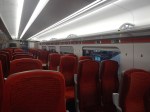
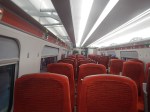
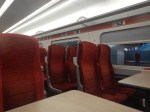
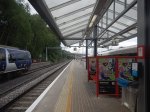
But I don’t think three in the afternoon is a time, when many passengers will need to go between Leeds and Bradford Forster Square stations.
Bradford Forster Square Station
I described that station, with its new Platform 0 in Bradford Forster Square Station – 20th May 2025, where I said the station needed these additions.
The station needs a few additions, like a proper coffee shop, a better shop, ticket machines and toilets.
But it’s not been open very long.
Bradford Forster Square Station To King’s Cross For £25.70 With A Railcard
I bought this ticket from a Yorkshire Lass in the Ticket Office.
There Weren’t Many Passengers Between Bradford Forster Square And King’s Cross Stations
Only about a dozen passengers boarded the train at Bradford Forster Square and some got out at Leeds.
In fact the train wasn’t very busy all the way to London with perhaps twenty passengers in my carriage, when we arrived in King’s Cross.
Will This Service Develop Into A Two-Hourly London King’s Cross And Leeds Or Bradford Forster Square Service With A Trans-Yorkshire Service Tacked On?
Currently, it is the following.
- An express service between King’s Cross and Leeds with stops at Peterborough, Doncaster and Wakefield Westgate.
- An express service between King’s Cross and Bradford Forster Square with stops at Peterborough, Doncaster, Wakefield Westgate and Leeds.
- A local service between Doncaster and Bradford Forster Square with stops at Wakefield Westgate and Leeds.
- Additional calls on some services are at Stevenage, Grantham, Retford and Shipley.
In addition the following would be possible.
- Pairs of trains could split at Leeds, with one train going to Bradford Forster Square and the other train to somewhere like Harrogate, Huddersfield or Skipton.
- Additional stops could be added between Leeds and Bradford Forster Square without slowing services between Leeds and King’s Cross.
But then where does this fit with LNER buying ten CAF tri-mode trains?
Surely they would get better flexibility, if they’d bought more Azumas, which could run on the electrification all the way to Bradford Forster Square, Huddersfield and Skipton. If some had batteries, they could run all the way to Harrogate.
LNER’s Disabled-Unfriendly Refreshments System
I am not disabled, but I only have one fully-working hand, as the school bully broke my left humerus and I have difficulty doing certain things with my left hand, due to the quality of the care I received in Highlands Hospital in Winchmore Hill.
Having a left-sided stroke didn’t help either.
One of the things, I can’t do is take pictures on my mobile phone, so I always carry a proper camera. Because of the injury, I have also never read a QR code with my phone.
On LNER’s trains to get a drink, you either have to order it by reading a QR code or walking to the buffet.
As on the train going North, the buffet was closed, I went thirsty.
In future, if I have a choice of trains, I’ll choose one with a trolly service.
Are The CAF Tri-Mode Trains Part Of A Plan To Drive Open Access Operators Out Of Yorkshire?
This is possibly the only scenario that makes sense.
The ten-car tri-mode trains would be used to take over Grand Central’s services to Bradford Interchange and Sunderland, and Hull Trains services to Hull.
After Monday, LNER are now running more daily services to Bradford Forster Square, than Grand Central are to Bradford Interchange.
If like my return to London on Tuesday, you can buy a walk-up ticket on LNER, then why would you travel on Grand Central.
Conclusion
£68.70 is not a bad price for what is in effect a walk-up day return to Bradford Forster Square.
I’ve just looked how much, I would be charged for an advance ticket on Friday, using the trains I used on Tuesday.
I could get a ticket for £25.70 going North and £28.95 going South or a total of £54.65. All are with my Senior Railcard.
But it does look to me, that LNER and the Government are trying to drive Grand Central off the Bradford route.
If I am right and Hull Trains and Lumo will be next in LNER’s sights, then what was Starmer and other Government ministers doing at the launch of orders for new trains for Grand Central, Hull Trains and Lumo?
Arriva Group Invests In New Battery Hybrid Train Fleet In Boost To UK Rail Industry
The title of this post, is the same as that of this news item from Arriva Group.
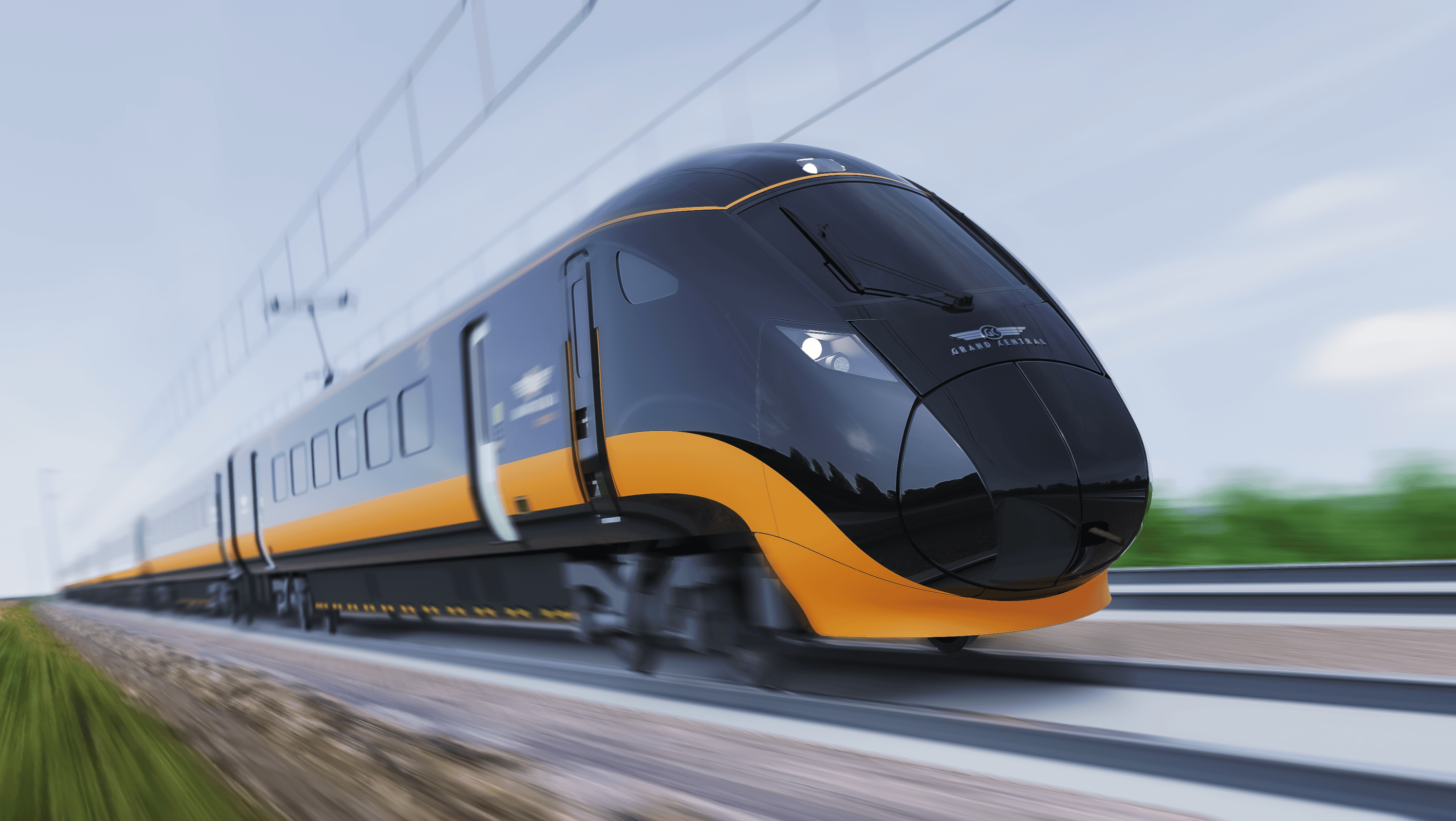
These four bullet points act as sub-headings.
- Order worth around £300 million for fleet of new trains, which will increase seats by 20 per cent, improving capacity and connectivity.
- 45 rail cars to be manufactured at Hitachi Rail in the North East and financed by Angel Trains, helping secure highly skilled jobs and unlocking a new advanced manufacturing opportunity for rail.
- State-of-the-art ‘tri-mode’ train technology has proven its ability to cut emissions and fuel costs by around 30 per cent to support UK Government’s decarbonisation agenda.
- Announcement is made from Hitachi’s Newton Aycliffe factory and attended by the Secretary of State for Transport, Heidi Alexander MP.
These three paragraphs give more details.
Arriva Group announced today an order for nine cutting-edge battery hybrid trains to replace its entire Grand Central fleet, providing a major boost to regional economies and offering passengers more comfortable, greener travel options.
The order for 45 Hitachi Rail ‘tri-mode’ cars, which have the flexibility to run on electrified and non-electrified tracks, along with a 10-year maintenance contract, represents an investment of around £300 million. Tri-mode means the trains can be powered using electricity, battery or diesel.
It follows approval by the rail regulator for extended track access rights for Grand Central’s existing services through to 2038, with the investment underpinning Arriva’s long-term commitment to UK rail and to delivering sustainable public transport solutions to communities up and down the country and across Europe.
The trains will be built by Hitachi at Newton Aycliffe.
I have some further thoughts and questions.
What Distances Will The Trains Run Away From Electrification?
The distances that the various services will run away from electrification are as follows.
- King’s Cross and Bradford Interchange – Doncaster and Bradford Interchange – 52.1 miles.
- King’s Cross and Cleethorpes – Doncaster and Cleethorpes – 52.1 miles.
- King’s Cross and Sunderland – Longlands junction and Sunderland – 48.5 miles.
It would appear that a train with a range away from electrification of 55 miles would be enough, if there were to be charging at all the destinations.
Will The Trains Be Able To Take The Great Northern And Great Eastern Joint Line (GNGE) Diversion Via Lincoln On The East Coast Main Line?
I discussed using this diversion in detail in London And Edinburgh By Lumo Using the Joint Line Diversion.
In that post, I said this.
The January 2024 Edition of Modern Railways says that the diversion is approximately 90 miles or 145 kilometers.
If the trains have a 90 mile capability on batteries and/or diesel, they will be able to use the diversion.
As Hull Trains, LNER and Lumo all need this ability to take the GNGE Diversion, I suspect, it will be a tick-box on the order form for the trains.
When Will The Trains Be In Service?
The news item says this.
The trains will be delivered in 2028 under a 10-year leasing arrangement, in partnership and financed by Angel Trains.
Will The New Trains Be Faster?
They might save a couple of minutes, if Doncaster is the first stop.
Will The New Trains Be Quieter?
The news item says this about noise and emissions.
State-of-the-art ‘tri-mode’ train technology has proven its ability to cut emissions and fuel costs by around 30 per cent to support UK Government’s decarbonisation agenda.
Hitachi have said that the diesel engines will not run in stations.
Could The Trains Run Grand Central’s Routes Carbon-Free?
In The Data Sheet For Hitachi Battery Electric Trains, I came to these conclusions
- The battery pack has a capacity of 750 kWh.
- A five-car train needs three battery-packs to travel 100 miles.
- A nine-car train needs five battery-packs to travel 100 miles.
- The maximum range of a five-car train with three batteries is 117 miles.
- The maximum range of a nine-car train with five batteries is 121 miles.
As battery technology gets better, these distances will increase.
If I was choosing the trains for Grand Central, the trains would be able to operate these routes without using diesel.
- Doncaster and Bradford Interchange and return.
- Doncaster and Cleethorpes and return.
- Longlands junction and Sunderland and return.
Passengers might not like to have noisy passengers.
Probably, the best insurance policy to avoid running out of battery power, would be to have perhaps fifty metres of electrification at terminal stations. Hitachi claim they can offer a nice line in short lengths of electrification.
Quiet Trains Should Attract Passengers
I’ve seen it before and also with buses.
The Number Of Trains Ordered
The basic order is for nine trains, but Railway Gazette says this.
Arriva welcomed the ‘swift decision-making’ by ORR and the backing of the Department for Transport and Network Rail. It has also submitted applications to run more trains to Bradford and introduce services to Cleethorpes, and has an option to buy more trains if these are approved.
I’ve read somewhere that the option is for three extra trains.
So that’s a total of twelve, which would replace the ten Class 180 trains and two Class 221 trains, that Grand Central Trains currently run.
What About Chiltern Railways And CrossCountry?
Train operating companies Chiltern Railways, CrossCountry and Grand Central Trains are all wholly owned subsidiaries of Arriva Trains UK, who are described like this in the first paragraph of their Wikipedia entry.
Arriva UK Trains Limited is the company that oversees Arriva’s train operating companies in the United Kingdom. It gained its first franchises in February 2000. These were later lost, though several others were gained. In January 2010, with the take-over of Arriva by Deutsche Bahn, Arriva UK Trains also took over the running of those formerly overseen by DB Regio UK Limited
Arriva is ultimately owned by American infrastructure investment company; I Squared Capital.
Both Chiltern Railways and CrossCountry have trains, that are coming to the date, when they will need to be replaced and similar trains to those ordered by Grand Central could be suitable. to replace some.
Chiltern Railways have six rakes of Mark 3 coaches, that are hauled by diesel locomotives between London Marylebone and Birmingham Moor Street stations, These rakes of coaches could be replaced by Hitachi tri-mode trains, of perhaps five or six cars.
Chiltern Railways also have about sixty assorted diesel multiple units totalling up to about 150 carriages.
CrossCountry Trains have twenty-nine two- or three-car Class 170 trains and sixty-one four- or five car Class 220 or 221 trains. All these ninety trains were built this century and are diesel-powered.
The Government’s policy of net-zero by 2050, would probably mean a significant number of these smaller diesel multiple units need to be replaced by 2030.
If the Grand Central Trains new Hitachi trains are a success, then changing the longer four-, five- and six-car trains for similar Hitachi trains, would be a low-risk replacement strategy for I Squared Capital, that could be applied at Chiltern Railways and CrossCountry.
I can also see a need for a two-, three- or four-car tri-mode train for Chiltern Railways and CrossCountry.
Was The Date Of The Announcement Significant?
In October 2020, I wrote Hitachi Targets Export Opportunities From Newton Aycliffe and I believe that tri-mode trains like these that Grand Central have ordered could have export opportunities.
One country for exports has possibilities and that is the United States.
- Hitachi AT-300 trains like these don’t need expensive high-speed tracks and there are probably many lines in the United States, where these trains could fit existing tracks.
- This page on the Hitachi Rail web site is entitled Hitachi Rail in the USA and Canada.
- In the UK, companies like GWR, LNER, Southeastern and TransPennine Express effectively use theHitachi trains as fast commuter trains on some routes.
- Trump’s tariffs would only be 10 % on these trains.
- The Grand Central version looks very stylish!
- Hitachi’s battery technology is owned by Turntide Technology, who are a US company.
- For some routes, the trains would probably only need to be battery-electric.
Has the experience of running Chiltern Railways, CrossCountry and Grand Central Trains convinced I Squared Capital, that running railways is a good investment?
Have I Squared Capital identified some railroads in the United States, that could follow a similar upgrade path to Chiltern Railways?
Was it significant that the order was announced the day after Trump’s tariffs?
.
Rochdale Station – 12th November, 2024
Yesterday, I went to Rochdale station, to ascertain, the suitability of running a Lumo service between Euston and Rochdale stations.
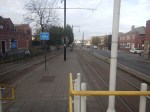
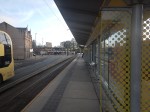
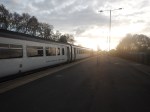
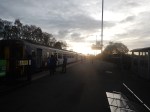
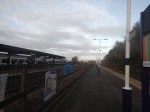
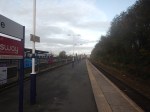

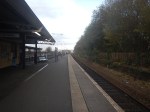
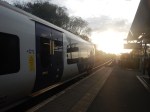
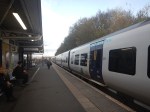

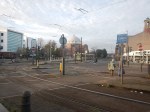
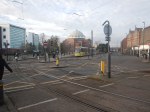
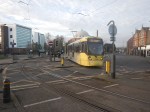
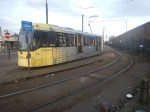
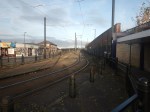
Note.
- The building in the style of a mosque, is actually a Catholic church.
- The island tram platform is at right angles to the railway lines through the station.
- The tram takes you a short distance to the North to the town centre.
This map shows the station and the tram stop.
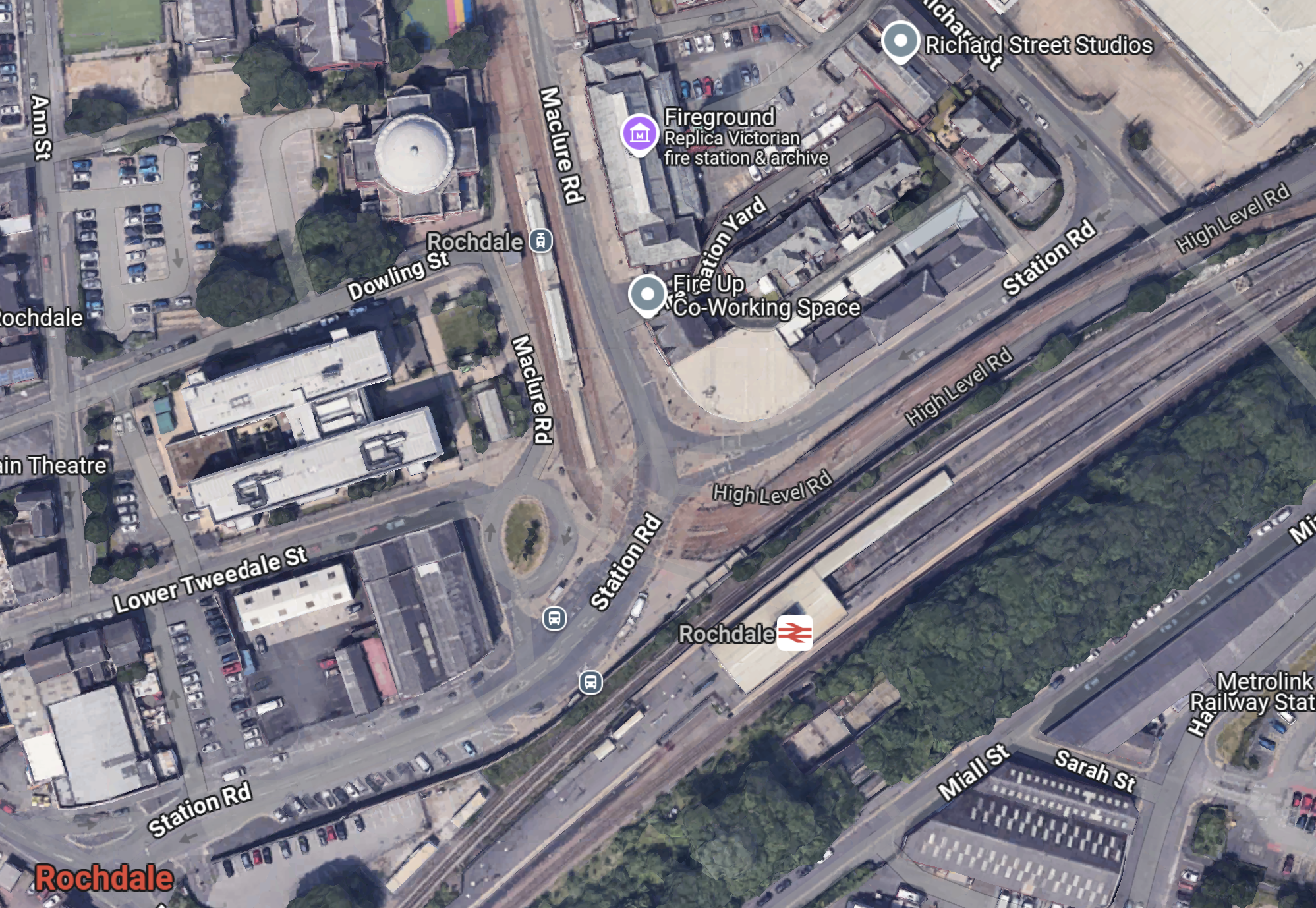
Note.
- The station has four platforms and two tram platforms.
- The two outer train platforms are quite long.
- The West-facing bay platform could probably take a five-car Lumo train.
- The tram platform runs North from the station.
- There is a co-working space by the tram-stop.
- There is a cafe in the station.
- There is a manned ticket office.
- Car parking is free.
- There are sixteen bicycle spaces.
With some tidying up, this could be a neat interchange.
These are my thoughts.
Will Rochdale Station Accommodate One Of Lumo’s Five-Car Trains?
The Wikipedia entry for Rochdale station, says this about the Bay Platform 4, that was used for the Cltheroe train.
In 2015, construction on a fourth railway platform began. The 135m-long bay platform was completed in 2016 and is used to relieve congestion at Manchester Victoria, where terminating trains would otherwise occupy the through platforms; numerous services now continue on to Rochdale as opposed to terminating at Victoria. It is located at the south end of the main island platform, with the southbound through line having been re-aligned slightly further east to accommodate the new terminating line and is used by the half-hourly stopping service from Blackburn/Clitheroe via Bolton and Victoria.
A 135 metre platform should be able to accommodate a five-car train with 27 metre carriages, so it looks like a 5-carriage Lumo train with 26-metre cars would fit in the bay platform 4.
Will Rochdale Station Accommodate A Pair Of Lumo’s Five-Car Trains?
Consider.
- Lumo’s Hitachi trains, like all their siblings can run in pairs. As I reported in Ten-Car Hull Trains, Hull Trains do it regularly.
- Rochdale station may or may not be able to accommodate a pair of five-car trains, but say if one of Manchester’s Premier League clubs was playing in the FA Cup Final, I’m sure they would find a way to run a ten-car train to London.
- It looks like Warrington Bank Quay, Newton-le-Willows, Eccles and Manchester Victoria could all take 10-car trains.
- Euston probably can as well, as 9-car and 11-car Class 390 trains are 217.5 and 265.3 metres respectively long respectively and a 10-car Lumo train would only be 260 metres.
Perhaps, one train can start at Rochdale and the other at Manchester Victoria, before they join at Victoria and go to London as a pair.
Could The Lumo Service Be Extended Across The Pennines?
Distances Along the Calder Valley Line to Leeds are as follows.
- Rochdale 10.4 miles –
- Hebden Bridge – 23.6 miles
- Halifax – 32.7 miles
- Low Moor – 37.5 miles
- Bradford Interchange – 40.4 miles
- Leeds – 49.8 miles
Note.
- The 70 km. rang of a Lumo train will be 43.5 miles.
- The train can be charged at both end stations and will be fully charged, when it leaves Manchester Victoria and Leeds.
- There are short lengths of electrification at Manchester Victoria and Leeds.
- There may be extra electrification between Bradford Interchange and Leeds, in the next few years.
I am fairly certain, that a battery-electric Lumo Class 803 train will be able to provide a London Euston and Leeds service.
How Long Will Services Take?
Timings on the extended route from London Euston to Manchester Victoria, Rochdale, Bradford and Leeds would take.
- London-Euston – Warrington Bank Quay – One hour and forty-four minutes – Current Avanti timings.
- Warrington Bank Quay – Newton-le-Willows -Eleven minutes – Current Northern timings.
- Newton-le-Willows – Eccles -Ten minutes – Current Northern timings.
- Eccles – Manchester Victoria – Ten minutes – Current Northern timings.
- Manchester Victoria – Rochdale – Fourteen minutes – Current Northern timings.
- Rochdale – Hebden Bridge – Sixteen minutes – Current Northern timings.
- Hebden Bridge – Halifax – Fifteen minutes – Current Northern timings.
- Halifax – Low Moor – Six minutes – Current Northern timings.
- Low Moor – Bradford Interchange -Ten minutes – Current Northern timings.
- Bradford Interchange – Leeds – Nineteen minutes – Current Northern timings.
Totals.
- London and Manchester Victoria – Two hours and fifteen minutes.
- London and Rochdale – Two hours and twenty-nine minutes.
- London and Bradford – Three hours and six minutes.
- London and Leeds – Three hours and twenty-five minutes.
I suspect times could be speeded up a bit.
Proposed Developments Of Manchester Metrolink
This sub-title has its own Wikipedia entry.
Developments that would be beneficial to a Lumo service might include.
A station at Cop Road on the Oldham and Rochdale Line, that would support new housing.
Tram-trains between Oldham and Heywood On the Calder Valley Line.
These two developments will directly bring more passengers to the Lumo service, but because the Lumo service has links with the Metrolink at Eccles, Manchester Victoria and Rochdale any Metrolink improvements should benefit the Lumo service.
Arriva’s Grand Central Applies For Extended Track Access Rights
The title of this post, is the same as that of this news item from Arriva.
These three bullet points, act as sub-headings.
- Grand Central to submit application to the rail regulator for extended track access up to 2038.
- Proposals for a new, greener fleet are outlined as part of the application.
- Application signals Arriva’s long-term commitment to UK rail.
These three paragraphs add more detail to the application.
Arriva Group’s UK open access train operating company, Grand Central, has today announced it is seeking to extend its existing track access rights until 2038, securing its services for the next 15 years and unlocking Arriva’s intentions to invest in new, state-of-the-art trains.
Grand Central has been operating services on the East Coast mainline since 2007 as an open access operator, which means it receives no government funding or subsidy. It directly links 15 destinations, including cities in Yorkshire and the North East with London’s Kings Cross.
The application represents a significant commitment to long-term services and supports its plans to expand services with improved connectivity and increased frequency, as outlined in a previous application, submitted to the Office of Rail and Road in May this year.
These are my observations and thoughts.
Grand Central’s Current Services
Grand Central currently runs two separate services.
- King’s Cross and Sunderland via Peterborough,York, Thirsk, Northallerton, Eaglescliffe and Hartlepool – six tpd
- King’s Cross and Bradford Interchange via Peterborough, Doncaster, Pontefract Monkhill, Wakefield Kirkgate, Mirfield, Brighouse, Halifax and Low Moor – four tpd
Note.
- tpd is trains per day.
- Weekend services are reduced.
- Peterborough is served by one train in each direction.
Grand Central have applied to run more services.
Distances Without Electrification On Current Services
Only the Northern ends of both routes are not electrified.
- King’s Cross and Sunderland – Longlands junction and Sunderland – 48.5 miles
- King’s Cross and Bradford Interchange – Doncaster and Bradford Interchange – 52.1 miles
Note.
- Going North, any train batteries could be charged on the East Coast Main Line.
- Before returning South, train batteries could need to be charged at the two terminals.
- Battery-electric trains would need infrastructure changes at the two terminals.
The two terminals; Bradford Interchange and Sunderland are not particular spacious.
These pictures show Bradford Interchange station.
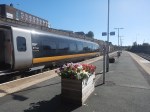
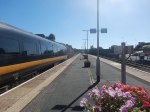
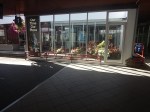
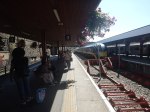
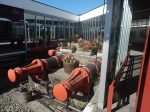
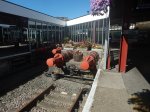
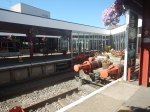
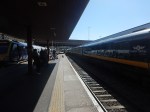
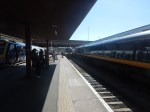
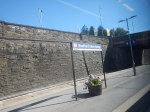
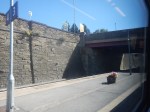
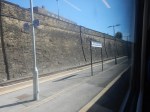
And these pictures show Sunderland station, which is underground.
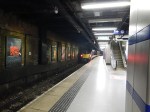
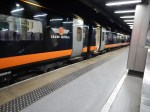
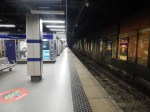
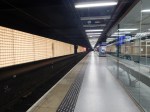
Putting even a short length of catenary to charge battery-electric trains might not be that easy at either station.
Grand Central’s New Trains
Arriva’s news item, gives these details on the new trains.
- Increased capacity: The new trains would feature approximately 20 per cent more seats than the current Class 180 units, providing additional capacity to meet growing passenger demand.
- Modernised fleet: The new Bi-Mode trains would replace the existing 24-year-old Class 180 units bringing new customer focussed features and a more comfortable experience for passengers.
- Greener services: The Bi-mode trains would cut carbon emissions and provide smoother journeys for passengers. They can operate on electric and non-electric tracks, so they can serve long into the future as track electrification gathers pace across the UK.
Note.
- A five-car Class 802 train has approximately twenty percent more seats than a four-car Class 180 train.
- Hull Trains, LNER, Lumo and TransPennine Express all run Hitachi Class 80x trains on the East Coast Main Line, which could ease operations, if all trains were similar.
- Bi-mode trains are specified. Grand Central will change mode once on each trip.
- LNER have specified CAF Tri-mode trains for their new fleet. Will these have an extra level of complication, that Grand Central don’t need?
I suspect that rand Central will opt for the Hitachi trains.
Using The Joint Line Between Peterborough and Doncaster via Lincoln
The diesel Class 180 trains can use this line, in times of incidents or engineering works.
Class 800 and Class 802 trains can also use this diversion, so it might be sensible to be able to use the line in time of trouble.
Chiltern Trains’ London And Birmingham Services
Both Arriva and Chiltern Trains are subsidiaries of Deutsche Bahn.
Currently, Chiltern run six-car rakes of Mark 3 coaches, with a Class 68 locomotive at one end and a driving van trailer at the other, between London and Birmingham.
They are nice trains, but they are not zero-carbon.
Could these be replaced by an eight-car Class 802 train?
- Chiltern have said that they are looking for new trains.
- An eight-car Class 802 train could be a similar length to the current trains.
- London Marylebone and Birmingham Moor Street is only 111.7 miles.
- The Hitachi trains would offer an increase in capacity.
- They might save a few minutes.
But the trains will still be not zero-carbon.
This page on the Hitachi web site is entitled Intercity Battery Trains.
The trains for London Marylebone and Birmingham Moor Street would be built as conventional eight-car Hitachi trains, with perhaps four diesel engines.
- Over the years, the Chiltern Main Line would be partially electrified, starting perhaps in the middle around Banbury.
- One by one, the diesel engines would be replaced by batteries, so that the trains could run on battery power between the electrified sections.
- Eventually, the London Marylebone and Birmingham Moor Street service would be fully battery-electric.
- As Kidderminster is only twenty miles past Birmingham Moor Street, there must surely be possibility for extension of the service.
I believe that Hitachi’s Intercity Battery Train, is going to play a large part in the decarbonisation of UK railways.
Chiltern Trains’ London And Oxford Services
If eight-car Hitachi Intercity Battery Trains can handle London Marylebone and Birmingham Moor Street services, then I am fairly sure that five-car Hitachi Intercity Battery Trains could handle London Marylebone and Oxford services.
They would also have more capacity, than the current trains, that serve Oxford and Bicester Village.
Conclusion
It may be advantageous for Deutsche Bahn to put the two orders together.
Improving Trains Between London And Bradford
Current Services Between London And Bradford
LNER services run between Kings Cross and Bradford Forster Square stations.
- Two trains per day (tpd) run between Bradford and London in the early morning.
- Two tpd run between London and Bradford in the evening.
- Trains take two and three-quarter hours.
- Stops are at Shipley, Leeds, Wakefield Westgate, Doncaster, Retford Grantham and Stevenage.
- Trains seem to be generally a pair of five-car Class 801 trains.
Note.
- Trains reverse at Leeds.
- The timetable seems a bit lopsided, as there is no early morning train to Bradford or an evening one to London.
- Harrogate gets a one train per two hours (tp2h) service to and from London.
The timetable could do with an improvement.
Grand Central services run between Kings Cross and Bradford Interchange stations.
- Four tpd run between Bradford and London.
- Four tpd run between London and Bradford.
- Trains take three and a quarter hours.
- Stops are at Pontefract Monkhill, Wakefield Kirkgate, Mirfield, Brighouse, Halifax and Low Moor
- Trains are five-car Class 180 trains, which have seen better days.
Note.
- The timetable seems a bit lopsided, as there is no early morning train to Bradford or an evening one to London.
The timetable and the trains could do with an improvement.
LNER’s New Ticketing And Nine-Ten Car Trains
LNER have introduced the selling of Advanced Tickets from machines or the Booking Office as late as five minutes before the train leaves.
- My last three trips from Leeds to London cost me £33.55, £33.75 and £33.55 with my Senior Railcard.
- All were bought less than ten minutes before the train left.
- In two of the journeys, I spread out in two seats
- Trains were either a pair of five-car Class 801 trains or a nine-car InterCity 225.
I took these pictures after my last return from Leeds on Tuesday.
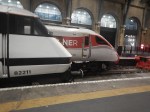

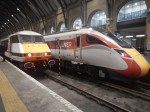
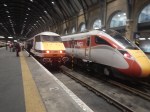
Note.
- Two of the three trains I’ve taken lately have arrived 3-4 minutes early.
- Not a great increase, but I do wonder if LNER are seeing what is possible with the new digital signalling.
- The British Rail era; InterCity 225 seems to hold its own against the new Hitachi train.
I wouldn’t be surprised that LNER intend to both run high-capacity trains between London and Leeds and fill them by competitive pricing.
A Grand Central Train Failure On Tuesday
This was my journey to Bradford on Tuesday,
- I was supposed to take the 1057 Grand Central service to Bradford Interchange, where it was timed to arrive at 1400.
- But the train didn’t run and we were all advised to get on the 1103 to Leeds and change at Doncaster.
- We arrived at Doncaster in Platform 4, a minute late at 1240 and got straight on a Grand Central train in the opposite Platform 6.
- We left Doncaster at 1251, which was sixteen minutes late.
- But we arrived in Bradford Interchange more or less on time at 1401.
Despite leaving six minutes late from Kings Cross and changing trains at Doncaster, we arrived at Bradford on time.
Battery-Electric Trains Between London and Bradford Interchange
I feel that my journey on Tuesday indicated.
- Electric trains between London and Doncaster can easily meet the current timetable.
- The Grand Central train went between Doncaster and Bradford Interchange was sixteen minutes faster than the timetable.
I wouldn’t be surprised that London and Bradford Interchange could be a few minutes under three hours.
Consider.
- It has been said that between Bradford Interchange and Leeds will be electrified.
- Bradford Interchange and Doncaster does not have electrification, but is only 52 miles.
- Electrification of Bradford Interchange station, will allow battery-electric trains to be charged in around 10-12 minutes.
- Most inter-city battery-electric trains have a battery range of at least eighty miles.
- Digital signalling is being installed between London and Doncaster to allow 140 mph running and more trains in the timetable.
I believe that a battery-electric train with sufficient range, charging South of Doncaster and at Bradford Interchange could go between London and Bradford Interchange in 5-10 minutes under three hours.
Bradford Interchange and all the other stations North of Doncaster on the route could probably also have a one tp2h service to and from London and the South.
Splitting And Joining Of Trains
Consider.
- Pairs of the Hitachi Class 801 trains have the ability to split and join en route, during a station stop extended by a few minutes.
- Platforms are long enough to handle splitting and joining at Doncaster, Leeds and York.
- Currently, three services to and from London go past Leeds; Bradford Forster Square, Harrogate and Skipton. All these services reverse in Leeds station, when they pass through.
- The reversing in Leeds station takes about 8-9 minutes.
- The track between Leeds and Bradford Forster Square is electrified.
- Leeds and Harrogate is not electrified and is 19.3 miles.
- The track between Leeds and Skipton is electrified.
- Bradford Forster Square has a service of two tpd.
- Harrogate has a service of one tp2h.
- Skipton has a service of one tpd.
In the Wikipedia entry for LNER, this is said.
From December 2019, LNER introduced a Harrogate to London service six times a day. LNER expected to introduce two-hourly services to Bradford and a daily service to Huddersfield by May 2020 when more Azuma trains had been introduced, however the latter has not yet been introduced.
Note.
- The Huddersfield service would have to reverse in Leeds station, like those to Bradford Forster Square, Harrogate and Skipton.
- Leeds and Huddersfield is not electrified and is 17.1 miles.
- Leeds and Huddersfield is being electrified.
Could LNER’s plan be to give Bradford Forster Square, Harrogate, Huddersfield and Skipton stations a two-hourly service , as the Wikipedia extract indicated, they intend to do for Bradford?
- All trains enter and leave Leeds to and from the West.
- Pairs of five-car trains would split and join at Leeds.
- Bradford Forster Square and Skipton services would be served by electric trains.
- Harrogate and Huddersfield services would be served by bi-mode or battery-electric trains.
- Horsforth, Keighley and Shipley could also get a one tp2h service to London.
It looks like services via Leeds could be much improved.
In a two-hour period the Leeds area will have the following trains to and from London Kings Cross.
- Two trains between London and Leeds via Peterborough, Doncaster and Wakefield Westgate
- One train between London and Bradford Forster Square via Stevenage, Grantham, Retford (Bradford-bound only), Doncaster, Wakefield Westgate, Leeds and Shipley.
- One train between London and Harrogate via Stevenage, Grantham, Doncaster, Wakefield Westgate, Leeds and Horsforth
- One train between London and Huddersfield via Stevenage, Grantham, Doncaster, Wakefield Westgate and Leeds
- One train between London and Skipton via Peterborough, Newark Northgate, Doncaster, Wakefield Westgate, Leeds, Shipley (London-bound only) and Keighley.
Note.
- Stops between London and Leeds would be adjusted to satisfy passenger numbers.
- Currently, there are a total of four trains in a two hour period.
- Six trains will be fitted in by having two London and Leeds trains and two pairs of five-car trains, that joined and split at Leeds.
There is still only four train paths needed in a two hour period between London and Leeds.
Digital Signalling Between London And Doncaster
The East Coast Digital Programme has its own web site, which gives this introduction to the programme.
The East Coast Digital Programme is delivering the next generation of train travel – creating a better performing East Coast Main Line for passengers and everyone else who uses and depends on it.
As part of the programme, traditional lineside signals will be removed and replaced with state-of the art digital signalling to improve the reliability of the train service.
The new technology continuously communicates with each train, providing signalling information directly to a computer screen in the driver’s cab. It boosts reliability, reduces carbon emissions and provides a more punctual service for customers.
In the first stage, digital signalling will be introduced on the Northern City Line, between Finsbury Park and Moorgate. It will then be progressively rolled out on the southern section of the East Coast Main Line (between London King’s Cross and the Stoke Tunnels, near Grantham).
It is expected that the first trains to operate on the East Coast Main Line using digital signalling technology will run in 2025, with all improvements expected to be completed by the end of the decade.
As a result of this programme, the East Coast Main Line will be GB’s first intercity mainline to be upgraded to digital. It lays the foundation for further improvements across the network, creating a more efficient railway fit for the future.
There is also a video.
Benefits of digital signalling will include.
- 140 mph running instead of 125 mph.
- An increase in the number of train paths.
- Trains will be able to be run closer together.
As a Graduate Control Engineer, I also believe that digital signalling will enable better control of trains through bottlenecks.
- Could ERTMS And ETCS Solve The Newark Crossing Problem?
- Is There An ERTMS-based Solution To The Digswell Viaduct?
A computer solution would surely be more affordable than some massive civil engineering.
What Will Be The Fastest Times Possible Between London King’s Cross And Leeds?
I put my thoughts in What Will Be The Fastest Times Possible Between London King’s Cross And Leeds?.
Conclusion
The original High Speed Two specification gave a time of one hour and twenty-one minutes between Euston and Leeds.
I suspect that time will be approached before 2040.
Plan To Develop New ‘Southern Gateway’ Through Station In City Centre
The title of this post, is the same as that of this article in the Bradford Telgraph and Argus.
This is the sub-heading.
Work to develop a new city centre rail station in Bradford could soon be back on the rails, despite the Government cancelling the local Northern Powerhouse Rail line
These are the first two paragraphs.
It has today been announced that the UK Infrastructure Bank will be working with Bradford Council to plan and develop a proposed “Southern Gateway” station in the city centre.
Although few details have been announced so far, the station is expected to be a through station, and is likely to be on the site off Wakefield Road currently occupied by St James’ Wholesale Market.
This sounds like an updating with finance of a plan I wrote about in Bradford Seeks Support On Rail Project Which Could Deliver £30bn Benefits.
This map from OpenRailwayMap shows the rail lines in the Bradford area.
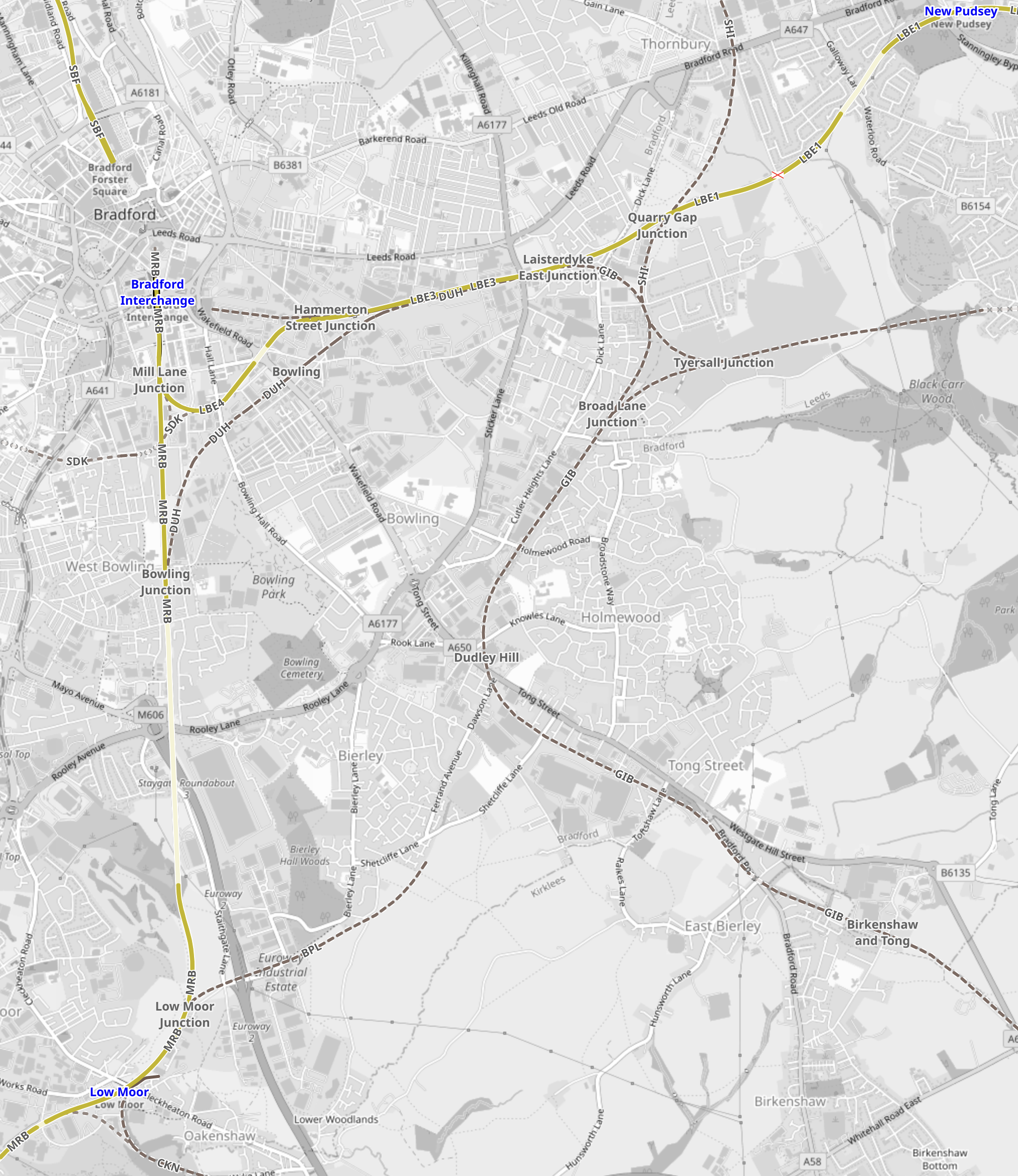
Note.
- New Pudsey station is in the North-East corner of the map.
- Bradford Foster Square and Bradford Interchange stations are in the North-West corner of the map.
- Low Moor station is in the South-West corner of the map.
This second OpenRailwayMap shows an enlargement of the lines across Bradford.
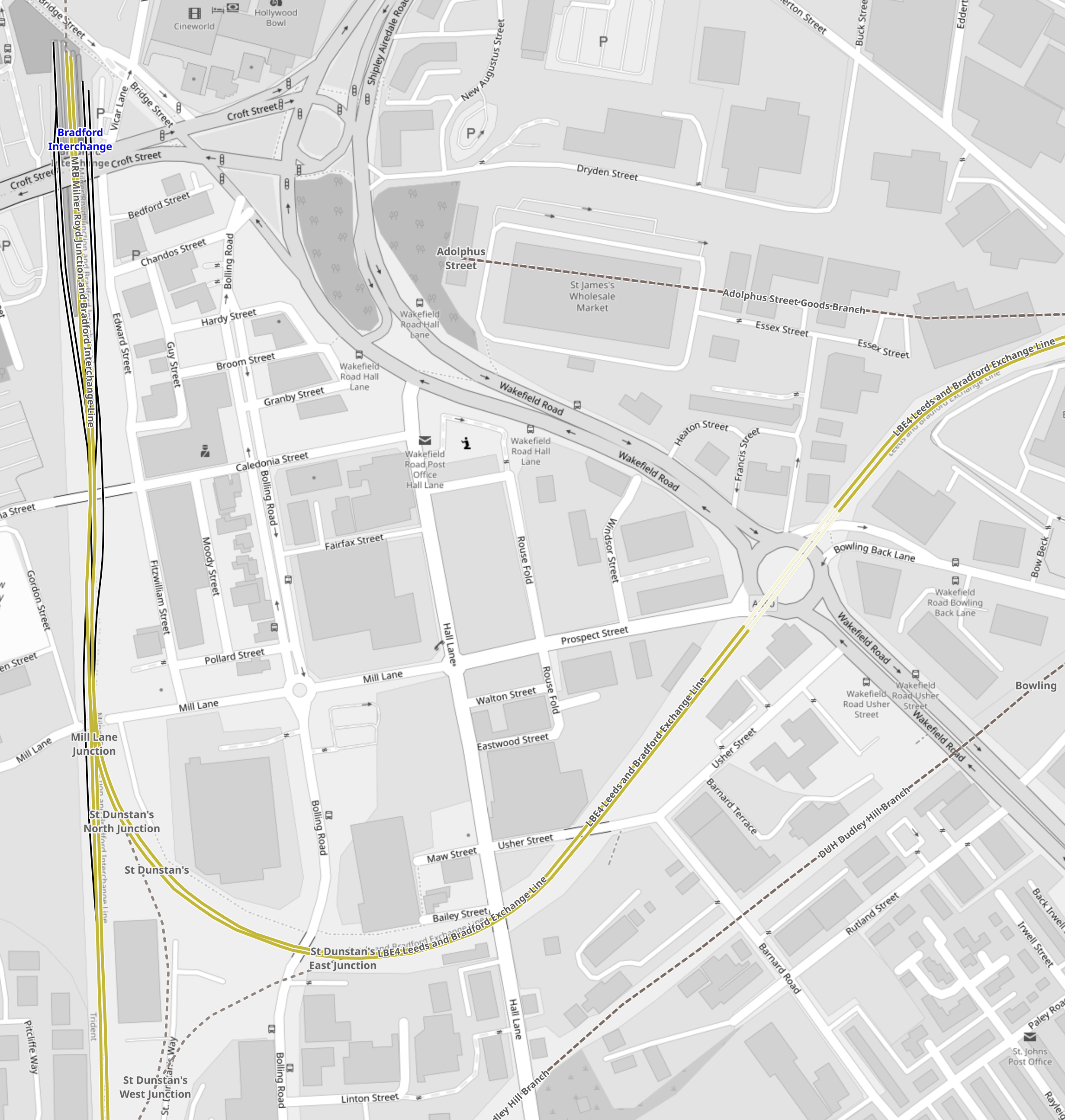
Note.
- Bradford Interchange station is in the North-West corner of the map.
- The railway lines are shown in yellow.
- New Pudsey station is off the map to the East and on the way to Leeds.
- Some trains between Leeds and Bradford are routed via New Pudsey station and the loop in this map.
- The railway between New Pudsey and Bradford Interchange stations goes under a roundabout on the Wakefield Road.
This Google Map shows St. James Wholesale Market and the railway to the North-East of the roundabout.
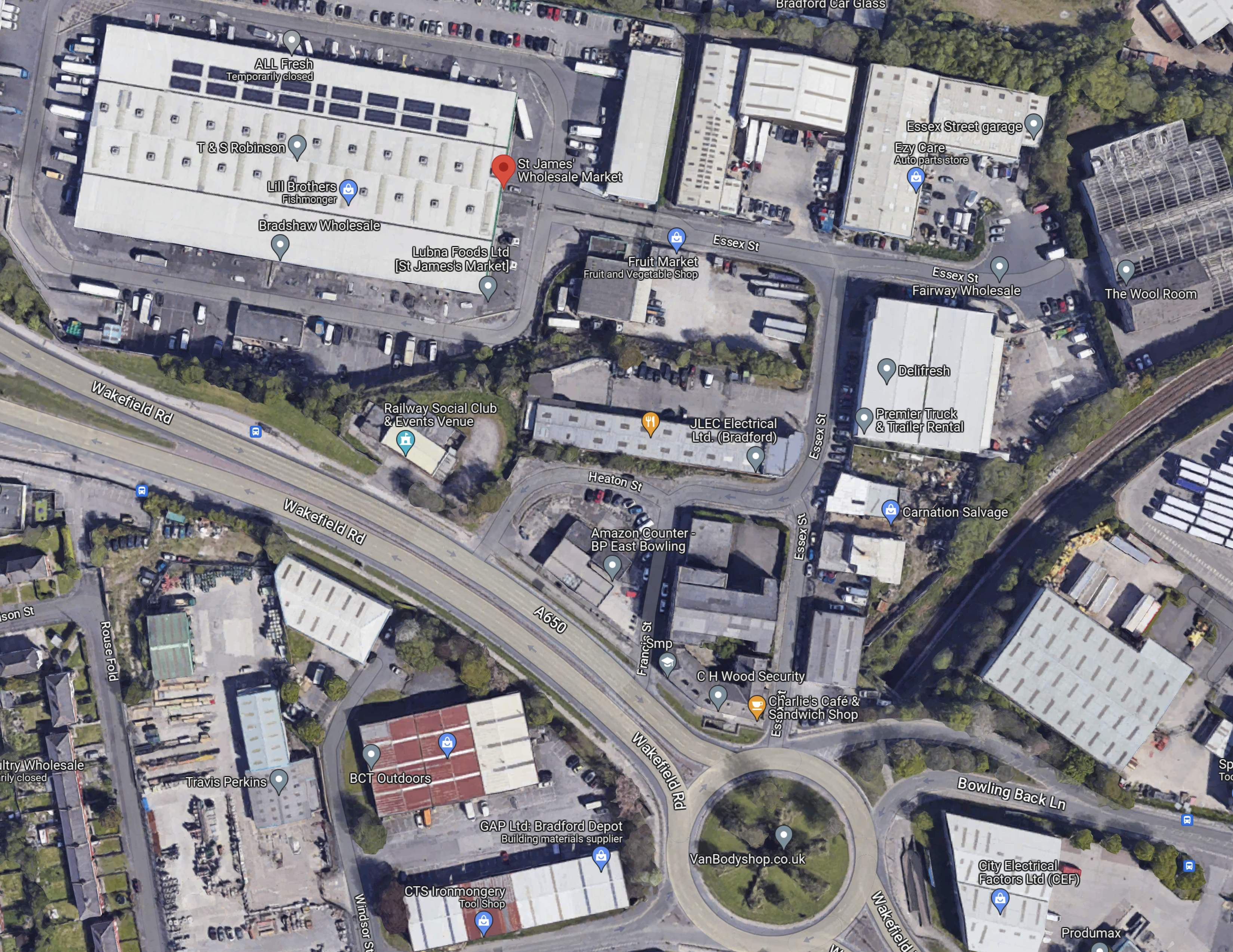
Note.
- St. James Wholesale Market is marked by the red arrow.
- The railway between New Pudsey and Bradford Interchange stations goes under the roundabout at the bottom of the map.
There’s certainly a lot of space to the East of the market. Could the new station be built with a lot of adjacent open space like King’s Cross and Liverpool Lime Street.
These are further thoughts.
Will There Be A New Chord South Of Bradford Interchange Station?
This section is an edited version of a section from Bradford Seeks Support On Rail Project Which Could Deliver £30bn Benefits.
This Google Map, shows Mill Lane Junction, where the lines from New Pudsey and Bradford Low Moor stations join South of Bradford Interchange station.
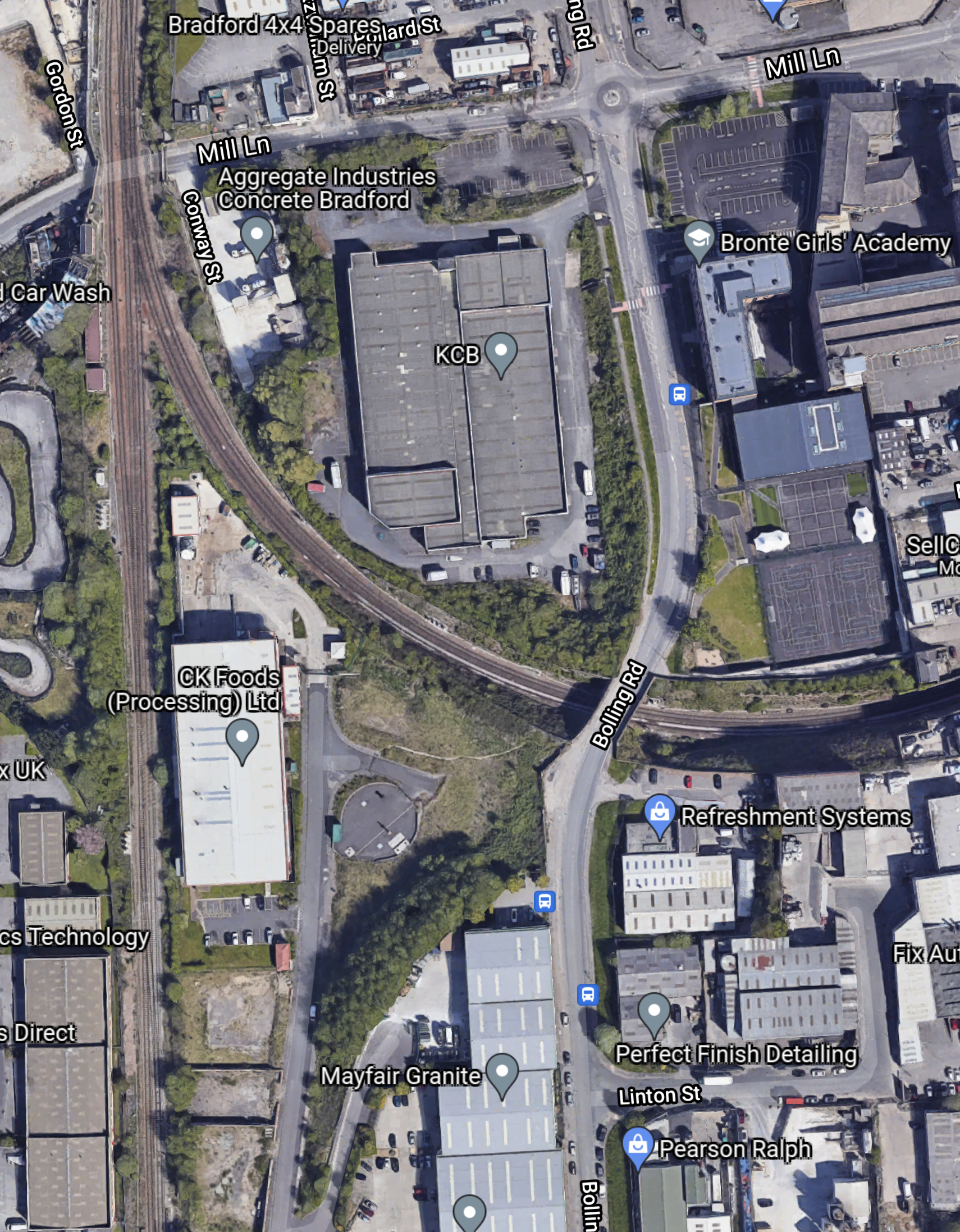
Note.
- Bradford Interchange station is on the rail line to the North.
- The proposed new Bradford station and the existing New Pudsey station are on the rail line to the East.
- Bradford Low Moor station is on the rail line to the South.
It would appear that an extra chord should be added to the junction to allow trains between Manchester Victoria and Leeds running via the Calder Valley Line to call at the new station in Bradford.
Current trains between Manchester Victoria and Leeds using this route have to reverse at Bradford Interchange. The new station and the extra chord would avoid this.
Will Bradford Interchange Station Be Closed?
That is a big question and depends on the overall plan.
I await the full plan with interest.
But building the new chord, closing Interchange station and avoiding the reverse will speed up services.
What Trains Will Call At The New Station?
Currently, only these trains from Northern, go through the station site.
- Hull and Halifax
- Leeds and Chester
- Leeds and Manchester Victoria
- York and Blackpool North
Note.
- All have a frequency of one train per hour (tph)
- All currently reverse at Bradford Interchange.
- All call at Leeds, New Pudsey and Halifax.
- Three tph call at Bramley and Hebden Bridge.
- Two tph call at Manchester Victoria, Rochdale and Todmorden.
- One tph calls at Low Moor.
I suspect these service could be augmented to perhaps give the following.
Four tph to Hebden Bridge, Rochdale and Manchester Victoria.
The only other trains passing though the area are Grand Central’s four trains per day (tpd) between London King’s Cross and Bradford Interchange via Low Moor.
- If these trains terminated in a bay platform at the new station, would this enable their frequency to be increased?
- Or could the services be extended to Leeds?
The new station certainly opens up possibilities.
Green Light For Major Transpennine Improvements
The title of this post, is the same as that of this article on Railnews.
These paragraphs outline the project.
Improvements on the Transpennine route in West Yorkshire have been given the green light, after a Transport and Works Act order was signed by the transport secretary on 27 June, six months earlier than planned.
The cost of the upgrades was described as ‘multi-billion’ by Network Rail, which said it was the ‘biggest milestone’ so far on the Transpennine Route Upgrade programme.
The improvements will be carried out between Huddersfield and Westtown in Dewsbury, and include quadrupling the double line and remodelling track layouts as well as major renovations at Huddersfield, Deighton and Mirfield and a new station at Ravensthorpe. In addition, there will be a flyover near Ravensthorpe to separate the Wakefield and Leeds lines and reduce conflicting movements.
Effectively, Grant Shapps fired the starting gun for this project four days ago.
I have written various posts on the upgrade and they can be read from this link.
The Transpennine Route Upgrade Web Site
The project now has its own comprehensive web site, which is named the Transpennine Route Upgrade.
A Reply To Peter Robins About Electrification
Peter Robins made this very perceptive comment.
The main point of TPU isn’t electrification, though, it’s upgrading the track to remove bottlenecks, improve lines speeds, add capacity. This is mainly what the Hudd-Dew TWA order is about. If you electrify the line while you’re doing that, then you increase the number of connecting places/lines which are within range of current batteries.
I think that Lds-CF will also have to wait for the post-IRP review, meaning the full upgrade will be a long time coming.
This Hitachi infographic shows the specification of their Regional Battery Train.

Note.
- It is a 100 mph train.
- Batteries can be charged when travelling under wires or 10-15 mins static.
- Range on batteries is 90 km. or 56 miles.
- My experience of Hitachi bi-modes is that pantographs on these trains can go up and down, with all the alacrity of a whore’s drawers.
Hitachi have stated that they will be testing a Class 802 train with batteries later this year.
Could Hitachi Battery Trains Be Charged On The Electrification Between Huddersfield And Dewsbury?
Looking at the data from RealTimeTrains for this route it appears that the fastest time I can find between Huddersfield And Dewsbury is eleven minutes.
Would this be enough time to fully-charge the battery? If not the electrification could perhaps be extended for a couple of miles.
How Many Of Transpennine Express (TPE)’s Services Could Be Decarbonised, if Huddersfield And Dewsbury Were To Be Electrified?
I’ll look at each service that uses this route.
Liverpool Lime Street And Newcastle
This is an hourly service that calls at Newton-le-Willows, Manchester Victoria, Huddersfield, Dewsbury, Leeds, York, Northallerton, Darlington and Durham.
- Liverpool Lime Street and Manchester Victoria is electrified.
- Colton Junction and Newcastle is electrified.
- Huddersfield and Dewsbury will be electrified by the Transpennine Route Upgrade.
This leaves the following sections without electrification.
- Manchester Victoria and Huddersfield – 25.8 miles
- Dewsbury and Colton Junction – 29.3 miles
Note.
- There are also stops under the wires, at Dewsbury, Huddersfield and Leeds, which could be used to top up the battery.
- The largest unelectrified section would be 29.3 miles.
It looks to me that Liverpool Lime Street And Newcastle could be served using a Hitachi Regional Battery Train or similar.
Manchester Airport And Redcar Central
This is an hourly service that calls at Gatley, Manchester Piccadilly, Manchester Oxford Road, Manchester Victoria, Huddersfield, Dewsbury, Leeds, York, Thirsk, Northallerton, Yarm, Thornaby and Middlesbrough.
- Manchester Airport and Manchester Victoria is electrified.
- Colton Junction and Northallerton is electrified.
- Huddersfield and Dewsbury will be electrified by the Transpennine Route Upgrade.
This leaves the following sections without electrification.
- Manchester Victoria and Huddersfield – 25.8 miles
- Dewsbury and Colton Junction – 29.3 miles
- Northallerton and Redcar Central – 28.8 miles
Note.
- There are also stops under the wires, at Dewsbury, Huddersfield and Leeds, which could be used to top up the battery.
- The largest unelectrified section would be 29.3 miles.
- I suspect that charging could be needed at Redcar end of the route. Middlesbrough would probably be best, as it could also charge the LNER services, if they used battery power from Northallerton.
It looks to me that Manchester Airport And Redcar Central could be served using a Hitachi Regional Battery Train or similar.
Manchester Piccadilly And Hull
This is an hourly service that calls at Stalybridge, Huddersfield, Leeds, Selby and Brough.
- Manchester Piccadilly and Manchester Victoria is electrified.
- Huddersfield and Dewsbury will be electrified by the Transpennine Route Upgrade.
- Leeds and Neville Hill Depot is electrified.
This leaves the following sections without electrification.
- Manchester Victoria and Huddersfield – 25.8 miles
- Dewsbury and Leeds – 29.3 miles
- Neville Hill Depot and Hull – 50 miles
Note.
- There are also stops under the wires, at Huddersfield and Leeds, which could be used to top up the battery.
- The largest unelectrified section would be 50 miles.
- I am sure that charging would be needed at Hull end of the route. Hull would probably be best, as it could also charge the Hull Trains, LNER and Northern Trains services, if they used battery power from the East Coast Main Line.
- Alternatively, there could be electrification between Hull and Brough. or Neville Hill and Micklefield. The latter would knock eight miles off the unelectrified section and is needed to allow electric trains to access Neville Hill Depot under electric power.
It looks to me that Manchester Piccadilly and Hull could be served using a Hitachi Regional Battery Train or similar.
Manchester Piccadilly and Huddersfield
This is an hourly service that calls at Stalybridge, Mossley, Greenfield, Marsden, and Slaithwaite.
- Manchester Piccadilly is electrified.
- Huddersfield is electrified.
This leaves the following sections without electrification.
- Manchester Piccadilly and Huddersfield – 25.5 miles
Note.
- There are also stops under the wires, at Manchester Piccadilly and Huddersfield, which would be used to top up the battery.
- The largest unelectrified section would be 25.5 miles.
- Trains would be charged at both ends of the route.
It looks to me that Manchester Piccadilly and Huddersfield could be served using a Hitachi Regional Battery Train or similar.
Huddersfield And Leeds
This is an hourly service that calls at Deighton, Mirfield, Ravensthorpe, Dewsbury, Batley, Morley and Cottingley
- Huddersfield is electrified.
- Leeds is electrified.
This leaves the following sections without electrification.
- Dewsbury and Leeds – 29.3 miles
Note.
- There are also stops under the wires, at Manchester Piccadilly and Huddersfield, Deighton, Mirfield, Ravensthorpe, Dewsbury and Leeds, which would be used to top up the battery.
- The largest unelectrified section would be 29.3 miles.
- Trains would be charged at both ends of the route.
It looks to me that Huddersfield and Leeds could be served using a Hitachi Regional Battery Train or similar.
York And Scarborough
This is an hourly service that calls at Malton and Seamer
- York is electrified.
This leaves the following sections without electrification.
- York And Scarborough – 42.1 miles
Note.
- The largest unelectrified section would be 42.1 miles.
- Trains would be charged at both ends of the route.
It looks to me that York and Scarborough could be served using a Hitachi Regional Battery Train or similar.
How Many Of Northern Trains’s Services Could Be Decarbonised, if Huddersfield And Dewsbury Were To Be Electrified?
I’ll look at each service that uses this route.
Wigan North Western And Leeds
This is an hourly service that calls at Daisy Hill, Atherton, Walkden, Salford Crescent, Salford Central, Manchester Victoria, Rochdale, Smithy Bridge, Littleborough, Walsden, Todmorden, Hebden Bridge, Mytholmroyd, Sowerby Bridge, Brighouse, Mirfield, Dewsbury, Morley and Cottingley
- Wigan North Western is electrified.
- Salford Crescent and Manchester Victoria is electrified.
- Heaton Lodge East junction and Dewsbury is electrified.
- Leeds is electrified.
This leaves the following sections without electrification.
- Wigan North Western and Salford Crescent – 16 miles
- Manchester Victoria and Heaton Lodge East junction – 37.6 miles
- Dewsbury and Leeds – 29.3 miles
Note.
- There are also stops under the wires, at Wigan North Western, Salford Crescent, Salford Central, Manchester Victoria, Mirfield, Dewsbury and Leeds, which would be used to top up the battery.
- The largest unelectrified section would be 37.6 miles.
- Trains would be charged at both ends of the route.
It looks to me that Wigan North Western and Leeds could be served using a Hitachi Regional Battery Train or similar.
Huddersfield And Castleford
This is an occasional service that calls at Deighton, Mirfield and Wakefield Kirkgate.
As it is run by buses at the moment, I can’t get the data to work out if it could be served using a Hitachi Regional Battery Train or similar.
But I suspect it can, after looking at a map.
How Many Of Grand Central’s Services Could Be Decarbonised, if Huddersfield And Dewsbury Were To Be Electrified?
I’ll look at each service that uses this route.
London King’s Cross And Bradford Interchange
This is a four trains per day service that calls at Doncaster, Pontefract Monkhill, Wakefield Kirkgate, Mirfield, Brighouse, Halifax and Low Moor.
- King’s Cross and Doncaster is electrified.
- Mirfield is electrified.
This leaves the following sections without electrification.
- Doncaster and Mirfield – 34.8 miles
- Mirfield and Bradford Interchange – 17.3 miles
Note.
- There are also stops under the wires, at Mirfield, which would be used to top up the battery.
- The largest unelectrified section would be 34.8 miles.
- Trains would need to be charged at Bradford Interchange, during the turnround of around an hour.
- It is likely, that some electrification will be erected in the Bradford area, to improve services to Leeds.
It looks to me that London King’s Cross and Bradford Interchange could be served using a Hitachi Regional Battery Train or similar.
Conclusion
It looks like electrifying between Huddersfield and Dewsbury will enable a Hitachi Regional Battery Train or similar to work all passenger routes, that run on that section of track.
Alternative Rail Connections For Bradford After IRP Snub
The title of this post is the same as that of this article on New Civil Engineer.
This is the first paragraph.
Of all the losers from the Integrated Rail Plan (IRP), Bradford is arguably the biggest.
I agree! But then Bradford is a very difficult problem.
The article talks about several solutions.
- One is a new station at St. James Market, which I wrote about in Bradford Seeks Support On Rail Project Which Could Deliver £30bn Benefits.
- Another suggests electrifying between Bradford and Leeds and increasing capacity between the two cities.
These are probably the best of a rather mixed and downright impractical bunch.
The big problem with Bradford Interchange station is that it is a terminal and not a through station. Through trains between say Leeds and Halifax or Huddersfield have to reverse in the station, which slows the services down by up to five minutes.
Currently the following local services call at Bradford Interchange station.
- Blackpool North and York
- Chester and Leeds
- Halifax and Hull
- Huddersfield and Leeds
- Manchester Victoria and Leeds
Note.
- All services have a frequency of one tph.
- All trains are diesel-powered.
- All services reverse in Bradford Interchange station.
- Platforms 1 and 2 can accommodate five-car Class 180 trains, which are 120 metres long.
This Google Map shows Bradford Interchange station.
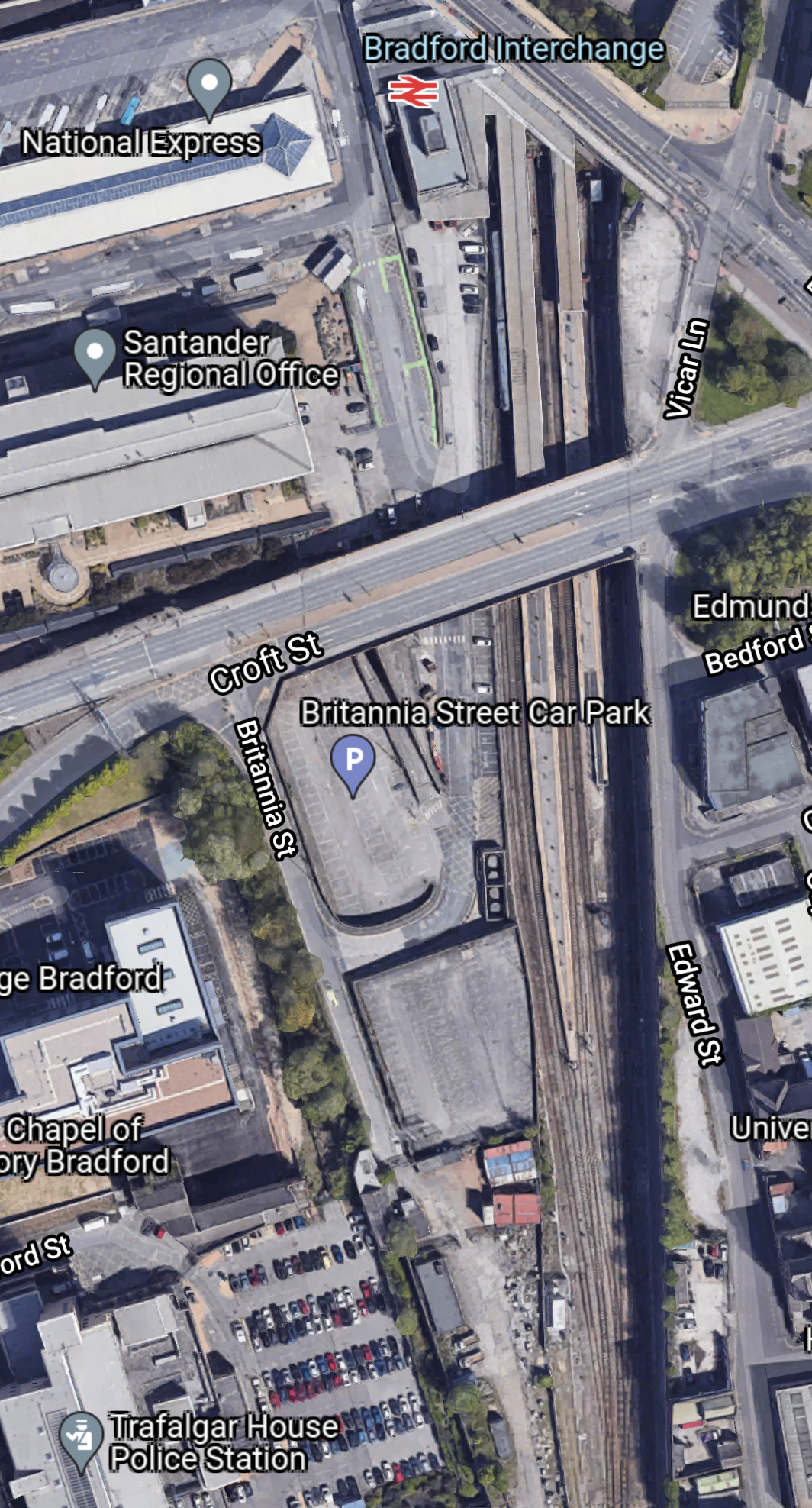
Note.
- Platforms 1 and 2 are the longer pair of platforms to the West.
- Platform 3 and 4 can probably handle a four-car train.
- I suspect that if necessary platforms could be lengthened so they could all take a five-car Class 802 train, which is 130 metres long.
In Would Automated Trains With The Ability To Run Backwards Improve Passenger Train Services?, I proposed providing sufficient automation and signalling improvements, so that drivers could drive the train from either cab.
This would make the reverse at Bradford Interchange station take as long as a normal stop, without any reduction in safety.
If this could be made to work efficiently, it must open up the possibility of a Leeds and Manchester Airport service.
- It would call at Bradford Interchange, Low Moor, Halifax, Brighouse and Huddersfield.
- It would satisfy Bradford’s need of a direct service to Manchester Airport.
- It would improve getting to the airport for Low Moor, Halifax and Brighouse.
There would be no need for large amounts of new or modified infrastructure.
Are Grand Central Going To Order Some Hitachi Intercity Battery Hybrid Trains?
I ask this question because I’ve just looked at the Hitachi infographic for the Hitachi Intercity Battery Hybrid Train, that I wrote about in Hitachi Rail And Angel Trains To Create Intercity Battery Hybrid Train On TransPennine Express
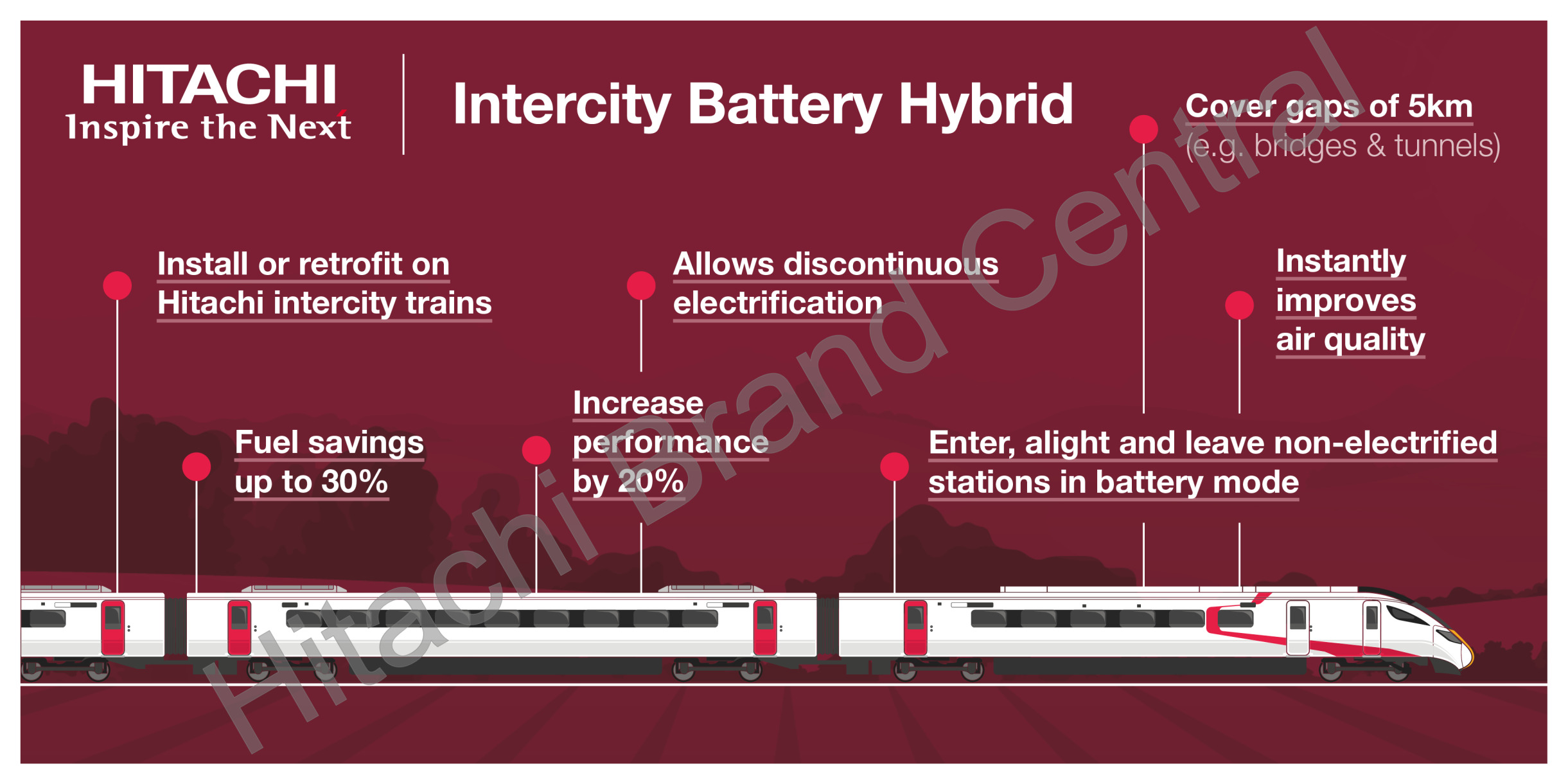
Note that in the background of the image Hitachi Grand Central can be seen.
Looking at Grand Central‘s routes I can say the following.
- The Sunderland service uses the fully-electrified East Coast Main Line to the South of Northallerton.
- The Bradford service uses the East Coast Main Line to the South of Shaftholme Junction.
- The Sunderland service runs for 47.4 miles on lines without electrification.
- The Bradford service runs for 47.8 miles on lines without electrification.
- The trains run at 125 mph on East Coast Main Line.
- Each service has around half-a-dozen stops, most of which are on lines without electrification.
Grand Central run the services using Class 180 diesel trains.
I think there are two possibilities for new trains.
Hitachi Intercity Battery Hybrid Train
This train would be similar to the Hitachi Intercity Battery Hybrid Train shown in the infographic.
- It would be designed to run efficiently on diesel.
- The train could run at 140 mph on electricity and with a signalling update.
- The claimed extra performance could speed up the services.
- Batteries would be used in stations.
There would be a worthwhile saving in fuel and less carbon emissions.
Hitachi Intercity Battery Hybrid Train With A Larger Battery
This would be similar to the standard train, but with a larger battery.
- Battery range would be sufficient to cover the lines without electrification.
- Charging would need to be installed at Bradford Interchange and Sunderland stations.
- The other two diesel engines might be replaced with batteries.
- No diesel would be used.
- The train could run at 140 mph on electricity and with a signalling update.
- The claimed extra performance could speed up the services.
- Batteries would be used in stations.
There would be no fuel costs and zero emissions.
In Grand Central Opts For Split And Join, I wrote about Grand Central’s application to run more services that had been reported in the April 2018 Edition of Modern Railways in an article that is entitled Grand Central Applies For Extra Services.
If Grand Central are still interested in expanding and splitting and joining, then the Hitachi trains, which have a proven ability in this area would fit the requirement.
In
 The Anonymous Widower