‘A Rare Opportunity’: Northern Will Run Service Along Heritage Railway Line For The First Time And Tickets Are Now On Sale
The title of this post, is the as that of this news item from Northern Trains.
This is the sub-heading.
Northern will run a service along a heritage railway line for the first time, to raise money for charity.
These four paragraphs add detail to the story.
Tickets are now on sale for the service, which will set off from Darlington station on Sunday, 22 February and complete a return trip along Weardale Railway before heading back to Darlington.
Northern has been working closely with Weardale Railway to organise this event.
The railway, which opened in 1847, is a popular tourist attraction and allows visitors to travel on heritage trains along a picturesque 16-mile route. It runs between Bishop Auckland West and Stanhope in County Durham.
In 2020, it was saved from administration by The Auckland Project, which has since provided significant investment to fund essential repairs and infrastructure improvements.
Note.
- The train will be one of Northern’s Class 158 trains.
- Tickets are being sold for £25 and the proceeds will be donated to two local charities: The Angel Trust, based in Bishop Auckland, and 123help4familys, based in Stanhope.
- The train will leave Darlington at 09:46 and finishes its trips up and down the Weardale Line at Darlington at 17:44.
I won’t be going, as I can’t fit the day together.
Is There Support For An Extended Service From Bishop Auckland?
I asked Google AI, this question, and got this mildly surprising answer.
Yes, there is support for extended services in Bishop Auckland, primarily through NHS GP extended access, which provides appointments outside of normal hours (6 PM – 8 PM weekdays and weekends) at Bishop Auckland Hospital. The Urgent Treatment Centre is available 24/7, and various community-based support services, including care agencies and mental health support, are also available.
If the hospital and the other medical facilities are open, surely in a rural area, if they are needed, transport should be available.
Is There A Need For More Housing In Bishop Auckland?
Yes, there is a significant, documented need for more housing in Bishop Auckland to address a, “chronic shortage of quality bungalows and assisted living” alongside a broader demand for modern, energy-efficient homes. The town is undergoing a regeneration with plans for increased, “affordable housing” and “100% affordable” developments (e.g., in “Westerton Road” and “Holdforth Crescent”) to meet the growing population and “economic needs”.
Note.
- A regular service to Darlington may make building more housing viable.
- Judging by the amount of new houses along the Northumberland Line, the new railway has encouraged their building.
Services and stations could be added as required, as appears to be being done on the Northumberland Line.
Northern Launches New Yorkshire Flyer Fast Service Between Leeds And Sheffield
The title of this post is the same as that of this news item from Northern Trains.
This is the sub-heading.
Northern is running a new fast service which allows customers to travel between Leeds and Sheffield in 47 minutes.
These three introductory paragraphs add more detail.
Known as the Yorkshire Flyer, as it provides a quick and convenient connection between the White Rose county’s two biggest cities, the service was officially launched during an event at Leeds station earlier today.
Cutting journey times and providing more than 30,000 extra seats a week, the service will support economic growth by making it easier for people to get to work and reach new opportunities.
It used to take all Northern customers around an hour or longer to make the journey, with trains calling at various stops along the way.
These further details come from Real Time Trains.
- The trains used appear to be two-car Class 158 trains.
- The total distance is 38.7 miles.
- Between Leeds station and South Kirkby junction is electrified and a distance of 20.6 miles.
- Trains appear to leave Leeds station at xx45.
- CrossCountry services Leeds station for Sheffield at xx15 and make a similar intermediate stop at Wakefield Westgate.
- Leeds trains for Sheffield seem to leave from Platform 12 or 12A.
- Trains appear to leave Sheffield station at xx52.
- CrossCountry services leave Sheffield station for Leeds at xx22 and make a similar intermediate stop at Wakefield Westgate.
- Sheffield trains for Leeds don’t seem to have such a regular platform, as those in the other direction. But I suppose that will be improved.
Effectively, Northern and CrossCountry have paired up two services to give a two trains per hour, fast service between Leeds and Sheffield with one stop at Wakefield Westgate.
I have some further thoughts.
The Route Could Be Run By Battery-Electric Trains
Consider.
- The only part of the route that is not electrified is the 18.1 miles between South Kirkby junction and Sheffield station.
- From talking to engineers, who are working on developing battery-electric trains, a three-car train with a battery range of fifty miles is already a possibility.
- In 2015, I actually rode on a four-car battery-electric Class 379 train, that ran reliably on the Harwich branch for three months.
- Merseyrail’s battery-electric Class 777 trains probably have the performance and are working reliably on Merseyside. But they are probably a bit slow.
I believe that any number of train manufacturers would be very pleased to provide new battery-electric trains for the route.
But Siemens must be in the prime position.
- The German company has built a £200 million train factory at Goole in East Yorkshire, which is currently building London’s Piccadilly Line trains, which have batteries.
- Siemens have already delivered trains in Germany using the technology, they would use in the UK.
- The battery charging technology they would use for other routes in the UK, is described in Technology Behind Siemens Mobility’s British Battery Trains Hits The Tracks.
- Sheffield and Leeds, would make a superb test and demonstration route for battery-electric trains, as 50% of the route is fully-electrified with 25 KVAC.
- The Sheffield and Leeds route is just down the track from the Goole factory.
- I wouldn’t be very surprised, if Siemens were very keen to get a few orders close to their factory, as they would surely be easy to support.
But the clincher must be Juergen Maier, who used to be CEO of Siemens UK, and is now Chair of Great British Energy. Maier holds both British and Austrian citizenship, and was educated in Leeds and Nottingham, so hopefully, he can give this clanger-prone government some excellent advice where they need it, from his position in Great British Energy.
Could A Stop Be Made At Meadowbank Station?
This would give access to other rail routes and the Sheffield Supertram, but most of this access could also be performed at Sheffield.
Looking at the timetable of the route, I feel that there is enough slack to fit in a stop at Meadowhall, but it would need for the route to be electrified, so that the trains had faster acceleration and deceleration.
However, battery-electric trains may have the required performance.
What Maximum Speed Would The Trains Need?
Consider.
- The current Class 158 diesel trains used between Sheffield and Leeds and in many places in the UK are 90 mph trains.
- There are also a large number of Class 170 trains in the UK, that will need to be replaced and these are 100 mph trains.
- The Sheffield and Leeds route has some sections of 85 mph running.
- Train speeds are all accurately computer-controlled.
As a Control Engineer for safety and route availability reasons, I believe the trains will have a 100 mph maximum speed, but train speed will be computer controlled.
Will The Trains Be Driver-Only Operated?
I asked Google AI if Hitachi IET trains are driver only operated (DOO) and received this reply.
Hitachi Intercity Express Trains (IETs, Class 800/802) are designed for versatile operation, capable of Driver-Only Operation (DOO) using in-cab CCTV monitors for door safety checks. While they can operate without a guard, many services, particularly on GWR, still retain a guard on board for passenger service duties, even if the driver controls the doors.
So Hitachi trains can be driver-only operated and these will surely share the tracks with the trains that work the Northern Flyer.
I asked Google AI if Thameslink trains are driver only operated (DOO) and received this reply.
Yes, all Thameslink train services are Driver Only Operated (DOO). This means the driver is solely responsible for operating the doors and ensuring the safe dispatch of the train, without a guard or conductor on board to manage the doors. Through the central London core, these trains often use Automatic Train Operation (ATO).
As I believe that Siemens would be likely to win the battery-electric train order, because of proven technology, factory location and influence of Juergen Maier, Siemens certainly have the ability to produce trains, that are driver-only operated.
I believe that, whoever builds the trains, they will be capable of driver-only operation.
But if driver-only operation is to be used will be down to politics.
- Because of the situation on East West Rail, Heidi Alexander will probably be in favour.
- The Tories and Liberal Democrats will also be in favour.
- The rail unions, the left wing of the Labour Party and the Greens will be strongly against.
- Farage and Reform UK will take a very hard line to enforce driver-only operation everywhere.
The average citizen on the Northern Flyer and all the other trains in the UK, will just want a reliable train service.
Conclusion
- This would make a superb route for a battery electric train.
- No chargers or extra electrification would need to be installed.
- There wouldn’t be much work needed to be done to the platforms or the signalling.
- The trains would use standard 25 KVAC overhead electrification for charging.
- The trains would be running close to where they were built.
I believe the new service will give a large boost to the Yorkshire economy. Even before the arrival of battery-electric trains.
Improvements To Leeds And Hull Services
This news story from the Department of Transport is entitled Yorkshire And The Humber To Benefit From £19.8 billion Transport Investment.
This is said about Leeds and Hull services.
Hull will also be brought into the Northern Powerhouse Rail network, reducing journey time from Leeds from 58 minutes to just 48. The number of trains between Hull and Sheffield will be doubled, to 2 per hour, with capacity also doubled. Journeys from Hull to Manchester will drop from 115 to 84 minutes, enabling 2 fast trains to Leeds.
I shall look at the 10:15 Northern Trains service between Hull and Leeds on the 13th October 2023.
- The distance is 51.8 miles.
- There are seven stops.
- The service is run by a diesel Class 158 train.
- Journey time is 69 minutes.
Ten minutes off this time would be worthwhile.
I shall look at the 10:03 TransPennine Express service between Hull and Leeds on the 13th October 2023.
- There are two stops.
- The service is run by a diesel Class 185 train.
- Journey time is 54 minutes.
Ten minutes off this time would be difficult.
Note.
- The line between Micklefield and Leeds is being electrified.
- The distance between Hull and Micklefield is 42 miles.
- The route has a maximum speed of between 75 and 90 mph.
There is also an historic swing bridge at Selby, which would probably be difficult to electrify.
How Many Minutes Could Electric Trains Save Between Leeds and Hull?
Electric trains have better acceleration and deceleration, when compared to diesel trains, so two minutes per stop and for the acceleration and deceleration at Hull and Leeds, would give the following times.
- Northern Trains – 53 minutes
- TransPennine Express – 48 minutes
As electrification is not mentioned for between Leeds and Hull, the only electric trains, that could work the route will be battery-electric trains.
Battery-Electric Trains Between Leeds and Hull
Consider.
- TransPennine Express already have Class 802 trains, from which the battery-electric version is being developed.
- Northern Trains would need a suitable battery-electric train. There has been talk of a CAF battery-electric Class 331 train, but nothing more. These would surly be ideal.
- Trains could be charged on new electrification in Hull station and between Micklefield and Leeds.
The trains would need a range of just 42 miles.
A Second Fast Train Between Leeds and Hull
What does this statement in the news story imply?
Journeys from Hull to Manchester will drop from 115 to 84 minutes, enabling 2 fast trains to Leeds.
I feel that this statement must be read in conjunction with the benefits of the TransPennine Route Upgrade.
One benefit is given as Faster Journeys, where this is said.
We’re speeding up journeys so you can travel to your favourite towns and cities more quickly. Our fastest journey times are forecast to be 63-66 minutes between Manchester and York and 41-42 minutes between Manchester and Leeds.
The news story says that the fastest journey times between Leeds and Hull will be 48 minutes, which would give a Hull and Manchester time of 89-90 minutes.
Alternatively, there could be these timings on one train.
- Hull and Leeds – 48 mins
- Hull and Manchester Victoria – 84 mins
- Leeds and Manchester Victoria – 36 mins
Note.
- The train would call at Brough, Selby, Leeds, Huddersfield and Stalybridge.
- There may be a new station at Leeds Thorpe Park
- The distance between Hull and Manchester Victoria is 94.7 miles.
- This is an average speed of 67.6 mph.
It almost looks like it’s connectivity East of Leeds and speed between Leeds and Manchester.
Conclusion
Battery-electric trains would provide all the improvements promised between Leeds and Hull.
A Blue Peter-Style Repair To A Train Window
My train between Lincoln and Peterborough was delayed by a broken window.
These pictures show how it was repaired.

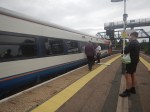
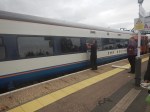
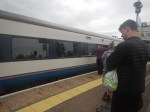
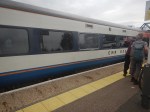
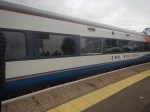
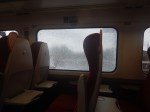
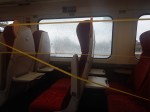
Obviously someone spent their childhood watching Blue Peter.
It’s amazing what you can do with sticky-back plastic and yellow tape.
The Lack Of Phone Charging On East Midlands Railways
I arrived at Lincoln station yesterday, after my trip from London, with a full battery on my phone, as LNER trains have charging points. But by the time I left Cleethorpes station to come home, my phone was dead, as I suspect the latest version of a news app, I use is a battery drainer.
There were also no charging points on TransPennine’s Class 185 trains or East Midlands Railways Class 170 trains.
Only, when I boarded a British Rail-era Class 158 train to get to Peterborough, was I able to recharge my phone.
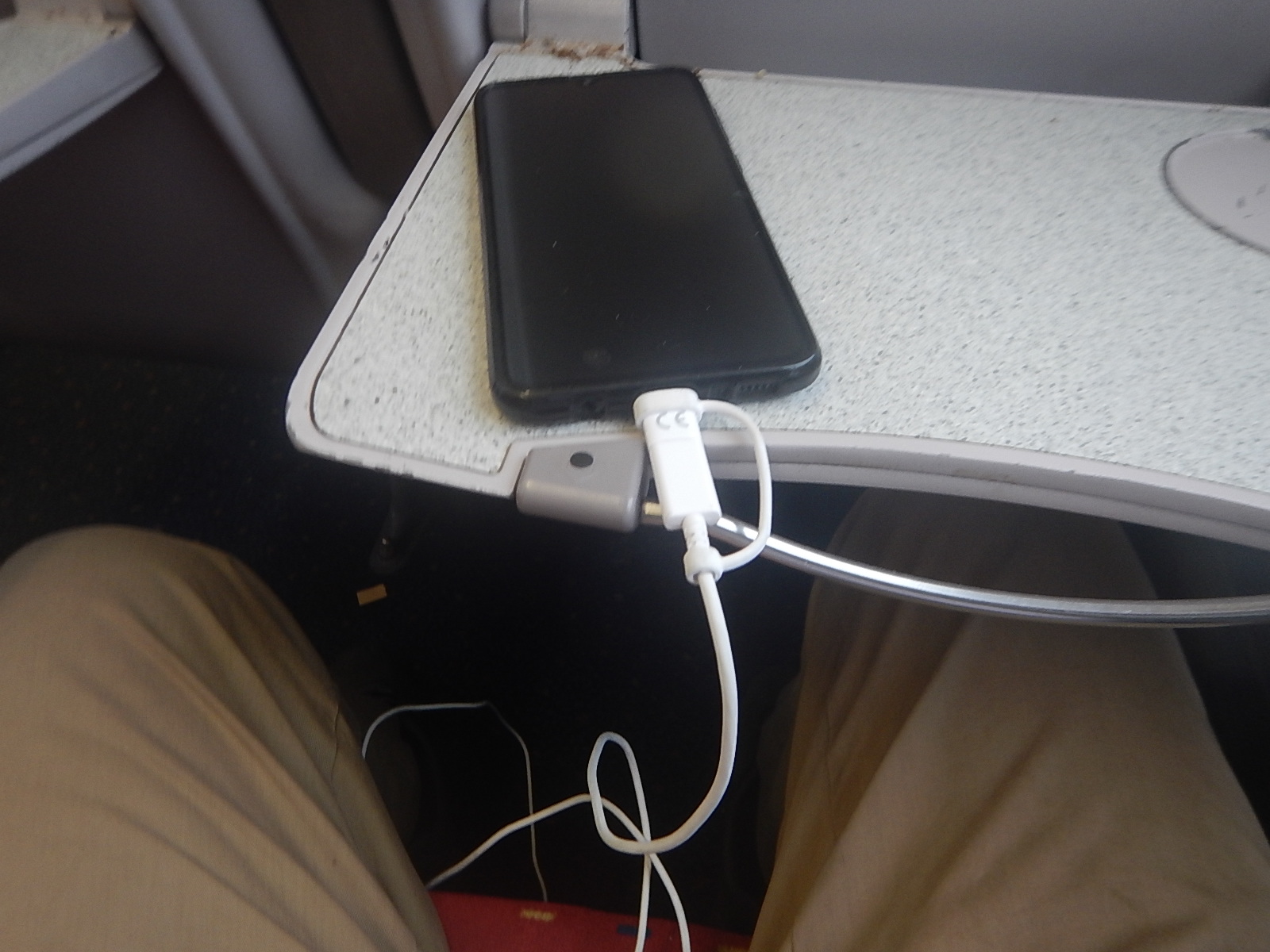
There is surely a need for phone chargers on every train.
TransPennine Express Explores Further Fleet And Capacity Expansion Options
The title of this post, is the same as that of this article on Railway Gazette.
This is the first paragraph.
First TransPennine Express is hopeful that it will be able to issue a call for expressions of interest in the provision of additional bi-mode trains before the end of March. This follows ‘a healthy level of interest’ in its existing call for expressions of interest in the supply of bi-mode locomotives to replace the Class 68s which work with its MkVa coaches.
I wrote about the expressions of interest to replace the Class 68 locomotives with new bi-mode locomotives in Suppliers Sought For New Bi-Mode Locomotives For TransPennine Express And Great Western Railway.
This was my conclusion in the related post.
When I saw First Group’s proposals, I thought that they were over ambitious.
But after doing a few simple calculations, I think they can decarbonise some, but not all of the TransPennine Express services and the Night Riviera.
So do First Group want to complete the decarbonisation of TransPennine Express services?
These are my thoughts.
The Train Fleet Specification
The Railway Gazette article makes these points about the new bi-mode trains.
- The trains could be existing or new bi-modes.
- It would be desirable for the trains to have a long-term electric-only option.
- Options for this would include removing the diesel engines or converting the trains to battery-electric operation.
- Hydrogen is not mentioned.
- A fleet size of twenty-five trains is mentioned.
- The possibility of electric-only trains in the future is mentioned..
- Five-cars, with the ability to lengthen to six- or seven-cars.
- 200 km/h operation.
There is nothing unusual in the specification.
Will They Be Existing Or New Trains?
I doubt that there are any existing 200 km/h bi-modes in the UK, that are not wanted by their current operators.
I am very certain they will be new trains.
Could The Trains Be Hitachi Class 802 Trains?
The trains sound very much like Hitachi Class 802 trains, that are in service with TransPennine Express, Great Western Railway and Hull Trains, all of whom are First Group companies.
- Long-term, the diesel engines can be removed or replaced with batteries.
- The battery option is under development and should be on test this year.
- The trains can be lengthened to as long as twelve cars, so six- and seven-car trains would be possible.
Hitachi will obviously show interest in this possible order.
Will These Trains Replace the Class 185 Trains?
Consider.
- TransPennine Express have 51 three-car Class 185 trains.
- This is a total of 153 cars.
- On some routes they work singly and on others they work in pairs.
- A three-car Class 185 train has 167 Standard Class and 15 First Class seats or 60.7 seats per car.
- A pair of Class 185 trains have 334 Standard Class and 30 First Class seats.
- A five-car TransPennine Express Class 802 train has 318 Standard Class and 24 First Class seats or 68.4 seats per car.
- It would appear that a Class 802 train is not that far short of the capacity of a pair of Class 185 trains.
- Some of the TransPennine services are very crowded.
I suspect that twenty-five five-car trains be able to handle the the workload of the Class 185 trains.
If a small amount of extra capacity were needed, some of the new trains could be six-cars.
In this section, I have assumed the new trains will be Class 802 trains, but any train manufacturer pitching for this order would adjust the capacity to the needs of TransPennine Express.
The Railway Gazette article says this.
TPE continues to explore opportunities for new services in the north of England, and the move could also feed into government plans for the removal of older and more costly to operate diesel trains elsewhere on the network, should any rolling stock become surplus to requirements at TPE.
So where could the Class 185 trains be used in the future?
Recently, MTU Hybrid PowerPacks have replaced the transmission on a Class 168 train, which reduces carbon emissions and fuel consumption and makes the train quieter and more passenger-friendly, as it doesn’t use diesel in stations.
The Class 185 trains are only fifteen years old and I suspect that MTU have designed the Hybrid PowerPack, so that it can replace the Cummins engine in trains like these.
The conversion could be done as a rolling program, so that any future operator would start with diesel and go hybrid a train at a time.
There has been speculation, that the trains may end up on the East West Railway and I wrote about this in East West Railway Company To Start Second Phase Of Rolling Stock Procurement.
But the East West Railway may prefer to use zero-carbon trains on a route, where there is electrification in places on the route.
Alternatively, South Western Railway run 10 two-car Class 158 trains and 30 three-car Class 159 trains between London Waterloo and Exeter.
- South Western Railway is another First Group company.
- The Class 185 trains could provide a capacity increase.
- The Class 185 trains are 100 mph trains, whereas the Class 158/159 trains are only capable of 90 mph.
The London Waterloo and Exeter Route could be electrified in the future and I am pretty sure, that the Class 185 trains with a hybrid transmission could be a good stand-in until this happens.
Other Train Manufacturers
I believe that Hitachi are in pole position for this order, just because they are an established supplier to both TransPennine Express and First Group.
But twenty-five five-car trains would be a very worthwhile order, so I suspect that companies like Alstom, CAF, Siemens, Stadler and Talgo will also express interest.
Conclusion
Buying extra bi-mode trains will take TransPennine Express further along the route to full decarbonisation.
Arcola Showcases Scottish Hydrogen Conversion
The title of this post is the same as an article in the December 2021 Edition of Modern Railways.
The article has this sib-title.
Class 614 Demonstration Runs at Bo’ness Next Year
This is a key paragraph early in the article.
The aim is to build capability within the Scottish supply chain with a view to future conversion of hydrogen fleets within Scotland. The choice of a ‘314’ to provide the donor vehicles was based solely on availability, following the withdrawal of the EMU fleet by ScotRail at the end of 2019.
I don’t think they would have been my choice of donor train, as the Class 314 trains were built over forty years ago.
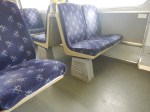
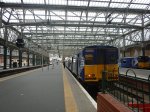
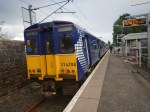
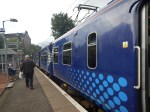
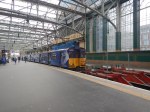
But, as Merseyrail have shown, British Rail trains of that era scrub up well.
The article is worth a full read and worth the cover price of the magazine, as it has details on the conversion and tips on how you might design a hydrogen train.
- All the hydrogen tanks , fuel cells and batteries are designed to be fitted in the vehicle underframes and don’t take up space in the passenger compartment.
- There is a fuel cell raft under both driving motor vehicles.
- Each raft contains a 70 kW fuel cell from Ballard and hydrogen cylinders.
- 40 kg. of hydrogen at a pressure of 350 bar can be carried in each raft.
- Waste heat from the fuel cell is used to heat the train.
- The DC traction motors have been replaced by modern three-phase AC motors.
- The hydrogen fillers come from the automotive industry, which is surely an obvious move.
- The interior looks good in the picture and has uses seats reclaimed from Pendolino refurbishment.
The article also reveals that Arcola are working with Arup on a study to convert a Class 158 DMU to hydrogen power.
Conclusion
I wish all the engineers and suppliers well, but I feel that these two projects are both driven by Scottish politics, rather than sound engineering principles.
What Happened To The Class 158/159 Bi-Mode Study?
In Class 158/159 Bi-Modes?, I discussed the possibility of turning South Western Railway‘s Class 158 and Class 159 trains into bi-modes.
I said this.
In the March 2018 Edition of Modern Railways, there is a short news item, which is entitled Bi-Mode Study For SWR DMUs.
The Class 158 and Class 159 diesel multiple units used by South Western Railway are diesel-hydraulic units.
Under their franchise agreement, South Western Railway, agreed to perform a study, to see if the multiple units could be converted from diesel-hydraulic to diesel-electric transmission.
If this is successful, then the plan would be to fit a third-rail capability to the trains, so they could use the electrification between Basingstoke and Waterloo on services to Salisbury and Exeter.
Could the conversion also raise the operating speed of the trains from their current 90 mph to a more timetable-friendly 100 mph?
It looks like it could be a feasible , especially as the article states they might re-use redundant modern traction equipment from Class 455 trains, which are due for replacement.
It sounded a sensible plan to do a study.
But we’ve heard nothing since.
- Has the late delivery of the Class 701 trains, pushed the availability of the Class 455 trains, that wioll donate the traction system, too far into the future?
- Has the Covids delayed another project?
- Would First Group prefer more Hitachi trains as five of their companies use them or have them on order?
- Is the 90 mph speed of the diesel trains, too slow for the busy London Waterloo and Basingstoke route?
Or could it be that Alstom, CAF, Hitachi, Stadler or another manufacturer have a much better zero-carbon plan?
Werrington Dive-Under – 8th September 2021
I had gone to Peterborough to take pictures of the Werrington Dive Under, from a train between Peterborough and Spalding.
I took these pictures going Peterborough and Spalding.
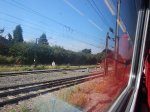
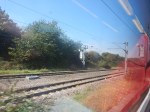
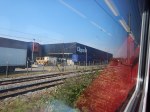
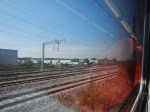
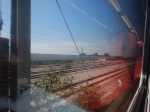
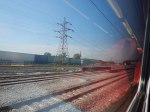
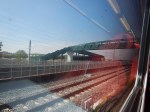
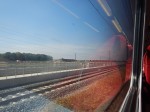
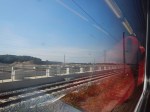
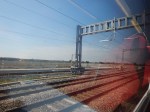
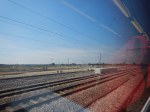
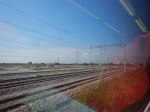
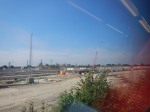



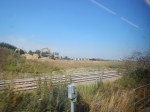
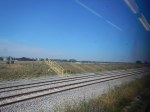
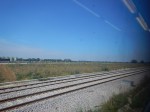
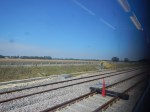
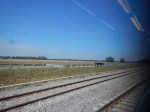
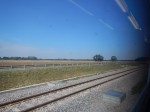
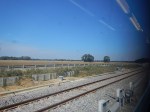
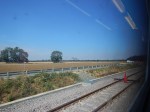
My train between Peterborough and Spalding stations took the following route.
- The Class 158 train was a great improvement on the Class 153 train, I took in From Peterborough To Lincoln in 2015.
- It started in Platform 1b at Peterborough station.
- It then crossed over to the Down Fast line to go North.
- Finally, it slowed to cross the Up Fast and Up Slow lines to go towards Spalding.
- It is surely not an efficient and the safest way to run a railway.
Think about turning right on a busy dual carriageway, by going through a gap in the central reservation.
This diagram shows the new track layout of Werrington Junction.
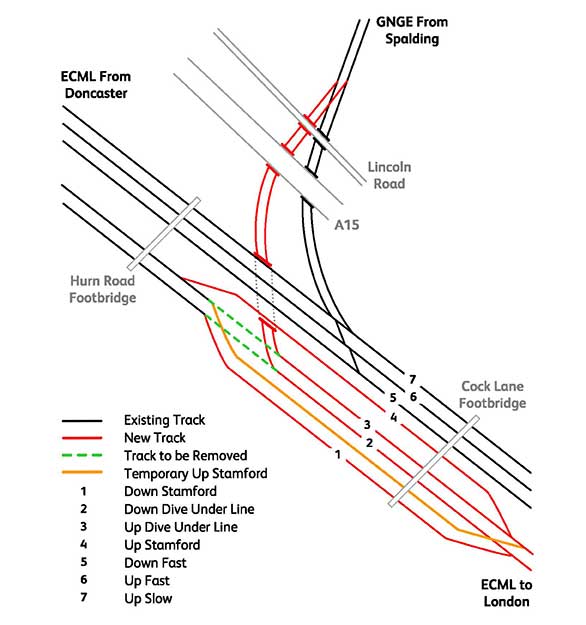
Note.
- My train was going North on Line 5, so it had to use the two crossovers to get to the lines to Spalding.
- The Up Stamford (Line 4) can be seen in the pictures after the two lines have disappeared into the dive-under.
It’s a pity the first of my pictures aren’t better, but the sun was in the wrong direction.
I took these pictures going Spalding and Peterborough.
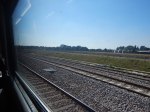
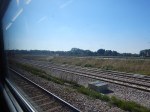
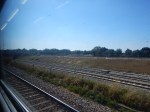
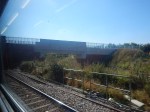
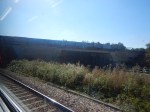
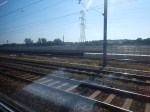
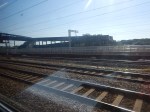
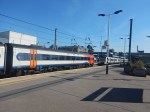
Note.
- The train used the Up Slow (line 7) to go between Werrington Junction and Peterborough station.
- The last two pictures show the Class 158 train in Platform 1b at Peterborough station.
At least this time, the train didn’t cross the Fast lines.
Will Passenger Trains Use The Werrington Dive-Under?
I’m very sure they will!
- On the Western side of Peterborough station, there are four platforms 4 to 7 and an avoiding line for freight trains going North.
- It appears that all of these lines can access the Down Stamford (Line 1) and Up Stamford (Line 4) to go to Werrington Junction.
- At Werrington Junction, trains either take the route to Stamford or use the dive-under for Spalding.
It looks to me, that if the trains to and from Spalding terminated in one of the Western platforms, then they could use the Stamford Lines to access the dive-under and they wouldn’t cross the Fast Lines of the East Coast Main Line on the flat.
Greengauge 21’s Suggestion, That Thameslink Be Extended To Spalding
In the study by Greengauge 21, which is entitled Connecting East Lincolnshire, this is said.
As noted the Spalding-Peterborough line should be a strong candidate for electrification because of its freight potential, and if so it could also accommodate an extension of Thameslink services from London and the South East to Spalding where interchange would be made with a Spalding–Boston–Louth–Grimsby express bus using the A16.
This proposal may be possible, if instead of using the dive-under, the Thameslink trains were able to use the Up Slow (line 7) to go both ways between Werrington Junction and Peterborough station.
As in the near future, full digital signalling will apply through Peterborough, this shouldn’t be a problem.
Electrification Of The Werrington Dive-Under?
Consider.
- There is a gap of around ninety miles in the freight route between the comprehensive electrification at Peterborough and Doncaster stations on the Great Northern and Great Eastern Joint Line (GNGE).
- There are dozens of level crossings.
- The route goes through the centre of Lincoln, where there are two level crossings.
There are two ways of decarbonising the route.
- Full electrification
- Using hydrogen-powered freight locomotives.
Both solutions have their proposers and opponents.
I favour hydrogen-electric hybrid locomotives, that can use electrification where it exists, as it reduces the infrastructure cost on overbridges and in freight depots.
- Hydrogen-powered locomotives have a go-anywhere capability.
- There are also a lot of routes in the UK, where freight trains currently run and it would take a long time to electrify all of them.
- As rail freight companies would have to purchase a lot of new locomotives, I can see them opting for hydrogen-electric hybrid locomotives.
But there are others, who think the only way is full electrification.
London And Lincolnshire By Electric Train
Passenger trains are not a problem, as Alstom, CAF, Hitachi, Stadler and others have demonstrated battery ranges of over fifty miles.
LNER are currently serving Lincoln from London using Hitachi bi-mode Class 800 trains, which use diesel for the 16.5 miles between Newark and Lincoln.
Hitachi’s proposed Intercity Tri-Mode Battery Train, is described in this Hitachi infographic.

I believe it would be possible to handle London and Lincoln via Newark without using diesel.
It also looks like it will be possible to convert the LNER’s current Class 800 trains into Intercity Tri-Mode Battery Trains.
But I doubt their range would sufficient to go between London and Lincoln via Peterborough, Spalding and Sleaford, unless there were to be a charging system at Lincoln.
But surely though, the ideal train for Lincolnshire would be a train that ran between London and Cleethorpes via Peterborough, Spalding, Sleaford, Lincoln, Market Rasen and Grimsby Town.
- Peterborough and Lincoln is 56.9 miles.
- Lincoln and Cleethorpes is 47.2 miles.
- The service could be timed for a convenient interchange with the other Lincolnshire train services.
- The service could run perhaps a few times per day.
With charging systems at Lincoln and Cleethorpes, similar to the Hitachi ABB Power Grids system that I described in Solving The Electrification Conundrum, this service could be run by an Intercity Tri-Mode Battery Train.
Peterborough And Lincolnshire By Electric Train
If you could run between Peterborough and major places in Lincolnshire, as part of a London service, I also suspect that a well-designed Peterborough and Lincolnshire service could serve Lincolnshire almost equally well.
It might use Platform 5 to terminate at Peterborough.
- This is paired with Platform 4, which is the platform generally used by LNER trains from London, so there would be a cross-platform interchange going North.
- Going South, there would be a need to use the footbridge.
How many people would use an hourly cross-TransLincs service?
Service Provision On The Levenmouth Rail Link
The reinstated Levenmouth Rail Link, will have two stations; Leven and Cameron Bridge.
According to this section in Wikipedia, which is entitled Service Provision, this will be the service.
The expected level of services is two trains per hour between Leven railway station and Edinburgh Waverley. Both will call at Cameron Bridge. One train will travel via Kirkcaldy and along the coast, while the other train will travel via Dunfermline along the inner Fife Circle Line.
In the Wikipedia entry for Leven station, it says that the service will take just over an hour.
Consider.
- Services between Edinburgh and Glenrothes with Thornton take about an hour whether the go via Kirkcaldy or Dunfermline.
- The current timings are based on Class 158 or Class 170 diesel trains.
- If as I surmise in Trains On The Levenmouth Rail Link, the trains are battery-electric Class 385 trains, these trains with their electric power will at least match the schedules of the diesel trains.
- Network Rail will design the track layout at Thornton junction, so that trains will clear the junction efficiently.
- Glenrothes with Thornton station is only half a mile from Thornton Junction.
- Leven station is only 5.9 miles from Thornton Junction.
I can see battery-electric trains moving smoothly and quietly up and down the Levenmouth Rail Line and around Thornton junction to provide a very efficient service to Edinburgh.
Could we even see trains from Edinburgh take this route?
Edinburgh, Haymarket, Edinburgh Gateway, Dalmeny, North Queensferry, Inverkeithing, Dalgety Bay, Aberdour, Burntisland, Kinghorn, Kirkaldy, Cameron Bridge, Leven, Cameron Bridge, Glenrothes with Thornton, Cardenden, Lochgelly, Cowdenbeath, Queen Margaret, Dunfermline, Dunfermline Town, Rosyth, Inverkeithing, North Queensferry, Dalmeny, Edinburgh Gateway and Haymarket.
Note.
- A second service would run in the opposite direction.
- Trains would reverse and the drivers would change cabs at Leven station.
- Trains would charge batteries on the Levenmouth Rail Link and at Edinburgh.
- Every station on the route would get two trains per hour (tph) in both directions.
The hourly service between Edinburgh and Cowdenbeath could continue.
The Bridges Across The Firth Of Forth
There would be a battery-electric train every thirty minutes in both directions across the Forth Bridge.
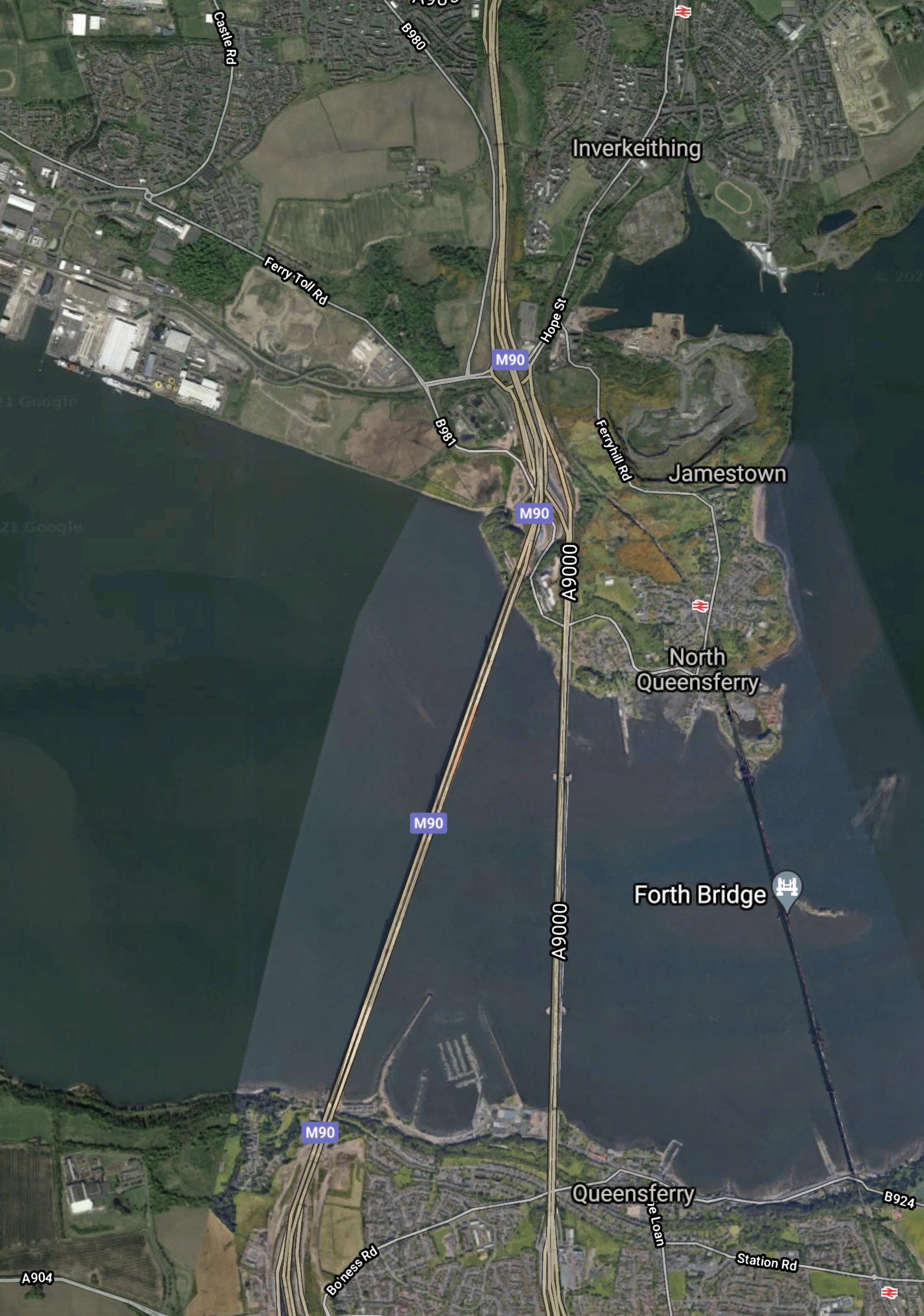
This Google Map shows the three bridges across the Firth of Forth.
Note.
- The most Westerly bridge is the Queensferry Crossing, which carries the M90 and was opened in 2017.
- The bridge in the middle is Forth Road Bridge, which opened in 1964.
- The Forth Bridge is the most Easterly bridge and it opened in 1890.
- North Queensberry station is to the North of the bridge and Dalmeny is to the South.
After opening of the Levenmouth Rail Link, there could be a battery-electric train every thirty minutes in both directions across the Forth Bridge.
This sounds like an opportunity to develop the bridge with its battery trains as a tourist attraction.
Battery-electric trains could run from Edinburgh to the following places.
- Dundee
- Perth
- St. Andrews
And that’s just for starters.
Conclusion
There is a lot more to the Levenmouth Rail Link, than just a double-track railway to Leven, as it enables so much.
Related Posts
The New Leven Station On The Levenmouth Rail Link
The New Cameronbridge Station On The Levenmouth Rail Link
Trains On The Levenmouth Rail Link
 The Anonymous Widower